

The Climate of Early Mars
Open accessThe DOI matches its Crossref record; 158 of the 158 references it cites were found in a registry or an index; 15 of the 147 sources its claims cite were checked for support.
Abstract
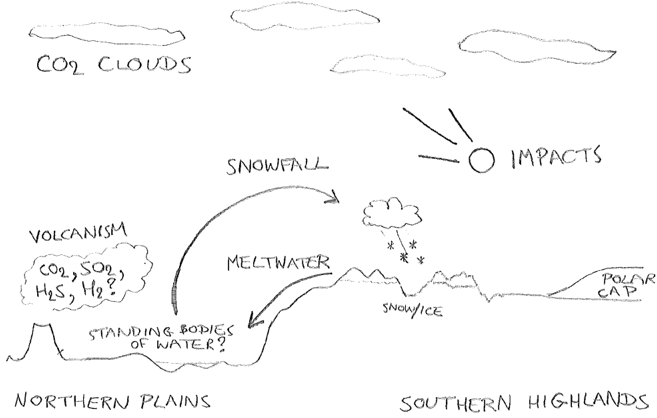
The nature of the early martian climate is one of the major unanswered questions of planetary science. Key challenges remain, but a new wave of orbital and in situ observations and improvements in climate modeling have led to significant advances over the past decade. Multiple lines of geologic evidence now point to an episodically warm surface during the late Noachian and early Hesperian periods 3–4 Ga. The low solar flux received by Mars in its first billion years and inefficiency of plausible greenhouse gases such as CO2mean that the steady-state early martian climate was likely cold. A denser CO2atmosphere would have caused adiabatic cooling of the surface and hence migration of water ice to the higher-altitude equatorial and southern regions of the planet. Transient warming caused melting of snow and ice deposits and a temporarily active hydrological cycle, leading to erosion of the valley networks and other fluvial features. Precise details of the warming mechanisms remain unclear, but impacts, volcanism, and orbital forcing all likely played an important role. The lack of evidence for glaciation across much of Mars's ancient terrain suggests the late Noachian surface water inventory was not sufficient to sustain a northern ocean. Though mainly inhospitable on the surface, early Mars may nonetheless have presented significant opportunities for the development of microbial life.
Overview
CoChat Summary
TL;DR
This review argues that early Mars was likely mainly cold, with a denser CO₂ atmosphere and episodic warming events, rather than a long-lived warm and wet climate. It synthesizes geologic evidence for liquid water with climate-model constraints, especially the faint young Sun and the failure of CO₂–H₂O alone to warm early Mars.
Key findings
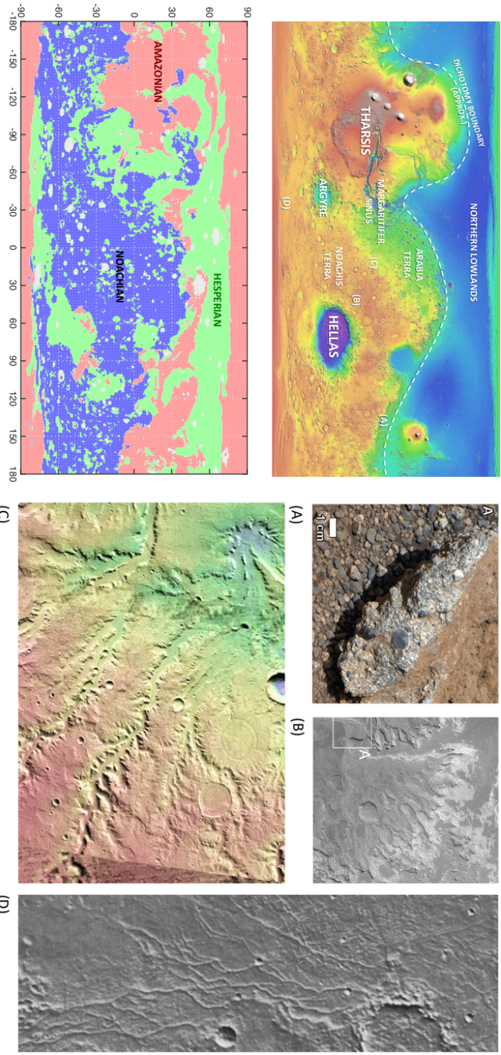
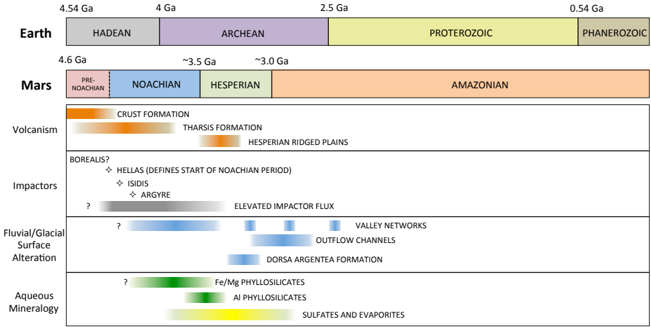
- Geologic evidence indicates liquid water modified Mars during the late Noachian and early Hesperian, but the record favors intermittent, not permanently warm, conditions; valley networks are common on Noachian terrain and rare later.
- With a solar luminosity about 75% of present at 3.8 Ga, Mars received roughly 441.1 W m⁻²; even with zero albedo the equilibrium temperature would be 210 K, implying a minimum greenhouse effect of about 65 K for marginally warm and wet conditions.
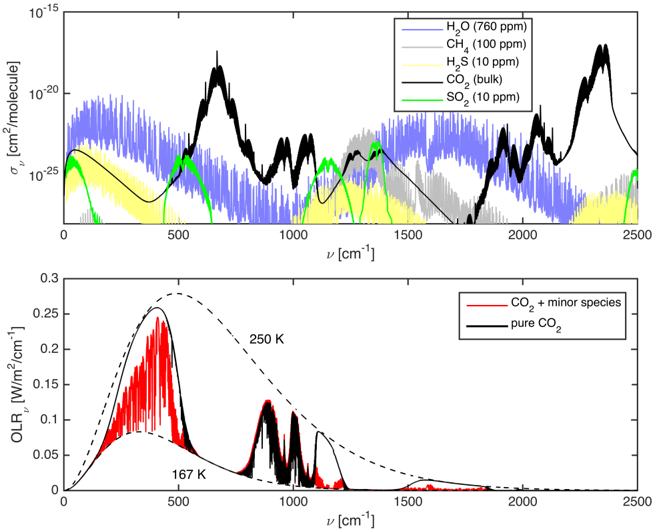
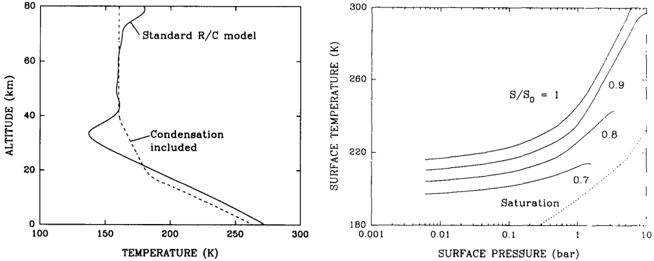
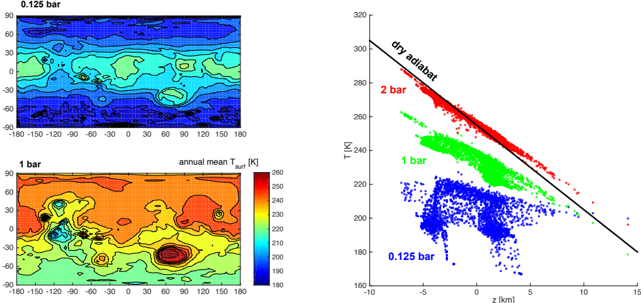
- Clear-sky CO₂–H₂O radiative-convective models give mean surface temperatures of 225 K or less, and a denser CO₂ atmosphere causes adiabatic cooling: about 30 K at 1 bar and about 40 K at 2 bar across the Hellas-to-highlands altitude range.
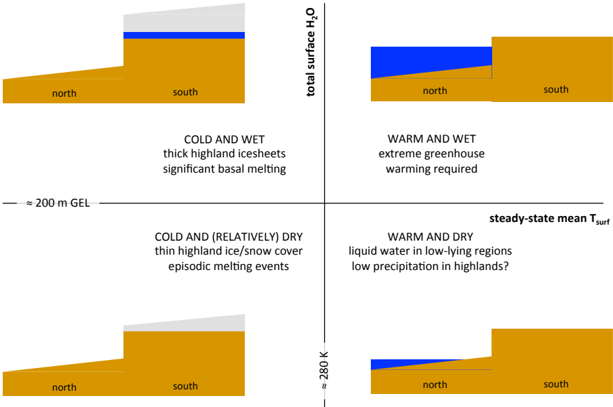
- The “icy highlands” scenario proposes that under a thicker atmosphere, snow and ice migrated to the equatorial Noachian highlands, where episodic melting carved valley networks; estimates of the late Noachian water inventory are low, including 137 m and 24 m global equivalent layer in cited studies, while a northern ocean shoreline would imply about 550 m GEL.
Methods
- Review article synthesizing orbital and in situ observations, geomorphology, geochemistry, and prior climate-modeling studies of early Mars.
- Draws on crater statistics, valley-network and crater-lake analyses, mineralogy, rover observations, atmospheric escape and outgassing estimates, and 1D radiative-convective and 3D general circulation model results.
- Main analysis is a narrative comparison of geologic evidence with climate-model constraints, including CO₂ greenhouse limits, cloud and aerosol effects, volcanic SO₂, impacts, and orbital forcing.
Limitations
- The paper states that the precise warming mechanism remains poorly constrained, atmospheric evolution is highly uncertain, and 3D cloud-forcing results disagree; no 3D simulation had yet addressed the impact of a snowy Tharsis on warm-and-wet stability.
- The paper notes that absolute dating of Martian surface units is subject to considerable uncertainty and that some atmospheric escape and carbonate-sequestration processes are poorly understood.
- As evident from the text, this is a review rather than a primary study, so its conclusions depend on published datasets and model results with their own parameterizations and uncertainties.
Model-written summary. Check it against the paper before relying on it.
Integrity signals
Registry
Cites
Statistics
Figures
Verification
Claims the paper makes
12 Valid · 12 Not valid · 84 Not checked · 108 Own results and interpretations
At least one cited source doesn’t support this claim or points to a different paper, and none confirmed it — see the verdicts below.
In the paper
“Hence for pure clear-sky CO 2 -H 2 O atmospheres under early Martian conditions, modern radiativeconvective models obtain mean surface temperatures of 225 K or less (Wordsworth, Forget & Eymet 2010; Ramirez et al. 2014; Halevy & Head 2014).”
What the sources say
- Not checked — no full text of the sourcecites Wordsworth, Forget & Eymet 2010 matched to “Infrared collision-induced and far-line absorption in dense CO2 atmospheres” (2010) source
- Disputedcites Ramirez et al. 2014 matched to “Warming early Mars with CO2 and H2” (2014) sourceExperimental — accuracy not yet measured
In “Greenhouse warming by models that include H2,” the paper reports that its H2-free model reached up to 230 K, above the claimed ceiling of 225 K; it identifies ~225 K as a previously published result. The supplemental “Climate Model Description” reports that a revised solar calculation raised the baseline 5% N2 case to 246 K. The paper supports the broader point that CO2–H2O alone did not produce warm conditions, but not the stated temperature limit. (LLM, conf=0.88)
Checked by a reasoning model — may be wrong.
- Not checked — no full text of the sourcecites Halevy & Head 2014 matched to “Episodic warming of early Mars by punctuated volcanism” (2014) source
plainstates a cause- Asserted: passes — The authors put it forward as true.
- Checkable: passes — It can be checked against evidence.
- Load-bearing: passes — The paper’s conclusions depend on it.
- Based: passes — The paper gives a reason why it holds.
The sources with a verdict support this claim; the rest weren’t checked yet, have no full text we could read, or their verdicts aren’t rated yet.
In the paper
“One mineral, carbonate, is conspicuous by its low abundance on the Martian surface (Niles et al. 2013; Ehlmann & Edwards 2014).”
What the sources say
- Not checked — no full text of the sourcecites Niles et al. 2013 matched to “Geochemistry of Carbonates on Mars: Implications for Climate History and Nature of Aqueous Environments” (2013) source
- Supportedcites Ehlmann & Edwards 2014 matched to “Mineralogy of the Martian Surface” (2014) source
Section 4.8, “The Carbonate Puzzle,” describes a “lack of massive, widespread carbonate” and says carbonate-bearing rocks appear geographically restricted. This supports the claim that carbonate is conspicuously scarce on the Martian surface, while acknowledging localized detections. (LLM, conf=0.92)
plain- Asserted: passes — The authors put it forward as true.
- Checkable: passes — It can be checked against evidence.
- Load-bearing: passes — The paper’s conclusions depend on it.
- Based: passes — The paper gives a reason why it holds.
The cited sources support only part of this claim — read each source’s verdict below.
In the paper
“Other aqueous minerals such as sulphates, chlorides and silicas are found in more localized regions of the Noachian and Hesperian crust (Gendrin et al. 2005; Osterloo et al. 2010; Carter et al. 2013; Ehlmann & Edwards 2014).”
What the sources say
- Partly supportedcites Gendrin et al. 2005 matched to “Sulfates in Martian Layered Terrains: The OMEGA/Mars Express View” (2005) sourceExperimental — accuracy not yet measured
The paper reports sulfates in localized light-toned layered deposits dated to the Noachian and/or Hesperian (p. 2). It does not report detections of chlorides or silica: it says halite might be present but lacks a detectable spectral signature in these observations (p. 2). (LLM, conf=0.88)
- Not checked — no full text of the sourcecites Osterloo et al. 2010 matched to “Geologic context of proposed chloride‐bearing materials on Mars” (2010) source
- Not checked — no full text of the sourcecites Carter et al. 2013 matched to “Hydrous minerals on Mars as seen by the CRISM and OMEGA imaging spectrometers: Updated global view” (2013) source
plain- Asserted: passes — The authors put it forward as true.
- Checkable: passes — It can be checked against evidence.
- Load-bearing: unclear — It is unclear whether the paper’s conclusions depend on it.
- Based: passes — The paper gives a reason why it holds.
- Partly supported
The cited sources support only part of this claim — read each source’s verdict below.
In the paper
“This is important, because surface carbonate formation should be very efficient on a warm and wet planet with a basaltic crust and CO 2 -rich atmosphere (Pollack et al. 1987).”
What the sources say
- Partly supportedcites Pollack et al. 1987 matched to “The case for a wet, warm climate on early Mars” (1987) sourceExperimental — accuracy not yet measured
The passage under “The Case for a Wet, Warm Climate on Early Mars” (page unavailable) links a wet, warm, CO₂-rich early Mars to silicate weathering and carbonate rocks. It does not specify a basaltic crust or say that surface carbonate formation would be very efficient. (LLM, conf=0.78)
plainstates a cause- Asserted: passes — The authors put it forward as true.
- Checkable: passes — It can be checked against evidence.
- Load-bearing: passes — The paper’s conclusions depend on it.
- Based: passes — The paper gives a reason why it holds.
- Partly supported
The cited sources support only part of this claim — read each source’s verdict below.
In the paper
“The martian surface is sulfur-rich (Clark et al. 1976) and sulphates are abundant on Hesperian and Noachian terrain (Gendrin et al. 2005; Bibring et al. 2005; Ehlmann & Edwards 2014).”
What the sources say
- Partly supportedcites Gendrin et al. 2005 matched to “Sulfates in Martian Layered Terrains: The OMEGA/Mars Express View” (2005) sourceExperimental — accuracy not yet measured
The paper reports sulfate-rich layered deposits whose formation is dated to the Noachian and/or Hesperian epochs (p. 2). It also says that OMEGA detects sulfates in equatorial regions only in close association with light-toned layered deposits, not scattered across the surrounding terrain. Thus it supports abundance in particular deposits, but not across Hesperian and Noachian terrain generally. (LLM, conf=0.84)
- Not checked — no full text of the sourcecites Bibring et al. 2005 matched to “Mars Surface Diversity as Revealed by the OMEGA/Mars Express Observations” (2005) source
- Partly supportedcites Ehlmann & Edwards 2014 matched to “Mineralogy of the Martian Surface” (2014) sourceExperimental — accuracy not yet measured
Section 4.5 describes sulfate-bearing Hesperian sedimentary rocks and says the associated deposits are Hesperian-aged. The Summary Points say some late Noachian–early Hesperian paleolake basins contain sulfates, but do not establish that sulfates are abundant across Noachian terrain. (LLM, conf=0.86)
plain- Asserted: passes — The authors put it forward as true.
- Checkable: passes — It can be checked against evidence.
- Load-bearing: passes — The paper’s conclusions depend on it.
- Based: passes — The paper gives a reason why it holds.
- Partly supported
134 more claims · 6 with their cited sources checked
Create a free account to see all 216 claims and to verify the 40 references still open.
- It may state two separate claims as one. 48
- Probably not a substantial claim. 36
Self-check
Percentages, sums and reported differences re-computed from the paper’s own numbers.
Each contradiction between two passages listed here was confirmed by an independent check.
Rated minor: it would not touch a result — a value no result rests on, a p-value that stays on the same side of the significance level, or a conflict that is clerical, resolved elsewhere in the paper, or outside its own findings.
In the paper
§ 4.4. The periglacial paradox and the Noachian surface water inventory · p. 17
“Preliminary GCM studies using the model described in Wordsworth et al. (2015) suggest that this is indeed the case.”
§ Figure 7 · p. 25
“The warm and dry state has not yet been simulated numerically but may lead to little or no rainfall in the equatorial highlands.”
Rated minor: it would not touch a result — a value no result rests on, a p-value that stays on the same side of the significance level, or a conflict that is clerical, resolved elsewhere in the paper, or outside its own findings.
In the paper
§ 4.1. Adiabatic Cooling and the Icy Highlands Hypothesis · p. 14
“c p is the atmospheric specific heat capacity at constant pressure”
§ 4.1. Adiabatic Cooling and the Icy Highlands Hypothesis · p. 14
“with g gravity and c p the specific heat capacity at constant volume”
Citations
Cites
A Neoproterozoic Snowball Earth
Hoffman, P. F., Kaufman, A. J., Halverson, G. P., & Schrag, D. P. (1998) · Science · doi:10.1126/science.281.5381.1342 · Cited by 2,693
Habitable Zones around Main Sequence Stars
Kasting, J. F., Whitmire, D. P., & Reynolds, R. T. (1993) · Icarus · doi:10.1006/icar.1993.1010 · Cited by 2,501
A negative feedback mechanism for the long‐term stabilization of Earth's surface temperature
Walker, J. C. G., Hays, P. B., & Kasting, J. F. (1981) · Journal of Geophysical Research: Oceans · doi:10.1029/jc086ic10p09776 · Cited by 2,310
Arctic sea ice decline: Faster than forecast
Stroeve, J., Holland, M. M., Meier, W., Scambos, T., & Serreze, M. (2007) · Geophysical Research Letters · doi:10.1029/2007gl029703 · Cited by 1,857
Global Mineralogical and Aqueous Mars History Derived from OMEGA/Mars Express Data
Bibring, J.-P., Langevin, Y., Mustard, J. F., Poulet, F., Arvidson, R., Gendrin, A., Gondet, B., Mangold, N., Pinet, P., Forget, F., et al. (2006) · Science · doi:10.1126/science.1122659 · Cited by 1,667 · cited 3×
“Iron and magnesium rich phyllosilicates (clays) are found extensively over Noachian terrain (Poulet et al. 2005; Bibring et al. 2006; Mustard et al. 2008; Murchie et al. 2009; Carter et al. 2010).”
BackgroundA low mass for Mars from Jupiter’s early gas-driven migration
Walsh, K. J., Morbidelli, A., Raymond, S. N., O'Brien, D. P., & Mandell, A. M. (2011) · Nature · doi:10.1038/nature10201 · Cited by 1,241 · cited 1×
“Current thinking suggests Mars is best understood as a planetary embryo, whose development into a fully fledged terrestrial planet was arrested by some process such as instability in the configuration of the outer planets (Walsh et al. 2011).”
BackgroundLacis, A. A., & Oinas, V. (1991) · Journal of Geophysical Research: Atmospheres · doi:10.1029/90jd01945 · Cited by 1,051 · cited 1×
“Instead, recent 3D simulations have used the correlated-k method (Goody et al. 1989; Lacis & Oinas 1991).”
MethodThe origins and concentrations of water, carbon, nitrogen and noble gases on Earth
Marty, B. (2012) · Earth and Planetary Science Letters · doi:10.1016/j.epsl.2011.10.040 · Cited by 1,012
Long term evolution and chaotic diffusion of the insolation quantities of Mars
Laskar, J., Correia, A. C. M., Gastineau, M., Joutel, F., Levrard, B., & Robutel, P. (2004) · Icarus · doi:10.1016/j.icarus.2004.04.005 · Cited by 992 · cited 1×
“Mars’ orbital eccentricity and obliquity evolve chaotically on long timescales, however, and have probably varied over ranges of 0 – 0.125 and 10◦ – 60◦, respectively (Laskar et al. 2004).”
BackgroundInfluentialSulfates in Martian Layered Terrains: The OMEGA/Mars Express View
Gendrin, A., Mangold, N., Bibring, J.-P., Langevin, Y., Gondet, B., Poulet, F., Bonello, G., Quantin, C., Mustard, J., Arvidson, R., et al. (2005) · Science · doi:10.1126/science.1109087 · Cited by 986 · cited 2×
“The martian surface is sulfur-rich (Clark et al. 1976) and sulphates are abundant on Hesperian and Noachian terrain (Gendrin et al. 2005; Bibring et al. 2005; Ehlmann & Edwards 2014).”
Background
Research works printed but not linked: 4
- Ehlmann BL, 2015, Lunar Planet. Sci. Conf. Abstr., 46, 1635
- Forster P, 2007, Climate Change 2007: The Physical Science Basis. Contribution of Working Group I to the Fourth Assessment Report of the Intergovernmental Panel on Climate Change, 129
- Howard AD, 1981, Reports of Planetary Geology Program—1981, 286
- Kirschvink JL, 2002, Palaeontol. Electron., 4, 8
Cited by
Living at the Extremes: Extremophiles and the Limits of Life in a Planetary Context
Merino, N., Aronson, H. S., Bojanova, D. P., Feyhl-Buska, J., Wong, M. L., Zhang, S., & Giovannelli, D. (2019) · Frontiers in Microbiology · doi:10.3389/fmicb.2019.00780 · Cited by 658
Transient reducing greenhouse warming on early Mars
Wordsworth, R., Kalugina, Y., Lokshtanov, S., Vigasin, A., Ehlmann, B., Head, J., Sanders, C., & Wang, H. (2017) · Geophysical Research Letters · doi:10.1002/2016gl071766 · Cited by 264
“In combination with Mars’ distant orbit, this implies cold surface conditions: even given a planetary albedo of zero, early Mars would have had an equilibrium temperature of only 210 K [ Wordsworth , 2016].”
InfluentialSelf-citationOrigin and evolution of the atmospheres of early Venus, Earth and Mars
Lammer, H., Zerkle, A. L., Gebauer, S., Tosi, N., Noack, L., Scherf, M., Pilat-Lohinger, E., Güdel, M., Grenfell, J. L., Godolt, M., et al. (2018) · The Astronomy and Astrophysics Review · doi:10.1007/s00159-018-0108-y · Cited by 202
The Role of Meteorite Impacts in the Origin of Life
Osinski, G. R., Cockell, C. S., Pontefract, A., & Sapers, H. M. (2020) · Astrobiology · doi:10.1089/ast.2019.2203 · Cited by 183
“This hypothesis is more consistent with the faint young Sun hypothesis (Wordsworth, 2016), creating uncertainty around the habitability of early Mars.”
BackgroundResultInfluentialWay, M. J., & Del Genio, A. D. (2020) · Journal of Geophysical Research: Planets · doi:10.1029/2019je006276 · Cited by 171
The geological and climatological case for a warmer and wetter early Mars
Ramirez, R. M., & Craddock, R. A. (2018) · Nature Geoscience · doi:10.1038/s41561-018-0093-9 · Cited by 172
Long-term drying of Mars by sequestration of ocean-scale volumes of water in the crust
Scheller, E. L., Ehlmann, B. L., Hu, R., Adams, D. J., & Yung, Y. L. (2021) · Science · doi:10.1126/science.abc7717 · Cited by 169
“During magnetite formation, often coupled to phyllosilicate formation, H 2 O in /H 2out may be as small as 2 (41).”
The NASA Mars 2020 Rover Mission and the Search for Extraterrestrial Life
Williford, K. H., Farley, K. A., Stack, K. M., Allwood, A. C., Beaty, D., Beegle, L. W., Bhartia, R., Brown, A. J., de la Torre Juarez, M., Hamran, S.-E., et al. (2018) · From Habitability to Life on Mars · doi:10.1016/b978-0-12-809935-3.00010-4 · Cited by 167
Geologic Constraints on Early Mars Climate
Kite, E. S. (2019) · Space Science Reviews · doi:10.1007/s11214-018-0575-5 · Cited by 187
“Theory predicts that 0.3 bar atmospheric pressure would cause surface temperature—and thus the potential for above-freezing temperatures needed for snowmelt and/or rainfall—to be strongly influenced by elevation (Wordsworth 2016).”
BackgroundResultInfluentialDay–night cloud asymmetry prevents early oceans on Venus but not on Earth
Turbet, M., Bolmont, É., Chaverot, G., Ehrenreich, D., Leconte, J., & Marcq, E. (2021) · Nature · doi:10.1038/s41586-021-03873-w · Cited by 176
Ehlmann, B. L., Anderson, F. S., Andrews‐Hanna, J. C., Catling, D. C., Christensen, P. R., Cohen, B. A., Dressing, C. D., Edwards, C. S., Elkins-Tanton, L. T., Farley, K. A., et al. (2016) · Journal of Geophysical Research Planets · doi:10.1002/2016je005134 · Cited by 154
“The in fl uence of atmospheric evolution on climate and the challenges in maintaining liquid water on the surface were recently reviewed by Wordsworth [2016].”
InfluentialSelf-citationGas-phase broadband spectroscopy using active sources: progress, status, and applications [Invited]
Cossel, K. C., Waxman, E. M., Finneran, I. A., Blake, G. A., Ye, J., & Newbury, N. R. (2016) · Journal of the Optical Society of America B · doi:10.1364/josab.34.000104 · Cited by 152
Vasavada, A. R. (2022) · Space Science Reviews · doi:10.1007/s11214-022-00882-7 · Cited by 162
“How Mars developed and sustained such a climate, given the faint young Sun and the limited efficacy of greenhouse warming in current climate models, is unresolved and an active area of research (e.g., Wordsworth 2016).”
Lunine, J. I. (2017) · Acta Astronautica · doi:10.1016/j.actaastro.2016.11.017 · Cited by 121
Hydrogen escape from Mars is driven by seasonal and dust storm transport of water
Stone, S. W., Yelle, R. V., Benna, M., Lo, D., Elrod, M. K., & Mahaffy, P. R. (2020) · Science · doi:10.1126/science.aba5229 · Cited by 114
Habitability of Exoplanet Waterworlds
Kite, E. S., & Ford, E. B. (2018) · The Astrophysical Journal · doi:10.3847/1538-4357/aad6e0 · Cited by 136
“Metastable impact-triggered climates have previously been proposed using other mechanisms (Segura et al. 2012; Urata and Toon 2013, but see also Wordsworth 2016).”
Paleo-Rock-Hosted Life on Earth and the Search on Mars: A Review and Strategy for Exploration
Onstott, T. C., Ehlmann, B. L., Sapers, H. M., Coleman, M., Ivarsson, M., Marlow, J. J., Neubeck, A., & Niles, P. (2019) · Astrobiology · doi:10.1089/ast.2018.1960 · Cited by 130
“Collectively, these data indicate that after a warmer and wetter first *1.5 billion years, frozen, arid conditions prevailed over the last *3 billion years (e.g., Wordsworth, 2016).”
BackgroundInfluentialWordsworth, R., Schaefer, L., & Fischer, R. A. (2018) · The Astronomical Journal · doi:10.3847/1538-3881/aab608 · Cited by 137
“The extreme chemical stability of the N2 molecule (e.g., Moses 2013; Wordsworth 2016a) means that scenarios where N acts as an effective shuttle to carry H from surface reservoirs past the cold trap are hard to sustain.”
BackgroundMethodInfluentialSelf-citationMethane on Mars and Habitability: Challenges and Responses
Yung, Y. L., Chen, P., Nealson, K. H., Atreya, S. K., Beckett, P., Blank, J. G., Ehlmann, B. L., Eiler, J. M., Etiope, G., Ferry, J. G., et al. (2018) · Astrobiology · doi:10.1089/ast.2018.1917 · Cited by 120
“Driven by obliquity cycling and early loss of water to space, arid conditions and episodically icy highlands may have been the norm (Lammer et al., 2013; Wordsworth, 2016).”
BackgroundAtmospheres of Rocky Exoplanets
Wordsworth, R., & Kreidberg, L. (2022) · Annual Review of Astronomy and Astrophysics · doi:10.1146/annurev-astro-052920-125632 · Cited by 146
Self-citationThe Sedimentary Cycle on Early Mars
McLennan, S. M., Grotzinger, J. P., Hurowitz, J. A., & Tosca, N. J. (2018) · Annual Review of Earth and Planetary Sciences · doi:10.1146/annurev-earth-053018-060332 · Cited by 115
Cabrol, N. A. (2018) · Astrobiology · doi:10.1089/ast.2017.1756 · Cited by 87
“4 Ga), although debated (e.g., Carr and Head, 2015; Wordsworth, 2016), has stronger empirical and theoretical support (Table 1 and references therein).”
BackgroundInfluentialRisks for Life on Habitable Planets from Superflares of Their Host Stars
Lingam, M., & Loeb, A. (2017) · The Astrophysical Journal · doi:10.3847/1538-4357/aa8e96 · Cited by 97
“Here, we shall consider only present-day Mars and Venus, and return to ancient Mars and Venus at a later stage.”
BackgroundInfluentialValley formation on early Mars by subglacial and fluvial erosion
Galofre, A. G., Jellinek, M. A., & Osinski, G. R. (2020) · Nature Geoscience · doi:10.1038/s41561-020-0618-x · Cited by 96
Photochemistry of Anoxic Abiotic Habitable Planet Atmospheres: Impact of New H 2 O Cross Sections
Ranjan, S., Schwieterman, E. W., Harman, C. E., Fateev, A., Sousa‐Silva, C., Seager, S., & Hu, R. (2020) · The Astrophysical Journal · doi:10.3847/1538-4357/ab9363 · Cited by 104
“…are expected from outgassing on habitable terrestrial worlds; representative of early Earth, Mars, and Venus (Kasting 1993; Way et al. 2016; Wordsworth 2016); and expected on habitable exoplanets orbiting younger, fainter stars or at the outer edges of their habitable zones (e.g.,…”
BackgroundThe formation of gullies on Mars today
Dundas, C. M., McEwen, A. S., Diniega, S., Hansen, C. J., Byrne, S., & McElwaine, J. (2017) · Geological Society London Special Publications · doi:10.1144/sp467.5 · Cited by 91
A warmer and wetter solution for early Mars and the challenges with transient warming
Ramirez, R. M. (2017) · Icarus · doi:10.1016/j.icarus.2017.06.025 · Cited by 85
“lack of glaciation in ancient terrains (Craddock and Howard, 2002; Wordsworth 2016), the water amounts necessary to form the older valleys (Hoke et al.”
BackgroundResultInfluentialDong, C., Lee, Y., Ma, Y., Lingam, M., Bougher, S., Luhmann, J., Curry, S., Tóth, G., Nagy, A., Tenishev, V., et al. (2018) · The Astrophysical Journal Letters · doi:10.3847/2041-8213/aac489 · Cited by 103
Persistence of intense, climate-driven runoff late in Mars history
Kite, E. S., Mayer, D. P., Wilson, S. A., Davis, J. M., Lucas, A., & de Quay, G. S. (2019) · Science Advances · doi:10.1126/sciadv.aav7710 · Cited by 81
“Both trends are more consistent with ≪ 1 bar atmospheric pressure than with >1 bar atmospheric pressure ( 44 ).”
The TRAPPIST-1 Habitable Atmosphere Intercomparison (THAI). II. Moist Cases—The Two Waterworlds
Sergeev, D. E., Fauchez, T. J., Turbet, M., Boutle, I., Tsigaridis, K., Way, M. J., Wolf, E. T., Domagal-Goldman, S. D., Forget, F., Haqq-Misra, J. D., et al. (2022) · The Planetary Science Journal · doi:10.3847/psj/ac6cf2 · Cited by 103
“Hab 2 could be representative of the early Hadean period on Earth or Hesperian period on Mars (e.g. Wordsworth 2016).”
BackgroundNew Martian valley network volume estimate consistent with ancient ocean and warm and wet climate
Luo, W., Cang, X., & Howard, A. D. (2017) · Nature Communications · doi:10.1038/ncomms15766 · Cited by 78
McCollom, T. M., Klein, F., & Ramba, M. (2021) · Icarus · doi:10.1016/j.icarus.2021.114754 · Cited by 88
An overview of explosive volcanism on Mars
Brož, P., Bernhardt, H., Conway, S. J., & Parekh, R. A. (2020) · Journal of Volcanology and Geothermal Research · doi:10.1016/j.jvolgeores.2020.107125 · Cited by 74
Potassium‐rich sandstones within the Gale impact crater, Mars: The APXS perspective
Thompson, L. M., Schmidt, M. E., SPRAY, J. G., Berger, J. A., Fairén, A. G., Campbell, J. L., Perrett, G. M., Boyd, N. I., Gellert, R., Pradler, I., et al. (2016) · Journal of Geophysical Research Planets · doi:10.1002/2016je005055 · Cited by 71
“Recent models and research support the theory that the steady state Martian climate has been cold and dry throughout Mars’ history, with only episodic, transient warming events [see Wordsworth, 2016, and references therein].”
MethodClimate Simulations of Early Mars With Estimated Precipitation, Runoff, and Erosion Rates
Ramirez, R. M., Craddock, R. A., & Usui, T. (2020) · Journal of Geophysical Research Planets · doi:10.1029/2019je006160 · Cited by 70
“Contrary to the arguments of Wordsworth (2016), as we have shown, a semiarid climate is possible (even expected) if a northern lowlands ocean had existed on a warm early Mars (Figures 8–11, S2, S4).”
BackgroundResultInfluentialPalumbo, A. M., Head, J. W., III, & Wordsworth, R. (2017) · Icarus · doi:10.1016/j.icarus.2017.09.007 · Cited by 68
“The regionalized distribution of valley networks and their somewhat delicate dendritic nature ( Hynek et al., 2010 ) appear to be at odds with the predicted persistent downpours and very high runoff rates ( Palumbo and Head, 2017a; Wordsworth, 2016 ).”
Self-citationThe divergent fates of primitive hydrospheric water on Earth and Mars
Wade, J., Dyck, B., Palin, R. M., Moore, J. D. P., & Smye, A. J. (2017) · Nature · doi:10.1038/nature25031 · Cited by 64
Lapôtre, M. G. A., & Ielpi, A. (2020) · AGU Advances · doi:10.1029/2019av000141 · Cited by 67
“However, given a lower solar flux and no plausible, efficient, and relatively stable greenhouse effect on Mars, this geologic evidence has been a challenge to explain for most state‐of‐the‐art climate models (e.g., Wordsworth, 2016).”
BackgroundInui, S., Seki, K., Sakai, S., Brain, D. A., Hara, T., McFadden, J. P., Halekas, J. S., Mitchell, D. L., DiBraccio, G. A., & JAKOSKY, B. M. (2019) · Journal of Geophysical Research Space Physics · doi:10.1029/2018ja026452 · Cited by 66
“On the other hand, due to the uncertainty in the estimation of total amount of water and atmosphere loss, the temperatures and amounts of water in early Mars proposed by many studies cover a wide range (Wordsworth, 2016).”
BackgroundModern water at low latitudes on Mars: Potential evidence from dune surfaces
Qin, X., Ren, X., Wang, X., Liu, J., Wu, H., Zeng, X., Sun, Y., Chen, Z., Zhang, S., Zhang, Y., et al. (2023) · Science Advances · doi:10.1126/sciadv.add8868 · Cited by 65
“However, as the early atmosphere has disappeared, the climate and environment on Mars have undergone substantial changes ( 8 ), with the resultant temperature and pressure conditions becoming unfavorable for the stability of liquid water on Mars today ( 9 , 10 ).”
Drainage divide migration and implications for climate and biodiversity
He, C., Braun, J., Tang, H., Yuan, X., Acevedo‐Trejos, E., Ott, R. F., & de Quay, G. S. (2024) · Nature Reviews Earth & Environment · doi:10.1038/s43017-023-00511-z · Cited by 71
Evidence for marine sedimentary rocks in Utopia Planitia: Zhurong rover observations
Xiao, L., Huang, J., Kusky, T., Head, J. W., III, Zhao, J., Wang, J., Wang, L., Yu, W., Shi, Y., Wu, B., et al. (2023) · National Science Review · doi:10.1093/nsr/nwad137 · Cited by 65
“Recent scientific approaches to understanding the paleoclimate of ancient Mars have been dominated by computer modeling that applies well-verified physical laws to simulating past conditions on the planet (e.g. [26–30]).”
BackgroundTurbet, M., Boulet, C., & Karman, T. (2020) · Icarus · doi:10.1016/j.icarus.2020.113762 · Cited by 71
Sustained wet–dry cycling on early Mars
Rapin, W., Dromart, G., Clark, B. C., Schieber, J., Kite, E. S., Kah, L. C., Thompson, L. M., Gasnault, O., Lasue, J., Meslin, P., et al. (2023) · Nature · doi:10.1038/s41586-023-06220-3 · Cited by 80
Heinz, J., Krahn, T., & Schulze‐Makuch, D. (2020) · Life · doi:10.3390/life10050053 · Cited by 58
“Several observations on Mars, such as characteristic surface morphologies like large fluid-eroded channels, dendritic networks, fluvial valleys, and glacial features [1], and the formation of water-depending minerals like hematite [2], indicate that the planet had a warmer (even though mostly freezing [3]), wetter and…”
BackgroundOrigin of Life on Mars: Suitability and Opportunities
Clark, B. C., Kolb, V. M., Steele, A., House, C. H., Lanza, N., Gasda, P. J., VanBommel, S. J. V., NEWSOM, H. E., & Martínez‐Frías, J. (2021) · Life · doi:10.3390/life11060539 · Cited by 59
The Dehydration of Water Worlds via Atmospheric Losses
Dong, C., Huang, Z., Lingam, M., Tóth, G., Gombosi, T., & Bhattacharjee, A. (2017) · The Astrophysical Journal Letters · doi:10.3847/2041-8213/aa8a60 · Cited by 57
“In addition, many studies have suggested the existence of a northern ocean of liquid water on ancient Mars; the reader may consult Wordsworth (2016) for more details.”
BackgroundTurbet, M., Tran, H., Pirali, O., Forget, F., Boulet, C., & Hartmann, J. (2018) · Icarus · doi:10.1016/j.icarus.2018.11.021 · Cited by 54
“Understanding how the early Martian climate could have been warm enough for liquid water to flow on the surface remains one of the major enigmas of planetary science (Wordsworth 2016, Haberle et al. 2017) and no consensus scenario has yet been reached.”
BackgroundWarm early Mars surface enabled by high-altitude water ice clouds
Kite, E. S., Steele, L. J., Mischna, M. A., & Richardson, M. I. (2021) · Proceedings of the National Academy of Sciences · doi:10.1073/pnas.2101959118 · Cited by 55
The global distribution of depositional rivers on early Mars
Dickson, J. L., Lamb, M. P., Williams, R. M. E., Hayden, A. T., & Fischer, W. (2020) · Geology · doi:10.1130/g48457.1 · Cited by 47
Ancient ocean coastal deposits imaged on Mars
Jianhui, L., Liu, H., Meng, X., Duan, D., Lu, H., Zhang, J., Zhang, F., Elsworth, D., Cardenas, B. T., Manga, M., et al. (2025) · Proceedings of the National Academy of Sciences · doi:10.1073/pnas.2422213122 · Cited by 65
Turbet, M., Gillmann, C., Forget, F., Baudin, B., Palumbo, A. M., Head, J. W., III, & Karatekin, Ö. (2019) · Icarus · doi:10.1016/j.icarus.2019.113419 · Cited by 49
“aforementioned geological and mineralogical evidence could have been produced in response to impact-induced climate change (Haberle et al., 2017; Segura et al., 2008, 2002; Steakley et al., 2018; Toon et al., 2010; Turbet, 2018; Wordsworth et al., 2013; Wordsworth, 2016).”
BackgroundSakata, R., Seki, K., Sakai, S., Terada, N., Shinagawa, H., & Tanaka, T. (2020) · Journal of Geophysical Research Space Physics · doi:10.1029/2019ja026945 · Cited by 46
“Geomorphological and mineralogical observations suggest that an aqueous environment existed on Mars in the Noachian period (Bibring et al., 2006; Wordsworth, 2016).”
BackgroundKite, E. S., Sneed, J., Mayer, D. P., Lewis, K. W., Michaels, T. I., Hore, A., & Rafkin, S. (2016) · Journal of Geophysical Research Planets · doi:10.1002/2016je005135 · Cited by 46
“…consistent with models of Mars paleoclimate [Kite et al., 2013b; Mischna et al., 2013; Segura et al., 2013; Urata and Toon, 2013; Halevy and Head, 2014; Wordsworth et al., 2013; Ramirez et al., 2014; Kerber et al., 2015; Wordsworth et al., 2015; Wordsworth, 2016; Ramirez and Kasting, 2017].”
MethodCircumpolar ocean stability on Mars 3 Gy ago
Schmidt, F., Way, M. J., Costard, F., Bouley, S., Séjourné, A., & Aleinov, I. (2022) · Proceedings of the National Academy of Sciences · doi:10.1073/pnas.2112930118 · Cited by 56
“In previous work, a cold and wet Mars seemed impossible since the long term stability of an ocean (open or ice covered) in such a scenario has never been achieved by a three dimensional General Circulation Model (3D-GCM) (14–19).”
BackgroundThe importance of lake breach floods for valley incision on early Mars
Goudge, T. A., Morgan, A. M., de Quay, G. S., & Fassett, C. I. (2021) · Nature · doi:10.1038/s41586-021-03860-1 · Cited by 48
Lincowski, A., Lustig‐Yaeger, J., & Meadows, V. S. (2019) · The Astronomical Journal · doi:10.3847/1538-3881/ab2385 · Cited by 49
“Both Venus and Mars once likely had surface oceans (e.g., De Bergh et al. 1991; Wordsworth 2016), evidence for which includes isotopic fractionation in the observed atmospheric deuterium to hydrogen ratios (D/H) compared to the Vienna Standard Mean Ocean Water (VSMOW) for Earth.”
MethodWater and Volatile Inventories of Mercury, Venus, the Moon, and Mars
Greenwood, J. P., Karato, S., Kaaden, K. E. V., Pahlevan, K., & Usui, T. (2018) · Space Science Reviews · doi:10.1007/s11214-018-0526-1 · Cited by 46
George, S. F., Fierer, N., Levy, J. S., & Adams, B. J. (2021) · Frontiers in Microbiology · doi:10.3389/fmicb.2021.616730 · Cited by 42
Kamada, A., Kuroda, T., Kasaba, Y., Terada, N., Nakagawa, H., & Toriumi, K. (2019) · Icarus · doi:10.1016/j.icarus.2019.113567 · Cited by 43
Exploring Mars with Returned Samples
Grady, M. M. (2020) · Space Science Reviews · doi:10.1007/s11214-020-00676-9 · Cited by 37
Early oxidation of the martian crust triggered by impacts
Deng, Z., Moynier, F., Villeneuve, J., Jensen, N. K., Liu, D., Cartigny, P., Mikouchi, T., Siebert, J., Agranier, A., Chaussidon, M., et al. (2020) · Science Advances · doi:10.1126/sciadv.abc4941 · Cited by 38
Suissa, G., Wolf, E. T., Kopparapu, R., Villanueva, G. L., Fauchez, T. J., Mandell, A. M., Arney, G., Gilbert, E. A., Schlieder, J. E., Barclay, T., et al. (2020) · The Astronomical Journal · doi:10.3847/1538-3881/aba4b4 · Cited by 55
Martian subsurface cryosalt expansion and collapse as trigger for landslides
Bishop, J. L., Yeşilbaş, M., Hinman, N. W., Burton, Z. F. M., Englert, P. A. J., Toner, J. D., McEwen, A. S., Gulick, V. C., Gibson, E. K., & Koeberl, C. (2021) · Science Advances · doi:10.1126/sciadv.abe4459 · Cited by 42
Paleomagnetic evidence for a long-lived, potentially reversing martian dynamo at ~3.9 Ga
Steele, S., Fu, R. R., Volk, M. W. R., North, T. L., Brenner, A. R., Muxworthy, A. R., Collins, G. S., & Davison, T. M. (2023) · Science Advances · doi:10.1126/sciadv.ade9071 · Cited by 40
“The stability of liquid water at Mars ’ surface during valley network formation suggests that it hosted an early CO 2 atmosphere much denser than its modern atmosphere, possibly up to 1 to 2 bar ( 78 ).”
Buldgen, G., Salmon, S., & Noels-Grötsch, A. (2019) · Frontiers in Astronomy and Space Sciences · doi:10.3389/fspas.2019.00042 · Cited by 51
“Other solutions have been suggested to explain these discrepancies, such as greenhouse gases (see Forget et al., 2013; Airapetian et al., 2016; Wordsworth, 2016; Bristow et al., 2017; Turbet et al., 2017), a revision of the carbon cycle in the early Earth’s atmopshere (Charnay et al.”
BackgroundContemporary Liquid Water on Mars?
Wray, J. J. (2020) · Annual Review of Earth and Planetary Sciences · doi:10.1146/annurev-earth-072420-071823 · Cited by 37
The Fundamental Connections between the Solar System and Exoplanetary Science
Kane, S. R., Arney, G., Byrne, P. K., Dalba, P. A., Desch, S. J., Horner, J., Izenberg, N. R., Mandt, K. E., Meadows, V. S., & Quick, L. C. (2021) · Journal of Geophysical Research Planets · doi:10.1029/2020je006643 · Cited by 42
Dundas, C. M., Becerra, P., Byrne, S., Chojnacki, M., Daubar, I. J., Diniega, S., Hansen, C. J., Herkenhoff, K. E., Landis, M. E., McEwen, A. S., et al. (2021) · Journal of Geophysical Research Planets · doi:10.1029/2021je006876 · Cited by 37
“The ancient climate is still not well understood, but was undoubtedly quite different from the present (e.g., Wordsworth, 2016).”
BackgroundThe Propitious Role of Solar Energetic Particles in the Origin of Life
Lingam, M., Dong, C., Fang, X., Jakosky, B. M., & Loeb, A. (2018) · The Astrophysical Journal · doi:10.3847/1538-4357/aa9fef · Cited by 48
“…remains very uncertain (Owen 1992; Jakosky & Phillips 2001; Farquhar et al. 2000; Formisano et al. 2004; Halevy et al. 2007; Webster et al. 2015; Wordsworth 2016); these ingredients were also potentially available on ancient Earth for prebiotic synthesis (Zahnle et al. 2010; Arndt & Nisbet…”
BackgroundSubstrate controls on valley formation by groundwater on Earth and Mars
Lapôtre, M. G. A., & Lamb, M. P. (2018) · Geology · doi:10.1130/g40007.1 · Cited by 36
“…hydrologic activity at the surface of Mars from the late Noachian to the early Amazonian is one of the most dramatic examples of climate change known in the solar system (Bibring et al., 2006), and it appears to be genetically related to the loss of a once-thicker CO2 atmosphere (Wordsworth, 2016).”
BackgroundThe Physics of Falling Raindrops in Diverse Planetary Atmospheres
Loftus, K., & Wordsworth, R. (2021) · Journal of Geophysical Research Planets · doi:10.1029/2020je006653 · Cited by 37
“Warm, wet ancient Mars is a hypothesized climate state 3–4 billion years ago where Mars was warm compared to the melting point of water and rainfall was frequent (e.g., Wordsworth, 2016).”
Self-citationDickeson, Z. I., & Davis, J. M. (2020) · Astronomy & Geophysics · doi:10.1093/astrogeo/ataa038 · Cited by 33
The Dorsa Argentea Formation and the Noachian-Hesperian climate transition
Scanlon, K. E., Head, J. W., III, Fastook, J. L., & Wordsworth, R. (2017) · Icarus · doi:10.1016/j.icarus.2017.07.031 · Cited by 33
“…would have been a much more effective cold trap than the orth pole if the martian atmosphere was less tenuous in its early a s l t D E c n 2 r t s h o O a t g s g f t i t t history (e.g., Wordsworth et al., 2013; Forget et al., 2013; Mischna et al., 2013; Urata and Toon, 2013; Wordsworth, 2016 ).”
BackgroundInfluentialSelf-citationFate of an Earth‐Like Water Inventory on Mars
JAKOSKY, B. M., & Hallis, L. J. (2024) · Journal of Geophysical Research Planets · doi:10.1029/2023je008159 · Cited by 38
“Such an interpretation analogous to that on Earth may have existed (Wordsworth, 2016), possibly with large variations in D/H. 2.”
BackgroundPrecipitation and aridity constraints from paleolakes on early Mars
de Quay, G. S., Goudge, T. A., & Fassett, C. I. (2020) · Geology · doi:10.1130/g47886.1 · Cited by 33
Early Mars habitability and global cooling by H2-based methanogens
Sauterey, B., Charnay, B., Affholder, A., Mazevet, S., & Ferrière, R. (2022) · Nature Astronomy · doi:10.1038/s41550-022-01786-w · Cited by 33
Navarro-González, R., Navarro, K. F., Coll, P., McKay, C. P., Stern, J. C., Sutter, B., Archer, P. D., Buch, A., Cabane, M., Conrad, P. G., et al. (2019) · Journal of Geophysical Research Planets · doi:10.1029/2018je005852 · Cited by 36
“As the CO2 levels dropped below 1 bar, climate models that consider only CO2 and water are incapable to heat up the Noachian and Hesperian periods in the proximity of the freezing point of water (Wordsworth, 2016).”
BackgroundRainfall on Noachian Mars: Nature, timing, and influence on geologic processes and climate history
Palumbo, A. M., Head, J. W., III, & Wilson, L. (2020) · Icarus · doi:10.1016/j.icarus.2020.113782 · Cited by 32
“Some researchers have suggested that LN-EH fluvial and lacustrine activity, driven by rainfall and/or snowmelt, could have occurred during periods of punctuated heating (e.g. Head and Marchant, 2014; Wordsworth, 2016).”
BackgroundMicroscale Biosignatures and Abiotic Mineral Authigenesis in Little Hot Creek, California
Kraus, E., Beeler, S. R., Mors, R. A., Floyd, J. G., 2016, G., Stamps, B. W., Nunn, H. S., Stevenson, B. S., Johnson, H. A., Shapiro, R. S., et al. (2018) · Frontiers in Microbiology · doi:10.3389/fmicb.2018.00997 · Cited by 37
“The environments of early Earth and Mars are thought to have been similar, containing aqueous geothermal activity, which could provide the potential to preserve traces of life (McKay and Stoker, 1989; Walter and Des Marais, 1993; Preston et al., 2008; Wordsworth, 2016).”
BackgroundMcCollom, T. M., Klein, F., Moskowitz, B. M., & Sølheid, P. (2022) · Geochimica et Cosmochimica Acta · doi:10.1016/j.gca.2022.08.025 · Cited by 36
Active Galactic Nuclei: Boon or Bane for Biota?
Lingam, M., Ginsburg, I., & Bialy, S. (2019) · The Astrophysical Journal · doi:10.3847/1538-4357/ab1b2f · Cited by 40
“The same conclusions may also apply to early Mars, but certain aspects of its geological activity, atmospheric composition and climate are not well understood (Wordsworth 2016; Ehlmann et al. 2016; Ramirez & Craddock 2018; Dong et al. 2018; Kite 2019).”
BackgroundTesting the impact heating hypothesis for early Mars with a 3-D global climate model
Steakley, K., Murphy, J. R., Kahre, M. A., Haberle, R. M., & Kling, A. M. (2019) · Icarus · doi:10.1016/j.icarus.2019.04.005 · Cited by 34
Global Surface Winds and Aeolian Sediment Pathways on Mars From the Morphology of Barchan Dunes
Rubanenko, L., Gunn, A., Perez-Lopez, S. A., Fenton, L. K., Ewing, R. C., Soto, A., & Lapôtre, M. G. A. (2023) · Geophysical Research Letters · doi:10.1029/2022gl102610 · Cited by 29
Wave ripples formed in ancient, ice-free lakes in Gale crater, Mars
Mondro, C. A., Fedo, C. M., Grotzinger, J. P., Lamb, M. P., Gupta, S., Dietrich, W. E., Banham, S. G., Weitz, C. M., Gasda, P. J., Edgar, L. A., et al. (2025) · Science Advances · doi:10.1126/sciadv.adr0010 · Cited by 30
“Geomorphic features, such as fluvial drainage networks and fan deposits that infill craters, indicate that Mars experienced an active rain-or snowfall-based hydrologic cycle at the surface during the Noachian and Early Hesperian ( 3 – 8 ).”
Smith, R. J., & Horgan, B. H. N. (2021) · Journal of Geophysical Research Planets · doi:10.1029/2020je006769 · Cited by 28
“Not far away in Gale crater, one hypothesis for the X-ray amorphous material in the sedimentary rocks is that they are weathering products formed in the sediment source regions during the late Noachian/early Hesperian epochs, a time where there is great debate over whether the climate was warm and relatively wet (e.g.…”
BackgroundPrecipitation‐Driven Pedogenic Weathering of Volcaniclastics on Early Mars
Ye, B., & Michalski, J. R. (2021) · Geophysical Research Letters · doi:10.1029/2020gl091551 · Cited by 27
New Evidence of an Ancient Martian Ocean From the Global Distribution of Valley Networks
Chan, N. H., Perron, J. T., Mitrovica, J. X., & Gomez, N. (2018) · Journal of Geophysical Research Planets · doi:10.1029/2018je005536 · Cited by 27
“The controversy largely arises from the difficulty in reconciling the past conditions predicted by climate models and the conditions required to sustain water in liquid form for long periods of time (e.g., Fairén, 2010; Wordsworth et al., 2013, 2015; Wordsworth, 2016).”
BackgroundCorrigendum: Living at the Extremes: Extremophiles and the Limits of Life in a Planetary Context
Merino, N., Aronson, H. S., Bojanova, D. P., Feyhl‐Buska, J., Wong, M. L., Zhang, S. J., & Giovannelli, D. (2019) · Frontiers in Microbiology · doi:10.3389/fmicb.2019.01785 · Cited by 28
Day, M., Edgett, K. S., & Stumbaugh, D. L. (2019) · Journal of Geophysical Research Planets · doi:10.1029/2019je006226 · Cited by 24
Zhao, J., Xiao, L., & Glotch, T. D. (2020) · Journal of Geophysical Research Planets · doi:10.1029/2019je006196 · Cited by 27
“Previous studies of the paleolakes found that phyllosilicates in similar settings are mostly detrital origin and were transported into the paleolakes through the connected valleys or from the basin rim rather than formed in situ (Ehlmann et al., 2011; Goudge, Head, et al., 2012; Wordsworth, 2016).”
BackgroundMethod3D Simulations of the Early Martian Hydrological Cycle Mediated by a H 2 ‐CO 2 Greenhouse
Guzewich, S. D., Way, M. J., Aleinov, I., Wolf, E. T., Genio, A. D. D., Wordsworth, R., & Tsigaridis, K. (2021) · Journal of Geophysical Research Planets · doi:10.1029/2021je006825 · Cited by 27
“Work to deduce what climatic conditions were possible to produce such geologic evidence has been ongoing for decades, and Wordsworth (2016) provides a recent review of the state of knowledge.”
BackgroundSelf-citationAn overview of sedimentary volcanism on Mars
Brož, P., Oehler, D. Z., Mazzini, A., Hauber, E., Komatsu, G., Etiope, G., & Cuřín, V. (2023) · Earth Surface Dynamics · doi:10.5194/esurf-11-633-2023 · Cited by 37
Wu, X., Cui, J. X., Niu, D., Ren, Z., & Wei, Y. (2021) · The Astrophysical Journal · doi:10.3847/1538-4357/ac24fe · Cited by 29
“The H2O distribution in the upper atmosphere is crucial for long-term Martian climate evolution from a warm and wet early state to the cold and arid current state (e.g., Wordsworth 2016; Ramirez & Craddock 2018).”
BackgroundFrontier scientific questions in deep space exploration
Wu, W., Wang, C., Liu, Y., Qin, L., Lin, W., Ye, S., Li, H., Shen, F., & Zhang, Z. J. (2022) · Chinese Science Bulletin (Chinese Version) · doi:10.1360/tb-2022-0667 · Cited by 29
Geochemistry constrains global hydrology on Early Mars
Kite, E. S., & Daswani, M. M. (2019) · Earth and Planetary Science Letters · doi:10.1016/j.epsl.2019.115718 · Cited by 32
“The existence and extent of global deep-groundwater cycling are key unknowns for Early Mars climate and global hydrology (Wordsworth 2016), water loss (Usui et al. 2015), and habitability (Onstott et al. 2019).”
BackgroundVolcanic controls on the microbial habitability of Mars‐analogue hydrothermal environments
Marti, A. M., Fox‐Powell, M. G., Zerkle, A. L., Stüeken, E. E., Gázquez, F., Brand, H. E. A., Galloway, T., Purkamo, L., & Cousins, C. R. (2021) · Geobiology · doi:10.1111/gbi.12459 · Cited by 25
“Likewise, within either ‘warm’ or ‘cold’ climatic scenarios on Mars (Wordsworth, 2016), surface volcano– ice interaction is a relevant mechanism for habitability (Cousins & Crawford, 2011; Cousins et al., 2018).”
BackgroundCassanelli, J. P., & Head, J. W., III (2019) · Planetary and Space Science · doi:10.1016/j.pss.2019.02.006 · Cited by 25
“1a), the Tharsis rise is also a region predicted (Forget et al., 2013; Wordsworth et al., 2013, 2015; Wordsworth, 2016) to exhibit mean annual surface temperatures far below the global average during the early history of Mars.”
BackgroundInfluentialSubsistence of ice-covered lakes during the Hesperian at Gale crater, Mars
Kling, A. M., Haberle, R. M., McKay, C. P., Bristow, T. F., & Rivera‐Hernández, F. (2019) · Icarus · doi:10.1016/j.icarus.2019.113495 · Cited by 25
“To date, finding ways to produce such an important warming remains one of the major challenges in planetary science, in the absence of an obvious mechanism for either transient or long-lived greenhouse atmospheres (Wordsworth, 2016; Haberle et al., 2017).”
BackgroundSekine, Y., Kitajima, T., Fukushi, K., Gankhurel, B., Tsetsgee, S., Davaasuren, D., Matsumiya, H., Chida, T., Nakamura, M., & Hasebe, N. (2020) · Minerals · doi:10.3390/min10090792 · Cited by 22
Metadata
- Authors
- Wordsworth, R. D.
- Affiliations
- Harvard University (US)
- Corresponding author
- Wordsworth, Robin D.
- ORCID
- Wordsworth, Robin D.
- Venue
- Annual Review of Earth and Planetary Sciences
- Publisher
- Annual Reviews
- Published
- 2016-06-29
- Volume
- 44
- Issue
- 1
- Pages
- 381-408
- ISSN
- 0084-6597 (ISSN-L)
- 1545-4495
- OpenAlex
- W2416138856
- Semantic Scholar
- 48a5c4e76dba61eb30e729b507d8cf6b8b4e3611
- Cited by
- 416
- References
- 153
- Citations by year
- 2026: 43 · 2025: 43 · 2024: 41 · 2023: 45 · 2022: 44 · 2021: 53 · 2020: 41 · 2019: 38 · 2018: 41 · 2017: 19 · 2016: 7
- FWCI
- 2.62
- Type
- journal article
- Language
- en
- Open access
- bronze
- doi.org
- Locations
- Annual Review of Earth and Planetary Sciences (publishedVersion)
- arXiv (Cornell University) (publishedVersion)
- Digital Access to Scholarship at Harvard (DASH) (Harvard University) (submittedVersion, cc-by)
- arXiv (Cornell University)
- Topics
- Physical Sciences › Earth and Planetary Sciences › Space and Planetary Science › Planetary Science and Exploration
- Physical Sciences › Earth and Planetary Sciences › Space and Planetary Science › Astro and Planetary Science
- Physical Sciences › Earth and Planetary Sciences › Atmospheric Science › Geology and Paleoclimatology Research
- Keywords
- early Mars climate, global warming, adiabatic cooling, valley networks, fluvial erosion, impact heating, orbital forcing, Late Noachian, Early Hesperian, glaciation, habitability, microorganisms, climate modeling
About these checks
Registry, retraction, Cites and statistics results are computed, not judged, with one exception: a printed reference that no index lists is read once by a model before it counts as a citation error. Claims are extracted by a model and kept only when their quote appears verbatim in the text; each cited source is then checked, with a model’s help, for whether it says what the claim relies on. Those verdicts can be wrong — read the claim’s quote and the cited source before relying on one.
The claim verdicts this report counts are experimental: their accuracy is not yet measured.
A language model drew the claims from the paper on 2026-10-10, under version 3 of the claim definition (model deepseek-v4.1-flash, prompt extract-v3).
A second model labelled each claim on 2026-10-10 (model jev-1.13-20260917, definition revision gold-guideline-v0.2).
Cited sources are checked with a language model’s help (gpt-6-sol).
Statistics and arithmetic are recomputed, not judged.
Confidence bands are shown only for fields calibrated on our annotated test set. None is calibrated yet, so no band is shown.
What counts as a claim ›How we measure confidence ›How we check this ›
Are you an author, or do you see a problem with this page? Request a review
Data sources
Bibliographic data: Semantic Scholar, OpenAlex, Crossref.
Contains information from the Semantic Scholar Academic Graph Datasets, made available under the ODC Attribution License (ODC-BY 1.0).
Semantic Scholar’s data is described in: Kinney, R., et al. (2023). The Semantic Scholar Open Data Platform. arXiv:2301.10140.
