

Chlorophyll Extraction from Microalgae: A Review on the Process Engineering Aspects
Open accessThe DOI matches its Crossref record; 56 of the 56 references it cites were found in a registry or an index.
Abstract
Chlorophyll is an essential compound in many everyday products. It is used not only as an additive in pharmaceutical and cosmetic products but also as a natural food colouring agent. Additionally, it has antioxidant and antimutagenic properties. This review discusses the process engineering of chlorophyll extraction from microalgae. Different chlorophyll extraction methods and chlorophyll purification techniques are evaluated. Our preliminary analysis suggests supercritical fluid extraction to be superior to organic solvent extraction. When compared to spectroscopic technique, high performance liquid chromatography was shown to be more accurate and sensitive for chlorophyll analysis. Finally, through CO 2 capture and wastewater treatment, microalgae cultivation process was shown to have strong potential for mitigation of environmental impacts.
Overview
The claims and statistics of this paper haven’t been checked yet.
Free: it reads the open-access text and checks the first 5 claims that cite a source we can check. Create a free account to check every claim.
Integrity signals
Registry
Cites
Statistics
Figures







Verification
Claims the paper makes
The claims and statistics of this paper haven’t been checked yet.
Free: it reads the open-access text and checks the first 5 claims that cite a source we can check. Create a free account to check every claim.
Claims other papers make about this one
Each is checked against this paper’s own text: does it say what the citing paper says it does?
The source backs part of the claim, not all of it — or backs it for a different population, condition or comparison.
In the citing paper
“Due to the high amounts of chlorophyll, orally administered Arthrospira platensis biomass and Arthrospira platensis extract exerts gastro-protective effects [125,126].”
From Application of Arthrospira platensis for Medicinal Purposes and the Food Industry: A Review of the Literature (2023) · cites this paper as [125]
Experimental — accuracy not yet measured
Self-check
Percentages, sums and reported differences re-computed from the paper’s own numbers.
The self-check needs the paper’s full text.
Citations
Cites
Chisti, Y. (2007) · Biotechnology Advances · doi:10.1016/j.biotechadv.2007.02.001 · Cited by 9,524 · cited 4×
“The raceways ponds are made from concrete or compacted earth that can be lined with plastics [3].”
BackgroundInfluentialBrennan, L., & Owende, P. (2010) · Renewable and Sustainable Energy Reviews · doi:10.1016/j.rser.2009.10.009 · Cited by 4,894 · cited 7×
“Thus, the biomass produced from microalgal cultivation has numerous uses [17]: (1) a source of biofuels (biodiesel and bioethanol); (2) a nutritional supplement for humans in the form of tablets, capsules, powders and liquids; (3) a natural food colorant; (4) a natural food source for many aquacultural species; (5) a…”
BackgroundInfluentialCommercial Applications of Microalgae
Spolaore, P., Joannis-Cassan, C., Duran, E., & Isambert, A. (2006) · Journal of Bioscience and Bioengineering · doi:10.1263/jbb.101.87 · Cited by 4,285 · cited 1×
“Thus, the biomass produced from microalgal cultivation has numerous uses [17]: (1) a source of biofuels (biodiesel and bioethanol); (2) a nutritional supplement for humans in the form of tablets, capsules, powders and liquids; (3) a natural food colorant; (4) a natural food source for many aquacultural species; (5) a…”
BackgroundSecond Generation Biofuels: High-Efficiency Microalgae for Biodiesel Production
Schenk, P. M., Thomas-Hall, S. R., Stephens, E., Marx, U. C., Mussgnug, J. H., Posten, C., Kruse, O., & Hankamer, B. (2008) · BioEnergy Research · doi:10.1007/s12155-008-9008-8 · Cited by 2,333 · cited 1×
“This method will be much simpler than physical CO2 sequestration [21].”
MethodCommercial production of microalgae: ponds, tanks, tubes and Fermenters.
Borowitzka, M. A. (1999) · Journal of Biotechnology · doi:10.1016/s0168-1656(99)00083-8 · Cited by 1,317 · cited 6×
“Even though the photobioreactor system gives control over most cultivation parameters and achieves a higher CO2 fixation rate than open-air system, it requires large amount of energy for its operation and construction [19, 30].”
BackgroundInfluential(2000) · CrossRef Listing of Deleted DOIs · doi:10.1016/s0967-0653(97)89288-5 · Cited by 1,257
CO2 bio-mitigation using microalgae
Wang, B., Li, Y., Wu, N., & Lan, C. Q. (2008) · Applied Microbiology and Biotechnology · doi:10.1007/s00253-008-1518-y · Cited by 1,212 · cited 10×
“Efficiency of CO2 capture by microalgae increases with power plant flue gases that have up to 15% of CO2 [19] and studies have shown that microalgal species (such as Scenedesmus sp.”
BackgroundInfluentialHERRERO, M., CIFUENTES, A., & IBANEZ, E. (2006) · Food Chemistry · doi:10.1016/j.foodchem.2005.05.058 · Cited by 1,212 · cited 4×
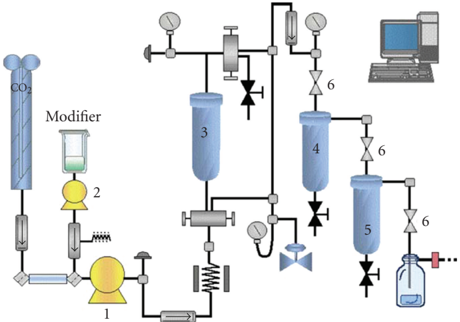
“The extraction cell is for solids whilst packed columns are used for liquids [45].”
BackgroundMethodInfluentialPhotobioreactors for Mass Cultivation of Algae
Ugwu, C. U., Aoyagi, H., & Uchiyama, H. (2008) · Bioresource Technology · doi:10.1016/j.biortech.2007.01.046 · Cited by 1,209 · cited 4×
“However, the design suffers from the following drawbacks: (1) difficulty in controlling culture temperatures; (2) scaleup requires more compartments and support materials; (3) stronger hydrodynamic stress on microalgal cultures [31].”
BackgroundInfluentialMicroalgae: biotechnology and microbiology
(1994) · Choice Reviews Online · doi:10.5860/choice.32-0920 · Cited by 1,130 · cited 1×
“The structural and functional simplicity of these microorganisms makes them a better choice for research purposes than any other terrestrial plants [22].”
Background
Cited by
Items 301–394 of 394
Physiological Interactions of Phaseolus vulgaris L. with Telfairia Mosaic Virus
Mofunanya, A. A. J., Effa, E. A., Ngele, B. A., Akomaye, F., & Damian, A. O. (2021) · Acta Scientific Agriculture · doi:10.31080/asag.2021.05.1011 · Cited by 2
Effect of plant hormones on the production of biomass and lipid in microalgae
Allaf, M. M. (2013) · Scholarship@Western (Western University) · Cited by 4
Joaquín-Ovalle, F. M., Guihurt, G., Barceló‐Bovea, V. C., Saba, A. H., Fontanet-Gomez, N., Ramírez‐Paz, J., Kashino, Y., Torres‐Martínez, Z., Doble-Cacho, K., Delinois, L. J., et al. (2022) · BioTech · doi:10.3390/biotech11020009 · Cited by 2
“roo te erat re of a SI- I s erco lex as obtained (Figure 1b), which showed a maximum peak at 679 nm [32, 3].”
BackgroundMarine Algal Colorants for the Food Industry
Venil, C. K., Ramesh, C., Devi, P. R., & Dufossé, L. (2022) · Springer eBooks · doi:10.1007/978-3-030-92174-3_8 · Cited by 2
Surya, V. S., Alexander, A., Sandra, S., & Marpaung, A. M. (2022) · Journal of Functional Food and Nutraceutical · doi:10.33555/jffn.v3i2.89 · Cited by 2
Ice cream supplemented with Spirulina platensis: Antioxidant and color stability
Boyanova, P., Bosakova–Ardenska, A., Gradinarska, D., Petkova, N., & Panayotov, P. (2023) · AIP conference proceedings · doi:10.1063/5.0173329 · Cited by 3
The stability of pigments in the thalli and extracts of the Barents Sea fucus algae
Даурцева, А. В., & Obluchinskaya, E. D. (2019) · Vestnik MGTU · doi:10.21443/1560-9278-2019-22-3-314-321 · Cited by 2
Potential of Cyanobacterium Spirulina platensis for Eutrophic Water Restoration
Gopi, V. (2021) · uO Research (University of Ottawa) · doi:10.20381/ruor-26066 · Cited by 2
Pebriana, R. B., Lukitaningsih, E., & Khasanah, S. M. (2017) · Majalah Obat Tradisional · doi:10.22146/mot.31555 · Cited by 1
Applications and Efficacy of Exceptional Bioactive Compounds from Microalgae
Sinha, S., Bisaria, K., Mehrotra, T., & Singh, R. (2020) · The handbook of environmental chemistry · doi:10.1007/698_2020_581 · Cited by 2
Absorção de CO2 por extratos de clorofila: perspectiva de aplicações tecnológicas
Macedo, J. C. A., de Oliveira, L. C., Botero, W. G., & do Carmo, J. B. (2020) · Periódico Eletrônico Fórum Ambiental da Alta Paulista. · doi:10.17271/1980082716520202648 · Cited by 1
Hakim, M. A., Polash, M. A. S., Ashrafuzzaman, M., & Fakir, M. S. A. (2021) · Turkish Journal of Agriculture - Food Science and Technology · doi:10.24925/turjaf.v9i10.1767-1774.4259 · Cited by 1
“Chlorophyll assists in the chelation of heavy metals (Hosikian et al., 2010) Chlorophyll has been studied for its potential in stimulating tissue growth and in stimulating red blood cells in connection with oxygen supply.”
BackgroundFreshwater microalgae: promising food sources with nutritional and functional properties
Farhan, M., Afzaal, M., Kanwal, A., Waqar, A., Khan, Q. F., Ali, M. A., Ahmad, M., & Butt, Z. A. (2025) · Elsevier eBooks · doi:10.1016/b978-0-443-24006-5.00016-x · Cited by 1
Ammar, F. E. B., Hkiri, A. E., Zaafouri, K., Saidane, F., & Hamdi, M. (2025) · Environmental Science and Pollution Research · doi:10.1007/s11356-025-36440-1 · Cited by 1
Sarkar, S., Sarkar, S., Maity, S. K., Bhowmick, T. K., & Gayen, K. (2025) · Preparative Biochemistry & Biotechnology · doi:10.1080/10826068.2025.2502765 · Cited by 1
“[19] The preliminary study by previous researchers demonstrated that the Desmodesmus subspicatus microalgae strain is rich in protein (~60% of dry biomass) and chlorophyll (~4% of dry biomass).”
Rahman, D. Y., Praharyawan, S., Apriastini, M., Nurcahyani, P. R., Nafisyah, A. L., Fatrıasarı, W., Amrullah, A., & Farobie, O. (2025) · Jurnal Pengolahan Hasil Perikanan Indonesia · doi:10.17844/jphpi.v28i5.63115 · Cited by 2
Effective Antioxidants for Stabilization of Chlorophyll Adsorbed on Silica Surface
Kohno, Y., Fukagawa, R., Shibata, M., & Tomita, Y. (2025) · Colorants · doi:10.3390/colorants4040030 · Cited by 1
“In particular, chlorophyll has excellent properties for health, such as antioxidant, antibacterial, anti-inflammatory, and deodorizing effects, in addition to its vivid green color and low toxicity [8].”
Economic and Commercial Viability of Microbial Pigments
Khan, R. A., Qadri, T. A., Khan, A., Anas, M., & Jain, D. (2025) · CABI eBooks · doi:10.1079/9781836990505.0015 · Cited by 2
Scaling up the Production of Microalgal Pigments for Commercial Applications
Mutaf, T., İnam, A., FİLİZFİDANOĞLU, A., & Deniz, İ. (2026) · Springer eBooks · doi:10.1007/978-3-032-05438-8_2 · Cited by 1
Chlorophylls in Microalgae: Distribution, Chemistry, and Applications
Fernandes, A. S., & de Rosso, V. V. (2026) · Springer eBooks · doi:10.1007/978-3-031-93945-7_2 · Cited by 1
Silva, J. S. D. J., Chinalia, F. A., de Souza, C. O., Assis, D. D. J., da Silva, J. B. A., dos Santos, G. M., Cruz, F. T., Medeiros, R. M. D. A., Lemos, P. V. F., & Cardoso, L. G. (2026) · Food and Bioproducts Processing · doi:10.1016/j.fbp.2026.01.025 · Cited by 1
Photosynthetic Solar Cells Using Chlorophyll and the Applications Towards Energy Sustainability
Hoerner, L. J. (2013) · Digital Commons - University of South Florida (University of South Florida) · Cited by 1
Duygu, D. Y. (2017) · Journal of Environmental Science and Engineering B · doi:10.17265/2162-5263/2017.04.003 · Cited by 1
“It has various industrial areas of use such as an additive in pharmaceutical and cosmetic products and as natural food colorant [17, 18].”
BackgroundStudy on Extraction Technology and Stability of Red Pigment in Red Plumeria
Wang, T., Qian-ru, L., Cai, B., & YunYing, Y. (2021) · Agriculture Forestry and Fisheries · doi:10.11648/j.aff.20211004.14 · Cited by 1
Sasadara, M. M. V., Nayaka, N. M. D. M. W., Yuda, P. E. S. K., Cahyaningsih, E., & Dewi, N. L. K. A. A. (2022) · Jurnal Ilmiah Medicamento · doi:10.36733/medicamento.v9i1.5344 · Cited by 3
Deka, D., Chikkaputtaiah, C., & Velmurugan, N. (2023) · Russian Journal of Marine Biology · doi:10.1134/s1063074023040028 · Cited by 1
“So far, in microalgae, chlorophyll-b is an accessory blue/green pigment primarily involved in light-harvesting mechanism of light-harvesting complexes (LHCs) to improve the light-harvesting efficiency [25, 31].”
BackgroundКожемяка, О. В., Пешук, Л. В., & Вербицький, С. (2023) · Food Resources · doi:10.31073/foodresources2023-21-08 · Cited by 3
WANG, L. H., GUAN, J. N., Ji, W., Rasheed, A., MAHMOOD, A., Hassan, M., AKRAM, M., Al-Khayri, J. M., Al-Daej, M. I., SATTAR, M. N., et al. (2024) · Applied Ecology and Environmental Research · doi:10.15666/aeer/2201_373394
Afrin, E., Akter, T., Baidya, A., Hossaın, M. A., Islam, M. R., Das, M., Fatema, U. K., Alam, M. S., & Iqbal, M. A. (2024) · Journal of Applied Aquaculture · doi:10.1080/10454438.2024.2351375 · Cited by 6
Rahim, A. F. C., Ahmad, M. R., Ismail, K., & Kadir, M. I. A. (2019) · International Journal of Engineering & Technology · doi:10.14419/ijet.v7i4.14.27666 · Cited by 1
“Not just that, it is proven that SFE using CO2 as a solvent has provided a good alternative to the use of chemical solvents [19].”
BackgroundLafarga, T., & Aguiló‐Aguayo, I. (2021) · Elsevier eBooks · doi:10.1016/b978-0-12-820096-4.00010-9 · Cited by 5
Algal Bioactive Components: Sources, Health Benefits, and Sustainability
Yadav, A., Sharma, R., & Mehrotra, R. (2022) · Springer eBooks · doi:10.1007/978-981-19-2366-1_6 · Cited by 3
Prathipa, A., Manigandan, G., Dinesh Kumar, S., Santhanam, P., Perumal, P., Krishnaveni, N., Nanthini Devi, K., & Vijayalakshmi, S. (2021) · Research Square · doi:10.21203/rs.3.rs-681760/v1 · Cited by 1
Adiga, V., Samanyu Chandra, P., Kikkeri, V. V., Praveen, C., & Senapati, S. (2023) · Qeios · doi:10.32388/i14rge.2 · Cited by 1
Mendili, M., & Khadhri, A. (2025) · Wiley eBooks · doi:10.1002/9781394287888.ch9 · Cited by 2
Goel, N., & Choudhary, P. (2025) · Wiley eBooks · doi:10.1002/9781394241538.ch19 · Cited by 1
Cultivable Marine Organisms as a Source of New Products
Kornprobst, J. (2014) · Wiley eBooks · doi:10.1002/9783527683321.ch15 · Cited by 1
Ramluckan, K. (2015) · DUT Open Scholar (Durban University of Technology) · doi:10.51415/10321/1282
Maroño, S. T. (2015) · RUC (Universidade Da Coruña)
Influence of Spent Cooling Water on Primary Production
Drost, A. (2013) · Polish Journal of Environmental Studies
Macroalgal Value Chain: Value-Added Products
Nayar, S., Zhang, W., & Roos, G. (2018) · Advances in environmental engineering and green technologies book series · doi:10.4018/978-1-5225-5577-3.ch002
Yalçın, D., Erkaya, İ. A., & Sızmaz, Ö. (2019) · AQUATIC RESEARCH · doi:10.3153/ar19003 · Cited by 1
Microalgal Pigments Carotenoids and Chlorophyll as Potential Natural Colorants to Cakes
Jong, S. H., Soh, W. J., Peng, S. Y., & Matias‐Peralta, H. M. (2020) · CLSU International Journal of Science and Technology · doi:10.22137/ijst.2020.v4n1.03
Development of a Novel Preprocessing Method for Removal of Chlorophyll from Microalgae
Kulasinghe, Y. M., & Ariyadasa, T. U. (2020) · Moratuwa Engineering Research Conference (MERCon) · doi:10.1109/mercon50084.2020.9185262
“4 nm and 470 nm wavelengths by UV visible spectrophotometer [12].”
A Brief Review on Dye Sensitized Solar Cells
Bhargava, U. R. (2021) · International Journal for Research in Applied Science and Engineering Technology · doi:10.22214/ijraset.2021.37089
Chlorophyll extraction from Egyptian Luffa leaf
Mai, C. H. (2019) · The Journal of Agriculture and Development · doi:10.52997/jad.12.04.2019
Pigments, Dyes, and Colourants
(2022) · Royal Society of Chemistry eBooks · doi:10.1039/9781788013024-00701
Caracterización nutricional y aromática de especies infravaloradas de hoja comestible
Fukalova, T. F. (2022) · RiuNet (Universitat Politècnica de València) · doi:10.4995/thesis/10251/190999
Macaranas, K. (2022) · Aletheia · doi:10.21081/ax0327
“The measurement of chlorophyll-a is an effective method used to quantify algae biomass through its oxygenic photosynthesis output ( APHA, 1999; Hosikian et al., 2010).”
BackgroundMethodInfluentialAdiga, V., Samanyu Chandra, P., Kikkeri, V. V., Praveen, C., & Senapati, S. (2023) · doi:10.32388/i14rge
Adiga, V., Samanyu Chandra, P., Kikkeri, V. V., Praveen, C., & Senapati, S. (2023) · Qeios · doi:10.32388/i14rge.3
Adiga, V., Samanyu Chandra, P., Kikkeri, V. V., Praveen, C., & Senapati, S. (2023) · Qeios · doi:10.32388/i14rge.4
Alghamdi, M., Alharbi, N., Alharbi, R., Alsobhi, R. E., Ashangity, R. A., Aldagal, M. M., & Sharawi, S. E. (2023) · International Journal of Herbal Medicine · doi:10.22271/flora.2023.v11.i5a.888
Beşliu, A., Chiselița, O., Chiseliţa, N., Efremova, N., & Chiriac, T. (2023) · Journal of Biological Research - Bollettino della Società Italiana di Biologia Sperimentale · doi:10.4081/jbr.2023.11425
Assessment of natural and pyrolytic antioxidants as additives to biodiesel production
Falconí, J. H. H. (2022) · doi:10.47328/ufvbbt.2023.222 · Cited by 1
Emerging Techniques for Extraction and Applications of Biomolecules from Microalgae
Mankoti, M., Chauhan, N. S., Meena, S. S., & Mohanty, A. (2024) · Environmental science and engineering · doi:10.1007/978-3-031-52319-9_13 · Cited by 1
de Morais, M. G., Kuntzler, S. G., Cruz, C. G., da Silveira, J. T., Costa, J. A. V., & Moreira, J. B. (2025) · Elsevier eBooks · doi:10.1016/b978-0-323-91742-1.00002-7
Sustainable microalgae-derived pigments for the food industry
Barq, M. G., Hussain, W., Khan, Q. F., Azhar, N., & Afzaal, M. (2025) · Elsevier eBooks · doi:10.1016/b978-0-443-24006-5.00006-7 · Cited by 2
Estimation of Chlorophyll-a and Pheophytin-a in an East Euphrates Drainage Water
Al-Ghanimy, D. B. G. (2024) · Al-Qadisiyah Journal Of Pure Science · doi:10.29350/2411-3514.1279
Liang, T., & Jing, P. (2025) · BioNanoScience · doi:10.1007/s12668-025-01965-9
“Moreover, chlorophyll exhibits various biological activities, such as antioxidant activity, anti-inflammatory, neuroprotective, antibacterial, anticancer, and wound-healing effects [3–7].”
Microbial Pigments: A Healthy Alternative of Synthetic Dyes in Food Industry
Ghosh, U. D. (2025) · Journal of Pure and Applied Microbiology · doi:10.22207/jpam.19.2.24 · Cited by 1
Pharmaceutical and Nutraceutical Applications of Marine Microalgae
John, N., Raj, P., Jose, J., Swathy, T., Haneef, F. F., Gokuljith, S., & Sunil, R. L. (2025) · Wiley eBooks · doi:10.1002/9781394301324.ch3
Microalgae as Biofactories: Metabolites, Bioproducts, and Industrial Biotechnology Applications
Rahaman, T., Samanta, S., Seth, A., Debnath, B., & Das, S. (2025) · Current Biotechnology · doi:10.2174/0122115501408500251019130934
Microalgae Biomass Production: Cultivation Techniques and Applications
Singh, S., Soni, K., Maurya, P., Chaurasia, P., & Singh, S. (2026) · Current World Environment · doi:10.12944/cwe.20.3.6
Gogate, P. R., Joshi, S. M., & Yadav, P. (2026) · Springer eBooks · doi:10.1007/978-3-032-05438-8_6
Green Color Additives: The Role of Microalgae Chlorophylls in the Food Industry
Ebrahimi, P., & Lante, A. (2026) · Springer eBooks · doi:10.1007/978-3-032-05253-7_1
Green Chemistry Methods for Analysing Microalgae Pigments
Sergeeva, N. N. (2026) · Springer eBooks · doi:10.1007/978-3-031-93945-7_16 · Cited by 1
Meng, W., Dhanshetty, M., & García‐Vaquero, M. (2026) · Elsevier eBooks · doi:10.1016/b978-0-443-34082-6.00015-5
Bioraffinerie de la microalgue Haematococcus pluvialis
Ba, F. (2016) · theses.fr (ABES) · doi:10.70675/71e8168fz0507z4d65z8f75zf26b8f522563
Impact of emerging technologies on the cell disruption and fractionation of microalgal biomass
Zhang, R. (2020) · theses.fr (ABES) · doi:10.70675/b16ad624ze61dz408ez89f3z5b19676ca4a7 · Cited by 2
Cauchie, G. (2021) · theses.fr (ABES) · doi:10.70675/3c5b8994za824z4efaz8921zab55084c3c6e
Liu, S. (2021) · theses.fr (ABES) · doi:10.70675/4643dc17z9f7ez4986zb08eza86ecfee0ca4 · Cited by 2
Pigment Stability and Degradation Under Different Storage and Processing Conditions
Madhumitha, L., Sudharsan, M. S., Thajudeen, N., Pandurangan, P., Inbathamizh, L., & Dhanasekaran, S. (2026) · Methods and protocols in food science · doi:10.1007/978-1-0716-5344-9_11
Algal Pigments in Nutraceuticals: Applications and Benefits for Health and Wellness
Dutta, S., & Yasmin, R. (2026) · Springer eBooks · doi:10.1007/978-3-032-22521-4_13
Algal Pigments: Chlorophylls, Carotenoids and Phycobilins as Health-Promoting Agents
Rani, M. H. E., Saranya, V. P., Rathnasamy, S., Kumar, S. R., & Aswini, A. (2026) · Springer eBooks · doi:10.1007/978-3-032-22521-4_12 · Cited by 1
Surya, K., Pathak, M. S., Munilkumar, S., Chanu, T. I., Layana, P., Mantri, V. A., Sarma, D., Harini, G., S, P. P., Bhagiya, B. K., et al. (2026) · Algal Research · doi:10.1016/j.algal.2026.104794
Gao, L., Li, X., Zhu, R., Dong, H., Kou, Y., He, H., & Wang, M. (2026) · Microorganisms · doi:10.3390/microorganisms14071387
“Chl a concentration was determined by spectrophotometry after acetone extraction [23,24].”
Pigments Isolated from Microalgae and Food Applications
Rayo-Mendez, L. M., & Llanos, J. H. R. (2026) · Wiley eBooks · doi:10.1002/9781394360307.ch04
Antibacterial Enhancement of Alginate Edible Films by Incorporation of Green Betel Leaf Extract
Giyatmi, G., Nugroho, B. A., Rahmawati, R., Fransiska, D., & Irianto, H. E. (2026) · IOP Conference Series Earth and Environmental Science · doi:10.1088/1755-1315/1650/1/012009
“This finding is consistent with the observation that green betel leaf extract possesses a characteristic green coloration [38].”
Nhon, H. T. N., Khoa, L. N. D., & Le, T. H. A. (2026) · Food Science & Nutrition · doi:10.1002/fsn3.72320
“Extraction strategies have predominantly targeted microalgae such as Spirulina ( Arthrospira ) and Chlorella , as well as leafy vegetables, due to their high pigment content (Hosikian et al. 2010).”
Teymoornejad, G., & Jabbari, M. (2026) · Sustainable Chemistry and Pharmacy · doi:10.1016/j.scp.2026.102558
Silva, J. S. D. J., Chinalia, F. A., dos Santos, G. M., de Souza, C. O., & Cardoso, L. G. (2026) · Studies in natural products chemistry · doi:10.1016/b978-0-443-51072-4.00002-8
Küçükduman, Y., Taştan, Ö., & Şahyar, B. (2026) · Foods · doi:10.3390/foods15183317
“Weak acids, light, and oxygen promote chlorophyll degradation and the formation of degradation products [51].”
Ariani, F., & Sujadi (2026) · Thaqafiyyat Jurnal Bahasa Peradaban dan Informasi Islam · doi:10.14421/thaq.2026.25101
Esposito, C., Pozzo, S., & Secundo, F. (2026) · Wiley eBooks · doi:10.1002/9781394348930.ch6
Light Transfer Simulation Tools in Photobiological Fuel Production
Lee, E. (2013) · eScholarship (California Digital Library)
Case studies on selected natural food antioxidants
Herrero, M., Mendiola, J. A., Cifuentes, A., & Ibáñez, E. (2013) · DIGITAL.CSIC (Spanish National Research Council (CSIC)) · Cited by 1
Metadata
- Authors
- Hosikian, A., Lim, S., Halim, R., & Danquah, M. K.
- Affiliations
- Monash University (AU)
- Corresponding author
- Halim, Ronald
- Venue
- International Journal of Chemical Engineering
- Publisher
- Wiley
- Published
- 2010
- Volume
- 2010
- Pages
- 1-11
- ISSN
- 1687-806X (ISSN-L)
- 1687-8078
- OpenAlex
- W2157045920
- Semantic Scholar
- bc4cd5ffa615d0d1e7816d6688dfc931b464ceca
- Cited by
- 394
- References
- 56
- Citations by year
- 2026: 21 · 2025: 35 · 2024: 29 · 2023: 29 · 2022: 41 · 2021: 52 · 2020: 51 · 2019: 24 · 2018: 28 · 2017: 24 · 2016: 8 · 2015: 14 · 2014: 10 · 2013: 19 · 2012: 6
- FWCI
- 4.20
- Type
- journal article
- Language
- en
- Open access
- gold
- doi.org
- Locations
- International Journal of Chemical Engineering (publishedVersion, cc-by)
- DOAJ (DOAJ: Directory of Open Access Journals) (submittedVersion, cc-by-sa)
- eSpace (Curtin University) (submittedVersion)
- Topics
- Physical Sciences › Energy › Renewable Energy, Sustainability and the Environment › Algal biology and biofuel production
- Life Sciences › Agricultural and Biological Sciences › Aquatic Science › Seaweed-derived Bioactive Compounds
- Physical Sciences › Chemistry › Physical and Theoretical Chemistry › Phase Equilibria and Thermodynamics
- Keywords
- chlorophyll extraction, microalgae, supercritical fluid extraction, organic solvent extraction, HPLC, microalgae cultivation, CO2 capture, wastewater treatment, antioxidant activity
About these checks
Registry, retraction, Cites and statistics results are computed, not judged, with one exception: a printed reference that no index lists is read once by a model before it counts as a citation error. Claims are extracted by a model and kept only when their quote appears verbatim in the text; each cited source is then checked, with a model’s help, for whether it says what the claim relies on. Those verdicts can be wrong — read the claim’s quote and the cited source before relying on one.
Statistics and arithmetic are recomputed, not judged.
Confidence bands are shown only for fields calibrated on our annotated test set. None is calibrated yet, so no band is shown.
What counts as a claim ›How we measure confidence ›How we check this ›
Are you an author, or do you see a problem with this page? Request a review
Data sources
Bibliographic data: Semantic Scholar, OpenAlex, Crossref.
Contains information from the Semantic Scholar Academic Graph Datasets, made available under the ODC Attribution License (ODC-BY 1.0).
Semantic Scholar’s data is described in: Kinney, R., et al. (2023). The Semantic Scholar Open Data Platform. arXiv:2301.10140.
