

Chlorophyll Extraction from Microalgae: A Review on the Process Engineering Aspects
Open accessThe DOI matches its Crossref record; 56 of the 56 references it cites were found in a registry or an index.
Abstract
Chlorophyll is an essential compound in many everyday products. It is used not only as an additive in pharmaceutical and cosmetic products but also as a natural food colouring agent. Additionally, it has antioxidant and antimutagenic properties. This review discusses the process engineering of chlorophyll extraction from microalgae. Different chlorophyll extraction methods and chlorophyll purification techniques are evaluated. Our preliminary analysis suggests supercritical fluid extraction to be superior to organic solvent extraction. When compared to spectroscopic technique, high performance liquid chromatography was shown to be more accurate and sensitive for chlorophyll analysis. Finally, through CO 2 capture and wastewater treatment, microalgae cultivation process was shown to have strong potential for mitigation of environmental impacts.
Overview
The claims and statistics of this paper haven’t been checked yet.
Free: it reads the open-access text and checks the first 5 claims that cite a source we can check. Create a free account to check every claim.
Integrity signals
Registry
Cites
Statistics
Figures
















Verification
Claims the paper makes
The claims and statistics of this paper haven’t been checked yet.
Free: it reads the open-access text and checks the first 5 claims that cite a source we can check. Create a free account to check every claim.
Claims other papers make about this one
Each is checked against this paper’s own text: does it say what the citing paper says it does?
The source backs part of the claim, not all of it — or backs it for a different population, condition or comparison.
In the citing paper
“Due to the high amounts of chlorophyll, orally administered Arthrospira platensis biomass and Arthrospira platensis extract exerts gastro-protective effects [125,126].”
From Application of Arthrospira platensis for Medicinal Purposes and the Food Industry: A Review of the Literature (2023) · cites this paper as [125]
Experimental — accuracy not yet measured
Self-check
Percentages, sums and reported differences re-computed from the paper’s own numbers.
The self-check needs the paper’s full text.
Citations
Cites
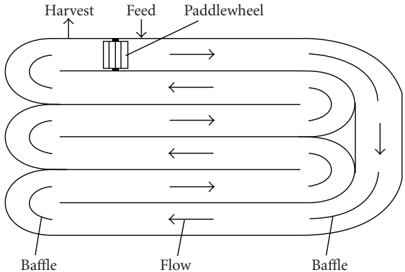
Chisti, Y. (2007) · Biotechnology Advances · doi:10.1016/j.biotechadv.2007.02.001 · Cited by 9,524 · cited 4×
“The raceways ponds are made from concrete or compacted earth that can be lined with plastics [3].”
BackgroundInfluentialBrennan, L., & Owende, P. (2010) · Renewable and Sustainable Energy Reviews · doi:10.1016/j.rser.2009.10.009 · Cited by 4,894 · cited 7×
“Thus, the biomass produced from microalgal cultivation has numerous uses [17]: (1) a source of biofuels (biodiesel and bioethanol); (2) a nutritional supplement for humans in the form of tablets, capsules, powders and liquids; (3) a natural food colorant; (4) a natural food source for many aquacultural species; (5) a…”
BackgroundInfluentialCommercial Applications of Microalgae
Spolaore, P., Joannis-Cassan, C., Duran, E., & Isambert, A. (2006) · Journal of Bioscience and Bioengineering · doi:10.1263/jbb.101.87 · Cited by 4,285 · cited 1×
“Thus, the biomass produced from microalgal cultivation has numerous uses [17]: (1) a source of biofuels (biodiesel and bioethanol); (2) a nutritional supplement for humans in the form of tablets, capsules, powders and liquids; (3) a natural food colorant; (4) a natural food source for many aquacultural species; (5) a…”
BackgroundSecond Generation Biofuels: High-Efficiency Microalgae for Biodiesel Production
Schenk, P. M., Thomas-Hall, S. R., Stephens, E., Marx, U. C., Mussgnug, J. H., Posten, C., Kruse, O., & Hankamer, B. (2008) · BioEnergy Research · doi:10.1007/s12155-008-9008-8 · Cited by 2,333 · cited 1×
“This method will be much simpler than physical CO2 sequestration [21].”
MethodCommercial production of microalgae: ponds, tanks, tubes and Fermenters.
Borowitzka, M. A. (1999) · Journal of Biotechnology · doi:10.1016/s0168-1656(99)00083-8 · Cited by 1,317 · cited 6×
“Even though the photobioreactor system gives control over most cultivation parameters and achieves a higher CO2 fixation rate than open-air system, it requires large amount of energy for its operation and construction [19, 30].”
BackgroundInfluential(2000) · CrossRef Listing of Deleted DOIs · doi:10.1016/s0967-0653(97)89288-5 · Cited by 1,257
CO2 bio-mitigation using microalgae
Wang, B., Li, Y., Wu, N., & Lan, C. Q. (2008) · Applied Microbiology and Biotechnology · doi:10.1007/s00253-008-1518-y · Cited by 1,212 · cited 10×
“Efficiency of CO2 capture by microalgae increases with power plant flue gases that have up to 15% of CO2 [19] and studies have shown that microalgal species (such as Scenedesmus sp.”
BackgroundInfluentialHERRERO, M., CIFUENTES, A., & IBANEZ, E. (2006) · Food Chemistry · doi:10.1016/j.foodchem.2005.05.058 · Cited by 1,212 · cited 4×
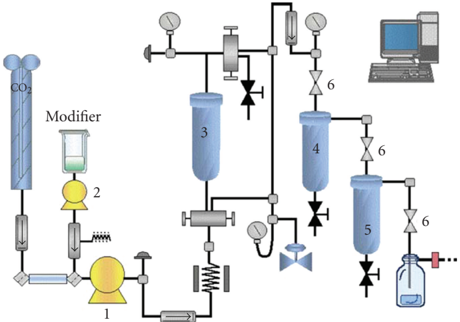
“The extraction cell is for solids whilst packed columns are used for liquids [45].”
BackgroundMethodInfluentialPhotobioreactors for Mass Cultivation of Algae
Ugwu, C. U., Aoyagi, H., & Uchiyama, H. (2008) · Bioresource Technology · doi:10.1016/j.biortech.2007.01.046 · Cited by 1,209 · cited 4×
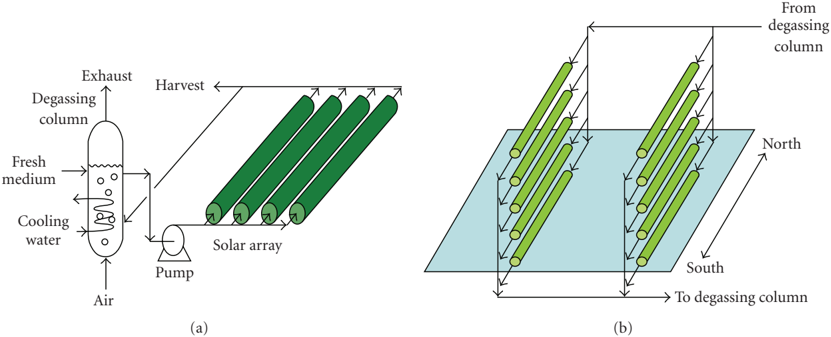
“However, the design suffers from the following drawbacks: (1) difficulty in controlling culture temperatures; (2) scaleup requires more compartments and support materials; (3) stronger hydrodynamic stress on microalgal cultures [31].”
BackgroundInfluentialMicroalgae: biotechnology and microbiology
(1994) · Choice Reviews Online · doi:10.5860/choice.32-0920 · Cited by 1,130 · cited 1×
“The structural and functional simplicity of these microorganisms makes them a better choice for research purposes than any other terrestrial plants [22].”
BackgroundExtraction of chlorophyll a from freshwater phytoplankton for spectrophotometric analysis
Sartory, D. P., & Grobbelaar, J. U. (1984) · Hydrobiologia · doi:10.1007/bf00031869 · Cited by 967 · cited 9×
“Sartory & Grobbelaar [34] Scenedesmus quadricauda, Selenastrum capricornutum, Microcystysis aeruginosa Ethanol (95%), methanol, acetone (90%) Homogenisation, sonication, boiling (1) Methanol and 95% ethanol were superior to 90% acetone.”
BackgroundMethodInfluentialMantoura, R. F. C., & Llewellyn, C. A. (1983) · Analytica Chimica Acta · doi:10.1016/s0003-2670(00)80092-6 · Cited by 912 · cited 6×
“Additionally no ion pairing reagent is required, as in Mantoura and Llewellyn [37].”
BackgroundMethodInfluentialSupercritical fluid extraction: Recent advances and applications
Herrero, M., Mendiola, J. A., Cifuentes, A., & Ibáñez, E. (2010) · Journal of Chromatography A · doi:10.1016/j.chroma.2009.12.019 · Cited by 849 · cited 3×
“For example, the addition of a polar solvent like methanol or water to supercritical CO2 allows it to extract polar compounds [39, 42].”
BackgroundSupercritical fluids: technology and application to food processing
Brunner, G. (2005) · Journal of Food Engineering · doi:10.1016/j.jfoodeng.2004.05.060 · Cited by 839 · cited 1×
“The fluid is easily removed from extract through expansion to atmospheric pressure [41].”
BackgroundApplication of supercritical CO2 in lipid extraction – A review
Sahena, F., Zaidul, I. S. M., Jinap, S., Karim, A. A., Abbas, K. A., Norulaini, N. A. N., & Omar, A. K. M. (2009) · Journal of Food Engineering · doi:10.1016/j.jfoodeng.2009.06.026 · Cited by 643 · cited 2×
“Table 3 shows the comparison between the two extraction methods [40].”
BackgroundMicroalgae: a green source of renewable H2
Ghirardi, M. (2000) · Trends in Biotechnology · doi:10.1016/s0167-7799(00)01511-0 · Cited by 626 · cited 1×
“Thus, the biomass produced from microalgal cultivation has numerous uses [17]: (1) a source of biofuels (biodiesel and bioethanol); (2) a nutritional supplement for humans in the form of tablets, capsules, powders and liquids; (3) a natural food colorant; (4) a natural food source for many aquacultural species; (5) a…”
BackgroundDigestion, absorption, and cancer preventative activity of dietary chlorophyll derivatives
Ferruzzi, M. G., & Blakeslee, J. (2007) · Nutrition Research · doi:10.1016/j.nutres.2006.12.003 · Cited by 524 · cited 2×
“The most significant activity of chlorophyll derivatives in the prevention of cancer is the trapping of mutagens in the gastrointestinal tract [16].”
BackgroundAntioxidant activity of chlorophylls and their derivatives
Lanfer-Marquez, U. M., Barros, R. M. C., & Sinnecker, P. (2005) · Food Research International · doi:10.1016/j.foodres.2005.02.012 · Cited by 477 · cited 3×
“However, these derivatives exist in very low concentrations in fruits and vegetables [15].”
BackgroundSupercritical carbon dioxide extraction of compounds with pharmaceutical importance from microalgae
Mendes, R. L., Nobre, B. P., Cardoso, M. T., Pereira, A. P., & Palavra, A. F. (2003) · Inorganica Chimica Acta · doi:10.1016/s0020-1693(03)00363-3 · Cited by 441 · cited 4×
“For example, the addition of a polar solvent like methanol or water to supercritical CO2 allows it to extract polar compounds [39, 42].”
BackgroundInfluentialGlobal warming and carbon dioxide through sciences
Florides, G. A., & Christodoulides, P. (2009) · Environment International · doi:10.1016/j.envint.2008.07.007 · Cited by 429 · cited 2×
“The rise in global temperature is attributed to the high amount of carbon dioxide (CO2) gases in the atmosphere [18, 19].”
BackgroundPacker, M. (2009) · Energy Policy · doi:10.1016/j.enpol.2008.12.025 · Cited by 409 · cited 1×
“Apart from CO2 and sunlight, microalgae also need nutrients, trace metals and water to grow [24].”
BackgroundMarine Biotechnology for Production of Food Ingredients
Rasmussen, R. S., & Morrissey, M. T. (2007) · Advances in Food and Nutrition Research · doi:10.1016/s1043-4526(06)52005-4 · Cited by 293 · cited 1×
“Marine microalgae in particular have unique biochemical characteristics not found in higher plants [1].”
BackgroundDecolorization of ion-exchange effluents derived from sugar-mill operations by Bjerkandera sp.BOS55
Moreira, M. T., Palma, C., Feijoo, G., & Lema, J. M. (1997) · International Biodeterioration & Biodegradation · doi:10.1016/s0964-8305(97)00044-9 · Cited by 291
Tolerance of microalgae to high CO2 and high temperature
Hanagata, N., Takeuchi, T., Fukuju, Y., Barnes, D. J., & Karube, I. (1992) · Phytochemistry · doi:10.1016/0031-9422(92)83682-o · Cited by 276 · cited 1×
“) can tolerate 10% to 30% CO2 in its gas supply [29].”
BackgroundMACIASSANCHEZ, M., MANTELL, C., RODRIGUEZ, M., MARTINEZDELAOSSA, E., LUBIAN, L., & MONTERO, O. (2009) · Talanta · doi:10.1016/j.talanta.2008.07.032 · Cited by 266 · cited 3×
“[33] Dunaliella Salina DMF Methanol Ultrasound DMF was found to be more efficient methanol.”
BackgroundCO2 mitigation with microalgae systems
Benemann, J. R. (1997) · Energy Conversion and Management · doi:10.1016/s0196-8904(96)00313-5 · Cited by 249 · cited 2×
“Microalgae can also grow in variable environmental conditions [19, 20, 23].”
BackgroundSupercritical fluid extraction of carotenoids and chlorophyll a from Nannochloropsis gaditana
Macı́as-Sánchez, M. D., Mantell, C., Rodrı́guez, M., Martı́nez de la Ossa, E., Lubián, L. M., & Montero, O. (2005) · Journal of Food Engineering · doi:10.1016/j.jfoodeng.2004.03.021 · Cited by 232 · cited 2×
“Therefore, the chlorophyll yield on each operating condition will depend on which effect predominates [43, 46].”
BackgroundScheer, H. (2013) · Encyclopedia of Biological Chemistry · doi:10.1016/b978-0-12-378630-2.00134-1 · Cited by 218 · cited 3×
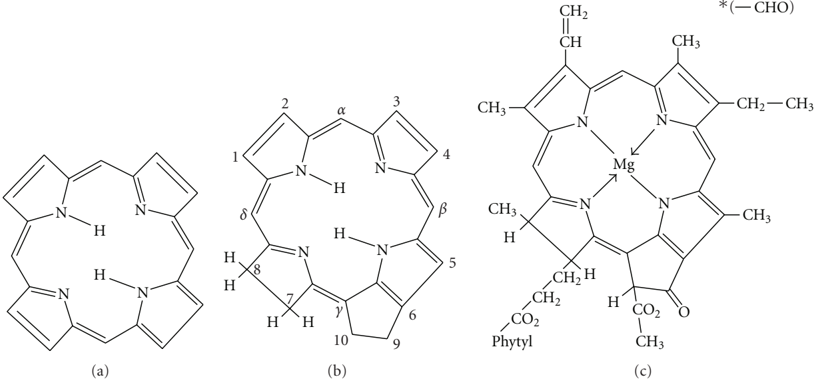
“All of the nitrogen atoms face inward creating a central hole where an Mg2+ metal ion easily binds [7].”
BackgroundCohen, Z. (2002) · CRC Press eBooks · doi:10.1201/9781482295306 · Cited by 217 · cited 1×
“There are over 30,000 species of microalgae in existence on the Earth and they contain a variety of chemicals that have commercial values [26].”
BackgroundMini-Review: Green sustainable processes using supercritical fluid carbon dioxide
RAMSEY, E., SUN, Q., ZHANG, Z., ZHANG, C., & GOU, W. (2009) · Journal of Environmental Sciences · doi:10.1016/s1001-0742(08)62330-x · Cited by 212 · cited 1×
“As a result, more industries are looking into a new sustainable process that does not involve environmentally damaging solvents [38].”
BackgroundQuantitative thin-layer chromatography of chlorophylls and carotenoids from marine algae
Jeffrey, S. W. (1968) · Biochimica et Biophysica Acta (BBA) - Bioenergetics · doi:10.1016/0005-2728(68)90109-6 · Cited by 207 · cited 6×
“However, Jeffrey [49] found that use of silica gel promoted the formation of degradation products and resulted in multiple chlorophyll zones.”
BackgroundMethodInfluentialWright, S. W., & Shearer, J. D. (1984) · Journal of Chromatography A · doi:10.1016/s0021-9673(01)96134-5 · Cited by 180 · cited 4×
“HPLC is superior to TLC because it requires even less sample for analysis, is faster and features automatic detection system [37, 51].”
BackgroundResultInfluentialSupercritical fluid extraction of carotenoids and chlorophyll a from Synechococcus sp.
Macías-Sánchez, M. D., Mantell, C., Rodríguez, M., Martínez de la Ossa, E., Lubián, L. M., & Montero, O. (2007) · The Journal of Supercritical Fluids · doi:10.1016/j.supflu.2006.03.008 · Cited by 179 · cited 1×
“Therefore, the chlorophyll yield on each operating condition will depend on which effect predominates [43, 46].”
BackgroundPaper-chromatographic separation of chlorophylls and carotenoids from marine algae
JEFFREY, S. (1961) · Biochemical Journal · doi:10.1042/bj0800336 · Cited by 167 · cited 1×
“This method was found to effectively separate chlorophyll into its three fractions (a, b, and c), pheophytins, carotenes and other derivative products [54].”
MethodMendes, R. L., Reis, A. D., & Palavra, A. F. (2006) · Food Chemistry · doi:10.1016/j.foodchem.2005.07.019 · Cited by 154 · cited 1×
“Studies have shown that addition of ethanol to supercritical fluid increases the yield of lipids from Arthrospira maxima [44].”
BackgroundChlorophyll as a Color and Functional Ingredient
Humphrey, A. M. (2004) · Journal of Food Science · doi:10.1111/j.1365-2621.2004.tb10710.x · Cited by 154 · cited 7×
“An attachment of a single isocyclic ring to one of the pyrrole rings gives rise to the phorbin structure [6].”
BackgroundInfluentialPlant pigments as natural food colours
Timberlake, C. F., & Henry, B. (1986) · Endeavour · doi:10.1016/0160-9327(86)90048-7 · Cited by 152 · cited 3×
“Consumers demand products of original appearance, while manufacturers desire uniformity for all products [8, 9].”
BackgroundMass Cultivation of Freshwater Microalgae
Masojídek, J., & Torzillo, G. (2008) · Elsevier eBooks · doi:10.1016/b978-008045405-4.00830-2 · Cited by 142 · cited 1×
“The selection of a cultivation system depends on several factors: the type and the biology of the algal species, the availability of sunlight, the cost of land, the water supply, the availability of nutrients, the desired final product, the climate conditions and the supply of CO2 [25, 30].”
BackgroundZeiler, K., Heacox, D. A., Toon, S. T., Kadam, K. L., & Brown, L. M. (1995) · Energy Conversion and Management · doi:10.1016/0196-8904(95)00103-k · Cited by 124
Extraction and quantification of chlorophyll a from freshwater green algae
Simon, D., & Helliwell, S. (1998) · Water Research · doi:10.1016/s0043-1354(97)00452-1 · Cited by 107 · cited 7×
“Simon & Helliwell [36] Freshwater algae Selenastrum obliquus Methanol and acetone Probe sonication, bath sonication, tissue grinding, mortar and pestle Under sonication, methanol removed 3x more pigment than acetone.”
BackgroundMethodInfluentialSchumann, R., Häubner, N., Klausch, S., & Karsten, U. (2005) · International Biodeterioration & Biodegradation · doi:10.1016/j.ibiod.2004.12.002 · Cited by 106 · cited 5×
“In addition to cell disruption, there are other parameters which affect the efficiency of organic solvent extraction, including the storage conditions of the filtered microalgae prior to the analysis, the organic solvents used, the duration of the extraction and the number of extraction steps employed in the analysis…”
BackgroundMethodInfluentialHumphrey, A. M. (1980) · Food Chemistry · doi:10.1016/0308-8146(80)90064-3 · Cited by 90
The determination of phytoplankton pigments by high-performance liquid chromatography
Abaychi, J. K., & Riley, J. P. (1979) · Analytica Chimica Acta · doi:10.1016/s0003-2670(01)93190-3 · Cited by 76
Catalina, C. S., Lobo, M., & González, M. (2007) · Journal of Food Composition and Analysis · doi:10.1016/j.jfca.2007.07.007 · Cited by 70 · cited 3×
“Degradation products of chlorophyll are formed when their molecules are exposed to excess light, oxygen/air, high temperatures and acidic or basic conditions [4, 5].”
BackgroundDevelopments in food colourings: the natural alternatives
Spears, K. J. (1988) · Trends in biotechnology · doi:10.1016/0167-7799(88)90126-6 · Cited by 62 · cited 3×
“Consumers demand products of original appearance, while manufacturers desire uniformity for all products [8, 9].”
BackgroundSartory, D. P. (1985) · Water Research · doi:10.1016/0043-1354(85)90066-1 · Cited by 54 · cited 1×
“Sartory [48], HPLC Solvent A is 97% methanol Solvent B is 97% acetone”
The use of thin-layer chromatography for the separation and identification of phytoplankton pigments
Riley, J. P., & Wilson, T. R. S. (1965) · Journal of the Marine Biological Association of the United Kingdom · doi:10.1017/s002531540001643x · Cited by 53 · cited 4×
“Riley and Wilson [53] and Lynn Co and Schanderl [52] utilised silica gel as their stationary phase and managed to completely separate all of the plant pigments except for some minor components.”
BackgroundInfluentialRapid method for the separation of chlorophylls a and b by high-pressure liquid chromatography
Shoaf, W. T. (1978) · Journal of Chromatography A · doi:10.1016/s0021-9673(00)85360-1 · Cited by 43
Small wonders: biomass from algae
Marsh, G. A. (2009) · Renewable energy focus · doi:10.1016/s1755-0084(09)70046-8 · Cited by 31 · cited 3×
“The photobioreactor system maximises photosynthesis by circulating the microalgal cells, nutrients, and CO2 in a narrow enclosed transparent vessel exposed to ample illumination [32].”
BackgroundInfluentialThe use of water soluble chlorophyll in oral sepsis
Goldberg, S. L. (1943) · The American Journal of Surgery · doi:10.1016/s0002-9610(43)90301-0 · Cited by 30
Treatment of chronic ulcers with chlorophyll
Cady, J. B., & Morgan, W. S. (1948) · The American Journal of Surgery · doi:10.1016/0002-9610(48)90367-5 · Cited by 22
Smith, L. W., & Livingston, A. E. (1945) · The American Journal of Surgery · doi:10.1016/0002-9610(45)90322-9 · Cited by 21 · cited 1×
“Since chlorophyll stimulates tissue growth, it prevents the advancement of bacteria and speeds up the wound healing process [10, 11].”
BackgroundSeparation of chlorophylls and related plant pigments by two-dimensional thin-layer chromatography
Co, D. Y. C. L., & SCHANDERL, S. H. (1967) · Journal of Chromatography A · doi:10.1016/s0021-9673(01)98901-0 · Cited by 21 · cited 3×
“Riley and Wilson [53] and Lynn Co and Schanderl [52] utilised silica gel as their stationary phase and managed to completely separate all of the plant pigments except for some minor components.”
BackgroundMethodClinical experiences with chlorophyll preparations
Carpenter, E. B. (1949) · The American Journal of Surgery · doi:10.1016/0002-9610(49)90419-5 · Cited by 19 · cited 1×
“Since chlorophyll stimulates tissue growth, it prevents the advancement of bacteria and speeds up the wound healing process [10, 11].”
BackgroundRole of chlorophyll in proctology
Horwitz, B. (1951) · The American Journal of Surgery · doi:10.1016/0002-9610(51)90186-9 · Cited by 17 · cited 4×
“The stimulation of cells in the host and the consequent acceleration in the tissue formation upon chlorophyll application increase the rate of healing in many cases by 25% [12].”
BackgroundInfluentialChromatographic determination of chlorophylls in algal cultures and phytoplankton
Madgwick, J. C. (1966) · Deep Sea Research and Oceanographic Abstracts · doi:10.1016/0011-7471(66)91080-1 · Cited by 15 · cited 2×
“In paper chromatography, recovery was shown never to exceed 80% [49, 50, 53].”
BackgroundMethod
Cited by
Biodiesel from microalgae: A critical evaluation from laboratory to large scale production
Rawat, I., Ranjith Kumar, R., Mutanda, T., & Bux, F. (2013) · Applied Energy · doi:10.1016/j.apenergy.2012.10.004 · Cited by 977
“Wastewater constitutes important macronutrients that are vital for the growth of a wide variety of microalgae [28,84].”
BackgroundMethodMicroalgae as versatile cellular factories for valued products
Koller, M., Muhr, A., & Braunegg, G. (2014) · Algal Research · doi:10.1016/j.algal.2014.09.002 · Cited by 639
Algae as Production Systems of Bioactive Compounds
Michalak, I., & Chojnacka, K. (2015) · Engineering in Life Sciences · doi:10.1002/elsc.201400191 · Cited by 576
Marine Bioactive Compounds and Their Health Benefits: A Review
Hamed, I., Özogul, F., Özogul, Y., & Regenstein, J. M. (2015) · Comprehensive Reviews in Food Science and Food Safety · doi:10.1111/1541-4337.12136 · Cited by 444
Lee, A. K., Lewis, D. M., & Ashman, P. J. (2012) · Biomass and Bioenergy · doi:10.1016/j.biombioe.2012.06.034 · Cited by 443
Metadata
- Authors
- Hosikian, A., Lim, S., Halim, R., & Danquah, M. K.
- Affiliations
- Monash University (AU)
- Corresponding author
- Halim, Ronald
- Venue
- International Journal of Chemical Engineering
- Publisher
- Wiley
- Published
- 2010
- Volume
- 2010
- Pages
- 1-11
- ISSN
- 1687-806X (ISSN-L)
- 1687-8078
- OpenAlex
- W2157045920
- Semantic Scholar
- bc4cd5ffa615d0d1e7816d6688dfc931b464ceca
- Cited by
- 394
- References
- 56
- Citations by year
- 2026: 21 · 2025: 35 · 2024: 29 · 2023: 29 · 2022: 41 · 2021: 52 · 2020: 51 · 2019: 24 · 2018: 28 · 2017: 24 · 2016: 8 · 2015: 14 · 2014: 10 · 2013: 19 · 2012: 6
- FWCI
- 4.20
- Type
- journal article
- Language
- en
- Open access
- gold
- doi.org
- Locations
- International Journal of Chemical Engineering (publishedVersion, cc-by)
- DOAJ (DOAJ: Directory of Open Access Journals) (submittedVersion, cc-by-sa)
- eSpace (Curtin University) (submittedVersion)
- Topics
- Physical Sciences › Energy › Renewable Energy, Sustainability and the Environment › Algal biology and biofuel production
- Life Sciences › Agricultural and Biological Sciences › Aquatic Science › Seaweed-derived Bioactive Compounds
- Physical Sciences › Chemistry › Physical and Theoretical Chemistry › Phase Equilibria and Thermodynamics
- Keywords
- chlorophyll extraction, microalgae, supercritical fluid extraction, organic solvent extraction, HPLC, microalgae cultivation, CO2 capture, wastewater treatment, antioxidant activity
About these checks
Registry, retraction, Cites and statistics results are computed, not judged, with one exception: a printed reference that no index lists is read once by a model before it counts as a citation error. Claims are extracted by a model and kept only when their quote appears verbatim in the text; each cited source is then checked, with a model’s help, for whether it says what the claim relies on. Those verdicts can be wrong — read the claim’s quote and the cited source before relying on one.
Statistics and arithmetic are recomputed, not judged.
Confidence bands are shown only for fields calibrated on our annotated test set. None is calibrated yet, so no band is shown.
What counts as a claim ›How we measure confidence ›How we check this ›
Are you an author, or do you see a problem with this page? Request a review
Data sources
Bibliographic data: Semantic Scholar, OpenAlex, Crossref.
Contains information from the Semantic Scholar Academic Graph Datasets, made available under the ODC Attribution License (ODC-BY 1.0).
Semantic Scholar’s data is described in: Kinney, R., et al. (2023). The Semantic Scholar Open Data Platform. arXiv:2301.10140.
