

Pomegranate Fruit as a Rich Source of Biologically Active Compounds
Open accessThe DOI matches its Crossref record; 105 of the 106 references it cites were found in a registry or an index.
Abstract
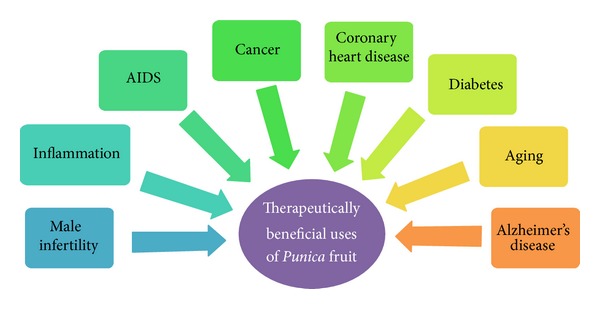
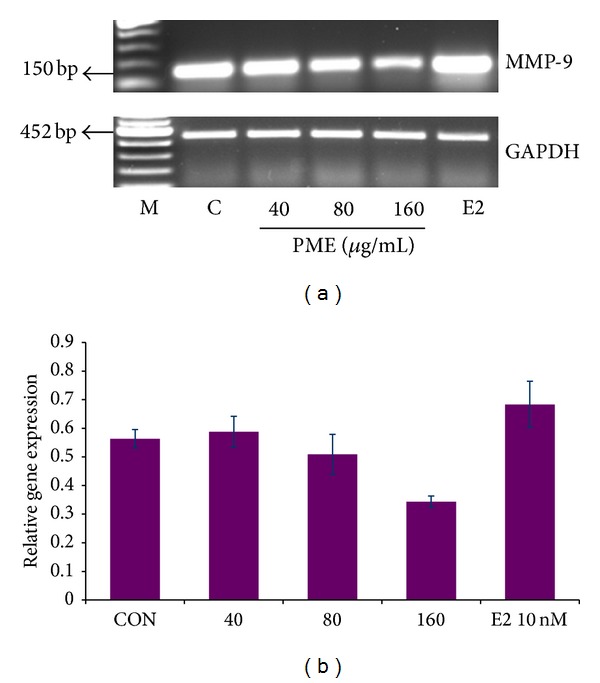
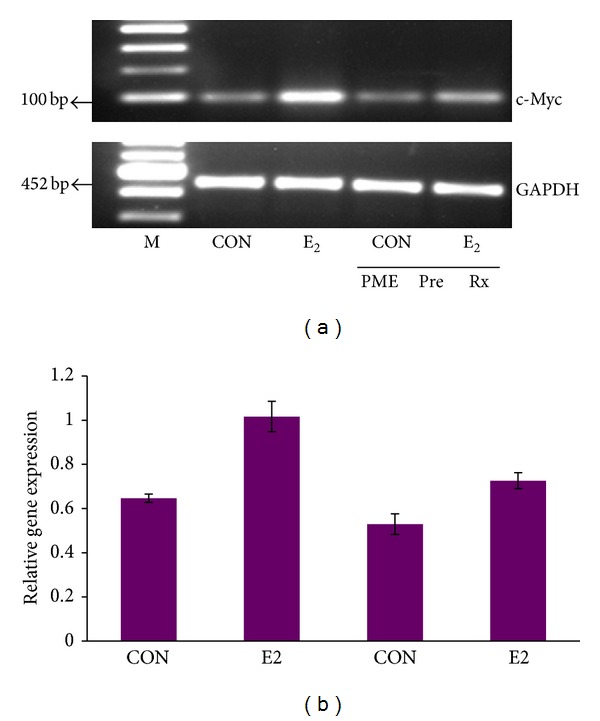
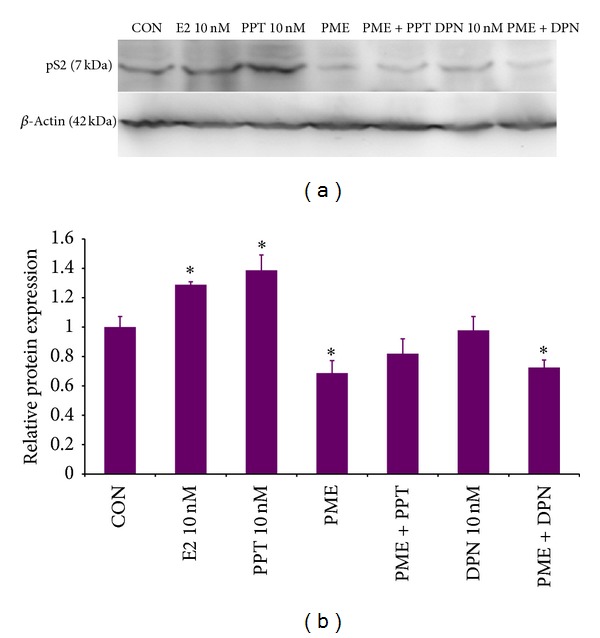
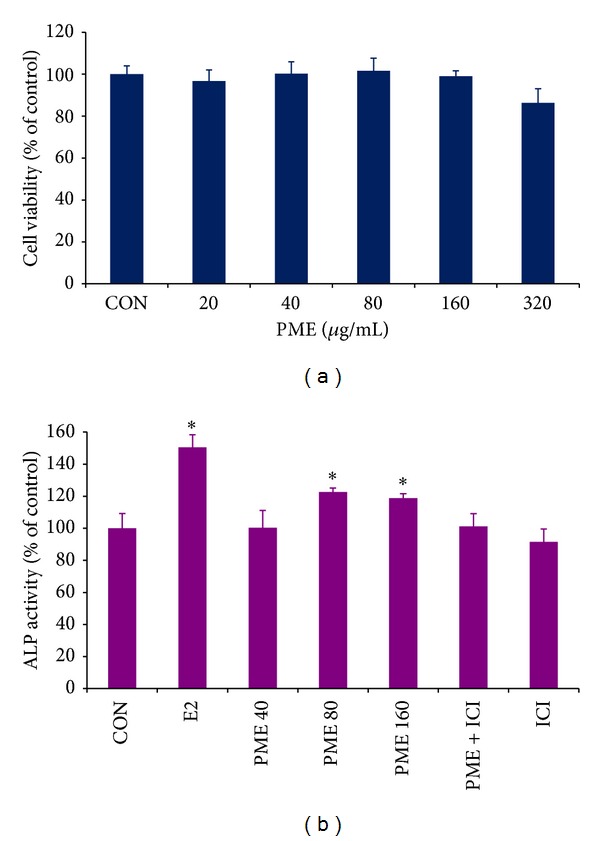
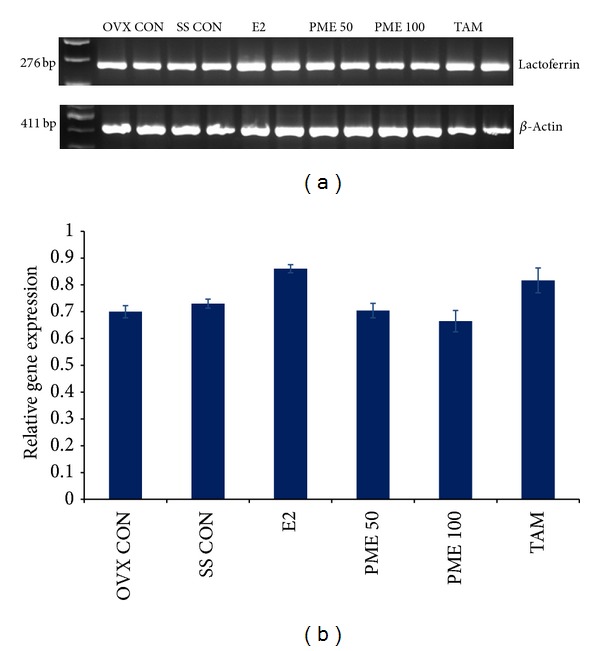
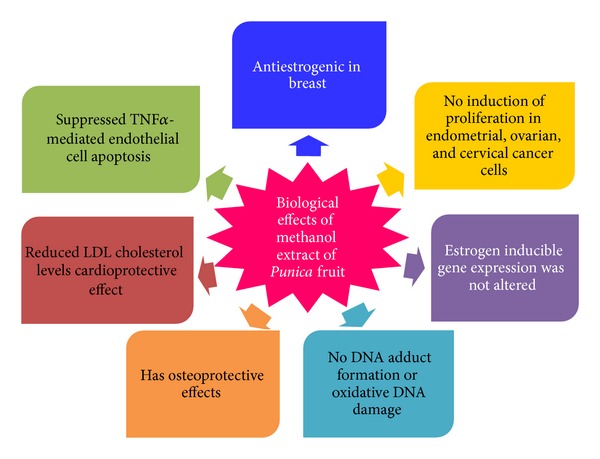
Pomegranate is a widely used plant having medicinal properties. In this review, we have mainly focused on the already published data from our laboratory pertaining to the effect of methanol extract of pericarp of pomegranate (PME) and have compared it with other relevant literatures on Punica . Earlier, we had shown its antiproliferative effect using human breast (MCF-7, MDA MB-231), and endometrial (HEC-1A), cervical (SiHa, HeLa), and ovarian (SKOV3) cancer cell lines, and normal breast fibroblasts (MCF-10A) at concentration of 20–320 μ g/mL. The expressions of selected estrogen responsive genes (PR, pS2, and C-Myc) were downregulated by PME. Unlike estradiol, PME did not increase the uterine weight and proliferation in bilaterally ovariectomized Swiss-Albino mice models and its cardioprotective effects were comparable to that of 17 β -estradiol. We had further assessed the protective role of PME on skeletal system, using MC3T3-E1 cells. The results indicated that PME (80 μ g/mL) significantly increased ALP (Alkaline Phosphatase) activity, supporting its suggested role in modulating osteoblastic cell differentiation. The antiosteoporotic potential of PME was also evaluated in ovariectomized (OVX) rodent model. The results from our studies and from various other studies support the fact that pomegranate fruit is indeed a source of biologically active compounds.
Overview
The claims and statistics of this paper haven’t been checked yet.
Free: it reads the open-access text and checks the first 5 claims that cite a source we can check. Create a free account to check every claim.
Integrity signals
Registry
Cites
Statistics
Figures
Verification
Claims the paper makes
The claims and statistics of this paper haven’t been checked yet.
Free: it reads the open-access text and checks the first 5 claims that cite a source we can check. Create a free account to check every claim.
Claims other papers make about this one
Each is checked against this paper’s own text: does it say what the citing paper says it does?
The cited source says what the claim attributes to it.
In the citing paper
“The pomegranate fruit consists of 50 % of the peel [45]”
From Tangerine, banana and pomegranate peels valorisation for sustainable environment: A review (2021) · cites this paper as [63]
The cited source says what the claim attributes to it.
In the citing paper
“composed of the peel, arils and seeds (Table 1)”
From Tangerine, banana and pomegranate peels valorisation for sustainable environment: A review (2021) · cites this paper as [63]
Self-check
Percentages, sums and reported differences re-computed from the paper’s own numbers.
The self-check needs the paper’s full text.
Citations
Cites
Gil, M. I., Tomás-Barberán, F. A., Hess-Pierce, B., Holcroft, D. M., & Kader, A. A. (2000) · Journal of Agricultural and Food Chemistry · doi:10.1021/jf000404a · Cited by 2,362 · cited 2×
“Anthocyanidins (delphinidin, cyanidin, and pelargonidin) and hydrolysable tannins (such as punicalagin, pedunculagin, punicalin, gallagic, and ellagic acid esters of glucose), account for the major antioxidant activity of whole fruit [22, 95].”
BackgroundLansky, E. P., & Newman, R. A. (2007) · Journal of Ethnopharmacology · doi:10.1016/j.jep.2006.09.006 · Cited by 1,290 · cited 3×
“Constituents of pomegranate minimize tumor cell invasion into normal tissue and metastasis to distant sites and these actions develop due to the inhibition of selected metalloproteinase activity, decreased focal adhesion kinase activity, and reduced VEGF expression [15].”
BackgroundMolecular Determinants for the Tissue Specificity of SERMs
Shang, Y., & Brown, M. (2002) · Science · doi:10.1126/science.1068537 · Cited by 1,146 · cited 1×
“The best move towards the avoidance and handling of estrogen-dependent breast cancer is to selectively hold estrogen activity in the affected tissues without compromising its beneficial effects [87].”
BackgroundPhytoestrogens: the biochemistry, physiology, and implications for human health of soy isoflavones
Kenneth, D. S. (1998) · The American Journal of Clinical Nutrition · doi:10.1093/ajcn/68.6.1333s · Cited by 1,128
Seeram, N. P., Adams, L. S., Henning, S. M., Niu, Y., Zhang, Y., Nair, M. G., & Heber, D. (2005) · The Journal of Nutritional Biochemistry · doi:10.1016/j.jnutbio.2005.01.006 · Cited by 1,112
Li, Y., Guo, C., Yang, J., Wei, J., Xu, J., & Cheng, S. (2006) · Food Chemistry · doi:10.1016/j.foodchem.2005.02.033 · Cited by 1,058 · cited 1×
“The peel, which is also a major part of the fruit, is an imperative source of bioactive compounds such as phenolics, flavonoids, ellagitannins, proanthocyanidin compounds [96], minerals, [97], and complex polysaccharides [98].”
BackgroundTherapeutic applications of pomegranate (Punica granatum L.): a review.
Jurenka, J. S. (2008) · PubMed · Cited by 933
Fisher, B., Dignam, J., Bryant, J., DeCillis, A., Wickerham, D. L., Wolmark, N., Costantino, J., Redmond, C., Fisher, E. R., Bowman, D. M., et al. (1996) · JNCI Journal of the National Cancer Institute · doi:10.1093/jnci/88.21.1529 · Cited by 861 · cited 1×
“Regrettably, at this time, available antiestrogen such as tamoxifen used in the treatment of ER-positive breast cancer has side effects and agonism in the uterine endometrium, leading to an uncertain connection to endometrial carcinoma [88–90].”
BackgroundPomegranate and its many functional components as related to human health: a review
Viuda‐Martos, M., Fernández‐López, J., & Pérez‐Álvarez, J. A. (2010) · Comprehensive Reviews in Food Science and Food Safety · doi:10.1111/j.1541-4337.2010.00131.x · Cited by 768
Seeram, N. P., Aviram, M., Zhang, Y., Henning, S. M., Feng, L., Dreher, M., & Heber, D. (2008) · Journal of Agricultural and Food Chemistry · doi:10.1021/jf073035s · Cited by 686 · cited 1×
“Pomegranate juice had the greatest antioxidant potency composite index among beverages like black cherry juice, cranberry juice, grape juice, apple juice, orange juice, red wines, blueberry juice, and iced tea; and the antioxidant activity was at least 20% superior to any of the other beverages tested [101–103].”
Result
Research works printed but not linked: 6
- Jain S Rai R Upadhyaya AR Malhotra G Punica granatum: a natural and recent approach towards dental problem International Journal of Pharmaceutical Sciences and Research 2014 2 1 1 6
- Artik N Ceremroglu B Murakami H Mori T Determination of phenolic compounds in pomegranate juice by using HPLC Fruit Processing 1998 8 492 499
- Abd El Wahab SM El Fiki NM Mostafa SF Hassan AEB Characterization of certain steroid hormones in Punica granatum L. seeds Bulletin of the Faculty of Pharmacy 1998 36 11 15
- Sreekumar S Selective estrogen receptor modulator (SERM) activity of Pomegranate (Punica granatum L.): implications for estrogen dependant breast cancer [dissertation] 2011 University of Kerala
- Malik A The potentials of nutraceuticals Pharmainfo.net 2008 6
- Jahfar M Vijayan KK Azadi P Studies on a polysaccharide from the fruit rind of Punica granatum Research Journal of Chemistry and Environment 2003 7 1 43 50
Cited by
The gut microbiota: a key factor in the therapeutic effects of (poly)phenols
Espín, J. C., González-Sarrías, A., & Tomás-Barberán, F. A. (2017) · Biochemical Pharmacology · doi:10.1016/j.bcp.2017.04.033 · Cited by 603
“In the case of PP-rich foods, pomegranates could be an example as they have many potential healthy attributes [18,19], including anti-diabetic [20], anticancer [21] and hypotensive [22] properties but with an apparent lack of effect on blood lipids and inflammation according to recent meta-analyses [23,24].”
BackgroundHanani, Z. A. N., Yee, F. C., & Nor-Khaizura, M. A. R. (2019) · Food Hydrocolloids · doi:10.1016/j.foodhyd.2018.10.007 · Cited by 341
Food applications and potential health benefits of pomegranate and its derivatives
Kandylis, P., & Kokkinomagoulos, E. (2020) · Foods · doi:10.3390/foods9020122 · Cited by 324
“The exocarp, namely the pomegranate peel, comprises around 50% of the whole fruit, while the edible part consists of 10% seeds and 40% arils [3].”
BackgroundAkram, M., Tahir, I. M., Shah, S. M. A., Mahmood, Z., Altaf, A., Ahmad, K., Munir, N., Daniyal, M., Nasir, S., & Mehboob, H. (2018) · Phytotherapy Research · doi:10.1002/ptr.6024 · Cited by 263
Starch-based antimicrobial films functionalized by pomegranate peel
Ali, A., Chen, Y., Liu, H., Yu, L., Baloch, Z., Khalid, S., Zhu, J., & Chen, L. (2019) · International Journal of Biological Macromolecules · doi:10.1016/j.ijbiomac.2018.09.068 · Cited by 238
Metadata
- Authors
- Sreekumar, S., Sithul, H., Muraleedharan, P., Azeez, J. M., & Sreeharshan, S.
- Affiliations
- Rajiv Gandhi Centre for Biotechnology (IN)
- Cancer Research Program, Rajiv Gandhi Centre for Biotechnology, Thycaud P.O, Thiruvananthapuram, Kerala 695 014, India
- Venue
- BioMed Research International
- Publisher
- Wiley
- Published
- 2014
- Volume
- 2014
- Pages
- 1-12
- ISSN
- 1110-7243 (ISSN-L)
- 2314-6133
- 2314-6141
- PMC
- PMC4000966
- OpenAlex
- W2021488853
- Cited by
- 258
- References
- 106
- Citations by year
- 2026: 9 · 2025: 16 · 2024: 29 · 2023: 29 · 2022: 32 · 2021: 36 · 2020: 34 · 2019: 20 · 2018: 17 · 2017: 13 · 2016: 16 · 2015: 6 · 2014: 1
- FWCI
- 1.37
- Type
- journal article
- Language
- en
- Open access
- hybrid
- doi.org
- Locations
- BioMed Research International (publishedVersion, cc-by)
- Europe PMC (PubMed Central) (publishedVersion, cc-by)
- PubMed Central (publishedVersion, cc-by)
- PubMed (publishedVersion)
- DOAJ (DOAJ: Directory of Open Access Journals) (submittedVersion)
- Funders
- Indian Council of Medical Research
- Council of Scientific and Industrial Research, India
- Topics
- Health Sciences › Nursing › Nutrition and Dietetics › Pomegranate: compositions and health benefits
- Life Sciences › Agricultural and Biological Sciences › Plant Science › Medicinal Plant Research
- Life Sciences › Agricultural and Biological Sciences › Plant Science › Natural Compound Pharmacology Studies
- Keywords
- Punica granatum, methanol extract, antiproliferative activity, breast cancer, endometrial cancer, cervical cancer, ovarian cancer, estrogen receptor, pS2, c-Myc, estradiol, cardioprotection, osteogenic differentiation, alkaline phosphatase, anti-osteoporotic effect, ovariectomized mice, MC3T3-E1 cells
- MeSH terms
- Animals, Biological Products, Fruit, Trees, Lythraceae, Phytoestrogens
About these checks
Registry, retraction, Cites and statistics results are computed, not judged, with one exception: a printed reference that no index lists is read once by a model before it counts as a citation error. Claims are extracted by a model and kept only when their quote appears verbatim in the text; each cited source is then checked, with a model’s help, for whether it says what the claim relies on. Those verdicts can be wrong — read the claim’s quote and the cited source before relying on one.
Statistics and arithmetic are recomputed, not judged.
Confidence bands are shown only for fields calibrated on our annotated test set. None is calibrated yet, so no band is shown.
What counts as a claim ›How we measure confidence ›How we check this ›
Are you an author, or do you see a problem with this page? Request a review
How to cite
Cite CoChat for the checks on this page, and the paper for its own findings.
- This page
- CoChat. (2026). Citation check: Pomegranate Fruit as a Rich Source of Biologically Active Compounds. https://app.cochat.ai/papers/10.1155/2014/686921
- The paper
- Sreekumar, S., Sithul, H., Muraleedharan, P., Azeez, J. M., & Sreeharshan, S. (2014). Pomegranate Fruit as a Rich Source of Biologically Active Compounds. BioMed Research International. https://doi.org/10.1155/2014/686921
Data sources
Bibliographic data: Semantic Scholar, OpenAlex, Crossref.
Contains information from the Semantic Scholar Academic Graph Datasets, made available under the ODC Attribution License (ODC-BY 1.0).
Semantic Scholar’s data is described in: Kinney, R., et al. (2023). The Semantic Scholar Open Data Platform. arXiv:2301.10140.
