

The DOI matches its Crossref record; 51 of the 51 references it cites were found in a registry or an index; 1 of the 84 sources its claims cite were checked for support.
Acceptance and Use of Innovative Assistive Technologies among People with Cognitive Impairment and Their Caregivers: A Systematic Review
Open accessAbstract
Cognitive impairments (CI), associated with the consequences of Alzheimer’s disease and other dementias, are increasingly prevalent among older adults, leading to deterioration in self-care, mobility, and interpersonal relationships among them. Innovative Assistive Technologies (IAT) such as electronic reminders and surveillance systems are considered as increasingly important tools to facilitate independence among this population and their caregivers. The aim of this study is to synthesise knowledge on facilitators and barriers related to acceptance of and use of IAT among people with CI and their caregivers. This systematic review includes original papers with quantitative, qualitative, or mixed methods design. Relevant peer-reviewed articles published in English between 2007 and 2017 were retrieved in the following databases: CINAHL; PubMed; Inspec; and PsycINFO. The Mixed Method Appraisal Tool (MMAT) was used for quality assessment. We retrieved thirty studies, including in total 1655 participants from Europe, USA/Canada, Australia, and Asia, enrolled in their homes, care-residences, day-care centres, or Living Labs. Two-thirds of the studies tested technologies integrating home sensors and wearable devices for care and monitoring CI symptoms. Main facilitators for acceptance and adherence to IAT were familiarity with and motivation to use technologies, immediate perception of effectiveness (e.g., increase in safety perceptions), and low technical demands. Barriers identified included older age, low maturity of the IAT, little experience with technologies in general, lack of personalization, and support. More than 2/3 of the studies met 80% of the quality criteria of the MMAT. Low acceptance and use of IAT both independently and with caregivers remains a significant concern. More knowledge on facilitators and barriers to use of IAT among clients of health care and social services is crucial for the successful implementation of innovative programmes aiming to leverage innovative technologies for the independence of older people with CI.
Overview
AI snapshot
Written from the paper’s full text.
TL;DR
This systematic review synthesizes 30 studies with 1,655 participants on acceptance and use of innovative assistive technologies (IAT) among older people with cognitive impairment and their caregivers. It finds that familiarity, motivation, perceived effectiveness, and low technical demands facilitate acceptance, while adherence remains limited and is hindered by older age, inexperience, immature technology, and lack of personalization or support.
Key findings
- Across 30 included studies (1,655 participants), 12 studies reported IAT that was both accepted and used, 11 reported acceptance but poor adherence, and 7 reported neither acceptance nor adherence.
- Main facilitators for acceptance and adherence were ease of use, familiarity with technology, improvement of care, low technical demands, personalized fit to daily routines, enjoyment, new interactions, and feelings of safety.
- Main barriers included older age, lack of experience with technology in general, need for further technology development, more learning time, lack of clarity/feedback, lack of personalization, and insufficient support.
- Most IAT were 3rd generation (n=16), followed by 2nd generation (n=5), 1st generation (n=5), and 4th generation/social robots (n=4); the largest proportion of studies showing acceptance and adherence targeted 3rd generation IAT, while 2nd generation was less accepted, followed by 1st and 4th generation.
Methods
- Systematic review of peer-reviewed primary studies with quantitative, qualitative, or mixed methods designs, published in English between 2007 and 2017 and retrieved from CINAHL, PubMed, Inspec, and PsycINFO.
- Inclusion criteria used a PICO framework: participants aged 65+ with any form of cognitive impairment and/or their informal/formal caregivers; interventions using IAT exclusively or predominantly; outcomes addressing acceptance, adoption, attitude, perception, or use.
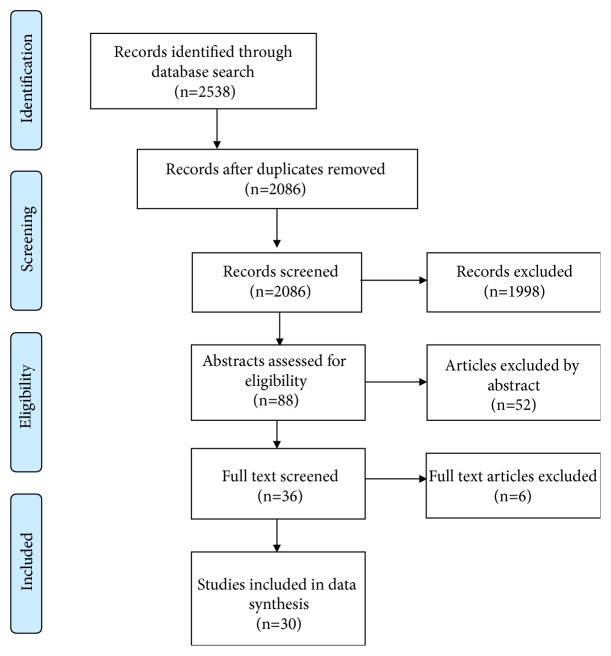
- From 2,538 initial titles (452 duplicates), 2,086 titles were screened, 88 abstracts assessed, 36 full texts reviewed, and 30 papers included; data were synthesized in a Summary of Findings table and quality was assessed with the Mixed Methods Appraisal Tool (MMAT), with disagreements on 4 papers resolved by discussion.
Limitations
- The paper states that the search strategy was prepared with a university librarian, that abstract revision was demanding due to the study’s multidisciplinary nature, and that included studies and journals were highly diverse; MMAT assessment further highlighted heterogeneity.
- The paper states that results are based to a minimal extent on randomized controlled trials, which are difficult in this population due to drop-out, making data on technology acceptance and adherence difficult to retrieve.
- Evident from the text: most findings relate to the individual user level, many reviewed studies lacked follow-up or had short time-spans, and the only included RCT received no MMAT star, limiting conclusions about mid- and long-term adherence.
Model-written summary. Check it against the paper before relying on it.
Integrity signals
Registry
Cites
Statistics
Figures
Verification
Claims the paper makes
44 Not checked yet · 24 Own result · 14 Own interpretation · 10 No basis given · 4 Own method · 1 Partly supported · 1 Sources not found · accuracy not yet measured
The cited sources support only part of this claim — read each source’s verdict below.
In the paper
“With IAT still under development, discrepancy between expectation and actual function may lead to nonacceptance and nonadherence [22, 25, 26].”
§ Acceptance and Use of Innovative Assistive Technologies among People with Cognitive Impairment and Their Caregivers: A Systematic Review > 3. Results > 3.3. Acceptance and Adherence to IAT Use
What the sources say
- Not checked yetcites [22] Chen Y.-C. Leung C.-Y. Exploring functions of the lost seeking devices for people with dementia Work 2012 41 3093 3100 10.3233/WOR-2012-0568-3093 2-s2.0-84859847148 22317189 source
- Partly supportedcites [25] Hattink B. J. J. Meiland F. J. M. Overmars-Marx T. The electronic, personalizable rosetta system for dementia care: exploring the user-friendliness, usefulness and impact Disability and Rehabilitation: Assistive Technology 2016 11 1 61 71 10.3109/17483107.2014.932022 2-s2.0-84951769013 24989993 sourceExperimental — accuracy not yet measured
The Discussion says that the still-developing Rosetta system did not meet users’ expectations and that this may have caused a more negative assessment. The paper does not establish that this discrepancy led to nonacceptance or nonadherence; the ‘Use of the system during the trial’ section reports doubts about participation, not those outcomes. Page numbers are not available for these passages in our copy. (LLM, conf=0.85)
- Not checked yetcites [26] Hebesberger D. Koertner T. Gisinger C. Pripfl J. A long-term autonomous robot at a care hospital: a mixed methods study on social acceptance and experiences of staff and older adults International Journal of Social Robotics 2017 9 3 417 429 10.1007/s12369-016-0391-6 2-s2.0-85021651185 source
hedgedconditional- Asserted: passes — The authors put it forward as true.
- Checkable: passes — It can be checked against evidence.
- Load-bearing: unclear — It is unclear whether the paper’s conclusions depend on it.
- Based: passes — The paper gives a reason why it holds.
None of the sources cited for this claim have been checked yet.
In the paper
“In eleven studies, the IAT was accepted but not used in the following implementation period, therefore resulting in poor adherence [24, 29, 34–38, 41, 44, 46, 47].”
§ Acceptance and Use of Innovative Assistive Technologies among People with Cognitive Impairment and Their Caregivers: A Systematic Review > 3. Results > 3.3. Acceptance and Adherence to IAT Use
What the sources say
- Not checked yetcites [24] Granata C. Pino M. Legouverneur G. Vidal J.-S. Bidaud P. Rigaud A.-S. Robot services for elderly with cognitive impairment: testing usability of graphical user interfaces Technology and Health Care 2013 21 217 231 2-s2.0-84884362358 23792795 source
- Not checked yetcites [29] Kerkhof Y. J. Rabiee F. Willems C. G. Experiences of using a memory aid to structure and support daily activities in a small-scale group accommodation for people with dementia Dementia 2015 14 5 633 649 2-s2.0-84942933321 10.1177/1471301213504210 24339118 source
- Not checked yetcites [34] Lim F. S. Wallace T. Luszcz M. A. Reynolds K. J. Usability of tablet computers by people with early-stage dementia Gerontology 2013 59 2 174 182 2-s2.0-84874771331 10.1159/000343986 23257664 source
- Not checked yetcites [35] Lindqvist E. Nygård L. Borell L. Significant junctures on the way towards becoming a user of assistive technology in Alzheimer's disease Scandinavian Journal of Occupational Therapy 2013 20 5 386 396 2-s2.0-84883313772 10.3109/11038128.2013.766761 23394183 source
- Not checked yetcites [36] Lindqvist E. Larsson T. J. Borell L. Experienced usability of assistive technology for cognitive support with respect to user goals NeuroRehabilitation 2015 36 1 135 149 2-s2.0-84922948433 10.3233/NRE-141201 25547777 source
- Not checked yetcites [37] Magnusson L. Sandman L. Rosén K. G. Hanson E. Extended safety and support systems for people with dementia living at home Journal of Assistive Technologies 2014 8 4 188 206 2-s2.0-84926457193 10.1108/JAT-10-2014-0021 source
- Not checked yetcites [38] Mitseva A. Peterson C. B. Karamberi C. Gerontechnology: providing a helping hand when caring for cognitively impaired older adults-intermediate results from a controlled study on the satisfaction and acceptance of informal caregivers Current Gerontology and Geriatrics Research 2012 2012 19 401705 2-s2.0-84859723823 PMC3318209 22536230 source
- Not matchedcites [41] Nijhof N. van Gemert-Pijnen J. E. W. C. Burns C. M. Seydel E. R. A personal assistant for dementia to stay at home safe at reduced cost Gerontechnology 2013 11 469 479 2-s2.0-84876453799
Couldn’t be matched to a paper in Crossref, so it can’t be checked.
- Not checked yetcites [44] Perilli V. Lancioni G. E. Laporta D. A computer-aided telephone system to enable five persons with Alzheimer's disease to make phone calls independently Research in Developmental Disabilities 2013 34 6 1991 1997 2-s2.0-84876301914 10.1016/j.ridd.2013.03.016 23584179 source
- Not checked yetcites [46] Thorpe J. R. Rønn-Andersen K. V. H. Bień P. Özkil A. G. Forchhammer B. H. Maier A. M. Pervasive assistive technology for people with dementia: a UCD case Healthcare Technology Letters 2016 3 4 297 302 10.1049/htl.2016.0057 2-s2.0-85032032497 28008366 PMC5168821 source
plaindirect- Asserted: passes — The authors put it forward as true.
- Checkable: passes — It can be checked against evidence.
- Load-bearing: passes — The paper’s conclusions depend on it.
- Based: passes — The paper gives a reason why it holds.
The paper states this without a source or data behind it here, so there is nothing to check it against. The quote shows it is in the paper.
In the paper
“More than 2/3 of the studies met 80% of the quality criteria of the MMAT.”
§ Acceptance and Use of Innovative Assistive Technologies among People with Cognitive Impairment and Their Caregivers: A Systematic Review > Abstract
plain- Asserted: passes — The authors put it forward as true.
- Checkable: passes — It can be checked against evidence.
- Load-bearing: unclear — It is unclear whether the paper’s conclusions depend on it.
- Based: passes — The paper gives a reason why it holds.
A result the paper reports from its own data — it cites no other source for it, so there is none to check. The quote shows it is in the paper.
In the paper
“Ten papers were rated as high-quality studies (∗∗∗∗∗), meeting all five quality criteria.”
§ Acceptance and Use of Innovative Assistive Technologies among People with Cognitive Impairment and Their Caregivers: A Systematic Review > 3. Results > 3.2. Quality of the Papers
plain- Asserted: passes — The authors put it forward as true.
- Checkable: passes — It can be checked against evidence.
- Load-bearing: unclear — It is unclear whether the paper’s conclusions depend on it.
- Based: passes — The paper gives a reason why it holds.
A result the paper reports from its own data — it cites no other source for it, so there is none to check. The quote shows it is in the paper.
In the paper
“A total of 1655 individuals participated in the 30 included studies (Table 1).”
§ Acceptance and Use of Innovative Assistive Technologies among People with Cognitive Impairment and Their Caregivers: A Systematic Review > 3. Results > 3.1. Participants and Study Designs
plainn = 1,655- Asserted: passes — The authors put it forward as true.
- Checkable: passes — It can be checked against evidence.
- Load-bearing: unclear — It is unclear whether the paper’s conclusions depend on it.
- Based: passes — The paper gives a reason why it holds.
A result the paper reports from its own data — it cites no other source for it, so there is none to check. The quote shows it is in the paper.
In the paper
“Two-thirds of the studies tested technologies integrating home sensors and wearable devices for care and monitoring CI symptoms.”
§ Acceptance and Use of Innovative Assistive Technologies among People with Cognitive Impairment and Their Caregivers: A Systematic Review > Abstract
plain- Asserted: passes — The authors put it forward as true.
- Checkable: passes — It can be checked against evidence.
- Load-bearing: unclear — It is unclear whether the paper’s conclusions depend on it.
- Based: passes — The paper gives a reason why it holds.
None of the sources cited for this claim have been checked yet.
In the paper
“Twelve studies presented results on IAT that were both accepted and used by the participants [19–21, 23, 27, 30–33, 42, 43, 45].”
§ Acceptance and Use of Innovative Assistive Technologies among People with Cognitive Impairment and Their Caregivers: A Systematic Review > 3. Results > 3.3. Acceptance and Adherence to IAT Use
What the sources say
- Not checked yetcites [19] Boise L. Wild K. Mattek N. Ruhl M. Dodge H. H. Kaye J. Willingness of older adults to share data and privacy concerns after exposure to unobtrusive in-home monitoring Gerontechnology 2013 11 428 435 2-s2.0-84876426631 23525351 PMC3604979 source
- Not matchedcites [20] Cahill S. Begley E. Faulkner J. P. Hagen I. ‘It gives me a sense of independence’ - findings from Ireland on the use and usefulness of assistive technology for people with dementia Technology and Disability 2007 19 133 142 2-s2.0-34247520043
Couldn’t be matched to a paper in Crossref, so it can’t be checked.
- Not checked yetcites [21] Cavallo F. Aquilano M. Arvati M. An ambient assisted living approach in designing domiciliary services combined with innovative technologies for patients with alzheimer's disease: a case study American Journal of Alzheimer’s Disease & Other Dementias 2015 30 69 77 10.1177/1533317514539724 2-s2.0-84922647348 PMC10852970 24951634 source
- Not checked yetcites [23] Engström M. Lindqvist R. Ljunggren B. Carlsson M. Staff members' perceptions of a ICT support package in dementia care during the process of implementation Journal of Nursing Management 2009 17 781 789 10.1111/j.1365-2834.2009.00985.x 2-s2.0-70349493009 19793234 source
- Not checked yetcites [27] Imbeault H. Bier N. Pigot H. Electronic organiser and Alzheimer's disease: fact or fiction? Neuropsychological Rehabilitation 2014 24 71 100 10.1080/09602011.2013.858641 2-s2.0-84893643440 24359438 source
- Not checked yetcites [30] Kerssens C. Kumar R. Adams A. E. Personalized technology to support older adults with and without cognitive impairment living at home American Journal of Alzheimer’s Disease & Other Dementias 2015 30 85 97 10.1177/1533317514568338 2-s2.0-84922609277 PMC4819239 25614507 source
- Not checked yetcites [31] Khosla R. Nguyen K. Chu M.-T. Human robot engagement and acceptability in residential aged care International Journal of Human-Computer Interaction 2017 33 510 522 10.1080/10447318.2016.1275435 2-s2.0-85011277079 source
- Not checked yetcites [32] Lazar A. Demiris G. Thompson H. J. Involving family members in the implementation and evaluation of technologies for dementia: a dyad case study Journal of Gerontological Nursing 2015 41 4 21 26 10.3928/00989134-20150309-03 2-s2.0-84929023348 PMC4849526 25800405 source
- Not checked yetcites [33] Lazar A. Demiris G. Thompson H. J. Evaluation of a multifunctional technology system in a memory care unit: opportunities for innovation in dementia care Informatics for Health and Social Care 2016 41 373 386 10.3109/17538157.2015.1064428 2-s2.0-84958060944 26819070 PMC4912411 source
- Not checked yetcites [42] Oderud T. Landmark B. Eriksen S. Persons with dementia and their caregivers using GPS Studies in Health Technology and Informatics 2015 217 212 221 10.3233/978-1-61499-566-1-212 2-s2.0-84952017319 26294475 source
plain- Asserted: passes — The authors put it forward as true.
- Checkable: passes — It can be checked against evidence.
- Load-bearing: unclear — It is unclear whether the paper’s conclusions depend on it.
- Based: passes — The paper gives a reason why it holds.
In the paper
“Lastly, electricity cost was a barrier for use [41].”
§ Acceptance and Use of Innovative Assistive Technologies among People with Cognitive Impairment and Their Caregivers: A Systematic Review > 3. Results > 3.3. Acceptance and Adherence to IAT Use
What the sources say
- Not matchedcites [41] Nijhof N. van Gemert-Pijnen J. E. W. C. Burns C. M. Seydel E. R. A personal assistant for dementia to stay at home safe at reduced cost Gerontechnology 2013 11 469 479 2-s2.0-84876453799
Couldn’t be matched to a paper in Crossref, so it can’t be checked.
plaindirect- Asserted: passes — The authors put it forward as true.
- Checkable: passes — It can be checked against evidence.
- Load-bearing: unclear — It is unclear whether the paper’s conclusions depend on it.
- Based: passes — The paper gives a reason why it holds.
- Not matched
In the paper
“In this respect, one of the reviewed studies [23] describes how the struggle with imperfect systems might end up in a success when the participants felt their attitude from fear of losing control to perceived increase in control.”
§ Acceptance and Use of Innovative Assistive Technologies among People with Cognitive Impairment and Their Caregivers: A Systematic Review > 3. Results > 3.3. Acceptance and Adherence to IAT Use
What the sources say
- Not checked yetcites [23] Engström M. Lindqvist R. Ljunggren B. Carlsson M. Staff members' perceptions of a ICT support package in dementia care during the process of implementation Journal of Nursing Management 2009 17 781 789 10.1111/j.1365-2834.2009.00985.x 2-s2.0-70349493009 19793234 source
hedgeddirect- Asserted: passes — The authors put it forward as true.
- Checkable: passes — It can be checked against evidence.
- Load-bearing: unclear — It is unclear whether the paper’s conclusions depend on it.
- Based: passes — The paper gives a reason why it holds.
In the paper
“Regarding clinical factors, the progression of the disease, and the onset of more severe symptoms, was found to negatively affect adherence to IAT [28]”
§ Acceptance and Use of Innovative Assistive Technologies among People with Cognitive Impairment and Their Caregivers: A Systematic Review > 3. Results > 3.3. Acceptance and Adherence to IAT Use
What the sources say
- Not checked yetcites [28] Karlsson E. Axelsson K. Zingmark K. Sävenstedt S. The challenge of coming to terms with the use of a new digital assistive device: a case study of two persons with mild dementia The Open Nursing Journal 2011 5 1 102 110 10.2174/18744346011050100102 22135718 PMC3227864 source
plaindirect- Asserted: passes — The authors put it forward as true.
- Checkable: passes — It can be checked against evidence.
- Load-bearing: passes — The paper’s conclusions depend on it.
- Based: passes — The paper gives a reason why it holds.
The paper states this without a source or data behind it here, so there is nothing to check it against. The quote shows it is in the paper.
In the paper
“It was found that caregivers have a significant role in the process of IAT implementation among people with CI.”
§ Acceptance and Use of Innovative Assistive Technologies among People with Cognitive Impairment and Their Caregivers: A Systematic Review > 3. Results > 3.3. Acceptance and Adherence to IAT Use
plaincorrelational- Asserted: passes — The authors put it forward as true.
- Checkable: passes — It can be checked against evidence.
- Load-bearing: passes — The paper’s conclusions depend on it.
- Based: passes — The paper gives a reason why it holds.
The paper states this without a source or data behind it here, so there is nothing to check it against. The quote shows it is in the paper.
In the paper
“Likewise, an immediate recognition of the benefits of IAT facilitated acceptance.”
§ Acceptance and Use of Innovative Assistive Technologies among People with Cognitive Impairment and Their Caregivers: A Systematic Review > 3. Results > 3.3. Acceptance and Adherence to IAT Use
plaindirect- Asserted: passes — The authors put it forward as true.
- Checkable: passes — It can be checked against evidence.
- Load-bearing: unclear — It is unclear whether the paper’s conclusions depend on it.
- Based: passes — The paper gives a reason why it holds.
In the paper
“In some cases users did not even mind being monitored by IAT if this was understood as a useful strategy to allow their physician to provide a better care [19].”
§ Acceptance and Use of Innovative Assistive Technologies among People with Cognitive Impairment and Their Caregivers: A Systematic Review > 3. Results > 3.3. Acceptance and Adherence to IAT Use
What the sources say
- Not checked yetcites [19] Boise L. Wild K. Mattek N. Ruhl M. Dodge H. H. Kaye J. Willingness of older adults to share data and privacy concerns after exposure to unobtrusive in-home monitoring Gerontechnology 2013 11 428 435 2-s2.0-84876426631 23525351 PMC3604979 source
plain- Asserted: passes — The authors put it forward as true.
- Checkable: passes — It can be checked against evidence.
- Load-bearing: unclear — It is unclear whether the paper’s conclusions depend on it.
- Based: passes — The paper gives a reason why it holds.
In the paper
“one of the studies showed that only 1/3 of the participants were satisfied with the “look and feel” of the IAT [37].”
§ Acceptance and Use of Innovative Assistive Technologies among People with Cognitive Impairment and Their Caregivers: A Systematic Review > 3. Results > 3.3. Acceptance and Adherence to IAT Use
What the sources say
- Not checked yetcites [37] Magnusson L. Sandman L. Rosén K. G. Hanson E. Extended safety and support systems for people with dementia living at home Journal of Assistive Technologies 2014 8 4 188 206 2-s2.0-84926457193 10.1108/JAT-10-2014-0021 source
hedged- Asserted: passes — The authors put it forward as true.
- Checkable: passes — It can be checked against evidence.
- Load-bearing: unclear — It is unclear whether the paper’s conclusions depend on it.
- Based: passes — The paper gives a reason why it holds.
In the paper
“For example, within an experiment testing a remote monitoring system in a nursing home, when the formal caregivers lost trust in the technology, they continued to perform physical visits to the residents [39].”
§ Acceptance and Use of Innovative Assistive Technologies among People with Cognitive Impairment and Their Caregivers: A Systematic Review > 3. Results > 3.3. Acceptance and Adherence to IAT Use
What the sources say
- Not checked yetcites [39] Niemeijer A. R. Depla M. Frederiks B. Francke A. L. Hertogh C. CE: Original research: the use of surveillance technology in residential facilities for people with dementia or intellectual disabilities: a study among nurses and support staff The American Journal of Nursing 2014 114 28 37 10.1097/01.NAJ.0000457408.38222.d0 2-s2.0-84918562829 25396755 source
plaindirect- Asserted: passes — The authors put it forward as true.
- Checkable: passes — It can be checked against evidence.
- Load-bearing: unclear — It is unclear whether the paper’s conclusions depend on it.
- Based: passes — The paper gives a reason why it holds.
In the paper
“From a technical perspective, there were concerns in terms of data leakages and/or problems with the display of information on the screen, which led to the staff not trusting the IAT [39].”
§ Acceptance and Use of Innovative Assistive Technologies among People with Cognitive Impairment and Their Caregivers: A Systematic Review > 3. Results > 3.3. Acceptance and Adherence to IAT Use
What the sources say
- Not checked yetcites [39] Niemeijer A. R. Depla M. Frederiks B. Francke A. L. Hertogh C. CE: Original research: the use of surveillance technology in residential facilities for people with dementia or intellectual disabilities: a study among nurses and support staff The American Journal of Nursing 2014 114 28 37 10.1097/01.NAJ.0000457408.38222.d0 2-s2.0-84918562829 25396755 source
plaindirect- Asserted: passes — The authors put it forward as true.
- Checkable: passes — It can be checked against evidence.
- Load-bearing: unclear — It is unclear whether the paper’s conclusions depend on it.
- Based: passes — The paper gives a reason why it holds.
None of the sources cited for this claim have been checked yet.
In the paper
“Seven studies reported that technology was neither accepted nor adhered to [22, 25, 26, 28, 39, 40, 48].”
§ Acceptance and Use of Innovative Assistive Technologies among People with Cognitive Impairment and Their Caregivers: A Systematic Review > 3. Results > 3.3. Acceptance and Adherence to IAT Use
What the sources say
- Not checked yetcites [22] Chen Y.-C. Leung C.-Y. Exploring functions of the lost seeking devices for people with dementia Work 2012 41 3093 3100 10.3233/WOR-2012-0568-3093 2-s2.0-84859847148 22317189 source
- Not checked yetcites [25] Hattink B. J. J. Meiland F. J. M. Overmars-Marx T. The electronic, personalizable rosetta system for dementia care: exploring the user-friendliness, usefulness and impact Disability and Rehabilitation: Assistive Technology 2016 11 1 61 71 10.3109/17483107.2014.932022 2-s2.0-84951769013 24989993 source
- Not checked yetcites [26] Hebesberger D. Koertner T. Gisinger C. Pripfl J. A long-term autonomous robot at a care hospital: a mixed methods study on social acceptance and experiences of staff and older adults International Journal of Social Robotics 2017 9 3 417 429 10.1007/s12369-016-0391-6 2-s2.0-85021651185 source
- Not checked yetcites [28] Karlsson E. Axelsson K. Zingmark K. Sävenstedt S. The challenge of coming to terms with the use of a new digital assistive device: a case study of two persons with mild dementia The Open Nursing Journal 2011 5 1 102 110 10.2174/18744346011050100102 22135718 PMC3227864 source
- Not checked yetcites [39] Niemeijer A. R. Depla M. Frederiks B. Francke A. L. Hertogh C. CE: Original research: the use of surveillance technology in residential facilities for people with dementia or intellectual disabilities: a study among nurses and support staff The American Journal of Nursing 2014 114 28 37 10.1097/01.NAJ.0000457408.38222.d0 2-s2.0-84918562829 25396755 source
- Not matchedcites [40] Nijhof N. van Gemert-Pijnen J. E. W. C. de Jong G. E. N. Ankoné J. W. Seydel E. R. How assistive technology can support dementia care: a study about the effects of the IST Vivago watch on patients' sleeping behavior and the care delivery process in a nursing home Technology and Disability 2012 24 103 115 2-s2.0-84862579642
Couldn’t be matched to a paper in Crossref, so it can’t be checked.
- Not checked yetcites [48] Wu Y.-H. Wrobel J. Cornuet M. Kerhervé H. Damnée S. Rrigaud A.-S. Acceptance of an assistive robot in older adults: a mixed-method study of human-robot interaction over a 1-month period in the Living Lab setting Clinical Interventions in Aging 2014 9 801 811 10.2147/cia.s56435 2-s2.0-84900414639 24855349 PMC4020879 source
plain- Asserted: passes — The authors put it forward as true.
- Checkable: passes — It can be checked against evidence.
- Load-bearing: unclear — It is unclear whether the paper’s conclusions depend on it.
- Based: passes — The paper gives a reason why it holds.
The paper states this without a source or data behind it here, so there is nothing to check it against. The quote shows it is in the paper.
In the paper
“Conversely, lack of clarity and feedback from the technology conveyed uncertainty, hindering acceptance and adherence.”
§ Acceptance and Use of Innovative Assistive Technologies among People with Cognitive Impairment and Their Caregivers: A Systematic Review > 3. Results > 3.3. Acceptance and Adherence to IAT Use
plaindirect- Asserted: passes — The authors put it forward as true.
- Checkable: passes — It can be checked against evidence.
- Load-bearing: passes — The paper’s conclusions depend on it.
- Based: passes — The paper gives a reason why it holds.
In the paper
“With respect to the most recent technologies, such as the robots, the potential barriers for acceptance found in our review are in line with those described by Wu and colleagues [55].”
§ Acceptance and Use of Innovative Assistive Technologies among People with Cognitive Impairment and Their Caregivers: A Systematic Review > 4. Discussion
What the sources say
- Not checked yetcites Wu and colleagues [55]
plain- Asserted: passes — The authors put it forward as true.
- Checkable: passes — It can be checked against evidence.
- Load-bearing: unclear — It is unclear whether the paper’s conclusions depend on it.
- Based: passes — The paper gives a reason why it holds.
The paper states this without a source or data behind it here, so there is nothing to check it against. The quote shows it is in the paper.
In the paper
“One of our main findings is the importance of how the benefits of the technology are communicated first and perceived then, to the older people with CI and their formal and informal caregivers.”
- Also stated in: § 4. Discussion · hedged
“Communication indeed seems to be an important prerequisite for acceptance and use of IAT among them.”
§ Acceptance and Use of Innovative Assistive Technologies among People with Cognitive Impairment and Their Caregivers: A Systematic Review > 4. Discussion
plainconditional- Asserted: passes — The authors put it forward as true.
- Checkable: passes — It can be checked against evidence.
- Load-bearing: passes — The paper’s conclusions depend on it.
- Based: passes — The paper gives a reason why it holds.
- Also stated in: § 4. Discussion · hedged
The paper states this without a source or data behind it here, so there is nothing to check it against. The quote shows it is in the paper.
In the paper
“In addition, our results are based to a minimal extent on evidence generated from randomized controlled studies.”
§ Acceptance and Use of Innovative Assistive Technologies among People with Cognitive Impairment and Their Caregivers: A Systematic Review > 4. Discussion > 4.1. Potential Limitations of the Study
plain- Asserted: passes — The authors put it forward as true.
- Checkable: passes — It can be checked against evidence.
- Load-bearing: passes — The paper’s conclusions depend on it.
- Based: passes — The paper gives a reason why it holds.
A result the paper reports from its own data — it cites no other source for it, so there is none to check. The quote shows it is in the paper.
In the paper
“The quality assessment according to the MMAT further highlighted the heterogeneity of the studies.”
§ Acceptance and Use of Innovative Assistive Technologies among People with Cognitive Impairment and Their Caregivers: A Systematic Review > 4. Discussion > 4.1. Potential Limitations of the Study
plain- Asserted: passes — The authors put it forward as true.
- Checkable: passes — It can be checked against evidence.
- Load-bearing: unclear — It is unclear whether the paper’s conclusions depend on it.
- Based: passes — The paper gives a reason why it holds.
A result the paper reports from its own data — it cites no other source for it, so there is none to check. The quote shows it is in the paper.
In the paper
“Our findings well represent the complexity of the two outcomes of interests: many barriers and facilitators to acceptance and adherence of IAT have been identified, each requiring duly consideration for successful implementation of IAT among people with CI and their caregivers.”
§ Acceptance and Use of Innovative Assistive Technologies among People with Cognitive Impairment and Their Caregivers: A Systematic Review > 4. Discussion
plain- Asserted: passes — The authors put it forward as true.
- Checkable: passes — It can be checked against evidence.
- Load-bearing: passes — The paper’s conclusions depend on it.
- Based: passes — The paper gives a reason why it holds.
The paper states this without a source or data behind it here, so there is nothing to check it against. The quote shows it is in the paper.
In the paper
“Solid scientific results on postimplementation adherence are actually lacking.”
§ Acceptance and Use of Innovative Assistive Technologies among People with Cognitive Impairment and Their Caregivers: A Systematic Review > 4. Discussion
plain- Asserted: passes — The authors put it forward as true.
- Checkable: passes — It can be checked against evidence.
- Load-bearing: passes — The paper’s conclusions depend on it.
- Based: passes — The paper gives a reason why it holds.
In the paper
“Direct experience with the robot did not change the way the participants rated robots in their acceptance questionnaire [48].”
§ Acceptance and Use of Innovative Assistive Technologies among People with Cognitive Impairment and Their Caregivers: A Systematic Review > 3. Results > 3.3. Acceptance and Adherence to IAT Use
What the sources say
- Not checked yetcites [48] Wu Y.-H. Wrobel J. Cornuet M. Kerhervé H. Damnée S. Rrigaud A.-S. Acceptance of an assistive robot in older adults: a mixed-method study of human-robot interaction over a 1-month period in the Living Lab setting Clinical Interventions in Aging 2014 9 801 811 10.2147/cia.s56435 2-s2.0-84900414639 24855349 PMC4020879
plain- Asserted: passes — The authors put it forward as true.
- Checkable: passes — It can be checked against evidence.
- Load-bearing: unclear — It is unclear whether the paper’s conclusions depend on it.
- Based: passes — The paper gives a reason why it holds.
A result the paper reports from its own data — it cites no other source for it, so there is none to check. The quote shows it is in the paper.
In the paper
“In particular, our analysis underlines the importance of the caregiver role.”
§ Acceptance and Use of Innovative Assistive Technologies among People with Cognitive Impairment and Their Caregivers: A Systematic Review > 4. Discussion
plaincorrelational- Asserted: passes — The authors put it forward as true.
- Checkable: passes — It can be checked against evidence.
- Load-bearing: passes — The paper’s conclusions depend on it.
- Based: passes — The paper gives a reason why it holds.
A result the paper reports from its own data — it cites no other source for it, so there is none to check. The quote shows it is in the paper.
In the paper
“Summing up, our findings show that IAT-based interventions can be accepted and used by people with CI and their caregivers.”
§ Acceptance and Use of Innovative Assistive Technologies among People with Cognitive Impairment and Their Caregivers: A Systematic Review > 5. Conclusion
plain- Asserted: passes — The authors put it forward as true.
- Checkable: passes — It can be checked against evidence.
- Load-bearing: passes — The paper’s conclusions depend on it.
- Based: passes — The paper gives a reason why it holds.
The paper states this without a source or data behind it here, so there is nothing to check it against. The quote shows it is in the paper.
In the paper
“Most of the results found in our review are related to the individual user level.”
§ Acceptance and Use of Innovative Assistive Technologies among People with Cognitive Impairment and Their Caregivers: A Systematic Review > 4. Discussion
plain- Asserted: passes — The authors put it forward as true.
- Checkable: passes — It can be checked against evidence.
- Load-bearing: unclear — It is unclear whether the paper’s conclusions depend on it.
- Based: passes — The paper gives a reason why it holds.
A result the paper reports from its own data — it cites no other source for it, so there is none to check. The quote shows it is in the paper.
In the paper
“Indeed, we found that, to achieve a higher adherence, IAT needs to be introduced early in the course of the disease.”
§ Acceptance and Use of Innovative Assistive Technologies among People with Cognitive Impairment and Their Caregivers: A Systematic Review > 4. Discussion
plaindirect- Asserted: passes — The authors put it forward as true.
- Checkable: passes — It can be checked against evidence.
- Load-bearing: passes — The paper’s conclusions depend on it.
- Based: passes — The paper gives a reason why it holds.
- Rests on an assumption: In care for people with CI, the time factor is critical.
In the paper
“Nonetheless, studies of acceptance and adherence to these new technologies in health care are still scarce [56].”
§ Acceptance and Use of Innovative Assistive Technologies among People with Cognitive Impairment and Their Caregivers: A Systematic Review > 4. Discussion
What the sources say
- Not checked yetcites [56] Hall A. K. Backonja U. Painter I. Acceptance and perceived usefulness of robots to assist with activities of daily living and healthcare tasks Assistive Technology 2017 1 8 2-s2.0-85035313571 10.1080/10400435.2017.1396565 29125804
plain- Asserted: passes — The authors put it forward as true.
- Checkable: passes — It can be checked against evidence.
- Load-bearing: unclear — It is unclear whether the paper’s conclusions depend on it.
- Based: passes — The paper gives a reason why it holds.
A result the paper reports from its own data — it cites no other source for it, so there is none to check. The quote shows it is in the paper.
In the paper
“Our results suggest that further investigation on the mid- and long-term adherence to IAT among people with CI is needed, as many reviewed studies failed to address this perspective in the study design, i.e., had no follow-up or short time-span.”
§ Acceptance and Use of Innovative Assistive Technologies among People with Cognitive Impairment and Their Caregivers: A Systematic Review > 4. Discussion
hedged- Asserted: passes — The authors put it forward as true.
- Checkable: passes — It can be checked against evidence.
- Load-bearing: passes — The paper’s conclusions depend on it.
- Based: passes — The paper gives a reason why it holds.
A result the paper reports from its own data — it cites no other source for it, so there is none to check. The quote shows it is in the paper.
In the paper
“Since most of the studies found showed that IAT was accepted by the users at the baseline assessment, our results point also to the importance of addressing adherence to IAT among people with CI in the mid- and long-term run.”
§ Acceptance and Use of Innovative Assistive Technologies among People with Cognitive Impairment and Their Caregivers: A Systematic Review > 5. Conclusion
plain- Asserted: passes — The authors put it forward as true.
- Checkable: passes — It can be checked against evidence.
- Load-bearing: passes — The paper’s conclusions depend on it.
- Based: passes — The paper gives a reason why it holds.
In the paper
“are strongly associated with decline in activities of daily living (ADL) [3].”
§ Acceptance and Use of Innovative Assistive Technologies among People with Cognitive Impairment and Their Caregivers: A Systematic Review > 1. Introduction
What the sources say
- Not checked yetcites [3] Sun M. Mainland B. J. Ornstein T. J. The association between cognitive fluctuations and activities of daily living and quality of life among institutionalized patients with dementia International Journal of Geriatric Psychiatry 2018 33 2 e280 e285 2-s2.0-85030322237 10.1002/gps.4788 28940504 source
boostedcorrelational- Asserted: passes — The authors put it forward as true.
- Checkable: passes — It can be checked against evidence.
- Load-bearing: passes — The paper’s conclusions depend on it.
- Based: passes — The paper gives a reason why it holds.
None of the sources cited for this claim have been checked yet.
In the paper
“even when older people are proficient in using a technological device such as a mobile phone [9], they may not benefit as much from other forms of more complex IAT, integrating additional components such as alarms and sensors.”
§ Acceptance and Use of Innovative Assistive Technologies among People with Cognitive Impairment and Their Caregivers: A Systematic Review > 1. Introduction
What the sources say
- Not checked yetcites [9] Alvseike H. Bronnick K. Feasibility of the iPad as a hub for smart house technology in the elderly; effects of cognition, self-efficacy, and technology experience Journal of Multidisciplinary Healthcare 2012 5 299 306 2-s2.0-84874782957 23226024 PMC3514061 source
- Not checked yetcites [10] Parker S. J. Jessel S. Richardson J. E. Reid M. C. Older adults are mobile too!Identifying the barriers and facilitators to older adults' use of mHealth for pain management BMC Geriatrics 2013 13 p. 43 2-s2.0-84877070644 PMC3673892 23647949 source
- Not matchedcites [11] Kobayashi M. Hiyama A. Miura T. Asakawa C. Hirose M. Ifukube T. Elderly user evaluation of mobile touchscreen interactions Human-computer interaction–INTERACT 2011
Couldn’t be matched to a paper in Crossref, so it can’t be checked.
hedgedconditional- Asserted: passes — The authors put it forward as true.
- Checkable: passes — It can be checked against evidence.
- Load-bearing: unclear — It is unclear whether the paper’s conclusions depend on it.
- Based: passes — The paper gives a reason why it holds.
In the paper
“As the CI progresses, people become increasingly dependent on others to manage their everyday life”
§ Acceptance and Use of Innovative Assistive Technologies among People with Cognitive Impairment and Their Caregivers: A Systematic Review > 1. Introduction
What the sources say
- Not checked yetcites [4] Boltz M. Lee K. H. Chippendale T. Trotta R. L. Pre-admission functional decline in hospitalized persons with dementia: the influence of family caregiver factors Archives of Gerontology and Geriatrics 2018 74 49 54 10.1016/j.archger.2017.09.006 2-s2.0-85029787011 28957688 source
plaindirect- Asserted: passes — The authors put it forward as true.
- Checkable: passes — It can be checked against evidence.
- Load-bearing: passes — The paper’s conclusions depend on it.
- Based: passes — The paper gives a reason why it holds.
In the paper
“consequently their families and relatives (informal caregivers) are at risk of burden and stress [4].”
§ Acceptance and Use of Innovative Assistive Technologies among People with Cognitive Impairment and Their Caregivers: A Systematic Review > 1. Introduction
What the sources say
- Not checked yetcites [4] Boltz M. Lee K. H. Chippendale T. Trotta R. L. Pre-admission functional decline in hospitalized persons with dementia: the influence of family caregiver factors Archives of Gerontology and Geriatrics 2018 74 49 54 10.1016/j.archger.2017.09.006 2-s2.0-85029787011 28957688 source
plain- Asserted: passes — The authors put it forward as true.
- Checkable: passes — It can be checked against evidence.
- Load-bearing: passes — The paper’s conclusions depend on it.
- Based: passes — The paper gives a reason why it holds.
A conclusion the paper draws from its own results — it cites no other source for it, so there is none to check. The quote shows it is in the paper.
In the paper
“Low acceptance and use of IAT both independently and with caregivers remains a significant concern.”
§ Acceptance and Use of Innovative Assistive Technologies among People with Cognitive Impairment and Their Caregivers: A Systematic Review > Abstract
plain- Asserted: passes — The authors put it forward as true.
- Checkable: passes — It can be checked against evidence.
- Load-bearing: passes — The paper’s conclusions depend on it.
- Based: passes — The paper gives a reason why it holds.
A conclusion the paper draws from its own results — it cites no other source for it, so there is none to check. The quote shows it is in the paper.
In the paper
“Our review integrates this knowledge, by suggesting the importance of a correct matching between expectations before implementation and the actual benefits of the technology following the initial use.”
§ Acceptance and Use of Innovative Assistive Technologies among People with Cognitive Impairment and Their Caregivers: A Systematic Review > 4. Discussion
hedgeddirect- Asserted: passes — The authors put it forward as true.
- Checkable: passes — It can be checked against evidence.
- Load-bearing: passes — The paper’s conclusions depend on it.
- Based: passes — The paper gives a reason why it holds.
In the paper
“From an overall perspective, difficulties and challenges in IAT research can be related to the individual technology users (micro level), the organizational processes and systems (meso level), and the national policy context (macro level) [50].”
§ Acceptance and Use of Innovative Assistive Technologies among People with Cognitive Impairment and Their Caregivers: A Systematic Review > 4. Discussion
What the sources say
- Not checked yetcites [50] Greenhalgh T. Wherton J. Papoutsi C. Analysing the role of complexity in explaining the fortunes of technology programmes: empirical application of the NASSS framework BMC Medicine 2018 16 p. 66 2-s2.0-85046753352 PMC5950199 29754584 source
plaincorrelational- Asserted: passes — The authors put it forward as true.
- Checkable: passes — It can be checked against evidence.
- Load-bearing: unclear — It is unclear whether the paper’s conclusions depend on it.
- Based: passes — The paper gives a reason why it holds.
A conclusion the paper draws from its own results — it cites no other source for it, so there is none to check. The quote shows it is in the paper.
In the paper
“Moreover, the higher acceptance rate of the 2nd and 3rd generation technology might reflect the fact that in most cases these tech-generations were substantially similar to the first generation, being based on the same devices made more intelligent thanks to a new software.”
§ Acceptance and Use of Innovative Assistive Technologies among People with Cognitive Impairment and Their Caregivers: A Systematic Review > 4. Discussion
hedgedconditional- Asserted: passes — The authors put it forward as true.
- Checkable: passes — It can be checked against evidence.
- Load-bearing: unclear — It is unclear whether the paper’s conclusions depend on it.
- Based: passes — The paper gives a reason why it holds.
A conclusion the paper draws from its own results — it cites no other source for it, so there is none to check. The quote shows it is in the paper.
In the paper
“Mismatch in this respect can hinder a successful implementation as consequence of the users' disappointment.”
§ Acceptance and Use of Innovative Assistive Technologies among People with Cognitive Impairment and Their Caregivers: A Systematic Review > 4. Discussion
plaindirect- Asserted: passes — The authors put it forward as true.
- Checkable: passes — It can be checked against evidence.
- Load-bearing: passes — The paper’s conclusions depend on it.
- Based: passes — The paper gives a reason why it holds.
None of the sources cited for this claim have been checked yet.
In the paper
“Disillusion might then open the way to other factors opposing acceptance, such as perceived stigma, thus leading to the failure of the intervention [51, 52].”
§ Acceptance and Use of Innovative Assistive Technologies among People with Cognitive Impairment and Their Caregivers: A Systematic Review > 4. Discussion
What the sources say
- Not checked yetcites [51] Wade V. A. Eliott J. A. Hiller J. E. Clinician acceptance is the key factor for sustainable telehealth services Qualitative Health Research 2014 24 5 682 694 2-s2.0-84899502038 10.1177/1049732314528809 24685708 source
- Not checked yetcites [52] Bentley C. L. Powell L. A. Orrell A. Mountain G. A. Addressing design and suitability barriers to telecare use: has anything changed? Technology and Disability 2014 26 4 221 235 2-s2.0-84925111239
hedgedconditional- Asserted: passes — The authors put it forward as true.
- Checkable: passes — It can be checked against evidence.
- Load-bearing: passes — The paper’s conclusions depend on it.
- Based: passes — The paper gives a reason why it holds.
A conclusion the paper draws from its own results — it cites no other source for it, so there is none to check. The quote shows it is in the paper.
In the paper
“These might have facilitated acceptance among users.”
§ Acceptance and Use of Innovative Assistive Technologies among People with Cognitive Impairment and Their Caregivers: A Systematic Review > 4. Discussion
hedgedconditional- Asserted: passes — The authors put it forward as true.
- Checkable: passes — It can be checked against evidence.
- Load-bearing: passes — The paper’s conclusions depend on it.
- Based: passes — The paper gives a reason why it holds.
A conclusion the paper draws from its own results — it cites no other source for it, so there is none to check. The quote shows it is in the paper.
In the paper
“Therefore, they have the potential to compensate for functional decline, i.e., to facilitate everyday activities for several months, despite steady progression of the disease.”
§ Acceptance and Use of Innovative Assistive Technologies among People with Cognitive Impairment and Their Caregivers: A Systematic Review > 5. Conclusion
plainconditional- Asserted: passes — The authors put it forward as true.
- Checkable: passes — It can be checked against evidence.
- Load-bearing: passes — The paper’s conclusions depend on it.
- Based: passes — The paper gives a reason why it holds.
A conclusion the paper draws from its own results — it cites no other source for it, so there is none to check. The quote shows it is in the paper.
In the paper
“The lack of prospective data is particularly relevant in the context of care for people with CI, in which the “time factor” is critical.”
§ Acceptance and Use of Innovative Assistive Technologies among People with Cognitive Impairment and Their Caregivers: A Systematic Review > 4. Discussion
plain- Asserted: passes — The authors put it forward as true.
- Checkable: passes — It can be checked against evidence.
- Load-bearing: passes — The paper’s conclusions depend on it.
- Based: passes — The paper gives a reason why it holds.
- Rests on an assumption: In care for people with CI, the time factor is critical.
In the paper
“This is in line with the results from Peek et al. [14] showing that a committed caregiver is vital throughout the technology implementation process.”
§ Acceptance and Use of Innovative Assistive Technologies among People with Cognitive Impairment and Their Caregivers: A Systematic Review > 4. Discussion
What the sources say
- Not checked yetcites Peek et al. [14] Peek S. T. M. Wouters E. J. M. van Hoof J. Luijkx K. G. Boeije H. R. Vrijhoef H. J. M. Factors influencing acceptance of technology for aging in place: a systematic review International Journal of Medical Informatics 2014 83 4 235 248 10.1016/j.ijmedinf.2014.01.004 2-s2.0-84896726350 24529817
plaindirect- Asserted: passes — The authors put it forward as true.
- Checkable: passes — It can be checked against evidence.
- Load-bearing: unclear — It is unclear whether the paper’s conclusions depend on it.
- Based: passes — The paper gives a reason why it holds.
- It may state two separate claims as one. 40
- Probably not a substantial claim. 21
- The quote only partly states this claim. 1
None of the sources cited for this claim have been checked yet.
In the paper
“Four studies addressed the use of social robots and could thus not be categorized according to Blackman et al. (7), while the IAT in all other studies could be classified into 1st, 2nd, or 3rd generation. The IAT included in the four remaining studies thus were categorized as 4th generation.”
§ Acceptance and Use of Innovative Assistive Technologies among People with Cognitive Impairment and Their Caregivers: A Systematic Review > 3. Results > 3.1. Participants and Study Designs
plain- Asserted: passes — The authors put it forward as true.
- Checkable: passes — It can be checked against evidence.
- Load-bearing: unclear — It is unclear whether the paper’s conclusions depend on it.
- Based: passes — The paper gives a reason why it holds.
It may state two separate claims as one.
A result the paper reports from its own data — it cites no other source for it, so there is none to check. The quote shows it is in the paper.
In the paper
“Eight studies had a qualitative design, while 22 applied a quantitative or mixed methods design: one randomized controlled trial, three nonrandomized trial, eleven observational studies using quantitative measures only, and seven studies using a mixed methods design.”
§ Acceptance and Use of Innovative Assistive Technologies among People with Cognitive Impairment and Their Caregivers: A Systematic Review > 3. Results > 3.1. Participants and Study Designs
plain- Asserted: passes — The authors put it forward as true.
- Checkable: passes — It can be checked against evidence.
- Load-bearing: unclear — It is unclear whether the paper’s conclusions depend on it.
- Based: passes — The paper gives a reason why it holds.
It may state two separate claims as one.
A result the paper reports from its own data — it cites no other source for it, so there is none to check. The quote shows it is in the paper.
In the paper
“Barriers identified included older age, low maturity of the IAT, little experience with technologies in general, lack of personalization, and support.”
§ Acceptance and Use of Innovative Assistive Technologies among People with Cognitive Impairment and Their Caregivers: A Systematic Review > Abstract
plaincorrelational- Asserted: passes — The authors put it forward as true.
- Checkable: passes — It can be checked against evidence.
- Load-bearing: passes — The paper’s conclusions depend on it.
- Based: passes — The paper gives a reason why it holds.
It may state two separate claims as one.
A result the paper reports from its own data — it cites no other source for it, so there is none to check. The quote shows it is in the paper.
In the paper
“Eleven papers were rated with four stars (∗∗∗∗), meeting 80% of the quality criteria; three articles met 60% of the criteria (∗∗∗), two met 40% (∗∗), and three studies met only 20% of the quality criteria (∗).”
§ Acceptance and Use of Innovative Assistive Technologies among People with Cognitive Impairment and Their Caregivers: A Systematic Review > 3. Results > 3.2. Quality of the Papers
plain- Asserted: passes — The authors put it forward as true.
- Checkable: passes — It can be checked against evidence.
- Load-bearing: unclear — It is unclear whether the paper’s conclusions depend on it.
- Based: passes — The paper gives a reason why it holds.
It may state two separate claims as one.
A result the paper reports from its own data — it cites no other source for it, so there is none to check. The quote shows it is in the paper.
In the paper
“Out of the 30 studies included, n= 20 had a dyads-based approach, i.e., involved people with CI and informal or formal caregivers, while the remaining 10 studies included either people with CI (6), formal (3), or informal caregivers (1) only”
§ Acceptance and Use of Innovative Assistive Technologies among People with Cognitive Impairment and Their Caregivers: A Systematic Review > 3. Results > 3.1. Participants and Study Designs
plainn = 20- Asserted: passes — The authors put it forward as true.
- Checkable: passes — It can be checked against evidence.
- Load-bearing: unclear — It is unclear whether the paper’s conclusions depend on it.
- Based: passes — The paper gives a reason why it holds.
It may state two separate claims as one.
A result the paper reports from its own data — it cites no other source for it, so there is none to check. The quote shows it is in the paper.
In the paper
“The studies were conducted in people's own home (20), formal residence (8), day-care centre (1), and Living Lab (1).”
§ Acceptance and Use of Innovative Assistive Technologies among People with Cognitive Impairment and Their Caregivers: A Systematic Review > 3. Results > 3.1. Participants and Study Designs
plain- Asserted: passes — The authors put it forward as true.
- Checkable: passes — It can be checked against evidence.
- Load-bearing: fails — The paper’s conclusions may not depend on it.
- Based: passes — The paper gives a reason why it holds.
Probably not a substantial claim. The paper’s conclusions may not depend on it. It may state two separate claims as one.
The paper states this without a source or data behind it here, so there is nothing to check it against. The quote shows it is in the paper.
In the paper
“This study was the only randomized controlled trial (RCT) included.”
§ Acceptance and Use of Innovative Assistive Technologies among People with Cognitive Impairment and Their Caregivers: A Systematic Review > 3. Results > 3.2. Quality of the Papers
plain- Asserted: passes — The authors put it forward as true.
- Checkable: passes — It can be checked against evidence.
- Load-bearing: unclear — It is unclear whether the paper’s conclusions depend on it.
- Based: passes — The paper gives a reason why it holds.
It may state two separate claims as one.
A result the paper reports from its own data — it cites no other source for it, so there is none to check. The quote shows it is in the paper.
In the paper
“One article received no star, i.e., met none of the quality criteria.”
§ Acceptance and Use of Innovative Assistive Technologies among People with Cognitive Impairment and Their Caregivers: A Systematic Review > 3. Results > 3.2. Quality of the Papers
plain- Asserted: passes — The authors put it forward as true.
- Checkable: passes — It can be checked against evidence.
- Load-bearing: fails — The paper’s conclusions may not depend on it.
- Based: passes — The paper gives a reason why it holds.
Probably not a substantial claim. The paper’s conclusions may not depend on it.
A result the paper reports from its own data — it cites no other source for it, so there is none to check. The quote shows it is in the paper.
In the paper
“They were people diagnosed with mild cognitive impairment (MCI), or advanced or severe dementia or Alzheimer Disease (AD), their formal and/or their informal caregivers.”
§ Acceptance and Use of Innovative Assistive Technologies among People with Cognitive Impairment and Their Caregivers: A Systematic Review > 3. Results > 3.1. Participants and Study Designs
plainn = 1,655- Asserted: passes — The authors put it forward as true.
- Checkable: passes — It can be checked against evidence.
- Load-bearing: passes — The paper’s conclusions depend on it.
- Based: passes — The paper gives a reason why it holds.
It may state two separate claims as one.
A result the paper reports from its own data — it cites no other source for it, so there is none to check. The quote shows it is in the paper.
In the paper
“Main facilitators for acceptance and adherence to IAT were familiarity with and motivation to use technologies, immediate perception of effectiveness (e.g., increase in safety perceptions), and low technical demands.”
§ Acceptance and Use of Innovative Assistive Technologies among People with Cognitive Impairment and Their Caregivers: A Systematic Review > Abstract
plaindirectn = 1,655- Asserted: passes — The authors put it forward as true.
- Checkable: passes — It can be checked against evidence.
- Load-bearing: passes — The paper’s conclusions depend on it.
- Based: passes — The paper gives a reason why it holds.
It may state two separate claims as one.
A result the paper reports from its own data — it cites no other source for it, so there is none to check. The quote shows it is in the paper.
In the paper
“The included studies were performed in Europe (22), USA/Canada (5), Australia (2), and Asia (1).”
§ Acceptance and Use of Innovative Assistive Technologies among People with Cognitive Impairment and Their Caregivers: A Systematic Review > 3. Results > 3.1. Participants and Study Designs
plain- Asserted: passes — The authors put it forward as true.
- Checkable: passes — It can be checked against evidence.
- Load-bearing: fails — The paper’s conclusions may not depend on it.
- Based: passes — The paper gives a reason why it holds.
Probably not a substantial claim. The paper’s conclusions may not depend on it. It may state two separate claims as one.
The paper states this without a source or data behind it here, so there is nothing to check it against. The quote shows it is in the paper.
In the paper
“Moreover, how and when the IAT was introduced as well as the provision of support before and during the implementation were highly relevant for acceptance and adherence of the IAT”
§ Acceptance and Use of Innovative Assistive Technologies among People with Cognitive Impairment and Their Caregivers: A Systematic Review > 3. Results > 3.3. Acceptance and Adherence to IAT Use
plaincorrelational- Asserted: passes — The authors put it forward as true.
- Checkable: passes — It can be checked against evidence.
- Load-bearing: passes — The paper’s conclusions depend on it.
- Based: passes — The paper gives a reason why it holds.
It may state two separate claims as one.
A result the paper reports from its own data — it cites no other source for it, so there is none to check. The quote shows it is in the paper.
In the paper
“In addition, enjoyment, possibilities for new interactions, and feelings of safety also motivated the participants to use IAT.”
§ Acceptance and Use of Innovative Assistive Technologies among People with Cognitive Impairment and Their Caregivers: A Systematic Review > 3. Results > 3.3. Acceptance and Adherence to IAT Use
plaindirect- Asserted: passes — The authors put it forward as true.
- Checkable: passes — It can be checked against evidence.
- Load-bearing: unclear — It is unclear whether the paper’s conclusions depend on it.
- Based: passes — The paper gives a reason why it holds.
It may state two separate claims as one.
In the paper
“the main factors hindering adherence to IAT were the participants' lack of experience of technology in general, and the age of the person using the technology [24].”
§ Acceptance and Use of Innovative Assistive Technologies among People with Cognitive Impairment and Their Caregivers: A Systematic Review > 3. Results > 3.3. Acceptance and Adherence to IAT Use
What the sources say
- Not checked yetcites [24] Granata C. Pino M. Legouverneur G. Vidal J.-S. Bidaud P. Rigaud A.-S. Robot services for elderly with cognitive impairment: testing usability of graphical user interfaces Technology and Health Care 2013 21 217 231 2-s2.0-84884362358 23792795 source
plaindirect- Asserted: passes — The authors put it forward as true.
- Checkable: passes — It can be checked against evidence.
- Load-bearing: unclear — It is unclear whether the paper’s conclusions depend on it.
- Based: passes — The paper gives a reason why it holds.
It may state two separate claims as one.
In the paper
“The participants had to be motivated and encouraged to make adjustments to everyday routines, and to trust their own capacity to use the technology [35].”
§ Acceptance and Use of Innovative Assistive Technologies among People with Cognitive Impairment and Their Caregivers: A Systematic Review > 3. Results > 3.3. Acceptance and Adherence to IAT Use
What the sources say
- Not checked yetcites [35] Lindqvist E. Nygård L. Borell L. Significant junctures on the way towards becoming a user of assistive technology in Alzheimer's disease Scandinavian Journal of Occupational Therapy 2013 20 5 386 396 2-s2.0-84883313772 10.3109/11038128.2013.766761 23394183 source
plain- Asserted: passes — The authors put it forward as true.
- Checkable: passes — It can be checked against evidence.
- Load-bearing: unclear — It is unclear whether the paper’s conclusions depend on it.
- Based: passes — The paper gives a reason why it holds.
It may state two separate claims as one.
In the paper
“Other contextual factors potentially influencing the use of IAT include mobile network issues and internet-access (see [36] for details).”
§ Acceptance and Use of Innovative Assistive Technologies among People with Cognitive Impairment and Their Caregivers: A Systematic Review > 3. Results > 3.3. Acceptance and Adherence to IAT Use
What the sources say
- Not checked yetcites [36] Lindqvist E. Larsson T. J. Borell L. Experienced usability of assistive technology for cognitive support with respect to user goals NeuroRehabilitation 2015 36 1 135 149 2-s2.0-84922948433 10.3233/NRE-141201 25547777
hedgedconditional- Asserted: passes — The authors put it forward as true.
- Checkable: passes — It can be checked against evidence.
- Load-bearing: unclear — It is unclear whether the paper’s conclusions depend on it.
- Based: passes — The paper gives a reason why it holds.
It may state two separate claims as one.
In the paper
“When IAT failed to correspond with the participants' identity and needs, their interest in using the device faded [28].”
- Also stated in: § 3.3. Acceptance and Adherence to IAT Use · plain
“When IAT does not correspond with the participants' expectations, their interest in using it faded [28].”
§ Acceptance and Use of Innovative Assistive Technologies among People with Cognitive Impairment and Their Caregivers: A Systematic Review > 3. Results > 3.3. Acceptance and Adherence to IAT Use
What the sources say
- Not checked yetcites [28] Karlsson E. Axelsson K. Zingmark K. Sävenstedt S. The challenge of coming to terms with the use of a new digital assistive device: a case study of two persons with mild dementia The Open Nursing Journal 2011 5 1 102 110 10.2174/18744346011050100102 22135718 PMC3227864
plaindirect- Asserted: passes — The authors put it forward as true.
- Checkable: passes — It can be checked against evidence.
- Load-bearing: unclear — It is unclear whether the paper’s conclusions depend on it.
- Based: passes — The paper gives a reason why it holds.
The quote only partly states this claim.
- Also stated in: § 3.3. Acceptance and Adherence to IAT Use · plain
None of the sources cited for this claim have been checked yet.
In the paper
“This affected time-use and increased the occurrence of errors significantly [24, 29].”
§ Acceptance and Use of Innovative Assistive Technologies among People with Cognitive Impairment and Their Caregivers: A Systematic Review > 3. Results > 3.3. Acceptance and Adherence to IAT Use
What the sources say
- Not checked yetcites [24] Granata C. Pino M. Legouverneur G. Vidal J.-S. Bidaud P. Rigaud A.-S. Robot services for elderly with cognitive impairment: testing usability of graphical user interfaces Technology and Health Care 2013 21 217 231 2-s2.0-84884362358 23792795 source
- Not checked yetcites [29] Kerkhof Y. J. Rabiee F. Willems C. G. Experiences of using a memory aid to structure and support daily activities in a small-scale group accommodation for people with dementia Dementia 2015 14 5 633 649 2-s2.0-84942933321 10.1177/1471301213504210 24339118 source
plaindirect- Asserted: passes — The authors put it forward as true.
- Checkable: passes — It can be checked against evidence.
- Load-bearing: unclear — It is unclear whether the paper’s conclusions depend on it.
- Based: passes — The paper gives a reason why it holds.
It may state two separate claims as one.
In the paper
“The caregivers anticipated a reduction of the burden of care when IAT was implemented; however, stress increased when this was not the case [38].”
§ Acceptance and Use of Innovative Assistive Technologies among People with Cognitive Impairment and Their Caregivers: A Systematic Review > 3. Results > 3.3. Acceptance and Adherence to IAT Use
What the sources say
- Not checked yetcites [38] Mitseva A. Peterson C. B. Karamberi C. Gerontechnology: providing a helping hand when caring for cognitively impaired older adults-intermediate results from a controlled study on the satisfaction and acceptance of informal caregivers Current Gerontology and Geriatrics Research 2012 2012 19 401705 2-s2.0-84859723823 PMC3318209 22536230 source
plaindirect- Asserted: passes — The authors put it forward as true.
- Checkable: passes — It can be checked against evidence.
- Load-bearing: unclear — It is unclear whether the paper’s conclusions depend on it.
- Based: passes — The paper gives a reason why it holds.
It may state two separate claims as one.
In the paper
“While some informal caregivers were less anxious after accepting to use IAT, others reported a decrease in their quality of life [38].”
§ Acceptance and Use of Innovative Assistive Technologies among People with Cognitive Impairment and Their Caregivers: A Systematic Review > 3. Results > 3.3. Acceptance and Adherence to IAT Use
What the sources say
- Not checked yetcites [38] Mitseva A. Peterson C. B. Karamberi C. Gerontechnology: providing a helping hand when caring for cognitively impaired older adults-intermediate results from a controlled study on the satisfaction and acceptance of informal caregivers Current Gerontology and Geriatrics Research 2012 2012 19 401705 2-s2.0-84859723823 PMC3318209 22536230 source
plaindirect- Asserted: passes — The authors put it forward as true.
- Checkable: passes — It can be checked against evidence.
- Load-bearing: unclear — It is unclear whether the paper’s conclusions depend on it.
- Based: passes — The paper gives a reason why it holds.
It may state two separate claims as one.
In the paper
“The study participants explained that this lack of acceptance and use was to be ascribed to their own lack of skills, fear of mistakes or being replaced, staff irritation, or fear of being replaced or due to an intrusive design, e.g., a big watch on a frail arm [40].”
§ Acceptance and Use of Innovative Assistive Technologies among People with Cognitive Impairment and Their Caregivers: A Systematic Review > 3. Results > 3.3. Acceptance and Adherence to IAT Use
What the sources say
- Not checked yetcites [40] Nijhof N. van Gemert-Pijnen J. E. W. C. de Jong G. E. N. Ankoné J. W. Seydel E. R. How assistive technology can support dementia care: a study about the effects of the IST Vivago watch on patients' sleeping behavior and the care delivery process in a nursing home Technology and Disability 2012 24 103 115 2-s2.0-84862579642
plaindirect- Asserted: passes — The authors put it forward as true.
- Checkable: passes — It can be checked against evidence.
- Load-bearing: unclear — It is unclear whether the paper’s conclusions depend on it.
- Based: passes — The paper gives a reason why it holds.
It may state two separate claims as one.
A result the paper reports from its own data — it cites no other source for it, so there is none to check. The quote shows it is in the paper.
In the paper
“In relation to the typology of IAT evaluated, we found that the majority of the IAT included in the studies could be categorized as 3rd generation IAT (n=16), while five studies related to 2nd generation IAT, and five studies included 1st generation IAT.”
§ Acceptance and Use of Innovative Assistive Technologies among People with Cognitive Impairment and Their Caregivers: A Systematic Review > 3. Results > 3.3. Acceptance and Adherence to IAT Use
plainn = 16- Asserted: passes — The authors put it forward as true.
- Checkable: passes — It can be checked against evidence.
- Load-bearing: unclear — It is unclear whether the paper’s conclusions depend on it.
- Based: passes — The paper gives a reason why it holds.
It may state two separate claims as one.
In the paper
“More specifically, several barriers to robot-acceptance were identified, including older people's uneasiness with IAT, feeling of stigmatization, and ethical and societal issues associated with robot use [48].”
§ Acceptance and Use of Innovative Assistive Technologies among People with Cognitive Impairment and Their Caregivers: A Systematic Review > 3. Results > 3.3. Acceptance and Adherence to IAT Use
What the sources say
- Not checked yetcites [48] Wu Y.-H. Wrobel J. Cornuet M. Kerhervé H. Damnée S. Rrigaud A.-S. Acceptance of an assistive robot in older adults: a mixed-method study of human-robot interaction over a 1-month period in the Living Lab setting Clinical Interventions in Aging 2014 9 801 811 10.2147/cia.s56435 2-s2.0-84900414639 24855349 PMC4020879
plaincorrelational- Asserted: passes — The authors put it forward as true.
- Checkable: passes — It can be checked against evidence.
- Load-bearing: unclear — It is unclear whether the paper’s conclusions depend on it.
- Based: passes — The paper gives a reason why it holds.
It may state two separate claims as one.
None of the sources cited for this claim have been checked yet.
In the paper
“Other issues affecting adherence were the needs for further development of the technology [29] and that more time was necessary for the users to learn how to use IAT in order to make adherence successful [29, 34, 44, 46].”
§ Acceptance and Use of Innovative Assistive Technologies among People with Cognitive Impairment and Their Caregivers: A Systematic Review > 3. Results > 3.3. Acceptance and Adherence to IAT Use
What the sources say
- Not checked yetcites [29] Kerkhof Y. J. Rabiee F. Willems C. G. Experiences of using a memory aid to structure and support daily activities in a small-scale group accommodation for people with dementia Dementia 2015 14 5 633 649 2-s2.0-84942933321 10.1177/1471301213504210 24339118 source
- Not checked yetcites [34] Lim F. S. Wallace T. Luszcz M. A. Reynolds K. J. Usability of tablet computers by people with early-stage dementia Gerontology 2013 59 2 174 182 2-s2.0-84874771331 10.1159/000343986 23257664 source
- Not checked yetcites [44] Perilli V. Lancioni G. E. Laporta D. A computer-aided telephone system to enable five persons with Alzheimer's disease to make phone calls independently Research in Developmental Disabilities 2013 34 6 1991 1997 2-s2.0-84876301914 10.1016/j.ridd.2013.03.016 23584179 source
- Not checked yetcites [46] Thorpe J. R. Rønn-Andersen K. V. H. Bień P. Özkil A. G. Forchhammer B. H. Maier A. M. Pervasive assistive technology for people with dementia: a UCD case Healthcare Technology Letters 2016 3 4 297 302 10.1049/htl.2016.0057 2-s2.0-85032032497 28008366 PMC5168821 source
plaindirect- Asserted: passes — The authors put it forward as true.
- Checkable: passes — It can be checked against evidence.
- Load-bearing: unclear — It is unclear whether the paper’s conclusions depend on it.
- Based: passes — The paper gives a reason why it holds.
It may state two separate claims as one.
A result the paper reports from its own data — it cites no other source for it, so there is none to check. The quote shows it is in the paper.
In the paper
“The main facilitators identified were ease of use, familiarity with technology, improvement of care, low technical demands, and personalized fit of IAT to daily routines.”
§ Acceptance and Use of Innovative Assistive Technologies among People with Cognitive Impairment and Their Caregivers: A Systematic Review > 3. Results > 3.3. Acceptance and Adherence to IAT Use
plaincorrelational- Asserted: passes — The authors put it forward as true.
- Checkable: passes — It can be checked against evidence.
- Load-bearing: passes — The paper’s conclusions depend on it.
- Based: passes — The paper gives a reason why it holds.
It may state two separate claims as one.
None of the sources cited for this claim have been checked yet.
In the paper
“Some studies [46, 47] also indicated the need for transparent and easy-to-understand information feedback for increasing the perceived efficiency of the technology and the need for a personalized fit between the technology and preferences of the participants [36].”
§ Acceptance and Use of Innovative Assistive Technologies among People with Cognitive Impairment and Their Caregivers: A Systematic Review > 3. Results > 3.3. Acceptance and Adherence to IAT Use
What the sources say
- Not checked yetcites [46] Thorpe J. R. Rønn-Andersen K. V. H. Bień P. Özkil A. G. Forchhammer B. H. Maier A. M. Pervasive assistive technology for people with dementia: a UCD case Healthcare Technology Letters 2016 3 4 297 302 10.1049/htl.2016.0057 2-s2.0-85032032497 28008366 PMC5168821 source
- Not matchedcites [47] Topo P. Saarikalle K. Begley E. Cahill S. Holthe T. Macijauskiene J. ‘I don't know about the past or the future, but today it's Friday’ - evaluation of a time aid for people with dementia Technology and Disability 2007 19 121 131 2-s2.0-34247474927
Couldn’t be matched to a paper in Crossref, so it can’t be checked.
- Not checked yetcites [36] Lindqvist E. Larsson T. J. Borell L. Experienced usability of assistive technology for cognitive support with respect to user goals NeuroRehabilitation 2015 36 1 135 149 2-s2.0-84922948433 10.3233/NRE-141201 25547777 source
hedgedconditional- Asserted: passes — The authors put it forward as true.
- Checkable: passes — It can be checked against evidence.
- Load-bearing: unclear — It is unclear whether the paper’s conclusions depend on it.
- Based: passes — The paper gives a reason why it holds.
It may state two separate claims as one.
None of the sources cited for this claim have been checked yet.
In the paper
“When it comes to use of robots in health care, our results show that the users had generally low interest to use the robot, as well as negative attitudes toward and negative images for this type of devices [24, 26, 48].”
§ Acceptance and Use of Innovative Assistive Technologies among People with Cognitive Impairment and Their Caregivers: A Systematic Review > 3. Results > 3.3. Acceptance and Adherence to IAT Use
What the sources say
- Not checked yetcites [24] Granata C. Pino M. Legouverneur G. Vidal J.-S. Bidaud P. Rigaud A.-S. Robot services for elderly with cognitive impairment: testing usability of graphical user interfaces Technology and Health Care 2013 21 217 231 2-s2.0-84884362358 23792795 source
- Not checked yetcites [26] Hebesberger D. Koertner T. Gisinger C. Pripfl J. A long-term autonomous robot at a care hospital: a mixed methods study on social acceptance and experiences of staff and older adults International Journal of Social Robotics 2017 9 3 417 429 10.1007/s12369-016-0391-6 2-s2.0-85021651185 source
- Not checked yetcites [48] Wu Y.-H. Wrobel J. Cornuet M. Kerhervé H. Damnée S. Rrigaud A.-S. Acceptance of an assistive robot in older adults: a mixed-method study of human-robot interaction over a 1-month period in the Living Lab setting Clinical Interventions in Aging 2014 9 801 811 10.2147/cia.s56435 2-s2.0-84900414639 24855349 PMC4020879 source
plain- Asserted: passes — The authors put it forward as true.
- Checkable: passes — It can be checked against evidence.
- Load-bearing: passes — The paper’s conclusions depend on it.
- Based: passes — The paper gives a reason why it holds.
It may state two separate claims as one.
A result the paper reports from its own data — it cites no other source for it, so there is none to check. The quote shows it is in the paper.
In the paper
“The largest proportion of studies demonstrating acceptance and adherence of the IAT targeted 3rd generation IAT, while IAT belonging to the 2nd generation were less accepted followed by the 1st and 4th generation of IAT (see Table 3).”
§ Acceptance and Use of Innovative Assistive Technologies among People with Cognitive Impairment and Their Caregivers: A Systematic Review > 3. Results > 3.3. Acceptance and Adherence to IAT Use
plaincorrelational- Asserted: passes — The authors put it forward as true.
- Checkable: passes — It can be checked against evidence.
- Load-bearing: unclear — It is unclear whether the paper’s conclusions depend on it.
- Based: passes — The paper gives a reason why it holds.
It may state two separate claims as one.
None of the sources cited for this claim have been checked yet.
In the paper
“The users simply did not perceive it as useful in their daily life, although they found it easy to use, amusing, and not threatening.”
§ Acceptance and Use of Innovative Assistive Technologies among People with Cognitive Impairment and Their Caregivers: A Systematic Review > 3. Results > 3.3. Acceptance and Adherence to IAT Use
plain- Asserted: passes — The authors put it forward as true.
- Checkable: passes — It can be checked against evidence.
- Load-bearing: unclear — It is unclear whether the paper’s conclusions depend on it.
- Based: passes — The paper gives a reason why it holds.
It may state two separate claims as one.
None of the sources cited for this claim have been checked yet.
In the paper
“Interestingly, our review reflects the fast development of this technological field, as the older study, published 2014 [48], evaluating the use of robot was conducted in a Living Lab settings, while the newest, published in 2017 [31], was performed as action research for three years in older people's own home.”
§ Acceptance and Use of Innovative Assistive Technologies among People with Cognitive Impairment and Their Caregivers: A Systematic Review > 4. Discussion
What the sources say
- Not checked yetcites [48] Wu Y.-H. Wrobel J. Cornuet M. Kerhervé H. Damnée S. Rrigaud A.-S. Acceptance of an assistive robot in older adults: a mixed-method study of human-robot interaction over a 1-month period in the Living Lab setting Clinical Interventions in Aging 2014 9 801 811 10.2147/cia.s56435 2-s2.0-84900414639 24855349 PMC4020879
- Not checked yetcites [31] Khosla R. Nguyen K. Chu M.-T. Human robot engagement and acceptability in residential aged care International Journal of Human-Computer Interaction 2017 33 510 522 10.1080/10447318.2016.1275435 2-s2.0-85011277079
plain- Asserted: passes — The authors put it forward as true.
- Checkable: passes — It can be checked against evidence.
- Load-bearing: fails — The paper’s conclusions may not depend on it.
- Based: passes — The paper gives a reason why it holds.
Probably not a substantial claim. The paper’s conclusions may not depend on it. It may state two separate claims as one.
A result the paper reports from its own data — it cites no other source for it, so there is none to check. The quote shows it is in the paper.
In the paper
“We found a broad diversity among the studies included as well as among the journals they were published in.”
§ Acceptance and Use of Innovative Assistive Technologies among People with Cognitive Impairment and Their Caregivers: A Systematic Review > 4. Discussion > 4.1. Potential Limitations of the Study
plain- Asserted: passes — The authors put it forward as true.
- Checkable: passes — It can be checked against evidence.
- Load-bearing: unclear — It is unclear whether the paper’s conclusions depend on it.
- Based: passes — The paper gives a reason why it holds.
It may state two separate claims as one.
What the paper did — it cites no source for this, so there is none to check. The quote shows it is in the paper.
In the paper
“One of the authors (DR) independently performed the literature search and then, in parallel with the first author (BT), reviewed the titles for eligibility.”
§ Acceptance and Use of Innovative Assistive Technologies among People with Cognitive Impairment and Their Caregivers: A Systematic Review > 2. Materials and Method > 2.2. Article Selection
plain- Asserted: passes — The authors put it forward as true.
- Checkable: passes — It can be checked against evidence.
- Load-bearing: fails — The paper’s conclusions may not depend on it.
- Based: passes — The paper gives a reason why it holds.
Probably not a substantial claim. The paper’s conclusions may not depend on it. It may state two separate claims as one.
What the paper did — it cites no source for this, so there is none to check. The quote shows it is in the paper.
In the paper
“In order to carry out an objective assessment of the study quality, two authors (BT and AMF) evaluated each paper separately. Disagreements between the authors (n=4 papers) were solved by means of discussions between the two until they reached consensus.”
§ Acceptance and Use of Innovative Assistive Technologies among People with Cognitive Impairment and Their Caregivers: A Systematic Review > 2. Materials and Method > 2.3. Data Synthesis and Quality Assessment
plainn = 4- Asserted: passes — The authors put it forward as true.
- Checkable: passes — It can be checked against evidence.
- Load-bearing: fails — The paper’s conclusions may not depend on it.
- Based: passes — The paper gives a reason why it holds.
Probably not a substantial claim. The paper’s conclusions may not depend on it. It may state two separate claims as one.
In the paper
“A recent review focusing on usability and acceptability of technology among people with mild cognitive impairment and dementia shows that a wide range of IAT is already available for this target group, e.g., digital calendars and Global Positioning System (GPS) [15], but that studies in this area remain contradictory.”
§ Acceptance and Use of Innovative Assistive Technologies among People with Cognitive Impairment and Their Caregivers: A Systematic Review > 1. Introduction
What the sources say
- Not checked yetcites [15] Holthe T. Halvorsrud L. Karterud D. Hoel K.-A. Lund A. Usability and acceptability of technology for community-dwelling older adults with mild cognitive impairment and dementia: a systematic literature review Clinical Interventions in Aging 2018 13 863 886 10.2147/CIA.S154717 2-s2.0-85047820091 29765211 PMC5942395
plain- Asserted: passes — The authors put it forward as true.
- Checkable: passes — It can be checked against evidence.
- Load-bearing: passes — The paper’s conclusions depend on it.
- Based: passes — The paper gives a reason why it holds.
Probably not a substantial claim. It may state two separate claims as one.
None of the sources cited for this claim have been checked yet.
In the paper
“According to the literature, positive experiences of technology are prerequisites for the acceptance of any new device in general, and this may apply especially in the case of older people [9–11].”
§ Acceptance and Use of Innovative Assistive Technologies among People with Cognitive Impairment and Their Caregivers: A Systematic Review > 1. Introduction
What the sources say
- Not checked yetcites [9] Alvseike H. Bronnick K. Feasibility of the iPad as a hub for smart house technology in the elderly; effects of cognition, self-efficacy, and technology experience Journal of Multidisciplinary Healthcare 2012 5 299 306 2-s2.0-84874782957 23226024 PMC3514061 source
- Not checked yetcites [10] Parker S. J. Jessel S. Richardson J. E. Reid M. C. Older adults are mobile too!Identifying the barriers and facilitators to older adults' use of mHealth for pain management BMC Geriatrics 2013 13 p. 43 2-s2.0-84877070644 PMC3673892 23647949 source
- Not matchedcites [11] Kobayashi M. Hiyama A. Miura T. Asakawa C. Hirose M. Ifukube T. Elderly user evaluation of mobile touchscreen interactions Human-computer interaction–INTERACT 2011
Couldn’t be matched to a paper in Crossref, so it can’t be checked.
hedgeddirect- Asserted: passes — The authors put it forward as true.
- Checkable: passes — It can be checked against evidence.
- Load-bearing: fails — The paper’s conclusions may not depend on it.
- Based: passes — The paper gives a reason why it holds.
Probably not a substantial claim. The paper’s conclusions may not depend on it. It may state two separate claims as one.
In the paper
“The quality of the included papers was evaluated using the Mixed Methods Appraisal Tool (MMAT), revised version [18].”
§ Acceptance and Use of Innovative Assistive Technologies among People with Cognitive Impairment and Their Caregivers: A Systematic Review > 2. Materials and Method > 2.3. Data Synthesis and Quality Assessment
What the sources say
- Not checked yetcites [18] Hong Q. N. Pluye P. Fàbregues S. The mixed methods appraisal tool (MMAT) version 2018 for information professionals and researchers Education for Information 2018 34 4 285 291 10.3233/EFI-180221
plain- Asserted: passes — The authors put it forward as true.
- Checkable: passes — It can be checked against evidence.
- Load-bearing: fails — The paper’s conclusions may not depend on it.
- Based: passes — The paper gives a reason why it holds.
Probably not a substantial claim. The paper’s conclusions may not depend on it.
What the paper did — it cites no source for this, so there is none to check. The quote shows it is in the paper.
In the paper
“DR and BT separately performed a screening process based on the titles of the remaining 2086 articles. Their results were cross-checked by a third author (CC) in order to finalize a list of eligible articles to include.”
§ Acceptance and Use of Innovative Assistive Technologies among People with Cognitive Impairment and Their Caregivers: A Systematic Review > 2. Materials and Method > 2.2. Article Selection
plain- Asserted: passes — The authors put it forward as true.
- Checkable: passes — It can be checked against evidence.
- Load-bearing: fails — The paper’s conclusions may not depend on it.
- Based: passes — The paper gives a reason why it holds.
Probably not a substantial claim. The paper’s conclusions may not depend on it. It may state two separate claims as one.
In the paper
“novel IAT in care could play a key role in supporting independent living of older people and could even be more important for the people with CI as it may potentially reduce their dependence on others and promote their autonomy and independence [12].”
§ Acceptance and Use of Innovative Assistive Technologies among People with Cognitive Impairment and Their Caregivers: A Systematic Review > 1. Introduction
What the sources say
- Not checked yetcites [12] Greenhalgh T. Fahy N. Shaw S. The bright elusive butterfly of value in health technology development comment on "providing value to new health technology: the early contribution of entrepreneurs, investors, and regulatory agencies" International Journal of Health Policy and Management 2017 7 81 85 2-s2.0-85038818855 29325407 PMC5745872 source
hedgedconditional- Asserted: passes — The authors put it forward as true.
- Checkable: fails — It may be too vague to check against evidence.
- Load-bearing: passes — The paper’s conclusions depend on it.
- Based: passes — The paper gives a reason why it holds.
Probably not a substantial claim. It may be too vague to check against evidence. It may state two separate claims as one.
In the paper
“Cognitive impairments (CI) are increasingly prevalent in the ageing population [2]”
§ Acceptance and Use of Innovative Assistive Technologies among People with Cognitive Impairment and Their Caregivers: A Systematic Review > 1. Introduction
What the sources say
- Not checked yetcites [2] Winblad B. Amouyel P. Andrieu S. Defeating Alzheimer's disease and other dementias: a priority for European science and society The Lancet Neurology 2016 15 5 455 532 10.1016/S1474-4422(16)00062-4 2-s2.0-84960841901 26987701
plaincorrelational- Asserted: passes — The authors put it forward as true.
- Checkable: passes — It can be checked against evidence.
- Load-bearing: fails — The paper’s conclusions may not depend on it.
- Based: passes — The paper gives a reason why it holds.
Probably not a substantial claim. The paper’s conclusions may not depend on it.
In the paper
“This is in line with previous research which has demonstrated that technology is not adopted at all or is soon abandoned after a short while, when end users do not perceive an immediate advantage [51].”
§ Acceptance and Use of Innovative Assistive Technologies among People with Cognitive Impairment and Their Caregivers: A Systematic Review > 4. Discussion
What the sources say
- Not checked yetcites [51] Wade V. A. Eliott J. A. Hiller J. E. Clinician acceptance is the key factor for sustainable telehealth services Qualitative Health Research 2014 24 5 682 694 2-s2.0-84899502038 10.1177/1049732314528809 24685708
boosteddirect- Asserted: passes — The authors put it forward as true.
- Checkable: passes — It can be checked against evidence.
- Load-bearing: passes — The paper’s conclusions depend on it.
- Based: passes — The paper gives a reason why it holds.
It may state two separate claims as one.
What the paper did — it cites no source for this, so there is none to check. The quote shows it is in the paper.
In the paper
“The search strategy was prepared in cooperation with a university librarian.”
§ Acceptance and Use of Innovative Assistive Technologies among People with Cognitive Impairment and Their Caregivers: A Systematic Review > 4. Discussion > 4.1. Potential Limitations of the Study
plain- Asserted: passes — The authors put it forward as true.
- Checkable: passes — It can be checked against evidence.
- Load-bearing: fails — The paper’s conclusions may not depend on it.
- Based: passes — The paper gives a reason why it holds.
Probably not a substantial claim. The paper’s conclusions may not depend on it.
A conclusion the paper draws from its own results — it cites no other source for it, so there is none to check. The quote shows it is in the paper.
In the paper
“The clients need to be motivated to use 4th generation IAT and to understand how they can actually benefit from them before they are willing to accept and adhere to its use.”
§ Acceptance and Use of Innovative Assistive Technologies among People with Cognitive Impairment and Their Caregivers: A Systematic Review > 4. Discussion
plaindirect- Asserted: passes — The authors put it forward as true.
- Checkable: passes — It can be checked against evidence.
- Load-bearing: passes — The paper’s conclusions depend on it.
- Based: passes — The paper gives a reason why it holds.
It may state two separate claims as one.
In the paper
“As Holthe and colleagues [15] pointed out, the technology should be introduced at “the right time” and the “window” for implementation may be short in most cases.”
§ Acceptance and Use of Innovative Assistive Technologies among People with Cognitive Impairment and Their Caregivers: A Systematic Review > 4. Discussion
What the sources say
- Not checked yetcites Holthe and colleagues [15]
hedged- Asserted: passes — The authors put it forward as true.
- Checkable: passes — It can be checked against evidence.
- Load-bearing: passes — The paper’s conclusions depend on it.
- Based: passes — The paper gives a reason why it holds.
Probably not a substantial claim. It may state two separate claims as one.
A conclusion the paper draws from its own results — it cites no other source for it, so there is none to check. The quote shows it is in the paper.
In the paper
“Coherently with this, our review stresses the need for personalization of technology around users' needs.”
§ Acceptance and Use of Innovative Assistive Technologies among People with Cognitive Impairment and Their Caregivers: A Systematic Review > 4. Discussion
plain- Asserted: passes — The authors put it forward as true.
- Checkable: passes — It can be checked against evidence.
- Load-bearing: passes — The paper’s conclusions depend on it.
- Based: passes — The paper gives a reason why it holds.
Probably not a substantial claim.
In the paper
“The need for adjustments has been previously underlined [53]”
§ Acceptance and Use of Innovative Assistive Technologies among People with Cognitive Impairment and Their Caregivers: A Systematic Review > 4. Discussion
What the sources say
- Not checked yetcites [53] Braley R. Fritz R. Van Son C. R. Schmitter-Edgecombe M. Prompting technology and persons with dementia: the significance of context and communication Gerontologist 2018 PMC6326250 29897450
plain- Asserted: passes — The authors put it forward as true.
- Checkable: passes — It can be checked against evidence.
- Load-bearing: fails — The paper’s conclusions may not depend on it.
- Based: passes — The paper gives a reason why it holds.
Probably not a substantial claim. The paper’s conclusions may not depend on it.
A conclusion the paper draws from its own results — it cites no other source for it, so there is none to check. The quote shows it is in the paper.
In the paper
“On the contrary, the 4th generation is radically new, as it is based on new devices such as robots, with which the users are not familiar anymore.”
§ Acceptance and Use of Innovative Assistive Technologies among People with Cognitive Impairment and Their Caregivers: A Systematic Review > 4. Discussion
plain- Asserted: passes — The authors put it forward as true.
- Checkable: passes — It can be checked against evidence.
- Load-bearing: passes — The paper’s conclusions depend on it.
- Based: passes — The paper gives a reason why it holds.
It may state two separate claims as one.
A conclusion the paper draws from its own results — it cites no other source for it, so there is none to check. The quote shows it is in the paper.
In the paper
“Taken together, our findings indicate a need for more individually designed IAT.”
§ Acceptance and Use of Innovative Assistive Technologies among People with Cognitive Impairment and Their Caregivers: A Systematic Review > 5. Conclusion
hedged- Asserted: passes — The authors put it forward as true.
- Checkable: passes — It can be checked against evidence.
- Load-bearing: passes — The paper’s conclusions depend on it.
- Based: passes — The paper gives a reason why it holds.
Probably not a substantial claim.
In the paper
“studies [54] have even suggested the need to create autoprompting systems that provide specific, personalized, and flexible prompts to the users.”
§ Acceptance and Use of Innovative Assistive Technologies among People with Cognitive Impairment and Their Caregivers: A Systematic Review > 4. Discussion
What the sources say
- Not checked yetcites [54] Bauer M. Fetherstonhaugh D. Haesler E. Beattie E. Hill K. D. Poulos C. J. The impact of nurse and care staff education on the functional ability and quality of life of people living with dementia in aged care: a systematic review Nurse Education Today 2018 67 27 45 10.1016/j.nedt.2018.04.019 2-s2.0-85050582691 29729501
hedged- Asserted: passes — The authors put it forward as true.
- Checkable: passes — It can be checked against evidence.
- Load-bearing: fails — The paper’s conclusions may not depend on it.
- Based: passes — The paper gives a reason why it holds.
Probably not a substantial claim. The paper’s conclusions may not depend on it.
In the paper
“A previous review by Peek et al. [14], targeting the general old population, provides partially overlapping results. It showed that the most important factors for acceptance of IAT were a perceived need for the technology and the expected benefits of its use.”
§ Acceptance and Use of Innovative Assistive Technologies among People with Cognitive Impairment and Their Caregivers: A Systematic Review > 4. Discussion
What the sources say
- Not checked yetcites Peek et al. [14] Peek S. T. M. Wouters E. J. M. van Hoof J. Luijkx K. G. Boeije H. R. Vrijhoef H. J. M. Factors influencing acceptance of technology for aging in place: a systematic review International Journal of Medical Informatics 2014 83 4 235 248 10.1016/j.ijmedinf.2014.01.004 2-s2.0-84896726350 24529817
plaincorrelational- Asserted: passes — The authors put it forward as true.
- Checkable: passes — It can be checked against evidence.
- Load-bearing: fails — The paper’s conclusions may not depend on it.
- Based: passes — The paper gives a reason why it holds.
Probably not a substantial claim. The paper’s conclusions may not depend on it.
A conclusion the paper draws from its own results — it cites no other source for it, so there is none to check. The quote shows it is in the paper.
In the paper
“Since most of the studies found showed that IAT was accepted by the users at the baseline assessment, our results point also to the importance of addressing adherence to IAT among people with CI in the mid- and long-term run.”
§ Acceptance and Use of Innovative Assistive Technologies among People with Cognitive Impairment and Their Caregivers: A Systematic Review > 5. Conclusion
hedged- Asserted: passes — The authors put it forward as true.
- Checkable: fails — It may be too vague to check against evidence.
- Load-bearing: passes — The paper’s conclusions depend on it.
- Based: passes — The paper gives a reason why it holds.
Probably not a substantial claim. It may be too vague to check against evidence.
A conclusion the paper draws from its own results — it cites no other source for it, so there is none to check. The quote shows it is in the paper.
In the paper
“These studies are difficult to perform in this population, e.g., due to drop-out; therefore data on technology acceptance and adherence in this context was extremely difficult to retrieve.”
§ Acceptance and Use of Innovative Assistive Technologies among People with Cognitive Impairment and Their Caregivers: A Systematic Review > 4. Discussion > 4.1. Potential Limitations of the Study
plaindirect- Asserted: passes — The authors put it forward as true.
- Checkable: passes — It can be checked against evidence.
- Load-bearing: passes — The paper’s conclusions depend on it.
- Based: passes — The paper gives a reason why it holds.
It may state two separate claims as one.
A conclusion the paper draws from its own results — it cites no other source for it, so there is none to check. The quote shows it is in the paper.
In the paper
“Most of all, people with CI and their formal and informal caregivers need to be motivated to use IAT, i.e., understand how they can benefit personally before they are willing to accept and adhere to its use.”
§ Acceptance and Use of Innovative Assistive Technologies among People with Cognitive Impairment and Their Caregivers: A Systematic Review > 5. Conclusion
plaindirect- Asserted: passes — The authors put it forward as true.
- Checkable: fails — It may be too vague to check against evidence.
- Load-bearing: passes — The paper’s conclusions depend on it.
- Based: passes — The paper gives a reason why it holds.
Probably not a substantial claim. It may be too vague to check against evidence.
The paper relies on this without support.
The 30 included studies are representative of the broader literature on IAT for people with cognitive impairment and their caregivers.
“We retrieved thirty studies, including in total 1655 participants from Europe, USA/Canada, Australia, and Asia, enrolled in their homes, care-residences, day-care centres, or Living Labs.”
The paper relies on this without support.
Current knowledge on facilitators and barriers to IAT use among clients of health care and social services is insufficient.
“More knowledge on facilitators and barriers to use of IAT among clients of health care and social services is crucial for the successful implementation of innovative programmes aiming to leverage innovative technologies for the independence of older people with CI.”
The paper relies on this without support.
In care for people with CI, the time factor is critical.
“The lack of prospective data is particularly relevant in the context of care for people with CI, in which the “time factor” is critical.”
Claims other papers make about this one
Each is checked against this paper’s own text: does it say what the citing paper says it does?
The source backs part of the claim, not all of it — or backs it for a different population, condition or comparison.
In the citing paper
“This study further supports the views of Lindema, Kim, Thordardottir, Malmgren, Lethin, and others on the technologization of care, namely that technology-driven approaches should serve as a key means of supporting family caregivers in the new era (88, 89).”
From Caring alone: older adult care burdens, practices, and structural imbalances among China's one-child generation (2025) · cites this paper as [89]
Experimental — accuracy not yet measuredThe source backs part of the claim, not all of it — or backs it for a different population, condition or comparison.
In the citing paper
“Through smart care systems, remote health monitoring, and wearable intelligent devices, technological development can not only improve the quality of older adult care services but also reduce the burden on family caregivers (89).”
From Caring alone: older adult care burdens, practices, and structural imbalances among China's one-child generation (2025) · cites this paper as [89]
Experimental — accuracy not yet measured
Self-check
Percentages, sums and reported differences re-computed from the paper’s own numbers.
Each contradiction between two passages listed here was confirmed by an independent check.
Rated minor: it would not touch a result — a value no result rests on, a p-value that stays on the same side of the significance level, or a conflict that is clerical, resolved elsewhere in the paper, or outside its own findings.
In the paper
§ Acceptance and Use of Innovative Assistive Technologies among People with Cognitive Impairment and Their Caregivers: A Systematic Review > 4. Discussion
“the newest, published in 2017 [31], was performed as action research for three years in older people's own home.”
§ Acceptance and Use of Innovative Assistive Technologies among People with Cognitive Impairment and Their Caregivers: A Systematic Review > References
“31. Khosla R. Nguyen K. Chu M.-T. Human robot engagement and acceptability in residential aged care International Journal of Human-Computer Interaction 2017 33 510 522”
Citations
Cites
Perceived usefulness, perceived ease of use, and user acceptance of information technology
Davis, F. D. (1989) · MIS Quarterly · doi:10.2307/249008 · Cited by 68,483
The Mixed Methods Appraisal Tool (MMAT) version 2018 for information professionals and researchers
Hong, Q. N., Fàbregues, S., Bartlett, G., Boardman, F., Cargo, M., Dagenais, P., Gagnon, M.-P., Griffiths, F., Nicolau, B., O’Cathain, A., et al. (2018) · Education for Information · doi:10.3233/efi-180221 · Cited by 4,737 · cited 6×
“The design and quality of studies according to the MMAT are presented in Table 1, which includes also more details on participants and type of data.”
MethodInfluentialDefeating Alzheimer's disease and other dementias: a priority for European science and society
Winblad, B., Amouyel, P., Andrieu, S., Ballard, C., Brayne, C., Brodaty, H., Cedazo-Minguez, A., Dubois, B., Edvardsson, D., Feldman, H., et al. (2016) · The Lancet Neurology · doi:10.1016/s1474-4422(16)00062-4 · Cited by 1,676
Factors influencing acceptance of technology for aging in place: A systematic review
Peek, S. T. M., Wouters, E. J. M., van Hoof, J., Luijkx, K. G., Boeije, H. R., & Vrijhoef, H. J. M. (2014) · International Journal of Medical Informatics · doi:10.1016/j.ijmedinf.2014.01.004 · Cited by 1,206
Clinician Acceptance is the Key Factor for Sustainable Telehealth Services
Wade, V. A., Eliott, J. A., & Hiller, J. E. (2014) · Qualitative Health Research · doi:10.1177/1049732314528809 · Cited by 410
Ambient Assisted Living Technologies for Aging Well: A Scoping Review
Blackman, S., Matlo, C., Bobrovitskiy, C., Waldoch, A., Fang, M. L., Jackson, P., Mihailidis, A., Nygård, L., Astell, A., & Sixsmith, A. (2016) · Journal of Intelligent Systems · doi:10.1515/jisys-2014-0136 · Cited by 269
Wu, Y.-H., Wrobel, J., Cornuet, M., Kerhervé, H., Damnée, S., & Rigaud, A.-S. (2014) · Clinical Interventions in Aging · doi:10.2147/cia.s56435 · Cited by 261
From intervention to co-constitution: new directions in theorizing about aging and technology
Peine, A., & Neven, L. (2019) · The Gerontologist · doi:10.1093/geront/gny050 · Cited by 234 · cited 1×
“Personal aspects as not feeling comfortable with technology, feelings of stigmatization, and ethical and societal issues concerning robot use need further scrutiny to ensure quality in implementation of IAT [49].”
BackgroundGreenhalgh, T., Wherton, J., Papoutsi, C., Lynch, J., Hughes, G., A’Court, C., Hinder, S., Procter, R., & Shaw, S. (2018) · BMC Medicine · doi:10.1186/s12916-018-1050-6 · Cited by 232
Parker, S. J., Jessel, S., Richardson, J. E., & Reid, M. C. (2013) · BMC Geriatrics · doi:10.1186/1471-2318-13-43 · Cited by 215
Research works printed but not linked: 7
- 2012, Journal of Multidisciplinary Healthcare, 5, 299
- 2011, Elderly user evaluation of mobile touchscreen interactions
- 2013, Gerontechnology, 11, 428
- 2013, Gerontechnology, 11, 469
- 2018, Gerontologist
- 2014, Technology and Disability, 26, 221
- 2018, Gerontologist
Cited by
Sorted by citations
Moore, K., O'Shea, E., Kenny, L., Barton, J., Tedesco, S., Sica, M., Crowe, C., Alamäki, A., Condell, J., Nordström, A., et al. (2021) · JMIR mHealth and uHealth · doi:10.2196/23832 · Cited by 278
Howard, J., Fisher, Z., Kemp, A., Lindsay, S., Tasker, L., & Tree, J. (2020) · Disability and Rehabilitation: Assistive Technology · doi:10.1080/17483107.2020.1788181 · Cited by 144
Chen, K., LOU, V. W. Q., Tan, K. C., Wai, M., & Chan, L. L. (2020) · International Journal of Medical Informatics · doi:10.1016/j.ijmedinf.2020.104241 · Cited by 112
Moulaei, K., Sharifi, H. P., Bahaadinbeigy, K., & Dinari, F. (2024) · BMC Psychiatry · doi:10.1186/s12888-024-05563-z · Cited by 85
Costanzo, M. C., Arcidiacono, C., Rodolico, A., Panebianco, M., Aguglia, E., & Signorelli, M. S. (2019) · International Journal of Geriatric Psychiatry · doi:10.1002/gps.5219 · Cited by 78
Metadata
- Authors
- Thordardottir, B., Malmgren Fänge, A., Lethin, C., Rodriguez Gatta, D., & Chiatti, C.
- Affiliations
- OsloMet – Oslo Metropolitan University (NO)
- Department of Health Sciences, Faculty of Medicine, Lund University, Lund 221 00, Sweden
- Lund University (SE)
- Corresponding author
- Thordardottir, Björg
- Venue
- BioMed Research International
- Publisher
- Wiley
- Published
- 2019-03-06
- Volume
- 2019
- Pages
- 1-18
- ISSN
- 1110-7243 (ISSN-L)
- 2314-6133
- 2314-6141
- PMC
- PMC6431399
- OpenAlex
- W2918512129
- Semantic Scholar
- 2244df0082c1613ad06d00ebe0f7f4dd9cb68603
- Cited by
- 169
- References
- 51
- Citations by year
- 2026: 23 · 2025: 20 · 2024: 27 · 2023: 28 · 2022: 28 · 2021: 21 · 2020: 17 · 2019: 3
- FWCI
- 5.49
- Type
- journal article
- Language
- en
- Open access
- hybrid
- doi.org
- Locations
- BioMed Research International (publishedVersion, cc-by)
- Europe PMC (PubMed Central) (publishedVersion, cc-by)
- PubMed Central (publishedVersion, cc-by)
- PubMed (publishedVersion)
- DOAJ (DOAJ: Directory of Open Access Journals) (submittedVersion, cc-by-sa)
- Lund University Publications (Lund University) (submittedVersion)
- Funders
- FORTE—Swedish Research Council for Health, Working Life and Welfare (2014-4913)
- Faculty of Medicine at Lund University (2014-4913)
- Faculty of Medicine, Lund University (2014-4913)
- Oslo Metropolitan University (2014-4913)
- Topics
- Health Sciences › Medicine › Geriatrics and Gerontology › Technology Use by Older Adults
- Health Sciences › Health Professions › Occupational Therapy › Assistive Technology in Communication and Mobility
- Health Sciences › Medicine › Psychiatry and Mental health › Dementia and Cognitive Impairment Research
- Keywords
- cognitive impairment, assistive technology, technology acceptance, caregivers, Alzheimer's disease, dementia, older adults, home sensors, wearable devices, electronic reminders, surveillance systems, self-care, independence, barriers and facilitators, technology use
- MeSH terms
- Wearable Electronic Devices, Humans, Monitoring, Physiologic, Self-Help Devices, Caregivers, Cognitive Dysfunction
About these checks
Registry, retraction, Cites and statistics results are computed, not judged, with one exception: a printed reference that no index lists is read once by a model before it counts as a citation error. Claims are extracted by a model and kept only when their quote appears verbatim in the text; each cited source is then checked, with a model’s help, for whether it says what the claim relies on. Those verdicts can be wrong — read the claim’s quote and the cited source before relying on one.
A language model drew the claims from the paper on 2026-10-08, under version 3 of the claim definition (model deepseek-v4.1-flash, prompt extract-v3).
A second model labelled each claim on 2026-10-08 (model jev-1.13-20260917, definition revision gold-guideline-v0.2).
Cited sources are checked with a language model’s help (gpt-6-sol).
Statistics and arithmetic are recomputed, not judged.
Confidence bands are shown only for fields calibrated on our annotated test set. None is calibrated yet, so no band is shown.
What counts as a claim ›How we measure confidence ›How we check this ›
Are you an author, or do you see a problem with this page? Request a review
