

Phase I/II Study of Combined BCL-xL and MEK Inhibition with Navitoclax and Trametinib in KRAS or NRAS Mutant Advanced Solid Tumors
Open accessPublished version of a preprint
The DOI matches its Crossref record; 27 of the 28 references it cites were found in a registry or an index; 3 of the 35 sources its claims cite were checked for support.
Abstract
Purpose: MEK inhibitors (MEKi) lack monotherapy efficacy in most RAS-mutant cancers. BCL-xL is an anti-apoptotic protein identified by a synthetic lethal shRNA screen as a key suppressor of apoptotic response to MEKi. Patients and Methods: We conducted a dose escalation study (NCT02079740) of the BCL-xL inhibitor navitoclax and MEKi trametinib in patients with RAS-mutant tumors with expansion cohorts for: pancreatic, gynecologic (GYN), non–small cell lung cancer (NSCLC), and other cancers harboring KRAS/NRAS mutations. Paired pretreatment and day 15 tumor biopsies and serial cell-free (cf)DNA were analyzed. Results: A total of 91 patients initiated treatment, with 38 in dose escalation. Fifty-eight percent had ≥3 prior therapies. A total of 15 patients (17%) had colorectal cancer, 19 (11%) pancreatic, 15 (17%) NSCLC, and 32 (35%) GYN cancers. The recommended phase II dose (RP2D) was established as trametinib 2 mg daily days 1 to 14 and navitoclax 250 mg daily days 1 to 28 of each cycle. Most common adverse events included diarrhea, thrombocytopenia, increased AST/ALT, and acneiform rash. At RP2D, 8 of 49 (16%) evaluable patients achieved partial response (PR). Disease-specific differences in efficacy were noted. In patients with GYN at the RP2D, 7 of 21 (33%) achieved a PR and median duration of response 8.2 months. No PRs occurred in patients with colorectal cancer, NSCLC, or pancreatic cancer. MAPK pathway inhibition was observed in on-treatment tumor biopsies. Reductions in KRAS/NRAS mutation levels in cfDNA correlated with clinical benefit. Conclusions: Navitoclax in combination with trametinib was tolerable. Durable clinical responses were observed in patients with RAS-mutant GYN cancers, warranting further evaluation in this population.
Overview
CoChat Summary
TL;DR
In this phase I/II trial, combined BCL-xL inhibition with navitoclax and MEK inhibition with trametinib was tolerable in KRAS/NRAS-mutant advanced solid tumors and produced durable responses in gynecologic cancers but not in colorectal, pancreatic, or NSCLC. At the RP2D, 8/49 evaluable patients (16%) had a partial response, including 7/21 (33%) with GYN cancers and median duration of response 8.2 months.
Key findings
- The RP2D was navitoclax 250 mg daily on days 1–28 of each cycle after a 150 mg lead-in on days 1–7 of cycle 1, plus trametinib 2 mg daily on days 1–14 of each cycle. Among 91 treated patients, common TEAEs included diarrhea (62/85, 72.9%), platelet count decreased (60/85, 70.6%), AST increased (58/85, 68.2%), and acneiform rash (51/85, 60.0%); grade ≥3 thrombocytopenia occurred in only 2 patients (2%).
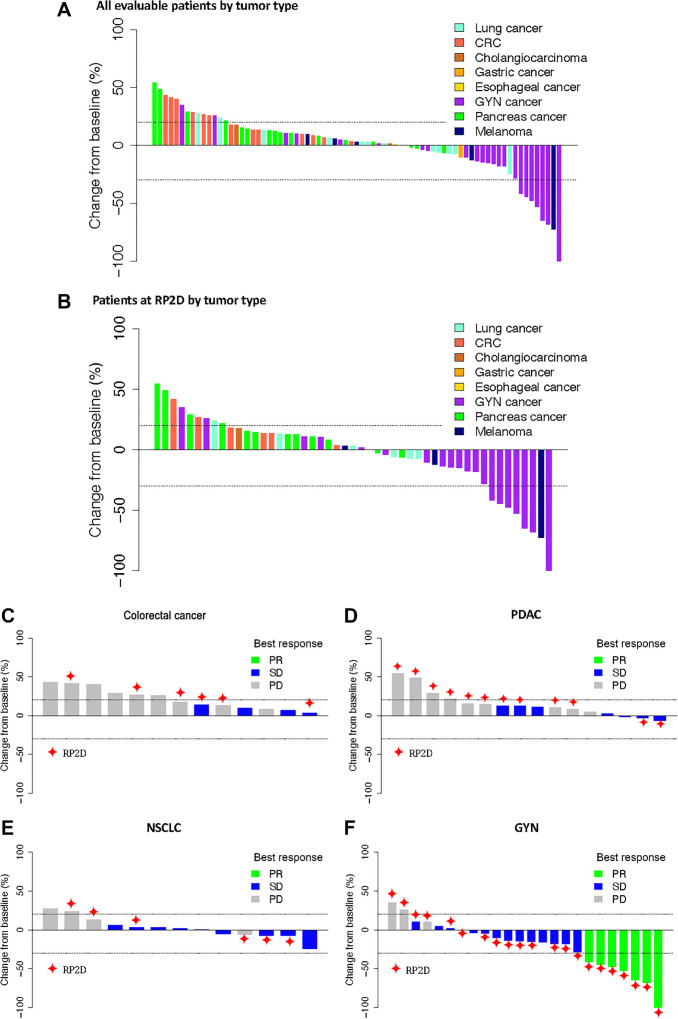
- At the RP2D, 8/49 (16%) evaluable patients achieved PR and 29/49 (59%) achieved clinical benefit. Disease-specific activity was striking in GYN cancers: 7/21 (33%) evaluable patients at RP2D achieved confirmed PR, with median DOR 8.17 months; no PRs occurred in colorectal (n = 13), pancreatic (n = 16), or NSCLC (n = 13), while one NRAS-mutant melanoma patient also achieved PR.
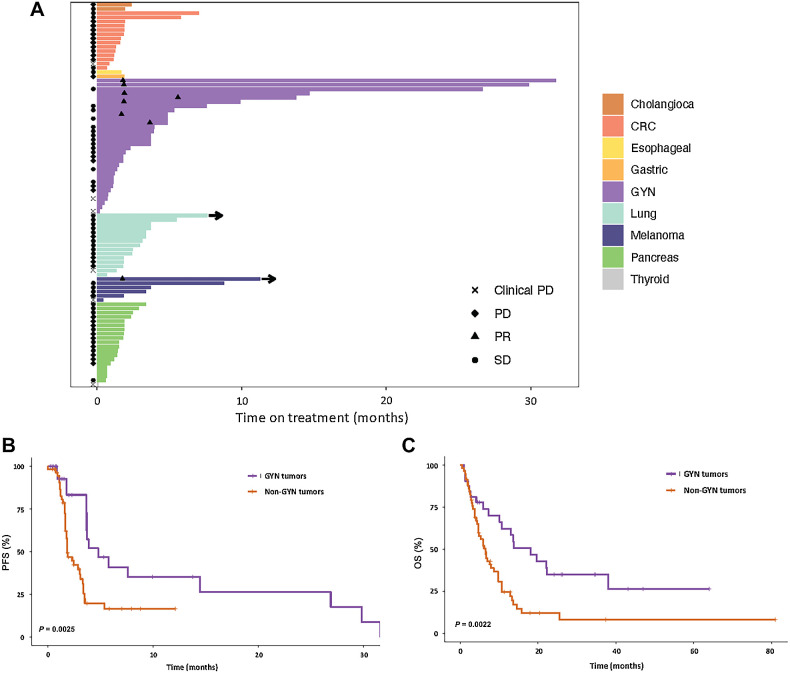
- GYN cancers had longer median PFS than all other tumor types (4.8 vs. 1.87 months, P = 0.0025) and longer median OS (18.13 vs. 6.57 months, P = 0.022).
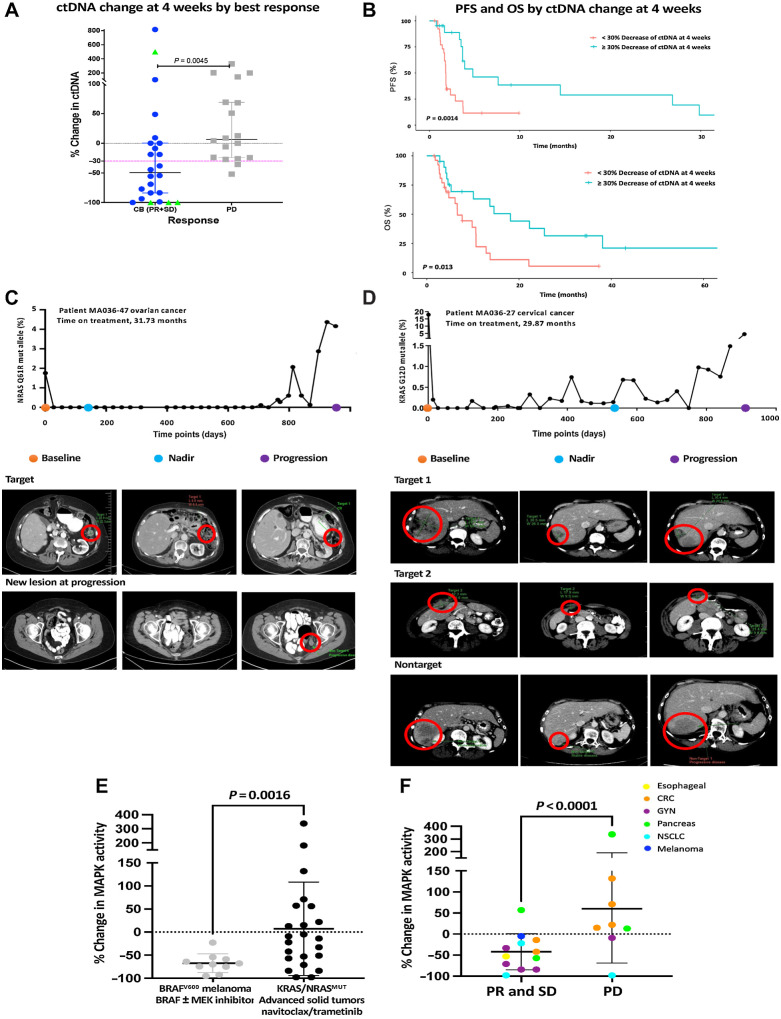
- In serial cfDNA from 53 expansion patients, a ≥30% decrease in KRAS/NRAS mutation levels at 4 weeks occurred in 21 patients; 16/21 (76%) achieved clinical benefit, and only 2/21 patients with PD (10%) had such a decrease. A ≥30% decrease was associated with longer median PFS (4.8 vs. 1.81 months, P = 0.0014) and OS (18.13 vs. 6.63 months, P = 0.013). MAPK pathway suppression was greater in patients with clinical benefit than in those with PD, but was less than in BRAFV600-mutant melanoma treated with BRAF inhibitor therapy.
Methods
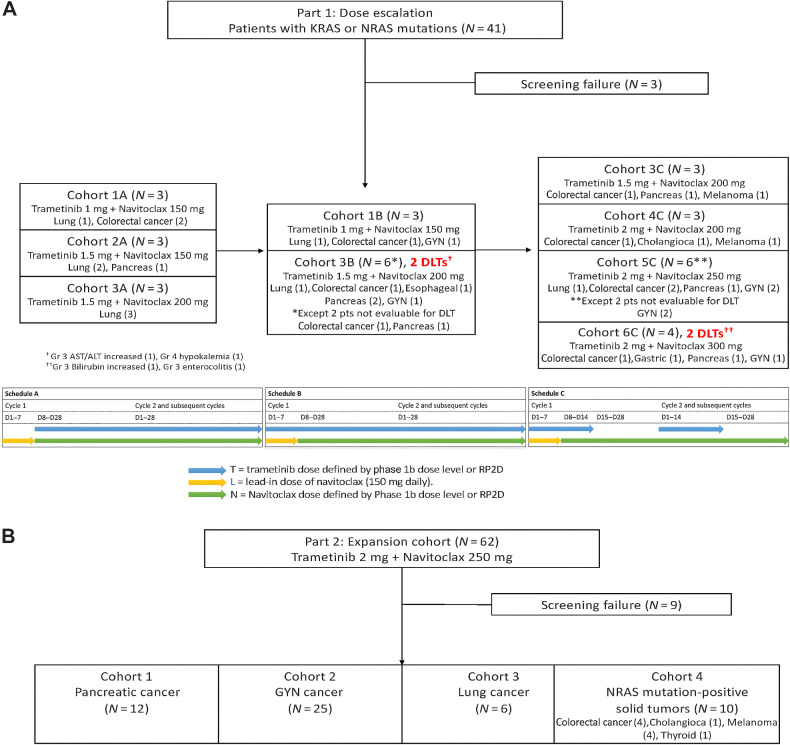
- Phase I/II, open-label study (NCT02079740) at Massachusetts General Hospital Cancer Center and Dana-Farber Cancer Institute. Part I used a 3+3 dose escalation of navitoclax plus trametinib across three schedules; Part II enrolled expansion cohorts at the RP2D for pancreatic, GYN, NSCLC, and other NRAS-mutant cancers using a Simon two-stage design.
- Eligible patients had KRAS- or NRAS-mutant metastatic/unresectable malignancy affecting codons 12, 13, 61, or 146, ECOG 0–1, measurable disease, and at least one prior systemic chemotherapy. A total of 91 patients were treated (38 in dose escalation, 53 in expansion).
- Antitumor efficacy was assessed by CT/MRI every 8 weeks using RECIST v1.1. Paired pretreatment and day 15 tumor biopsies were analyzed by qRT-PCR for MAPK-regulated transcripts; serial plasma cfDNA was analyzed by mutant-specific droplet digital PCR for KRAS/NRAS mutations.
Limitations
- Stated: small sample sizes for certain individual tumor types, especially within GYN subtypes, precluded thorough assessment of activity in each group; more comprehensive dose-schedule optimization was warranted.
- Stated: limited biopsy tissue allowed analysis only of MAPK-regulated transcripts, not parallel protein markers, and the biopsy sample size was too small to conclusively compare MAPK inhibition across tumor types.
- Evident from the text: this was a single-arm, nonrandomized study without a comparator; the NSCLC cohort terminated early due to slow accrual and lack of efficacy, and the planned colorectal expansion cohort was replaced with GYN based on lack of efficacy in colorectal cancer.
Model-written summary. Check it against the paper before relying on it.
Integrity signals
Registry
Cites
Statistics
Figures
Verification
Claims the paper makes
2 Valid · 0 Not valid · 16 Not checked · 78 Own results and interpretations
Every source the paper cites for this claim was checked and supports it.
In the paper
“Previously, we conducted a synthetic lethal functional genomic screen to identify targets that cooperate with MEK inhibitors to induce cell death in KRAS-mutant cancers. One of the top candidates identified was the anti-apoptotic gene BCL2L1, which encodes the BCL-xL protein (7).”
§ Phase I/II Study of Combined BCL-xL and MEK Inhibition with Navitoclax and Trametinib in KRAS or NRAS Mutant Advanced Solid Tumors > Introduction
What the sources say
- Supportedcites [7] Corcoran RB, Cheng KA, Hata AN, Faber AC, Ebi H, Coffee EM,. Synthetic lethal interaction of combined BCL-XL and MEK inhibition promotes tumor regressions in KRAS mutant cancer models. Cancer Cell 2013; 23: 121– 8. 23245996 PMC3667614 source
The Abstract (p.1) states the authors 'developed a pooled shRNA-drug screen strategy to identify genes that, when inhibited, cooperate with MEK inhibitors to effectively treat KRAS mutant cancer cells' and that 'the anti-apoptotic BH3 family gene BCL-XL emerged as a top hit'. The RESULTS section confirms BCL-XL (BCL2L1) was 'the most promising hit in validation studies' across two KRAS mutant cell lines, with knockdown plus selumetinib suppressing viability and inducing apoptosis. The paraphrase matches the source on screen type, target, partner drug class and population. (LLM, conf=0.92)
plainstates a cause- Asserted: passes — The authors put it forward as true.
- Checkable: passes — It can be checked against evidence.
- Load-bearing: passes — The paper’s conclusions depend on it.
- Based: passes — The paper gives a reason why it holds.
- Supported
The cited sources support only part of this claim — read each source’s verdict below.
In the paper
“All three schedules employed a 7-day lead-in dose of 150 mg navitoclax prior to initiation of the specific navitoclax dose, as this strategy had been found to reduce the incidence of thrombocytopenia in prior studies (15, 16).”
§ Phase I/II Study of Combined BCL-xL and MEK Inhibition with Navitoclax and Trametinib in KRAS or NRAS Mutant Advanced Solid Tumors > Patients and Methods > Study design
What the sources say
- Partly supportedcites [15] Gandhi L, Camidge DR, Ribeiro de Oliveira M, Bonomi P, Gandara D, Khaira D,. Phase I study of navitoclax (ABT-263), a novel Bcl-2 family inhibitor, in patients with small-cell lung cancer and other solid tumors. J Clin Oncol 2011; 29: 909– 16. 21282543 PMC4668282 sourceExperimental — accuracy not yet measured
Our copy confirms the strategy itself — continuous dosing cohorts received a 1-week (7-day) 150 mg lead-in dose (Drug Administration, Introduction; Abstract) — and that it helped platelet dynamics, but the point it actually makes is mitigation of variability, not of incidence: the Discussion states 'changing to a continuous dosing schedule after a priming lead-in dose effectively mitigated the variability in platelet counts,' and the Results frame the amendment as testing whether a low 7-day lead-in could 'prime the marrow to upregulate platelet production... and to minimize subsequent platelet variability,' with the 150 mg level chosen from observations in other concurrent navitoclax studies. The claim's 'reduces the incidence of thrombocytopenia' is not supported: the paper reports dose- and schedule-dependent thrombocytopenia in all patients (only 15% met AE criteria), and it is the study that adopted the lead-in rather than a prior study in which the effect had already been found. (LLM, conf=0.78)
- Partly supportedcites [16] Wilson WH, O'Connor OA, Czuczman MS, LaCasce AS, Gerecitano JF, Leonard JP,. Navitoclax, a targeted high-affinity inhibitor of BCL-2, in lymphoid malignancies: a phase 1 dose-escalation study of safety, pharmacokinetics, pharmacodynamics, and antitumour activity. Lancet Oncol 2010; 11: 1149– 59. 21094089 PMC3025495 sourceExperimental — accuracy not yet measured
Our copy supports the design element: METHODS (Dose Escalation and Toxicity) describes the continuous 21/21 schedule as 'preceded by a lead-in dose of 150 mg for 7–14 days to reduce acute thrombocytopenia', and RESULTS (Patients and Toxicity) records that a '150 mg 7-day lead-in dose followed by 325 mg... on a continuous (21/21) schedule was selected for the phase II study'. However, the observed effect is on platelet nadir severity, not on the incidence of thrombocytopenia: RESULTS (Pharmacodynamic Effects) states that with the lead-in plus continuous dosing 'we... observed higher nadirs', and the benefit is credited to the lead-in combined with continuous dosing rather than to the lead-in alone. Moreover, grade 4 thrombocytopenia still occurred as a DLT on the 21/21 schedule (RESULTS, Patients and Toxicity; Abstract, Findings), so the claim's assertion of a reduced incidence is stated more strongly than the source supports. (LLM, conf=0.72)
plainstates a cause- Asserted: passes — The authors put it forward as true.
- Checkable: passes — It can be checked against evidence.
- Load-bearing: passes — The paper’s conclusions depend on it.
- Based: passes — The paper gives a reason why it holds.
- Partly supported
A result the paper reports from its own data — it cites no other source for it, so there is none to check. The quote shows it is in the paper.
In the paper
“One patient with an NRAS-mutant melanoma also achieved a PR at the RP2D.”
§ Phase I/II Study of Combined BCL-xL and MEK Inhibition with Navitoclax and Trametinib in KRAS or NRAS Mutant Advanced Solid Tumors > Results > Clinical efficacy
plainSingle case- Asserted: passes — The authors put it forward as true.
- Checkable: passes — It can be checked against evidence.
- Load-bearing: unclear — It is unclear whether the paper’s conclusions depend on it.
- Based: passes — The paper gives a reason why it holds.
A result the paper reports from its own data — it cites no other source for it, so there is none to check. The quote shows it is in the paper.
In the paper
“After no dose-limiting toxicities (DLT) were observed through dose level 3A, evaluation of schedule B, which enabled initiation of trametinib simultaneously with navitoclax, was undertaken.”
§ Phase I/II Study of Combined BCL-xL and MEK Inhibition with Navitoclax and Trametinib in KRAS or NRAS Mutant Advanced Solid Tumors > Results > Dose escalation
plain- Asserted: passes — The authors put it forward as true.
- Checkable: passes — It can be checked against evidence.
- Load-bearing: passes — The paper’s conclusions depend on it.
- Based: passes — The paper gives a reason why it holds.
A result the paper reports from its own data — it cites no other source for it, so there is none to check. The quote shows it is in the paper.
In the paper
“Only 2 of 21 patients with PD (10%) exhibited a decrease of 30% or more.”
§ Phase I/II Study of Combined BCL-xL and MEK Inhibition with Navitoclax and Trametinib in KRAS or NRAS Mutant Advanced Solid Tumors > Results > Serial cfDNA analysis
plainn = 21- Asserted: passes — The authors put it forward as true.
- Checkable: passes — It can be checked against evidence.
- Load-bearing: passes — The paper’s conclusions depend on it.
- Based: passes — The paper gives a reason why it holds.
65 more claims
Create a free account to see all 96 claims and to verify the 32 references still open.
- It may state two separate claims as one. 14
- Probably not a substantial claim. 16
Self-check
Percentages, sums and reported differences re-computed from the paper’s own numbers.
Each contradiction between two passages listed here was confirmed by an independent check.
Rated minor: it would not touch a result — a value no result rests on, a p-value that stays on the same side of the significance level, or a conflict that is clerical, resolved elsewhere in the paper, or outside its own findings.
In the paper
“A total of 15 patients (17%) had colorectal cancer, 19 (11%) pancreatic, 15 (17%) NSCLC, and 32 (35%) GYN cancers.”
§ Phase I/II Study of Combined BCL-xL and MEK Inhibition with Navitoclax and Trametinib in KRAS or NRAS Mutant Advanced Solid Tumors > Abstract > Results:
Reported 11 · recomputed 20.879121
Rated minor: it would not touch a result — a value no result rests on, a p-value that stays on the same side of the significance level, or a conflict that is clerical, resolved elsewhere in the paper, or outside its own findings.
In the paper
“| | Others | Others | 7 (4.4%) |”
§ Phase I/II Study of Combined BCL-xL and MEK Inhibition with Navitoclax and Trametinib in KRAS or NRAS Mutant Advanced Solid Tumors > Results > Patient demographics
Reported 4.4 · recomputed 7.692308
Rated minor: it would not touch a result — a value no result rests on, a p-value that stays on the same side of the significance level, or a conflict that is clerical, resolved elsewhere in the paper, or outside its own findings.
In the paper
§ Phase I/II Study of Combined BCL-xL and MEK Inhibition with Navitoclax and Trametinib in KRAS or NRAS Mutant Advanced Solid Tumors > Patients and Methods > Analysis of MAPK inhibition in paired tumor biopsies
“TaqMan Gene Expression Assays of DUSP6 (Hs04329643_s1) and SPRY4 (Hs01935412_s1) were purchased from Thermo Fisher Scientific. Beta-actin (Thermo Fisher Scientific, 4326315E) was used as endogenous control. The average change in both transcripts was averaged for each patient.”
§ Phase I/II Study of Combined BCL-xL and MEK Inhibition with Navitoclax and Trametinib in KRAS or NRAS Mutant Advanced Solid Tumors > Results > Analysis of paired tumor biopsies
“To assess the degree of MAPK inhibition achieved on treatment, RNA was isolated from each biopsy, and the levels of MAPK-regulated transcripts DUSP6, SPRY4, and ETV5 were measured at day 15 versus pretreatment by qRT-PCR.”
Rated minor: it would not touch a result — a value no result rests on, a p-value that stays on the same side of the significance level, or a conflict that is clerical, resolved elsewhere in the paper, or outside its own findings.
In the paper
“| | GI cancers | GI cancers | 18 (19.8%) | | | | Colon cancer | 15 | | | | Cholangiocarcinoma | 2 | | | | Gastric cancer | 1 | | | | Esophageal cancer | 1 |”
§ Phase I/II Study of Combined BCL-xL and MEK Inhibition with Navitoclax and Trametinib in KRAS or NRAS Mutant Advanced Solid Tumors > Results > Patient demographics
Reported 18 · recomputed 19
Rated minor: it would not touch a result — a value no result rests on, a p-value that stays on the same side of the significance level, or a conflict that is clerical, resolved elsewhere in the paper, or outside its own findings.
In the paper
§ Phase I/II Study of Combined BCL-xL and MEK Inhibition with Navitoclax and Trametinib in KRAS or NRAS Mutant Advanced Solid Tumors > Patients and Methods > Analysis of MAPK inhibition in paired tumor biopsies
“All patients enrolled in the dose escalation stage of the study and the first 15 patients enrolled in the dose expansion stage underwent paired pretreatment (day −21 to day 0) and day 15 on-treatment tumor biopsies per protocol if deemed clinically safe and feasible.”
§ Phase I/II Study of Combined BCL-xL and MEK Inhibition with Navitoclax and Trametinib in KRAS or NRAS Mutant Advanced Solid Tumors > Results > Analysis of paired tumor biopsies
“Paired baseline and day 15 on-treatment biopsies were attempted (if clinically feasible, per protocol) on all patients during the Part 1 dose escalation and on the first 8 patients of the Part 2 dose expansion.”
Citations
Cites
ABT-263: A Potent and Orally Bioavailable Bcl-2 Family Inhibitor
Tse, C., Shoemaker, A. R., Adickes, J., Anderson, M. G., Chen, J., Jin, S., Johnson, E. F., Marsh, K. C., Mitten, M. J., Nimmer, P., et al. (2008) · Cancer Research · doi:10.1158/0008-5472.can-07-5836 · Cited by 1,992 · cited 2×
“Patients needed mutations affecting codons 12, 13, 61, or 146 as determined by a Clinical Laboratory Improvement Amendments (CLIA)-approved assay to be eligible for this study.”
Sotorasib for Lung Cancers with KRAS p.G12C Mutation
Skoulidis, F., Li, B. T., Dy, G. K., Price, T. J., Falchook, G. S., Wolf, J., Italiano, A., Schuler, M., Borghaei, H., Barlesi, F., et al. (2021) · New England Journal of Medicine · doi:10.1056/nejmoa2103695 · Cited by 1,849
Clinical efficacy of a RAF inhibitor needs broad target blockade in BRAF-mutant melanoma
Bollag, G., Hirth, P., Tsai, J., Zhang, J., Ibrahim, P. N., Cho, H., Spevak, W., Zhang, C., Zhang, Y., Habets, G., et al. (2010) · Nature · doi:10.1038/nature09454 · Cited by 1,831
Self-citationAdagrasib in Non–Small-Cell Lung Cancer Harboring a KRAS G12C Mutation
Jänne, P. A., Riely, G. J., Gadgeel, S. M., Heist, R. S., Ou, S.-H. I., Pacheco, J. M., Johnson, M. L., Sabari, J. K., Leventakos, K., Yau, E., et al. (2022) · New England Journal of Medicine · doi:10.1056/nejmoa2204619 · Cited by 1,061
Self-citationCorcoran, R. B., Ebi, H., Turke, A. B., Coffee, E. M., Nishino, M., Cogdill, A. P., Brown, R. D., Della Pelle, P., Dias-Santagata, D., Hung, K. E., et al. (2012) · Cancer Discovery · doi:10.1158/2159-8290.cd-11-0341 · Cited by 1,022
Self-citationWilson, W. H., O'Connor, O. A., Czuczman, M. S., LaCasce, A. S., Gerecitano, J. F., Leonard, J. P., Tulpule, A., Dunleavy, K., Xiong, H., Chiu, Y.-L., et al. (2010) · The Lancet Oncology · doi:10.1016/s1470-2045(10)70261-8 · Cited by 876
Roberts, A. W., Seymour, J. F., Brown, J. R., Wierda, W. G., Kipps, T. J., Khaw, S. L., Carney, D. A., He, S. Z., Huang, D. C. S., Xiong, H., et al. (2012) · Journal of Clinical Oncology · doi:10.1200/jco.2011.34.7898 · Cited by 830
MEK1 and MEK2 inhibitors and cancer therapy: the long and winding road
Caunt, C. J., Sale, M. J., Smith, P. D., & Cook, S. J. (2015) · Nature Reviews Cancer · doi:10.1038/nrc4000 · Cited by 606 · cited 1×
“Similarly, other studies have suggested a role for BCL-xL and/or other antiapoptotic proteins in the apoptotic response to MAPK pathway inhibition (14).”
Gandhi, L., Camidge, D. R., Ribeiro de Oliveira, M., Bonomi, P., Gandara, D., Khaira, D., Hann, C. L., McKeegan, E. M., Litvinovich, E., Hemken, P. M., et al. (2011) · Journal of Clinical Oncology · doi:10.1200/jco.2010.31.6208 · Cited by 603
Self-citationCombined BRAF, EGFR, and MEK Inhibition in Patients with BRAF V600E-Mutant Colorectal Cancer
Corcoran, R. B., André, T., Atreya, C. E., Schellens, J. H. M., Yoshino, T., Bendell, J. C., Hollebecque, A., McRee, A. J., Siena, S., Middleton, G., et al. (2018) · Cancer Discovery · doi:10.1158/2159-8290.cd-17-1226 · Cited by 592 · cited 1×
“Severalstudieshave suggested that adaptive feedback signaling can lead to reactivation of theMAPKpathwayfollowingtreatmentwithMEKinhibitors,andthat this adaptive feedback reactivation may be more pronounced in some tumor types, such as colorectal cancer (21 – 24).”
Self-citationRudin, C. M., Hann, C. L., Garon, E. B., Ribeiro de Oliveira, M., Bonomi, P. D., Camidge, D. R., Chu, Q., Giaccone, G., Khaira, D., Ramalingam, S. S., et al. (2012) · Clinical Cancer Research · doi:10.1158/1078-0432.ccr-11-3090 · Cited by 564
Self-citationInfante, J. R., Fecher, L. A., Falchook, G. S., Nallapareddy, S., Gordon, M. S., Becerra, C., DeMarini, D. J., Cox, D. S., Xu, Y., Morris, S. R., et al. (2012) · The Lancet Oncology · doi:10.1016/s1470-2045(12)70270-x · Cited by 552
Self-citationAdagrasib with or without Cetuximab in Colorectal Cancer with Mutated KRAS G12C
Yaeger, R., Weiss, J., Pelster, M. S., Spira, A. I., Barve, M., Ou, S.-H. I., Leal, T. A., Bekaii-Saab, T. S., Paweletz, C. P., Heavey, G. A., et al. (2023) · New England Journal of Medicine · doi:10.1056/nejmoa2212419 · Cited by 527
Sotorasib in KRAS p.G12C–Mutated Advanced Pancreatic Cancer
Strickler, J. H., Satake, H., George, T. J., Yaeger, R., Hollebecque, A., Garrido-Laguna, I., Schuler, M., Burns, T. F., Coveler, A. L., Falchook, G. S., et al. (2023) · New England Journal of Medicine · doi:10.1056/nejmoa2208470 · Cited by 527 · cited 1×
“Even with recent advances in this space, currently only inhibitors targeting a speci fi c KRAS mutation (KRAS G12C) have been FDA-approved in NSCLC (2 – 5).”
Self-citationCorcoran, R. B., Atreya, C. E., Falchook, G. S., Kwak, E. L., Ryan, D. P., Bendell, J. C., Hamid, O., Messersmith, W. A., Daud, A., Kurzrock, R., et al. (2015) · Journal of Clinical Oncology · doi:10.1200/jco.2015.63.2471 · Cited by 507
Self-citationVertical Pathway Inhibition Overcomes Adaptive Feedback Resistance to KRASG12C Inhibition
Ryan, M. B., Fece de la Cruz, F., Phat, S., Myers, D. T., Wong, E., Shahzade, H. A., Hong, C. B., & Corcoran, R. B. (2020) · Clinical Cancer Research · doi:10.1158/1078-0432.ccr-19-3523 · Cited by 496
Self-citationTherapeutic strategies to target RAS-mutant cancers
Ryan, M. B., & Corcoran, R. B. (2018) · Nature Reviews Clinical Oncology · doi:10.1038/s41571-018-0105-0 · Cited by 420 · cited 2×
“However, inhibition of MAPK signaling alone, particularly with MEK inhibitors, typically leads to a cytostatic effect in preclinical models and fails to induce tumor regressions (1, 6, 7).”
Self-citationFarley, J., Brady, W. E., Vathipadiekal, V., Lankes, H. A., Coleman, R., Morgan, M. A., Mannel, R., Yamada, S. D., Mutch, D., Rodgers, W. H., et al. (2013) · The Lancet Oncology · doi:10.1016/s1470-2045(12)70572-7 · Cited by 413
Corcoran, R. B., Cheng, K. A., Hata, A. N., Faber, A. C., Ebi, H., Coffee, E. M., Greninger, P., Brown, R. D., Godfrey, J. T., Cohoon, T. J., et al. (2013) · Cancer Cell · doi:10.1016/j.ccr.2012.11.007 · Cited by 377
Self-citationLito, P., Saborowski, A., Yue, J., Solomon, M., Joseph, E., Gadal, S., Saborowski, M., Kastenhuber, E., Fellmann, C., Ohara, K., et al. (2014) · Cancer Cell · doi:10.1016/j.ccr.2014.03.011 · Cited by 324
Gershenson, D. M., Miller, A., Brady, W. E., Paul, J., Carty, K., Rodgers, W., Millan, D., Coleman, R. L., Moore, K. N., Banerjee, S., et al. (2022) · The Lancet · doi:10.1016/s0140-6736(21)02175-9 · Cited by 232
Monk, B. J., Grisham, R. N., Banerjee, S., Kalbacher, E., Mirza, M. R., Romero, I., Vuylsteke, P., Coleman, R. L., Hilpert, F., Oza, A. M., et al. (2020) · Journal of Clinical Oncology · doi:10.1200/jco.20.01164 · Cited by 145
Parikh, A. R., Mojtahed, A., Schneider, J. L., Kanter, K., Van Seventer, E. E., Fetter, I. J., Thabet, A., Fish, M. G., Teshome, B., Fosbenner, K., et al. (2020) · Clinical Cancer Research · doi:10.1158/1078-0432.ccr-19-3467 · Cited by 134
Self-citationBendell, J. C., Javle, M., Bekaii-Saab, T. S., Finn, R. S., Wainberg, Z. A., Laheru, D. A., Weekes, C. D., Tan, B. R., Khan, G. N., Zalupski, M. M., et al. (2017) · British Journal of Cancer · doi:10.1038/bjc.2017.10 · Cited by 127
Self-citationHazar-Rethinam, M., Kleyman, M., Han, G. C., Liu, D., Ahronian, L. G., Shahzade, H. A., Chen, L., Parikh, A. R., Allen, J. N., Clark, J. W., et al. (2018) · Cancer Discovery · doi:10.1158/2159-8290.cd-17-1227 · Cited by 75
Self-citationColeman, R. L., Sill, M. W., Thaker, P. H., Bender, D. P., Street, D., McGuire, W. P., Johnston, C. M., & Rotmensch, J. (2015) · Gynecologic Oncology · doi:10.1016/j.ygyno.2015.04.005 · Cited by 64
Iavarone, C., Zervantonakis, I. K., Selfors, L. M., Palakurthi, S., Liu, J. F., Drapkin, R., Matulonis, U. A., Hallberg, D., Velculescu, V. E., Leverson, J. D., et al. (2019) · Molecular Cancer Therapeutics · doi:10.1158/1535-7163.mct-18-0413 · Cited by 52
Self-citation
Cited by
KRAS G12C Game of Thrones, which direct KRAS inhibitor will claim the iron throne?
Nagasaka, M., Li, Y., Sukari, A., Ou, S.-H. I., Al-Hallak, M. N., & Azmi, A. S. (2020) · Cancer Treatment Reviews · doi:10.1016/j.ctrv.2020.101974 · Cited by 185
Vascular senescence and aging: mechanisms, clinical implications, and therapeutic prospects
Picos, A., Seoane, N., Campos‐Toimil, M., & Viña, D. (2025) · Biogerontology · doi:10.1007/s10522-025-10256-5 · Cited by 93
Synthetic lethal strategies for the development of cancer therapeutics
Ngoi, N. Y. L., Gallo, D., Torrado, C., Nardo, M., Durocher, D., & Yap, T. A. (2024) · Nature Reviews Clinical Oncology · doi:10.1038/s41571-024-00966-z · Cited by 88
Strategies to tackle RAS-mutated metastatic colorectal cancer
Patelli, G., Tosi, F., Amatu, A., Mauri, G., Curaba, A., Patanè, D. A., Pani, A., Scaglione, F., Siena, S., & Sartore-Bianchi, A. (2021) · ESMO Open · doi:10.1016/j.esmoop.2021.100156 · Cited by 86
Self-citationAnti-senescence therapies: a new concept to address cardiovascular disease
Stojanović, S. D., Thum, T., & Bauersachs, J. K. (2025) · Cardiovascular Research · doi:10.1093/cvr/cvaf030 · Cited by 34
Metadata
- Authors
- Corcoran, R. B., Do, K. T., Kim, J. E., Cleary, J. M., Parikh, A. R., Yeku, O. O., Xiong, N., Weekes, C. D., Veneris, J., Ahronian, L. G., Mauri, G., Tian, J., Norden, B. L., Michel, A. G., Van Seventer, E. E., Siravegna, G., Camphausen, K., Chi, G., Fetter, I. J., Brugge, J. S., Chen, H., Takebe, N., Penson, R. T., Juric, D., Flaherty, K. T., Sullivan, R. J., Clark, J. W., Heist, R. S., Matulonis, U. A., Liu, J. F., & Shapiro, G. I.
- Affiliations
- Harvard University (US)
- Dana-Farber Cancer Institute (US)
- 1Massachusetts General Hospital Cancer Center and Department of Medicine, Harvard Medical School, Boston, Massachusetts.
- National Institutes of Health (US)
- Corresponding author
- Corcoran, Ryan B.
- ORCID
- Corcoran, Ryan B.
- Do, Khanh T.
- Kim, Jeong E.
- Cleary, James M.
- Parikh, Aparna R.
- Yeku, Oladapo O.
- Xiong, Niya
- Weekes, Colin D.
- Veneris, Jennifer
- Ahronian, Leanne G.
- Mauri, Gianluca
- Tian, Jun
- Norden, Bryanna L.
- Michel, Alexa G.
- Van Seventer, Emily E.
- Siravegna, Giulia
- Camphausen, Kyle
- Chi, Gary
- Fetter, Isobel J.
- Brugge, Joan S.
- Chen, Helen
- Takebe, Naoko
- Penson, Richard T.
- Juric, Dejan
- Flaherty, Keith T.
- Sullivan, Ryan J.
- Clark, Jeffrey W.
- Heist, Rebecca S.
- Matulonis, Ursula A.
- Liu, Joyce F.
- Shapiro, Geoffrey I.
- Venue
- Clinical Cancer Research
- Published
- 2024-03-08
- Volume
- 30
- Issue
- 9
- Pages
- 1739-1749
- ISSN
- 1078-0432 (ISSN-L)
- 1557-3265
- PMC
- PMC11061595
- OpenAlex
- W4392586352
- Semantic Scholar
- 1f4c3f5d8ec42a03bf86e92fd699ac02bf1e3f56
- Cited by
- 46
- References
- 28
- Citations by year
- 2026: 16 · 2025: 15 · 2024: 8
- FWCI
- 3.78
- Type
- journal article
- Language
- en
- Open access
- hybrid
- doi.org
- Licence
- Locations
- Clinical Cancer Research (publishedVersion, cc-by-nc-nd)
- PubMed Central (publishedVersion, cc-by-nc-nd)
- PubMed (publishedVersion)
- Funders
- National Cancer Institute (UM1 CA186709, U54 CA224068, P50 CA240243)
- Topics
- Life Sciences › Biochemistry, Genetics and Molecular Biology › Molecular Biology › Melanoma and MAPK Pathways
- Life Sciences › Biochemistry, Genetics and Molecular Biology › Molecular Biology › Protein Kinase Regulation and GTPase Signaling
- Life Sciences › Biochemistry, Genetics and Molecular Biology › Molecular Biology › Protein Tyrosine Phosphatases
- Keywords
- navitoclax, trametinib, BCL-XL inhibition, MEK inhibition, KRAS mutation, NRAS mutation, RAS-mutant cancers, gynecologic cancer, synthetic lethality, MAPK inhibition, circulating tumor DNA, combination therapy, dose escalation, advanced solid tumors
- MeSH terms
- Adult, Aged, Aged, 80 and over, Aniline Compounds, Antineoplastic Combined Chemotherapy Protocols, Female, Humans, Male, Middle Aged, Mutation, Neoplasms, Pyridones, Pyrimidinones, Sulfonamides, Proto-Oncogene Proteins p21(ras), Treatment Outcome, GTP Phosphohydrolases, Protein Kinase Inhibitors, bcl-X Protein
About these checks
Registry, retraction, Cites and statistics results are computed, not judged, with one exception: a printed reference that no index lists is read once by a model before it counts as a citation error. Claims are extracted by a model and kept only when their quote appears verbatim in the text; each cited source is then checked, with a model’s help, for whether it says what the claim relies on. Those verdicts can be wrong — read the claim’s quote and the cited source before relying on one.
The claim verdicts this report counts are experimental: their accuracy is not yet measured.
A language model drew the claims from the paper on 2026-11-20, under version 3 of the claim definition (model deepseek-v4.1-flash, prompt extract-v3).
A second model labelled each claim on 2026-11-20 (model jev-1.13-20260917, definition revision gold-guideline-v0.2).
Cited sources are checked with a language model’s help (qwen3.8-omni-flash).
Statistics and arithmetic are recomputed, not judged.
Confidence bands are shown only for fields calibrated on our annotated test set. None is calibrated yet, so no band is shown.
What counts as a claim ›How we measure confidence ›How we check this ›
Are you an author, or do you see a problem with this page? Request a review
Data sources
Bibliographic data: Semantic Scholar, OpenAlex, Crossref.
Contains information from the Semantic Scholar Academic Graph Datasets, made available under the ODC Attribution License (ODC-BY 1.0).
Semantic Scholar’s data is described in: Kinney, R., et al. (2023). The Semantic Scholar Open Data Platform. arXiv:2301.10140.
