

Gut-derived GIP activates central Rap1 to impair neural leptin sensitivity during overnutrition
Open accessThe DOI matches its Crossref record; 33 of the 33 references it cites were found in a registry or an index.
Abstract
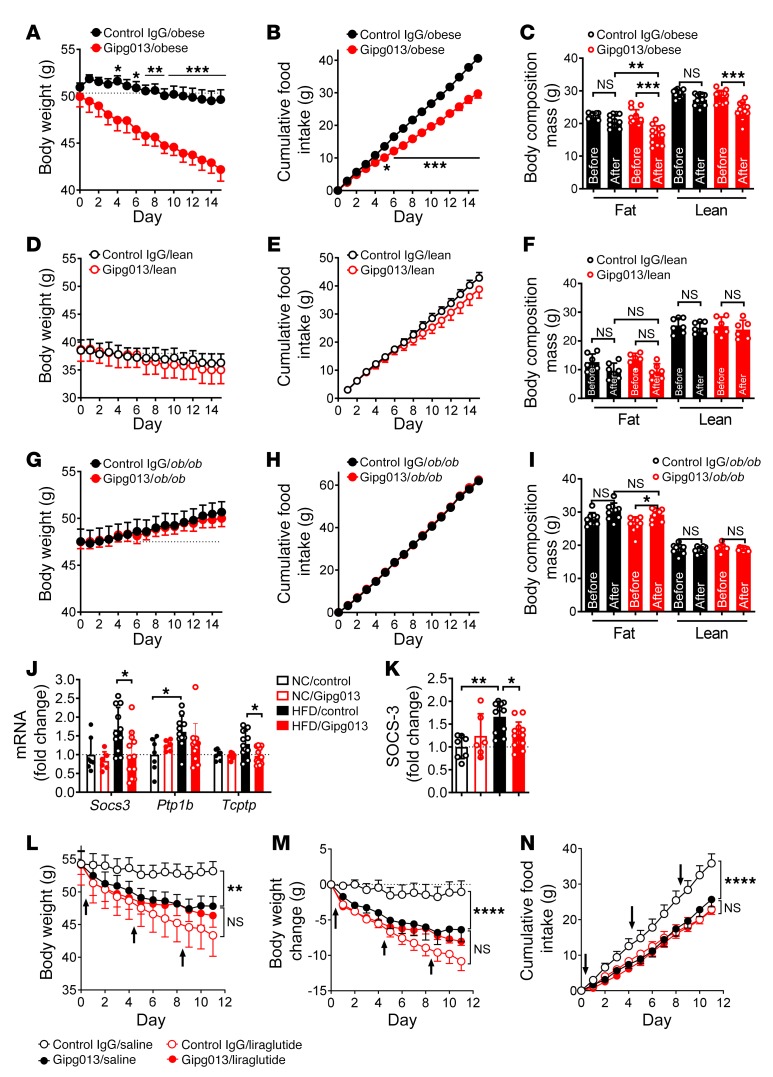
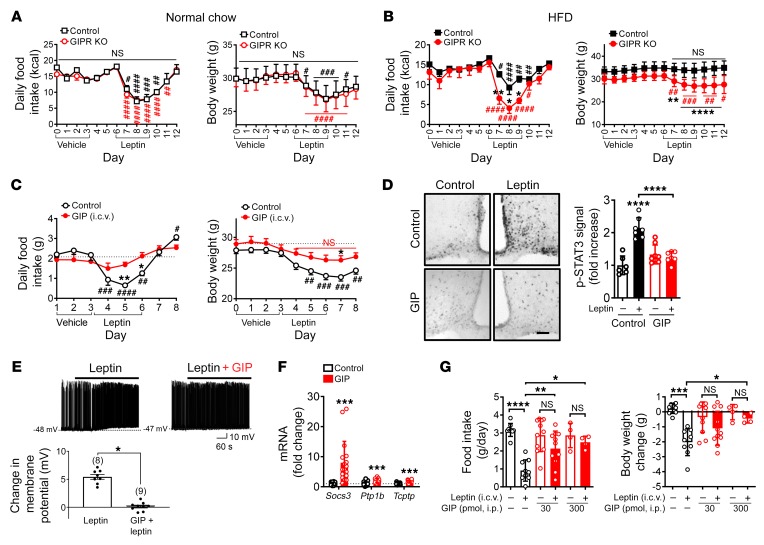
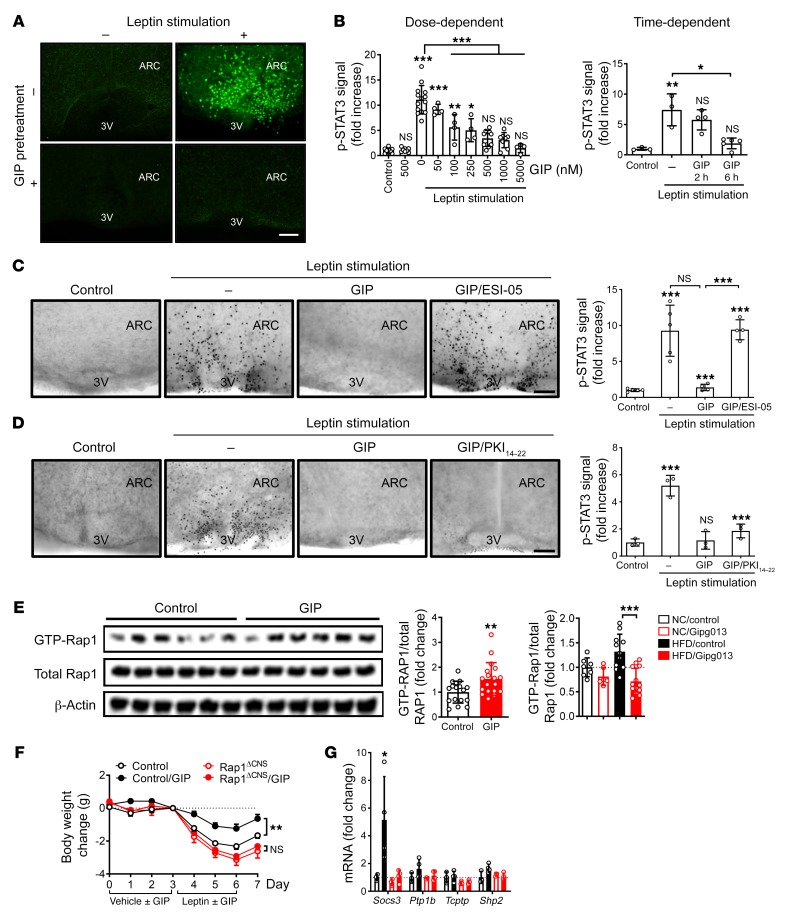
Nutrient excess, a major driver of obesity, diminishes hypothalamic responses to exogenously administered leptin, a critical hormone of energy balance. Here, we aimed to identify a physiological signal that arises from excess caloric intake and negatively controls hypothalamic leptin action. We found that deficiency of the gastric inhibitory polypeptide receptor (Gipr) for the gut-derived incretin hormone GIP protected against diet-induced neural leptin resistance. Furthermore, a centrally administered antibody that neutralizes GIPR had remarkable antiobesity effects in diet-induced obese mice, including reduced body weight and adiposity, and a decreased hypothalamic level of SOCS3, an inhibitor of leptin actions. In contrast, centrally administered GIP diminished hypothalamic sensitivity to leptin and increased hypothalamic levels of Socs3. Finally, we show that GIP increased the active form of the small GTPase Rap1 in the brain and that its activation was required for the central actions of GIP. Altogether, our results identify GIPR/Rap1 signaling in the brain as a molecular pathway linking overnutrition to the control of neural leptin actions.
Overview
The claims and statistics of this paper haven’t been checked yet.
Free: it reads the open-access text and checks the first 5 claims that cite a source we can check. Create a free account to check every claim.
Integrity signals
Registry
Cites
Statistics
Figures
Verification
Claims the paper makes
The claims and statistics of this paper haven’t been checked yet.
Free: it reads the open-access text and checks the first 5 claims that cite a source we can check. Create a free account to check every claim.
Claims other papers make about this one
Each is checked against this paper’s own text: does it say what the citing paper says it does?
In the citing paper
“In fact, it has been suggested that, in obesity, elevated circulating GIP levels lead to the activation of EPAC/Raf1 signaling and this is an important condition for inducing neural leptin resistance [43].”
From Adipose Tissue: A Novel Target of the Incretin Axis? A Paradigm Shift in Obesity-Linked Insulin Resistance (2024) · cites this paper as [43]
Self-check
Percentages, sums and reported differences re-computed from the paper’s own numbers.
The self-check needs the paper’s full text.
Citations
Cites
Genetics of Food Intake Self-Regulation in Childhood: Literature Review and Research Opportunities
Faith, M. S., Carnell, S., & Kral, T. V. E. (2013) · Human Heredity · doi:10.1159/000353879 · Cited by 7,601
Genetic studies of body mass index yield new insights for obesity biology
Study, T. L. C., Locke, A. E., The ADIPOGen Consortium, The AGEN-BMI Working Group, The CARDIOGRAMplusC4D Consortium, The CKDGen Consortium, The, G. L. G. C., The, I. C. B. P., The MAGIC Investigators, The MuTHER Consortium, et al. (2015) · Nature · doi:10.1038/nature14177 · Cited by 4,534 · cited 11×
“In contrast, under HFD conditions, WT mice did not exhibit these responses to leptin, demonstrating the expected diminished leptin response induced by HFD feeding; Gipr-KO mice, however, retained their sensitivity to leptin (Figure 2B).”
BackgroundInfluentialAssociation analyses of 249,796 individuals reveal 18 new loci associated with body mass index
MAGIC, Speliotes, E. K., on behalf of Procardis Consortium, Willer, C. J., Berndt, S. I., Monda, K. L., Thorleifsson, G., Jackson, A. U., Allen, H. L., Lindgren, C. M., et al. (2010) · Nature Genetics · doi:10.1038/ng.686 · Cited by 2,912
Pharmacology, physiology, and mechanisms of incretin hormone action.
Campbell, J. E., & Drucker, D. J. (2013) · Cell Metabolism · doi:10.1016/j.cmet.2013.04.008 · Cited by 1,500
Hypothalamic IKKβ/NF-κB and ER Stress Link Overnutrition to Energy Imbalance and Obesity
Zhang, X., Zhang, G., Zhang, H., Karin, M., Bai, H., & Cai, D. (2008) · Cell · doi:10.1016/j.cell.2008.07.043 · Cited by 1,350
Inhibition of gastric inhibitory polypeptide signaling prevents obesity
Miyawaki, K., Yamada, Y., Ban, N., Ihara, Y., Tsukiyama, K., Zhou, H., Fujimoto, S., Oku, A., Tsuda, K., Toyokuni, S., et al. (2002) · Nature Medicine · doi:10.1038/nm727 · Cited by 963 · cited 5×
“Since endogenous GIP is produced in K cells in the upper gut and GIP levels are reported to be elevated in diet-induced obesity, reaching 20–100 pM (9, 14, 24, 25), we next determined whether increasing the peripheral levels of GIP inhibits neural leptin actions.”
BackgroundInfluentialCoskun, T., Sloop, K. W., Loghin, C., Alsina-Fernandez, J., Urva, S., Bokvist, K. B., Cui, X., Briere, D. A., Cabrera, O., Roell, W. C., et al. (2018) · Molecular Metabolism · doi:10.1016/j.molmet.2018.09.009 · Cited by 882
Endoplasmic Reticulum Stress Plays a Central Role in Development of Leptin Resistance
Ozcan, L., Ergin, A. S., Lu, A., Chung, J., Sarkar, S., Nie, D., Myers, M. G., & Ozcan, U. (2009) · Cell Metabolism · doi:10.1016/j.cmet.2008.12.004 · Cited by 875 · cited 1×
“Excess calorie intake provokes hypothalamic activation of multiple inflammatory and stress response pathways, such as IKB kinase-β/ NF-κB (IKKβ/NF-κB) signaling (1), TLR4 signaling (2), unfolded protein response (UPR) signaling (3), and exchange protein directly activated by cAMP (EPAC)/Rap1 GTPase (EPAC/Rap1) signali…”
BackgroundFrias, J. P., Nauck, M. A., Van, J., Kutner, M. E., Cui, X., Benson, C., Urva, S., Gimeno, R. E., Milicevic, Z., Robins, D., et al. (2018) · The Lancet · doi:10.1016/s0140-6736(18)32260-8 · Cited by 815
Association analyses of 249,796 individuals reveal 18 new loci associated with body mass index
Speliotes, E. K., Willer, C. J., Berndt, S. I., Monda, K. L., Þorleifsson, G., Jackson, A., Allen, H. L., Lindgren, C. M., Luan, J., Mägi, R., et al. (2010) · Carolina Digital Repository (University of North Carolina at Chapel Hill) · doi:10.17615/d3bn-7g86 · Cited by 767
Cited by
How May GIP Enhance the Therapeutic Efficacy of GLP-1?
Samms, R. J., Coghlan, M. P., & Sloop, K. W. (2020) · Trends in Endocrinology & Metabolism · doi:10.1016/j.tem.2020.02.006 · Cited by 419
Zhang, Q., Delessa, C. T., Augustin, R., Bakhti, M., Colldén, G., Drucker, D. J., Feuchtinger, A., Caceres, C. G., Grandl, G., Harger, A., et al. (2021) · Cell Metabolism · doi:10.1016/j.cmet.2021.01.015 · Cited by 322
Role of the gut-brain axis in energy and glucose metabolism
Wachsmuth, H. R., Weninger, S. N., & Duca, F. A. (2022) · Experimental & Molecular Medicine · doi:10.1038/s12276-021-00677-w · Cited by 269
GIPR agonism mediates weight-independent insulin sensitization by tirzepatide in obese mice
Samms, R. J., Christe, M. E., Collins, K. A. L., Pirro, V., Droz, B. A., Holland, A. K., Friedrich, J. L., Wojnicki, S., Konkol, D. L., Cosgrove, R., et al. (2021) · Journal of Clinical Investigation · doi:10.1172/jci146353 · Cited by 256
“A key finding of the current study is that tirzepatide ameliorated peripheral IR in a model of DIO.”
BackgroundBeyond the pancreas: contrasting cardiometabolic actions of GIP and GLP1
Hammoud, R., & Drucker, D. J. (2023) · Nature Reviews Endocrinology · doi:10.1038/s41574-022-00783-3 · Cited by 244
“Central intracerebroventricular administration of the Gipg013 antagonist also reduces body weight and adiposity in mice with diet-induced obesity, findings associated with decreased hypothalamic levels of SOCS3, an inhibitor of leptin signalling 144 .”
Obesity as a Risk Factor for Dementia and Alzheimer’s Disease: The Role of Leptin
Flores-Cordero, J. A., Pérez-Pérez, A., Jiménez-Cortegana, C., Alba, G., Flores-Barragán, A., & Sánchez-Margalet, V. (2022) · International Journal of Molecular Sciences · doi:10.3390/ijms23095202 · Cited by 212
Killion, E. A., Chen, M., Falsey, J. R., Sivits, G., Hager, T., Atangan, L., Helmering, J., Lee, J., Li, H., Wu, B., et al. (2020) · Nature Communications · doi:10.1038/s41467-020-18751-8 · Cited by 151
Self-citationCampbell, J. E., Müller, T. D., Finan, B., DiMarchi, R. D., Tschöp, M. H., & D’Alessio, D. A. (2023) · Cell Metabolism · doi:10.1016/j.cmet.2023.07.010 · Cited by 149
Recent Advances in Incretin-Based Pharmacotherapies for the Treatment of Obesity and Diabetes
Tan, Q., Akindehin, S. E., Orsso, C. E., Waldner, R. C., DiMarchi, R. D., Müller, T. D., & Haqq, A. M. (2022) · Frontiers in Endocrinology · doi:10.3389/fendo.2022.838410 · Cited by 146
“However, one study demonstrated that central administration of an antibody-based GIPR antagonist remarkably decreased body weight in DIO mice, potentially through mechanisms that include restoration of leptin sensitivity (185).”
BackgroundTargeting the GIPR for obesity: To agonize or antagonize? Potential mechanisms
Campbell, J. E. (2021) · Molecular Metabolism · doi:10.1016/j.molmet.2020.101139 · Cited by 133
“Icv administration of GIP at supraphysiological concentrations (50e5000 nM) prevented leptin signaling in brain slices ex vivo [80], while icv administration of GIP in vivo caused proinflammatory signaling that inhibited insulin and leptin signaling in the hypothalamus [81].”
BackgroundInfluentialRole of short‐chain fatty acids in host physiology
Liu, M., Lu, Y., Xue, G., Han, L., Jia, H., Wang, Z., Zhang, J., Liu, P., Yang, C., & Zhou, Y. (2024) · Animal Models and Experimental Medicine · doi:10.1002/ame2.12464 · Cited by 132
“85 Ghrelin is a major appetite-stimulating hormone that acts as a neuropeptide in the central nervous system.”
BackgroundMuzurović, E. M., Volčanšek, Š., Zibar, K., Janež, A., Mikhailidis, D. P., Rizzo, M., & Mantzoros, C. S. (2022) · Journal of Cardiovascular Pharmacology and Therapeutics · doi:10.1177/10742484221146371 · Cited by 126
“In mice models, GIPR deficiency protects against dietinduced neuronal leptin resistance, a key problem in obesity.(63) A centrally administered antibody that neutralizes GIPR was effective against obesity in obese mice, therefore antagonism of GIP could be a therapeutic approach to prevent obesity.”
BackgroundGlucose-dependent insulinotropic polypeptide (GIP)
Müller, T. D., Adriaenssens, A. E., Ahrén, B., Blüher, M., Birkenfeld, A. L., Campbell, J. E., Coghlan, M. P., D’Alessio, D. D., Deacon, C. F., DelPrato, S., et al. (2025) · Molecular Metabolism · doi:10.1016/j.molmet.2025.102118 · Cited by 114
The role of GIP in α-cells and glucagon secretion
El, K., & Campbell, J. E. (2020) · Peptides · doi:10.1016/j.peptides.2019.170213 · Cited by 96
Obesity and the kidney: mechanistic links and therapeutic advances
Yau, K., Kuah, R., Cherney, D. Z. I., & Lam, T. K. T. (2024) · Nature Reviews Endocrinology · doi:10.1038/s41574-024-00951-7 · Cited by 91
“The mechanism(s) responsible for the metabolic benefits of GLP1R-based polyagonists remain largely unknown, although, in addition to the weight-lowering effect of GLP1, bidirectional changes in GIP and glucagon signalling in the brain also alter feeding and weight 114–118 .”
Lu, S.-C., Chen, M., Atangan, L., Killion, E. A., Komorowski, R., Cheng, Y., Netirojjanakul, C., Falsey, J. R., Stolina, M., Dwyer, D., et al. (2021) · Cell Reports Medicine · doi:10.1016/j.xcrm.2021.100263 · Cited by 91
“Similarly, central inhibition of GIPR reduced BW and adiposity through a leptin-dependent mechanism.(22) In addition, BW loss was significantly enhanced in DIO mice and monkeys when anti-GIPR antibodies (Abs) were co-administered with GLP-1Ras.”
BackgroundResultInfluentialSelf-citationThe effects of dual GLP-1/GIP receptor agonism on glucagon secretion-A Review
Mathiesen, D. S., Bagger, J. I., Bergmann, N. C., Lund, A., Christensen, M. B., Vilsbøll, T., & Knop, F. K. (2019) · International Journal of Molecular Sciences · doi:10.3390/ijms20174092 · Cited by 80
“Interestingly, GIPR knockout protects against hypothalamic leptin resistance in diet-induced obese mice [99].”
BackgroundThe Role of GIP Receptor in the CNS for the Pathogenesis of Obesity
Fukuda, M. (2021) · Diabetes · doi:10.2337/dbi21-0001 · Cited by 69
“However, centrally expressed GIP was not detected in other studies (13,47,56).”
BackgroundMethodResultSelf-citationPharmacological antagonism of the incretin system protects against diet-induced obesity
Svendsen, B., Capozzi, M. E., Nui, J., Hannou, S. A., Finan, B., Naylor, J., Ravn, P., D'Alessio, D. A., & Campbell, J. E. (2020) · Molecular Metabolism · doi:10.1016/j.molmet.2019.11.018 · Cited by 67
“Increased GIPR activity in the brain has been recently proposed to induce leptin resistance and drive obesity [10].”
BackgroundSelf-citationLeptin and leptin resistance in obesity: current evidence, mechanisms and future directions
Hu, W., Zhu, H., & Gong, F. (2025) · Endocrine Connections · doi:10.1530/ec-25-0521 · Cited by 75
“In addition, elevated circulating glucose-dependent insulinotropic polypeptide (GIP) or cAMP levels stimulate brain Rap1 activity, further contributing to leptin resistance (88, 89).”
Gutgesell, R. M., Khalil, A., Liśkiewicz, A., Maity‐Kumar, G., Novikoff, A., Grandl, G., Liśkiewicz, D., Coupland, C., Karaoglu, E., Akindehin, S., et al. (2025) · Nature Metabolism · doi:10.1038/s42255-025-01294-x · Cited by 62
Sulforaphane reduces obesity by reversing leptin resistance
Çakır, I., Lining Pan, P., Hadley, C. K., El-Gamal, A., Fadel, A., Elsayegh, D., Mohamed, O., Rizk, N. M., & Ghamari-Langroudi, M. (2022) · eLife · doi:10.7554/elife.67368 · Cited by 54
Yuliantie, E., Darbalaei, S., Dai, A., Zhao, P., Yang, D., Sexton, P. M., Wang, M.-W., & Wootten, D. (2020) · Biochemical Pharmacology · doi:10.1016/j.bcp.2020.114001 · Cited by 53
Pharmacotherapy of obesity: An update
Cignarella, A., Busetto, L., & Vettor, R. (2021) · Pharmacological Research · doi:10.1016/j.phrs.2021.105649 · Cited by 65
Kizilkaya, H. S., Sørensen, K. V., Kibsgaard, C. J., Gasbjerg, L. S., Hauser, A. S., Sparre-Ulrich, A. H., Grarup, N., & Rosenkilde, M. M. (2021) · Frontiers in Cell and Developmental Biology · doi:10.3389/fcell.2021.749607 · Cited by 52
GIP analogues and the treatment of obesity-diabetes
Bailey, C. J. (2019) · Peptides · doi:10.1016/j.peptides.2019.170202 · Cited by 59
Mechanisms of gut microbiota-immune-host interaction on glucose regulation in type 2 diabetes
Zhou, Y.-D., Liang, F.-X., Tian, H.-R., Luo, D., Wang, Y., & Yang, S. (2023) · Frontiers in Microbiology · doi:10.3389/fmicb.2023.1121695 · Cited by 58
“Glucose-dependent insulin stimulating peptide (GIP) secreted from the intestine can induce leptin resistance through GIP receptor/Rap1 signaling pathway (Kaneko et al., 2019).”
BackgroundSamms, R. J., Sloop, K. W., Gribble, F. M., Reimann, F., & Adriaenssens, A. E. (2021) · Diabetes · doi:10.2337/dbi21-0002 · Cited by 49
“GIPR activity is also likely to signal through leptin-sensing pathways, modulating hypothalamic leptin sensitivity (51).”
BackgroundKnerr, P. J., Mowery, S. A., Finan, B., Perez-Tilve, D., Tschöp, M. H., & DiMarchi, R. D. (2020) · Peptides · doi:10.1016/j.peptides.2019.170225 · Cited by 49
Borner, T., Tinsley, I. C., Doyle, R. P., Hayes, M. R., & De Jonghe, B. C. (2022) · British Journal of Pharmacology · doi:10.1111/bph.15647 · Cited by 49
GLP-1/GIP analogs: potential impact in the landscape of obesity pharmacotherapy
Lafferty, R. A., Flatt, P. R., & Irwin, N. (2023) · Expert Opinion on Pharmacotherapy · doi:10.1080/14656566.2023.2192865 · Cited by 99
Gut peptide regulation of food intake – evidence for the modulation of hedonic feeding
Woodward, O. R. M., Gribble, F. M., Reimann, F., & Lewis, J. E. (2022) · The Journal of Physiology · doi:10.1113/jp280581 · Cited by 40
“Central administration of a different GIPR blocking antibody inDIOmicewas shown to reduce adiposity and body weight, via a reduction in food intake (these effects were not apparent in normal chow-fed, lean mice) (Kaneko et al. 2019) and, in this study, did not notably synergise with concomitant GLP-1R activation.”
BackgroundObesity pharmacotherapy: incretin action in the central nervous system
Boer, G. A., Hay, D. L., & Tups, A. (2022) · Trends in Pharmacological Sciences · doi:10.1016/j.tips.2022.11.001 · Cited by 52
Liébana-García, R., López‐Almela, I., Olivares, M., Romaní‐Pérez, M., Manghi, P., Torres-Mayo, A., Tolosa-Enguís, V., Flor‐Duro, A., Bullich‐Vilarrubias, C., Rubio, T., et al. (2025) · Nature Microbiology · doi:10.1038/s41564-025-01989-7 · Cited by 53
“In addition, GIP is known to impair the neuronal sensitivity of leptin, an important controller of energy homeostasis, under excessive caloric intake 41,42 .”
Single-Cell Mapping of GLP-1 and GIP Receptor Expression in the Dorsal Vagal Complex
Ludwig, M. Q., Todorov, P. V., Egerod, K. L., Olson, D. P., & Pers, T. H. (2021) · Diabetes · doi:10.2337/dbi21-0003 · Cited by 38
“Interestingly, both peripherally and centrally administered GIPR antagonists have been shown to protect against obesity in rodents and nonhuman primates (7,8), indicating that the cellular mechanisms through which GIPR signaling improves metabolic function remain undefined.”
BackgroundThe glucose-dependent insulinotropic polypeptide signaling axis in the central nervous system
Adriaenssens, A. E., Gribble, F. M., & Reimann, F. (2020) · Peptides · doi:10.1016/j.peptides.2019.170194 · Cited by 40
Gut hormone GIP induces inflammation and insulin resistance in the hypothalamus
Fu, Y., Kaneko, K., Lin, H.-Y., Mo, Q., Xu, Y., Suganami, T., Ravn, P., & Fukuda, M. (2020) · Endocrinology · doi:10.1210/endocr/bqaa102 · Cited by 38
Self-citationStimulating intestinal GIP release reduces food intake and body weight in mice
Lewis, J. E., Nuzzaci, D., James-Okoro, P.-P., Montaner, M., O’Flaherty, E. A. A., Darwish, T., Hayashi, M., Liberles, S. D., Hornigold, D. C., Naylor, J., et al. (2024) · Molecular Metabolism · doi:10.1016/j.molmet.2024.101945 · Cited by 39
“Indeed, GIPR antagonists improve body weight and glucose homeostasis in mice and non-human primates and enhance leptin ’ s anorectic effect in high fat diet (HFD)- induced obese mice [7,8].”
BackgroundSelf-citationLiu, C. M., Killion, E. A., Hammoud, R., Lu, S.-C., Komorowski, R., Liu, T., Kanke, M., Thomas, V. A., Cook, K. D., Sivits, G. N., et al. (2025) · Nature Metabolism · doi:10.1038/s42255-025-01295-w · Cited by 44
“These data align with previous work 33 that also demonstrated that central administration of a GIPR antagonist antibody (Gipg013) has anti-obesity effects in DIO mice and leads to decreased hypothalamic expression of suppressor of cytokine signalling 3 ( Socs3 ), an inhibitor of leptin.”
The gut hormone receptor GIPR links energy availability to the control of hematopoiesis
Pujadas, G., Varin, E. M., Baggio, L. L., Mulvihill, E. E., Bang, K. W. A., Koehler, J. A., Matthews, D., & Drucker, D. J. (2020) · Molecular Metabolism · doi:10.1016/j.molmet.2020.101008 · Cited by 35
“Within the brain, both gain and loss of GIPR signaling reduce food intake, actions mediated in part via the control of leptin sensitivity [8,9].”
BackgroundRecent advances of GIP and future horizons
Holst, J. J., & Rosenkilde, M. M. (2020) · Peptides · doi:10.1016/j.peptides.2019.170230 · Cited by 33
Jiang, Y., Zhu, H., & Gong, F. (2024) · Diabetes Obesity and Metabolism · doi:10.1111/dom.16106 · Cited by 37
“74 HFD-induced increase in food intake and weight gain was cancelled in GIP receptor knockout mice.”
Relevance and consequence of chronic inflammation for obesity development
Rück, L., Wiegand, S., & Kühnen, P. (2023) · Molecular and Cellular Pediatrics · doi:10.1186/s40348-023-00170-6 · Cited by 35
“Centrally administered GIP leads to an increase in pro-inflammatory cytokines and factors such as Il-6 and Socs3 in the hypothalamus in mice [230], diminishes the anorectic effects of insulin in the brain and attenuates the impact of leptin, resulting in leptin resistance [231].”
BackgroundAppetite regulation by plant-derived bioactive peptides for promoting health
Kaneko, K. (2021) · Peptides · doi:10.1016/j.peptides.2021.170608 · Cited by 34
Self-citationGuccio, N., Gribble, F. M., & Reimann, F. (2022) · Annual Review of Nutrition · doi:10.1146/annurev-nutr-062320-113625 · Cited by 36
Wean, J., Kowalsky, A. H., Laker, R., Will, S., Drucker, D. J., Rhodes, C. J., & Seeley, R. J. (2025) · Molecular Metabolism · doi:10.1016/j.molmet.2024.102074 · Cited by 28
“One hypothesis to explain the apparent contradiction that both GIPR agonism and antagonism can enhance the ef fi cacy of a GLP-1R agonist is that the key actions of agonists and antagonists are on separate populations of receptors [36,60].”
The interplay of glucose-dependent insulinotropic polypeptide in adipose tissue
Kagdi, S., Lyons, S. A., & Beaudry, J. L. (2024) · Journal of Endocrinology · doi:10.1530/joe-23-0361 · Cited by 33
Rap1 in the VMH regulates glucose homeostasis
Kaneko, K., Lin, H., Fu, Y., Saha, P. K., la Puente-Gomez, A. B. D., Xu, Y., Ohinata, K., Chen, P., Morozov, A., & Fukuda, M. (2021) · JCI Insight · doi:10.1172/jci.insight.142545 · Cited by 31
“We have previously demonstrated that ESI-05 successfully inhibited endogenous Rap1 activity in the hypothalamus when ESI-05 was centrally infused at a dose of 0.2 nmol (42, 55).”
InfluentialSelf-citationThe antiemetic actions of GIP receptor agonism
Borner, T., Jonghe, B. C. D., & Hayes, M. R. (2024) · American Journal of Physiology-Endocrinology and Metabolism · doi:10.1152/ajpendo.00330.2023 · Cited by 28
Absence of GIP secretion alleviates age-related obesity and insulin resistance
Kanemaru, Y., Harada, N., Shimazu‐Kuwahara, S., Yamane, S., Ikeguchi, E., Murata, Y., Kiyobayashi, S., Hatoko, T., & Inagaki, N. (2020) · Journal of Endocrinology · doi:10.1530/joe-19-0477 · Cited by 26
Han, W., Wang, L., Ohbayashi, K., Takeuchi, M., O’Farrell, L. S., Coşkun, T., Rakhat, Y., Yabe, D., Iwasaki, Y., Seino, Y., et al. (2023) · Diabetes Obesity and Metabolism · doi:10.1111/dom.15001 · Cited by 22
Roles of glucose‐dependent insulinotropic polypeptide in diet‐induced obesity
Seino, Y., & Yamazaki, Y. (2022) · Journal of Diabetes Investigation · doi:10.1111/jdi.13816 · Cited by 22
West, J. A., Ghosh, S. S., Parkes, D. G., Tsakmaki, A., Grønlund, R. V., Pedersen, P. J., MAGGS, D. G., Rajagopalan, H., & Bewick, G. A. (2021) · PLoS ONE · doi:10.1371/journal.pone.0249239 · Cited by 19
Approved and Emerging Hormone-Based Anti-Obesity Medications: A Review Article
Sidrak, W. R., Kalra, S., & Kalhan, A. (2024) · Indian Journal of Endocrinology and Metabolism · doi:10.4103/ijem.ijem_442_23 · Cited by 27
The role of GIPR in food intake control
James-Okoro, P.-P., Lewis, J. E., Gribble, F. M., & Reimann, F. (2025) · Frontiers in Endocrinology · doi:10.3389/fendo.2025.1532076 · Cited by 23
“It is plausible that GIP produced by the gut might affect brain function, as peripherally injected GIP was detected in cerebrospinal fl uid (CSF) collected from mice cisterna magna (47).”
InfluentialDe Fano, M., Malara, M., Vermigli, C., & Murdolo, G. (2024) · International Journal of Molecular Sciences · doi:10.3390/ijms25168650 · Cited by 17
“In fact, it has been suggested that, in obesity, elevated circulating GIP levels lead to the activation of EPAC/Raf1 signaling and this is an important condition for inducing neural leptin resistance [43].”
BackgroundRegulation of energy metabolism through central GIPR signaling
Liśkiewicz, A., & Müller, T. D. (2024) · Peptides · doi:10.1016/j.peptides.2024.171198 · Cited by 18
“While it is unclear whether endogenous GIP is capable to cross the BBB, GIP is found in the cerebrospinal fluid of mice [65] and humans [66], and GIP has neuroprotective effects in animal models for Alzheimer ’ s and Parkinson ’ s disease [67 – 70].”
Physiology and clinical applications of GIP
Yamane, S., Harada, N., & Inagaki, N. (2025) · Endocrine Journal · doi:10.1507/endocrj.ej25-0087 · Cited by 16
“On the other hand, centrally administered GIPR antagonists have been shown to attenuate body weight gain and food intake [113], and HFD-fed CNS-GIPR KO mice show decreased body weight and improved glucose metabolism [112].”
Akindehin, S., Liśkiewicz, A., Liśkiewicz, D., Bernecker, M., García‐Cáceres, C., Drucker, D. J., Finan, B., Grandl, G., Gutgesell, R. M., Hofmann, S. M., et al. (2024) · Molecular Metabolism · doi:10.1016/j.molmet.2024.101915 · Cited by 17
“Central infusion of GIP was recently shown to decrease hypothalamic leptin sensitivity in mice, while central immunoneutralization of GIPR protects from HFD-induced leptin resistance [13].”
An orally active plant Rubisco-derived peptide increases neuronal leptin responsiveness
Kaneko, K., Takekuma, Y., Goto, T., & Ohinata, K. (2022) · Scientific Reports · doi:10.1038/s41598-022-12595-6 · Cited by 13
Self-citationPharmacological Advances in Incretin-Based Polyagonism: What We Know and What We Don’t
Novikoff, A., & Müller, T. D. (2024) · Physiology · doi:10.1152/physiol.00032.2023 · Cited by 15
Incretin receptor agonism rapidly inhibits AgRP neurons to suppress food intake in mice
McMorrow, H. E., Cohen, A. B., Lorch, C. M., Hayes, N. W., Fleps, S. W., Frydman, J. A., Xia, J. L., Samms, R. J., & Beutler, L. R. (2025) · Journal of Clinical Investigation · doi:10.1172/jci186652 · Cited by 12
Huo, R., Zhang, M., Zhang, Y., Bai, X., Zhang, Y., & Guo, X. (2022) · Frontiers in Nutrition · doi:10.3389/fnut.2022.871556 · Cited by 12
“05) (Figure 6), which could be attributed to the occurrence of hyperleptinemia associated with a long-term high-fat diet and the occurrence of leptin resistance like insulin resistance (33, 34).”
BackgroundThe Enteroendocrine System in Obesity
Miedzybrodzka, E. L., Reimann, F., & Gribble, F. M. (2022) · Handbook of experimental pharmacology · doi:10.1007/164_2022_582 · Cited by 12
Lyu, X., Yan, K., Hu, W., Xu, H., Guo, X., Zhou, Z., Zhu, H., Pan, H., Wang, L., Yang, H., et al. (2023) · Phytotherapy Research · doi:10.1002/ptr.7788 · Cited by 13
“Interestingly, serum leptin levels showed an increasing trend in mice intraperitoneally injected with GIP (Kaneko et al., 2019).”
Boer, G. A., Hunt, J. E., Gabe, M. B. N., Windeløv, J. A., Sparre‐Ulrich, A. H., Hartmann, B., Holst, J. J., & ROSENKILDE, M. M. (2022) · British Journal of Pharmacology · doi:10.1111/bph.15894 · Cited by 13
“Central infusion of an antagonistic GIP receptor antibody reduced food intake and lowered body weight in diet-induced obese mice (Kaneko et al., 2019).”
BackgroundMin, X., Yie, J., Wang, J., Chung, B. C., Huang, C.-S., Xu, H., Yang, J., Deng, L., Lin, J., Chen, Q., et al. (2020) · mAbs · doi:10.1080/19420862.2019.1710047 · Cited by 10
“In the case of GIPR, co-crystal structures of an antibody gipg013 with GIPR ECD revealed that the antibody binding site overlaps with the cognate peptide binding site(28) and central administration of gipg013 to obese mice leads to lower body weight and food intake.(31) Previously we reported that anti-GIPR antibodies…”
BackgroundDavies, I., & Tan, T. (2023) · Expert Opinion on Drug Discovery · doi:10.1080/17460441.2023.2203911 · Cited by 10
“Whether GIPR agonists reduce food intake through improvements in leptin sensitivity, as proposed for GIPR antagonists [35], remains”
BackgroundInfluentialGuan, T., Guo, B., Zhang, W., Qi, M., Luo, X., Li, Z., Zhang, Y., Bao, T., Xu, M., Liu, M., et al. (2023) · Journal of Neurochemistry · doi:10.1111/jnc.15816 · Cited by 9
Gastrointestinal peptides and nonalcoholic fatty liver disease
Tarantino, G., & Balsano, C. (2019) · Current Opinion in Endocrinology Diabetes and Obesity · doi:10.1097/med.0000000000000514 · Cited by 9
“It should be stressed that several phase 1 or 2 clinical studies using glucagon/GLP-1 receptor dual agonists and glucagon/GIP/GLP-1 receptor triple agonists are being conducted in human obese diabetic patients [19].”
BackgroundInfluentialGaffey, R. H., Takyi, A. K., & Shukla, A. P. (2024) · Expert Opinion on Investigational Drugs · doi:10.1080/13543784.2024.2377319 · Cited by 8
“GIPR-antagonizing antibodies decrease weight [98], though these findings have not been consistently reproduced [54,55].”
Wu, D., Zhang, F., Wang, H., Xie, L., Liu, B., Xiao, S., Chen, W., Ye, Y., Chen, Z., Shui, G., et al. (2025) · Science China Life Sciences · doi:10.1007/s11427-024-2943-4 · Cited by 7
“Conversely, the gut-derived incretin hormone GIP has been shown to diminish hypothalamic leptin sensitivity, whereas GIP receptor deficiency protects against diet-induced neural leptin resistance (Kaneko et al., 2019; Xiong et al., 2004).”
Yang, G., Liang, X., Jiang, Y., Li, C., Zhang, Y., Zhang, X., Chang, X., Shen, Y., & Meng, X. (2022) · Aquaculture Nutrition · doi:10.1155/2022/4330251 · Cited by 7
Antiobesogenic effects of central GIPR antagonism
Yue, J. T. Y., & Lam, T. K. T. (2019) · Journal of Clinical Investigation · doi:10.1172/jci130755 · Cited by 7
Chai, P., Yu, J., Li, Y., Shi, Y., Fan, X., & Jia, R. (2020) · Experimental Eye Research · doi:10.1016/j.exer.2020.107916 · Cited by 8
Liu, Y., & Gong, F. (2025) · Phytotherapy Research · doi:10.1002/ptr.8415 · Cited by 6
“Additionally, elevated levels of glucagon-like peptide 1 (GIP) circulation or cAMP can stimulate brain Rap1 activity, resulting in leptin resistance (Kaneko et al. 2019; Fukuda et al. 2011; Fukuda 2021).”
Barilar, J. O., Knezović, A., Homolak, J., Perhoč, A. B., & Šalković‐Petrišić, M. (2022) · International Journal of Molecular Sciences · doi:10.3390/ijms23010548 · Cited by 6
Boutari, C., Bouzoni, E., Joshi, A., Stefanakis, K., Farr, O. M., & Mantzoros, C. S. (2019) · Metabolism · doi:10.1016/j.metabol.2019.154009 · Cited by 7
Metformin Boosts Intestinal Lipid Sensing via GIP to Suppress Feeding
Kuah, R., Wang, M. T., Yang, Z., Back, G., Li, R., Bruce, K., LoChoy, J. N., Beaudry, J. L., Barros, D. R., Zhang, S., et al. (2025) · Diabetes · doi:10.2337/db25-0100 · Cited by 5
GLP-1 and GIP: Magic bullet for musculoskeletal diseases?
Fang, Q., Gan, L., Liu, P., Ding, P., & Gao, Y. (2025) · Journal of Advanced Research · doi:10.1016/j.jare.2025.08.046 · Cited by 6
“For example, GIP is strongly correlated with leptin in the central nervous system (CNS) [110,111].”
Self-citationA metabolic comparison of GIPR agonism versus GIPR antagonism in male mice
Davies, I., Turland, A., Tran, H. D., Wong, C., Cahn, O., Dunsterville, C., Sun, Y., Xiao, Y., Murphy, K. G., Bloom, S. R., et al. (2025) · Diabetes Obesity and Metabolism · doi:10.1111/dom.70300 · Cited by 3
Revitalizing GIP: Therapeutic Potential in Metabolic and Neurodegenerative Disorders
Qiao, Y., Zhou, F., Mao, T., & Gao, L. (2026) · Diabetes Metabolic Syndrome and Obesity · doi:10.2147/dmso.s559587 · Cited by 4
“30 However, a discrepancy in the effects of GIP on food intake exists between animal and human studies: human experiments have shown no significant difference in ad libitum food intake following GIP infusion.”
Xu, Z., Wen, S., Dong, M., & Zhou, L. (2024) · Diabetes Obesity and Metabolism · doi:10.1111/dom.16146 · Cited by 4
“82,91 Nevertheless, the subcutaneous administration of GIPRA has the potential to elevate plasma leptin levels and stimulate leptin-responsive and POMC neurons in the ARC.”
GIP’s role in energy balance and leptin resistance
Greenhill, C. (2019) · Nature Reviews Endocrinology · doi:10.1038/s41574-019-0258-7 · Cited by 3
The Paradox and Future of GLP-1/GIP Combination Therapies: Efficacy and Mechanisms
Davies, I., Holst, J. J., ROSENKILDE, M. M., & Tan, T. (2026) · Annual Review of Nutrition · doi:10.1146/annurev-nutr-061824-043740 · Cited by 3
Ma, Q., Li, W., Tian, Y., Ma, L., Wen, Z., Kun, Y., Xu, M., & Liu, X. (2023) · Frontiers in Pharmacology · doi:10.3389/fphar.2023.1193006 · Cited by 2
Ikeda, M., Shiino, T., Naruke, K., Takahashi, N., Kanzaki, H., Xu, R., Shirozu, T., Nakano, M., Murae, M., Funatsu, Y., et al. (2025) · PLoS ONE · doi:10.1371/journal.pone.0326847 · Cited by 2
Self-citationSun, X., Yin, Y., Song, M., Droz, B. A., LIN, Y., Beaty, K. N., Zhou, B., Roh, H. C., Wilson, J. M., Cain, P., et al. (2025) · bioRxiv (Cold Spring Harbor Laboratory) · doi:10.64898/2025.12.18.695152 · Cited by 2
Peng, H., Jiang, J., Tan, Z., & Jiang, P. (2026) · Frontiers in Pharmacology · doi:10.3389/fphar.2026.1674533 · Cited by 1
“A high-fat diet can increase gastric inhibitory polypeptide (GIP) levels in the brain and induce leptin resistance through the GIP receptor/Rap1 signaling pathway (Kaneko et al., 2019).”
Advances in the Management of Diabetes and Overweight using Incretin-based Pharmacotherapies
Prajapati, S. (2023) · Current Diabetes Reviews · doi:10.2174/0115733998256797231009062744 · Cited by 1
Differences in GIP Receptor Expression by Feeding Status in the Mouse Brain
Song, D. K., Jung, N., Sung, Y., Hong, Y. S., & Lee, H. (2025) · International Journal of Molecular Sciences · doi:10.3390/ijms26031142 · Cited by 1
Novas terapias para obesidade: eficácia e segurança dos agonistas de GLP-1
Gonçalves, F. S., & Lima, A. R. L. R. (2025) · Research Society and Development · doi:10.33448/rsd-v14i1.48004 · Cited by 5
Advancements and challenges in the management of obesity using pharmacotherapy (Review)
Alotaibi, S. S., Eldrehmy, E. H., Albogami, S. M., Alkhedaide, A. Q., & Dahab, O. (2025) · Experimental and Therapeutic Medicine · doi:10.3892/etm.2025.12912 · Cited by 1
“Due to the relatively weak insulinotropic effect observed in patients with T2DM, in addition to the preclinical data on GIP receptor (GIPR) agonism in mice with diet‑induced obesity, the use of GIPR agonists (GIPRAs) for the treatment of T2DM and obesity was initially viewed with skepticism (74).”
Takahashi, N., Ikeda, M., Yamazaki, Y., Funatsu, Y., Shiino, T., Hosokawa, A., & Kaneko, K. (2024) · bioRxiv (Cold Spring Harbor Laboratory) · doi:10.1101/2024.08.18.608432 · Cited by 1
“Hypothalamic slices were obtained using a previously reported method with slight modifications [7,8,11].”
MethodSelf-citationGlucagon Peptide Family and Adipose Tissue: Not that Intimate, just Acquaintances
Pérez–Tilve, D. (2020) · Endocrinology · doi:10.1210/endocr/bqaa006
思想的飞刀:是百无一用还是百发百中——读《影响世界历史的100名著排行榜》
孔庆典 (2006) · 民主与科学
Descifrando las funciones de la microbiota intestinal en la obesidad.
López‐Almela, I. (2021) · RiuNet (Universitat Politècnica de València) · doi:10.4995/thesis/10251/174897
Eating and nutrition links to cancer
Anisman, H., & Kusnecov, A. W. (2022) · Elsevier eBooks · doi:10.1016/b978-0-323-91904-3.00008-2
Pozzo, L. D. (2024) · International Journal of Homoeopathic Sciences · doi:10.33545/26164485.2024.v8.i3d.1218
Contrasting roles for GLP-1R and GIPR in a model of diet-induced obesity
Gao, J., Cree, S., Ham, S., Nowell, C. J., Parker, A., Zhao, P., Whiting, L., Sloop, K. W., Samms, R. J., Sexton, P. M., et al. (2025) · Journal of Molecular Endocrinology · doi:10.1530/jme-25-0053
Metadata
- Authors
- Kaneko, K., Fu, Y., Lin, H.-Y., Cordonier, E. L., Mo, Q., Gao, Y., Yao, T., Naylor, J., Howard, V., Saito, K., Xu, P., Chen, S. S., Chen, M.-H., Xu, Y., Williams, K. W., Ravn, P., & Fukuda, M.
- Affiliations
- Baylor College of Medicine (US)
- Chinese Academy of Medical Sciences & Peking Union Medical College (CN)
- The University of Texas Southwestern Medical Center (US)
- AstraZeneca (United Kingdom) (GB)
- AstraZeneca (United States) (US)
- Corresponding author
- Fukuda, Makoto
- ORCID
- Venue
- Journal of Clinical Investigation
- Published
- 2019-08-12
- Volume
- 129
- Issue
- 9
- Pages
- 3786-3791
- ISSN
- 0021-9738 (ISSN-L)
- 1558-8238
- PMC
- PMC6715359
- OpenAlex
- W2967571306
- Cited by
- 106
- References
- 33
- Citations by year
- 2026: 9 · 2025: 17 · 2024: 15 · 2023: 11 · 2022: 16 · 2021: 15 · 2020: 10 · 2019: 12
- FWCI
- 7.32
- Type
- journal article
- Language
- en
- Open access
- hybrid
- doi.org
- Licence
- Locations
- Journal of Clinical Investigation (publishedVersion, cc-by)
- PubMed Central (publishedVersion, cc-by)
- PubMed (publishedVersion)
- Funders
- NIH (5R01DK104901, P30-DK079638, DK119169, T32HD071839)
- USDA/CRIS (ARS6250-51000-055, 6250-51000-059)
- AHA (14BGIA20460080, 15POST22500012, 13POST13800000, 15POST22670017)
- NIDDK (DK56338)
- NCI (CA125123)
- Topics
- Life Sciences › Neuroscience › Endocrine and Autonomic Systems › Regulation of Appetite and Obesity
- Health Sciences › Medicine › Endocrinology, Diabetes and Metabolism › Adipokines, Inflammation, and Metabolic Diseases
- Health Sciences › Medicine › Reproductive Medicine › Hypothalamic control of reproductive hormones
- Keywords
- glucose-dependent insulinotropic polypeptide, GIP receptor, Rap1, leptin resistance, hypothalamus, overnutrition, diet-induced obesity, SOCS3, gut-brain signaling, incretins, energy balance, adiposity
- MeSH terms
- Suppressor of Cytokine Signaling 3 Protein, Animals, Hypothalamus, Obesity, Receptors, Gastrointestinal Hormone, Signal Transduction, Leptin, rap1 GTP-Binding Proteins, Adiposity, Mice, Incretins
About these checks
Registry, retraction, Cites and statistics results are computed, not judged, with one exception: a printed reference that no index lists is read once by a model before it counts as a citation error. Claims are extracted by a model and kept only when their quote appears verbatim in the text; each cited source is then checked, with a model’s help, for whether it says what the claim relies on. Those verdicts can be wrong — read the claim’s quote and the cited source before relying on one.
Statistics and arithmetic are recomputed, not judged.
Confidence bands are shown only for fields calibrated on our annotated test set. None is calibrated yet, so no band is shown.
What counts as a claim ›How we measure confidence ›How we check this ›
Are you an author, or do you see a problem with this page? Request a review
Data sources
Bibliographic data: Semantic Scholar, OpenAlex, Crossref.
Contains information from the Semantic Scholar Academic Graph Datasets, made available under the ODC Attribution License (ODC-BY 1.0).
Semantic Scholar’s data is described in: Kinney, R., et al. (2023). The Semantic Scholar Open Data Platform. arXiv:2301.10140.
