

The DOI matches its Crossref record; 76 of the 77 references it cites were found in a registry or an index.
Cognitive Dysfunction and Anxious-Impulsive Personality Traits Are Endophenotypes for Drug Dependence
Open accessAbstract
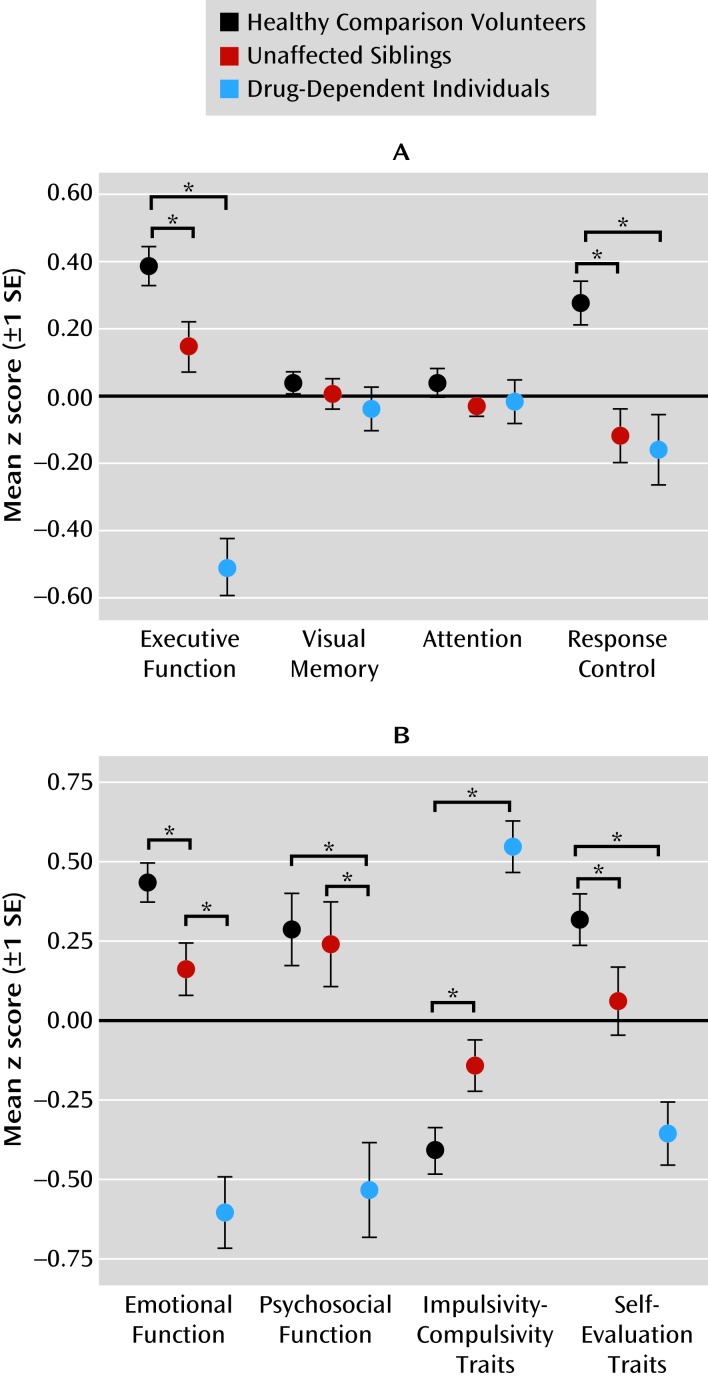
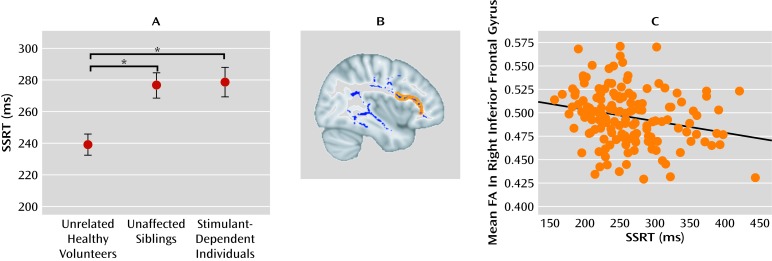
OBJECTIVE: Not everyone who takes drugs becomes addicted, but the likelihood of developing drug addiction is greater in people with a family history of drug or alcohol dependence. Relatively little is known about how genetic risk mediates the development of drug dependence. By comparing the phenotypic profile of individuals with and without a family history of addiction, the authors sought to clarify the extent to which cognitive dysfunction and personality traits are shared by family members--and therefore likely to have predated drug dependence--and which aspects are specific to drug-dependent individuals. METHOD: The authors assessed cognitive function and personality traits associated with drug dependence in stimulant-dependent individuals (N=50), their biological siblings without a history of drug dependence (N=50), and unrelated healthy volunteers (N=50). RESULTS: Cognitive function was significantly impaired in the stimulant-dependent individuals across a range of domains. Deficits in executive function and response control were identified in both the stimulant-dependent individuals and in their non-drug-dependent siblings. Drug-dependent individuals and their siblings also exhibited elevated anxious-impulsive personality traits relative to healthy comparison volunteers. CONCLUSIONS: Deficits in executive function and response regulation as well as anxious-impulsive personality traits may represent endophenotypes associated with the risk of developing cocaine or amphetamine dependence. The identification of addiction endophenotypes may be useful in facilitating the rational development of therapeutic and preventive strategies.
Overview
The claims and statistics of this paper haven’t been checked yet.
Run the check — free, no account needed. It reads the open-access text and checks the sources it cites.
Integrity signals
Registry
Cites
Statistics
Figures
Verification
Claims the paper makes
The claims and statistics of this paper haven’t been checked yet.
Run the check — free, no account needed. It reads the open-access text and checks the sources it cites.
Claims other papers make about this one
Each is checked against this paper’s own text: does it say what the citing paper says it does?
The source backs part of the claim, not all of it — or backs it for a different population, condition or comparison.
In the citing paper
“dependence to AMP or cocaine is influenced by anxious‐impulsive personality traits (Ersche et al., 2012).”
From Systematic reviews of the acute effects of amphetamine on working memory and other cognitive performances in healthy individuals, with a focus on the potential influence of personality traits (2023) · cites this paper as Ersche et al., 2012
Experimental — accuracy not yet measuredThe cited source says what the claim attributes to it.
In the citing paper
“stimulant‐dependent subjects and their non‐stimulant‐dependent siblings have impairments in response control and executive function, relative to healthy volunteers (Ersche et al., 2012).”
From Systematic reviews of the acute effects of amphetamine on working memory and other cognitive performances in healthy individuals, with a focus on the potential influence of personality traits (2023) · cites this paper as Ersche et al., 2012
Self-check
Percentages, sums and reported differences re-computed from the paper’s own numbers.
The self-check needs the paper’s full text.
Citations
Cites
SAUNDERS, J. B., AASLAND, O. G., BABOR, T. F., DE LA FUENTE, J. R., & GRANT, M. (1993) · Addiction · doi:10.1111/j.1360-0443.1993.tb02093.x · Cited by 13,597
Statistical Methods for Psychology.
Gudgeon, A. C., & Howell, D. C. (1994) · Journal of the Royal Statistical Society Series D (The Statistician) · doi:10.2307/2348956 · Cited by 8,277
The Endophenotype Concept in Psychiatry: Etymology and Strategic Intentions
Gottesman, I. I., & Gould, T. D. (2003) · American Journal of Psychiatry · doi:10.1176/appi.ajp.160.4.636 · Cited by 5,615
Hawkins, J. D., Catalano, R. F., & Miller, J. Y. (1992) · Psychological Bulletin · doi:10.1037/0033-2909.112.1.64 · Cited by 5,428
Whiteside, S. P., & Lynam, D. R. (2001) · Personality and Individual Differences · doi:10.1016/s0191-8869(00)00064-7 · Cited by 4,123
Regier, D. A. (1990) · JAMA · doi:10.1001/jama.1990.03450190043026 · Cited by 3,962
Casey, B. J., Jones, R. M., & Hare, T. A. (2008) · Annals of the New York Academy of Sciences · doi:10.1196/annals.1440.010 · Cited by 3,345
Cognitive and affective development in adolescence
Steinberg, L. (2005) · Trends in Cognitive Sciences · doi:10.1016/j.tics.2004.12.005 · Cited by 2,978
The Neural Basis of Addiction: A Pathology of Motivation and Choice
Kalivas, P. W., & Volkow, N. D. (2005) · American Journal of Psychiatry · doi:10.1176/appi.ajp.162.8.1403 · Cited by 2,757
Goldstein, R. Z., & Volkow, N. D. (2002) · American Journal of Psychiatry · doi:10.1176/appi.ajp.159.10.1642 · Cited by 2,667
Research works printed but not linked: 3
- 10.1037/0022-3514.51.3.564 · DOI
- Ersche KD, Addict Disord Their Treatment
- First MB, 2002, Structured Clinical Interview for DSM-IV-TR Axis I Disorders, Research Version, Non-Patient Edition (SCID-I/NP)
Cited by
Sorted by citations
Drug addiction: updating actions to habits to compulsions ten years on
Everitt, B. J., & Robbins, T. W. (2016) · Annual Review of Psychology · doi:10.1146/annurev-psych-122414-033457 · Cited by 1,225
Self-citationSnyder, H. R., Miyake, A., & Hankin, B. L. (2015) · Frontiers in Psychology · doi:10.3389/fpsyg.2015.00328 · Cited by 946
“, 2013), substance use (e.g., Nigg et al., 2006; Ersche et al., 2012), physical health (e.”
BackgroundFrom the ventral to the dorsal striatum: devolving views of their roles in drug addiction
Everitt, B. J., & Robbins, T. W. (2013) · Neuroscience & Biobehavioral Reviews · doi:10.1016/j.neubiorev.2013.02.010 · Cited by 675
Self-citationZilverstand, A., Huang, A., Alia‐Klein, N., & Goldstein, R. Z. (2018) · Neuron · doi:10.1016/j.neuron.2018.03.048 · Cited by 598
Fineberg, N. A., Chamberlain, S. R., Goudriaan, A. E., Stein, D. J., Vanderschuren, L. J. M. J., Gillan, C. M., Shekar, S., Gorwood, P. A. P. M., Voon, V., Morein-Zamir, S., et al. (2014) · CNS Spectrums · doi:10.1017/s1092852913000801 · Cited by 488
Self-citationNeuropsychosocial profiles of current and future adolescent alcohol misusers
Whelan, R., Watts, R., Orr, C., Althoff, R. R., Artiges, É., Banaschewski, T., Barker, G. J., Bokde, A. L. W., Büchel, C., Carvalho, F. M., et al. (2014) · Nature · doi:10.1038/nature13402 · Cited by 454
Self-citationEveritt, B. J. (2014) · European Journal of Neuroscience · doi:10.1111/ejn.12644 · Cited by 318
Grant, J. E., & Chamberlain, S. R. (2014) · Addictive Behaviors · doi:10.1016/j.addbeh.2014.04.022 · Cited by 325
Self-citationDissecting impulsivity and its relationships to drug addictions
Jentsch, J. D., Ashenhurst, J. R., Cervantes, M. C., Groman, S. M., James, A. S., & Pennington, Z. T. (2014) · Annals of the New York Academy of Sciences · doi:10.1111/nyas.12388 · Cited by 281
Ersche, K. D., Williams, G. B., Robbins, T. W., & Bullmore, E. T. (2013) · Current Opinion in Neurobiology · doi:10.1016/j.conb.2013.02.017 · Cited by 205
Self-citationNoradrenergic modulation of cognition: Therapeutic implications
Chamberlain, S. R., & Robbins, T. W. (2013) · Journal of Psychopharmacology · doi:10.1177/0269881113480988 · Cited by 211
Self-citationPersonality traits and vulnerability or resilience to substance use disorders
Belcher, A. M., Volkow, N. D., Moeller, F. G., & Ferré, S. (2014) · Trends in Cognitive Sciences · doi:10.1016/j.tics.2014.01.010 · Cited by 173
Fronto-striatal circuits in response-inhibition: Relevance to addiction
Morein‐Zamir, S., & Robbins, T. W. (2014) · Brain Research · doi:10.1016/j.brainres.2014.09.012 · Cited by 164
Self-citationAddictions and Personality Traits: Impulsivity and Related Constructs
Mitchell, M. R., & Potenza, M. N. (2014) · Current Behavioral Neuroscience Reports · doi:10.1007/s40473-013-0001-y · Cited by 163
Epigenetics of Stress, Addiction, and Resilience: Therapeutic Implications
Cadet, J. L. (2014) · Molecular Neurobiology · doi:10.1007/s12035-014-9040-y · Cited by 169
Brain networks underlying vulnerability and resilience to drug addiction
Ersche, K. D., Meng, C., Ziauddeen, H., Štochl, J., Williams, G. B., Bullmore, E. T., & Robbins, T. W. (2020) · Proceedings of the National Academy of Sciences · doi:10.1073/pnas.2002509117 · Cited by 143
Self-citationReward, interrupted: Inhibitory control and its relevance to addictions
Jentsch, J. D., & Pennington, Z. T. (2013) · Neuropharmacology · doi:10.1016/j.neuropharm.2013.05.022 · Cited by 147
So, S. H., Siu, N. Y.-F., Wong, H.-L., Chan, W., & Garety, P. A. (2016) · Clinical Psychology Review · doi:10.1016/j.cpr.2016.05.001 · Cited by 142
Ersche, K. D., Jones, P. S., Williams, G. B., Smith, D. G., Bullmore, E. T., & Robbins, T. W. (2012) · Biological Psychiatry · doi:10.1016/j.biopsych.2012.11.016 · Cited by 132
Self-citationResponse inhibition and its relation to multidimensional impulsivity
Wilbertz, T., Deserno, L., Horstmann, A., Neumann, J., Villringer, A., Heinze, H.-J., Boehler, C. N., & Schlagenhauf, F. (2014) · NeuroImage · doi:10.1016/j.neuroimage.2014.09.021 · Cited by 128
Flagel, S. B., Waselus, M., Clinton, S. M., Watson, S. J., & Akil, H. (2013) · Neuropharmacology · doi:10.1016/j.neuropharm.2013.04.033 · Cited by 131
Neuropsychological Consequences of Chronic Drug Use: Relevance to Treatment Approaches
Cadet, J. L., & Bisagno, V. (2016) · Frontiers in Psychiatry · doi:10.3389/fpsyt.2015.00189 · Cited by 110
Belin, D., Daniel, M.-L., Puaud, M., Jupp, B., Sawiak, S. J., Howett, D., McKenzie, C., Caprioli, D., Besson, M., Robbins, T. W., et al. (2015) · Molecular Psychiatry · doi:10.1038/mp.2015.140 · Cited by 109
Self-citationImpulsivity traits and neurocognitive mechanisms conferring vulnerability to substance use disorders
Verdejo‐García, A., & Albein‐Urios, N. (2020) · Neuropharmacology · doi:10.1016/j.neuropharm.2020.108402 · Cited by 115
Zheng, H., Hu, Y.-B., Wang, Z.-L., Wang, M., Du, X.-X., & Dong, G. (2019) · Progress in Neuro-psychopharmacology and Biological Psychiatry · doi:10.1016/j.pnpbp.2019.109656 · Cited by 100
Adult hippocampal neurogenesis in the pathogenesis of addiction and dual diagnosis disorders
Chambers, R. A. (2012) · Drug and Alcohol Dependence · doi:10.1016/j.drugalcdep.2012.12.005 · Cited by 110
Yukhnenko, D., Blackwood, N., & Fazel, S. (2019) · CNS Spectrums · doi:10.1017/s1092852919001056 · Cited by 101
Aznar, S., & Hervig, M. E.-S. (2016) · Neuroscience & Biobehavioral Reviews · doi:10.1016/j.neubiorev.2016.02.008 · Cited by 99
Comorbidity of Personality Disorder among Substance Use Disorder Patients: A Narrative Review
Parmar, A., & Kaloiya, G. (2018) · Indian Journal of Psychological Medicine · doi:10.4103/ijpsym.ijpsym_164_18 · Cited by 93
Stewart, J. L., May, A. C., Poppa, T., Davenport, P. W., Tapert, S. F., & Paulus, M. P. (2014) · Drug and Alcohol Dependence · doi:10.1016/j.drugalcdep.2014.06.003 · Cited by 86
Bechara, A., Berridge, K. C., Bickel, W. K., Morón, J. A., Williams, S. B., & Stein, J. S. (2019) · Psychological Science in the Public Interest · doi:10.1177/1529100619860513 · Cited by 82
Gambling and substance use: Comorbidity and treatment implications
Grant, J. E., & Chamberlain, S. R. (2019) · Progress in Neuro-Psychopharmacology and Biological Psychiatry · doi:10.1016/j.pnpbp.2019.109852 · Cited by 85
Self-citationZhou, X., Zimmermann, K., Xin, F., Zhao, W., Derckx, R. T., Sassmannshausen, A., Scheele, D., Hurlemann, R., Weber, B., Kendrick, K. M., et al. (2019) · Biological Psychiatry: Cognitive Neuroscience and Neuroimaging · doi:10.1016/j.bpsc.2019.04.006 · Cited by 77
Addictive behaviour in experimental animals: prospects for translation
Everitt, B. J., Giuliano, C., & Belin, D. (2018) · Philosophical Transactions of the Royal Society B Biological Sciences · doi:10.1098/rstb.2017.0027 · Cited by 81
Behavioral endophenotypes of drug addiction: Etiological insights from neuroimaging studies
Jupp, B., & Dalley, J. W. (2013) · Neuropharmacology · doi:10.1016/j.neuropharm.2013.05.041 · Cited by 78
Grodin, E. N., Cortes, C. R., Spagnolo, P. A., & Momenan, R. (2017) · Drug and Alcohol Dependence · doi:10.1016/j.drugalcdep.2017.06.014 · Cited by 82
Sampedro‐Piquero, P., de Guevara‐Miranda, D. L., Pavón, F. J., Serrano, A., Suárez, J., de Fonseca, F. R., Santín, L. J., & Castilla‐Ortega, E. (2018) · Neuroscience & Biobehavioral Reviews · doi:10.1016/j.neubiorev.2018.11.015 · Cited by 85
Neural circuitry and mechanisms of waiting impulsivity: relevance to addiction
Dalley, J. W., & Ersche, K. D. (2018) · Philosophical Transactions of the Royal Society B Biological Sciences · doi:10.1098/rstb.2018.0145 · Cited by 81
Self-citationDopamine D3 receptor alterations in cocaine-dependent humans imaged with [11C](+)PHNO
Matuskey, D., Gallezot, J., Pittman, B. P., Williams, W. A., Wanyiri, J. W., Gaiser, E., Lee, D. E., Hannestad, J. O., Lim, K., Zheng, M.-Q., et al. (2014) · Drug and Alcohol Dependence · doi:10.1016/j.drugalcdep.2014.03.013 · Cited by 76
Grant, J. E., & Chamberlain, S. R. (2013) · American Journal on Addictions · doi:10.1111/ajad.12112 · Cited by 78
Self-citationEgervári, G., Ciccocioppo, R., Jentsch, J. D., & Hurd, Y. L. (2017) · Neuroscience & Biobehavioral Reviews · doi:10.1016/j.neubiorev.2017.05.019 · Cited by 78
Bell, R. P., Foxe, J. J., Ross, L. A., & Garavan, H. (2013) · Neuropharmacology · doi:10.1016/j.neuropharm.2013.02.018 · Cited by 71
A new cognitive evaluation battery for Down syndrome and its relevance for clinical trials
de Sola, S., The TESDAD Study Group, de la Torre, R., Sánchez‐Benavides, G., Benejam, B., Cuenca‐Royo, A., Soriano, L. D. H., RodrÃguez, J., Catuara‐Solarz, S., Sánchez-Gutiérrez, J., et al. (2015) · Frontiers in Psychology · doi:10.3389/fpsyg.2015.00708 · Cited by 75
Hulka, L. M., Vonmoos, M., Preller, K. H., Baumgartner, M. R., Seifritz, E., Gamma, A., & Quednow, B. B. (2015) · Psychological Medicine · doi:10.1017/s0033291715001063 · Cited by 70
Dickson, P. E., Miller, M. M., Calton, M. A., Bubier, J. A., Cook, M. N., Goldowitz, D., Chesler, E. J., & Mittleman, G. (2016) · Psychopharmacology · doi:10.1007/s00213-015-4147-z · Cited by 62
Prenatal cocaine effects on brain structure in early infancy
Grewen, K., Burchinal, M., Vachet, C., Gouttard, S., Gilmore, J. H., Lin, W., Johns, J., Elam, M., & Gerig, G. (2014) · NeuroImage · doi:10.1016/j.neuroimage.2014.06.070 · Cited by 65
Impaired glutamate homeostasis in the nucleus accumbens in human cocaine addiction
Engeli, E., Zoelch, N., Hock, A., Nordt, C., Hulka, L. M., Kirschner, M., Scheidegger, M., Esposito, F., Baumgartner, M. R., Henning, A., et al. (2020) · Molecular Psychiatry · doi:10.1038/s41380-020-0828-z · Cited by 64
Perspectives on neurocognitive rehabilitation as an adjunct treatment for addictive disorders
Rezapour, T., DeVito, E. E., Sofuoglu, M., & Ekhtiari, H. (2015) · Progress in brain research · doi:10.1016/bs.pbr.2015.07.022 · Cited by 65
Smaller amygdala and medial prefrontal cortex predict escalating stimulant use
Becker, B., Wagner, D. R., Koester, P., Tittgemeyer, M., Mercer‐Chalmers‐Bender, K., Hurlemann, R., Zhang, J., Gouzoulis‐Mayfrank, E., Kendrick, K. M., & Daumann, J. (2015) · Brain · doi:10.1093/brain/awv113 · Cited by 62
Morein‐Zamir, S., Jones, P. S., Bullmore, E. T., Robbins, T. W., & Ersche, K. D. (2013) · Neuropsychopharmacology · doi:10.1038/npp.2013.90 · Cited by 63
Self-citationAnderson, E. M., Larson, E. B., Guzman, D. D., Wissman, A. M., Neve, R. L., Nestler, E. J., & Self, D. W. (2017) · Journal of Neuroscience · doi:10.1523/jneurosci.1657-17.2017 · Cited by 59
Liu, Y., van den Wildenberg, W. P. M., de Graaf, Y., Ames, S. L., Baldacchino, A., Bø, R., Cadaveira, F., Campanella, S., Christiansen, P., Claus, E. D., et al. (2019) · Neuroscience & Biobehavioral Reviews · doi:10.1016/j.neubiorev.2019.07.006 · Cited by 63
Volatile Solvents as Drugs of Abuse: Focus on the Cortico-Mesolimbic Circuitry
Beckley, J. T., & Woodward, J. J. (2013) · Neuropsychopharmacology · doi:10.1038/npp.2013.206 · Cited by 60
Competing neurobehavioral decision systems theory of cocaine addiction
Bickel, W. K., Snider, S. E., Quisenberry, A. J., Stein, J. S., & Hanlon, C. A. (2015) · Progress in brain research · doi:10.1016/bs.pbr.2015.07.009 · Cited by 56
Bidirectional causality between addiction and cognitive deficits
Melugin, P. R., Nolan, S. O., & Siciliano, C. A. (2020) · International review of neurobiology · doi:10.1016/bs.irn.2020.11.001 · Cited by 59
Luján, M. Á., Cantacorps, L., & Valverde, O. (2019) · Addiction Biology · doi:10.1111/adb.12778 · Cited by 54
Adán, A., Navarro, J. F., & Forero, D. A. (2016) · Drug and Alcohol Dependence · doi:10.1016/j.drugalcdep.2016.05.015 · Cited by 53
Personality disorder and substance use disorder – An update
Köck, P., & Walter, M. (2018) · Mental Health & Prevention · doi:10.1016/j.mhp.2018.10.003 · Cited by 52
How evolutionary thinking can help us to understand ADHD
Swanepoel, A., Music, G., Launer, J., & Reiss, M. J. (2017) · BJPsych Advances · doi:10.1192/apt.bp.116.016659 · Cited by 45
Smith, D. G., Jones, P., Bullmore, E. T., Robbins, T. W., & Ersche, K. D. (2013) · Biological Psychiatry · doi:10.1016/j.biopsych.2013.05.019 · Cited by 43
Self-citationGene variants and educational attainment in cannabis use: mediating role of DNA methylation
Gerra, M. C., Jayanthi, S., Manfredini, M., Walther, D., Schroeder, J., Phillips, K. A., Cadet, J. L., & Donnini, C. (2018) · Translational Psychiatry · doi:10.1038/s41398-017-0087-1 · Cited by 42
Endocannabinoids and striatal function
Moreira, F. A., Jupp, B., Belin, D., & Dalley, J. W. (2014) · Behavioural Pharmacology · doi:10.1097/fbp.0000000000000109 · Cited by 44
Dean, A. C., Morales, A. M., Hellemann, G., & London, E. D. (2018) · Neuropsychopharmacology · doi:10.1038/s41386-018-0065-1 · Cited by 40
Anderson, E. M., Sun, H., Guzman, D. D., Taniguchi, M., Cowan, C. W., Maze, I. S., Nestler, E. J., & Self, D. W. (2018) · Neuropsychopharmacology · doi:10.1038/s41386-018-0305-4 · Cited by 40
Biological substrates of addiction
Joffe, M. E., Grueter, C. A., & Grueter, B. A. (2014) · Wiley Interdisciplinary Reviews Cognitive Science · doi:10.1002/wcs.1273 · Cited by 42
Bell, R. P., Garavan, H., & Foxe, J. J. (2014) · Neuropharmacology · doi:10.1016/j.neuropharm.2014.05.011 · Cited by 38
Lozano-Madrid, M., Clark Bryan, D., Granero, R., Sánchez, I., Riesco, N., Mallorquí-Bagué, N., Jiménez-Murcia, S., Treasure, J., & Fernández-Aranda, F. (2020) · Journal of Clinical Medicine · doi:10.3390/jcm9061936 · Cited by 38
The Neural Signature of Impaired Inhibitory Control in Individuals with Heroin Use Disorder
Ceceli, A. O., King, S. G., McClain, N. E., Alia‐Klein, N., & Goldstein, R. Z. (2022) · Journal of Neuroscience · doi:10.1523/jneurosci.1237-22.2022 · Cited by 36
Zhukovsky, P., Puaud, M., Jupp, B., Sala‐Bayo, J., Alsiö, J., Xia, J., Searle, L., Morris, Z. S., Sabir, A., Giuliano, C., et al. (2019) · Neuropsychopharmacology · doi:10.1038/s41386-019-0381-0 · Cited by 33
Self-citationSmith, D. G., Jones, P. S., Bullmore, E. T., Robbins, T. W., & Ersche, K. D. (2013) · Translational Psychiatry · doi:10.1038/tp.2013.32 · Cited by 36
Self-citationDong, G., Wang, M., Zhang, J., Du, X., & Potenza, M. N. (2019) · Journal of Behavioral Addictions · doi:10.1556/2006.8.2019.75 · Cited by 35
Zhong, N., Chen, T., Zhu, Y., Su, H., Ruan, X., Li, X., Tan, H., Jiang, H., Du, J., & Zhao, M. (2020) · Frontiers in Psychiatry · doi:10.3389/fpsyt.2020.00320 · Cited by 35
Neuroscience of resilience and vulnerability for addiction medicine
Morrow, J. D., & Flagel, S. B. (2015) · Progress in brain research · doi:10.1016/bs.pbr.2015.09.004 · Cited by 33
Arenas, M. C., Aguilar, M. A., Montagud‐Romero, S., Mateos-García, A., Navarro-Francés, C. I., Miñarro, J., & Rodríguez‐Arias, M. (2015) · Current Neuropharmacology · doi:10.2174/1570159x13666150921112841 · Cited by 33
Valero, S., Daigre, C., Rodríguez-Cintas, L., Barral, C., Gomà‐i‐Freixanet, M., Ferrer, M., Casas, M., & Roncero, C. (2014) · Comprehensive Psychiatry · doi:10.1016/j.comppsych.2014.03.021 · Cited by 33
Cunha, P. J., Gonçalves, P. D., Ometto, M., dos Santos, B., Nicastri, S., Busatto, G. F., & de Andrade, A. G. (2013) · Frontiers in Psychiatry · doi:10.3389/fpsyt.2013.00126 · Cited by 33
Yamamoto, D. J., Woo, C., Wager, T. D., Regner, M. F., & Tanabe, J. (2015) · Drug and Alcohol Dependence · doi:10.1016/j.drugalcdep.2014.12.026 · Cited by 37
Bourgault, Z., Rubin-Kahana, D. S., Hassan, A. N., Sanches, M., & Foll, B. L. (2022) · Frontiers in Psychiatry · doi:10.3389/fpsyt.2021.797578 · Cited by 34
Impact of Substance Use Disorder Pharmacotherapy on Executive Function: A Narrative Review
Butler, K., & Foll, B. L. (2019) · Frontiers in Psychiatry · doi:10.3389/fpsyt.2019.00098 · Cited by 31
Dissecting Impulsivity: Brain Mechanisms and Neuropsychiatric Implications
Robbins, T. W., & Dalley, J. W. (2017) · Nebraska Symposium on Motivation/The Nebraska symposium on motivation · doi:10.1007/978-3-319-51721-6_7 · Cited by 33
Self-citationHuang, S., Dai, Y., Zhang, C., Yang, C. C., Huang, Q., Hao, W., & Shen, H. (2020) · Drug and Alcohol Dependence · doi:10.1016/j.drugalcdep.2020.108040 · Cited by 30
Fein, G., & Fein, D. (2013) · NeuroImage Clinical · doi:10.1016/j.nicl.2013.06.018 · Cited by 30
Inflammation and infection in human cocaine addiction
Ersche, K. D., & Döffinger, R. (2017) · Current Opinion in Behavioral Sciences · doi:10.1016/j.cobeha.2016.12.007 · Cited by 29
Self-citationBickel, W. K., Moody, L. N., Eddy, C. R., & Franck, C. T. (2017) · Experimental and Clinical Psychopharmacology · doi:10.1037/pha0000115 · Cited by 31
A Role for Serotonin in Modulating Opposing Drive and Brake Circuits of Impulsivity
Desrochers, S. S., Spring, M. G., & Nautiyal, K. M. (2022) · Frontiers in Behavioral Neuroscience · doi:10.3389/fnbeh.2022.791749 · Cited by 29
Beckwith, S. W., & Czachowski, C. L. (2016) · Alcoholism Clinical and Experimental Research · doi:10.1111/acer.13044 · Cited by 29
Schizophrenia and Criminal Responsibility
Tsimploulis, G., Niveau, G., Eytan, A., Giannakopoulos, P., & Sentissi, O. (2018) · The Journal of Nervous and Mental Disease · doi:10.1097/nmd.0000000000000805 · Cited by 30
Cognitive profiles in persons with opioid use disorder enrolled in methadone treatment
Sanborn, V. E., Gunstad, J., Shrestha, R., Mistler, C. B., & Copenhaver, M. M. (2020) · Applied Neuropsychology Adult · doi:10.1080/23279095.2020.1769099 · Cited by 29
The Primacy of Cognition in the Manifestations of Substance Use Disorders
Cadet, J. L., & Bisagno, V. (2013) · Frontiers in Neurology · doi:10.3389/fneur.2013.00189 · Cited by 29
Preliminary evidence for normalization of risk taking by modafinil in chronic cocaine users
Canavan, S. V., Forselius, E., Bessette, A. J., & MORGAN, P. T. (2014) · Addictive Behaviors · doi:10.1016/j.addbeh.2014.02.015 · Cited by 28
Sex differences in addiction-relevant behavioral outcomes in rodents following early life stress
Rincón‐Cortés, M. (2023) · Addiction Neuroscience · doi:10.1016/j.addicn.2023.100067 · Cited by 26
Fouyssac, M., & Belin, D. (2019) · European Journal of Neuroscience · doi:10.1111/ejn.14416 · Cited by 30
Pietrzykowski, M. O., Daigle, K. M., Waters, A. B., Swenson, L. P., & Gansler, D. A. (2021) · Brain Imaging and Behavior · doi:10.1007/s11682-021-00589-3 · Cited by 30
Ersche, K. D., Hagan, C. C., Smith, D. G., Jones, P. S., Calder, A. J., & Williams, G. B. (2015) · Translational Psychiatry · doi:10.1038/tp.2015.58 · Cited by 29
Self-citationUsing a drug-word Stroop task to differentiate recreational from dependent drug use
Smith, D. G., & Ersche, K. D. (2014) · CNS Spectrums · doi:10.1017/s1092852914000133 · Cited by 25
Self-citationRisk Factors for Addiction and Their Association with Model-Based Behavioral Control
Reiter, A. M. F., Deserno, L., Wilbertz, T., Heinze, H., & Schlagenhauf, F. (2016) · Frontiers in Behavioral Neuroscience · doi:10.3389/fnbeh.2016.00026 · Cited by 29
Ali, A., Carré, A., Hassler, C., Spilka, S., Vanier, A., Barry, C., & Berthoz, S. (2016) · Drug and Alcohol Dependence · doi:10.1016/j.drugalcdep.2016.03.027 · Cited by 30
Khemiri, L., Larsson, H., Kuja‐Halkola, R., D'Onofrio, B. M., Lichtenstein, P., Jayaram‐Lindström, N., & Latvala, A. (2019) · Addiction · doi:10.1111/add.14813 · Cited by 25
Liang, C., Ho, P., Yen, C.-H., Chen, C., Kuo, S.-C., Huang, C., Yeh, Y., Ma, K., & Huang, S. (2016) · Progress in Neuro-Psychopharmacology and Biological Psychiatry · doi:10.1016/j.pnpbp.2016.12.001 · Cited by 24
Early life adversity potentiates expression of addiction-related traits
Hynes, T. J., Thomas, C. S., Zumbusch, A. S., Samson, A., Petriman, I., Mrdja, U., Orr, A., Cutts, E., Ruzindana, B. G., Hazari, A., et al. (2017) · Progress in Neuro-Psychopharmacology and Biological Psychiatry · doi:10.1016/j.pnpbp.2017.09.005 · Cited by 28
Metadata
- Authors
- Ersche, K. D., Turton, A. J., Chamberlain, S. R., Müller, U., Bullmore, E. T., & Robbins, T. W.
- Affiliations
- University of Cambridge (GB)
- Corresponding author
- Ersche, Karen D.
- Venue
- American Journal of Psychiatry
- Published
- 2012-09
- Volume
- 169
- Issue
- 9
- Pages
- 926-936
- ISSN
- 0002-953X (ISSN-L)
- 1535-7228
- PMC
- PMC3533378
- OpenAlex
- W2128615125
- Cited by
- 252
- References
- 77
- Citations by year
- 2026: 5 · 2025: 5 · 2024: 8 · 2023: 9 · 2022: 20 · 2021: 11 · 2020: 43 · 2019: 30 · 2018: 17 · 2017: 15 · 2016: 12 · 2015: 19 · 2014: 31 · 2013: 21 · 2012: 6
- FWCI
- 18.44
- Type
- journal article
- Language
- en
- Open access
- green
- www.ncbi.nlm.nih.gov
- Licence
- cc-by-nc
- Locations
- American Journal of Psychiatry (publishedVersion)
- PubMed Central (publishedVersion, cc-by-nc)
- PubMed (publishedVersion)
- ePrints Soton (University of Southampton) (submittedVersion)
- Funders
- Eli Lilly and Company
- GlaxoSmithKline
- Wellcome Trust (093875)
- University of Cambridge
- European College of Neuropsychopharmacology
- H. Lundbeck A/S
- Medical Research Council
- Topics
- Health Sciences › Medicine › Epidemiology › Substance Abuse Treatment and Outcomes
- Life Sciences › Neuroscience › Cellular and Molecular Neuroscience › Neurotransmitter Receptor Influence on Behavior
- Life Sciences › Neuroscience › Cognitive Neuroscience › Neural and Behavioral Psychology Studies
- Keywords
- endophenotypes, drug addiction, stimulant use disorder, cocaine dependence, amphetamine dependence, cognitive impairment, executive function, response control, family history of addiction, biological siblings
- MeSH terms
- Adult, Anxiety, Cognition Disorders, Family Health, Female, Humans, Impulsive Behavior, Male, Neuropsychological Tests, Personality Assessment, Case-Control Studies, Substance-Related Disorders, Siblings, Endophenotypes
About these checks
Registry, retraction, Cites and statistics results are computed, not judged, with one exception: a printed reference that no index lists is read once by a model before it counts as a citation error. Claims are extracted by a model and kept only when their quote appears verbatim in the text; each cited source is then checked, with a model’s help, for whether it says what the claim relies on. Those verdicts can be wrong — read the claim’s quote and the cited source before relying on one.
Statistics and arithmetic are recomputed, not judged.
Confidence bands are shown only for fields calibrated on our annotated test set. None is calibrated yet, so no band is shown.
What counts as a claim ›How we measure confidence ›How we check this ›
Are you an author, or do you see a problem with this page? Request a review
