

The Power of Brand Selfies
Open accessThe DOI matches its Crossref record; 55 of the 57 references it cites were found in a registry or an index.
Abstract
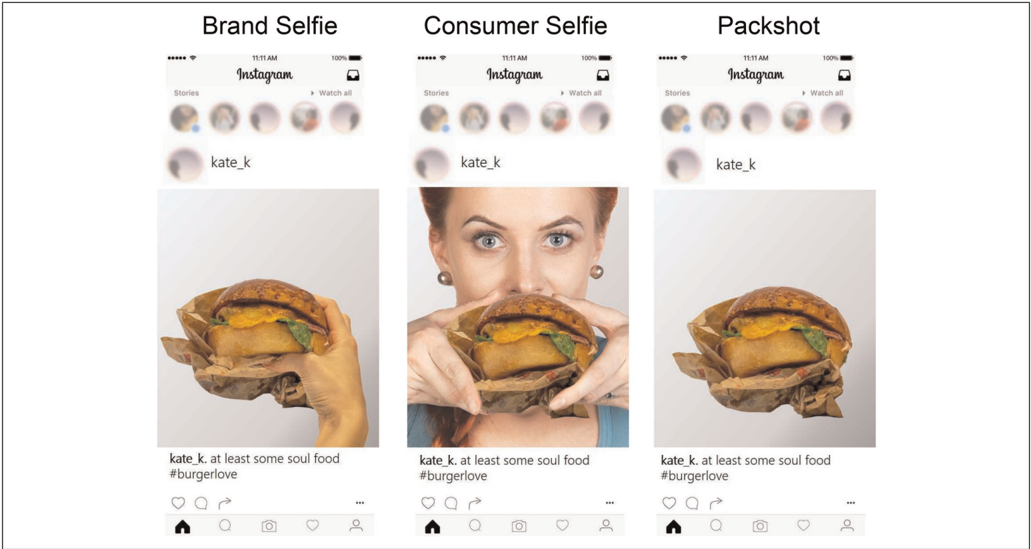
Smartphones have made it nearly effortless to share images of branded experiences. This research classifies social media brand imagery and studies user response. Aside from packshots (standalone product images), two types of brand-related selfie images appear online: consumer selfies (featuring brands and consumers’ faces) and an emerging phenomenon the authors term “brand selfies” (invisible consumers holding a branded product). The authors use convolutional neural networks to identify these archetypes and train language models to infer social media response to more than a quarter-million brand-image posts (185 brands on Twitter and Instagram). They find that consumer-selfie images receive more sender engagement (i.e., likes and comments), whereas brand selfies result in more brand engagement, expressed by purchase intentions. These results cast doubt on whether conventional social media metrics are appropriate indicators of brand engagement. Results for display ads are consistent with this observation, with higher click-through rates for brand selfies than for consumer selfies. A controlled lab experiment suggests that self-reference is driving the differential response to selfie images. Collectively, these results demonstrate how (interpretable) machine learning helps extract marketing-relevant information from unstructured multimedia content and that selfie images are a matter of perspective in terms of actual brand engagement.
Overview
The claims and statistics of this paper haven’t been checked yet.
Free: it reads the open-access text and checks the first 5 claims that cite a source we can check. Create a free account to check every claim.
Integrity signals
Registry
Cites
Statistics
Figures

Verification
Claims the paper makes
The claims and statistics of this paper haven’t been checked yet.
Free: it reads the open-access text and checks the first 5 claims that cite a source we can check. Create a free account to check every claim.
Claims other papers make about this one
Each is checked against this paper’s own text: does it say what the citing paper says it does?
The source backs part of the claim, not all of it — or backs it for a different population, condition or comparison.
In the citing paper
“RoBERTa, specifically fine-tuned on a corpus of over 5,000 social media posts [23], exhibits the highest accuracy in one of the Twitter dataset (see Table 2, Twitter Various II).”
From Sentiment Analysis in the Age of Generative AI (2024) · cites this paper as [23]
Experimental — accuracy not yet measured
Self-check
Percentages, sums and reported differences re-computed from the paper’s own numbers.
The self-check needs the paper’s full text.
Citations
Cites
Very Deep Convolutional Networks for Large-Scale Image Recognition
Simonyan, K., & Zisserman, A. (2014) · arXiv · doi:10.48550/arxiv.1409.1556 · Cited by 114,148 · cited 1×
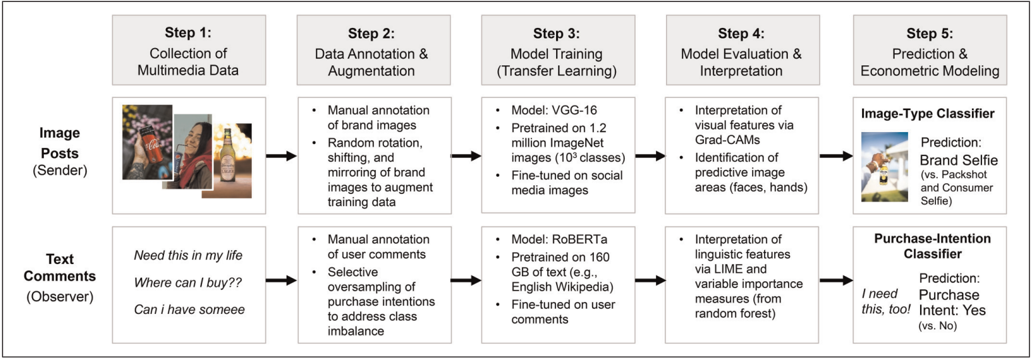
“We chose VGG-16 as the underlying architecture because of its high performance on related tasks (Simonyan and Zisserman 2014).”
MethodImageNet: A large-scale hierarchical image database
Deng, J., Dong, W., Socher, R., Li, L.-J., Li, K., & Fei-Fei, L. (2009) · 2009 IEEE Conference on Computer Vision and Pattern Recognition · doi:10.1109/cvpr.2009.5206848 · Cited by 65,333 · cited 4×
“This approach allows us to adapt the CNN pretrained on the ImageNet data set to the particularities of user-generated social media images.”
MethodInfluentialPreacher, K. J., & Hayes, A. F. (2008) · Behavior Research Methods · doi:10.3758/brm.40.3.879 · Cited by 34,117 · cited 1×
“The statistical test based on 1,000 bootstrapping iterations to obtain standard errors for the (nonnormal) indirect effect of brand selfies (Preacher and Hayes 2008) also indicates mediation (confidence interval: [.22, .75], p .01).”
MethodGrad-CAM: Visual Explanations from Deep Networks via Gradient-Based Localization
Selvaraju, R. R., Cogswell, M., Das, A., Vedantam, R., Parikh, D., & Batra, D. (2017) · 2017 IEEE International Conference on Computer Vision (ICCV) · doi:10.1109/iccv.2017.74 · Cited by 24,513
"Why Should I Trust You?": Explaining the Predictions of Any Classifier
Ribeiro, M. T., Singh, S., & Guestrin, C. (2016) · Proceedings of the 22nd ACM SIGKDD International Conference on Knowledge Discovery and Data Mining · doi:10.1145/2939672.2939778 · Cited by 17,555
The Effect of Word of Mouth on Sales: Online Book Reviews
Chevalier, J. A., & Mayzlin, D. (2006) · Journal of Marketing Research · doi:10.1509/jmkr.43.3.345 · Cited by 6,003 · cited 2×
“For example, the amount and valence of aggregate UGC have proven useful as predictors of demand (Chevalier and Mayzlin 2006; Liu 2006), customerbased brand equity (Schweidel and Moe 2014), and stock returns (Colicev et al. 2018).”
BackgroundImageNet: A large-scale hierarchical image database
Deng, J. H., Dong, W. F., Socher, R., Li, L.-J., Li, K., & Fei-Fei, L. (2009) · IEEE Computer Society Conference on Computer Vision and Pattern Recognition/Proceedings - IEEE Computer Society Conference on Computer Vision and Pattern Recognition/Proceedings · doi:10.1109/cvprw.2009.5206848 · Cited by 2,714
Using Online Conversations to Study Word-of-Mouth Communication
Godes, D., & Mayzlin, D. (2004) · Marketing Science · doi:10.1287/mksc.1040.0071 · Cited by 2,601 · cited 1×
“The majority of this research has relied either on summaries of text content such as volume and valence (e.g., Chevalier and Mayzlin 2006; Godes and Mayzlin 2004; Liu 2006) or on automatic extraction of consumer perceptions in user-generated texts (e.g., Netzer et al. 2012; Timoshenko and Hauser…”
BackgroundThe self-reference effect in memory: A meta-analysis
Symons, C. S., & Johnson, B. T. (1997) · Psychological Bulletin · doi:10.1037/0033-2909.121.3.371 · Cited by 1,361 · cited 1×
“…to their own personal experiences in brand selfies can generate higher levels of cognitive elaboration and mental simulation of brand consumption (Bower and Gilligan 1979; Escalas 2007), which has been linked to higher levels of brand engagement (Elder and Krishna 2012; Symons and Johnson 1997).”
BackgroundWord of Mouth for Movies: Its Dynamics and Impact on Box Office Revenue
Liu, Y. (2006) · Journal of Marketing · doi:10.1509/jmkg.70.3.074 · Cited by 1,329 · cited 2×
“…this research has relied either on summaries of text content such as volume and valence (e.g., Chevalier and Mayzlin 2006; Godes and Mayzlin 2004; Liu 2006) or on automatic extraction of consumer perceptions in user-generated texts (e.g., Netzer et al. 2012; Timoshenko and Hauser 2019;…”
BackgroundMethod
Research works printed but not linked: 3
- Guido, Gianluigi, Marco Pichierri, and Giovanni Pino (2018), ' Effects of Face Images and Face Pareidolia on Consumers ' Responses to Print Advertising: An Empirical Investigation, ' Journal of Advertising Research , 58 (3), 1 -13.
- Liu, Yinhan, Myle Ott, Naman Goyal, Jingfei Du, Mandar Joshi, Danqi Chen, et al. (2019), ' RoBERTa: A Robustly Optimized BERT Pretraining Approach, ' arXiv , https://arxiv.org/abs/1907. 11692.
- Pennebaker, James W., Ryan L. Boyd, Kayla Jordan, and Kate Blackburn (2015), The Development and Psychometric Properties of LIWC2015 . Austin, TX: University of Texas at Austin.
Cited by
Items 101–200 of 224
Contextualized Sentiment Analysis using Large Language ModelsPreprint
Breitung, C., Kruthof, G., & Müller, S. (2023) · SSRN Electronic Journal · doi:10.2139/ssrn.4615038 · Cited by 11
Sun, C., & Liu, F. (2024) · International Journal of Computational Intelligence Systems · doi:10.1007/s44196-024-00495-8 · Cited by 9
“Understanding how to utilize UGC to extract information is an important topic for scholars studying purchase intention mining [3–5], disinformation detection [11–13], and brand perceptions [9, 14, 15].”
User presence in online product reviews: The dual effects on purchase intention
Kou, Y., Powpaka, S., Zhou, L., Huang, J., & Lu, D. M. (2025) · Journal of Business Research · doi:10.1016/j.jbusres.2025.115563 · Cited by 7
Shabalina, O., Nelson, M. R., Lobodenko, L. K., & Hong, N. (2022) · Journal of Current Issues & Research in Advertising · doi:10.1080/10641734.2022.2093804 · Cited by 7
“Companies capitalize on consumer selfie popularity by actively using selfies in their promotional campaigns (Yang 2017; Hartmann et al. 2021), collaborating with bloggers and influencers (Abidin 2016; Richter 2018) and offering sponsored filters and lenses in social media to take ideal consumer…”
BackgroundInfluentialBreaking the mold: how visual atypicality shapes brand-generated image virality
Adam, Z., & Yang, Z. (2025) · International Journal of Research in Marketing · doi:10.1016/j.ijresmar.2025.07.005 · Cited by 7
Artificial Intelligence Research in Social Media Marketing: A Review, Synthesis and Research Avenues
Kumar, S., Malhotra, D., & Kathuria, G. (2025) · Journal of Global Marketing · doi:10.1080/08911762.2025.2593340 · Cited by 8
Ran, Y., Li, X., & Li, Z. (2025) · Tourism Management · doi:10.1016/j.tourman.2025.105330 · Cited by 6
Ahn, H., & Haley, E. (2024) · Journal of Current Issues & Research in Advertising · doi:10.1080/10641734.2024.2413599 · Cited by 6
“Despite the growing popularity and use of photos in social media (Hartmann et al. 2021), most studies on user-generated content have focused on social media monitoring, such as brand-related textual postings (e.g., Muntinga, Moorman, and Smit 2011) and the number of likes or comments (e.g., Li and…”
InfluentialFMCG Market Analysis for Wholesalers and Retailers Using Machine Learning
Kumari, C. S., Deepu, B. S. V. V., Dheeraj, G., & Surampudi, V. K. S. (2023) · International Conference on Pervasive Computing and Social Networking (ICPCSN) · doi:10.1109/icpcsn58827.2023.00059 · Cited by 6
“Huang et al [10] presented a strategic framework for the effective use of artificial intelligence (AI) in marketing.”
BackgroundA Typology of Social Media Use by Human Service Nonprofits: Mixed Methods Study
Xue, J., Shier, M. L., Chen, J., Wang, Y., Zheng, C., & Chen, C. (2024) · Journal of Medical Internet Research · doi:10.2196/51698 · Cited by 8
“We used a pretrained model [51] that was fine-tuned specifically for sentiment analysis of social media data.”
Chae, I., Schweidel, D. A., Evgeniou, T., & Padmanabhan, V. (2024) · Journal of Interactive Marketing · doi:10.1177/10949968241249949 · Cited by 8
Zero to One: Sales Prospecting with Augmented RecommendationPreprint
Hu, S., Zhang, J., & Zhu, Y. (2022) · SSRN Electronic Journal · doi:10.2139/ssrn.4006841 · Cited by 6
Wallach, K. A., Pham, H., Koschmann, A., & Arwade, G. (2025) · Journal of Consumer Marketing · doi:10.1108/jcm-01-2024-6526 · Cited by 6
The role of empathy in providers’ online customer complaints management
Tran, H.-A., Evanschitzky, H., Grégoire, Y., Nguyen, B., Gustafsson, A., & Ludwig, S. (2025) · Journal of the Academy of Marketing Science · doi:10.1007/s11747-025-01114-4 · Cited by 7
What Makes Tourism Short Video Engaging? A Machine Learning Perspective
Deng, N., Niu, Y., Xiong, T., Yang, J., & Xu, X. (2025) · Journal of Hospitality & Tourism Research · doi:10.1177/10963480251385721 · Cited by 6
“Some disparities persist between the engagement of prospective tourists with a destination and their interaction with destination-related online social content (Hartmann et al., 2021).”
Dörtyol, İ. T., Nalbant, M., & GÜVEN, A. (2026) · International Journal of Consumer Studies · doi:10.1111/ijcs.70179 · Cited by 4
Positive emotional harm prevention (safer) gambling messages: Results of an online experiment.
Newall, P. W. S., Weiss‐Cohen, L., van Baal, S. T., Torrance, J., Andrade, M., Spicer, A., & Xiao, L. Y. (2026) · Psychology of Addictive Behaviors · doi:10.1037/adb0001138 · Cited by 5
Ghasemi, H., Astvansh, V., & Sepehri, A. A. (2026) · Journal of the Academy of Marketing Science · doi:10.1007/s11747-026-01147-3 · Cited by 5
“…determinants include (1) overall emotionality (Lee, 2021 ), (2) specific types of emotionality (Mosley et al., 2024), (3) non-emotional cues such as selfies with a brand (Hartmann et al., 2021), and (4) the audience’s level of closeness with the person post - ing the content (Dubois et al., 2016 ).”
Prediction of future customer needs using machine learning across multiple product categories
Kilroy, D. P., Healy, G. F., & Caton, S. J. (2024) · PLoS ONE · doi:10.1371/journal.pone.0307180 · Cited by 4
“For example, some document classification studies only detect “purchasing intent” [64–67] or only distinguish posts containing a customer need [68, 69, 95] without determining whether the document contains information that is of higher business interest e.g. contains an innovation that can disrupt…”
Rahman, S. R. R., Tanvin, J. U., & Islam, M. N. (2025) · International Conference on Electrical, Computer and Communication Engineering · doi:10.1109/ecce64574.2025.11013083 · Cited by 4
“The ‘Bangla-bert-base’ model [31] was employed for the Bangla language, whereas the ‘sentiment-roberta-large-english-3-classes’ model was utilized for the English language [32].”
Employee Influencers: Leveraging Employee Advocacy for Social Media Success
Kerpel, L. D., Kerckhove, A. V., Roose, G., & Kerpel, L. D. (2026) · Journal of Interactive Marketing · doi:10.1177/10949968251385925 · Cited by 4
Language of images: Classifying marketing images with transformers and vision language models
Witte, M., Heitmann, M., Hartmann, J., & Tetzlaff, K. (2026) · International Journal of Research in Marketing · doi:10.1016/j.ijresmar.2026.01.001 · Cited by 3
Self-citationBai, R., Ma, B., & Hu, Z. (2025) · Current Psychology · doi:10.1007/s12144-024-07067-1 · Cited by 3
“Although these types of advertising help consumers form an intuitive feeling and detailed understanding of the product or the brand, they may not perform well when per-suading consumers to buy (Hartmann et al., 2021).”
Concealment Breeds Suspicion: CEO Dishonesty and Corporate Green Innovation
Ji, D., Liu, Y., Tian, J., & Wang, Y. (2025) · Managerial and Decision Economics · doi:10.1002/mde.70011 · Cited by 3
“Hartmann et al. (2021) argue that the exposure of corporate scandals amplifies public scrutiny, reducing firms' ability to conceal information and subjecting both misconduct and CSR-related activities to closer examination.”
Dzyabura, D., Kihal, S. E., & Peres, R. (2021) · Springer eBooks · doi:10.1007/978-3-319-05542-8_38-1 · Cited by 7
Kübler, R. V. (2024) · Décisions Marketing · doi:10.3917/dm.112.0127 · Cited by 5
Multimedia Data in Healthcare System
Gulia, S., Pandey, P., & Raghav, Y. Y. (2024) · Wiley eBooks · doi:10.1002/9781119786443.ch3 · Cited by 3
Modeling Dynamic Consumer Preferences from Few-Shot Data: A Meta-Learning Approach
Yin, M., Boughanmi, K., & Mukherjee, A. (2026) · Journal of Marketing Research · doi:10.1177/00222437261458290 · Cited by 3
Unstructured Data, Econometric Models, and Estimation BiasPreprint
Wei, Y. “., & Malik, N. (2022) · SSRN Electronic Journal · doi:10.2139/ssrn.4113608 · Cited by 7
The Power of Speaking SlowerPreprint
Rizzo, G. L. C., & Berger, J. A. (2023) · SSRN Electronic Journal · doi:10.2139/ssrn.4580994 · Cited by 5
Consumer Evaluation and Visual Attribution of Realistic AI-Generated AdvertisementsPreprint
Huang, M., & Katona, Z. (2025) · SSRN Electronic Journal · doi:10.2139/ssrn.5366745 · Cited by 4
Arora, A., & Siddhey, P. K. (2024) · Information systems engineering and management · doi:10.1007/978-3-031-65727-6_22 · Cited by 3
How Do Image Captions Drive Consumer Engagement on Social Media?
Adam, Z. (2025) · Journal of Interactive Marketing · doi:10.1177/10949968251352408 · Cited by 3
AdGazer: Improving Contextual Advertising with Theory-Informed Machine Learning
Ye, J., Wedel, M., & Pieters, R. G. M. (2026) · Journal of Marketing · doi:10.1177/00222429251396114 · Cited by 3
O’Rourke, A.-M., Khan, H., Mathmann, F., & Wang, S. (2025) · European Journal of Marketing · doi:10.1108/ejm-01-2024-0003 · Cited by 2
Mahimkar, A. (2025) · Journal of Retailing and Consumer Services · doi:10.1016/j.jretconser.2025.104674 · Cited by 2
Show Me All or Nothing: When and Why Human Presence in Nature Destination Marketing Videos Backfires
Wang, Y. W., Zhu, J., Tan, J., Chen, J., & Cheng, M. (2026) · Journal of Travel Research · doi:10.1177/00472875251415384 · Cited by 3
CC30k: A Citation Contexts Dataset for Reproducibility-Oriented Sentiment Analysis
Obadage, R. R., Rajtmajer, S. M., & Wu, J. (2025) · ACM/IEEE Joint Conference on Digital Libraries · doi:10.1109/jcdl67857.2025.00013 · Cited by 2
“Precision Recall F1-Score RoBERTa-based model [45] 0.35 0.44 0.37 BERT-based model [46] 0.36 0.37 0.36 BERTweet [47] 0.38 0.48 0.40 BERT AutoTrain [48] 0.36 0.50 0.37 BERT sbcBI [49] 0.34 0.53 0.30”
InfluentialMajumdar, M., Kumar, S., & Sriskandarajah, C. (2026) · Management Science · doi:10.1287/mnsc.2023.01838 · Cited by 2
Sato, T. (2022) · Lecture notes in operations research · doi:10.1007/978-3-031-15644-1_1 · Cited by 2
From pixels to perceptions: Capturing high-level abstract concepts in visual user-generated content
Sharma, U., Rudinac, S., Demmers, J., van Dolen, W., & Worring, M. (2024) · International Journal of Information Management Data Insights · doi:10.1016/j.jjimei.2024.100269 · Cited by 5
The potential of artificial intelligence (AI) to improve electronic word-of-mouth's (eWOM) efficacy
Baltezarević, R., & Kwiatek, P. (2024) · Bastina · doi:10.5937/bastina34-53856 · Cited by 2
Instagram Analysis: Country Comparison on Purchase Intention
Bingol, T., & Karakaya, F. (2025) · Journal of Marketing Development and Competitiveness · doi:10.33423/jmdc.v19i1.7547 · Cited by 2
Sustainable Tourism Insights Through Instagram: An Artificial Intelligence Approach
Blanco‐Moreno, S., Fernández, A. M. G., & Gallego, P. A. M. (2025) · Springer eBooks · doi:10.1007/978-3-031-92409-5_10 · Cited by 2
Building A Brand Image Strategy in Integrated Islamic Kindergarten at Central Aceh District
Fauzi, F., & Apriliani, D. (2023) · Al-Fikra Jurnal Ilmiah Keislaman · doi:10.24014/af.v22i1.24449 · Cited by 2
How Closely Should You Follow a Trend? Atypicality and Engagement on Social Media
Bravin, M., Clegg, M., Hofstetter, R., Pouly, M., & Berger, J. A. (2026) · Journal of Marketing · doi:10.1177/00222429261466668 · Cited by 3
How to Follow Social Media Trends? An Empirical Investigation Using TikTok Short Video DataPreprint
Bravin, M., Clegg, M., Hofstetter, R., Pouly, M., & Berger, J. A. (2025) · SSRN Electronic Journal · doi:10.2139/ssrn.5117564 · Cited by 2
Personalizing videos to improve fundraising: evidence from reward-based crowdfunding
Yang, J., Arseneault, R., & Calic, G. (2024) · International Journal of Entrepreneurial Behaviour & Research · doi:10.1108/ijebr-08-2023-0805 · Cited by 1
Syarif, A., Riyadi, I., Manggaga, I. P., Lukman, L., Zain, L., & Harun, M. (2025) · Community Empowerment · doi:10.31603/ce.13524 · Cited by 1
Yang, B., Zhang, Z., & Fan, X. (2025) · Service Science · doi:10.1287/serv.2024.0172 · Cited by 1
When is political advocacy effective? Understanding the goals and actors of political advocacy
Hussein, M. A., & Catapano, R. (2025) · Consumer Psychology Review · doi:10.1002/arcp.70002 · Cited by 1
Expanding AR social attributes: an exploration of AR content shared on social media
Zhang, M., Li, Y., Sun, L., & Sun, Y. (2025) · Journal of Marketing Management · doi:10.1080/0267257x.2025.2591950 · Cited by 1
“Research on selfie marketing shows that consumer-generated selfies featuring brand and product elements can significantly enhance their purchase intention and brand engagement (Hartmann et al., 2021).”
Wang, Y. (2026) · Utilities Policy · doi:10.1016/j.jup.2026.102174 · Cited by 1
Comparative meta-analysis of the effectiveness of inorganic and organic marketing communications
Ranjan, K. R., Rohit, S., Ramachandran, R., & Manavi, A. D. (2026) · European Journal of Marketing · doi:10.1108/ejm-11-2022-0806 · Cited by 1
Hue, T. T., Nguyen, K. L., & Le, H.-L. (2026) · IFIP advances in information and communication technology · doi:10.1007/978-3-032-16779-8_22 · Cited by 1
Product salience in influencer endorsement posts
Klostermann, J., Meißner, M., Musalem, A., & Decker, R. (2026) · Journal of the Academy of Marketing Science · doi:10.1007/s11747-026-01143-7 · Cited by 1
“Hartmann et al. (2021) show that face presence in social media posts decreased purchase intentions.”
Newall, P. W. S., Weiss‐Cohen, L., van Baal, S. T., Andrade, M., Torrance, J., & Xiao, L. Y. (2026) · Journal of Gambling Studies · doi:10.1007/s10899-026-10528-w · Cited by 1
It Is Not Mine: Face Count and Social Media Engagement
Zhan, L., Cheng, M., Wen, L., & Cheah, I. (2026) · Journal of Hospitality & Tourism Research · doi:10.1177/10963480261473634 · Cited by 1
Visual strategies in influencer marketing campaigns: The role of consistency
Boluki, A., Shehu, E., & Bijmolt, T. H. A. (2026) · Journal of the Academy of Marketing Science · doi:10.1007/s11747-026-01188-8 · Cited by 1
“Because products can be displayed physically (Hartmann et al., 2021), a consistent visual repre - sentation may facilitate recognition of content as belonging to the same campaign.”
Indulgent visuals go viral? Brand luxury matters
Adam, Z., & Feng, Y. (2026) · Marketing Letters · doi:10.1007/s11002-026-09838-1 · Cited by 1
“This modeling approach has been widely used in prior marketing research to examine the effects of content features on social media engagement outcomes (Adam, 2026; Hartmann et al., 2021).”
González, V. F. (2021) · Pensar la Publicidad Revista Internacional de Investigaciones Publicitarias · doi:10.5209/pepu.75978 · Cited by 1
Significance of Brand Image on SME Survival in Digital Competition
Güven, E. (2022) · Advances in electronic commerce (AEC) book series/Advances in electronic commerce series · doi:10.4018/978-1-6684-5727-6.ch001 · Cited by 1
Chromatic-Luminance and True-Texture Analysis for Image Mining in the Social SciencesPreprint
Lucas, B., & Kozary, B. (2021) · SocArXiv (OSF Preprints) · doi:10.31235/osf.io/edb35 · Cited by 1
Be Careful What You Look for: Tagged Social Media Content Biases Brand AnalysesPreprint
Rosada, J., Hartmann, J., Schwenzow, J., & Heitmann, M. (2022) · SSRN Electronic Journal · doi:10.2139/ssrn.4157222 · Cited by 1
Self-citationModeling Viewer and Influencer Behavior on Streaming Platforms
Rajaram, P. (2021) · Deep Blue (University of Michigan) · doi:10.7302/2869 · Cited by 2
Newall, P. W. S., Weiss‐Cohen, L., van Baal, S. T., Torrance, J., ANDRADE, M., Spicer, A., & Xiao, L. Y. (2025) · OSF Preprints (OSF Preprints) · doi:10.31219/osf.io/f6tpg_v1 · Cited by 1
How to Beautify the Elderly?: A Study on the Facial Preference of Senior Citizens
Zhang, W., Li, Y., & Jeung, J. (2020) · Lecture notes in computer science · doi:10.1007/978-3-030-50232-4_11
Understanding Videos at Scale: How to Extract Insights for Business ResearchPreprint
Schwenzow, J., Hartmann, J., Schikowsky, A., & Heitmann, M. (2020) · SSRN Electronic Journal · doi:10.2139/ssrn.3524350
Self-citationBrand selfie credibility: Conceptualisation and scale development
Lavan, T. (2022) · Queensland University of Technology · doi:10.5204/thesis.eprints.234041
Non-Compositionality in Sentiment: New Data and Analyses
Dankers, V., & Lucas, C. (2023) · Findings of the Association for Computational Linguistics: EMNLP (Findings of EMNLP) · doi:10.18653/v1/2023.findings-emnlp.342 · Cited by 4
Hindardjo, A., Ferranti, P. A., Pramudena, S. M., & Marlapa, E. (2024) · Jurnal Pengabdian Masyarakat Singa Podium (JPMSIPO) · doi:10.58965/jpmsipo.v2i1.25
Why People PostPreprint
Nitsch, F. J., Wertenbroch, K., & Plaßmann, H. (2024) · SSRN Electronic Journal · doi:10.2139/ssrn.4874305
Act your age to engage: field evidence on parent versus brand extension
Tincknell, L., Mathmann, F., Torgler, B., & Akareem, H. S. (2024) · Journal of Brand Management · doi:10.1057/s41262-024-00367-8 · Cited by 2
“As an effective source of brand information social media engagement plays an important role in branding (Hartmann et al. 2021).”
Pradeep, A. K., Acharya, A., Chakravarty, R., & Dev, R. (2024) · Wiley eBooks · doi:10.1002/9781394310371.ref
Gaining Deeper Insights into Thin Profile Consumers via Attributed Graph Contrastive LearningPreprint
Hong, J., Liu, Q., & Zhou, W. (2024) · SSRN Electronic Journal · doi:10.2139/ssrn.4959354
The visual narrative: Conveying meaning through visual content
Nikulina, O. (2024) · Research Publications (Maastricht University) · doi:10.26481/dis.20241129on
Retail consumer selfie theory and implications
Prasad, S., & Prabhudesai, R. (2025) · International Journal of Retail & Distribution Management · doi:10.1108/ijrdm-04-2024-0166
The Digital Journey of Health Insurance Marketing: Narrative Ads and Product Page Design
Bai, Y., Wang, R., Ren, X., & Grewal, R. (2026) · Marketing Science · doi:10.2139/ssrn.5210437
Understanding the Business Impact of Computer Vision on User-Generated ContentPreprint
Ghai, A., & Kumar, P. (2025) · SSRN Electronic Journal · doi:10.2139/ssrn.5252264
A Computer Vision Approach to Authentication in Used Product MarketsPreprint
Berghueser, S., & Spann, M. (2025) · SSRN Electronic Journal · doi:10.2139/ssrn.5268802
Overgoor, G., Chan, H., Rand, W. M., van Dolen, W., & Scholte, H. S. (2025) · SSRN Electronic Journal · doi:10.2139/ssrn.5272560
NORIEGA, L. A. V., Cercado, J. G. D., Ortiz, J. M. R., & Gaspar, V. K. S. (2024) · Revista Ciencias y Artes · doi:10.37211/2789.1216.v2.n3.67
Una revisión sistemática entre el comportamiento del consumidor y el marketing digital
Najarro, L. S. P., Villacorta, A. M. S., Aliaga, E. J. C., & Roldan, V. L. M. (2024) · Revista Ciencias y Artes · doi:10.37211/2789.1216.v2.n3.66
Fait, A. M. A. (2025) · Edelweiss Applied Science and Technology · doi:10.55214/2576-8484.v9i11.11049
“It is the coming together of affective pleasure, cognitive interest, and perceived usability elicited by interaction [46, 47].”
How Much Self-Referencing Is Enough
Singh, S. K. (2025) · Journal of Interactive Marketing · doi:10.1177/10949968251408791
Norman Rondahl, P., & Backlund, A. (2023) · DiVA (Linnaeus University)
Tiballi Junior, P. C. (2024) · Tesis Doctorals en Xarxa (Consorci de Serveis Universitaris de Catalunya)
Lobo, M. L. N. M. D. S. (2024) · Portuguese National Funding Agency for Science, Research and Technology (RCAAP Project by FCT)
Every Picture Tells a Managerial Story: A Review on Image Analysis Empowering Managerial Decisions
Gao, R., Liu, S., Kong, X., & Chen, G. (2025) · IEEE Transactions on Engineering Management · doi:10.1109/tem.2025.3648352
Guo, Y., & Bu, H. (2025) · Asia Pacific Journal of Tourism Research · doi:10.1080/10941665.2025.2609230
“Relevance also significantly predicts mental imagery, congruent with self-reference theory, which maintains that cues associated with personal experience elicit heightened cognitive elaboration and mental simulation (Hartmann et al., 2021).”
Cai, W., Tran, H.-A., Huang, G., & Nguyen, B. (2026) · Journal of Small Business Management · doi:10.1080/00472778.2025.2607504
“We employed semi-supervised learning, similar to Hartmann et al.’s (2021) approach, to train a classifier capable of automatically classifying sentences into five influence tactics.”
Zhu, J., Tang, L., Dou, W., Wang, C. L., Wang, X., & Zhou, L. (2026) · International Journal of Consumer Studies · doi:10.1111/ijcs.70186
Reiter, J., Hartmann, H., van Baal, S. T., Allen, W. L., Borucki, I. R., Bossi, G., Boukes, M., Escalante-Block, E., Grömping, M., Hamilton, A., et al. (2026) · SSRN Electronic Journal · doi:10.2139/ssrn.6190086
The influence of luxury brand selfies on luxury brand preference
Zalfa, V., & Rufaidah, P. (2025) · Manajemen dan Bisnis · doi:10.24123/mabis.v24i2.950
“This habit then gave birth to a phenomenon called brand selfies, namely the activity of someone taking a selfie with a product, logo, name, or particular visual element and then uploading it to social media (Hartmann et al., 2021).”
Essays on User Engagement in Social Media : understanding the Influence of Emotions
Alibakhshi, R. (2022) · theses.fr (ABES) · doi:10.70675/27566182z4bc3z43b0za89azfd8e7a14de6d
Spoken Language Modeling from Raw Audio
Nguyen, T. A. (2024) · theses.fr (ABES) · doi:10.70675/e81cb131z2de8z4c0fz86f5zd983c6cb8744 · Cited by 1
Rossi, P., Pantoja, F., & Odou, P. (2026) · Psychology and Marketing · doi:10.1002/mar.70149 · Cited by 1
“Different from our previous studies, we deliberately excluded human presence from the lifestyle photo to ensure that the effects were not due to social presence cues (e.g., Poirier et al. 2024; Hartmann et al. 2021).”
Ad Keyframe Extraction and Product Detection Framework in Short Video Advertising
Wang, H.-Y., Sheng, H., Hong, M., & Liu, Y.-C. (2026) · Concurrency and Computation · doi:10.1002/cpe.70771
Xu, B., & Chen, J. (2026) · Frontiers in Psychology · doi:10.3389/fpsyg.2026.1788581 · Cited by 1
“…but they may also generate mixed or non-significant effects depending on platform type, product category, human identity, and evaluation task (Hassanein and Head, 2007; Cyr et al., 2009; Naylor et al., 2012; Poor et al., 2013; Bakhshi et al., 2014; Li and Xie, 2020; Hartmann et al., 2021).”
Advanced digital skills demands and priorities in wind energy sector
Stoltmann, E., Ludot, A., Ziółkowski, P., Stroo-Moredo, E., Dimitrov, N., Anaya‐Lara, O., Göçmen, T., & Sdoukopoulos, E. (2026) · Scientific Reports · doi:10.1038/s41598-026-55076-w
“Sentiment analysis was conducted using the SiEBERT model (prefix for "Sentiment in English") 32 from Transformers (BERT) models, it uses improved pre-training techniques, such as dynamic masking.”
Metadata
- Authors
- Hartmann, J., Heitmann, M., Schamp, C., & Netzer, O.
- Affiliations
- Universität Hamburg (DE)
- Corresponding author
- Hartmann, Jochen
- Heitmann, Mark
- Schamp, Christina
- Netzer, Oded
- Venue
- Journal of Marketing Research
- Publisher
- SAGE Publications
- Published
- 2021-10-16
- Volume
- 58
- Issue
- 6
- Pages
- 1159-1177
- ISSN
- 0022-2437 (ISSN-L)
- 1547-7193
- OpenAlex
- W3198767726
- Cited by
- 184
- References
- 57
- Citations by year
- 2026: 45 · 2025: 42 · 2024: 39 · 2023: 37 · 2022: 15 · 2021: 4
- FWCI
- 32.92
- Type
- journal article
- Language
- en
- Open access
- hybrid
- doi.org
- Licence
- Locations
- Journal of Marketing Research (publishedVersion, cc-by-nc)
- ePubWU Institutional Repository (Wirtschaftsuniversität Wien) (submittedVersion, cc-by-nc)
- WU Research (submittedVersion, cc-by-nc)
- mediaTUM – the media and publications repository of the Technical University Munich (Technical University Munich) (submittedVersion)
- University of Groningen research database (University of Groningen / Centre for Information Technology) (submittedVersion, cc-by-nc)
- Funders
- German Research Foundation (HE 6703/1-2)
- Topics
- Social Sciences › Business, Management and Accounting › Marketing › Digital Marketing and Social Media
- Social Sciences › Business, Management and Accounting › Marketing › Consumer Behavior in Brand Consumption and Identification
- Social Sciences › Business, Management and Accounting › Marketing › Marketing and Advertising Strategies
- Keywords
- brand engagement, self-reference, purchase intention, display advertising, click-through rate, image classification, convolutional neural networks, model interpretability, Instagram, Twitter, smartphones
About these checks
Registry, retraction, Cites and statistics results are computed, not judged, with one exception: a printed reference that no index lists is read once by a model before it counts as a citation error. Claims are extracted by a model and kept only when their quote appears verbatim in the text; each cited source is then checked, with a model’s help, for whether it says what the claim relies on. Those verdicts can be wrong — read the claim’s quote and the cited source before relying on one.
Statistics and arithmetic are recomputed, not judged.
Confidence bands are shown only for fields calibrated on our annotated test set. None is calibrated yet, so no band is shown.
What counts as a claim ›How we measure confidence ›How we check this ›
Are you an author, or do you see a problem with this page? Request a review
Data sources
Bibliographic data: Semantic Scholar, OpenAlex, Crossref.
Contains information from the Semantic Scholar Academic Graph Datasets, made available under the ODC Attribution License (ODC-BY 1.0).
Semantic Scholar’s data is described in: Kinney, R., et al. (2023). The Semantic Scholar Open Data Platform. arXiv:2301.10140.
