

The Power of Brand Selfies
Open accessThe DOI matches its Crossref record; 55 of the 57 references it cites were found in a registry or an index.
Abstract
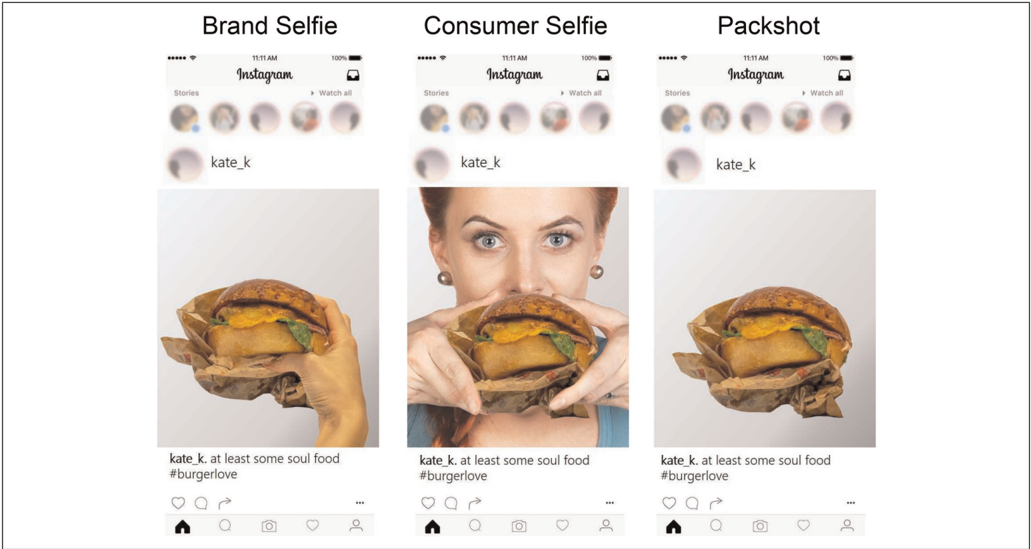
Smartphones have made it nearly effortless to share images of branded experiences. This research classifies social media brand imagery and studies user response. Aside from packshots (standalone product images), two types of brand-related selfie images appear online: consumer selfies (featuring brands and consumers’ faces) and an emerging phenomenon the authors term “brand selfies” (invisible consumers holding a branded product). The authors use convolutional neural networks to identify these archetypes and train language models to infer social media response to more than a quarter-million brand-image posts (185 brands on Twitter and Instagram). They find that consumer-selfie images receive more sender engagement (i.e., likes and comments), whereas brand selfies result in more brand engagement, expressed by purchase intentions. These results cast doubt on whether conventional social media metrics are appropriate indicators of brand engagement. Results for display ads are consistent with this observation, with higher click-through rates for brand selfies than for consumer selfies. A controlled lab experiment suggests that self-reference is driving the differential response to selfie images. Collectively, these results demonstrate how (interpretable) machine learning helps extract marketing-relevant information from unstructured multimedia content and that selfie images are a matter of perspective in terms of actual brand engagement.
Overview
The claims and statistics of this paper haven’t been checked yet.
Free: it reads the open-access text and checks the first 5 claims that cite a source we can check. Create a free account to check every claim.
Integrity signals
Registry
Cites
Statistics
Figures
Verification
Claims the paper makes
The claims and statistics of this paper haven’t been checked yet.
Free: it reads the open-access text and checks the first 5 claims that cite a source we can check. Create a free account to check every claim.
Claims other papers make about this one
Each is checked against this paper’s own text: does it say what the citing paper says it does?
The source backs part of the claim, not all of it — or backs it for a different population, condition or comparison.
In the citing paper
“RoBERTa, specifically fine-tuned on a corpus of over 5,000 social media posts [23], exhibits the highest accuracy in one of the Twitter dataset (see Table 2, Twitter Various II).”
From Sentiment Analysis in the Age of Generative AI (2024) · cites this paper as [23]
Experimental — accuracy not yet measured
Self-check
Percentages, sums and reported differences re-computed from the paper’s own numbers.
The self-check needs the paper’s full text.
Citations
Cites
Very Deep Convolutional Networks for Large-Scale Image Recognition
Simonyan, K., & Zisserman, A. (2014) · arXiv · doi:10.48550/arxiv.1409.1556 · Cited by 114,148 · cited 1×
“We chose VGG-16 as the underlying architecture because of its high performance on related tasks (Simonyan and Zisserman 2014).”
MethodImageNet: A large-scale hierarchical image database
Deng, J., Dong, W., Socher, R., Li, L.-J., Li, K., & Fei-Fei, L. (2009) · 2009 IEEE Conference on Computer Vision and Pattern Recognition · doi:10.1109/cvpr.2009.5206848 · Cited by 65,333 · cited 4×
“This approach allows us to adapt the CNN pretrained on the ImageNet data set to the particularities of user-generated social media images.”
MethodInfluentialPreacher, K. J., & Hayes, A. F. (2008) · Behavior Research Methods · doi:10.3758/brm.40.3.879 · Cited by 34,117 · cited 1×
“The statistical test based on 1,000 bootstrapping iterations to obtain standard errors for the (nonnormal) indirect effect of brand selfies (Preacher and Hayes 2008) also indicates mediation (confidence interval: [.22, .75], p .01).”
MethodGrad-CAM: Visual Explanations from Deep Networks via Gradient-Based Localization
Selvaraju, R. R., Cogswell, M., Das, A., Vedantam, R., Parikh, D., & Batra, D. (2017) · 2017 IEEE International Conference on Computer Vision (ICCV) · doi:10.1109/iccv.2017.74 · Cited by 24,513
"Why Should I Trust You?": Explaining the Predictions of Any Classifier
Ribeiro, M. T., Singh, S., & Guestrin, C. (2016) · Proceedings of the 22nd ACM SIGKDD International Conference on Knowledge Discovery and Data Mining · doi:10.1145/2939672.2939778 · Cited by 17,555
The Effect of Word of Mouth on Sales: Online Book Reviews
Chevalier, J. A., & Mayzlin, D. (2006) · Journal of Marketing Research · doi:10.1509/jmkr.43.3.345 · Cited by 6,003 · cited 2×
“For example, the amount and valence of aggregate UGC have proven useful as predictors of demand (Chevalier and Mayzlin 2006; Liu 2006), customerbased brand equity (Schweidel and Moe 2014), and stock returns (Colicev et al. 2018).”
BackgroundImageNet: A large-scale hierarchical image database
Deng, J. H., Dong, W. F., Socher, R., Li, L.-J., Li, K., & Fei-Fei, L. (2009) · IEEE Computer Society Conference on Computer Vision and Pattern Recognition/Proceedings - IEEE Computer Society Conference on Computer Vision and Pattern Recognition/Proceedings · doi:10.1109/cvprw.2009.5206848 · Cited by 2,714
Using Online Conversations to Study Word-of-Mouth Communication
Godes, D., & Mayzlin, D. (2004) · Marketing Science · doi:10.1287/mksc.1040.0071 · Cited by 2,601 · cited 1×
“The majority of this research has relied either on summaries of text content such as volume and valence (e.g., Chevalier and Mayzlin 2006; Godes and Mayzlin 2004; Liu 2006) or on automatic extraction of consumer perceptions in user-generated texts (e.g., Netzer et al. 2012; Timoshenko and Hauser…”
BackgroundThe self-reference effect in memory: A meta-analysis
Symons, C. S., & Johnson, B. T. (1997) · Psychological Bulletin · doi:10.1037/0033-2909.121.3.371 · Cited by 1,361 · cited 1×
“…to their own personal experiences in brand selfies can generate higher levels of cognitive elaboration and mental simulation of brand consumption (Bower and Gilligan 1979; Escalas 2007), which has been linked to higher levels of brand engagement (Elder and Krishna 2012; Symons and Johnson 1997).”
BackgroundWord of Mouth for Movies: Its Dynamics and Impact on Box Office Revenue
Liu, Y. (2006) · Journal of Marketing · doi:10.1509/jmkg.70.3.074 · Cited by 1,329 · cited 2×
“…this research has relied either on summaries of text content such as volume and valence (e.g., Chevalier and Mayzlin 2006; Godes and Mayzlin 2004; Liu 2006) or on automatic extraction of consumer perceptions in user-generated texts (e.g., Netzer et al. 2012; Timoshenko and Hauser 2019;…”
BackgroundMethod
Research works printed but not linked: 3
- Guido, Gianluigi, Marco Pichierri, and Giovanni Pino (2018), ' Effects of Face Images and Face Pareidolia on Consumers ' Responses to Print Advertising: An Empirical Investigation, ' Journal of Advertising Research , 58 (3), 1 -13.
- Liu, Yinhan, Myle Ott, Naman Goyal, Jingfei Du, Mandar Joshi, Danqi Chen, et al. (2019), ' RoBERTa: A Robustly Optimized BERT Pretraining Approach, ' arXiv , https://arxiv.org/abs/1907. 11692.
- Pennebaker, James W., Ryan L. Boyd, Kayla Jordan, and Kate Blackburn (2015), The Development and Psychometric Properties of LIWC2015 . Austin, TX: University of Texas at Austin.
Cited by
Items 201–224 of 224
Shockley, J., Liu, X., Smith, J., & Jayaram, J. (2026) · SSRN Electronic Journal · doi:10.2139/ssrn.6986850
Shehu, E., Naik, P. A., Elmously, Z., & Candelaria, R. (2026) · Journal of Marketing Analytics · doi:10.1057/s41270-026-00498-8
How human presence in environmental images shapes sustainable behaviors
Liu, M. W., Huang, J., Fu, D., & Keh, H. T. (2026) · Journal of the Academy of Marketing Science · doi:10.1007/s11747-026-01180-2
Process and outcome frames in firms’ environmental posts and consumer engagement
Tran, H.-A., Strizhakova, Y., Huang, G., Tran, H., & Gustafsson, A. (2026) · Journal of the Academy of Marketing Science · doi:10.1007/s11747-026-01181-1
Qu, Y., & Lee, J. (2026) · Behavioral Sciences · doi:10.3390/bs16081270
“Manipulation check items were adapted from Hartmann et al. (2021) and modified for the context of the present study.”
InfluentialBOGDAN, L.-Ș., & Pricop, I.-A. (2026) · Proceedings of the ... International Conference on Business Excellence · doi:10.2478/picbe-2026-0303
“AI can convert unstructured data from clips, images, or texts into structured outputs (Hartmann et al., 2021) take over repetitive tasks based on explicit knowledge, and discover patterns in large volumes of data previously provided to the system (Makridis & Lazanski, 2025).”
Robotic pets as resources: transforming the lives of the unseen and overlooked
Haque, N., Robertson, N. L., Bove, L. L., Seenivasan, S., Sok, P., & Yates, P. (2026) · Journal of Business Research · doi:10.1016/j.jbusres.2026.116457
Cao, X., Yaacob, A., & Chong, K. M. (2026) · PLoS ONE · doi:10.1371/journal.pone.0356763
Wang, Y., & Zeng, A. (2026) · PLoS ONE · doi:10.1371/journal.pone.0356612
How to Make Advertising on Social Media Memorable: Stand Out or Get Lost
Walter, J., Stocchi, L., Ward, E., & Romaniuk, J. (2026) · Journal of Advertising Research · doi:10.1080/00218499.2026.2670019
Before the skip option: impact of facial presence on video view completions
Hilton, B., Malshe, A. V., & Gretz, R. T. (2026) · Marketing Letters · doi:10.1007/s11002-026-09839-0
“For example, Hartmann et al. (2021) applied self-reference theory to offer evidence that facial absence (presence) in product photographs can enhance (diminish) product and brand level self-refer-encing.”
Fu, S., Liu, Z., & Niu, Z. (2026) · Journal of Retailing and Consumer Services · doi:10.1016/j.jretconser.2026.105098
Zhan, L., Wen, L., Shang, Y., Chen, J., Tong, J., & Cheng, M. (2026) · Annals of Tourism Research · doi:10.1016/j.annals.2026.104295
The Age‐Fit Hypothesis: Celebrity Age, Content Type, and Consumer Engagement on Social Media
Zhang, X., Zhang, Q., Wan, F., Zhang, N., & Filieri, R. (2026) · Psychology and Marketing · doi:10.1002/mar.70268
Kannan, P. K., Nam, H., Kim, C., & Kulkarni, G. (2026) · Journal of Service Research · doi:10.1177/10946705261474262
Product social currency: Conceptualization, measurement and nomological validity
Li, J., Gong, Y., & Lou, Q. (2026) · Journal of Business Research · doi:10.1016/j.jbusres.2026.116564
What do we know, and what will we know, about user-generated content in marketing?
Martínez-Navarro, J. (2026) · Spanish Journal of Marketing - ESIC · doi:10.1108/sjme-04-2025-0104
Arts and the market: an ethnography of their complex contemporary relationships
Barretta, P. G. (2026) · Arts and the Market · doi:10.1108/aam-06-2024-0029
Supply and demand of media bias in the U.S. elections
Shen, J. (n.d.) · PolyU Institutional Research Archive (Hong Kong Polytechnic University)
Hikmawati, K. A., Soetjipto, B. E., & Wardhana, L. W. (2025) · Economics and Business Journal (ECBIS)
Altın, B. K. (2025) · Yildiz Technical University - AVESIS
Not alone: How group photos enhance audience responses to virtual influencers
Fang, J., & Pan, Y. (2026) · Journal of Retailing and Consumer Services · doi:10.1016/j.jretconser.2026.105135
The right endorser for the right stay: How human and AI endorsers shape accommodation booking
Nguyen, M., Zhang, Y., & Cao, T. (. (2026) · International Journal of Hospitality Management · doi:10.1016/j.ijhm.2026.104930
Threads of Meaning: Exploring Brand Identity through Language in Pakistan’s Clothing Industry
Iram, A., Tariq, M., Hussain, M. A., Shahbaz, M., & Aman, M. (2025) · Wah Academia Journal of Social Sciences · doi:10.63954/wajss.4.1.69.2025
Metadata
- Authors
- Hartmann, J., Heitmann, M., Schamp, C., & Netzer, O.
- Affiliations
- Universität Hamburg (DE)
- Corresponding author
- Hartmann, Jochen
- Heitmann, Mark
- Schamp, Christina
- Netzer, Oded
- Venue
- Journal of Marketing Research
- Publisher
- SAGE Publications
- Published
- 2021-10-16
- Volume
- 58
- Issue
- 6
- Pages
- 1159-1177
- ISSN
- 0022-2437 (ISSN-L)
- 1547-7193
- OpenAlex
- W3198767726
- Cited by
- 184
- References
- 57
- Citations by year
- 2026: 45 · 2025: 42 · 2024: 39 · 2023: 37 · 2022: 15 · 2021: 4
- FWCI
- 32.92
- Type
- journal article
- Language
- en
- Open access
- hybrid
- doi.org
- Licence
- Locations
- Journal of Marketing Research (publishedVersion, cc-by-nc)
- ePubWU Institutional Repository (Wirtschaftsuniversität Wien) (submittedVersion, cc-by-nc)
- WU Research (submittedVersion, cc-by-nc)
- mediaTUM – the media and publications repository of the Technical University Munich (Technical University Munich) (submittedVersion)
- University of Groningen research database (University of Groningen / Centre for Information Technology) (submittedVersion, cc-by-nc)
- Funders
- German Research Foundation (HE 6703/1-2)
- Topics
- Social Sciences › Business, Management and Accounting › Marketing › Digital Marketing and Social Media
- Social Sciences › Business, Management and Accounting › Marketing › Consumer Behavior in Brand Consumption and Identification
- Social Sciences › Business, Management and Accounting › Marketing › Marketing and Advertising Strategies
- Keywords
- brand engagement, self-reference, purchase intention, display advertising, click-through rate, image classification, convolutional neural networks, model interpretability, Instagram, Twitter, smartphones
About these checks
Registry, retraction, Cites and statistics results are computed, not judged, with one exception: a printed reference that no index lists is read once by a model before it counts as a citation error. Claims are extracted by a model and kept only when their quote appears verbatim in the text; each cited source is then checked, with a model’s help, for whether it says what the claim relies on. Those verdicts can be wrong — read the claim’s quote and the cited source before relying on one.
Statistics and arithmetic are recomputed, not judged.
Confidence bands are shown only for fields calibrated on our annotated test set. None is calibrated yet, so no band is shown.
What counts as a claim ›How we measure confidence ›How we check this ›
Are you an author, or do you see a problem with this page? Request a review
Data sources
Bibliographic data: Semantic Scholar, OpenAlex, Crossref.
Contains information from the Semantic Scholar Academic Graph Datasets, made available under the ODC Attribution License (ODC-BY 1.0).
Semantic Scholar’s data is described in: Kinney, R., et al. (2023). The Semantic Scholar Open Data Platform. arXiv:2301.10140.
