

Acceptance and Commitment Therapy is feasible for people with acquired brain injury: A process evaluation of the BrainACT treatment.
Open accessThe DOI matches its Crossref record; 19 of the 20 references it cites were found in a registry or an index, and 1 are not checked yet; 6 of the 13 sources its claims cite were checked for support.
Abstract
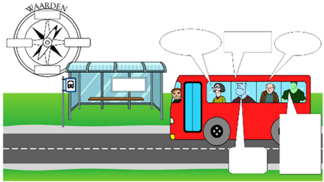
Objective: To evaluate the feasibility of Acceptance and Commitment Therapy for people with acquired brain injury. Design: A process evaluation of the BrainACT treatment was conducted alongside a randomised controlled trial. Setting: Psychology departments of hospitals and rehabilitation centres. Subjects: Tweny-seven participants with acquired brain injury and 11 therapists. Intervention: BrainACT is an Acceptance and Commitment Therapy adapted for the needs and possible cognitive deficits of people with acquired brain injury, provided in eight one-hour face-to-face or video-conference sessions. Measurements: The attendance and compliance rates, engagement, satisfaction, and perceived barriers and facilitators for delivery in clinical practice were investigated using semi-structured interviews with participants and therapists and therapy logs. Results: 212 of the 216 sessions in total were attended and 534 of the 715 protocol elements across participants and sessions were delivered. Participants were motivated and engaged. Participants and therapists were satisfied with the intervention and participants reported to have implemented skills in their daily routines acquired during therapy. Key strengths are the structure provided with the bus of life metaphor, the experiential nature of the intervention, and the materials and homework. Participants and therapists often preferred face-to-face sessions, however, when needed video-conferencing is a good alternative. Conclusion: BrainACT is a feasible intervention for people with anxiety and depressive symptoms following acquired brain injury. However, when the content of the intervention is too extensive, we recommend adding two extra sessions.
Verified 2026-11-22 · 1 reference not checked yet
Overview
CoChat Summary
## TL;DR
BrainACT, an adapted Acceptance and Commitment Therapy program for people with acquired brain injury, was found to be feasible in this process evaluation alongside a randomized controlled trial. Attendance, delivery, and satisfaction were high, though the authors recommend adding sessions when the content is too extensive.
## Key findings
- Of 216 total sessions, 212 were attended, for a 98.2% attendance rate; therapists delivered 534 of 715 protocol elements, or 75% compliance.
- Among 27 participants, 26 said the therapy helped them cope better with negative emotions, and 24 said it helped them cope better with negative thoughts.
- Participant satisfaction was high: the average rating was 7.8/10, and 25 of 27 participants were satisfied; therapist satisfaction averaged 8/10, and all 11 therapists said the intervention was sufficiently adapted.
- Ten of 27 participants received treatment partly by video-conferencing; face-to-face was generally preferred, but video-conferencing was described as a useful alternative when needed.
## Methods
- Process evaluation conducted alongside a randomized controlled trial of BrainACT, an Acceptance and Commitment Therapy intervention adapted for people with acquired brain injury.
- Sample included 27 participants with acquired brain injury and 11 therapists; participants were recruited from medical psychology and rehabilitation departments in the Netherlands between April 2019 and January 2022.
- Main analyses were descriptive statistics from therapy logs plus semi-structured interviews with participants and therapists, with qualitative responses categorized by the authors.
## Limitations
- The paper states that during COVID-19 lockdowns some treatment was delivered by video-conferencing, which was not foreseen, and this made the intervention more burdensome and less easy to connect with therapeutically.
- The authors note that the session content was sometimes experienced as too much, leading therapists to skip protocol elements; they recommend adding two extra sessions.
- Evident from the text: the process evaluation is based on a small sample from one trial arm, so generalizability is limited.
Model-written summary. Check it against the paper before relying on it.
Integrity signals
Registry
Cites
Statistics
Figures
Verification
Claims the paper makes
3 Valid · 1 Not valid · 4 Not checked · 64 Own results and interpretations
The cited sources support only part of this claim — read each source’s verdict below.
In the paper
“This is lower than the 80%, which is often applied as a sufficient compliance rate.2,10,11”
§ Acceptance and Commitment Therapy is feasible for people with acquired brain injury: A process evaluation of the BrainACT treatment > Discussion
What the sources say
- Not checked — no full text of the sourcecites [2] Saunders RP Evans MH Joshi P. Developing a process-evaluation plan for assessing health promotion program implementation: a how-to guide. Health Promot Pract 2005; 6: 134– 147. 15855283 source
- Not checked — no full text of the sourcecites [10] Tate RL Perdices M Rosenkoetter U, et al. Revision of a method quality rating scale for single-case experimental designs and n-of-1 trials: the 15-item risk of bias in N-of-1 trials (RoBiNT) scale. Neuropsychol Rehabil 2013; 23: 619– 638. 24050810 source
- Partly supportedcites [11] Aarestrup AK Jørgensen TS Jørgensen SE, et al. Implementation of strategies to increase adolescents’ access to fruit and vegetables at school: process evaluation findings from the boost study. BMC Public Health 2015; 15: 1– 16. 25881262 PMC4334355 sourceExperimental — accuracy not yet measured
The Methods section (page unavailable) defines 80% or more as a high implementation level in the Boost study. It says this cutoff was chosen pragmatically, not that 80% is often applied as a sufficient compliance rate. The cited paper also does not establish the citing document’s 75% rate. (LLM, conf=0.85)
plain- Asserted: passes — The authors put it forward as true.
- Checkable: passes — It can be checked against evidence.
- Load-bearing: unclear — It is unclear whether the paper’s conclusions depend on it.
- Based: passes — The paper gives a reason why it holds.
A result the paper reports from its own data — it cites no other source for it, so there is none to check. The quote shows it is in the paper.
In the paper
“All participants indicated that they benefited from the treatment, in one way or another. Furthermore, all participants said they would recommend the treatment to other people with a brain injury and one participant already recommended the therapy to a friend who suffered from an ischemic stroke.”
- Also stated in: § Satisfaction · plain
“Furthermore, all participants said they would recommend the treatment to other people with a brain injury”
§ Acceptance and Commitment Therapy is feasible for people with acquired brain injury: A process evaluation of the BrainACT treatment > Results > Satisfaction
plain- Asserted: passes — The authors put it forward as true.
- Checkable: passes — It can be checked against evidence.
- Load-bearing: unclear — It is unclear whether the paper’s conclusions depend on it.
- Based: passes — The paper gives a reason why it holds.
- Also stated in: § Satisfaction · plain
A result the paper reports from its own data — it cites no other source for it, so there is none to check. The quote shows it is in the paper.
In the paper
“Out of the 27 participants, 26 answered that the therapy helped them to cope better with (negative) emotions.”
§ Acceptance and Commitment Therapy is feasible for people with acquired brain injury: A process evaluation of the BrainACT treatment > Results > Acceptance
plainstates a causen = 27- Asserted: passes — The authors put it forward as true.
- Checkable: passes — It can be checked against evidence.
- Load-bearing: passes — The paper’s conclusions depend on it.
- Based: passes — The paper gives a reason why it holds.
A result the paper reports from its own data — it cites no other source for it, so there is none to check. The quote shows it is in the paper.
In the paper
“Participants (8 out of 27) stated they benefited from the structured nature of the intervention.”
§ Acceptance and Commitment Therapy is feasible for people with acquired brain injury: A process evaluation of the BrainACT treatment > Barriers and facilitators, which patients named throughout the interviews were categorised > Facilitators
plainn = 27- Asserted: passes — The authors put it forward as true.
- Checkable: passes — It can be checked against evidence.
- Load-bearing: unclear — It is unclear whether the paper’s conclusions depend on it.
- Based: passes — The paper gives a reason why it holds.
A result the paper reports from its own data — it cites no other source for it, so there is none to check. The quote shows it is in the paper.
In the paper
“Four patients felt that the protocol left little room to talk about the things that troubled them at that time.”
§ Acceptance and Commitment Therapy is feasible for people with acquired brain injury: A process evaluation of the BrainACT treatment > Barriers and facilitators, which patients named throughout the interviews were categorised > Barriers
plainn = 4- Asserted: passes — The authors put it forward as true.
- Checkable: passes — It can be checked against evidence.
- Load-bearing: unclear — It is unclear whether the paper’s conclusions depend on it.
- Based: passes — The paper gives a reason why it holds.
27 more claims
Create a free account to see all 72 claims and every source verdict.
- It may state two separate claims as one. 16
- Probably not a substantial claim. 28
Citations
Cites
Acceptance and commitment therapy: model, processes and outcomes
Hayes, S. C., Luoma, J. B., Bond, F. W., Masuda, A., & Lillis, J. (2006) · Behaviour Research and Therapy · doi:10.1016/j.brat.2005.06.006 · Cited by 6,587 · cited 1×
“7 We developed the BrainACT intervention, which is a treatment programme adapted for the needs and possible cognitive de fi cits of people with brain injury and investigated its effectiveness in a series of four single cases.”
MethodSaunders, R. P., Evans, M. H., & Joshi, P. (2005) · Health Promotion Practice · doi:10.1177/1524839904273387 · Cited by 1,031 · cited 1×
“2,10,11 However, it is higher compared to a study investigating Acceptance and Commitment Therapy for cancer survivors (70%), 12 but lower than a study examining this therapy for people with chronic lower back pain (80%).”
BackgroundTate, R. L., Perdices, M., Rosenkoetter, U., Wakim, D., Godbee, K., Togher, L., & McDonald, S. (2013) · Neuropsychological Rehabilitation · doi:10.1080/09602011.2013.824383 · Cited by 358 · cited 1×
“2,10,11 However, it is higher compared to a study investigating Acceptance and Commitment Therapy for cancer survivors (70%), 12 but lower than a study examining this therapy for people with chronic lower back pain (80%).”
BackgroundPonsford, J., Lee, N. K., Wong, D., McKay, A., Haines, K., Alway, Y., Downing, M., Furtado, C., & O'Donnell, M. L. (2016) · Psychological Medicine · doi:10.1017/s0033291715002640 · Cited by 173
Aafjes-van Doorn, K., Békés, V., & Prout, T. A. (2021) · Counselling Psychology Quarterly · doi:10.1080/09515070.2020.1773404 · Cited by 161
Brief group‐based acceptance and commitment therapy for stroke survivors.
Majumdar, S., & Morris, R. (2019) · British Journal of Clinical Psychology · doi:10.1111/bjc.12198 · Cited by 107 · cited 1×
“3 6 Acceptance and Commitment Therapy is a third-wave behavioural therapy, which focuses on the improvement of psychological fl exibility.”
BackgroundWhiting, D., Deane, F., McLeod, H., Ciarrochi, J., & Simpson, G. (2020) · Neuropsychological Rehabilitation · doi:10.1080/09602011.2019.1583582 · Cited by 71
Sander, A. M., Clark, A. N., Arciniegas, D. B., Tran, K., Leon-Novelo, L., Ngan, E., Bogaards, J., Sherer, M., & Walser, R. (2021) · Neuropsychological Rehabilitation · doi:10.1080/09602011.2020.1762670 · Cited by 68
Powers, D. V., Thompson, L. W., & Gallagher-Thompson, D. (2008) · Cognitive and Behavioral Practice · doi:10.1016/j.cbpra.2007.01.002 · Cited by 46 · cited 1×
“15 Due to cognitive de fi cits, this might be more challenging for people with brain injury, therefore, booster sessions might help to rehearse and practice the skills for some individuals.”
BackgroundA changed reality: Experience of an acceptance and commitment therapy (ACT) group after stroke
Large, R., Samuel, V., & Morris, R. (2020) · Neuropsychological Rehabilitation · doi:10.1080/09602011.2019.1589531 · Cited by 37 · cited 1×
“17 Key strengths of the BrainACT intervention are the experiential nature of the intervention, the sim-pli fi ed materials of the workbook and homework, which were experienced as clear, and the structured nature of the protocol with help of the bus of life metaphor.”
BackgroundRauwenhoff, J. C. C., Bol, Y., Peeters, F., van den Hout, A. J. H. C., Geusgens, C. A. V., & van Heugten, C. M. (2023) · Neuropsychological Rehabilitation · doi:10.1080/09602011.2022.2053169 · Cited by 31 · cited 1×
“8 Despite promising results in terms of effectiveness, no process evaluation has been conducted on the feasibility of Acceptance and Commitment Therapy for people with acquired brain injury.”
BackgroundSelf-citationSimblett, S. K., Yates, M., Wagner, A. P., Watson, P., Gracey, F., Ring, H., & Bateman, A. (2017) · JMIR Mental Health · doi:10.2196/mental.6022 · Cited by 26 · cited 1×
“18,19 The barrier most often named by participants was that it was more dif fi cult to connect with the therapist.”
BackgroundBate, P. (2004) · Intervention Research · doi:10.3233/ivr-2004-000003 · Cited by 26
Shek, A. C., Biondi, A., Ballard, D., Wykes, T., & Simblett, S. K. (2021) · Neuropsychological Rehabilitation · doi:10.1080/09602011.2019.1701501 · Cited by 25 · cited 1×
“18,19 The barrier most often named by participants was that it was more dif fi cult to connect with the therapist.”
BackgroundAarestrup, A. K., Jørgensen, T. S., Jørgensen, S. E., Hoelscher, D. M., Due, P., & Krølner, R. (2015) · BMC Public Health · doi:10.1186/s12889-015-1399-9 · Cited by 23 · cited 1×
“2,10,11 However, it is higher compared to a study investigating Acceptance and Commitment Therapy for cancer survivors (70%), 12 but lower than a study examining this therapy for people with chronic lower back pain (80%).”
BackgroundRauwenhoff, J., Peeters, F., Bol, Y., & Van Heugten, C. (2019) · Trials · doi:10.1186/s13063-019-3952-9 · Cited by 22
Self-citationRauwenhoff, J. C., Bol, Y., van Heugten, C. M., Batink, T., Geusgens, C. A., van den Hout, A. J., Smits, P., Verwegen, C. R., Visser, A., & Peeters, F. (2023) · Clinical Rehabilitation · doi:10.1177/02692155231154124 · Cited by 19
Self-citationClarke, K., Patterson, P., McDonald, F. E. J., Wakefield, C. E., Sansom-Daly, U., & Zebrack, B. (2021) · Child & Youth Care Forum · doi:10.1007/s10566-020-09571-4 · Cited by 18 · cited 2×
“2,10,11 However, it is higher compared to a study investigating Acceptance and Commitment Therapy for cancer survivors (70%), 12 but lower than a study examining this therapy for people with chronic lower back pain (80%).”
BackgroundGalea Holmes, M. N., Wileman, V., Hassan, S., Denning, J., Critchley, D., Norton, S., McCracken, L. M., & Godfrey, E. (2022) · British Journal of Health Psychology · doi:10.1111/bjhp.12583 · Cited by 13 · cited 1×
“13 The somewhat low compliance rate is likely due to the fact that therapists thought that the content of the sessions was often too much and therefore they did not cover all the elements.”
BackgroundCassiello-Robbins, C., Dietch, J. R., Mochrie, K. D., Elbogen, E., & Rosenthal, M. Z. (2022) · American Psychologist · doi:10.1037/amp0000993 · Cited by 9 · cited 1×
“14 Following the intervention, most participants reported to continue using the therapy skills.”
Background
Cited by
Feng, Q., Huang, Z., Wang, Y., & Wang, B. (2024) · International Journal of Mental Health Promotion · doi:10.32604/ijmhp.2024.049010 · Cited by 5
Osstyn, S., Rauwenhoff, J., Handels, R., de Vugt, M. E., Evers, S., van Mastrigt, G. A. P. G., & van Heugten, C. M. (2025) · International Journal of Technology Assessment in Health Care · doi:10.1017/s0266462324004811
Self-citation
Metadata
- Authors
- Rauwenhoff, J. C., Bol, Y., Peeters, F., & van Heugten, C. M.
- Affiliations
- Norwegian University of Science and Technology (NO)
- Zuyderland Medisch Centrum (NL)
- Maastricht University (NL)
- Maastricht University
- Venue
- Clinical Rehabilitation
- Publisher
- SAGE Publications
- Published
- 2023-12-15
- Volume
- 38
- Issue
- 4
- Pages
- 530-542
- ISSN
- 0269-2155 (ISSN-L)
- 1477-0873
- PMC
- PMC10898201
- OpenAlex
- W4389783776
- Cited by
- 2
- References
- 19
- Citations by year
- 2025: 1 · 2024: 1
- FWCI
- 0.58
- Type
- journal article
- Language
- en
- Open access
- hybrid
- doi.org
- Licence
- cc-by
- creativecommons.org/licenses/by/4.0/ (unspecified)
- journals.sagepub.com/page/policies/text-and-data-mining-license (tdm)
- Locations
- Clinical Rehabilitation (publishedVersion, cc-by)
- PubMed Central (publishedVersion, cc-by)
- PubMed (publishedVersion)
- Research Publications (Maastricht University) (submittedVersion, cc-by)
- NORA - Norwegian Open Research Archives (submittedVersion, cc-by)
- Funders
- ZonMw (project number 636310003)
- Topics
- Social Sciences › Psychology › Clinical Psychology › Mindfulness and Compassion Interventions
- Health Sciences › Medicine › Clinical Neurology › Traumatic Brain Injury Research
- Social Sciences › Psychology › Clinical Psychology › Psychotherapy Techniques and Applications
- Keywords
- acceptance and commitment therapy, acquired brain injury, feasibility, process evaluation, cognitive impairment, anxiety, depressive symptoms, videoconferencing, therapist satisfaction, participant engagement, barriers and facilitators
- MeSH terms
- Anxiety, Anxiety Disorders, Brain Injuries, Humans, Treatment Outcome, Acceptance and Commitment Therapy
About these checks
Registry, retraction, Cites and statistics results are computed, not judged, with one exception: a printed reference that no index lists is read once by a model before it counts as a citation error. Claims are extracted by a model and kept only when their quote appears verbatim in the text; each cited source is then checked, with a model’s help, for whether it says what the claim relies on. Those verdicts can be wrong — read the claim’s quote and the cited source before relying on one.
The claim verdicts this report counts are experimental: their accuracy is not yet measured.
A language model drew the claims from the paper on 2026-10-11, under version 3 of the claim definition (model deepseek-v4.1-flash, prompt extract-v3).
A second model labelled each claim on 2026-10-11 (model jev-1.13-20260917, definition revision gold-guideline-v0.2).
Cited sources are checked with a language model’s help (gpt-6-sol).
Statistics and arithmetic are recomputed, not judged.
Confidence bands are shown only for fields calibrated on our annotated test set. None is calibrated yet, so no band is shown.
What counts as a claim ›How we measure confidence ›How we check this ›
Are you an author, or do you see a problem with this page? Request a review
Data sources
Bibliographic data: Semantic Scholar, OpenAlex, Crossref.
Contains information from the Semantic Scholar Academic Graph Datasets, made available under the ODC Attribution License (ODC-BY 1.0).
Semantic Scholar’s data is described in: Kinney, R., et al. (2023). The Semantic Scholar Open Data Platform. arXiv:2301.10140.
