

Psilocybin-occasioned mystical-type experience in combination with meditation and other spiritual practices produces enduring positive changes in psychological functioning and in trait measures of prosocial attitudes and behaviors
Open accessThe DOI matches its Crossref record; 58 of the 58 references it cites were found in a registry or an index.
Abstract
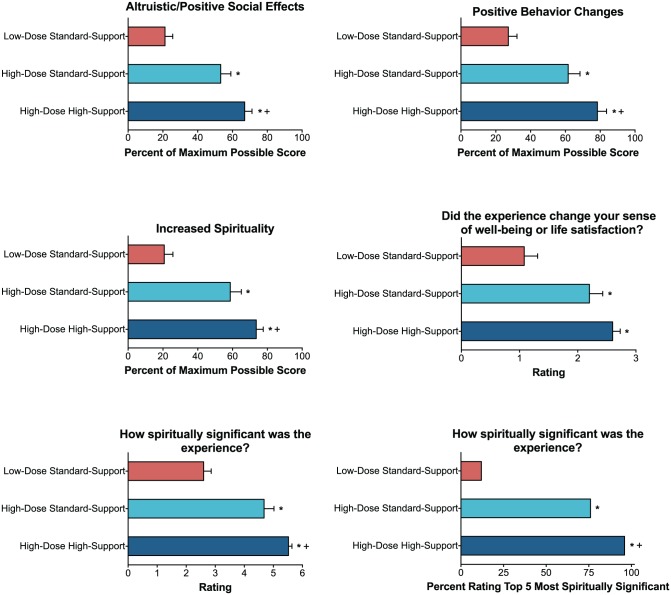
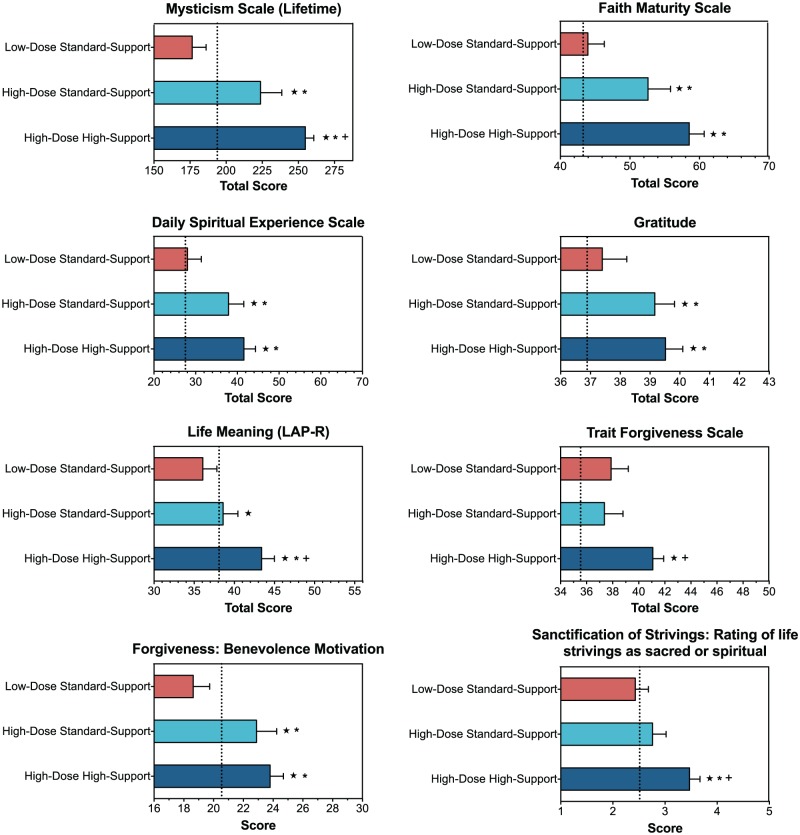
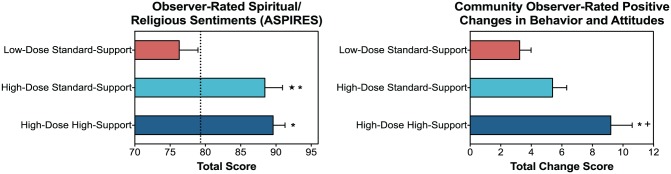
Psilocybin can occasion mystical-type experiences with participant-attributed increases in well-being. However, little research has examined enduring changes in traits. This study administered psilocybin to participants who undertook a program of meditation/spiritual practices. Healthy participants were randomized to three groups (25 each): (1) very low-dose (1 mg/70 kg on sessions 1 and 2) with moderate-level (“standard”) support for spiritual-practice (LD-SS); (2) high-dose (20 and 30 mg/70 kg on sessions 1 and 2, respectively) with standard support (HD-SS); and (3) high-dose (20 and 30 mg/70kg on sessions 1 and 2, respectively) with high support for spiritual practice (HD-HS). Psilocybin was administered double-blind and instructions to participants/staff minimized expectancy confounds. Psilocybin was administered 1 and 2 months after spiritual-practice initiation. Outcomes at 6 months included rates of spiritual practice and persisting effects of psilocybin. Compared with low-dose, high-dose psilocybin produced greater acute and persisting effects. At 6 months, compared with LD-SS, both high-dose groups showed large significant positive changes on longitudinal measures of interpersonal closeness, gratitude, life meaning/purpose, forgiveness, death transcendence, daily spiritual experiences, religious faith and coping, and community observer ratings. Determinants of enduring effects were psilocybin-occasioned mystical-type experience and rates of meditation/spiritual practices. Psilocybin can occasion enduring trait-level increases in prosocial attitudes/behaviors and in healthy psychological functioning. Trial Registration ClinicalTrials.gov Identifier NCT00802282
Overview
The claims and statistics of this paper haven’t been checked yet.
Free: it reads the open-access text and checks the first 5 claims that cite a source we can check. Create a free account to check every claim.
Integrity signals
Registry
Cites
Statistics
Figures
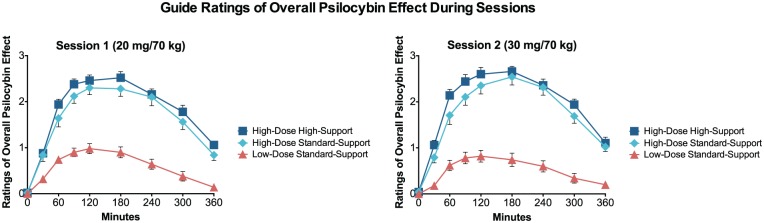
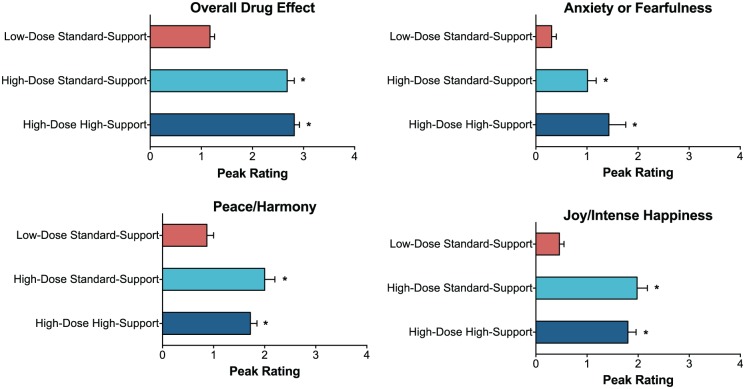
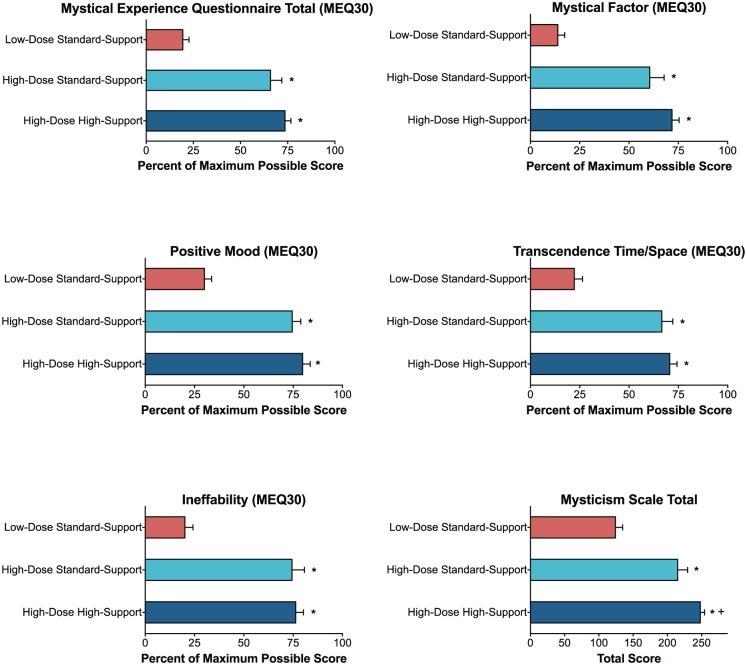
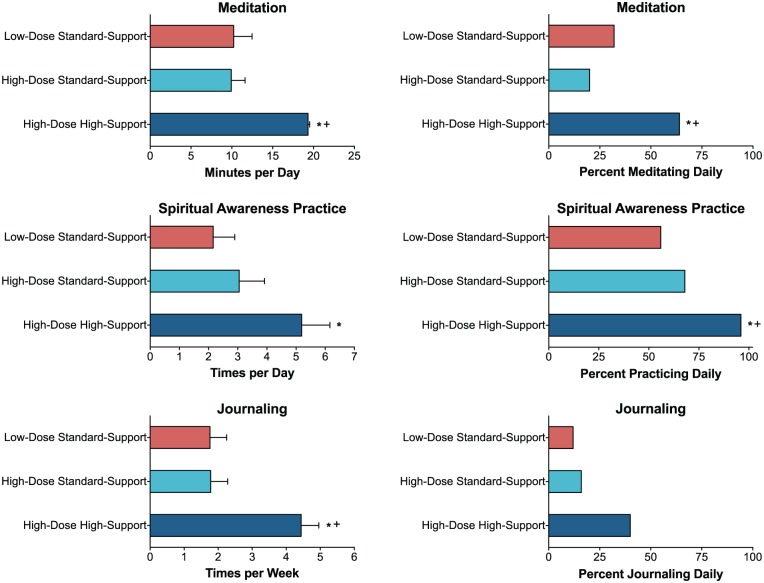
Verification
Claims the paper makes
The claims and statistics of this paper haven’t been checked yet.
Free: it reads the open-access text and checks the first 5 claims that cite a source we can check. Create a free account to check every claim.
Claims other papers make about this one
Each is checked against this paper’s own text: does it say what the citing paper says it does?
The cited source doesn’t support the claim as written.
In the citing paper
“In the aforementioned studies, the administration of psilocybin within a context of mindfulness-training significantly enhanced engagement with formal spiritual practises, mindfulness meditation depth and trait mindfulness (60, 61).”
From Examining the Potential Synergistic Effects Between Mindfulness Training and Psychedelic-Assisted Therapy (2021) · cites this paper as [60]
Checked by a reasoning model — may be wrong.
Experimental — accuracy not yet measuredThe source backs part of the claim, not all of it — or backs it for a different population, condition or comparison.
In the citing paper
“In addition, studies being performed on the use of psychoactive agents as catalysts for therapeutic psychological transformation, such as the Johns Hopkins psilocybin study, have examined the ways in which Buddhist meditation practice further facilitates”
From Buddhist Meditation and the Ethics of Human Augmentation (2020) · cites this paper as Griffiths et al. 2018
Experimental — accuracy not yet measuredThe source backs part of the claim, not all of it — or backs it for a different population, condition or comparison.
In the citing paper
“Similarly, research in healthy participants (N = 75) suggests group-based aftercare in addition to standard 2-on-1 support models can amplify well-being benefits of individual high-dose psilocybin sessions.11”
From Innovations in group-based psilocybin-assisted therapy of major depression in patients with cancer (2024) · cites this paper as [11]
Experimental — accuracy not yet measuredThe source backs part of the claim, not all of it — or backs it for a different population, condition or comparison.
In the citing paper
“It has been suggested by some studies that the intensity or quality of the psychedelic experience determines the treatment outcome (52–54).”
From Decreases in State and Trait Anxiety Post-psilocybin: A Naturalistic, Observational Study Among Retreat Attendees (2022) · cites this paper as [52]
Experimental — accuracy not yet measuredThe source backs part of the claim, not all of it — or backs it for a different population, condition or comparison.
In the citing paper
“it has been repeatedly found that psychedelic-induced mystical-type experiences and ego dissolution, the latter a phenomenon characterized by the reduction in self-referential awareness, disruption self-world boundaries, and increased feelings of unity with one’s surroundings (55), correlates with long-term (positive) outcomes (23, 52–54, 56–58).”
From Decreases in State and Trait Anxiety Post-psilocybin: A Naturalistic, Observational Study Among Retreat Attendees (2022) · cites this paper as [52]
Experimental — accuracy not yet measured
14 more claims about this paper
Create a free account to see every claim other papers make about this one.
Self-check
Percentages, sums and reported differences re-computed from the paper’s own numbers.
The self-check needs the paper’s full text.
Citations
Cites
Schwartz, S. H. (1992) · Advances in Experimental Social Psychology · doi:10.1016/s0065-2601(08)60281-6 · Cited by 14,619 · cited 1×
“…spiritual, holy, heavenly, and blessed (Mahoney et al., 2005); Schwartz Value Scale , a measure of relative importance of various life values (Schwartz, 1992, 1994); Inclusion of Others in the Self scale (IOS), a measure of interpersonal closeness (Aron et al., 1992), mean score of ratings…”
BackgroundScheier, M. F., Carver, C. S., & Bridges, M. W. (1994) · Journal of Personality and Social Psychology · doi:10.1037//0022-3514.67.6.1063 · Cited by 7,456 · cited 2×
“…compassion, amusement, and awe) (Shiota et al., 2006); Life-Orientation Test-Revised (LOT-R) , a measure of optimism associated with health outcomes (Scheier et al., 1994); Satisfaction with Life Scale (Pavot and Diener, 1993); Purpose in Life Test (PIL) , a assessment of meaningfulness in life…”
BackgroundAre There Universal Aspects in the Structure and Contents of Human Values?
Schwartz, S. H. (1994) · Journal of Social Issues · doi:10.1111/j.1540-4560.1994.tb01196.x · Cited by 5,793 · cited 1×
“…spiritual, holy, heavenly, and blessed (Mahoney et al., 2005); Schwartz Value Scale , a measure of relative importance of various life values (Schwartz, 1992, 1994); Inclusion of Others in the Self scale (IOS), a measure of interpersonal closeness (Aron et al., 1992), mean score of ratings…”
BackgroundThe varieties of religious experience: A study in human nature.
James, W. (1902) · doi:10.1037/10004-000 · Cited by 5,204
Inclusion of Other in the Self Scale and the structure of interpersonal closeness.
Aron, A., Aron, E. N., & Smollan, D. (1992) · Journal of Personality and Social Psychology · doi:10.1037/0022-3514.63.4.596 · Cited by 5,157 · cited 1×
“…relative importance of various life values (Schwartz, 1992, 1994); Inclusion of Others in the Self scale (IOS), a measure of interpersonal closeness (Aron et al., 1992), mean score of ratings of closest person, closest family member, least close family member, a stranger, and a difficult personal…”
BackgroundThe grateful disposition: A conceptual and empirical topography.
McCullough, M. E., Emmons, R. A., & Tsang, J.-A. (2002) · Journal of Personality and Social Psychology · doi:10.1037//0022-3514.82.1.112 · Cited by 3,664 · cited 2×
“…Loma Linda University, 2007), Daily Spiritual Experience Scale (general population survey data, Underwood, 2006); Gratitude Questionnaire-6 (adults, McCullough et al., 2002); Life Meaning (college and community sample, Reker, 2007); Trait Forgive-ness Scale (college students, Berry et al., 2005);…”
BackgroundReview of the Satisfaction With Life Scale.
Pavot, W., & Diener, E. (1993) · Psychological Assessment · doi:10.1037/1040-3590.5.2.164 · Cited by 3,611
Review of the Satisfaction With Life Scale
Pavot, W., & Diener, E. (2009) · Social Indicators Research Series · doi:10.1007/978-90-481-2354-4_5 · Cited by 3,460 · cited 4×
“Per the plan in the Data Analysis section, three longitudinal measures were dropped from analysis (Forgiveness subscale of the BMMRS; self-rated ASPIRES; and the Satisfaction with Life Scale) because of significant between-group differences at baseline and no significant difference in change from baseline.”
InfluentialPatterns of Positive and Negative Religious Coping with Major Life Stressors
Pargament, K. I., Smith, B. W., Koenig, H. G., & Perez, L. (1998) · Journal for the Scientific Study of Religion · doi:10.2307/1388152 · Cited by 2,425 · cited 1×
“…Protestant traditions (Benson et al., 1993); Brief RCOPE , a measure of religious/spiritual coping with stressful life events (Pargament, 1999; Pargament et al., 1998); Daily Spiritual Experience Scale , a measure of an individual’s perception of and interaction with the transcendent in daily…”
BackgroundGriffiths, R. R., Johnson, M. W., Carducci, M. A., Umbricht, A., Richards, W. A., Richards, B. D., Cosimano, M. P., & Klinedinst, M. A. (2016) · Journal of Psychopharmacology · doi:10.1177/0269881116675513 · Cited by 2,201 · cited 6×
“Prior research suggests an important role of psilocybin-occasioned mystical experience in the observed enduring positive changes in psychological well-being, prosocial disposition, and spiritual worldview (Garcia-Romeu et al., 2014; Griffiths et al., 2008, 2016; Ross et al., 2016).”
BackgroundMethodResultInfluentialSelf-citation
Research works printed but not linked: 14
- Costa PT McCrae RR (1992) Revised NEO Personality Inventory (NEO-PI-R) and NEO Five-Factor Inventory (NEO-FFI) (Professional manual). Odessa, FL: Psychological Assessment Resources.
- Darling DC Doblin R Metzner R (2004) Prisoner behavior change and experimental mysticism: Two classic studies from the Harvard psilocybin project. In: Metzner R (ed.) Teonanacatl: Sacred Mushroom of Visions. El Verano, CA: Four Trees Press, pp. 135– 151.
- Doblin R (1991) Pahnke’s Good Friday experiment: A long-term follow-up and methodological critique. J Transpersonal Psy 23: 1– 28.
- Easwaran E (1991/ 1978) Meditation: A Simple Eight-Point Program for Translating Spiritual Ideals into Daily Life. 2nd ed. Tomales, CA: Nilgiri Press.
- The Fetzer Institute (1999, Reprinted 2003) Brief multidimensional measure of religiousness/spirituality: 1999. In: Multidimensional Measurement of Religiousness/Spirituality for use in Health Research: A Report of the Fetzer Institute/National Institute on Aging Working Group. Kalamazoo, MI: Fetzer Institute, pp. 85– 95.
- Pahnke W (1963) Drugs and Mysticism: An Analysis of the Relationship Between Psychedelic Drugs and the Mystical Consciousness. PhD thesis. Cambridge, MA: Harvard University, Department of Religion and Society.
- Pargament KI (1999, Reprinted 2003) Religious/spiritual coping. In: Multidimensional Measurement of Religiousness/Spirituality for Use in Health Research: A Report of the Fetzer Institute/National Institute on Aging Working Group. Kalamazoo, MI: Fetzer Institute, pp. 43– 56.
- Passie T (2004) A history of the use of psilocybin in psychotherapy. In: Metzner R (ed.) Teonanacatl: Sacred Mushroom of Visions. El Verano, CA: Four Trees Press, pp. 109– 134.
- Passie T (2007) Contemporary psychedelic therapy: An overview. In: Winkelman MJ Roberts TB (eds) Psychedelic Medicine. Vol. 1 Westport CN: Praeger, pp. 45– 68.
- Piedmont RL (2010) ASPIRES: Assessment of Spirituality and Religious Sentiments (Technical Manual). 2nd ed. Columbia, MD: Loyola University Maryland, Department of Pastoral Counseling.
- Reker GT (2007) The Life Attitude Profile-Revised (LAP-R) (Procedures Manual). Research edn. Peterborough, ON: Student Psychologists Press.
- Stevens J (1987) Storming Heaven. New York: Harper & Row Publishers.
- VandeCreek L (1999) The death transcendence scale (Hood and Morris, 1983). In: Hill PC Hood RW (eds) Measures of Religiousity. Birmingham AL: Religious Education Press, pp. 442– 445.
- Weil GM Metzner R Leary T (1965, Reprinted 1997) The subjective after-effects of psychedelic experiences: A summary of four recent questionnaire studies. In: Weil GM Metzner R Leary T (eds) The Psychedelic Reader. Secaucus, NJ: Citadel Press, pp. 13– 21.
Cited by
Items 301–400 of 559
Narrative review of the potential for psychedelics to treat Prolonged Grief Disorder
Ehrenkranz, R. C., Agrawal, M., Penberthy, J. K., & Yaden, D. B. (2024) · International Review of Psychiatry · doi:10.1080/09540261.2024.2357668 · Cited by 6
“Beneficial effects of psilocybin have been shown to persist, including positive mood changes and spiritual meaning derived from the psy-chedelic experience (Griffiths et al., 2018; MacLean et al., 2012).”
David, J., Berkovich‐Ohana, A., & Dor‐Ziderman, Y. (2025) · Psychopharmacology · doi:10.1007/s00213-025-06792-0 · Cited by 6
Hovmand, O. R., Jensen, M. E., Juul, T. S., Madsen, M. K., Fisher, P. M., & Stenbæk, D. S. (2024) · Journal of Psychoactive Drugs · doi:10.1080/02791072.2024.2302186 · Cited by 8
Neurobiological Correlates of Psychedelic Experiences and Psychedelic-Associated Adverse Effects
Rieser, N. M., Schmidt, T. T., & Preller, K. H. (2024) · Current topics in behavioral neurosciences · doi:10.1007/7854_2024_507 · Cited by 6
Pharmacological Properties of Psychedelics with a Special Focus on Potential Harms
Holze, F., Liechti, M. E., & Müller, F. (2024) · Current topics in behavioral neurosciences · doi:10.1007/7854_2024_510 · Cited by 6
“To learn healing knowledge”: Philosophy, psychedelic studies and transformation
Pittaway, D. A. (2018) · South African Journal of Philosophy · doi:10.1080/02580136.2018.1532186 · Cited by 6
Berkson, M. A. (2019) · Comparative philosophy of religion · doi:10.1007/978-3-030-19300-3_2 · Cited by 6
The Varieties of Psychedelic Epistemology
Letheby, C. (2019) · UWA Profiles and Research Repository (UWA) · Cited by 7
Advancing elite athlete mental health treatment with psychedelic-assisted psychotherapy
Walton, C. C., & Liknaitzky, P. (2020) · Journal of Applied Sport Psychology · doi:10.1080/10413200.2020.1848941 · Cited by 6
Jiwani, Z., Goldberg, S. B., Stroud, J., Young, J., Curtin, J., Dunne, J. D., Simonsson, O., Webb, C. A., Carhart-Harris, R., & Schlosser, M. (2024) · doi:10.1101/2024.08.27.24312677 · Cited by 6
Kupferberg, A., & Hasler, G. (2024) · Frontiers in Psychiatry · doi:10.3389/fpsyt.2024.1372650 · Cited by 7
Korman, B. A. (2023) · Drug Science Policy and Law · doi:10.1177/20503245231191400 · Cited by 6
Apud, I., Scuro, J., Rodríguez, L. C., Dossi, G. H., Carrera, I., Lozano, F., & Retta, J. I. (2023) · Journal of Psychoactive Drugs · doi:10.1080/02791072.2023.2261017 · Cited by 5
“When considering psychedelics, experimental studies indicate a positive effect on traits such Extraversion (Erritzoe et al. 2018) and particularly Openness to Experience (Erritzoe et al. 2019; Griffiths et al. 2018; Lebedev et al. 2016; MacLean, Johnson, and Griffiths 2011).”
BackgroundThe Psychedelic Renaissance: A Catholic Perspective
Carroll, T. (2024) · The Linacre Quarterly · doi:10.1177/00243639241274818 · Cited by 5
Neural filters to conscious awareness and the phenomena that reduce their impact
Woollacott, M. H., & Weiler, M. (2025) · International Review of Psychiatry · doi:10.1080/09540261.2025.2478907 · Cited by 5
“For instance, psilocybin yielded mean MEQ scores of 77% (Griffiths et al., 2018) and 74% (Sweeney et al., 2022), 5-MeO-DMT produced a score of 83% (Barsuglia et al., 2018), LSD scored 73% (Sweeney et al., 2022), and DMT scored 82% for inhaled N, N-DMT, and 81% for ayahuasca (Sweeney et al., 2022).”
Music and non-music approaches in psilocybin-assisted psychotherapy: The sound of silence
Gloeckler, S. G., Lévesque, J. T., Lehmann, A., Farzin, H., & Greenway, K. T. (2025) · Journal of Psychedelic Studies · doi:10.1556/2054.2024.00421 · Cited by 7
Jivanescu, V. (2022) · Consciousness Spirituality & Transpersonal Psychology · doi:10.53074/cstp.2022.29 · Cited by 7
“Recent research by Griffiths et al. (2018) shows that besides a high dose of psilocybin, the integration practices after the experience are the key determinants of persisting positive effects.”
Psychedelics for military and Veteran communities? Research, practice, and policy considerations
Shore, R. (2023) · Journal of Military Veteran and Family Health · doi:10.3138/jmvfh.9.5.ed01 · Cited by 5
Psilocybin-assisted psychotherapy for Parkinson's disease without depression: A case-report
Fleury, V., Tomkova, E., Chiuvé, S. C., & Penzenstadler, L. E. (2025) · Journal of Parkinson s Disease · doi:10.1177/1877718x241312604 · Cited by 5
Kraus, J. (2021) · Drug Discovery Today · doi:10.1016/j.drudis.2021.01.009 · Cited by 5
Buddhist Meditation and the Ethics of Human Augmentation
Ray Sarbacker, S. (2020) · Journal of the Japanese Association for Digital Humanities · doi:10.17928/jjadh.5.2_61 · Cited by 4
Cirillo, M. A. (2025) · Journal of Humanistic Psychology · doi:10.1177/00221678251321040 · Cited by 4
From molecules to meaning: unpacking the antidepressant mechanisms of psychedelic drugs
Acero, V. P., Flatt, T. A., Gooch, P. M., Gaughan, S. J., Levin, A. W., & Davis, A. K. (2025) · Expert Review of Clinical Pharmacology · doi:10.1080/17512433.2025.2515866 · Cited by 4
Psychedelics and the future evolution of humanity
Winkelman, M. (2025) · Journal of Psychedelic Studies · doi:10.1556/2054.2025.00464 · Cited by 4
Therapeutic Use of Psilocybin in Depression: a Systematic Review of Clinical Evidence
Andrade, F. R. T., Buchborn, T., Thalheimer, G., Meinhardt, M. W., Joca, S. R. L., & de Almeida, R. M. M. (2025) · Acta Neuropsychiatrica · doi:10.1017/neu.2025.10039 · Cited by 5
Galdino, T. P., Bisneto, A. B. M., Pedro, M. D. S., de Oliveira, L. C., da Luz, M. A., de Lima, A. G. B., Silva, S. M. D. L., & Fook, M. V. L. (2025) · ACS Omega · doi:10.1021/acsomega.5c05606 · Cited by 4
Du, X., Liu, J., & Wang, X. (2025) · Molecular Psychiatry · doi:10.1038/s41380-025-03291-8 · Cited by 4
Payne, J., Robinson, O. C., Arnaud, K. O. S., Aday, J. S., Warner, M., Ludlow, C., & Murray, G. (2025) · Brain and Behavior · doi:10.1002/brb3.71043 · Cited by 4
Exploring Mystical-Type Experiences Through Auto-Induced Cognitive Trance
Bicego, A., Alnagger, N., Cardeña, E., Sombrun, C., Martial, C., Annen, J., Gosseries, O., & Vanhaudenhuyse, A. (2025) · International Journal of Clinical and Experimental Hypnosis · doi:10.1080/00207144.2025.2544055 · Cited by 5
“In the healthy cohorts, these improvements concerned positive effect on mood, attitudes, and self-care behaviors, prosocial attitudes/behaviors and healthy psychological functioning (Griffiths et al., 2006, 2008, 2011, 2018).”
Carlisle, N. A., Simonsson, O., MacCarthy, S., Elliott, M. N., Miller, G. H., Goldberg, S. B., Shallcross, R. A., & Hendricks, P. S. (2026) · Scientific Reports · doi:10.1038/s41598-026-37609-5 · Cited by 4
Goldy, S. P., Sepeda, N. D., Hilbert, S. N., Bari, B. A., Garcia‐Romeu, A., Gukasyan, N., Barrett, F. S., Yaden, D. B., & Nayak, S. M. (2026) · Psychiatry Research · doi:10.1016/j.psychres.2026.117010 · Cited by 5
Self-citationSeeing in Visionary and Mystical Experience: A Perceptual and Cognitive-Semantic Account
Stocker, K. (2022) · Cognitive Semantics · doi:10.1163/23526416-bja10030 · Cited by 4
Baker, K. M., Ulrich, C. M., & Meghani, S. H. (2023) · American Journal of Hospice and Palliative Medicine® · doi:10.1177/10499091221147700 · Cited by 4
Belief change and agnostic frames in psychedelic research and clinical contexts
Yaden, D. B., Nayak, S. M., & Griffiths, R. R. (2024) · Oxford University Press eBooks · doi:10.1093/oso/9780192898371.003.0008 · Cited by 5
Self-citationPsilocybin-Assisted Therapy May Enhance Conservation Values in Patients with Alcohol Use Disorder
Gold, N. D., Pagni, B. A., Petridis, P. D., & Bogenschutz, M. P. (2025) · Psychedelic Medicine · doi:10.1089/psymed.2024.0030 · Cited by 4
Clinical Utility of Mystical Experiences: An Overview and Conceptual Framework
Alldredge, C. T., Vagner, M., Corlett, C. E., & Elkins, G. R. (2025) · International Journal of Clinical and Experimental Hypnosis · doi:10.1080/00207144.2025.2526351 · Cited by 4
“Intense positive emotions like joy, peace, awe, and profound shifts in one’s sense of self are commonly reported as characteristics of MEs (Griffiths et al., 2018).”
Acid feminism: Gender, psychonautics and the politics of consciousness
Dymock, A. (2023) · The Sociological Review · doi:10.1177/00380261231175731 · Cited by 4
Ruban, A., Magnuski, M., Hobot, J., Orlowski, P., Kołodziej, A., Bola, M., & Brzezicka, A. (2024) · Progress in Neuro-Psychopharmacology and Biological Psychiatry · doi:10.1016/j.pnpbp.2024.111196 · Cited by 5
Exploring serotonergic psychedelics as a treatment for personality disorders
Carrithers, B. M., Roberts, D. E., Weiss, B., King, J. D., Carhart-Harris, R. L., Gordon, A. R., Pagni, B. A., Moreau, M., Ross, S., & Zeifman, R. J. (2025) · Neuropharmacology · doi:10.1016/j.neuropharm.2025.110413 · Cited by 4
Dancing the Wild Divine: Drums, Drugs, and Individuation
Moores, D. J. (2020) · Journal of Jungian Scholarly Studies · doi:10.29173/jjs126s · Cited by 5
Shults, F. L. (2022) · International Journal for the Psychology of Religion · doi:10.1080/10508619.2022.2078591 · Cited by 4
“In fact, the renaissance in SPE research has already produced compelling evidence that drug-induced entity encounters or related mystical-type experiences can activate prosocial attitudes and behaviors and even produce enduring positive changes in such traits (Griffiths et al., 2018).”
BackgroundSavoldi, R., Roazzi, A., Escobar, J. A. C., Nour, M. M., & Carhart-Harris, R. L. (2023) · International Journal of Latin American Religions · doi:10.1007/s41603-023-00203-y · Cited by 4
Chasing the Numinous: Hungry Ghosts in the Shadow of the Psychedelic Renaissance
Osterhold, H. M., & Fernandes‐Osterhold, G. (2023) · Journal of Analytical Psychology · doi:10.1111/1468-5922.12949 · Cited by 6
Dyck, E., Noorani, T., Langlitz, N., Dymock, A., Schlag, A. K., & Davis, O. (2024) · Frontiers research topics · doi:10.3389/978-2-8325-5048-9 · Cited by 4
Serotonin and serotonin receptors in hallucinogen action
Halberstadt, A. L., & Nichols, D. E. (2020) · Handbook of behavioral neuroscience · doi:10.1016/b978-0-444-64125-0.00043-8 · Cited by 7
Thomas, K. L. H., Jesse, R., Mehtani, N. J., Mitchell, J., & Anderson, B. T. (2023) · Journal of Psychoactive Drugs · doi:10.1080/02791072.2023.2201244 · Cited by 4
“…dose, when combined with psychosocial support, has been found to improve mood symptoms, anxiety, substance use outcomes, as well as inducing persisting beneficial changes in personality structure and prosocial behaviors in a number of early phase trials (Griffiths et al. 2018; Reiff et al. 2020).”
BackgroundSelf-citationCould psychedelics treat personality disorders
(2022) · Journal of Addiction Science · doi:10.17756/jas.2022-057 · Cited by 3
Formoso, K. A. (2023) · Consciousness Spirituality & Transpersonal Psychology · doi:10.53074/cstp.2023.63 · Cited by 3
Pashdag, J. (2024) · Journal of Psychedelic Studies · doi:10.1556/2054.2024.00385 · Cited by 3
Modlin, N. L., Williamson, V., Maggio, C., Stubley, J., Kirlić, N., Cleare, A. J., & Rucker, J. (2025) · Therapeutic Advances in Psychopharmacology · doi:10.1177/20451253251342319 · Cited by 3
“For example, the mystical and tran-scendental experiences reportedly induced by psil-ocybin 102 can lead to a re-evaluation of self-identity and a renewed sense of purpose and meaning.”
A Tragedy of Errors: The State of Psychedelic Research in the Treatment of Alcohol Use Disorder
Srivastava, A. B., & Gold, M. S. (2025) · Brain Sciences · doi:10.3390/brainsci15111190 · Cited by 3
Kerr‐Gaffney, J., Myrtle, S., Askari, F., Bird, C., Modlin, N. L., Young, A. H., & Rucker, J. (2026) · Journal of Psychopharmacology · doi:10.1177/02698811251408769 · Cited by 3
“…has been found to predict variance in attitudes towards life, spirituality, and mood following psilocybin administration in healthy volunteers (Griffiths et al., 2018), and a recent meta-analysis in patient populations suggested an association between mystical experiences and improvements in…”
Gold, N. D., Podrebarac, S. K., White, L. A., Marini, C., Simon, N. M., Mittelman, M. S., Ross, S., Bogenschutz, M. P., & Petridis, P. D. (2023) · Psychedelic Medicine · doi:10.1089/psymed.2022.0011 · Cited by 3
“123 Preliminary data suggest that classic psychedelic compounds could potentially enhance social relationships and support prosocial and altruistic behaviors, 124,125 as reported by both participant and community observers.”
WILLIAM JAMES AND THE ROLE OF MYSTICISM IN RELIGION
Gomes, R. B. B. (2021) · Manuscrito · doi:10.1590/0100-6045.2021.v44n4.rb · Cited by 4
Jones, G. M., Lipson, J., & Wang, E. (2023) · Scientific Reports · doi:10.1038/s41598-023-29763-x · Cited by 4
Is there a place for psychedelics in sports practice?
Portes, M. A. M., Werle, I., & Bertoglio, L. J. (2025) · Acta Neuropsychiatrica · doi:10.1017/neu.2025.13 · Cited by 4
Hallucinogen Use in College Students: Current Trends and Consequences of Use
Jia, L. S., & Gold, J. A. (2020) · Current Psychopharmacologye · doi:10.2174/2211556009666200311140404 · Cited by 4
Earleywine, M., Low, F., & Leo, J. A. D. (2021) · Journal of Psychedelic Studies · doi:10.1556/2054.2021.00187 · Cited by 3
Carrigan, K., FRANÇOIS, M., Dubus, Z., & Fauvel, B. (2022) · Revue Education Santé Sociétés · doi:10.17184/eac.6033 · Cited by 3
The role of ceremonial ayahuasca use and the healing of eating disorders: a qualitative study
Renelli, M. (2018) · Lu Zone Ul (Laurentian University) · Cited by 10
Classic psychedelics: past uses, present trends, future possibilitiesPreprint
Safron, A., & Johnson, M. W. (2022) · PsyArXiv (OSF Preprints) · doi:10.31234/osf.io/eys2j · Cited by 6
Self-citationUpdate of the Altered States Database (ASDB): 2022-12-31Preprint
Peters, M., Prugger, J., Dimkov, P. R., & Schmidt, T. T. (2023) · PsyArXiv (OSF Preprints) · doi:10.31234/osf.io/wdfhg · Cited by 3
González-Rodriguez, D., & Perez-Carmona, M. (2023) · PsyArXiv (OSF Preprints) · doi:10.31234/osf.io/9rnj8 · Cited by 3
Petrovitch, D., Victor, S. E., Schmidt, A. T., Schmitz, J. M., Meyer, T. D., Stotts, A. L., & Littlefield, A. K. (2025) · Current Treatment Options in Psychiatry · doi:10.1007/s40501-025-00371-y · Cited by 3
The way of O: phenomenology of psychedelic use and the path to ultimate reality
Miller, C. W. T. (2024) · Psychodynamic Practice · doi:10.1080/14753634.2024.2371787 · Cited by 3
“Reaching such mystical states has been associated with previous spiritual practices (Griffiths et al., 2018; Smigielski et al., 2019), which seem to facilitate one’s ability to experience ‘ego dissolution’ when taking the psychedelic.”
Slunecko, T. (2024) · Journal of Psychedelic Studies · doi:10.1556/2054.2024.00417 · Cited by 2
A scoping review of the effects of serotonergic psychedelics on attitudes towards death
Barr, N. N. T., Giese, K. J., & Moreton, S. G. (2025) · Psychopharmacology · doi:10.1007/s00213-025-06787-x · Cited by 3
“Positive attitudinal changes were reported in both naturalistic (e.g. Agin-Liebes et al 2021) and controlled hospital settings (e.g. Kurland et al 1972), in samples with terminal illnesses (e.g. Fisher 1970) and good health (e.g. Griffiths et al 2018).”
Bhatt, K. V., Compton, J. N., Ellerman-Tayag, E., Mishra, J., Perivoliotis, D., Pittman, J. O. E., Ramanathan, D., & Bismark, A. W. (2025) · Psychedelic Medicine · doi:10.1089/psymed.2024.0040 · Cited by 2
Andión, Ó., Bouso, J. C., Sarris, J. J., Tófoli, L. F., Opaleye, E. S., & Perkins, D. (2025) · PLOS mental health. · doi:10.1371/journal.pmen.0000097 · Cited by 3
“…have been reported previously [83]; moreover, psilocybin has been also linked in a dose-dependent way with mystical-type experiences and wellbeing [84]; and finally, mystical significance has been recently related with the beneficial effects of different psychedelic substances [44], or considered…”
Egger, K., Meling, D., Polat, F., Seifritz, E., Avram, M., & Scheidegger, M. (2025) · Imaging Neuroscience · doi:10.1162/imag.a.907 · Cited by 3
“…et al., 2018; Muttoni et al., 2019; Romeo et al., 2020; Rose et al., 2020), and recent efforts have sought to explore their overlaps, differences, and possible synergistic effects ( Griffiths et al., 2018; Meling et al., 2024; Milliere et al., 2018; Moujaes et al., 2024; Smigielski et al., 2019).”
Mystical experience in the Bayesian brain
Villiger, D. (2025) · Phenomenology and the Cognitive Sciences · doi:10.1007/s11097-025-10107-1 · Cited by 2
The interplay of psychedelic use and meditation in shaping psychological well-being
Krabbe, A., Sikka, P., & Jylkkä, J. (2025) · Consciousness and Cognition · doi:10.1016/j.concog.2025.103977 · Cited by 2
“However, unlike Griffiths et al. (2018), we found no evidence of synergy for life satisfaction or meaning in life.”
InfluentialLewis, B. R., Reid, M. C., Novick, A. M., Byrne, K., Niciu, M. J., Fonzo, G. A., Meyer, T. D., Feifel, D., El‐Mallakh, R. S., Soares, J., et al. (2026) · Journal of Psychopharmacology · doi:10.1177/02698811251413490 · Cited by 3
Self-citationKhairunisa, & Ningsih, I. U. (2025) · Jurnal Psikologi · doi:10.47134/pjp.v2i4.4103 · Cited by 1
Boehnke, K. F., Pouyan, N., & Aday, J. S. (2026) · Drugs · doi:10.1007/s40265-026-02339-5 · Cited by 2
“In addition, there are other positive psychological changes attributed to psychedelics, including increased acceptance of challenging diagnoses [41–43], decreases in self-rumination [44, 45], and prosocial mechanisms, including increased sense of connectedness and interpersonal closeness [46–48].”
Positive psychology 4.0: a science of consequence for a world that can no longer wait
van Zyl, L. E. (2026) · Frontiers in Psychology · doi:10.3389/fpsyg.2026.1726065 · Cited by 3
“…sustained increases in life satisfaction and prosocial behavior at long-term follow-up, while meta-analyses show large effect sizes with benefits persisting months after brief interventions versus continuous administration required for traditional pharmaceuticals (Griffiths et al., 2018).”
From fragmentation to communion: Western dis-integration and indigenous ecosophies
Gebara, M. F. (2026) · Journal of Psychedelic Studies · doi:10.1556/2054.2026.00528 · Cited by 2
Recent empirical work on religious experience: New directions
Skolits, W. (2024) · Philosophy Compass · doi:10.1111/phc3.12977 · Cited by 3
Resurrecting Ancestral Familial Health: A Role for Psilocybin?
Glowiak, A. (2024) · The Family Journal · doi:10.1177/10664807241269505 · Cited by 3
Turner, T., & Glue, P. (2024) · Psychedelic Medicine · doi:10.1089/psymed.2024.0008 · Cited by 2
Synthesizing Attachment Theory with the REBUS Model: An Agenda Proposal for Psychedelic Science
Cherniak, A. D., Carhart-Harris, R. L., Brulin, J. G., Mikulincer, M., Östlind, S., & Granqvist, P. (2024) · Oxford University Press eBooks · doi:10.1093/oxfordhb/9780192844064.013.17 · Cited by 3
Furnell, M., & Gordon, W. V. (2025) · IntechOpen eBooks · doi:10.5772/intechopen.1008802 · Cited by 4
Psychoanalysis and Psychedelic Psychotherapy – A New Modern Synthesis?
Vaid, G. (2023) · IntechOpen eBooks · doi:10.5772/intechopen.109095 · Cited by 2
Youssef, F. F., Widelski, J., & Kukula-Koch, W. A. (2023) · Elsevier eBooks · doi:10.1016/b978-0-443-18657-8.00022-0 · Cited by 3
Psychedelic Experiences and the Enactive Approach
Meling, D., & Scheidegger, M. (2024) · Oxford University Press eBooks · doi:10.1093/oxfordhb/9780192844064.013.9 · Cited by 3
Increases in aesthetic experience following ayahuasca use: An open-label, naturalistic study
Aday, J. S., Bloesch, E. K., Davis, A. K., Domoff, S. E., Scherr, K. C., Woolley, J. D., & Davoli, C. C. (2023) · doi:10.13140/rg.2.2.35362.61127 · Cited by 2
Ferenstein, G. (2021) · SSRN Electronic Journal · doi:10.2139/ssrn.3910688 · Cited by 2
Gwyther, M., & Aspell, J. E. (2023) · PsyArXiv (OSF Preprints) · doi:10.31234/osf.io/8ncj6 · Cited by 2
van Elk, M., & Yaden, D. B. (2023) · International Journal for the Psychology of Religion · doi:10.1080/10508619.2023.2236884 · Cited by 2
Dedication: Roland R. Griffiths (July 19, 1946–October 16, 2023)
Henningfield, J. E., & Belouin, S. J. (2024) · Neuropharmacology · doi:10.1016/j.neuropharm.2024.109945 · Cited by 2
Chwyl, C., Elvenes, O. S., Kleven, A. S. R., Kongshaug, E. W., Luoma, J. B., Pilecki, B. C., & Næss, E. T. (2025) · Research Square · doi:10.21203/rs.3.rs-6874539/v1 · Cited by 2
Ketamine’s Role in Spirituality: How One Synthetic Drug Catalyzes a Natural Experience
Woods, S. (2021) · SMU Journal of Undergraduate Research · doi:10.25172/jour.6.1.6 · Cited by 1
O Renascimento da Medicina Psicodélica
Kuligowski, R. C. M., Schroeder, E. M., Pelizzari, J. V., Fortunato, M., & Cavalli, R. O. (2022) · E-Acadêmica · doi:10.52076/eacad-v3i3.298 · Cited by 1
Strika-Bruneau, L., Fauvel, B., Dupuis, D., & Benyamina, A. (2023) · L Évolution Psychiatrique · doi:10.1016/j.evopsy.2023.01.003 · Cited by 1
Psilocybin-based mushrooms and usage
Harmony, D., Judy, F., & Michael, D. (2023) · Case Reports and Reviews · doi:10.33425/2693-1516.1022 · Cited by 1
Lyon, A. (2023) · Oxford University Press eBooks · doi:10.1093/oso/9780198843757.003.0009 · Cited by 1
How Psychedelics Can Increase Moral Concern
Dillion, D., Puryear, C., & Gray, K. J. (2024) · Oxford University Press eBooks · doi:10.1093/oxfordhb/9780192844064.013.22 · Cited by 1
Arnison, C., Egan, R., & Shaver, J. H. (2025) · Kōtuitui New Zealand Journal of Social Sciences Online · doi:10.1080/1177083x.2025.2467035 · Cited by 1
“These include music (Kaelen et al. 2018), natural environments (Gandy et al. 2020), meditation and other spiritual practices (Griffiths et al. 2018), strength of therapeutic alliance (Murphy et al. 2022), and presence of others (Ponomar-enko et al. 2023).”
Exploring Factors Affecting Psychological Flexibility After Psychedelic Experiences
Roméo, B., Kervadec, E., Fauvel, B., Strika-Bruneau, L., Amirouche, A., Verroust, V., Piolino, P., & Benyamina, A. (2025) · Journal of Psychoactive Drugs · doi:10.1080/02791072.2025.2495937 · Cited by 1
Hypnagogia, psychedelics, and sensory deprivation: the mythic structure of dream-like experiences
Huber, A., Kjellgren, A., & Passie, T. (2025) · Frontiers in Psychology · doi:10.3389/fpsyg.2025.1498677 · Cited by 1
Metadata
- Authors
- Griffiths, R. R., Johnson, M. W., Richards, W. A., Richards, B. D., Jesse, R., MacLean, K. A., Barrett, F. S., Cosimano, M. P., & Klinedinst, M. A.
- Affiliations
- Johns Hopkins University (US)
- Council on Spiritual Practices, Occidental, USA
- Center for Optimal Living, New York, USA
- Corresponding author
- Griffiths, Roland R
- Venue
- Journal of Psychopharmacology
- Publisher
- SAGE Publications
- Published
- 2017-10-11
- Volume
- 32
- Issue
- 1
- Pages
- 49-69
- ISSN
- 0269-8811 (ISSN-L)
- 1461-7285
- PMC
- PMC5772431
- OpenAlex
- W2762822955
- Semantic Scholar
- 9548d9e33e5cadf7c65e63c815a68480fb48571a
- Cited by
- 520
- References
- 58
- Citations by year
- 2026: 47 · 2025: 76 · 2024: 83 · 2023: 91 · 2022: 89 · 2021: 60 · 2020: 37 · 2019: 19 · 2018: 16 · 2017: 1
- FWCI
- 24.76
- Type
- journal article
- Language
- en
- Open access
- hybrid
- doi.org
- Licence
- cc-by-nc
- journals.sagepub.com/page/policies/text-and-data-mining-license (tdm)
- Locations
- Journal of Psychopharmacology (publishedVersion, cc-by-nc)
- Europe PMC (PubMed Central) (publishedVersion, cc-by-nc)
- PubMed Central (publishedVersion, cc-by-nc)
- PubMed (publishedVersion)
- Funders
- Fetzer Institute
- National Institute on Drug Abuse (R01DA003889)
- Topics
- Social Sciences › Psychology › Clinical Psychology › Psychedelics and Drug Studies
- Social Sciences › Health › Religion, Spirituality, and Psychology
- Social Sciences › Psychology › Social Psychology › Paranormal Experiences and Beliefs
- Keywords
- psilocybin, meditation, spiritual practice, prosocial attitudes, prosocial behavior, well-being, gratitude, meaning of life, forgiveness, faith, coping, relationship closeness, dose-response relationship, psychedelic-assisted psychotherapy
- MeSH terms
- Adult, Aged, Attitude, Behavior, Double-Blind Method, Female, Humans, Longitudinal Studies, Male, Middle Aged, Mysticism, Psilocybin, Meditation, Young Adult
About these checks
Registry, retraction, Cites and statistics results are computed, not judged, with one exception: a printed reference that no index lists is read once by a model before it counts as a citation error. Claims are extracted by a model and kept only when their quote appears verbatim in the text; each cited source is then checked, with a model’s help, for whether it says what the claim relies on. Those verdicts can be wrong — read the claim’s quote and the cited source before relying on one.
Statistics and arithmetic are recomputed, not judged.
Confidence bands are shown only for fields calibrated on our annotated test set. None is calibrated yet, so no band is shown.
What counts as a claim ›How we measure confidence ›How we check this ›
Are you an author, or do you see a problem with this page? Request a review
Data sources
Bibliographic data: Semantic Scholar, OpenAlex, Crossref.
Contains information from the Semantic Scholar Academic Graph Datasets, made available under the ODC Attribution License (ODC-BY 1.0).
Semantic Scholar’s data is described in: Kinney, R., et al. (2023). The Semantic Scholar Open Data Platform. arXiv:2301.10140.
