

Psilocybin-occasioned mystical-type experience in combination with meditation and other spiritual practices produces enduring positive changes in psychological functioning and in trait measures of prosocial attitudes and behaviors
Open accessThe DOI matches its Crossref record; 58 of the 58 references it cites were found in a registry or an index.
Abstract
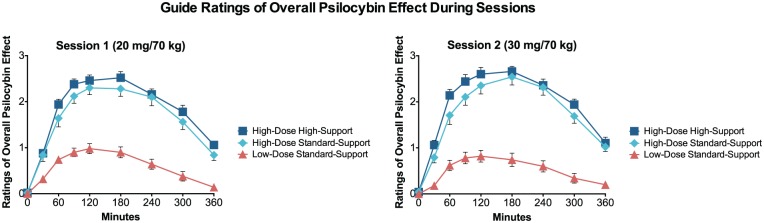
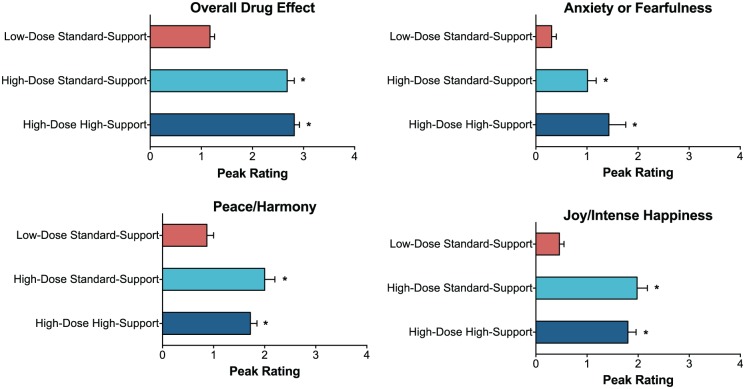
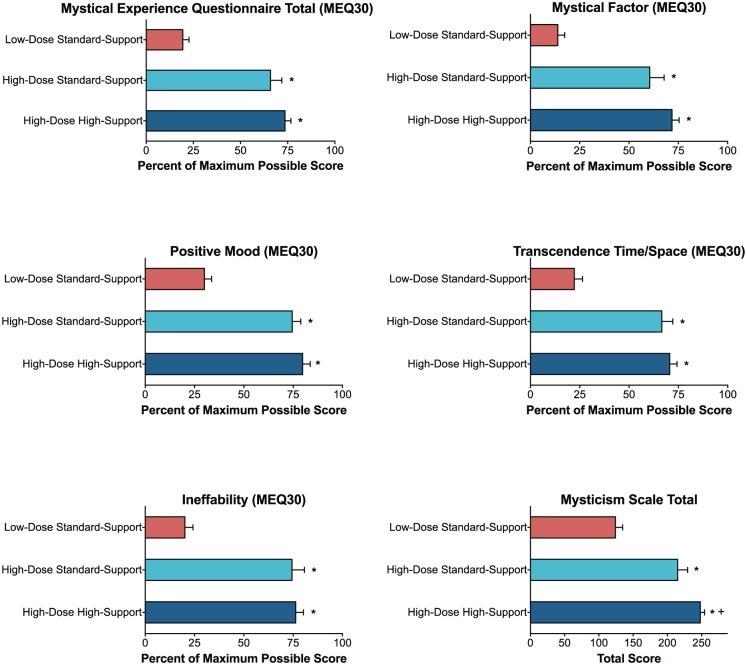
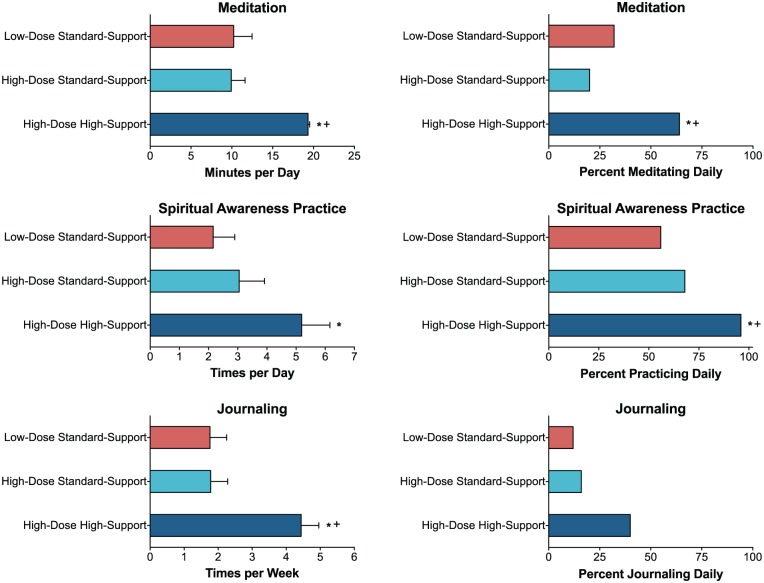
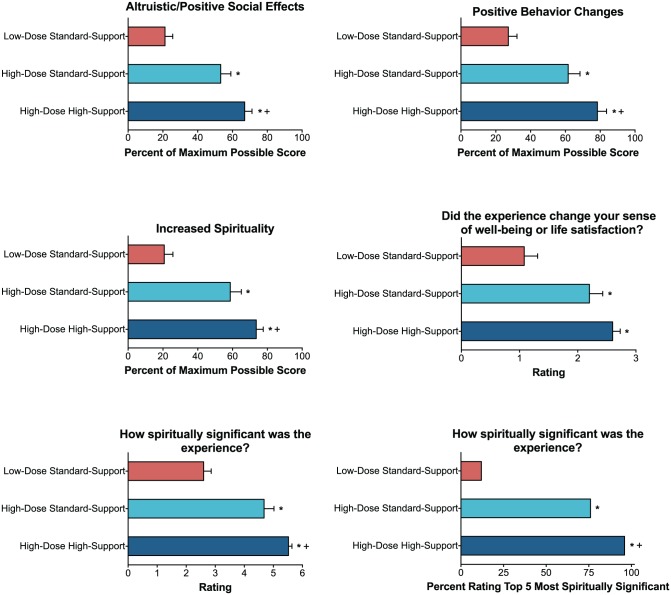
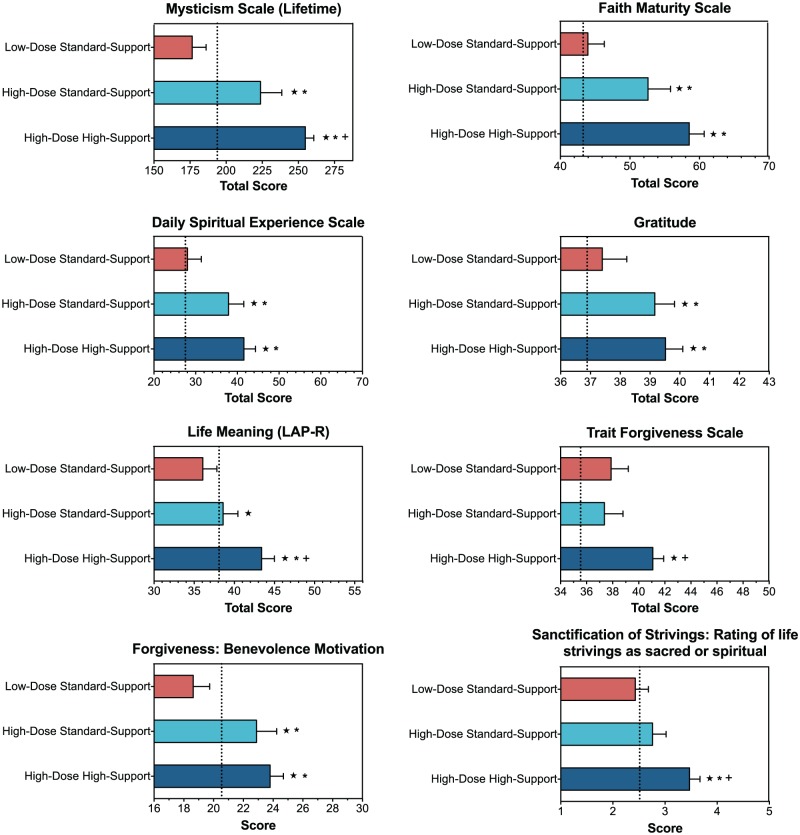
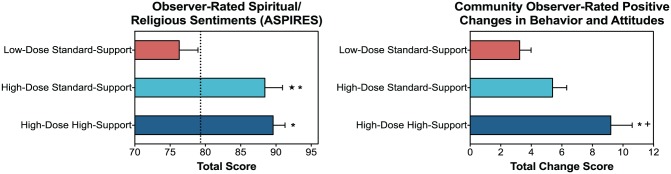
Psilocybin can occasion mystical-type experiences with participant-attributed increases in well-being. However, little research has examined enduring changes in traits. This study administered psilocybin to participants who undertook a program of meditation/spiritual practices. Healthy participants were randomized to three groups (25 each): (1) very low-dose (1 mg/70 kg on sessions 1 and 2) with moderate-level (“standard”) support for spiritual-practice (LD-SS); (2) high-dose (20 and 30 mg/70 kg on sessions 1 and 2, respectively) with standard support (HD-SS); and (3) high-dose (20 and 30 mg/70kg on sessions 1 and 2, respectively) with high support for spiritual practice (HD-HS). Psilocybin was administered double-blind and instructions to participants/staff minimized expectancy confounds. Psilocybin was administered 1 and 2 months after spiritual-practice initiation. Outcomes at 6 months included rates of spiritual practice and persisting effects of psilocybin. Compared with low-dose, high-dose psilocybin produced greater acute and persisting effects. At 6 months, compared with LD-SS, both high-dose groups showed large significant positive changes on longitudinal measures of interpersonal closeness, gratitude, life meaning/purpose, forgiveness, death transcendence, daily spiritual experiences, religious faith and coping, and community observer ratings. Determinants of enduring effects were psilocybin-occasioned mystical-type experience and rates of meditation/spiritual practices. Psilocybin can occasion enduring trait-level increases in prosocial attitudes/behaviors and in healthy psychological functioning. Trial Registration ClinicalTrials.gov Identifier NCT00802282
Overview
The claims and statistics of this paper haven’t been checked yet.
Free: it reads the open-access text and checks the first 5 claims that cite a source we can check. Create a free account to check every claim.
Integrity signals
Registry
Cites
Statistics
Figures
Verification
Claims the paper makes
The claims and statistics of this paper haven’t been checked yet.
Free: it reads the open-access text and checks the first 5 claims that cite a source we can check. Create a free account to check every claim.
Claims other papers make about this one
Each is checked against this paper’s own text: does it say what the citing paper says it does?
The cited source doesn’t support the claim as written.
In the citing paper
“In the aforementioned studies, the administration of psilocybin within a context of mindfulness-training significantly enhanced engagement with formal spiritual practises, mindfulness meditation depth and trait mindfulness (60, 61).”
From Examining the Potential Synergistic Effects Between Mindfulness Training and Psychedelic-Assisted Therapy (2021) · cites this paper as [60]
Checked by a reasoning model — may be wrong.
Experimental — accuracy not yet measuredThe source backs part of the claim, not all of it — or backs it for a different population, condition or comparison.
In the citing paper
“In addition, studies being performed on the use of psychoactive agents as catalysts for therapeutic psychological transformation, such as the Johns Hopkins psilocybin study, have examined the ways in which Buddhist meditation practice further facilitates”
From Buddhist Meditation and the Ethics of Human Augmentation (2020) · cites this paper as Griffiths et al. 2018
Experimental — accuracy not yet measuredThe source backs part of the claim, not all of it — or backs it for a different population, condition or comparison.
In the citing paper
“Similarly, research in healthy participants (N = 75) suggests group-based aftercare in addition to standard 2-on-1 support models can amplify well-being benefits of individual high-dose psilocybin sessions.11”
From Innovations in group-based psilocybin-assisted therapy of major depression in patients with cancer (2024) · cites this paper as [11]
Experimental — accuracy not yet measuredThe source backs part of the claim, not all of it — or backs it for a different population, condition or comparison.
In the citing paper
“It has been suggested by some studies that the intensity or quality of the psychedelic experience determines the treatment outcome (52–54).”
From Decreases in State and Trait Anxiety Post-psilocybin: A Naturalistic, Observational Study Among Retreat Attendees (2022) · cites this paper as [52]
Experimental — accuracy not yet measuredThe source backs part of the claim, not all of it — or backs it for a different population, condition or comparison.
In the citing paper
“it has been repeatedly found that psychedelic-induced mystical-type experiences and ego dissolution, the latter a phenomenon characterized by the reduction in self-referential awareness, disruption self-world boundaries, and increased feelings of unity with one’s surroundings (55), correlates with long-term (positive) outcomes (23, 52–54, 56–58).”
From Decreases in State and Trait Anxiety Post-psilocybin: A Naturalistic, Observational Study Among Retreat Attendees (2022) · cites this paper as [52]
Experimental — accuracy not yet measured
14 more claims about this paper
Create a free account to see every claim other papers make about this one.
Self-check
Percentages, sums and reported differences re-computed from the paper’s own numbers.
The self-check needs the paper’s full text.
Citations
Cites
Schwartz, S. H. (1992) · Advances in Experimental Social Psychology · doi:10.1016/s0065-2601(08)60281-6 · Cited by 14,619 · cited 1×
“…spiritual, holy, heavenly, and blessed (Mahoney et al., 2005); Schwartz Value Scale , a measure of relative importance of various life values (Schwartz, 1992, 1994); Inclusion of Others in the Self scale (IOS), a measure of interpersonal closeness (Aron et al., 1992), mean score of ratings…”
BackgroundScheier, M. F., Carver, C. S., & Bridges, M. W. (1994) · Journal of Personality and Social Psychology · doi:10.1037//0022-3514.67.6.1063 · Cited by 7,456 · cited 2×
“…compassion, amusement, and awe) (Shiota et al., 2006); Life-Orientation Test-Revised (LOT-R) , a measure of optimism associated with health outcomes (Scheier et al., 1994); Satisfaction with Life Scale (Pavot and Diener, 1993); Purpose in Life Test (PIL) , a assessment of meaningfulness in life…”
BackgroundAre There Universal Aspects in the Structure and Contents of Human Values?
Schwartz, S. H. (1994) · Journal of Social Issues · doi:10.1111/j.1540-4560.1994.tb01196.x · Cited by 5,793 · cited 1×
“…spiritual, holy, heavenly, and blessed (Mahoney et al., 2005); Schwartz Value Scale , a measure of relative importance of various life values (Schwartz, 1992, 1994); Inclusion of Others in the Self scale (IOS), a measure of interpersonal closeness (Aron et al., 1992), mean score of ratings…”
BackgroundThe varieties of religious experience: A study in human nature.
James, W. (1902) · doi:10.1037/10004-000 · Cited by 5,204
Inclusion of Other in the Self Scale and the structure of interpersonal closeness.
Aron, A., Aron, E. N., & Smollan, D. (1992) · Journal of Personality and Social Psychology · doi:10.1037/0022-3514.63.4.596 · Cited by 5,157 · cited 1×
“…relative importance of various life values (Schwartz, 1992, 1994); Inclusion of Others in the Self scale (IOS), a measure of interpersonal closeness (Aron et al., 1992), mean score of ratings of closest person, closest family member, least close family member, a stranger, and a difficult personal…”
BackgroundThe grateful disposition: A conceptual and empirical topography.
McCullough, M. E., Emmons, R. A., & Tsang, J.-A. (2002) · Journal of Personality and Social Psychology · doi:10.1037//0022-3514.82.1.112 · Cited by 3,664 · cited 2×
“…Loma Linda University, 2007), Daily Spiritual Experience Scale (general population survey data, Underwood, 2006); Gratitude Questionnaire-6 (adults, McCullough et al., 2002); Life Meaning (college and community sample, Reker, 2007); Trait Forgive-ness Scale (college students, Berry et al., 2005);…”
BackgroundReview of the Satisfaction With Life Scale.
Pavot, W., & Diener, E. (1993) · Psychological Assessment · doi:10.1037/1040-3590.5.2.164 · Cited by 3,611
Review of the Satisfaction With Life Scale
Pavot, W., & Diener, E. (2009) · Social Indicators Research Series · doi:10.1007/978-90-481-2354-4_5 · Cited by 3,460 · cited 4×
“Per the plan in the Data Analysis section, three longitudinal measures were dropped from analysis (Forgiveness subscale of the BMMRS; self-rated ASPIRES; and the Satisfaction with Life Scale) because of significant between-group differences at baseline and no significant difference in change from baseline.”
InfluentialPatterns of Positive and Negative Religious Coping with Major Life Stressors
Pargament, K. I., Smith, B. W., Koenig, H. G., & Perez, L. (1998) · Journal for the Scientific Study of Religion · doi:10.2307/1388152 · Cited by 2,425 · cited 1×
“…Protestant traditions (Benson et al., 1993); Brief RCOPE , a measure of religious/spiritual coping with stressful life events (Pargament, 1999; Pargament et al., 1998); Daily Spiritual Experience Scale , a measure of an individual’s perception of and interaction with the transcendent in daily…”
BackgroundGriffiths, R. R., Johnson, M. W., Carducci, M. A., Umbricht, A., Richards, W. A., Richards, B. D., Cosimano, M. P., & Klinedinst, M. A. (2016) · Journal of Psychopharmacology · doi:10.1177/0269881116675513 · Cited by 2,201 · cited 6×
“Prior research suggests an important role of psilocybin-occasioned mystical experience in the observed enduring positive changes in psychological well-being, prosocial disposition, and spiritual worldview (Garcia-Romeu et al., 2014; Griffiths et al., 2008, 2016; Ross et al., 2016).”
BackgroundMethodResultInfluentialSelf-citation
Research works printed but not linked: 14
- Costa PT McCrae RR (1992) Revised NEO Personality Inventory (NEO-PI-R) and NEO Five-Factor Inventory (NEO-FFI) (Professional manual). Odessa, FL: Psychological Assessment Resources.
- Darling DC Doblin R Metzner R (2004) Prisoner behavior change and experimental mysticism: Two classic studies from the Harvard psilocybin project. In: Metzner R (ed.) Teonanacatl: Sacred Mushroom of Visions. El Verano, CA: Four Trees Press, pp. 135– 151.
- Doblin R (1991) Pahnke’s Good Friday experiment: A long-term follow-up and methodological critique. J Transpersonal Psy 23: 1– 28.
- Easwaran E (1991/ 1978) Meditation: A Simple Eight-Point Program for Translating Spiritual Ideals into Daily Life. 2nd ed. Tomales, CA: Nilgiri Press.
- The Fetzer Institute (1999, Reprinted 2003) Brief multidimensional measure of religiousness/spirituality: 1999. In: Multidimensional Measurement of Religiousness/Spirituality for use in Health Research: A Report of the Fetzer Institute/National Institute on Aging Working Group. Kalamazoo, MI: Fetzer Institute, pp. 85– 95.
- Pahnke W (1963) Drugs and Mysticism: An Analysis of the Relationship Between Psychedelic Drugs and the Mystical Consciousness. PhD thesis. Cambridge, MA: Harvard University, Department of Religion and Society.
- Pargament KI (1999, Reprinted 2003) Religious/spiritual coping. In: Multidimensional Measurement of Religiousness/Spirituality for Use in Health Research: A Report of the Fetzer Institute/National Institute on Aging Working Group. Kalamazoo, MI: Fetzer Institute, pp. 43– 56.
- Passie T (2004) A history of the use of psilocybin in psychotherapy. In: Metzner R (ed.) Teonanacatl: Sacred Mushroom of Visions. El Verano, CA: Four Trees Press, pp. 109– 134.
- Passie T (2007) Contemporary psychedelic therapy: An overview. In: Winkelman MJ Roberts TB (eds) Psychedelic Medicine. Vol. 1 Westport CN: Praeger, pp. 45– 68.
- Piedmont RL (2010) ASPIRES: Assessment of Spirituality and Religious Sentiments (Technical Manual). 2nd ed. Columbia, MD: Loyola University Maryland, Department of Pastoral Counseling.
- Reker GT (2007) The Life Attitude Profile-Revised (LAP-R) (Procedures Manual). Research edn. Peterborough, ON: Student Psychologists Press.
- Stevens J (1987) Storming Heaven. New York: Harper & Row Publishers.
- VandeCreek L (1999) The death transcendence scale (Hood and Morris, 1983). In: Hill PC Hood RW (eds) Measures of Religiousity. Birmingham AL: Religious Education Press, pp. 442– 445.
- Weil GM Metzner R Leary T (1965, Reprinted 1997) The subjective after-effects of psychedelic experiences: A summary of four recent questionnaire studies. In: Weil GM Metzner R Leary T (eds) The Psychedelic Reader. Secaucus, NJ: Citadel Press, pp. 13– 21.
Cited by
Items 201–300 of 559
Psychedelic Experience: Revealing the Mind
Lyon, A. (2023) · doi:10.1093/oso/9780198843757.001.0001 · Cited by 29
A Phenomenology of Challenging Psychedelic Experiences: From Relational Trauma to Relational Healing
Guthrie, L. (2021) · Cited by 23
Moreton, S. G., Burden-Hill, A., & Menzies, R. E. (2022) · Clinical Psychologist · doi:10.1080/13284207.2022.2086793 · Cited by 20
Newton, K., & Moreton, S. G. (2022) · Ecopsychology · doi:10.1089/eco.2022.0044 · Cited by 21
“…in connecting people to others, it is plausible that they might also play a role in why psychedelics can lead to enduring changes in people’s perceptions of connectedness to others (Forstmann, Yudkin, Prosser, Heller, & Crockett, 2020) and empathy (Bouso et al., 2018; Griffiths et al., 2018).”
Effects of Ayahuasca on Gratitude and Relationships with Nature: A Prospective, Naturalistic Study
Aday, J. S., Bloesch, E. K., Davis, A. K., Domoff, S. E., Scherr, K. C., Woolley, J. D., & Davoli, C. C. (2024) · Journal of Psychoactive Drugs · doi:10.1080/02791072.2024.2312980 · Cited by 20
“Previous research has established the frequency and impact of mystical-type experiences in psilocybin sessions (e.g., Griffiths et al. 2018), but the literature is unclear regarding ayahuasca.”
BackgroundMethodResultInfluentialSelf-transcendence accompanies aesthetic chills
Christov‐Moore, L., Schoeller, F., Lynch, C., Sacchet, M. D., & Reggente, N. (2024) · PLOS mental health. · doi:10.1371/journal.pmen.0000125 · Cited by 19
Understanding the Nature of Oneness Experience in Meditators Using Collective Intelligence Methods
Lente, E. V., & Hogan, M. (2020) · Frontiers in Psychology · doi:10.3389/fpsyg.2020.02092 · Cited by 20
Some Comments on Psychedelic Research
Schatzberg, A. F. (2020) · American Journal of Psychiatry · doi:10.1176/appi.ajp.2020.20030272 · Cited by 21
Basedow, L. A., Riemer, T., Reiche, S., Kreutz, R. H., & Majić, T. (2021) · Frontiers in Pharmacology · doi:10.3389/fphar.2021.739966 · Cited by 20
“Additionally, SPs have been associated with persisting changes in traits such as openness to experience, neuroticism, mindfulness, and optimism (Carhart-Harris et al., 2016; Erritzoe et al., 2018; Griffiths et al., 2018; Polito and Stevenson, 2019; Madsen et al., 2020).”
BackgroundSchmid, Y., & Bershad, A. K. (2024) · Biological Psychiatry Cognitive Neuroscience and Neuroimaging · doi:10.1016/j.bpsc.2024.02.001 · Cited by 23
“…in healthy volunteers and patients, including increased openness, increased trait levels of prosocial attitudes, and positive attitudes about self (77–83), which appear to be at least partially associated with the extent of acute alterations of mind and mystical-type experiences (77,80,83).”
BackgroundPouyan, N., Khankahdani, Z. H., Sisi, F. Y., Lee, Y. L., Rosenblat, J. D., Teopiz, K. M., Lui, L. M. W., Subramaniapillai, M., Lin, K., Nasri, F., et al. (2022) · CNS Drugs · doi:10.1007/s40263-022-00944-y · Cited by 18
“A considerable number of the included articles report alterations, and in some cases enhancements, of the “perception and understanding of self” construct by psilocybin [45, 49].”
Association between Lifetime Classic Psychedelic Use and Sick Leave in a Population-Based Sample
Mellner, C., Dahlén, M., & Simonsson, O. (2022) · International Journal of Environmental Research and Public Health · doi:10.3390/ijerph191811353 · Cited by 18
“Classic psychedelics may also influence factors concerned with positive psychology, such as mindfulness, feelings of purpose and prosociality [50,51], which not only influence mental but also physical health [52–54].”
BackgroundZanesco, A. P., King, B. G., Conklin, Q. A., & Saron, C. D. (2023) · Mindfulness · doi:10.1007/s12671-023-02076-w · Cited by 20
Lehto, R. H., Miller, M., & Sender, J. (2022) · Journal of Holistic Nursing · doi:10.1177/08980101211039086 · Cited by 17
Hultgren, J., Hafsteinsson, M. H., & Brulin, J. G. (2025) · General Hospital Psychiatry · doi:10.1016/j.genhosppsych.2025.07.020 · Cited by 17
Apud, I., Scuro, J., Carrera, I., & Oliveri, A. (2022) · Journal of Psychoactive Drugs · doi:10.1080/02791072.2022.2053004 · Cited by 25
Simonsson, O., Osika, W., Stenfors, C. U. D., Goldberg, S. B., Honk, L., & Hendricks, P. S. (2023) · Psychological Medicine · doi:10.1017/s0033291723003082 · Cited by 17
“For example, in a randomized placebo-controlled trial, psilocybin administration was found to increase meditation depth among experienced meditators who participated in a mindfulness mediation retreat (Smigielski et al., 2019; see also Griffiths et al., 2018).”
BackgroundGriffiths, R. R., Jesse, R., Richards, W. A., Johnson, M. W., Sepeda, N. D., Bossis, A. P., & Ross, S. (2025) · Psychedelic Medicine · doi:10.1089/psymed.2023.0044 · Cited by 18
“22,24,25,28 Before the fi rst psilocybin session, participants had four preparatory meetings (8 h total) with (cid:2) Fig.”
Self-citationPsilocybin and Mental Health–Don't Lose Control
Barnby, J. M., & Mehta, M. A. (2018) · Frontiers in Psychiatry · doi:10.3389/fpsyt.2018.00293 · Cited by 18
“(2) may in fact be the observed dominant effect of psilocybin over the variance in treatment conditions– highlighted by authors observing non-significance between support conditions (1) and between responders’ vs nonresponders (2).”
BackgroundSpiritual Benefit from Cannabis
Heide, F. J., Chang, T., Porter, N., Edelson, E., & Walloch, J. C. (2021) · Journal of Psychoactive Drugs · doi:10.1080/02791072.2021.1941443 · Cited by 19
Bronkhorst, J. (2022) · Religions · doi:10.3390/rel13070589 · Cited by 21
Bright, S., Gringart, E., Blatchford, E., & Bettinson, S. (2021) · Australian Journal of Psychology · doi:10.1080/00049530.2021.1882266 · Cited by 16
“Consistent with our findings, psilocybin combined with meditation increased psychological wellbeing more than psilocybin alone (Griffiths et al., 2018).”
Postpartum depression: A role for psychedelics?
Jairaj, C., & Rucker, J. (2022) · Journal of Psychopharmacology · doi:10.1177/02698811221093793 · Cited by 17
“Although psilocybin has low abuse potential and is well tolerated, dysphoric experiences (‘bad trips’) can sometimes occur (Johnson et al., 2018; Nutt, 2015) and are minimised in psychedelic trials by excluding participants with a personal or family history of psychotic illness, ensuring the…”
BackgroundUtilizing Psychedelics to Enhance Well-Being: A Systematic Review
Thomson, S., & Thomacos, N. (2025) · Journal of Psychoactive Drugs · doi:10.1080/02791072.2025.2484380 · Cited by 16
Mystical experiences without mysticism: An argument for mystical fictionalism in psychedelics
Armour‐Garb, B., & Earleywine, M. (2022) · Journal of Psychedelic Studies · doi:10.1556/2054.2022.00207 · Cited by 19
Kelly, D. F., Heinzerling, K. G., Sharma, A., Gowrinathan, S., Sergi, K., & Mallari, R. J. (2022) · Neurosurgery · doi:10.1227/neu.0000000000002275 · Cited by 17
Human behavioral pharmacology of psychedelics
Strickland, J. C., & Johnson, M. W. (2022) · Advances in pharmacology · doi:10.1016/bs.apha.2021.10.003 · Cited by 16
Self-citationTurkia, M. (2023) · PsyArXiv (OSF Preprints) · doi:10.31234/osf.io/t6k9b · Cited by 17
Therapeutic role of psilocybin and 3,4-methylenedioxymethamphetamine in trauma: A literature review
Fonseka, L. N., & Woo, B. K. P. (2023) · World Journal of Psychiatry · doi:10.5498/wjp.v13.i5.182 · Cited by 15
Weiss, B., Sleep, C. E., Beller, N. M., Erritzøe, D., & Campbell, W. K. (2023) · Journal of Psychedelic Studies · doi:10.1556/2054.2023.00291 · Cited by 19
Endorsement of metaphysical idealism mediates a link between past use of psychedelics and wellbeing
Jylkkä, J., Krabbe, A., & Jern, P. (2024) · Scientific Reports · doi:10.1038/s41598-024-63687-4 · Cited by 21
Four individuals' experiences during and following a psilocybin truffle retreat in the Netherlands
Lutkajtis, A. (2021) · Journal of Psychedelic Studies · doi:10.1556/2054.2021.00162 · Cited by 17
Psychedelic Experiences and Mindfulness are Associated with Improved Wellbeing
Qiu, T. T., & Minda, J. P. (2022) · Journal of Psychoactive Drugs · doi:10.1080/02791072.2022.2060773 · Cited by 17
The Relationship Between Psychedelic Use, Mystical Experiences, and Pro-Environmental Behaviors
Paterniti, K., Bright, S. J., & Gringart, E. (2022) · Journal of Humanistic Psychology · doi:10.1177/00221678221111024 · Cited by 15
Handbook of Positive Psychology, Religion, and SpiritualityPreprint
Davis, E. B., Worthington, E. L., & Schnitker, S. A. (2022) · PsyArXiv (OSF Preprints) · doi:10.31234/osf.io/pgwtn · Cited by 16
Psychedelic use and psychological flexibility: The role of meaningful intention and decentering
Campo, W. M., & Yali, A. M. (2024) · Journal of Psychedelic Studies · doi:10.1556/2054.2024.00350 · Cited by 16
Psychedelics and autobiographical memory – six open questions
Kangaslampi, S., & Lietz, M. P. (2025) · Psychopharmacology · doi:10.1007/s00213-025-06771-5 · Cited by 15
The phenomenology of psilocybin: transformative insights for research and clinical practice
Metastasio, A., Prevete, E., Venturini, S., Garofalo, A., Cecconello, B., Pisapia, N. D., & Corazza, O. (2025) · Frontiers in Psychology · doi:10.3389/fpsyg.2025.1455902 · Cited by 15
Psychedelic-Assisted Psychotherapy and Mindfulness-Based Cognitive Therapy: Potential Synergies
Chambers, R., Stoliker, D., & Simonsson, O. (2023) · Mindfulness · doi:10.1007/s12671-023-02206-4 · Cited by 17
“While there is already evidence that formal meditation practice may be a useful adjunct to psychedelic use (Griffiths et al., 2018) and research showing lifetime use of psych-edelics is associated with current mindfulness meditation practice (Simonsson, 2023), much remains to be discovered about…”
Barnett (2024) · doi:10.1089/psymed.2023.0010 · Cited by 13
David, J., Bouso, J. C., Kohek, M., Oña, G., Tadmor, N., Arnon, T., Dor‐Ziderman, Y., & Berkovich‐Ohana, A. (2023) · Frontiers in Psychiatry · doi:10.3389/fpsyt.2023.1287961 · Cited by 14
Sagioglou, C., & Forstmann, M. (2022) · Drug Science Policy and Law · doi:10.1177/20503245221129803 · Cited by 15
Weleff, J., Nunes, J. C., Costa, G. P. A., Sofuoglu, M., MacLean, R. R., & Aquino, J. P. D. (2024) · British Journal of Clinical Pharmacology · doi:10.1111/bcp.16045 · Cited by 15
“65 – 67 Moreover, some studies have employed psychedelics in conjunction with meditation or other spiritual practices as complementary therapies.”
A potential effect of psilocybin on anxiety in neurotic personality structures in adolescents
Bogadi, M., & Kaštelan, S. (2021) · Croatian Medical Journal · doi:10.3325/cmj.2021.62.528 · Cited by 14
A Systematic Study of Microdosing PsychedelicsPreprint
Polito, V., & Stevenson, R. J. (2018) · PsyArXiv (OSF Preprints) · doi:10.31234/osf.io/cw9qs · Cited by 13
The potential of psilocybin use to enhance well-being in healthy individuals – A scoping review
Wiepking, L., de Bruin, E. J., & Ghiţă, A. (2023) · Journal of Psychedelic Studies · doi:10.1556/2054.2023.00244 · Cited by 14
Bachtiar, N., Hasan, M. I., & Andodo, C. (2023) · Bhamada Jurnal Ilmu dan Teknologi Kesehatan (E-Journal) · doi:10.36308/jik.v14i2.539 · Cited by 12
Godfrey, K., Weiss, B., Zhang, X., Spriggs, M. J., Peill, J. M., Lyons, T., Carhart-Harris, R. L., & Erritzøe, D. (2024) · Neuroscience Applied · doi:10.1016/j.nsa.2024.104092 · Cited by 12
“Similar evidentiary support exists for increases in openness (Carhart-Harris et al., 2016b; Erritzoe et al., 2018; Erritzoe et al., 2019; Griffiths et al., 2018; Madsen et al., 2020; Weiss et al., 2023; Weiss et al., 2021a).”
Yaden, D. B., Graziosi, M., Owen, A. M., Agin-Liebes, G., Aaronson, S. T., Allen, K. E., Barrett, F. S., Bogenschutz, M. P., Carhart-Harris, R. L., Ching, T. H. W., et al. (2025) · Psychedelic Medicine · doi:10.1089/psymed.2024.0019 · Cited by 13
“Psilocybin has been shown to improve mood disorders, 24 – 33 smoking and drinking behavior in substance use disorders, 34 – 36 and increase well-being, 28,37 – 41 all with very few serious adverse events attributable to the psychedelic (but they can and do occur).”
Self-citationPositive Psychology and Buddhism
Segall, S. Z., & Kristeller, J. L. (2022) · Springer eBooks · doi:10.1007/978-3-031-10274-5_14 · Cited by 15
Effect of LSD and music on the time-varying brain dynamics
Adamska-Stolarczyk, I., & Finc, K. (2023) · Psychopharmacology · doi:10.1007/s00213-023-06394-8 · Cited by 12
Fagetti, A., & Mercadillo, R. E. (2022) · Anthropology of Consciousness · doi:10.1111/anoc.12163 · Cited by 12
Psychedelic Microdosing, Mindfulness, and Anxiety: A Cross-Sectional Mediation Study
Hartong, V., & van Emmerik, A. (2023) · Journal of Psychoactive Drugs · doi:10.1080/02791072.2022.2080616 · Cited by 11
Johansen, L., Liknaitzky, P., Nedeljkovic, M., Mastin-Purcell, L., & Murray, G. (2022) · Systematic Reviews · doi:10.1186/s13643-022-01930-7 · Cited by 11
“Undergoing a mystical-type experience during the acute effects of a psychedelic has been associated with healthy volunteers reporting an improvement in their wellbeing [51, 52], and reductions in depression symptoms in participants with life-threatening cancer [19, 20].”
BackgroundDevine, E. K., Elphinstone, B., Ciarrochi, J., & Sahdra, B. K. (2022) · Springer eBooks · doi:10.1007/978-3-030-77644-2_38-1 · Cited by 12
Synaptic priming: A framework for pharmacotherapy in depression
Brown, K. A., Ajibola, M. I., Medeiros, G. C., & Gould, T. D. (2025) · Neuron · doi:10.1016/j.neuron.2025.09.010 · Cited by 13
Psychedelic medicine at a crossroads: Advancing an integrative approach to research and practice
Gobbi, G., Inserra, A., Greenway, K. T., Lifshitz, M., & Kirmayer, L. J. (2022) · Transcultural Psychiatry · doi:10.1177/13634615221119388 · Cited by 12
Herrmann, Z. M., Levin, A. W., Cole, S. P., Slabaugh, S., Barnett, B. S., Penn, A., Jain, R., Raison, C. L., Rajanna, B., & Jain, S. (2023) · Psychedelic Medicine · doi:10.1089/psymed.2023.0030 · Cited by 12
Schlosser, M., Klimecki, O., Collette, F., Gonneaud, J., Kliegel, M., Marchant, N. L., Chételat, G., & Lutz, A. (2023) · PLoS ONE · doi:10.1371/journal.pone.0294753 · Cited by 11
Modzelewski, S., Stankiewicz, A., Waszkiewicz, N., & Łukasiewicz, K. (2025) · Neuropharmacology · doi:10.1016/j.neuropharm.2025.110402 · Cited by 11
Brudner, R. M., Kaczmarek, E. S., Blainey, M. G., Schulz-Quach, C., Meshkat, S., Doyle, Z., Lipsitz, O., Offman, H., Sethi, R., Weiglein, G., et al. (2025) · Journal of Psychopharmacology · doi:10.1177/02698811251346697 · Cited by 11
“…(Russ et al., 2019b), improved depressive and anxiety symptoms (Griffiths et al., 2016; Roseman et al., 2018; Ross et al., 2016), improved addiction behaviour and cravings (Bogenschutz et al., 2015) and even personality changes (Griffiths et al., 2018; MacLean et al., 2011; Weiss et al., 2024a).”
Bukovsky, D., Amaev, A., Song, J., Kyte, S., Carmona-Torres, E., Ueno, F., Luca, V. D., Strafella, A. P., Husain, M. I., Graff‐Guerrero, A., et al. (2025) · Progress in Neuro-Psychopharmacology and Biological Psychiatry · doi:10.1016/j.pnpbp.2025.111541 · Cited by 10
The Tasawwuf As the Character Education Solution in Indonesia
Suharyat, Y., Resky, M., Soltani, B., & Madi, A. A. A. (2024) · TSAQAFAH · doi:10.21111/tsaqafah.v20i1.10120 · Cited by 10
Considering distinct positive emotions in psychedelic science
Goldy, S. P., Hendricks, P. S., Keltner, D. J., & Yaden, D. B. (2024) · International Review of Psychiatry · doi:10.1080/09540261.2024.2394221 · Cited by 13
“…ineffabil-ity, synesthesia, disembodiment, insightfulness, alterations in time and space perception, and self-transcendence (Barrett et al., 2015; Griffiths et al., 2018; Studerus et al., 2011), as well as challenging psychological experiences (e.g. anxiety/panic and paranoia; Barrett et al.,…”
Grob, C. S., Bossis, A. P., & Griffiths, R. R. (2022) · Springer eBooks · doi:10.1007/978-3-030-85702-8_5 · Cited by 11
Self-citationOña, G., Révész, D., Kohek, M., Rossi, G. N., Rocha, J. M., SANTOS, R. G. D., Hallak, J. E. C., Alcázar‐Córcoles, M. Á., & Bouso, J. C. (2022) · Psychoactives · doi:10.3390/psychoactives1010003 · Cited by 11
Psychedelics and psychological strengths
Brasher, T. J., Rosen, D., & Spinella, M. (2023) · International Journal of Wellbeing · doi:10.5502/ijw.v13i1.2325 · Cited by 10
Healy, C. J., Frazier, A., Kirsch, S., Sanford, A., Garcia‐Romeu, A., Todman, M., Varon, J. P., & D'Andrea, W. M. (2025) · Progress in Neuro-Psychopharmacology and Biological Psychiatry · doi:10.1016/j.pnpbp.2025.111361 · Cited by 11
“…of selflessness, self-transcendence, or “ ego dissolution, ” frequently leading to enduring positive changes in mood, personality, and self-concept (Griffiths et al., 2018; Letheby and Gerrans, 2017; MacLean et al., 2011; Milli ` ere et al., 2018; Vollenweider and Kometer, 2010; Amada et al.,…”
InfluentialRoseby, W., Kettner, H., Roseman, L., Spriggs, M. J., Lyons, T., Peill, J., Giribaldi, B., Erritzøe, D., Nutt, D. J., & Carhart-Harris, R. L. (2025) · Frontiers in Psychology · doi:10.3389/fpsyg.2025.1580663 · Cited by 11
Carvour, H. M., Radke, A. K., & French, N. S. (2025) · Frontiers in Neuroscience · doi:10.3389/fnins.2025.1587794 · Cited by 10
Where the Spirit Meets the Bone: Embodied Religiospiritual Cognition from an Attachment Viewpoint
Winter, A. L., & Granqvist, P. (2023) · Religions · doi:10.3390/rel14040511 · Cited by 9
Psilocybin: The most effective moral bio‐enhancer?
Rakić, V. (2023) · Bioethics · doi:10.1111/bioe.13196 · Cited by 10
Hovmand, O. R., Madsen, M. K., Fisher, P. M., & Stenbæk, D. S. (2024) · Journal of Psychopharmacology · doi:10.1177/02698811241269669 · Cited by 10
Death Anxiety Among Users and Non-Users of Psychedelics
Garcia, A. C. M., Maia, L. O., Meireles, E., Nogueira, D. A., & Tófoli, L. F. (2025) · Journal of Psychoactive Drugs · doi:10.1080/02791072.2025.2451035 · Cited by 9
“The literature suggests that psychedelic experiences produce significant reductions in death anxiety in healthy people (Griffiths et al. 2018, 2019) and people with life-threatening diseases (Gasser, Kirchner, and Passie 2015; Reiche et al. 2018; Ross 2018).”
Critical Period Plasticity as a Framework for Psychedelic-Assisted Psychotherapy
Lepow, L., Morishita, H., & Yehuda, R. (2023) · FOCUS The Journal of Lifelong Learning in Psychiatry · doi:10.1176/appi.focus.23021012 · Cited by 11
Seragnoli, F., Picard, F., Thorens, G., Buchard, A., Geyer, M., Abatista, A., Ponomarenko, P., Petignat, C., Riccardi, M., Bisson, M. D., et al. (2025) · Cognitive Therapy and Research · doi:10.1007/s10608-025-10588-z · Cited by 8
Aesthetic quality of psychedelic experience is linked to insight and psychological outcomes
Hooper, J., Gyongyosi, E., Hutchison, K. E., & Mueller, R. L. (2025) · Frontiers in Psychology · doi:10.3389/fpsyg.2025.1533055 · Cited by 9
Between enhancement and risk: A critical review of psychedelic microdosing
Totomanova, I., Haijen, E. C. H. M., Hurks, P. P. M., Ramaekers, J. G., & Kuypers, K. P. C. (2025) · Current Opinion in Psychology · doi:10.1016/j.copsyc.2025.102129 · Cited by 9
Caraccio, M., Cheung, K., Mann, S. P., Bruce, L., Jacobs, E., Villiger, D., Sandbrink, J. D., Register, C., Hannikainen, I. R., Høeg, M. L., et al. (2025) · Philosophical Psychology · doi:10.1080/09515089.2025.2532761 · Cited by 11
“These effects can occur alongside therapeutic outcomes or, in the case of healthy volunteers, independently of any treatment aims (e.g., Gandy, 2019; Griffiths et al., 2018; Hartogsohn, 2018; Schmid & Liechti, 2018), Such findings are consistent with reported use of psychedelics outside of clinical…”
EMBARK Psychedelic Therapy for Depression: A New Approach for the Whole Person
Brennan, B., & Belser, A. (2024) · doi:10.1093/9780197762622.001.0001 · Cited by 8
Kryskow, P., Stamets, P. E., Torre, J. T. L., Sattler, K., Tsang, V. W. L., & Williams, M. T. (2024) · Journal of Psychedelic Studies · doi:10.1556/2054.2024.00379 · Cited by 12
McGee, M. D. (2019) · Alcoholism Treatment Quarterly · doi:10.1080/07347324.2019.1632766 · Cited by 10
“An emerging literature suggests a potential role for psychedelic-enhanced psychotherapy as a catalyst for recovery, mediated by psychedelic-induced mystical experiences.(Bogenschutz et al., 2015; Bogenschutz & Johnson, 2016; Griffiths et al., 2018; Johnson, Garcia-Romeu, & Griffiths, 2017; Johnson & Griffiths, 2017) T…”
BackgroundHaye, W. D. L., Walcott, G. O., Eaton, J., Beckford, J., & Greene, J. (2023) · Frontiers in Psychiatry · doi:10.3389/fpsyt.2023.1136990 · Cited by 8
Increases in Aesthetic Experience Following Ayahuasca Use: A Prospective, Naturalistic Study
Aday, J. S., Bloesch, E. K., Davis, A. K., Domoff, S. E., Scherr, K. C., Woolley, J. D., & Davoli, C. C. (2024) · Journal of Humanistic Psychology · doi:10.1177/00221678241230609 · Cited by 9
What fMRI studies say about the nature of the psychedelic effect: a scoping review
Beneš, M., Páleníček, T., & Horáček, J. (2025) · Frontiers in Neuroscience · doi:10.3389/fnins.2025.1606798 · Cited by 10
The Overview Effect and Well-Being
Nezami, A., Persaud, L. M., & White, F. L. (2021) · Astrophysics and space science proceedings · doi:10.1007/978-3-030-70482-7_10 · Cited by 7
Forstmann, M., & Sagioglou, C. (2021) · European Psychologist · doi:10.1027/1016-9040/a000447 · Cited by 9
Erhan, E., Külahlı, İ., Kandemir, O., Cemiloglu, R., Yigitbasi, O. G., & Cüreoğlu, S. (1996) · PubMed · Cited by 8
Elf, P., Isham, A., & Leoni, D. (2023) · History of Pharmacy and Pharmaceuticals · doi:10.3368/hopp.65.1.33 · Cited by 9
LIMITATIONS ON THE SCIENTIFIC STUDY OF DRUG‐ENABLED MYSTICAL EXPERIENCES
Jones, R. H. (2019) · Zygon® · doi:10.1111/zygo.12546 · Cited by 7
Innovations in group-based psilocybin-assisted therapy of major depression in patients with cancer
Thrul, J., Kozak, Z., Carducci, M. A., Garcia‐Romeu, A., & Yaden, D. B. (2024) · Cancer · doi:10.1002/cncr.35127 · Cited by 6
“11 Observational research has also shown successful adaptation of indigenous group ‐ based ayahuasca administration models ( N = 12) for reducing problematic substance use.”
BackgroundJiwani, Z., Goldberg, S. B., Stroud, J., Young, J., Curtin, J., Dunne, J. D., Simonsson, O., Webb, C. A., Carhart-Harris, R., & Schlosser, M. (2025) · PLOS ONE · doi:10.1371/journal.pone.0310160 · Cited by 6
“Although important work has already begun in this area (e.g., [17,28]), it would be valuable to examine the effects on a range of non-self-report outcomes measures (e.g., neuroimaging, behavioral tasks) theoretically impacted by some forms of meditation (e.g., attention regulation, prosociality;…”
Ferreira, A. E., & Reis-Pina, P. (2024) · Journal of Psychosomatic Research · doi:10.1016/j.jpsychores.2024.112020 · Cited by 6
Impact of Psilocybin on Peripheral Cytokine Production
DiRenzo, D., Barrett, F. S., Perin, J., Darrah, E., Christopher‐Stine, L., & Griffiths, R. R. (2024) · Psychedelic Medicine · doi:10.1089/psymed.2023.0039 · Cited by 6
“5 6–9 Previous investigation also suggests an activation of the sympathetic nervous system with a rise in cortisol levels during the acute effects of psilocybin.”
Self-citationLevin, A. W. (2024) · Journal of Psychopharmacology · doi:10.1177/02698811241303599 · Cited by 6
“One study in practiced medita-tors found that psilocybin occasioned enduring, trait-level increases in pro-social attitudes and behaviors (Griffiths et al., 2018), and, in a large survey study of naturalistic psychedelic users, most respondents reported beneficial long-term changes in…”
De-Mystifying Mysticism: A Critical Realist Perspective on Ambivalences in the Study of Mysticism
Qadir, A., & Tiaynen-Qadir, T. (2024) · Religions · doi:10.3390/rel16010010 · Cited by 7
Bhatt, K. V., Asuncion, J. D., Alam, A., Zisook, S., & Stahl, S. M. (2025) · General Hospital Psychiatry · doi:10.1016/j.genhosppsych.2025.07.001 · Cited by 8
Inducing selflessness through a numadelic virtual reality experience: a preliminary study
Vidal, J., Andreu, C. I., Wrzesien, M., Colombo, D., Wall, J., Glowacki, D. R., Hardy, J. L., & Cebolla, A. (2025) · Virtual Reality · doi:10.1007/s10055-025-01293-z · Cited by 7
“Nevertheless, when the dose increases to 20–30 mg, scores in the Griffiths et al. (2018) study are higher, both when associated with high and low-intensity meditation.”
Foster, K., Morrison, I., Tyler, M. W., & Delgoda, R. (2023) · Fungal Biology · doi:10.1016/j.funbio.2023.12.001 · Cited by 6
Orlowski, P., Hobot, J., Ruban, A., Szczypiński, J., & Bola, M. (2024) · Psychophysiology · doi:10.1111/psyp.14583 · Cited by 7
Metadata
- Authors
- Griffiths, R. R., Johnson, M. W., Richards, W. A., Richards, B. D., Jesse, R., MacLean, K. A., Barrett, F. S., Cosimano, M. P., & Klinedinst, M. A.
- Affiliations
- Johns Hopkins University (US)
- Council on Spiritual Practices, Occidental, USA
- Center for Optimal Living, New York, USA
- Corresponding author
- Griffiths, Roland R
- Venue
- Journal of Psychopharmacology
- Publisher
- SAGE Publications
- Published
- 2017-10-11
- Volume
- 32
- Issue
- 1
- Pages
- 49-69
- ISSN
- 0269-8811 (ISSN-L)
- 1461-7285
- PMC
- PMC5772431
- OpenAlex
- W2762822955
- Semantic Scholar
- 9548d9e33e5cadf7c65e63c815a68480fb48571a
- Cited by
- 520
- References
- 58
- Citations by year
- 2026: 47 · 2025: 76 · 2024: 83 · 2023: 91 · 2022: 89 · 2021: 60 · 2020: 37 · 2019: 19 · 2018: 16 · 2017: 1
- FWCI
- 24.76
- Type
- journal article
- Language
- en
- Open access
- hybrid
- doi.org
- Licence
- cc-by-nc
- journals.sagepub.com/page/policies/text-and-data-mining-license (tdm)
- Locations
- Journal of Psychopharmacology (publishedVersion, cc-by-nc)
- Europe PMC (PubMed Central) (publishedVersion, cc-by-nc)
- PubMed Central (publishedVersion, cc-by-nc)
- PubMed (publishedVersion)
- Funders
- Fetzer Institute
- National Institute on Drug Abuse (R01DA003889)
- Topics
- Social Sciences › Psychology › Clinical Psychology › Psychedelics and Drug Studies
- Social Sciences › Health › Religion, Spirituality, and Psychology
- Social Sciences › Psychology › Social Psychology › Paranormal Experiences and Beliefs
- Keywords
- psilocybin, meditation, spiritual practice, prosocial attitudes, prosocial behavior, well-being, gratitude, meaning of life, forgiveness, faith, coping, relationship closeness, dose-response relationship, psychedelic-assisted psychotherapy
- MeSH terms
- Adult, Aged, Attitude, Behavior, Double-Blind Method, Female, Humans, Longitudinal Studies, Male, Middle Aged, Mysticism, Psilocybin, Meditation, Young Adult
About these checks
Registry, retraction, Cites and statistics results are computed, not judged, with one exception: a printed reference that no index lists is read once by a model before it counts as a citation error. Claims are extracted by a model and kept only when their quote appears verbatim in the text; each cited source is then checked, with a model’s help, for whether it says what the claim relies on. Those verdicts can be wrong — read the claim’s quote and the cited source before relying on one.
Statistics and arithmetic are recomputed, not judged.
Confidence bands are shown only for fields calibrated on our annotated test set. None is calibrated yet, so no band is shown.
What counts as a claim ›How we measure confidence ›How we check this ›
Are you an author, or do you see a problem with this page? Request a review
Data sources
Bibliographic data: Semantic Scholar, OpenAlex, Crossref.
Contains information from the Semantic Scholar Academic Graph Datasets, made available under the ODC Attribution License (ODC-BY 1.0).
Semantic Scholar’s data is described in: Kinney, R., et al. (2023). The Semantic Scholar Open Data Platform. arXiv:2301.10140.
