

Psilocybin-occasioned mystical-type experience in combination with meditation and other spiritual practices produces enduring positive changes in psychological functioning and in trait measures of prosocial attitudes and behaviors
Open accessThe DOI matches its Crossref record; 58 of the 58 references it cites were found in a registry or an index.
Abstract
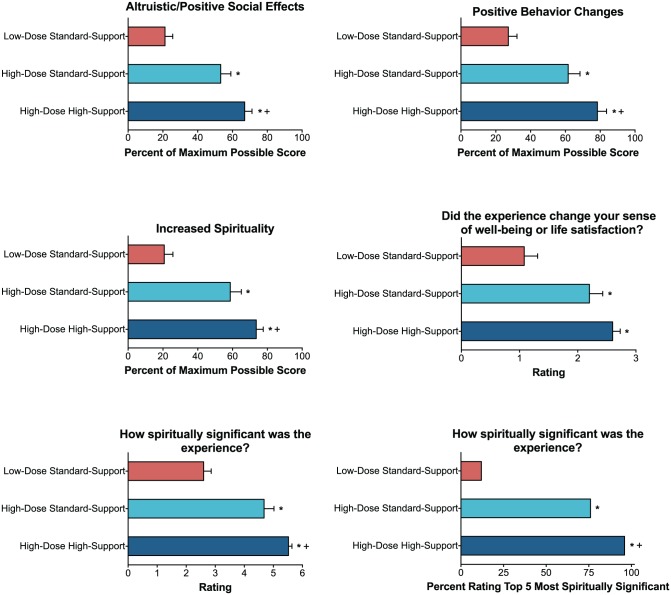
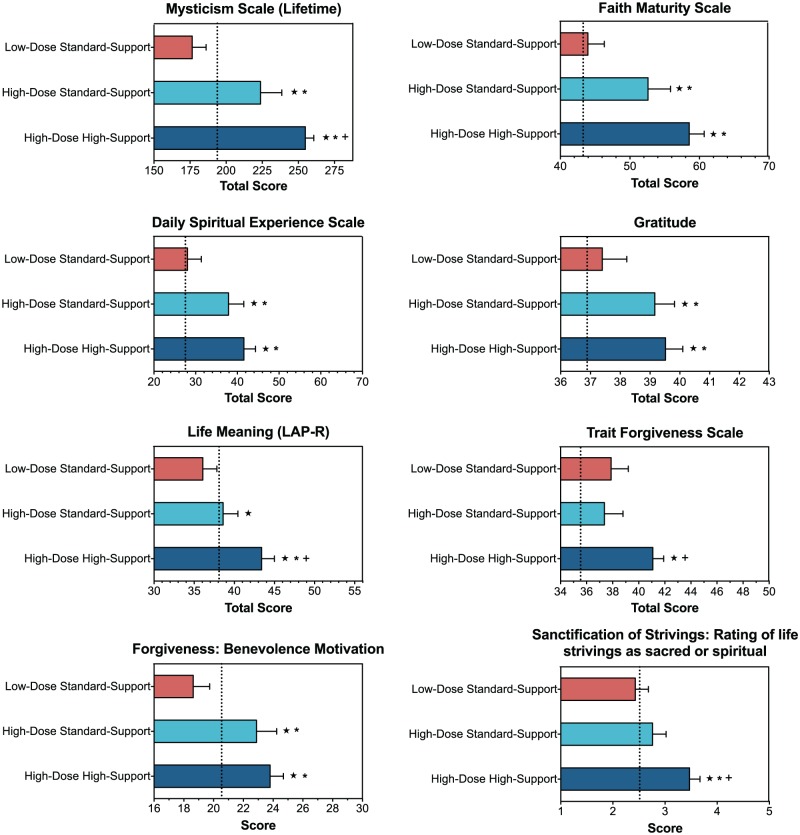
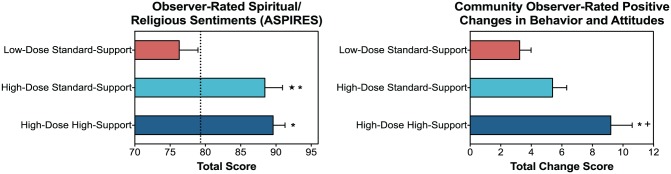
Psilocybin can occasion mystical-type experiences with participant-attributed increases in well-being. However, little research has examined enduring changes in traits. This study administered psilocybin to participants who undertook a program of meditation/spiritual practices. Healthy participants were randomized to three groups (25 each): (1) very low-dose (1 mg/70 kg on sessions 1 and 2) with moderate-level (“standard”) support for spiritual-practice (LD-SS); (2) high-dose (20 and 30 mg/70 kg on sessions 1 and 2, respectively) with standard support (HD-SS); and (3) high-dose (20 and 30 mg/70kg on sessions 1 and 2, respectively) with high support for spiritual practice (HD-HS). Psilocybin was administered double-blind and instructions to participants/staff minimized expectancy confounds. Psilocybin was administered 1 and 2 months after spiritual-practice initiation. Outcomes at 6 months included rates of spiritual practice and persisting effects of psilocybin. Compared with low-dose, high-dose psilocybin produced greater acute and persisting effects. At 6 months, compared with LD-SS, both high-dose groups showed large significant positive changes on longitudinal measures of interpersonal closeness, gratitude, life meaning/purpose, forgiveness, death transcendence, daily spiritual experiences, religious faith and coping, and community observer ratings. Determinants of enduring effects were psilocybin-occasioned mystical-type experience and rates of meditation/spiritual practices. Psilocybin can occasion enduring trait-level increases in prosocial attitudes/behaviors and in healthy psychological functioning. Trial Registration ClinicalTrials.gov Identifier NCT00802282
Overview
The claims and statistics of this paper haven’t been checked yet.
Free: it reads the open-access text and checks the first 5 claims that cite a source we can check. Create a free account to check every claim.
Integrity signals
Registry
Cites
Statistics
Figures
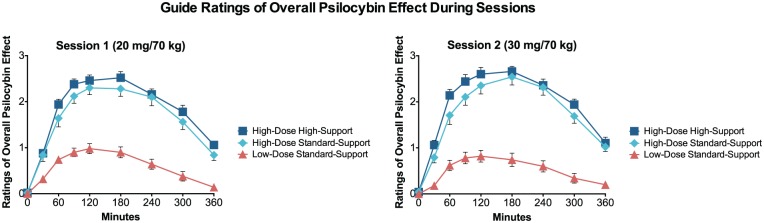
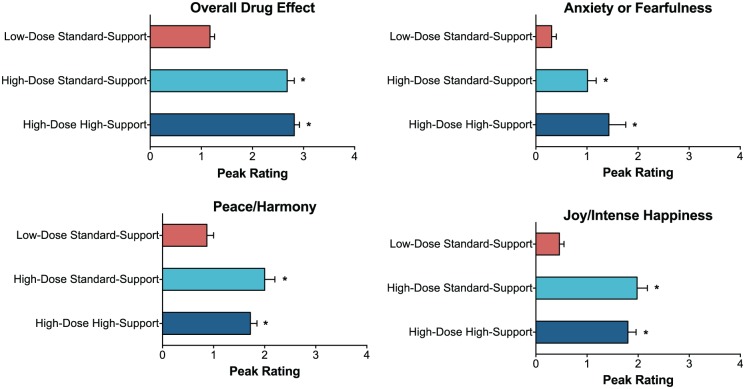
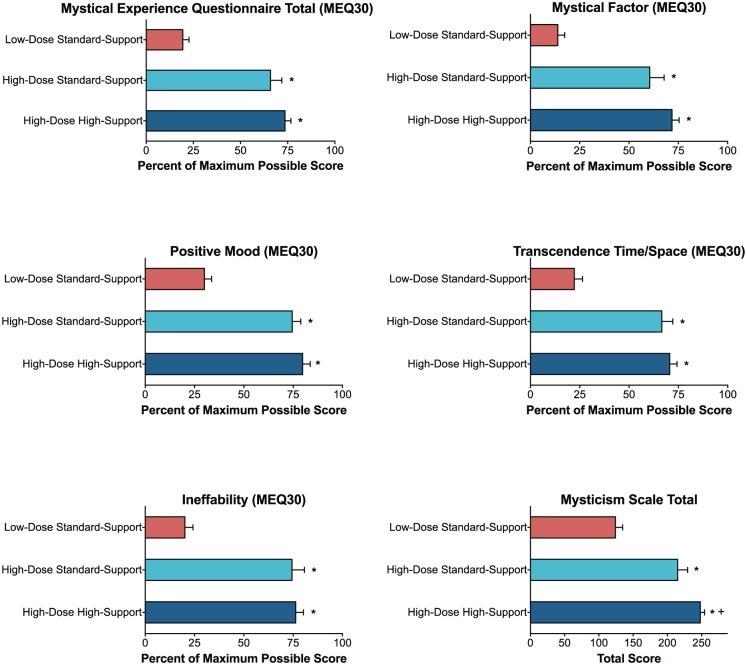
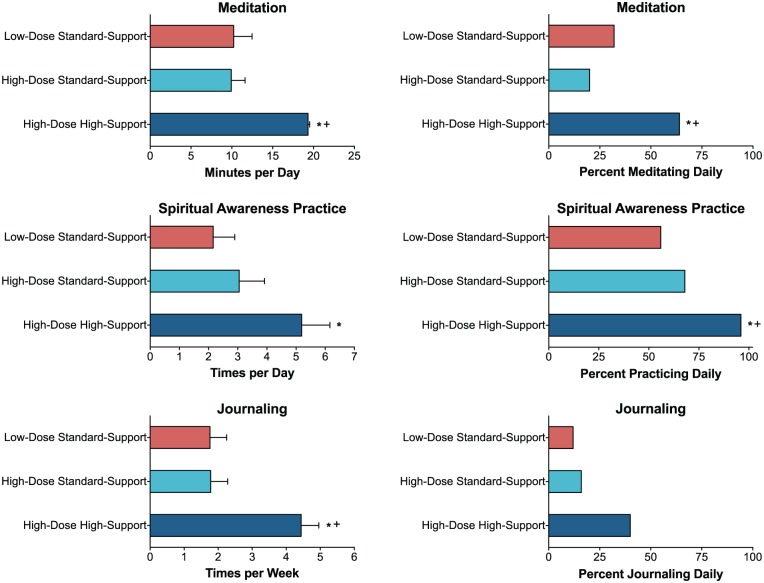
Verification
Claims the paper makes
The claims and statistics of this paper haven’t been checked yet.
Free: it reads the open-access text and checks the first 5 claims that cite a source we can check. Create a free account to check every claim.
Claims other papers make about this one
Each is checked against this paper’s own text: does it say what the citing paper says it does?
The cited source doesn’t support the claim as written.
In the citing paper
“In the aforementioned studies, the administration of psilocybin within a context of mindfulness-training significantly enhanced engagement with formal spiritual practises, mindfulness meditation depth and trait mindfulness (60, 61).”
From Examining the Potential Synergistic Effects Between Mindfulness Training and Psychedelic-Assisted Therapy (2021) · cites this paper as [60]
Checked by a reasoning model — may be wrong.
Experimental — accuracy not yet measuredThe source backs part of the claim, not all of it — or backs it for a different population, condition or comparison.
In the citing paper
“In addition, studies being performed on the use of psychoactive agents as catalysts for therapeutic psychological transformation, such as the Johns Hopkins psilocybin study, have examined the ways in which Buddhist meditation practice further facilitates”
From Buddhist Meditation and the Ethics of Human Augmentation (2020) · cites this paper as Griffiths et al. 2018
Experimental — accuracy not yet measuredThe source backs part of the claim, not all of it — or backs it for a different population, condition or comparison.
In the citing paper
“Similarly, research in healthy participants (N = 75) suggests group-based aftercare in addition to standard 2-on-1 support models can amplify well-being benefits of individual high-dose psilocybin sessions.11”
From Innovations in group-based psilocybin-assisted therapy of major depression in patients with cancer (2024) · cites this paper as [11]
Experimental — accuracy not yet measuredThe source backs part of the claim, not all of it — or backs it for a different population, condition or comparison.
In the citing paper
“It has been suggested by some studies that the intensity or quality of the psychedelic experience determines the treatment outcome (52–54).”
From Decreases in State and Trait Anxiety Post-psilocybin: A Naturalistic, Observational Study Among Retreat Attendees (2022) · cites this paper as [52]
Experimental — accuracy not yet measuredThe source backs part of the claim, not all of it — or backs it for a different population, condition or comparison.
In the citing paper
“it has been repeatedly found that psychedelic-induced mystical-type experiences and ego dissolution, the latter a phenomenon characterized by the reduction in self-referential awareness, disruption self-world boundaries, and increased feelings of unity with one’s surroundings (55), correlates with long-term (positive) outcomes (23, 52–54, 56–58).”
From Decreases in State and Trait Anxiety Post-psilocybin: A Naturalistic, Observational Study Among Retreat Attendees (2022) · cites this paper as [52]
Experimental — accuracy not yet measured
14 more claims about this paper
Create a free account to see every claim other papers make about this one.
Self-check
Percentages, sums and reported differences re-computed from the paper’s own numbers.
The self-check needs the paper’s full text.
Citations
Cites
Schwartz, S. H. (1992) · Advances in Experimental Social Psychology · doi:10.1016/s0065-2601(08)60281-6 · Cited by 14,619 · cited 1×
“…spiritual, holy, heavenly, and blessed (Mahoney et al., 2005); Schwartz Value Scale , a measure of relative importance of various life values (Schwartz, 1992, 1994); Inclusion of Others in the Self scale (IOS), a measure of interpersonal closeness (Aron et al., 1992), mean score of ratings…”
BackgroundScheier, M. F., Carver, C. S., & Bridges, M. W. (1994) · Journal of Personality and Social Psychology · doi:10.1037//0022-3514.67.6.1063 · Cited by 7,456 · cited 2×
“…compassion, amusement, and awe) (Shiota et al., 2006); Life-Orientation Test-Revised (LOT-R) , a measure of optimism associated with health outcomes (Scheier et al., 1994); Satisfaction with Life Scale (Pavot and Diener, 1993); Purpose in Life Test (PIL) , a assessment of meaningfulness in life…”
BackgroundAre There Universal Aspects in the Structure and Contents of Human Values?
Schwartz, S. H. (1994) · Journal of Social Issues · doi:10.1111/j.1540-4560.1994.tb01196.x · Cited by 5,793 · cited 1×
“…spiritual, holy, heavenly, and blessed (Mahoney et al., 2005); Schwartz Value Scale , a measure of relative importance of various life values (Schwartz, 1992, 1994); Inclusion of Others in the Self scale (IOS), a measure of interpersonal closeness (Aron et al., 1992), mean score of ratings…”
BackgroundThe varieties of religious experience: A study in human nature.
James, W. (1902) · doi:10.1037/10004-000 · Cited by 5,204
Inclusion of Other in the Self Scale and the structure of interpersonal closeness.
Aron, A., Aron, E. N., & Smollan, D. (1992) · Journal of Personality and Social Psychology · doi:10.1037/0022-3514.63.4.596 · Cited by 5,157 · cited 1×
“…relative importance of various life values (Schwartz, 1992, 1994); Inclusion of Others in the Self scale (IOS), a measure of interpersonal closeness (Aron et al., 1992), mean score of ratings of closest person, closest family member, least close family member, a stranger, and a difficult personal…”
BackgroundThe grateful disposition: A conceptual and empirical topography.
McCullough, M. E., Emmons, R. A., & Tsang, J.-A. (2002) · Journal of Personality and Social Psychology · doi:10.1037//0022-3514.82.1.112 · Cited by 3,664 · cited 2×
“…Loma Linda University, 2007), Daily Spiritual Experience Scale (general population survey data, Underwood, 2006); Gratitude Questionnaire-6 (adults, McCullough et al., 2002); Life Meaning (college and community sample, Reker, 2007); Trait Forgive-ness Scale (college students, Berry et al., 2005);…”
BackgroundReview of the Satisfaction With Life Scale.
Pavot, W., & Diener, E. (1993) · Psychological Assessment · doi:10.1037/1040-3590.5.2.164 · Cited by 3,611
Review of the Satisfaction With Life Scale
Pavot, W., & Diener, E. (2009) · Social Indicators Research Series · doi:10.1007/978-90-481-2354-4_5 · Cited by 3,460 · cited 4×
“Per the plan in the Data Analysis section, three longitudinal measures were dropped from analysis (Forgiveness subscale of the BMMRS; self-rated ASPIRES; and the Satisfaction with Life Scale) because of significant between-group differences at baseline and no significant difference in change from baseline.”
InfluentialPatterns of Positive and Negative Religious Coping with Major Life Stressors
Pargament, K. I., Smith, B. W., Koenig, H. G., & Perez, L. (1998) · Journal for the Scientific Study of Religion · doi:10.2307/1388152 · Cited by 2,425 · cited 1×
“…Protestant traditions (Benson et al., 1993); Brief RCOPE , a measure of religious/spiritual coping with stressful life events (Pargament, 1999; Pargament et al., 1998); Daily Spiritual Experience Scale , a measure of an individual’s perception of and interaction with the transcendent in daily…”
BackgroundGriffiths, R. R., Johnson, M. W., Carducci, M. A., Umbricht, A., Richards, W. A., Richards, B. D., Cosimano, M. P., & Klinedinst, M. A. (2016) · Journal of Psychopharmacology · doi:10.1177/0269881116675513 · Cited by 2,201 · cited 6×
“Prior research suggests an important role of psilocybin-occasioned mystical experience in the observed enduring positive changes in psychological well-being, prosocial disposition, and spiritual worldview (Garcia-Romeu et al., 2014; Griffiths et al., 2008, 2016; Ross et al., 2016).”
BackgroundMethodResultInfluentialSelf-citation
Research works printed but not linked: 14
- Costa PT McCrae RR (1992) Revised NEO Personality Inventory (NEO-PI-R) and NEO Five-Factor Inventory (NEO-FFI) (Professional manual). Odessa, FL: Psychological Assessment Resources.
- Darling DC Doblin R Metzner R (2004) Prisoner behavior change and experimental mysticism: Two classic studies from the Harvard psilocybin project. In: Metzner R (ed.) Teonanacatl: Sacred Mushroom of Visions. El Verano, CA: Four Trees Press, pp. 135– 151.
- Doblin R (1991) Pahnke’s Good Friday experiment: A long-term follow-up and methodological critique. J Transpersonal Psy 23: 1– 28.
- Easwaran E (1991/ 1978) Meditation: A Simple Eight-Point Program for Translating Spiritual Ideals into Daily Life. 2nd ed. Tomales, CA: Nilgiri Press.
- The Fetzer Institute (1999, Reprinted 2003) Brief multidimensional measure of religiousness/spirituality: 1999. In: Multidimensional Measurement of Religiousness/Spirituality for use in Health Research: A Report of the Fetzer Institute/National Institute on Aging Working Group. Kalamazoo, MI: Fetzer Institute, pp. 85– 95.
- Pahnke W (1963) Drugs and Mysticism: An Analysis of the Relationship Between Psychedelic Drugs and the Mystical Consciousness. PhD thesis. Cambridge, MA: Harvard University, Department of Religion and Society.
- Pargament KI (1999, Reprinted 2003) Religious/spiritual coping. In: Multidimensional Measurement of Religiousness/Spirituality for Use in Health Research: A Report of the Fetzer Institute/National Institute on Aging Working Group. Kalamazoo, MI: Fetzer Institute, pp. 43– 56.
- Passie T (2004) A history of the use of psilocybin in psychotherapy. In: Metzner R (ed.) Teonanacatl: Sacred Mushroom of Visions. El Verano, CA: Four Trees Press, pp. 109– 134.
- Passie T (2007) Contemporary psychedelic therapy: An overview. In: Winkelman MJ Roberts TB (eds) Psychedelic Medicine. Vol. 1 Westport CN: Praeger, pp. 45– 68.
- Piedmont RL (2010) ASPIRES: Assessment of Spirituality and Religious Sentiments (Technical Manual). 2nd ed. Columbia, MD: Loyola University Maryland, Department of Pastoral Counseling.
- Reker GT (2007) The Life Attitude Profile-Revised (LAP-R) (Procedures Manual). Research edn. Peterborough, ON: Student Psychologists Press.
- Stevens J (1987) Storming Heaven. New York: Harper & Row Publishers.
- VandeCreek L (1999) The death transcendence scale (Hood and Morris, 1983). In: Hill PC Hood RW (eds) Measures of Religiousity. Birmingham AL: Religious Education Press, pp. 442– 445.
- Weil GM Metzner R Leary T (1965, Reprinted 1997) The subjective after-effects of psychedelic experiences: A summary of four recent questionnaire studies. In: Weil GM Metzner R Leary T (eds) The Psychedelic Reader. Secaucus, NJ: Citadel Press, pp. 13– 21.
Cited by
Items 101–200 of 559
Niles, H. F., Fogg, C., Kelmendi, B., & Lazenby, M. (2021) · BMC Palliative Care · doi:10.1186/s12904-021-00889-x · Cited by 54
“The capacity of psychedelic interventions to enhance personal meaning and spiritual significance is well established [38, 39].”
BackgroundPsychedelic unselfing: self-transcendence and change of values in psychedelic experiences
Kähönen, J. (2023) · Frontiers in Psychology · doi:10.3389/fpsyg.2023.1104627 · Cited by 58
“, 2006, 2008, 2018; Schmid and Liechti, 2018); (d) Appreciation of spirituality (Griffiths et al., 2018); (e) Reduced valuation of financial success (Lerner and Lyvers, 2006); (f) More liberal and less authoritarian political views (Nour et al.”
BackgroundEffects of DMT on mental health outcomes in healthy volunteers
Timmermann, C., Zeifman, R. J., Erritzøe, D., Nutt, D. J., & Carhart-Harris, R. L. (2024) · Scientific Reports · doi:10.1038/s41598-024-53363-y · Cited by 55
“…evidence strongly suggests that, used with care, classic psychedelics can have a positive impact on factors that traverse the mental health spectrum, by elevating psychological well-being 14–18 , gratitude 19–21 , optimism 10,21–23 , mindfulness capacities 24–26 , and meaning in life 10,21 .”
BackgroundResultAyahuasca’s Antidepressant Effects Covary with Behavioral Activation as Well as Mindfulness
Mian, M. N., Altman, B. R., & Earleywine, M. (2020) · Journal of Psychoactive Drugs · doi:10.1080/02791072.2019.1674428 · Cited by 46
Psiuk, D., Nowak, E., Dycha, N., Łopuszańska, U., Kurzepa, J., & Samardakiewicz, M. (2022) · International Journal of Molecular Sciences · doi:10.3390/ijms231911450 · Cited by 55
“While no correlation has been found between dissociation and esketamine’s antidepressant effect [54,55], ASC and mystical-type experiences that can occur during psilocybin sessions are considered to have profound and positive therapeutic outcomes [56].”
BackgroundPersonality change in a trial of psilocybin therapy v. escitalopram treatment for depression
Weiss, B., Ginige, I., Shannon, L., Giribaldi, B., Murphy-Beiner, A., Murphy, R., Baker-Jones, M., Martell, J., Nutt, D. J., Carhart-Harris, R. L., et al. (2024) · Psychological Medicine · doi:10.1017/s0033291723001514 · Cited by 40
“…interventions, controlled laboratory studies, involving supportive monitoring from clinicians, have observed increases in openness in healthy subjects (Barrett & Griffiths, 2017; Carhart-Harris et al., 2016b; Griffiths et al., 2018; MacLean, Johnson, & Griffiths, 2011; Madsen et al., 2020).”
Weiss, B., Nygart, V., Pommerencke, L. M., Carhart-Harris, R. L., & Erritzoe, D. (2021) · Frontiers in Psychology · doi:10.3389/fpsyg.2021.749788 · Cited by 47
“…findings, there is evidence of a long-term self-reported increase in altruism and positive social effects from three small prospective studies (Dolder et al., 2016; Griffiths et al., 2018; Schmid and Liechti, 2018), the latter of which demonstrated changes over and above a control group.”
BackgroundResultInfluentialLinkages between Psychedelics and Meditation in a Population-Based Sample in the United States
Simonsson, O., & Goldberg, S. B. (2022) · Journal of Psychoactive Drugs · doi:10.1080/02791072.2021.2022816 · Cited by 48
LSD-assisted therapy in patients with anxiety: open-label prospective 12-month follow-up
Holze, F., Gasser, P., Müller, F., Strebel, M., & Liechti, M. E. (2024) · The British Journal of Psychiatry · doi:10.1192/bjp.2024.99 · Cited by 49
Evaluating the Potential Use of Serotonergic Psychedelics in Autism Spectrum Disorder
Markopoulos, A., Inserra, A., De Gregorio, D., & Gobbi, G. (2022) · Frontiers in Pharmacology · doi:10.3389/fphar.2021.749068 · Cited by 46
Gaddis, A., Lidstone, D. E., Nebel, M. B., Griffiths, R. R., Mostofsky, S. H., Mejia, A. F., & Barrett, F. S. (2022) · NeuroImage · doi:10.1016/j.neuroimage.2022.119434 · Cited by 47
Self-citationKoslowski, M., Johnson, M. W., Gründer, G., & Betzler, F. (2021) · Current Addiction Reports · doi:10.1007/s40429-021-00401-8 · Cited by 45
“These experiences appeared to have long-term positive effects on well-being [96], and were rated by most participants as one of the five most important events in life, even years later [97].”
BackgroundSelf-citationOrłowski, P., Ruban, A., Szczypiński, J., Hobot, J., Bielecki, M., & Bola, M. (2022) · Journal of Psychopharmacology · doi:10.1177/02698811221089034 · Cited by 41
Clinical specificity profile for novel rapid acting antidepressant drugs
Scala, M., Fanelli, G., De Ronchi, D., Serretti, A., & Fabbri, C. (2023) · International Clinical Psychopharmacology · doi:10.1097/yic.0000000000000488 · Cited by 41
“, 2021) and to be potentially implied in the risk of abuse (Griffiths et al., 2018); however, the potential of abuse and risk of dependence is fairly reduced by the lack of psilocybin-induced withdrawal and rebound symptoms.”
BackgroundHealy, C. J., Lee, K. A., & D'Andrea, W. M. (2021) · Chronic Stress · doi:10.1177/24705470211029881 · Cited by 52
Current Perspective on the Therapeutic Preset for Substance-Assisted Psychotherapy
Thal, S. B., Bright, S. J., Sharbanee, J. M., Wenge, T., & Skeffington, P. (2021) · Frontiers in Psychology · doi:10.3389/fpsyg.2021.617224 · Cited by 41
Harnessing placebo: Lessons from psychedelic science
Pronovost-Morgan, C., Hartogsohn, I., & Ramaekers, J. G. (2023) · Journal of Psychopharmacology · doi:10.1177/02698811231182602 · Cited by 41
Wolff, M., Evens, R., Mertens, L. J., Schmidt, C., Beck, J. L., Rutrecht, H. M., Cherniak, A. D., Gründer, G., & Jungaberle, H. (2024) · Journal of Psychopharmacology · doi:10.1177/02698811241249698 · Cited by 43
“including trait mindfulness, well-being, and life satisfaction (e.g., Griffiths et al., 2018; Madsen et al., 2020; Smigielski et al., 2019; Timmermann et al., 2024).”
BackgroundDo psychedelics change beliefs?
McGovern, H. T., Leptourgos, P., Hutchinson, B. T., & Corlett, P. R. (2022) · Psychopharmacology · doi:10.1007/s00213-022-06153-1 · Cited by 41
Eleftheriou, M. E., & Thomas, E. (2021) · Frontiers in Psychiatry · doi:10.3389/fpsyt.2021.707057 · Cited by 39
“Psychedelics: A “Gateway” Into Meditative Practises? In the aforementioned studies, the administration of psilocybin within a context of mindfulness-training significantly enhanced engagement with formal spiritual practises, mindfulness meditation depth and trait mindfulness (60, 61).”
BackgroundInfluentialGarel, N., Drury, J., Lévesque, J. T., Goyette, N., Lehmann, A., Looper, K. J., Erritzøe, D., Dames, S., Turecki, G., Rej, S., et al. (2023) · Frontiers in Psychiatry · doi:10.3389/fpsyt.2023.1268832 · Cited by 41
“In some cases, this may entail defined preparatory practices such as mindfulness exercises (117), but most psychedelic studies do not detail specific activities.”
BackgroundThe Potential of Psychedelics for End of Life and Palliative Care
Yaden, D. B., Nayak, S. M., Gukasyan, N., Anderson, B. T., & Griffiths, R. R. (2021) · Current topics in behavioral neurosciences · doi:10.1007/7854_2021_278 · Cited by 39
Self-citationHow Chanting Relates to Cognitive Function, Altered States and Quality of Life
Perry, G., Polito, V., Sankaran, N., & Thompson, W. F. (2022) · Brain Sciences · doi:10.3390/brainsci12111456 · Cited by 47
“In a survey on ‘God encounter’ events, mystical experiences were rated as among the most meaningful and significant events in one’s life, leading to persisting positive changes in overall life satisfaction, meaning and purpose [42].”
BackgroundPsychedelic-Assisted Therapy for Substance Use Disorders and Potential Mechanisms of Action
Rieser, N. M., Herdener, M., & Preller, K. H. (2021) · Current Topics in Behavioral Neurosciences · doi:10.1007/7854_2021_284 · Cited by 37
Entity encounters and the therapeutic effect of the psychedelic mystical experience
Lutkajtis, A. (2021) · Journal of Evolutionary Psychology · doi:10.1556/2054.2020.00143 · Cited by 45
The Safety and Efficacy of Psychedelic-Assisted Therapies for Older Adults: Knowns and Unknowns
Johnston, C. B., Mangini, M., Grob, C. S., & Anderson, B. T. (2022) · American Journal of Geriatric Psychiatry · doi:10.1016/j.jagp.2022.08.007 · Cited by 40
Søndergaard, A., Madsen, M. K., Ozenne, B., Armand, S., Knudsen, G. M., Fisher, P. M., & Stenbæk, D. S. (2022) · Frontiers in Psychology · doi:10.3389/fpsyg.2022.948729 · Cited by 38
“Maximum possible MAAS score = 6. in mindfulness practice, such as meditation (Hölzel and Ott, 2006; Barrett and Griffiths, 2018).”
BackgroundInfluentialSystematic review of psychometric instruments used in research with psychedelics
de Deus Pontual, A. A., Senhorini, H. G., Corradi-Webster, C. M., Tófoli, L. F., & Daldegan-Bueno, D. (2023) · Journal of Psychoactive Drugs · doi:10.1080/02791072.2022.2079108 · Cited by 36
Pepe, M., Hesami, M., de la Cerda, K. A., Perreault, M. L., Hsiang, T., & Jones, A. M. P. (2023) · Biotechnology Advances · doi:10.1016/j.biotechadv.2023.108247 · Cited by 36
Rocha, J. M., Rossi, G. N., Osório, F. D. L., Bouso, J. C., Silveira, G. D. O., Yonamine, M., Crevelin, E. J., Queiroz, M. E. C., Hallak, J. E. C., & SANTOS, R. G. D. (2021) · Frontiers in Psychiatry · doi:10.3389/fpsyt.2021.688439 · Cited by 40
“A non-placebo-controlled trial with healthy volunteers corroborated the increase in Openness 6 months after psilocybin (5), but a recent placebo-controlled trial from the same group failed to find significant effects in Openness 1-month post-psilocybin, finding only a significant increase in Conscientiousness (6).”
BackgroundPsilocybin occasioned mystical‐type experiences
James, E., Robertshaw, T. L., Hoskins, M. D., & Sessa, B. (2020) · Human Psychopharmacology Clinical and Experimental · doi:10.1002/hup.2742 · Cited by 44
“could be improvements in public health and well-being (Griffiths et al., 2018; Griffiths, Richards, Johnson, McCann, & Jesse, 2008; Johnson, Hendricks, Barrett, & Griffiths, 2019; Miller, 2004).”
Ethical Issues Regarding Nonsubjective Psychedelics as Standard of Care
Yaden, D. B., Earp, B. D., & Griffiths, R. R. (2022) · Cambridge Quarterly of Healthcare Ethics · doi:10.1017/s096318012200007x · Cited by 42
“10 In the past two decades, clinical trials on psilocybin have demonstrated a significant potential to increase well-being, 11,12,13 as well as decrease anxiety, 14,15 decrease depression, 16,17,18 and treat substance use disorders such as alcohol use disorder and tobacco use disorder.”
Self-citationThe Altered States Database: Psychometric data from a systematic literature review
Prugger, J., Derdiyok, E., Dinkelacker, J., Costines, C., & Schmidt, T. T. (2022) · Scientific Data · doi:10.1038/s41597-022-01822-4 · Cited by 36
The Role of Psychedelics and Counseling in Mental Health Treatment
Curtis, R., Roberts, L. C., Graves, E. G., Rainey, H. T., Wynn, D. D., Krantz, D., & Wieloch, V. (2020) · Journal of Mental Health Counseling · doi:10.17744/mehc.42.4.03 · Cited by 37
Henningfield, J. E., Coe, M. A., Griffiths, R. R., Belouin, S. J., Berger, A. M., Coker, A. R., Comer, S. D., Heal, D. J., Hendricks, P. S., Nichols, C. D., et al. (2022) · Neuropharmacology · doi:10.1016/j.neuropharm.2022.109220 · Cited by 39
Self-citationDourron, H. M., Strauss, C. K., & Hendricks, P. S. (2022) · Pharmacological Reviews · doi:10.1124/pharmrev.121.000514 · Cited by 42
“psilocybin study), suggesting actual behavior change rather than expectancy effects (Griffiths et al., 2018).”
BackgroundZeifman, R. J., Kettner, H., Pagni, B. A., Mallard, A. J., Roberts, D. E., Erritzøe, D., Ross, S., & Carhart-Harris, R. L. (2023) · Scientific Reports · doi:10.1038/s41598-023-40856-5 · Cited by 37
Cavanna, F., Pallavicini, C., Milano, V., Cuiule, J. I., Tella, R. D., González, P., & Tagliazucchi, E. (2021) · Journal of Psychedelic Studies · doi:10.1556/2054.2021.00172 · Cited by 35
McIntyre, R. S., Kwan, A. T. H., Mansur, R. B., Oliveira-Maia, A. J., Teopiz, K. M., Maletic, V., Suppes, T. M., Stahl, S. M., & Rosenblat, J. D. (2025) · American Journal of Psychiatry · doi:10.1176/appi.ajp.20230902 · Cited by 37
Lancelotta, R. L., & Davis, A. K. (2020) · Journal of Psychoactive Drugs · doi:10.1080/02791072.2020.1737763 · Cited by 33
Garel, N., Lévesque, J. T., Sandra, D. A., Lessard-Wajcer, J., Solomonova, E., Lifshitz, M., Richard‐Devantoy, S., & Greenway, K. T. (2023) · Frontiers in Human Neuroscience · doi:10.3389/fnhum.2023.1200393 · Cited by 36
“As an illustration, in the only modern psychedelic study to experimentally manipulate preparatory practices to our knowledge, 50 healthy participants were randomized to receive either standard or high levels of spiritual support to facilitate the development of spiritual practices like meditation during a psilocybin t…”
BackgroundInfluentialBhatt, K. V., & Weissman, C. R. (2024) · npj Mental Health Research · doi:10.1038/s44184-023-00053-8 · Cited by 34
Psychedelics as Novel Therapeutics in Alzheimer’s Disease: Rationale and Potential Mechanisms
Garcia‐Romeu, A., Darcy, S., Jackson, H., White, T., & Rosenberg, P. B. (2021) · Current topics in behavioral neurosciences · doi:10.1007/7854_2021_267 · Cited by 36
Roscoe, J., & Lozy, O. (2022) · Drug Science Policy and Law · doi:10.1177/20503245221085222 · Cited by 34
Giving Consent to the Ineffable
Villiger, D. (2024) · Neuroethics · doi:10.1007/s12152-024-09545-6 · Cited by 32
“%) of participants rate their psychedelic experiences as among the most meaningful experiences of their entire lives [7, 38, 68, 92, 93].”
BackgroundWhitfield, H. J. (2021) · Frontiers in Psychiatry · doi:10.3389/fpsyt.2021.727572 · Cited by 33
“2 Healthy Subclinical Narcissism, for examples) could also contribute to the debate in psychedelic therapy research regarding whether acute positive mystical experience is a key mediator of long-term success in psychedelic therapy (102), or conversely might willingness to face emotionally difficult feelings/trauma be…”
BackgroundHow Important Is a Guide Who Has Taken Psilocybin in Psilocybin-Assisted Therapy for Depression?
Earleywine, M., Low, F., Altman, B. R., & Leo, J. A. D. (2022) · Journal of Psychoactive Drugs · doi:10.1080/02791072.2022.2047842 · Cited by 34
Microdosing as a Response to the Meaning Crisis: A Qualitative Analysis
Petranker, R., Kim, J. J., & Anderson, T. (2022) · Journal of Humanistic Psychology · doi:10.1177/00221678221075076 · Cited by 34
Predictors and potentiators of psychedelic-occasioned mystical experiences
Gandy, S. (2022) · Journal of Psychedelic Studies · doi:10.1556/2054.2022.00198 · Cited by 34
Mystical Experiences in Retrospective Reports of First Times Using a Psychedelic in Finland
Kangaslampi, S., Hausen, A., & Rauteenmaa, T. (2020) · Journal of Psychoactive Drugs · doi:10.1080/02791072.2020.1767321 · Cited by 31
Wang, E. Y., Mathai, D. S., Gukasyan, N., Nayak, S. M., & Garcia‐Romeu, A. (2024) · Scientific Reports · doi:10.1038/s41598-024-78736-1 · Cited by 37
Frymann, T., Whitney, S., Yaden, D. B., & Lipson, J. (2022) · Frontiers in Psychology · doi:10.3389/fpsyg.2022.863247 · Cited by 30
Psychedelic experiences and long-term spiritual growth: a systematic review
Schutt, W. A., Exline, J. J., Pait, K. C., & Wilt, J. A. (2024) · Current Psychology · doi:10.1007/s12144-024-06272-2 · Cited by 32
“At 6 months, compared to very low doses of psi-locybin ( n = 25), participants receiving high doses of psilo-cybin ( n = 50) showed large significant positive changes in longitudinal measures of life meaning and purpose (Griffiths et al., 2018 ).”
InfluentialCompassionate use of psychedelics
Greif, A., & Šurkala, M. (2020) · Medicine Health Care and Philosophy · doi:10.1007/s11019-020-09958-z · Cited by 34
“Within the five-factor personality structure model, some studies have shown an increase in openness, a decrease in neuroticism, and some other effects after an experience with psilocybin (MacLean et al. 2011; Lebedev et al. 2015; Griffiths et al. 2018; Erritzoe et al. 2018).”
Tripping over the other: Could psychedelics increase empathy?
Blatchford, E., Bright, S. J., & Engel, L. B. (2020) · Journal of Evolutionary Psychology · doi:10.1556/2054.2020.00136 · Cited by 32
Virtual Reality as a Moderator of Psychedelic-Assisted Psychotherapy
Sekula, A. D., Downey, L. A., & Puspanathan, P. (2022) · Frontiers in Psychology · doi:10.3389/fpsyg.2022.813746 · Cited by 36
“, 2019a) and facilitated lasting therapeutic outcomes, including positive changes in psycho-social functioning (Griffiths et al., 2018; Smigielski et al., 2019b).”
BackgroundAnimal Behavior in Psychedelic Research
Odland, A. U., Kristensen, J. L., & Andreasen, J. T. (2022) · Pharmacological Reviews · doi:10.1124/pharmrev.122.000590 · Cited by 32
Urrutia, J., Anderson, B. T., Belouin, S. J., Berger, A. M., Griffiths, R. R., Grob, C. S., Henningfield, J. E., Labate, B. C., Maier, L. J., Maternowska, M. C., et al. (2023) · Journal of Psychoactive Drugs · doi:10.1080/02791072.2023.2258367 · Cited by 31
“The positive effects on psychosocial functioning from psilo-cybin are associated with the intensity of psilocybin-occasioned mystical-type experiences, and these effects are enhanced by engagement in contemplative practices such as meditation (Griffiths et al. 2018).”
BackgroundSelf-citationShinozuka, K., Jerotic, K., Mediano, P. A. M., Zhao, A. T., Preller, K. H., Carhart-Harris, R. L., & Kringelbach, M. L. (2024) · Translational Psychiatry · doi:10.1038/s41398-024-03187-1 · Cited by 36
“…neuroimaging — to compare the changes in brain activity, functional connectivity, and entropy that are induced by psychedelics; and (3) pharmacology — to discuss the binding af fi nities and functional activity of psychedelics with respect to various serotonergic and dopaminergic receptors.”
Schwartzman, D. J., Schartner, M. M., Ador, B. B., Simonelli, F., Chang, A. Y.-C., & Seth, A. K. (2019) · bioRxiv (Cold Spring Harbor Laboratory) · doi:10.1101/511766 · Cited by 32
The Mystical Experience Questionnaire 4-Item and Challenging Experience Questionnaire 7-Item
Strickland, J. C., Garcia‐Romeu, A., & Johnson, M. W. (2024) · Psychedelic Medicine · doi:10.1089/psymed.2023.0046 · Cited by 30
Self-citationPsychedelics and Psychedelic-Assisted Psychotherapy
Reiff, C. M., Richman, E. E., Nemeroff, C. B., Carpenter, L. L., Widge, A. S., Rodríguez, C. I., Kalin, N. H., & McDonald, W. M. (2021) · FOCUS The Journal of Lifelong Learning in Psychiatry · doi:10.1176/appi.focus.19104 · Cited by 28
Is microdosing a placebo? A rapid review of low-dose LSD and psilocybin research
Polito, V., & Liknaitzky, P. (2024) · Journal of Psychopharmacology · doi:10.1177/02698811241254831 · Cited by 46
“This meant that we excluded papers where a microdose was itself used as a comparator in a study investigating the effects of higher doses of psychedelics (e.g., Griffiths et al., 2018), and studies where participants reported on naturalistic microdosing experiences.”
MethodKiraga, M. K., Kuypers, K. P. C., Uthaug, M. V., Ramaekers, J. G., & Mason, N. L. (2022) · Frontiers in Psychiatry · doi:10.3389/fpsyt.2022.883869 · Cited by 26
Aday, J. S., McAfee, J., Conroy, D. A., Hosanagar, A., Tarnal, V., Weston, C. L., Scott, K., Horowitz, D., Geller, J. A., Harte, S. E., et al. (2025) · Frontiers in Pain Research · doi:10.3389/fpain.2025.1527783 · Cited by 27
Isham, A., Elf, P., & Jackson, T. P. (2022) · Frontiers in Psychology · doi:10.3389/fpsyg.2022.1051478 · Cited by 28
“For example, psilocybin has shown to reduce fear of death, while, simultaneously, increasing a person’s sense of purpose and having enduring positive impacts on mood (Yaden et al., 2016; Barrett and Griffiths, 2018).”
BackgroundWright, M., Galante, J., Corneille, J. S., Grabovac, A. D., Ingram, D. M., & Sacchet, M. D. (2024) · Mindfulness · doi:10.1007/s12671-024-02356-z · Cited by 29
“The cognitive and behavioral shifts associated with EP may include a decreased fear of death, diminished interest in dogma and traditional religion, and a rejection of materialistic lifestyles (Griffiths et al., 2018; Johnson et al., 2019; McClintock et al., 2016; McGee, 2020), as well as a…”
Sepeda, N. D., Clifton, J. M., Doyle, L. Y., Lancelotta, R., Griffiths, R. R., & Davis, A. K. (2019) · Journal of Psychedelic Studies · doi:10.1556/2054.2019.033 · Cited by 31
“It is important to note, however, that the content of psychedelic experiences can often vary, and the occurrence of mystical-type experiences may not be necessary for the attribution of beneficial outcomes (Carbonaro et al., 2016; Carbonaro, Johnson, Hurwitz, & Griffiths, 2018).”
BackgroundSelf-citationBornemann, J. (2020) · Journal of Psychoactive Drugs · doi:10.1080/02791072.2020.1761573 · Cited by 31
Psychedelic Psychotherapy: Building Wholeness Through Connection
Vaid, G., & Walker, B. (2022) · Global Advances in Health and Medicine · doi:10.1177/2164957x221081113 · Cited by 26
Psychedelic Mystical Experience: A New Agenda for Theology
Cole‐Turner, R. (2022) · Religions · doi:10.3390/rel13050385 · Cited by 26
Prosocial correlates of transformative experiences at secular multi-day mass gatherings
Yudkin, D. A., Prosser, A. M. B., Heller, S. M., McRae, K., Chakroff, A., & Crockett, M. J. (2022) · Nature Communications · doi:10.1038/s41467-022-29600-1 · Cited by 27
Psychedelic Science of Spirituality and Religion: An Attachment-Informed Agenda Proposal
Cherniak, A. D., Brulin, J. G., Mikulincer, M., Östlind, S., Carhart-Harris, R. L., & Granqvist, P. (2022) · International Journal for the Psychology of Religion · doi:10.1080/10508619.2022.2148061 · Cited by 31
“Religious, spiritual, or mystical experiences (RSMEs) are also often experienced during the intake of psychedelics, even in controlled clinical trials (Griffiths et al., 2018).”
InfluentialThe Health and Clinical Benefits of Medicinal Fungi
Hobbs, C. (2023) · Advances in biochemical engineering, biotechnology · doi:10.1007/10_2023_230 · Cited by 30
Goldpaugh, D. D. (2021) · Sexual & Relationship Therapy · doi:10.1080/14681994.2021.1994138 · Cited by 24
“The Western medicalized model has emphasized the role of the mystical experience, including qualities of sacredness, ineffability, and transcendence of time and space (Barrett & Griffiths, 2017) as a component of healing and wellbeing (Griffiths et al., 2018).”
BackgroundThal, S. B., Wieberneit, M., Sharbanee, J. M., Skeffington, P., Baker, P., Bruno, R., Wenge, T., & Bright, S. J. (2022) · Journal of Psychopharmacology · doi:10.1177/02698811221127954 · Cited by 26
Personality Traits in Former Spanish Substance Users Recovered with Ayahuasca
Apud Peláez, I. E. (2020) · Journal of Psychoactive Drugs · doi:10.1080/02791072.2020.1752960 · Cited by 22
Hanley, A. W., & Garland, E. L. (2022) · Mindfulness · doi:10.1007/s12671-022-01896-6 · Cited by 27
Not in the drug, not in the brain: Causality in psychedelic experiences from an enactive perspective
Meling, D., & Scheidegger, M. (2023) · Frontiers in Psychology · doi:10.3389/fpsyg.2023.1100058 · Cited by 24
Solaja, I., Haldane, K., Mason, N. L., Weiss, B., Xu, X., Xu, M., Nikolin, S., Jayasena, T., Millard, M., Brett, J., et al. (2024) · Neuroscience & Biobehavioral Reviews · doi:10.1016/j.neubiorev.2024.105570 · Cited by 23
Singer, B., Meling, D., Hirsch‐Hoffmann, M., Michels, L., Kometer, M., Smigielski, L., Dornbierer, D., Seifritz, E., Vollenweider, F. X., & Scheidegger, M. (2024) · Scientific Reports · doi:10.1038/s41598-024-55726-x · Cited by 23
Does human language limit translatability of clinical and preclinical addiction research?
de Wit, H., Epstein, D. H., & Preston, K. L. (2018) · Neuropsychopharmacology · doi:10.1038/s41386-018-0095-8 · Cited by 23
Scheidegger, M. (2021) · Springer eBooks · doi:10.1007/978-3-030-55688-4_3 · Cited by 25
Moreton, S. G., Arena, A. F. A., Foy, Y., & Menzies, R. E. (2023) · Death Studies · doi:10.1080/07481187.2023.2169848 · Cited by 23
Classic Psychedelic Use and Current Meditation Practice
Simonsson, C., Chambers, R., Hendricks, P. S., Goldberg, S. B., Osika, W., Schlosser, M., Ryde, A., Christersson, E., & Simonsson, O. (2023) · Mindfulness · doi:10.1007/s12671-023-02103-w · Cited by 21
“Previous work has identified potential synergies between classic psychedelics and meditation practice (Griffiths et al., 2018; Smigielski et al., 2019).”
BackgroundAzevedo, N., da Silva, M. O., & Madeira, L. (2023) · Philosophies · doi:10.3390/philosophies8050076 · Cited by 24
Scoping Review of Experiential Measures from Psychedelic Research and Clinical Trials
Herrmann, Z. M., Earleywine, M., Leo, J. A. D., Slabaugh, S., Kenny, T., & Rush, A. J. (2022) · Journal of Psychoactive Drugs · doi:10.1080/02791072.2022.2125467 · Cited by 21
Forstmann, M., Kettner, H., Sagioglou, C., Irvine, A., Gandy, S., Carhart-Harris, R. L., & Luke, D. P. (2023) · Journal of Psychopharmacology · doi:10.1177/02698811221146356 · Cited by 25
Corso, S. J. F., O’Malley, K. Y., Subaiya, S., Mayall, D., & Dakwar, E. (2023) · Journal of Affective Disorders · doi:10.1016/j.jad.2023.04.116 · Cited by 22
Lewis, B. R., Hendrick, J., Byrne, K., Odette, M. M., Wu, C., & Garland, E. L. (2025) · PLoS Medicine · doi:10.1371/journal.pmed.1004519 · Cited by 21
“Mindfulness and psychedelics appear to activate overlapping brain circuits [23], and theorists suggest that psychedelic experiences may deepen or help cultivate mindfulness skills [16].”
Barrett, F. S., Zhou, Y., Carbonaro, T. M., Roberts, J., Smith, G. S., Griffiths, R. R., & Wong, D. F. (2022) · Frontiers in Neuroergonomics · doi:10.3389/fnrgo.2021.784576 · Cited by 21
Self-citationAmada, N. M., & Shane, J. (2022) · Journal of Humanistic Psychology · doi:10.1177/00221678221099680 · Cited by 22
Vorobyeva, N. S., & Kozlova, A. A. (2022) · Frontiers in Pharmacology · doi:10.3389/fphar.2022.927984 · Cited by 24
Kamilar-Britt, P., Gordis, E. B., & Earleywine, M. (2023) · Psychedelic Medicine · doi:10.1089/psymed.2023.0020 · Cited by 20
“32 These data suggest that therapeutic alliance might play a role in PAT as important as its role in other psychotherapies, as investigators emphasize.”
Psychedelics, OCD and related disorders: A systematic review
Graziosi, M., Rohde, J. S., Tiwari, P., Siev, J., & Yaden, D. B. (2024) · Journal of Obsessive-Compulsive and Related Disorders · doi:10.1016/j.jocrd.2024.100873 · Cited by 23
How Do Psychedelics Reduce Fear of Death?
Letheby, C. (2024) · Neuroethics · doi:10.1007/s12152-024-09564-3 · Cited by 20
“Consider, too, the similar findings of Griffiths et al. [10] in healthy volunteers: the only changes in attitudes towards death after psilocybin experiences in conjunction with meditation training came from the “Religious” and “Mystical” subscales of this same measure.”
Walther, R. F. E., & van Schie, H. T. (2024) · Psychoactives · doi:10.3390/psychoactives3030026 · Cited by 22
Meling, D., Egger, K., Aicher, H., Redondo, J. J., Mueller, J., Dornbierer, J., Temperli, E., Vasella, E. A., Caflisch, L., Pfeiffer, D., et al. (2024) · Journal of Psychopharmacology · doi:10.1177/02698811241282637 · Cited by 24
“Furthermore, psilocybin-induced states of transcendence were linked to larger positive follow-up changes in attitudes and behavior (Griffiths et al., 2018; Smigielski et al., 2019a).”
BackgroundResultInfluentialBeyond LSD: A Broader Psychedelic Zeitgeist during the Early to Mid-20thCentury
Aday, J. S., Bloesch, E. K., & Davoli, C. C. (2019) · Journal of Psychoactive Drugs · doi:10.1080/02791072.2019.1581961 · Cited by 23
“…research of psychedelic drugs such as lysergic acid diethylamide-25 (LSD; Carhart-Harris et al. 2016b), psilocybin (Carhart-Harris et al. 2016a; Griffiths et al. 2017), N,N-dimethyltryptamine (DMT; Strassman 1996), methylenedioxymethamphetamine (MDMA; Oehen et al. 2013), and ayahuasca (Bouso…”
BackgroundPsychedelic drug use and schizotypy in young adults
Lebedev, A. V., Acar, K., Garzón, B., Almeida, R., Raback, J., Åberg, A., Martinsson, S., Olsson, A., Louzolo, A., Pärnamets, P., et al. (2021) · Scientific Reports · doi:10.1038/s41598-021-94421-z · Cited by 21
Metadata
- Authors
- Griffiths, R. R., Johnson, M. W., Richards, W. A., Richards, B. D., Jesse, R., MacLean, K. A., Barrett, F. S., Cosimano, M. P., & Klinedinst, M. A.
- Affiliations
- Johns Hopkins University (US)
- Council on Spiritual Practices, Occidental, USA
- Center for Optimal Living, New York, USA
- Corresponding author
- Griffiths, Roland R
- Venue
- Journal of Psychopharmacology
- Publisher
- SAGE Publications
- Published
- 2017-10-11
- Volume
- 32
- Issue
- 1
- Pages
- 49-69
- ISSN
- 0269-8811 (ISSN-L)
- 1461-7285
- PMC
- PMC5772431
- OpenAlex
- W2762822955
- Semantic Scholar
- 9548d9e33e5cadf7c65e63c815a68480fb48571a
- Cited by
- 520
- References
- 58
- Citations by year
- 2026: 47 · 2025: 76 · 2024: 83 · 2023: 91 · 2022: 89 · 2021: 60 · 2020: 37 · 2019: 19 · 2018: 16 · 2017: 1
- FWCI
- 24.76
- Type
- journal article
- Language
- en
- Open access
- hybrid
- doi.org
- Licence
- cc-by-nc
- journals.sagepub.com/page/policies/text-and-data-mining-license (tdm)
- Locations
- Journal of Psychopharmacology (publishedVersion, cc-by-nc)
- Europe PMC (PubMed Central) (publishedVersion, cc-by-nc)
- PubMed Central (publishedVersion, cc-by-nc)
- PubMed (publishedVersion)
- Funders
- Fetzer Institute
- National Institute on Drug Abuse (R01DA003889)
- Topics
- Social Sciences › Psychology › Clinical Psychology › Psychedelics and Drug Studies
- Social Sciences › Health › Religion, Spirituality, and Psychology
- Social Sciences › Psychology › Social Psychology › Paranormal Experiences and Beliefs
- Keywords
- psilocybin, meditation, spiritual practice, prosocial attitudes, prosocial behavior, well-being, gratitude, meaning of life, forgiveness, faith, coping, relationship closeness, dose-response relationship, psychedelic-assisted psychotherapy
- MeSH terms
- Adult, Aged, Attitude, Behavior, Double-Blind Method, Female, Humans, Longitudinal Studies, Male, Middle Aged, Mysticism, Psilocybin, Meditation, Young Adult
About these checks
Registry, retraction, Cites and statistics results are computed, not judged, with one exception: a printed reference that no index lists is read once by a model before it counts as a citation error. Claims are extracted by a model and kept only when their quote appears verbatim in the text; each cited source is then checked, with a model’s help, for whether it says what the claim relies on. Those verdicts can be wrong — read the claim’s quote and the cited source before relying on one.
Statistics and arithmetic are recomputed, not judged.
Confidence bands are shown only for fields calibrated on our annotated test set. None is calibrated yet, so no band is shown.
What counts as a claim ›How we measure confidence ›How we check this ›
Are you an author, or do you see a problem with this page? Request a review
Data sources
Bibliographic data: Semantic Scholar, OpenAlex, Crossref.
Contains information from the Semantic Scholar Academic Graph Datasets, made available under the ODC Attribution License (ODC-BY 1.0).
Semantic Scholar’s data is described in: Kinney, R., et al. (2023). The Semantic Scholar Open Data Platform. arXiv:2301.10140.
