

Psilocybin-occasioned mystical-type experience in combination with meditation and other spiritual practices produces enduring positive changes in psychological functioning and in trait measures of prosocial attitudes and behaviors
Open accessThe DOI matches its Crossref record; 58 of the 58 references it cites were found in a registry or an index.
Abstract
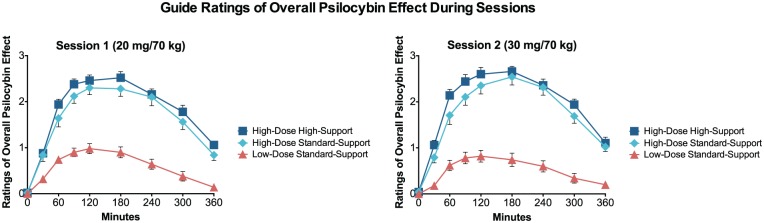
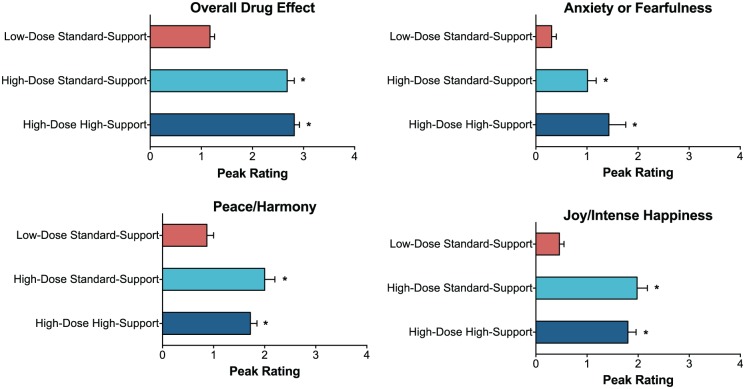
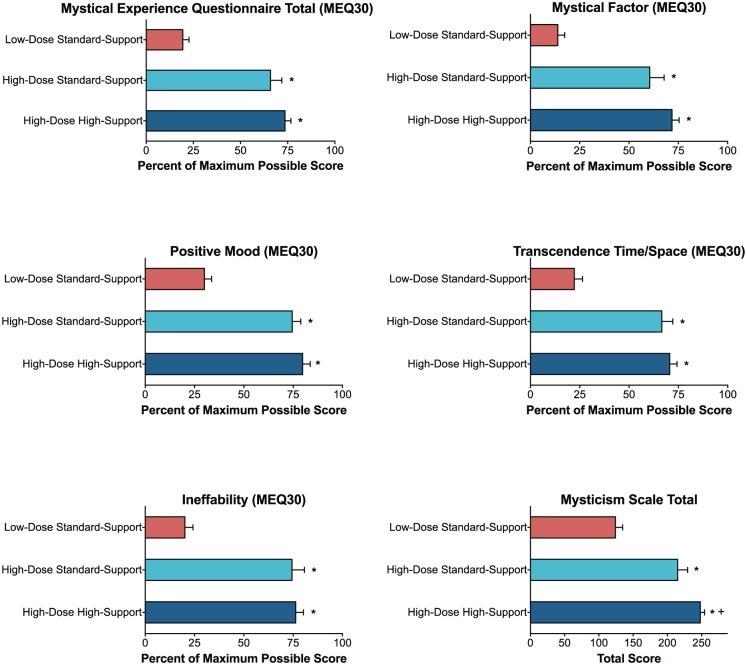
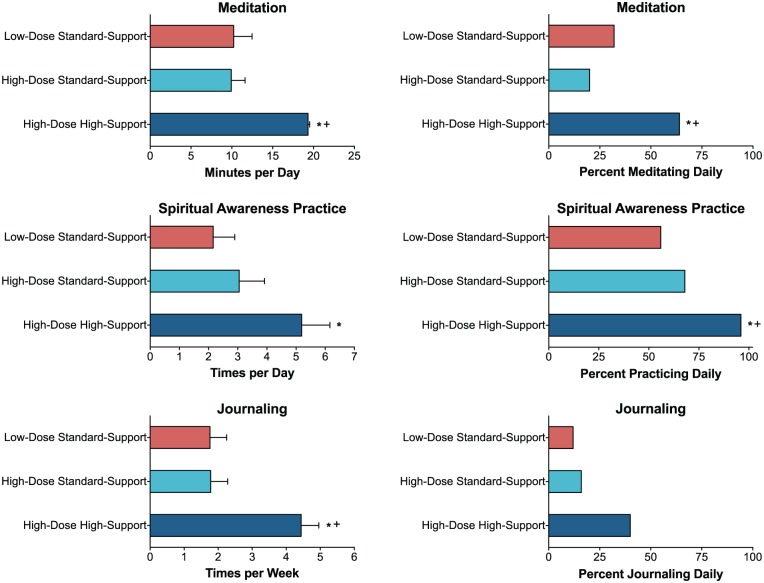
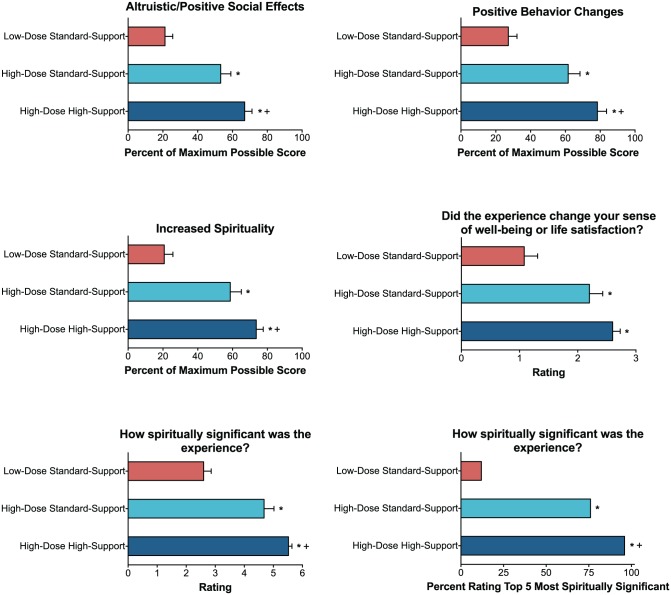
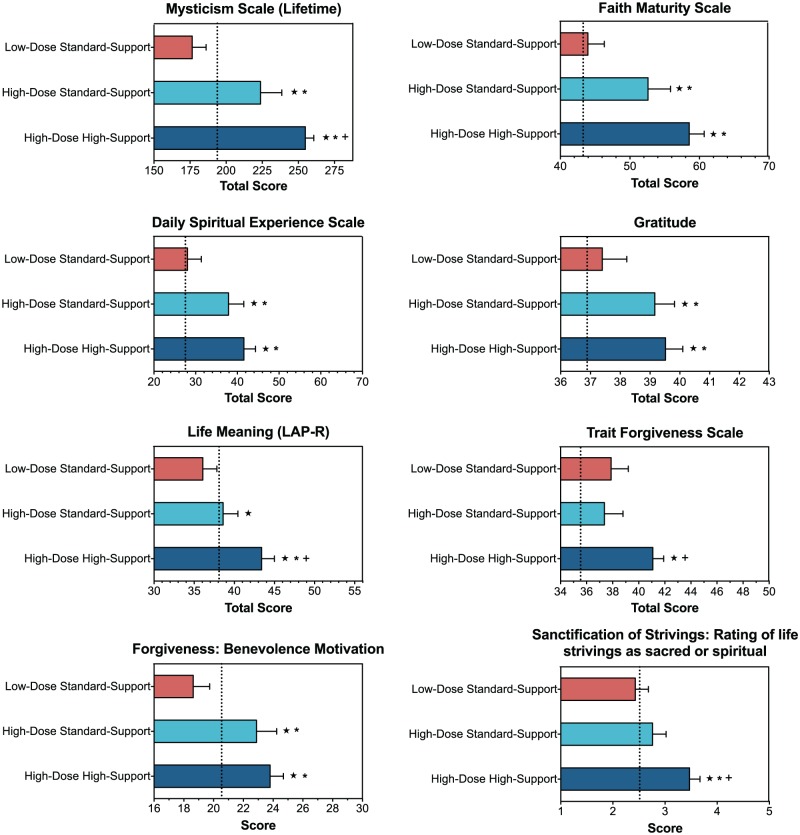
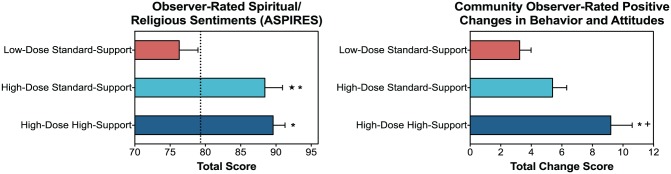
Psilocybin can occasion mystical-type experiences with participant-attributed increases in well-being. However, little research has examined enduring changes in traits. This study administered psilocybin to participants who undertook a program of meditation/spiritual practices. Healthy participants were randomized to three groups (25 each): (1) very low-dose (1 mg/70 kg on sessions 1 and 2) with moderate-level (“standard”) support for spiritual-practice (LD-SS); (2) high-dose (20 and 30 mg/70 kg on sessions 1 and 2, respectively) with standard support (HD-SS); and (3) high-dose (20 and 30 mg/70kg on sessions 1 and 2, respectively) with high support for spiritual practice (HD-HS). Psilocybin was administered double-blind and instructions to participants/staff minimized expectancy confounds. Psilocybin was administered 1 and 2 months after spiritual-practice initiation. Outcomes at 6 months included rates of spiritual practice and persisting effects of psilocybin. Compared with low-dose, high-dose psilocybin produced greater acute and persisting effects. At 6 months, compared with LD-SS, both high-dose groups showed large significant positive changes on longitudinal measures of interpersonal closeness, gratitude, life meaning/purpose, forgiveness, death transcendence, daily spiritual experiences, religious faith and coping, and community observer ratings. Determinants of enduring effects were psilocybin-occasioned mystical-type experience and rates of meditation/spiritual practices. Psilocybin can occasion enduring trait-level increases in prosocial attitudes/behaviors and in healthy psychological functioning. Trial Registration ClinicalTrials.gov Identifier NCT00802282
Overview
The claims and statistics of this paper haven’t been checked yet.
Free: it reads the open-access text and checks the first 5 claims that cite a source we can check. Create a free account to check every claim.
Integrity signals
Registry
Cites
Statistics
Figures
Verification
Claims the paper makes
The claims and statistics of this paper haven’t been checked yet.
Free: it reads the open-access text and checks the first 5 claims that cite a source we can check. Create a free account to check every claim.
Claims other papers make about this one
Each is checked against this paper’s own text: does it say what the citing paper says it does?
The cited source doesn’t support the claim as written.
In the citing paper
“In the aforementioned studies, the administration of psilocybin within a context of mindfulness-training significantly enhanced engagement with formal spiritual practises, mindfulness meditation depth and trait mindfulness (60, 61).”
From Examining the Potential Synergistic Effects Between Mindfulness Training and Psychedelic-Assisted Therapy (2021) · cites this paper as [60]
Checked by a reasoning model — may be wrong.
Experimental — accuracy not yet measuredThe source backs part of the claim, not all of it — or backs it for a different population, condition or comparison.
In the citing paper
“In addition, studies being performed on the use of psychoactive agents as catalysts for therapeutic psychological transformation, such as the Johns Hopkins psilocybin study, have examined the ways in which Buddhist meditation practice further facilitates”
From Buddhist Meditation and the Ethics of Human Augmentation (2020) · cites this paper as Griffiths et al. 2018
Experimental — accuracy not yet measuredThe source backs part of the claim, not all of it — or backs it for a different population, condition or comparison.
In the citing paper
“Similarly, research in healthy participants (N = 75) suggests group-based aftercare in addition to standard 2-on-1 support models can amplify well-being benefits of individual high-dose psilocybin sessions.11”
From Innovations in group-based psilocybin-assisted therapy of major depression in patients with cancer (2024) · cites this paper as [11]
Experimental — accuracy not yet measuredThe source backs part of the claim, not all of it — or backs it for a different population, condition or comparison.
In the citing paper
“It has been suggested by some studies that the intensity or quality of the psychedelic experience determines the treatment outcome (52–54).”
From Decreases in State and Trait Anxiety Post-psilocybin: A Naturalistic, Observational Study Among Retreat Attendees (2022) · cites this paper as [52]
Experimental — accuracy not yet measuredThe source backs part of the claim, not all of it — or backs it for a different population, condition or comparison.
In the citing paper
“it has been repeatedly found that psychedelic-induced mystical-type experiences and ego dissolution, the latter a phenomenon characterized by the reduction in self-referential awareness, disruption self-world boundaries, and increased feelings of unity with one’s surroundings (55), correlates with long-term (positive) outcomes (23, 52–54, 56–58).”
From Decreases in State and Trait Anxiety Post-psilocybin: A Naturalistic, Observational Study Among Retreat Attendees (2022) · cites this paper as [52]
Experimental — accuracy not yet measured
14 more claims about this paper
Create a free account to see every claim other papers make about this one.
Self-check
Percentages, sums and reported differences re-computed from the paper’s own numbers.
The self-check needs the paper’s full text.
Citations
Cites
Schwartz, S. H. (1992) · Advances in Experimental Social Psychology · doi:10.1016/s0065-2601(08)60281-6 · Cited by 14,619 · cited 1×
“…spiritual, holy, heavenly, and blessed (Mahoney et al., 2005); Schwartz Value Scale , a measure of relative importance of various life values (Schwartz, 1992, 1994); Inclusion of Others in the Self scale (IOS), a measure of interpersonal closeness (Aron et al., 1992), mean score of ratings…”
BackgroundScheier, M. F., Carver, C. S., & Bridges, M. W. (1994) · Journal of Personality and Social Psychology · doi:10.1037//0022-3514.67.6.1063 · Cited by 7,456 · cited 2×
“…compassion, amusement, and awe) (Shiota et al., 2006); Life-Orientation Test-Revised (LOT-R) , a measure of optimism associated with health outcomes (Scheier et al., 1994); Satisfaction with Life Scale (Pavot and Diener, 1993); Purpose in Life Test (PIL) , a assessment of meaningfulness in life…”
BackgroundAre There Universal Aspects in the Structure and Contents of Human Values?
Schwartz, S. H. (1994) · Journal of Social Issues · doi:10.1111/j.1540-4560.1994.tb01196.x · Cited by 5,793 · cited 1×
“…spiritual, holy, heavenly, and blessed (Mahoney et al., 2005); Schwartz Value Scale , a measure of relative importance of various life values (Schwartz, 1992, 1994); Inclusion of Others in the Self scale (IOS), a measure of interpersonal closeness (Aron et al., 1992), mean score of ratings…”
BackgroundThe varieties of religious experience: A study in human nature.
James, W. (1902) · doi:10.1037/10004-000 · Cited by 5,204
Inclusion of Other in the Self Scale and the structure of interpersonal closeness.
Aron, A., Aron, E. N., & Smollan, D. (1992) · Journal of Personality and Social Psychology · doi:10.1037/0022-3514.63.4.596 · Cited by 5,157 · cited 1×
“…relative importance of various life values (Schwartz, 1992, 1994); Inclusion of Others in the Self scale (IOS), a measure of interpersonal closeness (Aron et al., 1992), mean score of ratings of closest person, closest family member, least close family member, a stranger, and a difficult personal…”
BackgroundThe grateful disposition: A conceptual and empirical topography.
McCullough, M. E., Emmons, R. A., & Tsang, J.-A. (2002) · Journal of Personality and Social Psychology · doi:10.1037//0022-3514.82.1.112 · Cited by 3,664 · cited 2×
“…Loma Linda University, 2007), Daily Spiritual Experience Scale (general population survey data, Underwood, 2006); Gratitude Questionnaire-6 (adults, McCullough et al., 2002); Life Meaning (college and community sample, Reker, 2007); Trait Forgive-ness Scale (college students, Berry et al., 2005);…”
BackgroundReview of the Satisfaction With Life Scale.
Pavot, W., & Diener, E. (1993) · Psychological Assessment · doi:10.1037/1040-3590.5.2.164 · Cited by 3,611
Review of the Satisfaction With Life Scale
Pavot, W., & Diener, E. (2009) · Social Indicators Research Series · doi:10.1007/978-90-481-2354-4_5 · Cited by 3,460 · cited 4×
“Per the plan in the Data Analysis section, three longitudinal measures were dropped from analysis (Forgiveness subscale of the BMMRS; self-rated ASPIRES; and the Satisfaction with Life Scale) because of significant between-group differences at baseline and no significant difference in change from baseline.”
InfluentialPatterns of Positive and Negative Religious Coping with Major Life Stressors
Pargament, K. I., Smith, B. W., Koenig, H. G., & Perez, L. (1998) · Journal for the Scientific Study of Religion · doi:10.2307/1388152 · Cited by 2,425 · cited 1×
“…Protestant traditions (Benson et al., 1993); Brief RCOPE , a measure of religious/spiritual coping with stressful life events (Pargament, 1999; Pargament et al., 1998); Daily Spiritual Experience Scale , a measure of an individual’s perception of and interaction with the transcendent in daily…”
BackgroundGriffiths, R. R., Johnson, M. W., Carducci, M. A., Umbricht, A., Richards, W. A., Richards, B. D., Cosimano, M. P., & Klinedinst, M. A. (2016) · Journal of Psychopharmacology · doi:10.1177/0269881116675513 · Cited by 2,201 · cited 6×
“Prior research suggests an important role of psilocybin-occasioned mystical experience in the observed enduring positive changes in psychological well-being, prosocial disposition, and spiritual worldview (Garcia-Romeu et al., 2014; Griffiths et al., 2008, 2016; Ross et al., 2016).”
BackgroundMethodResultInfluentialSelf-citationThalberg, I., & Maslow, A. H. (1964) · Philosophy and Phenomenological Research · doi:10.2307/2105414 · Cited by 1,915 · cited 1×
“…anecdotal reports dating back centuries, have been variously labeled as mystical experiences, conversion experiences, religious experiences, peak experiences, transcendental experiences, transforming moments, or epiphanies (e.g. James, 1902; Maslow, 1968; Miller and C’de Baca, 2001; Stace, 1960).”
BackgroundRoss, S., Bossis, A., Guss, J., Agin-Liebes, G., Malone, T., Cohen, B., Mennenga, S. E., Belser, A., Kalliontzi, K., Babb, J., et al. (2016) · Journal of Psychopharmacology · doi:10.1177/0269881116675512 · Cited by 1,698 · cited 2×
“Prior research suggests an important role of psilocybin-occasioned mystical experience in the observed enduring positive changes in psychological well-being, prosocial disposition, and spiritual worldview (Garcia-Romeu et al., 2014; Griffiths et al., 2008, 2016; Ross et al., 2016).”
BackgroundGriffiths, R. R., Richards, W. A., McCann, U., & Jesse, R. (2006) · Psychopharmacology · doi:10.1007/s00213-006-0457-5 · Cited by 1,684 · cited 12×
“Thirty items on the SOCQ comprise the Mystical Experience Questionnaire (MEQ30), which has been shown to be sensitive to mystical-type subjective effects of psilocybin in laboratory studies as well as in survey studies of psilocybin mushroom use (Barrett et al., 2015; MacLean et al., 2012).”
BackgroundMethodResultInfluentialSelf-citationThe Psychology of Religion: An Empirical Approach
Donahue, M. J., Hood, R. W., Spilka, B., Hunsberger, B., & Gorsuch, R. (1998) · Journal for the Scientific Study of Religion · doi:10.2307/1388044 · Cited by 1,339
Underwood, L. G., & Teresi, J. A. (2002) · Annals of Behavioral Medicine · doi:10.1207/s15324796abm2401_04 · Cited by 1,207 · cited 2×
“, 1998); Daily Spiritual Experience Scale, a measure of an individual’s perception of and interaction with the transcendent in daily life (Underwood, 2006; Underwood and Teresi, 2002), scored from 5 (Many times a day) to 0 (Never/almost never); Death Transcendence Scale, a 26 item questionnaire rated on a 7-point scal…”
BackgroundPilot Study of Psilocybin Treatment for Anxiety in Patients With Advanced-Stage Cancer
Grob, C. S., Danforth, A. L., Chopra, G. S., Hagerty, M., McKay, C. R., Halberstadt, A. L., & Greer, G. R. (2011) · Archives of General Psychiatry · doi:10.1001/archgenpsychiatry.2010.116 · Cited by 1,206 · cited 1×
“…trials in psychologically distressed cancer patients showed that psilocybin produced decreases in anxiety and depression and increases in quality of life that persisted for at least a month and possibly 6 months or more (Griffiths et al., 2016; Grob et al., 2011; Ross et al., 2016).”
BackgroundHuman hallucinogen research: guidelines for safety
Johnson, M., Richards, W., & Griffiths, R. (2008) · Journal of Psychopharmacology · doi:10.1177/0269881108093587 · Cited by 1,203 · cited 2×
“The study procedures followed recommendations provided for safe conduct of research administering high doses of a classic psychedelic (Johnson et al., 2008).”
BackgroundMethodSelf-citationCrumbaugh, J. C., & Maholick, L. T. (1964) · Journal of Clinical Psychology · doi:10.1002/1097-4679(196404)20:2<200::aid-jclp2270200203>3.0.co;2-u · Cited by 1,198 · cited 1×
“…(Scheier et al., 1994); Satisfaction with Life Scale (Pavot and Diener, 1993); Purpose in Life Test (PIL) , a assessment of meaningfulness in life (Crumbaugh and Maholick, 1964); the Nonattachment Scale (NAS), a questionnaire designed to assess the Buddhist concept of nonattachment (Sahdra et…”
BackgroundPsilocybin occasioned mystical-type experiences: immediate and persisting dose-related effects
Griffiths, R. R., Johnson, M. W., Richards, W. A., Richards, B. D., McCann, U., & Jesse, R. (2011) · Psychopharmacology · doi:10.1007/s00213-011-2358-5 · Cited by 932 · cited 11×
“Consistent with a previous study (Griffiths et al., 2011), compared with the low-dose group, the high psilocybin dose groups showed greater increases in persisting positive effects that participants attributed to their psilocybin session experiences (Table 5 and Figure 5).”
BackgroundResultInfluentialSelf-citationShiota, M. N., Keltner, D., & John, O. P. (2006) · The Journal of Positive Psychology · doi:10.1080/17439760500510833 · Cited by 910 · cited 1×
“…Positive Emotions Scale , a measure assessing seven scales of positive emotion (joy, contentment, pride, love, compassion, amusement, and awe) (Shiota et al., 2006); Life-Orientation Test-Revised (LOT-R) , a measure of optimism associated with health outcomes (Scheier et al., 1994);…”
BackgroundGriffiths, R., Richards, W., Johnson, M., McCann, U., & Jesse, R. (2008) · Journal of Psychopharmacology · doi:10.1177/0269881108094300 · Cited by 905 · cited 5×
“Prior research suggests an important role of psilocybin-occasioned mystical experience in the observed enduring positive changes in psychological well-being, prosocial disposition, and spiritual worldview (Garcia-Romeu et al., 2014; Griffiths et al., 2008, 2016; Ross et al., 2016).”
BackgroundResultInfluentialSelf-citationMacLean, K. A., Johnson, M. W., & Griffiths, R. R. (2011) · Journal of Psychopharmacology · doi:10.1177/0269881111420188 · Cited by 895 · cited 2×
“…post-hoc analysis which combined data from that study with data from a similar subsequent study with 18 participants (Griffiths et al., 2011) showed that psilocybin-occasioned mysti-cal-type experiences were associated with increases in the personality trait of openness (MacLean et al., 2011).”
ResultSelf-citationHandbook of the psychology of religion and spirituality
(2014) · Choice Reviews Online · doi:10.5860/choice.51-3189 · Cited by 834 · cited 1×
“Although numerous cases of such quantum change experiences have been described, they have generally not been examined in prospective experimental studies because such experiences occur at low rates and usually unpredictably (Paloutzian and Park, 2013).”
BackgroundValidation of the revised Mystical Experience Questionnaire in experimental sessions with psilocybin
Barrett, F. S., Johnson, M. W., & Griffiths, R. R. (2015) · Journal of Psychopharmacology · doi:10.1177/0269881115609019 · Cited by 637 · cited 2×
“A participant was designated as having had a “complete” mystical experience if scores on each of the four factors was ≥ 60% of the maximum possible factor score (Barrett et al., 2015).”
BackgroundSelf-citationForgivingness, Vengeful Rumination, and Affective Traits
Berry, J. W., Worthington, E. L., O'Connor, L. E., Parrott, L., & Wade, N. G. (2005) · Journal of Personality · doi:10.1111/j.1467-6494.2004.00308.x · Cited by 594 · cited 2×
“…(adults, McCullough et al., 2002); Life Meaning (college and community sample, Reker, 2007); Trait Forgive-ness Scale (college students, Berry et al., 2005); Forgiveness Benevolence Motivation (college students, Tsang et al., 2006); Sanctification of Strivings (adults, Mahoney et al.,…”
BackgroundThe Standardized Psychometric Assessment of Altered States of Consciousness (ASCs) in Humans
Dittrich, A. (1998) · Pharmacopsychiatry · doi:10.1055/s-2007-979351 · Cited by 577 · cited 1×
“…completed four questionnaires: Hallucinogen Rating Scale (HRS) (Strassman et al., 1994); 5-Dimension Altered States of Consciousness (5D-ASC) (Dittrich, 1998); Mysticism Scale (Experience-specific version rated on a 9-point scale) (Hood et al., 2001, 2009); and the States of Consciousness…”
MethodStuderus, E., Kometer, M., Hasler, F., & Vollenweider, F. X. (2011) · Journal of Psychopharmacology · doi:10.1177/0269881110382466 · Cited by 532 · cited 4×
“…those from previous studies of psilocy-bin (Darling et al., 2004; Doblin, 1991; Griffiths et al., 2008; 2011; Leary et al., 1963; Pahnke, 1963; Studerus et al., 2011) and the classic psychedelic LSD (McGlothlin et al., 1967; Weil et al., 1965) in healthy volunteers, which have provided little…”
BackgroundResultInfluentialResearch in the Social Scientific Study of Religion
(1999) · Research in the Social Scientific Study of Religion, Volume 7 · doi:10.1163/9789004496231_019 · Cited by 519
(2024) · Thinking the Unknowable · doi:10.2307/jj.21341683.19 · Cited by 513
Psilocybin-Occasioned mystical experiences in the treatment of tobacco addiction.
Garcia-Romeu, A., Griffiths, R., & Johnson, M. (2015) · Current Drug Abuse Reviews · doi:10.2174/1874473708666150107121331 · Cited by 476 · cited 1×
“Prior research suggests an important role of psilocybin-occasioned mystical experience in the observed enduring positive changes in psychological well-being, prosocial disposition, and spiritual worldview (Garcia-Romeu et al., 2014; Griffiths et al., 2008, 2016; Ross et al., 2016).”
BackgroundSelf-citationPlants of the Gods: Their Sacred, Healing and Hallucinogenic Powers
Hofmann, A., & Schultes, R. E. (1992) · Medical Entomology and Zoology · Cited by 463
Ensuring balanced distribution of prognostic factors in treatment outcome research.
Stout, R. L., Wirtz, P. W., Carbonari, J. P., & Del Boca, F. K. (1994) · Journal of Studies on Alcohol, Supplement · doi:10.15288/jsas.1994.s12.70 · Cited by 461 · cited 1×
“An urn randomization procedure (Stout et al., 1994) was used to balance the three groups as closely as possible on six dichotomous variables (gender, age at study intake, lifetime psychedelic use, baseline lifetime Hood Mysticism Scale score, baseline frequency of meditation, and staff judgment…”
MethodStrassman, R. J. (1994) · Archives of General Psychiatry · doi:10.1001/archpsyc.1994.03950020022002 · Cited by 453 · cited 3×
“Two participant-rated subjective effect questionnaires (HRS and 5D-ASC) completed at the end of the sessions showed a pattern of results across the experimental groups similar to peak effects from the cardiovascular and guide rated measures assessed throughout the session (Table 3).”
MethodHasler, F., Grimberg, U., Benz, M. A., Huber, T., & Vollenweider, F. X. (2004) · Psychopharmacology · doi:10.1007/s00213-003-1640-6 · Cited by 451 · cited 2×
“The low dose was below a dose (3.15 mg/70 kg) that did not produce statistically significant effects in a previous study (Hasler et al., 2004).”
BackgroundInfluentialThe psychology of religion: An empirical approach, 4th ed.
Hood, R. W., Hill, P. C., & Spilka, B. (2009) · Cited by 417
MacLean, K. A., Leoutsakos, J. S., Johnson, M. W., & Griffiths, R. R. (2012) · Journal for the Scientific Study of Religion · doi:10.1111/j.1468-5906.2012.01685.x · Cited by 405 · cited 1×
“Thirty items on the SOCQ comprise the Mystical Experience Questionnaire (MEQ30), which has been shown to be sensitive to mystical-type subjective effects of psilocybin in laboratory studies as well as in survey studies of psilocybin mushroom use (Barrett et al., 2015; MacLean et al., 2012).”
BackgroundSelf-citationWriting about the benefits of an interpersonal transgression facilitates forgiveness.
McCullough, M. E., Root, L. M., & Cohen, A. D. (2006) · Journal of Consulting and Clinical Psychology · doi:10.1037/0022-006x.74.5.887 · Cited by 389 · cited 1×
“…Forgiveness Scale , a measure of trait forgive-ness (Berry et al., 2005); TRIM-18 , a scale assessing forgiveness of interpersonal transgression (McCullough et al., 2006); the 3-item Forgiveness subscale of the BMMRS (The Fetzer Institute, 1999); Santification of Strivings rated life strivings…”
BackgroundOman, D., Shapiro, S. L., Thoresen, C. E., Plante, T. G., & Flinders, T. (2008) · Journal of American College Health · doi:10.3200/jach.56.5.569-578 · Cited by 367 · cited 2×
“…with previous studies that showed a more intensive 8-or 9-session program using a similar intervention resulted in a variety of positive changes in spirituality, well-being, self-efficacy, and mental health outcomes (Flinders et al., 2007; Hedberg et al., 2006; Oman et al., 2006, 2008a,b).”
MethodResultSahdra, B. K., Shaver, P. R., & Brown, K. W. (2010) · Journal of Personality Assessment · doi:10.1080/00223890903425960 · Cited by 352 · cited 2×
“…in Life Test (PIL) , a assessment of meaningfulness in life (Crumbaugh and Maholick, 1964); the Nonattachment Scale (NAS), a questionnaire designed to assess the Buddhist concept of nonattachment (Sahdra et al., 2010); and the revised NEO Personality Inventory (NEO) (Costa and McCrae, 1992).”
Gale, R. M. (1960) · The Journal of Philosophy · doi:10.2307/2023665 · Cited by 352
LSD‐induced entropic brain activity predicts subsequent personality change
Lebedev, A. V., Kaelen, M., Lövdén, M., Nilsson, J., Feilding, A., Nutt, D. J., & Carhart‐Harris, R. L. (2016) · Human Brain Mapping · doi:10.1002/hbm.23234 · Cited by 303 · cited 1×
“Increases in Openness have been shown 2 weeks after administration of LSD in healthy individuals (Lebedev et al., 2016).”
BackgroundClassic Hallucinogens and Mystical Experiences: Phenomenology and Neural Correlates
Barrett, F. S., & Griffiths, R. R. (2017) · Current Topics in Behavioral Neurosciences · doi:10.1007/7854_2017_474 · Cited by 273 · cited 1×
“Whether this lower rate of mystical experience reflects pharmacodynamic differences between psilocybin and LSD, the use of a relatively lower dose of LSD than psilocybin, and/or differences between the studies in set, setting, or participant characteristics is unknown (Barrett and Griffiths, 2017).”
BackgroundSelf-citationQuantum change : when epiphanies and sudden insights transform ordinary lives
Miller, W. R., & Baca, J. C. (2001) · Guilford Press eBooks · Cited by 273
The phenomenon of quantum change
Miller, W. R. (2004) · Journal of Clinical Psychology · doi:10.1002/jclp.20000 · Cited by 272 · cited 2×
“…literature on non-drug and psilocybin-occasioned transformative mystical-and insightful-type experiences (i.e. quantum change experiences, Miller, 2004) by using a prospective experimental design to test for enduring positive changes on well-validated trait measures of prosocial…”
BackgroundMethodREACTIONS TO PSILOCYBJN ADMINISTERED IN A SUPPORTIVE ENVIRONMENT
LEARY, T., LITWIN, G. H., & METZNER, R. (1963) · The Journal of Nervous and Mental Disease · doi:10.1097/00005053-196312000-00007 · Cited by 243 · cited 2×
“The pre-sent study results contrast those from previous studies of psilocy-bin (Darling et al., 2004; Doblin, 1991; Griffiths et al., 2008; 2011; Leary et al., 1963; Pahnke, 1963; Studerus et al., 2011) and the classic psychedelic LSD (McGlothlin et al., 1967; Weil et al., 1965) in healthy…”
BackgroundResultHood, Jr., Ghorbani, N., Watson, P. J., Ghramaleki, A. F., Bing, M. N., Davison, H. K., Morris, R. J., & Williamson, W. P. (2001) · Journal for the Scientific Study of Religion · doi:10.1111/0021-8294.00085 · Cited by 225
Underwood, L. G. (2006) · Archive for the Psychology of Religion · doi:10.1163/008467206777832562 · Cited by 205 · cited 2×
“…et al., 1998); Daily Spiritual Experience Scale , a measure of an individual’s perception of and interaction with the transcendent in daily life (Underwood, 2006; Underwood and Teresi, 2002), scored from 5 (Many times a day) to 0 (Never/almost never); Death Transcendence Scale , a 26 item…”
BackgroundAlterations of consciousness and mystical-type experiences after acute LSD in humans
Liechti, M. E., Dolder, P. C., & Schmid, Y. (2017) · Psychopharmacology · doi:10.1007/s00213-016-4453-0 · Cited by 198 · cited 1×
“…interesting that a previous study with a relatively high dose (200 μg) of LSD, a different classic psychedelic, produced only moderate increases in total mystical experience scores (MEQ30), with only 12.5% of participants meeting criteria for a complete mystical experience (Liechti et al., 2017).”
BackgroundInfluentialThe Longitudinal Association Between Forgiveness and Relationship Closeness and Commitment
Tsang, J., Mccullough, M. E., & Fincham, F. D. (2006) · Journal of Social and Clinical Psychology · doi:10.1521/jscp.2006.25.4.448 · Cited by 181 · cited 1×
“…sample, Reker, 2007); Trait Forgive-ness Scale (college students, Berry et al., 2005); Forgiveness Benevolence Motivation (college students, Tsang et al., 2006); Sanctification of Strivings (adults, Mahoney et al., 2005). experience (total scores and subscale scores of the MEQ30, and the…”
BackgroundQuantum Change: When Epiphanies and Sudden Insights Transform Ordinary Lives
VAILLANT, G. E. (2002) · American Journal of Psychiatry · doi:10.1176/appi.ajp.159.9.1620 · Cited by 170
Wagner, M. T., Mithoefer, M. C., Mithoefer, A. T., MacAulay, R. K., Jerome, L., Yazar-Klosinski, B., & Doblin, R. (2017) · Journal of Psychopharmacology · doi:10.1177/0269881117711712 · Cited by 160 · cited 1×
“Another study showed that increases in Openness predicted greater reduction in post-traumatic stress disorder symptoms among individuals receiving MDMA-assisted psychotherapy (Wagner et al., 2017).”
BackgroundPassage meditation reduces perceived stress in health professionals: A randomized, controlled trial.
Oman, D., Hedberg, J., & Thoresen, C. E. (2006) · Journal of Consulting and Clinical Psychology · doi:10.1037/0022-006x.74.4.714 · Cited by 149 · cited 2×
“…with previous studies that showed a more intensive 8-or 9-session program using a similar intervention resulted in a variety of positive changes in spirituality, well-being, self-efficacy, and mental health outcomes (Flinders et al., 2007; Hedberg et al., 2006; Oman et al., 2006, 2008a,b).”
MethodResultRESEARCH: "A Higher Purpose: The Sanctification of Strivings in a Community Sample"
Mahoney, A., Pargament, K. I., Cole, B., Jewell, T., Magyar, G. M., Tarakeshwar, N., Murray-Swank, N. A., & Phillips, R. (2005) · International Journal for the Psychology of Religion · doi:10.1207/s15327582ijpr1503_4 · Cited by 133 · cited 2×
“…(The Fetzer Institute, 1999); Santification of Strivings rated life strivings on the dimensions of sacred, spiritual, holy, heavenly, and blessed (Mahoney et al., 2005); Schwartz Value Scale , a measure of relative importance of various life values (Schwartz, 1992, 1994); Inclusion of Others in…”
BackgroundHandbook of the psychology of religion and spirituality, 2nd ed.
Paloutzian, R. F., & Park, C. L. (2013) · Cited by 118
Long Lasting Effects of LSD on Normals
McGlothlin, W. (1967) · Archives of General Psychiatry · doi:10.1001/archpsyc.1967.01730290009002 · Cited by 116
Spirit, science, and health: how the spiritual mind fuels physical wellness
(2007) · Choice Reviews Online · doi:10.5860/choice.45-2070 · Cited by 74 · cited 2×
“…with previous studies that showed a more intensive 8-or 9-session program using a similar intervention resulted in a variety of positive changes in spirituality, well-being, self-efficacy, and mental health outcomes (Flinders et al., 2007; Hedberg et al., 2006; Oman et al., 2006, 2008a,b).”
MethodResultToward a Theory of Death Transcendence
Hood, R. W., & Morris, R. J. (1983) · Journal for the Scientific Study of Religion · doi:10.2307/1385773 · Cited by 54 · cited 1×
“…never); Death Transcendence Scale , a 26 item questionnaire rated on a 7-point scale that assesses five subscales reflecting attitudes about death (Hood and Morris, 1983; VandeCreek, 1999); Gratitude Questionnaire (GQ-6) , a measure of gratefulness and appreciation in daily life (McCullough et…”
BackgroundOman, D., Richards, T. A., Hedberg, J., & Thoresen, C. E. (2008) · Journal of Health Psychology · doi:10.1177/1359105308095966 · Cited by 52 · cited 2×
“…with previous studies that showed a more intensive 8-or 9-session program using a similar intervention resulted in a variety of positive changes in spirituality, well-being, self-efficacy, and mental health outcomes (Flinders et al., 2007; Hedberg et al., 2006; Oman et al., 2006, 2008a,b).”
MethodResult
Research works printed but not linked: 14
- Costa PT McCrae RR (1992) Revised NEO Personality Inventory (NEO-PI-R) and NEO Five-Factor Inventory (NEO-FFI) (Professional manual). Odessa, FL: Psychological Assessment Resources.
- Darling DC Doblin R Metzner R (2004) Prisoner behavior change and experimental mysticism: Two classic studies from the Harvard psilocybin project. In: Metzner R (ed.) Teonanacatl: Sacred Mushroom of Visions. El Verano, CA: Four Trees Press, pp. 135– 151.
- Doblin R (1991) Pahnke’s Good Friday experiment: A long-term follow-up and methodological critique. J Transpersonal Psy 23: 1– 28.
- Easwaran E (1991/ 1978) Meditation: A Simple Eight-Point Program for Translating Spiritual Ideals into Daily Life. 2nd ed. Tomales, CA: Nilgiri Press.
- The Fetzer Institute (1999, Reprinted 2003) Brief multidimensional measure of religiousness/spirituality: 1999. In: Multidimensional Measurement of Religiousness/Spirituality for use in Health Research: A Report of the Fetzer Institute/National Institute on Aging Working Group. Kalamazoo, MI: Fetzer Institute, pp. 85– 95.
- Pahnke W (1963) Drugs and Mysticism: An Analysis of the Relationship Between Psychedelic Drugs and the Mystical Consciousness. PhD thesis. Cambridge, MA: Harvard University, Department of Religion and Society.
- Pargament KI (1999, Reprinted 2003) Religious/spiritual coping. In: Multidimensional Measurement of Religiousness/Spirituality for Use in Health Research: A Report of the Fetzer Institute/National Institute on Aging Working Group. Kalamazoo, MI: Fetzer Institute, pp. 43– 56.
- Passie T (2004) A history of the use of psilocybin in psychotherapy. In: Metzner R (ed.) Teonanacatl: Sacred Mushroom of Visions. El Verano, CA: Four Trees Press, pp. 109– 134.
- Passie T (2007) Contemporary psychedelic therapy: An overview. In: Winkelman MJ Roberts TB (eds) Psychedelic Medicine. Vol. 1 Westport CN: Praeger, pp. 45– 68.
- Piedmont RL (2010) ASPIRES: Assessment of Spirituality and Religious Sentiments (Technical Manual). 2nd ed. Columbia, MD: Loyola University Maryland, Department of Pastoral Counseling.
- Reker GT (2007) The Life Attitude Profile-Revised (LAP-R) (Procedures Manual). Research edn. Peterborough, ON: Student Psychologists Press.
- Stevens J (1987) Storming Heaven. New York: Harper & Row Publishers.
- VandeCreek L (1999) The death transcendence scale (Hood and Morris, 1983). In: Hill PC Hood RW (eds) Measures of Religiousity. Birmingham AL: Religious Education Press, pp. 442– 445.
- Weil GM Metzner R Leary T (1965, Reprinted 1997) The subjective after-effects of psychedelic experiences: A summary of four recent questionnaire studies. In: Weil GM Metzner R Leary T (eds) The Psychedelic Reader. Secaucus, NJ: Citadel Press, pp. 13– 21.
Cited by
Effects of Psilocybin-Assisted Therapy on Major Depressive Disorder: A Randomized Clinical Trial
Davis, A. K., Barrett, F. S., May, D. G., Cosimano, M. P., Sepeda, N. D., Johnson, M. W., Finan, P. H., & Griffiths, R. R. (2021) · JAMA Psychiatry · doi:10.1001/jamapsychiatry.2020.3285 · Cited by 1,301
Self-citationPsychedelics and Psychedelic-Assisted Psychotherapy
Reiff, C. M., Richman, E. E., Nemeroff, C. B., Carpenter, L. L., Widge, A. S., Rodriguez, C. I., Kalin, N. H., McDonald, W. M., & and the Work Group on Biomarkers and Novel Treatments, A. D. O. T. A. P. A. C. O. R. (2020) · American Journal of Psychiatry · doi:10.1176/appi.ajp.2019.19010035 · Cited by 649
“mations that lead to dramatic or “quantum” changes in a person’s sense of self and behavior (34).”
BackgroundPsychedelic drugs: neurobiology and potential for treatment of psychiatric disorders
Vollenweider, F. X., & Preller, K. H. (2020) · Nature Reviews Neuroscience · doi:10.1038/s41583-020-0367-2 · Cited by 570
The subjective effects of psychedelics are necessary for their enduring therapeutic effects
Yaden, D. B., & Griffiths, R. R. (2021) · ACS Pharmacology & Translational Science · doi:10.1021/acsptsci.0c00194 · Cited by 541
Self-citationJohnson, M. W., Hendricks, P. S., Barrett, F. S., & Griffiths, R. R. (2019) · Pharmacology & Therapeutics · doi:10.1016/j.pharmthera.2018.11.010 · Cited by 506
“…dose was significantly greater than after both placebo and DXM. Barrett and Griffiths (2017) conducted a further analysis of psilocybin-occasioned mystical experience in 119 healthy volunteers by collapsing data at 30 mg/70 kg psilocybin across three studies (Griffiths et al., 2006, 2011, 2018).”
BackgroundSelf-citation
Metadata
- Authors
- Griffiths, R. R., Johnson, M. W., Richards, W. A., Richards, B. D., Jesse, R., MacLean, K. A., Barrett, F. S., Cosimano, M. P., & Klinedinst, M. A.
- Affiliations
- Johns Hopkins University (US)
- Council on Spiritual Practices, Occidental, USA
- Center for Optimal Living, New York, USA
- Corresponding author
- Griffiths, Roland R
- Venue
- Journal of Psychopharmacology
- Publisher
- SAGE Publications
- Published
- 2017-10-11
- Volume
- 32
- Issue
- 1
- Pages
- 49-69
- ISSN
- 0269-8811 (ISSN-L)
- 1461-7285
- PMC
- PMC5772431
- OpenAlex
- W2762822955
- Semantic Scholar
- 9548d9e33e5cadf7c65e63c815a68480fb48571a
- Cited by
- 520
- References
- 58
- Citations by year
- 2026: 47 · 2025: 76 · 2024: 83 · 2023: 91 · 2022: 89 · 2021: 60 · 2020: 37 · 2019: 19 · 2018: 16 · 2017: 1
- FWCI
- 24.76
- Type
- journal article
- Language
- en
- Open access
- hybrid
- doi.org
- Licence
- cc-by-nc
- journals.sagepub.com/page/policies/text-and-data-mining-license (tdm)
- Locations
- Journal of Psychopharmacology (publishedVersion, cc-by-nc)
- Europe PMC (PubMed Central) (publishedVersion, cc-by-nc)
- PubMed Central (publishedVersion, cc-by-nc)
- PubMed (publishedVersion)
- Funders
- Fetzer Institute
- National Institute on Drug Abuse (R01DA003889)
- Topics
- Social Sciences › Psychology › Clinical Psychology › Psychedelics and Drug Studies
- Social Sciences › Health › Religion, Spirituality, and Psychology
- Social Sciences › Psychology › Social Psychology › Paranormal Experiences and Beliefs
- Keywords
- psilocybin, meditation, spiritual practice, prosocial attitudes, prosocial behavior, well-being, gratitude, meaning of life, forgiveness, faith, coping, relationship closeness, dose-response relationship, psychedelic-assisted psychotherapy
- MeSH terms
- Adult, Aged, Attitude, Behavior, Double-Blind Method, Female, Humans, Longitudinal Studies, Male, Middle Aged, Mysticism, Psilocybin, Meditation, Young Adult
About these checks
Registry, retraction, Cites and statistics results are computed, not judged, with one exception: a printed reference that no index lists is read once by a model before it counts as a citation error. Claims are extracted by a model and kept only when their quote appears verbatim in the text; each cited source is then checked, with a model’s help, for whether it says what the claim relies on. Those verdicts can be wrong — read the claim’s quote and the cited source before relying on one.
Statistics and arithmetic are recomputed, not judged.
Confidence bands are shown only for fields calibrated on our annotated test set. None is calibrated yet, so no band is shown.
What counts as a claim ›How we measure confidence ›How we check this ›
Are you an author, or do you see a problem with this page? Request a review
Data sources
Bibliographic data: Semantic Scholar, OpenAlex, Crossref.
Contains information from the Semantic Scholar Academic Graph Datasets, made available under the ODC Attribution License (ODC-BY 1.0).
Semantic Scholar’s data is described in: Kinney, R., et al. (2023). The Semantic Scholar Open Data Platform. arXiv:2301.10140.
