

The Angular Gyrus: Multiple Functions and Multiple Subdivisions
Open accessThe DOI matches its Crossref record; 157 of the 157 references it cites were found in a registry or an index.
Abstract
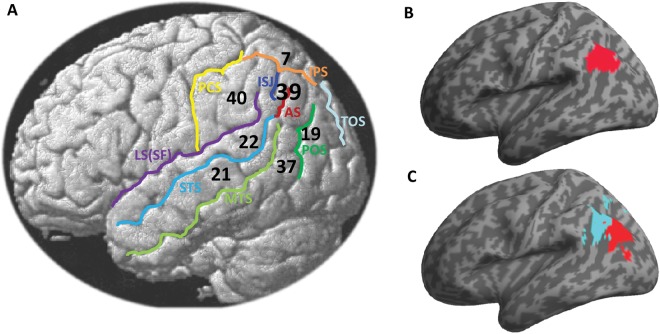
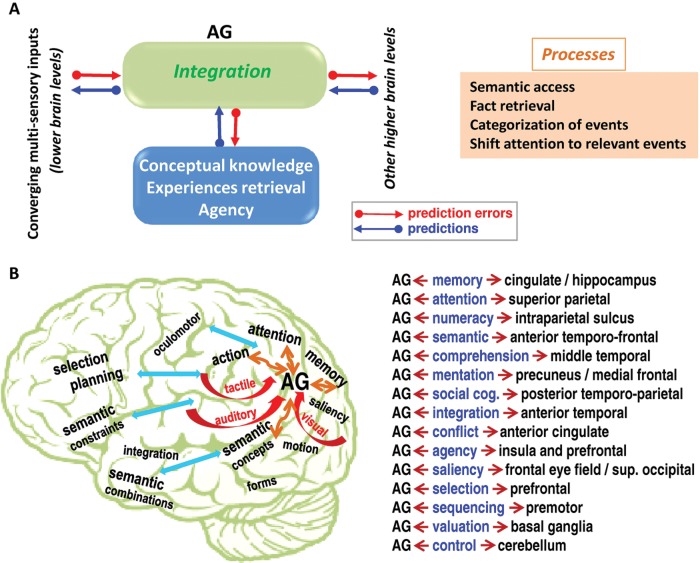
There is considerable interest in the structural and functional properties of the angular gyrus (AG). Located in the posterior part of the inferior parietal lobule, the AG has been shown in numerous meta-analysis reviews to be consistently activated in a variety of tasks. This review discusses the involvement of the AG in semantic processing, word reading and comprehension, number processing, default mode network, memory retrieval, attention and spatial cognition, reasoning, and social cognition. This large functional neuroimaging literature depicts a major role for the AG in processing concepts rather than percepts when interfacing perception-to-recognition-to-action. More specifically, the AG emerges as a cross-modal hub where converging multisensory information is combined and integrated to comprehend and give sense to events, manipulate mental representations, solve familiar problems, and reorient attention to relevant information. In addition, this review discusses recent findings that point to the existence of multiple subdivisions in the AG. This spatial parcellation can serve as a framework for reporting AG activations with greater definition. This review also acknowledges that the role of the AG cannot comprehensibly be identified in isolation but needs to be understood in parallel with the influence from other regions. Several interesting questions that warrant further investigations are finally emphasized.
Overview
The claims and statistics of this paper haven’t been checked yet.
Free: it reads the open-access text and checks the first 5 claims that cite a source we can check. Create a free account to check every claim.
Integrity signals
Registry
Cites
Statistics
Figures
Verification
Claims the paper makes
The claims and statistics of this paper haven’t been checked yet.
Free: it reads the open-access text and checks the first 5 claims that cite a source we can check. Create a free account to check every claim.
Claims other papers make about this one
Each is checked against this paper’s own text: does it say what the citing paper says it does?
In the citing paper
“Furthermore, it was previously thought that these areas were involved in self-referential processes [64–66], perspective taking [67], cognitive distancing [68–71], and sustained attention [72].”
From The meditative mind: a comprehensive meta-analysis of MRI studies. (2015) · cites this paper as [64]
Self-check
Percentages, sums and reported differences re-computed from the paper’s own numbers.
The self-check needs the paper’s full text.
Citations
Cites
A default mode of brain function
Raichle, M. E., MacLeod, A. M., Snyder, A. Z., Powers, W. J., Gusnard, D. A., & Shulman, G. L. (2001) · Proceedings of the National Academy of Sciences · doi:10.1073/pnas.98.2.676 · Cited by 12,190
The Brain's Default Network: Anatomy, Function, and Relevance to Disease
Buckner, R. L., Andrews‐Hanna, J. R., & Schacter, D. L. (2008) · Annals of the New York Academy of Sciences · doi:10.1196/annals.1440.011 · Cited by 9,761
The organization of the human cerebral cortex estimated by intrinsic functional connectivity
Thomas Yeo, B. T., Krienen, F. M., Sepulcre, J., Sabuncu, M. R., Lashkari, D., Hollinshead, M., Roffman, J. L., Smoller, J. W., Zöllei, L., Polimeni, J. R., et al. (2011) · Journal of Neurophysiology · doi:10.1152/jn.00338.2011 · Cited by 9,182
The free-energy principle: a unified brain theory?
Friston, K. (2010) · Nature Reviews Neuroscience · doi:10.1038/nrn2787 · Cited by 8,120 · cited 1×
“This framework is borrowed from the popular predictive coding framework (as reviewed in Friston 2010) that models the brain as a hierarchical inference engine that is trying to optimize probabilistic representations of what caused its sensory input.”
The organization of the human cerebellum estimated by intrinsic functional connectivity
Buckner, R. L., Krienen, F. M., Castellanos, A., Diaz, J. C., & Yeo, B. T. T. (2011) · Journal of Neurophysiology · doi:10.1152/jn.00339.2011 · Cited by 7,304
Functional connectivity in the resting brain: a network analysis of the default mode hypothesis
Greicius, M. D., Krasnow, B., Reiss, A. L., & Menon, V. (2003) · Proceedings of the National Academy of Sciences · doi:10.1073/pnas.0135058100 · Cited by 6,358
Dynamic mapping of human cortical development during childhood through early adulthood
Gogtay, N., Giedd, J. N., Lusk, L., Hayashi, K. M., Greenstein, D., Vaituzis, A. C., Nugent, T. F., Herman, D. H., Clasen, L. S., Toga, A. W., et al. (2004) · Proceedings of the National Academy of Sciences · doi:10.1073/pnas.0402680101 · Cited by 5,604 · cited 1×
“Its cortical volume is estimated at around 13.2 cm3 and 11.7 cm3 in the left and right hemisphere, respectively (Rademacher and others 1992), suggesting a relative leftgreater-than-right structural asymmetry (see also Eidelberg and Galaburda 1984).”
BackgroundInfluentialCorrespondence of the brain's functional architecture during activation and rest
Smith, S. M., Fox, P. T., Miller, K. L., Glahn, D. C., Fox, P. M., Mackay, C. E., Filippini, N., Watkins, K. E., Toro, R., Laird, A. R., et al. (2009) · Proceedings of the National Academy of Sciences · doi:10.1073/pnas.0905267106 · Cited by 5,150
Mapping the structural core of human cerebral cortex
Hagmann, P., Cammoun, L., Gigandet, X., Meuli, R., Honey, C. J., Wedeen, V. J., & Sporns, O. (2008) · PLoS Biology · doi:10.1371/journal.pbio.0060159 · Cited by 4,173 · cited 1×
“…London, UK Corresponding Author: Dr. Mohamed L. Seghier, Wellcome Department of Imaging Neuroscience, Institute of Neurology, 12 Queen Square, London WC1N 3BG, UK Email: m.seghier@fil.ion.ucl.ac.uk There is considerable interest in the structural and functional properties of the angular gyrus (AG).”
BackgroundBinder, J. R., Desai, R. H., Graves, W. W., & Conant, L. L. (2009) · Cerebral Cortex · doi:10.1093/cercor/bhp055 · Cited by 4,060 · cited 1×
“For instance, Binder and others (2009) found that the most consistent semantic activation across 120 functional neuroimaging studies was located within the left AG (Binder and others 2009), with a less strong but consistent effect in the right AG as well.”
Background
Research works printed but not linked: 5
- Barnes KA, 2011, Cereb Cortex
- Dejerine J, 1891, Societe de Biologie, 43, 197
- Kelly C, 2010, Eur J Neurol, 32, 383
- Mar RA, 2011, Annu Rev Neurosci, 62, 103
- 10.1227/00006123-199503000-00011 · doi:10.1227/00006123-199503000-00011 · Paper page
Cited by
Items 701–800 of 1,001
Song, L., Wang, H., Yang, W., Li, M., Xu, B., Li, M., Ding, H., Lv, H., Zhao, P., Yang, Z., et al. (2024) · CNS Neuroscience & Therapeutics · doi:10.1111/cns.70151 · Cited by 18
Effects of smartphone restriction on cue-related neural activity
Schmitgen, M. M., Henemann, G. M., Koenig, J., Otte, M., Rosero, J. P., Bach, P., Haage, S. H., Wolf, N. D., & Wolf, R. C. (2025) · Computers in Human Behavior · doi:10.1016/j.chb.2025.108610 · Cited by 18
Woost, T. B., Dukart, J., Frisch, S., Barthel, H., Sabri, O., Mueller, K., & Schroeter, M. L. (2013) · NeuroImage Clinical · doi:10.1016/j.nicl.2013.05.008 · Cited by 18
“As for the angular and supramarginal gyrus, their integrative involvement in reading, writing and mathematical processes has been known for long time (Seghier, 2013).”
BackgroundNeyens, V., Bruffaerts, R., Liuzzi, A. G., Kalfas, I., Peeters, R. R., Keuleers, E., Vogels, R., Deyne, S. D., Storms, G., Dupont, P. J., et al. (2017) · Frontiers in Human Neuroscience · doi:10.3389/fnhum.2017.00402 · Cited by 18
Metabolic lesion-deficit mapping of human cognition
Jha, A., Teotónio, R., Smith, A.-L., Bomanji, J. B., Dickson, J. C., Diehl, B., Duncan, J. S., & Nachev, P. (2020) · Brain · doi:10.1093/brain/awaa032 · Cited by 18
Interpersonal brain synchronization under bluffing in strategic games
Wang, Z., Wang, Y., Zhou, X., & Yu, R. (2020) · Social Cognitive and Affective Neuroscience · doi:10.1093/scan/nsaa154 · Cited by 18
Hirst, R. J., Whelan, R., Boyle, R. T., Setti, A., Knight, S. P., O’Connor, J. D., Williamson, W., McMorrow, J. P., Fagan, A. J., Meaney, J. F., et al. (2020) · Neurobiology of Aging · doi:10.1016/j.neurobiolaging.2020.12.004 · Cited by 18
“The AG has been described as a “cross-modal hub” and “convergence zone” (for review see Seghier, 2013).”
InfluentialLifshitz‐Ben‐Basat, A., & Mashal, N. (2021) · Experimental Brain Research · doi:10.1007/s00221-020-06023-2 · Cited by 20
“Accumulating evidence suggests that the bilateral AG, as part of the frontoparietal control network, becomes deactivated during certain tasks and paradigms (Spreng et al. 2009; Seghier 2013) such as tasks that involve original or creative thinking.”
BackgroundThe Emergence of a Brain Network for Numerical Thinking
Hyde, D. C. (2021) · Child Development Perspectives · doi:10.1111/cdep.12418 · Cited by 18
Alterations of Prefrontal-Posterior Information Processing Patterns in Autism Spectrum Disorders
Zhao, H.-C., Lv, R., Zhang, G., He, L., Cai, X.-T., Sun, Q., Yan, C., Bao, X.-Y., Lv, X.-Y., & Fu, B. (2022) · Frontiers in Neuroscience · doi:10.3389/fnins.2021.768219 · Cited by 18
Lee, S. J., Park, J., Lee, S., Koo, J., Vanneste, S., Ridder, D. D., Lim, S., & Song, J. (2022) · Frontiers in Neuroscience · doi:10.3389/fnins.2022.1028776 · Cited by 20
Vandenberghe, R. R., & Gillebert, C. R. (2013) · Frontiers in Human Neuroscience · doi:10.3389/fnhum.2013.00366 · Cited by 18
“The contribution of these inferior parietal areas to cognitive processes across multiple domains has been the subject of several recent reviews (e.g., Duncan, 2010; Cabeza et al., 2012; Seghier, 2013).”
BackgroundEnvironmental layout complexity affects neural activity during navigation in humans
Slone, E., Burles, F., & Iaria, G. (2016) · European Journal of Neuroscience · doi:10.1111/ejn.13218 · Cited by 18
“The angular gyrus has been implicated in a number of processes, including spatial cognition, attention, and memory (Seghier, 2013).”
BackgroundKlamer, S., Milian, M., Erb, M., Rona, S., Lerche, H., & Ethofer, T. (2017) · NeuroImage Clinical · doi:10.1016/j.nicl.2017.01.021 · Cited by 18
“Especially the right angular gyrus has been suggested to be involved in visual-spatial attention (Seghier, 2013).”
BackgroundYoun, H., Lee, E. S., Lee, S., Suh, S., Jeong, H., & Eo, J. S. (2018) · Journal of Affective Disorders · doi:10.1016/j.jad.2018.06.029 · Cited by 18
Mahon, B. M., Nørgaard, M., Svarer, C., Andersen, S. B., Madsen, M. K., Baaré, W. F. C., Madsen, J., Frøkjær, V. G., & Knudsen, G. M. (2018) · European Neuropsychopharmacology · doi:10.1016/j.euroneuro.2018.06.004 · Cited by 18
Identifying mild-moderate Parkinson’s disease using whole-brain functional connectivity
Tang, Y., Liu, B., Yang, Y., Chang-min, W., Li, M., Tang, B.-S., & Guo, J.-F. (2018) · Clinical Neurophysiology · doi:10.1016/j.clinph.2018.09.006 · Cited by 18
Conway, C. M., Eghbalzad, L., Deocampo, J. A., Smith, G. N. L., Na, S. D., & King, T. Z. (2020) · Neurobiology of Learning and Memory · doi:10.1016/j.nlm.2020.107175 · Cited by 18
Effects of Cognitive Functioning and Education on Later-Life Health Numeracy
Zamarian, L., Lenhart, L., Nagele, M., Steiger, R., Gizewski, E. R., Benke, T., Scherfler, C., & Delazer, M. (2020) · Gerontology · doi:10.1159/000510092 · Cited by 18
Meier, E. L., Sheppard, S. M., Goldberg, E. B., Head, C. R., Ubellacker, D. M., Walker, A., & Hillis, A. E. (2020) · Neuropsychologia · doi:10.1016/j.neuropsychologia.2020.107651 · Cited by 18
“…area is considered a critical cross-modal hub for many processes, semantics in particular (Binder et al., 2009; Binder and Desai, 2011; Davey et al., 2015; Humphreys and Lambon Ralph, 2015; Lambon Ralph et al., 2016; Noonan et al., 2013; Seghier, 2013; Whitney et al., 2012; Xu et al., 2016, 2017).”
Parsons, N., Irimia, A., Amgalan, A., Ugon, J., Morgan, K. J., Shelyag, S., Hocking, A., Poudel, G. R., & Caeyenberghs, K. (2023) · NeuroImage Clinical · doi:10.1016/j.nicl.2023.103428 · Cited by 17
“This finding is interesting, given the RH angular gyrus is strongly implicated in language and number processing (Seghier, 2012) which were tested directly using the 30 Seconds and Counting Task.”
Three weeks of exercise therapy altered brain functional connectivity in fibromyalgia inpatients
Kan, S., FUJITA, N., Shibata, M., Miki, K., Yukioka, M., & Senba, E. (2023) · Neurobiology of Pain · doi:10.1016/j.ynpai.2023.100132 · Cited by 17
“The angular gyrus has a role in integrating multimodal sensory information (Seghier, 2013), and this region is considered a part of the default mode network (DMN) (Raichle, 2015).”
BackgroundAbnormal intrinsic functional hubs and connectivity in patients with post‐stroke depression
Wu, X., Xu, K., Li, T., Wang, L., Fu, Y., Ma, Z., Wu, X., Wang, Y., Chen, F., Song, J., et al. (2024) · Annals of Clinical and Translational Neurology · doi:10.1002/acn3.52091 · Cited by 17
“48,49 The abnormality of ANG has been consistently reported in PSD patients.”
BackgroundTie, B., Zhang, T., He, M., Geng, L., Feng, Q., Liu, C., Wang, X., Wang, Y., Tian, D., Gao, Y., et al. (2024) · Computers in Human Behavior · doi:10.1016/j.chb.2024.108531 · Cited by 17
Breukelaar, I. A., Griffiths, K. R., Harris, A. W. F., Foster, S., Williams, L. M., & Korgaonkar, M. S. (2020) · Cortex · doi:10.1016/j.cortex.2020.08.014 · Cited by 17
Anatomical correlates of recovery in apraxia: A longitudinal lesion-mapping study in stroke patients
Dreßing, A., Kaller, C. P., Martin, M., Nitschke, K., Kümmerer, D., Beume, L.-A., Schmidt, C. S. M., Musso, M., Urbach, H., Rijntjes, M., et al. (2021) · Cortex · doi:10.1016/j.cortex.2021.06.001 · Cited by 17
Functional Near-Infrared Spectroscopy Neurofeedback Enhances Human Spatial Memory
Hou, X., Xiao, X. N., Gong, Y., Li, Z., Chen, A., & Zhu, C. (2021) · Frontiers in Human Neuroscience · doi:10.3389/fnhum.2021.681193 · Cited by 17
Osiurak, F., Crétel, C., Uomini, N., Bryche, C., Lesourd, M., & Reynaud, E. (2021) · Topics in Cognitive Science · doi:10.1111/tops.12577 · Cited by 17
Kline, J. E., Yuan, W., Harpster, K. L., Altaye, M., & Parikh, N. A. (2021) · NeuroImage · doi:10.1016/j.neuroimage.2021.118688 · Cited by 17
“We identified decreased segregation measures in a number of novel regions including the left angular gyrus, which is involved in memory, attention, and spatial cognition (Seghier, 2013), and the left and right lateral fronto-orbital gyri, which contain the inferior frontal gyrus, a major hub of language comprehension…”
BackgroundKoppelmans, V., Mulavara, A. P., Seidler, R. D., Dios, Y. E. D., Bloomberg, J. J., & Wood, S. J. (2022) · Brain Structure and Function · doi:10.1007/s00429-022-02492-z · Cited by 17
Meditation attenuates default-mode activity: A pilot study using ultra-high field 7 Tesla MRI
Ganesan, S., Moffat, B. A., Dam, N. T. V., Lorenzetti, V., & Zalesky, A. (2023) · Brain Research Bulletin · doi:10.1016/j.brainresbull.2023.110766 · Cited by 17
“…study have been widely implicated in visual recognition, processing and perception, i.e., lateral occipital complex (Grill-Spector et al., 2001), fusiform gyri (Weiner and Zilles, 2016), angular gyri (Seghier, 2013), occipital pole, calcarine area and lingual gyri (Swenson and Gulledge, 2017).”
BackgroundXie, S., Zhang, Z., Zhao, Q., Zhang, J., Zhong, S., Bi, Y., He, Y., Pan, H., & Gong, G. (2014) · Cerebral Cortex · doi:10.1093/cercor/bhu079 · Cited by 17
Methylphenidate-mediated motor control network enhancement in patients with traumatic brain injury
Dorer, C. L., Manktelow, A. E., Allanson, J., Sahakian, B. J., Pickard, J. D., Bateman, A., Menon, D. K., & Stamatakis, E. A. (2018) · Brain Injury · doi:10.1080/02699052.2018.1469166 · Cited by 17
Cerebellar and prefrontal-cortical engagement during higher-order rule learning in older adulthood
Jackson, T. B., Maldonado, T., Eakin, S. M., Orr, J. M., & Bernard, J. A. (2020) · Neuropsychologia · doi:10.1016/j.neuropsychologia.2020.107620 · Cited by 17
Yu, W., Bo, T., Zhu, F., Gao, Z., Xiao, Y., Gong, Q., & Lui, S. (2025) · Translational Psychiatry · doi:10.1038/s41398-025-03424-1 · Cited by 17
Wen, Z., Wan, X., Qi, C.-X., & Huang, X. (2022) · International Journal of General Medicine · doi:10.2147/ijgm.s353649 · Cited by 16
Functional connectivity of brain networks during semantic processing in older adults
Garcia, A. M., Cohen, R. A., Porges, E. C., Williamson, J. B., & Woods, A. J. (2022) · Frontiers in Aging Neuroscience · doi:10.3389/fnagi.2022.814882 · Cited by 16
Beta resting-state functional connectivity predicts tactile spatial acuity
Sasaki, R., Kojima, S., Otsuru, N., Yokota, H., Saito, K., Shirozu, H., & Onishi, H. (2023) · Cerebral Cortex · doi:10.1093/cercor/bhad221 · Cited by 16
Liang, D., Fan, X., Fan, Y., Li, X., Li, H., & Zhou, J. (2023) · Frontiers in Molecular Neuroscience · doi:10.3389/fnmol.2023.1153641 · Cited by 16
Differing Connectivity of Exner’s Area for Numbers and Letters
Klein, E., Willmes, K., Jung, S., Huber, S., Braga, L. W., & Moeller, K. (2016) · Frontiers in Human Neuroscience · doi:10.3389/fnhum.2016.00281 · Cited by 16
“Interestingly, there are white matter connections from the temporal cortex associated with language processing (Seghier, 2013) to the precuneus, which is directly neighboring the IPS (in fact, the sphere of 4 mm around the IPS in the fiber tracking study included parts of the precuneus as well).”
BackgroundInfluentialDing, J.-R., Ding, X., Hua, B., Xiong, X., Wang, Q., & Chen, H. (2016) · Medicine · doi:10.1097/md.0000000000004625 · Cited by 16
Neural mechanisms underlying valence inferences to sound: The role of the right angular gyrus
Bravo, F., Cross, I. R. M., Hawkins, S., Gonzalez, N., Docampo, J., Bruno, C., & Stamatakis, E. A. (2017) · Neuropsychologia · doi:10.1016/j.neuropsychologia.2017.05.029 · Cited by 16
Zhang, X., Dai, R., Cheng, G., Zhang, W., & Long, Q. (2020) · International Journal of Ophthalmology · doi:10.18240/ijo.2020.10.18 · Cited by 16
Sun, Y., Tao, S., Tian, S., Shao, J., Mo, Z., Wang, X., Wang, H., Zhao, P., Chen, Z., Yao, Z., et al. (2021) · Journal of Affective Disorders · doi:10.1016/j.jad.2021.01.047 · Cited by 16
Alhajri, N., Boudreau, S. A., & Graven‐Nielsen, T. (2021) · NeuroImage Clinical · doi:10.1016/j.nicl.2021.102907 · Cited by 16
Voxel-based meta-analysis of gray matter abnormalities in idiopathic dystonia
Huang, X., Lin, J., Shang, H., & Yang, J. (2022) · Journal of Neurology · doi:10.1007/s00415-022-10961-y · Cited by 16
“The right angular gyrus also has a role in semantic processing, word reading and comprehension, number processing, default mode network, memory retrieval, attention and spatial cognition, reasoning and social cognition [60].”
BackgroundNowrangi, M. A., Outen, J. D., Naaz, F., Chen, L., Bakker, A., Munro, C. A., Kamath, V. J., Rebok, G. W., & Rosenberg, P. B. (2022) · Journal of Alzheimer s Disease · doi:10.3233/jad-215148 · Cited by 16
“As described in the introduction, the angular gyrus is known to be associated with number processing, calculation, as well as reading and comprehension, and memory retrieval [47].”
Gao, L., Xue, Q., Gong, S., Li, G., Tong, W., Fan, M., Chen, X., Jia, Y., Song, Y., Chen, S., et al. (2022) · Frontiers in Neurology · doi:10.3389/fneur.2022.719778 · Cited by 16
Kay, D. B., Kim, B., Monterosso, J. R., Lewthwaite, R., & Winstein, C. J. (2022) · Frontiers in Human Neuroscience · doi:10.3389/fnhum.2022.900405 · Cited by 16
Qi, C.-X., Wen, Z., & Huang, X. (2022) · Frontiers in Human Neuroscience · doi:10.3389/fnhum.2022.882114 · Cited by 16
Chaudhary, S., Hu, S., Hu, K., Dominguez, J. C., Chao, H. H., & Li, C. R. (2023) · Journal of Affective Disorders Reports · doi:10.1016/j.jadr.2023.100646 · Cited by 16
“As part of the DMN, AG/SMG supports self-referential thoughts (Ionta et al., 2011; Seghier, 2013) and the hyperconnectivity with amygdala may indicate emotionally, possibly negatively biased, self-referential processes, a trait often noted along with anxiety (Tracy et al., 2021).”
MethodVallinoja, J., Nurmi, T., Jaatela, J., Wens, V., Bourguignon, M., Mäenpää, H., & Piitulainen, H. (2023) · Clinical Neurophysiology · doi:10.1016/j.clinph.2023.10.014 · Cited by 16
“Angular gyrus has been mostly connected to higher-order functions such as recognition and comprehension, with known connections to multiple areas in the cortex (Seghier, 2013).”
BackgroundKawata, N. Y. S., Nishitani, S., Yao, A., Takiguchi, S., Mizuno, Y., Mizushima, S. G., Makita, K., Hamamura, S., Saito, D. N., Okazawa, H., et al. (2024) · NeuroImage · doi:10.1016/j.neuroimage.2024.120589 · Cited by 16
“…as semantic processing, word reading and comprehension, number processing, memory retrieval, attention and spatial cognition, reasoning, and social cognition (Seghier, 2013; Smaczny et al., 2023; Sommerauer et al., 2020; Su ´ arez-Pellicioni et al., 2021; Valdois et al., 2019; Zhang et al., 2022).”
Magazzini, L., Ruhnau, P., & Weisz, N. (2016) · NeuroImage · doi:10.1016/j.neuroimage.2016.03.025 · Cited by 16
Phonotactic processing deficit following left-hemisphere stroke
Ghaleh, M., Skipper‐Kallal, L. M., Xing, S., Lacey, E. H., DeWitt, I., DeMarco, A. T., & Turkeltaub, P. E. (2017) · Cortex · doi:10.1016/j.cortex.2017.12.010 · Cited by 16
Byun, M. S., Kim, H. J., Yi, D., Choi, H. J., Baek, H., Lee, J. H., Choe, Y. M., Lee, S. H., Ko, K., Sohn, B. K., et al. (2019) · NeuroImage Clinical · doi:10.1016/j.nicl.2019.101765 · Cited by 16
“The angular gyrus is a part of the heteromodal parietal association cortex (Seghier, 2013), which is a higherorder cortical field involved in various functions including spatial attention, sensory processing and sensorimotor integration (Igelstrom and Graziano, 2017; Seghier, 2013; Singh-Curry and…”
InfluentialThe neural basis of arithmetic and phonology in deaf signing individuals
Andin, J., Fransson, P., Dahlström, Ö., Rönnberg, J., & Rudner, M. (2019) · Language Cognition and Neuroscience · doi:10.1080/23273798.2019.1616103 · Cited by 16
Predictive coding in a multisensory path integration task: An fMRI study
Krala, M., van Kemenade, B. M., Straube, B., Kircher, T. T. J., & Bremmer, F. (2019) · Journal of Vision · doi:10.1167/19.11.13 · Cited by 16
An Electroencephalography Network and Connectivity Analysis for Deception in Instructed Lying Tasks
Wang, Y., Ng, W. C., Ng, K. S., Yu, K., Wu, T., & Li, X. (2015) · PLoS ONE · doi:10.1371/journal.pone.0116522 · Cited by 16
“Moreover, the angular gyrus has been considered as a cross-modal hub where converging multisensory information is combined and integrated to comprehend and give sense to events, manipulate mental representations, and reorient attention to relevant information [58].”
BackgroundMurphy, C., Jefferies, E., Rueschemeyer, S., Sormaz, M., Wang, H.-T., Margulies, D. S., & Smallwood, J. (2017) · bioRxiv (Cold Spring Harbor Laboratory) · doi:10.1101/150466 · Cited by 16
“…cingulate cortex (Leech, Braga, & Sharp, 2012; Leech & Sharp, 2014), angular gyrus (Binder & Desai, 2011; Bonnici, Richter, Yazar, & Simons, 2016; Seghier, 2013), hippocampus (Moscovitch, Cabeza, Winocur, & Nadel, 2016) and anterior temporal lobes (Lambon Ralph, Jefferies, Patterson & Rogers,…”
Liu, M., Li, J., Li, J., Yang, H., Yao, Q., Zheng, X., Zhang, Z., & Qin, J. (2022) · Frontiers in Aging Neuroscience · doi:10.3389/fnagi.2022.851929 · Cited by 15
MacLean, M. W., Hadid, V., Spreng, R. N., & Leporé, F. (2023) · NeuroImage · doi:10.1016/j.neuroimage.2023.120088 · Cited by 15
Chen, H., Zhan, L., Li, Q., Meng, C., Quan, X., Chen, X., Hao, Z., Li, J., Gao, Y., Li, H., et al. (2023) · Brain Imaging and Behavior · doi:10.1007/s11682-023-00806-1 · Cited by 15
Ke, M., Hou, Y., Zhang, L., & Liu, G. (2024) · Frontiers in Neuroscience · doi:10.3389/fnins.2024.1363255 · Cited by 15
“The angular gyrus is involved in social cognition and language, and given its rich connectivity and location of multisensory information convergence, the angular gyrus resembles a cross-modal integrative hub (Seghier, 2013).”
BackgroundFunctional and Effective Connectivity Underlying Semantic Verbal Fluency
Arrigo, I. V., da Silva, P. H. R., & Leoni, R. F. (2024) · Brain Topography · doi:10.1007/s10548-024-01059-x · Cited by 15
Zhu, T., Zhang, X., Jin, L., Wang, L., & Wang, Y. (2025) · NeuroImage · doi:10.1016/j.neuroimage.2025.121042 · Cited by 16
“The AG ’ s role in semantic processing helped integrate reappraised information during IER (Seghier, 2013).”
Longitudinal Differences in Human Hippocampal Connectivity During Episodic Memory Processing
Choi, K., Bagen, L., Robinson, L., Umbach, G. S., Rugg, M. D., & Lega, B. C. (2020) · Cerebral Cortex Communications · doi:10.1093/texcom/tgaa010 · Cited by 15
Liu, X., Dounavi, M., Ritchie, K. A., Wells, K., Ritchie, C. W., Su, L., Terrera, G. M., & O'Brien, J. T. (2021) · Journal of Neurology · doi:10.1007/s00415-020-10383-8 · Cited by 15
Wu, M.-T., Tang, P., Tseng, W. I., Hsu, Y., Chen, Y.-J., Goh, J. O. S., Chou, T., Chang, Y., Gau, S. S., & Lan, C. (2021) · Frontiers in Aging Neuroscience · doi:10.3389/fnagi.2020.602191 · Cited by 15
Liu, Z., Zhang, Y., Wang, H., Xu, D., You, H., Zuo, Z., & Feng, F. (2021) · Neurological Research · doi:10.1080/01616412.2021.1954842 · Cited by 15
Akhonda, M. A. B. S., Levin‐Schwartz, Y., Calhoun, V. D., & Adalı, T. (2022) · Sensors · doi:10.3390/s22031224 · Cited by 15
Murray, L., Lopez‐Duran, N. L., Mitchell, C. M., Monk, C. S., & Hyde, L. W. (2022) · Psychological Medicine · doi:10.1017/s0033291722000307 · Cited by 15
“The precuneus and angular gyrus have multiple functions, including attention, multisensory integration, and mentalization (Cavanna & Trimble, 2006; Seghier, 2013).”
BackgroundAhrweiler, N., Santana‐Gonzalez, C., Zhang, N., Quandt, G., Ashtiani, N., Liu, G., Engstrom, M., Schultz, E., Liengswangwong, R., Teoh, J. Y., et al. (2022) · Brain Sciences · doi:10.3390/brainsci12091128 · Cited by 16
Gatto, R. G., Martin, P. R., Utianski, R. L., Duffy, J. R., Clark, H. M., Botha, H., Machulda, M. M., Josephs, K. A., & Whitwell, J. L. (2023) · Cortex · doi:10.1016/j.cortex.2023.08.019 · Cited by 15
Spatial variability of functional brain networks in early-blind and sighted subjects
Boldt, R., Seppä, M., Malinen, S., Tikka, P., Hari, R., & Carlson, S. (2014) · NeuroImage · doi:10.1016/j.neuroimage.2014.03.058 · Cited by 15
“In the following we focus only on the most correlated pairs of networks that displayed significant variability between the blind and sighted subjects during both conditions; the IC1r–IC1a, IC2r–IC3a and IC25r–IC24a pairs.”
Brain Mechanisms of Plasticity in Response to Treatments for Core Deficits in Autism
Ventola, P. E., Oosting, D., Anderson, L. C., & Pelphrey, K. A. (2013) · Progress in brain research · doi:10.1016/b978-0-444-63327-9.00007-2 · Cited by 16
Prado, J. (2018) · Elsevier eBooks · doi:10.1016/b978-0-12-811529-9.00002-9 · Cited by 15
Beauchamp, K. G., Shaffer, K. A., Fisher, P. A., & Berkman, E. T. (2018) · Applied Neuropsychology Child · doi:10.1080/21622965.2018.1495567 · Cited by 16
“…showed significantly greater activation in left angular gyrus (k¼ 145, [ 40, 64, 42]), a region increasingly recognized for its role in the integration of multisensory information to influence attentional processes (Seghier, 2013), from baseline to endpoint compared to the active control group.”
InfluentialFunctional Characterization of Atrophy Patterns Related to Cognitive Impairment
Schnellbächer, G. J., Hoffstaedter, F., Eickhoff, S. B., Caspers, S., Nickl‐Jockschat, T., Fox, P. T., Laird, A. R., Schulz, J. B., Reetz, K., & Dogan, I. (2020) · Frontiers in Neurology · doi:10.3389/fneur.2020.00018 · Cited by 14
Identification of community structure-based brain states and transitions using functional MRI
Bian, L., Cui, T., Yeo, B. T. T., Fornito, A., Razi, A., & Keith, J. M. (2021) · NeuroImage · doi:10.1016/j.neuroimage.2021.118635 · Cited by 15
Where agreement merges with disagreement: fMRI evidence of subject–verb integration
Quiñones, I., Molinaro, N., Mancini, S., Hernandez-Cabrera, J. A., & Carreiras, M. (2013) · NeuroImage · doi:10.1016/j.neuroimage.2013.11.038 · Cited by 15
“…inter-subject variability in the functional recruitment of parietal neural regions during reading processes has been previously reported (Bolger et al., 2008a,b; Levy et al., 2009; Seghier et al., 2008), and may reflect their association with the default network (see Seghier, 2013 for a review).”
BackgroundRitz, L., Segobin, S. H., Berre, A. L., Lannuzel, C., Boudehent, C., Vabret, F., Eustache, F., Pitel, A., & Beaunieux, H. (2014) · Alcoholism Clinical and Experimental Research · doi:10.1111/acer.12486 · Cited by 15
Vision-Language Integration in Multimodal Video Transformers (Partially) Aligns with the BrainPreprint
Dong, D. T., & Toneva, M. (2023) · arXiv (Cornell University) · doi:10.48550/arxiv.2311.07766 · Cited by 15
Weidacker, K., Kärgel, C., Massau, C., Krueger, T. H. C., Walter, M., Ponseti, J., Walter, H., & Schiffer, B. (2022) · Neuropsychologia · doi:10.1016/j.neuropsychologia.2022.108301 · Cited by 14
Zhang, E., Hauson, A. O., Pollard, A. A., Meis, B., Lackey, N. S., Carson, B., Khayat, S., Fortea, L., & Raduà, J. (2023) · Psychiatry Research Neuroimaging · doi:10.1016/j.pscychresns.2023.111691 · Cited by 15
Ostrowski, J., & Rose, M. (2024) · Scientific Reports · doi:10.1038/s41598-024-58227-z · Cited by 14
Frontoparietal Contributions to Retrieval
Rugg, M. D. (2024) · Oxford University Press eBooks · doi:10.1093/oxfordhb/9780190917982.013.36 · Cited by 14
Yao, L., Li, M., Wang, K., Liu, Y., Zheng, H., Zhong, Z., Ma, S., Yang, H., Sun, M., He, M., et al. (2024) · Frontiers in Psychiatry · doi:10.3389/fpsyt.2024.1360623 · Cited by 14
“Clinical impairment of the angular gyrus results in dyslexia, where there is no visual impairment but the person is unable to read the original literate person (68).”
BackgroundThe Effect of Functional Diversity on Team Creativity: Behavioral and fNIRS Evidence
Chen, Y., Presslee, A., & Yang, S. (2025) · Management Science · doi:10.1287/mnsc.2023.02157 · Cited by 14
Cahalan, S., Mitroff, S. R., Subiaul, F., & Rosenblau, G. (2025) · Personality Neuroscience · doi:10.1017/pen.2025.10002 · Cited by 14
Chen, H., Liu, B., Wang, S., Wang, X., Han, W., Wang, X., Zhu, Y., & Bi, Y. (2025) · Nature Human Behaviour · doi:10.1038/s41562-025-02357-5 · Cited by 14
Brain activations supporting linking of action phases in a sequential manual task
Säfström, D., & Domellöf, E. (2018) · NeuroImage · doi:10.1016/j.neuroimage.2018.02.014 · Cited by 14
Stefancin, P. L., Cahaney, C., Parker, R. I., Preston, T., Coulehan, K., Hogan, L. E., & Duong, T. Q. (2020) · NMR in Biomedicine · doi:10.1002/nbm.4296 · Cited by 15
Behind the wheels with autism and ADHD: Brain networks involved in driving hazard detection
Bednarz, H. M., Stavrinos, D., Svancara, A. M., Sherrod, G., Deshpande, H., & Kana, R. K. (2021) · Transportation Research Part F Traffic Psychology and Behaviour · doi:10.1016/j.trf.2021.01.007 · Cited by 14
Liu, X., Xu, X., Mao, C., Zhang, P., Zhang, Q., Jiang, L., Yang, Y., Ma, J., Ye, L., Lee, K., et al. (2021) · Experimental and Therapeutic Medicine · doi:10.3892/etm.2021.9940 · Cited by 14
“, language processing and attention) and serves as an important node of the DMN (29,30).”
BackgroundInfluentialNeural Correlates Underlying Social-Cue-Induced Value Change
Terenzi, D., Madipakkam, A. R., Molter, F., Mohr, P. N. C., Vermeer, A. B. L., Liu, L., & Park, S. Q. (2022) · Journal of Neuroscience · doi:10.1523/jneurosci.2405-21.2022 · Cited by 15
“As mentioned earlier, the caudate has been reported to be involved in the processing of the subjective value of rewards (Delgado et al., 2004; Schultz, 2016), whereas the angular gyrus has a role in spatial attention and orientation toward salient stimuli (Seghier, 2013).”
BackgroundWang, Y., Vantieghem, I., Dong, D., Nemegeer, J., Mey, J. D., Schuerbeek, P. V., Marinazzo, D., & Vandekerckhove, M. M. P. (2022) · Brain Sciences · doi:10.3390/brainsci12091215 · Cited by 14
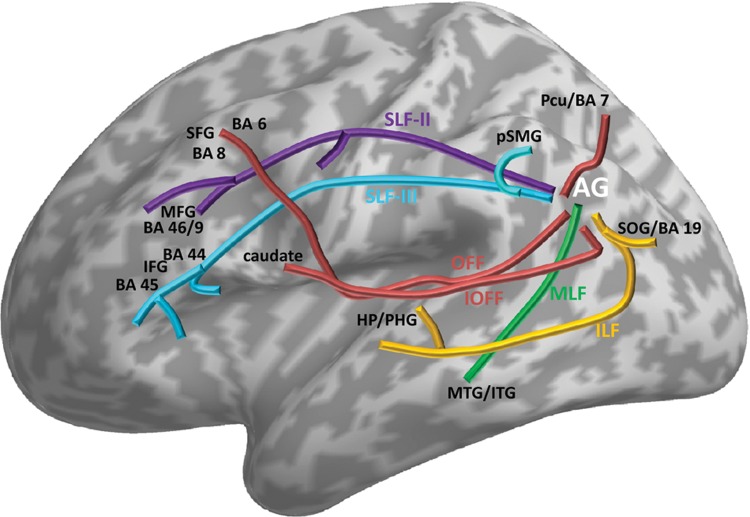
“Moreover, the left angular gyrus and the regions connected to this area through the left superior longitudinal fasciculus are also commonly involved in language processing [71,100].”
BackgroundInfluentialRepresentational dynamics of memories for real-life events
Jeunehomme, O., Heinen, R. M., Stawarczyk, D., Axmacher, N., & D’Argembeau, A. (2022) · iScience · doi:10.1016/j.isci.2022.105391 · Cited by 16
Xue, K., Chen, J., Wei, Y., Chen, Y., Han, S., Wang, C., Zhang, Y., Song, X., & Cheng, J. (2023) · Frontiers in Psychiatry · doi:10.3389/fpsyt.2023.1078779 · Cited by 15
Regional abnormalities of spontaneous brain activity in migraine: A coordinate‐based meta‐analysis
Wen, J., Gao, Y., Li, M., Hu, S., Zhao, M., Su, C., Wáng, Q., Xi, H., Zhan, L., Lv, Y., et al. (2023) · Journal of Neuroscience Research · doi:10.1002/jnr.25191 · Cited by 14
“The ANG, another important region of DMN, mainly participates in the pain response (Seghier, 2013; Yu et al., 2016).”
Background
Metadata
- Authors
- Seghier, M. L.
- Affiliations
- Wellcome Centre for Human Neuroimaging (GB)
- Corresponding author
- Seghier, Mohamed L.
- ORCID
- Seghier, Mohamed L.
- Venue
- The Neuroscientist
- Publisher
- SAGE Publications
- Published
- 2012-04-30
- Volume
- 19
- Issue
- 1
- Pages
- 43-61
- ISSN
- 1073-8584 (ISSN-L)
- 1089-4098
- PMC
- PMC4107834
- OpenAlex
- W2134248637
- Cited by
- 1,585
- References
- 157
- Citations by year
- 2026: 95 · 2025: 166 · 2024: 127 · 2023: 127 · 2022: 180 · 2021: 149 · 2020: 131 · 2019: 130 · 2018: 107 · 2017: 115 · 2016: 90 · 2015: 71 · 2014: 53 · 2013: 38 · 2012: 2
- FWCI
- 26.83
- Type
- journal article
- Language
- en
- Open access
- hybrid
- doi.org
- Licence
- cc-by
- journals.sagepub.com/page/policies/text-and-data-mining-license (tdm)
- Locations
- The Neuroscientist (publishedVersion, cc-by)
- PubMed Central (publishedVersion, cc-by)
- PubMed (publishedVersion)
- UCL Discovery (University College London) (submittedVersion)
- Funders
- Wellcome Trust
- Topics
- Life Sciences › Neuroscience › Cognitive Neuroscience › Neurobiology of Language and Bilingualism
- Social Sciences › Psychology › Developmental and Educational Psychology › Reading and Literacy Development
- Social Sciences › Psychology › Developmental and Educational Psychology › Cognitive and developmental aspects of mathematical skills
- Keywords
- angular gyrus, inferior parietal lobule, semantic processing, word reading, number processing, default mode network, memory retrieval, attention, spatial cognition, reasoning, social cognition, cross-modal integration, multisensory integration, parcellation, functional specialization
- MeSH terms
- Brain Mapping, Cognition, Diagnostic Imaging, Humans, Image Processing, Computer-Assisted, Neural Pathways, Parietal Lobe, Reading, Semantics, Meta-Analysis as Topic
About these checks
Registry, retraction, Cites and statistics results are computed, not judged, with one exception: a printed reference that no index lists is read once by a model before it counts as a citation error. Claims are extracted by a model and kept only when their quote appears verbatim in the text; each cited source is then checked, with a model’s help, for whether it says what the claim relies on. Those verdicts can be wrong — read the claim’s quote and the cited source before relying on one.
Statistics and arithmetic are recomputed, not judged.
Confidence bands are shown only for fields calibrated on our annotated test set. None is calibrated yet, so no band is shown.
What counts as a claim ›How we measure confidence ›How we check this ›
Are you an author, or do you see a problem with this page? Request a review
Data sources
Bibliographic data: Semantic Scholar, OpenAlex, Crossref.
Contains information from the Semantic Scholar Academic Graph Datasets, made available under the ODC Attribution License (ODC-BY 1.0).
Semantic Scholar’s data is described in: Kinney, R., et al. (2023). The Semantic Scholar Open Data Platform. arXiv:2301.10140.
