

The Angular Gyrus: Multiple Functions and Multiple Subdivisions
Open accessThe DOI matches its Crossref record; 157 of the 157 references it cites were found in a registry or an index.
Abstract
There is considerable interest in the structural and functional properties of the angular gyrus (AG). Located in the posterior part of the inferior parietal lobule, the AG has been shown in numerous meta-analysis reviews to be consistently activated in a variety of tasks. This review discusses the involvement of the AG in semantic processing, word reading and comprehension, number processing, default mode network, memory retrieval, attention and spatial cognition, reasoning, and social cognition. This large functional neuroimaging literature depicts a major role for the AG in processing concepts rather than percepts when interfacing perception-to-recognition-to-action. More specifically, the AG emerges as a cross-modal hub where converging multisensory information is combined and integrated to comprehend and give sense to events, manipulate mental representations, solve familiar problems, and reorient attention to relevant information. In addition, this review discusses recent findings that point to the existence of multiple subdivisions in the AG. This spatial parcellation can serve as a framework for reporting AG activations with greater definition. This review also acknowledges that the role of the AG cannot comprehensibly be identified in isolation but needs to be understood in parallel with the influence from other regions. Several interesting questions that warrant further investigations are finally emphasized.
Overview
The claims and statistics of this paper haven’t been checked yet.
Free: it reads the open-access text and checks the first 5 claims that cite a source we can check. Create a free account to check every claim.
Integrity signals
Registry
Cites
Statistics
Figures
Verification
Claims the paper makes
The claims and statistics of this paper haven’t been checked yet.
Free: it reads the open-access text and checks the first 5 claims that cite a source we can check. Create a free account to check every claim.
Claims other papers make about this one
Each is checked against this paper’s own text: does it say what the citing paper says it does?
In the citing paper
“Furthermore, it was previously thought that these areas were involved in self-referential processes [64–66], perspective taking [67], cognitive distancing [68–71], and sustained attention [72].”
From The meditative mind: a comprehensive meta-analysis of MRI studies. (2015) · cites this paper as [64]
Self-check
Percentages, sums and reported differences re-computed from the paper’s own numbers.
The self-check needs the paper’s full text.
Citations
Cites
A default mode of brain function
Raichle, M. E., MacLeod, A. M., Snyder, A. Z., Powers, W. J., Gusnard, D. A., & Shulman, G. L. (2001) · Proceedings of the National Academy of Sciences · doi:10.1073/pnas.98.2.676 · Cited by 12,190
The Brain's Default Network: Anatomy, Function, and Relevance to Disease
Buckner, R. L., Andrews‐Hanna, J. R., & Schacter, D. L. (2008) · Annals of the New York Academy of Sciences · doi:10.1196/annals.1440.011 · Cited by 9,761
The organization of the human cerebral cortex estimated by intrinsic functional connectivity
Thomas Yeo, B. T., Krienen, F. M., Sepulcre, J., Sabuncu, M. R., Lashkari, D., Hollinshead, M., Roffman, J. L., Smoller, J. W., Zöllei, L., Polimeni, J. R., et al. (2011) · Journal of Neurophysiology · doi:10.1152/jn.00338.2011 · Cited by 9,182
The free-energy principle: a unified brain theory?
Friston, K. (2010) · Nature Reviews Neuroscience · doi:10.1038/nrn2787 · Cited by 8,120 · cited 1×
“This framework is borrowed from the popular predictive coding framework (as reviewed in Friston 2010) that models the brain as a hierarchical inference engine that is trying to optimize probabilistic representations of what caused its sensory input.”
The organization of the human cerebellum estimated by intrinsic functional connectivity
Buckner, R. L., Krienen, F. M., Castellanos, A., Diaz, J. C., & Yeo, B. T. T. (2011) · Journal of Neurophysiology · doi:10.1152/jn.00339.2011 · Cited by 7,304
Functional connectivity in the resting brain: a network analysis of the default mode hypothesis
Greicius, M. D., Krasnow, B., Reiss, A. L., & Menon, V. (2003) · Proceedings of the National Academy of Sciences · doi:10.1073/pnas.0135058100 · Cited by 6,358
Dynamic mapping of human cortical development during childhood through early adulthood
Gogtay, N., Giedd, J. N., Lusk, L., Hayashi, K. M., Greenstein, D., Vaituzis, A. C., Nugent, T. F., Herman, D. H., Clasen, L. S., Toga, A. W., et al. (2004) · Proceedings of the National Academy of Sciences · doi:10.1073/pnas.0402680101 · Cited by 5,604 · cited 1×
“Its cortical volume is estimated at around 13.2 cm3 and 11.7 cm3 in the left and right hemisphere, respectively (Rademacher and others 1992), suggesting a relative leftgreater-than-right structural asymmetry (see also Eidelberg and Galaburda 1984).”
BackgroundInfluentialCorrespondence of the brain's functional architecture during activation and rest
Smith, S. M., Fox, P. T., Miller, K. L., Glahn, D. C., Fox, P. M., Mackay, C. E., Filippini, N., Watkins, K. E., Toro, R., Laird, A. R., et al. (2009) · Proceedings of the National Academy of Sciences · doi:10.1073/pnas.0905267106 · Cited by 5,150
Mapping the structural core of human cerebral cortex
Hagmann, P., Cammoun, L., Gigandet, X., Meuli, R., Honey, C. J., Wedeen, V. J., & Sporns, O. (2008) · PLoS Biology · doi:10.1371/journal.pbio.0060159 · Cited by 4,173 · cited 1×
“…London, UK Corresponding Author: Dr. Mohamed L. Seghier, Wellcome Department of Imaging Neuroscience, Institute of Neurology, 12 Queen Square, London WC1N 3BG, UK Email: m.seghier@fil.ion.ucl.ac.uk There is considerable interest in the structural and functional properties of the angular gyrus (AG).”
BackgroundBinder, J. R., Desai, R. H., Graves, W. W., & Conant, L. L. (2009) · Cerebral Cortex · doi:10.1093/cercor/bhp055 · Cited by 4,060 · cited 1×
“For instance, Binder and others (2009) found that the most consistent semantic activation across 120 functional neuroimaging studies was located within the left AG (Binder and others 2009), with a less strong but consistent effect in the right AG as well.”
BackgroundLarge-scale automated synthesis of human functional neuroimaging data.
Yarkoni, T., Poldrack, R. A., Nichols, T. E., Van Essen, D. C., & Wager, T. D. (2011) · Nature Methods · doi:10.1038/nmeth.1635 · Cited by 3,686 · cited 1×
“For instance, using the NeuroSythn database (Yarkoni and others 2011), a “reverse inference” at coordinates [x = –48, y = –56, z = 36] revealed that several concepts and keywords previously have been associated with the left AG in numerous fMRI and PET studies, with the top 10 concepts including…”
MethodDISCONNEXION SYNDROMES IN ANIMALS AND MAN
GESCHWIND, N. (1965) · Brain · doi:10.1093/brain/88.2.237 · Cited by 3,403 · cited 5×
“For instance, previous reports have suggested that there is no clear homologue in monkeys to the human AG (Geschwind 1965; Zilles and Palomero-Gallagher 2001; see illustration in Figure 1 of Culham and Kanwisher 2001).”
BackgroundInfluentialMesulam, M. (1998) · Brain · doi:10.1093/brain/121.6.1013 · Cited by 3,072
Functional-anatomic fractionation of the brain’s default network
Andrews-Hanna, J. R., Reidler, J. S., Sepulcre, J., Poulin, R., & Buckner, R. L. (2010) · Neuron · doi:10.1016/j.neuron.2010.02.005 · Cited by 2,767
Where do you know what you know? The representation of semantic knowledge in the human brain
Patterson, K., Nestor, P. J., & Rogers, T. T. (2007) · Nature Reviews Neuroscience · doi:10.1038/nrn2277 · Cited by 2,706
THREE PARIETAL CIRCUITS FOR NUMBER PROCESSING
Dehaene, S., Piazza, M., Pinel, P., & Cohen, L. (2003) · Cognitive Neuropsychology · doi:10.1080/02643290244000239 · Cited by 2,467
Changes in grey matter induced by training
Draganski, B., Gaser, C., Busch, V., Schuierer, G., Bogdahn, U., & May, A. (2004) · Nature · doi:10.1038/427311a · Cited by 2,373
Spreng, R. N., Mar, R. A., & Kim, A. S. N. (2009) · Journal of Cognitive Neuroscience · doi:10.1162/jocn.2008.21029 · Cited by 2,143
The neurobiology of semantic memory
Binder, J. R., & Desai, R. H. (2011) · Trends in Cognitive Sciences · doi:10.1016/j.tics.2011.10.001 · Cited by 2,114
Fiber Tract–based Atlas of Human White Matter Anatomy
Wakana, S., Jiang, H., Nagae-Poetscher, L. M., van Zijl, P. C. M., & Mori, S. (2004) · Radiology · doi:10.1148/radiol.2301021640 · Cited by 1,980 · cited 1×
“Several interesting questions that warrant further investigations are finally emphasized.”
BackgroundCommon blood flow changes across visual tasks: II. Decreases in cerebral cortex
Shulman, G. L., Fiez, J. A., Corbetta, M., Buckner, R. L., Miezin, F. M., Raichle, M. E., & Petersen, S. E. (1997) · Journal of Cognitive Neuroscience · doi:10.1162/jocn.1997.9.5.648 · Cited by 1,890
Meta-analyzing left hemisphere language areas: phonology, semantics, and sentence processing.
Vigneau, M., Beaucousin, V., Hervé, P. Y., Duffau, H., Crivello, F., Houdé, O., Mazoyer, B., & Tzourio-Mazoyer, N. (2006) · NeuroImage · doi:10.1016/j.neuroimage.2005.11.002 · Cited by 1,851
Perisylvian language networks of the human brain
Catani, M., Jones, D. K., & ffytche, D. H. (2005) · Annals of Neurology · doi:10.1002/ana.20319 · Cited by 1,832 · cited 1×
“Several interesting questions that warrant further investigations are finally emphasized.”
BackgroundA diffusion tensor imaging tractography atlas for virtual in vivo dissections.
CATANI, M., & THIEBAUTDESCHOTTEN, M. (2008) · Cortex · doi:10.1016/j.cortex.2008.05.004 · Cited by 1,642 · cited 1×
“Several interesting questions that warrant further investigations are finally emphasized.”
BackgroundMeta-analysis of the functional neuroanatomy of single-word reading: method and validation
Turkeltaub, P. E., Eden, G. F., Jones, K. M., & Zeffiro, T. A. (2002) · NeuroImage · doi:10.1006/nimg.2002.1131 · Cited by 1,604
Damasio, A. R. (1989) · Cognition · doi:10.1016/0010-0277(89)90005-x · Cited by 1,538 · cited 3×
“Convergence zones are assumed to be amodal, and they sustain integration in a multimodal system (Damasio 1989).”
BackgroundInfluentialFiber tract-based atlas of human white matter anatomy
Wakana, S. (2006) · Medical Entomology and Zoology · Cited by 1,531
Mapping Human Cortical Areas In Vivo Based on Myelin Content as Revealed by T1- and T2-Weighted MRI
Glasser, M. F., & Van Essen, D. C. (2011) · The Journal of Neuroscience · doi:10.1523/jneurosci.2180-11.2011 · Cited by 1,447 · cited 1×
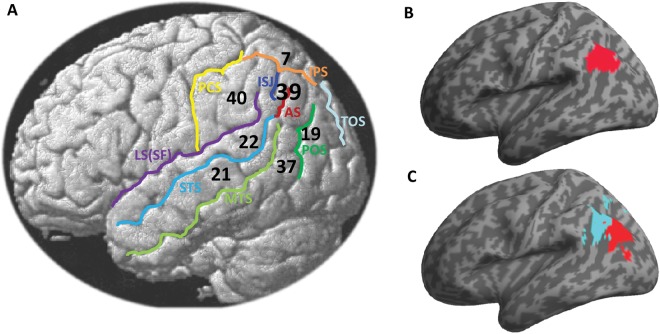
“Recent cytoarchitectonic studies (e.g., Caspers and others 2008; Caspers and others 2006) have suggested that the AG extends rostrally to area PGa and caudally to area PGp, as illustrated in Figure 1C.”
MethodGallagher, H. L., Happé, F., Brunswick, N., Fletcher, P. C., Frith, U., & Frith, C. D. (2000) · Neuropsychologia · doi:10.1016/s0028-3932(99)00053-6 · Cited by 1,394
The anatomy of language: a review of 100 fMRI studies published in 2009
Price, C. J. (2010) · Annals of the New York Academy of Sciences · doi:10.1111/j.1749-6632.2010.05444.x · Cited by 1,387
The anatomy of language: contributions from functional neuroimaging
PRICE, C. J. (2000) · Journal of Anatomy · doi:10.1046/j.1469-7580.2000.19730335.x · Cited by 1,333
The functional neuroanatomy of autobiographical memory: a meta-analysis
Svoboda, E., McKinnon, M. C., & Levine, B. (2006) · Neuropsychologia · doi:10.1016/j.neuropsychologia.2006.05.023 · Cited by 1,274
The parietal cortex and episodic memory: an attentional account
Cabeza, R., Ciaramelli, E., Olson, I. R., & Moscovitch, M. (2008) · Nature Reviews Neuroscience · doi:10.1038/nrn2459 · Cited by 1,197
Functional anatomy of a common semantic system for words and pictures
Vandenberghe, R., Price, C., Wise, R., Josephs, O., & Frackowiak, R. S. J. (1996) · Nature · doi:10.1038/383254a0 · Cited by 1,183
THE ANATOMY OF PHONOLOGICAL AND SEMANTIC PROCESSING IN NORMAL SUBJECTS
DÉMONET, J.-F., CHOLLET, F., RAMSAY, S., CARDEBAT, D., NESPOULOUS, J.-L., WISE, R., RASCOL, A., & FRACKOWIAK, R. (1992) · Brain · doi:10.1093/brain/115.6.1753 · Cited by 1,154
Makris, N., Kennedy, D. N., McInerney, S., Sorensen, A. G., Wang, R., Caviness, V. S., & Pandya, D. N. (2005) · Cerebral Cortex · doi:10.1093/cercor/bhh186 · Cited by 1,146 · cited 1×
“Several interesting questions that warrant further investigations are finally emphasized.”
BackgroundCavada, C., & Goldman‐Rakic, P. S. (1989) · Journal of Comparative Neurology · doi:10.1002/cne.902870403 · Cited by 1,128
Functional neuroimaging of speech perception in infants
Dehaene-Lambertz, G., Dehaene, S., & Hertz-Pannier, L. (2002) · Science · doi:10.1126/science.1077066 · Cited by 1,113 · cited 1×
“The involvement of the AG in reading comprehension was first suggested by Dejerine (1891), who documented a loss in the capacity to read and write words following damage to the left AG.”
BackgroundConceptual Processing during the Conscious Resting State: A Functional MRI Study
Binder, J. R., Frost, J. A., Hammeke, T. A., Bellgowan, P. S. F., Rao, S. M., & Cox, R. W. (1999) · Journal of Cognitive Neuroscience · doi:10.1162/089892999563265 · Cited by 1,066
Decety, J., & Lamm, C. (2007) · The Neuroscientist · doi:10.1177/1073858407304654 · Cited by 1,044 · cited 1×
“In this large literature of social cognition, a consistently activated region extended over posterior temporal to posterior parietal cortices (Decety and Lamm 2007), including the AG (Mar 2011).”
BackgroundStructural plasticity in the bilingual brain
Mechelli, A., Crinion, J. T., Noppeney, U., O'Doherty, J., Ashburner, J., Frackowiak, R. S., & Price, C. J. (2004) · Nature · doi:10.1038/431757a · Cited by 1,005
The Neural Bases of Social Cognition and Story Comprehension
Mar, R. A. (2011) · Annual Review of Psychology · doi:10.1146/annurev-psych-120709-145406 · Cited by 950
Farrer, C., & Frith, C. D. (2002) · NeuroImage · doi:10.1006/nimg.2001.1009 · Cited by 949
Abstract representations of numbers in the animal and human brain
Dehaene, S., Dehaene-Lambertz, G., & Cohen, L. (1998) · Trends in Neurosciences · doi:10.1016/s0166-2236(98)01263-6 · Cited by 918
Bilateral brain processes for comprehending natural language
Jung-Beeman, M. (2005) · Trends in Cognitive Sciences · doi:10.1016/j.tics.2005.09.009 · Cited by 908 · cited 3×
“This issue relates to the possible differences in functional properties in the left and right AG over varieties of tasks (Jung-Beeman 2005; Lindell 2006).”
BackgroundInfluentialThe Resting Brain: Unconstrained yet Reliable
Shehzad, Z., Kelly, A. M. C., Reiss, P. T., Gee, D. G., Gotimer, K., Uddin, L. Q., Lee, S. H., Margulies, D. S., Roy, A. K., Biswal, B. B., et al. (2009) · Cerebral Cortex · doi:10.1093/cercor/bhn256 · Cited by 908
Mazoyer, B., Zago, L., Mellet, E., Bricogne, S., Etard, O., Houdé, O., Crivello, F., Joliot, M., Petit, L., & Tzourio-Mazoyer, N. (2001) · Brain Research Bulletin · doi:10.1016/s0361-9230(00)00437-8 · Cited by 906
Twenty‐five pitfalls in the analysis of diffusion MRI data
Jones, D. K., & Cercignani, M. (2010) · NMR in Biomedicine · doi:10.1002/nbm.1543 · Cited by 827 · cited 1×
“It is, however, important to keep in mind some of the limitations in using such techniques to quantify structural connectivity in vivo (see review in Jones 2010; Jones and Cercignani 2010).”
BackgroundNeuroimaging of cognitive functions in human parietal cortex
Culham, J. C., & Kanwisher, N. G. (2001) · Current Opinion in Neurobiology · doi:10.1016/s0959-4388(00)00191-4 · Cited by 821 · cited 1×
“In particular, the AG might be involved in the reorienting or shifting of attention—for instance, when shifting the attentional system toward particular stimuli that have high salience in terms of motion, emotion, value, or meaning (Gottlieb 2007). For example, it has been shown that attentional reorienting originates…”
BackgroundIs 2+2=4? Meta-analyses of brain areas needed for numbers and calculations
Arsalidou, M., & Taylor, M. J. (2011) · NeuroImage · doi:10.1016/j.neuroimage.2010.10.009 · Cited by 807
Andersen, R. A., Asanuma, C., Essick, G., & Siegel, R. M. (1990) · Journal of Comparative Neurology · doi:10.1002/cne.902960106 · Cited by 806
Stimulating illusory own-body perceptions
Blanke, O., Ortigue, S., Landis, T., & Seeck, M. (2002) · Nature · doi:10.1038/419269a · Cited by 802
Interference resolution: Insights from a meta-analysis of neuroimaging tasks
NEE, D. E., WAGER, T. D., & JONIDES, J. (2007) · Cognitive, Affective, & Behavioral Neuroscience · doi:10.3758/cabn.7.1.1 · Cited by 798
Spaniol, J., Davidson, P. S. R., Kim, A. S. N., Han, H., Moscovitch, M., & Grady, C. L. (2009) · Neuropsychologia · doi:10.1016/j.neuropsychologia.2009.02.028 · Cited by 791
The evolution of the arcuate fasciculus revealed with comparative DTI
Rilling, J. K., Glasser, M. F., Preuss, T. M., Ma, X., Zhao, T., Hu, X., & Behrens, T. E. J. (2008) · Nature Neuroscience · doi:10.1038/nn2072 · Cited by 767
Grefkes, C., & Fink, G. R. (2005) · Journal of Anatomy · doi:10.1111/j.1469-7580.2005.00426.x · Cited by 759
O'Reilly, J. X., Beckmann, C. F., Tomassini, V., Ramnani, N., & Johansen-Berg, H. (2010) · Cerebral Cortex · doi:10.1093/cercor/bhp157 · Cited by 738
Intrinsic connections and architectonics of posterior parietal cortex in the rhesus monkey
Pandya, D. N., & Seltzer, B. (1982) · Journal of Comparative Neurology · doi:10.1002/cne.902040208 · Cited by 729 · cited 1×
“Furthermore, anatomical tracer studies in the monkey have revealed rich efferent and afferent connections between the different subareas of the posterior parietal cortex with multiple inferior frontal, dorsal prefrontal, parahippocampal, hippocampal, and thalamic, caudate, cingulate, superior temporal, and frontal eye…”
BackgroundNeuroimaging studies of word reading
Fiez, J. A., & Petersen, S. E. (1998) · Proceedings of the National Academy of Sciences · doi:10.1073/pnas.95.3.914 · Cited by 727
Cognitive and Brain Consequences of Conflict
Fan, J., Flombaum, J. I., McCandliss, B. D., Thomas, K. M., & Posner, M. I. (2003) · NeuroImage · doi:10.1006/nimg.2002.1319 · Cited by 676
Comparative mapping of higher visual areas in monkeys and humans
Orban, G. A., Van Essen, D., & Vanduffel, W. (2004) · Trends in Cognitive Sciences · doi:10.1016/j.tics.2004.05.009 · Cited by 639
The human inferior parietal cortex: Cytoarchitectonic parcellation and interindividual variability
Caspers, S., Geyer, S., Schleicher, A., Mohlberg, H., Amunts, K., & Zilles, K. (2006) · NeuroImage · doi:10.1016/j.neuroimage.2006.06.054 · Cited by 634
Memory retrieval and the parietal cortex: A review of evidence from a dual-process perspective
Vilberg, K. L., & Rugg, M. D. (2008) · Neuropsychologia · doi:10.1016/j.neuropsychologia.2008.01.004 · Cited by 621 · cited 1×
“Recent meta-analysis reviews have demonstrated a strong involvement of the AG during episodic memory retrieval, particularly during successful (Ciaramelli and others 2008; Vilberg and Rugg 2008) and subjective recollection (Spaniol and others 2009).”
BackgroundLocalization of cortical areas activated by thinking
Roland, P. E., & Friberg, L. (1985) · Journal of Neurophysiology · doi:10.1152/jn.1985.53.5.1219 · Cited by 596 · cited 2×
“Early neuroimaging studies have shown strong AG activation during digit subtraction (Roland and Friberg 1985) that has been replicated with high consistency across functional studies with varieties of tasks that manipulated different numerical operations and presentations (for review, see Dehaene and others 1998; Deha…”
BackgroundSchmahmann, J. D. (2010) · Neuropsychology Review · doi:10.1007/s11065-010-9142-x · Cited by 583
Oishi, K., Zilles, K., Amunts, K., Faria, A., Jiang, H., Li, X., Akhter, K., Hua, K., Woods, R., Toga, A. W., et al. (2008) · NeuroImage · doi:10.1016/j.neuroimage.2008.07.009 · Cited by 568 · cited 1×
“Several interesting questions that warrant further investigations are finally emphasized.”
BackgroundThe Role of Parietal Cortex in Verbal Working Memory
Jonides, J., Schumacher, E. H., Smith, E. E., Koeppe, R. A., Awh, E., Reuter-Lorenz, P. A., Marshuetz, C., & Willis, C. R. (1998) · The Journal of Neuroscience · doi:10.1523/jneurosci.18-13-05026.1998 · Cited by 568
Laird, A. R., Eickhoff, S. B., Li, K., Robin, D. A., Glahn, D. C., & Fox, P. T. (2009) · The Journal of Neuroscience · doi:10.1523/jneurosci.4004-09.2009 · Cited by 558
Ciaramelli, E., Grady, C. L., & Moscovitch, M. (2008) · Neuropsychologia · doi:10.1016/j.neuropsychologia.2008.03.022 · Cited by 534
Sestieri, C., Corbetta, M., Romani, G. L., & Shulman, G. L. (2011) · The Journal of Neuroscience · doi:10.1523/jneurosci.3335-10.2011 · Cited by 523
An anatomical signature for literacy
Carreiras, M., Seghier, M. L., Baquero, S., Estévez, A., Lozano, A., Devlin, J. T., & Price, C. J. (2009) · Nature · doi:10.1038/nature08461 · Cited by 512
Self-citationFrom Thought to Action: The Parietal Cortex as a Bridge between Perception, Action, and Cognition
Gottlieb, J. (2007) · Neuron · doi:10.1016/j.neuron.2006.12.009 · Cited by 506 · cited 1×
“In particular, the AG might be involved in the reorienting or shifting of attention—for instance, when shifting the attentional system toward particular stimuli that have high salience in terms of motion, emotion, value, or meaning (Gottlieb 2007).”
BackgroundLanguage in context: Emergent features of word, sentence, and narrative comprehension
Xu, J., Kemeny, S., Park, G., Frattali, C., & Braun, A. (2005) · NeuroImage · doi:10.1016/j.neuroimage.2004.12.013 · Cited by 502
Common and unique components of response inhibition revealed by fMRI
Wager, T. D., Sylvester, C.-Y. C., Lacey, S. C., Nee, D. E., Franklin, M., & Jonides, J. (2005) · NeuroImage · doi:10.1016/j.neuroimage.2005.01.054 · Cited by 486
Mars, R. B., Jbabdi, S., Sallet, J., O'Reilly, J. X., Croxson, P. L., Olivier, E., Noonan, M. P., Bergmann, C., Mitchell, A. S., Baxter, M. G., et al. (2011) · The Journal of Neuroscience · doi:10.1523/jneurosci.5102-10.2011 · Cited by 476
Mapping the Early Cortical Folding Process in the Preterm Newborn Brain
Dubois, J., Benders, M., Cachia, A., Lazeyras, F., Ha-Vinh Leuchter, R., Sizonenko, S. V., Borradori-Tolsa, C., Mangin, J. F., & Huppi, P. S. (2008) · Cerebral Cortex · doi:10.1093/cercor/bhm180 · Cited by 471 · cited 1×
“Its anterior boundary with the supramarginal gyrus is marked by the descending portion of the intermediate sulcus of Jensen (Ribas 2010), and its posterior boundary is set by the dorsal part of the anterior occipital sulcus (Rademacher and others 1992).”
BackgroundUddin, L. Q., Supekar, K., Amin, H., Rykhlevskaia, E., Nguyen, D. A., Greicius, M. D., & Menon, V. (2010) · Cerebral Cortex · doi:10.1093/cercor/bhq011 · Cited by 453 · cited 1×
“Several interesting questions that warrant further investigations are finally emphasized.”
BackgroundDissociating the human language pathways with high angular resolution diffusion fiber tractography
Frey, S., Campbell, J. S. W., Pike, G. B., & Petrides, M. (2008) · The Journal of Neuroscience · doi:10.1523/jneurosci.2388-08.2008 · Cited by 448 · cited 1×
“Several interesting questions that warrant further investigations are finally emphasized.”
BackgroundAssociation between Functional Connectivity Hubs and Brain Networks
Tomasi, D., & Volkow, N. D. (2011) · Cerebral Cortex · doi:10.1093/cercor/bhq268 · Cited by 439 · cited 2×
“…London, UK Corresponding Author: Dr. Mohamed L. Seghier, Wellcome Department of Imaging Neuroscience, Institute of Neurology, 12 Queen Square, London WC1N 3BG, UK Email: m.seghier@fil.ion.ucl.ac.uk There is considerable interest in the structural and functional properties of the angular gyrus (AG).”
BackgroundTraining-induced structural changes in the adult human brain
Draganski, B., & May, A. (2008) · Behavioural Brain Research · doi:10.1016/j.bbr.2008.02.015 · Cited by 437 · cited 2×
“With its location at the junction between the occipital, temporal, and parietal lobes, the AG is considered an important interface that conveys and integrates information between different modalities and processing subsystems.”
BackgroundNeural representation of abstract and concrete concepts: A meta‐analysis of neuroimaging studies
Wang, J., Conder, J. A., Blitzer, D. N., & Shinkareva, S. V. (2010) · Human Brain Mapping · doi:10.1002/hbm.20950 · Cited by 433 · cited 1×
“Moreover, the AG plays a major role in processing concrete relative to abstract concepts (Wang and others 2010).”
BackgroundGrabner, R. H., Ansari, D., Koschutnig, K., Reishofer, G., Ebner, F., & Neuper, C. (2009) · Neuropsychologia · doi:10.1016/j.neuropsychologia.2008.10.013 · Cited by 411
Distinct parietal and temporal pathways to the homologues of Broca's area in the monkey
Petrides, M., & Pandya, D. N. (2009) · PLoS Biology · doi:10.1371/journal.pbio.1000170 · Cited by 396 · cited 1×
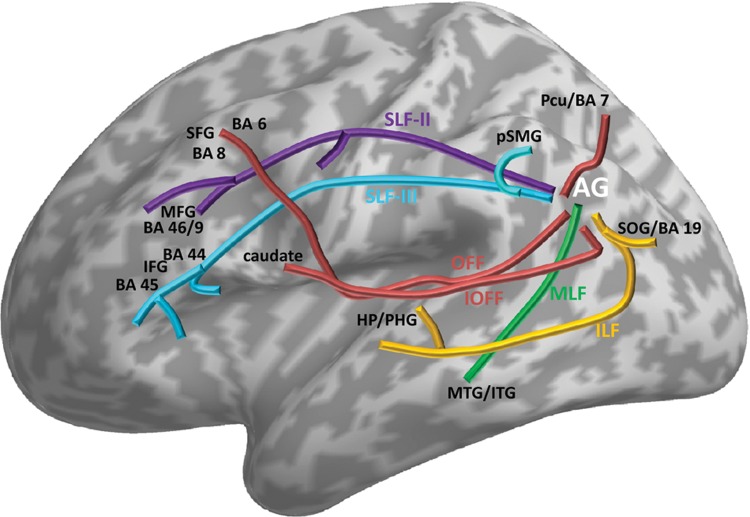
“The AG also connects to the precuneus (BA 7) and the superior frontal gyrus (BA 8) via the occipitofrontal fasciculus (Makris and others 2007), to the caudate via the inferior occipitofrontal fasciculus (Uddin and others 2010), and to both parahippocampal gyrus (Rushworth and others 2006) and…”
BackgroundThe human inferior parietal lobule in stereotaxic space
Caspers, S., Eickhoff, S. B., Geyer, S., Scheperjans, F., Mohlberg, H., Zilles, K., & Amunts, K. (2008) · Brain Structure and Function · doi:10.1007/s00429-008-0195-z · Cited by 395
Posterior parietal lobe of the primate brain.
Hyvärinen, J. (1982) · Physiological Reviews · doi:10.1152/physrev.1982.62.3.1060 · Cited by 390 · cited 2×
“This is largely because expansion of the posterior parietal lobe in humans has taken place largely in the inferior parietal lobule and in particular in the AG (Hyvarinen 1982).”
BackgroundConnection Patterns Distinguish 3 Regions of Human Parietal Cortex
Rushworth, M. F. S., Behrens, T. E. J., & Johansen-Berg, H. (2006) · Cerebral Cortex · doi:10.1093/cercor/bhj079 · Cited by 382 · cited 1×
“Several interesting questions that warrant further investigations are finally emphasized.”
BackgroundThe functional role of the inferior parietal lobe in the dorsal and ventral stream dichotomy
Singh-Curry, V., & Husain, M. (2009) · Neuropsychologia · doi:10.1016/j.neuropsychologia.2008.11.033 · Cited by 381 · cited 2×
“The right inferior parietal lobule including the AG may also play an important role in maintaining attention as well as encoding salient events in the environment (Singh-Curry and Husain 2009).”
BackgroundHuman Cerebral Cortex: Localization, Parcellation, and Morphometry with Magnetic Resonance Imaging
Rademacher, J., Galaburda, A. M., Kennedy, D. N., Filipek, P. A., & Caviness, V. S. (1992) · Journal of Cognitive Neuroscience · doi:10.1162/jocn.1992.4.4.352 · Cited by 378 · cited 1×
“Functionally, the AG is commonly considered part of the heteromodal parietal association cortex (Rademacher and others 1992).”
BackgroundThe Angular Gyrus Computes Action Awareness Representations
Farrer, C., Frey, S. H., Van Horn, J. D., Tunik, E., Turk, D., Inati, S., & Grafton, S. T. (2008) · Cerebral Cortex · doi:10.1093/cercor/bhm050 · Cited by 373
A natural history of the human mind: tracing evolutionary changes in brain and cognition
Sherwood, C. C., Subiaul, F., & Zawidzki, T. W. (2008) · Journal of Anatomy · doi:10.1111/j.1469-7580.2008.00868.x · Cited by 365
Obleser, J., Wise, R. J. S., Alex Dresner, M., & Scott, S. K. (2007) · The Journal of Neuroscience · doi:10.1523/jneurosci.4663-06.2007 · Cited by 354
A Parcellation Scheme for Human Left Lateral Parietal Cortex
Nelson, S. M., Cohen, A. L., Power, J. D., Wig, G. S., Miezin, F. M., Wheeler, M. E., Velanova, K., Donaldson, D. I., Phillips, J. S., Schlaggar, B. L., et al. (2010) · Neuron · doi:10.1016/j.neuron.2010.05.025 · Cited by 353
Jung, R. E., Segall, J. M., Jeremy Bockholt, H., Flores, R. A., Smith, S. M., Chavez, R. S., & Haier, R. J. (2010) · Human Brain Mapping · doi:10.1002/hbm.20874 · Cited by 343
Challenges and limitations of quantifying brain connectivity in vivo with diffusion MRI
Jones, D. K. (2010) · Imaging in Medicine · doi:10.2217/iim.10.21 · Cited by 321
Mapping the parietal cortex of human and non-human primates
Orban, G. A., Claeys, K., Nelissen, K., Smans, R., Sunaert, S., Todd, J. T., Wardak, C., Durand, J.-B., & Vanduffel, W. (2006) · Neuropsychologia · doi:10.1016/j.neuropsychologia.2005.11.001 · Cited by 308 · cited 1×
“…located at the central core of the white matter above the insula, connects the AG to the caudallateral prefrontal regions (Makris and others 2005), and the third branch (SLF-III) links the AG directly to the inferior frontal gyrus (Broca area) at the level of areas BA 44 (Frey and others…”
BackgroundRole of parietal regions in episodic memory retrieval: The dual attentional processes hypothesis
Cabeza, R. (2008) · Neuropsychologia · doi:10.1016/j.neuropsychologia.2008.03.019 · Cited by 306 · cited 7×
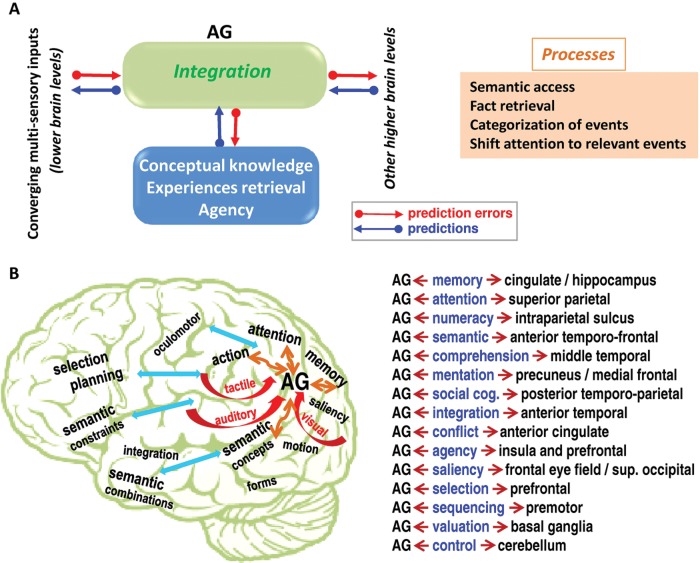
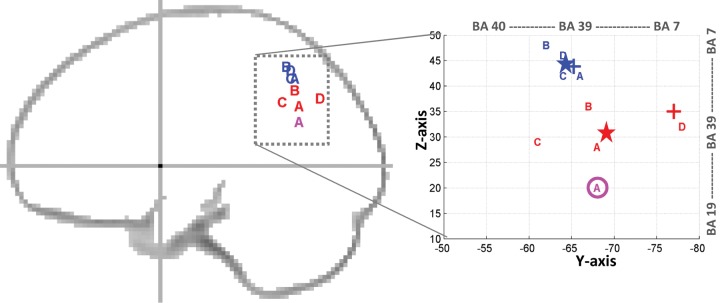
“, Ischebeck and others 2009), and the (automatic) allocation of attention to memory (Cabeza and others 2008; Ciaramelli and others 2008), whereas ventral AG subdivision may exert a “top-down” influence in self-referential processing (Kim 2010), providing semantic constraints (Price CJ 2010; Seghier and others 2010), a…”
BackgroundInfluentialNeural Systems for Reading Aloud: A Multiparametric Approach
Graves, W. W., Desai, R., Humphries, C., Seidenberg, M. S., & Binder, J. R. (2010) · Cerebral Cortex · doi:10.1093/cercor/bhp245 · Cited by 304
Houdé, O., Rossi, S., Lubin, A., & Joliot, M. (2010) · Developmental Science · doi:10.1111/j.1467-7687.2009.00938.x · Cited by 303
Kim, H. (2010) · NeuroImage · doi:10.1016/j.neuroimage.2010.01.051 · Cited by 297 · cited 7×
“…(Cabeza and others 2008; Ciaramelli and others 2008), whereas ventral AG subdivision may exert a “top-down” influence in self-referential processing (Kim 2010), providing semantic constraints (Price CJ 2010; Seghier and others 2010), and making judgments on mental representations (e.g.,…”
BackgroundInfluentialSperduti, M., Delaveau, P., Fossati, P., & Nadel, J. (2011) · Brain Structure and Function · doi:10.1007/s00429-010-0298-1 · Cited by 287
In Your Right Mind: Right Hemisphere Contributions to Language Processing and Production
Lindell, A. K. (2006) · Neuropsychology Review · doi:10.1007/s11065-006-9011-9 · Cited by 284
Expectancy Constraints in Degraded Speech Modulate the Language Comprehension Network
Obleser, J., & Kotz, S. A. (2010) · Cerebral Cortex · doi:10.1093/cercor/bhp128 · Cited by 282
Hutchinson, J. B., Uncapher, M. R., & Wagner, A. D. (2009) · Learning & Memory · doi:10.1101/lm.919109 · Cited by 277
Sur un cas de cécité verbale avec agraphie suivi d’autopsie
Dejerine, J. (1891) · MPG.PuRe (Max Planck Society) · Cited by 268
Inferior Parietal Lobule: Divergent Architectonic Asymmetries in the Human Brain
Eidelberg, D. (1984) · Archives of Neurology · doi:10.1001/archneur.1984.04050190049013 · Cited by 264
Reading and reading disturbance
Price, C. J., & Mechelli, A. (2005) · Current Opinion in Neurobiology · doi:10.1016/j.conb.2005.03.003 · Cited by 252
Corpus callosal connection mapping using cortical gray matter parcellation and DT‐MRI
Park, H., Kim, J. J., Lee, S., Seok, J. H., Chun, J., Kim, D. I., & Lee, J. D. (2008) · Human Brain Mapping · doi:10.1002/hbm.20314 · Cited by 249 · cited 1×
“Several interesting questions that warrant further investigations are finally emphasized.”
BackgroundThe Mental Number Line and the Human Angular Gyrus
Göbel, S., Walsh, V., & Rushworth, M. F. S. (2001) · NeuroImage · doi:10.1006/nimg.2001.0927 · Cited by 248
Examining the Central and Peripheral Processes of Written Word Production Through Meta-Analysis
Purcell, J. J., Turkeltaub, P. E., Eden, G. F., & Rapp, B. (2011) · Frontiers in Psychology · doi:10.3389/fpsyg.2011.00239 · Cited by 248
Localization of sublexical speech perception components
Turkeltaub, P. E., & Branch Coslett, H. (2010) · Brain and Language · doi:10.1016/j.bandl.2010.03.008 · Cited by 245
Seghier, M. L., Fagan, E., & Price, C. J. (2010) · The Journal of Neuroscience · doi:10.1523/jneurosci.3377-10.2010 · Cited by 245 · cited 1×
“As a selection criterion, the AG should at least be listed in the meta-analysis tables of previous reviews.”
BackgroundSelf-citationSome neurophysiological constraints on models of word naming
Binder, J. R., Medler, D. A., Desai, R., Conant, L. L., & Liebenthal, E. (2005) · NeuroImage · doi:10.1016/j.neuroimage.2005.04.029 · Cited by 234
Rosa, M. G. P., & Tweedale, R. (2005) · Philosophical Transactions of the Royal Society B: Biological Sciences · doi:10.1098/rstb.2005.1626 · Cited by 230 · cited 1×
“…systematic investigation because it can provide new clues to explain the disproportionate expansion of the multimodal associative regions in humans and their significant contribution to our cognitive and linguistic abilities (see discussion in Rosa and Tweedale 2005; Sherwood and others 2008).”
BackgroundCorbett, F., Jefferies, E., Ehsan, S., & Lambon Ralph, M. A. (2009) · Brain · doi:10.1093/brain/awp146 · Cited by 227
Konen, C. S., & Kastner, S. (2008) · The Journal of Neuroscience · doi:10.1523/jneurosci.1930-08.2008 · Cited by 221 · cited 2×
“particular, several distinct areas may exist along the banks of the intraparietal sulcus (e.g., Culham and Kanwisher 2001; Grefkes and Fink 2005; Konen and Kastner 2008), and thus it is important to not conflate them with the AG.”
BackgroundRibas, G. C. (2010) · Neurosurgical Focus · doi:10.3171/2009.11.focus09245 · Cited by 215
Human cortical mechanisms of visual attention during orienting and search
Corbetta, M., & Shulman, G. L. (1998) · Philosophical Transactions of the Royal Society of London. Series B: Biological Sciences · doi:10.1098/rstb.1998.0289 · Cited by 214
Delineation of the middle longitudinal fascicle in humans: A quantitative, in vivo, DT-MRI study
Makris, N., Papadimitriou, G. M., Kaiser, J. R., Sorg, S., Kennedy, D. N., & Pandya, D. N. (2009) · Cerebral Cortex · doi:10.1093/cercor/bhn124 · Cited by 214 · cited 1×
“Several interesting questions that warrant further investigations are finally emphasized.”
BackgroundKelly, C., Uddin, L. Q., Shehzad, Z., Margulies, D. S., Castellanos, F. X., Milham, M. P., & Petrides, M. (2010) · European Journal of Neuroscience · doi:10.1111/j.1460-9568.2010.07279.x · Cited by 209
Parietal cortex and spatial cognition
Sack, A. T. (2009) · Behavioural Brain Research · doi:10.1016/j.bbr.2009.03.012 · Cited by 201
Visualizing How One Brain Understands Another: A PET Study of Theory of Mind
Calarge, C., Andreasen, N. C., & O’Leary, D. S. (2003) · American Journal of Psychiatry · doi:10.1176/appi.ajp.160.11.1954 · Cited by 198
Functional Anatomic Models of Language: Assembling the Pieces
Ben Shalom, D., & Poeppel, D. (2008) · The Neuroscientist · doi:10.1177/1073858407305726 · Cited by 172 · cited 1×
“In another model, the AG was proposed as a module of an analyzing block responsible for accessing subparts of stored items (Shalom and Poeppel 2008).”
MethodWestlye, L. T., Walhovd, K. B., Dale, A. M., Bjørnerud, A., Due-Tønnessen, P., Engvig, A., Grydeland, H., Tamnes, C. K., Østby, Y., & Fjell, A. M. (2010) · NeuroImage · doi:10.1016/j.neuroimage.2010.03.056 · Cited by 172
Conflict control during sentence comprehension: fMRI evidence
Ye, Z., & Zhou, X. (2009) · NeuroImage · doi:10.1016/j.neuroimage.2009.06.032 · Cited by 172 · cited 2×
“…when comparing between three different conflict tasks, the right AG was strongly activated in all conflict tasks, whereas the left AG was only involved in a sentence comprehension task that included a conflict between plausible and implausible sentential representations (Ye and Zhou 2009).”
BackgroundRethinking the neurological basis of language
Stowe, L. A., Haverkort, M., & Zwarts, F. (2005) · Lingua · doi:10.1016/j.lingua.2004.01.013 · Cited by 172
The Inferior Parietal Lobule and Recognition Memory: Expectancy Violation or Successful Retrieval?
O'Connor, A. R., Han, S., & Dobbins, I. G. (2010) · The Journal of Neuroscience · doi:10.1523/jneurosci.4225-09.2010 · Cited by 161
Zhuge, H. (2009) · Artificial Intelligence · doi:10.1016/j.artint.2009.11.014 · Cited by 160 · cited 2×
“…and action awareness complete the set of key features that embody the multiple roles of the AG because both seem necessary to accurately compass the dynamic nature of semantics (i.e., as events and experiences) where persons, concepts, objects, and actions bind in time and space (Zhuge 2010).”
BackgroundWirth, M., Jann, K., Dierks, T., Federspiel, A., Wiest, R., & Horn, H. (2010) · NeuroImage · doi:10.1016/j.neuroimage.2010.10.039 · Cited by 159
Gender and age effects in structural brain asymmetry as measured by MRI texture analysis
Kovalev, V. A., Kruggel, F., & von Cramon, D. Y. (2003) · NeuroImage · doi:10.1016/s1053-8119(03)00140-x · Cited by 158
Anatomical Traces of Vocabulary Acquisition in the Adolescent Brain
Lee, H., Devlin, J. T., Shakeshaft, C., Stewart, L. H., Brennan, A., Glensman, J., Pitcher, K., Crinion, J., Mechelli, A., Frackowiak, R. S. J., et al. (2007) · The Journal of Neuroscience · doi:10.1523/jneurosci.4442-06.2007 · Cited by 156
Cyto-, Myelo-, and Receptor Architectonics of the Human Parietal Cortex
Zilles, K., & Palomero‐Gallagher, N. (2001) · NeuroImage · doi:10.1006/nimg.2001.0823 · Cited by 144 · cited 1×
“For instance, previous reports have suggested that there is no clear homologue in monkeys to the human AG (Geschwind 1965; Zilles and Palomero-Gallagher 2001; see illustration in Figure 1 of Culham and Kanwisher 2001).”
BackgroundAnatomic Relationships along the Low-middle Convexity
Naidich, T. P., Valavanis, A. G., & Kubik, S. (1995) · Neurosurgery · doi:10.1097/00006123-199503000-00011 · Cited by 144
rTMS over the intraparietal sulcus disrupts numerosity processing
Cappelletti, M., Barth, H. C., Fregni, F., Spelke, E. S., & Pascual‐Leone, Á. (2007) · Experimental Brain Research · doi:10.1007/s00221-006-0820-0 · Cited by 144
Symbol processing in the left angular gyrus: Evidence from passive perception of digits
Price, G. R., & Ansari, D. (2011) · NeuroImage · doi:10.1016/j.neuroimage.2011.05.035 · Cited by 137
THE FUNCTIONAL ORGANIZATION OF THE CEREBRAL CORTEX
McCulloch, W. S. (1944) · Physiological Reviews · doi:10.1152/physrev.1944.24.3.390 · Cited by 134
Miller, M. B., Donovan, C.-L., Bennett, C. M., Aminoff, E., & Mayer, R. E. (2011) · NeuroImage · doi:10.1016/j.neuroimage.2011.05.060 · Cited by 133
The Contribution of the Parietal Lobes to Speaking and Writing
Brownsett, S. L. E., & Wise, R. J. S. (2010) · Cerebral Cortex · doi:10.1093/cercor/bhp120 · Cited by 131
The occipitofrontal fascicle in humans: A quantitative, in vivo, DT-MRI study
Makris, N., Papadimitriou, G., Sorg, S. F., Kennedy, D. N., Caviness, V. S., & Pandya, D. Ν. (2007) · NeuroImage · doi:10.1016/j.neuroimage.2007.05.042 · Cited by 121 · cited 2×
“Last but not least, an increasing literature points to an extensive training-induced structural plasticity in bilateral AG in the adult brain, particularly when learning new skills that require spatial coordination and verbal memory (see summary in Box 2).”
BackgroundCross-modal interactions between human faces and voices involved in person recognition
Joassin, F., Pesenti, M., Maurage, P., Verreckt, E., Bruyer, R., & Campanella, S. (2010) · Cortex · doi:10.1016/j.cortex.2010.03.003 · Cited by 119
On sense and reference: Examining the functional neuroanatomy of referential processing
Nieuwland, M. S., Petersson, K. M., & Berkum, J. J. A. V. (2007) · NeuroImage · doi:10.1016/j.neuroimage.2007.05.048 · Cited by 118
Flexible transfer of knowledge in mental arithmetic — An fMRI study
Ischebeck, A. K., Zamarian, L., Schocke, M. F. H., & Delazer, M. (2008) · NeuroImage · doi:10.1016/j.neuroimage.2008.10.025 · Cited by 117
Spatiotemporal dynamics of audiovisual speech processing
Bernstein, L. E., Auer, E. T., Wagner, M., & Ponton, C. W. (2007) · NeuroImage · doi:10.1016/j.neuroimage.2007.08.035 · Cited by 110
Joseph, R. (1982) · Journal of Clinical Psychology · doi:10.1002/1097-4679(198201)38:1<4::aid-jclp2270380102>3.0.co;2-j · Cited by 110 · cited 3×
“…associations, and functions as a necessary intermediary for all conscious functioning, particularly in the development and comprehension of language and thought. . . . [The AG] increases the capacity for the organization, categorization, and labeling of sensory-motor events” (Joseph 1982, p. 22).”
BackgroundInfluentialThe Role of Right and Left Parietal Lobes in the Conceptual Processing of Numbers
Cappelletti, M., Lee, H. L., Freeman, E. D., & Price, C. J. (2010) · Journal of Cognitive Neuroscience · doi:10.1162/jocn.2009.21246 · Cited by 109
Vandenberghe, R. R., & Gillebert, C. R. (2008) · Behavioural Brain Research · doi:10.1016/j.bbr.2008.12.005 · Cited by 100
Sociotopy in the temporoparietal cortex: common versus distinct processes
Bahnemann, M., Dziobek, I., Prehn, K., Wolf, I., & Heekeren, H. R. (2010) · Social Cognitive and Affective Neuroscience · doi:10.1093/scan/nsp045 · Cited by 81
The neural response to changing semantic and perceptual complexity during language processing
Sharp, D. J., Awad, M., Warren, J. E., Wise, R. J. S., Vigliocco, G., & Scott, S. K. (2010) · Human Brain Mapping · doi:10.1002/hbm.20871 · Cited by 81
Mason, R. A., & Just, M. A. (2011) · Human Brain Mapping · doi:10.1002/hbm.21021 · Cited by 79
Ardila, A., Concha, M., & Rosselli, M. (2000) · Aphasiology · doi:10.1080/026870300410964 · Cited by 67
Neurocognitive Systems Related to Real-World Prospective Memory
Kalpouzos, G., Eriksson, J., Sjölie, D., Molin, J., & Nyberg, L. (2010) · PLoS ONE · doi:10.1371/journal.pone.0013304 · Cited by 58
Rosenthal, C. R., Roche-Kelly, E. E., Husain, M., & Kennard, C. (2009) · The Journal of Neuroscience · doi:10.1523/jneurosci.2603-09.2009 · Cited by 57
TMS over the left angular gyrus impairs the ability to discriminate left from right
Hirnstein, M., Bayer, U., Ellison, A., & Hausmann, M. (2010) · Neuropsychologia · doi:10.1016/j.neuropsychologia.2010.10.028 · Cited by 56
Taylor, P. C. J., Muggleton, N. G., Kalla, R., Walsh, V., & Martin Eimer, A. (2011) · Journal of Neurophysiology · doi:10.1152/jn.00121.2011 · Cited by 56
Triarhou, L. C. (2007) · Stereotactic and Functional Neurosurgery · doi:10.1159/000103259 · Cited by 46
Dissociating functional brain networks by decoding the between-subject variability
Seghier, M. L., & Price, C. J. (2009) · NeuroImage · doi:10.1016/j.neuroimage.2008.12.017 · Cited by 45
Self-citationNickel, J., & Seitz, R. J. (2005) · Anatomy and Embryology · doi:10.1007/s00429-005-0037-1 · Cited by 40
Parcellation in Left Lateral Parietal Cortex Is Similar in Adults and Children
Barnes, K. A., Nelson, S. M., Cohen, A. L., Power, J. D., Coalson, R. S., Miezin, F. M., Vogel, A. C., Dubis, J. W., Church, J. A., Petersen, S. E., et al. (2012) · Cerebral Cortex · doi:10.1093/cercor/bhr189 · Cited by 38
Research works printed but not linked: 5
- Barnes KA, 2011, Cereb Cortex
- Dejerine J, 1891, Societe de Biologie, 43, 197
- Kelly C, 2010, Eur J Neurol, 32, 383
- Mar RA, 2011, Annu Rev Neurosci, 62, 103
- 10.1227/00006123-199503000-00011 · doi:10.1227/00006123-199503000-00011 · Paper page
Cited by
Andrews‐Hanna, J. R., Smallwood, J., & Spreng, R. N. (2014) · Annals of the New York Academy of Sciences · doi:10.1111/nyas.12360 · Cited by 2,102
The default mode network in cognition: a topographical perspective
Smallwood, J., Bernhardt, B. C., Leech, R., Bzdok, D., Jefferies, E., & Margulies, D. S. (2021) · Nature Reviews Neuroscience · doi:10.1038/s41583-021-00474-4 · Cited by 935
Guell, X., Gabrieli, J. D. E., & Schmahmann, J. D. (2018) · NeuroImage · doi:10.1016/j.neuroimage.2018.01.082 · Cited by 460
“This notwithstanding, seed locations are consistent with previous reports in the literature of brain function: working memory (e.g. Koenigs et al., 2009), language (e.g. Seghier, 2013), emotion processing (e.g. Dapretto et al., 2006), social processing (e.g. Bigler et al., 2007).”
ResultOrigins of the brain networks for advanced mathematics in expert mathematicians
Amalric, M., & Dehaene, S. (2016) · Proceedings of the National Academy of Sciences · doi:10.1073/pnas.1603205113 · Cited by 413
“deactivated by meaningless compared with meaningful general-knowledge statements in both groups, as previously reported (32, 35).”
BackgroundResultRe-evaluating the role of TPJ in attentional control: Contextual updating?
Geng, J. J., & Vossel, S. (2013) · Neuroscience & Biobehavioral Reviews · doi:10.1016/j.neubiorev.2013.08.010 · Cited by 411
Metadata
- Authors
- Seghier, M. L.
- Affiliations
- Wellcome Centre for Human Neuroimaging (GB)
- Corresponding author
- Seghier, Mohamed L.
- ORCID
- Seghier, Mohamed L.
- Venue
- The Neuroscientist
- Publisher
- SAGE Publications
- Published
- 2012-04-30
- Volume
- 19
- Issue
- 1
- Pages
- 43-61
- ISSN
- 1073-8584 (ISSN-L)
- 1089-4098
- PMC
- PMC4107834
- OpenAlex
- W2134248637
- Cited by
- 1,585
- References
- 157
- Citations by year
- 2026: 95 · 2025: 166 · 2024: 127 · 2023: 127 · 2022: 180 · 2021: 149 · 2020: 131 · 2019: 130 · 2018: 107 · 2017: 115 · 2016: 90 · 2015: 71 · 2014: 53 · 2013: 38 · 2012: 2
- FWCI
- 26.83
- Type
- journal article
- Language
- en
- Open access
- hybrid
- doi.org
- Licence
- cc-by
- journals.sagepub.com/page/policies/text-and-data-mining-license (tdm)
- Locations
- The Neuroscientist (publishedVersion, cc-by)
- PubMed Central (publishedVersion, cc-by)
- PubMed (publishedVersion)
- UCL Discovery (University College London) (submittedVersion)
- Funders
- Wellcome Trust
- Topics
- Life Sciences › Neuroscience › Cognitive Neuroscience › Neurobiology of Language and Bilingualism
- Social Sciences › Psychology › Developmental and Educational Psychology › Reading and Literacy Development
- Social Sciences › Psychology › Developmental and Educational Psychology › Cognitive and developmental aspects of mathematical skills
- Keywords
- angular gyrus, inferior parietal lobule, semantic processing, word reading, number processing, default mode network, memory retrieval, attention, spatial cognition, reasoning, social cognition, cross-modal integration, multisensory integration, parcellation, functional specialization
- MeSH terms
- Brain Mapping, Cognition, Diagnostic Imaging, Humans, Image Processing, Computer-Assisted, Neural Pathways, Parietal Lobe, Reading, Semantics, Meta-Analysis as Topic
About these checks
Registry, retraction, Cites and statistics results are computed, not judged, with one exception: a printed reference that no index lists is read once by a model before it counts as a citation error. Claims are extracted by a model and kept only when their quote appears verbatim in the text; each cited source is then checked, with a model’s help, for whether it says what the claim relies on. Those verdicts can be wrong — read the claim’s quote and the cited source before relying on one.
Statistics and arithmetic are recomputed, not judged.
Confidence bands are shown only for fields calibrated on our annotated test set. None is calibrated yet, so no band is shown.
What counts as a claim ›How we measure confidence ›How we check this ›
Are you an author, or do you see a problem with this page? Request a review
Data sources
Bibliographic data: Semantic Scholar, OpenAlex, Crossref.
Contains information from the Semantic Scholar Academic Graph Datasets, made available under the ODC Attribution License (ODC-BY 1.0).
Semantic Scholar’s data is described in: Kinney, R., et al. (2023). The Semantic Scholar Open Data Platform. arXiv:2301.10140.
