

The Angular Gyrus: Multiple Functions and Multiple Subdivisions
Open accessThe DOI matches its Crossref record; 157 of the 157 references it cites were found in a registry or an index.
Abstract
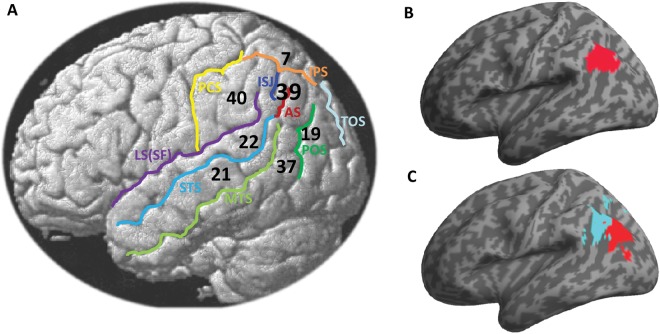
There is considerable interest in the structural and functional properties of the angular gyrus (AG). Located in the posterior part of the inferior parietal lobule, the AG has been shown in numerous meta-analysis reviews to be consistently activated in a variety of tasks. This review discusses the involvement of the AG in semantic processing, word reading and comprehension, number processing, default mode network, memory retrieval, attention and spatial cognition, reasoning, and social cognition. This large functional neuroimaging literature depicts a major role for the AG in processing concepts rather than percepts when interfacing perception-to-recognition-to-action. More specifically, the AG emerges as a cross-modal hub where converging multisensory information is combined and integrated to comprehend and give sense to events, manipulate mental representations, solve familiar problems, and reorient attention to relevant information. In addition, this review discusses recent findings that point to the existence of multiple subdivisions in the AG. This spatial parcellation can serve as a framework for reporting AG activations with greater definition. This review also acknowledges that the role of the AG cannot comprehensibly be identified in isolation but needs to be understood in parallel with the influence from other regions. Several interesting questions that warrant further investigations are finally emphasized.
Overview
The claims and statistics of this paper haven’t been checked yet.
Free: it reads the open-access text and checks the first 5 claims that cite a source we can check. Create a free account to check every claim.
Integrity signals
Registry
Cites
Statistics
Figures
Verification
Claims the paper makes
The claims and statistics of this paper haven’t been checked yet.
Free: it reads the open-access text and checks the first 5 claims that cite a source we can check. Create a free account to check every claim.
Claims other papers make about this one
Each is checked against this paper’s own text: does it say what the citing paper says it does?
In the citing paper
“Furthermore, it was previously thought that these areas were involved in self-referential processes [64–66], perspective taking [67], cognitive distancing [68–71], and sustained attention [72].”
From The meditative mind: a comprehensive meta-analysis of MRI studies. (2015) · cites this paper as [64]
Self-check
Percentages, sums and reported differences re-computed from the paper’s own numbers.
The self-check needs the paper’s full text.
Citations
Cites
A default mode of brain function
Raichle, M. E., MacLeod, A. M., Snyder, A. Z., Powers, W. J., Gusnard, D. A., & Shulman, G. L. (2001) · Proceedings of the National Academy of Sciences · doi:10.1073/pnas.98.2.676 · Cited by 12,190
The Brain's Default Network: Anatomy, Function, and Relevance to Disease
Buckner, R. L., Andrews‐Hanna, J. R., & Schacter, D. L. (2008) · Annals of the New York Academy of Sciences · doi:10.1196/annals.1440.011 · Cited by 9,761
The organization of the human cerebral cortex estimated by intrinsic functional connectivity
Thomas Yeo, B. T., Krienen, F. M., Sepulcre, J., Sabuncu, M. R., Lashkari, D., Hollinshead, M., Roffman, J. L., Smoller, J. W., Zöllei, L., Polimeni, J. R., et al. (2011) · Journal of Neurophysiology · doi:10.1152/jn.00338.2011 · Cited by 9,182
The free-energy principle: a unified brain theory?
Friston, K. (2010) · Nature Reviews Neuroscience · doi:10.1038/nrn2787 · Cited by 8,120 · cited 1×
“This framework is borrowed from the popular predictive coding framework (as reviewed in Friston 2010) that models the brain as a hierarchical inference engine that is trying to optimize probabilistic representations of what caused its sensory input.”
The organization of the human cerebellum estimated by intrinsic functional connectivity
Buckner, R. L., Krienen, F. M., Castellanos, A., Diaz, J. C., & Yeo, B. T. T. (2011) · Journal of Neurophysiology · doi:10.1152/jn.00339.2011 · Cited by 7,304
Functional connectivity in the resting brain: a network analysis of the default mode hypothesis
Greicius, M. D., Krasnow, B., Reiss, A. L., & Menon, V. (2003) · Proceedings of the National Academy of Sciences · doi:10.1073/pnas.0135058100 · Cited by 6,358
Dynamic mapping of human cortical development during childhood through early adulthood
Gogtay, N., Giedd, J. N., Lusk, L., Hayashi, K. M., Greenstein, D., Vaituzis, A. C., Nugent, T. F., Herman, D. H., Clasen, L. S., Toga, A. W., et al. (2004) · Proceedings of the National Academy of Sciences · doi:10.1073/pnas.0402680101 · Cited by 5,604 · cited 1×
“Its cortical volume is estimated at around 13.2 cm3 and 11.7 cm3 in the left and right hemisphere, respectively (Rademacher and others 1992), suggesting a relative leftgreater-than-right structural asymmetry (see also Eidelberg and Galaburda 1984).”
BackgroundInfluentialCorrespondence of the brain's functional architecture during activation and rest
Smith, S. M., Fox, P. T., Miller, K. L., Glahn, D. C., Fox, P. M., Mackay, C. E., Filippini, N., Watkins, K. E., Toro, R., Laird, A. R., et al. (2009) · Proceedings of the National Academy of Sciences · doi:10.1073/pnas.0905267106 · Cited by 5,150
Mapping the structural core of human cerebral cortex
Hagmann, P., Cammoun, L., Gigandet, X., Meuli, R., Honey, C. J., Wedeen, V. J., & Sporns, O. (2008) · PLoS Biology · doi:10.1371/journal.pbio.0060159 · Cited by 4,173 · cited 1×
“…London, UK Corresponding Author: Dr. Mohamed L. Seghier, Wellcome Department of Imaging Neuroscience, Institute of Neurology, 12 Queen Square, London WC1N 3BG, UK Email: m.seghier@fil.ion.ucl.ac.uk There is considerable interest in the structural and functional properties of the angular gyrus (AG).”
BackgroundBinder, J. R., Desai, R. H., Graves, W. W., & Conant, L. L. (2009) · Cerebral Cortex · doi:10.1093/cercor/bhp055 · Cited by 4,060 · cited 1×
“For instance, Binder and others (2009) found that the most consistent semantic activation across 120 functional neuroimaging studies was located within the left AG (Binder and others 2009), with a less strong but consistent effect in the right AG as well.”
Background
Research works printed but not linked: 5
- Barnes KA, 2011, Cereb Cortex
- Dejerine J, 1891, Societe de Biologie, 43, 197
- Kelly C, 2010, Eur J Neurol, 32, 383
- Mar RA, 2011, Annu Rev Neurosci, 62, 103
- 10.1227/00006123-199503000-00011 · doi:10.1227/00006123-199503000-00011 · Paper page
Cited by
Items 201–300 of 1,001
Mihaescu, A. S., Masellis, M., Graff‐Guerrero, A., Kim, J., Criaud, M., Cho, S. S., Ghadery, C., Valli, M., & Strafella, A. P. (2018) · Brain Imaging and Behavior · doi:10.1007/s11682-018-9922-0 · Cited by 66
Qin, Z., Liu, Z., Guo, Q., & Zhu, P. (2022) · Biomedical Signal Processing and Control · doi:10.1016/j.bspc.2022.103828 · Cited by 64
“For example, angular gyrus, known as the visual language center, is highly correlated with semantic processing [48,49], extracting features from this region may be conducive to distinguishing sMCI.”
Decoding levels of representation in reading: A representational similarity approach
Fischer‐Baum, S., Bruggemann, D., Gallego, I. F., Li, D. S. P., & Tamez, E. R. (2017) · Cortex · doi:10.1016/j.cortex.2017.02.017 · Cited by 64
Increased Functional Connectivity of the Angular Gyrus During Imagined Music Performance
Tanaka, S., & Kirino, E. (2019) · Frontiers in Human Neuroscience · doi:10.3389/fnhum.2019.00092 · Cited by 64
Neural Computations Underlying Causal Structure Learning
Tomov, M. S., Dorfman, H. M., & Gershman, S. J. (2018) · The Journal of Neuroscience · doi:10.1523/jneurosci.3336-17.2018 · Cited by 60
The Emergence of Inner Speech and Its Measurement in Atypically Developing Children
Vissers, C., Tomas, E., & Law, J. (2020) · Frontiers in Psychology · doi:10.3389/fpsyg.2020.00279 · Cited by 65
Emerging neurodevelopmental perspectives on mathematical learning
Menon, V., & Chang, H. (2021) · Developmental Review · doi:10.1016/j.dr.2021.100964 · Cited by 66
Jang, G., Yoon, S.-A., Lee, S.-E., Park, H.-I., Kim, J., Ko, J. H., & Park, H.-J. (2013) · NeuroImage · doi:10.1016/j.neuroimage.2013.05.027 · Cited by 60
Keeping track of ‘alternative facts’: The neural correlates of processing misinformation corrections
Gordon, A., Quadflieg, S., Brooks, J. C. W., Ecker, U. K. H., & Lewandowsky, S. (2019) · NeuroImage · doi:10.1016/j.neuroimage.2019.03.014 · Cited by 57
“…given that both the AG and the PrC are known to contribute to a wide variety of cognitive tasks (for relevant reviews see Cavanna and Trimble, 2006; Seghier, 2013), a full understanding of their response to misinformation-containing memory probes requires future investigations that overcome the…”
InfluentialSokolowski, H. M., Hawes, Z. C. K., & Ansari, D. (2022) · Human Brain Mapping · doi:10.1002/hbm.26082 · Cited by 64
“Moreover, it has been suggested that this region supports the retrieval of arithmetic facts that are stored in verbal memory (Dehaene et al., 2003; Grabner et al., 2021; Seghier, 2013; Vogel & De Smedt, 2021).”
BackgroundDetermination of the posterior boundary of Wernicke's area based on multimodal connectivity profiles
Wang, J., Fan, L., Wang, Y., Xu, W., Jiang, T., Fox, P. T., Eickhoff, S. B., Yu, C., & Jiang, T. (2015) · Human Brain Mapping · doi:10.1002/hbm.22745 · Cited by 56
“And it may be another semantic processing center as Wernicke’s area [Joseph, 1982; Seghier, 2013].”
BackgroundShin, N., Bang, M., Yoo, S., Kim, J., Yun, E., Yoon, U., Han, K., Ahn, K. J., & Lee, S. (2021) · Radiology · doi:10.1148/radiol.2021203383 · Cited by 62
Bation, R., Magnin, C., Poulet, E., Mondino, M., & Brunelin, J. (2021) · Schizophrenia · doi:10.1038/s41537-021-00138-3 · Cited by 62
Olfactory impairment in Parkinson’s disease is a consequence of central nervous system decline
Iannilli, E., Stephan, L., Hummel, T. R., Reichmann, H., & Haehner, A. (2017) · Journal of Neurology · doi:10.1007/s00415-017-8521-0 · Cited by 62
Neural correlates of working memory in first episode and recurrent depression: An fMRI study
Yüksel, D., Dietsche, B., Konrad, C., Dannlowski, U., Kircher, T. T. J., & Krug, A. (2018) · Progress in Neuro-Psychopharmacology and Biological Psychiatry · doi:10.1016/j.pnpbp.2018.02.003 · Cited by 61
Zweerings, J., Hummel, B., Keller, M., Zvyagintsev, M., Schneider, F. W., Klasen, M., & Mathiak, K. (2019) · NeuroImage · doi:10.1016/j.neuroimage.2019.01.058 · Cited by 62
“Taken together, these structures largely represent the central nodes of the DMN (Buckner et al., 2008; Seghier, 2013).”
Neurological divide: an fMRI study of prose and code writing
Krueger, R., Huang, Y., Liu, X., Santander, T., Weimer, W. R., & Leach, K. (2020) · ACM/IEEE International Conference on Software Engineering: Companion Proceedings (ICSE-Companion) · doi:10.1145/3377811.3380348 · Cited by 62
“Importantly, it is thought to act as a bridge between perception, recognition, and action, suggesting that code synthesis may require a more complex interplay of understanding a problem and formulating a comprehensive plan to solve it [100].”
BackgroundDegrees of lateralisation in semantic cognition: Evidence from intrinsic connectivity
Alam, T. R. G., Karapanagiotidis, T., Smallwood, J., & Jefferies, E. (2019) · NeuroImage · doi:10.1016/j.neuroimage.2019.116089 · Cited by 61
Extending problem-solving procedures through reflection
Anderson, J. R., & Fincham, J. M. (2014) · Cognitive Psychology · doi:10.1016/j.cogpsych.2014.06.002 · Cited by 61
“However, it is less reliably activated in other knowledge-extension tasks that we have studied (Lee, Fincham, Betts, & Anderson, 2014) and seems to be associated with a rather wide range of disparate functions (Seghier, 2013).”
BackgroundJockwitz, C., Caspers, S., Lux, S., Jütten, K., Schleicher, A., Eickhoff, S. B., Amunts, K., & Zilles, K. (2016) · Brain Structure and Function · doi:10.1007/s00429-016-1202-4 · Cited by 60
Bai, T., Wei, Q., Xie, W., Wang, A., Wang, J., Ji, G., Wang, K., & Tian, Y. (2018) · Psychological Medicine · doi:10.1017/s0033291718002684 · Cited by 60
Bréchet, L., Grivaz, P., Gauthier, B., & Blanke, O. (2018) · Frontiers in Behavioral Neuroscience · doi:10.3389/fnbeh.2018.00270 · Cited by 53
Non-pharmacological treatment changes brain activity in patients with dementia
Shigihara, Y., Hoshi, H., Shinada, K., Okada, T., & Kamada, H. (2020) · Scientific Reports · doi:10.1038/s41598-020-63881-0 · Cited by 61
Branzi, F. M., Pobric, G., Jung, J., & Ralph, M. A. L. (2021) · Journal of Cognitive Neuroscience · doi:10.1162/jocn_a_01698 · Cited by 60
Ellard, K. K., Gosai, A. K., Felicione, J. M., Peters, A. T., Shea, C. V., Sylvia, L. G., Nierenberg, A. A., Widge, A. S., Dougherty, D. D., & Deckersbach, T. (2018) · Bipolar Disorders · doi:10.1111/bdi.12709 · Cited by 59
Tocco, C., Bertacchi, M., & Studer, M. (2021) · Frontiers in Molecular Neuroscience · doi:10.3389/fnmol.2021.767965 · Cited by 60
Native language differences in the structural connectome of the human brain
Wei, X., Adamson, H., Schwendemann, M., Goucha, T., Friederici, A. D., & Anwander, A. (2023) · NeuroImage · doi:10.1016/j.neuroimage.2023.119955 · Cited by 62
Early neural activation during facial affect processing in adolescents with Autism Spectrum Disorder
Leung, R. C., Pang, E. W., Cassel, D. B., Brian, J. A., Smith, M. L., & Taylor, M. J. (2014) · NeuroImage Clinical · doi:10.1016/j.nicl.2014.11.009 · Cited by 59
Ren, Y., Nguyen, V. T., Sonkusare, S., Lv, J., Pang, T., Guo, L., Eickhoff, S. B., Breakspear, M. J., & Guo, C. C. (2018) · Nature Communications · doi:10.1038/s41467-018-07325-4 · Cited by 60
Ramanan, S., Irish, M., Patterson, K. E., Rowe, J. B., Gorno‐Tempini, M. L., & Ralph, M. A. L. (2022) · Brain · doi:10.1093/brain/awac208 · Cited by 59
An fMRI investigation of the relationship between future imagination and cognitive flexibility
Roberts, R. P., Wiebels, K., Sumner, R. L., van Mulukom, V., Grady, C. L., Schacter, D. L., & Addis, D. R. (2017) · Neuropsychologia · doi:10.1016/j.neuropsychologia.2016.11.019 · Cited by 58
Cross-modal representation of spoken and written word meaning in left pars triangularis
Liuzzi, A. G., Bruffaerts, R., Peeters, R. R., Adamczuk, K., Keuleers, E., Deyne, S. D., Storms, G., Dupont, P. J., & Vandenberghe, R. R. (2017) · NeuroImage · doi:10.1016/j.neuroimage.2017.02.032 · Cited by 62
Threat of shock increases excitability and connectivity of the intraparietal sulcus
Balderston, N. L., Hale, E., Hsiung, A., Torrisi, S., Holroyd, T., Carver, F. W., Coppola, R., Ernst, M., & Grillon, C. (2017) · eLife · doi:10.7554/elife.23608 · Cited by 57
Battistella, G., Henry, M. L., Gesierich, B. G., Wilson, S. M., Borghesani, V., Shwe, W., Miller, Z., Deleon, J., Miller, B. L., Jovicich, J., et al. (2019) · NeuroImage Clinical · doi:10.1016/j.nicl.2019.101797 · Cited by 58
Dahlgren, K., Ferris, C. S., & Hamann, S. B. (2020) · Neuropsychologia · doi:10.1016/j.neuropsychologia.2020.107495 · Cited by 58
Functional connectivity of music-induced analgesia in fibromyalgia
Pando‐Naude, V., Barrios, F. A., Alcauter, S., Pasaye, E. H., Vase, L., Brattico, E., Vuust, P., & Garza‐Villarreal, E. A. (2019) · Scientific Reports · doi:10.1038/s41598-019-51990-4 · Cited by 57
No evidence of theory of mind reasoning in the human language network
Shain, C., Paunov, A., Chen, X., Lipkin, B., & Fedorenko, E. (2023) · Cerebral Cortex · doi:10.1093/cercor/bhac505 · Cited by 49
Daviddi, S., Pedale, T., Jacques, P. L. S., Schacter, D. L., & Santangelo, V. (2023) · Cortex · doi:10.1016/j.cortex.2023.03.005 · Cited by 57
“This regionwas shown to be involved in a variety of functions, such as social cognition, mental imagery, self-processing, and episodic memory (for reviews, see Seghier, 2013; Wagner & Rusconi, 2023).”
Altered brain connectivity in sagittal craniosynostosis: Laboratory investigation
Beckett, J. S., Brooks, E. D., Lacadie, C., Wyk, B. V., Jou, R. J., Steinbacher, D. M., Constable, R. T., Pelphrey, K. A., & Persing, J. A. (2014) · Journal of Neurosurgery: Pediatrics · doi:10.3171/2014.3.peds13516 · Cited by 52
Sun, D., Phillips, R. D., Mulready, H. L., Zablonski, S. T., Turner, J. A., Turner, M. D., McClymond, K., Nieuwsma, J. A., & Morey, R. A. (2019) · Depression and Anxiety · doi:10.1002/da.22883 · Cited by 49
Structure and function of language networks in temporal lobe epilepsy
Binding, L. P., Dasgupta, D., Giampiccolo, D., Duncan, J. S., & Vos, S. B. (2022) · Epilepsia · doi:10.1111/epi.17204 · Cited by 56
Tozzi, L., Carballedo, A., Lavelle, G., Doolin, K., Doyle, M., Amico, F., McCarthy, H., Gormley, J., Lord, A., O'Keane, V., et al. (2016) · European Journal of Neuroscience · doi:10.1111/ejn.13222 · Cited by 51
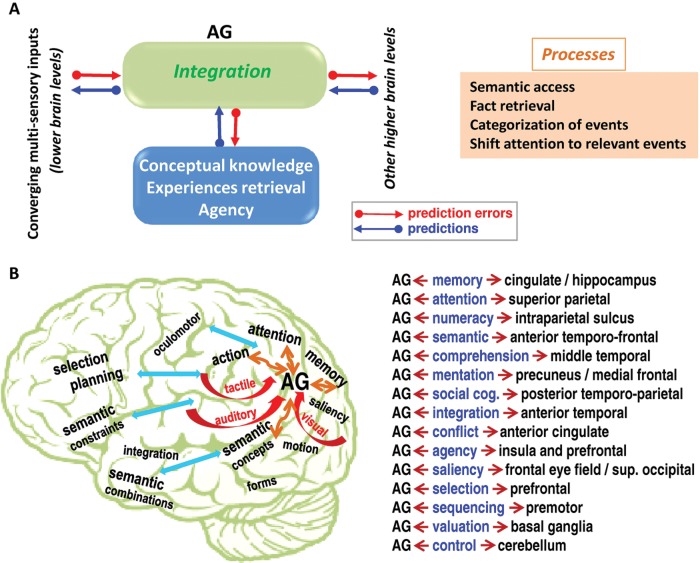
“It constitutes a crossmodal hub, where multisensory information is combined and integrated to comprehend and give sense to events, manipulate mental representations, solve familiar problems and reorient attention to relevant information (Seghier, 2013).”
BackgroundWang, J., Fu, K., Chen, L., Duan, X., Guo, X., Chen, H., Wu, Q., Xia, W., Wu, L., & Chen, H. (2017) · Frontiers in Physiology · doi:10.3389/fphys.2017.00588 · Cited by 57
“The AG is a multi-modal hub where converging multisensory information integrated to comprehend and give sense to events, manipulate mental representations and reorient attention to relevant information (Seghier, 2013).”
BackgroundBarrett, F. S., Preller, K. H., Herdener, M., Janata, P., & Vollenweider, F. X. (2018) · Cerebral Cortex · doi:10.1093/cercor/bhx257 · Cited by 51
Ruotolo, F., Ruggiero, G., Raemaekers, M. A. H., Iachini, T., van der Ham, I. J. M., Fracasso, A., & Postma, A. (2019) · Neuroscience · doi:10.1016/j.neuroscience.2019.04.021 · Cited by 56
Regenbogen, C., Seubert, J., Johansson, E., Finkelmeyer, A. E., Andersson, P. U., & Lundström, J. N. (2017) · Human Brain Mapping · doi:10.1002/hbm.23918 · Cited by 55
“In other words, the observed response may facilitate the process of giving sense and meaning to an event within a contextualized environment, based on prior expectations and knowledge, and toward an intended action (Seghier, 2013).”
BackgroundDecoding Nonconscious Thought Representations during Successful Thought Suppression
Koenig‐Robert, R., & Pearson, J. (2020) · Journal of Cognitive Neuroscience · doi:10.1162/jocn_a_01617 · Cited by 55
Are batterers different from other criminals? An fMRI study
Bueso‐Izquierdo, N., Verdejo‐Román, J., Contreras‐Rodríguez, O., Carmona-Perera, M., Pérez-García, M., & Hidalgo-Ruzzante, N. A. (2016) · Social Cognitive and Affective Neuroscience · doi:10.1093/scan/nsw020 · Cited by 56
“The angular gyrus is considered an important cerebral hub (Timoty and Volkow, 2011), consistently involved in semantic processing, attentional shifting, spatial cognition, episodic and autobiographical memory retrieval, DMN, conflict resolution and the theory of mind (Seghier, 2013).”
BackgroundIrimia, A., Torgerson, C. M., Jacokes, Z. J., & Van Horn, J. D. (2017) · Scientific Reports · doi:10.1038/srep46401 · Cited by 56
Mancke, F., Schmitt, R., Winter, D., Niedtfeld, I., Herpertz, S. C., & Schmahl, C. (2018) · Journal of Psychiatry and Neuroscience · doi:10.1503/jpn.170132 · Cited by 45
Stimulation of the Angular Gyrus Improves the Level of Consciousness
Legostaeva, L. A., Poydasheva, A. G., Iazeva, E. G., Sinitsyn, D. O., Sergeev, D. V., Bakulin, I. S., Lagoda, D. Y., Kremneva, E. I., Николаевна, М. С., Ryabinkina, Y. V., et al. (2019) · Brain Sciences · doi:10.3390/brainsci9050103 · Cited by 55
Neurocognitive determinants of theory of mind across the adult lifespan
Laillier, R., Viard, A., Caillaud, M. L., Duclos, H., Bejanin, A., Sayette, V. D. L., Eustache, F., Desgranges, B., & Laisney, M. (2019) · Brain and Cognition · doi:10.1016/j.bandc.2019.103588 · Cited by 55
“…temporoparietal junction, it has been shown to be involved in both verbal and nonverbal social cognition tasks (Binder, Desai, Graves, & Conant, 2009; Mar, 2011), supporting access to mental representations and judgment making on contextual associations that could contribute to ToM (Seghier, 2013).”
Perry, L. K., & Lupyan, G. (2014) · Brain and Language · doi:10.1016/j.bandl.2014.05.005 · Cited by 59
Dissociable morphometric profiles of the affective and cognitive dimensions of alexithymia
van der Velde, J., van Tol, M., Goerlich, K. S., Gromann, P. M., Swart, M., de Haan, L., Wiersma, D., Bruggeman, R., Krabbendam, L., & Aleman, A. (2014) · Cortex · doi:10.1016/j.cortex.2014.02.017 · Cited by 55
Cortical contributions to impaired contour integration in schizophrenia
Silverstein, S. M., Harms, M. P., Carter, C. S., Gold, J. M., Keane, B. P., MacDonald, A. W., Ragland, J. D., & Barch, D. M. (2015) · Neuropsychologia · doi:10.1016/j.neuropsychologia.2015.07.003 · Cited by 54
A Proposed Reinterpretation of Gerstmann's Syndrome
Ardila, A. (2014) · Archives of Clinical Neuropsychology · doi:10.1093/arclin/acu056 · Cited by 54
Hsu, C., Jacobs, A. M., Altmann, U., & Conrad, M. (2015) · PLoS ONE · doi:10.1371/journal.pone.0118179 · Cited by 55
“The left middle temporal cortex has been associated with more basic language perception as part of the ELN [60], while the cluster in the right parietal lobe could be associated with autobiographical memory [84, 85], working memory [86], semantic integration [61, 62], default network [87], or Theory of Mind as well as…”
BackgroundNeural correlates of intonation and lexical tone in tonal and non‐tonal language speakers
Chien, P., Friederici, A. D., Hartwigsen, G., & Sammler, D. (2020) · Human Brain Mapping · doi:10.1002/hbm.24916 · Cited by 54
The neural processes of acquiring placebo effects through observation
Schenk, L. A., & Colloca, L. (2019) · NeuroImage · doi:10.1016/j.neuroimage.2019.116510 · Cited by 55
Farahibozorg, S.-R., Henson, R. N., Woollams, A. M., & Hauk, O. (2022) · Cerebral Cortex · doi:10.1093/cercor/bhab501 · Cited by 54
Temporo-parietal dysfunction in Tourette syndrome: Insights from an fMRI study of Theory of Mind
Eddy, C. M., Cavanna, A. E., Rickards, H. E., & Hansen, P. (2016) · Journal of Psychiatric Research · doi:10.1016/j.jpsychires.2016.07.002 · Cited by 54
Chen, Y., Liu, Y., Song, Y., Zhao, S., Li, B., Sun, J., & Liu, L. (2022) · Frontiers in Neuroscience · doi:10.3389/fnins.2022.1022455 · Cited by 53
Neural evidence of switch processes during semantic and phonetic foraging in human memory
Lundin, N. B., Brown, J. W., Johns, B. T., Jones, M. N., Purcell, J. R., Hetrick, W. P., O’Donnell, B. F., & Todd, P. M. (2023) · Proceedings of the National Academy of Sciences · doi:10.1073/pnas.2312462120 · Cited by 53
Dermody, N., Hornberger, M., Piguet, O., Hodges, J. R., & Irish, M. (2016) · Journal of Alzheimer s Disease · doi:10.3233/jad-150871 · Cited by 54
Zhao, Y., Li, J., Liu, X., Song, Y., Wang, R., Yang, Z., & Liu, J. (2016) · Neuropsychologia · doi:10.1016/j.neuropsychologia.2016.05.027 · Cited by 54
Zhao, Y., Song, L., Ding, J., Lin, N., Wang, Q., Du, X., Sun, R., & Han, Z. (2016) · Journal of Neuroscience · doi:10.1523/jneurosci.1946-16.2016 · Cited by 53
Fink, A., Bay, J. U., Koschutnig, K., Prettenthaler, K., Rominger, C., Benedek, M., Papousek, I., Weiss, E. M., Seidel, A., & Memmert, D. (2018) · Human Brain Mapping · doi:10.1002/hbm.24408 · Cited by 53
Evidence for the Concreteness of Abstract Language: A Meta-Analysis of Neuroimaging Studies
Maschio, N. D., Fedeli, D., Garofalo, G., & Buccino, G. (2021) · Brain Sciences · doi:10.3390/brainsci12010032 · Cited by 52
Neural correlates of second-language communication and the effect of language anxiety
Jeong, H., Sugiura, M., Suzuki, W., Sassa, Y., Hashizume, H., & Kawashima, R. (2016) · Neuropsychologia · doi:10.1016/j.neuropsychologia.2016.02.012 · Cited by 54
“discourse processing (Binder et al., 2009; Braun et al., 2001; Seghier, 2013).”
What–where–when memory and encoding strategies in healthy aging
Cheke, L. G. (2016) · Learning & Memory · doi:10.1101/lm.040840.115 · Cited by 53
“Both of these areas have been previously associated with memory integration (Sack 2009; Staresina and Davachi 2009; Shimamura 2011; Seghier 2013) and are known to display structural and functional changes in aging (Raz 2000; Maguire and Frith 2003; Daselaar et al. 2006; Ally et al. 2008; Giorgio et…”
BackgroundSu, Q., Yao, D., Jiang, M., Liu, F., Long, L., Dai, Y., Yu, M., Zhang, Z., Zhang, J., Liu, J., et al. (2016) · Psychiatry Research Neuroimaging · doi:10.1016/j.pscychresns.2016.01.008 · Cited by 52
The right hemisphere is highlighted in connected natural speech production and perception
Alexandrou, A. M., Saarinen, T., Mäkelä, S., Kujala, J., & Salmelin, R. H. (2017) · NeuroImage · doi:10.1016/j.neuroimage.2017.03.006 · Cited by 52
Nakae, T., Matsumoto, R., Kunieda, T., Arakawa, Y., Kobayashi, K., Shimotake, A., Yamao, Y., Kikuchi, T., Aso, T., Matsuhashi, M., et al. (2020) · Cerebral Cortex · doi:10.1093/cercor/bhaa065 · Cited by 52
Left posterior inferior parietal cortex causally supports the retrieval of action knowledge
Kuhnke, P., Beaupain, M. C., Cheung, V. K. M., Weise, K., Kiefer, M., & Hartwigsen, G. (2020) · NeuroImage · doi:10.1016/j.neuroimage.2020.117041 · Cited by 52
“Together with the fact that it is located between and connected with many modality-specific cortices (Margulies et al., 2016; Seghier, 2013), this suggests that left pIPL constitutes a “convergence zone” for conceptual knowledge which integrates information from multiple perceptual-motor modalities…”
Intrinsic brain indices of verbal working memory capacity in children and adolescents
Yang, Z., Jutagir, D. R., Koyama, M. S., Craddock, R. C., Yan, C.-G., Shehzad, Z., Castellanos, F. X., Di Martino, A., & Milham, M. P. (2015) · Developmental Cognitive Neuroscience · doi:10.1016/j.dcn.2015.07.007 · Cited by 47
Choi, S., Jeong, G., Kim, Y.-B., & Cho, Z. (2020) · NeuroImage · doi:10.1016/j.neuroimage.2020.117145 · Cited by 51
Graves, W. W., Purcell, J. J., Rothlein, D., Bolger, D. J., Rosenberg‐Lee, M., & Staples, R. (2022) · Brain Structure and Function · doi:10.1007/s00429-022-02590-y · Cited by 51
“2018; Seghier 2013; Wang et al.”
BackgroundEarly changes of fecal short‐chain fatty acid levels in patients with mild cognitive impairments
Gao, C., Li, B., He, Y., Huang, P., Du, J., He, G., Zhang, P., Tang, H., & Chen, S. (2023) · CNS Neuroscience & Therapeutics · doi:10.1111/cns.14252 · Cited by 50
Saalasti, S., Alho, J., Bar, M., Glerean, E., Honkela, T., Kauppila, M., Sams, M., & Jääskeläinen, I. P. (2019) · Brain and Behavior · doi:10.1002/brb3.1288 · Cited by 50
Davis, C. P., & Yee, E. (2018) · Language Cognition and Neuroscience · doi:10.1080/23273798.2018.1479530 · Cited by 51
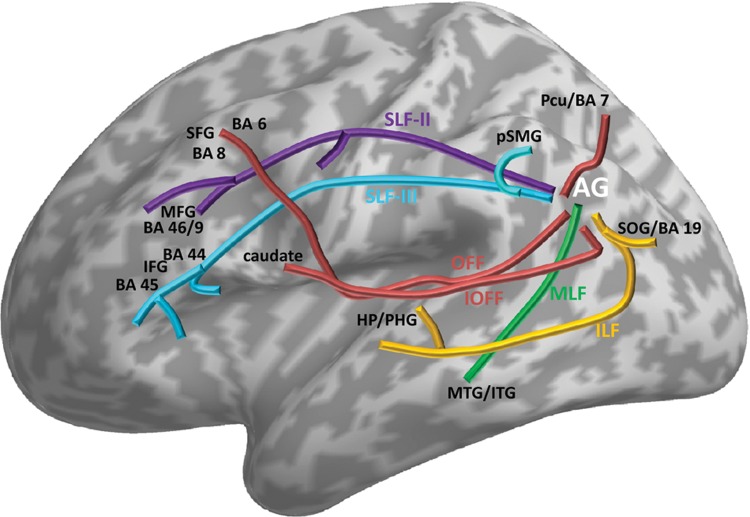
“…2008; Makris et al., 2004), while ventral AG shows greater connectivity to hippocampal regions (Rushworth, Behrens, & Johansen-Berg, 2005; see also Seghier, 2013, Figure 2), which we discuss later as a critical pattern of connectivity in supporting AG’s sensitivity to thematic semantic relations.”
BackgroundVisual hallucinations in Lewy body disease: pathophysiological insights from phenomenology
D’Antonio, F., Boccia, M., Di Vita, A., Suppa, A., Fabbrini, A., Canevelli, M., Caramia, F., Fiorelli, M., Guariglia, C., Ferracuti, S., et al. (2022) · Journal of Neurology · doi:10.1007/s00415-022-10983-6 · Cited by 39
The neuroanatomy of developmental language disorder: a systematic review and meta-analysis
Ullman, M. T., Clark, G. M., Pullman, M. Y., Lovelett, J. T., Pierpont, E. I., Jiang, X., & Turkeltaub, P. E. (2024) · Nature Human Behaviour · doi:10.1038/s41562-024-01843-6 · Cited by 51
Distinct alterations in Parkinson's medication-state and disease-state connectivity
Ng, B., Varoquaux, G. P., Poline, J., Thirion, B., Greicius, M. D., & Poston, K. L. (2017) · NeuroImage Clinical · doi:10.1016/j.nicl.2017.09.004 · Cited by 51
Meta-analytic evidence for a core problem solving network across multiple representational domains
Bartley, J. E., Boeving, E. R., Riedel, M. C., Bottenhorn, K. L., Salo, T., Eickhoff, S. B., Brewe, E. T., Sutherland, M. T., & Laird, A. R. (2018) · Neuroscience & Biobehavioral Reviews · doi:10.1016/j.neubiorev.2018.06.009 · Cited by 52
“Additionally, this contrast also identified verbal-selectivity in the left angular gyrus, a region involved with reading comprehension and semantic processing (Seghier, 2013).”
Tan, X. L., Liang, Y., Zeng, H., Qin, C., Li, Y., Yang, J., & Qiu, S. (2019) · Brain Imaging and Behavior · doi:10.1007/s11682-018-0017-8 · Cited by 50
del Re, E. C., Stone, W. S., Bouix, S., Seitz, J., Zeng, V., Guliano, A., Somes, N., Zhang, T., Reid, B. E., Lyall, A. E., et al. (2020) · Schizophrenia Bulletin · doi:10.1093/schbul/sbaa127 · Cited by 50
RETRACTED ARTICLE: A mechanistic model of the neural entropy increase elicited by psychedelic drugs
Herzog, R., Mediano, P. A. M., Rosas, F. E., Carhart-Harris, R., Perl, Y. S., Tagliazucchi, E., & Cofre, R. (2020) · Scientific Reports · doi:10.1038/s41598-020-74060-6 · Cited by 49
RetractedA Precuneal Causal Loop Mediates External and Internal Information Integration in the Human Brain
Lyu, D., Pappas, I., Menon, D. K., & Stamatakis, E. A. (2021) · Journal of Neuroscience · doi:10.1523/jneurosci.0647-21.2021 · Cited by 50
Buruck, G., Wendsche, J., Melzer, M., Strobel, A., & Dörfel, D. (2014) · Frontiers in Psychology · doi:10.3389/fpsyg.2014.00517 · Cited by 52
“ORIGINAL RESEARCH ARTICLE published: 30 May 2014 doi: 10.3389/fpsyg.2014.00517 Acute psychosocial stress and emotion regulation skills modulate empathic reactions to pain in others”
InfluentialAudiovisual integration as conflict resolution: The conflict of the McGurk illusion
Fernández, L. M., Macaluso, E., & Soto‐Faraco, S. (2017) · Human Brain Mapping · doi:10.1002/hbm.23758 · Cited by 51
“According to previous studies, the AG plays a role in a wide variety of domains, ranging from semantic processing, reading, number processing, conflict, attention, memory, cross-modal integration and, in addition, it is part of the default mode network [Seghier, 2013].”
MethodMori, A., Okamoto, Y., Okada, G., Takagaki, K., Jinnin, R., Takamura, M., Kobayakawa, M., & Yamawaki, S. (2016) · Journal of Affective Disorders · doi:10.1016/j.jad.2015.09.036 · Cited by 49
“Angular gyrus does not function in isolation, but functions as a hub that combines information and gives meaning to events by accepting signals from other regions (Seghier, 2013).”
Gyebnár, G., Szabó, Á., Sirály, E., Fodor, Z., Sákovics, A., Salacz, P., Hidasi, Z., Csibri, É., Rudas, G., Kozák, L. R., et al. (2018) · Psychiatry Research: Neuroimaging · doi:10.1016/j.pscychresns.2017.10.007 · Cited by 49
van Ettinger-Veenstra, H., McAllister, A. M., Lundberg, P., Karlsson, T., & Engström, M. (2016) · Frontiers in Human Neuroscience · doi:10.3389/fnhum.2016.00110 · Cited by 49
“The angular gyrus has different functionalities, related to anatomical subdivisions (Seghier, 2013), of which some seem to be specific for semantic processing such as comprehensive reading of sentences (Xu et al., 2005) and the angular gyrus is thought to be essential for comprehension of speech…”
BackgroundInfluentialZhang, H., Wang, Z., Wang, J., Lyu, X., Wang, X., Liu, Y., Zeng, X., Yuan, H., Wang, H., & Yu, X. (2019) · Translational Psychiatry · doi:10.1038/s41398-019-0385-x · Cited by 49
Stoyanov, D., Aryutova, K., Kandilarova, S., Paunova, R., Arabadzhiev, Z., Todeva-Radneva, A., Kostianev, S. S., & Borgwardt, S. (2021) · Diagnostics · doi:10.3390/diagnostics11010095 · Cited by 49
“It is also involved in social cognition and semantic processing as well as memory retrieval [44].”
BackgroundPetit, L., Ali, K. M., Rheault, F., Boré, A., Cremona, S., Corsini, F., BENEDICTIS, A. D., Descoteaux, M., & Sarubbo, S. (2022) · Brain Structure and Function · doi:10.1007/s00429-022-02551-5 · Cited by 49
“…the angular gyrus (AG) is a critical connector epicenter linking numerous functional networks involved in semantic processing, word reading and comprehension, number processing, default mode network, memory retrieval, attention and spatial cognition, reasoning, and social cognition (Seghier 2013).”
BackgroundNeural bases of the bodily self as revealed by electrical brain stimulation: A systematic review
Dary, Z., Lenggenhager, B., Lagarde, S., Medina Villalon, S., Bartolomei, F., & Lopez, C. (2023) · Human Brain Mapping · doi:10.1002/hbm.26253 · Cited by 48
Bellana, B., Liu, Z., Anderson, J. A. E., Moscovitch, M., & Grady, C. L. (2015) · Neuropsychologia · doi:10.1016/j.neuropsychologia.2015.11.004 · Cited by 48
On neural correlates of individual differences in novel grammar learning: An fMRI study
Kepinska, O., de Rover, M., Caspers, J., & Schiller, N. O. (2016) · Neuropsychologia · doi:10.1016/j.neuropsychologia.2016.06.014 · Cited by 49
Farina, E., Baglio, F., Pomati, S., D'Amico, A., Campini, I., Tella, S. D., Belloni, G., & Pozzo, T. (2017) · Frontiers in Aging Neuroscience · doi:10.3389/fnagi.2017.00371 · Cited by 48
“As an alternative explanation, the preservation/hyperactivation of the anteriorMN network could not be sufficient to support performance in this kind of task because it is highly dependent on parietal areas (Seghier, 2013).”
Background
Metadata
- Authors
- Seghier, M. L.
- Affiliations
- Wellcome Centre for Human Neuroimaging (GB)
- Corresponding author
- Seghier, Mohamed L.
- ORCID
- Seghier, Mohamed L.
- Venue
- The Neuroscientist
- Publisher
- SAGE Publications
- Published
- 2012-04-30
- Volume
- 19
- Issue
- 1
- Pages
- 43-61
- ISSN
- 1073-8584 (ISSN-L)
- 1089-4098
- PMC
- PMC4107834
- OpenAlex
- W2134248637
- Cited by
- 1,585
- References
- 157
- Citations by year
- 2026: 95 · 2025: 166 · 2024: 127 · 2023: 127 · 2022: 180 · 2021: 149 · 2020: 131 · 2019: 130 · 2018: 107 · 2017: 115 · 2016: 90 · 2015: 71 · 2014: 53 · 2013: 38 · 2012: 2
- FWCI
- 26.83
- Type
- journal article
- Language
- en
- Open access
- hybrid
- doi.org
- Licence
- cc-by
- journals.sagepub.com/page/policies/text-and-data-mining-license (tdm)
- Locations
- The Neuroscientist (publishedVersion, cc-by)
- PubMed Central (publishedVersion, cc-by)
- PubMed (publishedVersion)
- UCL Discovery (University College London) (submittedVersion)
- Funders
- Wellcome Trust
- Topics
- Life Sciences › Neuroscience › Cognitive Neuroscience › Neurobiology of Language and Bilingualism
- Social Sciences › Psychology › Developmental and Educational Psychology › Reading and Literacy Development
- Social Sciences › Psychology › Developmental and Educational Psychology › Cognitive and developmental aspects of mathematical skills
- Keywords
- angular gyrus, inferior parietal lobule, semantic processing, word reading, number processing, default mode network, memory retrieval, attention, spatial cognition, reasoning, social cognition, cross-modal integration, multisensory integration, parcellation, functional specialization
- MeSH terms
- Brain Mapping, Cognition, Diagnostic Imaging, Humans, Image Processing, Computer-Assisted, Neural Pathways, Parietal Lobe, Reading, Semantics, Meta-Analysis as Topic
About these checks
Registry, retraction, Cites and statistics results are computed, not judged, with one exception: a printed reference that no index lists is read once by a model before it counts as a citation error. Claims are extracted by a model and kept only when their quote appears verbatim in the text; each cited source is then checked, with a model’s help, for whether it says what the claim relies on. Those verdicts can be wrong — read the claim’s quote and the cited source before relying on one.
Statistics and arithmetic are recomputed, not judged.
Confidence bands are shown only for fields calibrated on our annotated test set. None is calibrated yet, so no band is shown.
What counts as a claim ›How we measure confidence ›How we check this ›
Are you an author, or do you see a problem with this page? Request a review
Data sources
Bibliographic data: Semantic Scholar, OpenAlex, Crossref.
Contains information from the Semantic Scholar Academic Graph Datasets, made available under the ODC Attribution License (ODC-BY 1.0).
Semantic Scholar’s data is described in: Kinney, R., et al. (2023). The Semantic Scholar Open Data Platform. arXiv:2301.10140.
