

Do ASD and ADHD Have Distinct Executive Function Deficits? A Systematic Review and Meta-Analysis of Direct Comparison Studies
Open accessThe DOI matches its Crossref record; 46 of the 46 references it cites were found in a registry or an index; 7 of the 14 sources its claims cite were checked for support.
Abstract
OBJECTIVE: To evaluate if children and adolescents with a diagnosis of ASD or ADHD have distinct executive function (EF) profiles. METHODS: Peer-reviewed articles comparing ASD, ADHD, and typically developing individuals under 19 years of age were identified. The domains evaluated were: working memory, response inhibition, planning, cognitive flexibility, attention, processing speed, and visuospatial abilities. RESULTS: Fifty-eight articles met inclusion criteria. Analyses were performed on 45 performance metrics from 24 individual tasks. No differences in EF were found between individuals diagnosed with ASD and ADHD. Individuals diagnosed with ASD and ADHD exhibited worse performance in attention, flexibility, visuospatial abilities, working memory, processing speed, and response inhibition than typically developing individuals. Groups did not differ in planning abilities. CONCLUSION: Children and adolescents with ASD and ADHD have similar EF profiles. Further research is needed to determine if comorbidity accounts for the commonality in executive dysfunction between each disorder.
Overview
CoChat Summary
TL;DR
This systematic review and meta-analysis directly compared executive function (EF) in children and adolescents with ASD versus ADHD and found no evidence for distinct EF profiles between the two diagnoses. Both groups showed worse EF than typically developing peers across several domains, but not planning.
Key findings
- Fifty-eight articles met inclusion criteria; analyses used 45 performance metrics from 24 individual tasks. No differences in EF were found between ASD and ADHD overall, and the authors conclude the groups have similar EF profiles.
- Both ASD and ADHD groups performed worse than typically developing individuals in attention, cognitive flexibility, visuospatial abilities, working memory, processing speed, and response inhibition; neither group showed planning deficits.
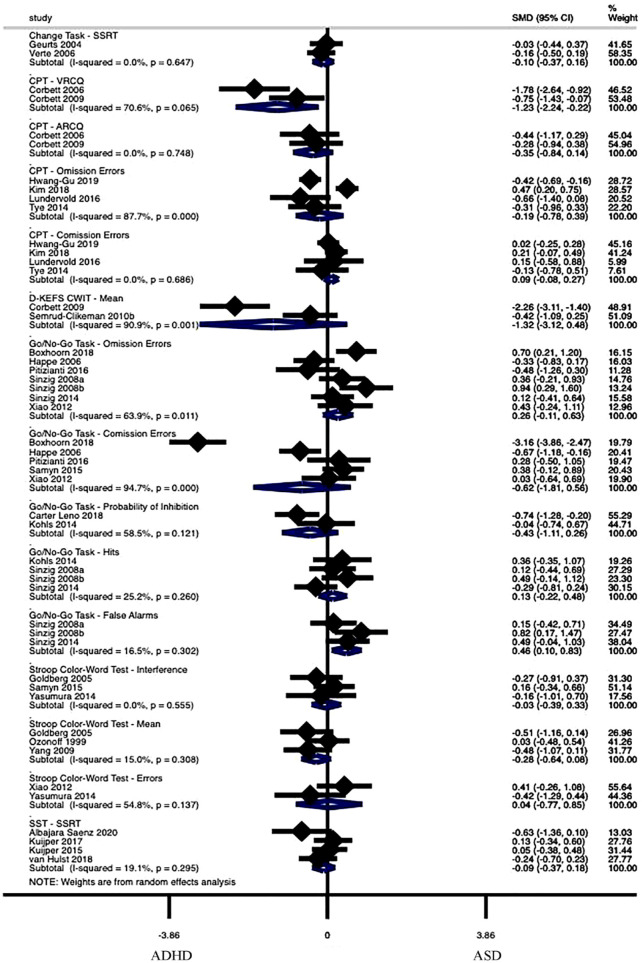
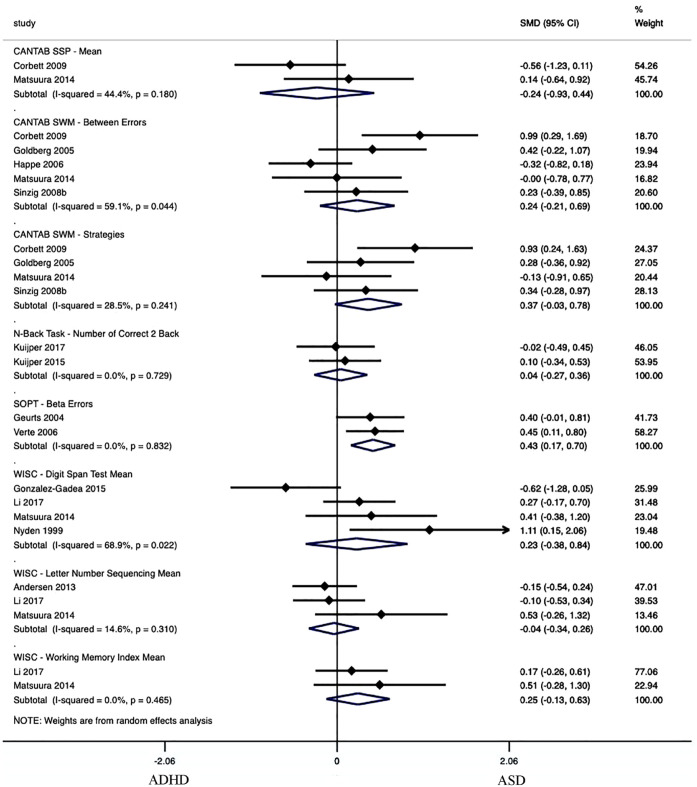
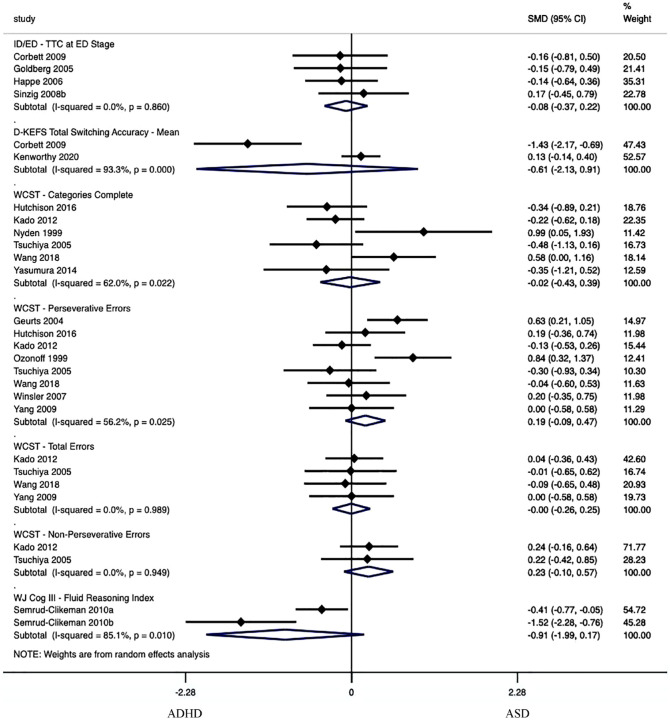
- Isolated performance metrics did differ: ASD scored worse than ADHD on CPT Visual Response Control Quotient (Hedge’s g = −1.23, p = .02), Go/No-Go False Alarms (g = 0.46, p = .01), and Self-Ordered Pointing Beta Errors (g = 0.43, p < .01). ADHD scored higher than ASD on WISC Processing Speed Index (g = −0.43, p < .001) and CANTAB SOC Initial Thinking Time (g = −0.69, p < .01), while ASD scored higher than ADHD on WISC Block Design (g = 0.34, p = .01).
- Risk of bias was moderate-high: average Downs and Black score was 11.22 out of 14, with included articles receiving 662/826 possible points (80.15%).
Methods
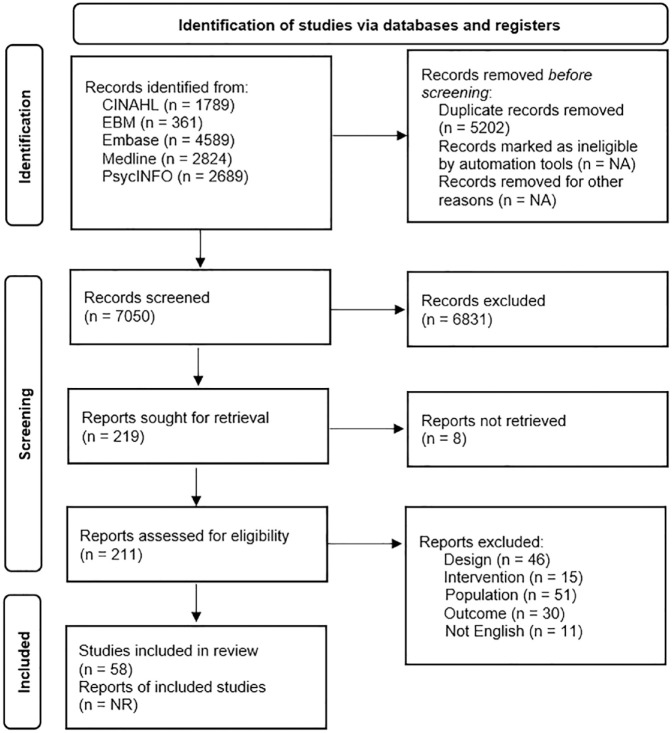
- Pre-registered systematic review and meta-analysis (PROSPERO RecordID = 262654), following Cochrane and PRISMA guidelines. Searches from inception to May 2021 in CINAHL, EBM, Embase, Medline, and PsycINFO, plus hand-searching.
- Included peer-reviewed primary empirical studies with an ASD group, ADHD group, and typically developing group; participants under 19 years, matched in age and sex; English full text; quantitative neuropsychological EF measures only, excluding rating scales such as BRIEF.
- Three separate random-effects meta-analyses were run per performance metric: ASD vs ADHD, ASD vs typically developing, and ADHD vs typically developing, using DerSimonian-Laird estimator and Hedge’s g. Pooled effect sizes were not computed within each EF domain because performance metrics measured different aspects of domains.
Limitations
- Stated: the literature covered many EF processes and tests; theoretical limitations prevented pooled estimates across all performance metrics for each EF domain. Many analyses had small numbers of articles and participants, precluding evaluation of moderators such as age, and many had large between-study variation. External validity categories were low; only English articles were included; few studies included a comorbid group, controlled for ASD/ADHD traits, or distinguished ADHD subtypes.
- Evident from the text: several meta-analytic results were based on only k = 2 or k = 3 studies, and heterogeneity was sometimes substantial (e.g., τ² up to 1.73), limiting confidence in isolated significant findings.
Model-written summary. Check it against the paper before relying on it.
Integrity signals
Registry
Cites
Statistics
Figures
Verification
Claims the paper makes
6 Valid · 2 Not valid · 2 Not checked · 29 Own results and interpretations
At least one cited source doesn’t support this claim or points to a different paper, and none confirmed it — see the verdicts below.
In the paper
“Studies in which ADHD and ASD traits were controlled indicate that, at least response inhibition and response variability, may be more strongly associated with ADHD than with ASD traits (Karalunas et al., 2018; Schachar et al., 2022).”
§ Do ASD and ADHD Have Distinct Executive Function Deficits? A Systematic Review and Meta-Analysis of Direct Comparison Studies > Discussion
What the sources say
- Disputedcites Karalunas et al., 2018 matched to “Overlapping and Distinct Cognitive Impairments in Attention-Deficit/Hyperactivity and Autism Spectrum Disorder without Intellectual Disability” (2018) sourceExperimental — accuracy not yet measured
The Results (Executive Functioning; page unavailable) report that response-inhibition impairment in children with ASD remained after controlling for ADHD symptoms, with no reliable difference from children with ADHD. The Results (Reaction time parameters; page unavailable) likewise report elevated response variability in both groups after symptom controls. The paper therefore does not find these impairments more strongly associated with ADHD than with ASD. (LLM, conf=0.88)
Checked by a reasoning model — may be wrong.
- Not matchedcites Schachar et al., 2022
An author–year citation the paper’s reference list doesn’t settle. We don’t search these by name.
hedgedstates an association- Asserted: passes — The authors put it forward as true.
- Checkable: passes — It can be checked against evidence.
- Load-bearing: passes — The paper’s conclusions depend on it.
- Based: passes — The paper gives a reason why it holds.
- Disputed
The cited sources support only part of this claim — read each source’s verdict below.
In the paper
“This meta-analysis was not able to determine if the similarity in EF deficits in ASD and ADHD were due to the high rate of comorbidity of these disorders (Hours et al., 2022).”
§ Do ASD and ADHD Have Distinct Executive Function Deficits? A Systematic Review and Meta-Analysis of Direct Comparison Studies > Discussion
What the sources say
- Partly supportedcites Hours et al., 2022 matched to “ASD and ADHD Comorbidity: What Are We Talking About?” (2022) sourceExperimental — accuracy not yet measured
The Discussion reports shared executive-function impairments in ASD and ADHD and questions whether executive-function findings alone can establish comorbidity. The paper does not present itself as a meta-analysis or report a meta-analytic determination of whether comorbidity causes those similarities. Our copy provides no page numbers for these passages. (LLM, conf=0.84)
plain- Asserted: passes — The authors put it forward as true.
- Checkable: passes — It can be checked against evidence.
- Load-bearing: passes — The paper’s conclusions depend on it.
- Based: passes — The paper gives a reason why it holds.
- Partly supported
The sources with a verdict support this claim; the rest weren’t checked yet, have no full text we could read, or their verdicts aren’t rated yet.
In the paper
“The results of this meta-analysis of direct comparisons using a meta-analytical approach of ASD and ADHD differ from the conclusions reached by previous reviews (Antshel & Russo, 2019; Banaschewski et al., 2005; Craig et al., 2016).”
§ Do ASD and ADHD Have Distinct Executive Function Deficits? A Systematic Review and Meta-Analysis of Direct Comparison Studies > Discussion
What the sources say
- Not checked — no full text of the sourcecites Antshel & Russo, 2019 matched to “Autism Spectrum Disorders and ADHD: Overlapping Phenomenology, Diagnostic Issues, and Treatment Considerations” (2019) source
- Supportedcites Banaschewski et al., 2005 matched to “Towards an understanding of unique and shared pathways in the psychopathophysiology of ADHD” (2005) source
The Abstract identifies this paper as a selective review comparing ADHD with other disorders, and the Autism section discusses direct ADHD–autism comparisons and draws conclusions from them. The citation identifies it as a previous review; it does not attribute the citing authors’ meta-analysis results to this source. (LLM, conf=0.86)
- Not matchedcites Craig et al., 2016
An author–year citation the paper’s reference list doesn’t settle. We don’t search these by name.
plain- Asserted: passes — The authors put it forward as true.
- Checkable: passes — It can be checked against evidence.
- Load-bearing: passes — The paper’s conclusions depend on it.
- Based: passes — The paper gives a reason why it holds.
A result the paper reports from its own data — it cites no other source for it, so there is none to check. The quote shows it is in the paper.
In the paper
“The group with ASD (n = 33) scored significantly worse than the group with ADHD (n = 33) in studies (k = 2) on the Visual Response Control Quotient from the Continuous Performance Test (CPT) (Hedge’s g = −1.23, p = .02, 95% CI [−2.24, −0.22], τ2 = .38).”
- Also stated in: § Attention · plain
“The Visual Response Control Quotient from the (CPT) found a significant result in studies (k = 2) where the group with ADHD (n = 33) scored higher than the group with ASD (n = 33; Hedge’s g = −1.23, p = .02, 95% CI [−2.24, −0.22], τ2 = .38).”
§ Do ASD and ADHD Have Distinct Executive Function Deficits? A Systematic Review and Meta-Analysis of Direct Comparison Studies > Results > Response Inhibition
plainstates an associationn = 33 ·- Asserted: passes — The authors put it forward as true.
- Checkable: passes — It can be checked against evidence.
- Load-bearing: passes — The paper’s conclusions depend on it.
- Based: passes — The paper gives a reason why it holds.
- Rests on an assumption not shown here.
- Also stated in: § Attention · plain
A result the paper reports from its own data — it cites no other source for it, so there is none to check. The quote shows it is in the paper.
In the paper
“Individuals diagnosed with ASD and ADHD exhibited worse performance in attention, flexibility, visuospatial abilities, working memory, processing speed, and response inhibition than typically developing individuals.”
- Also stated in: § Discussion · hedged
“Less consistent deficits were also found in processing speed and working memory.”
§ Do ASD and ADHD Have Distinct Executive Function Deficits? A Systematic Review and Meta-Analysis of Direct Comparison Studies > Abstract > Results:
plainstates an association- Asserted: passes — The authors put it forward as true.
- Checkable: passes — It can be checked against evidence.
- Load-bearing: passes — The paper’s conclusions depend on it.
- Based: passes — The paper gives a reason why it holds.
- Rests on an assumption not shown here.
- Also stated in: § Discussion · hedged
17 more claims
Create a free account to see all 39 claims and to verify the 1 reference still open.
- Probably not a substantial claim. 11
- It may state two separate claims as one. 11
Claims other papers make about this one
Each is checked against this paper’s own text: does it say what the citing paper says it does?
The cited source doesn’t support the claim as written.
In the citing paper
“No distinction between the types of assessment (i.e., neuropsychological tests vs. questionnaires) was taken into account.”
From Comparing Executive Functions in Children and Adolescents with Autism and ADHD—A Systematic Review and Meta-Analysis (2024) · cites this paper as [27]
Checked by a reasoning model — may be wrong.
Experimental — accuracy not yet measuredThe source backs part of the claim, not all of it — or backs it for a different population, condition or comparison.
In the citing paper
“The same conclusion was drawn by Townes and colleagues (2023): as shown by neuropsychological tests and questionnaires, children and adolescents with ASD and ADHD have similar EF profiles [27].”
From Comparing Executive Functions in Children and Adolescents with Autism and ADHD—A Systematic Review and Meta-Analysis (2024) · cites this paper as [27]
Experimental — accuracy not yet measuredThe cited source says what the claim attributes to it.
In the citing paper
“First, the comparison between the clinical and control groups revealed clear differences in cognitive indices linked to executive functioning, consistent with previous research [35, 44, 45, 46].”
From ADHD, Subtypes and Cognitive Performance: WISC-V as a Support Tool for Diagnostic Assessment (2026) · cites this paper as [46]
The cited source says what the claim attributes to it.
In the citing paper
“This meta-analysis confirmed that both ADHD and ASD showed EF impairments compared to the TD group.”
From Comparing Executive Functions in Children and Adolescents with Autism and ADHD—A Systematic Review and Meta-Analysis (2024) · cites this paper as [27]
The cited source says what the claim attributes to it.
In the citing paper
“Townes et al. found no differences in EF profiles between individuals diagnosed with ASD and ADHD, stating that although they are two distinct clinical disorders, they share some underlying mechanisms.”
From Comparing Executive Functions in Children and Adolescents with Autism and ADHD—A Systematic Review and Meta-Analysis (2024) · cites this paper as [27]
Self-check
Percentages, sums and reported differences re-computed from the paper’s own numbers.
Each contradiction between two passages listed here was confirmed by an independent check.
Rated minor: it would not touch a result — a value no result rests on, a p-value that stays on the same side of the significance level, or a conflict that is clerical, resolved elsewhere in the paper, or outside its own findings.
In the paper
“The average score of articles on the Downs and Black risk of bias assessment was 11.22 out of 14 total points that could be awarded, revealing moderate-high validity.”
§ Do ASD and ADHD Have Distinct Executive Function Deficits? A Systematic Review and Meta-Analysis of Direct Comparison Studies > Results > Risk of Bias
Reported 11.22 · recomputed 11.413793
Rated minor: it would not touch a result — a value no result rests on, a p-value that stays on the same side of the significance level, or a conflict that is clerical, resolved elsewhere in the paper, or outside its own findings.
In the paper
§ Do ASD and ADHD Have Distinct Executive Function Deficits? A Systematic Review and Meta-Analysis of Direct Comparison Studies > Results > Planning
“The group with ASD performed significantly worse than the typically developing group on one performance metric (see Supplemental Table 2b).”
§ Do ASD and ADHD Have Distinct Executive Function Deficits? A Systematic Review and Meta-Analysis of Direct Comparison Studies > Discussion
“No deficits in planning were found in ASD or ADHD.”
Rated minor: it would not touch a result — a value no result rests on, a p-value that stays on the same side of the significance level, or a conflict that is clerical, resolved elsewhere in the paper, or outside its own findings.
In the paper
“Visuospatial Abilities were evaluated in four performance metrics as part of four tasks, where one performance metric showed significantly worse performance in ADHD compared to ASD (see Supplemental Figure and Supplemental Table 2a).”
§ Do ASD and ADHD Have Distinct Executive Function Deficits? A Systematic Review and Meta-Analysis of Direct Comparison Studies > Results > Visuospatial Abilities
Reported 9 · recomputed 3
Citations
Cites
Diagnostic and Statistical Manual of Mental Disorders
American Psychiatric Association (2013) · doi:10.1176/appi.books.9780890425596 · Cited by 116,369
Meta-analysis in clinical trials
DerSimonian, R., & Laird, N. (1986) · Controlled Clinical Trials · doi:10.1016/0197-2456(86)90046-2 · Cited by 39,552
Quantifying heterogeneity in a meta‐analysis
Higgins, J. P. T., & Thompson, S. G. (2002) · Statistics in Medicine · doi:10.1002/sim.1186 · Cited by 36,763
Liberati, A., Altman, D. G., Tetzlaff, J., Mulrow, C., Gotzsche, P. C., Ioannidis, J. P. A., Clarke, M., Devereaux, P. J., Kleijnen, J., & Moher, D. (2009) · BMJ · doi:10.1136/bmj.b2700 · Cited by 17,648
Diamond, A. (2013) · Annual Review of Psychology · doi:10.1146/annurev-psych-113011-143750 · Cited by 13,268 · cited 1×
“Most models of EF include working memory, response inhibition, planning, cognitive flexibility, and attention (Diamond, 2013; Miyake et al., 2000; Stuss & Benson, 1987).”
Downs, S. H., & Black, N. (1998) · Journal of Epidemiology and Community Health · doi:10.1136/jech.52.6.377 · Cited by 8,252
Insel, T., Cuthbert, B., Garvey, M., Heinssen, R., Pine, D. S., Quinn, K., Sanislow, C., & Wang, P. (2010) · American Journal of Psychiatry · doi:10.1176/appi.ajp.2010.09091379 · Cited by 7,067 · cited 1×
“One method to accomplish this goal would be to adopt the NIMH Research Domain Criteria (RDoC) approach (Insel et al., 2010) and standardized measures of each EF such as in the NIH ToolKit (Hodes et al., 2013).”
MethodAssessing heterogeneity in meta-analysis: Q statistic or I² index?
Huedo-Medina, T. B., Sánchez-Meca, J., Marín-Martínez, F., & Botella, J. (2006) · Psychological Methods · doi:10.1037/1082-989x.11.2.193 · Cited by 4,256 · cited 1×
“I 2 resulting percentages of 75%, 50%, and 25% indicate a high, medium, and low heterogeneity, respectively (Huedo-Medina et al., 2006).”
BackgroundMaenner, M. J., Shaw, K. A., Baio, J., EdS1, Washington, A., Patrick, M., DiRienzo, M., Christensen, D. L., Wiggins, L. D., Pettygrove, S., et al. (2020) · MMWR. Surveillance Summaries · doi:10.15585/mmwr.ss6904a1 · Cited by 3,780 · cited 1×
“About 2% of school-aged children are diagnosed with ASD (Maenner et al., 2020).”
BackgroundPolanczyk, G. V., Willcutt, E. G., Salum, G. A., Kieling, C., & Rohde, L. A. (2014) · International Journal of Epidemiology · doi:10.1093/ije/dyt261 · Cited by 1,822 · cited 1×
“ADHD is characterized by developmentally inappropriate inattention, hyperactivity, and impulsivity (American Psychiatric Association [APA], 2013) and affects 5% to 7% of school-aged children (Polanczyk et al., 2014).”
Background
Research works printed but not linked: 3
- Higgins J. P. T. Altman D. G. Sterne J. A. C. (2011). Chapter 8: Assessing risk of bias in a randomized trial. In Higgins J. P. T. Green S. (Eds.), Cochrane handbook for systematic reviews of interventions (version 5.1.0). The Cochrane Collaboration. https://www.training.cochrane.org/handbook
- Higgins J. P. T. Thomas J. Chandler J. Cumpston M. Li T. Page M. J. Welch V. A. (Eds.). (2022). Cochrane handbook for systematic reviews of interventions version 6.3 (updated February 2022). Cochrane. https://www.training.cochrane.org/handbook
- StataCorp. (2021) Stata statistical software (Release 17). StataCorp LLC. Covidence systematic review software, Veritas Health Innovation, Melbourne. https://www.covidence.org
Cited by
Executive function deficits in attention-deficit/hyperactivity disorder and autism spectrum disorder
Kofler, M. J., Soto, E. F., Singh, L. J., Harmon, S. L., Jaisle, E. M., Smith, J. N., Feeney, K. E., & Musser, E. D. (2024) · Nature Reviews Psychology · doi:10.1038/s44159-024-00350-9 · Cited by 51
“When ADHD symptoms were controlled for among those with ASD, effect sizes remained medium for verbal ( d = 0.53) and spatial tests ( d = 0.50) 49,63 .”
InfluentialCeruti, C., Mingozzi, A., Scionti, N., & Marzocchi, G. M. (2024) · Children · doi:10.3390/children11040473 · Cited by 35
“The same conclusion was drawn by Townes and colleagues (2023): as shown by neuropsychological tests and questionnaires, children and adolescents with ASD and ADHD have similar EF profiles [27].”
BackgroundUnraveling the spectrum: overlap, distinctions, and nuances of ADHD and ASD in children
Martinez, S., Stoyanov, K., & Carcache, L. (2024) · Frontiers in Psychiatry · doi:10.3389/fpsyt.2024.1387179 · Cited by 33
Schachar, R. J. (2023) · Neuroscience & Biobehavioral Reviews · doi:10.1016/j.neubiorev.2023.105461 · Cited by 34
Self-citationExecutive Functioning Profiles in Neurodevelopmental Disorders: Parent–Child Outcomes
Pardo‐Salamanca, A., Paoletti, D., Cerezuela, G. P., STASIO, S. D., & Berenguer, C. (2024) · Children · doi:10.3390/children11080909 · Cited by 28
“Despite differences in the manifestations of these disorders, recent meta-analyses have found no differences in EF domains between children and adolescents with ADHD and those with ASD [5,16].”
BackgroundResultZaleski, A. L., Craig, K. J. T., Khan, R., Waber, R., Xin, W., Powers, M., Ramey, U., Verbrugge, D. J., & Fernandez-Turner, D. (2025) · BMC Health Services Research · doi:10.1186/s12913-025-13296-2 · Cited by 11
“Consequently, research on individuals with co-existing ASD and ADHD, particularly among adults, is still in its infancy, necessitating a more nuanced understanding of shared needs associated with these disorders [11, 12].”
Executive functioning in child victims of sexual abuse: A multi-informant comparative study
Amédée, L. M., Cyr, C. P., Jean-Thorn, A., & Hébert, M. (2024) · Child Abuse & Neglect · doi:10.1016/j.chiabu.2024.106737 · Cited by 13
Object Recognition Memory Deficits in ADHD: A Meta-analysis
Lobato-Camacho, F. J., & Faísca, L. (2024) · Neuropsychology Review · doi:10.1007/s11065-024-09645-3 · Cited by 10
Ludyga, S., Bruggisser, F., Leuenberger, R., Ishihara, T., Kamijo, K., Brotzmann, M., Trescher, S., Förster, M., & Gerber, M. (2024) · Autism Research · doi:10.1002/aur.3224 · Cited by 11
“Meta-analytical findings even indicate similar executive function profiles in children with ASD and attention deficit-hyperactivity disorder (Townes et al., 2023), so that impairments in inhibitory control could partly be due to such comorbidities.”
The associations between autistic characteristics and microtransaction spending
Charnock, T., Drummond, A., Hall, L. C., & Sauer, J. D. (2024) · Scientific Reports · doi:10.1038/s41598-024-64812-z · Cited by 9
“Furthermore, there is substantial evidence demonstrating considerable overlap between autism and ADHD, including shared biological, behavioural, and cognitive features 70–72 .”
BackgroundCognitive Profiling of Children and Adolescents with ADHD Using the WISC-IV
Rosales-Gómez, M., Navarro-Soria, I., Torrecillas, M., López, M. E., & Delgado, B. (2025) · Behavioral Sciences · doi:10.3390/bs15091279 · Cited by 6
“These findings are directly related to the deficits observed in executive functions, one of the most affected cognitive domains in individuals with ADHD (Navarro-Soria et al., 2020; Schreiber et al., 2014; Silverstein et al., 2020; Townes et al., 2023).”
Neurodevelopmental disorders in children born to mothers involved in maternal motor vehicle crashes
Chang, Y.-H., Chien, Y., Chang, C., Chen, P., Lu, T., Yen, C., Chiou, H.-Y., Tsai, K.-S., & Li, C. (2024) · Pediatric Research · doi:10.1038/s41390-024-03608-3 · Cited by 7
“36,37 Therefore, it our fi nding that offspring with maternal MVCs have a higher risk of ASD and ADHD, possibly because of their genetic factor in terms of EF de fi cits from their mother.”
Berni, M., Scatigna, S., Igliozzi, R., Mazzotti, S., Calderoni, S., Martinelli, A., Tancredi, R., Guzzetta, A., & Pecini, C. (2025) · Neuropsychology Review · doi:10.1007/s11065-025-09683-5 · Cited by 10
Richson, B. N., DeVille, D. C., Wierenga, C. E., Kaye, W. H., & Ramirez, A. L. (2024) · Journal of Eating Disorders · doi:10.1186/s40337-024-00972-7 · Cited by 6
Executive Functioning Profiles in Children with Neurodevelopmental Disorders
Herreras, E. B. (2025) · Behavioral Sciences · doi:10.3390/bs15091256 · Cited by 8
“For instance, two studies (Ceruti et al., 2024; Townes et al., 2023) reported no significant differences in EF profiles between ASD and ADHD.”
Tan, C., Zhou, H., Yang, M., Li, C., Chen, H., He, L., Yang, T., Chen, J., Zhang, J., & Li, T. (2025) · Scientific Reports · doi:10.1038/s41598-025-94156-1 · Cited by 6
Facilitators and barriers to the development of giftedness in children
Pergantis, P. (2024) · GSC Advanced Research and Reviews · doi:10.30574/gscarr.2024.18.3.0085 · Cited by 8
“The study by Townes et al. (2023) examined whether children and adolescents diagnosed with ASD or ADHD have distinct executive function profiles.”
BackgroundSian‐Hülsmann, J., Knudsen, L. V., Sheldrick, A. J., Riederer, P., & Michel, T. (2026) · Journal of Neural Transmission · doi:10.1007/s00702-025-03078-9 · Cited by 5
Echefu, B. E., Becker, M., Stein, D. J., & Ornoy, A. (2025) · NeuroSci · doi:10.3390/neurosci6020027 · Cited by 8
“Attempts to broaden the scope shows that a handful of studies are increasingly reporting on the commonality of phenotypic dysfunction and mechanisms shared among NDDs, especially SZ, ASD, and ADHD [17,28–31].”
Lee, K., Cho, I. H., Park, J. H., Choi, H., & Cheon, K.-A. A. (2024) · Frontiers in Psychiatry · doi:10.3389/fpsyt.2024.1426376 · Cited by 7
Executive functions in children with ADHD: A comprehensive bibliometric analysis
Kılıç, K. M., & Ahmetoğlu, E. (2025) · Applied Neuropsychology Child · doi:10.1080/21622965.2025.2518293 · Cited by 4
Barroso, B. C. R., Mendonça, F., Mazer, P., Prata, C., & Pinto, J. O. (2025) · International Journal of Psychophysiology · doi:10.1016/j.ijpsycho.2025.112553 · Cited by 3
Wang, Y., Lv, R., Jiang, Z. H. E. N. G. M., Liu, Y., Zhang, J., Zhao, Z., Liu, Y., Zheng, Y., Liu, B., Clauw, D., et al. (2026) · Molecular Psychiatry · doi:10.1038/s41380-026-03542-2 · Cited by 10
“ASD and ADHD show signi fi cant overlap in the dimension of executive function de fi cits, including impairments in multiple domains such as working memory, response inhibition, and cognitive fl exibility [143].”
Schuck, S. E. B., Zeiler, C., Stehli, A., Steinhoff, L., Stokes, R. Y., Jeffrey, S. E., & Granger, D. A. (2024) · Frontiers in Psychiatry · doi:10.3389/fpsyt.2024.1476522 · Cited by 5
Novel and complementary treatment approaches in attention-deficit/hyperactivity disorder
Caterfino, A., Krishna, S., & Chen, V. (2024) · Current Opinion in Pediatrics · doi:10.1097/mop.0000000000001378 · Cited by 4
Carlisle, G. K., Schuck, S. E. B., Fine, A. H., McKinlay, M. L., Zeiler, C., & Mejia, D. (2024) · Elsevier eBooks · doi:10.1016/b978-0-443-22346-4.00012-3 · Cited by 3
N170 in attention deficit hyperactivity disorder: Systematic review
Barroso, B. C. R., Vieira, L., Pinto, J. O., & Almeida, R. (2025) · International Journal of Psychophysiology · doi:10.1016/j.ijpsycho.2025.112585 · Cited by 4
Body dysmorphic symptoms in autism and attention-deficit hyperactivity disorder: A comorbidity study
Janus, J., Meyer, D., Byrne, E. H., Court, K. H. À., Castle, D. J., & Rossell, S. L. (2026) · Australian & New Zealand Journal of Psychiatry · doi:10.1177/00048674261418840 · Cited by 2
“Inattention and reduced working memory capacity have also been reported across all three disorders (Alderson et al., 2013; Demetriou et al., 2018; Malcolm et al., 2021; Townes et al., 2023; Wang et al., 2017; Willcutt et al., 2005).”
How autism impacts children’s working memory for faces
Esfahan, S. M., Sepahi, N., & Rezayat, E. (2025) · Journal of Clinical and Experimental Neuropsychology · doi:10.1080/13803395.2025.2505585 · Cited by 2
“Although most studies show deficits in WM of ASD children compared with TD (Gong et al., 2022; Sadozai et al., 2024; Townes et al., 2023), some studies show intact WM in ASD children (Lynn et al., 2022; Macizo et al., 2016; Ozonoff & Strayer, 2001; Steele et al., 2007).”
Wu, H., Chen, V. C., & Chen, Y. (2025) · European Child & Adolescent Psychiatry · doi:10.1007/s00787-025-02871-x · Cited by 3
“These rates fall within the ranges reported in previous literature, with the prevalence of 5% to 7% for ADHD [ 1 , 2 ] and 0.48% to 3.13% for ASD [ 1 , 3].”
InfluentialEpidemiology and Cognitive Function in Adults with ADHD and Cognitive Disengagement Syndrome
Kamran, L., & Golestaneh, S. M. (2025) · Perceptual and Motor Skills · doi:10.1177/00315125251370101 · Cited by 1
“Both ADHD and CDS have been associated with impairments in executive functions (EFs), which include planning, working memory, inhibition, and cognitive fl exibility — processes that are essential for goal-directed behavior and self-regulation (Zelazo & Carlson, 2012; Townes et al., 2023).”
Martial arts as complementary interventions to support ADHD-related symptom control
Suchołbiak, A., Mikołajczyk, O., Serafin, A., & Jarzęcka, U. (2025) · Biuletyn Głównej Biblioteki Lekarskiej · doi:10.2478/bgbl-2025-0003 · Cited by 3
Assessing executive attention in autistic children: strengths, weaknesses and individual differences
Anderle, F., Pasqualotto, A., Bentenuto, A., Venuti, P., & Benso, F. (2025) · Child Neuropsychology · doi:10.1080/09297049.2025.2600608 · Cited by 1
“Based on prior work (Berenguer et al., 2018; Demetriou et al., 2019; Hill, 2004; Robinson et al., 2009; Townes et al., 2023), we further hypothesized that autistic children would exhibit lower performance than their neurotypical peers on executive attention tasks.”
Psychometric Properties of the Adult Executive Functioning Inventory: Application of Rasch Analyses
Fan, C.-W., Lin, P., Yen, C., & Lin, C. Y. (2026) · Brain and Behavior · doi:10.1002/brb3.71453 · Cited by 3
“…disorders, depressive disorders, schizophrenia, substance use disorders, internet gaming disorder, sleep disorders, and eating disorders (Ballesio et al. 2019 ; Baroni et al. 2025 ; Cesari et al. 2021 ; Diaz-Marsa et al. 2023 ; Lima et al. 2018 ; Salehinejad et al. 2021 ; Townes et al. 2023 ).”
Blurred lines: Investigating functional profiles in autism and ADHD across key developmental domains
Crisci, G., Lievore, R., & Mammarella, I. C. (2026) · Research in Developmental Disabilities · doi:10.1016/j.ridd.2026.105240 · Cited by 2
Jacques, S., Parent, S., Ryan, N. C., Séguin, J. R., & Zelazo, P. D. (2026) · Appetite · doi:10.1016/j.appet.2026.108568 · Cited by 2
The role of spontaneous strategy use in verbal episodic memory impairment in adult ADHD
Laine, M., Kunnari, A., Eräste, T., Ritakallio, L., Hedberg, B., & Salmi, J. (2025) · Journal of Neuropsychology · doi:10.1111/jnp.12416 · Cited by 1
Ichsan, M. H. H., Sik‐Lányi, C., Guzsvinecz, T., & Dewi, A. R. (2025) · Computers in Human Behavior Reports · doi:10.1016/j.chbr.2025.100899 · Cited by 1
Nowacki, A. (2025) · Imagination Cognition and Personality · doi:10.1177/02762366251409350 · Cited by 2
Baker-Ericzén, M. J., Schuck, R. K., Herrera, J., Miller, I. G., & MacDonald, R. (2025) · Autism in Adulthood · doi:10.1089/aut.2024.0104 · Cited by 4
“21 These issues can lead to challenges in following lectures, completing complex assignments, and organization of items and tasks in college.”
Vierikko, E., Saarimäki, H., & Rantanen, K. (2026) · Journal of Neuropsychology · doi:10.1111/jnp.70029 · Cited by 1
“EF deficits are prevalent in paediatric developmental and neuropsychiatric disorders, such as attention deficit hyperactivity disorder (ADHD, Miklós et al., 2019; Tamm et al., 2021; Townes et al., 2023).”
Ruel, R., Massé, L., Lussier, Y. A., Verret, C., & Simonato, I. (2026) · Frontiers in Child and Adolescent Psychiatry · doi:10.3389/frcha.2026.1758537 · Cited by 1
Levitan, R. D., Zhang, C. X. W., Knight, J. A., Hung, R. J., Wade, M., Finegold, K. E., Ameis, S. H., Bertoni, K., Wong, J., Murphy, K. E., et al. (2025) · Psychiatry Research · doi:10.1016/j.psychres.2025.116430 · Cited by 2
ADHD, Subtypes and Cognitive Performance: WISC-V as a Support Tool for Diagnostic Assessment
Lavigne-Cerván, R., Collado-Valero, J., Navarro-Soria, I., Rosales-Gómez, M., & Torrecillas-Martínez, M. (2026) · Actas Espanolas de Psiquiatria · doi:10.62641/aep.v54i3.2122 · Cited by 1
“First, the comparison between the clinical and control groups revealed clear differences in cognitive indices linked to executive functioning, consistent with previous research [35,44–46].”
The Influence of Sensory Processing on Executive Function in Young Autistic Children
Courtland, J. L., Baranek, G. T., DeMoss, L., Glenn, E., Riehl, H., Dawson, G., & Carpenter, K. L. H. (2026) · Journal of Autism and Developmental Disorders · doi:10.1007/s10803-026-07412-2 · Cited by 1
“However, there are individuals with EF difficulties that do not demonstrate SIRS behaviors (i.e., individuals with ADHD), which would contradict the premise that SIRS is directly correlated to EF (Roberts et al., 2017; Townes et al., 2023).”
Sauer, C., Wells, M. B., & Johansen, K. (2026) · Disability and Rehabilitation · doi:10.1080/09638288.2026.2616348 · Cited by 1
“Despite this, these conditions predicted motor difficulties and may have influenced results through impacts on attention and executive functions [49].”
Luo, J., Shao, W., Wu, Y., Huang, H., Xu, G., Qi, Y., Overton, P. G., Zheng, Y., & He, F. (2025) · International Journal of Methods in Psychiatric Research · doi:10.1002/mpr.70042 · Cited by 1
Munroe, C. A., Leckey, J., Johnson, S. A., & Jacques, S. (2025) · Assessment · doi:10.1177/10731911251317788
“Each of these disorders (or combinations of these disorders) may be characterized by a unique pattern of EF impairments (e.g., Craig et al., 2016; Happe´ et al., 2006), although a recent meta-analysis suggests that children with ADHD and ASD have similar EF profiles (Townes et al., 2023).”
Ogundele, M. O. (2025) · European Journal of Therapeutics · doi:10.58600/eurjther2502
Jian, C.-R., Liu, T., Hsiao, R. C.-J., Lin, C.-Y., & Yen, C. (2026) · Acta Psychologica · doi:10.1016/j.actpsy.2026.107255
Psychotherapy and behavioral interventions
Wagner, K., Love, C., Zhou, J., Wiese, A. D., Onyeka, O. “., Goodman, W. K., & Storch, E. A. (2026) · Elsevier eBooks · doi:10.1016/b978-0-443-27446-6.00009-1
Caldani, S., Humeau, É., Delorme, R., & Bucci, M. P. (2026) · Research in Autism · doi:10.1016/j.reia.2026.202964
Fan, Y.-W., Wang, Y., Fan, T., Chen, L.-W., Cao, X.-L., Dong, C., Zhu, J., Zhang, L.-L., Sun, Q., Chen, J. S., et al. (2026) · BMC Psychiatry · doi:10.1186/s12888-026-08278-5
“Notably, children with ASD also present similar executive function impairments, including deficits in working memory, processing speed, and response inhibition [51].”
Berni, M., Cagiano, R., Viglione, V., Pecini, C., Calderoni, S., Mancini, A., Masi, G., Tancredi, R., & Igliozzi, R. (2026) · Child Psychiatry & Human Development · doi:10.1007/s10578-026-02064-w
Rahimi, M., Sadeghi, S., Kiani, M., & Pouretemad, H. (2026) · Applied Neuropsychology Child · doi:10.1080/21622965.2026.2719663
Nithya Shree, T., & Grace Selvarani, A. (2026) · International Journal of Developmental Disabilities · doi:10.1080/20473869.2026.2668019
Social-emotional competence, executive functions, and diet adherence in children with celiac disease
Okur‐Ataş, Ş. (2025) · Journal of Health Psychology · doi:10.1177/13591053251349096
“Given that children with ADHD tend to have weaker executive function skills (Townes et al., 2023), it was hypothesized that children with celiac disease might also exhibit poorer executive functions.”
Giblett, M. J., Lind, P. A., & Medland, S. E. (2026) · Research in Neurodiversity · doi:10.1016/j.rin.2026.100047 · Cited by 1
Poon, K., Xu, J.-Q., Yum, Y. N., & Ho, M. S. H. (2026) · Heliyon · doi:10.1016/j.heliyon.2026.e45306
Stjerna, S., Hämäläinen, L.-M., & Videman, M. (2025) · Brain and Development · doi:10.1016/j.braindev.2025.104487
Nyamradnaa, B., Izumoto, M., Iwatani, Y., Yoshimoto, S., Ezure, K., Ono, A., Kato, Y., Makita, K., Hirata, I., Tachibana, M., et al. (2026) · Neuroimage Reports · doi:10.1016/j.ynirp.2026.100384
van Asselt, A., Huiskes, A., Ras, Y., Reekers, D., & Roke, Y. (2026) · doi:10.2196/preprints.94907
Napolitano, N., & Rojas‐Barahona, C. A. (2026) · Entertainment Computing · doi:10.1016/j.entcom.2026.101130 · Cited by 1
Yeh, Y., Lin, P., Chung-Ying, L., Chang, Y.-P., Wang, P., & Cheng-Fang, Y. (2026) · Brain and Behavior · doi:10.1002/brb3.71780
“Further, individuals diagnosed with ADHD exhibited difficulties in working memory and response inhibition (Townes et al. 2023 ), which may increase the risk of fraud victimization among individuals with ADHD.”
Toutain, M., Dollion, N., Roger, A., Beylie, A., Pignard, E., Henry, L., & Grandgeorge, M. (2026) · Human-Animal Interactions · doi:10.1079/hai.2026.0041
(2025) · Wiley eBooks · doi:10.1002/9781118941430.refs
Yamashita, M., Shou, Q., Hamatani, S., Matsuzaki, H., Fujieda, M., Hirano, Y., Kagitani-Shimono, K., Okazawa, H., & Mizuno, Y. (2026) · Journal of Neural Transmission · doi:10.1007/s00702-026-03206-z
“Additionally, ADHD and ASD are associated with executive function differences (Townes et al. 2023 ), increased like - lihood of various psychiatric disorders, fatigue, and sleep disorder (Antshel et al. 2016; Axelsson et al. 2024 ), high - lighting the neurobiological overlap.”
Wang, J., Hao, Q., Yang, J., & Lv, Z. (2024) · American Journal of Psychiatry and Neuroscience · doi:10.11648/j.ajpn.20241204.12
Álvarez-Couto, M., & García-Villamisar, D. A. (2025) · Acta Psychologica · doi:10.1016/j.actpsy.2025.105877
Past diseases history: an important predictor of persistent learning disability in US children
Mao, S., & Wu, L. (2026) · The Italian Journal of Pediatrics/Italian journal of pediatrics · doi:10.1186/s13052-026-02225-6
“ADD/ADHD children often presented with social skills deficits, while ADHD symptoms affect learning of non-social information and may affect adequate learning of social and emotional information, which may contribute to LD [21].”
Zuban, Y., Baumeister, F., Wolfer, P., & Durrleman, S. (2026) · Bilingualism Language and Cognition · doi:10.1017/s1366728926101242 · Cited by 1
“It has been reported that autistic individuals often experience difficulties with executive functions (EFs), including WM (Townes et al., 2023).”
Jamshidi, L., Saemi, E., Doustan, M., & SIMPSON, T. (2026) · Physical & Occupational Therapy In Pediatrics · doi:10.1080/01942638.2026.2691950
When, How, and for Whom? A narrative review contextualizing bilingual effects in ADHD
Murphy, M.-K., & Durrleman, S. (2026) · Frontiers in Language Sciences · doi:10.3389/flang.2026.1808320
Gordon Logan's Contribution to the Understanding of Attention Deficit Hyperactivity Disorder
Schachar, R. J. (2025) · The American Journal of Psychology · doi:10.5406/19398298.138.2.04
Self-citationExecutive Function Profiles in Children with Special Educational Needs: A Transdiagnostic Approach
Martínez, C., Morales, F., Salazar, P., & Cachaña, C. (2026) · Brain Sciences · doi:10.3390/brainsci16101023
Metadata
- Authors
- Townes, P., Liu, C., Panesar, P., Devoe, D., Lee, S. Y., Taylor, G., Arnold, P. D., Crosbie, J., & Schachar, R.
- Affiliations
- University of Calgary (CA)
- University of Toronto (CA)
- Mount Royal University (CA)
- Corresponding author
- Schachar, Russell
- ORCID
- Townes, Parker
- Venue
- Journal of Attention Disorders
- Publisher
- SAGE Publications
- Published
- 2023-08-11
- Volume
- 27
- Issue
- 14
- Pages
- 1571-1582
- ISSN
- 1087-0547 (ISSN-L)
- 1557-1246
- PMC
- PMC10637091
- OpenAlex
- W4385751400
- Semantic Scholar
- 8417643503b95e5709ebcbda1cdc131624618424
- Cited by
- 75
- References
- 46
- Citations by year
- 2026: 30 · 2025: 27 · 2024: 16 · 2023: 1
- FWCI
- 4.48
- Type
- journal article
- Language
- en
- Open access
- hybrid
- doi.org
- Licence
- Locations
- Journal of Attention Disorders (publishedVersion, cc-by-nc)
- PubMed (publishedVersion)
- PubMed Central (submittedVersion, cc-by-nc)
- Funders
- Canadian Institutes of Health Research (MOP-93696, MOP-106573)
- Alberta Innovates Translational Health Chair in Child and Youth Mental Health
- TD Bank Financial Group Chair in Child and Adolescent Psychiatry
- Topics
- Health Sciences › Medicine › Psychiatry and Mental health › Attention Deficit Hyperactivity Disorder
- Life Sciences › Neuroscience › Cognitive Neuroscience › Autism Spectrum Disorder Research
- Life Sciences › Biochemistry, Genetics and Molecular Biology › Genetics › Genetics and Neurodevelopmental Disorders
- Keywords
- autism spectrum disorder, attention deficit hyperactivity disorder, executive dysfunction, working memory, response inhibition, cognitive flexibility, planning, processing speed
- MeSH terms
- Autism Spectrum Disorder, Adolescent, Attention Deficit Disorder with Hyperactivity
About these checks
Registry, retraction, Cites and statistics results are computed, not judged, with one exception: a printed reference that no index lists is read once by a model before it counts as a citation error. Claims are extracted by a model and kept only when their quote appears verbatim in the text; each cited source is then checked, with a model’s help, for whether it says what the claim relies on. Those verdicts can be wrong — read the claim’s quote and the cited source before relying on one.
The claim verdicts this report counts are experimental: their accuracy is not yet measured.
A language model drew the claims from the paper on 2026-09-30, under version 3 of the claim definition (model deepseek-v4.1-flash, prompt extract-v3).
A second model labelled each claim on 2026-09-30 (model jev-1.13-20260917, definition revision gold-guideline-v0.2).
Cited sources are checked with a language model’s help (gpt-6-sol).
Statistics and arithmetic are recomputed, not judged.
Confidence bands are shown only for fields calibrated on our annotated test set. None is calibrated yet, so no band is shown.
What counts as a claim ›How we measure confidence ›How we check this ›
Are you an author, or do you see a problem with this page? Request a review
Data sources
Bibliographic data: Semantic Scholar, OpenAlex, Crossref.
Contains information from the Semantic Scholar Academic Graph Datasets, made available under the ODC Attribution License (ODC-BY 1.0).
Semantic Scholar’s data is described in: Kinney, R., et al. (2023). The Semantic Scholar Open Data Platform. arXiv:2301.10140.
