

Coping in Post-Mastectomy Breast Cancer Survivors and Need for Intervention: Systematic Review.
Open accessThe DOI matches its Crossref record; 39 of the 41 references it cites were found in a registry or an index; 17 of the 57 sources its claims cite were checked for support.
Abstract
Background: Breast cancer is the most prominent cancer type to affect women. Surgical treatment of invasive breast cancers involves mastectomy. Due to mastectomy, women are subjected to social, emotional, and cultural problems which need to be addressed. Objective: The objective of the study is to understand how women cope with body image–related issues, trauma, anxiety, and depression post-mastectomy. Design: A systematic literature review was conducted for understanding the coping in post-mastectomy patients. The methods for identifying the studies were based on Preferred Reporting Items for Systematic reviews and Meta-analysis (PRISMA) guidelines. Databases: Medline/PubMed, PsycInfo, and Cochrane databases were used for searching relevant articles. A final of 19 studies were analyzed for the work. Methods: Search strings such as "coping strategies and post mastectomy," "body image coping and post mastectomy" and "anxiety coping and post mastectomy" were used for identification of references from databases. Eligibility criteria were used for finalizing the references. Results: Analysis of the 19 studies has clearly shown that women who undergo mastectomy suffer from anxiety, stress, and trauma. This study has observed that women have problems with their body image post-mastectomy along with bouts of depression. Self-coping has been observed in relatively few studies. Psychological interventions before surgery have been observed to be a better coping strategy. In most of the studies, women opted for breast reconstruction to overcome the trauma associated with mastectomy. Conclusion: Mastectomy has a severe impact on women's appearance and psychology. Breast reconstruction and acceptance have played an important role in coping among these women. However, breast reconstruction is not accepted by many women due to a multitude of factors. Thus, it is essential to have proper intervention programs in place to ensure women can cope with this situation and can lead healthy lives. Registration: Systematic literature review (SLR) is submitted to PROSPERO. The application confirmation number is 449135. Registration awaited from the database.
Overview
CoChat Summary
## TL;DR
This systematic review synthesized 19 studies on coping after mastectomy and found that women commonly experience anxiety, stress, trauma, depression, and body image problems. It concludes that breast reconstruction, psychological support before surgery, and other interventions may help, but there is limited literature specifically on post-mastectomy coping.
## Key findings
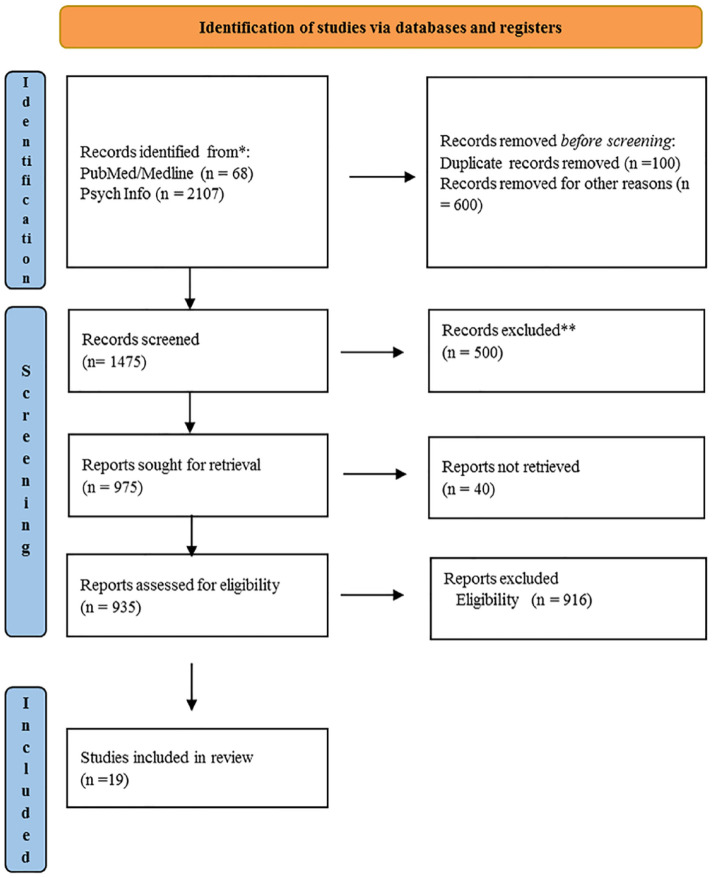
- The review screened 2175 references and ultimately included 19 studies.
- Across the included studies, women after mastectomy were reported to suffer from anxiety, stress, trauma, and bouts of depression, along with body image problems and reduced health-related quality of life.
- Some studies suggested coping improved with breast reconstruction; for example, a Saudi study reported 84% of women believed reconstruction improved their psychological status, and a Chinese study found statistically significant improvement in depression, pain, self-esteem, and body image after reconstruction.
- The review also identified psychological intervention before surgery as a helpful coping strategy; one qualitative study found that women who consulted a psychologist before surgery felt better afterward, with improved intimacy and confidence, and an acupuncture study reported reduced pain, nausea, and anxiety on day 1 and day 2 post-mastectomy.
## Methods
- Design: Systematic literature review conducted according to PRISMA guidelines; the paper also reports registration submitted to PROSPERO with confirmation number 449135.
- Data/sample: Searches were run in Medline/PubMed, PsycInfo, and Cochrane for studies from 1997 to 2023; the final review included 19 studies.
- Main analysis: Titles/abstracts and then full texts were screened by 3 reviewers, with disagreements resolved by consensus; included studies were assessed using MMAT and CASP, and data were extracted on treatment, coping strategy, and outcomes.
## Limitations
- The paper states that only PubMed, Cochrane, and PsycInfo were searched, so relevant studies in other databases may have been missed.
- It states that only published articles were included, so preprints may have been missed.
- It states that only English-language studies were considered, so non-English relevant articles may have been missed.
- Evident from the text: the review is based on a small final set of 19 studies, and the narrative synthesis includes heterogeneous study designs and outcomes, which limits direct comparison across findings.
Model-written summary. Check it against the paper before relying on it.
Integrity signals
Registry
Cites
Statistics
Figures
Verification
Claims the paper makes
15 Valid · 2 Not valid · 30 Not checked · 17 Own results and interpretations
The cited sources support only part of this claim — read each source’s verdict below.
In the paper
“Psychological interventions before surgery have been observed to be a better coping strategy.”
- Also stated in: § Discussion Women who undergo a mastectomy have difficulty in accepting the situation and coping with it. The various coping strategies that are to be considered need to involve both physical and emotional aspects. In the present review, it was observed that women post-mastectomy have altered levels of anxiety and depression. It was observed that patients had negative thoughts with deteriorated quality of life. Coping strategies thus are highly helpful in such patients.25,26 It is observed that post-mastectomy women go through a lot of emotional disturbance which affects them psychologically, resulting in trauma, anxiety, and depression which need to be addressed properly. Also, it is essential to change the stressful environment such that women do not feel uncomfortable and start reacting to the stressor. Considering these aspects could help mastectomy patients to overcome the trauma associated with the condition and learn to survive. 33 In the present review, breast reconstruction post-mastectomy was observed as a significant coping strategy to improve the overall quality of life post-mastectomy.12,18-21 Although there is no consensus reached on this, it is still widely considered a safer option. A systematic review conducted on the same observed the reconstruction rates are highly variable in women. There are multiple barriers associated with breast reconstruction with prominent factors being age, ethnicity, income, educational status, and patients choice. 34 Psychological intervention before surgery has been highlighted as a useful method in this review.15,27,31 This has been shown to have positive outcomes in cancer patients. Providing psychological support before surgery helps the patients to cope with the surgery and has positive outcomes. 35 Psychoeducational programs that educate women before surgery associated with breast cancer have shown positive outcomes in terms of reducing the overall stress and worry in such patients. 36 Nonpharmacological interventions such as acupuncture have been helpful to reduce pain in mastectomy patients which has been helpful for them to cope with the condition. 17 There are several of the nonpharmacological-based methods that have been suggested and used for breast cancer patients to overcome the trauma and disease burden. These include exercise, cognitive behavioral therapy, and several such methods which are known to help patients in recovery. 37 Body image–related issues are the most prominent issues in breast cancer patients post-surgery. It is one of the major factors that contributes to coping and subsequent psychological adaptation to the same. The present review observed that women face several issues, including choosing the right undergarment and appearance of chest.14,16,23,24 Qualitative research done in this aspect on women who have undergone mastectomy has shown that the surgery adversely affects women. The research clearly showed that women miss their self-image and hence their body appearance due to mastectomy. Mastectomy had adverse effects on attire and intimacy with their partners. 38 Such studies which have been done in different countries have shown a similar observation of loss of self-esteem and negative perception of body image post-surgery.39,40 Psychological interventions have been sought after in such cases to reduce the trauma associated with body image–related issues in breast cancer patients.27,41 · plain
“Psychological intervention before surgery has been highlighted as a useful method in this review.15,27,31”
§ Coping in Post-Mastectomy Breast Cancer Survivors and Need for Intervention: Systematic Review > Abstract > Results:
What the sources say
- Not checked — no full text of the sourcecites [15] Glassey R Hardcastle SJ O’Connor M Ives A; kConFab Investigators, Saunders C. Perceived influence of psychological consultation on psychological well-being, body image, and intimacy following bilateral prophylactic mastectomy: a qualitative analysis. Psychooncology. 2018; 27: 633- 639. doi: 10.1002/pon.4558. 28945295 source
- Partly supportedcites [27] Sebri V Durosini I Triberti S Pravettoni G. The efficacy of psychological intervention on body image in breast cancer patients and survivors: a systematic-review and meta-analysis. Front Psychol. 2021; 12: 611954. doi: 10.3389/fpsyg.2021.611954. 33732184 PMC7957010 sourceExperimental — accuracy not yet measured
The Discussion (page not specified) reports that psychological interventions improved body image in breast cancer patients and survivors. It does not establish that interventions delivered before surgery are a better coping strategy; searches for pre-surgery timing and coping found no such comparison. (LLM, conf=0.83)
- Partly supportedcites [31] Husson O Mols F van de Poll-Franse LV. The relation between information provision and health-related quality of life, anxiety and depression among cancer survivors: a systematic review. Ann Oncol. 2011; 22: 761- 772. doi: 10.1093/annonc/mdq413. 20870912 PMC3065875 sourceExperimental — accuracy not yet measured
The Discussion (page unavailable) suggests that an intervention might be more powerful if it includes counselling or psychotherapy. It does not report that psychological interventions before surgery were observed to improve coping; the proposed benefit is tentative, and neither the timing nor the coping outcome is established. (LLM, conf=0.78)
plainstates a possible cause- Asserted: passes — The authors put it forward as true.
- Checkable: passes — It can be checked against evidence.
- Load-bearing: passes — The paper’s conclusions depend on it.
- Based: passes — The paper gives a reason why it holds.
- Also stated in: § Discussion Women who undergo a mastectomy have difficulty in accepting the situation and coping with it. The various coping strategies that are to be considered need to involve both physical and emotional aspects. In the present review, it was observed that women post-mastectomy have altered levels of anxiety and depression. It was observed that patients had negative thoughts with deteriorated quality of life. Coping strategies thus are highly helpful in such patients.25,26 It is observed that post-mastectomy women go through a lot of emotional disturbance which affects them psychologically, resulting in trauma, anxiety, and depression which need to be addressed properly. Also, it is essential to change the stressful environment such that women do not feel uncomfortable and start reacting to the stressor. Considering these aspects could help mastectomy patients to overcome the trauma associated with the condition and learn to survive. 33 In the present review, breast reconstruction post-mastectomy was observed as a significant coping strategy to improve the overall quality of life post-mastectomy.12,18-21 Although there is no consensus reached on this, it is still widely considered a safer option. A systematic review conducted on the same observed the reconstruction rates are highly variable in women. There are multiple barriers associated with breast reconstruction with prominent factors being age, ethnicity, income, educational status, and patients choice. 34 Psychological intervention before surgery has been highlighted as a useful method in this review.15,27,31 This has been shown to have positive outcomes in cancer patients. Providing psychological support before surgery helps the patients to cope with the surgery and has positive outcomes. 35 Psychoeducational programs that educate women before surgery associated with breast cancer have shown positive outcomes in terms of reducing the overall stress and worry in such patients. 36 Nonpharmacological interventions such as acupuncture have been helpful to reduce pain in mastectomy patients which has been helpful for them to cope with the condition. 17 There are several of the nonpharmacological-based methods that have been suggested and used for breast cancer patients to overcome the trauma and disease burden. These include exercise, cognitive behavioral therapy, and several such methods which are known to help patients in recovery. 37 Body image–related issues are the most prominent issues in breast cancer patients post-surgery. It is one of the major factors that contributes to coping and subsequent psychological adaptation to the same. The present review observed that women face several issues, including choosing the right undergarment and appearance of chest.14,16,23,24 Qualitative research done in this aspect on women who have undergone mastectomy has shown that the surgery adversely affects women. The research clearly showed that women miss their self-image and hence their body appearance due to mastectomy. Mastectomy had adverse effects on attire and intimacy with their partners. 38 Such studies which have been done in different countries have shown a similar observation of loss of self-esteem and negative perception of body image post-surgery.39,40 Psychological interventions have been sought after in such cases to reduce the trauma associated with body image–related issues in breast cancer patients.27,41 · plain
The cited sources support only part of this claim — read each source’s verdict below.
In the paper
“In the present review, breast reconstruction post-mastectomy was observed as a significant coping strategy to improve the overall quality of life post-mastectomy.12,18-21”
§ Coping in Post-Mastectomy Breast Cancer Survivors and Need for Intervention: Systematic Review > Discussion Women who undergo a mastectomy have difficulty in accepting the situation and coping with it. The various coping strategies that are to be considered need to involve both physical and emotional aspects. In the present review, it was observed that women post-mastectomy have altered levels of anxiety and depression. It was observed that patients had negative thoughts with deteriorated quality of life. Coping strategies thus are highly helpful in such patients.25,26 It is observed that post-mastectomy women go through a lot of emotional disturbance which affects them psychologically, resulting in trauma, anxiety, and depression which need to be addressed properly. Also, it is essential to change the stressful environment such that women do not feel uncomfortable and start reacting to the stressor. Considering these aspects could help mastectomy patients to overcome the trauma associated with the condition and learn to survive. 33 In the present review, breast reconstruction post-mastectomy was observed as a significant coping strategy to improve the overall quality of life post-mastectomy.12,18-21 Although there is no consensus reached on this, it is still widely considered a safer option. A systematic review conducted on the same observed the reconstruction rates are highly variable in women. There are multiple barriers associated with breast reconstruction with prominent factors being age, ethnicity, income, educational status, and patients choice. 34 Psychological intervention before surgery has been highlighted as a useful method in this review.15,27,31 This has been shown to have positive outcomes in cancer patients. Providing psychological support before surgery helps the patients to cope with the surgery and has positive outcomes. 35 Psychoeducational programs that educate women before surgery associated with breast cancer have shown positive outcomes in terms of reducing the overall stress and worry in such patients. 36 Nonpharmacological interventions such as acupuncture have been helpful to reduce pain in mastectomy patients which has been helpful for them to cope with the condition. 17 There are several of the nonpharmacological-based methods that have been suggested and used for breast cancer patients to overcome the trauma and disease burden. These include exercise, cognitive behavioral therapy, and several such methods which are known to help patients in recovery. 37 Body image–related issues are the most prominent issues in breast cancer patients post-surgery. It is one of the major factors that contributes to coping and subsequent psychological adaptation to the same. The present review observed that women face several issues, including choosing the right undergarment and appearance of chest.14,16,23,24 Qualitative research done in this aspect on women who have undergone mastectomy has shown that the surgery adversely affects women. The research clearly showed that women miss their self-image and hence their body appearance due to mastectomy. Mastectomy had adverse effects on attire and intimacy with their partners. 38 Such studies which have been done in different countries have shown a similar observation of loss of self-esteem and negative perception of body image post-surgery.39,40 Psychological interventions have been sought after in such cases to reduce the trauma associated with body image–related issues in breast cancer patients.27,41
What the sources say
- Partly supportedcites [12] Zhang Y Xu H Wang T, et al. Psychosocial Predictors and outcomes of delayed breast reconstruction in mastectomized women in mainland china: an observational study. PLoS ONE. 2015; 10:e0144410. doi: 10.1371/journal.pone.0144410. PMC4671805 26641252 sourceExperimental — accuracy not yet measured
The Discussion reports significant improvements in self-esteem and body image and a reduction in depression six months after reconstruction. These support a psychosocial benefit, but the study did not measure overall quality of life or establish reconstruction as a coping strategy that improves it. (LLM, conf=0.85)
- Not matchedcites [18] Alkaff TM AlTaleb RM Kattan AE Alsaif HK Murshid RE AlShaibani TJ. Awareness, acceptance, and perspective of women for reconstruction post mastectomy. J Pak Med Assoc. 2019; 69: 141- 145. https://pubmed.ncbi.nlm.nih.gov/30623936/. 30623936
We don’t have this paper’s reference list.
- Not matchedcites [19] Rubino C Figus A Lorettu L Sechi G. Post-mastectomy reconstruction: a comparative analysis on psychosocial and psychopathological outcomes. J Plast Reconstr Aesthet Surg. 2007; 60: 509- 518. doi: 10.1016/j.bjps.2006.06.01. 17399660
We don’t have this paper’s reference list.
- Not checked — no full text of the sourcecites [20] Sheehan J Sherman KA Lam T Boyages J. Association of information satisfaction, psychological distress and monitoring coping style with post-decision regret following breast reconstruction. Psychooncology. 2007; 16: 342- 351. doi: 10.1002/pon.1067. 16874745 source
- Not checked — no full text of the sourcecites [21] Manganiello A Hoga LA Reberte LM Miranda CM Rocha CA. Sexuality and quality of life of breast cancer patients post mastectomy. Eur J Oncol Nurs. 2011; 15: 167- 172. doi: 10.1016/j.ejon.2010.07.008. 20864400 source
plainstates a cause- Asserted: passes — The authors put it forward as true.
- Checkable: passes — It can be checked against evidence.
- Load-bearing: passes — The paper’s conclusions depend on it.
- Based: passes — The paper gives a reason why it holds.
- Partly supported
The cited sources support only part of this claim — read each source’s verdict below.
In the paper
“Such studies which have been done in different countries have shown a similar observation of loss of self-esteem and negative perception of body image post-surgery.39,40”
§ Coping in Post-Mastectomy Breast Cancer Survivors and Need for Intervention: Systematic Review > Discussion Women who undergo a mastectomy have difficulty in accepting the situation and coping with it. The various coping strategies that are to be considered need to involve both physical and emotional aspects. In the present review, it was observed that women post-mastectomy have altered levels of anxiety and depression. It was observed that patients had negative thoughts with deteriorated quality of life. Coping strategies thus are highly helpful in such patients.25,26 It is observed that post-mastectomy women go through a lot of emotional disturbance which affects them psychologically, resulting in trauma, anxiety, and depression which need to be addressed properly. Also, it is essential to change the stressful environment such that women do not feel uncomfortable and start reacting to the stressor. Considering these aspects could help mastectomy patients to overcome the trauma associated with the condition and learn to survive. 33 In the present review, breast reconstruction post-mastectomy was observed as a significant coping strategy to improve the overall quality of life post-mastectomy.12,18-21 Although there is no consensus reached on this, it is still widely considered a safer option. A systematic review conducted on the same observed the reconstruction rates are highly variable in women. There are multiple barriers associated with breast reconstruction with prominent factors being age, ethnicity, income, educational status, and patients choice. 34 Psychological intervention before surgery has been highlighted as a useful method in this review.15,27,31 This has been shown to have positive outcomes in cancer patients. Providing psychological support before surgery helps the patients to cope with the surgery and has positive outcomes. 35 Psychoeducational programs that educate women before surgery associated with breast cancer have shown positive outcomes in terms of reducing the overall stress and worry in such patients. 36 Nonpharmacological interventions such as acupuncture have been helpful to reduce pain in mastectomy patients which has been helpful for them to cope with the condition. 17 There are several of the nonpharmacological-based methods that have been suggested and used for breast cancer patients to overcome the trauma and disease burden. These include exercise, cognitive behavioral therapy, and several such methods which are known to help patients in recovery. 37 Body image–related issues are the most prominent issues in breast cancer patients post-surgery. It is one of the major factors that contributes to coping and subsequent psychological adaptation to the same. The present review observed that women face several issues, including choosing the right undergarment and appearance of chest.14,16,23,24 Qualitative research done in this aspect on women who have undergone mastectomy has shown that the surgery adversely affects women. The research clearly showed that women miss their self-image and hence their body appearance due to mastectomy. Mastectomy had adverse effects on attire and intimacy with their partners. 38 Such studies which have been done in different countries have shown a similar observation of loss of self-esteem and negative perception of body image post-surgery.39,40 Psychological interventions have been sought after in such cases to reduce the trauma associated with body image–related issues in breast cancer patients.27,41
What the sources say
- Partly supportedcites [39] Guedes TSR Dantas de Oliveira NP Holanda AM, et al. Body image of women submitted to breast cancer treatment. Asian Pac J Cancer Prev. 2018; 19: 1487- 1493. doi: 10.22034/APJCP.2018.19.6.1487. 29936719 PMC6103585 doi:10.22034/apjcp.2018.19.6.1487Experimental — accuracy not yet measured
The Discussion (page unavailable) reports body-image dissatisfaction among women treated for breast cancer in Brazil and cites studies from other countries reporting similar concerns. It also describes low self-esteem in younger women, including those affected by breast loss. However, this study does not establish a general post-surgery loss of self-esteem; it found no significant association between surgery type and body-image dissatisfaction. (LLM, conf=0.84)
- Partly supportedcites [40] An J Zhou K Li M Li X. Assessing the relationship between body image and quality of life among rural and urban breast cancer survivors in China. BMC Womens Health. 2022; 22: 61. doi: 10.1186/s12905-022-01635-y. 35246115 PMC8896367 sourceExperimental — accuracy not yet measured
The Background (page unavailable) says breast cancer surgery can change physical appearance and affect survivors’ body image; the Discussion (page unavailable) also reports poorer body image after mastectomy than after lumpectomy. Our copy does not report a post-surgery loss of self-esteem or establish that studies in different countries found that same combination of outcomes. (LLM, conf=0.84)
plain- Asserted: passes — The authors put it forward as true.
- Checkable: passes — It can be checked against evidence.
- Load-bearing: unclear — It is unclear whether the paper’s conclusions depend on it.
- Based: passes — The paper gives a reason why it holds.
- Partly supported
The sources with a verdict support this claim; the rest weren’t checked yet, have no full text we could read, or their verdicts aren’t rated yet.
In the paper
“In the present review, it was observed that women post-mastectomy have altered levels of anxiety and depression.”
§ Coping in Post-Mastectomy Breast Cancer Survivors and Need for Intervention: Systematic Review > Discussion Women who undergo a mastectomy have difficulty in accepting the situation and coping with it. The various coping strategies that are to be considered need to involve both physical and emotional aspects. In the present review, it was observed that women post-mastectomy have altered levels of anxiety and depression. It was observed that patients had negative thoughts with deteriorated quality of life. Coping strategies thus are highly helpful in such patients.25,26 It is observed that post-mastectomy women go through a lot of emotional disturbance which affects them psychologically, resulting in trauma, anxiety, and depression which need to be addressed properly. Also, it is essential to change the stressful environment such that women do not feel uncomfortable and start reacting to the stressor. Considering these aspects could help mastectomy patients to overcome the trauma associated with the condition and learn to survive. 33 In the present review, breast reconstruction post-mastectomy was observed as a significant coping strategy to improve the overall quality of life post-mastectomy.12,18-21 Although there is no consensus reached on this, it is still widely considered a safer option. A systematic review conducted on the same observed the reconstruction rates are highly variable in women. There are multiple barriers associated with breast reconstruction with prominent factors being age, ethnicity, income, educational status, and patients choice. 34 Psychological intervention before surgery has been highlighted as a useful method in this review.15,27,31 This has been shown to have positive outcomes in cancer patients. Providing psychological support before surgery helps the patients to cope with the surgery and has positive outcomes. 35 Psychoeducational programs that educate women before surgery associated with breast cancer have shown positive outcomes in terms of reducing the overall stress and worry in such patients. 36 Nonpharmacological interventions such as acupuncture have been helpful to reduce pain in mastectomy patients which has been helpful for them to cope with the condition. 17 There are several of the nonpharmacological-based methods that have been suggested and used for breast cancer patients to overcome the trauma and disease burden. These include exercise, cognitive behavioral therapy, and several such methods which are known to help patients in recovery. 37 Body image–related issues are the most prominent issues in breast cancer patients post-surgery. It is one of the major factors that contributes to coping and subsequent psychological adaptation to the same. The present review observed that women face several issues, including choosing the right undergarment and appearance of chest.14,16,23,24 Qualitative research done in this aspect on women who have undergone mastectomy has shown that the surgery adversely affects women. The research clearly showed that women miss their self-image and hence their body appearance due to mastectomy. Mastectomy had adverse effects on attire and intimacy with their partners. 38 Such studies which have been done in different countries have shown a similar observation of loss of self-esteem and negative perception of body image post-surgery.39,40 Psychological interventions have been sought after in such cases to reduce the trauma associated with body image–related issues in breast cancer patients.27,41
What the sources say
- Supportedcites [25] Kroemeke A Bargiel-Matusiewicz K Kalamarz M. Mixed psychological changes following mastectomy: unique predictors and heterogeneity of post-traumatic growth and post-traumatic depreciation. Front Psychol. 2017; 8: 1245. doi: 10.3389/fpsyg.2017.01245. 28775703 PMC5517438 source
The Introduction states that breast cancer, especially mastectomy, is associated with depressive symptoms and anxiety. This supports the citing sentence’s broad statement about anxiety and depression in women after mastectomy. (LLM, conf=0.90)
- Not checked yetcites [26] Khan S Khan NA Rehman AU Khan I Samo KA Memon AS. Levels of depression and anxiety post-mastectomy in breast cancer patients at a public sector hospital in Karachi. Asian Pac J Cancer Prev. 2016; 17: 1337- 1340. doi: 10.7314/apjcp.2016.17.3.1337. 27039768 source
Checked before — its earlier verdict is held back until a new check runs.
plainstates an association- Asserted: passes — The authors put it forward as true.
- Checkable: passes — It can be checked against evidence.
- Load-bearing: passes — The paper’s conclusions depend on it.
- Based: passes — The paper gives a reason why it holds.
- Supported
Every source the paper cites for this claim was checked and supports it.
In the paper
“Psychoeducational programs that educate women before surgery associated with breast cancer have shown positive outcomes in terms of reducing the overall stress and worry in such patients. 36”
§ Coping in Post-Mastectomy Breast Cancer Survivors and Need for Intervention: Systematic Review > Discussion Women who undergo a mastectomy have difficulty in accepting the situation and coping with it. The various coping strategies that are to be considered need to involve both physical and emotional aspects. In the present review, it was observed that women post-mastectomy have altered levels of anxiety and depression. It was observed that patients had negative thoughts with deteriorated quality of life. Coping strategies thus are highly helpful in such patients.25,26 It is observed that post-mastectomy women go through a lot of emotional disturbance which affects them psychologically, resulting in trauma, anxiety, and depression which need to be addressed properly. Also, it is essential to change the stressful environment such that women do not feel uncomfortable and start reacting to the stressor. Considering these aspects could help mastectomy patients to overcome the trauma associated with the condition and learn to survive. 33 In the present review, breast reconstruction post-mastectomy was observed as a significant coping strategy to improve the overall quality of life post-mastectomy.12,18-21 Although there is no consensus reached on this, it is still widely considered a safer option. A systematic review conducted on the same observed the reconstruction rates are highly variable in women. There are multiple barriers associated with breast reconstruction with prominent factors being age, ethnicity, income, educational status, and patients choice. 34 Psychological intervention before surgery has been highlighted as a useful method in this review.15,27,31 This has been shown to have positive outcomes in cancer patients. Providing psychological support before surgery helps the patients to cope with the surgery and has positive outcomes. 35 Psychoeducational programs that educate women before surgery associated with breast cancer have shown positive outcomes in terms of reducing the overall stress and worry in such patients. 36 Nonpharmacological interventions such as acupuncture have been helpful to reduce pain in mastectomy patients which has been helpful for them to cope with the condition. 17 There are several of the nonpharmacological-based methods that have been suggested and used for breast cancer patients to overcome the trauma and disease burden. These include exercise, cognitive behavioral therapy, and several such methods which are known to help patients in recovery. 37 Body image–related issues are the most prominent issues in breast cancer patients post-surgery. It is one of the major factors that contributes to coping and subsequent psychological adaptation to the same. The present review observed that women face several issues, including choosing the right undergarment and appearance of chest.14,16,23,24 Qualitative research done in this aspect on women who have undergone mastectomy has shown that the surgery adversely affects women. The research clearly showed that women miss their self-image and hence their body appearance due to mastectomy. Mastectomy had adverse effects on attire and intimacy with their partners. 38 Such studies which have been done in different countries have shown a similar observation of loss of self-esteem and negative perception of body image post-surgery.39,40 Psychological interventions have been sought after in such cases to reduce the trauma associated with body image–related issues in breast cancer patients.27,41
What the sources say
- Supportedcites [36] Hung JK Kuo WH Tseng CC Cheng YR Wu CH. The effect of the preoperational psychoeducation program for Taiwanese breast cancer patients: a three-month follow-up study. PEC Innov. 2021; 1: 100001. doi: 10.1016/j.pecinn.2021.100001. 37364022 PMC10194183 source
The Discussion reports that the preoperative psychoeducation program helped Taiwanese breast cancer patients ease emotional distress and calm worries before surgery. This supports the citing sentence’s paraphrase of reduced stress and worry. (LLM, conf=0.92)
plainstates an association- Asserted: passes — The authors put it forward as true.
- Checkable: passes — It can be checked against evidence.
- Load-bearing: passes — The paper’s conclusions depend on it.
- Based: passes — The paper gives a reason why it holds.
- Supported
17 more claims
Create a free account to see all 64 claims and to verify the 8 references still open.
- It may state two separate claims as one. 32
- Probably not a substantial claim. 13
- The quote only partly states this claim. 5
Citations
Cites
Sung, H., Ferlay, J., Siegel, R. L., Laversanne, M., Soerjomataram, I., Jemal, A., & Bray, F. (2021) · CA: A Cancer Journal for Clinicians · doi:10.3322/caac.21660 · Cited by 108,699
The Mixed Methods Appraisal Tool (MMAT) version 2018 for information professionals and researchers
Hong, Q. N., Fàbregues, S., Bartlett, G., Boardman, F., Cargo, M., Dagenais, P., Gagnon, M.-P., Griffiths, F., Nicolau, B., O’Cathain, A., et al. (2018) · Education for Information · doi:10.3233/efi-180221 · Cited by 4,737 · cited 1×
“11 The MMAT summarizing the various studies included is shown in Table 1.”
MethodCritical appraisal skills programme
Singh, J. (2013) · Journal of Pharmacology and Pharmacotherapeutics · doi:10.4103/0976-500x.107697 · Cited by 2,556 · cited 1×
“29 A summary of the CASP-based appraisal is shown in Table 2.”
BackgroundBreast Cancer: Current Perspectives on the Disease Status
Fahad Ullah, M. (2019) · Advances in Experimental Medicine and Biology · doi:10.1007/978-3-030-20301-6_4 · Cited by 598
Husson, O., Mols, F., & van de Poll-Franse, L. V. (2011) · Annals of Oncology · doi:10.1093/annonc/mdq413 · Cited by 535 · cited 2×
“15,27,31 This has been shown to have positive outcomes in cancer patients.”
BackgroundBiology of breast cancer in young women
Azim, H. A., & Partridge, A. H. (2014) · Breast Cancer Research · doi:10.1186/s13058-014-0427-5 · Cited by 466
Current Trends in Postmastectomy Breast Reconstruction
Panchal, H., & Matros, E. (2017) · Plastic & Reconstructive Surgery · doi:10.1097/prs.0000000000003941 · Cited by 462 · cited 1×
“6 However, there is limited research associated with HRQoL in post-mastectomy patients.”
BackgroundHealth-related quality of life in breast cancer patients: review of reviews from 2008 to 2018
Mokhtari-Hessari, P., & Montazeri, A. (2020) · Health and Quality of Life Outcomes · doi:10.1186/s12955-020-01591-x · Cited by 437
Hilfiker, R., Meichtry, A., Eicher, M., Nilsson Balfe, L., Knols, R. H., Verra, M. L., & Taeymans, J. (2018) · British Journal of Sports Medicine · doi:10.1136/bjsports-2016-096422 · Cited by 396 · cited 1×
“37 Body image–related issues are the most prominent issues in breast cancer patients post-surgery.”
BackgroundSheehan, J., Sherman, K. A., Lam, T., & Boyages, J. (2007) · Psycho-Oncology · doi:10.1002/pon.1067 · Cited by 240 · cited 1×
“20”
Body Image of Women with Breast Cancer After Mastectomy: A Qualitative Research
Kocan, S., & Gursoy, A. (2016) · Journal of Breast Health · doi:10.5152/tjbh.2016.2913 · Cited by 238 · cited 1×
“38 Such studies which have been done in different countries have shown a similar observation of loss of self-esteem and negative perception of body image post-surgery.”
BackgroundHealth-related quality of life in Asian patients with breast cancer: a systematic review
Ho, P. J., Gernaat, S. A. M., Hartman, M., & Verkooijen, H. M. (2018) · BMJ Open · doi:10.1136/bmjopen-2017-020512 · Cited by 160 · cited 1×
“9,10 There are 2 main types of surgical options for breast cancer which include breast-conserving approaches and non-breast-conserving approaches.”
BackgroundCoping strategies, quality of life and pain in women with breast cancer.
Khalili, N., Farajzadegan, Z., Mokarian, F., & Bahrami, F. (2013) · PubMed Central · Cited by 155
Sherman, K. A., Przezdziecki, A., Alcorso, J., Kilby, C. J., Elder, E., Boyages, J., Koelmeyer, L., & Mackie, H. (2018) · Journal of Clinical Oncology · doi:10.1200/jco.2017.76.3318 · Cited by 140 · cited 1×
“27,41”
Brennan, M. E., & Spillane, A. J. (2013) · European Journal of Surgical Oncology (EJSO) · doi:10.1016/j.ejso.2013.02.021 · Cited by 109 · cited 1×
“34 Psychological intervention before surgery has been highlighted as a useful method in this review.”
MethodSexuality and quality of life of breast cancer patients post mastectomy
Manganiello, A., Hoga, L. A. K., Reberte, L. M., Miranda, C. M., & Rocha, C. A. M. (2011) · European Journal of Oncology Nursing · doi:10.1016/j.ejon.2010.07.008 · Cited by 108 · cited 2×
“33 18-21 Although there is no consensus reached on this, it is still widely considered a safer option.”
BackgroundResultSebri, V., Durosini, I., Triberti, S., & Pravettoni, G. (2021) · Frontiers in Psychology · doi:10.3389/fpsyg.2021.611954 · Cited by 104 · cited 3×
“27 Similarly, providing sufficient information to breast cancer patients helps them to understand the various aspects related to trauma and anxiety, and they are more prepared for better HRQoL when compared with women who do not have information.”
BackgroundStress and coping in women with breast cancer:unravelling the mechanisms to improve resilience
Borgi, M., Collacchi, B., Ortona, E., & Cirulli, F. (2020) · Neuroscience & Biobehavioral Reviews · doi:10.1016/j.neubiorev.2020.10.011 · Cited by 90
Resilience in women with breast cancer: A systematic review
Aizpurua-Perez, I., & Perez-Tejada, J. (2020) · European Journal of Oncology Nursing · doi:10.1016/j.ejon.2020.101854 · Cited by 86
Poulsen, B., Graversen, H. P., Beckmann, J., & Blichert-Toft, M. (1997) · European Journal of Surgical Oncology (EJSO) · doi:10.1016/s0748-7983(97)90804-0 · Cited by 80 · cited 2×
“14,16,23,24 Qualitative research done in this aspect on women who have undergone mastectomy has shown that the surgery adversely affects women.”
BackgroundPsychological Interventions Prior to Cancer Surgery: a Review of Reviews
Grimmett, C., Heneka, N., & Chambers, S. (2022) · Current Anesthesiology Reports · doi:10.1007/s40140-021-00505-x · Cited by 78 · cited 1×
“35 Psychoeducational programs that educate women before surgery associated with breast cancer have shown positive outcomes in terms of reducing the overall stress and worry in such patients.”
BackgroundRubino, C., Figus, A., Lorettu, L., & Sechi, G. (2007) · Journal of Plastic, Reconstructive & Aesthetic Surgery · doi:10.1016/j.bjps.2006.06.013 · Cited by 70 · cited 1×
“19 Thus, the study observed that breast reconstruction did not improve the quality of life which is different from observations obtained from Middle East study.”
ResultHealth-related quality of life in women with breast cancer: a review of measures
Salas, M., Mordin, M., Castro, C., Islam, Z., Tu, N., & Hackshaw, M. D. (2022) · BMC Cancer · doi:10.1186/s12885-021-09157-w · Cited by 67 · cited 1×
“6-8 Over the last decade, many methods have been developed to improve the quality of life.”
MethodBody Image of Women Submitted to Breast Cancer Treatment
(2018) · Europe PMC (PubMed Central) · doi:10.22034/apjcp.2018.19.6.1487 · Cited by 63 · cited 1×
“39,40 Psychological interventions have been sought after in such cases to reduce the trauma associated with body image– related issues in breast cancer patients.”
BackgroundQuinlan-Woodward, J., Gode, A., Dusek, J., Reinstein, A., Johnson, J., & Sendelbach, S. (2016) · Oncology Nursing Forum · doi:10.1188/16.onf.725-732 · Cited by 56 · cited 2×
“17”
BackgroundMetcalfe, K. A., Zhong, T., Narod, S. A., Quan, M., Holloway, C., Hofer, S., Bagher, S., & Semple, J. (2015) · Journal of Surgical Oncology · doi:10.1002/jso.23829 · Cited by 53 · cited 1×
“13 In a similar such study, resilience as a coping strategy was examined in women who survived breast cancer.”
BackgroundWang, M., Ren, J., Tang, L., & Ren, Z. (2018) · Cancer Medicine · doi:10.1002/cam4.1544 · Cited by 42
Kroemeke, A., Bargiel-Matusiewicz, K., & Kalamarz, M. (2017) · Frontiers in Psychology · doi:10.3389/fpsyg.2017.01245 · Cited by 41 · cited 2×
“25 The level of anxiety and depression associated with post-mastectomy is very high.”
BackgroundChiu, H.-C., Lin, C., Kuo, Y., Hou, W., & Shu, B. (2022) · European Journal of Oncology Nursing · doi:10.1016/j.ejon.2022.102254 · Cited by 37 · cited 1×
“28”
Rojas, K. E., Matthews, N., Raker, C., Clark, M. A., Onstad, M., Stuckey, A., & Gass, J. (2018) · Journal of Cancer Survivorship · doi:10.1007/s11764-017-0651-y · Cited by 36 · cited 2×
“14,16,23,24 Qualitative research done in this aspect on women who have undergone mastectomy has shown that the surgery adversely affects women.”
BackgroundResultAn, J., Zhou, K., Li, M., & Li, X. (2022) · BMC Women's Health · doi:10.1186/s12905-022-01635-y · Cited by 29 · cited 1×
“39,40 Psychological interventions have been sought after in such cases to reduce the trauma associated with body image– related issues in breast cancer patients.”
BackgroundAlnaim, L. S. (2022) · European Journal of Breast Health · doi:10.4274/ejbh.galenos.2022.2022-5-8 · Cited by 24
Khan, S., Khan, N. A., Rehman, A. U., Khan, I., Samo, K. A., & Memon, A. S. (2016) · Asian Pacific Journal of Cancer Prevention · doi:10.7314/apjcp.2016.17.3.1337 · Cited by 23 · cited 2×
“25,26 It is observed that post-mastectomy women go through a lot of emotional disturbance which affects them psychologically, resulting in trauma, anxiety, and depression which need to be addressed properly.”
BackgroundZhang, Y., Xu, H., Wang, T., He, J., Qiao, Y., Wei, J., & Dong, J. (2015) · PLOS ONE · doi:10.1371/journal.pone.0144410 · Cited by 19 · cited 1×
“12 Thus, the observation of this study correlates with the observations reported in the Middle East that breast reconstruction is one of the effective ways of coping in post-mastectomy patients.”
ResultUndergarment needs after breast cancer surgery: a key survivorship consideration
Nicklaus, K. M., Bravo, K., Liu, C., Chopra, D., Reece, G. P., Hanson, S. E., & Markey, M. K. (2020) · Supportive Care in Cancer · doi:10.1007/s00520-020-05414-z · Cited by 19 · cited 1×
“14,16,23,24 Qualitative research done in this aspect on women who have undergone mastectomy has shown that the surgery adversely affects women.”
BackgroundWho is prone to high levels of distress after prophylactic mastectomy and/or salpingo-ovariectomy?
Bresser, P. J. C., Van Gool, A. R., Seynaeve, C., Duivenvoorden, H. J., Niermeijer, M. F., van Geel, A. N., Menke, M., Klijn, J. G. M., & Tibben, A. (2007) · Annals of Oncology · doi:10.1093/annonc/mdm274 · Cited by 18 · cited 1×
“22 A similar such observation was seen in a prospective longitudinal survey conducted in Toronto, Canada.”
BackgroundGlassey, R., Hardcastle, S. J., O'Connor, M., Ives, A., kConFab Investigators, & Saunders, C. (2018) · Psycho-Oncology · doi:10.1002/pon.4558 · Cited by 13 · cited 2×
“15 The observations from above study have been reconfirmed by a systematic review and meta-analysis done on psychological intervention in breast cancer patients and survivors.”
BackgroundGutiérrez Hermoso, L., Velasco Furlong, L., Sánchez-Román, S., & Salas Costumero, L. (2020) · Frontiers in Psychology · doi:10.3389/fpsyg.2020.604004 · Cited by 11 · cited 2×
“14,16,23,24 Qualitative research done in this aspect on women who have undergone mastectomy has shown that the surgery adversely affects women.”
Background(2019) · PubMed · Cited by 9
Hung, J.-K., Kuo, W.-H., Tseng, C.-C., Cheng, Y.-R., & Wu, C.-H. (2022) · PEC Innovation · doi:10.1016/j.pecinn.2021.100001 · Cited by 3
Molecular profiling comparison of breast cancer subtypes in young women and older women.
Tan, A. R., Feldman, R. A., Symanowski, J. T., et al. (2017) · Journal of Clinical Oncology · doi:10.1200/jco.2017.35.15_suppl.11581 · Cited by 2
Research works printed but not linked: 1
- Center for Substance Abuse Treatment. Trauma-informed care in behavioral health services (Treatment Improvement Protocol (TIP) Series, No. 57, Section 1, A Review of Literature). Rockville, MD: Substance Abuse and Mental Health Services Administration; 2014. 24901203
Cited by
von Au, A., Dannehl, D., Dijkstra, T. M. H., Gutsfeld, R., Scholz, A. S., Haßdenteufel, K., Hahn, M., Hawighorst‐Knapstein, S., Isaksson, A., Chaudhuri, A., et al. (2024) · Cancers · doi:10.3390/cancers16213688 · Cited by 18
Barriers to Post-Mastectomy Breast Reconstruction: A Comprehensive Retrospective Study
Vangsness, K. L., Cornely, R. M., Sam, A., Munabi, N. C. O., Chu, M., Agko, M., Chang, J., & Carré, A. L. (2025) · Cancers · doi:10.3390/cancers17122002 · Cited by 6
Balat, K. Z., Laftah, S. A., & Radhi, M. M. (2025) · National Journal of Community Medicine · doi:10.55489/njcm.160120254716 · Cited by 7
Aiello-Puchol, A., & García‐Alandete, J. (2025) · Supportive Care in Cancer · doi:10.1007/s00520-025-09519-1 · Cited by 21
Kim, S., & Jeong, H. N. (2025) · Journal of Clinical Nursing · doi:10.1111/jocn.70037 · Cited by 3
Metadata
- Authors
- Mishra, A., Nair, J., & Sharan, A. M.
- Affiliations
- GD Goenka University (IN)
- Corresponding author
- Mishra, Anju
- Venue
- Breast Cancer Basic and Clinical Research
- Publisher
- SAGE Publications
- Published
- 2023-01
- Volume
- 17
- Pages
- 11782234231209126-11782234231209126
- ISSN
- 1178-2234 (ISSN-L)
- PMC
- PMC10638885
- OpenAlex
- W4388578217
- Semantic Scholar
- ff86407fb74f8d6196445cef0c6112ac88707a75
- Cited by
- 15
- References
- 41
- Citations by year
- 2026: 2 · 2025: 8 · 2024: 5
- FWCI
- 0.49
- Type
- journal article
- Language
- en
- Open access
- gold
- doi.org
- Licence
- Locations
- Breast Cancer Basic and Clinical Research (publishedVersion, cc-by-nc)
- PubMed Central (publishedVersion, cc-by-nc)
- PubMed (publishedVersion)
- DOAJ (DOAJ: Directory of Open Access Journals) (submittedVersion, cc-by-sa)
- Topics
- Health Sciences › Medicine › Oncology › Cancer survivorship and care
- Health Sciences › Medicine › Public Health, Environmental and Occupational Health › Women's cancer prevention and management
- Health Sciences › Medicine › Surgery › Breast Implant and Reconstruction
- Keywords
- breast cancer, mastectomy, coping strategies, body image, anxiety, depression, psychological trauma, breast reconstruction, psychological intervention, breast cancer survivors
About these checks
Registry, retraction, Cites and statistics results are computed, not judged, with one exception: a printed reference that no index lists is read once by a model before it counts as a citation error. Claims are extracted by a model and kept only when their quote appears verbatim in the text; each cited source is then checked, with a model’s help, for whether it says what the claim relies on. Those verdicts can be wrong — read the claim’s quote and the cited source before relying on one.
The claim verdicts this report counts are experimental: their accuracy is not yet measured.
A language model drew the claims from the paper on 2026-10-11, under version 3 of the claim definition (model deepseek-v4.1-flash, prompt extract-v3).
A second model labelled each claim on 2026-10-11 (model jev-1.13-20260917, definition revision gold-guideline-v0.2).
Cited sources are checked with a language model’s help (gpt-6-sol).
Statistics and arithmetic are recomputed, not judged.
Confidence bands are shown only for fields calibrated on our annotated test set. None is calibrated yet, so no band is shown.
What counts as a claim ›How we measure confidence ›How we check this ›
Are you an author, or do you see a problem with this page? Request a review
Data sources
Bibliographic data: Semantic Scholar, OpenAlex, Crossref.
Contains information from the Semantic Scholar Academic Graph Datasets, made available under the ODC Attribution License (ODC-BY 1.0).
Semantic Scholar’s data is described in: Kinney, R., et al. (2023). The Semantic Scholar Open Data Platform. arXiv:2301.10140.
