

‘People should be allowed to do what they like’: Autistic adults’ views and experiences of stimming
Open accessThe DOI matches its Crossref record; 53 of the 53 references it cites were found in a registry or an index.
Abstract
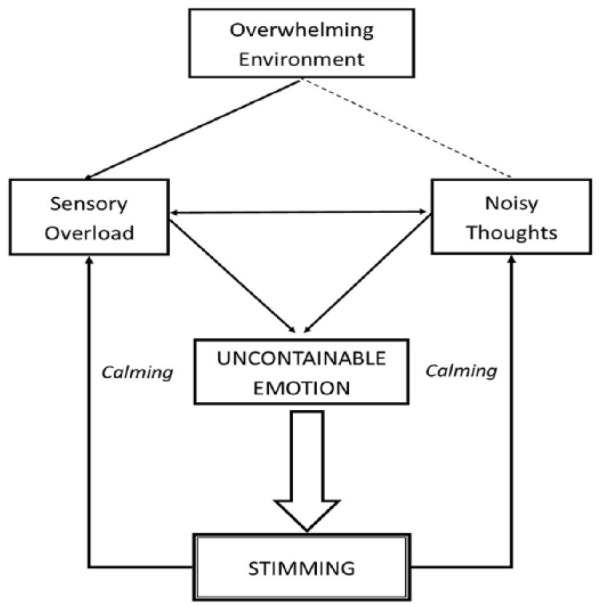
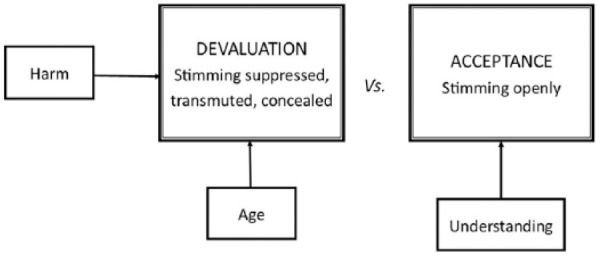
‘Stereotyped or repetitive motor movements’ are characterised as core features in the diagnosis of autism, yet many autistic adults (and the neurodiversity movement) have reclaimed them as ‘stimming’. Supported by a growing body of scientific research, autistic adults argue that these behaviours may serve as useful coping mechanisms, yet little research has examined stimming from the perspective of autistic adults. Through interviews and focus groups, we asked 32 autistic adults to share their perceptions and experiences of stimming, including the reasons they stim, any value doing so may hold for them and their perceptions of others’ reactions to stimming. Using thematic analysis, we identified two themes: stimming as (1) a self-regulatory mechanism and (2) lacking in social acceptance, but can become accepted through understanding. Autistic adults highlighted the importance of stimming as an adaptive mechanism that helps them to soothe or communicate intense emotions or thoughts and thus objected to treatment that aims to eliminate the behaviour.
Overview
The claims and statistics of this paper haven’t been checked yet.
Free: it reads the open-access text and checks the first 5 claims that cite a source we can check. Create a free account to check every claim.
Integrity signals
Registry
Cites
Statistics
Figures
Verification
Claims the paper makes
The claims and statistics of this paper haven’t been checked yet.
Free: it reads the open-access text and checks the first 5 claims that cite a source we can check. Create a free account to check every claim.
Claims other papers make about this one
Each is checked against this paper’s own text: does it say what the citing paper says it does?
The source backs part of the claim, not all of it — or backs it for a different population, condition or comparison.
In the citing paper
“workplace practices often remain oriented towards normative expectations surrounding communication, behavior, and participation in work (Kapp et al., 2019; Erbil et al., 2024)”
From The system-level organisational design framework: a neuro-cognitive trait interaction approach to workplace inclusion for autistic people (2026) · cites this paper as Kapp et al., 2019
Experimental — accuracy not yet measuredThe source backs part of the claim, not all of it — or backs it for a different population, condition or comparison.
In the citing paper
“Repetitive behaviors and focused interests are important to the internal regulation and well-being of many Autistic individuals (Kapp et al., 2019; Manor-Binyamini & Schreiber-Divon, 2019; Milton & Sims, 2016; see also Grove et al., 2018).”
From Neurodiversity and Autism Intervention: Reconciling Perspectives Through a Naturalistic Developmental Behavioral Intervention Framework (2022) · cites this paper as Kapp et al., 2019
Experimental — accuracy not yet measuredThe cited source says what the claim attributes to it.
In the citing paper
“repetitive behaviour or 'stimming' is common and usual (Kapp et al, 2019; Charlton et al, 2021).”
From Autistic SPACE: a novel framework for meeting the needs of autistic people in healthcare settings (2023) · cites this paper as Kapp et al, 2019
The cited source says what the claim attributes to it.
In the citing paper
“In fact, it now seems likely that they often serve a regulatory, soothing function for autistic people (e.g. Joyce, Honey, Leekam, Barrett, & Rodgers, 2017; Kapp et al., 2019).”
From Annual Research Review: Shifting from ‘normal science’ to neurodiversity in autism science (2022) · cites this paper as Kapp et al., 2019
The cited source says what the claim attributes to it.
In the citing paper
“Non-harmful self-stimulatory or repetitive behavior is often used to regulate emotions, and these behaviors may serve as adaptive coping skills for many individuals (Kapp et al., 2019; Manor-Binyamini & Schreiber-Divon, 2019).”
From Neurodiversity and Autism Intervention: Reconciling Perspectives Through a Naturalistic Developmental Behavioral Intervention Framework (2022) · cites this paper as Kapp et al., 2019
1 more claim about this paper
Create a free account to see every claim other papers make about this one.
Self-check
Percentages, sums and reported differences re-computed from the paper’s own numbers.
The self-check needs the paper’s full text.
Citations
Cites
Using thematic analysis in psychology
Braun, V., & Clarke, V. (2006) · Qualitative Research in Psychology · doi:10.1191/1478088706qp063oa · Cited by 194,414 · cited 1×
“Data were analysed thematically, following Braun and Clarke (2006).”
MethodDiagnostic and Statistical Manual of Mental Disorders
American Psychiatric Association (2013) · doi:10.1176/appi.books.9780890425596 · Cited by 116,369
Braun, V., & Clarke, V. (2012) · APA handbook of research methods in psychology, Vol 2: Research designs: Quantitative, qualitative, neuropsychological, and biological. · doi:10.1037/13620-004 · Cited by 10,299
(1943) · The Nervous child · Cited by 8,870
Autistic disturbances of affective contact.
Kanner, L. (1968) · PubMed · Cited by 3,130
On the ontological status of autism: the ‘double empathy problem’
Milton, D. E. M. (2012) · Disability & Society · doi:10.1080/09687599.2012.710008 · Cited by 2,082 · cited 1×
“Potentially, other people’s imitation of their stims may facilitate autistic people’s self-other awareness (see Kapp, 2016, p. 70) and help bridge the difficulties autistic and non-autistic people share in understanding one another, which Milton (2012) terms the ‘double empathy problem’.”
BackgroundWhen the world becomes ‘too real’: a Bayesian explanation of autistic perception
Pellicano, E., & Burr, D. (2012) · Trends in Cognitive Sciences · doi:10.1016/j.tics.2012.08.009 · Cited by 1,156 · cited 3×
“Email: s.k.kapp@exeter.ac.uk have suggested that stimming may provide familiar and reliable self-generated feedback in response to difficulties with unpredictable, overwhelming and novel circumstances (e.g. Lawson, Rees, & Friston, 2014; Pellicano & Burr, 2012).”
BackgroundResultSelf-citationConcept Evolution in Sensory Integration: A Proposed Nosology for Diagnosis
Miller, L. J., Anzalone, M. E., Lane, S. J., Cermak, S. A., & Osten, E. T. (2007) · American Journal of Occupational Therapy · doi:10.5014/ajot.61.2.135 · Cited by 953
‘Autistic psychopathy’ in childhood
Asperger, H. (1991) · Autism and Asperger Syndrome · doi:10.1017/cbo9780511526770.002 · Cited by 765
Research works printed but not linked: 5
- Bascom J., 2012, Loud hands: Autistic people, speaking
- Kanner L., 1943, Nervous Child, 2, 217
- Lilley R, 2018, What’s in a flap? The curious history of autism and hand stereotypies
- Nicolaidis C., 2012, Virtual Mentor: American Medical Association Journal of Ethics, 14, 503
- World Health Organization, 1992, The ICD-10 Classification of Mental and Behavioural Disorders: Diagnostic Criteria for Research, 2
Cited by
Items 201–300 of 600
Forwarding the Science of Sensory Features in Autism and Related Conditions
Schaaf, R. C., Puts, N. A. J., Williams, Z. J., & Woynaroski, T. G. (2023) · Journal of Autism and Developmental Disorders · doi:10.1007/s10803-023-05959-y · Cited by 9
“…derive joy and pleasure from certain sensory experiences rather than perceive them as inherently distressing or problematic (Ashburner et al., 2013 ; Howe & Stagg, 2016 ; Jones et al., 2003 ; Kapp et al., 2019 ; Kirby et al., 2015 ; MacLennan et al., 2022 Kanner ( 1943 ) and Asperger ( 2009 ).”
Dallman, A. (2024) · American Journal of Occupational Therapy · doi:10.5014/ajot.2024.050502 · Cited by 9
“…shared how stimming, which encompasses a variety of repetitive behaviors, such as hand flapping, skin picking, or rocking (Charlton et al., 2021; Kapp et al., 2019), helped them release their internal emotional experiences: “ I think [stimming behaviors] help me realign the energy in my body…”
Parental descriptions of sensory processing in Autism
Brouche, S., Rigal, N., & Cazalis, F. (2024) · Research in Autism · doi:10.1016/j.rasd.2024.102488 · Cited by 10
Callahan, A., Sidener, T. M., DeBar, R. M., Deshais, M. A., Pane, H. M., & Patil, P. (2023) · Behavioral Interventions · doi:10.1002/bin.1935 · Cited by 8
Feminist Therapy at The Intersection of Gender Diversity and Neurodiversity
McConnell, E. A., & Minshew, R. (2023) · Women & Therapy · doi:10.1080/02703149.2023.2189776 · Cited by 11
“A non-suppressive way of dealing with sensory or emotional overwhelm might be to stim, which autistic people describe as a helpful self-regulatory mechanism, albeit one that is often met with social judgment and negative attention from others (Kapp et al., 2019).”
BackgroundHarrop, C., Bodfish, J. W., Lecavalier, L., Dallman, A., Jones, D. R., Pritchett, J., Whitten, A., & Boyd, B. A. (2023) · Journal of Autism and Developmental Disorders · doi:10.1007/s10803-023-06079-3 · Cited by 8
“…(e.g. multiple first-person reports in persons with autism indicate that some forms of repetitive behaviors are pleasurable and adaptive; Kapp et al., 2019), our team developed novel and psychometrically sound measures of behavioral inflexibility including the Behavioral Inflexibility…”
Hayden‐Evans, M., Evans, K. L., Milbourn, B. T., D’Arcy, E., Chamberlain, A., Afsharnejad, B., Whitehouse, A., Bölte, S., & Girdler, S. J. (2024) · Journal of Autism and Developmental Disorders · doi:10.1007/s10803-024-06295-5 · Cited by 8
“…the presence of these behaviours may not necessarily impair the child’s ability to function in daily life, supported by the findings of other studies, which found repetitive behaviours in autism can often serve to soothe the person and aid self-regulation (Collis et al., 2022; Kapp et al., 2019 ).”
Between essence and diversity: Challenges for phenomenological Autism research
Hughes, E., Ekdahl, D., & Boldsen, S. (2025) · Theory & Psychology · doi:10.1177/09593543251315074 · Cited by 10
“…used to describe research that engages Autistic lived experience (Bertilsdotter-Rosqvist, Nygren, & O’Donoghue, 2023; Bishop et al., 2023; Botha & Frost, 2020; Camm-Crosbie et al., 2019; Cooper et al., 2023; Howard et al., 2019; Kapp et al., 2019; Pantazakos & Vanaken, 2023; Raymaker et al., 2020).”
Slade, T. M., Duebel, E., & Ryan, J. (2022) · Disability and Rehabilitation · doi:10.1080/09638288.2022.2068679 · Cited by 8
Park-Cardoso, J., & da Silva, A. P. S. (2022) · Autism · doi:10.1177/13623613221121417 · Cited by 12
“The meanings of motor RRBs for autistic adults began to be explored by autistic scholars (e.g. Kapp et al., 2019) who approach autism through the “neurodiversity paradigm” (Walker & Raymaker, 2021).”
BackgroundInfluentialParvizi-Wayne, D., & Severs, L. (2024) · Cognitive Affective & Behavioral Neuroscience · doi:10.3758/s13415-024-01189-6 · Cited by 9
“Furthermore, qualitative work by Kapp et al. (2019) highlights that autistic individuals perceive self-stimming to be generally socially unacceptable and yet capable of being understood if explained to others, which suggests that there is likely an element of OPSM at play among self-stimming…”
BackgroundOxytocin in autism: Rethinking treatment and research through a neurodivergent perspective
Phan, J., Dwyer, P. S. R., Elsherif, M. M., Friedel, E., & Kapp, S. K. (2024) · Psychoneuroendocrinology · doi:10.1016/j.psyneuen.2024.107220 · Cited by 8
Self-citationNauman, J., & Ingersoll, B. R. (2022) · Research in Autism · doi:10.1016/j.rasd.2022.102091 · Cited by 8
Principles of Neurodiversity-Affirming Collaborative Assessment
Woods, S. E. O., Brook, A., & Angoff, L. (2025) · Neurodiversity · doi:10.1177/27546330251342069 · Cited by 8
“For example, although “ stimming ” has traditionally been seen as nonfunctional and targeted for reduction or elimination, recent research has shown that these repetitive movements often help Autistic people cope with sensory input (Kapp et al., 2019).”
Uisma, A., Virkki, T., & Ylilahti, M. (2025) · Sociology of Health & Illness · doi:10.1111/1467-9566.70124 · Cited by 7
“For instance, even though stimming—repetitive movements or vocalisations—may be important for autistic individuals to self‐soothe and communicate emotions and thoughts, others may not understand it as meaningful (Kapp et al. 2019).”
Kim, G. S., Chmiel, A., & Garrido, S. (2023) · The Arts in Psychotherapy · doi:10.1016/j.aip.2023.102115 · Cited by 7
“I Know It’s Very Spectrum-y”: Autistic Women Reflect on Sensory Aspects of Food and Eating
Stephenson, H., Jones, S. C., Lowe, J., & Milne, L. C. (2024) · Autism in Adulthood · doi:10.1089/aut.2023.0114 · Cited by 7
“47 In the context of food and eating, one participant, a support worker, in Kapp et al. ’ s study recounted that multisensory processing demands during mealtimes on long workdays led him to stim quite a lot.”
InfluentialA handbook for Rhythmic Relating in autism: supporting social timing in play, learning and therapy
Daniel, S. W., Laurie, M., & Delafield‐Butt, J. T. (2024) · Frontiers in Psychology · doi:10.3389/fpsyg.2024.1384068 · Cited by 7
Petty, S., & Clegg, V. (2025) · Review Journal of Autism and Developmental Disorders · doi:10.1007/s40489-025-00505-1 · Cited by 8
Efficacy of coping mechanisms used during COVID-19 as reported by parents of children with autism
Wang, F., Memis, I., Durocher, J. S., Furar, E., Cavalcante, L., Eshraghi, R. S., Samson, A. C., Herwegen, J. V., Dukes, D., Alessandri, M., et al. (2023) · PLoS ONE · doi:10.1371/journal.pone.0283494 · Cited by 8
Newell, V., Richards, C., & Cassidy, S. (2025) · Autism · doi:10.1177/13623613251348555 · Cited by 6
“While stimming can serve as a helpful self-regulatory mechanism (Kapp et al., 2019), participants noted that it may sometimes result in inadvertent harm (e.g. skin picking, hitting oneself).”
Review and Developmental Model: Early Childhood Emotion Regulation and Co-Regulation in Autism
Northrup, J. B., Nuske, H. J., Hipwell, A. E., & Mazefsky, C. A. (2025) · Journal of the American Academy of Child & Adolescent Psychiatry · doi:10.1016/j.jaac.2025.07.1063 · Cited by 10
To understand the experiences of autistic counsellors: A United Kingdom phenomenological study
Taylor, J., & Sims, M. H. (2024) · Counselling and Psychotherapy Research · doi:10.1002/capr.12839 · Cited by 7
“This can lead to sensory overwhelm, requiring adaptions, such as self-soothing behaviours (stimming) and reducing stimuli (Kapp et al., 2019 ).”
Krishnan, S. G., Cohn, E. S., & Orsmond, G. I. (2024) · Autism in Adulthood · doi:10.1089/aut.2024.0185 · Cited by 6
Giltinan, K., Goodall, C., & Kenny, N. (2025) · Journal of Research in Special Educational Needs · doi:10.1111/1471-3802.70017 · Cited by 6
Chung, H., Said, A. J., Tager-Flusberg, H. B., Nelson, C. A., & Wilkinson, C. L. (2025) · Journal of Neurodevelopmental Disorders · doi:10.1186/s11689-025-09651-3 · Cited by 6
“While some RRBs have been reported to help regulate sensory inputs [5], elevated levels of RRBs have also been linked with worse developmental outcomes in both clinical and non-clinical populations.”
Harris, P. C., Poandl, M. M., & Awopetu, N. (2026) · Professional School Counseling · doi:10.1177/2156759x251412824 · Cited by 6
Yoon, W.-H., Seo, J., & Je, C. (2024) · Frontiers in Psychiatry · doi:10.3389/fpsyt.2024.1260318 · Cited by 9
Blackhurst, T., Warmelink, L., Roestorf, A., & Hartley, C. (2024) · Frontiers in Psychology · doi:10.3389/fpsyg.2024.1388726 · Cited by 7
Diepman, M., & Brady, N. P. (2024) · Research in Autism · doi:10.1016/j.rasd.2024.102470 · Cited by 7
Lim, A., Young, R. L., & Brewer, N. (2022) · Australian Journal of Psychology · doi:10.1080/00049530.2022.2067486 · Cited by 6
“Likewise, repetitive body movements may be forms of self-stimulatory behaviour among individuals with neurodevelopmental disorders, such as autism (Kapp et al., 2019), fragile X syndrome (Oakes et al., 2016), and Rett syndrome (Goldman & Temudo, 2012).”
BackgroundA Qualitative Examination of the Impact of COVID-19 on Transition Services for Autistic Youth
Albright, J., Fok, M., DeLucia, E. A., & Scarpa, A. (2023) · Journal of Autism and Developmental Disorders · doi:10.1007/s10803-023-06009-3 · Cited by 8
“The interview guide was developed by research personnel with advanced training in qualitative research and questions stemmed from relevant literature (Hirano et al., 2018; Kaya et al., 2021; Roux et al., 2015; Westbrook et al., 2015; White et al., 2017).”
Chung, H., Wilkinson, C. L., Said, A. J., Tager-Flusberg, H. B., & Nelson, C. A. (2024) · Research Square · doi:10.21203/rs.3.rs-3871138/v1 · Cited by 6
Lister, T. (2021) · Figshare · Cited by 6
Intervention Techniques Targeting Echolalia: A Scoping Review
Dinello, A., & Gladfelter, A. (2025) · American Journal of Speech-Language Pathology · doi:10.1044/2025_ajslp-24-00211 · Cited by 5
Blowfish Band: A Wearable Inflatable Fidget for Self-Stimulatory (Stim) Behaviors
Sabinson, E. B. (2025) · Designing Interactive Systems Conference · doi:10.1145/3715336.3735442 · Cited by 5
“However, controlling stims can have negative effects on wellbeing [5, 20, 28].”
Three Perspectives on Human Vulnerability: Enriching Responsible Computing Design Processes
van Grunsven, J., Jacobs, N., Kamphorst, B. A., Honauer, M., van Balen, B., Bollen, C. J. M., Dennis, M., Puzio, A., & van Riemsdijk, M. B. (2025) · ACM Journal on Responsible Computing · doi:10.1145/3748731 · Cited by 7
“While traditionally labeled as pathological, meaningless, or non-communicative, testimonials from autistic people as well as participatory research with autistic people reveals that stimming can in fact be a richly communicative form of meaning-making [Kapp et al. 2019 ].”
Mournet, A. M., Millner, A. J., & Kleiman, E. M. (2024) · Journal of Affective Disorders Reports · doi:10.1016/j.jadr.2024.100796 · Cited by 5
“…consider that some autistic individuals may engage in headbanging but not consider this self-injury, but rather stimming (e.g., repetitive hand and finger movements, or other repetitive physical movements or vocalizations intended to provide calmness or expression of feelings) (Kapp et al., 2019).”
BackgroundPetty, S., & Cantwell, A. (2025) · Diversity & Inclusion Research · doi:10.1002/dvr2.70018 · Cited by 5
“For example, clinicians should appreciate the impacts of some behaviours being camouflaged or hidden (Kapp et al. 2019; Pearson and Rose 2021): these influence how visible repetitive behaviours are, which alters what being autistic looks like (Anderson et al. 2020).”
Lee, J., Onaiwu, M. G., Boye, Y., Burks-Abbot, G., Brandsen, S., Laurenti, L., Logan, R., Malone, E. R., Tam, M., Waqar, S., et al. (2025) · Neurodiversity · doi:10.1177/27546330251338419 · Cited by 5
“…adults argue that the de fi cit-oriented nature of the goals and practices historically used in these therapies ignore autistic strengths and have long-lasting negative consequences on autistic people ’ s well-being throughout the lifespan (Dawson et al., 2022; Kapp et al., 2019; Ne ’ eman, 2021).”
A TRANSCRIPTION SYSTEM FOR NONVERBAL LISTENING BEHAVIOR
Parks, E. S., & Bennett, K. E. (2022) · International Journal of Listening · doi:10.1080/10904018.2022.2063868 · Cited by 5
“Stimming is a neurodivergent coping mechanism that works to regulate both over and under stimulation of emotions and sensory input (Kapp et al., 2019).”
BackgroundNauman, J. (2023) · Review Journal of Autism and Developmental Disorders · doi:10.1007/s40489-023-00386-2 · Cited by 5
“This theory is supported by observed sensory dysfunction in ASD and accounts from autistic adults who use motor stereotypy to block overwhelming stimulation (Joyce et al., 2017; Kapp et al., 2019; Siemann et al., 2020).”
InfluentialMapping the parent experience of echolalia in autism spectrum disorder onto a conceptual taxonomy
Cohn, E. G., McVilly, K., & Harrison, M. (2023) · International Journal of Speech-Language Pathology · doi:10.1080/17549507.2023.2244201 · Cited by 5
“Within wider restrictive and repetitive behaviours in ASD, repetitive movements, such as hand flapping, have been reported to be indicators of emotional states such as anxiety, stress, and happiness, amongst others (Kapp et al., 2019).”
A case study of the American Sign Language patterns of a natively-exposed Deaf autistic signer
Singleton, J. L., Walker, K., Meier, R. P., & Shield, A. (2023) · Language Acquisition · doi:10.1080/10489223.2023.2272837 · Cited by 5
“Autistic adults who were told to stop stimming or who underwent unwanted interventions to reduce stimming in childhood report a strong sense of resentment (Kapp et al. 2019), reinforcing the idea that seeking to extinguish or reduce the behavior may be a misguided and potentially harmful goal.”
Keating, J., Uljarević, M., van Goozen, S. H. M., Abbot‐Smith, K., Hay, D. F., & Leekam, S. (2024) · Autism Research · doi:10.1002/aur.3100 · Cited by 5
Malberg, N. T., & Gori, I. (2024) · Journal of Infant Child and Adolescent Psychotherapy · doi:10.1080/15289168.2024.2306460 · Cited by 5
“They use terms like “stims” or “stimming” and “loud hands” to describe such behavior (Kapp et al., 2019).”
Thompson, E. L., Gillespie‐Smith, K., Mair, A. P. A., & Obsuth, I. (2024) · Journal of Autism and Developmental Disorders · doi:10.1007/s10803-024-06276-8 · Cited by 6
“For example, Kapp et al. (2019) found that autistic adults report stimming is an adaptive mechanism that helps them to soothe or communicate intense emotions.”
Nieto, C., & Martínez, J. A. H. (2020) · Journal for the Study of Education and Development Infancia y Aprendizaje · doi:10.1080/02103702.2020.1802149 · Cited by 6
“Focusing on the subject at hand, autistic adults speak of stereo-typies as an adaptive mechanism that helps them calm down or even communicate emotions or thoughts, adults who oppose interventions that aim to eliminate these behaviours (Kapp et al., 2019).”
BackgroundAntezana, L., Coffman, M. C., DiCriscio, A. S., & Richey, J. A. (2022) · Frontiers in Behavioral Neuroscience · doi:10.3389/fnbeh.2022.1057736 · Cited by 6
“Specific RRBI facets such as hand-flapping, body rocking, ritualistic and self-injurious behaviors are theorized as emotion regulation strategies (Gabriels et al., 2013; Samson et al., 2015c; Kapp et al., 2019).”
BackgroundNavigating Talent Management Paradoxes: Work Experiences of Autistic Employees and Their Coworkers
Waisman-Nitzan, M., Spoor, J. R., Bury, S. M., Hedley, D., Gore, K., Gal, E., Yaar, E., & Schreuer, N. (2026) · Asia Pacific Journal of Human Resources · doi:10.1111/1744-7941.70066 · Cited by 4
Rankin, J. A., DiGiovanni, G. M., McKeown, E. S., Shah, C. K., & Brodkin, E. S. (2024) · Research in Autism · doi:10.1016/j.rasd.2024.102425 · Cited by 4
Nguyen, A., & Peers, D. (2024) · Quest · doi:10.1080/00336297.2024.2386319 · Cited by 4
“Hand flapping—a form of stimming that Autistic people suggest provides multiple benefits (Kapp et al., 2019)—is framed as “problematic,” even though it largely poses no danger to the individual or others.”
InfluentialLawrence, C. (2025) · British Journal of Special Education · doi:10.1111/1467-8578.12577 · Cited by 4
De-centering Inclusivity: Fitting Design for Aut-Ethnography
Alrøe, S. F., & Krogh, P. G. (2025) · CHI Conference on Human Factors in Computing Systems · doi:10.1145/3706598.3713942 · Cited by 6
“Accounts of autistic sensory experience are, however, not just of negative sensory issues, but also of joyful sensory experiences [46, 54], of stimming [31], or fa-vorite objects [7].”
Gathering autistic adults’ visual experiences to inform adaptations: a qualitative interview study
Rattray, F., Ruane, M., Saliko, N., Absoud, M., & Happe, F. G. E. (2025) · Disability & Society · doi:10.1080/09687599.2025.2498415 · Cited by 4
“…of stimuli such as bright lights; hypo-sensitivity and a need for high levels of sensory input, such as firm touch; and/or sensory seeking behaviours, such as repeatedly flicking lights on and off or ‘stimming’ (e.g. repetitive body movements) (Kapp et al. 2019; Tomchek, Huebner, and Dunn 2014).”
Roy, H., Gani, M. O., & Mohanty, P. P. (2025) · Tourism Recreation Research · doi:10.1080/02508281.2025.2503028 · Cited by 5
“Neurodivergent people have a higher propensity to demonstrate non ‘normal’ behaviours (Kapp et al., 2019).”
Grahame, V., Kernohan, A., Kharatikoopaei, E., Mathias, A., Butcher, C., Dixon, L., Fletcher‐Watson, S., Garland, D., Glod, M., Goodwin, J., et al. (2025) · Autism · doi:10.1177/13623613251333175 · Cited by 4
“RRB should therefore be acknowledged as an important aspect of neurodivergence (Bakan, 2014a) and the pathologising of RRBs resisted (Kapp et al., 2019).”
Self-reported strengths and talents of autistic adults
Lampinen, L. A., Singer, J., Wang, X., VanHook, B., Wilkinson, E. H., & Bal, V. H. (2025) · Autism · doi:10.1177/13623613251364361 · Cited by 4
“The impacts of autistic features are often context-dependent, with autistic adults reporting both benefits and challenges associated with these characteristics (DePape & Lindsay, 2016; Kapp et al., 2019; Lee et al., 2024; Russell et al., 2019).”
McComas, J. J., Wilczynski, S., Cerda, M.-L., Beavis, H. S., Drossel, C., Sundberg, S., & Anderson‐Carpenter, K. D. (2025) · Behavior Analysis in Practice · doi:10.1007/s40617-025-01128-y · Cited by 4
“…other disciplines, reference antiquated research that pathologizes differences (e.g., particular play and leisure preferences or stimming behavior; Kapp et al., 2019) and use terminology that does not adequately capture Autistic people’s experiences (Bottema-Beutel et al., 2024) rather than…”
A review of response interruption and redirection: 2007–2021
Ryan, J., Rosales, R., & Rowe, E. (2022) · Behavioral Interventions · doi:10.1002/bin.1886 · Cited by 4
Pang, F., Datu, J. A. D., & Lu, M. (2023) · International Journal of Developmental Disabilities · doi:10.1080/20473869.2023.2205192 · Cited by 5
“Indeed, researchers have advocated reconsidering the nature of restricted and repetitive patterns of behaviors in ASD (Kapp et al. 2019, Leaf et al. 2022).”
Neuro-Affirming Practices for Voice Care
Kapila, R., Gaddy, C., & Pilchman, R. (2024) · Perspectives of the ASHA Special Interest Groups · doi:10.1044/2024_persp-23-00133 · Cited by 4
van Grunsven, J., van Balen, B., & Bollen, C. J. M. (2024) · Open Book Publishers · doi:10.11647/obp.0421.10 · Cited by 6
Bottema‐Beutel, K., Guo, R., Hinson-Williams, J., Shen, Y., LaPoint, S., Woynaroski, T. G., & Sandbank, M. P. (2025) · Journal of Child Psychology and Psychiatry · doi:10.1111/jcpp.14177 · Cited by 5
“…communicate about which behaviors present real problems, which behaviors could potentially lead to problems down the road, and which behaviors are simply part of being autistic and are not inherently problematic (see Carr, 2007; Kapp et al., 2019; Kim & Bottema-Beutel, 2019 for discussions).”
InfluentialBottini, S. B., Stremel, J. M., Scheithauer, M. C., & Morton, H. E. (2022) · Behavioral Interventions · doi:10.1002/bin.1877 · Cited by 4
Attuning the world: Ambient smart environments for autistic persons
Nešić, J. (2024) · Phenomenology and the Cognitive Sciences · doi:10.1007/s11097-024-10021-y · Cited by 5
Ethics and ethical problem solving
Brodhead, M. T., & Oteto, N. E. (2023) · Elsevier eBooks · doi:10.1016/b978-0-323-99594-8.00014-3 · Cited by 4
Social Prescribing for Autistic Adults
Featherstone, C. (2024) · PEARL (University of Plymouth) · doi:10.24382/5131 · Cited by 4
Currie, S. (2023) · UWSpace (University of Waterloo) · Cited by 4
Schuck, R. K. (2023) · eScholarship (California Digital Library) · Cited by 4
When Ableism Supplants Evidence: Federal Autism Guidance in the United States
Bottema‐Beutel, K. (2026) · Autism · doi:10.1177/13623613261439928 · Cited by 4
“This refers to repetitive motor behaviors that many autistic people describe as important components of their communication and self-regulation repertoires (Kapp et al., 2019).”
Research Impacting and Involving Autistic Adults Should Be Trauma Informed
Steeman, S. L., Ancona, L., Onaiwu, M. G., Brophy, K., Brown, L. X. Z., & Taylor, S. C. (2025) · Autism in Adulthood · doi:10.1089/aut.2023.0200 · Cited by 4
Doyle, K., & Kim, L. E. (2025) · Thinking Skills and Creativity · doi:10.1016/j.tsc.2025.101835 · Cited by 5
Rojas, A., Cividini‐Motta, C., & Llinás, M. “. (2025) · Behavior Analysis in Practice · doi:10.1007/s40617-025-01056-x · Cited by 3
McGowan, J. J., & Mcgregor, I. P. (2025) · ACM Transactions on Accessible Computing · doi:10.1145/3777370 · Cited by 4
“From a neurotypical perspective, stimming still lacks social acceptance and understanding [66], although attempts are being made through media to inform public opinion [2, 15].”
Foster, S. J., Dunn, D. H., Patel, S. D., Pinkham, A. E., Ackerman, R. A., & Sasson, N. J. (2026) · Autism · doi:10.1177/13623613251415129 · Cited by 3
“These deviations from typicality are often interpreted as deficits (Kapp, 2019), with the assumption that their remediation to normality will improve real-world social outcomes (Bottema-Beutel et al., 2018).”
The neurodiversity paradigm and the fundamentals of nursing
Hedlund, Å. (2026) · British Journal of Nursing · doi:10.12968/bjon.2025.0076 · Cited by 3
“It consists of repetitive body movements such as hand flapping, finger flicking, hair pulling or pinching, feet flexing, spinning, and necklace playing (Kapp et al, 2019; ADDA, 2023).”
Bates, J. R., Morris, I. F., Dameh, A., Paulus, C. R., Legrid, K., Chen, C., Zelazo, P. D., & Hall‐Lande, J. (2026) · Autism in Adulthood · doi:10.1177/25739581261424784 · Cited by 3
Antezana, L., Conner, C. M., Feldman, J., Manna, L. L., Ionadi, A., Su, D. J., Eldeeb, S. M., Gastgeb, H. Z., Sivathasan, S., Northrup, J. B., et al. (2026) · Autism in Adulthood · doi:10.1177/25739581261423792 · Cited by 3
Advancing Inclusive Digital Well-Being Tools: How Neurodivergent Students Use Distraction Blockers
Hariadi, M. C., Chow, K., & McGrenere, J. (2026) · CHI Conference on Human Factors in Computing Systems · doi:10.1145/3772318.3790801 · Cited by 4
“This could help users self-regulate or transition to focus more gently, via digital stimming, rather than through abrupt self-denial that may lead instead to increased anxiety and emotional unrest [62, 99].”
Diverse Minds, Infinite Potential: Navigating Neurodiversity in Today's Workplace
Khalique, F., Khan, N., Sarna, S., & Saini, K. (2024) · Advances in human resources management and organizational development book series · doi:10.4018/979-8-3693-1938-3.ch006 · Cited by 3
Singh, S., & Wilson, C. (2024) · ACM International Conference on Interaction Design and Children (IDC) · doi:10.1145/3628516.3655792 · Cited by 4
“…various sensory domains such as touch, movement, smell, sound, vision, etc. Contrary to traditional notions of stimming as being ‘abnormal’, autistic researchers have revealed stimming to be a mode of self-expression which helps them self-regulate and cope with overwhelming situations [4, 19].”
BackgroundMethodInfluentialStim culture: Outlining anime's appeal to the autistic community
Rose, M. C., Galbraith, P. W., & Thomas-Parr, G. (2024) · International Journal of Cultural Studies · doi:10.1177/13678779241293159 · Cited by 3
“Stimming also acts as a ‘ release of any high emotion ’ (Kapp, 2019: 1786), where, in anime, moving moments and dramatic scenarios become catalogued by fans, who re-live overwhelming affects.”
InfluentialSkill‐based treatment of interfering stereotypy
Slaton, J. D., Hanley, G. P., Gage, E. E., Ruppel, K. W., Raftery, K. J., Clark, M. K., & Caruso, C. M. (2025) · Journal of Applied Behavior Analysis · doi:10.1002/jaba.70023 · Cited by 3
Rotella, J. (2022) · Emergency Medicine Australasia · doi:10.1111/1742-6723.14039 · Cited by 3
“Individuals with autism often display repeated, stereotypical movements called ‘stimming’, which can serve as a self-regulatory tool.(5) Preventing such movements can lead to greater distress.”
BackgroundKingsdorf, S., Pančocha, K., Troshanska, J., & Rasımı, T. R. (2022) · International Journal of Developmental Disabilities · doi:10.1080/20473869.2022.2111970 · Cited by 6
“…these differing priorities may be that trainers are taught to focus on mediating behaviors that are often viewed as undesirable, as opposed to building skill-specific behaviors, and that physical aggression is a more ethical behavior to work to reduce than stimm-ing behaviors (Kapp et al. 2019).”
BackgroundStereotypy Among Individuals Who Use Augmentative and Alternative Communication
Andzik, N. R., Walker, S. F., & O’Hara, C. A. (2022) · Current Developmental Disorders Reports · doi:10.1007/s40474-022-00261-5 · Cited by 3
Alvear, I. C., & Vargas, M. G. (2022) · Resistances Journal of the Philosophy of History · doi:10.46652/resistances.v3i6.101 · Cited by 4
“It also aligns with the sensorimotor approach towards autism, just as with qualitative and quantitative research on sensorimotor trajectories during action-perception (Donnellan et al., 2013; Kapp, 2013) as evidence to support the complex nature of differences that arise from ASD.”
BackgroundWunderlich, K. L., Simmons, C. A., Zangrillo, A. N., & Kettering, T. L. (2023) · Autism and child psychopathology series · doi:10.1007/978-3-031-19964-6_60 · Cited by 3
Corney, R. C., Nevill, R. E. A., & Mazurek, M. O. (2023) · Advances in Neurodevelopmental Disorders · doi:10.1007/s41252-023-00373-y · Cited by 3
“Stims have been identified by the autistic community as behaviors that they voluntarily engage in to help soothe or communicate intense emotions (Kapp et al., 2019), including repetitive vocalizations.”
Managing self-regulatory behaviour in young autistic children in the Western Cape, South Africa
Veerasamy, S. (2024) · South African Journal of Childhood Education · doi:10.4102/sajce.v14i1.1352 · Cited by 4
“This can be confusing and unpredictable for the child if teachers do not prepare for change or the activity, and it can lead to excessive sensory stimulation contributing to stressful emotional states, which generate the need for a coping mechanism (Kapp 2019).”
BackgroundResultInfluentialThe effects of sensory integration on stereotypy of preschool students with autism
Nuzzolo, R., & Walker, H. (2024) · Behavioral Interventions · doi:10.1002/bin.2016 · Cited by 3
Alvear, I. C., & Vargas, M. G. (2024) · Philosophical Psychology · doi:10.1080/09515089.2024.2360132 · Cited by 3
“For example, autistic adults have reported how they experience and interact with the world, referring to rhythmical patterns of repetitive motion to regulate their emotions as a coping mechanism during overwhelming events (Kapp et al., 2019).”
Isenstein, E. L., Freedman, E. G., Rico, G. A., Brown, Z., Tadin, D., & Foxe, J. J. (2025) · NeuroImage · doi:10.1016/j.neuroimage.2025.121215 · Cited by 4
“…behaviors play a role in autistic people ’ s ability to regulate their own perceptual inputs, providing consistent and reliable stimulation to overcome over-whelming sensory stimulation or hyper-sensitivities (Charlton et al., 2021; Kapp et al., 2019; Nwaordu and Charlton, 2024; Whitman, 2004).”
La reconnaissance de la neurodiversité comme piste de solution pour une école plus inclusive
Demers, L.-P. L. (2023) · Enfance en difficulté · doi:10.7202/1108075ar · Cited by 2
Wienand, L. (2025) · International Journal of Research Publication and Reviews · doi:10.55248/gengpi.6.0225.0925 · Cited by 2
Yevtushok, T., & Petronzi, D. (2025) · BMC Psychology · doi:10.1186/s40359-025-03057-5 · Cited by 2
Rubal, S., Hacker, H., Magnant, K., Salazar, C., Kubenka, K., Cates, L., Hansen, A. P., Ratcliff, K., & Hilton, C. L. (2025) · Research in Autism · doi:10.1016/j.reia.2025.202641 · Cited by 2
Metadata
- Authors
- Kapp, S. K., Steward, R., Crane, L., Elliott, D., Elphick, C., Pellicano, E., & Russell, G.
- Affiliations
- University of Exeter (GB)
- University College London (GB)
- Corresponding author
- Kapp, Steven K
- Venue
- Autism
- Publisher
- SAGE Publications
- Published
- 2019-02-28
- Volume
- 23
- Issue
- 7
- Pages
- 1782-1792
- ISSN
- 1362-3613 (ISSN-L)
- 1461-7005
- PMC
- PMC6728747
- OpenAlex
- W2912195587
- Semantic Scholar
- 8e9fcb1de03b4ce92ab15abdadbbb112c8e48ce3
- Cited by
- 495
- References
- 53
- Citations by year
- 2026: 89 · 2025: 89 · 2024: 106 · 2023: 80 · 2022: 71 · 2021: 33 · 2020: 20 · 2019: 7
- FWCI
- 19.04
- Type
- journal article
- Language
- en
- Open access
- hybrid
- doi.org
- Licence
- cc-by
- journals.sagepub.com/page/policies/text-and-data-mining-license (tdm)
- Locations
- Autism (publishedVersion, cc-by)
- PubMed Central (publishedVersion, cc-by)
- PubMed (publishedVersion)
- UCL Discovery (University College London) (submittedVersion)
- Figshare (submittedVersion, cc-by)
- Open Research Exeter (University of Exeter) (submittedVersion, cc-by)
- University of Birmingham Research Portal (University of Birmingham) (submittedVersion)
- Funders
- Wellcome Trust (108676/Z/15/Z)
- leverhulme trust
- Topics
- Life Sciences › Neuroscience › Cognitive Neuroscience › Autism Spectrum Disorder Research
- Social Sciences › Psychology › Developmental and Educational Psychology › Behavioral and Psychological Studies
- Social Sciences › Psychology › Clinical Psychology › Obsessive-Compulsive Spectrum Disorders
- Keywords
- stimming, autistic adults, self-regulation, coping strategies, neurodiversity movement, autistic identity, sensory regulation, autism treatment
- MeSH terms
- Adaptation, Psychological, Adult, Attitude, Autistic Disorder, Female, Humans, Interviews as Topic, Male, Middle Aged, Focus Groups, Stereotypic Movement Disorder, Young Adult
About these checks
Registry, retraction, Cites and statistics results are computed, not judged, with one exception: a printed reference that no index lists is read once by a model before it counts as a citation error. Claims are extracted by a model and kept only when their quote appears verbatim in the text; each cited source is then checked, with a model’s help, for whether it says what the claim relies on. Those verdicts can be wrong — read the claim’s quote and the cited source before relying on one.
Statistics and arithmetic are recomputed, not judged.
Confidence bands are shown only for fields calibrated on our annotated test set. None is calibrated yet, so no band is shown.
What counts as a claim ›How we measure confidence ›How we check this ›
Are you an author, or do you see a problem with this page? Request a review
Data sources
Bibliographic data: Semantic Scholar, OpenAlex, Crossref.
Contains information from the Semantic Scholar Academic Graph Datasets, made available under the ODC Attribution License (ODC-BY 1.0).
Semantic Scholar’s data is described in: Kinney, R., et al. (2023). The Semantic Scholar Open Data Platform. arXiv:2301.10140.
