

‘People should be allowed to do what they like’: Autistic adults’ views and experiences of stimming
Open accessThe DOI matches its Crossref record; 53 of the 53 references it cites were found in a registry or an index.
Abstract
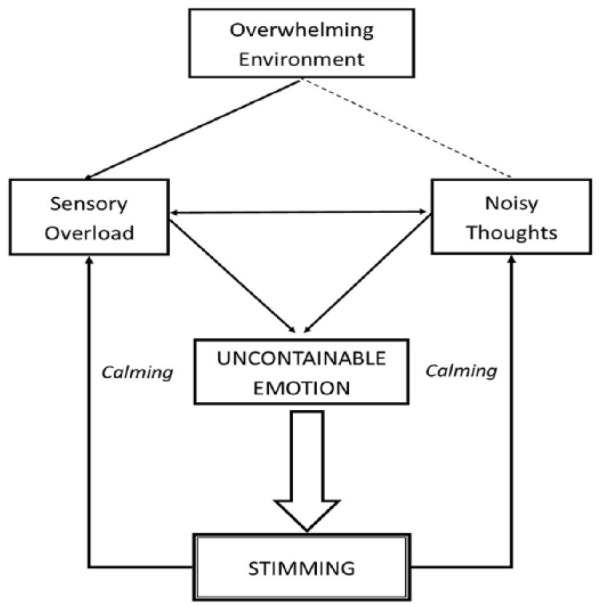
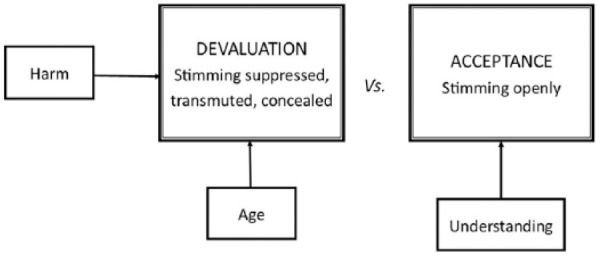
‘Stereotyped or repetitive motor movements’ are characterised as core features in the diagnosis of autism, yet many autistic adults (and the neurodiversity movement) have reclaimed them as ‘stimming’. Supported by a growing body of scientific research, autistic adults argue that these behaviours may serve as useful coping mechanisms, yet little research has examined stimming from the perspective of autistic adults. Through interviews and focus groups, we asked 32 autistic adults to share their perceptions and experiences of stimming, including the reasons they stim, any value doing so may hold for them and their perceptions of others’ reactions to stimming. Using thematic analysis, we identified two themes: stimming as (1) a self-regulatory mechanism and (2) lacking in social acceptance, but can become accepted through understanding. Autistic adults highlighted the importance of stimming as an adaptive mechanism that helps them to soothe or communicate intense emotions or thoughts and thus objected to treatment that aims to eliminate the behaviour.
Overview
The claims and statistics of this paper haven’t been checked yet.
Free: it reads the open-access text and checks the first 5 claims that cite a source we can check. Create a free account to check every claim.
Integrity signals
Registry
Cites
Statistics
Figures
Verification
Claims the paper makes
The claims and statistics of this paper haven’t been checked yet.
Free: it reads the open-access text and checks the first 5 claims that cite a source we can check. Create a free account to check every claim.
Claims other papers make about this one
Each is checked against this paper’s own text: does it say what the citing paper says it does?
The source backs part of the claim, not all of it — or backs it for a different population, condition or comparison.
In the citing paper
“workplace practices often remain oriented towards normative expectations surrounding communication, behavior, and participation in work (Kapp et al., 2019; Erbil et al., 2024)”
From The system-level organisational design framework: a neuro-cognitive trait interaction approach to workplace inclusion for autistic people (2026) · cites this paper as Kapp et al., 2019
Experimental — accuracy not yet measuredThe source backs part of the claim, not all of it — or backs it for a different population, condition or comparison.
In the citing paper
“Repetitive behaviors and focused interests are important to the internal regulation and well-being of many Autistic individuals (Kapp et al., 2019; Manor-Binyamini & Schreiber-Divon, 2019; Milton & Sims, 2016; see also Grove et al., 2018).”
From Neurodiversity and Autism Intervention: Reconciling Perspectives Through a Naturalistic Developmental Behavioral Intervention Framework (2022) · cites this paper as Kapp et al., 2019
Experimental — accuracy not yet measuredThe cited source says what the claim attributes to it.
In the citing paper
“repetitive behaviour or 'stimming' is common and usual (Kapp et al, 2019; Charlton et al, 2021).”
From Autistic SPACE: a novel framework for meeting the needs of autistic people in healthcare settings (2023) · cites this paper as Kapp et al, 2019
The cited source says what the claim attributes to it.
In the citing paper
“In fact, it now seems likely that they often serve a regulatory, soothing function for autistic people (e.g. Joyce, Honey, Leekam, Barrett, & Rodgers, 2017; Kapp et al., 2019).”
From Annual Research Review: Shifting from ‘normal science’ to neurodiversity in autism science (2022) · cites this paper as Kapp et al., 2019
The cited source says what the claim attributes to it.
In the citing paper
“Non-harmful self-stimulatory or repetitive behavior is often used to regulate emotions, and these behaviors may serve as adaptive coping skills for many individuals (Kapp et al., 2019; Manor-Binyamini & Schreiber-Divon, 2019).”
From Neurodiversity and Autism Intervention: Reconciling Perspectives Through a Naturalistic Developmental Behavioral Intervention Framework (2022) · cites this paper as Kapp et al., 2019
1 more claim about this paper
Create a free account to see every claim other papers make about this one.
Self-check
Percentages, sums and reported differences re-computed from the paper’s own numbers.
The self-check needs the paper’s full text.
Citations
Cites
Using thematic analysis in psychology
Braun, V., & Clarke, V. (2006) · Qualitative Research in Psychology · doi:10.1191/1478088706qp063oa · Cited by 194,414 · cited 1×
“Data were analysed thematically, following Braun and Clarke (2006).”
MethodDiagnostic and Statistical Manual of Mental Disorders
American Psychiatric Association (2013) · doi:10.1176/appi.books.9780890425596 · Cited by 116,369
Braun, V., & Clarke, V. (2012) · APA handbook of research methods in psychology, Vol 2: Research designs: Quantitative, qualitative, neuropsychological, and biological. · doi:10.1037/13620-004 · Cited by 10,299
(1943) · The Nervous child · Cited by 8,870
Autistic disturbances of affective contact.
Kanner, L. (1968) · PubMed · Cited by 3,130
On the ontological status of autism: the ‘double empathy problem’
Milton, D. E. M. (2012) · Disability & Society · doi:10.1080/09687599.2012.710008 · Cited by 2,082 · cited 1×
“Potentially, other people’s imitation of their stims may facilitate autistic people’s self-other awareness (see Kapp, 2016, p. 70) and help bridge the difficulties autistic and non-autistic people share in understanding one another, which Milton (2012) terms the ‘double empathy problem’.”
BackgroundWhen the world becomes ‘too real’: a Bayesian explanation of autistic perception
Pellicano, E., & Burr, D. (2012) · Trends in Cognitive Sciences · doi:10.1016/j.tics.2012.08.009 · Cited by 1,156 · cited 3×
“Email: s.k.kapp@exeter.ac.uk have suggested that stimming may provide familiar and reliable self-generated feedback in response to difficulties with unpredictable, overwhelming and novel circumstances (e.g. Lawson, Rees, & Friston, 2014; Pellicano & Burr, 2012).”
BackgroundResultSelf-citationConcept Evolution in Sensory Integration: A Proposed Nosology for Diagnosis
Miller, L. J., Anzalone, M. E., Lane, S. J., Cermak, S. A., & Osten, E. T. (2007) · American Journal of Occupational Therapy · doi:10.5014/ajot.61.2.135 · Cited by 953
‘Autistic psychopathy’ in childhood
Asperger, H. (1991) · Autism and Asperger Syndrome · doi:10.1017/cbo9780511526770.002 · Cited by 765
Research works printed but not linked: 5
- Bascom J., 2012, Loud hands: Autistic people, speaking
- Kanner L., 1943, Nervous Child, 2, 217
- Lilley R, 2018, What’s in a flap? The curious history of autism and hand stereotypies
- Nicolaidis C., 2012, Virtual Mentor: American Medical Association Journal of Ethics, 14, 503
- World Health Organization, 1992, The ICD-10 Classification of Mental and Behavioural Disorders: Diagnostic Criteria for Research, 2
Cited by
Avoiding Ableist Language: Suggestions for Autism Researchers
Bottema-Beutel, K., Kapp, S. K., Lester, J. N., Sasson, N. J., & Hand, B. N. (2021) · Autism in Adulthood · doi:10.1089/aut.2020.0014 · Cited by 1,251
Self-citationAnnual Research Review: Shifting from ‘normal science’ to neurodiversity in autism science
Pellicano, E., & den Houting, J. (2022) · Journal of Child Psychology and Psychiatry · doi:10.1111/jcpp.13534 · Cited by 744
“In fact, it now seems likely that they often serve a regulatory, soothing function for autistic people (e.g. Joyce, Honey, Leekam, Barrett, & Rodgers, 2017; Kapp et al., 2019).”
BackgroundSelf-citationThe Neurodiversity Approach(es): What Are They and What Do They Mean for Researchers?
Dwyer, P. (2022) · Human Development · doi:10.1159/000523723 · Cited by 672
Pearson, A., & Rose, K. (2021) · Autism in Adulthood · doi:10.1089/aut.2020.0043 · Cited by 596
“The further suppression of internal states and associated coping mechanisms (i.e., stimming 53 ) alongside an already present difficulty identifying one’s own emotions could potentially be disastrous, leading to further long-term difficulties in mental health and well-being (i.e., burnout and…”
Autistic Community and the Neurodiversity Movement: Stories from the Frontline
(2020) · doi:10.1007/978-981-13-8437-0 · Cited by 426
Self-citationLeadbitter, K., Buckle, K. L., Ellis, C., & Dekker, M. (2021) · Frontiers in Psychology · doi:10.3389/fpsyg.2021.635690 · Cited by 417
“Eliminating such behaviors can lead to children being unable to avoid aversive experiences, calm themselves, or to communicate intense emotions (Kapp et al., 2019).”
BackgroundUnderstanding Stigma in Autism: A Narrative Review and Theoretical Model
Turnock, A., Langley, K., & Jones, C. R. G. (2022) · Autism in Adulthood · doi:10.1089/aut.2021.0005 · Cited by 407
“81 Autistic people have also reported that some autistic differences can be perceived as frightening to neuro-typical people 82 and that people sometimes associate autism with violent acts.”
Understanding Camouflaging as a Response to Autism-Related Stigma: A Social Identity Theory Approach
Perry, E., Mandy, W., Hull, L., & Cage, E. (2022) · Journal of Autism and Developmental Disorders · doi:10.1007/s10803-021-04987-w · Cited by 274
A capabilities approach to understanding and supporting autistic adulthood
Pellicano, E., Fatima, U., Hall, G., Heyworth, M., Lawson, W., Lilley, R., Mahony, J., & Stears, M. (2022) · Nature Reviews Psychology · doi:10.1038/s44159-022-00099-z · Cited by 237
Self-citationSchuck, R. K., Tagavi, D. M., Baiden, K. M. P., Dwyer, P., Williams, Z. J., Osuna, A., Ferguson, E. F., Jimenez Muñoz, M., Poyser, S. K., Johnson, J. F., et al. (2022) · Journal of Autism and Developmental Disorders · doi:10.1007/s10803-021-05316-x · Cited by 208
Concerns About ABA-Based Intervention: An Evaluation and Recommendations
Leaf, J. B., Cihon, J. H., Leaf, R., McEachin, J., Liu, N., Russell, N., Unumb, L., Shapiro, S., & Khosrowshahi, D. (2022) · Journal of Autism and Developmental Disorders · doi:10.1007/s10803-021-05137-y · Cited by 208
Autistic SPACE: a novel framework for meeting the needs of autistic people in healthcare settings
Doherty, M., McCowan, S., & Shaw, S. C. (2023) · British Journal of Hospital Medicine · doi:10.12968/hmed.2023.0006 · Cited by 188
“While individual in nature, autistic behaviour can, in some ways, be quite different to non-autistic behaviour – repetitive behaviour or ‘stimming’ is common and usual (Kapp et al, 2019; Charlton et al, 2021).”
BackgroundUnwin, K. L., Powell, G., & Jones, C. R. G. (2021) · Autism · doi:10.1177/13623613211050176 · Cited by 207
“, 2017) and autistic people have described liking their RMBs, if not the social consequences that accompany them (Kapp et al., 2019).”
BackgroundInfluentialWhat Is Autistic Burnout? A Thematic Analysis of Posts on Two Online Platforms
Mantzalas, J., Richdale, A. L., Adikari, A., Lowe, J., & Dissanayake, C. (2022) · Autism in Adulthood · doi:10.1089/aut.2021.0021 · Cited by 183
“50 Notably, many adults first experienced burnout during adolescence, suggesting that restricting stimming during a developmental period of significant change and heightened demands may be particularly harmful.”
Rivera, R. A., & Bennetto, L. (2023) · Frontiers in Psychiatry · doi:10.3389/fpsyt.2023.1243657 · Cited by 132
“Some autistic people may choose to hide their autistic traits and abide by social norms (known as camouflaging) to gain acceptance and avoid judgment from peers while others may experience prejudice and discrimination based on expressing their autistic characteristics and behaviors (11, 12).”
BackgroundA conceptual model of risk and protective factors for autistic burnout
Mantzalas, J., Richdale, A. L., & Dissanayake, C. (2022) · Autism Research · doi:10.1002/aur.2722 · Cited by 65
“Despite this, the use of noticeable stims by adults is stigmatizing and generally socially unacceptable (Kapp et al., 2019).”
BackgroundInfluentialNeurodiversity-Affirming Practices are a Moral Imperative for Occupational Therapy
Dallman, A., Williams, K. L., & Villa, L. (2022) · The Open Journal of Occupational Therapy · doi:10.15453/2168-6408.1937 · Cited by 107
Kratochwill, T. R., Horner, R. H., Levin, J. R., Machalicek, W., Ferron, J. M., & Johnson, A. H. (2023) · Journal of School Psychology · doi:10.1016/j.jsp.2022.12.002 · Cited by 105
“It Is a Big Spider Web of Things”: Sensory Experiences of Autistic Adults in Public Spaces
MacLennan, K., Woolley, C., andsensory, E., Heasman, B., Starns, J., George, B., & Manning, C. (2023) · Autism in Adulthood · doi:10.1089/aut.2022.0024 · Cited by 96
“44 Further, staff training could improve the provision of suitable adjustments in public places, such as communication and pace adjustments.”
Moving from Disorder to Difference: A Systematic Review of Recent Language Use in Autism Research
Bottini, S. B., Morton, H. E., Buchanan, K. A., & Gould, K. (2024) · Autism in Adulthood · doi:10.1089/aut.2023.0030 · Cited by 103
Mental health challenges faced by autistic people
Lai, M. (2023) · Nature Human Behaviour · doi:10.1038/s41562-023-01718-2 · Cited by 98
“…RRB reflect one’s natural sensorimotor inclinations and are mostly ego-syntonic, intrinsically soothing and pleasurable for autistic individuals 69 ; while OCD compulsions show anxiety-relieving functions as do some autistic RRB and can be temporarily soothing, OCD symptoms are overall…”
BackgroundCharlton, R. A., Entecott, T., Belova, E., & Nwaordu, G. (2021) · Research in Autism Spectrum Disorders · doi:10.1016/j.rasd.2021.101864 · Cited by 94
Affirming Neurodiversity within Applied Behavior Analysis
Mathur, S. K., Renz, E., & Tarbox, J. (2024) · Behavior Analysis in Practice · doi:10.1007/s40617-024-00907-3 · Cited by 77
“Little or no research, of which we are aware, has demonstrated that stereotypy interferes with learning in ABA programs and autistic advocates often report the opposite, that stimming can help soothe and increase focus (Kapp et al., 2019).”
BackgroundCoproduction with Autistic Adults: Reflections from the Authentistic Research Collective
Stark, E. A., Ali, D., Ayre, A., Schneider, N., Parveen, S., Marais, K., Holmes, N., & Pender, R. (2020) · Autism in Adulthood · doi:10.1089/aut.2020.0050 · Cited by 84
“Stimming refers to self-stimulating behaviors many autistic people engage in. 27 Many of these behaviors are harmless, including hand flapping, rocking, spinning, and verbal repetitions.”
InfluentialRethinking Stereotypies in Autism
McCarty, M. J., & Brumback, A. C. (2021) · Seminars in Pediatric Neurology · doi:10.1016/j.spen.2021.100897 · Cited by 81
Autistic adults’ experience of restricted repetitive behaviours
Collis, E., Gavin, J., Russell, A., & Brosnan, M. (2021) · Research in Autism · doi:10.1016/j.rasd.2021.101895 · Cited by 82
Applied Behavior Analysis and the Abolitionist Neurodiversity Critique: An Ethical Analysis
Graber, A. D., & Graber, J. (2023) · Behavior Analysis in Practice · doi:10.1007/s40617-023-00780-6 · Cited by 77
“The literature on neurodiversity often associates applied behavior analysis (ABA) with the medical model (Chap-man & Bovell, 2022; Kapp, 2019; Krcek, 2013).”
BackgroundMethodInfluentialThe lived experience of meltdowns for autistic adults
Lewis, L. F., & Stevens, K. (2023) · Autism · doi:10.1177/13623613221145783 · Cited by 73
“These findings mirror prior research on other behaviors to manage dysregulation, such as stimming behaviors, which autistic adults commonly feel compelled to hide or “mask” due to social pressures (Charlton et al., 2021; Kapp et al., 2019).”
ResultCage, E., & McManemy, E. (2022) · Frontiers in Psychology · doi:10.3389/fpsyg.2021.792945 · Cited by 72
“Frontiers in Psychology | www.frontiersin.org 6 January 2022 | Volume 12 | Article 792945 coping styles (Kasi et al., 2012; Choi et al., 2015).”
Kelly, C., Sharma, S., Jieman, A.-T., & Ramon, S. (2022) · Disability & Society · doi:10.1080/09687599.2022.2076582 · Cited by 71
“Masking may also involve suppressing their repetitive movements, known as stims (short for self-stimulation), such as hand flapping or twiddling hair, despite the fact that they can be used as coping mechanisms during stressful situations (Kapp et al. 2019; Lingsom 2008).”
Cohort profile: the Australian Longitudinal Study of Adults with Autism (ALSAA)
Arnold, S., Foley, K.-R., Hwang, Y. I. (., Richdale, A. L., Uljarevic, M., Lawson, L. P., Cai, R. Y., Falkmer, T., Falkmer, M., Lennox, N. G., et al. (2019) · BMJ Open · doi:10.1136/bmjopen-2019-030798 · Cited by 58
The sensory experiences of autistic people: A metasynthesis
Sibéoni, J., Massoutier, L., Valette, M., Manolios, É., Verneuil, L., Speranza, M., & Révah‐Levy, A. (2022) · Autism · doi:10.1177/13623613221081188 · Cited by 63
“This was accompanied by seeking out specific stimuli (Elwin et al., 2012, 2013) and the production of repetitive selfstimulation behaviours (Ashburner et al., 2013; Goldfarb et al., 2021; Jones et al., 2003; Kapp et al., 2019; Landon et al., 2016).”
BackgroundAnti-ableism and scientific accuracy in autism research: a false dichotomy
Bottema‐Beutel, K., Kapp, S. K., Sasson, N. J., Gernsbacher, M. A., Natri, H. M., & Botha, M. (2023) · Frontiers in Psychiatry · doi:10.3389/fpsyt.2023.1244451 · Cited by 60
“For example, in interviews, Lovaas referred to autistic children as inhuman and promoted physical abuse–including making autistic people fear for their lives– as a means to promote behavior change (81, 82).”
BackgroundSelf-citationPantazakos, T., & Vanaken, G.-J. (2023) · Frontiers in Psychology · doi:10.3389/fpsyg.2023.1225152 · Cited by 59
Neurodiversity-Affirming Applied Behavior Analysis
Allen, L. L., Mellon, L. S., Syed, N. Y., Johnson, J. F., & Bernal, A. J. (2024) · Behavior Analysis in Practice · doi:10.1007/s40617-024-00918-0 · Cited by 61
“Autistic respondents report the self-regulatory role that stimming serves (Kapp et al., 2019).”
Reconceptualising ‘reasonable adjustments’ for the successful employment of autistic women
North, G. (2023) · Disability & Society · doi:10.1080/09687599.2021.1971065 · Cited by 41
A Primer on Neurodiversity-Affirming Speech and Language Services for Autistic Individuals
Gaddy, C., & Crow, H. (2023) · Perspectives of the ASHA Special Interest Groups · doi:10.1044/2023_persp-23-00106 · Cited by 55
“Eu não sou um anjo azul”: a sexualidade na perspectiva de adolescentes autistas
Brilhante, A. V. M., Filgueira, L. M. D. A., Lopes, S. V. M. U., Vilar, N. B. S., Nóbrega, L. R. M., Pouchain, A. J. M. V., & Sucupira, L. C. G. (2021) · Ciência & Saúde Coletiva · doi:10.1590/1413-81232021262.40792020 · Cited by 76
Kapp, S. K. (2019) · Springer eBooks · doi:10.1007/978-981-13-8437-0_1 · Cited by 49
Self-citationKim, S. Y., & Gillespie‐Lynch, K. (2022) · Journal of Autism and Developmental Disorders · doi:10.1007/s10803-022-05739-0 · Cited by 49
Le, L. (2024) · International ACM SIGACCESS Conference on Computers and Accessibility (ASSETS) · doi:10.1145/3663548.3675651 · Cited by 50
“Additionally, stimming is common in all human beings (e.g., fidgeting, singing, humming) [91, 135], and through our relationship, my partner has adopted new forms of self-regulation from watching me stim.”
Schuck, R. K., Dwyer, P. S. R., Baiden, K. M. P., Williams, Z. J., & Wang, M. (2022) · Journal of Autism and Developmental Disorders · doi:10.1007/s10803-022-05808-4 · Cited by 48
“…many on the spectrum do not see these behaviors as problematic; in fact, they may be used for self-regulation (Bascom, 2015; Charlton et al., 2021; Kapp et al., 2019), and negativity regarding such behaviors may stem more from stigma and neurotypical social norms than from intrinsic properties of…”
BackgroundTowards autistic flow theory: A non‐pathologising conceptual approach
Heasman, B., Williams, G., Charura, D., Hamilton, L., Milton, D. E. M., & Murray, F. (2024) · Journal for the Theory of Social Behaviour · doi:10.1111/jtsb.12427 · Cited by 51
Shaping Organizational Climates to Develop and Leverage Workforce Neurodiversity
Volpone, S. D., Avery, D. R., & Wayne, J. H. (2022) · Routledge eBooks · doi:10.4324/9781003023616-2 · Cited by 57
Patient autonomy, clinical decision making, and the Phenomenological reduction
Lewis, J., & Holm, S. (2022) · Medicine Health Care and Philosophy · doi:10.1007/s11019-022-10102-2 · Cited by 53
The Ecosystem of Competitive Employment for University Graduates with Autism
Vincent, J., & Fabri, M. (2022) · International Journal of Disability, Development and Education · doi:10.1080/1034912x.2020.1821874 · Cited by 34
“Such social and sensory experiences can cause extreme physical and emotional distress as well as feelings of anxiety, despair, isolation and the increase in ‘restrictive and repetitive behaviours’ (Harmuth et al., 2018; Hedley et al., 2018; Kapp et al., 2019).”
BackgroundHow auditory processing influences the autistic profile: A review
Poulsen, R. E., Williams, Z. J., Dwyer, P. S. R., Pellicano, E., Sowman, P. F., & McAlpine, D. (2024) · Autism Research · doi:10.1002/aur.3259 · Cited by 49
“…by autistic people as a means of self-expression, self-regulation, or desired sensory feed-back (Damiano-Goodwin et al., 2018; Joyce et al., 2017; Kapp et al., 2019), and motor and vocal stereotypy may sometimes reflect a search for positive and pleasurable sensory stimulation (Jones et al.,…”
Self-citationFusar‐Poli, L., Ciancio, A., Gabbiadini, A., Meo, V., Patania, F., Rodolico, A., Saitta, G., Vozza, L., Petralia, A., Signorelli, M. S., et al. (2020) · Brain Sciences · doi:10.3390/brainsci10050291 · Cited by 45
“The role of repetitive behaviors and mannerisms in individuals with ASD remains still unclear, although a wide variety of functions have been attributed to them: for instance, they can be used to calm anxiety, to communicate emotions, or for self-stimulatory purposes [30].”
BackgroundDeThorne, L. S., & Searsmith, K. (2020) · Perspectives of the ASHA Special Interest Groups · doi:10.1044/2020_persp-20-00188 · Cited by 45
Verhulst, I., MacLennan, K., Haffey, A., & Tavassoli, T. (2022) · Autism in Adulthood · doi:10.1089/aut.2022.0018 · Cited by 46
“59,60 Self-soothing behaviors have been linked to the release of oxytocin, important for well-being and stress reduction, and the anti-stress effects of oxytocin release have been suggested to be acutely strong in response to ‘‘low intensity’’ stimulation of the skin.”
The Social Validity of Behavioral Interventions: Seeking Input from Autistic Adults
Baiden, K. M. P., Williams, Z. J., Schuck, R. K., Dwyer, P. S. R., & Wang, M. (2024) · Journal of Autism and Developmental Disorders · doi:10.1007/s10803-024-06297-3 · Cited by 46
“…are in line with prior qualitative research that indi - cates many autistic people enjoy having the ability to stim if it is not hurting anyone (Kapp et al., 2019) and that forced eye contact can cause discomfort and is not considered necessary for communication (Dalmayne, 2017; Trevisan et…”
Moore, H. L., Brice, S., Powell, L., Ingham, B., Freeston, M., Parr, J. R., & Rodgers, J. (2022) · Journal of Autism and Developmental Disorders · doi:10.1007/s10803-021-05312-1 · Cited by 42
Kenworthy, L. E., Verbalis, A. D., Bascom, J., daVanport, S., Strang, J. F., Pugliese, C. E., Freeman, A. J., Jeppsen, C., Armour, A. C., Jost, G. M., et al. (2021) · Autism · doi:10.1177/13623613211029117 · Cited by 42
“As is the case of repetitive stimming behaviors (Kapp et al., 2019), autistic youth and adults may identify components of autistic EF profiles that provide positive benefits, or support compensation efforts (Livingston & Happé, 2019).”
BackgroundWilliams, Z. J., Schaaf, R. C., Ausderau, K., Baranek, G. T., Barrett, D. J., Cascio, C. J., Dumont, R. L., Eyoh, E. E., Failla, M. D., Feldman, J. I., et al. (2023) · Molecular Autism · doi:10.1186/s13229-023-00563-4 · Cited by 45
Woods, S. E. O., & Estes, A. M. (2023) · Frontiers in Psychiatry · doi:10.3389/fpsyt.2023.1264516 · Cited by 49
“Autistic people engage in repetitive movements primarily as a way to cope with intense thoughts or sensory experiences (66), but these are framed as deficits in part because engaging in unusual behavior is stigmatized (66, 67).”
BackgroundBeyond self-regulation: Autistic experiences and perceptions of stimming
Morris, I. F., Sykes, J. R., Paulus, E. R., Dameh, A., Razzaque, A., Esch, L. V., Gruenig, J., & Zelazo, P. D. (2025) · Neurodiversity · doi:10.1177/27546330241311096 · Cited by 45
“Stimming has also been reported to help ease the burden of “ noisy ” thoughts — including stress about one ’ s responsibilities, anxiety, and the unknown or uncertainty inherent to daily life (Joyce et al., 2017; Kapp et al., 2019).”
InfluentialAutism spectrum disorders in adulthood
Roy, M., & Strate, P. (2023) · Deutsches Ärzteblatt international · doi:10.3238/arztebl.m2022.0379 · Cited by 51
Chazin, K. T., Ledford, J. R., Wilson-Moses, J. M., Rajaraman, A., & Juárez, A. O. R. (2024) · Journal of Autism and Developmental Disorders · doi:10.1007/s10803-024-06242-4 · Cited by 40
“…have identified that stereotypy (i.e., forms of self-stimulation like hand flapping, body rocking, and hum-ming) may improve self-regulation and sense of well-being for autistic individuals (Joyce et al., 2017; Kapp et al., 2019; Manor-Binyamini & Schreiber-Divon, 2019; Ne’eman, 2021).”
Ferenc, K., Płatos, M., Byrka, K., & Król, M. E. (2022) · Autism · doi:10.1177/13623613221135818 · Cited by 40
“For example, autistic adults often experience stimming as relaxing and fun (Kapp et al., 2019).”
BackgroundPerspectives from the ASD community on police interactions: Challenges & recommendations
Salerno‐Ferraro, A. C., & Schuller, R. A. (2020) · Research in Developmental Disabilities · doi:10.1016/j.ridd.2020.103732 · Cited by 47
McKinlay, M., Thorpe, D., Cage, E., Grainger, C., Jasper, C., & Stewart, M. E. (2024) · Autism · doi:10.1177/13623613241285974 · Cited by 39
“Notably absent was reference to self-regulatory behaviours such as stimming, which may be an avenue to investigate, as autistic adults report this can enhance coping (Kapp et al., 2019).”
Lowy, R., Gao, L., Hall, K., & Kim, J. G. (2023) · CHI Conference on Human Factors in Computing Systems · doi:10.1145/3544548.3581399 · Cited by 42
“Two NDs reported concerns around how their colleagues view them in various situations, such as when they do not make eye contact during conversation, or ’stim’ (perform self-regulating repetitive motor movements [36]).”
BackgroundPelton, M., Crawford, H., Bul, K., Robertson, A., Adams, J., Beurs, D. P. D., Rodgers, J., Baron‐Cohen, S., & Cassidy, S. (2023) · Suicide and Life-Threatening Behavior · doi:10.1111/sltb.12954 · Cited by 39
AAC Technology, Autism, and the Empathic Turn
van Grunsven, J., & Roeser, S. (2021) · Social Epistemology · doi:10.1080/02691728.2021.1897189 · Cited by 44
Strengths-Based Practice to Enhance Mental Health for Autistic People: A Scoping Review
Murthi, K., Chen, Y., Shore, S., & Patten, K. K. (2023) · American Journal of Occupational Therapy · doi:10.5014/ajot.2023.050074 · Cited by 39
“…aligns with the Social Model of Disability, in which autistic “ deficits ” are viewed as cognitive differences rather than individual deficits and that holds social contexts, societal attitudes, and beliefs accountable for not accommodating these differences (den Houting, 2019; Kapp et al., 2019 ).”
Lord, C., & Bishop, S. L. (2021) · American Journal of Psychiatry · doi:10.1176/appi.ajp.2021.21060578 · Cited by 36
A call for discussion on stereotypic behavior
Leaf, J. B., Cihon, J. H., Javed, A., Klick, S., Ferguson, J. L., Milne, C. M., Creem, A. N., Arthur, S. M., Melissa, S. S., Olive, M. L., et al. (2022) · European Journal of Behavior Analysis · doi:10.1080/15021149.2022.2112810 · Cited by 36
“Based on self-reports found in blogs (e.g., Anxious Advocate, 2015) and the peer-reviewed literature (e.g., Kapp et al., 2019), some view stereotypic behavior as more useful than harmful.”
BackgroundScheerer, N. E., Boucher, T. Q., Sasson, N. J., & Iarocci, G. (2022) · Autism in Adulthood · doi:10.1089/aut.2021.0046 · Cited by 35
“40 For example, stimming behaviors may help manage anxiety in sensory-rich environments, 41 and differences in social behavior such as reduced eye contact may be an adaptive response to sensory sensitivities.”
Ilen, L., Feller, C. M., & Schneider, M. (2023) · Autism · doi:10.1177/13623613231204829 · Cited by 37
“These might include, among others, interpersonal ER (Dixon-Gordon et al., 2015) or various behavioral strategies, such as stimming (Kapp et al., 2019), engaging in physical activity (Tse, 2020) or special interests (Patten Koenig & Hough Williams, 2017), sleeping (Palmer & Alfano, 2017), or…”
BackgroundCarruthers, S., Charman, T., Hawi, N. E., Kim, Y. A., Randle, R., Lord, C., & Pickles, A. R. (2020) · Autism Research · doi:10.1002/aur.2449 · Cited by 36
“Likewise, it is important to consider the targets of interventions in light of the views of autistic individuals and their parents [Fletcher-Watson, 2018; Kapp et al., 2019].”
BackgroundImproving Social Anxiety and Social Responsiveness in Autism Spectrum Disorder through PEERS®
Factor, R. S., Moody, C. T., Sung, K. Y., & Laugeson, E. A. (2022) · Evidence-Based Practice in Child and Adolescent Mental Health · doi:10.1080/23794925.2021.2013138 · Cited by 35
“…recent research and perspectives in the autism community that social skill interventions may perpetuate a cycle of defining acceptable behavior and support masking or camouflaging (i.e., changing oneself or stifling one’s traits to fit into society; e.g., Kapp et al., 2019; Russell et al., 2019).”
BackgroundGilmore, D., Longo, A., Krantz, M., Radford, D., & Hand, B. N. (2022) · Current Psychiatry Reports · doi:10.1007/s11920-022-01362-z · Cited by 35
Developmental diversity: Putting the development back into research about developmental conditions
Hens, K., & Goidsenhoven, L. V. (2023) · Frontiers in Psychiatry · doi:10.3389/fpsyt.2022.986732 · Cited by 35
O’Neill, C., & Kenny, N. (2023) · Education Sciences · doi:10.3390/educsci13070670 · Cited by 34
Automated Analysis of Stereotypical Movements in Videos of Children With Autism Spectrum Disorder
Barami, T., Manelis, L., Kaiser, H., Ilan, M., Slobodkin, A., Hadashi, O., Hadad, D., Waissengreen, D., Nitzan, T., Menashe, I., et al. (2024) · JAMA Network Open · doi:10.1001/jamanetworkopen.2024.32851 · Cited by 36
Use of sensory adaptive environments with autistic children: A scoping review
Williams, K. L., Dumont, R. L., Schiano, N. R., Lawlor, K. F., Greaney, K., Kim, R., Duryea, E., Rios-Vega, L., Simms, K., & Schaaf, R. C. (2024) · Research in Autism · doi:10.1016/j.rasd.2024.102362 · Cited by 32
Trajectory research in children with an autism diagnosis: A scoping review
Gentles, S. J., Ng‐Cordell, E., Hunsche, M. C., McVey, A. J., Bednar, E. D., DeGroote, M. G., Chen, Y., Duku, E., Kerns, C. M., Banfield, L. E., et al. (2023) · Autism · doi:10.1177/13623613231170280 · Cited by 31
“…and therefore relevant, repetitive self-stimulating behaviour (whether motor or intellectual) was noted as useful to cope with real problems and therefore considered beneficial – consistent with broader published reports of autistic perspectives on stim-ming (Joyce et al., 2017; Kapp et al., 2019).”
ResultSchuck, R. K., & Fung, L. K. (2024) · Frontiers in Psychiatry · doi:10.3389/fpsyt.2023.1250895 · Cited by 30
Moore, H. L., Cassidy, S., & Rodgers, J. (2023) · Autism Research · doi:10.1002/aur.3073 · Cited by 30
“Concurrently, repetitive motor behaviours, which autistic people value as important coping mechanisms, are generally not accepted (Kapp et al., 2019).”
Tancredi, S., & Abrahamson, D. (2024) · Educational Psychology Review · doi:10.1007/s10648-024-09904-y · Cited by 32
“Thus, in mainstream education, as in neurotypical society more broadly (Kapp et al., 2019), neurodivergent individuals are stigmatized for their inclination toward sensory exploration through movement.”
Influentialvan Grunsven, J., Stone, T. C., & Marin, L. (2023) · European Journal of Engineering Education · doi:10.1080/03043797.2023.2218275 · Cited by 34
“For instance, for many autistic people, ‘ self-stimulatory ’ or ‘ stimming ’ behaviours – such as fl apping, rocking, or humming – are richly meaningful and expressive ways of engaging their environment (Kapp, Steward, and Crane 2019).”
BackgroundKeenan, E. G., Gurba, A. N., Mahaffey, B., Kappenberg, C. F., & Lerner, M. D. (2023) · Autism in Adulthood · doi:10.1089/aut.2022.0011 · Cited by 29
“…hyperactivity disorder [ADHD]-like symptoms, meltdowns, ‘‘stimming’’ or repetitive motor behaviors—since stimming is a disinhibited behavior, 24 or a behavior which top-down control can be exerted over—not that it is always helpful to do so, yet this is an idea which is often mentioned in…”
Palser, E. R., Fotopoulou, A., Pellicano, E., & Kilner, J. M. (2020) · Journal of Autism and Developmental Disorders · doi:10.1007/s10803-019-04279-4 · Cited by 28
Self-citationWolpe, S. (2024) · Review Journal of Autism and Developmental Disorders · doi:10.1007/s40489-024-00448-z · Cited by 31
“…desiring sensory friendly spaces, educational practices designed for multiple learning preferences, disability support groups, and more acceptance of self-stimulatory behavior (“stimming”; repetitive motions intended to soothe, a common behavior in the autistic community; Kapp et al., 2019).”
Autistic autobiography and hermeneutical injustice
Dinishak, J. (2021) · Metaphilosophy · doi:10.1111/meta.12514 · Cited by 30
What does it mean for an autism intervention to be evidence‐based?
Vivanti, G. (2022) · Autism Research · doi:10.1002/aur.2792 · Cited by 28
Bridge-building between communities: Imagining the future of biomedical autism research
Heraty, S., Lautarescu, A., Belton, D., Boyle, A., Cirrincione, P., Doherty, M., Douglas, S., Plas, J. R. D., den Bosch, K. V., Violland, P., et al. (2023) · Cell · doi:10.1016/j.cell.2023.08.004 · Cited by 31
Access Points: Understanding Special Interests Through Autistic Narratives
Long, R.-E. M. (2024) · Autism in Adulthood · doi:10.1089/aut.2023.0157 · Cited by 29
“15 Such ‘‘repetitive behavior’’ has been reframed as a ‘‘flow state,’’ 53–55 which is how some participants described what it felt like to be engaged in their special interests.”
Lung, S. L. M., Picard, È., Soulières, I., & Bertone, A. (2024) · Research in Autism · doi:10.1016/j.rasd.2024.102458 · Cited by 29
Autism - A Comprehensive Array of Prominent Signs and Symptoms
Nadeem, M. S., Murtaza, B. N., Al-Ghamdi, M. A., Ali, A., Zamzami, M. A., Khan, J. A., Ahmad, A., Rehman, M. U., & Kazmi, I. A. (2021) · Current Pharmaceutical Design · doi:10.2174/1381612827666210120095829 · Cited by 33
Bellon-Harn, M. L., Boyd, R. L., & Manchaiah, V. K. C. (2022) · Frontiers in Rehabilitation Sciences · doi:10.3389/fresc.2021.682533 · Cited by 29
“(15) and McGill and Robinson (16), adults with ASD often report negative experiences associated with ABA-based intervention.”
BackgroundMeasurement of Subcategories of Repetitive Behaviors in Autistic Adolescents and Adults
McDermott, C. R., Farmer, C., Gotham, K. O., & Bal, V. H. (2020) · Autism in Adulthood · doi:10.1089/aut.2019.0056 · Cited by 27
“Using these approaches, Kapp et al.28 found that some autistic individuals reported certain RRBs as mechanisms to self-regulate when feeling overwhelmed.”
BackgroundMethodInfluentialAutistic adults’ subjective experiences of hoarding and self-injurious behaviors
Goldfarb, Y., Zafrani, O., Hedley, D., Yaari, M., & Gal, E. (2021) · Autism · doi:10.1177/1362361321992640 · Cited by 29
Neurodivergence and Work in Human-Computer Interaction: Mapping the Research Landscape
Burtscher, S., & Gerling, K. (2024) · Proceedings of the 3rd Annual Meeting of the Symposium on Human-Computer Interaction for Work · doi:10.1145/3663384.3663386 · Cited by 25
“…and wrong possibly caused by "excessive" adherence to rules (e.g., when weighing morality against personal gain [36]), repetitive and stereotyped motor movements ("stimming" [17, 39]), "hyperfixation" and "special interests" [7, 32, 59] as well as hypo-or hypersensitivity to sensory stimuli [7].”
BackgroundJaffey, S., & Ashwin, C. (2022) · Research in Autism · doi:10.1016/j.rasd.2022.102021 · Cited by 27
The meaning of autistic movements
Petty, S., & Ellis, A. (2024) · Autism · doi:10.1177/13623613241262151 · Cited by 25
“The value of repetitive, rhythmic movements or vocalisations, which are sometimes involuntary, can be for self-regulation of discomfort, emotion, sensory overload or noisy thoughts (Kapp et al., 2019).”
InfluentialPyszkowska, A. (2024) · Journal of Autism and Developmental Disorders · doi:10.1007/s10803-024-06416-0 · Cited by 28
“…between camouflaging, social anxiety, and autistic burnout vary in terms of autistic symptoms’ intensification – as proposed by Petrolini et al. ( 2023 ) or Kapp et al. (2019) who highlight that the engagement in camouflaging strategies may be affected by one’s social skills or executive functions.”
Differently different?: A commentary on the emerging social cognitive neuroscience of female autism
Rippon, G. (2024) · Biology of Sex Differences · doi:10.1186/s13293-024-00621-3 · Cited by 25
“…cues and the production and rehearsal of social scripts indicates high-level engagement with the acquisition and processing of social knowledge [122] Additionally, camouflaging as a coping strategy embodies many of the regulatory aspects of interactive social behaviour, including action…”
Rossow, T., MacLennan, K., & Tavassoli, T. (2022) · Journal of Autism and Developmental Disorders · doi:10.1007/s10803-022-05528-9 · Cited by 24
The Rise of Autism: Risk and Resistance in the Age of Diagnosis
Russell, G. (2020) · Routledge eBooks · doi:10.4324/9780429285912 · Cited by 33
Self-citation
Metadata
- Authors
- Kapp, S. K., Steward, R., Crane, L., Elliott, D., Elphick, C., Pellicano, E., & Russell, G.
- Affiliations
- University of Exeter (GB)
- University College London (GB)
- Corresponding author
- Kapp, Steven K
- Venue
- Autism
- Publisher
- SAGE Publications
- Published
- 2019-02-28
- Volume
- 23
- Issue
- 7
- Pages
- 1782-1792
- ISSN
- 1362-3613 (ISSN-L)
- 1461-7005
- PMC
- PMC6728747
- OpenAlex
- W2912195587
- Semantic Scholar
- 8e9fcb1de03b4ce92ab15abdadbbb112c8e48ce3
- Cited by
- 495
- References
- 53
- Citations by year
- 2026: 89 · 2025: 89 · 2024: 106 · 2023: 80 · 2022: 71 · 2021: 33 · 2020: 20 · 2019: 7
- FWCI
- 19.04
- Type
- journal article
- Language
- en
- Open access
- hybrid
- doi.org
- Licence
- cc-by
- journals.sagepub.com/page/policies/text-and-data-mining-license (tdm)
- Locations
- Autism (publishedVersion, cc-by)
- PubMed Central (publishedVersion, cc-by)
- PubMed (publishedVersion)
- UCL Discovery (University College London) (submittedVersion)
- Figshare (submittedVersion, cc-by)
- Open Research Exeter (University of Exeter) (submittedVersion, cc-by)
- University of Birmingham Research Portal (University of Birmingham) (submittedVersion)
- Funders
- Wellcome Trust (108676/Z/15/Z)
- leverhulme trust
- Topics
- Life Sciences › Neuroscience › Cognitive Neuroscience › Autism Spectrum Disorder Research
- Social Sciences › Psychology › Developmental and Educational Psychology › Behavioral and Psychological Studies
- Social Sciences › Psychology › Clinical Psychology › Obsessive-Compulsive Spectrum Disorders
- Keywords
- stimming, autistic adults, self-regulation, coping strategies, neurodiversity movement, autistic identity, sensory regulation, autism treatment
- MeSH terms
- Adaptation, Psychological, Adult, Attitude, Autistic Disorder, Female, Humans, Interviews as Topic, Male, Middle Aged, Focus Groups, Stereotypic Movement Disorder, Young Adult
About these checks
Registry, retraction, Cites and statistics results are computed, not judged, with one exception: a printed reference that no index lists is read once by a model before it counts as a citation error. Claims are extracted by a model and kept only when their quote appears verbatim in the text; each cited source is then checked, with a model’s help, for whether it says what the claim relies on. Those verdicts can be wrong — read the claim’s quote and the cited source before relying on one.
Statistics and arithmetic are recomputed, not judged.
Confidence bands are shown only for fields calibrated on our annotated test set. None is calibrated yet, so no band is shown.
What counts as a claim ›How we measure confidence ›How we check this ›
Are you an author, or do you see a problem with this page? Request a review
Data sources
Bibliographic data: Semantic Scholar, OpenAlex, Crossref.
Contains information from the Semantic Scholar Academic Graph Datasets, made available under the ODC Attribution License (ODC-BY 1.0).
Semantic Scholar’s data is described in: Kinney, R., et al. (2023). The Semantic Scholar Open Data Platform. arXiv:2301.10140.
