

What Are the Mechanisms Underpinning Intergenerational Transmission of Violence Perpetration? A Realist Review
Open accessThe DOI matches its Crossref record; 75 of the 76 references it cites were found in a registry or an index; 24 of the 75 sources its claims cite were checked for support.
Abstract
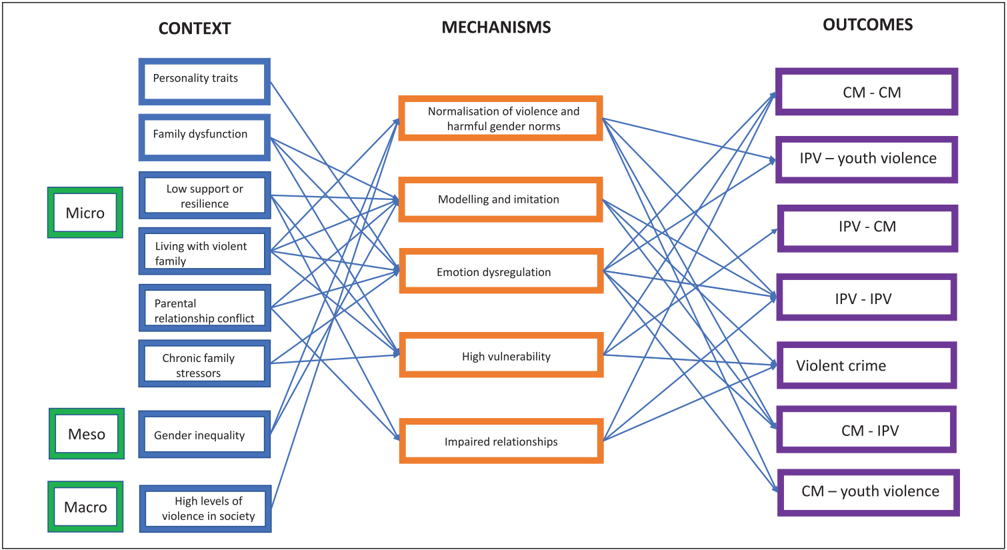
Successive generations are more likely to carry out acts of violence in households where an individual has either perpetrated or been subjected to violence. While research to date has mostly concentrated on direct associations between violence experience or perpetration in generation 1 and violence perpetration in generation 2, there is limited evidence regarding the underlying mechanisms of the transmission of intergenerational violence perpetration. We conducted a realist review to adjudicate theories of the underlying mechanisms of intergenerational violence perpetration. Following Realist and Meta-Review Evidence Synthesis: Evolving Standards, we searched six databases across three phases considering all study designs. We identified 28 studies that were analyzed thematically. Included studies focused on perpetration of intimate partner violence, child abuse and neglect, youth violence, and violent crime. We identified five underlying mechanisms of intergenerational violence perpetration: (a) normalization of violence and harmful gender norms, (b) modeling and imitation, (c) emotion dysregulation, (d) high vulnerability, and (e) impaired relationships. These mechanisms operate and unfold differently across contexts where violence is experienced or witnessed. Our realist review highlights how violence perpetration may be transmitted across generations. We propose that interventions focused on norms and attitudes, mental health, social welfare, and parent-child relationships may be useful in preventing violence perpetration across generations.
Overview
CoChat Summary
TL;DR
This realist review synthesizes 28 studies to adjudicate theories of how violence perpetration is transmitted across generations. It identifies five context–mechanism–outcome pathways: normalization of violence and harmful gender norms, modeling and imitation, emotion dysregulation, high vulnerability, and impaired relationships.
Key findings
- The review included 28 studies: 20 primary studies (5 qualitative, 15 quantitative) and 8 systematic reviews/meta-analyses; 16 focused only on homotypical continuity and 4 on heterotypical continuity.
- Five mechanisms were identified: (a) normalization of violence and harmful gender norms (supported by 7 studies), (b) modeling and imitation (12 studies), (c) emotion dysregulation (9 studies), (d) high vulnerability (4 studies), and (e) impaired relationships (6 studies).
- Examples of reported effects include Jaffee et al. (2013): children of mildly and severely maltreated mothers had 3.55 and 5.31 times the odds of maltreatment, respectively; Frisell et al. (2011): parent-to-child violent crime odds of 3.5, adopted-away children OR 1.9, and mother–daughter pairs OR 6.3.
- The authors conclude that interventions targeting norms and attitudes, mental health, social welfare, and parent–child relationships may help interrupt intergenerational violence perpetration.
Methods
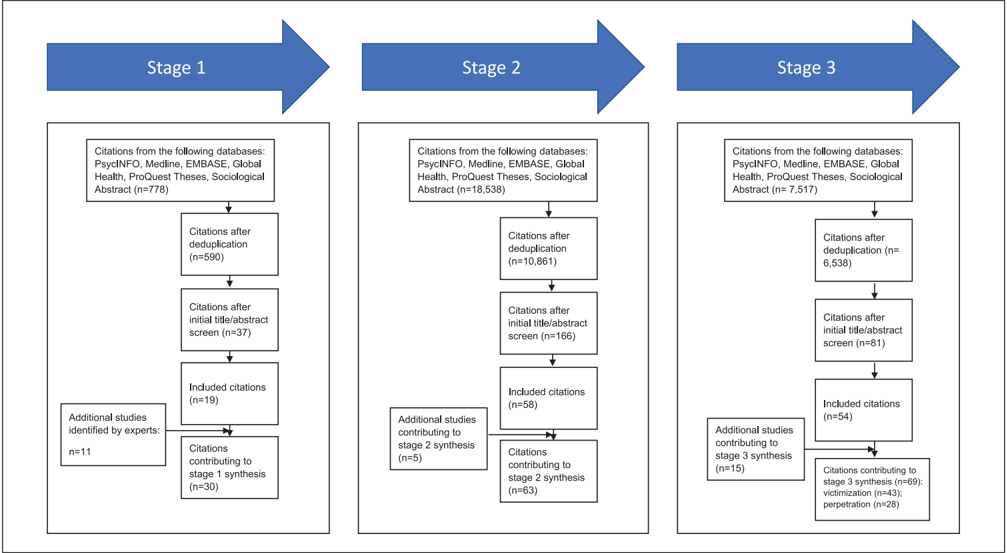
- Realist review following Pawson et al.’s five steps, pre-registered on PROSPERO (2021:CRD42021267725), reported per RAMESES standards.
- Three-stage search of six databases (EMBASE, Global Health, PsycINFO, Sociological Abstracts, Cochrane Library, ProQuest Dissertations and Theses) from January 1990 to December 2021, plus reference/citation searching, stakeholder contact, and grey literature; searches limited to English.
- Two reviewers screened and extracted data, with conflicts resolved by a third; four reviewers extracted study characteristics, context, mechanisms, outcomes, and evidence richness. A structured CMO coding framework was used, and findings were synthesized into five CMO configurations.
Limitations
- Stated by the paper: there is a dearth of data on violence types beyond child maltreatment, IPV, and violent crime; a distinct lack of data from low- and middle-income countries up to December 2021; no studies on intergenerational transmission of peer or community violence perpetration; many studies did not clarify who inflicted maltreatment or perpetrated IPV, nor specify violence subtypes; and many studies focused on statistical associations without elaborating mechanisms or theory.
- Evident from the text: the search was limited to English-language studies, and many included primary studies drew on only one generation (9 of the primary studies), which constrains inferences about intergenerational transmission.
- Evident from the text: the review notes that included studies often lacked contextual information, such as gender norms endorsed in the settings studied, and that evidence was strongest for intra-familial violence types.
Model-written summary. Check it against the paper before relying on it.
Integrity signals
Registry
Cites
Statistics
Figures
Verification
Claims the paper makes
22 Valid · 0 Not valid · 44 Not checked · 42 Own results and interpretations
Every source the paper cites for this claim was checked and supports it.
In the paper
“The relationship between parental and son gang membership is mediated by a father’s maltreatment of his son, which accounts for nearly 40% of the total effect of intergenerational gang membership.”
§ What Are the Mechanisms Underpinning Intergenerational Transmission of Violence Perpetration? A Realist Review > Results > Synthesis of Evidence
What the sources say
- Supportedcites Augustyn et al., 2017 matched to “Exploring intergenerational continuity in gang membership” (2017) source
The Results (Mediation Analyses) report an indirect effect of fathers’ gang membership on sons’ gang membership through maltreatment, accounting for nearly 40% of the total effect in the model examining that mediator. The paper also reports a little over 29% when all three parenting behaviors are included in the same model. (LLM, conf=0.94)
plainstates a cause- Asserted: passes — The authors put it forward as true.
- Checkable: passes — It can be checked against evidence.
- Load-bearing: passes — The paper’s conclusions depend on it.
- Based: passes — The paper gives a reason why it holds.
- Supported
Every source the paper cites for this claim was checked and supports it.
In the paper
“Depression was not a mediator for witnessing interparental violence nor experiencing child maltreatment on dating aggression in this study.”
§ What Are the Mechanisms Underpinning Intergenerational Transmission of Violence Perpetration? A Realist Review > Results > Synthesis of Evidence
What the sources say
- Supportedcites Reyes et al., 2015 matched to “Longitudinal Mediators of Relations Between Family Violence and Adolescent Dating Aggression Perpetration” (2015) source
The Results (Single-Mediator Models; page not supplied) report no significant indirect effect through depression for either witnessing interparental violence or having been hit by an adult, the study’s measure of directly experienced violence. The finding concerns physical dating aggression perpetration. (LLM, conf=0.94)
plain- Asserted: passes — The authors put it forward as true.
- Checkable: passes — It can be checked against evidence.
- Load-bearing: unclear — It is unclear whether the paper’s conclusions depend on it.
- Based: passes — The paper gives a reason why it holds.
- Supported
The cited sources support only part of this claim — read each source’s verdict below.
In the paper
“These CMOs therefore support existing overlapping theories such as social learning theory (Bandura, 1977), social network theory (Tracy et al., 2016), power theory (Straus et al., 1980), and the general aggression model (Anderson & Bushman, 2002).”
§ What Are the Mechanisms Underpinning Intergenerational Transmission of Violence Perpetration? A Realist Review > Discussion
What the sources say
- Not matchedcites Bandura, 1977
An author–year citation the paper’s reference list doesn’t settle. We don’t search these by name.
- Supportedcites Tracy et al., 2016 matched to “The Transmission of Gun and Other Weapon-Involved Violence Within Social Networks” (2016) source
The citation is attached to social network theory, not to the citing authors’ conclusion about their CMOs. In “Violence transmission within co-offending networks,” the review reports that a person’s position and social closeness within a network are associated with gun-violence risk, supporting its use as a source for the network-based perspective. (LLM, conf=0.88)
- Not matchedcites Straus et al., 1980
An author–year citation the paper’s reference list doesn’t settle. We don’t search these by name.
plainstates an association- Asserted: passes — The authors put it forward as true.
- Checkable: passes — It can be checked against evidence.
- Load-bearing: unclear — It is unclear whether the paper’s conclusions depend on it.
- Based: passes — The paper gives a reason why it holds.
- Not matched
The cited sources support only part of this claim — read each source’s verdict below.
In the paper
“Experience of parental IPV in early childhood substantially increases the risk for dating violence in early adolescence, more so than the continuity or persistence of parental IPV experience through early and middle childhood (Narayan et al., 2013).”
§ What Are the Mechanisms Underpinning Intergenerational Transmission of Violence Perpetration? A Realist Review > Results > Synthesis of Evidence
What the sources say
- Partly supportedcites Narayan et al., 2013 matched to “Developmental timing and continuity of exposure to interparental violence and externalizing behavior as prospective predictors of dating violence” (2013) sourceExperimental — accuracy not yet measured
Split into 2 atoms — 0 confirmed, 2 partially supported, 0 disputed, 0 misattributed, 0 unverifiable. Expand the claim to see per-atom verdicts.
plainstates a causen = 168- Asserted: passes — The authors put it forward as true.
- Checkable: passes — It can be checked against evidence.
- Load-bearing: passes — The paper’s conclusions depend on it.
- Based: passes — The paper gives a reason why it holds.
- Partly supported
Every source the paper cites for this claim was checked and supports it.
In the paper
“Intergenerational violence cycle maintainers reported higher levels of substance abuse, depression, social disadvantage, antisocial behavior, and domestic partner violence (Jaffee et al., 2013).”
§ What Are the Mechanisms Underpinning Intergenerational Transmission of Violence Perpetration? A Realist Review > Results > Synthesis of Evidence
What the sources say
- Supportedcites Jaffee et al., 2013 matched to “Safe, Stable, Nurturing Relationships Break the Intergenerational Cycle of Abuse: A Prospective Nationally Representative Cohort of Children in the United Kingdom” (2013) source
The Discussion states that, compared with cycle breakers, cycle maintainers reported higher rates of depression, substance use problems, antisocial behavior, domestic partner violence, and social disadvantage. This directly supports the cited comparison; the claim’s “substance abuse” paraphrases the paper’s “substance use problems.” (LLM, conf=0.95)
plainstates an association- Asserted: passes — The authors put it forward as true.
- Checkable: passes — It can be checked against evidence.
- Load-bearing: passes — The paper’s conclusions depend on it.
- Based: passes — The paper gives a reason why it holds.
- Supported
29 more claims
Create a free account to see all 108 claims and to verify the 4 references still open.
- It may state two separate claims as one. 68
- Probably not a substantial claim. 20
- The quote only partly states this claim. 2
Self-check
Percentages, sums and reported differences re-computed from the paper’s own numbers.
Each contradiction between two passages listed here was confirmed by an independent check.
Rated minor: it would not touch a result — a value no result rests on, a p-value that stays on the same side of the significance level, or a conflict that is clerical, resolved elsewhere in the paper, or outside its own findings.
In the paper
§ What Are the Mechanisms Underpinning Intergenerational Transmission of Violence Perpetration? A Realist Review > Results > Synthesis of Evidence
“All studies focused on the homotypical transmission of IPV, child maltreatment, or gang membership.”
§ What Are the Mechanisms Underpinning Intergenerational Transmission of Violence Perpetration? A Realist Review > Results
“Heterotypical continuity was investigated for parental IPV (G1, witnessed by G2) or physical abuse of G2 by G1 and youth violence perpetration (G2) ( Li et al., 2021); child maltreatment (G1) and IPV perpetration (G2) ( Li et al., 2020) child maltreatment (G1) and fictitious illness (G2) (Adshead & Bluglass, 2001);”
Rated minor: it would not touch a result — a value no result rests on, a p-value that stays on the same side of the significance level, or a conflict that is clerical, resolved elsewhere in the paper, or outside its own findings.
In the paper
§ What Are the Mechanisms Underpinning Intergenerational Transmission of Violence Perpetration? A Realist Review > Results > Synthesis of Evidence
“three studies focused on heterotypical continuity of violence”
§ What Are the Mechanisms Underpinning Intergenerational Transmission of Violence Perpetration? A Realist Review > Results > Synthesis of Evidence
“(Li et al., 2021), IPV (G1)/Child maltreatment perpetration (G1) to IPV perpetration (G2) (Domoney & Trevillion, 2021; Reyes et al., 2015; Stith et al., 2000).”
Citations
Cites
The Ecology of Human Development: Experiments by Nature and Design
Bronfenbrenner, U. (1979) · Harvard University Press eBooks · doi:10.4159/9780674028845 · Cited by 26,084
Kytle, J., & Bandura, A. (1978) · Contemporary Sociology · doi:10.2307/2065952 · Cited by 25,422
Pearlin, L. I., Menaghan, E. G., Lieberman, M. A., & Mullan, J. T. (1981) · Journal of Health and Social Behavior · doi:10.2307/2136676 · Cited by 6,289 · cited 1×
“…mechanism also supports the stress process model based on social stress theory by which violence experience is considered a source of stress, which is linked to poor mental health, which is a mediator of stress to a manifestation of stress, that is, violence perpetration (Pearlin et al., 1981).”
The Bioecological Model of Human Development
Bronfenbrenner, U., & Morris, P. A. (2007) · Handbook of Child Psychology · doi:10.1002/9780470147658.chpsy0114 · Cited by 5,760 · cited 1×
“This is in line with socio-ecological systems theory (Bronfenbrenner, 1979), later updated to person-process-context-time (Bronfenbrenner & Morris, 2007; Navarro et al., 2022), which has some overlap with the theory around criminogenic environments (Farrington, 2011).”
Anderson, C. A., & Bushman, B. J. (2002) · Annual Review of Psychology · doi:10.1146/annurev.psych.53.100901.135231 · Cited by 3,915 · cited 3×
“The authors explain this using the General Aggression Model (Anderson & Bushman, 2002), which posits that those with child maltreatment experience normalize the utility of violence and “form aggressive scripts” that they use to deal with stressors and frustrations in their intimate relationships,…”
Realist review - a new method of systematic review designed for complex policy interventions
Pawson, R., Greenhalgh, T., Harvey, G., & Walshe, K. (2005) · Journal of Health Services Research & Policy · doi:10.1258/1355819054308530 · Cited by 3,190 · cited 3×
“This realist review followed a procedure based on the five steps laid out by Pawson et al. (2005), which was modified to allow for focus on non-intervention focused studies and which did not include dissemination and evaluation to stake-holders other than in academia.”
InfluentialADOLESCENT RESILIENCE: A Framework for Understanding Healthy Development in the Face of Risk
Fergus, S., & Zimmerman, M. A. (2005) · Annual Review of Public Health · doi:10.1146/annurev.publhealth.26.021304.144357 · Cited by 2,915 · cited 1×
“This instability is then passed on, compromising positive development outcomes for the next generation (van Dijk et al., 2019) in line with resilience theory (Fergus & Zimmerman, 2005).”
The Geography of Thought: How Asians and Westerners Think Differently…and Why
Nie, H. (2004) · Brock Education Journal · doi:10.26522/brocked.v13i2.52 · Cited by 1,902
Mechanisms in the Cycle of Violence
Dodge, K. A., Bates, J. E., & Pettit, G. S. (1990) · Science · doi:10.1126/science.2270481 · Cited by 1,803 · cited 1×
“Social information processing was also not supported by any of the included studies (Dodge et al., 1990).”
Building a New Biodevelopmental Framework to Guide the Future of Early Childhood Policy
Shonkoff, J. P. (2010) · Child Development · doi:10.1111/j.1467-8624.2009.01399.x · Cited by 695 · cited 2×
“For example, a bio-developmental framework (Shonkoff, 2010) is a plausible theory to explain emotion dysregulation, due to biological changes within the body, however, none of the included studies provided empirical evidence for these changes across generations and their causal impact or…”
The Intergenerational Transmission of Spouse Abuse: A Meta‐Analysis
Stith, S. M., Rosen, K. H., Middleton, K. A., Busch, A. L., Lundeberg, K., & Carlton, R. P. (2000) · Journal of Marriage and Family · doi:10.1111/j.1741-3737.2000.00640.x · Cited by 691 · cited 9×
“They hypothesize that children model the behavior of their same-sex parent; therefore, boys mimic their father’s behavior of inflicting violence while girls observe their mothers as victims (Stith et al., 2000).”
InfluentialThe Oxford Handbook of Criminology
Liebling, A., Maruna, S., & McAra, L. (2023) · Oxford University Press eBooks · doi:10.1093/he/9780198860914.001.0001 · Cited by 689
White, S. J., Sin, J., Sweeney, A., Salisbury, T., Wahlich, C., Montesinos Guevara, C. M., Gillard, S., Brett, E., Allwright, L., Iqbal, N., et al. (2024) · Trauma, Violence, & Abuse · doi:10.1177/15248380231155529 · Cited by 465 · cited 1×
“Any type of violence experience increases risk for depression, anxiety, and post-traumatic stress (Miliauskas et al., 2022; White et al., 2024) and can also reduce impulse and anger control (Neilson et al., 2023), particularly where experience of violence is persistent and occurs in early childhood.”
Tonry, M. (2012) · The Oxford Handbook of Crime and Public Policy · doi:10.1093/oxfordhb/9780199844654.013.0001 · Cited by 441
Intergenerational transmission and prevention of adverse childhood experiences (ACEs)
Narayan, A. J., Lieberman, A. F., & Masten, A. S. (2021) · Clinical psychology review · doi:10.1016/j.cpr.2021.101997 · Cited by 436 · cited 1×
“…mental health together with parenting practices (Bütikofer et al., 2024; Cluver et al., 2018; Gervinskaitė-Paulaitienė et al., 2023; Mooren et al., 2023; Narayan et al., 2021), thereby improving outcomes on multiple sustainable development goals at the same time for both parents and children.”
Greene, C. A., Haisley, L., Wallace, C., & Ford, J. D. (2020) · Clinical Psychology Review · doi:10.1016/j.cpr.2020.101891 · Cited by 406 · cited 7×
“…2018), ten reported on each parent, respectively (Augustyn et al., 2017; Besemer et al., 2017; Fite et al., 2008; Gage, 2016; Goncy, 2020; Goncy et al., 2021, p. 202; Greene et al., 2020; Kim et al., 2009; Kimber et al., 2018; Martinez, 2020) and the rest did not distinguish between parents.”
InfluentialRAMESES publication standards: realist syntheses
Wong, G., Greenhalgh, T., Westhorp, G., Buckingham, J., & Pawson, R. (2013) · Journal of Advanced Nursing · doi:10.1111/jan.12095 · Cited by 385
Madigan, S., Cyr, C., Eirich, R., Fearon, R. M. P., Ly, A., Rash, C., Poole, J. C., & Alink, L. R. A. (2019) · Development and Psychopathology · doi:10.1017/s0954579418001700 · Cited by 352 · cited 3×
“…of violence transmission is essentially concerned with whether an adult’s experience of violence across their life course increases the risk that they will then perpetrate violence toward their offspring, or that their offspring will also perpe-trate or experience violence (Madigan et al., 2019).”
Pawson, R., & Manzano-Santaella, A. (2012) · Evaluation · doi:10.1177/1356389012440912 · Cited by 349 · cited 1×
“Realist perspectives enable us to address this important gap in the evidence due to their focus on understanding what happens to whom under which circumstances and why (Pawson & Manzano-Santaella, 2012) and allow us to assess the relative merits and contextual contingencies relevant to each theory.”
Kastner, M., Tricco, A. C., Soobiah, C., Lillie, E., Perrier, L., Horsley, T., Welch, V., Cogo, E., Antony, J., & Straus, S. E. (2012) · BMC Medical Research Methodology · doi:10.1186/1471-2288-12-114 · Cited by 345 · cited 1×
“Realist approaches also do not prioritize qualitative or quantitative evidence and see the value in combining both types of evidence during the review process (Kastner et al., 2012).”
RAMESES publication standards: meta‐narrative reviews
Wong, G., Greenhalgh, T., Westhorp, G., Buckingham, J., & Pawson, R. (2013) · Journal of Advanced Nursing · doi:10.1111/jan.12092 · Cited by 324 · cited 3×
“Relevance focused on whether the study provided evidence in relation to the problem theories that were being tested, rigor on the robustness and credibility of the conclusions drawn by the original study authors (Wong et al., 2013).”
Early Indicators of Developmental Risk: Rochester Longitudinal Study
Sameroff, A. J., Seifer, R., Zax, M., & Barocas, R. (1987) · Schizophrenia Bulletin · doi:10.1093/schbul/13.3.383 · Cited by 323 · cited 1×
“Three studies used data from the Rochester Development Study (Sameroff et al., 1987; Augustyn et al., 2017; Smith et al., 2011; Thornberry et al., 2013).”
Does maltreatment beget maltreatment? A systematic review of the intergenerational literature
Thornberry, T. P., Knight, K. E., & Lovegrove, P. J. (2012) · Trauma, Violence, & Abuse · doi:10.1177/1524838012447697 · Cited by 277 · cited 1×
“…subsequent child abuse perpetration (G2), all with small to modest effect sizes (Assink et al., 2018; Ertem et al., 2000; Gerino et al., 2018; Greene et al., 2020; Langevin et al., 2019; Madigan et al., 2019; Savage et al., 2019; Schofield et al., 2013; Stith et al., 2000; Thornberry et al., 2012).”
The intergenerational transmission of child maltreatment: A three-level meta-analysis
Assink, M., Spruit, A., Schuts, M., Lindauer, R., van der Put, C. E., & Stams, G.-J. J. M. (2018) · Child Abuse & Neglect · doi:10.1016/j.chiabu.2018.07.037 · Cited by 275 · cited 1×
“…and subsequent IPV perpetration (G2); and IPV perpetration (G1) and subsequent child abuse perpetration (G2), all with small to modest effect sizes (Assink et al., 2018; Ertem et al., 2000; Gerino et al., 2018; Greene et al., 2020; Langevin et al., 2019; Madigan et al., 2019; Savage et al., 2019;…”
van IJzendoorn, M. H., Bakermans‐Kranenburg, M. J., Coughlan, B., & Reijman, S. (2020) · Journal of Child Psychology and Psychiatry · doi:10.1111/jcpp.13147 · Cited by 262
Cluver, L. D., Meinck, F., Steinert, J. I., Shenderovich, Y., Doubt, J., Herrero Romero, R., Lombard, C. J., Redfern, A., Ward, C. L., Tsoanyane, S., et al. (2018) · BMJ Global Health · doi:10.1136/bmjgh-2017-000539 · Cited by 244 · cited 1×
“…with mounting evidence on the effectiveness of interventions to improve mental health together with parenting practices (Bütikofer et al., 2024; Cluver et al., 2018; Gervinskaitė-Paulaitienė et al., 2023; Mooren et al., 2023; Narayan et al., 2021), thereby improving outcomes on multiple…”
Self-citationSchofield, T. J., Lee, R. D., & Merrick, M. T. (2013) · Journal of Adolescent Health · doi:10.1016/j.jadohealth.2013.05.004 · Cited by 242 · cited 10×
“…Martinez, 2020; Murshid & Murshid, 2018), violent criminal behaviors ( n = 5) (Augustyn et al., 2017; Besemer et al., 2017; Frisell et al., 2011; Spapens & Moors, 2020; van Dijk et al., 2019), and child maltreatment ( n = 3) (Greene et al., 2020; Schofield et al., 2013; Thornberry et al., 2013).”
InfluentialThe enduring impact of violence against children
Hillis, S. D., Mercy, J. A., & Saul, J. R. (2017) · Psychology, Health & Medicine · doi:10.1080/13548506.2016.1153679 · Cited by 239 · cited 1×
“Individuals exposed to violence are at higher risk of injury, infectious diseases, and mental health problems in later years (Hillis et al., 2017).”
Explaining Multiple Patterns of Offending across the Life Course and across Generations
Thornberry, T. P. (2005) · The ANNALS of the American Academy of Political and Social Science · doi:10.1177/0002716205280641 · Cited by 227 · cited 1×
“…interactional theory posits that they will have problematic transitions into adult roles, which affects how they parent; that is, low involved parenting, inconsistent monitoring, and with harsh disciplinary methods, therefore perpetuating the cycle of violence perpetration (Thornberry, 2005).”
Intergenerational continuity of child physical abuse: how good is the evidence?
Ertem, I. O., Leventhal, J. M., & Dobbs, S. (2000) · The Lancet · doi:10.1016/s0140-6736(00)02656-8 · Cited by 226 · cited 1×
“…(G2); and IPV perpetration (G1) and subsequent child abuse perpetration (G2), all with small to modest effect sizes (Assink et al., 2018; Ertem et al., 2000; Gerino et al., 2018; Greene et al., 2020; Langevin et al., 2019; Madigan et al., 2019; Savage et al., 2019; Schofield et al.,…”
Maternal history of childhood maltreatment and later parenting behavior: A meta-analysis
Savage, L.-É., Tarabulsy, G. M., Pearson, J., Collin-Vézina, D., & Gagné, L.-M. (2019) · Development and Psychopathology · doi:10.1017/s0954579418001542 · Cited by 209 · cited 2×
“…have been conducted on intergenerational transmission of violence victimization and perpetration, most commonly the overall effect of exposure to child maltreatment and later parenting and IPV perpe-tration (Greene et al., 2020; Langevin et al., 2019; Madigan et al., 2019; Savage et al., 2019).”
A systematic review and meta-analysis of the intergenerational transmission of criminal behavior
Besemer, S., Ahmad, S. I., Hinshaw, S. P., & Farrington, D. P. (2017) · Aggression and Violent Behavior · doi:10.1016/j.avb.2017.10.004 · Cited by 203 · cited 10×
“These studies have established that there is a small to moderate overall effect for the intergenerational transmission of IPV, child abuse, and violent crime (Besemer et al., 2017; Goncy, 2020; Kimber et al., 2018; Stith et al., 2000).”
InfluentialJaffee, S. R., Bowes, L., Ouellet-Morin, I., Fisher, H. L., Moffitt, T. E., Merrick, M. T., & Arseneault, L. (2013) · Journal of Adolescent Health · doi:10.1016/j.jadohealth.2013.04.007 · Cited by 187 · cited 10×
“Jaffee et al. (2013) in their analysis of 1116 parent–child dyads from the Environmental Risk Twin Study (E-Risk) in the UK found that mothers who had experienced childhood maltreatment were distinguished from those who had not by several factors.”
InfluentialKimber, M., Adham, S., Gill, S., McTavish, J., & MacMillan, H. L. (2018) · Child Abuse & Neglect · doi:10.1016/j.chiabu.2017.11.007 · Cited by 182 · cited 8×
“…2018), ten reported on each parent, respectively (Augustyn et al., 2017; Besemer et al., 2017; Fite et al., 2008; Gage, 2016; Goncy, 2020; Goncy et al., 2021, p. 202; Greene et al., 2020; Kim et al., 2009; Kimber et al., 2018; Martinez, 2020) and the rest did not distinguish between parents.”
InfluentialViolent crime runs in families: a total population study of 12.5 million individuals
Frisell, T., Lichtenstein, P., & Långström, N. (2011) · Psychological Medicine · doi:10.1017/s0033291710000462 · Cited by 163 · cited 10×
“In their analysis of convictions for violent crime among 12.5 million individuals covering 32 years in the Swedish Multi-Generation Register, Frisell et al. (2011) found strong evidence for intergenerational transmission from parent to child with an odds of 3.5 and equally strong for other first-degree relatives, and…”
InfluentialIntimate Partner Violence in the Golden Age: Systematic Review of Risk and Protective Factors
Gerino, E., Caldarera, A. M., Curti, L., Brustia, P., & Rollè, L. (2018) · Frontiers in Psychology · doi:10.3389/fpsyg.2018.01595 · Cited by 155 · cited 1×
“…IPV perpetration (G1) and subsequent child abuse perpetration (G2), all with small to modest effect sizes (Assink et al., 2018; Ertem et al., 2000; Gerino et al., 2018; Greene et al., 2020; Langevin et al., 2019; Madigan et al., 2019; Savage et al., 2019; Schofield et al., 2013; Stith et al.,…”
Yu, R., Nevado-Holgado, A. J., Molero, Y., D’Onofrio, B. M., Larsson, H., Howard, L. M., & Fazel, S. (2019) · PLOS Medicine · doi:10.1371/journal.pmed.1002995 · Cited by 152 · cited 1×
“Such a relationship could be gendered with men suffering from internalizing problems more likely to be violent toward women, and both men and women suffering from externalizing behavior more likely to engage in violence (Ellis et al., 2009; Yu et al., 2019).”
Langevin, R., Marshall, C., & Kingsland, E. (2019) · Trauma Violence & Abuse · doi:10.1177/1524838019870917 · Cited by 149 · cited 2×
“…have been conducted on intergenerational transmission of violence victimization and perpetration, most commonly the overall effect of exposure to child maltreatment and later parenting and IPV perpe-tration (Greene et al., 2020; Langevin et al., 2019; Madigan et al., 2019; Savage et al., 2019).”
Jouriles, E. N., McDonald, R., Mueller, V., & Grych, J. H. (2011) · Clinical Child and Family Psychology Review · doi:10.1007/s10567-011-0102-7 · Cited by 140
Smith, C. A., Ireland, T. O., Park, A., Elwyn, L., & Thornberry, T. P. (2011) · Journal of Interpersonal Violence · doi:10.1177/0886260511403751 · Cited by 122 · cited 6×
“…(G2) (Choi et al., 2023; Jaffee et al., 2013); and IPV of G1 (self-reported or witnessed by G2) in childhood or child maltreatment against G2 and subsequent IPV perpetration (G2) (Domoney & Trevillion, 2021; Narayan et al., 2013; Reyes et al., 2015; Smith et al., 2011; Stith et al., 2000).”
InfluentialEllis, W. E., Crooks, C. V., & Wolfe, D. A. (2009) · Social Development · doi:10.1111/j.1467-9507.2008.00468.x · Cited by 115 · cited 1×
“Such a relationship could be gendered with men suffering from internalizing problems more likely to be violent toward women, and both men and women suffering from externalizing behavior more likely to engage in violence (Ellis et al., 2009; Yu et al., 2019).”
Breaking the Cycle of Maltreatment: The Role of Safe, Stable, and Nurturing Relationships
Thornberry, T. P., Henry, K. L., Smith, C. A., Ireland, T. O., Greenman, S. J., & Lee, R. D. (2013) · Journal of Adolescent Health · doi:10.1016/j.jadohealth.2013.04.019 · Cited by 114 · cited 6×
“…Martinez, 2020; Murshid & Murshid, 2018), violent criminal behaviors ( n = 5) (Augustyn et al., 2017; Besemer et al., 2017; Frisell et al., 2011; Spapens & Moors, 2020; van Dijk et al., 2019), and child maltreatment ( n = 3) (Greene et al., 2020; Schofield et al., 2013; Thornberry et al., 2013).”
Influential(2014) · Cited by 104
The Transmission of Gun and Other Weapon-Involved Violence Within Social Networks
Tracy, M., Braga, A. A., & Papachristos, A. V. (2016) · Epidemiologic Reviews · doi:10.1093/epirev/mxv009 · Cited by 104 · cited 1×
“These CMOs therefore support existing overlapping theories such as social learning theory (Bandura, 1977), social network theory (Tracy et al., 2016), power theory (Straus et al., 1980), and the general aggression model (Anderson & Bushman, 2002).”
Emotion dysregulation in the intergenerational transmission of romantic relationship conflict.
Kim, H. K., Pears, K. C., Capaldi, D. M., & Owen, L. D. (2009) · Journal of Family Psychology · doi:10.1037/a0015935 · Cited by 100 · cited 9×
“…2018), ten reported on each parent, respectively (Augustyn et al., 2017; Besemer et al., 2017; Fite et al., 2008; Gage, 2016; Goncy, 2020; Goncy et al., 2021, p. 202; Greene et al., 2020; Kim et al., 2009; Kimber et al., 2018; Martinez, 2020) and the rest did not distinguish between parents.”
InfluentialA meta-analysis of childhood maltreatment and intimate partner violence perpetration
Li, S., Zhao, F., & Yu, G. (2020) · Aggression and Violent Behavior · doi:10.1016/j.avb.2019.101362 · Cited by 99 · cited 5×
“…by G2) or physical abuse of G2 by G1 and youth violence perpetration (G2) ( Li et al., 2021); child maltreatment (G1) and IPV perpetration (G2) ( Li et al., 2020) child maltreatment (G1) and fictitious illness (G2) (Adshead & Bluglass, 2001); and child maltreatment by G1 against G2 and…”
InfluentialExamining Intergenerational Violence: Violent Role Modeling or Weak Parental Controls?
Chapple, C. L. (2003) · Violence and Victims · doi:10.1891/vivi.2003.18.2.143 · Cited by 96 · cited 6×
“Similarly, in their study of 980 grade 9 to 11 students in Arkansas, Chapple (2003) investigated social bonding/social control theory among boys and girls which states that inherently all of humanity has natural urges to act in aggressive and selfish ways and only attachment and bonds formed with pro-social values, pe…”
InfluentialFite, J. E., Bates, J. E., Holtzworth-Munroe, A., Dodge, K. A., Nay, S. Y., & Pettit, G. S. (2008) · Journal of Family Psychology · doi:10.1037/0893-3200.22.3.367 · Cited by 94 · cited 8×
“This is because they did not learn that a less aggressive response could achieve a similar or better outcome (Fite et al., 2008).”
InfluentialMorrison, J., Pikhart, H., Ruiz, M., & Goldblatt, P. (2014) · BMC Public Health · doi:10.1186/1471-2458-14-1040 · Cited by 92 · cited 1×
“Parenting and IPV prevention interventions are robust evidence-based approaches to improve parenting and reduce child abuse, IPV, and violent offending (Farrington et al., 2022; Meinck et al., 2019; Morrison et al., 2014; WHO, 2022).”
Narayan, A. J., Englund, M. M., & Egeland, B. (2013) · Development and Psychopathology · doi:10.1017/s095457941300031x · Cited by 83 · cited 7×
“…(G2) (Choi et al., 2023; Jaffee et al., 2013); and IPV of G1 (self-reported or witnessed by G2) in childhood or child maltreatment against G2 and subsequent IPV perpetration (G2) (Domoney & Trevillion, 2021; Narayan et al., 2013; Reyes et al., 2015; Smith et al., 2011; Stith et al., 2000).”
InfluentialReyes, H. L. M., Foshee, V. A., Fortson, B. L., Valle, L. A., Breiding, M. J., & Merrick, M. T. (2015) · Journal of Marriage and Family · doi:10.1111/jomf.12200 · Cited by 68 · cited 12×
“…2020; Choi et al., 2023; Domoney & Trevillion, 2021; Greene et al., 2020; Kim et al., 2009; Li et al., 2021; Martinez, 2020; Narayan et al., 2013; Reyes et al., 2015), three for the homotypical transmission of child maltreatment (Greene et al., 2020) and IPV (H. K. Kim et al., 2009; Martinez,…”
InfluentialCommunity violence and internalizing mental health symptoms in adolescents: A systematic review.
Miliauskas, C. R., Faus, D. P., da Cruz, V. L., do Nascimento Vallaperde, J. G. R., Junger, W., & Lopes, C. S. (2022) · BMC Psychiatry · doi:10.1186/s12888-022-03873-8 · Cited by 67 · cited 1×
“Any type of violence experience increases risk for depression, anxiety, and post-traumatic stress (Miliauskas et al., 2022; White et al., 2024) and can also reduce impulse and anger control (Neilson et al., 2023), particularly where experience of violence is persistent and occurs in early childhood.”
Navarro, J. L., Stephens, C., Rodrigues, B. C., Walker, I. A., Cook, O., O'Toole, L., Hayes, N., & Tudge, J. R. H. (2022) · Journal of Family Theory & Review · doi:10.1111/jftr.12459 · Cited by 62 · cited 1×
“This is in line with socio-ecological systems theory (Bronfenbrenner, 1979), later updated to person-process-context-time (Bronfenbrenner & Morris, 2007; Navarro et al., 2022), which has some overlap with the theory around criminogenic environments (Farrington, 2011).”
Neilson, E. C., Gulati, N. K., Stappenbeck, C. A., George, W. H., & Davis, K. C. (2023) · Trauma, Violence, & Abuse · doi:10.1177/15248380211036063 · Cited by 60 · cited 1×
“Any type of violence experience increases risk for depression, anxiety, and post-traumatic stress (Miliauskas et al., 2022; White et al., 2024) and can also reduce impulse and anger control (Neilson et al., 2023), particularly where experience of violence is persistent and occurs in early childhood.”
Goncy, E. A., Basting, E. J., & Dunn, C. B. (2020) · Trauma Violence & Abuse · doi:10.1177/1524838020915602 · Cited by 49 · cited 5×
“…van Dijk et al., 2019) and IPV (Fite et al., 2008; Gage, 2016; Goncy, 2020; Kimber et al., 2018; Murshid & Murshid, 2018; Smith et al., 2011; Stith et al., 2000), two on the heterogenetic continuity of parent-child aggression (G1) and IPV perpetration (G2) (Goncy et al., 2021; Li et al., 2020).”
Influential(Breaking) Intergenerational Transmission of Mental Health
Bütikofer, A., Ginja, R., Karbownik, K., & Landaud, F. (2023) · The Journal of Human Resources · doi:10.3368/jhr.1222-12711r2 · Cited by 47 · cited 1×
“…interventions, particularly with mounting evidence on the effectiveness of interventions to improve mental health together with parenting practices (Bütikofer et al., 2024; Cluver et al., 2018; Gervinskaitė-Paulaitienė et al., 2023; Mooren et al., 2023; Narayan et al., 2021), thereby improving…”
Spapens, T., & Moors, H. (2020) · Trends in Organized Crime · doi:10.1007/s12117-019-09363-w · Cited by 42 · cited 7×
“By observing their parents using violence in their personal conflicts, they understand that violence is efficient in producing a desired result through intimi-dation (Spapens & Moors, 2020).”
Influentialvan Dijk, M., Kleemans, E., & Eichelsheim, V. (2019) · European Journal on Criminal Policy and Research · doi:10.1007/s10610-018-9381-6 · Cited by 41 · cited 9×
“…(Augustyn et al., 2017; Bozzay et al., 2020; Fite et al., 2008; Jaffee et al., 2013; Kim et al., 2009; Narayan et al., 2013; Smith et al., 2011; van Dijk et al., 2019), and two qualitative studies and one quantitative study from three generations (Adshead & Bluglass, 2001; Frisell et al.,…”
InfluentialEffectiveness of 12 Types of Interventions in Reducing Juvenile Offending and Antisocial Behaviour
Farrington, D. P., Gaffney, H., & White, H. (2022) · Canadian Journal of Criminology and Criminal Justice/La Revue canadienne de criminologie et de justice pénale · doi:10.3138/cjccj.2022-0022 · Cited by 39 · cited 1×
“Parenting and IPV prevention interventions are robust evidence-based approaches to improve parenting and reduce child abuse, IPV, and violent offending (Farrington et al., 2022; Meinck et al., 2019; Morrison et al., 2014; WHO, 2022).”
Pathways From Family Violence to Adolescent Violence: Examining the Mediating Mechanisms
Li, S. D., Xiong, R., Liang, M., Zhang, X., & Tang, W. (2021) · Frontiers in Psychology · doi:10.3389/fpsyg.2021.611006 · Cited by 39 · cited 10×
“…on the cognitive phenomenon of “normalization,” where one’s schema about violence and the acceptability of it is altered by the broader context in which one lives (Domoney & Trevillion, 2021; Gage, 2016; Kimber et al., 2018; Li et al., 2021; Martinez, 2020; Reyes et al., 2015; Stith et al., 2000).”
InfluentialMeinck, F., Pantelic, M., Spreckelsen, T. F., Orza, L., Little, M. T., Nittas, V., Picker, V., Bustamam, A., Romero, R. H., Mella, E. P. D., et al. (2019) · AIDS · doi:10.1097/qad.0000000000002337 · Cited by 36 · cited 1×
“Parenting and IPV prevention interventions are robust evidence-based approaches to improve parenting and reduce child abuse, IPV, and violent offending (Farrington et al., 2022; Meinck et al., 2019; Morrison et al., 2014; WHO, 2022).”
Self-citationThe role of culture in theories of the intergenerational transmission of violence
Kım, K. (2011) · Child & Family Social Work · doi:10.1111/j.1365-2206.2011.00793.x · Cited by 27 · cited 1×
“Moreover, despite the important role of culture in the definitions and occurrence of violence, there is a paucity of research examining societal and cultural influences on why and how violence transmission takes place (Kim, 2012).”
(2012) · Medical Entomology and Zoology · Cited by 26
Goncy, E. A. (2020) · Psychology of Violence · doi:10.1037/vio0000266 · Cited by 25 · cited 8×
“…Murshid & Murshid, 2018), ten reported on each parent, respectively (Augustyn et al., 2017; Besemer et al., 2017; Fite et al., 2008; Gage, 2016; Goncy, 2020; Goncy et al., 2021, p. 202; Greene et al., 2020; Kim et al., 2009; Kimber et al., 2018; Martinez, 2020) and the rest did not distinguish…”
InfluentialMurshid, N. S., & Murshid, N. (2018) · Journal of Interpersonal Violence · doi:10.1177/0886260515604413 · Cited by 24 · cited 7×
“…(Augustyn et al., 2017; Spapens & Moors, 2020; van Dijk et al., 2019) and IPV (Fite et al., 2008; Gage, 2016; Goncy, 2020; Kimber et al., 2018; Murshid & Murshid, 2018; Smith et al., 2011; Stith et al., 2000), two on the heterogenetic continuity of parent-child aggression (G1) and IPV…”
InfluentialGage, A. J. (2016) · Journal of Interpersonal Violence · doi:10.1177/0886260515576971 · Cited by 24 · cited 10×
“…continuity of violent criminal behavior (Augustyn et al., 2017; Spapens & Moors, 2020; van Dijk et al., 2019) and IPV (Fite et al., 2008; Gage, 2016; Goncy, 2020; Kimber et al., 2018; Murshid & Murshid, 2018; Smith et al., 2011; Stith et al., 2000), two on the heterogenetic continuity…”
InfluentialExploring intergenerational continuity in gang membership
Augustyn, M. B., Ward, J. T., & Krohn, M. D. (2017) · Journal of Crime and Justice · doi:10.1080/0735648x.2017.1337556 · Cited by 24 · cited 11×
“…study, which found that attachment and inconsistent discipline did not act as mediators of intergenerational gang membership between fathers and sons nor mothers and daughters, although mothers involved in gangs were more likely to parent their daughters inconsistently (Augustyn et al., 2017).”
InfluentialCombatting intergenerational effects of psychotrauma with multifamily therapy
Mooren, T., van Ee, E., Hein, I., & Bala, J. (2023) · Frontiers in Psychiatry · doi:10.3389/fpsyt.2022.867305 · Cited by 24 · cited 1×
“…to improve mental health together with parenting practices (Bütikofer et al., 2024; Cluver et al., 2018; Gervinskaitė-Paulaitienė et al., 2023; Mooren et al., 2023; Narayan et al., 2021), thereby improving outcomes on multiple sustainable development goals at the same time for both parents…”
Family Violence Pathways and Externalizing Behavior in Youth
Bozzay, M. L., Joy, L. N., & Verona, E. (2017) · Journal of Interpersonal Violence · doi:10.1177/0886260517724251 · Cited by 23 · cited 24×
“The findings from the narrative synthesis are presented as a final problem theory in the form of multiple CMO configurations.”
InfluentialGervinskaitė-Paulaitienė, L., Ruggiero, M., Taubner, S., Volkert, J., & Barkauskienė, R. (2023) · Clinical Child Psychology and Psychiatry · doi:10.1177/13591045231220965 · Cited by 23 · cited 1×
“…on the effectiveness of interventions to improve mental health together with parenting practices (Bütikofer et al., 2024; Cluver et al., 2018; Gervinskaitė-Paulaitienė et al., 2023; Mooren et al., 2023; Narayan et al., 2021), thereby improving outcomes on multiple sustainable development…”
Adshead, G., & Bluglass, K. (2001) · Attachment & Human Development · doi:10.1080/14616730010024780 · Cited by 20 · cited 5×
“…al., 2013), the Caribbean ( n = 1) (Gage, 2016) , Asia ( n = 3) (Choi et al., 2023; Li et al., 2021; Murshid & Murshid, 2018) and Europe ( n = 6) (Adshead & Bluglass, 2001; Domoney & Trevillion, 2021; Frisell et al., 2011; Jaffee et al., 2013; Spapens & Moors, 2020; van Dijk et al., 2019), with…”
InfluentialStrain Theory and Violent Behavior
Agnew, R. S. (2007) · The Cambridge Handbook of Violent Behavior and Aggression · doi:10.1017/cbo9780511816840.027 · Cited by 15
Domoney, J., & Trevillion, K. (2020) · Infant Mental Health Journal · doi:10.1002/imhj.21886 · Cited by 15
Langevin, R., Kern, A., Esposito, T., & Hélie, S. (2023) · International Journal of Environmental Research and Public Health · doi:10.3390/ijerph20054151 · Cited by 10 · cited 2×
“…is important because different types of violence have non-overlapping risk and protective factors and are associated with different outcomes across the life course, therefore making a differential approach to violence transmission necessary to tailor prevention strategies (Langevin et al., 2023).”
Herbert, K., Feder, G., Gilbert, R., Powell, C., Howarth, E., & Morris, S. (2025) · Child Abuse & Neglect · doi:10.1016/j.chiabu.2025.107435 · Cited by 4 · cited 1×
“…(Widom, 2012) associated with significant economic costs putting a strain on already limited resources and impairment of children’s development (Herbert et al., 2025; Pereznieto et al., 2014), hindering their ability to contribute as productive members of society are coupled with an…”
Choi, S., Kim, J. Y., Kim, E., & Oh, S. (2023) · Journal of Interpersonal Violence · doi:10.1177/08862605221145719 · Cited by 3 · cited 8×
“…and IPV (H. K. Kim et al., 2009; Martinez, 2020) and six for the heterotypical transmission of CM/IPV victimization (G1) to CM perpetration of G2 (Choi et al., 2023; Domoney & Trevillion, 2021), CM/IPV victimization (G1) and IPV perpetration (G2) (Narayan et al., 2013; Reyes et al., 2015) and…”
Influential
Research works printed but not linked: 10
- Bowlby J. (1982). Attachment and loss (2nd ed.). Basic Books.
- Farrington D. (2010). Family influences on delinquency. Juvenile Justice and Delinquency, 10, 203– 222.
- Hirschi T. (1969). Causes of delinquency. University of California Press.
- Lu M. Meinck F. Suresh D. Cetin M. Neelakantan L. Hemady C. McBeath C. Franchino-Olsen H. Woollett N. Melendez-Torres G. Gonzalez A. Christofides N. (under review). What are the mechanisms underpinning intergenerational transmission of violence victimization? A realist review. PMC13578666 40888527
- Martinez A. M. (2020). Domestic violence among Latinos and its effect on the view of marital relationships in young adults who witnessed it as children. The Chicago School of Professional Psychology.
- Randau M. (2021). The impact of violence on interpersonal and institutional trust. Uppsala University.
- Straus M. Gelles R. Steinmetz S. (1980). Behind closed doors: Violence in the American family (1st ed.). Anchor Press. https://www.routledge.com/Behind-Closed-Doors-Violence-in-the-American-Family/Straus-Gelles-Steinmetz/p/book/9781412805919
- WHO. (2022). WHO guidelines on parenting interventions to prevent maltreatment and enhance parent–child relationships with children aged 0–17 years. World Health Organization. 36810030
- Wong G. (2018). Realist reviews in health policy and systems research. In Langlois E. V. Daniels K. Akl E. A. (Eds.), Evidence synthesis for health policy and systems: A methods guide. World Health Organziation. https://www.ncbi.nlm.nih.gov/books/NBK569577/ 33877749
- World Health Organization. (2016). INSPIRE: Seven strategies for ending violence against children. World Health Organization.
Cited by
Franchino-Olsen, H., Maluleke, P., Meinck, F., Christofides, N. J., Thurston, C., Asghar, K., & Woollett, N. (2026) · Child Abuse & Neglect · doi:10.1016/j.chiabu.2026.107887 · Cited by 2
Self-citationChildhood Trauma and Aggression: The Role of Epistemic Trust
Garofalo, C., Raspa, V., Delvecchio, E., Aiolfi, I., Laricchiuta, D., Howard, R., & Mazzeschi, C. (2026) · Journal of Child & Adolescent Trauma · doi:10.1007/s40653-026-00841-2 · Cited by 1
“…perpetration has identified five underlying mechanisms in prospective studies: normalizing attitudes towards violence and harmful gender norms; modeling and imitation; poor emotion regulation; high socio-economic vulnerability; and impairments in interpersonal relationships (Meinck et al., 2025).”
Agengo, Y., Mwamba, G., Mapatano, J., Fabbri, C., & Cluver, L. D. (2026) · BMC Public Health · doi:10.1186/s12889-026-26773-y · Cited by 1
“Accordingly, lack of prevention efforts towards adolescent boys can hamper efforts to end the cycle of all forms of violence against children and adolescents, leading to violence perpetration by boys or their victimization in the future [42, 43].”
Mielityinen, L., Laajasalo, T., & Paavilainen, E. (2026) · Journal of Child & Adolescent Trauma · doi:10.1007/s40653-026-00961-9
Bull, C. F., Trott, M., Neelakantan, L., Reid, N., Moran, R. J., Najman, J. M., Edwards, A., & Kisely, S. R. (2026) · Child Maltreatment · doi:10.1177/10775595261453527
Self-citation
Metadata
- Authors
- Meinck, F., Lu, M., Suresh, D., Cetin, M., Neelakantan, L., Hemady, C., Franchino-Olsen, H., Woollett, N., Melendez-Torres, G., Gonzalez, A., & Christofides, N.
- Affiliations
- University of the Witwatersrand (ZA)
- University of Edinburgh (GB)
- University of Pittsburgh (US)
- Bogazici University, Istanbul, Turkey
- The University of Melbourne (AU)
- Youth Endowment Fund (GB)
- The Ohio State University (US)
- University of Exeter, UK
- McMaster University, Hamilton, ON, Canada
- Corresponding author
- Meinck, Franziska
- ORCID
- Venue
- Trauma, Violence, & Abuse
- Publisher
- SAGE Publications
- Published
- 2025-09-01
- Volume
- 27
- Issue
- 4
- Pages
- 1798-1815
- ISSN
- 1524-8380 (ISSN-L)
- 1552-8324
- PMC
- PMC13578666
- OpenAlex
- W4413878288
- Cited by
- 9
- References
- 76
- Citations by year
- 2026: 7 · 2025: 2
- FWCI
- 1.99
- Type
- journal article
- Language
- en
- Open access
- hybrid
- doi.org
- Licence
- cc-by
- creativecommons.org/licenses/by/4.0/ (vor)
- journals.sagepub.com/page/policies/text-and-data-mining-license (tdm)
- Locations
- Trauma Violence & Abuse (publishedVersion, cc-by)
- PubMed Central (publishedVersion, cc-by)
- PubMed (publishedVersion)
- Edinburgh Research Explorer (University of Edinburgh) (submittedVersion, cc-by)
- Minerva Access (University of Melbourne) (submittedVersion, cc-by)
- Funders
- Evidence Synthesis Programme
- Canada Research Chairs
- H2020 European Research Council (852787)
- Topics
- Social Sciences › Health › Intimate Partner and Family Violence
- Social Sciences › Sociology and Political Science › Crime Patterns and Interventions
- Social Sciences › Psychology › Clinical Psychology › Child Abuse and Trauma
- Keywords
- intergenerational transmission of violence, violence perpetration, intimate partner violence, child abuse, youth violence, violent crime, normalization of violence, gender norms, emotional dysregulation, vulnerability, parent-child relationship, violence prevention, witnessing violence
- MeSH terms
- Intimate Partner Violence, Child, Child Abuse, Female, Humans, Male, Intergenerational Relations
About these checks
Registry, retraction, Cites and statistics results are computed, not judged, with one exception: a printed reference that no index lists is read once by a model before it counts as a citation error. Claims are extracted by a model and kept only when their quote appears verbatim in the text; each cited source is then checked, with a model’s help, for whether it says what the claim relies on. Those verdicts can be wrong — read the claim’s quote and the cited source before relying on one.
The claim verdicts this report counts are experimental: their accuracy is not yet measured.
A language model drew the claims from the paper on 2026-10-08, under version 3 of the claim definition (model deepseek-v4.1-flash, prompt extract-v3).
A second model labelled each claim on 2026-10-08 (model jev-1.13-20260917, definition revision gold-guideline-v0.2).
Cited sources are checked with a language model’s help (gpt-6-sol).
Statistics and arithmetic are recomputed, not judged.
Confidence bands are shown only for fields calibrated on our annotated test set. None is calibrated yet, so no band is shown.
What counts as a claim ›How we measure confidence ›How we check this ›
Are you an author, or do you see a problem with this page? Request a review
Data sources
Bibliographic data: Semantic Scholar, OpenAlex, Crossref.
Contains information from the Semantic Scholar Academic Graph Datasets, made available under the ODC Attribution License (ODC-BY 1.0).
Semantic Scholar’s data is described in: Kinney, R., et al. (2023). The Semantic Scholar Open Data Platform. arXiv:2301.10140.
