

Strong Enough to Suffer: Emotional Suppression, Stress Exposure, and Physiological Health Among Men Across the Life Course
Open accessThe DOI matches its Crossref record; 41 of the 43 references it cites were found in a registry or an index, and 2 are not checked yet; 17 of the 39 sources its claims cite were checked for support.
Abstract
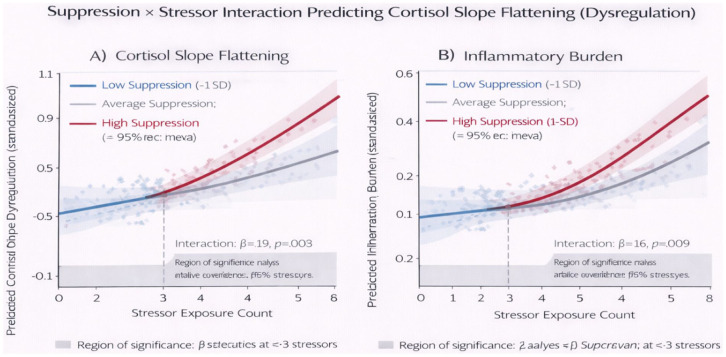
This study examines whether habitual emotional suppression—a response-focused emotion regulation strategy documented to be more prevalent among men adhering to traditional U.S. masculine norms—predicts chronic physiological dysregulation across the life course. Using a cross-sectional sample of 412 men aged 25–70 years recruited in a single U.S. metropolitan region, we measured habitual suppression with the four-item Suppression subscale of the Emotion Regulation Questionnaire (ERQ), diurnal salivary cortisol collected across three weekdays as an index of hypothalamic–pituitary–adrenal (HPA) axis regulation, and inflammatory burden as a z -standardized composite of serum high-sensitivity C-reactive protein (hsCRP) and interleukin-6 (IL-6). Masculine norm conformity was assessed using the Emotional Control subscale of the Conformity to Masculine Norms Inventory-46 (CMNI-46), and stressor exposure was indexed by a life events checklist. Structural equation models (SEMs) indicate that habitual suppression significantly predicts flatter diurnal cortisol slopes (β = 0.34) and elevated inflammatory burden (β = 0.28) after controlling for demographics, health behaviors, and medical factors. Suppression also acts as a stress amplifier, magnifying the physiological effects of stressor exposure beyond additive contributions. Age-stratified analyses demonstrate that suppression effects strengthen across the life course, consistent with cumulative biological loading. Mediation analyses indicate that suppression explains 38%–43% of the association between masculine norm conformity and physiological dysregulation. These findings position emotional suppression as a biologically consequential risk pathway through which masculine gender socialization is physiologically embodied among men in the United States.
Verified 2026-11-22 · 2 references not checked yet
Overview
CoChat Summary
## TL;DR
This cross-sectional study of 412 U.S. men aged 25–70 found that habitual emotional suppression was associated with flatter diurnal cortisol slopes and higher inflammatory burden, even after adjusting for demographics, health behaviors, and medical factors. Suppression also amplified the effects of stressors and mediated 38%–43% of the link between masculine emotional-control norms and physiological dysregulation.
## Key findings
- In the main SEM, habitual suppression predicted flatter cortisol slopes (β = 0.34, SE = 0.05, p < .001) and higher inflammatory burden (β = 0.28, SE = 0.05, p < .001).
- When hsCRP and IL-6 were examined separately, suppression remained significant for both biomarkers (hsCRP: β = 0.24, p = .001; IL-6: β = 0.26, p < .001).
- Suppression × stressor interactions were significant for both outcomes: cortisol slopes (β = 0.19, SE = 0.06, p = .003) and inflammatory burden (β = 0.16, SE = 0.06, p = .009).
- Age-stratified models showed stronger suppression effects in older adults than younger adults for cortisol (55–70 years: β = 0.42, SE = 0.08, p = .001; 25–39 years: β = 0.18, SE = 0.08, p = .04) and for inflammation (young adulthood: β = 0.19, p = .03; middle age: β = 0.27, p < .001; older adulthood: β = 0.34, p < .001).
- Mediation analyses found that suppression explained 43% of the masculine norms → inflammation association and 38% of the masculine norms → cortisol-slope association.
## Methods
- Cross-sectional study of 412 men aged 25–70 recruited from community health centers, workplace wellness programs, and online ads in a large southeastern U.S. metropolitan area; age strata were 25–39 (n = 142), 40–54 (n = 148), and 55–70 (n = 122).
- Measures included ERQ suppression, CMNI-46 Emotional Control, a 12-month life events checklist, three weekdays of home salivary cortisol collection, serum hsCRP and IL-6, plus demographic and health covariates.
- Main analyses used SEM in Mplus 8.7 with robust maximum likelihood estimation, FIML for missing data, interaction models, multigroup age analyses, and bootstrapped mediation (10,000 resamples).
## Limitations
- The paper states the design is cross-sectional, so causality and temporal order cannot be established; it also notes possible reverse causation.
- The paper says the sample may be biased toward men willing to discuss emotions and provide biological data, and that men with more restrictive masculinity may have been less likely to participate.
- The paper states biomarker assessment was limited to two systems (HPA axis and inflammation), self-report was the only emotion-regulation measure, and the sample came from a single U.S. metropolitan region, limiting generalizability.
- Evident from the text: all main conclusions rely on observational associations, so unmeasured confounding remains possible even with extensive covariate adjustment.
Model-written summary. Check it against the paper before relying on it.
Integrity signals
Registry
Cites
Statistics
Figures
Verification
Claims the paper makes
16 Valid · 1 Not valid · 17 Not checked · 44 Own results and interpretations
Every source the paper cites for this claim was checked and supports it.
In the paper
“This mechanism is also empirically supported, with the laboratory research showing that instructed suppression in stressful behaviors results in an increase in the activity of the sympathetic nervous system relative to non-suppression states (Tyra et al., 2024).”
§ “Strong Enough to Suffer”: Emotional Suppression, Stress Exposure, and Physiological Health Among Men Across the Life Course > Introduction Male mortality rates exceed female mortality rates in nearly all developed countries, and it remains the case even after decades of governmental intervention in the health field. Although there is evidence of biological influences on sex differences about longevity, there is evidence that gender socialization, especially male norms of emotional stoicism, self-reliance, and invulnerability, may also turn into more physiological health risks via behavioral and biological mechanisms. However, the exact mechanisms by which masculine emotion standards are correlated with physiological performances are still poorly understood. Emotional suppression, which is the conscious inhibition of continuous emotion-expressive action, is another particularly consequential mechanism. The meta-analytic data confirm the fact that men tend to suppress emotions more than women, especially the emotions that indicate vulnerability, which include sadness, fear, and anxiety (Flynn et al., 2010). The present study is situated within the U.S. context, drawing on psychological and public health research on masculinity norms among men in the United States. Research in this tradition, rooted in both quantitative psychology and social science scholarship, has documented how culturally specific ideals of manhood shape men’s health-related behavior and wellbeing (Kimmel, 2006; Levant & Wimer, 2014). We acknowledge that masculinity norms are culturally variable and that findings may not generalize across national, racial/ethnic, or socioeconomic contexts. Psychological and public health research on masculinity in the United States reveals that adherence to the traditional masculine norms is associated with less emotional expression and help-seeking, and its effects on mental health outcomes are reported (Mokhwelepa & Sumbane, 2025; Wong et al., 2017). Nevertheless, there is very little research that looks at whether habitual suppression of emotion has any physiological health risks by way of chronic stress system dysregulation. It is hypothesized that emotional suppression ought to produce physiological effects in several pathways as theorized. Emotion regulation process model postulates that suppression is cognitively expensive, and therefore, it takes long-term executive regulation to suppress the expression of emotions and keep arousal levels of emotions low in the body (Gross & John, 2003). This dissociates internal arousal and external expression that can be dysregulating of the biological systems that respond to stress. This mechanism is also empirically supported, with the laboratory research showing that instructed suppression in stressful behaviors results in an increase in the activity of the sympathetic nervous system relative to non-suppression states (Tyra et al., 2024). Yet critical gaps remain. To begin with, the majority of suppression studies use acute laboratory models that study instant physiological reactions to instructed suppression, leaving it unclear whether habitual suppression in everyday life initiates chronic physiological load. Second, suppression studies seldom focus on the effects of suppression on amplification of physiological responses to stressors other than the effect of the mere addition of suppression to other effects of stress. Third, the studies conducted on masculinity focused on physiological outcomes often rely on behavioral health practices (diet, exercise, health care usage) but not emotion regulation, which is a direct biological risk process. Fourth, developmental approaches that analyze the variation in effects of suppression through the life course are lacking, although there exist theoretical grounds that support the presence of cumulative effects. This article fills these gaps by combining psychophysiological biomarkers and validated emotion regulation measuring in a heterogeneous sample of men (25–70 years). We will test four hypotheses based on allostatic load theory (McEwen & Stellar, 1993) and life course epidemiology (Kuh et al., 2003):
What the sources say
- Supportedcites Tyra et al., 2024 matched to “Emotion Suppression and Acute Physiological Responses to Stress in Healthy Populations: A Quantitative Review of Experimental and Correlational Investigations” (2024) source
The Discussion (page not specified) states that participants instructed to suppress during laboratory stress tasks showed greater physiological reactivity than controls and that suppression activated the sympathetic-adrenal-medullary (SAM) axis. The Results section (page not specified) also reports greater hemodynamic reactivity than in uninstructed controls. (LLM, conf=0.90)
boostedstates a cause- Asserted: passes — The authors put it forward as true.
- Checkable: passes — It can be checked against evidence.
- Load-bearing: passes — The paper’s conclusions depend on it.
- Based: passes — The paper gives a reason why it holds.
- Supported
The cited sources support only part of this claim — read each source’s verdict below.
In the paper
“exposure to chronic stress is a major contributor that leads to slope flattening”
§ “Strong Enough to Suffer”: Emotional Suppression, Stress Exposure, and Physiological Health Among Men Across the Life Course > Literature Review > Biology of Stress: Cortisol and Inflammatory Markers
What the sources say
- Partly supportedcites Adam et al., 2017 matched to “Diurnal cortisol slopes and mental and physical health outcomes: a systematic review and meta-analysis” (2017) sourceExperimental — accuracy not yet measured
The Introduction (§1.2; page unavailable) says adverse experience is associated with flatter diurnal cortisol slopes, and the Abstract describes flatter slopes as a proposed mediator of chronic psychosocial stress. The paper does not establish that chronic stress is a major cause of flattening: Discussion §4.4 calls for research to test whether reducing stress reverses it. (LLM, conf=0.87)
boostedstates a cause- Asserted: passes — The authors put it forward as true.
- Checkable: passes — It can be checked against evidence.
- Load-bearing: passes — The paper’s conclusions depend on it.
- Based: passes — The paper gives a reason why it holds.
- Partly supported
The cited sources support only part of this claim — read each source’s verdict below.
In the paper
“In thorough reviews, Steptoe et al. (2007) and Marsland et al. (2017) showed that acute psychological stress leads to the elevation of the circulating levels of inflammatory markers such as C-reactive protein (CRP) and interleukin-6 (IL-6).”
§ “Strong Enough to Suffer”: Emotional Suppression, Stress Exposure, and Physiological Health Among Men Across the Life Course > Literature Review > Biology of Stress: Cortisol and Inflammatory Markers
What the sources say
- Not checked — no full text of the sourcecites Steptoe et al., 2007 matched to “The effects of acute psychological stress on circulating inflammatory factors in humans: a review and meta-analysis” (2007) source
- Partly supportedcites Marsland et al., 2017 matched to “The effects of acute psychological stress on circulating and stimulated inflammatory markers: a systematic review and meta-analysis” (2017) sourceExperimental — accuracy not yet measured
The Results (Circulating Inflammatory Markers) report increased circulating IL-6 from 11–120 minutes after acute stress. The same section finds no significant change in circulating CRP, so the claim is supported for IL-6 but not CRP. (LLM, conf=0.93)
boostedstates a cause- Asserted: passes — The authors put it forward as true.
- Checkable: passes — It can be checked against evidence.
- Load-bearing: unclear — It is unclear whether the paper’s conclusions depend on it.
- Based: passes — The paper gives a reason why it holds.
A result the paper reports from its own data — it cites no other source for it, so there is none to check. The quote shows it is in the paper.
In the paper
“Suppression significantly predicted flatter cortisol slopes (β = 0.34, SE = 0.05, p < .001), indicating that each standard deviation increase in habitual suppression is associated with 0.34 SD flatter diurnal decline.”
§ “Strong Enough to Suffer”: Emotional Suppression, Stress Exposure, and Physiological Health Among Men Across the Life Course > Results > Direct Effects: Suppression Predicting Physiological Dysregulation
plainstates a cause- Asserted: passes — The authors put it forward as true.
- Checkable: passes — It can be checked against evidence.
- Load-bearing: passes — The paper’s conclusions depend on it.
- Based: passes — The paper gives a reason why it holds.
A result the paper reports from its own data — it cites no other source for it, so there is none to check. The quote shows it is in the paper.
In the paper
“Suppression also significantly predicted elevated inflammatory burden (β = 0.28, SE = 0.05, p < .001).”
§ “Strong Enough to Suffer”: Emotional Suppression, Stress Exposure, and Physiological Health Among Men Across the Life Course > Results > Direct Effects: Suppression Predicting Physiological Dysregulation
plainstates a cause- Asserted: passes — The authors put it forward as true.
- Checkable: passes — It can be checked against evidence.
- Load-bearing: passes — The paper’s conclusions depend on it.
- Based: passes — The paper gives a reason why it holds.
31 more claims
Create a free account to see all 78 claims and to verify the 2 references still open.
- Probably not a substantial claim. 27
- It may state two separate claims as one. 32
Citations
Cites
The Pittsburgh Sleep Quality Index: a new instrument for psychiatric practice and research
Buysse, D. J., Reynolds, C. F., Monk, T. H., Berman, S. R., & Kupfer, D. J. (1989) · Psychiatry Research · doi:10.1016/0165-1781(89)90047-4 · Cited by 35,234
Preacher, K. J., & Hayes, A. F. (2008) · Behavior Research Methods · doi:10.3758/brm.40.3.879 · Cited by 34,117 · cited 1×
“To do mediation analyses, we used the bootstrapping methods with 10,000 resamples to obtain the bias-corrected 95% confidence intervals (CIs) of indirect effects (Preacher & Hayes, 2008).”
Gross, J. J., & John, O. P. (2003) · Journal of Personality and Social Psychology · doi:10.1037/0022-3514.85.2.348 · Cited by 11,929 · cited 7×
“The ERQ suppression subscale is a simple brief measure that could determine men at high physiological risk.”
InfluentialConfidence Limits for the Indirect Effect: Distribution of the Product and Resampling Methods
MacKinnon, D. P., Lockwood, C. M., & Williams, J. (2004) · Multivariate Behavioral Research · doi:10.1207/s15327906mbr3901_4 · Cited by 7,806 · cited 1×
“We calculated the proportion mediated (indirect effect)/(total effect) according to MacKinnon et al. (2004).”
Emotion-regulation strategies across psychopathology: A meta-analytic review
Aldao, A., Nolen-Hoeksema, S., & Schweizer, S. (2010) · Clinical Psychology Review · doi:10.1016/j.cpr.2009.11.004 · Cited by 6,686 · cited 1×
“Aldao et al. (2010) meta-analyzed regulation strategies in psychopathology and found that suppression had a positive relationship with anxiety, depression, and other mental health issues, but the effects sizes were small.”
Men, masculinity, and the contexts of help seeking
Addis, M. E., & Mahalik, J. R. (2003) · American Psychologist · doi:10.1037/0003-066x.58.1.5 · Cited by 2,761 · cited 1×
“Masculine-friendly language of these interventions (strategic emotional management, performance optimization) could make more males participative (Addis & Mahalik, 2003; Vogel et al., 2011).”
John, O. P., & Gross, J. J. (2004) · Journal of Personality · doi:10.1111/j.1467-6494.2004.00298.x · Cited by 2,381 · cited 1×
“John and Gross (2004) developed this to the lifespan, discovering that suppression is comparably steady throughout adulthood with demonstrating expenses in several adjustment domains.”
Slavich, G. M., & Irwin, M. R. (2014) · Psychological Bulletin · doi:10.1037/a0035302 · Cited by 2,206 · cited 2×
“The findings of the inflammation have been shown to be especially consequential due to the proven role of inflammation in cardiovascular disease, diabetes, dementia, and other causes of mortality that are most common (Ridker, 2016; Slavich & Irwin, 2014).”
Life course epidemiology: Figure 1
Kuh, D., Ben-Shlomo, Y., Lynch, J., Hallqvist, J., & Power, C. (2003) · Journal of Epidemiology and Community Health · doi:10.1136/jech.57.10.778 · Cited by 2,019 · cited 3×
“We will test four hypotheses based on allostatic load theory (McEwen & Stellar, 1993) and life course epidemiology (Kuh et al., 2003): Hypothesis 1 (H1): Habitual emotional suppression will predict dysregulated stress biomarkers (flatter cortisol slopes, increased inflammation) following the…”
Webb, T. L., Miles, E., & Sheeran, P. (2012) · Psychological Bulletin · doi:10.1037/a0027600 · Cited by 2,006 · cited 1×
“Synthesizing 306 studies of emotion regulation strategies’ efficacy, Webb et al. (2012) discovered that suppression has a small negative impact on emotional experience and expression with an uncertain impact on physiological responding.”
McEwen, B. S., & Gianaros, P. J. (2010) · Annals of the New York Academy of Sciences · doi:10.1111/j.1749-6632.2009.05331.x · Cited by 1,715 · cited 3×
“This idea is formalized in allostatic load theory, which holds that physiological wear and tear result from chronic activation of stress systems (McEwen & Gianaros, 2010; McEwen & Stellar, 1993).”
Emotion regulation and memory: the cognitive costs of keeping one's cool
Richards, J. M., & Gross, J. J. (2000) · Journal of Personality and Social Psychology · doi:10.1037/0022-3514.79.3.410 · Cited by 1,472
Steptoe, A., Hamer, M., & Chida, Y. (2007) · Brain, Behavior, and Immunity · doi:10.1016/j.bbi.2007.03.011 · Cited by 1,278 · cited 1×
“In thorough reviews, Steptoe et al. (2007) and Marsland et al. (2017) showed that acute psychological stress leads to the elevation of the circulating levels of inflammatory markers such as C-reactive protein (CRP) and interleukin-6 (IL-6).”
Exemplification of a Method for Scaling Life Events: The PERI Life Events Scale
Dohrenwend, B. S., Askenasy, A. R., Krasnoff, L., & Dohrenwend, B. P. (1978) · Journal of Health and Social Behavior · doi:10.2307/2136536 · Cited by 1,211 · cited 1×
“Measured using a Life Events Scale adapted from Dohrenwend et al. (1978), which assessed 18 significant life events occurring in the past 12 months (e.g., job loss, divorce/separation, death of a close family member, major illness, financial hardship).”
Objectively measured physical capability levels and mortality: systematic review and meta-analysis
Cooper, R., Kuh, D., Hardy, R., Mortality Review Group, & teams, O. B. O. T. F. A. H. S. (2010) · BMJ · doi:10.1136/bmj.c4467 · Cited by 1,166 · cited 1×
“Cooper et al. (2010) demonstrate that objectively measured physical capability predicts mortality, with capabilities declining progressively across later adulthood.”
Life Course Health Development: An Integrated Framework for Developing Health, Policy, and Research
Halfon, N., & Hochstein, M. (2002) · The Milbank Quarterly · doi:10.1111/1468-0009.00019 · Cited by 1,017 · cited 1×
“Halfon and Hochstein (2002) express the frameworks of life course development of health with the focus on the dynamic association between the time, human development, and context.”
Ridker, P. M. (2016) · Circulation Research · doi:10.1161/circresaha.115.306656 · Cited by 1,002
Aging and Cumulative Inequality: How Does Inequality Get Under the Skin?
Ferraro, K. F., & Shippee, T. P. (2009) · The Gerontologist · doi:10.1093/geront/gnp034 · Cited by 998 · cited 2×
“Our age-based studies of increasing effects of suppres-sions through adulthood would give important data on cumulative physiological load, which is in line with life course epidemiological models (Ferraro & Shippee, 2009; Kuh et al., 2003).”
Adam, E. K., Quinn, M. E., Tavernier, R., McQuillan, M. T., Dahlke, K. A., & Gilbert, K. E. (2017) · Psychoneuroendocrinology · doi:10.1016/j.psyneuen.2017.05.018 · Cited by 905 · cited 3×
“This diurnal slope gives an index of the HPA axis regulation, and the slopes were flatter, which indicates dysregulation (Adam et al., 2017).”
Marsland, A. L., Walsh, C., Lockwood, K., & John-Henderson, N. A. (2017) · Brain, Behavior, and Immunity · doi:10.1016/j.bbi.2017.01.011 · Cited by 691 · cited 1×
“In thorough reviews, Steptoe et al. (2007) and Marsland et al. (2017) showed that acute psychological stress leads to the elevation of the circulating levels of inflammatory markers such as C-reactive protein (CRP) and interleukin-6 (IL-6).”
Masculinity and perceived normative health behaviors as predictors of men's health behaviors
Mahalik, J. R., Burns, S. M., & Syzdek, M. (2007) · Social Science & Medicine · doi:10.1016/j.socscimed.2007.02.035 · Cited by 675 · cited 3×
“Mahalik et al. (2007) show that norms of masculinity are predictive of health risk behavior such as delay in seeking help, substance abuse, and lack of preventive health care.”
InfluentialPowell, N. D., Sloan, E. K., Bailey, M. T., Arevalo, J. M. G., Miller, G. E., Chen, E., Kobor, M. S., Reader, B. F., Sheridan, J. F., & Cole, S. W. (2013) · Proceedings of the National Academy of Sciences · doi:10.1073/pnas.1310655110 · Cited by 588 · cited 1×
“Powell et al. (2013) show that social stress causes inflammatory gene expression in 2-adrenergic pathways that involve the activation of the sympathetic nervous system.”
Vogel, D. L., Heimerdinger-Edwards, S. R., Hammer, J. H., & Hubbard, A. (2011) · Journal of Counseling Psychology · doi:10.1037/a0023688 · Cited by 551 · cited 1×
“Masculine-friendly language of these interventions (strategic emotional management, performance optimization) could make more males participative (Addis & Mahalik, 2003; Vogel et al., 2011).”
Wong, Y. J., Ho, M.-H. R., Wang, S.-Y., & Miller, I. S. K. (2017) · Journal of Counseling Psychology · doi:10.1037/cou0000176 · Cited by 507 · cited 2×
“…and public health research on masculinity in the United States reveals that adherence to the traditional masculine norms is associated with less emotional expression and help-seeking, and its effects on mental health outcomes are reported (Mokhwelepa & Sumbane, 2025; Wong et al., 2017).”
O’Connor, M.-F., Bower, J. E., Cho, H. J., Creswell, J. D., Dimitrov, S., Hamby, M. E., Hoyt, M. A., Martin, J. L., Robles, T. F., Sloan, E. K., et al. (2009) · Brain, Behavior, and Immunity · doi:10.1016/j.bbi.2009.04.005 · Cited by 500 · cited 1×
“As explained by O’Connor et al. (2009), behavioral and biological pathways can also mediate the effects of psychological factors on the inflammatory markers, such as regulation strategies.”
Susman, E. J. (2006) · Neuroscience & Biobehavioral Reviews · doi:10.1016/j.neubiorev.2005.08.002 · Cited by 340 · cited 1×
“The attenuation hypothesis formulated by Susman (2006) provides the theoretical basis of the study of cumulative suppression effects.”
Fiksdal, A., Hanlin, L., Kuras, Y., Gianferante, D., Chen, X., Thoma, M. V., & Rohleder, N. (2019) · Psychoneuroendocrinology · doi:10.1016/j.psyneuen.2018.11.035 · Cited by 258
Carroll, J. E., Gruenewald, T. L., Taylor, S. E., Janicki-Deverts, D., Matthews, K. A., & Seeman, T. E. (2013) · Proceedings of the National Academy of Sciences · doi:10.1073/pnas.1315458110 · Cited by 239 · cited 1×
“Carroll et al. (2013) discover that childhood maltreatment forecasts multisystem biological risk in adulthood and long-term physiological imprinting of childhood stress.”
Oldehinkel, A. J., & Bouma, E. M. C. (2011) · Neuroscience & Biobehavioral Reviews · doi:10.1016/j.neubiorev.2010.10.013 · Cited by 225 · cited 1×
“Oldehinkel and Bouma (2011) discuss gender differences in HPA reactivity during adolescence and conclude that females are more reactive to social-evaluative stressors than males, whereas males are more blunted.”
Functional Crosstalk between Type I and II Interferon through the Regulated Expression of STAT1
Gough, D. J., Messina, N. L., Hii, L., Gould, J. A., Sabapathy, K., Robertson, A. P. S., Trapani, J. A., Levy, D. E., Hertzog, P. J., Clarke, C. J. P., et al. (2010) · PLoS Biology · doi:10.1371/journal.pbio.1000361 · Cited by 193 · cited 1×
“Anti-stigma campaigns, celebrity disclosures, and social media movements have helped reduce some of the social penalties associated with men seeking help or expressing vulnerability, at least among younger cohorts (Gough & Robertson, 2010; Mokhwelepa & Sumbane, 2025).”
Emotion regulation and cortisol reactivity to a social-evaluative speech task
Lam, S., Dickerson, S. S., Zoccola, P. M., & Zaldivar, F. (2009) · Psychoneuroendocrinology · doi:10.1016/j.psyneuen.2009.04.006 · Cited by 184 · cited 1×
“In their study, Lam et al. (2009) have investigated emotion regulation strategies in the context of a social-evaluative speech, demonstrating that more emotional control (but not confined to suppression) forecasted a blunt cortisol reactivity in a few instances.”
Flynn, J. J., Hollenstein, T., & Mackey, A. (2010) · Personality and Individual Differences · doi:10.1016/j.paid.2010.05.022 · Cited by 173 · cited 1×
“The meta-analytic data confirm the fact that men tend to suppress emotions more than women, especially the emotions that indicate vulnerability, which include sadness, fear, and anxiety (Flynn et al., 2010).”
Hostinar, C. E., Lachman, M. E., Mroczek, D. K., Seeman, T. E., & Miller, G. E. (2015) · Developmental Psychology · doi:10.1037/dev0000049 · Cited by 167 · cited 1×
“Hostinar et al. (2015) show that childhood adversity and recent stressors do not add up to midlife inflammation; rather, they add to the physiological burden of stress exposures through the lifespan.”
Measuring Masculinity in Research on Men of Color: Findings and Future Directions
Griffith, D. M., Gunter, K., & Watkins, D. C. (2012) · American Journal of Public Health · doi:10.2105/ajph.2012.300715 · Cited by 130 · cited 1×
“Griffith et al. (2012) address the concept of measuring masculinity in men of color by pointing out that unique cultural definitions and manifestation of manhood need culturally based measurement.”
Vinkers, C. H., Kuzminskaite, E., Lamers, F., Giltay, E. J., & Penninx, B. W. J. H. (2021) · Journal of Affective Disorders · doi:10.1016/j.jad.2021.01.051 · Cited by 113 · cited 1×
“The authors suggest combined awareness of dysregulation of the biological stress system in depressive and anxiety disorders (Vinkers et al., 2021), indicating that both hyper-and hypo-cortisolism may be a symptom of pathological adaptation to chronic stress.”
Mokhwelepa, L. W., & Sumbane, G. O. (2025) · American Journal of Men's Health · doi:10.1177/15579883251321670 · Cited by 103 · cited 3×
“The possible causes are most likely masculine impacts on health practices (diet, exercise, substance use), health care refusal and late help-seeking (Mokhwelepa & Sumbane, 2025), work exposures in the male-dominated hazardous sectors, and social isolation due to masculine norms of self-reliance.”
Stress and the Individual: Mechanisms Leading to Disease
McEwen, B. S. (1993) · Archives of Internal Medicine · doi:10.1001/archinte.1993.00410180039004 · Cited by 103 · cited 3×
“This idea is formalized in allostatic load theory, which holds that physiological wear and tear result from chronic activation of stress systems (McEwen & Gianaros, 2010; McEwen & Stellar, 1993).”
The cortisol axis and psychiatric disorders: an updated review
George, M. Y., Mageed, S. S. A., Mansour, D. E., & Fawzi, S. F. (2025) · Pharmacological Reports · doi:10.1007/s43440-025-00782-x · Cited by 101 · cited 1×
“George et al. (2025) assess the cortisol axis in psychiatric disorders, highlighting variability in the patterns of HPA dysfunction.”
Masculinity Constructs as Protective Buffers and Risk Factors for Men’s Health
Levant, R. F., & Wimer, D. J. (2014) · American Journal of Men's Health · doi:10.1177/1557988313494408 · Cited by 97 · cited 3×
“Research in this tradition, rooted in both quantitative psychology and social science scholarship, has documented how culturally specific ideals of manhood shape men’s health-related behavior and wellbeing (Kimmel, 2006; Levant & Wimer, 2014).”
Tyra, A. T., Fergus, T. A., & Ginty, A. T. (2024) · Health Psychology Review · doi:10.1080/17437199.2023.2251559 · Cited by 39 · cited 4×
“This mechanism is also empirically supported, with the laboratory research showing that instructed suppression in stressful behaviors results in an increase in the activity of the sympathetic nervous system relative to non-suppression states (Tyra et al., 2024).”
InfluentialMuthén, B., & Muthén, L. (2017) · Handbook of Item Response Theory · doi:10.1201/9781315117430-28 · Cited by 37
Men, Public Health and Health Promotion: Towards a Critically Structural and Embodied Understanding
Robertson, S., & Williams, R. A. (2010) · doi:10.1007/978-1-137-08076-9_4 · Cited by 33
Contemporary Masculinities in the UK and the US
Manzanero, V. G. (2017) · Springer eBooks · doi:10.1007/978-3-319-50820-7 · Cited by 3
Research works printed but not linked: 5
- Horlacher S. Floyd K. (Eds.). (2017). Contemporary Masculinities in the UK and the US: Between Bodies and Systems. Springer.
- Kimmel M. (2006). 4 Toward a Pedagogy of the Oppressor1. In Progressive Black Masculinities? (pp. 63- 72). Routledge.
- Kline R. B. (2023). Principles and practice of structural equation modeling. Guilford Publications.
- Muthén L. K. Muthén B. (2017). Mplus user’s guide: Statistical analysis with latent variables, user’s guide. Muthén & Muthén.
- Robertson S. (Ed.). (2010). Men, masculinities and health: Critical perspectives. Bloomsbury Academic.
Cited by
Emotional Suppression, Stress Exposure, and Men’s Health: Considerations for Filipino Men
Fermin, J. N. E. (2026) · American Journal of Men s Health · doi:10.1177/15579883261481864
Metadata
- Authors
- Pu, Y., & Kong, Z.
- Affiliations
- Chongqing Preschool Education College (CN)
- Hainan University (CN)
- Corresponding author
- Kong, Zeming
- ORCID
- Kong, Zeming
- Venue
- American Journal of Men's Health
- Publisher
- SAGE Publications
- Published
- 2026-05
- Volume
- 20
- Issue
- 3
- Pages
- 15579883261441859-15579883261441859
- ISSN
- 1557-9883 (ISSN-L)
- 1557-9891
- PMC
- PMC13180033
- OpenAlex
- W7161333779
- Cited by
- 1
- References
- 42
- Citations by year
- 2026: 1
- FWCI
- 6.44
- Type
- journal article
- Language
- en
- Open access
- gold
- doi.org
- Licence
- cc-by-nc
- creativecommons.org/licenses/by-nc/4.0/ (vor)
- journals.sagepub.com/page/policies/text-and-data-mining-license (tdm)
- Locations
- American Journal of Men s Health (publishedVersion, cc-by-nc)
- PubMed (publishedVersion)
- PubMed Central (publishedVersion, cc-by-nc)
- Funders
- chongqing municipal education commission (KJZD-K202502903)
- Topics
- Social Sciences › Gender Studies › Gender Roles and Identity Studies
- Life Sciences › Neuroscience › Behavioral Neuroscience › Stress Responses and Cortisol
- Social Sciences › Psychology › Clinical Psychology › Child and Adolescent Psychosocial and Emotional Development
- Keywords
- emotional suppression, emotion regulation, masculine norms, men's health, diurnal cortisol, hypothalamic-pituitary-adrenal axis, inflammation, C-reactive protein, interleukin-6, stress exposure, life course, gender socialization, physiological dysregulation
- MeSH terms
- Emotional Regulation, Adult, Aged, Cross-Sectional Studies, Humans, Hydrocortisone, Male, Middle Aged, Surveys and Questionnaires, Saliva, Stress, Psychological, United States, Masculinity
About these checks
Registry, retraction, Cites and statistics results are computed, not judged, with one exception: a printed reference that no index lists is read once by a model before it counts as a citation error. Claims are extracted by a model and kept only when their quote appears verbatim in the text; each cited source is then checked, with a model’s help, for whether it says what the claim relies on. Those verdicts can be wrong — read the claim’s quote and the cited source before relying on one.
The claim verdicts this report counts are experimental: their accuracy is not yet measured.
A language model drew the claims from the paper on 2026-10-10, under version 3 of the claim definition (model deepseek-v4.1-flash, prompt extract-v3).
A second model labelled each claim on 2026-10-10 (model jev-1.13-20260917, definition revision gold-guideline-v0.2).
Cited sources are checked with a language model’s help (gpt-6-sol).
Statistics and arithmetic are recomputed, not judged.
Confidence bands are shown only for fields calibrated on our annotated test set. None is calibrated yet, so no band is shown.
What counts as a claim ›How we measure confidence ›How we check this ›
Are you an author, or do you see a problem with this page? Request a review
Data sources
Bibliographic data: Semantic Scholar, OpenAlex, Crossref.
Contains information from the Semantic Scholar Academic Graph Datasets, made available under the ODC Attribution License (ODC-BY 1.0).
Semantic Scholar’s data is described in: Kinney, R., et al. (2023). The Semantic Scholar Open Data Platform. arXiv:2301.10140.
