

The varved succession of Crawford Lake, Milton, Ontario, Canada as a candidate Global boundary Stratotype Section and Point for the Anthropocene series
Open accessThe DOI matches its Crossref record; 49 of the 51 references it cites were found in a registry or an index, and 2 are not checked yet; 19 of the 79 sources its claims cite were checked for support.
Abstract
An annually laminated succession in Crawford Lake, Ontario, Canada is proposed for the Global boundary Stratotype Section and Point (GSSP) to define the Anthropocene as a series/epoch with a base dated at 1950 CE. Varve couplets of organic matter capped by calcite precipitated each summer in alkaline surface waters reflect environmental change at global to local scales. Spheroidal carbonaceous particles and nitrogen isotopes record an increase in fossil fuel combustion in the early 1950s, coinciding with early fallout from nuclear and thermonuclear testing – 239+240 Pu and 14 C: 12 C, the latter more than compensating for the effects of old carbon in this dolomitic basin. Rapid industrial expansion in the North American Great Lakes region led to enhanced leaching of terrigenous elements by acid precipitation during the Great Acceleration, and calcite precipitation was reduced, producing thin calcite laminae around the GSSP that is marked by a sharp decline in elm pollen (Dutch Elm disease). The lack of bioturbation in well-oxygenated bottom waters, supported by the absence of fossil pigments from obligately anaerobic purple sulfur bacteria, is attributed to elevated salinities and high alkalinity below the chemocline. This aerobic depositional environment, highly unusual in a meromictic lake, inhibits the mobilization of Pu, the proposed primary stratigraphic guide for the Anthropocene.
Verified 2026-11-22 · 2 references not checked yet
Overview
CoChat Summary
TL;DR
The paper proposes the annually laminated (varved) succession of Crawford Lake, Ontario, Canada as a candidate Global boundary Stratotype Section and Point (GSSP) for the Anthropocene series/epoch, with a base dated to 1950 CE. It argues that the varves preserve a high-fidelity, annually resolved record of mid-20th-century global markers, especially plutonium fallout, fossil-fuel combustion particles, and radiocarbon from nuclear testing.
Key findings
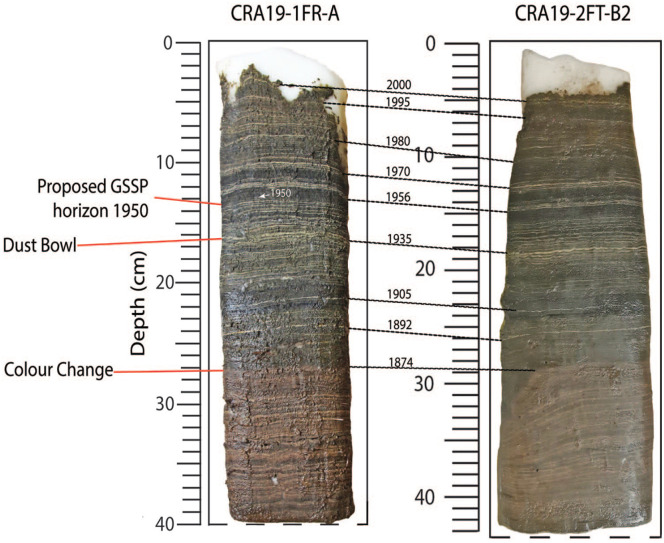
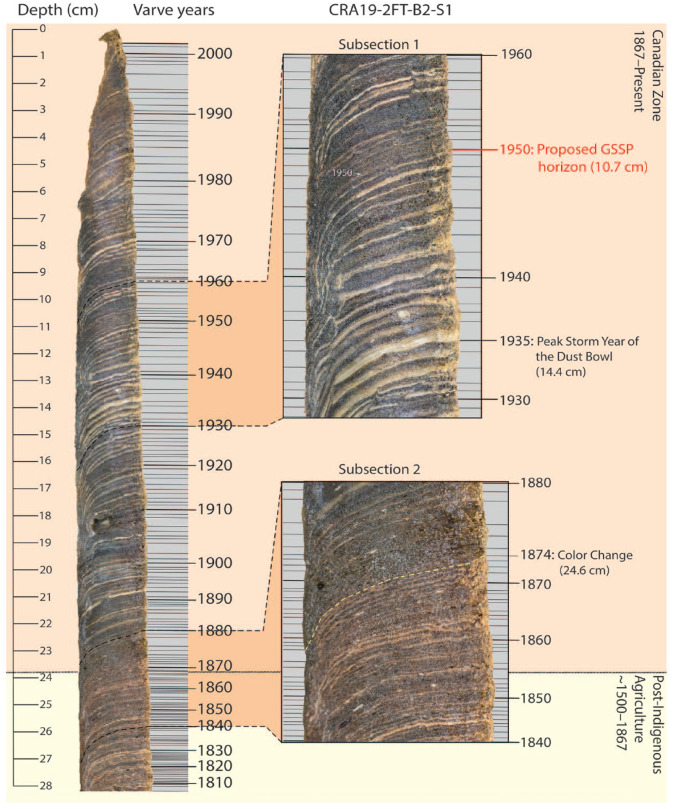
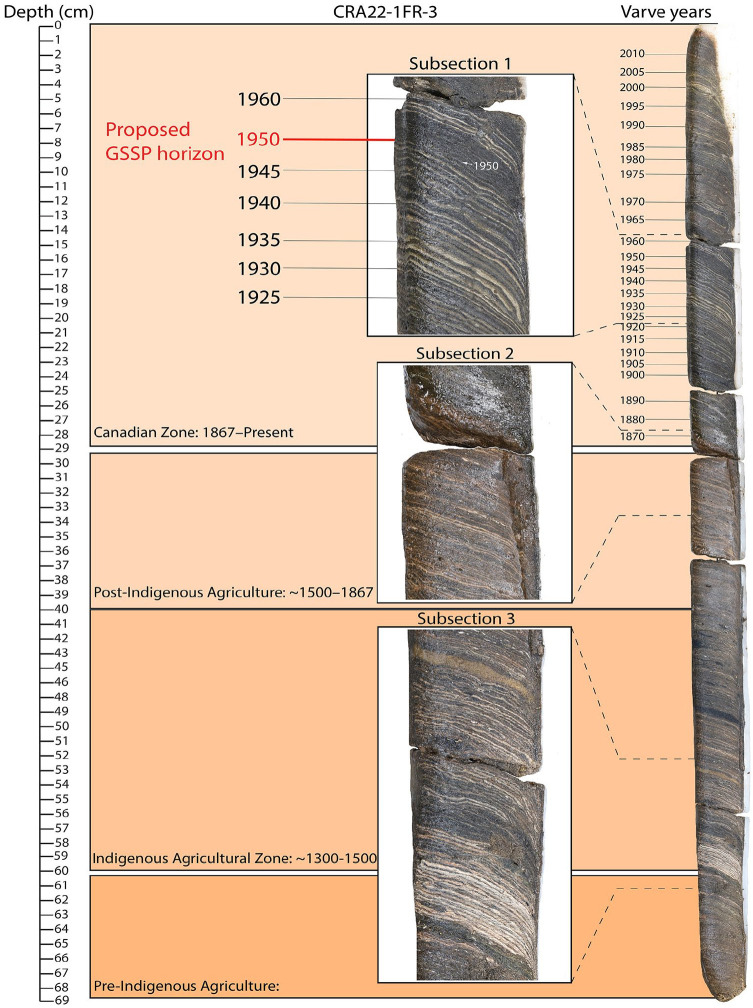
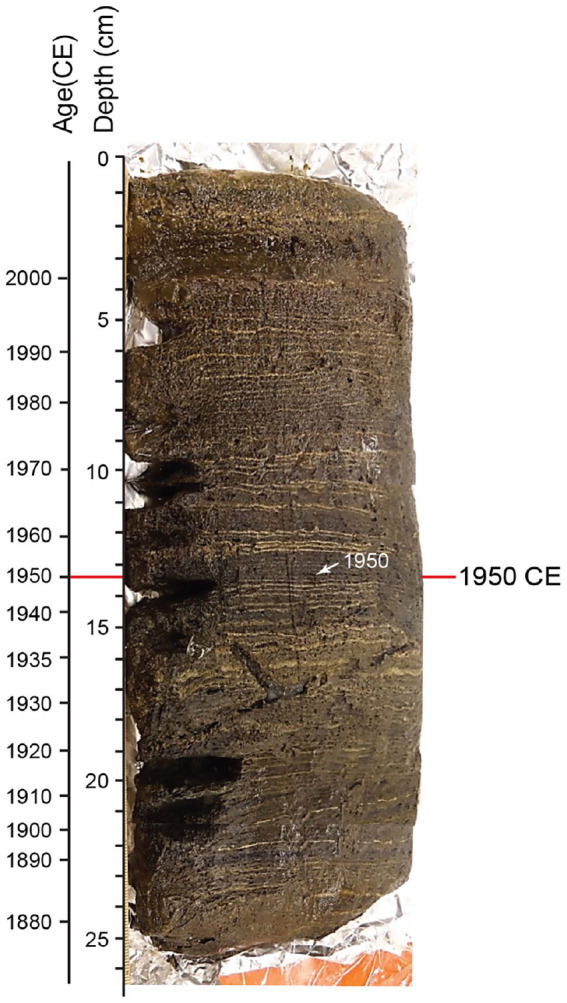
- The proposed GSSP is placed at the base of the calcite lamina deposited in summer 1950 CE in freeze core CRA22-1FR-3, at a depth of 15.6 cm; the associated stage and age name “Crawfordian” is proposed.
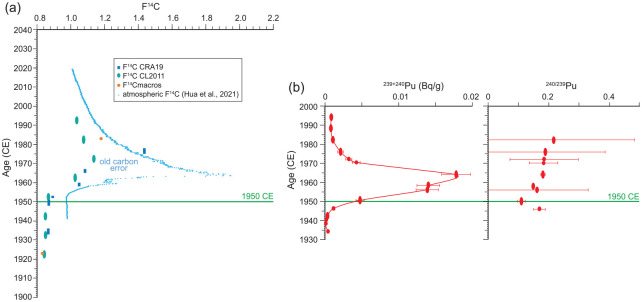
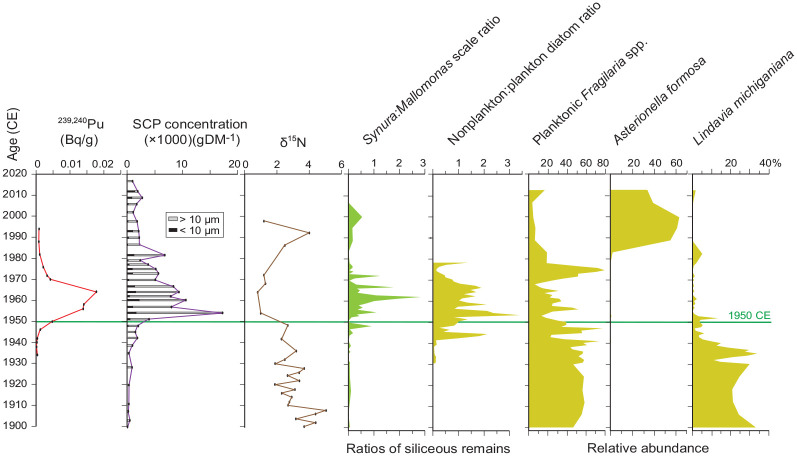
- A sharp rise in 239+240Pu begins between 1948–1951 and 1950–1953 CE, continues to a peak in 1964–1967 CE, and reaches a Nuclear Age plateau by 1982–1985 CE; 240Pu/239Pu ratios from the mid-1950s–1980s range between 0.15 and 0.19, consistent with global weapons fallout.
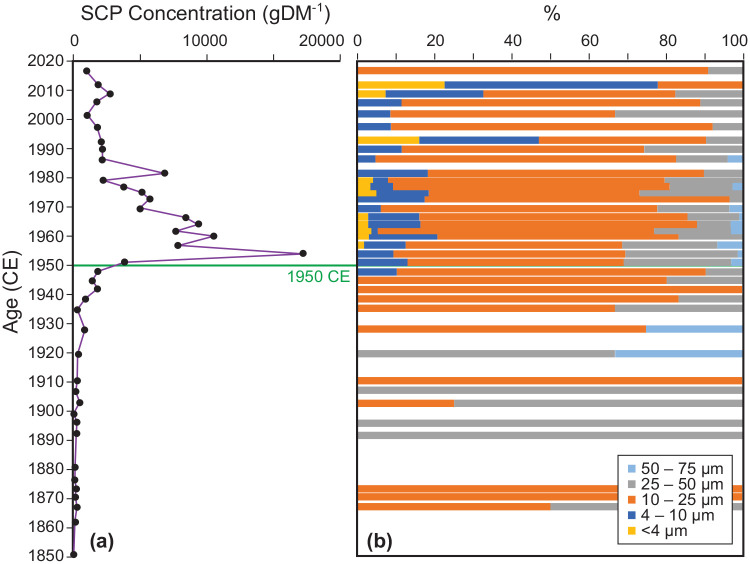
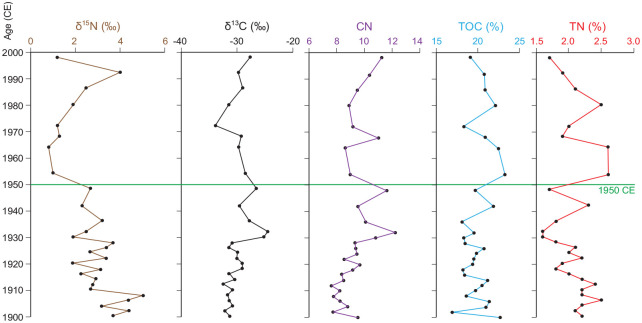
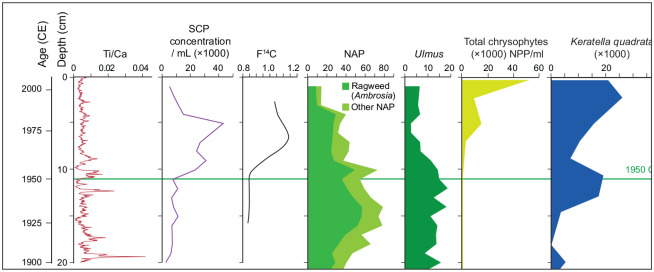
- Spheroidal carbonaceous particles (SCPs) rise from ~3800 g/DM in 1950–1952 to a peak of ~17,000 g/DM in 1954 CE, then decline to ~8000 g/DM by 1967 and stabilize between ~1000 and 2000 g/DM after 1980 CE; δ15N declines to a minimum in 1964–1965 CE.
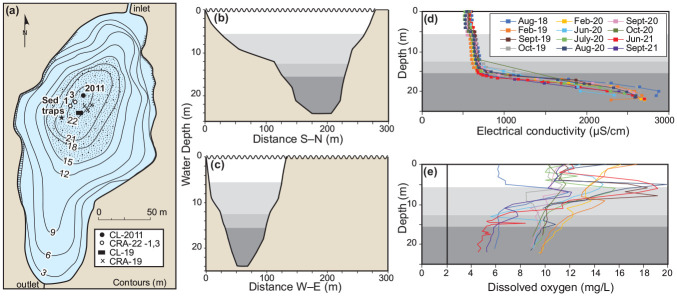
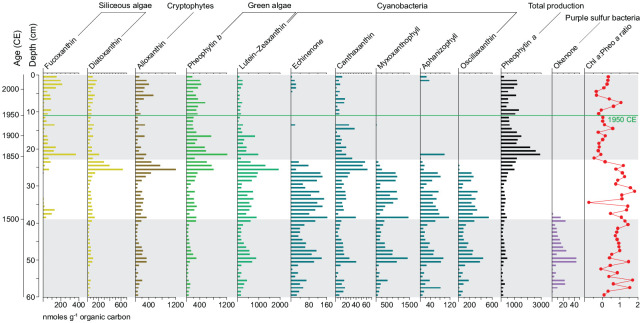
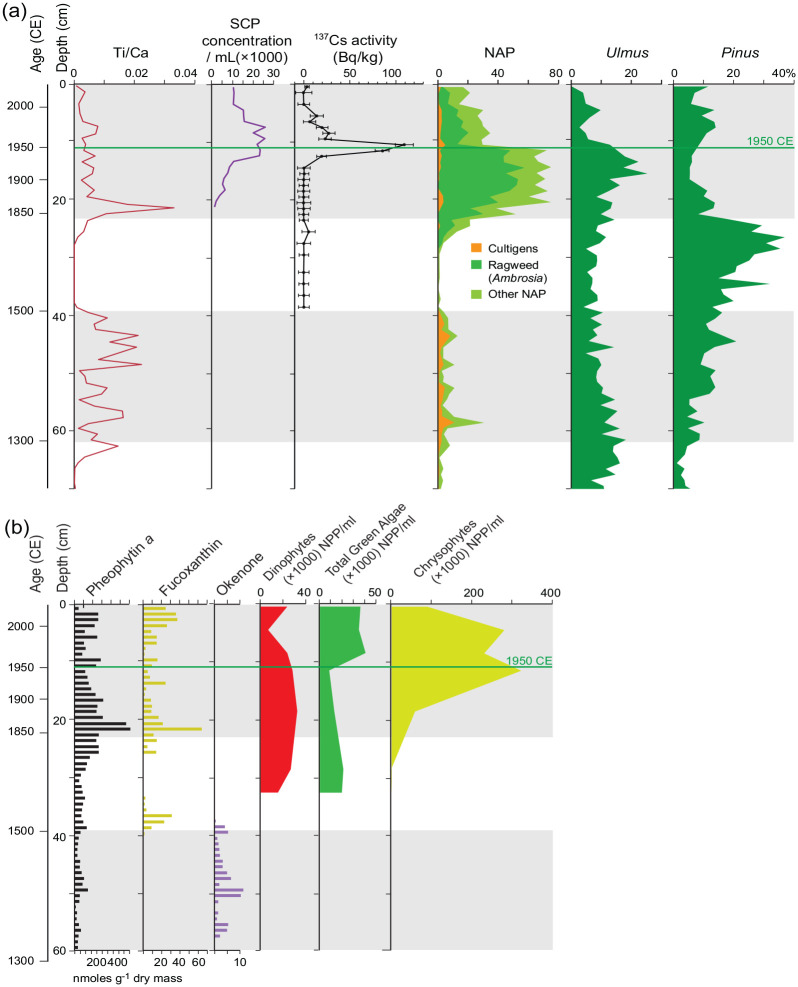
- The varves are undisturbed by bioturbation despite a well-oxygenated monimolimnion: dissolved oxygen remained above the hypoxic limit (2 mg/L) throughout the water column, with mean DO = 8.2 mg/L (range 4.6–11.4 mg/L, n = 78), and okenone from obligately anaerobic purple sulfur bacteria is absent after ~1500 CE. This oxygenated, slightly saline/alkaline bottom water is argued to inhibit Pu mobilization.
Methods
- Freeze cores and gravity cores were collected from the deep basin of Crawford Lake in 2011, 2019, and 2022; the proposed GSSP core CRA22-1FR-3 is archived at the National Biodiversity Cryobank of Canada, and parastratotype CRA22-1FR-1 at the Royal Ontario Museum.
- Varve chronology was anchored to the thickest white calcite lamina, assigned to 1935 CE, because core tops were not always fully recovered; analyses included AMS radiocarbon, 210Pb/137Cs gamma spectrometry, plutonium alpha spectrometry and MC-ICP-MS, SCP counting, µXRF elemental analysis, stable isotopes, fossil pigments, pollen/non-pollen palynomorphs, and siliceous microfossils.
- Sampling followed varve boundaries in freeze cores where possible, but multiple varve years were amalgamated for some analyses depending on sample-size requirements; gravity core CL-19 was subsampled at 1 cm intervals.
Limitations
- The paper states that core tops were not always fully recovered, so varve years were counted relative to marker laminae rather than from the top; it also notes that bulk sediment radiocarbon from core CL-2011 may retain old dolomitic carbon, attenuating the bomb pulse, and that a macrofossil measurement is probably more accurate.
- The paper states that gravity core CL-19 cannot be discriminated at annual precision and that 1-cm subsampling mutes the mid-20th-century signature; PCBs did not exceed background, suggesting the small rural lake is not a useful repository for local persistent organic pollutants.
- Evident from the text: the paper presents a candidate GSSP rather than a ratified boundary, and the chronology depends on the assumption that the thickest white lamina corresponds to 1935 CE.
Model-written summary. Check it against the paper before relying on it.
Integrity signals
Registry
Cites
Statistics
Figures
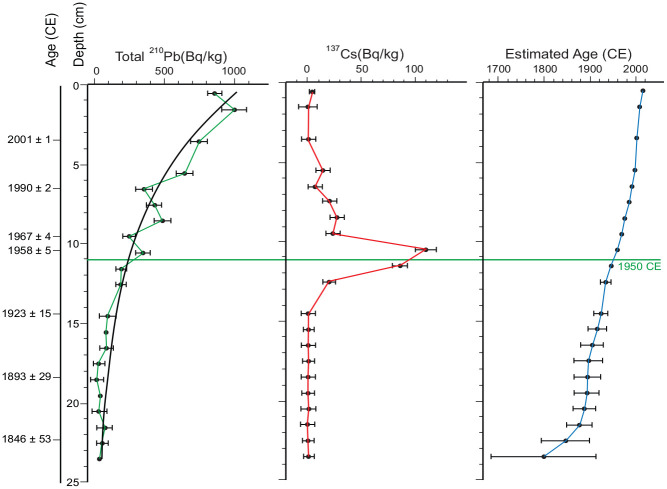
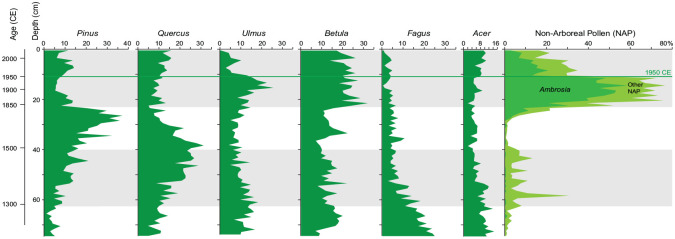
Verification
Claims the paper makes
16 Valid · 2 Not valid · 49 Not checked · 121 Own results and interpretations
Every source the paper cites for this claim was checked and supports it.
In the paper
“The values, with a peak in 1970 CE, compare reasonably well with the post-bomb atmospheric curve of Hua et al. (2022), taking the attenuation of F14C in bulk sediments measured at ETH into account (Figure 11a).”
§ The varved succession of Crawford Lake, Milton, Ontario, Canada as a candidate Global boundary Stratotype Section and Point for the Anthropocene series > Results > Radioisotopes
What the sources say
- Supportedcites Hua et al., 2022 matched to “ATMOSPHERIC RADIOCARBON FOR THE PERIOD 1950–2019” (2022) source
Hua et al. provide compiled monthly atmospheric F14C curves for 1941–2019 (Results and Discussion; Figure 5 caption). The citation identifies the atmospheric curve used for comparison; the 1970 peak and attenuation in ETH-measured bulk sediments describe the citing authors’ data, not findings attributed to Hua et al. (LLM, conf=0.90)
plainstates an association- Asserted: passes — The authors put it forward as true.
- Checkable: passes — It can be checked against evidence.
- Load-bearing: passes — The paper’s conclusions depend on it.
- Based: passes — The paper gives a reason why it holds.
- Supported
Every source the paper cites for this claim was checked and supports it.
In the paper
“Values of F14C in bulk sediment from core CRA19-2FT-1FR-A and macrofossils from core CL-2011 (Table 2) compare well with atmospheric 14C concentration (Hua et al., 2022).”
§ The varved succession of Crawford Lake, Milton, Ontario, Canada as a candidate Global boundary Stratotype Section and Point for the Anthropocene series > Results > Chronology
What the sources say
- Supportedcites Hua et al., 2022 matched to “ATMOSPHERIC RADIOCARBON FOR THE PERIOD 1950–2019” (2022) source
The Results and Discussion report compiled monthly atmospheric F14C data for 1941–2019 (Supplementary Tables S2a–e and Figure 5). Hua et al. thus provide the atmospheric values used as the comparison reference; the core measurements and the comparison itself are presented by the citing authors in their Table 2. (LLM, conf=0.88)
plainstates an association- Asserted: passes — The authors put it forward as true.
- Checkable: passes — It can be checked against evidence.
- Load-bearing: passes — The paper’s conclusions depend on it.
- Based: passes — The paper gives a reason why it holds.
- Supported
Every source the paper cites for this claim was checked and supports it.
In the paper
“Direct observation of freeze cores collected since the early 1970s and high-resolution AMS 14C chronology confirms that these represent annual couplets through the Canadian zone (Ekdahl et al., 2004), allowing varves from the past 150 years to ensure accurate and precise correlation between freeze cores.”
§ The varved succession of Crawford Lake, Milton, Ontario, Canada as a candidate Global boundary Stratotype Section and Point for the Anthropocene series > Results > Chronology
What the sources say
- Supportedcites Ekdahl et al., 2004 matched to “Prehistorical record of cultural eutrophication from Crawford Lake, Canada” (2004) source
The citation is attached to the claim that the Canadian-zone couplets are annual; the statement about correlating freeze cores follows as the citing authors’ inference. In Results and Discussion (page not provided), Ekdahl et al. report varve counts from 2001 back to 1867 and say four calibrated AMS radiocarbon dates confirm that chronology. (LLM, conf=0.88)
boostedstates a cause- Asserted: passes — The authors put it forward as true.
- Checkable: passes — It can be checked against evidence.
- Load-bearing: passes — The paper’s conclusions depend on it.
- Based: passes — The paper gives a reason why it holds.
- Supported
The cited sources support only part of this claim — read each source’s verdict below.
In the paper
“Direct observation of freeze cores collected since the early 1970s and high-resolution AMS 14C chronology confirms that these represent annual couplets through the Canadian zone (Ekdahl et al., 2004), allowing varves from the past 150 years to ensure accurate and precise correlation between freeze cores.”
§ The varved succession of Crawford Lake, Milton, Ontario, Canada as a candidate Global boundary Stratotype Section and Point for the Anthropocene series > Results > Chronology
What the sources say
- Partly supportedcites Ekdahl et al., 2004 matched to “Prehistorical record of cultural eutrophication from Crawford Lake, Canada” (2004) sourceExperimental — accuracy not yet measured
Results and Discussion (page not provided) says varves were counted from 2001 back to 1867 and that four calibrated AMS radiocarbon dates confirm that chronology, supporting annual layering through the Canadian zone. Materials and Methods (page not provided) describes freeze cores recovered in 2001, but does not document direct observations of cores collected since the early 1970s. (LLM, conf=0.86)
boostedstates a cause- Asserted: passes — The authors put it forward as true.
- Checkable: passes — It can be checked against evidence.
- Load-bearing: passes — The paper’s conclusions depend on it.
- Based: passes — The paper gives a reason why it holds.
- Partly supported
The cited sources support only part of this claim — read each source’s verdict below.
In the paper
“with abundant Mallomonas acaroides var. acaroides from ~1950 CE to the top of the core section (Gushulak et al., 2022; Marshall et al., 2023).”
§ The varved succession of Crawford Lake, Milton, Ontario, Canada as a candidate Global boundary Stratotype Section and Point for the Anthropocene series > Results > Biotic markers
What the sources say
- Not checked — no full text of the sourcecites Gushulak et al., 2022 matched to “Siliceous algae response to the “Great Acceleration” of the mid-20th century in Crawford Lake (Ontario, Canada): A potential candidate for the Anthropocene GSSP” (2022) source
- Partly supportedcites Marshall et al., 2023 matched to “Annual-scale assessment of mid-20th century anthropogenic impacts on the algal ecology of Crawford Lake, Ontario, Canada” (2023) sourceExperimental — accuracy not yet measured
The Results (Chrysophyte-delineated zones; page not provided) report M. acaroides at over 70% relative abundance in 1979–1990, supporting abundance near the top of the studied core. They instead describe 1930–1952 as dominated by other Mallomonas species and 1952–1978 chiefly by Synura, with only a later spike of M. acaroides. The paper does not establish abundance continuously from about 1950 or use the varietal designation “var. acaroides” in these passages. (LLM, conf=0.88)
plain- Asserted: passes — The authors put it forward as true.
- Checkable: passes — It can be checked against evidence.
- Load-bearing: passes — The paper’s conclusions depend on it.
- Based: passes — The paper gives a reason why it holds.
90 more claims · 1 with their cited sources checked
Create a free account to see all 188 claims and to verify the 3 references still open.
- It may state two separate claims as one. 68
- Probably not a substantial claim. 34
Self-check
Percentages, sums and reported differences re-computed from the paper’s own numbers.
Each contradiction between two passages listed here was confirmed by an independent check.
Rated minor: it would not touch a result — a value no result rests on, a p-value that stays on the same side of the significance level, or a conflict that is clerical, resolved elsewhere in the paper, or outside its own findings.
In the paper
§ The varved succession of Crawford Lake, Milton, Ontario, Canada as a candidate Global boundary Stratotype Section and Point for the Anthropocene series > Discussion
“including particles smaller than 10 µm in freeze core CRA22-2FT-B2”
§ The varved succession of Crawford Lake, Milton, Ontario, Canada as a candidate Global boundary Stratotype Section and Point for the Anthropocene series > Materials and methods > Anthropocene proxies
“Spheroidal carbonaceous particles (SCPs) were extracted from samples following Rose (1994) from core CRA19-2FT-B2 at University College London.”
Rated minor: it would not touch a result — a value no result rests on, a p-value that stays on the same side of the significance level, or a conflict that is clerical, resolved elsewhere in the paper, or outside its own findings.
In the paper
§ The varved succession of Crawford Lake, Milton, Ontario, Canada as a candidate Global boundary Stratotype Section and Point for the Anthropocene series > Results > Radioisotopes
“1975–1977 CE in sediment samples from core CRA19-2FT-1FR-A”
§ The varved succession of Crawford Lake, Milton, Ontario, Canada as a candidate Global boundary Stratotype Section and Point for the Anthropocene series > Materials and methods > Chronological controls
“UOC-12317 | CRA19_IFRA_12 | 1975–78 | 1.4331 ± 0.0042”
Rated minor: it would not touch a result — a value no result rests on, a p-value that stays on the same side of the significance level, or a conflict that is clerical, resolved elsewhere in the paper, or outside its own findings.
In the paper
§ The varved succession of Crawford Lake, Milton, Ontario, Canada as a candidate Global boundary Stratotype Section and Point for the Anthropocene series > Results > Lithology
“mean DBD = 0.96, n = 28”
§ The varved succession of Crawford Lake, Milton, Ontario, Canada as a candidate Global boundary Stratotype Section and Point for the Anthropocene series > Results > Lithology
“range 0.06–0.17 g/cm3”
Citations
Cites
The IntCal20 Northern Hemisphere Radiocarbon Age Calibration Curve (0–55 cal kBP)
Reimer, P. J., Austin, W. E. N., Bard, E., Bayliss, A., Blackwell, P. G., Bronk Ramsey, C., Butzin, M., Cheng, H., Edwards, R. L., Friedrich, M., et al. (2020) · Radiocarbon · doi:10.1017/rdc.2020.41 · Cited by 7,900 · cited 1×
“…to 1984 sample is probably a more accurate record of atmospheric radiocarbon than the sediment. were calculated as −8033ln(F 14 C) following Stuiver and Polach (1977), with the fraction modern carbon (F 14 C) calculated following Reimer et al. (2020) and reported in 14 C year BP (BP = 1950 CE).”
Self-citationDiscussion Reporting of 14 C Data
Stuiver, M., & Polach, H. A. (1977) · Radiocarbon · doi:10.1017/s0033822200003672 · Cited by 5,640
The trajectory of the Anthropocene: The Great Acceleration
Steffen, W., Broadgate, W., Deutsch, L., Gaffney, O., & Ludwig, C. (2015) · The Anthropocene Review · doi:10.1177/2053019614564785 · Cited by 3,935 · cited 1×
“Values of δ 13 C through the Great Acceleration (Head et al., 2022; Steffen et al., 2015) ranged from −34.0 in 1972 –1973 to −24.6‰ in 1932–1933 (mean −29.9‰, n = 28), with the most enriched values measured through the 1930s and 40s, following depleted values between 1900 and 1930 CE.”
InfluentialAppleby, P. G., & Oldfield, F. (1978) · CATENA · doi:10.1016/s0341-8162(78)80002-2 · Cited by 2,906 · cited 1×
“The time-depth chronology was determined from unsup-ported 210 Pb activities using the constant rate of supply (CRS) model (Appleby and Oldfield, 1978) and the well-defined Ambrosia rise at 23 cm as an anchor point (1830 ± 20 CE).”
Smol, J. P., & Birks, H. J. B. (2001) · Cited by 1,305
Atmospheric radiocarbon for the period 1950–2010
Hua, Q., Barbetti, M., & Rakowski, A. Z. (2013) · Radiocarbon · doi:10.2458/azu_js_rc.v55i2.16177 · Cited by 1,019
MICADAS: A new compact radiocarbon AMS system
Synal, H.-A., Stocker, M., & Suter, M. (2007) · Nuclear Instruments and Methods in Physics Research Section B: Beam Interactions with Materials and Atoms · doi:10.1016/j.nimb.2007.01.138 · Cited by 704 · cited 3×
“Accelerator mass spectrometer (AMS) radiocarbon analysis of bulk varved sediment from cores CL-2011 and CRA19-1FR-A was performed at ETH, Zurich (Synal et al., 2007) and André E. Lalonde (AEL) AMS Laboratory, University of Ottawa (Crann et al., 2017), respectively.”
The Working Group on the Anthropocene: Summary of evidence and interim recommendations
Zalasiewicz, J., Waters, C. N., Summerhayes, C. P., Wolfe, A. P., Barnosky, A. D., Cearreta, A., Crutzen, P., Ellis, E., Fairchild, I. J., Gałuszka, A., et al. (2017) · Anthropocene · doi:10.1016/j.ancene.2017.09.001 · Cited by 487 · cited 1×
“…comparison between profiles of 239 + 240 Pu and 240/239 Pu and the global record of nuclear and thermonuclear testing (Figure 11b) illustrates the stability of this element, proposed as the best primary marker for the Anthropocene with a base in the mid-20 th century (Zalasiewicz et al., 2017).”
Self-citationATMOSPHERIC RADIOCARBON FOR THE PERIOD 1950–2019
Hua, Q., Turnbull, J. C., Santos, G. M., Rakowski, A. Z., Ancapichún, S., De Pol-Holz, R., Hammer, S., Lehman, S. J., Levin, I., Miller, J. B., et al. (2022) · Radiocarbon · doi:10.1017/rdc.2021.95 · Cited by 458 · cited 3×
“F 14 C values were compared to the atmospheric record of the Northern Hemisphere (Hua et al., 2022).”
InfluentialKey to the Quaternary pollen and spores of the Great Lakes region /
McAndrews, J. H., Berti, A. A., Norris, G., & Museum., R. O. (1973) · Royal Ontario Museum eBooks · doi:10.5962/bhl.title.60762 · Cited by 455 · cited 1×
“Slides were analyzed at 400 × magnification for pollen and non-pollen palynomorphs (NPP) primarily using the guides of McAndrews et al. (1973) and McCarthy et al. (2021).”
Self-citationA Treatise on Limnology, Vol. I. Geography, Physics and Chemistry
Ketchum, B. H., & Hutchinson, G. E. (1958) · AIBS Bulletin · doi:10.2307/1291951 · Cited by 427 · cited 1×
“The depth-to-sur-face area ratio prevents mixing of the water column ( Zr ~ 13.73, much higher than the threshold of Zr > 2 for meromixis according to Hutchinson, 1957), where Zm = maximum depth and A = surface area:”
InfluentialVan Eysinga, F. W. B. (1977) · Palaeogeography, Palaeoclimatology, Palaeoecology · doi:10.1016/0031-0182(77)90034-7 · Cited by 411
Syvitski, J., Waters, C. N., Day, J., Milliman, J. D., Summerhayes, C., Steffen, W., Zalasiewicz, J., Cearreta, A., Gałuszka, A., Hajdas, I., et al. (2020) · Communications Earth & Environment · doi:10.1038/s43247-020-00029-y · Cited by 306 · cited 2×
“resolution as a potential candidate for an Anthropocene Global boundary Stratotype Section and Point (GSSP) which would align with the mid-20th century, when extraordinary human energy consumption and productivity transformed the Earth System state (Syvitski et al., 2020).”
Self-citationHajdas, I., Ascough, P., Garnett, M. H., Fallon, S. J., Pearson, C. L., Quarta, G., Spalding, K. L., Yamaguchi, H., & Yoneda, M. (2021) · Nature Reviews Methods Primers · doi:10.1038/s43586-021-00058-7 · Cited by 231 · cited 1×
“Samples were treated with acids (80°C at AEL and 60°C at ETH) to remove carbonates and bases to remove humic acid contamination (Crann et al., 2017; Hajdas et al., 2021).”
Self-citationTowards reconciliation: 10 Calls to Action to natural scientists working in Canada
Wong, C., Ballegooyen, K., Ignace, L., Johnson, M. J. (., & Swanson, H. (2020) · FACETS · doi:10.1139/facets-2020-0005 · Cited by 228 · cited 1×
“A Wendat and Anishinaabe ceremony was performed by an Anishinaabe member of the team before, during, and after core collection under the guidance of Wyandot artist and elder Catherine Tàmmaro (Wong et al., 2020).”
Rose, N. L. (2015) · Environmental Science & Technology · doi:10.1021/acs.est.5b00543 · Cited by 178 · cited 1×
“They are morphologically distinct (Supplemental Figures S17 and S18) making them unambiguous indicators of deposition from these sources (Rose, 2015).”
Self-citationRose, N. L. (1994) · Journal of Paleolimnology · doi:10.1007/bf00686866 · Cited by 170 · cited 1×
“Spheroidal carbonaceous particles (SCPs) were extracted from samples following Rose (1994) from core CRA19-2FT-B2 at University College London.”
Self-citationCrann, C. A., Murseli, S., St‐Jean, G., Zhao, X., Clark, I. D., & Kieser, W. E. (2016) · Radiocarbon · doi:10.1017/rdc.2016.55 · Cited by 129 · cited 6×
“Samples were treated with acids (80°C at AEL and 60°C at ETH) to remove carbonates and bases to remove humic acid contamination (Crann et al., 2017; Hajdas et al., 2021).”
InfluentialSelf-citationWaters, C. N., Turner, S. D., Zalasiewicz, J., & Head, M. J. (2023) · The Anthropocene Review · doi:10.1177/20530196221136422 · Cited by 122 · cited 2×
“This illustrates the difference between diachronous local to regional human impacts and the rapidity and magnitude of change in the Earth System chosen to characterize the Anthropocene as a series/epoch in a supermajority vote by the AWG in May 2019 (Waters et al., 2023).”
Self-citationHead, M. J., Steffen, W., Fagerlind, D., Waters, C. N., Poirier, C., Syvitski, J., Zalasiewicz, J. A., Barnosky, A. D., Cearreta, A., Jeandel, C., et al. (2022) · Episodes · doi:10.18814/epiiugs/2021/021031 · Cited by 120 · cited 3×
“Values of δ 13 C through the Great Acceleration (Head et al., 2022; Steffen et al., 2015) ranged from −34.0 in 1972 –1973 to −24.6‰ in 1932–1933 (mean −29.9‰, n = 28), with the most enriched values measured through the 1930s and 40s, following depleted values between 1900 and 1930 CE.”
InfluentialSelf-citationGaseous radiocarbon measurements of small samples
Ruff, M., Szidat, S., Gäggeler, H. W., Suter, M., Synal, H., & Wacker, L. (2009) · Nuclear Instruments and Methods in Physics Research Section B Beam Interactions with Materials and Atoms · doi:10.1016/j.nimb.2009.10.032 · Cited by 117 · cited 1×
“Two macrofossils were found in bulk sediment of CL-2011 and analyzed using the gas ion source at ETH Zurich (Ruff et al., 2010).”
Prehistorical record of cultural eutrophication from Crawford Lake, Canada
Ekdahl, E. J., Teranes, J. L., Guilderson, T. P., Turton, C. L., McAndrews, J. H., Wittkop, C. A., & Stoermer, E. F. (2004) · Geology · doi:10.1130/g20496.1 · Cited by 112 · cited 10×
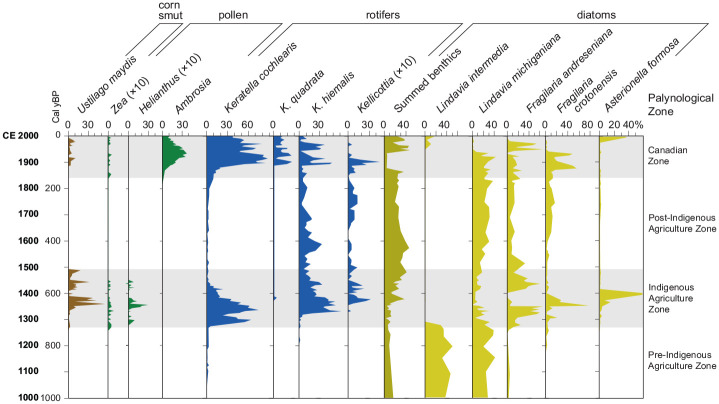
“Pollen analysis conducted at Brock University identified the rise in Ambrosia (ragweed pollen) at 23 cm, dated 1830–1840 CE at Crawford Lake (Ekdahl et al., 2004), which reflects colonial land disturbance.”
InfluentialSelf-citationRothwell, R. G., & Croudace, I. W. (2015) · Developments in Paleoenvironmental Research · doi:10.1007/978-94-017-9849-5_1 · Cited by 94 · cited 2×
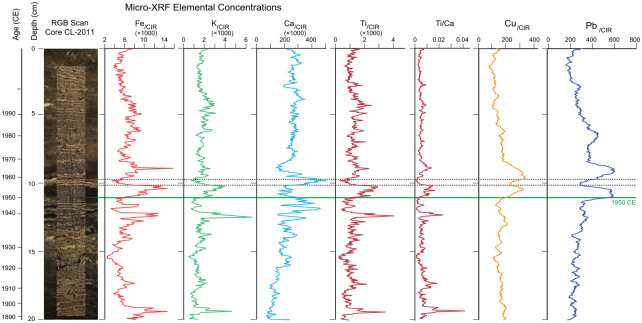
“The similar concentration of iron, potassium, and titanium during the interval of Indigenous agricultural settlement and during the 20 th century suggests that these terri-genous elements record increased runoff from the catchment (Rothwell and Croudace, 2015).”
Quality control in the analysis of lake sediments for spheroidal carbonaceous particles
Rose, N. L. (2008) · Limnology and Oceanography: Methods · doi:10.4319/lom.2008.6.172 · Cited by 92 · cited 2×
“Criteria for SCP identification followed Rose (2008).”
Self-citationEkdahl, E. J., Teranes, J. L., Wittkop, C. A., Stoermer, E. F., Reavie, E. D., & Smol, J. P. (2007) · Journal of Paleolimnology · doi:10.1007/s10933-006-9016-7 · Cited by 66 · cited 1×
“The latter interval represents land disturbance during the Indigenous agricultural settlement phase (Ekdahl et al., 2007), recorded by pollen of cultigens and spores of their pathogens (Figure 10 and Supplemental Figure S18).”
Gregory, B. R. B., Patterson, R. T., Reinhardt, E. G., Galloway, J. M., & Roe, H. M. (2019) · Chemical Geology · doi:10.1016/j.chemgeo.2019.05.008 · Cited by 64 · cited 2×
“Spectra were batch analyzed using QSpecTM software, and element profiles were normalized using the ratio of coherent to incoherent scatter (Gregory et al., 2019).”
Self-citationUnited Nations Scientific Committee on the Effects of Atomic Radiation (2000) · United Nations Scientific Committee on the Effects of Atomic Radiation (UNSCEAR) Reports · doi:10.18356/49c437f9-en · Cited by 55
Wu, F., Zheng, J., Liao, H., Yamada, M., & Wan, G. (2011) · Environmental Science & Technology · doi:10.1021/es202315c · Cited by 54 · cited 1×
“Plutonium isotope ratios ( 240 Pu/ 239 Pu) over the mid-1950s–1980s period ranged between 0.15 and 0.19, consistent with ratios previously reported for global weapons fallout in mid-high northern latitudes (Wu et al., 2011).”
InfluentialRadiocarbon method in environmental monitoring of CO2 emission
Rakowski, A. Z., Nadeau, M., Nakamura, T., Pazdur, A., Pawełczyk, S., & Piotrowska, N. (2012) · Nuclear Instruments and Methods in Physics Research Section B Beam Interactions with Materials and Atoms · doi:10.1016/j.nimb.2012.07.017 · Cited by 48
A Possible Varving Mechanism for Meromictic Lakes
Dickman, M. D. (1979) · Quaternary Research · doi:10.1016/0033-5894(79)90072-3 · Cited by 45 · cited 1×
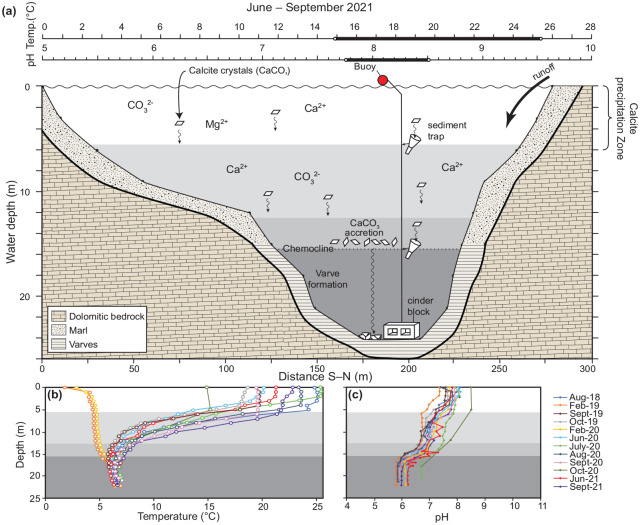
“24 m) lake is meromictic, and studies of the water column have demonstrated that laminated sediments below the chemocline are varves, with calcite precipitated in summer capping organic matter accrued during fall turnover (Dickman, 1979, 1985).”
Microbial mobilization and immobilization of plutonium
Francis, A. J. (2007) · Journal of Alloys and Compounds · doi:10.1016/j.jallcom.2007.01.132 · Cited by 44 · cited 3×
“The highly unusual non-reducing bottom waters in this meromictic lake, from which benthic organisms larger than microscopic groundwater-dwelling ostracods were excluded by the higher salinity and alkalinity (Figure 3 and Supplemental Figure S5), hinder the mobilization of plutonium (Francis, 2007).”
Rotifer loricas in second millennium sediment of Crawford Lake, Ontario, Canada
Turton, C. L., & McAndrews, J. H. (2006) · Review of Palaeobotany and Palynology · doi:10.1016/j.revpalbo.2006.03.017 · Cited by 44 · cited 2×
“Palynomorph data from Turton and McAndrews (2006), diatom data modified from Ekdahl et al. (2004) with updated taxonomic nomenclature – Lindavia intermedia = Cyclotella bodanica lemanica and Lindavia michiganiana = Cyclotella michiganiana .”
Self-citationSeasonal succession and microlamina formation in a meromictic lake displaying varved sediments
DICKMAN, M. (1985) · Sedimentology · doi:10.1111/j.1365-3091.1985.tb00495.x · Cited by 41 · cited 1×
“24 m) lake is meromictic, and studies of the water column have demonstrated that laminated sediments below the chemocline are varves, with calcite precipitated in summer capping organic matter accrued during fall turnover (Dickman, 1979, 1985).”
Rybak, M., Rybak, I., & Dickman, M. (1987) · Canadian Journal of Botany · doi:10.1139/b87-330 · Cited by 40 · cited 1×
“Subsequent analysis of siliceous microfossil assemblages and pigments at relatively high resolution through the 20 th century in gravity cores revealed substantial changes in algal communities around 1954 CE (Rybak and Dickman, 1988; Rybak et al., 1987; Supplemental Figure S1).”
McAndrews, J. H., & Turton, C. L. (2010) · Vegetation History and Archaeobotany · doi:10.1007/s00334-010-0237-3 · Cited by 38 · cited 3×
“Historic records of logging and Dutch elm disease, first identified in Ontario in 1946 (https://www.ontario.ca/page/dutch-elm-disease) helped further date changes in pollen spectra by comparison with published records from varved samples (e.g. McAndrews and Turton, 2010).”
Self-citationUnveiling the extreme environmental radioactivity of cryoconite from a Norwegian glacier
Łokas, E., Wachniew, P., Baccolo, G., Gaca, P., Janko, K., Milton, A., Buda, J., Komędera, K., & Zawierucha, K. (2021) · The Science of The Total Environment · doi:10.1016/j.scitotenv.2021.152656 · Cited by 33 · cited 1×
“240 Pu/ 239 Pu ratios were determined using a Thermo Scientific Neptune Plus MC-ICP-MS after radiochemical re-purification of the Pu alpha spectrometry disks, following Łokas et al. (2022).”
Self-citationMCANDREWS, J. H., & TURTON, C. L. (2007) · Palynology · doi:10.2113/gspalynol.31.1.9 · Cited by 30 · cited 2×
“Macrophyte remains are sporadically present, most abundantly in droppings of Canada geese that occasionally distort the laminae, particularly where local agriculture is evident in the palyno-logical record (McAndrews and Turton, 2007).”
Self-citationRybak, M., & Dickman, M. (1988) · Hydrobiologia · doi:10.1007/bf00007552 · Cited by 28 · cited 1×
“Subsequent analysis of siliceous microfossil assemblages and pigments at relatively high resolution through the 20 th century in gravity cores revealed substantial changes in algal communities around 1954 CE (Rybak and Dickman, 1988; Rybak et al., 1987; Supplemental Figure S1).”
Sequential sample reservoirs for Itrax-XRF analysis of discrete samples
Gregory, B. R. B., Reinhardt, E. G., Macumber, A. L., Nasser, N. A., Patterson, R. T., Kovacs, S. E., & Galloway, J. M. (2017) · Journal of Paleolimnology · doi:10.1007/s10933-017-9944-4 · Cited by 26 · cited 2×
“A representative portion of each 1-cm subsample from core CL-19 was loaded into a sampling tray (Gregory et al., 2017) and run with 500 µm sample interval, 15 seconds exposure time and 30 kV/30 mA power settings.”
Self-citationKrueger, A. M., & McCarthy, F. M. G. (2016) · Geoscience Canada · doi:10.12789/geocanj.2016.43.086 · Cited by 16 · cited 3×
“It had previously been subsampled and analyzed for pollen and dinoflagellate cysts (Krueger, 2012; Krueger and McCarthy, 2016), and these and additional subsamples were analyzed for algal and consumer palynomorphs as part of this study (Heyde, 2021).”
Self-citationGushulak, C. A., Marshall, M., Cumming, B. F., Llew-Williams, B., Timothy Patterson, R., & McCarthy, F. M. (2022) · The Anthropocene Review · doi:10.1177/20530196211046036 · Cited by 16 · cited 8×
“Samples aggregating 2–3 varve years between the early 19th and 20th centuries from core CRA19-2FT-B1 were processed for siliceous microfossil analysis at Queen’s University (Gushulak et al., 2022; Marshall, 2021) following the methodology of Battarbee et al.”
InfluentialSelf-citationLan, Y., & Breslin, V. T. (1999) · Journal of Great Lakes Research · doi:10.1016/s0380-1330(99)70753-7 · Cited by 10 · cited 1×
“This is supported by chemical analysis of spheroidal carbonaceous particles (SCPs) by Lan and Breslin (1999).”
Marshall, M. G., Hamilton, P. B., Lafond, K. M., Nasser, N. A., McCarthy, F. M. G., & Patterson, R. T. (2023) · PeerJ · doi:10.7717/peerj.14847 · Cited by 10 · cited 9×
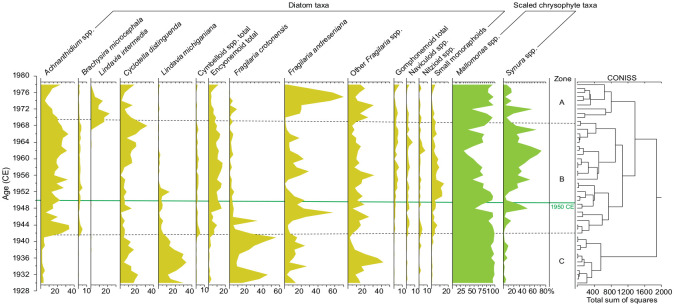
“…identified a sharp increase in the scaled chrysophyte genus Synura relative to the otherwise dominant genus Mallomonas in the mid-20 th century (Figure 16), with abundant Mallomonas acaroides var. acaroides from ~1950 CE to the top of the core section (Gushulak et al., 2022; Marshall et al., 2023).”
InfluentialSelf-citationInfluence of Climatic Trends and Cycles on Varve Deposition in Crawford Lake, Ontario, Canada
Lafond, K. M., Walsh, C. R., Patterson, R. T., McCarthy, F. M. G., Llew-Williams, B. M., Hamilton, P. B., Nasser, N. A., & Cumming, B. F. (2023) · Geosciences · doi:10.3390/geosciences13030087 · Cited by 8
Self-citation(2013) · Brock University Digital Repository (Brock University) · Cited by 6
(2021) · Brock University Digital Repository (Brock University) · Cited by 5
Self-citationHan, X., & Dickman, M. (1995) · Hydrobiologia · doi:10.1007/bf00006829 · Cited by 4 · cited 3×
“Values of δ 13 C through the Great Acceleration (Head et al., 2022; Steffen et al., 2015) ranged from −34.0 in 1972 –1973 to −24.6‰ in 1932–1933 (mean −29.9‰, n = 28), with the most enriched values measured through the 1930s and 40s, following depleted values between 1900 and 1930 CE.”
InfluentialStratigraphy: Finding Global Markers in a Small Canadian Lake
McCarthy, F. M. G. (2022) · Cambridge University Press eBooks · doi:10.1017/9781009042369.013 · Cited by 3
Self-citation(1983) · Brock University Digital Repository (Brock University) · Cited by 2
(2019) · UWSpace (University of Waterloo) · Cited by 1
Marshall, M. G. (2021) · Carleton University's Institutional Repository (MacOdrum Library, Carleton University) · doi:10.22215/etd/2021-14649 · Cited by 1 · cited 1×
“Samples aggregating 2–3 varve years between the early 19 th and 20 th centuries from core CRA19-2FT-B1 were processed for siliceous microfossil analysis at Queen’s University (Gushulak et al., 2022; Marshall, 2021) following the methodology of Battarbee et al. (2001).”
Self-citation
Research works printed but not linked: 11
- Battarbee RW Jones VJ Flower RJ, et al. (2001) Diatoms. In: Smol JP Birks HJB Last WM (eds) Tracking Environmental Change Using Lake Sediments, Vol. 3: Terrestrial, Algal, and Siliceous Indicators. Dordrecht: Kluwer Academic Publishers, pp. 55– 202.
- Boyko-Diakonow M (1979) The laminated sediments of Crawford Lake, southern Ontario, Canada. In: Schluchter C (ed.) Moraines and Varves. Rotterdam: A. A. Balkema, pp. 303– 307.
- Boyko M (1973) European impact on the vegetation around Crawford Lake in Southern Ontario. MSc Thesis, University of Toronto.
- Byrne R Finlayson WD (1998) Iroquoian agriculture and forest clearance at Crawford Lake, Ontario. In: Finlayson WD (ed.) Iroquoian Peoples of the Land of Rocks and Water A.D. 1000–1650: A Study in Settlement Archaeology. London: Museum of Archaeology, London, Ontario, Canada: The University of Western Ontario, Special Publication 1, pp. 94– 107.
- Finlayson WD Byrne AR McAndrews JA (1973) Iroquoian settlement and subsistence patterns near Crawford Lake, Ontario. Bulletin (Canadian Archaeological Association) 5: 134– 136.
- Karrow PF (1987) Quaternary geology of the Hamilton Cambridge area, Southern Ontario. Ontario Geological Survey Report 255: 94.
- Llew-Williams B (2022) The hydrological and limnological characterization of two Canadian water catchments sensitive to anthropogenic influences: Crawford Lake, Ontario and Old Crow Flats, Yukon. MSc Thesis, Brock University.
- Llew-Williams BM McCarthy FMG Krueger AM, et al. (in revision) Varve formation in meromictic Crawford Lake, Ontario, Canada: Important process for characterizing the Anthropocene epoch. In revision to Journal of Paleolimnology
- McAndrews JH (1994) Pollen diagrams for southern Ontario applied to archaeology. In: MacDonald R (ed.) Great Lakes Archaeology and Paleoecology: Exploring Interdisciplinary Initiatives for the Nineties. Waterloo, Ontario, Canada: Quaternary Sciences Institute, University of Waterloo, pp. 179– 196.
- McAndrews JH Boyko-Diakonow M (1989) Pollen analysis of varved sediment at Crawford Lake, Ontario: Evidence of Indian and European farming. In: Fulton RJ (ed.) Quaternary Geology of Canada and Greenland, Geology of Canada, vol. 1. Ottawa, Ontario, Canada: Geological Survey of Canada, pp. 528– 530
- McCarthy FMG Pilkington PM Volik O, et al. (2021) Non-pollen palynomorphs in freshwater sediments and their paleolimnological potential. In: Marret F O’Keefe J Sterloff O, et al (eds) TMS Special Publication SP511, Applications of Non-pollen Palynomorphs from Palaeoenvironmental Reconstructions to Biostratigraphy. London: Geological Society of London, pp.121–150.
Cited by
Waters, C. N., Turner, S. D., Zalasiewicz, J., & Head, M. J. (2023) · The Anthropocene Review · doi:10.1177/20530196221136422 · Cited by 122
“6 cm depth, at the base of the calcite lamina deposited in the summer of 1950 CE, selected because of the rapid rise in key markers between 1950 and 1954 and in particular the primary guide of 239+240Pu having a significant initial upturn at ~1950 CE (McCarthy et al., 2023).”
BackgroundInfluentialSelf-citationGeologists reject the Anthropocene as Earth’s new epoch — after 15 years of debate
Witze, A. (2024) · Nature · doi:10.1038/d41586-024-00675-8 · Cited by 112
The Anthropocene within the Geological Time Scale: a response to fundamental questions
Zalasiewicz, J., Head, M. J., Waters, C. N., Turner, S. D., Haff, P. K., Summerhayes, C. P., Williams, M., Cearreta, A., Wagreich, M., Fairchild, I. J., et al. (2023) · Episodes · doi:10.18814/epiiugs/2023/023025 · Cited by 41
Self-citationThe Anthropocene Is More Than a Time Interval
Edgeworth, M., Bauer, A. M., Ellis, E. C., Finney, S. C., Gill, J. L., Gibbard, P. L., Maslin, M. A., Merritts, D. J., & WALKER, M. J. C. (2024) · Earth s Future · doi:10.1029/2024ef004831 · Cited by 43
“…the epoch proposal put forward by the former Anthropocene Working Group or AWG (Head et al., 2023; Zalasiewicz et al., 2019) and its associates (McCarthy et al., 2023) is equivalent to denial of global anthropogenic climate change (Waters, quoted in Ly, 2023; see Ellis & Gib-bard, 2024 for a…”
BackgroundKuwae, M., Yokoyama, Y., Tims, S. G., Froehlich, M. B., Fifield, L. K., Aze, T., Tsugeki, N. K., Doi, H., & Saito, Y. (2024) · Proceedings of the National Academy of Sciences · doi:10.1073/pnas.2313098121 · Cited by 32
“These include changes in pigment compositions at Beppu Bay (1950) (20), the first appearance of dichloro - diphenyl - trichloroethane (DDT) in Gotland Basin, Baltic Sea (1950) (44), the upturn of 239+240 Pu (1951) and lithological changes (1950) at Crawford Lake (28).”
Influential
Metadata
- Authors
- McCarthy, F. M., Patterson, R. T., Head, M. J., Riddick, N. L., Cumming, B. F., Hamilton, P. B., Pisaric, M. F., Gushulak, A. C., Leavitt, P. R., Lafond, K. M., Llew-Williams, B., Marshall, M., Heyde, A., Pilkington, P. M., Moraal, J., Boyce, J. I., Nasser, N. A., Walsh, C., Garvie, M., Roberts, S., Rose, N. L., Cundy, A. B., Gaca, P., Milton, A., Hajdas, I., Crann, C. A., Boom, A., Finkelstein, S. A., & McAndrews, J. H.
- Affiliations
- Brock University (CA)
- Carleton University (CA)
- Queen's University (CA)
- Canadian Museum of Nature (CA)
- University of Regina, Canada
- University of Regina (CA)
- McMaster University (CA)
- University College London (GB)
- University of Southampton, UK
- University of Southampton (GB)
- ETH Zurich (CH)
- University of Ottawa (CA)
- University of Leicester (GB)
- University of Toronto (CA)
- Corresponding author
- McCarthy, Francine MG
- ORCID
- McCarthy, Francine MG
- Patterson, R. Timothy
- Head, Martin J
- Riddick, Nicholas L
- Cumming, Brian F
- Hamilton, Paul B
- Pisaric, Michael FJ
- Gushulak, A. Cale
- Leavitt, Peter R
- Lafond, Krysten M
- Marshall, Matthew
- Pilkington, Paul M
- Moraal, Joshua
- Boyce, Joseph I
- Nasser, Nawaf A
- Walsh, Carling
- Roberts, Sarah
- Rose, Neil L
- Hajdas, Irka
- Crann, Carley A
- Boom, Arnoud
- Finkelstein, Sarah A
- Venue
- The Anthropocene Review
- Publisher
- SAGE Publications
- Published
- 2023-02-16
- Volume
- 10
- Issue
- 1
- Pages
- 146-176
- ISSN
- 2053-0196 (ISSN-L)
- 2053-020X
- PMC
- PMC10226010
- OpenAlex
- W4321095461
- Semantic Scholar
- a7308536d6100512954f0695b98c2cb5d5bb4809
- Cited by
- 160
- References
- 48
- Citations by year
- 2026: 24 · 2025: 75 · 2024: 40 · 2023: 21
- FWCI
- 17.63
- Type
- journal article
- Language
- en
- Open access
- hybrid
- doi.org
- Licence
- Locations
- The Anthropocene Review (publishedVersion, cc-by-nc)
- PubMed Central (publishedVersion, cc-by-nc)
- PubMed (publishedVersion)
- ePrints Soton (University of Southampton) (submittedVersion)
- UCL Discovery (University College London) (submittedVersion)
- Figshare (submittedVersion, cc-by-nc)
- Funders
- Kulturveranstaltungen des Bundes in Berlin
- Natural Sciences and Engineering Research Council of Canada
- Topics
- Physical Sciences › Earth and Planetary Sciences › Atmospheric Science › Geology and Paleoclimatology Research
- Physical Sciences › Earth and Planetary Sciences › Paleontology › Paleontology and Stratigraphy of Fossils
- Life Sciences › Agricultural and Biological Sciences › Soil Science › Soil and Environmental Studies
- Keywords
- Anthropocene, GSSP, Crawford Lake, varved lake sediments, annually laminated sediments, Great Acceleration, fossil fuel combustion, plutonium-239,240, radioactive fallout, carbon-14, nitrogen isotopes, spheroidal carbonaceous particles, acid rain, Dutch elm disease, purple sulfur bacteria, bioturbation, meromictic lakes, Great Lakes, calcite precipitation
About these checks
Registry, retraction, Cites and statistics results are computed, not judged, with one exception: a printed reference that no index lists is read once by a model before it counts as a citation error. Claims are extracted by a model and kept only when their quote appears verbatim in the text; each cited source is then checked, with a model’s help, for whether it says what the claim relies on. Those verdicts can be wrong — read the claim’s quote and the cited source before relying on one.
The claim verdicts this report counts are experimental: their accuracy is not yet measured.
A language model drew the claims from the paper on 2026-10-10, under version 3 of the claim definition (model deepseek-v4.1-flash, prompt extract-v3).
A second model labelled each claim on 2026-10-10 (model jev-1.13-20260917, definition revision gold-guideline-v0.2).
Cited sources are checked with a language model’s help (gpt-6-sol).
Statistics and arithmetic are recomputed, not judged.
Confidence bands are shown only for fields calibrated on our annotated test set. None is calibrated yet, so no band is shown.
What counts as a claim ›How we measure confidence ›How we check this ›
Are you an author, or do you see a problem with this page? Request a review
Data sources
Bibliographic data: Semantic Scholar, OpenAlex, Crossref.
Contains information from the Semantic Scholar Academic Graph Datasets, made available under the ODC Attribution License (ODC-BY 1.0).
Semantic Scholar’s data is described in: Kinney, R., et al. (2023). The Semantic Scholar Open Data Platform. arXiv:2301.10140.
