

Genetically defined individual reference ranges for tryptase limit unnecessary procedures and unmask myeloid neoplasms
Open accessPublished version of a preprint
The DOI matches its Crossref record; 36 of the 36 references it cites were found in a registry or an index.
Abstract
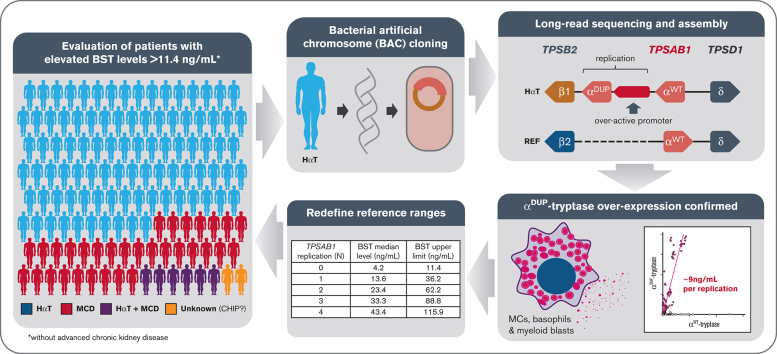
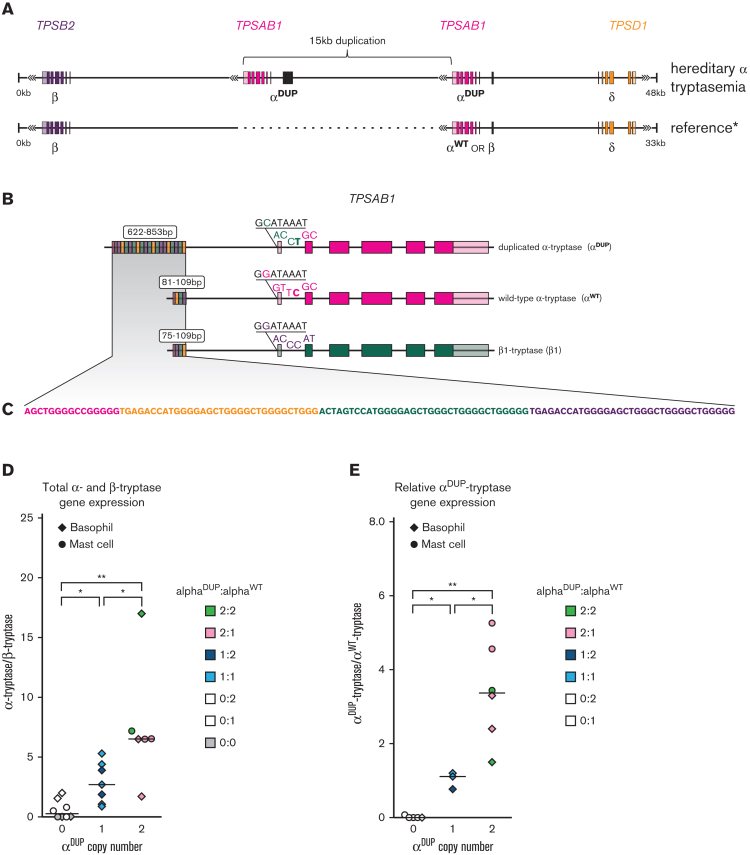
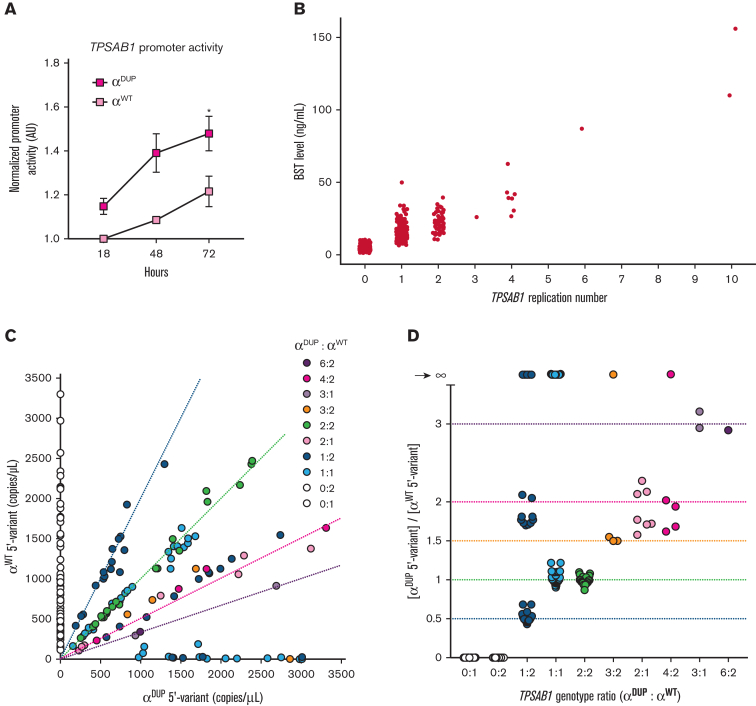
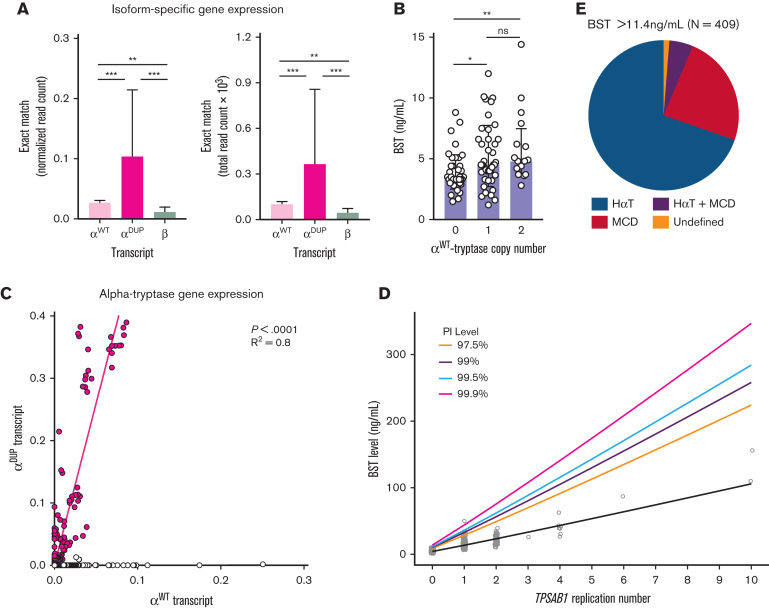
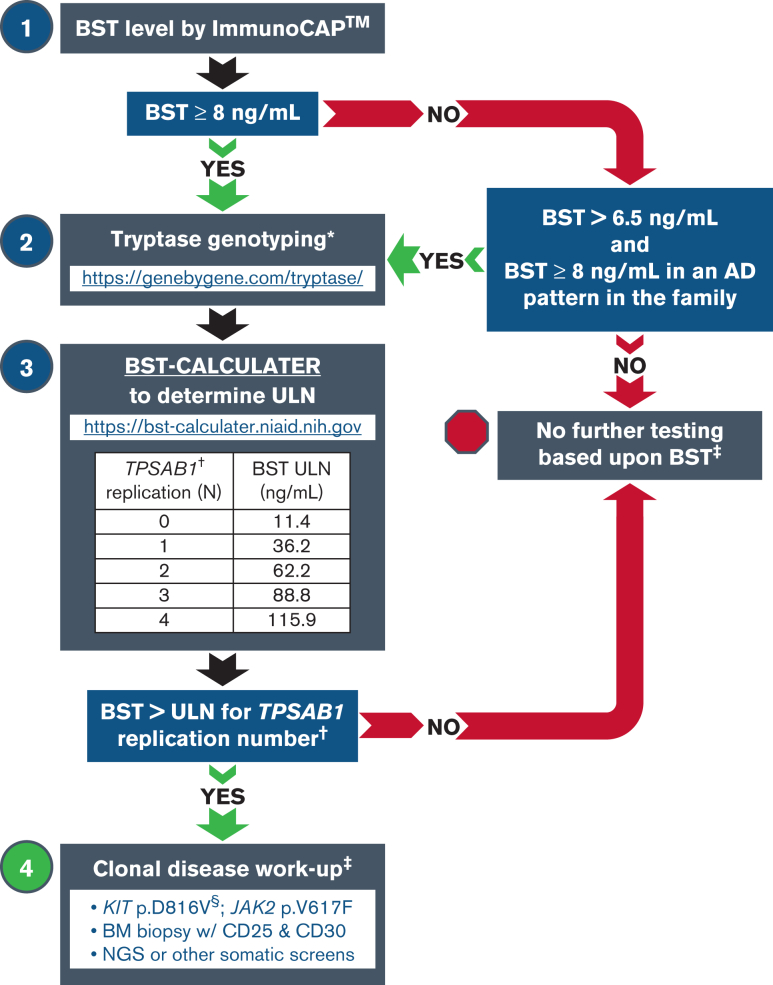
Serum tryptase is a biomarker used to aid in the identification of certain myeloid neoplasms, most notably systemic mastocytosis, where basal serum tryptase (BST) levels >20 ng/mL are a minor criterion for diagnosis. Although clonal myeloid neoplasms are rare, the common cause for elevated BST levels is the genetic trait hereditary α-tryptasemia (HαT) caused by increased germline TPSAB1 copy number. To date, the precise structural variation and mechanism(s) underlying elevated BST in HαT and the general clinical utility of tryptase genotyping, remain undefined. Through cloning, long-read sequencing, and assembling of the human tryptase locus from an individual with HαT, and validating our findings in vitro and in silico, we demonstrate that BST elevations arise from overexpression of replicated TPSAB1 loci encoding canonical α-tryptase protein owing to coinheritance of a linked overactive promoter element. Modeling BST levels based on TPSAB1 replication number, we generate new individualized clinical reference values for the upper limit of normal. Using this personalized laboratory medicine approach, we demonstrate the clinical utility of tryptase genotyping, finding that in the absence of HαT, BST levels >11.4 ng/mL frequently identify indolent clonal mast cell disease. Moreover, substantial BST elevations (eg, >100 ng/mL), which would ordinarily prompt bone marrow biopsy, can result from TPSAB1 replications alone and thus be within normal limits for certain individuals with HαT.
Overview
The claims and statistics of this paper haven’t been checked yet.
Free: it reads the open-access text and checks the first 5 claims that cite a source we can check. Create a free account to check every claim.
Integrity signals
Registry
Cites
Statistics
Figures
Verification
Claims the paper makes
The claims and statistics of this paper haven’t been checked yet.
Free: it reads the open-access text and checks the first 5 claims that cite a source we can check. Create a free account to check every claim.
Claims other papers make about this one
Each is checked against this paper’s own text: does it say what the citing paper says it does?
The cited source says what the claim attributes to it.
In the citing paper
“Another way is by using an online calculator tool (https://bst-calculater.niaid.nih.gov/ (accessed on 13 November 2023)) developed by Chovanek et al. [44].”
From Diagnostic Significance of Tryptase for Suspected Mast Cell Disorders (2023) · cites this paper as [44]
The cited source says what the claim attributes to it.
In the citing paper
“Further studies have elucidated as the number of TPSAB1 copies determined an increase in α-tryptase levels, on turn ultimately leading to elevated BST, each additional copy number adding approximately 9–10 ng/ml to the basal BST levels (12, 13).”
From Defining “Normal” basal serum tryptase levels: a context-dependent approach to improve diagnostics in systemic mastocytosis (2025) · cites this paper as [13]
The cited source says what the claim attributes to it.
In the citing paper
“In addition to this, three other methods of correction have been proposed (5, 13, 23) (Table 2).”
From Defining “Normal” basal serum tryptase levels: a context-dependent approach to improve diagnostics in systemic mastocytosis (2025) · cites this paper as [13]
In the citing paper
“In HαT, increased TPSAB1 copy number encoding α-tryptase results in increased BST levels as a result of promoter-driven overexpression of the replicated gene.37”
From Mast cell activation syndrome: Current understanding and research needs (2024) · cites this paper as [37]
In the citing paper
“HαT is a recently described genetic trait reported among 5% to 7% of Whites.17,37”
From Mast cell activation syndrome: Current understanding and research needs (2024) · cites this paper as [37]
Self-check
Percentages, sums and reported differences re-computed from the paper’s own numbers.
The self-check needs the paper’s full text.
Citations
Cites
Trimmomatic: a flexible trimmer for Illumina sequence data
Bolger, A. M., Lohse, M., & Usadel, B. (2014) · Bioinformatics · doi:10.1093/bioinformatics/btu170 · Cited by 65,548
The Ensembl Variant Effect Predictor
McLaren, W., Gil, L., Hunt, S. E., Riat, H. S., Ritchie, G. R. S., Thormann, A., Flicek, P., & Cunningham, F. (2016) · Genome Biology · doi:10.1186/s13059-016-0974-4 · Cited by 8,099
Sensitive detection of somatic point mutations in impure and heterogeneous cancer samples
Cibulskis, K., Lawrence, M. S., Carter, S. L., Sivachenko, A., Jaffe, D., Sougnez, C., Gabriel, S., Meyerson, M., Lander, E. S., & Getz, G. (2013) · Nature Biotechnology · doi:10.1038/nbt.2514 · Cited by 4,981 · cited 1×
“7.(26) In addition to paired calling, we also performed tumor-only calling with a combination of MuTect2 GATK version 4.”
Strelka2: fast and accurate calling of germline and somatic variants
Kim, S., Scheffler, K., Halpern, A. L., Bekritsky, M. A., Noh, E., Källberg, M., Chen, X., Kim, Y., Beyter, D., Krusche, P., et al. (2018) · Nature Methods · doi:10.1038/s41592-018-0051-x · Cited by 1,632
Diagnostic criteria and classification of mastocytosis: a consensus proposal
Valent, P., Horny, H.-P., Escribano, L., Longley, B. J., Li, C. Y., Schwartz, L. B., Marone, G., Nuñez, R., Akin, C., Sotlar, K., et al. (2001) · Leukemia Research · doi:10.1016/s0145-2126(01)00038-8 · Cited by 1,108
Self-citationVarDict: a novel and versatile variant caller for next-generation sequencing in cancer research
Lai, Z., Markovets, A., Ahdesmaki, M., Chapman, B., Hofmann, O., McEwen, R., Johnson, J., Dougherty, B., Barrett, J. C., & Dry, J. R. (2016) · Nucleic Acids Research · doi:10.1093/nar/gkw227 · Cited by 970 · cited 1×
“0.(27) The latter approach of performing somatic variant detection without including the paired PBMC sample was done to account for the fact that somatic variants in the BM granulocytes and BM mononuclear cells could also be present at low fractions in the PBMC sample, and therefore, be excluded as contaminating germ…”
BackgroundSAMBLASTER: fast duplicate marking and structural variant read extraction
Faust, G. G., & Hall, I. M. (2014) · Bioinformatics · doi:10.1093/bioinformatics/btu314 · Cited by 909
Tryptase levels as an indicator of mast-cell activation in systemic anaphylaxis and mastocytosis
Schwartz, L. B., Metcalfe, D. D., Miller, J. S., Earl, H., & Sullivan, T. (1987) · New England Journal of Medicine · doi:10.1056/nejm198706253162603 · Cited by 784 · cited 1×
“Whereas HaT is the most common heritable cause for elevated BST, the clonal mast cell 112 disorder systemic mastocytosis (SM) is a common acquired cause (10, 12), and BST levels are 113 used routinely as a biomarker to screen for this disorder.”
BackgroundSelf-citationKirshenbaum, A. S., Goff, J. P., Semere, T., Foster, B., Scott, L. M., & Metcalfe, D. D. (1999) · Blood · doi:10.1182/blood.v94.7.2333.419k30_2333_2342 · Cited by 420
Self-citationLyons, J. J., Yu, X., Hughes, J. D., Le, Q. T., Jamil, A., Bai, Y., Ho, N., Zhao, M., Liu, Y., O'Connell, M. P., et al. (2016) · Nature Genetics · doi:10.1038/ng.3696 · Cited by 394 · cited 7×
“220 Using these haplotypes, we next re-examined genome sequence reads from 183 individuals 221 without increased TPSAB1 copy number, and from 32 affected individuals from 10 families with 222 HaT (5).”
BackgroundMethodInfluentialSelf-citation
Research works printed but not linked: 1
- Reid GA Sambroo kJ Fritsch EF Maniatis T Molecular Cloning: A Laboratory Manual 2nd ed. 1989 Cold Spring Harbor Laboratory Press
Cited by
Human germline heterozygous gain-of-function STAT6 variants cause severe allergic disease
Sharma, M., Leung, D., Momenilandi, M., Jones, L. C. W., Pacillo, L., James, A. E., Murrell, J. R., Delafontaine, S., Maimaris, J., Vaseghi-Shanjani, M., et al. (2023) · Journal of Experimental Medicine · doi:10.1084/jem.20221755 · Cited by 125
Self-citationIncorporating Tryptase Genotyping Into the Workup and Diagnosis of Mast Cell Diseases and Reactions
Lyons, J. J., Greiner, G., Hoermann, G., & Metcalfe, D. D. (2022) · The Journal of Allergy and Clinical Immunology: In Practice · doi:10.1016/j.jaip.2022.05.003 · Cited by 47
Self-citationMast cell activation syndrome: Current understanding and research needs
Castells, M., Giannetti, M. P., Hamilton, M. J., Novak, P., Pozdnyakova, O., Nicoloro-SantaBarbara, J., Jennings, S. V., Francomano, C., Kim, B., Glover, S. C., et al. (2024) · Journal of Allergy and Clinical Immunology · doi:10.1016/j.jaci.2024.05.025 · Cited by 45
Self-citationClonal mast cell disorders and hereditary α-tryptasemia as risk factors for anaphylaxis
Kačar, M., Rijavec, M., Šelb, J., & Korošec, P. (2023) · Clinical & Experimental Allergy · doi:10.1111/cea.14264 · Cited by 37
Self-citationKorošec, P., Sturm, G. J., Lyons, J. J., Marolt, T. P., Svetina, M., Košnik, M., Zidarn, M., Kačar, M., Frelih, N., Lalek, N., et al. (2024) · Allergy · doi:10.1111/all.16084 · Cited by 51
Self-citationSevere food allergy reactions are associated with α-tryptase
Lang, A., Kubala, S., Grieco, M. C., Mateja, A., Pongracic, J., Liu, Y., Frischmeyer-Guerrerio, P. A., Kumar, R., & Lyons, J. J. (2023) · Journal of Allergy and Clinical Immunology · doi:10.1016/j.jaci.2023.07.014 · Cited by 36
Akin, C., Arock, M., Carter, M. C., George, T. I., & Valent, P. (2025) · Nature Reviews Disease Primers · doi:10.1038/s41572-025-00611-8 · Cited by 35
Self-citation(2023) · The Journal of Allergy and Clinical Immunology: In Practice · doi:10.1016/j.jaip.2023.07.001 · Cited by 25
“When excluding most individuals with H α T, the normal tryptase range appears to be 1.0 to 11.4 ng/mL. 52,72 However, some of the H α T-positive cases have low basal tryptase levels, ranging between 8 and 11.3 ng/mL, or even lower tryptase levels.”
InfluentialSelf-citationAlpha-tryptase as a risk-modifying factor for mast cell–mediated reactions
Shin, H., & Lyons, J. J. (2024) · Current Allergy and Asthma Reports · doi:10.1007/s11882-024-01136-y · Cited by 24
Self-citationDiagnostic Significance of Tryptase for Suspected Mast Cell Disorders
Beyens, M., Toscano, A., Ebo, D., Gülen, T., & Sabato, V. (2023) · Diagnostics · doi:10.3390/diagnostics13243662 · Cited by 22
Self-citationThe clinical features of hereditary alpha-tryptasemia
von Bubnoff, D., Koch, D., Stocker, H. R., Ludwig, R. J., Wortmann, F., & von Bubnoff, N. C. C. (2024) · Deutsches Ärzteblatt international · doi:10.3238/arztebl.m2023.0287 · Cited by 37
Hereditary α-tryptasemia is Associated With Anaphylaxis to Antibiotics and Monoclonal Antibodies
Korošec, P., Lyons, J. J., Svetina, M., Koudová, M., Bittóova, M., Zidarn, M., Sedláčková, L., Rijavec, M., & Kopač, P. (2025) · The Journal of Allergy and Clinical Immunology In Practice · doi:10.1016/j.jaip.2025.04.013 · Cited by 20
Self-citationValent, P., Akin, C., & Arock, M. (2024) · Current Allergy and Asthma Reports · doi:10.1007/s11882-024-01124-2 · Cited by 14
“However, baseline levels of tryptase may also show some fluctuations over time in symptom-free intervals [16, 17, 18 • ].”
BackgroundInfluentialMast Cell Disorders and Hymenoptera Venom-Triggered Anaphylaxis: Evaluation and Management
Boggs, N. A., Tanasi, I., Hartmann, K., Zanotti, R., & González‐de‐Olano, D. (2024) · The Journal of Allergy and Clinical Immunology In Practice · doi:10.1016/j.jaip.2024.08.034 · Cited by 21
Self-citationUnderlying systemic mastocytosis in patients with unexplained osteoporosis: score proposal
Tanasi, I., Crosera, L., Taus, F., Orsolini, G., Adami, G., Olivieri, F., Bernardelli, A., Bonadonna, P., Nalin, F., Sella, S., et al. (2024) · Bone · doi:10.1016/j.bone.2024.117141 · Cited by 12
Self-citationMcMurray, J. C., Pacheco, C. S., Schornack, B. J., Sun, X., Brunader, J. A., Scott, A. E., Ariza, J. S., Kou, C.-T. J., Costantino, R. C., Pittman, L. M., et al. (2024) · Blood · doi:10.1182/blood.2023023347 · Cited by 11
Clinically accessible amplitude-based multiplex ddPCR assay for tryptase genotyping
Svetina, M., Šelb, J., Lyons, J. J., Korošec, P., & Rijavec, M. (2024) · Scientific Reports · doi:10.1038/s41598-024-52983-8 · Cited by 15
Self-citationCold-induced anaphylaxis: new insights into clinical and genetic characteristics
Bizjak, M., Korošec, P., Košnik, M., Šelb, J., Bidovec‐Stojkovič, U., Svetina, M., Zver, S., Dinevski, D., & Rijavec, M. (2025) · Frontiers in Immunology · doi:10.3389/fimmu.2025.1558284 · Cited by 12
Self-citationWhat the clinician should know when ordering a mast cell tryptase test
Michel, M., Giusti, D., Klingebiel, C., Pham, B., & Vitte, J. (2025) · Annals of Allergy Asthma & Immunology · doi:10.1016/j.anai.2025.03.003 · Cited by 10
Madigan, L. M., Boggs, N. A., Rets, A. V., Gru, A. A., Tashi, T., Wada, D. A., Florell, S. R., & Carter, M. C. (2025) · American Journal of Clinical Dermatology · doi:10.1007/s40257-025-00947-7 · Cited by 9
“Tryptase genotyping is also recommended to interpret whether an elevated BST value is due to different tryptase genotypes (including hereditary alpha tryptasemia) or an MC abnormality [13, 62–64].”
Self-citationExpanding the Immunologic and Neuronal Landscape of IgE‐Mediated Anaphylaxis
Biswas, R., Fried, J. M., & de Lafaille, M. A. C. (2025) · Immunological Reviews · doi:10.1111/imr.70078 · Cited by 8
“Severe anaphylaxis, commonly idiopathic or toxin-induced, occurs in about 14% to 28% of these affected individuals, making HαT one of the few heritable diseases predisposing to anaphylaxis [93–95].”
Genetic Variants Leading to Urticaria and Angioedema and Associated Biomarkers
Lyons, J. J., Farkas, H., Germenis, A. E., Rijavec, M., Smith, T., & Valent, P. (2023) · The Journal of Allergy and Clinical Immunology In Practice · doi:10.1016/j.jaip.2023.05.031 · Cited by 11
Self-citationShean, R. C., Hellwig, S., Saadalla, A. M., George, T. I., & Rets, A. V. (2025) · American Journal of Clinical Pathology · doi:10.1093/ajcp/aqaf008 · Cited by 9
Prevalence of myeloid gene alterations in paediatric cutaneous and systemic mastocytosis
Sun, X., Wang, C., Metcalfe, D. D., Carter, M. C., & Marić, I. (2025) · British Journal of Haematology · doi:10.1111/bjh.20214 · Cited by 5
“All patients underwent a standardized clinical evaluation and laboratory workup, including serum total tryptase (ST) levels, PB KIT D816V detection by ASqPCR, 6,7 and assessment of hereditary alpha-tryptasemia (H α T) by tryptase genotyping, 17,18 which are described in Data S1.”
Self-citationAlpha-Tryptase Overexpression as a Modifier of Mast Cell–Mediated Reactions
Korošec, P., González‐de‐Olano, D., & Lyons, J. J. (2025) · The Journal of Allergy and Clinical Immunology In Practice · doi:10.1016/j.jaip.2025.10.018 · Cited by 7
Self-citationCase Report: A family history of peanut allergy and hereditary alpha-tryptasemia
Chantran, Y., Renaudin, H., Arock, M., Guiddir, T., & Nemni, A. (2024) · Frontiers in Allergy · doi:10.3389/falgy.2023.1322117 · Cited by 8
Hereditary alpha-tryptasemia in patients with postural orthostatic tachycardia syndrome
Huang, J., Imam, K. H., Criado, J. R., Luskin, K. T., Liu, Y., Puglisi, L. H., Lyons, J. J., & White, A. A. (2023) · The Journal of Allergy and Clinical Immunology In Practice · doi:10.1016/j.jaip.2023.10.043 · Cited by 7
Self-citationLyons, J. J. (2024) · Allergy and Asthma Proceedings · doi:10.2500/aap.2025.46.240088 · Cited by 8
Self-citationManagement of indolent mastocytosis and mast cell activation syndrome
Akin, C., Butterfield, J. H., Castells, M., & Lyons, J. J. (2025) · Annals of Allergy Asthma & Immunology · doi:10.1016/j.anai.2025.06.032 · Cited by 5
Self-citationUtility of tryptase genotyping in the screening, diagnosis, and management of systemic mastocytosis
McMurray, J. C., Schornack, B. J., Villar, J., George, T. I., & Boggs, N. A. (2025) · Frontiers in Allergy · doi:10.3389/falgy.2025.1599358 · Cited by 4
Galeas‐Pena, M., Lyons, J. J., Llivichuzhca-Loja, D., Everman, S., Yaghi, G., White, K., Sutradhar, S., Robinson, T. O., Owings, A. H., Dhaliwal, N. S., et al. (2026) · Frontiers in Allergy · doi:10.3389/falgy.2025.1726096 · Cited by 5
Self-citationPediatric idiopathic anaphylaxis: practical management from infants to adolescents
Mori, F., Saretta, F., Giovannini, M., Gelsomino, M., Liotti, L., Barni, S., Mastrorilli, C., Pecoraro, L., Castagnoli, R., Arasi, S., et al. (2024) · The Italian Journal of Pediatrics/Italian journal of pediatrics · doi:10.1186/s13052-024-01712-y · Cited by 6
“The scientific debate on normal tryptase values is still ongoing, as some authors propose a 1–15 ng/mL normal values interval [71], while other authors argue for individual ranges [72].”
BackgroundWilke, C., Blaschke, M., Lamersdorf, A., Heppner, C., Metz, M., Horny, H., Werner, M., Lippert, U., & Siggelkow, H. (2025) · Bone · doi:10.1016/j.bone.2025.117578 · Cited by 3
Crupi, F., Caroprese, J., & Mannelli, F. (2025) · Frontiers in Allergy · doi:10.3389/falgy.2025.1592001 · Cited by 2
Therrien, A., Akula, S., Galeas‐Pena, M., Frank, E., Gillette, L., Silvester, J. A., Leffler, D. A., Galvez, J. V., Kelly, C. P., Pozdnyakova, O., et al. (2025) · The American Journal of Gastroenterology · doi:10.14309/ajg.0000000000003537 · Cited by 6
Self-citationShean, R. C., Spies, N. C., & Saadalla, A. M. (2026) · Journal of Allergy and Clinical Immunology · doi:10.1016/j.jaci.2025.12.1002 · Cited by 2
Serum tryptase and drug hypersensitivity: why, how and what? A systematic review
Klingebiel, C., Belhocine, W., & Vitte, J. (2023) · Current Opinion in Allergy and Clinical Immunology · doi:10.1097/aci.0000000000000916 · Cited by 2
Approach to Idiopathic Anaphylaxis in Adolescents
Conner, J. E., & Steinberg, J. A. (2023) · Medical Clinics of North America · doi:10.1016/j.mcna.2023.05.018 · Cited by 3
Self-citationTryptase in drug-induced anaphylaxis: the need for acute and baseline values
Michel, M., Giusti, D., Klingebiel, C., & Vitte, J. (2024) · Current Opinion in Allergy and Clinical Immunology · doi:10.1097/aci.0000000000001012 · Cited by 2
Docquier, M., Nouspikel, T. P., Blouin, J., Abramowicz, M. J., Seebach, J. D., & Spoerl, D. (2023) · Clinical & Experimental Allergy · doi:10.1111/cea.14413 · Cited by 1
Točkova, O., Ručigaj, T. P., Ivančan, S., Bidovec‐Stojkovič, U., Rijavec, M., Šelb, J., & Korošec, P. (2025) · International Journal of Molecular Sciences · doi:10.3390/ijms26136023 · Cited by 1
Self-citationChantran, Y., Novakowski, H., Vial‐Dupuy, A., Bouz, C., Apoil, P. A., Choi, S., Fromentin, E., Goret, J., Mathieu, P., Michel, M., et al. (2025) · Allergy · doi:10.1111/all.70069 · Cited by 2
Chantran, Y., Choi, S., Roda, C., Barète, S., Hirsch, P., Hermine, O., Polivka, L., Rossignol, J., Arock, M., Rancière, F., et al. (2025) · Allergy · doi:10.1111/all.70160 · Cited by 1
Biological diagnosis of hereditary alpha-tryptasemia
Chantran, Y. (2023) · Revue française d'allergologie · doi:10.1016/j.reval.2023.103299 · Cited by 3
Hereditary alpha-tryptasemia and monoclonal mast cell disorders
Chantran, Y., & Arock, M. (2025) · Frontiers in Allergy · doi:10.3389/falgy.2025.1600680 · Cited by 6
Komarow, H. D., Nilsson, G. P., Okayama, Y., Mekori, Y. A., Olivera, A., Valent, P., Hartmann, K., Brockow, K., Cruse, G., Lyons, J. J., et al. (2025) · Journal of Allergy and Clinical Immunology · doi:10.1016/j.jaci.2025.06.029 · Cited by 1
Self-citationLa previsión del futuro en la empresa
de Aizpuru, M. A. T. (1987) · Dialnet (Universidad de la Rioja) · Cited by 2
Bottom quark production at the SSC (Superconducting Super Collider)
Berger, E. L., Collins, J. C., & Soper, D. E. (1986) · University of North Texas Digital Library (University of North Texas)
Hereditary Alpha Tryptasemia: Survey of Concomitant Genetic Testing
Butterfield, J. H., Bhasin, A. K., Ishmael, L., & Squire, J. D. (2025) · International Archives of Allergy and Immunology · doi:10.1159/000544704
An Approach to the Bone Marrow Workup and Diagnosis of Eosinophilia and Mast Cell Disorders
Reichard, K. K., George, T. I., & Arber, D. A. (2025) · Advances in Anatomic Pathology · doi:10.1097/pap.0000000000000486 · Cited by 1
Rüfer, A., Müllner, G., Fuchs, O., Sperr, W. R., & Hoermann, G. (2025) · Swiss Medical Weekly · doi:10.57187/s.3679
Sarrat, A., Vitte, J., Chantran, Y., Beauvillain, C., Alyanakian, M., Apoil, P. A., Chollet, L., Cirée, A., Amiot, C., Dumontet, E., et al. (2025) · Journal of Allergy and Hypersensitivity Diseases · doi:10.1016/j.jahd.2025.100037 · Cited by 1
Hereditary alpha tryptasemia and clinical implications
Önata, E. T., Özdemır, Ö., & Savaşan, S. (2025) · World Journal of Clinical Cases · doi:10.12998/wjcc.v13.i21.104723 · Cited by 3
“On the other hand, HAT is the most common cause of high sBT, accounting for 64%-72% of cases in the general population with pathologically elevated sBT levels[35-37].”
InfluentialPlatzgummer, S., SIPMeL, A. N. D. G.-A., Onida, R., Bruno, L., Caponi, L., Anzivino, P., Conte, M., ZANONI, G., Ghisellini, S., Deleonardi, G., et al. (2026) · La Rivista Italiana della Medicina di Laboratorio - Italian Journal of Laboratory Medicine · doi:10.23736/s1825-859x.25.00312-3
Hereditary Alpha-Tryptasemia and Mastocytosis: What We Know and What We Need To Learn
Rama, T. A., & Gülen, T. (2026) · Current Allergy and Asthma Reports · doi:10.1007/s11882-026-01262-9 · Cited by 1
“It is caused by increased copy numbers of the alpha-tryptase–encoding gene TPSAB1 , resulting in elevated SBT levels, typically above 8 ng/mL [20 ].”
Hereditary Alpha-Tryptasemia (HαT) as a Risk Modifier for Severe Anaphylaxis
Lang, A. T., Kazmi, W., & Lyons, J. J. (2026) · Immunology and Allergy Clinics of North America · doi:10.1016/j.iac.2026.01.010 · Cited by 1
Self-citationExtended multisystem manifestations of hereditary α-tryptasemia in an allergy center cohort
Koch, D., Wortmann, F., Recke, A., Rose, E., Gaffal, E., Wigger, J., von Bubnoff, N. C. C., & von Bubnoff, D. (2026) · Journal of Allergy and Clinical Immunology Global · doi:10.1016/j.jacig.2026.100737
Brockow, K., Franz, T. M., Saak, M., Lorenz, H., Plötz, J., Stark, L., Schäbitz, A., Aydin, G., Rupp, S., Untch, J., et al. (2026) · Allergo Journal · doi:10.1007/s15007-026-6701-x
AMICI, M. D., Taietti, I., Castagnoli, R., Bossi, G., Randazzese, S. F., Marseglia, A., Caimmi, S. M. E., & Licari, A. (2026) · Biomolecules · doi:10.3390/biom16091360
“Chovanec et al. have developed a BST calculator that defines patient-specific reference ranges from the TPSAB1 replication number [28].”
InfluentialSvetina, M., Lyons, J. J., Kopač, P., Šelb, J., Košnik, M., Rijavec, M., & Korošec, P. (2026) · Clinical & Experimental Allergy · doi:10.1111/cea.70448
Self-citationHereditary α-tryptasemia is associated with response to omalizumab in severe allergic asthma
Rijavec, M., Svetina, M., Škrgat, S., Zidarn, M., Lyons, J. J., Šelb, J., Barber, C., Vorobeva, E., Haitchi, H. M., Graham, N. J., et al. (2026) · Annals of Allergy Asthma & Immunology · doi:10.1016/j.anai.2026.10.014
Self-citationCătană, A., Porr, C., Mondoc, L.-M., Mocanu, L., Olteanu, A. L., Draghila, L., & Iancu, G. M. (2026) · Diagnostics · doi:10.3390/diagnostics16213499
Metadata
- Authors
- Chovanec, J., Tunc, I., Hughes, J., Halstead, J., Mateja, A., Liu, Y., O’Connell, M. P., Kim, J., Park, Y. H., Wang, Q., Le, Q., Pirooznia, M., Trivedi, N. N., Bai, Y., Yin, Y., Hsu, A. P., McElwee, J., Lassiter, S., Nelson, C., Bandoh, J., DiMaggio, T., Šelb, J., Rijavec, M., Carter, M. C., Komarow, H. D., Sabato, V., Steinberg, J., Hafer, K. M., Feuille, E., Hourigan, C. S., Lack, J., Khoury, P., Maric, I., Zanotti, R., Bonadonna, P., Schwartz, L. B., Milner, J. D., Glover, S. C., Ebo, D. G., Korošec, P., Caughey, G. H., Brittain, E. H., Busby, B., Metcalfe, D. D., & Lyons, J. J.
- Affiliations
- National Institutes of Health (US)
- Foundation Medicine (United States) (US)
- Birmingham Women’s and Children’s NHS Foundation Trust (GB)
- Frederick National Laboratory for Cancer Research (US)
- 1Translational Allergic Immunopathology Unit, Laboratory of Allergic Diseases, National Institute of Allergy and Infectious Diseases (NIAID), National Institutes of Health (NIH), Bethesda, MD
- Virginia Commonwealth University (US)
- San Francisco VA Medical Center (US)
- 12Nimbus Therapeutics, Cambridge, MA
- University Clinic of Pulmonary and Allergic Diseases Golnik (SI)
- University of Antwerp (BE)
- Medical College of Wisconsin (US)
- Stanford Medicine (US)
- Cornell University (US)
- 23Hematology Service, Department of Laboratory Medicine, Clinical Center, NIH, Bethesda, MD
- University of Verona (IT)
- Azienda Ospedaliera Universitaria Integrata Verona (IT)
- Columbia University (US)
- University of Mississippi Medical Center (US)
- Corresponding author
- Lyons, Jonathan J.
- ORCID
- Chovanec, Jack
- Tunc, Ilker
- Mateja, Allyson
- Liu, Yihui
- O’Connell, Michael P.
- Park, Young Hwan
- Le, Quang
- Pirooznia, Mehdi
- Bai, Yun
- Yin, Yuzhi
- Hsu, Amy P.
- McElwee, Joshua
- Nelson, Celeste
- DiMaggio, Thomas
- Šelb, Julij
- Rijavec, Matija
- Carter, Melody C.
- Komarow, Hirsh D.
- Sabato, Vito
- Steinberg, Joshua
- Feuille, Elizabeth
- Hourigan, Christopher S.
- Lack, Justin
- Khoury, Paneez
- Zanotti, Roberta
- Bonadonna, Patrizia
- Schwartz, Lawrence B.
- Milner, Joshua D.
- Glover, Sarah C.
- Ebo, Didier G.
- Korošec, Peter
- Caughey, George H.
- Brittain, Erica H.
- Busby, Ben
- Metcalfe, Dean D.
- Lyons, Jonathan J.
- Venue
- Blood Advances
- Publisher
- American Society of Hematology
- Published
- 2023-04-28
- Volume
- 7
- Issue
- 9
- Pages
- 1796-1810
- ISSN
- 2473-9529 (ISSN-L)
- 2473-9537
- PMC
- PMC10164828
- OpenAlex
- W4297520278
- Cited by
- 62
- References
- 36
- Citations by year
- 2026: 11 · 2025: 24 · 2024: 13 · 2023: 11
- FWCI
- 4.68
- Type
- journal article
- Language
- en
- Open access
- gold
- doi.org
- Licence
- cc-by-nc-nd
- Locations
- Blood Advances (publishedVersion, cc-by-nc-nd)
- medRxiv (acceptedVersion)
- PubMed Central (publishedVersion, cc-by-nc-nd)
- PubMed (publishedVersion)
- Funders
- U.S. Department of Health and Human Services (HHSN261201500003I)
- Fonds Wetenschappelijk Onderzoek (1804518N, 1800614N, FWO: 1800614N)
- Vlaamse regering
- National Institutes of Health (75N910D00024, HHSN261201500003I)
- National Heart, Lung, and Blood Institute
- National Cancer Institute (75N910D00024, HHSN261201500003I, HHSN261201500003C)
- National Institute of Allergy and Infectious Diseases (HHSN261201500003I, 75N910D00024)
- National Institute of Dental and Craniofacial Research (R21DE028378)
- U.S. National Library of Medicine
- NHLBI Division of Intramural Research
- Topics
- Life Sciences › Immunology and Microbiology › Immunology › Mast cells and histamine
- Life Sciences › Biochemistry, Genetics and Molecular Biology › Genetics › Genomics and Rare Diseases
- Health Sciences › Medicine › Hematology › Acute Myeloid Leukemia Research
- Keywords
- serum tryptase, hereditary alpha-tryptasemia, upper limit of normal, systemic mastocytosis, myeloid neoplasms
- MeSH terms
- Mast Cell Activation Syndrome, Humans, Mast Cells, Mastocytosis, Myeloproliferative Disorders, Reference Values, Unnecessary Procedures, Tryptases
About these checks
Registry, retraction, Cites and statistics results are computed, not judged, with one exception: a printed reference that no index lists is read once by a model before it counts as a citation error. Claims are extracted by a model and kept only when their quote appears verbatim in the text; each cited source is then checked, with a model’s help, for whether it says what the claim relies on. Those verdicts can be wrong — read the claim’s quote and the cited source before relying on one.
Statistics and arithmetic are recomputed, not judged.
Confidence bands are shown only for fields calibrated on our annotated test set. None is calibrated yet, so no band is shown.
What counts as a claim ›How we measure confidence ›How we check this ›
Are you an author, or do you see a problem with this page? Request a review
Data sources
Bibliographic data: Semantic Scholar, OpenAlex, Crossref.
Contains information from the Semantic Scholar Academic Graph Datasets, made available under the ODC Attribution License (ODC-BY 1.0).
Semantic Scholar’s data is described in: Kinney, R., et al. (2023). The Semantic Scholar Open Data Platform. arXiv:2301.10140.
