

Sap6, a secreted aspartyl proteinase, participates in maintenance the cell surface integrity of Candida albicans
Open accessThe DOI matches its Crossref record; 53 of the 53 references it cites were found in a registry or an index.
Abstract
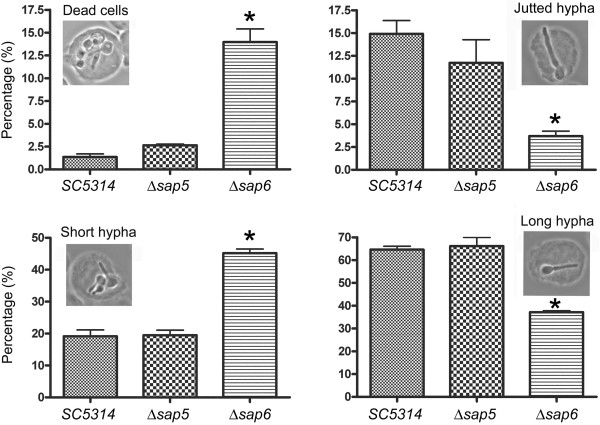
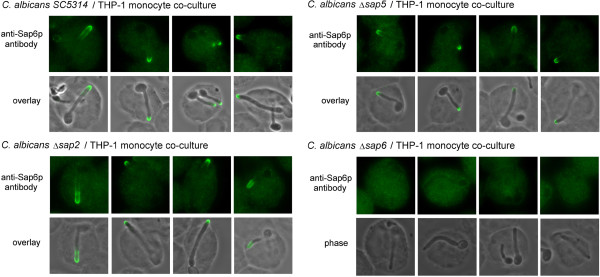
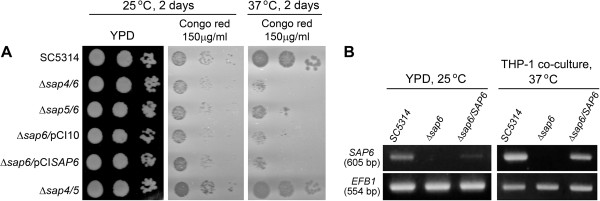
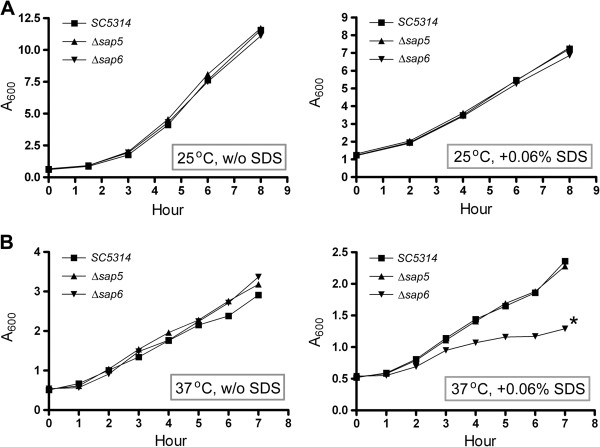
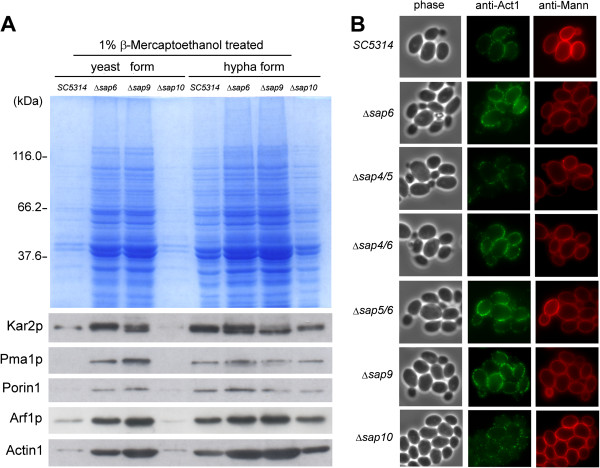
BACKGROUND: The polymorphic species Candida albicans is the major cause of candidiasis in humans. The secreted aspartyl proteinases (Saps) of C. albicans, encoded by a family of 10 SAP genes, have been investigated as the virulent factors during candidiasis. However, the biological functions of most Sap proteins are still uncertain. In this study, we applied co-culture system of C. albicans and THP-1 human monocytes to explore the pathogenic roles and biological functions of Sap proteinases. RESULTS: After 1 hr of co-culture of C. albicans strains and THP-1 human monocytes at 37°C, more than 60% of the THP-1-engulfed wild type and Δsap5 Candida cells were developing long hyphae. However, about 50% of THP-1-engulfed Δsap6 Candida cells were generating short hyphae, and more dead Candida cells were found in Δsap6 strain that was ingested by THP-1 cells (about 15% in Δsap6 strain vs. 2 ~ 2.5% in SC5314 and Δsap5 strains). The immunofluorescence staining demonstrated that the Sap6 is the major hyphal tip located Sap protein under THP-1 phagocytosis. The sap6-deleted strains (Δsap6, Δsap4/6, and Δsap5/6) appeared slower growth on Congo red containing solid medium at 25°C, and the growth defect was exacerbated when cultured at 37°C in Congo red or SDS containing medium. In addition, more proteins were secreted from Δsap6 strain and the β-mercaptoethanol (β-ME) extractable surface proteins from Δsap6 mutant were more abundant than that of extracted from wild type strain, which included the plasma membrane protein (Pma1p), the ER-chaperone protein (Kar2p), the protein transport-related protein (Arf1p), the cytoskeleton protein (Act1), and the mitochondrial outer membrane protein (porin 1). Moreover, the cell surface accessibility was increased in sap6-deleted strains. CONCLUSION: From these results, we speculated that the cell surface constitution of C. albicans Δsap6 strain was defect. This may cause the more accessible of β-ME to disulfide-bridged cell surface components and may weaken the resistance of Δsap6 strain encountering phagocytosis of THP-1 cells. Sap6 protein displays a significant function involving in maintenance the cell surface integrity.
Overview
The claims and statistics of this paper haven’t been checked yet.
Free: it reads the open-access text and checks the first 5 claims that cite a source we can check. Create a free account to check every claim.
Integrity signals
Registry
Cites
Statistics
Figures
Verification
Claims the paper makes
The claims and statistics of this paper haven’t been checked yet.
Free: it reads the open-access text and checks the first 5 claims that cite a source we can check. Create a free account to check every claim.
Claims other papers make about this one
Each is checked against this paper’s own text: does it say what the citing paper says it does?
The cited source says what the claim attributes to it.
In the citing paper
“Other upregulated genes associated with pathogenesis included SAP6 (66), GLK1 and PHO112 (67), and PLB1 (68) and the transcription factor GAT1 as well as its regulation targets DUR1,2 and MEP2 (69).”
From Inhibition of Classical and Alternative Modes of Respiration in Candida albicans Leads to Cell Wall Remodeling and Increased Macrophage Recognition (2019) · cites this paper as [66]
Self-check
Percentages, sums and reported differences re-computed from the paper’s own numbers.
The self-check needs the paper’s full text.
Citations
Cites
Current protocols in molecular biology
Sargent, T. (1988) · Analytical Biochemistry · doi:10.1016/0003-2697(88)90147-9 · Cited by 7,205
Isolation and characterization
Turksen, K. (2006) · Humana Press eBooks · Cited by 2,145
Isogenic strain construction and gene mapping in Candida albicans.
Fonzi, W. A., & Irwin, M. Y. (1993) · Genetics · doi:10.1093/genetics/134.3.717 · Cited by 1,687
Nosocomial Bloodstream Infections in United States Hospitals: A Three‐Year Analysis
Edmond, M. B., Wallace, S. E., McClish, D. K., Pfaller, M. A., Jones, R. N., & Wenzel, R. P. (1999) · Clinical Infectious Diseases · doi:10.1086/520192 · Cited by 1,387
Virulence factors of Candida albicans
Calderone, R. A., & Fonzi, W. A. (2001) · Trends in Microbiology · doi:10.1016/s0966-842x(01)02094-7 · Cited by 1,331 · cited 2×
“albicans, ten secreted aspartyl proteinase (Sap 1 ~ 10) were identified and categorized to a Sap protein family [18-22], which have been investigated as the virulent factors during candidiasis [2,23,24].”
BackgroundGillum, A. M., Tsay, E. Y. H., & Kirsch, D. R. (1984) · Molecular and General Genetics MGG · doi:10.1007/bf00328721 · Cited by 1,251
Candida albicans Secreted Aspartyl Proteinases in Virulence and Pathogenesis
Naglik, J. R., Challacombe, S. J., & Hube, B. (2003) · Microbiology and Molecular Biology Reviews · doi:10.1128/mmbr.67.3.400-428.2003 · Cited by 1,179 · cited 2×
“albicans, ten secreted aspartyl proteinase (Sap 1 ~ 10) were identified and categorized to a Sap protein family [18-22], which have been investigated as the virulent factors during candidiasis [2,23,24].”
BackgroundCell Wall Integrity Signaling in Saccharomyces cerevisiae
Levin, D. E. (2005) · Microbiology and Molecular Biology Reviews · doi:10.1128/mmbr.69.2.262-291.2005 · Cited by 1,136
Cell Wall Assembly in Saccharomyces cerevisiae
Lesage, G., & Bussey, H. (2006) · Microbiology and Molecular Biology Reviews · doi:10.1128/mmbr.00038-05 · Cited by 849 · cited 1×
“Numerous molecules have been identified to participate in cell wall construction and cell wall integrity signaling [14-16], including a group of yapsin family proteins.”
BackgroundCell wall construction in Saccharomyces cerevisiae
Klis, F. M., Boorsma, A., & De Groot, P. W. J. (2006) · Yeast · doi:10.1002/yea.1349 · Cited by 759
Biswas, S., Van Dijck, P., & Datta, A. (2007) · Microbiology and Molecular Biology Reviews · doi:10.1128/mmbr.00009-06 · Cited by 516
Collart, M. A., & Oliviero, S. (1993) · Current Protocols in Molecular Biology · doi:10.1002/0471142727.mb1312s23 · Cited by 448
Candida albicans proteinases and host/pathogen interactions
Naglik, J., Albrecht, A., Bader, O., & Hube, B. (2004) · Cellular Microbiology · doi:10.1111/j.1462-5822.2004.00439.x · Cited by 390
Morphogenesis in Candida albicans
Whiteway, M., & Bachewich, C. (2007) · Annual Review of Microbiology · doi:10.1146/annurev.micro.61.080706.093341 · Cited by 388
Molecular organization of the cell wall of Candida albicans and its relation to pathogenicity
Ruiz-Herrera, J., Victoria Elorza, M., ValentÃn, E., & Sentandreu, R. (2006) · FEMS Yeast Research · doi:10.1111/j.1567-1364.2005.00017.x · Cited by 376 · cited 2×
“albicans have been described, including: the proteins bound to β-1,6-glucans through a glycosylphosphatidylinositol (GPI) moiety, the Pir (proteins with internal repeats) proteins attached to β-1,3-glucan by unknown alkali-sensitive bonds (possibly O-glycosidic linkages), and the proteins retained by disulfide bridges…”
BackgroundMethodHube, B., Monod, M., Schofield, D. A., Brown, A. J. P., & Gow, N. A. R. (1994) · Molecular Microbiology · doi:10.1111/j.1365-2958.1994.tb01269.x · Cited by 372
Hube, B., Sanglard, D., Odds, F. C., Hess, D., Monod, M., Schäfer, W., Brown, A. J., & Gow, N. A. (1997) · Infection and Immunity · doi:10.1128/iai.65.9.3529-3538.1997 · Cited by 311
Sanglard, D., Hube, B., Monod, M., Odds, F. C., & Gow, N. A. (1997) · Infection and Immunity · doi:10.1128/iai.65.9.3539-3546.1997 · Cited by 282
Brand, A., MacCallum, D. M., Brown, A. J. P., Gow, N. A. R., & Odds, F. C. (2004) · Eukaryotic Cell · doi:10.1128/ec.3.4.900-909.2004 · Cited by 272
Albrecht, A., Felk, A., Pichova, I., Naglik, J. R., Schaller, M., de Groot, P., MacCallum, D., Odds, F. C., Schäfer, W., Klis, F., et al. (2006) · Journal of Biological Chemistry · doi:10.1074/jbc.m509297200 · Cited by 270
de Groot, P. W. J., de Boer, A. D., Cunningham, J., Dekker, H. L., de Jong, L., Hellingwerf, K. J., de Koster, C., & Klis, F. M. (2004) · Eukaryotic Cell · doi:10.1128/ec.3.4.955-965.2004 · Cited by 266
Felk, A., Kretschmar, M., Albrecht, A., Schaller, M., Beinhauer, S., Nichterlein, T., Sanglard, D., Korting, H. C., Schäfer, W., & Hube, B. (2002) · Infection and Immunity · doi:10.1128/iai.70.7.3689-3700.2002 · Cited by 260
Pitarch, A., Sánchez, M., Nombela, C., & Gil, C. (2002) · Molecular & Cellular Proteomics · doi:10.1074/mcp.m200062-mcp200 · Cited by 257
Multiplicity of genes encoding secreted aspartic proteinases in Candida species
Monod, M., Togni, G., Hube, B., & Sanglard, D. (1994) · Molecular Microbiology · doi:10.1111/j.1365-2958.1994.tb00429.x · Cited by 245
An Extensive Circuitry for Cell Wall Regulation in Candida albicans
Blankenship, J. R., Fanning, S., Hamaker, J. J., & Mitchell, A. P. (2010) · PLoS Pathogens · doi:10.1371/journal.ppat.1000752 · Cited by 201 · cited 1×
“changes in environmental conditions [7-9].”
Three distinct secreted aspartyl proteinases in Candida albicans
White, T. C., Miyasaki, S. H., & Agabian, N. (1993) · Journal of Bacteriology · doi:10.1128/jb.175.19.6126-6133.1993 · Cited by 160
Control of the C. albicans Cell Wall Damage Response by Transcriptional Regulator Cas5
Bruno, V. M., Kalachikov, S., Subaran, R., Nobile, C. J., Kyratsous, C., & Mitchell, A. P. (2006) · PLoS Pathogens · doi:10.1371/journal.ppat.0020021 · Cited by 157 · cited 1×
“changes in environmental conditions [7-9].”
Monod, M., Hube, B., Hess, D., & Sanglard, D. (1998) · Microbiology · doi:10.1099/00221287-144-10-2731 · Cited by 132
Krysan, D. J., Ting, E. L., Abeijon, C., Kroos, L., & Fuller, R. S. (2005) · Eukaryotic Cell · doi:10.1128/ec.4.8.1364-1374.2005 · Cited by 130
Lermann, U., & Morschhäuser, J. (2008) · Microbiology · doi:10.1099/mic.0.2008/022525-0 · Cited by 127
Vadaie, N., Dionne, H., Akajagbor, D. S., Nickerson, S. R., Krysan, D. J., & Cullen, P. J. (2008) · The Journal of Cell Biology · doi:10.1083/jcb.200704079 · Cited by 119
Germ Tubes and Proteinase Activity Contribute to Virulence of Candida albicans in Murine Peritonitis
Kretschmar, M., Hube, B., Bertsch, T., Sanglard, D., Merker, R., Schröder, M., Hof, H., & Nichterlein, T. (1999) · Infection and Immunity · doi:10.1128/iai.67.12.6637-6642.1999 · Cited by 108
Proteolytic Cleavage of Covalently Linked Cell Wall Proteins by Candida albicans Sap9 and Sap10
Schild, L., Heyken, A., de Groot, P. W. J., Hiller, E., Mock, M., de Koster, C., Horn, U., Rupp, S., & Hube, B. (2011) · Eukaryotic Cell · doi:10.1128/ec.00210-10 · Cited by 104
Invasive Candidiasis: An Overview from Taiwan
Ruan, S., & Hsueh, P. (2009) · Journal of the Formosan Medical Association · doi:10.1016/s0929-6646(09)60091-7 · Cited by 97
Msb2 Shedding Protects Candida albicans against Antimicrobial Peptides
Szafranski-Schneider, E., Swidergall, M., Cottier, F., Tielker, D., Román, E., Pla, J., & Ernst, J. F. (2012) · PLoS Pathogens · doi:10.1371/journal.ppat.1002501 · Cited by 88
Puri, S., Kumar, R., Chadha, S., Tati, S., Conti, H. R., Hube, B., Cullen, P. J., & Edgerton, M. (2012) · PLoS ONE · doi:10.1371/journal.pone.0046020 · Cited by 87
Correia, A., Lermann, U., Teixeira, L., Cerca, F., Botelho, S., Gil da Costa, R. M., Sampaio, P., Gärtner, F., Morschhäuser, J., Vilanova, M., et al. (2010) · Infection and Immunity · doi:10.1128/iai.00248-10 · Cited by 86
Candida, still number one – what do we know and where are we going from there?
Segal, E. (2005) · Mycoses · doi:10.1111/j.1439-0507.2005.01103.x · Cited by 84
Ash, J., Dominguez, M., Bergeron, J. J. M., Thomas, D. Y., & Bourbonnais, Y. (1995) · Journal of Biological Chemistry · doi:10.1074/jbc.270.35.20847 · Cited by 79
Buu, L.-M., Chen, Y., & Lee, F.-J. S. (2003) · Journal of Biological Chemistry · doi:10.1074/jbc.m213268200 · Cited by 70
Self-citationGagnon-Arsenault, I., Tremblay, J., & Bourbonnais, Y. (2006) · FEMS Yeast Research · doi:10.1111/j.1567-1364.2006.00129.x · Cited by 66
Bourbonnais, Y., Ash, J., Daigle, M., & Thomas, D. Y. (1993) · The EMBO Journal · doi:10.1002/j.1460-2075.1993.tb05655.x · Cited by 60
Differential secretion of Sap4–6 proteins in Candida albicans during hyphae formation
Chen, Y.-C., Wu, C.-C., Chung, W.-L., & Lee, F.-J. S. (2002) · Microbiology · doi:10.1099/00221287-148-11-3743 · Cited by 58
Self-citationThe Role of Secreted Aspartyl Proteinases in Candida albicans Keratitis
Jackson, B. E., Wilhelmus, K. R., & Hube, B. (2007) · Investigative Opthalmology & Visual Science · doi:10.1167/iovs.07-0114 · Cited by 58
Kretschmar, M., Felk, A., Staib, P., Schaller, M., Hess, D., Callapina, M., Morschhäuser, J., Schäfer, W., Körting, H. C., Hof, H., et al. (2002) · Microbial Pathogenesis · doi:10.1006/mpat.2001.0478 · Cited by 54
Barker, K. S., Liu, T., & Rogers, P. D. (2005) · The Journal of Infectious Diseases · doi:10.1086/432487 · Cited by 47
Hornbach, A., Heyken, A., Schild, L., Hube, B., Löffler, J., & Kurzai, O. (2009) · Infection and Immunity · doi:10.1128/iai.00723-09 · Cited by 47 · cited 1×
“albicans with human epithelial cells and neutrophils [22,27].”
BackgroundSignaling the glycoshield: Maintenance of the Candida albicans cell wall
Ernst, J. F., & Plá, J. (2011) · International Journal of Medical Microbiology · doi:10.1016/j.ijmm.2011.04.003 · Cited by 43
Candida albicans Iff11, a Secreted Protein Required for Cell Wall Structure and Virulence
Bates, S., de la Rosa, J. M., MacCallum, D. M., Brown, A. J. P., Gow, N. A. R., & Odds, F. C. (2007) · Infection and Immunity · doi:10.1128/iai.00102-07 · Cited by 42
Post-translational regulation of signaling mucins
Cullen, P. J. (2011) · Current Opinion in Structural Biology · doi:10.1016/j.sbi.2011.08.007 · Cited by 42
Proteolytic Function of GPI‐Anchored Plasma Membrane Protease Yps1p in the Yeast Vacuole and Golgi
Sievi, E., Suntio, T., & Makarow, M. (2001) · Traffic · doi:10.1034/j.1600-0854.2001.21205.x · Cited by 36
Proteomics to Study Candida albicans Biology and Pathogenicity
Thomas, D. P., Pitarch, A., Monteoliva, L., Gil, C., & Lopez-Ribot, J. L. (2006) · Infectious Disorders - Drug Targets · doi:10.2174/187152606779025815 · Cited by 34
Molecular epidemiology of Candida colonizing critically ill patients in intensive care units.
Chen, Y., Chang, S., Tai, H.-M., Hsueh, P., & Luh, K. (2001) · PubMed · Cited by 31
Self-citation
Cited by
Muthamil, S., Balasubramaniam, B., Balamurugan, K., & Pandian, S. K. (2018) · Frontiers in Microbiology · doi:10.3389/fmicb.2018.02835 · Cited by 93
Cao, S., Guo, M., Wang, C., Xu, W., Shi, T., Tong, G., Zhen, C., Cheng, H., Yang, C., Elsheery, N. I., et al. (2019) · BMC Plant Biology · doi:10.1186/s12870-019-1865-0 · Cited by 89
Zawrotniak, M., Bochenska, O., Karkowska-Kuleta, J., Seweryn-Ozog, K., Aoki, W., Ueda, M., Kozik, A., & Rapala-Kozik, M. (2017) · Frontiers in Cellular and Infection Microbiology · doi:10.3389/fcimb.2017.00414 · Cited by 81
Virulence and Biofilms As Promising Targets in Developing Antipathogenic Drugs Against Candidiasis
Khan, M. S., Alshehrei, F. M., Alghamdi, S., Bamaga, M. A., Althubiani, A. S., & Alam, M. Z. (2020) · Future Science OA · doi:10.2144/fsoa-2019-0027 · Cited by 72
Muthamil, S., Devi, V. A., Balasubramaniam, B., Balamurugan, K., & Pandian, S. K. (2018) · Journal of Basic Microbiology · doi:10.1002/jobm.201700529 · Cited by 66
Metadata
- Authors
- Buu, L.-M., & Chen, Y.-C.
- Affiliations
- National Kaohsiung Normal University (TW)
- National Taiwan University (TW)
- Corresponding author
- Buu, Leh-Miauh
- ORCID
- Chen, Yee-Chun
- Venue
- Journal of Biomedical Science
- Published
- 2013-12
- Volume
- 20
- Issue
- 1
- Pages
- 101-101
- ISSN
- 1021-7770 (ISSN-L)
- 1423-0127
- PMC
- PMC3890532
- OpenAlex
- W2144236384
- Cited by
- 27
- References
- 53
- Citations by year
- 2026: 2 · 2025: 3 · 2024: 4 · 2023: 3 · 2021: 2 · 2020: 1 · 2019: 2 · 2018: 3 · 2017: 1 · 2016: 3 · 2015: 3
- FWCI
- 1.45
- Type
- journal article
- Language
- en
- Open access
- diamond
- doi.org
- Licence
- cc-by
- Locations
- Journal of Biomedical Science (publishedVersion, cc-by)
- Europe PMC (PubMed Central) (publishedVersion, cc-by)
- PubMed Central (publishedVersion, cc-by)
- PubMed (publishedVersion)
- Funders
- National Science Council
- National Taiwan University Hospital
- National Taiwan University
- Topics
- Health Sciences › Medicine › Infectious Diseases › Antifungal resistance and susceptibility
- Life Sciences › Biochemistry, Genetics and Molecular Biology › Molecular Biology › Fungal and yeast genetics research
- Health Sciences › Medicine › Infectious Diseases › Fungal Infections and Studies
- Keywords
- Candida albicans, SAP6, secreted aspartyl proteinases, hyphal morphogenesis, phagocytosis, THP-1 cells, SAP5, Congo red, cell surface proteins, virulence factors, candidiasis
- MeSH terms
- Candida albicans, Cell Line, Fluorescent Antibody Technique, Fungal Proteins, Humans, Membrane Proteins, Monocytes, Aspartic Acid Endopeptidases, Reverse Transcriptase Polymerase Chain Reaction, Protein Transport
About these checks
Registry, retraction, Cites and statistics results are computed, not judged, with one exception: a printed reference that no index lists is read once by a model before it counts as a citation error. Claims are extracted by a model and kept only when their quote appears verbatim in the text; each cited source is then checked, with a model’s help, for whether it says what the claim relies on. Those verdicts can be wrong — read the claim’s quote and the cited source before relying on one.
Statistics and arithmetic are recomputed, not judged.
Confidence bands are shown only for fields calibrated on our annotated test set. None is calibrated yet, so no band is shown.
What counts as a claim ›How we measure confidence ›How we check this ›
Are you an author, or do you see a problem with this page? Request a review
Data sources
Bibliographic data: Semantic Scholar, OpenAlex, Crossref.
Contains information from the Semantic Scholar Academic Graph Datasets, made available under the ODC Attribution License (ODC-BY 1.0).
Semantic Scholar’s data is described in: Kinney, R., et al. (2023). The Semantic Scholar Open Data Platform. arXiv:2301.10140.
