

I-TASSER server for protein 3D structure prediction
Open accessThe DOI matches its Crossref record; 32 of the 32 references it cites were found in a registry or an index.
Abstract
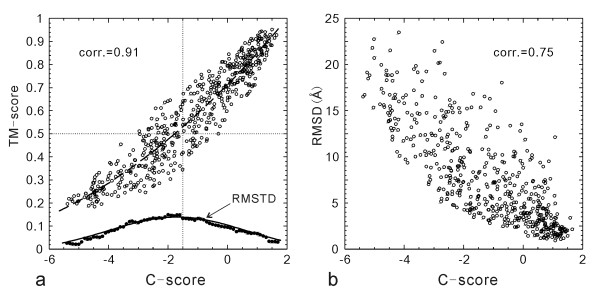
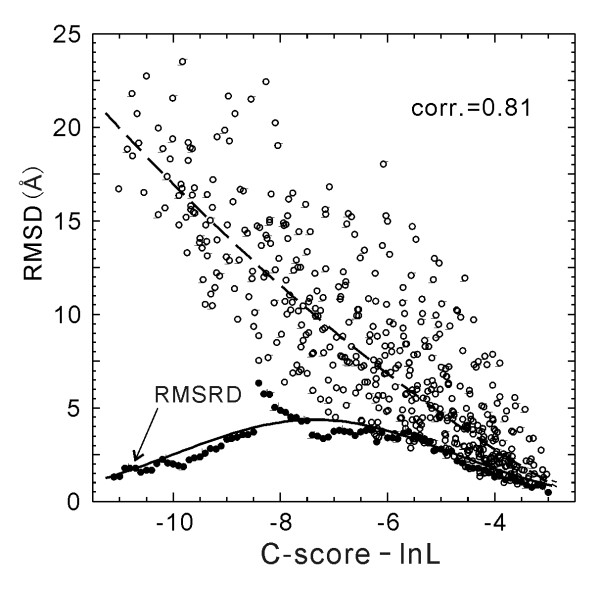
BACKGROUND: Prediction of 3-dimensional protein structures from amino acid sequences represents one of the most important problems in computational structural biology. The community-wide Critical Assessment of Structure Prediction (CASP) experiments have been designed to obtain an objective assessment of the state-of-the-art of the field, where I-TASSER was ranked as the best method in the server section of the recent 7th CASP experiment. Our laboratory has since then received numerous requests about the public availability of the I-TASSER algorithm and the usage of the I-TASSER predictions. RESULTS: An on-line version of I-TASSER is developed at the KU Center for Bioinformatics which has generated protein structure predictions for thousands of modeling requests from more than 35 countries. A scoring function (C-score) based on the relative clustering structural density and the consensus significance score of multiple threading templates is introduced to estimate the accuracy of the I-TASSER predictions. A large-scale benchmark test demonstrates a strong correlation between the C-score and the TM-score (a structural similarity measurement with values in [0, 1]) of the first models with a correlation coefficient of 0.91. Using a C-score cutoff > -1.5 for the models of correct topology, both false positive and false negative rates are below 0.1. Combining C-score and protein length, the accuracy of the I-TASSER models can be predicted with an average error of 0.08 for TM-score and 2 A for RMSD. CONCLUSION: The I-TASSER server has been developed to generate automated full-length 3D protein structural predictions where the benchmarked scoring system helps users to obtain quantitative assessments of the I-TASSER models. The output of the I-TASSER server for each query includes up to five full-length models, the confidence score, the estimated TM-score and RMSD, and the standard deviation of the estimations. The I-TASSER server is freely available to the academic community at http://zhang.bioinformatics.ku.edu/I-TASSER.
Overview
The claims and statistics of this paper haven’t been checked yet.
Free: it reads the open-access text and checks the first 5 claims that cite a source we can check. Create a free account to check every claim.
Integrity signals
Registry
Cites
Statistics
Figures
Verification
Claims the paper makes
The claims and statistics of this paper haven’t been checked yet.
Free: it reads the open-access text and checks the first 5 claims that cite a source we can check. Create a free account to check every claim.
Claims other papers make about this one
Each is checked against this paper’s own text: does it say what the citing paper says it does?
The source backs part of the claim, not all of it — or backs it for a different population, condition or comparison.
In the citing paper
“The estimated TM-score was shown to highly correlate with the actual TM-score, with a Pearson correlation coefficient (PCC) of 0.91 on 300 test proteins that are nonhomologous to the training proteins of I-TASSER.41”
From Functions of Essential Genes and a Scale-Free Protein Interaction Network Revealed by Structure-Based Function and Interaction Prediction for a Minimal Genome (2021) · cites this paper as [41]
Experimental — accuracy not yet measured
Self-check
Percentages, sums and reported differences re-computed from the paper’s own numbers.
The self-check needs the paper’s full text.
Citations
Cites
Gapped BLAST and PSI-BLAST: a new generation of protein database search programs
Altschul, S. (1997) · Nucleic Acids Research · doi:10.1093/nar/25.17.3389 · Cited by 73,302 · cited 1×
“%) to search for the possible folds by four simple variants of PPA methods, with different combinations of the hidden Markov model [17] and PSI-BLAST [18] profiles and the Needleman-Wunsch [19] and Smith-Waterman [20] alignment algorithms.”
Berman, H. M. (2000) · Nucleic Acids Research · doi:10.1093/nar/28.1.235 · Cited by 40,196
Needleman, S. B., & Wunsch, C. D. (1970) · Journal of Molecular Biology · doi:10.1016/0022-2836(70)90057-4 · Cited by 11,288
Identification of common molecular subsequences
Smith, T. F., & Waterman, M. S. (1981) · Journal of Molecular Biology · doi:10.1016/0022-2836(81)90087-5 · Cited by 9,940 · cited 1×
“%) to search for the possible folds by four simple variants of PPA methods, with different combinations of the hidden Markov model [17] and PSI-BLAST [18] profiles and the Needleman-Wunsch [19] and Smith-Waterman [20] alignment algorithms.”
TM-align: a protein structure alignment algorithm based on the TM-score
Zhang, Y. (2005) · Nucleic Acids Research · doi:10.1093/nar/gki524 · Cited by 3,774
Self-citationA solution for the best rotation to relate two sets of vectors
Kabsch, W. (1976) · Acta Crystallographica Section A · doi:10.1107/s0567739476001873 · Cited by 3,187
Scoring function for automated assessment of protein structure template quality
Zhang, Y., & Skolnick, J. (2004) · Proteins: Structure, Function, and Bioinformatics · doi:10.1002/prot.20264 · Cited by 2,392 · cited 4×
“One advantage of the TM-score is that the meaning of the TM-score cutoffs is independent of the size of proteins [6].”
InfluentialSelf-citationProtein Structure Prediction and Structural Genomics
Baker, D., & Sali, A. (2001) · Science · doi:10.1126/science.1065659 · Cited by 1,587
A Modern Course in Statistical Physics
Reichl, L. E., & Coppersmith, S. N. (1999) · Physics Today · doi:10.1063/1.882556 · Cited by 1,380
Hidden Markov models for detecting remote protein homologies.
Karplus, K., Barrett, C., & Hughey, R. (1998) · Bioinformatics · doi:10.1093/bioinformatics/14.10.846 · Cited by 1,102 · cited 1×
“%) to search for the possible folds by four simple variants of PPA methods, with different combinations of the hidden Markov model [17] and PSI-BLAST [18] profiles and the Needleman-Wunsch [19] and Smith-Waterman [20] alignment algorithms.”
Cited by
Items 501–600 of 1,024
Eschweiler, J. D., Martini, R. M., & Ruotolo, B. T. (2016) · Journal of the American Chemical Society · doi:10.1021/jacs.6b11678 · Cited by 77
Unique and Shared Roles for Histone H3K36 Methylation States in Transcription Regulation Functions
DiFiore, J. V., Ptacek, T., Wang, Y., Li, B., Simon, J. M., & Strahl, B. D. (2020) · Cell Reports · doi:10.1016/j.celrep.2020.107751 · Cited by 74
Balestra, A. C., Koussis, K., Klages, N., Howell, S. A., Flynn, H. R., Bantscheff, M., Pasquarello, C., Perrin, A. J., Brusini, L., Arboit, P., et al. (2021) · Science Advances · doi:10.1126/sciadv.abe5396 · Cited by 71
Romani, I., Manavski, N., Morosetti, A., Tadini, L., Maier, S., Kühn, K., Ruwe, H., Schmitz‐Linneweber, C., Wanner, G., Leister, D., et al. (2015) · PLANT PHYSIOLOGY · doi:10.1104/pp.15.00964 · Cited by 66
Schierenbeck, L., Ries, D., Rogge, K., Grewe, S., Weisshaar, B., & Kruse, O. (2015) · BMC Genomics · doi:10.1186/s12864-015-1232-y · Cited by 60
Peck, K. M., Cockrell, A. S., Yount, B. L., Scobey, T., Baric, R. S., & Heise, M. T. (2015) · Journal of Virology · doi:10.1128/jvi.03445-14 · Cited by 68
Structural insight into the PTS sugar transporter EIIC
McCoy, J. G., Levin, E. J., & Zhou, M. (2014) · Biochimica et Biophysica Acta (BBA) - General Subjects · doi:10.1016/j.bbagen.2014.03.013 · Cited by 66
“A homology model of bcChbB was generated with I-TASSER [56] using the phosphorylated ChbB structure from E. coli (PDB ID: 1H9C) [54].”
The ribosome-bound Hsp70 homolog Ssb of Saccharomyces cerevisiae
Peisker, K., Chiabudini, M., & Rospert, S. (2010) · Biochimica et Biophysica Acta (BBA) - Molecular Cell Research · doi:10.1016/j.bbamcr.2010.03.005 · Cited by 73
Heinhuis, B., Netea, M. G., van den Berg, W. B., Dinarello, C. A., & Joosten, L. A. B. (2012) · Cytokine · doi:10.1016/j.cyto.2012.07.010 · Cited by 66
Molecular modelling and simulations in cancer research
Friedman, R., Boye, K., & Flatmark, K. (2013) · Biochimica et Biophysica Acta (BBA) - Reviews on Cancer · doi:10.1016/j.bbcan.2013.02.001 · Cited by 70
Discovery of Novel Leptospirosis Vaccine Candidates Using Reverse and Structural Vaccinology
Grassmann, A. A., Kremer, F. S., dos Santos, J. C., Souza, J. D., Pinto, L. D. S., & McBride, A. J. A. (2017) · Frontiers in Immunology · doi:10.3389/fimmu.2017.00463 · Cited by 70
Phumisantiphong, U., Siripanichgon, K., Reamtong, O., & Diraphat, P. (2017) · PLoS ONE · doi:10.1371/journal.pone.0186415 · Cited by 66
Thompson, M. G., Blake-Hedges, J. M., Cruz-Morales, P., Barajas, J. F., Curran, S. C., Eiben, C. B., Harris, N. C., Benites, V. T., Gin, J. W., Sharpless, W. A., et al. (2019) · mBio · doi:10.1128/mbio.02577-18 · Cited by 71
Claudin-9 structures reveal mechanism for toxin-induced gut barrier breakdown
Vecchio, A. J., & Stroud, R. M. (2019) · Proceedings of the National Academy of Sciences · doi:10.1073/pnas.1908929116 · Cited by 63
Framework engineering to produce dominant T cell receptors with enhanced antigen-specific function
Thomas, S., Mohammed, F., Reijmers, R. M., Woolston, A., Stauss, T., Kennedy, A., Stirling, D., Holler, A., Green, L., Jones, D., et al. (2019) · Nature Communications · doi:10.1038/s41467-019-12441-w · Cited by 61
Pourseif, M. M., Parvizpour, S., Jafari, B., Dehghani, J., Naghili, B., & Omidi, Y. (2020) · Bioimpacts · doi:10.34172/bi.2021.11 · Cited by 70
Needle in the haystack: structure-based toxin discovery
Fieldhouse, R. J., & Merrill, A. R. (2008) · Trends in Biochemical Sciences · doi:10.1016/j.tibs.2008.08.003 · Cited by 74
Mahony, D., Cavallaro, A. S., Mody, K. T., Xiong, L., Mahony, T. J., Qiao, S., & Mitter, N. (2014) · Nanoscale · doi:10.1039/c4nr01202j · Cited by 65
Genome-Wide Identification, Evolution and Expression Analysis of mTERF Gene Family in Maize
Zhao, Y., Cai, M., Zhang, X., Li, Y., Zhang, J., Zhao, H., Kong, F., Zheng, Y., & Qiu, F. (2014) · PLoS ONE · doi:10.1371/journal.pone.0094126 · Cited by 67
Dai, S., Zhang, A., & Huang, J. (2012) · BMC Evolutionary Biology · doi:10.1186/1471-2148-12-4 · Cited by 69
Bhat, H. B., Kishimoto, T., Abe, M., Makino, A., Inaba, T., Murate, M., Dohmae, N., Kurahashi, A., Nishibori, K., Fujimori, F., et al. (2013) · Journal of Lipid Research · doi:10.1194/jlr.d041731 · Cited by 69
Winter, J. M., Cascio, D., Dietrich, D. K., Sato, M., Watanabe, K., Sawaya, M. R., Vederas, J. C., & Tang, Y. (2015) · Journal of the American Chemical Society · doi:10.1021/jacs.5b04520 · Cited by 65
Giessen, T. W., von Tesmar, A. M., & Marahiel, M. A. (2013) · Biochemistry · doi:10.1021/bi4004827 · Cited by 69
The Ubiquitination of PINK1 Is Restricted to Its Mature 52-kDa Form
Liu, Y., Guardia‐Laguarta, C., Yin, J., Erdjument‐Bromage, H., Martin, B. M. S., James, M. N. G., Jiang, X., & Przedborski, S. (2017) · Cell Reports · doi:10.1016/j.celrep.2017.06.022 · Cited by 69
Climate‐driven mitochondrial selection: A test in Australian songbirds
Lamb, A. M., Gan, H. M., Greening, C., Joseph, L., Lee, Y. P., Morán‐Ordóñez, A., Sunnucks, P., & Pavlova, A. (2018) · Molecular Ecology · doi:10.1111/mec.14488 · Cited by 69
Baier, T., Kros, D., Feiner, R. C., Lauersen, K. J., Müller, K. M., & Kruse, O. (2018) · ACS Synthetic Biology · doi:10.1021/acssynbio.8b00226 · Cited by 62
Tian, L., Chou, H., Zhang, L., Hwang, S., Starkenburg, S. R., Doroshenk, K. A., Kumamaru, T., & Okita, T. W. (2018) · The Plant Cell · doi:10.1105/tpc.18.00321 · Cited by 74
Portelli, S., Olshansky, M., Rodrigues, C. H. M., D’Souza, E. N., Myung, Y., Silk, M. A., Alavi, A., Pires, D. E. V., & Ascher, D. B. (2020) · Nature Genetics · doi:10.1038/s41588-020-0693-3 · Cited by 67
Real-Time Visualization of Assembling of a Sphingomyelin-Specific Toxin on Planar Lipid Membranes
Yilmaz, N., Yamada, T., Greimel, P., Uchihashi, T., Ando, T., & Kobayashi, T. (2013) · Biophysical Journal · doi:10.1016/j.bpj.2013.07.052 · Cited by 70
Constitutive Nuclear Localization of an Alternatively Spliced Sirtuin-2 Isoform
Rack, J. G. M., VanLinden, M. R., Lutter, T., Aasland, R., & Ziegler, M. (2013) · Journal of Molecular Biology · doi:10.1016/j.jmb.2013.10.027 · Cited by 68
Thaipisuttikul, I., Hittle, L. E., Chandra, R., Zangari, D., Dixon, C. L., Garrett, T. A., Rasko, D. A., Dasgupta, N., Moskowitz, S. M., Malmström, L., et al. (2013) · Molecular Microbiology · doi:10.1111/mmi.12451 · Cited by 64
Liu, Q., Wang, H., Li, H., Zhang, J., Zhuang, S., Zhang, F., Hsia, K. J., & Wang, P. (2012) · Biosensors and Bioelectronics · doi:10.1016/j.bios.2012.07.011 · Cited by 64
Conrad, T., Gong, S., Yang, Z., Matulich, P., Keck, J., Beltrami, N., Chen, C., Zhou, Z., Dai, J. M., & Zhong, G. (2015) · Infection and Immunity · doi:10.1128/iai.01171-15 · Cited by 64
Nanobubbles, cavitation, shock waves and traumatic brain injury
Adhikari, U., Goliaei, A., & Berkowitz, M. L. (2016) · Physical Chemistry Chemical Physics · doi:10.1039/c6cp06704b · Cited by 66
Xu, Y., Ke, H., Li, Y., Xie, L., Su, H., Xie, J., Mo, J., & Chen, W. (2021) · Journal of Agricultural and Food Chemistry · doi:10.1021/acs.jafc.0c06695 · Cited by 68
Biosynthesis of saponin defensive compounds in sea cucumbers
Thimmappa, R. B., Wang, S., Zheng, M., Misra, R. C., Huang, A. C., Saalbach, G., Chang, Y., Zhou, Z., Hinman, V. F., Bao, Z., et al. (2022) · Nature Chemical Biology · doi:10.1038/s41589-022-01054-y · Cited by 63
Functionally relevant microsatellites in sugarcane unigenes
Parida, S. K., Pandit, A., Gaikwad, K., Sharma, T. R., Srivastava, P. S., Singh, N. K., & Mohapatra, T. (2010) · BMC Plant Biology · doi:10.1186/1471-2229-10-251 · Cited by 66
Giessen, T. W., von Tesmar, A. M., & Marahiel, M. A. (2013) · Chemistry & Biology · doi:10.1016/j.chembiol.2013.04.017 · Cited by 68
Creation of thermostable and alkaline stable xylanase variants by DNA shuffling
Stephens, D. E., Khan, F. I., Singh, P., Bisetty, K., Singh, S., & Permaul, K. (2014) · Journal of Biotechnology · doi:10.1016/j.jbiotec.2014.07.446 · Cited by 63
Pirolli, D., Sciandra, F., Bozzi, M., Giardina, B., Brancaccio, A., & Rosa, M. C. D. (2014) · PLoS ONE · doi:10.1371/journal.pone.0103866 · Cited by 67
Kotchoni, S. O., Jiménez-López, J. C., Gao, D., Edwards, V., Gachomo, E. W., Margam, V. M., & Seufferheld, M. J. (2010) · PLoS ONE · doi:10.1371/journal.pone.0011516 · Cited by 66
Structural and biochemical perspectives in plant isoprenoid biosynthesis
Kumari, S., Priya, P., Misra, G., & Yadav, G. (2013) · Phytochemistry Reviews · doi:10.1007/s11101-013-9284-6 · Cited by 73
“b Homology model of the Hevea brasiliensis PMVK generated using iTASSER program (Zhang 2008), and visualized in Pymol.”
MethodHigh–quality protein backbone reconstruction from alpha carbons using Gaussian mixture models
Moore, B. L., Kelley, L. A., Barber, J. P., Murray, J. W., & MacDonald, J. T. (2013) · Journal of Computational Chemistry · doi:10.1002/jcc.23330 · Cited by 63
Large-scale model quality assessment for improving protein tertiary structure prediction
Cao, R., Bhattacharya, D., Adhikari, B., Li, J., & Cheng, J. (2015) · Bioinformatics · doi:10.1093/bioinformatics/btv235 · Cited by 63
Conformational IgE epitopes of peanut allergens Ara h 2 and Ara h 6
Chen, X., Negi, S. S., Liao, S., Gao, V., Braun, W. A., & Dreskin, S. C. (2016) · Clinical & Experimental Allergy · doi:10.1111/cea.12764 · Cited by 67
“were generated using ROBETTA [57] and I-TASSER [58] to obtain additional information about the Ara h 2 disordered loop region.”
Aruleba, R. T., Adekiya, T. A., Oyinloye, B. E., & Kappo, A. P. (2018) · International Journal of Molecular Sciences · doi:10.3390/ijms19020386 · Cited by 68
Rolig, A. S., Sweeney, E. G., Kaye, L. E., DeSantis, M. D., Perkins, A., Banse, A. V., Hamilton, M. K., & Guillemin, K. J. (2018) · eLife · doi:10.7554/elife.37172 · Cited by 64
“AimB is distantly related to AimA by amino acid sequence conservation (27%), yet a model generated by the Iterative Threading ASSEmbly Refinement (I-TASSER) program of the structure of AimB overlays directly on the structure of AimA (Figure 5A) (Yang et al., 2015; Roy et al., 2010; Zhang, 2008).”
MethodLamin A molecular compression and sliding as mechanisms behind nucleoskeleton elasticity
Makarov, A. A., Zou, J., Houston, D. R., Spanos, C., Solovyova, A. S., Cardenal-Peralta, C., Rappsilber, J., & Schirmer, E. C. (2019) · Nature Communications · doi:10.1038/s41467-019-11063-6 · Cited by 65
Automated and optimally FRET-assisted structural modeling
Dimura, M., Peulen, T.-O., Sanabria, H., Rodnin, D., Hemmen, K., Hanke, C. A., Seidel, C. A. M., & Gohlke, H. (2020) · Nature Communications · doi:10.1038/s41467-020-19023-1 · Cited by 68
An, Y., McCullers, J. A., Alymova, I. V., Parsons, L. M., & Cipollo, J. F. (2015) · Journal of Proteome Research · doi:10.1021/acs.jproteome.5b00416 · Cited by 63
A New Dinoflagellate Genome Illuminates a Conserved Gene Cluster Involved in Sunscreen Biosynthesis
Shoguchi, E., Beedessee, G., Hisata, K., Tada, I., Narisoko, H., Satoh, N., Kawachi, M., & Shinzato, C. (2020) · Genome Biology and Evolution · doi:10.1093/gbe/evaa235 · Cited by 68
“I-TASSER was used for 3D prediction (Zhang 2008).”
Structure of the catalytic core of the Integrator complex
Pfleiderer, M. M., & Galej, W. P. (2021) · Molecular Cell · doi:10.1016/j.molcel.2021.01.005 · Cited by 62
Selection of a DNA aptamer against norovirus capsid protein VP1
Beier, R., Pahlke, C., Quenzel, P., Henseleit, A., Boschke, E., Cuniberti, G., & Labudde, D. (2013) · FEMS Microbiology Letters · doi:10.1111/1574-6968.12366 · Cited by 65
Biochemical Characterization of Human Tyrosyl-DNA Phosphodiesterase 2 (TDP2/TTRAP)
Gao, R., Huang, S.-Y. N., Marchand, C., & Pommier, Y. G. (2012) · Journal of Biological Chemistry · doi:10.1074/jbc.m112.393983 · Cited by 62
PepT1 mRNA expression levels in sea bream (Sparus aurata) fed different plant protein sources
Terova, G., Robaina, L., Izquierdo, M. S., Cattaneo, A. G., Molinari, S., Bernardini, G., & Saroglia, M. G. (2013) · SpringerPlus · doi:10.1186/2193-1801-2-17 · Cited by 66
Kirchner, F., Schuetz, A., Boldt, L., Martens, K., Dittmar, G., Haverkamp, W., Thierfelder, L., Heinemann, U., & Gerull, B. (2012) · Circulation Cardiovascular Genetics · doi:10.1161/circgenetics.111.961854 · Cited by 68
Sanson, M., Makthal, N., Flores, A. R., Olsen, R. J., Musser, J. M., & Kumaraswami, M. (2015) · Nucleic Acids Research · doi:10.1093/nar/gku1304 · Cited by 60
Al-Younis, I. M., Wong, A., & Gehring, C. (2015) · FEBS Letters · doi:10.1016/j.febslet.2015.11.038 · Cited by 62
Mélanie, R., Bröms, J. E., Mosnier, A., Hologne, M., Martin, A., Lena, L., Claire, P., Lays, C., Walker, O., Charbit, A., et al. (2016) · PLoS Pathogens · doi:10.1371/journal.ppat.1005821 · Cited by 63
Selectivity of Human TLR9 for Double CpG Motifs and Implications for the Recognition of Genomic DNA
Pohar, J., Yamamoto, C., Fukui, R., Cajnko, M. M., Miyake, K., Jerala, R., & Benčina, M. (2017) · The Journal of Immunology · doi:10.4049/jimmunol.1600757 · Cited by 65
Malhotra, K., Modak, A., Nangia, S., Daman, T. H., Gunsel, U., Robinson, V. L., Mokranjac, D., May, E. R., & Alder, N. N. (2017) · Science Advances · doi:10.1126/sciadv.1700532 · Cited by 60
Sardar, P., & Kempken, F. (2018) · PLoS ONE · doi:10.1371/journal.pone.0192293 · Cited by 68
Chen, L., Chen, M., Ma, C., & Zeng, A. (2018) · Metabolic Engineering · doi:10.1016/j.ymben.2018.05.001 · Cited by 63
Helicobacter pylori senses bleach (HOCl) as a chemoattractant using a cytosolic chemoreceptor
Perkins, A., Tudorica, D. A., Amieva, M. R., Remington, S. J., & Guillemin, K. (2019) · PLOS Biology · doi:10.1371/journal.pbio.3000395 · Cited by 67
Microproteins—Discovery, structure, and function
Mohsen, J. J., Martel, A. A., & Slavoff, S. A. (2023) · PROTEOMICS · doi:10.1002/pmic.202100211 · Cited by 64
“With the advent of three-dimensional macromolecular structure prediction tools such as Rosetta [166], I-TASSER [167], Phyre [168], and, most recently, AlphaFold [169], many recently discovered, now-annotated microproteins have been subjected to computational structure prediction, and these…”
BackgroundLi, J., Feng, Z., Wu, J., Huang, Y., Lü, G., Zhu, M., Bi, W., Mao, X., & Tao, X. (2014) · Journal of Biological Chemistry · doi:10.1074/jbc.m114.604678 · Cited by 61
Wang, J., & Chou, K. (2011) · PLoS ONE · doi:10.1371/journal.pone.0018414 · Cited by 68
Nicolas, A., Lucchetti-Miganeh, C., Yaou, R. B., Kaplan, J., Chelly, J., Leturcq, F., Barloy-Hubler, F., & Rumeur, É. L. (2012) · Orphanet Journal of Rare Diseases · doi:10.1186/1750-1172-7-45 · Cited by 71
Summitt, C. B., Johnson, L. C., Jönsson, T. J., Parsonage, D., Holmes, R. P., & Lowther, W. T. (2015) · Biochemical Journal · doi:10.1042/bj20141159 · Cited by 61
Chen, X., Zhu, M., Jiang, L., Zhao, W., Li, J., Wu, J., Li, C., Bai, B., Lü, G., Chen, H., et al. (2016) · New Phytologist · doi:10.1111/nph.14013 · Cited by 61
A PAS Domain Binds Asparagine in the Chemotaxis Receptor McpB in Bacillus subtilis
Glekas, G. D., Foster, R. M., Cates, J. R., Estrella, J. A., Wawrzyniak, M. J., Rao, C. V., & Ordal, G. (2009) · Journal of Biological Chemistry · doi:10.1074/jbc.m109.072108 · Cited by 61
Cholera- and Anthrax-Like Toxins Are among Several New ADP-Ribosyltransferases
Fieldhouse, R. J., Turgeon, Z. J., White, D., & Merrill, A. R. (2010) · PLoS Computational Biology · doi:10.1371/journal.pcbi.1001029 · Cited by 67
Comparing the yeast retrograde response and NF‐κB stress responses: implications for aging
Srinivasan, V., Kriete, A., Sacan, A., & Michal Jazwinski, S. (2010) · Aging Cell · doi:10.1111/j.1474-9726.2010.00622.x · Cited by 61
Evolutionary Dynamics of the Cellulose Synthase Gene Superfamily in Grasses
Schwerdt, J. G., MacKenzie, K. M., Wright, F., Oehme, D. P., Wagner, J., Harvey, A. J., Shirley, N. J., Burton, R. A., Schreiber, M., Halpin, C., et al. (2015) · PLANT PHYSIOLOGY · doi:10.1104/pp.15.00140 · Cited by 72
Yassin, A. S., Haque, M. E., Datta, P. P., Elmore, K. B., Banavali, N. K., Spremulli, L. L., & Agrawal, R. K. (2011) · Proceedings of the National Academy of Sciences · doi:10.1073/pnas.1017425108 · Cited by 63
Chowda-Reddy, R. V., Sun, H., Chen, H., Poysa, V. W., Ling, H., Gijzen, M., & Wang, A. (2010) · Molecular Plant-Microbe Interactions · doi:10.1094/mpmi-07-10-0158 · Cited by 60
Shpilman, M., Hollander-Cohen, L., Ventura, T., Gertler, A., & Levavi‐Sivan, B. (2014) · General and Comparative Endocrinology · doi:10.1016/j.ygcen.2014.05.006 · Cited by 63
Wang, Y., Maeda, Y., Liu, Y., Takada, Y. K., Ninomiya, A., Hirata, T., Fujita, M., Murakami, Y., & Kinoshita, T. (2020) · Nature Communications · doi:10.1038/s41467-020-14678-2 · Cited by 64
Photocatalytic LPOR forms helical lattices that shape membranes for chlorophyll synthesis
Nguyen, H. C., de Melo, A. A., Kruk, J., Frost, A. S., & Gabruk, M. (2021) · Nature Plants · doi:10.1038/s41477-021-00885-2 · Cited by 63
Molecular architecture and dynamics of SARS-CoV-2 envelope by integrative modeling
Pezeshkian, W., Grünewald, F., Narykov, O., Lu, S., Arkhipova, V., Solodovnikov, A., Wassenaar, T. A., Marrink, S. J., & Korkin, D. (2023) · Structure · doi:10.1016/j.str.2023.02.006 · Cited by 60
Molecular architecture and dynamics of SARS-CoV-2 envelope by integrative modeling
Pezeshkian, W., Grünewald, F., Narykov, O., Lu, S., Arkhipova, V., Solodovnikov, A., Wassenaar, T. A., Marrink, S. J., & Korkin, D. (2021) · doi:10.1101/2021.09.15.459697 · Cited by 60
“First, an ensemble of models of M monomer was obtained using de novo modeling methods AlphaFold and I-TASSER (22, 38, 39).”
Zhang, H., Yang, Y., Li, J., Wang, M., Saravanan, K. M., Wei, J., Ng, J. T.-Y., Hossain, M. T., Liu, M., Zhang, H., et al. (2020) · PLoS Computational Biology · doi:10.1371/journal.pcbi.1008489 · Cited by 63
Quorum-sensing, intra- and inter-species competition in the staphylococci
Williams, P., Hill, P., Bonev, B., & Chan, W. C. (2023) · Microbiology · doi:10.1099/mic.0.001381 · Cited by 53
Arockiaraj, J., Gnanam, A. J., Kumaresan, V., Palanisamy, R., Bhatt, P., Thirumalai, M. K., Roy, A., Pasupuleti, M., & Kasi, M. (2013) · Fish & Shellfish Immunology · doi:10.1016/j.fsi.2013.08.018 · Cited by 59
firestar —advances in the prediction of functionally important residues
Lopez, G., Maietta, P., Rodriguez, J. M., Valencia, A., & Tress, M. L. (2011) · Nucleic Acids Research · doi:10.1093/nar/gkr437 · Cited by 59
Super Spy variants implicate flexibility in chaperone action
Quan, S., Wang, L., Petrotchenko, E. V., Makepeace, K. A. T., Horowitz, S. A., Yang, J., Zhang, Y., Borchers, C. H., & Bardwell, J. C. A. (2014) · eLife · doi:10.7554/elife.01584 · Cited by 61
“Modeling of the Spy and Im7 7-45 complex Using a hierarchical approach that consists of three steps (docking pose generation, decoy clustering, and structure refinement) (see ‘Materials and methods’), we built a tentative, theoretical model of the Spy-Im7 complex by docking the Spy structure (PDB ID: 3O39 ) with the I…”
InfluentialSelf-citationSingh, B. P., Jayaswal, P. K., Singh, B., Singh, P. K., Kumar, V., Mishra, S., Singh, N., Panda, K., & Singh, N. (2015) · Plant Cell Reports · doi:10.1007/s00299-015-1760-6 · Cited by 59
Kam, Y., Lee, W. W. L., Simarmata, D., Grand, R. L., Tolou, H. J., Merits, A., Roques, P., & Ng, L. F. P. (2014) · PLoS ONE · doi:10.1371/journal.pone.0095647 · Cited by 62
A missense mutation in PIK3R5 gene in a family with ataxia and oculomotor apraxia
Tassan, N. A. A., Khalil, D. S., Shinwari, J., Sharif, L. A., Bavi, P. P., Abduljaleel, Z., Dhaim, N. A., Magrashi, A. I., Bobis, S., Ahmed, H. A., et al. (2011) · Human Mutation · doi:10.1002/humu.21650 · Cited by 61
Darapaneni, V., Prabhaker, V. K., & Kukol, A. (2009) · Journal of General Virology · doi:10.1099/vir.0.011270-0 · Cited by 62
New Shuttle Vectors for Gene Cloning and Expression in Multidrug-Resistant Acinetobacter Species
Lucidi, M., Runci, F., Rampioni, G., Frangipani, E., Leoni, L., & Visca, P. (2018) · Antimicrobial Agents and Chemotherapy · doi:10.1128/aac.02480-17 · Cited by 58
Khan, S., Khan, F. I., Mohammad, T., Κhan, P., Hasan, G. M., Lobb, K. A., Islam, A., Ahmad, F., & Hassan, M. I. (2018) · International Journal of Biological Macromolecules · doi:10.1016/j.ijbiomac.2017.12.160 · Cited by 62
Nanodisc-Forming Scaffold Protein Promoted Retardation of Amyloid-Beta Aggregation
Sahoo, B. R., Genjo, T., Cox, S. J., Stoddard, A. K., Anantharamaiah, G. M., Fierke, C. A., & Ramamoorthy, A. (2018) · Journal of Molecular Biology · doi:10.1016/j.jmb.2018.08.018 · Cited by 59
Laudadio, E., Cedraro, N., Mangiaterra, G., Citterio, B., Mobbili, G., Minnelli, C., Bizzaro, D., Biavasco, F., & Galeazzi, R. (2019) · Journal of Natural Products · doi:10.1021/acs.jnatprod.9b00317 · Cited by 60
iProDNA-CapsNet: identifying protein-DNA binding residues using capsule neural networks
Nguyen, B. P., Nguyen, Q. H., Doan-Ngoc, G.-N., Nguyen-Vo, T.-H., & Rahardja, S. (2019) · BMC Bioinformatics · doi:10.1186/s12859-019-3295-2 · Cited by 54
“Despite being supported by some popular homology modeling tools (e.g., MODELLER [16] and I-TASSER [17]), 3D-structural reconstruction for a new protein is still not a simple work because of large structural inconsistencies between the computer-aided rebuilt structure and the actualone,especially…”
Molecular basis for acetyl-CoA production by ATP-citrate lyase
Wei, X., Schultz, K. C., Bazilevsky, G. A., Vogt, A. D., & Marmorstein, R. (2019) · Nature Structural & Molecular Biology · doi:10.1038/s41594-019-0351-6 · Cited by 59
On Lattice Protein Structure Prediction Revisited
Dotú, I., Cebrián, M., Hentenryck, P. V., & Clote, P. (2011) · IEEE Transactions on Computational Biology and Bioinformatics · doi:10.1109/tcbb.2011.41 · Cited by 58
“server [64], which yielded the best-ranked structure predic-”
BackgroundSzafron, L. M., Balcerak, A., Grzybowska, E. A., Pieńkowska‐Grela, B., Felisiak-Gołąbek, A., Podgórska, A., Kulesza, M., Nowak, N., Pomorski, P., Wysocki, J., et al. (2015) · PLoS ONE · doi:10.1371/journal.pone.0127475 · Cited by 61
Starkenburg, S. R., Kwon, K. J., Jha, R. K., McKay, C., Jacobs, M., Chertkov, O., Twary, S., Rocap, G., & Cattolico, R. (2014) · BMC Genomics · doi:10.1186/1471-2164-15-212 · Cited by 58
Interaction of α V β 3 and α V β 6 Integrins with Human Parechovirus 1
Seitsonen, J. J. T., Susi, P., Heikkilä, O., Sinkovits, R. S., Laurinmäki, P., Hyypiä, T., & Butcher, S. J. (2010) · Journal of Virology · doi:10.1128/jvi.02176-09 · Cited by 73
“However, homology modeling based on the known atomic models was unsuccessful with Phyre and I-Tasser modeling software (7, 82, 88, 89).”
Method
Metadata
- Authors
- Zhang, Y.
- Affiliations
- University of Kansas (US)
- Corresponding author
- Zhang, Yang
- ORCID
- Zhang, Yang
- Venue
- BMC Bioinformatics
- Published
- 2008-01-23
- Volume
- 9
- Issue
- 1
- Pages
- 40-40
- ISSN
- 1471-2105 (ISSN-L)
- PMC
- PMC2245901
- OpenAlex
- W2155201844
- Cited by
- 5,124
- References
- 32
- Citations by year
- 2026: 61 · 2025: 149 · 2024: 214 · 2023: 239 · 2022: 301 · 2021: 440 · 2020: 432 · 2019: 460 · 2018: 407 · 2017: 379 · 2016: 355 · 2015: 396 · 2014: 407 · 2013: 321 · 2012: 192
- FWCI
- 50.38
- Type
- journal article
- Language
- en
- Open access
- gold
- doi.org
- Licence
- cc-by
- creativecommons.org/licenses/by/2.0 (tdm)
- Locations
- BMC Bioinformatics (publishedVersion, cc-by)
- PubMed Central (publishedVersion, cc-by)
- PubMed (publishedVersion)
- DOAJ (DOAJ: Directory of Open Access Journals) (submittedVersion, cc-by-sa)
- KU ScholarWorks (University of Kansas) (submittedVersion, cc-by)
- Topics
- Life Sciences › Biochemistry, Genetics and Molecular Biology › Molecular Biology › Protein Structure and Dynamics
- Life Sciences › Biochemistry, Genetics and Molecular Biology › Structural Biology › Enzyme Structure and Function
- Life Sciences › Biochemistry, Genetics and Molecular Biology › Molecular Biology › Machine Learning in Bioinformatics
- Keywords
- I-TASSER, protein structure prediction, online prediction server, threading, C-score, prediction accuracy assessment, TM-score, RMSD, structural density
- MeSH terms
- Amino Acid Sequence, Computer Simulation, Models, Chemical, Models, Molecular, Molecular Sequence Data, Protein Conformation, Proteins, Software, Sequence Alignment, Internet, Sequence Analysis, Protein
About these checks
Registry, retraction, Cites and statistics results are computed, not judged, with one exception: a printed reference that no index lists is read once by a model before it counts as a citation error. Claims are extracted by a model and kept only when their quote appears verbatim in the text; each cited source is then checked, with a model’s help, for whether it says what the claim relies on. Those verdicts can be wrong — read the claim’s quote and the cited source before relying on one.
Statistics and arithmetic are recomputed, not judged.
Confidence bands are shown only for fields calibrated on our annotated test set. None is calibrated yet, so no band is shown.
What counts as a claim ›How we measure confidence ›How we check this ›
Are you an author, or do you see a problem with this page? Request a review
Data sources
Bibliographic data: Semantic Scholar, OpenAlex, Crossref.
Contains information from the Semantic Scholar Academic Graph Datasets, made available under the ODC Attribution License (ODC-BY 1.0).
Semantic Scholar’s data is described in: Kinney, R., et al. (2023). The Semantic Scholar Open Data Platform. arXiv:2301.10140.
