

I-TASSER server for protein 3D structure prediction
Open accessThe DOI matches its Crossref record; 32 of the 32 references it cites were found in a registry or an index.
Abstract
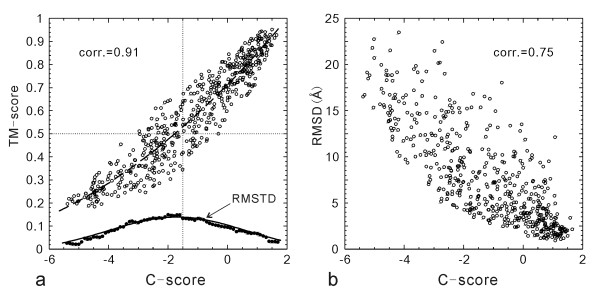
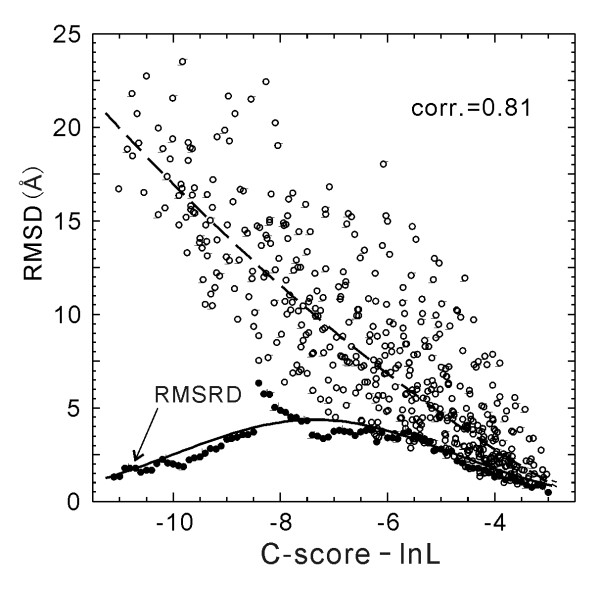
BACKGROUND: Prediction of 3-dimensional protein structures from amino acid sequences represents one of the most important problems in computational structural biology. The community-wide Critical Assessment of Structure Prediction (CASP) experiments have been designed to obtain an objective assessment of the state-of-the-art of the field, where I-TASSER was ranked as the best method in the server section of the recent 7th CASP experiment. Our laboratory has since then received numerous requests about the public availability of the I-TASSER algorithm and the usage of the I-TASSER predictions. RESULTS: An on-line version of I-TASSER is developed at the KU Center for Bioinformatics which has generated protein structure predictions for thousands of modeling requests from more than 35 countries. A scoring function (C-score) based on the relative clustering structural density and the consensus significance score of multiple threading templates is introduced to estimate the accuracy of the I-TASSER predictions. A large-scale benchmark test demonstrates a strong correlation between the C-score and the TM-score (a structural similarity measurement with values in [0, 1]) of the first models with a correlation coefficient of 0.91. Using a C-score cutoff > -1.5 for the models of correct topology, both false positive and false negative rates are below 0.1. Combining C-score and protein length, the accuracy of the I-TASSER models can be predicted with an average error of 0.08 for TM-score and 2 A for RMSD. CONCLUSION: The I-TASSER server has been developed to generate automated full-length 3D protein structural predictions where the benchmarked scoring system helps users to obtain quantitative assessments of the I-TASSER models. The output of the I-TASSER server for each query includes up to five full-length models, the confidence score, the estimated TM-score and RMSD, and the standard deviation of the estimations. The I-TASSER server is freely available to the academic community at http://zhang.bioinformatics.ku.edu/I-TASSER.
Overview
The claims and statistics of this paper haven’t been checked yet.
Free: it reads the open-access text and checks the first 5 claims that cite a source we can check. Create a free account to check every claim.
Integrity signals
Registry
Cites
Statistics
Figures
Verification
Claims the paper makes
The claims and statistics of this paper haven’t been checked yet.
Free: it reads the open-access text and checks the first 5 claims that cite a source we can check. Create a free account to check every claim.
Claims other papers make about this one
Each is checked against this paper’s own text: does it say what the citing paper says it does?
The source backs part of the claim, not all of it — or backs it for a different population, condition or comparison.
In the citing paper
“The estimated TM-score was shown to highly correlate with the actual TM-score, with a Pearson correlation coefficient (PCC) of 0.91 on 300 test proteins that are nonhomologous to the training proteins of I-TASSER.41”
From Functions of Essential Genes and a Scale-Free Protein Interaction Network Revealed by Structure-Based Function and Interaction Prediction for a Minimal Genome (2021) · cites this paper as [41]
Experimental — accuracy not yet measured
Self-check
Percentages, sums and reported differences re-computed from the paper’s own numbers.
The self-check needs the paper’s full text.
Citations
Cites
Gapped BLAST and PSI-BLAST: a new generation of protein database search programs
Altschul, S. (1997) · Nucleic Acids Research · doi:10.1093/nar/25.17.3389 · Cited by 73,302 · cited 1×
“%) to search for the possible folds by four simple variants of PPA methods, with different combinations of the hidden Markov model [17] and PSI-BLAST [18] profiles and the Needleman-Wunsch [19] and Smith-Waterman [20] alignment algorithms.”
Berman, H. M. (2000) · Nucleic Acids Research · doi:10.1093/nar/28.1.235 · Cited by 40,196
Needleman, S. B., & Wunsch, C. D. (1970) · Journal of Molecular Biology · doi:10.1016/0022-2836(70)90057-4 · Cited by 11,288
Identification of common molecular subsequences
Smith, T. F., & Waterman, M. S. (1981) · Journal of Molecular Biology · doi:10.1016/0022-2836(81)90087-5 · Cited by 9,940 · cited 1×
“%) to search for the possible folds by four simple variants of PPA methods, with different combinations of the hidden Markov model [17] and PSI-BLAST [18] profiles and the Needleman-Wunsch [19] and Smith-Waterman [20] alignment algorithms.”
TM-align: a protein structure alignment algorithm based on the TM-score
Zhang, Y. (2005) · Nucleic Acids Research · doi:10.1093/nar/gki524 · Cited by 3,774
Self-citationA solution for the best rotation to relate two sets of vectors
Kabsch, W. (1976) · Acta Crystallographica Section A · doi:10.1107/s0567739476001873 · Cited by 3,187
Scoring function for automated assessment of protein structure template quality
Zhang, Y., & Skolnick, J. (2004) · Proteins: Structure, Function, and Bioinformatics · doi:10.1002/prot.20264 · Cited by 2,392 · cited 4×
“One advantage of the TM-score is that the meaning of the TM-score cutoffs is independent of the size of proteins [6].”
InfluentialSelf-citationProtein Structure Prediction and Structural Genomics
Baker, D., & Sali, A. (2001) · Science · doi:10.1126/science.1065659 · Cited by 1,587
A Modern Course in Statistical Physics
Reichl, L. E., & Coppersmith, S. N. (1999) · Physics Today · doi:10.1063/1.882556 · Cited by 1,380
Hidden Markov models for detecting remote protein homologies.
Karplus, K., Barrett, C., & Hughey, R. (1998) · Bioinformatics · doi:10.1093/bioinformatics/14.10.846 · Cited by 1,102 · cited 1×
“%) to search for the possible folds by four simple variants of PPA methods, with different combinations of the hidden Markov model [17] and PSI-BLAST [18] profiles and the Needleman-Wunsch [19] and Smith-Waterman [20] alignment algorithms.”
Cited by
Items 1,001–1,024 of 1,024
Molecular insights into the human ABCB6 transporter
Song, G., Zhang, S., Tian, M., Zhang, L., Guo, R., Zhuo, W., & Yang, M. (2021) · Cell Discovery · doi:10.1038/s41421-021-00284-z · Cited by 41
Zhang, H., Li, J., Saravanan, K. M., Wu, H., Wang, Z., Wu, D., Wei, Y., Lu, Z. Z., Chen, Y. H., Wan, X., et al. (2021) · Frontiers in Pharmacology · doi:10.3389/fphar.2021.772296 · Cited by 42
“The TIPE2 sequence was obtained from UniProt Consortium (2021), and the TIPE2-ligand model was constructed by I-TASSER (Zhang, 2008).”
MethodCryoEM structure of the type IVa pilus secretin required for natural competence in Vibrio cholerae
Weaver, S. J., Ortega, D. R., Sazinsky, M. H., Dalia, T. N., Dalia, A. B., & Jensen, G. J. (2020) · Nature Communications · doi:10.1038/s41467-020-18866-y · Cited by 37
Zhang, C., Zheng, W., Cheng, M., Omenn, G. S., Freddolino, P. L., & Zhang, Y. (2021) · Journal of Proteome Research · doi:10.1021/acs.jproteome.0c00359 · Cited by 27
Self-citationStructural and sequencing analysis of local target DNA recognition by MLV integrase
Aiyer, S., Rossi, P., Malani, N., Schneider, W. M., Chandar, A., Bushman, F. D., Montelione, G. T., & Roth, M. J. (2015) · Nucleic Acids Research · doi:10.1093/nar/gkv410 · Cited by 25
Hayne, C. K., Lafferty, M. J., Eglinger, B. J., Kane, J. P., & Neher, S. B. (2017) · Biochemistry · doi:10.1021/acs.biochem.6b00945 · Cited by 25
Zhang, C., Lane, L., Omenn, G. S., & Zhang, Y. (2019) · Journal of Proteome Research · doi:10.1021/acs.jproteome.9b00537 · Cited by 22
Self-citationBarba, M., Di Pietro, L., Massimi, L., Geloso, M. C., Frassanito, P., Caldarelli, M., Michetti, F., Della Longa, S., Romitti, P. A., Di Rocco, C., et al. (2018) · Bone · doi:10.1016/j.bone.2018.04.013 · Cited by 19
Structural insights into a StART-like domain in Lam4 and its interaction with sterol ligands
Gatta, A. T., Sauerwein, A. C., Zhuravleva, A., Levine, T. P., & Matthews, S. (2018) · Biochemical and Biophysical Research Communications · doi:10.1016/j.bbrc.2017.12.109 · Cited by 18
A pH-sensitive switch activates virulence in Salmonella
Shetty, D., & Kenney, L. J. (2023) · eLife · doi:10.7554/elife.85690 · Cited by 16
A pH-sensitive switch activates virulence in Salmonella
(2022) · doi:10.1101/2022.12.15.520350 · Cited by 16
Janaszkiewicz, A., Tóth, Á., Faucher, Q., Martin, M., Chantemargue, B., Barin-Le Guellec, C., Marquet, P., & Di Meo, F. (2022) · Scientific Reports · doi:10.1038/s41598-022-10755-2 · Cited by 15
Characterization of Growth Suppressive Functions of a Splice Variant of Cyclin D2
Wafa, K., MacLean, J., Zhang, F., & Pasumarthi, K. B. S. (2013) · PLoS ONE · doi:10.1371/journal.pone.0053503 · Cited by 14
Liu, X., Zhang, Y., Wen, Z., Hao, Y., Banks, C. A. S., Cesare, J., Bhattacharya, S., Arvindekar, S., Lange, J. J., Xie, Y., et al. (2024) · Proceedings of the National Academy of Sciences · doi:10.1073/pnas.2318601121 · Cited by 9
Self-citationHigh-accuracy protein model quality assessment using attention graph neural networks
Zhang, P., Xia, C., & Shen, H.-B. (2023) · Briefings in Bioinformatics · doi:10.1093/bib/bbac614 · Cited by 9
High-accuracy protein model quality assessment using attention graph neural networks
Zhang, P., Xia, C., & Shen, H.-B. (2022) · doi:10.1101/2022.09.24.509136 · Cited by 9
Adaptive evolution of antioxidase-related genes in hypoxia-tolerant mammals
Wang, Q.-P., Luo, C.-Y., Xu, X.-H., Hu, W.-X., Gai, Y.-L., Gong, Y.-J., & Mu, Y. (2024) · Frontiers in Genetics · doi:10.3389/fgene.2024.1315677 · Cited by 7
Li, W., Sparks, R. P., Sun, C., Yang, Y., Pantano, L., Kirchner, R., Arghiani, N., Weilheimer, A., Toles, B. J., Chen, J. Y., et al. (2025) · Nature Communications · doi:10.1038/s41467-025-56900-z · Cited by 5
Regulatory Interactions between APOBEC3B N- and C-Terminal Domains
Braza, M. K. E., Demir, Ö., Ahn, S.-H., Morris, C. K., Calvó-Tusell, C., McGuire, K. L., de la Peña Avalos, B., Carpenter, M. A., Chen, Y., Casalino, L., et al. (2025) · Journal of Chemical Information and Modeling · doi:10.1021/acs.jcim.4c02272 · Cited by 3
Candida albicans PPR proteins are required for the expression of respiratory Complex I subunits
Wenda, J. M., Drzewicka, K., Mulica, P., Tetaud, E., di Rago, J. P., Golik, P., & Łabędzka-Dmoch, K. (2024) · GENETICS · doi:10.1093/genetics/iyae124 · Cited by 2
“Secondary structure prediction (Zhang 2008; Roy et al .”
Molecular characterization of Plasmodium falciparum DNA-3-methyladenine glycosylase
Pinthong, N., Limudomporn, P., Vasuvat, J., Adisakwattana, P., Rattaprasert, P., & Chavalitshewinkoon-Petmitr, P. (2020) · Malaria Journal · doi:10.1186/s12936-020-03355-w · Cited by 2
Assessing Protein Surface-Based Scoring for Interpreting Genomic Variants
Dsouza, N. R., Haque, N., Tripathi, S., & Zimmermann, M. T. (2024) · International Journal of Molecular Sciences · doi:10.3390/ijms252212018 · Cited by 2
“We used I-Tasser [31] to generate the model for KCNK9 from human KCNK1 (3ukm [32]) and KCNK4 (3um7 [33]), as experimental structures did not exist.”
Akcelik-Deveci, S., Kılıç, E., Mansur-Ozen, N., Timucin, E., Buyukcolak, Y., & Oktem-Okullu, S. (2024) · PLOS ONE · doi:10.1371/journal.pone.0300557 · Cited by 2
(2026) · doi:10.1038/s41598-024-84792-4
“For 3D structure prediction, SWISS-MODEL, I-TASSER, and AlphaFold2 were used.”
Metadata
- Authors
- Zhang, Y.
- Affiliations
- University of Kansas (US)
- Corresponding author
- Zhang, Yang
- ORCID
- Zhang, Yang
- Venue
- BMC Bioinformatics
- Published
- 2008-01-23
- Volume
- 9
- Issue
- 1
- Pages
- 40-40
- ISSN
- 1471-2105 (ISSN-L)
- PMC
- PMC2245901
- OpenAlex
- W2155201844
- Cited by
- 5,124
- References
- 32
- Citations by year
- 2026: 61 · 2025: 149 · 2024: 214 · 2023: 239 · 2022: 301 · 2021: 440 · 2020: 432 · 2019: 460 · 2018: 407 · 2017: 379 · 2016: 355 · 2015: 396 · 2014: 407 · 2013: 321 · 2012: 192
- FWCI
- 50.38
- Type
- journal article
- Language
- en
- Open access
- gold
- doi.org
- Licence
- cc-by
- creativecommons.org/licenses/by/2.0 (tdm)
- Locations
- BMC Bioinformatics (publishedVersion, cc-by)
- PubMed Central (publishedVersion, cc-by)
- PubMed (publishedVersion)
- DOAJ (DOAJ: Directory of Open Access Journals) (submittedVersion, cc-by-sa)
- KU ScholarWorks (University of Kansas) (submittedVersion, cc-by)
- Topics
- Life Sciences › Biochemistry, Genetics and Molecular Biology › Molecular Biology › Protein Structure and Dynamics
- Life Sciences › Biochemistry, Genetics and Molecular Biology › Structural Biology › Enzyme Structure and Function
- Life Sciences › Biochemistry, Genetics and Molecular Biology › Molecular Biology › Machine Learning in Bioinformatics
- Keywords
- I-TASSER, protein structure prediction, online prediction server, threading, C-score, prediction accuracy assessment, TM-score, RMSD, structural density
- MeSH terms
- Amino Acid Sequence, Computer Simulation, Models, Chemical, Models, Molecular, Molecular Sequence Data, Protein Conformation, Proteins, Software, Sequence Alignment, Internet, Sequence Analysis, Protein
About these checks
Registry, retraction, Cites and statistics results are computed, not judged, with one exception: a printed reference that no index lists is read once by a model before it counts as a citation error. Claims are extracted by a model and kept only when their quote appears verbatim in the text; each cited source is then checked, with a model’s help, for whether it says what the claim relies on. Those verdicts can be wrong — read the claim’s quote and the cited source before relying on one.
Statistics and arithmetic are recomputed, not judged.
Confidence bands are shown only for fields calibrated on our annotated test set. None is calibrated yet, so no band is shown.
What counts as a claim ›How we measure confidence ›How we check this ›
Are you an author, or do you see a problem with this page? Request a review
Data sources
Bibliographic data: Semantic Scholar, OpenAlex, Crossref.
Contains information from the Semantic Scholar Academic Graph Datasets, made available under the ODC Attribution License (ODC-BY 1.0).
Semantic Scholar’s data is described in: Kinney, R., et al. (2023). The Semantic Scholar Open Data Platform. arXiv:2301.10140.
