

Natural history of SLC11 genes in vertebrates: tales from the fish world
Open accessThe DOI matches its Crossref record; 99 of the 100 references it cites were found in a registry or an index.
Abstract
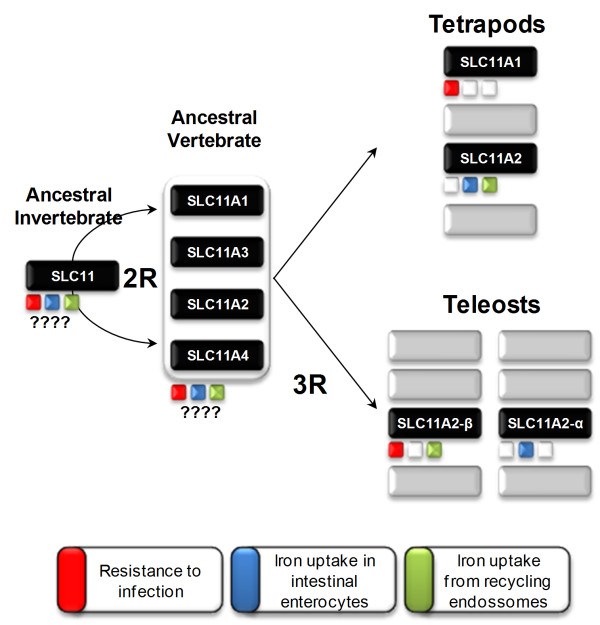
Background: The SLC11A1/Nramp1 and SLC11A2/Nramp2 genes belong to the SLC11/Nramp family of transmembrane divalent metal transporters, with SLC11A1 being associated with resistance to pathogens and SLC11A2 involved in intestinal iron uptake and transferrin-bound iron transport. Both members of the SLC11 gene family have been clearly identified in tetrapods; however SLC11A1 has never been documented in teleost fish and is believed to have been lost in this lineage during early vertebrate evolution. In the present work we characterized the SLC11 genes in teleosts and evaluated if the roles attributed to mammalian SLC11 genes are assured by other fish specific SLC11 gene members. Results: Two different SLC11 genes were isolated in the European sea bass (Dicentrarchus. labrax), and named slc11a2-α and slc11a2-β, since both were found to be evolutionary closer to tetrapods SLC11A2, through phylogenetic analysis and comparative genomics. Induction of slc11a2-α and slc11a2-β in sea bass, upon iron modulation or exposure to Photobacterium damselae spp. piscicida, was evaluated in in vivo or in vitro experimental models. Overall, slc11a2-α was found to respond only to iron deficiency in the intestine, whereas slc11a2-β was found to respond to iron overload and bacterial infection in several tissues and also in the leukocytes. Conclusions: Our data suggests that despite the absence of slc11a1, its functions have been undertaken by one of the slc11a2 duplicated paralogs in teleost fish in a case of synfunctionalization, being involved in both iron metabolism and response to bacterial infection. This study provides, to our knowledge, the first example of this type of sub-functionalization in iron metabolism genes, illustrating how conserving the various functions of the SLC11 gene family is of crucial evolutionary importance.
Overview
The claims and statistics of this paper haven’t been checked yet.
Free: it reads the open-access text and checks the first 5 claims that cite a source we can check. Create a free account to check every claim.
Integrity signals
Registry
Cites
Statistics
Figures
Verification
Claims the paper makes
The claims and statistics of this paper haven’t been checked yet.
Free: it reads the open-access text and checks the first 5 claims that cite a source we can check. Create a free account to check every claim.
Claims other papers make about this one
Each is checked against this paper’s own text: does it say what the citing paper says it does?
The cited source says what the claim attributes to it.
In the citing paper
“This view is supported by most of the direct experimental evidence, by the involvement of Nramp1 in iron recycling from senescent erythrocytes [47], by the similarity of Nramp1 to DMT1 whose transport properties are well characterized, and by the evidence that the function of Nramp1 may be carried out in teleost fish by a duplicated paralog of DMT1 [48].”
From Iron and infection (2018) · cites this paper as [48]
Self-check
Percentages, sums and reported differences re-computed from the paper’s own numbers.
The self-check needs the paper’s full text.
Citations
Cites
The neighbor-joining method: a new method for reconstructing phylogenetic trees.
(1987) · Molecular Biology and Evolution · doi:10.1093/oxfordjournals.molbev.a040454 · Cited by 59,715 · cited 1×
“Additional phylogenetic trees were constructed using Bayesian inference, with MrBayes v3.1.2 [99,100] and Maximum-Parsimony and Neighbor-Joining method of Saitou and Nei [ 101 ], with MEGA5.”
MethodInfluentialTamura, K., Peterson, D., Peterson, N., Stecher, G., Nei, M., & Kumar, S. (2011) · Molecular Biology and Evolution · doi:10.1093/molbev/msr121 · Cited by 39,969
MrBayes 3: Bayesian phylogenetic inference under mixed models
Ronquist, F., & Huelsenbeck, J. P. (2003) · Bioinformatics · doi:10.1093/bioinformatics/btg180 · Cited by 29,077 · cited 1×
“Additional phylogenetic trees were constructed using Bayesian inference, with MrBayes v3.1.2 [ 99 ,100] and Maximum-Parsimony and Neighbor-Joining method of Saitou and Nei [101], with MEGA5.”
MethodInfluentialMRBAYES: Bayesian inference of phylogenetic trees.
Huelsenbeck, J. P., & Ronquist, F. (2001) · Bioinformatics · doi:10.1093/bioinformatics/17.8.754 · Cited by 21,937 · cited 2×
“The clarification of the evolutionary scenario along with the functional data suggests a curious and complex pattern of sub-functionalization [88] and paralog functional equivalence, a process previously named as synfunctionalization [89, 90 ]: the fish specific paralog slc11a2-a retained in part the original mammalia…”
BackgroundMethodInfluentialMultiple sequence alignment with hierarchical clustering
Corpet, F. (1988) · Nucleic Acids Research · doi:10.1093/nar/16.22.10881 · Cited by 5,393 · cited 1×
“Sequence analysis and alignment Both strands of the cDNA were sequenced and assembled using Multalin [95, 96 ] and by manual comparison of overlapping electropherograms.”
MethodThe National Center for Biotechnology Information
Benson, D., Boguski, M., Lipman, D. J., & Ostell, J. (1990) · Genomics · doi:10.1016/0888-7543(90)90583-g · Cited by 5,126
Genome Sequence of the Nematode C. elegans : A Platform for Investigating Biology
The C. elegans Sequencing Consortium* (1998) · Science · doi:10.1126/science.282.5396.2012 · Cited by 4,485
Preservation of Duplicate Genes by Complementary, Degenerative Mutations
Force, A., Lynch, M., Pickett, F. B., Amores, A., Yan, Y.-L., & Postlethwait, J. (1999) · Genetics · doi:10.1093/genetics/151.4.1531 · Cited by 3,529
Cloning and characterization of a mammalian proton-coupled metal-ion transporter
Gunshin, H., Mackenzie, B., Berger, U. V., Gunshin, Y., Romero, M. F., Boron, W. F., Nussberger, S., Gollan, J. L., & Hediger, M. A. (1997) · Nature · doi:10.1038/41343 · Cited by 3,166 · cited 5×
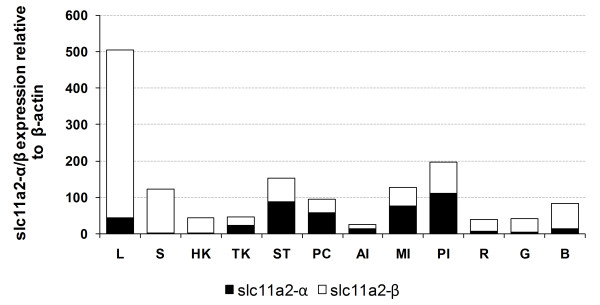
“This is in accordance with previous findings that intestinal metal uptake in teleost fish occurs mainly in the posterior portion of the intestine [46,47], unlike mammals, where uptake occurs primarily in the duodenum [23].”
BackgroundResultInfluentialNemeth, E., Rivera, S., Gabayan, V., Keller, C., Taudorf, S., Pedersen, B. K., & Ganz, T. (2004) · Journal of Clinical Investigation · doi:10.1172/jci200420945 · Cited by 2,650
Jaillon, O., Aury, J.-M., Brunet, F., Petit, J.-L., Stange-Thomann, N., Mauceli, E., Bouneau, L., Fischer, C., Ozouf-Costaz, C., Bernot, A., et al. (2004) · Nature · doi:10.1038/nature03025 · Cited by 1,966 · cited 1×
“Furthermore, we observe that the mechanistic origin of the SLC11 genes is likely linked to the fish 3R genome duplication [ 71 ].”
BackgroundHentze, M. W., Muckenthaler, M. U., & Andrews, N. C. (2004) · Cell · doi:10.1016/s0092-8674(04)00343-5 · Cited by 1,736
The amphioxus genome and the evolution of the chordate karyotype
Putnam, N. H., Butts, T., Ferrier, D. E. K., Furlong, R. F., Hellsten, U., Kawashima, T., Robinson-Rechavi, M., Shoguchi, E., Terry, A., Yu, J.-K., et al. (2008) · Nature · doi:10.1038/nature06967 · Cited by 1,580 · cited 2×
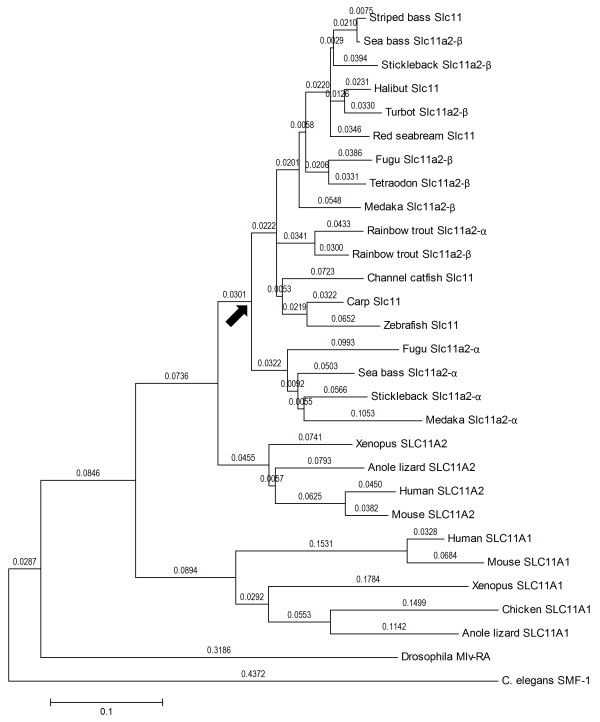
“Whilst it is known that mammalian SLC11A1 and SLC11A2 have likely resulted from genome duplications in early vertebrate ancestry (2R) [36,49,50], the potential role of the teleost fish-specific genome duplication (3R) [51,52] in the evolutionary history of this gene family has not been considered.”
BackgroundMicrocytic anaemia mice have a mutation in Nramp2, a candidate iron transporter gene
Fleming, M. D., Trenor, C. C., Su, M. A., Foernzler, D., Beier, D. R., Dietrich, W. F., & Andrews, N. C. (1997) · Nature Genetics · doi:10.1038/ng0897-383 · Cited by 1,159 · cited 1×
“underline microcytic anemia in mice and rats, resulting from an impairment of iron recycling and intestinal absorption [27,28].”
BackgroundNatural resistance to infection with intracellular parasites: isolation of a candidate for Bcg
Vidal, S. M., Malo, D., Vogan, K., Skamene, E., & Gros, P. (1993) · Cell · doi:10.1016/0092-8674(93)90135-d · Cited by 1,104
Gene duplications and the origins of vertebrate development
Holland, P. W. H., Garcia-Fernàndez, J., Williams, N. A., & Sidow, A. (1994) · Development · doi:10.1242/dev.1994.supplement.125 · Cited by 962
Fleming, M. D., Romano, M. A., Su, M. A., Garrick, L. M., Garrick, M. D., & Andrews, N. C. (1998) · Proceedings of the National Academy of Sciences · doi:10.1073/pnas.95.3.1148 · Cited by 936 · cited 1×
“underline microcytic anemia in mice and rats, resulting from an impairment of iron recycling and intestinal absorption [27,28].”
BackgroundNormal structure, function, and histology of the spleen
Cesta, M. F. (2006) · Toxicologic Pathology · doi:10.1080/01926230600867743 · Cited by 731 · cited 1×
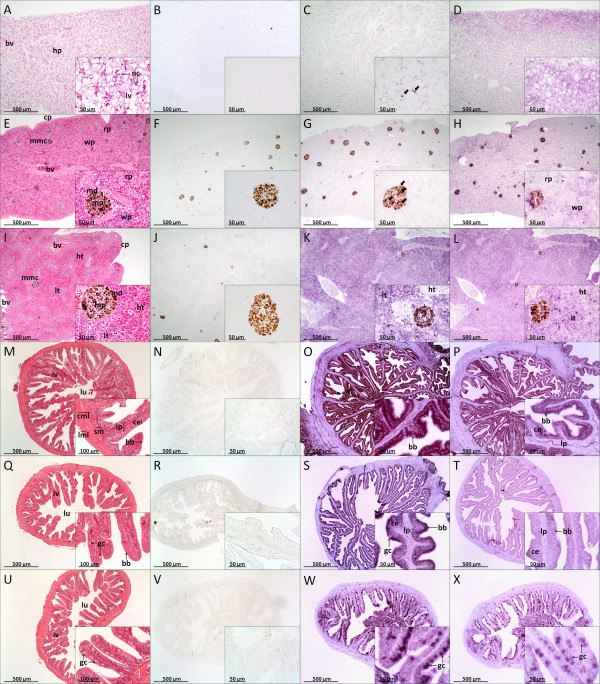
“Note that in the spleen and kidney slc11a2-b mRNA is clearly visible in the white pulp and lymphomyeloid tissue, respectively, which are both areas rich in B- and T-lymphocytes and actively involved in the immune response [ 75 ,76].”
BackgroundI RON R EGULATORY P ROTEINS AND THE M OLECULAR C ONTROL OF M AMMALIAN I RON M ETABOLISM
Eisenstein, R. S. (2000) · Annual Review of Nutrition · doi:10.1146/annurev.nutr.20.1.627 · Cited by 653
Aggressive assembly of pyrosequencing reads with mates
Miller, J. R., Delcher, A. L., Koren, S., Venter, E., Walenz, B. P., Brownley, A., Johnson, J., Li, K., Mobarry, C., & Sutton, G. (2008) · Bioinformatics · doi:10.1093/bioinformatics/btn548 · Cited by 602 · cited 1×
“The genomic contigs were the result of an assembly of ~3× genome coverage Sanger sequencing reads and ~3× coverage 454 FLX Titanium pyro-sequencing reads by the Celera Assembler v5.3 [ 94 ].”
MethodComparative genomics provides evidence for an ancient genome duplication event in fish
Taylor, J. S., Van de Peer, Y., Braasch, I., & Meyer, A. (2001) · Philosophical Transactions of the Royal Society of London. Series B: Biological Sciences · doi:10.1098/rstb.2001.0975 · Cited by 535 · cited 2×
“Whilst it is known that mammalian SLC11A1 and SLC11A2 have likely resulted from genome duplications in early vertebrate ancestry (2R) [36,49,50], the potential role of the teleost fish-specific genome duplication (3R) [51,52] in the evolutionary history of this gene family has not been considered.”
BackgroundNutritive metal uptake in teleost fish
Bury, N. R., Walker, P. A., & Glover, C. N. (2003) · Journal of Experimental Biology · doi:10.1242/jeb.00068 · Cited by 519 · cited 3×
“This is in accordance with previous findings that intestinal metal uptake in teleost fish occurs mainly in the posterior portion of the intestine [46,47], unlike mammals, where uptake occurs primarily in the duodenum [23].”
BackgroundResultFunctional biology of intestinal goblet cells
Specian, R. D., & Oliver, M. G. (1991) · American Journal of Physiology-Cell Physiology · doi:10.1152/ajpcell.1991.260.2.c183 · Cited by 467
Canonne-Hergaux, F., Gruenheid, S., Ponka, P., & Gros, P. (1999) · Blood · doi:10.1182/blood.v93.12.4406 · Cited by 451
Hubert, N., & Hentze, M. W. (2002) · Proceedings of the National Academy of Sciences · doi:10.1073/pnas.192423399 · Cited by 428 · cited 3×
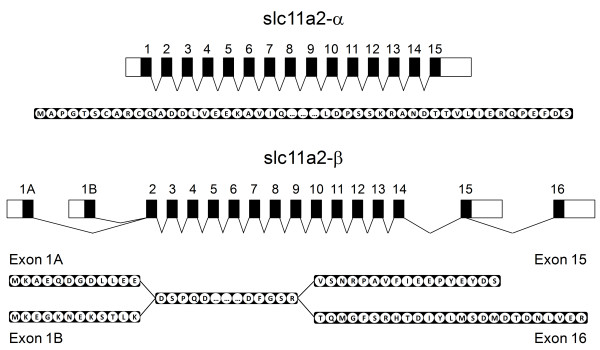
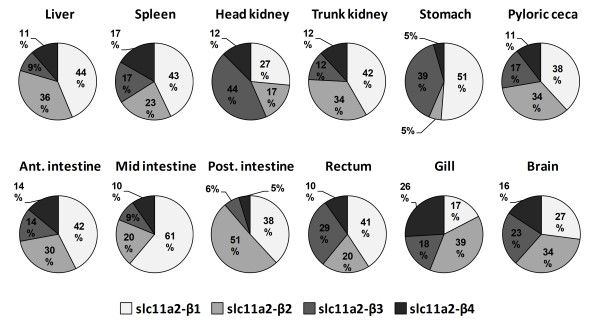
“The four b transcripts are the result of alternative exon splicing in the 5’ and 3’ ends, in a similar fashion to what has been described for human SLC11A2 [62,63].”
BackgroundResultGruenheid, S., Pinner, E., Desjardins, M., & Gros, P. (1997) · The Journal of Experimental Medicine · doi:10.1084/jem.185.4.717 · Cited by 428 · cited 1×
“Its expression is almost exclusively restricted to the membrane of late endosomes and lysosomes of immune cells of myeloid lineages (neutrophils, macrophages, dendritic cells) [5,6] and to neuronal cells [7].”
BackgroundDivalent-metal transport by NRAMP proteins at the interface of host–pathogen interactions
Forbes, J. R., & Gros, P. (2001) · Trends in Microbiology · doi:10.1016/s0966-842x(01)02098-4 · Cited by 424 · cited 2×
“The first member of the SLC11 family, SLC11A1, also known as the natural resistance-associated macrophage protein 1 (NRAMP1), is a divalent cation/proton transporter, which has been proposed to function as either a symporter [1,2] or an antiporter [3,4].”
BackgroundFlemming (1998) · Medical Entomology and Zoology · Cited by 412
Immunogenetics of disease resistance in fish: A comparative approach
Wiegertjes, G. F., Stet, R. M., Parmentier, H. K., & van Muiswinkel, W. B. (1996) · Developmental & Comparative Immunology · doi:10.1016/s0145-305x(96)00032-8 · Cited by 377 · cited 1×
“Isolation and characterization of the slc11 gene(s) in sea bass, as a candidate gene(s) for host defense to infection with pathogens, may be of great benefit to better understand its role in the immune system and to the selection of disease resistant stocks [61].”
BackgroundNramp defines a family of membrane proteins.
Cellier, M., Privé, G., Belouchi, A., Kwan, T., Rodrigues, V, Chia, W., & Gros, P. (1995) · Proceedings of the National Academy of Sciences · doi:10.1073/pnas.92.22.10089 · Cited by 349 · cited 1×
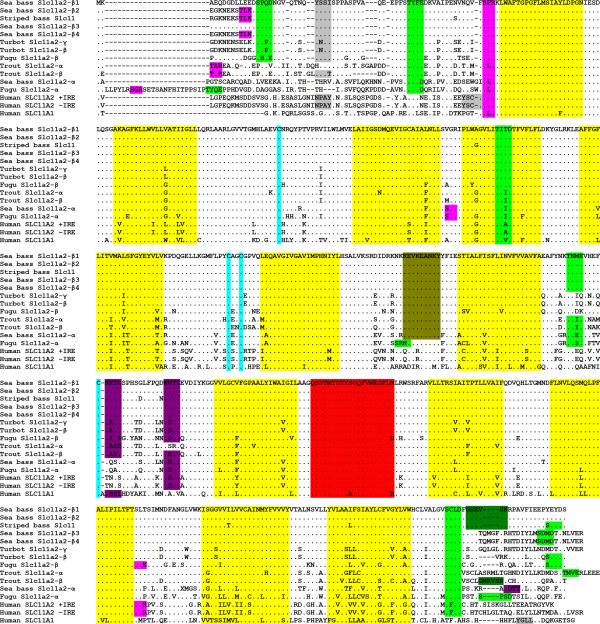
“SLC11 proteins showed that the signature features of the SLC11 family [36,42,45, 69 ] can also be found in the sea bass (Figure 3 and Additional File 1, Figure S1): twelve putative transmembrane domains (TMD), a conserved transport motif (between TMD8 and TMD9), cysteine residues in loops 2, 5 and 7. Other motifs”
BackgroundAnemia of inflammation: the cytokine-hepcidin link
Andrews, N. C. (2004) · Journal of Clinical Investigation · doi:10.1172/jci21441 · Cited by 334 · cited 2×
“This response was first described in humans [81, 82 ] and later reported for teleost fish, namely sea bass [56,57,59] and Nile tilapia [83].”
BackgroundLee, P. L., Gelbart, T., West, C., Halloran, C., & Beutler, E. (1998) · Blood Cells, Molecules, and Diseases · doi:10.1006/bcmd.1998.0186 · Cited by 318 · cited 4×
“The four b transcripts are the result of alternative exon splicing in the 5’ and 3’ ends, in a similar fashion to what has been described for human SLC11A2 [62,63].”
BackgroundResultInfluentialForbes, J. R., & Gros, P. (2003) · Blood · doi:10.1182/blood-2003-02-0425 · Cited by 288 · cited 1×
“The first member of the SLC11 family, SLC11A1, also known as the natural resistance-associated macrophage protein 1 (NRAMP1), is a divalent cation/proton transporter, which has been proposed to function as either a symporter [1,2] or an antiporter [3,4].”
BackgroundIdentification and characterization of a second mouse Nramp gene
Gruenheid, S., Cellier, M., Vidal, S., & Gros, P. (1995) · Genomics · doi:10.1016/0888-7543(95)80053-o · Cited by 287 · cited 3×
“The overall constitutive expression pattern of sea bass slc11 transcripts resembles that of the mammalian SLC11A2 gene [24-26], but also of slc11a2 genes described in other teleost fishes [33,35,42,43,45].”
BackgroundCharacterization and prediction of alternative splice sites
Wang, M., & Marín, A. (2006) · Gene · doi:10.1016/j.gene.2005.07.015 · Cited by 276 · cited 2×
“Alternative Splice Site Predictor.”
BackgroundSusceptibility to Leprosy Is Linked to the Human NRAMP1 Gene
Abel, L., Sánchez, F. O., Oberti, J., Thuc, N. V., Van Hoa, L., Lap, V. D., Skamene, E., Lagrange, P. H., & Schurr, E. (1998) · The Journal of Infectious Diseases · doi:10.1086/513830 · Cited by 268 · cited 1×
“SLC11A1 was first found to play a crucial role in the defense against several unrelated pathogens in mice, such as Mycobacteria, Leishmania and Salmonella [8-10], and several studies have shown that polymorphisms in SLC11A1 are involved in many infectious [11-15] and autoimmune [16-20] diseases in humans.”
BackgroundCellier, M., Govoni, G., Vidal, S., Kwan, T., Groulx, N., Liu, J., Sanchez, F., Skamene, E., Schurr, E., & Gros, P. (1994) · The Journal of experimental medicine · doi:10.1084/jem.180.5.1741 · Cited by 245 · cited 1×
“SLC11 homologs have been found in many distant evolutionarily related groups, such as humans [29,30], mice [9,24], rats [23], birds [31], fishes [32-36], insects [37], nematodes [38], plants [39], yeast [40] and even bacteria [41].”
BackgroundMakui, H., Roig, E., Cole, S. T., Helmann, J. D., Gros, P., & Cellier, M. F. M. (2000) · Molecular Microbiology · doi:10.1046/j.1365-2958.2000.01774.x · Cited by 241 · cited 1×
“SLC11 homologs have been found in many distant evolutionarily related groups, such as humans [29,30], mice [9,24], rats [23], birds [31], fishes [32-36], insects [37], nematodes [38], plants [39], yeast [40] and even bacteria [41].”
BackgroundRegRNA: an integrated web server for identifying regulatory RNA motifs and elements
Huang, H.-Y., Chien, C.-H., Jen, K.-H., & Huang, H.-D. (2006) · Nucleic Acids Research · doi:10.1093/nar/gkl333 · Cited by 239 · cited 1×
“However, one IRE motif was found in the 5’ region of slc11a2-b (5’-UGUCUGU-GUCAGAGAACAUGGUG-3’), with an upstream distance to the start codon of 508 bp, using RegRNA [66, 67 ] and corroborated manually.”
MethodTabuchi, M., Yoshimori, T., Yamaguchi, K., Yoshida, T., & Kishi, F. (2000) · Journal of Biological Chemistry · doi:10.1074/jbc.m001478200 · Cited by 238 · cited 3×
“The overall constitutive expression pattern of sea bass slc11 transcripts resembles that of the mammalian SLC11A2 gene [24-26], but also of slc11a2 genes described in other teleost fishes [33,35,42,43,45].”
BackgroundTorrance, J. D. (1980) · Medical Entomology and Zoology · Cited by 234
Susceptibility to mycobacterial infections: the importance of host genetics
Bellamy, R. (2003) · Genes & Immunity · doi:10.1038/sj.gene.6363915 · Cited by 226 · cited 1×
“However, the resistance mechanisms attributed to SLC11A1 are still not fully understood [21,22].”
BackgroundNatural-resistance-associated macrophage protein 1 is an H+/bivalent cation antiporter
GOSWAMI, T., BHATTACHARJEE, A., BABAL, P., SEARLE, S., MOORE, E., LI, M., & BLACKWELL, J. M. (2001) · Biochemical Journal · doi:10.1042/bj3540511 · Cited by 218 · cited 1×
“The first member of the SLC11 family, SLC11A1, also known as the natural resistance-associated macrophage protein 1 (NRAMP1), is a divalent cation/proton transporter, which has been proposed to function as either a symporter [1,2] or an antiporter [3,4].”
BackgroundPortnoy, M. E., Liu, X. F., & Culotta, V. C. (2000) · Molecular and Cellular Biology · doi:10.1128/.20.21.7893-7902.2000 · Cited by 217 · cited 1×
“SLC11 homologs have been found in many distant evolutionarily related groups, such as humans [29,30], mice [9,24], rats [23], birds [31], fishes [32-36], insects [37], nematodes [38], plants [39], yeast [40] and even bacteria [41].”
BackgroundCells and Tissues of the Immune System of Fish
Zapata, A. G., Chibá, A., & Varas, A. (1996) · Fish Physiology · doi:10.1016/s1546-5098(08)60271-x · Cited by 184 · cited 1×
“Note that in the spleen and kidney slc11a2-b mRNA is clearly visible in the white pulp and lymphomyeloid tissue, respectively, which are both areas rich in B- and T-lymphocytes and actively involved in the immune response [75, 76 ].”
BackgroundTransferrin and ferritin response to bacterial infection: The role of the liver and brain in fish
Neves, J. V., Wilson, J. M., & Rodrigues, P. N. S. (2009) · Developmental & Comparative Immunology · doi:10.1016/j.dci.2009.02.001 · Cited by 175 · cited 4×
“European sea bass (Dicentrarchus labrax) was selected as the teleost model for this study due to the growing amount of data on its immune system [53], the possibility of making use of its partially sequenced genome [54,55] and our previous experience with sea bass models of infection and iron modulation [56-59].”
BackgroundMethodInfluentialSelf-citationIron acquisition by teleost fish
Bury, N. R., & Grosell, M. (2003) · Comparative Biochemistry and Physiology Part C Toxicology & Pharmacology · doi:10.1016/s1532-0456(03)00021-8 · Cited by 175 · cited 3×
“This is in accordance with previous findings that intestinal metal uptake in teleost fish occurs mainly in the posterior portion of the intestine [46,47], unlike mammals, where uptake occurs primarily in the duodenum [23].”
BackgroundResultRodrigues, P. N. S., Vázquez-Dorado, S., Neves, J. V., & Wilson, J. M. (2006) · Developmental & Comparative Immunology · doi:10.1016/j.dci.2006.02.005 · Cited by 169 · cited 3×
“European sea bass (Dicentrarchus labrax) was selected as the teleost model for this study due to the growing amount of data on its immune system [53], the possibility of making use of its partially sequenced genome [54,55] and our previous experience with sea bass models of infection and iron modulation [56-59].”
BackgroundMethodSelf-citationConrad, M. E., & Umbreit, J. N. (2002) · Blood Cells, Molecules, and Diseases · doi:10.1006/bcmd.2002.0564 · Cited by 166 · cited 1×
“In mammals, there are conflicting reports on the presence of SLC11A2 in the goblet cells, with some reporting its absence [79] while others report its presence [ 80 ], suggesting that, along with mobilferrin, SLC11A2 facilitates iron uptake.”
BackgroundLocalisation of Nramp1 in macrophages: Modulation with activation and infection
Searle, S., Bright, N. A., Roach, T. I. A., Atkinson, P. G. P., Barton, C. H., Meloen, R. H., & Blackwell, J. M. (1998) · Journal of Cell Science · doi:10.1242/jcs.111.19.2855 · Cited by 159 · cited 1×
“Its expression is almost exclusively restricted to the membrane of late endosomes and lysosomes of immune cells of myeloid lineages (neutrophils, macrophages, dendritic cells) [5,6] and to neuronal cells [7].”
BackgroundChen, C., Wooster, G. A., & Bowser, P. R. (2004) · Aquaculture · doi:10.1016/j.aquaculture.2004.05.033 · Cited by 151 · cited 1×
“This response was first described in humans [81,82] and later reported for teleost fish, namely sea bass [56,57,59] and Nile tilapia [ 83 ].”
BackgroundAlternative Splicing Regulates the Subcellular Localization of Divalent Metal Transporter 1 Isoforms
Tabuchi, M., Tanaka, N., Nishida-Kitayama, J., Ohno, H., & Kishi, F. (2002) · Molecular Biology of the Cell · doi:10.1091/mbc.e02-03-0165 · Cited by 141 · cited 1×
“This observation provides further evidence for a sub-functionalization of slc11a2 homologs in sea bass, with slc11a2-a localization resembling that of the mammalian SLC11A2 IRE-positive isoforms and slc11a2-b with the more general distribution of mammalian SLC11A2 IRE-negative isoforms [62, 74 ,77].”
BackgroundGubler, C. J., Cartwright, G. E., & Wintrobe, M. M. (1950) · Journal of Biological Chemistry · doi:10.1016/s0021-9258(19)50988-7 · Cited by 139
Infection Genomics:Nramp1 as a Major Determinant of Natural Resistance to Intracellular Infections
Skamene, M., Schurr, P., & Gros, P. (1998) · Annual Review of Medicine · doi:10.1146/annurev.med.49.1.275 · Cited by 139 · cited 1×
“SLC11A1 was first found to play a crucial role in the defense against several unrelated pathogens in mice, such as Mycobacteria, Leishmania and Salmonella [8-10], and several studies have shown that polymorphisms in SLC11A1 are involved in many infectious [11-15] and autoimmune [16-20] diseases in humans.”
BackgroundRodrigues, V., Cheah, P. Y., Ray, K., & Chia, W. (1995) · The EMBO Journal · doi:10.1002/j.1460-2075.1995.tb07303.x · Cited by 136 · cited 1×
“SLC11 homologs have been found in many distant evolutionarily related groups, such as humans [29,30], mice [9,24], rats [23], birds [31], fishes [32-36], insects [37], nematodes [38], plants [39], yeast [40] and even bacteria [41].”
BackgroundEvolution of vertebrate opioid receptors
Dreborg, S., Sundström, G., Larsson, T. A., & Larhammar, D. (2008) · Proceedings of the National Academy of Sciences · doi:10.1073/pnas.0805590105 · Cited by 129 · cited 1×
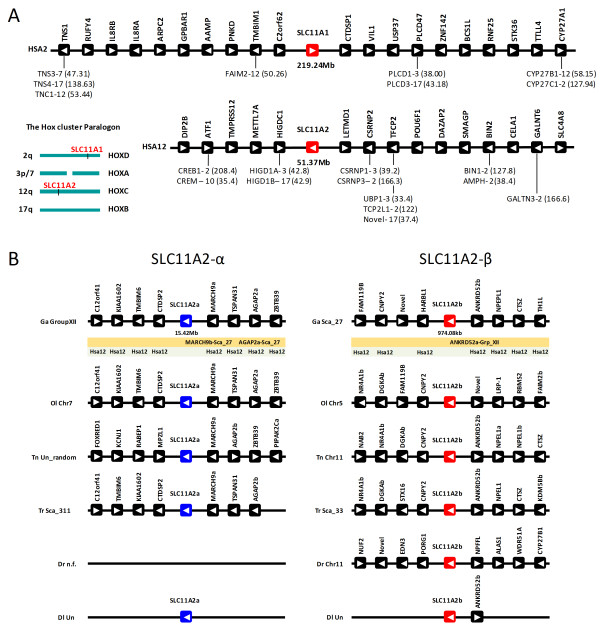
“Syntenic data can be a powerful tool to facilitate the finding of orthologs and in the identification of duplication processes [ 70 ].”
MethodCloning and characterization of a second human NRAMP gene on chromosome 12q13
Vidal, S. M., Belouchi, A., Cellier, M. F., Beatty, B., & Gros, P. (1995) · Mammalian Genome · doi:10.1007/bf00352405 · Cited by 114 · cited 2×
“The overall constitutive expression pattern of sea bass slc11 transcripts resembles that of the mammalian SLC11A2 gene [24-26], but also of slc11a2 genes described in other teleost fishes [33,35,42,43,45].”
BackgroundThe zebrafish mutant gene chardonnay (cdy) encodes divalent metal transporter 1 (DMT1).
Donovan, A. (2002) · Blood · doi:10.1182/blood-2002-04-1169 · Cited by 106
Functional Expression of Nramp1 In Vitro in the Murine Macrophage Line RAW264.7
Govoni, G., Canonne-Hergaux, F., Pfeifer, C. G., Marcus, S. L., Mills, S. D., Hackam, D. J., Grinstein, S., Malo, D., Finlay, B. B., & Gros, P. (1999) · Infection and Immunity · doi:10.1128/iai.67.5.2225-2232.1999 · Cited by 96 · cited 1×
“Not much information is available on the expression of SLC11 homologs in leukocytes, but it is known that mammalian SLC11A1 expression is stimulated by M. avium in peritoneal macrophages [85] and by LPS and IFN-g in RAW264.7 macrophages [ 86 ].”
BackgroundBucheton, B., Abel, L., Kheir, M. M., Mirgani, A., EL-Safi, S. H., Chevillard, C., & Dessein, A. J. J. (2003) · Genes and Immunity · doi:10.1038/sj.gene.6363927 · Cited by 89 · cited 1×
“SLC11A1 was first found to play a crucial role in the defense against several unrelated pathogens in mice, such as Mycobacteria, Leishmania and Salmonella [8-10], and several studies have shown that polymorphisms in SLC11A1 are involved in many infectious [11-15] and autoimmune [16-20] diseases in humans.”
BackgroundGOMES, & APPELBERG (1998) · Immunology · doi:10.1046/j.1365-2567.1998.00630.x · Cited by 89 · cited 1×
“SLC11A1 was first found to play a crucial role in the defense against several unrelated pathogens in mice, such as Mycobacteria, Leishmania and Salmonella [8-10], and several studies have shown that polymorphisms in SLC11A1 are involved in many infectious [11-15] and autoimmune [16-20] diseases in humans.”
BackgroundZanuy, S., Carrillo, M., Felip, A., Rodrı́guez, L., Blázquez, M., Ramos, J., & Piferrer, F. (2001) · Aquaculture · doi:10.1016/s0044-8486(01)00771-2 · Cited by 81
Kuhl, H., Beck, A., Wozniak, G., Canário, A. V. M., Volckaert, F. A. M., & Reinhardt, R. (2010) · BMC Genomics · doi:10.1186/1471-2164-11-68 · Cited by 80 · cited 1×
“European sea bass (Dicentrarchus labrax) was selected as the teleost model for this study due to the growing amount of data on its immune system [53], the possibility of making use of its partially sequenced genome [54,55] and our previous experience with sea bass models of infection and iron modulation [56-59].”
MethodSelf-citationThe anemia of infection. XVII. A review.
CARTWRIGHT, G. E., & Mm, W. (1952) · PubMed · Cited by 72
Lam-Yuk-Tseung, S., & Gros, P. (2006) · Biochemistry · doi:10.1021/bi052307m · Cited by 71 · cited 1×
“This observation provides further evidence for a sub-functionalization of slc11a2 homologs in sea bass, with slc11a2-a localization resembling that of the mammalian SLC11A2 IRE-positive isoforms and slc11a2-b with the more general distribution of mammalian SLC11A2 IRE-negative isoforms [62,74, 77 ].”
BackgroundPolymorphism at NRAMP1 and D2S1471 loci associated with juvenile rheumatoid arthritis
Sanjeevi, C. B., Miller, E. N., Dabadghao, P., Rumba, I., Shtauvere, A., Denisova, A., Clayton, D., & Blackwell, J. M. (2000) · Arthritis & Rheumatism · doi:10.1002/1529-0131(200006)43:6<1397::aid-anr25>3.0.co;2-6 · Cited by 70 · cited 1×
“SLC11A1 was first found to play a crucial role in the defense against several unrelated pathogens in mice, such as Mycobacteria, Leishmania and Salmonella [8-10], and several studies have shown that polymorphisms in SLC11A1 are involved in many infectious [11-15] and autoimmune [16-20] diseases in humans.”
BackgroundBoth Nramp1 and DMT1 are necessary for efficient macrophage iron recycling
Soe-Lin, S., Apte, S. S., Mikhael, M. R., Kayembe, L. K., Nie, G., & Ponka, P. (2010) · Experimental Hematology · doi:10.1016/j.exphem.2010.04.003 · Cited by 69 · cited 1×
“As for the in vivo experimental infection, it has yet to be determined whether Slc11a2-b is functioning as SLC11A1 or SLC11A2, but since both forms are known to be required for an efficient erythrophagocytosis and iron recycling in macrophages [ 87 ], it is likely that it is performing both functions.”
BackgroundEsposito, L., Hill, N. J., Pritchard, L. E., Cucca, F., Muxworthy, C., Merriman, M. E., Wilson, A., Julier, C., Delepine, M., Tuomilehto, J., et al. (1998) · Diabetes · doi:10.2337/diabetes.47.11.1797 · Cited by 63
Belouchi, A., Cellier, M. F., Kwan, T., Saini, H. S., Leroux, G. D., & Gros, P. (1995) · Plant Molecular Biology · doi:10.1007/bf00020461 · Cited by 60 · cited 1×
“SLC11 homologs have been found in many distant evolutionarily related groups, such as humans [29,30], mice [9,24], rats [23], birds [31], fishes [32-36], insects [37], nematodes [38], plants [ 39 ], yeast [40] and even bacteria [41].”
BackgroundRevisiting recent challenges to the ancient fish-specific genome duplication hypothesis
Taylor, J. S., de Peer, Y. V., & Meyer, A. (2001) · Current Biology · doi:10.1016/s0960-9822(01)00610-8 · Cited by 58 · cited 2×
“Whilst it is known that mammalian SLC11A1 and SLC11A2 have likely resulted from genome duplications in early vertebrate ancestry (2R) [36,49,50], the potential role of the teleost fish-specific genome duplication (3R) [51,52] in the evolutionary history of this gene family has not been considered.”
BackgroundSechi, L. A. (2006) · World Journal of Gastroenterology · doi:10.3748/wjg.v12.i44.7161 · Cited by 58 · cited 1×
“SLC11A1 was first found to play a crucial role in the defense against several unrelated pathogens in mice, such as Mycobacteria, Leishmania and Salmonella [8-10], and several studies have shown that polymorphisms in SLC11A1 are involved in many infectious [11-15] and autoimmune [16-20] diseases in humans.”
BackgroundComparative Analysis of Two Nramp Loci from Rainbow Trout
Dorschner, M. O., & Phillips, R. B. (1999) · DNA and Cell Biology · doi:10.1089/104454999315123 · Cited by 50 · cited 4×
“The overall constitutive expression pattern of sea bass slc11 transcripts resembles that of the mammalian SLC11A2 gene [24-26], but also of slc11a2 genes described in other teleost fishes [33,35,42,43,45].”
BackgroundInfluentialGitelman, I. (2007) · Molecular Biology and Evolution · doi:10.1093/molbev/msm120 · Cited by 49
Review on the immunology of European sea bass Dicentrarchus labrax
Chistiakov, D. A., Hellemans, B., & VOLCKAERT, F. A. M. (2007) · Veterinary Immunology and Immunopathology · doi:10.1016/j.vetimm.2007.02.005 · Cited by 45 · cited 1×
“European sea bass (Dicentrarchus labrax) was selected as the teleost model for this study due to the growing amount of data on its immune system [53], the possibility of making use of its partially sequenced genome [54,55] and our previous experience with sea bass models of infection and iron modulation [56-59].”
MethodAwomoyi, A. A. (2007) · FEMS Immunology & Medical Microbiology · doi:10.1111/j.1574-695x.2007.00231.x · Cited by 45 · cited 1×
“However, the resistance mechanisms attributed to SLC11A1 are still not fully understood [21,22].”
BackgroundHatta, M., Ratnawati, R., Tanaka, M., Ito, J., Shirakawa, T., & Kawabata, M. (2010) · PubMed · Cited by 43
Nramp1 is expressed in neurons and is associated with behavioural and immune responses to stress
Evans, C. A., Harbuz, M. S., Ostenfeld, T., Norrish, A. R., & Blackwell, J. M. (2001) · Neurogenetics · doi:10.1007/s100480100105 · Cited by 43 · cited 1×
“Its expression is almost exclusively restricted to the membrane of late endosomes and lysosomes of immune cells of myeloid lineages (neutrophils, macrophages, dendritic cells) [5,6] and to neuronal cells [7].”
BackgroundEvolution of Differences in Transport Function in Slc11a Family Members
Techau, M. E., Valdez-Taubas, J., Popoff, J.-F., Francis, R., Seaman, M., & Blackwell, J. M. (2007) · Journal of Biological Chemistry · doi:10.1074/jbc.m707057200 · Cited by 42 · cited 1×
“The first member of the SLC11 family, SLC11A1, also known as the natural resistance-associated macrophage protein 1 (NRAMP1), is a divalent cation/proton transporter, which has been proposed to function as either a symporter [1,2] or an antiporter [3,4].”
BackgroundNRAMP1 gene polymorphisms in patients with rheumatoid arthritis
Singal, D. P., Li, J., Zhu, Y., & Zhang, G. (2000) · Tissue Antigens · doi:10.1034/j.1399-0039.2000.550107.x · Cited by 42 · cited 1×
“SLC11A1 was first found to play a crucial role in the defense against several unrelated pathogens in mice, such as Mycobacteria, Leishmania and Salmonella [8-10], and several studies have shown that polymorphisms in SLC11A1 are involved in many infectious [11-15] and autoimmune [16-20] diseases in humans.”
BackgroundPulmonary Mycobacterium avium complex infection: association with NRAMP1 polymorphisms
Tanaka, G., Shojima, J., Matsushita, I., Nagai, H., Kurashima, A., Nakata, K., Toyota, E., Kobayashi, N., Kudo, K., & Keicho, N. (2007) · European Respiratory Journal · doi:10.1183/09031936.00042506 · Cited by 42 · cited 1×
“SLC11A1 was first found to play a crucial role in the defense against several unrelated pathogens in mice, such as Mycobacteria, Leishmania and Salmonella [8-10], and several studies have shown that polymorphisms in SLC11A1 are involved in many infectious [11-15] and autoimmune [16-20] diseases in humans.”
BackgroundIsolation and Characterization of Human NRAMP cDNA
Kishi, F. (1994) · Biochemical and Biophysical Research Communications · doi:10.1006/bbrc.1994.2572 · Cited by 41 · cited 1×
“SLC11 homologs have been found in many distant evolutionarily related groups, such as humans [29,30], mice [9,24], rats [23], birds [31], fishes [32-36], insects [37], nematodes [38], plants [39], yeast [40] and even bacteria [41].”
BackgroundLau, K. (1985) · Pathology · doi:10.1016/s0031-3025(16)37033-7 · Cited by 41
Saeij, J. P. J., Wiegertjes, G. F., & Stet, R. X. E. J. M. (1999) · Immunogenetics · doi:10.1007/s002510050686 · Cited by 40 · cited 4×
“The overall constitutive expression pattern of sea bass slc11 transcripts resembles that of the mammalian SLC11A2 gene [24-26], but also of slc11a2 genes described in other teleost fishes [33,35,42,43,45].”
BackgroundInfluentialHu, J. G., Bumstead, N., Burke, D., de León, F. A. P., Skamene, E., Gros, P., & Malo, D. (1995) · Mammalian Genome · doi:10.1007/bf00539010 · Cited by 37 · cited 1×
“SLC11 homologs have been found in many distant evolutionarily related groups, such as humans [29,30], mice [9,24], rats [23], birds [31], fishes [32-36], insects [37], nematodes [38], plants [39], yeast [40] and even bacteria [41].”
BackgroundChen, S. (2004) · Fish & Shellfish Immunology · doi:10.1016/j.fsi.2004.04.003 · Cited by 36 · cited 4×
“It has been shown that slc11 mRNA levels are elevated in response to lipopolysaccharide (LPS) and Edwardsiella ictaluri [43,48] in channel catfish, to Vibrio angillarum in turbot [35] and red sea bream [34] and to Mycobacterium in striped bass [32].”
BackgroundInfluentialElibol, B., Waldbieser, G. C., Wolters, W. R., Boyle, C. R., & Hanson, L. A. (2009) · Journal of Aquatic Animal Health · doi:10.1577/h08-009.1 · Cited by 35 · cited 1×
“It has been shown that slc11 mRNA levels are elevated in response to lipopolysaccharide (LPS) and Edwardsiella ictaluri [43,48] in channel catfish, to Vibrio angillarum in turbot [35] and red sea bream [34] and to Mycobacterium in striped bass [32].”
BackgroundChen, H., Waldbieser, G. C., Rice, C. D., Elibol, B., Wolters, W. R., & Hanson, L. A. (2002) · Developmental & Comparative Immunology · doi:10.1016/s0145-305x(01)00096-9 · Cited by 35 · cited 7×
“Not much information is available on the expression of SLC11 homologs in leukocytes, but it is known that mammalian SLC11A1 expression is stimulated by M. avium in peritoneal macrophages [85] and by LPS and IFN-g in RAW264.”
BackgroundInfluentialZhong, W., Lafuse, W. P., & Zwilling, B. S. (2001) · Infection and Immunity · doi:10.1128/iai.69.11.6618-6624.2001 · Cited by 34 · cited 2×
“Not much information is available on the expression of SLC11 homologs in leukocytes, but it is known that mammalian SLC11A1 expression is stimulated by M. avium in peritoneal macrophages [ 85 ] and by LPS and IFN-g in RAW264.7 macrophages [86].”
BackgroundDifferent Phylogenomic Approaches to Resolve the Evolutionary Relationships among Model Fish Species
Negrisolo, E., Kuhl, H., Forcato, C., Vitulo, N., Reinhardt, R., Patarnello, T., & Bargelloni, L. (2010) · Molecular Biology and Evolution · doi:10.1093/molbev/msq165 · Cited by 25 · cited 1×
“European sea bass (Dicentrarchus labrax) was selected as the teleost model for this study due to the growing amount of data on its immune system [53], the possibility of making use of its partially sequenced genome [54,55] and our previous experience with sea bass models of infection and iron modulation [56-59].”
MethodSelf-citationMycobacterium-InducibleNrampin Striped Bass (Morone saxatilis)
Burge, E. J., Gauthier, D. T., Ottinger, C. A., & Veld, P. A. V. (2004) · Infection and Immunity · doi:10.1128/iai.72.3.1626-1636.2004 · Cited by 24 · cited 11×
“Tanaka G, Shojima J, Matsushita I, Nagai H, Kurashima A, Nakata K, Toyota E, Kobayashi N, Kudo K, Keicho N: Pulmonary Mycobacterium avium complex infection: association with NRAMP1 polymorphisms.”
BackgroundInfluentialExtraction of DNA from fish blood and sperm.
Cummings, S. A., & Thorgaard, G. H. (1994) · PubMed · Cited by 22
Chen, S., Wang, Z., Xu, M., & Gui, J. (2005) · Fish & Shellfish Immunology · doi:10.1016/j.fsi.2005.05.011 · Cited by 17 · cited 4×
“It is, however, absent in other teleosts, such as turbot [35], channel catfish [43] and Japanese flounder [33].”
BackgroundInfluentialNRAMP1Polymorphism and Viral Factors in Sardinian Multiple Sclerosis Patients
Gazouli, M., Sechi, L. A., Paccagnini, D., Sotgiu, S., Arru, G., Nasioulas, G., & Vassilopoulos, D. (2008) · Canadian Journal of Neurological Sciences / Journal Canadien des Sciences Neurologiques · doi:10.1017/s0317167100009173 · Cited by 16 · cited 1×
“SLC11A1 was first found to play a crucial role in the defense against several unrelated pathogens in mice, such as Mycobacteria, Leishmania and Salmonella [8-10], and several studies have shown that polymorphisms in SLC11A1 are involved in many infectious [11-15] and autoimmune [16-20] diseases in humans.”
BackgroundA model for acute iron overload in sea bass ( Dicentrarchus labrax L.)
Rodrigues, P., & Pereira, F. A. C. (2004) · Laboratory Animals · doi:10.1258/0023677041958909 · Cited by 16
Self-citationComparative Analysis of Two slc11 ( Nramp ) Loci in Takifugu rubripes
Sibthorpe, D., Baker, A.-M., Gilmartin, B. J., Blackwell, J. M., & White, J. K. (2004) · DNA and Cell Biology · doi:10.1089/104454904322745925 · Cited by 16 · cited 10×
“Furthermore, a complex picture emerges from the comparison of phylogenetic and expression studies between fishes and mammals [36].”
BackgroundInfluentialChen, S., Zhang, Y., Xu, J.-Y., Liang, M., Sha, Z., & Ren, G. (2006) · Comparative Biochemistry and Physiology Part B Biochemistry and Molecular Biology · doi:10.1016/j.cbpb.2006.12.003 · Cited by 15 · cited 6×
“SLC11 homologs have been found in many distant evolutionarily related groups, such as humans [29,30], mice [9,24], rats [23], birds [31], fishes [32-36], insects [37], nematodes [38], plants [39], yeast [40] and even bacteria [41].”
BackgroundInfluentialAtes, Ö., Müsellim, B., Öngen, G., & Topal-Sarikaya, A. (2007) · Journal of Clinical Immunology · doi:10.1007/s10875-007-9134-7 · Cited by 13
Rodrigues, P., & Pereira, F. A. C. (2004) · Journal of Fish Diseases · doi:10.1111/j.1365-2761.2004.00580.x · Cited by 9 · cited 1×
“European sea bass (Dicentrarchus labrax) was selected as the teleost model for this study due to the growing amount of data on its immune system [53], the possibility of making use of its partially sequenced genome [54,55] and our previous experience with sea bass models of infection and iron modulation [56-59].”
MethodSelf-citationGene duplication: Red queens, linkage, redundancy and synfunctionalization
Liberles, D. A. (2008) · Heredity · doi:10.1038/hdy.2008.81 · Cited by 2
Research works printed but not linked: 1
- Swofford DL PAUP*. Phylogenetic Analysis Using Parsimony (*and Other Methods). Version 4 2003 Sunderland, Massachusetts: Sinauer Associates
Cited by
Ganz, T. (2018) · International Journal of Hematology · doi:10.1007/s12185-017-2366-2 · Cited by 270
“Positional cloning of the gene responsible, named natural-resistance-associated macrophage protein 1, eventually revealed it as a divalent metal transporter, homologous to divalent metal transporter 1 (DMT1).”
Molecular Mechanism of Nramp-Family Transition Metal Transport
Bozzi, A. T., & Gaudet, R. (2021) · Journal of Molecular Biology · doi:10.1016/j.jmb.2021.166991 · Cited by 113
Multiple Hepcidins in a Teleost Fish, Dicentrarchus labrax: Different Hepcidins for Different Roles
Neves, J. V., Caldas, C., Vieira, I. H., Ramos, M. F., & Rodrigues, P. (2015) · The Journal of Immunology · doi:10.4049/jimmunol.1501153 · Cited by 92
Self-citationExpansion of the APC superfamily of secondary carriers
Vastermark, A., Wollwage, S., Houle, M. E., Rio, R., & Saier, M. H. (2014) · Proteins: Structure, Function, and Bioinformatics · doi:10.1002/prot.24643 · Cited by 91
“The topological diversity of CstA family members is complex as different members display 13, 15, 16 and 18 putative TMSs.”
Kwong, R. W. M. (2024) · Journal of Comparative Physiology B · doi:10.1007/s00360-024-01565-1 · Cited by 73
“…expression of dmt1 or fpn transcripts has been demonstrated in a number of fishes, including both freshwa - ter and marine species (Dorschner and Phillips 1999; Saeij et al. 1999; Sibthorpe et al. 2004; Cooper et al. 2006, 2007; Neves et al. 2011; Wang and Wang 2016a; Chandrapalan and Kwong 2020).”
Metadata
- Authors
- Neves, J. V., Wilson, J. M., Kuhl, H., Reinhardt, R., Castro, L. F. C., & Rodrigues, P. N.
- Affiliations
- Instituto de Biologia Molecular e Celular (PT)
- Centro Interdisciplinar de Investigação Marinha e Ambiental (PT)
- Max Planck Institute for Molecular Genetics (DE)
- Universidade do Porto (PT)
- Corresponding author
- Rodrigues, Pedro NS
- ORCID
- Venue
- BMC Evolutionary Biology
- Published
- 2011-04-18
- Volume
- 11
- Issue
- 1
- Pages
- 106-106
- ISSN
- 1471-2148 (ISSN-L)
- PMC
- PMC3103463
- OpenAlex
- W1799172745
- Cited by
- 24
- References
- 100
- Citations by year
- 2026: 2 · 2024: 1 · 2022: 2 · 2021: 3 · 2019: 1 · 2018: 2 · 2017: 3 · 2016: 2 · 2015: 2 · 2014: 1 · 2013: 1 · 2012: 3
- FWCI
- 0.85
- Type
- journal article
- Language
- en
- Open access
- gold
- doi.org
- Licence
- Locations
- BMC Evolutionary Biology (publishedVersion, cc-by)
- PubMed Central (publishedVersion, cc-by)
- PubMed (publishedVersion)
- DOAJ (DOAJ: Directory of Open Access Journals) (submittedVersion, cc-by-sa)
- Funders
- International Business Machines Corporation
- Fundação para a Ciência e a Tecnologia (SFRH/BD/29203/2006)
- Topics
- Life Sciences › Immunology and Microbiology › Immunology › Aquaculture disease management and microbiota
- Health Sciences › Medicine › Hematology › Iron Metabolism and Disorders
- Life Sciences › Agricultural and Biological Sciences › Aquatic Science › Aquaculture Nutrition and Growth
- Keywords
- NRAMP1, DMT1, teleosts, Dicentrarchus labrax, iron metabolism, iron transport, iron overload, iron deficiency, Photobacterium damselae, bacterial infection, gene duplication, subfunctionalization, gene family evolution, vertebrate evolution
- MeSH terms
- Natural Resistance-associated Macrophage Protein 1, Solute Carrier Family 11, Member 2, Amino Acid Sequence, Animals, Bass, Gene Expression Regulation, Humans, Iron, Molecular Sequence Data, Phylogeny, Sequence Alignment, Cation Transport Proteins
About these checks
Registry, retraction, Cites and statistics results are computed, not judged, with one exception: a printed reference that no index lists is read once by a model before it counts as a citation error. Claims are extracted by a model and kept only when their quote appears verbatim in the text; each cited source is then checked, with a model’s help, for whether it says what the claim relies on. Those verdicts can be wrong — read the claim’s quote and the cited source before relying on one.
Statistics and arithmetic are recomputed, not judged.
Confidence bands are shown only for fields calibrated on our annotated test set. None is calibrated yet, so no band is shown.
What counts as a claim ›How we measure confidence ›How we check this ›
Are you an author, or do you see a problem with this page? Request a review
Data sources
Bibliographic data: Semantic Scholar, OpenAlex, Crossref.
Contains information from the Semantic Scholar Academic Graph Datasets, made available under the ODC Attribution License (ODC-BY 1.0).
Semantic Scholar’s data is described in: Kinney, R., et al. (2023). The Semantic Scholar Open Data Platform. arXiv:2301.10140.
