

A fungal phylogeny based on 42 complete genomes derived from supertree and combined gene analysis.
Open accessThe DOI matches its Crossref record, with a small difference in title or year; 95 of the 95 references it cites were found in a registry or an index.
Abstract
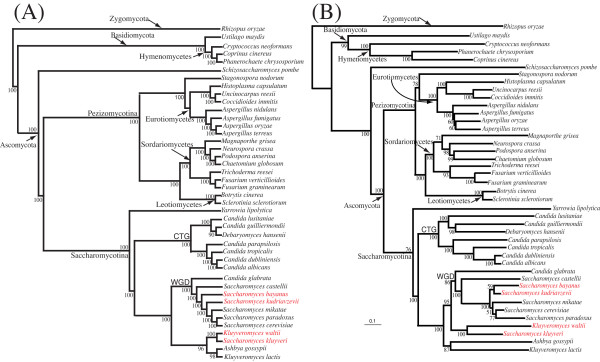
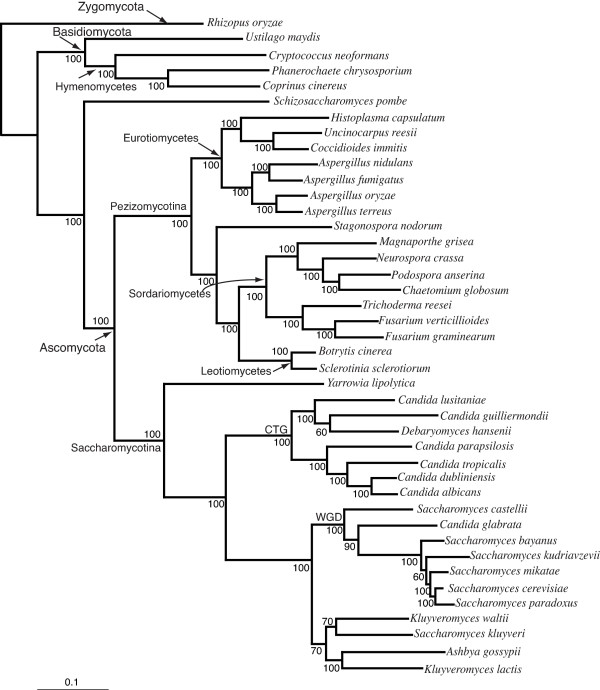
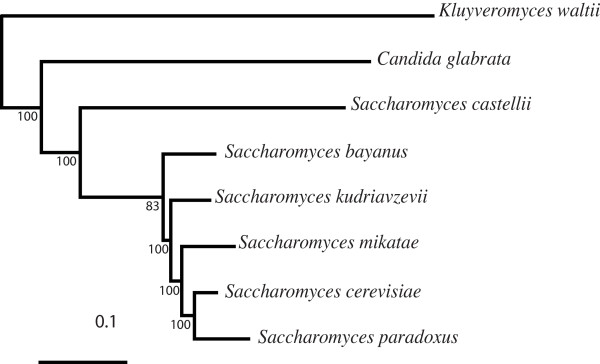
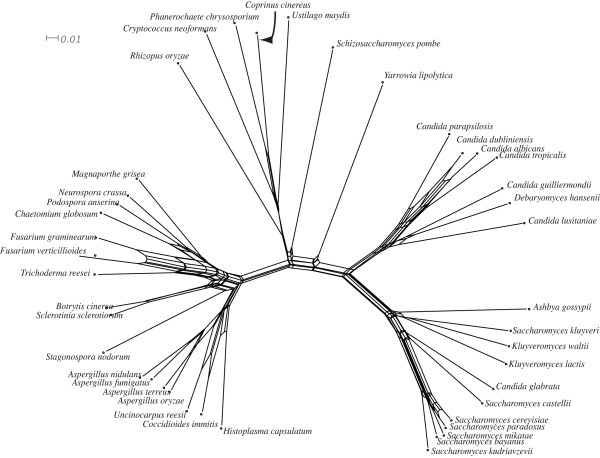
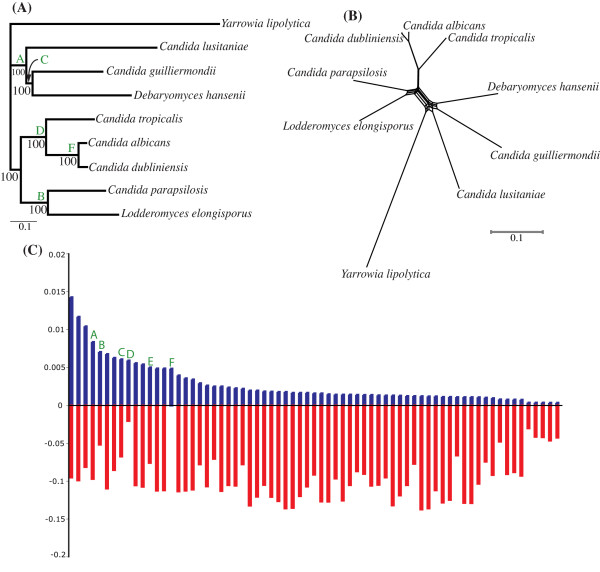
BACKGROUND: To date, most fungal phylogenies have been derived from single gene comparisons, or from concatenated alignments of a small number of genes. The increase in fungal genome sequencing presents an opportunity to reconstruct evolutionary events using entire genomes. As a tool for future comparative, phylogenomic and phylogenetic studies, we used both supertrees and concatenated alignments to infer relationships between 42 species of fungi for which complete genome sequences are available. RESULTS: A dataset of 345,829 genes was extracted from 42 publicly available fungal genomes. Supertree methods were employed to derive phylogenies from 4,805 single gene families. We found that the average consensus supertree method may suffer from long-branch attraction artifacts, while matrix representation with parsimony (MRP) appears to be immune from these. A genome phylogeny was also reconstructed from a concatenated alignment of 153 universally distributed orthologs. Our MRP supertree and concatenated phylogeny are highly congruent. Within the Ascomycota, the sub-phyla Pezizomycotina and Saccharomycotina were resolved. Both phylogenies infer that the Leotiomycetes are the closest sister group to the Sordariomycetes. There is some ambiguity regarding the placement of Stagonospora nodurum, the sole member of the class Dothideomycetes present in the dataset. Within the Saccharomycotina, a monophyletic clade containing organisms that translate CTG as serine instead of leucine is evident. There is also strong support for two groups within the CTG clade, one containing the fully sexual species Candida lusitaniae, Candida guilliermondii and Debaryomyces hansenii, and the second group containing Candida albicans, Candida dubliniensis, Candida tropicalis, Candida parapsilosis and Lodderomyces elongisporus. The second major clade within the Saccharomycotina contains species whose genomes have undergone a whole genome duplication (WGD), and their close relatives. We could not confidently resolve whether Candida glabrata or Saccharomyces castellii lies at the base of the WGD clade. CONCLUSION: We have constructed robust phylogenies for fungi based on whole genome analysis. Overall, our phylogenies provide strong support for the classification of phyla, sub-phyla, classes and orders. We have resolved the relationship of the classes Leotiomyctes and Sordariomycetes, and have identified two classes within the CTG clade of the Saccharomycotina that may correlate with sexual status.
Overview
The claims and statistics of this paper haven’t been checked yet.
Free: it reads the open-access text and checks the first 5 claims that cite a source we can check. Create a free account to check every claim.
Integrity signals
Registry
Cites
Statistics
Figures
Verification
Claims the paper makes
The claims and statistics of this paper haven’t been checked yet.
Free: it reads the open-access text and checks the first 5 claims that cite a source we can check. Create a free account to check every claim.
Claims other papers make about this one
Each is checked against this paper’s own text: does it say what the citing paper says it does?
The source backs part of the claim, not all of it — or backs it for a different population, condition or comparison.
In the citing paper
“N. glabrata is much more closely related to fermentable Saccharomyces cerevisiae than to C. albicans, especially in aspects of its energy metabolism (25).”
From Divergent mitochondrial responses and metabolic signal pathways secure the azole resistance in Crabtree-positive and negative Candida species (2024) · cites this paper as [25]
Experimental — accuracy not yet measuredThe source backs part of the claim, not all of it — or backs it for a different population, condition or comparison.
In the citing paper
“The CTG clade comprises the majority of Candida species and forms a monophyletic group of yeasts that exhibit a genetic code transition, causing the codon CTG to be translated as serine instead of leucine [60–62]”
From Competition assays and physiological experiments of soil and phyllosphere yeasts identify Candida subhashii as a novel antagonist of filamentous fungi (2017) · cites this paper as [60]
Experimental — accuracy not yet measured
Self-check
Percentages, sums and reported differences re-computed from the paper’s own numbers.
The self-check needs the paper’s full text.
Citations
Cites
Gapped BLAST and PSI-BLAST: a new generation of protein database search programs
Altschul, S. (1997) · Nucleic Acids Research · doi:10.1093/nar/25.17.3389 · Cited by 73,302
Thompson, J. D., Higgins, D. G., & Gibson, T. J. (1994) · Nucleic Acids Research · doi:10.1093/nar/22.22.4673 · Cited by 64,617
The neighbor-joining method: a new method for reconstructing phylogenetic trees.
(1987) · Molecular Biology and Evolution · doi:10.1093/oxfordjournals.molbev.a040454 · Cited by 59,715
Improved tools for biological sequence comparison.
Pearson, W. R., & Lipman, D. J. (1988) · Proceedings of the National Academy of Sciences · doi:10.1073/pnas.85.8.2444 · Cited by 11,227 · cited 2×
“Multigene analysis All proteins from the genome sequences were compared with FASTP [79] to find orthologous genes via a best bidirectional strategy.”
MethodSelection of Conserved Blocks from Multiple Alignments for Their Use in Phylogenetic Analysis
Castresana, J. (2000) · Molecular Biology and Evolution · doi:10.1093/oxfordjournals.molbev.a026334 · Cited by 10,508
Genome sequencing in microfabricated high-density picolitre reactors
Margulies, M., Egholm, M., Altman, W. E., Attiya, S., Bader, J. S., Bemben, L. A., Berka, J., Braverman, M. S., Chen, Y.-J., Chen, Z., et al. (2005) · Nature · doi:10.1038/nature03959 · Cited by 7,693
Goffeau, A., Barrell, B. G., Bussey, H., Davis, R. W., Dujon, B., Feldmann, H., Galibert, F., Hoheisel, J. D., Jacq, C., Johnston, M., et al. (1996) · Science · doi:10.1126/science.274.5287.546 · Cited by 4,263
Phylogenetic relationships among ascomycetes: evidence from an RNA polymerse II subunit
Liu, Y. J., Whelen, S., & Hall, B. D. (1999) · Molecular Biology and Evolution · doi:10.1093/oxfordjournals.molbev.a026092 · Cited by 3,751
Korf, I. (2004) · BMC Bioinformatics · doi:10.1186/1471-2105-5-59 · Cited by 3,192
Automated generation of heuristics for biological sequence comparison
Slater, G. S. C., & Birney, E. (2005) · BMC Bioinformatics · doi:10.1186/1471-2105-6-31 · Cited by 2,933
Cited by
Items 101–200 of 567
Biology and genetics of the pathogenic yeast Candida parapsilosis
Nosek, J., Holesova, Z., Kosa, P. F., Gácser, A., & Tomáška, Ľ. (2009) · Current Genetics · doi:10.1007/s00294-009-0268-4 · Cited by 92
Tian, C., Kasuga, T., Sachs, M. S., & Glass, N. L. (2007) · Eukaryotic Cell · doi:10.1128/ec.00078-07 · Cited by 92
Correlation between Biofilm Formation and the Hypoxic Response in Candida parapsilosis
Rossignol, T., Ding, C., Guida, A., d'Enfert, C., Higgins, D. G., & Butler, G. (2009) · Eukaryotic Cell · doi:10.1128/ec.00350-08 · Cited by 91
Self-citationThe Genomics of Colletotrichum
Crouch, J. A., O’Connell, R. J., Gan, P., Buiate, E. A. S., Jiménez, M. F. T., Beirn, L. A., Shirasu, K., & Vaillancourt, L. J. (2014) · Springer eBooks · doi:10.1007/978-3-662-44053-7_3 · Cited by 97
Dolan, S. K., Owens, R. A., O’Keeffe, G., Hammel, S., Fitzpatrick, D. A., Jones, G. W., & Doyle, S. (2014) · Chemistry & Biology · doi:10.1016/j.chembiol.2014.07.006 · Cited by 91
Self-citationKurtzman, C. P., Mateo, R. Q., Kolecka, A., Theelen, B., Robert, V., & Boekhout, T. (2015) · FEMS Yeast Research · doi:10.1093/femsyr/fov050 · Cited by 90
Linder, T., & Gustafsson, C. M. (2007) · Fungal Genetics and Biology · doi:10.1016/j.fgb.2007.08.002 · Cited by 89
The diversity and evolution of circadian clock proteins in fungi
Salichos, L., & Rokas, A. (2010) · Mycologia · doi:10.3852/09-073 · Cited by 89
Butler, G. (2010) · Clinical Microbiology Reviews · doi:10.1128/cmr.00053-09 · Cited by 88
Self-citationAguiar, T. Q., Silva, R., & Domingues, L. (2015) · Biotechnology Advances · doi:10.1016/j.biotechadv.2015.10.001 · Cited by 89
Márquez‐Fernández, O., Trigos, Á., Ramos-Balderas, J. L., Viniegra‐González, G., Deising, H. B., & Aguirre, J. (2007) · Eukaryotic Cell · doi:10.1128/ec.00362-06 · Cited by 88
Combinatorial stresses kill pathogenic Candida species
Kaloriti, D., Tillmann, A., Cook, E., Jacobsen, M., You, T., Lenardon, M., Ames, L., Barahona, M., Chandrasekaran, K., Coghill, G., et al. (2012) · Medical Mycology · doi:10.3109/13693786.2012.672770 · Cited by 86
Biotechnological applications of the non-conventional yeast Meyerozyma guilliermondii
Yan, W., Gao, H., Qian, X., Jiang, Y., Zhou, J., Dong, W., Xin, F., Zhang, W., & Jiang, M. (2021) · Biotechnology Advances · doi:10.1016/j.biotechadv.2020.107674 · Cited by 86
Sequence and Analysis of the Genome of the Pathogenic Yeast Candida orthopsilosis
Riccombeni, A., Vidanes, G., Proux-Wéra, E., Wolfe, K. H., & Butler, G. (2012) · PLoS ONE · doi:10.1371/journal.pone.0035750 · Cited by 86
Self-citationOMICS and Other Advanced Technologies in Mycological Applications
Wijayawardene, N. N., Boonyuen, N., Ranaweera, C. B., Zoysa, H. K. S. D., Padmathilake, K. R. E., Nifla, F., Dai, D.-Q., Liu, Y., Suwannarach, N., Kumla, J., et al. (2023) · Journal of Fungi · doi:10.3390/jof9060688 · Cited by 85
Takashima, M., & Sugita, T. (2022) · Medical Mycology Journal · doi:10.3314/mmj.22.004 · Cited by 84
Marcet-Houben, M., & Gabaldón, T. (2009) · PLoS ONE · doi:10.1371/journal.pone.0004357 · Cited by 83
“In this way, the study of Robbertse et al [9], limited to 17 ascomycota species, comprised 781 protein sequences (195,664 positions) in the alignment, whereas those of Kuramae et al [7] and Fitzpatrick et al [8], included, respectively, 531 genes (67,101 positions) for 24 species and 153 genes (38,000 positions) for 4…”
MethodResultSellam, A., Askew, C., Epp, E., Tebbji, F., Mullick, A., Whiteway, M., & Nantel, A. (2010) · Eukaryotic Cell · doi:10.1128/ec.00325-09 · Cited by 81
Liu, W. Y., Fang, L., Li, M., Li, S., Guo, S., Luo, R., Feng, Z., Li, B., Zhou, Z., Shao, G., et al. (2012) · PLoS ONE · doi:10.1371/journal.pone.0035698 · Cited by 83
Extensive Intra-Kingdom Horizontal Gene Transfer Converging on a Fungal Fructose Transporter Gene
Coelho, M. A., Gonçalves, C., Sampaio, J. P., & Gonçalves, P. M. (2013) · PLoS Genetics · doi:10.1371/journal.pgen.1003587 · Cited by 82
Kienle, N., Kloepper, T. H., & Fasshauer, D. (2009) · BMC Evolutionary Biology · doi:10.1186/1471-2148-9-19 · Cited by 83
Molecular techniques revolutionize knowledge of basidiomycete evolution
Yang, Z. L. (2011) · Fungal Diversity · doi:10.1007/s13225-011-0121-1 · Cited by 79
Kepler, R. M., & Rehner, S. A. (2013) · Molecular Ecology Resources · doi:10.1111/1755-0998.12058 · Cited by 79
Evolution of linear chromosomes and multipartite genomes in yeast mitochondria
Valach, M., Farkas, Z., Fricova, D., Kovac, J., Brejova, B., Vinar, T., Pfeiffer, I., Kucsera, J., Tomaska, L., Lang, B. F., et al. (2011) · Nucleic Acids Research · doi:10.1093/nar/gkq1345 · Cited by 78
Conserved RNA structures in the non-canonical Hac1/Xbp1 intron
Hooks, K. B., & Griffiths‐Jones, S. (2011) · RNA Biology · doi:10.4161/rna.8.4.15396 · Cited by 79
14 Mating-Type Structure, Function, Regulation and Evolution in the Pezizomycotina
Dyer, P. S., Inderbitzin, P., & Debuchy, R. (2016) · The mycota · doi:10.1007/978-3-319-25844-7_14 · Cited by 82
What are the 100 most cited fungal genera?
Bhunjun, C. S., Chen, Y. J., Phukhamsakda, C., Boekhout, T., Groenewald, J. Z., McKenzi, E. H. C., Francisco, E. C., Frisvad, J. C., Groenewald, M., Hurdeal, V. G., et al. (2024) · Studies in Mycology · doi:10.3114/sim.2024.108.01 · Cited by 88
Walker, D. M., Castlebury, L. A., Rossman, A. Y., & White, J. F. (2012) · Molecular Phylogenetics and Evolution · doi:10.1016/j.ympev.2012.05.005 · Cited by 77
Beyond the wall:Candida albicans secret(e)s to survive
Sorgo, A. G., Heilmann, C. J., Brul, S., de Koster, C. G., & Klis, F. M. (2013) · FEMS Microbiology Letters · doi:10.1111/1574-6968.12049 · Cited by 74
Tsui, C. K. M., Daniel, H.-M., Robert, V., & Meyer, W. (2008) · FEMS Yeast Research · doi:10.1111/j.1567-1364.2007.00342.x · Cited by 74
Plasticity of telomere maintenance mechanisms in yeast
Lue, N. F. (2009) · Trends in Biochemical Sciences · doi:10.1016/j.tibs.2009.08.006 · Cited by 74
MultiPhyl: a high-throughput phylogenomics webserver using distributed computing
Keane, T. M., Naughton, T. J., & McInerney, J. O. (2007) · Nucleic Acids Research · doi:10.1093/nar/gkm359 · Cited by 73
Altered patterns of gene duplication and differential gene gain and loss in fungal pathogens
Powell, A., Conant, G. C., Brown, D. E., Carbone, I., & Dean, R. A. (2008) · BMC Genomics · doi:10.1186/1471-2164-9-147 · Cited by 73
Computing the Internode Certainty and Related Measures from Partial Gene Trees
Kobert, K., Salichos, L., Rokas, A., & Stamatakis, A. (2016) · Molecular Biology and Evolution · doi:10.1093/molbev/msw040 · Cited by 72
Transcriptional control of the quorum sensing response in yeast
Wüster, A., & Babu, M. M. (2009) · Molecular BioSystems · doi:10.1039/b913579k · Cited by 72
Genome Evolution: Horizontal Movements in the Fungi
Richards, T. A. (2011) · Current Biology · doi:10.1016/j.cub.2011.01.028 · Cited by 71
Finding Single Copy Genes Out of Sequenced Genomes for Multilocus Phylogenetics in Non-Model Fungi
Feau, N., Decourcelle, T., Husson, C., Desprez‐Loustau, M., & Dutech, C. (2011) · PLoS ONE · doi:10.1371/journal.pone.0018803 · Cited by 72
FUNYBASE: a FUNgal phYlogenomic dataBASE
Marthey, S., Aguileta, G., Rodolphe, F., Gendrault, A., Giraud, T., Fournier, E., López‐Villavicencio, M., Gautier, A., Lebrun, M., & Chiapello, H. (2008) · BMC Bioinformatics · doi:10.1186/1471-2105-9-456 · Cited by 71
Rokas, A. (2011) · Current Protocols in Molecular Biology · doi:10.1002/0471142727.mb1911s96 · Cited by 70
ROY, S. (2006) · Trends in Genetics · doi:10.1016/j.tig.2006.07.002 · Cited by 70
Maguire, S. L., Wang, C., Holland, L. M., Brunel, F., Neuvéglise, C., Nicaud, J.-M., Zavrel, M., White, T. C., Wolfe, K. H., & Butler, G. (2014) · PLoS Genetics · doi:10.1371/journal.pgen.1004076 · Cited by 69
“The CTG clade contains Candida species in which the codon CTG is translated as serine rather than leucine [32,33].”
BackgroundSelf-citationEvidence of recent interkingdom horizontal gene transfer between bacteria and Candida parapsilosis
Fitzpatrick, D. A., Logue, M. E., & Butler, G. (2008) · BMC Evolutionary Biology · doi:10.1186/1471-2148-8-181 · Cited by 69
Self-citationEvolution of the holozoan ribosome biogenesis regulon
Brown, S. J., Cole, M. D., & Erives, A. J. (2008) · BMC Genomics · doi:10.1186/1471-2164-9-442 · Cited by 69
McGowan, J., O’Hanlon, R., Owens, R. A., & Fitzpatrick, D. A. (2020) · Microorganisms · doi:10.3390/microorganisms8050653 · Cited by 70
Self-citationEvolutionary trends in Basidiomycota.
Oberwinkler, F. (2012) · Cited by 69
Moses, A. M., Liku, M. E., Li, J. J., & Durbin, R. (2007) · Proceedings of the National Academy of Sciences · doi:10.1073/pnas.0700997104 · Cited by 68
Phylogeny and evolution of the aspartyl protease family from clinically relevant Candida species
Parra-Ortega, B., Cruz-Torres, H., Villa-Tanaca, L., & Hernández-Rodríguez, C. (2009) · Memórias do Instituto Oswaldo Cruz · doi:10.1590/s0074-02762009000300018 · Cited by 68
Evolution of Mating within the Candida parapsilosis Species Group
Sai, S., Holland, L. M., McGee, C. F., Lynch, D. B., & Butler, G. (2011) · Eukaryotic Cell · doi:10.1128/ec.00276-10 · Cited by 68
Self-citationKamneva, O. K., Knight, S. J., Liberles, D. A., & Ward, N. L. (2012) · Genome Biology and Evolution · doi:10.1093/gbe/evs113 · Cited by 68
Identifying and Quantifying Orphan Protein Sequences in Fungi
Ekman, D. S., & Elofsson, A. (2009) · Journal of Molecular Biology · doi:10.1016/j.jmb.2009.11.053 · Cited by 67
Lin, Y., HU, F., Tang, J., & Moret, B. M. E. (2012) · Pacific Symposium on Biocomputing (PSB) · doi:10.1142/9789814447973_0028 · Cited by 67
Lehnert, M., Krug, M., & Kessler, M. R. (2016) · Symbiosis · doi:10.1007/s13199-016-0436-5 · Cited by 65
Genome-scale comparative analysis of gene fusions, gene fissions, and the fungal tree of life
Leonard, G., & Richards, T. A. (2012) · Proceedings of the National Academy of Sciences · doi:10.1073/pnas.1210909110 · Cited by 67
Hal: an Automated Pipeline for Phylogenetic Analyses of Genomic Data
Robbertse, B., Yoder, R. J., Boyd, A., Reeves, J., & Spatafora, J. W. (2011) · PLoS Currents · doi:10.1371/currents.rrn1213 · Cited by 64
Chatterjee, G., Sankaranarayanan, S. R., Guin, K., Thattikota, Y., Padmanabhan, S., Siddharthan, R., & Sanyal, K. (2016) · PLoS Genetics · doi:10.1371/journal.pgen.1005839 · Cited by 63
An evolutionary perspective on zinc uptake by human fungal pathogens
Wilson, D. (2015) · Metallomics · doi:10.1039/c4mt00331d · Cited by 62
SCS3 and YFT2 Link Transcription of Phospholipid Biosynthetic Genes to ER Stress and the UPR
Moir, R. D., Gross, D. A., Silver, D. L., & Willis, I. M. (2012) · PLoS Genetics · doi:10.1371/journal.pgen.1002890 · Cited by 63
Phospholipidome of Candida : Each Species of Candida Has Distinctive Phospholipid Molecular Species
Singh, A., Prasad, T., Kapoor, K., Mandal, A., Roth, M. R., Welti, R., & Prasad, R. (2010) · OMICS A Journal of Integrative Biology · doi:10.1089/omi.2010.0041 · Cited by 61
Pantou, M. P., Kouvelis, V. N., & Typas, M. A. (2008) · Gene · doi:10.1016/j.gene.2008.04.009 · Cited by 61
The Yak1 Kinase Is Involved in the Initiation and Maintenance of Hyphal Growth in Candida albicans
Goyard, S., Knechtle, P., Chauvel, M., Mallet, A., Prévost, M.-C., Proux, C., Coppée, J.-Y., Schwarz, P., Dromer, F., Park, H., et al. (2008) · Molecular Biology of the Cell · doi:10.1091/mbc.e07-09-0960 · Cited by 59
Delavaux, C. S., Schemanski, J. L., House, G. L., Tipton, A. G., Sikes, B. A., & Bever, J. D. (2020) · The ISME Journal · doi:10.1038/s41396-020-00783-z · Cited by 59
Lage, J. D., Binder, M., Hua‐Van, A., Janeĉek, Ŝ., & Casañe, D. (2013) · BMC Evolutionary Biology · doi:10.1186/1471-2148-13-40 · Cited by 59
Sahi, C., Kominek, J., Ziegelhoffer, T., Yu, H. Y., Baranowski, M., Marszałek, J., & Craig, E. A. (2013) · Molecular Biology and Evolution · doi:10.1093/molbev/mst008 · Cited by 58
Leavitt, S. D., Grewe, F., Widhelm, T. J., Muggia, L., Wray, B. D., & Lumbsch, H. T. (2016) · Scientific Reports · doi:10.1038/srep22262 · Cited by 58
DISCOMYCETES: the apothecial representatives of the phylum Ascomycota
Ekanayaka, A. H., Ariyawansa, H. A., Hyde, K. D., Jones, E. B. G., Daranagama, D. A., Phillips, A. J. L., Hongsanan, S., Jayasiri, S. C., & Zhao, Q. (2017) · Fungal Diversity · doi:10.1007/s13225-017-0389-x · Cited by 58
Towards Genomic Criteria for Delineating Fungal Species
Gostinčar, C. (2020) · Journal of Fungi · doi:10.3390/jof6040246 · Cited by 58
Dynamic Rearrangement of Nucleoporins during Fungal “Open” Mitosis
Theisen, U., Straube, A., & Steinberg, G. (2008) · Molecular Biology of the Cell · doi:10.1091/mbc.e07-02-0130 · Cited by 58
Use of gene sequence analyses and genome comparisons for yeast systematics
Kurtzman, C. P. (2014) · INTERNATIONAL JOURNAL OF SYSTEMATIC AND EVOLUTIONARY MICROBIOLOGY · doi:10.1099/ijs.0.054197-0 · Cited by 58
Accuracy of phylogeny reconstruction methods combining overlapping gene data sets
Kupczok, A., Schmidt, H. A., & von Haeseler, A. (2010) · Algorithms for Molecular Biology · doi:10.1186/1748-7188-5-37 · Cited by 57
Stavrou, A. A., Lackner, M., Lass‐Flörl, C., & Boekhout, T. (2019) · FEMS Yeast Research · doi:10.1093/femsyr/foz037 · Cited by 57
A Comprehensive Genome-Wide Map of Autonomously Replicating Sequences in a Naive Genome
Liachko, I., Bhaskar, A., Lee, C., Chung, S. C. C., Tye, B., & Keich, U. (2010) · PLoS Genetics · doi:10.1371/journal.pgen.1000946 · Cited by 58
Fungi have three tetraspanin families with distinct functions
Lambou, K., Tharreau, D., Kohler, A., Sirven, C., Marguerettaz, M., Barbisan, C., Sexton, A., Kellner, E. M., Martin, F. M., Howlett, B. J., et al. (2008) · BMC Genomics · doi:10.1186/1471-2164-9-63 · Cited by 56
FPPI: Fusarium graminearum Protein−Protein Interaction Database
Zhao, X., Zhang, X., Tang, W., & Chen, L. (2009) · Journal of Proteome Research · doi:10.1021/pr900415b · Cited by 56
TreeKO: a duplication-aware algorithm for the comparison of phylogenetic trees
Marcet‐Houben, M., & Gabaldón, T. (2011) · Nucleic Acids Research · doi:10.1093/nar/gkr087 · Cited by 55
The Complex Evolutionary Dynamics of Hsp70s: A Genomic and Functional Perspective
Kominek, J., Marszałek, J., Neuvéglise, C., Craig, E. A., & Williams, B. L. (2013) · Genome Biology and Evolution · doi:10.1093/gbe/evt192 · Cited by 55
Candida Infections: Clinical Features, Diagnosis and Treatment
Tamo, S. P. B. (2020) · Infectious Diseases and Clinical Microbiology · doi:10.36519/idcm.2020.0006 · Cited by 53
Mlh2 Is an Accessory Factor for DNA Mismatch Repair in Saccharomyces cerevisiae
Campbell, C. S., Hombauer, H., Srivatsan, A., Bowen, N., Gries, K., Desai, A. B., Putnam, C. D., & Kolodner, R. D. (2014) · PLoS Genetics · doi:10.1371/journal.pgen.1004327 · Cited by 53
Hernandez, A. M., & Ryan, J. F. (2019) · doi:10.1101/729103 · Cited by 52
Prasanna, A. N., Gerber, D., Kijpornyongpan, T., Aime, M. C., Doyle, V. P., & Nagy, L. G. (2019) · Systematic Biology · doi:10.1093/sysbio/syz029 · Cited by 51
Evolution of SET-domain protein families in the unicellular and multicellular Ascomycota fungi
Veerappan, C. S., AVRAMOVA, Z. V., & Moriyama, E. N. (2008) · BMC Evolutionary Biology · doi:10.1186/1471-2148-8-190 · Cited by 54
Holton, T. A., & Pisani, D. (2010) · Genome Biology and Evolution · doi:10.1093/gbe/evq016 · Cited by 51
Toward genome-enabled mycology
Hibbett, D. S., Stajich, J., & Spatafora, J. W. (2013) · Mycologia · doi:10.3852/13-196 · Cited by 51
Self-citationMedina, E. M., Jones, G. W., & Fitzpatrick, D. A. (2011) · Journal of Molecular Evolution · doi:10.1007/s00239-011-9461-4 · Cited by 50
Self-citationSkamnioti, P., Furlong, R. F., & Gurr, S. J. (2008) · New Phytologist · doi:10.1111/j.1469-8137.2008.02598.x · Cited by 49
Characterization of Virulence-Related Phenotypes in Candida Species of the CUG Clade
Priest, S. J., & Lorenz, M. C. (2015) · Eukaryotic Cell · doi:10.1128/ec.00062-15 · Cited by 48
Elucidating the Ramularia eucalypti species complex
Videira, S. I. R., Groenewald, J. Z., Kolecka, A., van Haren, L., Boekhout, T., & Crous, P. W. (2014) · Persoonia - Molecular Phylogeny and Evolution of Fungi · doi:10.3767/003158515x685670 · Cited by 50
Čadež, N., Bellora, N., Ulloa, R., Hittinger, C. T., & Libkind, D. (2019) · PLoS ONE · doi:10.1371/journal.pone.0210792 · Cited by 48
Ren, R., Sun, Y., Zhao, Y., Geiser, D. M., Mā, H., & Zhou, X. (2016) · Genome Biology and Evolution · doi:10.1093/gbe/evw196 · Cited by 46
Morales, L., Noël, B., Porcel, B. M., Marcet‐Houben, M., Hullo, M.-F., Sacerdot, C., Tekaia, F., Leh, V., Despons, L., Khanna, V., et al. (2013) · Genome Biology and Evolution · doi:10.1093/gbe/evt201 · Cited by 45
Yu, E. Y., Yen, W.-F., Steinberg‐Neifach, O., & Lue, N. F. (2010) · Molecular and Cellular Biology · doi:10.1128/mcb.00986-09 · Cited by 45
Koivistoinen, O. M., Arvas, M., Headman, J. R., Andberg, M. B., Penttilä, M. E., Jeffries, T. W., & Richard, P. (2011) · Gene · doi:10.1016/j.gene.2011.10.031 · Cited by 46
Comparative genomics of proteins involved in RNA nucleocytoplasmic export
Serpeloni, M., Vidal, N. M., Goldenberg, S., Ávila, A. R., & Hoffmann, F. G. (2011) · BMC Evolutionary Biology · doi:10.1186/1471-2148-11-7 · Cited by 45
Ribosomal protein S 6 phosphorylation is controlled by TOR and modulated by PKA in C andida albicans
Chowdhury, T., & Köhler, J. R. (2015) · Molecular Microbiology · doi:10.1111/mmi.13130 · Cited by 45
Fričová, D., Valach, M., Farkas, Z. J., Pfeiffer, I., Kucsera, J., Tomáška, Ľ., & Nosek, J. (2010) · Microbiology · doi:10.1099/mic.0.038646-0 · Cited by 45
Fusion and Fission of Genes Define a Metric between Fungal Genomes
Durrens, P., Nikolski, M., & Sherman, D. J. (2008) · PLoS Computational Biology · doi:10.1371/journal.pcbi.1000200 · Cited by 44
Naseeb, S., Alsammar, H., Burgis, T., Donaldson, I. J., Knyazev, N., Cg, K., & Delneri, D. (2018) · G3 Genes Genomes Genetics · doi:10.1534/g3.118.200476 · Cited by 45
Biodiversity in sulfur metabolism in hemiascomycetous yeasts
Hébert, A., Casarégola, S., & Beckerich, J.-M. (2011) · FEMS Yeast Research · doi:10.1111/j.1567-1364.2011.00725.x · Cited by 45
Luo, J., Qiu, H., Cai, G., Wagner, N., Bhattacharya, D., & Zhang, N. (2015) · Scientific Reports · doi:10.1038/srep09448 · Cited by 43
3 Pezizomycotina: Sordariomycetes and Leotiomycetes
Zhang, N., & Wang, Z. (2015) · Springer eBooks · doi:10.1007/978-3-662-46011-5_3 · Cited by 43
Species-Specific Codon Context Rules Unveil Non-Neutrality Effects of Synonymous Mutations
Moura, G. R., Pinheiro, M. M., Freitas, A. V., Oliveira, J. L., Frommlet, J. C., Carreto, L. C., Soares, A. R., Bezerra, A. R., & Santos, M. A. S. (2011) · PLoS ONE · doi:10.1371/journal.pone.0026817 · Cited by 43
Metadata
- Authors
- Fitzpatrick, D. A., Logue, M. E., Stajich, J., & Butler, G.
- Affiliations
- University College Dublin (IE)
- Duke University (US)
- Corresponding author
- David A. Fitzpatrick
- Venue
- BMC Evolutionary Biology
- Published
- 2006
- Volume
- 6
- Issue
- 1
- Pages
- 99
- ISSN
- 1471-2148 (ISSN-L)
- PMC
- PMC1679813
- OpenAlex
- W2095815023
- Semantic Scholar
- 08a67c69d23a2b8b0ba352bc4ae74013b31dffc1
- Cited by
- 475
- References
- 92
- Citations by year
- 2026: 3 · 2025: 2 · 2024: 5 · 2023: 9 · 2022: 6 · 2021: 13 · 2020: 17 · 2019: 16 · 2018: 14 · 2017: 26 · 2016: 14 · 2015: 19 · 2014: 39 · 2013: 31 · 2012: 44
- FWCI
- 15.38
- Type
- journal article
- Language
- en
- Open access
- gold
- doi.org
- Licence
- cc-by
- Locations
- BMC Evolutionary Biology (publishedVersion, cc-by)
- PubMed (publishedVersion)
- Maynooth University ePrints and eTheses Archive (Maynooth University) (acceptedVersion)
- eScholarship (California Digital Library) (submittedVersion, cc-by-nc-sa)
- DOAJ (DOAJ: Directory of Open Access Journals) (submittedVersion)
- Funders
- National Science Foundation
- Wellcome Trust
- Broad Institute
- Irish Research Council for Science, Engineering and Technology
- Science Foundation Ireland
- Irish Research Council
- Irish Centre for High-End Computing
- Topics
- Life Sciences › Biochemistry, Genetics and Molecular Biology › Molecular Biology › Fungal and yeast genetics research
- Life Sciences › Biochemistry, Genetics and Molecular Biology › Molecular Biology › Genomics and Phylogenetic Studies
- Life Sciences › Immunology and Microbiology › Microbiology › Yeasts and Rust Fungi Studies
- Keywords
- fungal phylogeny, supertree, matrix representation with parsimony, concatenated alignment, orthologs, Ascomycota, Pezizomycotina, Saccharomycotina, Leotiomycetes, Sordariomycetes, Dothideomycetes, Candida, whole-genome duplication, long-branch attraction
- MeSH terms
- Ascomycota, Basidiomycota, Fungi, Genes, Fungal, Phylogeny, Sequence Alignment, Genome, Fungal, Databases, Genetic
About these checks
Registry, retraction, Cites and statistics results are computed, not judged, with one exception: a printed reference that no index lists is read once by a model before it counts as a citation error. Claims are extracted by a model and kept only when their quote appears verbatim in the text; each cited source is then checked, with a model’s help, for whether it says what the claim relies on. Those verdicts can be wrong — read the claim’s quote and the cited source before relying on one.
Statistics and arithmetic are recomputed, not judged.
Confidence bands are shown only for fields calibrated on our annotated test set. None is calibrated yet, so no band is shown.
What counts as a claim ›How we measure confidence ›How we check this ›
Are you an author, or do you see a problem with this page? Request a review
Data sources
Bibliographic data: Semantic Scholar, OpenAlex, Crossref.
Contains information from the Semantic Scholar Academic Graph Datasets, made available under the ODC Attribution License (ODC-BY 1.0).
Semantic Scholar’s data is described in: Kinney, R., et al. (2023). The Semantic Scholar Open Data Platform. arXiv:2301.10140.
