

A fungal phylogeny based on 42 complete genomes derived from supertree and combined gene analysis.
Open accessThe DOI matches its Crossref record, with a small difference in title or year; 95 of the 95 references it cites were found in a registry or an index.
Abstract
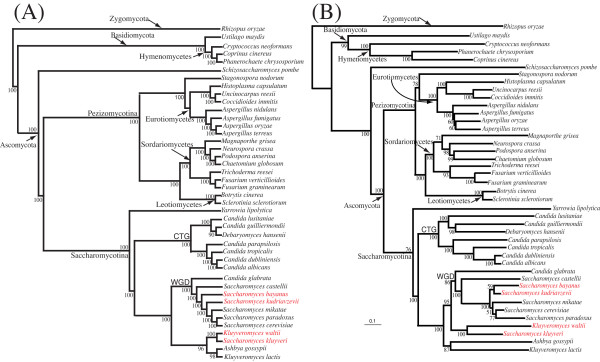
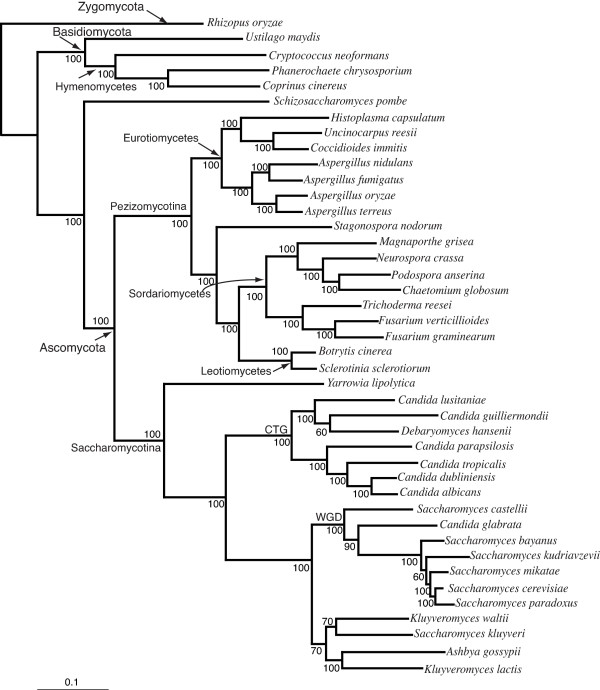
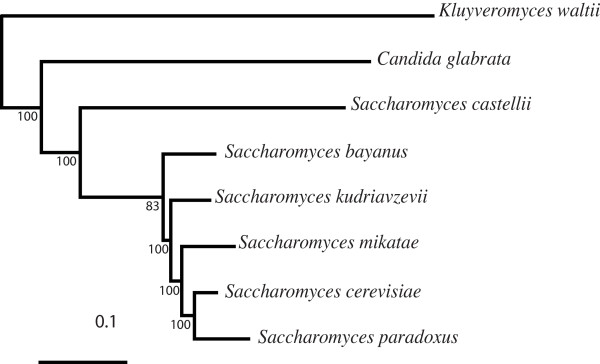
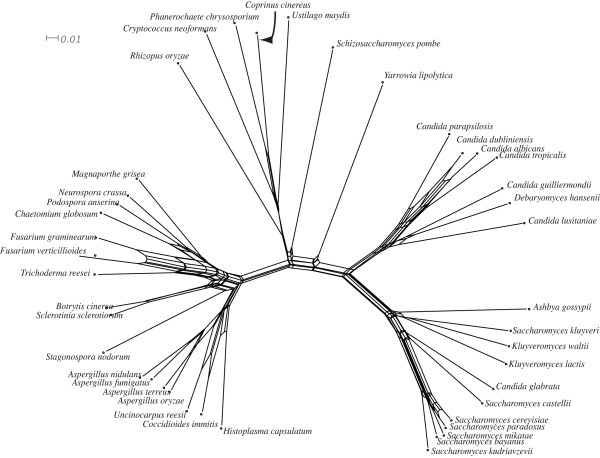
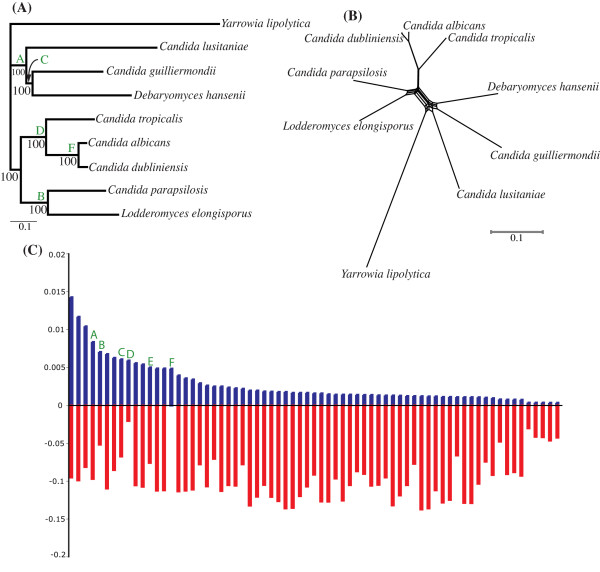
BACKGROUND: To date, most fungal phylogenies have been derived from single gene comparisons, or from concatenated alignments of a small number of genes. The increase in fungal genome sequencing presents an opportunity to reconstruct evolutionary events using entire genomes. As a tool for future comparative, phylogenomic and phylogenetic studies, we used both supertrees and concatenated alignments to infer relationships between 42 species of fungi for which complete genome sequences are available. RESULTS: A dataset of 345,829 genes was extracted from 42 publicly available fungal genomes. Supertree methods were employed to derive phylogenies from 4,805 single gene families. We found that the average consensus supertree method may suffer from long-branch attraction artifacts, while matrix representation with parsimony (MRP) appears to be immune from these. A genome phylogeny was also reconstructed from a concatenated alignment of 153 universally distributed orthologs. Our MRP supertree and concatenated phylogeny are highly congruent. Within the Ascomycota, the sub-phyla Pezizomycotina and Saccharomycotina were resolved. Both phylogenies infer that the Leotiomycetes are the closest sister group to the Sordariomycetes. There is some ambiguity regarding the placement of Stagonospora nodurum, the sole member of the class Dothideomycetes present in the dataset. Within the Saccharomycotina, a monophyletic clade containing organisms that translate CTG as serine instead of leucine is evident. There is also strong support for two groups within the CTG clade, one containing the fully sexual species Candida lusitaniae, Candida guilliermondii and Debaryomyces hansenii, and the second group containing Candida albicans, Candida dubliniensis, Candida tropicalis, Candida parapsilosis and Lodderomyces elongisporus. The second major clade within the Saccharomycotina contains species whose genomes have undergone a whole genome duplication (WGD), and their close relatives. We could not confidently resolve whether Candida glabrata or Saccharomyces castellii lies at the base of the WGD clade. CONCLUSION: We have constructed robust phylogenies for fungi based on whole genome analysis. Overall, our phylogenies provide strong support for the classification of phyla, sub-phyla, classes and orders. We have resolved the relationship of the classes Leotiomyctes and Sordariomycetes, and have identified two classes within the CTG clade of the Saccharomycotina that may correlate with sexual status.
Overview
The claims and statistics of this paper haven’t been checked yet.
Free: it reads the open-access text and checks the first 5 claims that cite a source we can check. Create a free account to check every claim.
Integrity signals
Registry
Cites
Statistics
Figures
Verification
Claims the paper makes
The claims and statistics of this paper haven’t been checked yet.
Free: it reads the open-access text and checks the first 5 claims that cite a source we can check. Create a free account to check every claim.
Claims other papers make about this one
Each is checked against this paper’s own text: does it say what the citing paper says it does?
The source backs part of the claim, not all of it — or backs it for a different population, condition or comparison.
In the citing paper
“N. glabrata is much more closely related to fermentable Saccharomyces cerevisiae than to C. albicans, especially in aspects of its energy metabolism (25).”
From Divergent mitochondrial responses and metabolic signal pathways secure the azole resistance in Crabtree-positive and negative Candida species (2024) · cites this paper as [25]
Experimental — accuracy not yet measuredThe source backs part of the claim, not all of it — or backs it for a different population, condition or comparison.
In the citing paper
“The CTG clade comprises the majority of Candida species and forms a monophyletic group of yeasts that exhibit a genetic code transition, causing the codon CTG to be translated as serine instead of leucine [60–62]”
From Competition assays and physiological experiments of soil and phyllosphere yeasts identify Candida subhashii as a novel antagonist of filamentous fungi (2017) · cites this paper as [60]
Experimental — accuracy not yet measured
Self-check
Percentages, sums and reported differences re-computed from the paper’s own numbers.
The self-check needs the paper’s full text.
Citations
Cites
Gapped BLAST and PSI-BLAST: a new generation of protein database search programs
Altschul, S. (1997) · Nucleic Acids Research · doi:10.1093/nar/25.17.3389 · Cited by 73,302
Thompson, J. D., Higgins, D. G., & Gibson, T. J. (1994) · Nucleic Acids Research · doi:10.1093/nar/22.22.4673 · Cited by 64,617
The neighbor-joining method: a new method for reconstructing phylogenetic trees.
(1987) · Molecular Biology and Evolution · doi:10.1093/oxfordjournals.molbev.a040454 · Cited by 59,715
Improved tools for biological sequence comparison.
Pearson, W. R., & Lipman, D. J. (1988) · Proceedings of the National Academy of Sciences · doi:10.1073/pnas.85.8.2444 · Cited by 11,227 · cited 2×
“Multigene analysis All proteins from the genome sequences were compared with FASTP [79] to find orthologous genes via a best bidirectional strategy.”
MethodSelection of Conserved Blocks from Multiple Alignments for Their Use in Phylogenetic Analysis
Castresana, J. (2000) · Molecular Biology and Evolution · doi:10.1093/oxfordjournals.molbev.a026334 · Cited by 10,508
Genome sequencing in microfabricated high-density picolitre reactors
Margulies, M., Egholm, M., Altman, W. E., Attiya, S., Bader, J. S., Bemben, L. A., Berka, J., Braverman, M. S., Chen, Y.-J., Chen, Z., et al. (2005) · Nature · doi:10.1038/nature03959 · Cited by 7,693
Goffeau, A., Barrell, B. G., Bussey, H., Davis, R. W., Dujon, B., Feldmann, H., Galibert, F., Hoheisel, J. D., Jacq, C., Johnston, M., et al. (1996) · Science · doi:10.1126/science.274.5287.546 · Cited by 4,263
Phylogenetic relationships among ascomycetes: evidence from an RNA polymerse II subunit
Liu, Y. J., Whelen, S., & Hall, B. D. (1999) · Molecular Biology and Evolution · doi:10.1093/oxfordjournals.molbev.a026092 · Cited by 3,751
Korf, I. (2004) · BMC Bioinformatics · doi:10.1186/1471-2105-5-59 · Cited by 3,192
Automated generation of heuristics for biological sequence comparison
Slater, G. S. C., & Birney, E. (2005) · BMC Bioinformatics · doi:10.1186/1471-2105-6-31 · Cited by 2,933
Cited by
Items 301–400 of 567
Prospects for elucidating the phylogeny of the Apicomplexa
Morrison, D. A. (2008) · Parasite · doi:10.1051/parasite/2008153191 · Cited by 20
A blueprint of the amino acid biosynthesis network of hemiascomycetes
Förster, J., Halbfeld, C., Zimmermann, M., & Blank, L. M. (2014) · FEMS Yeast Research · doi:10.1111/1567-1364.12205 · Cited by 19
Suomi, F., Menger, K. E., Monteuuis, G., Naumann, U., Kursu, V. A. S., Shvetsova, A., & Kastaniotis, A. J. (2014) · PLoS ONE · doi:10.1371/journal.pone.0114738 · Cited by 19
The taxonomy of the model filamentous fungus Podospora anserina
Ament‐Velásquez, S. L., Johannesson, H., Giraud, T., Debuchy, R., Saupe, S. J., Debets, A. J. M., Bastiaans, E., Malagnac, F., Grognet, P., Peraza‐Reyes, L., et al. (2020) · MycoKeys · doi:10.3897/mycokeys.75.55968 · Cited by 19
Ramírez-Zavaleta, C. Y., Salas-Delgado, G. E., De Las Peñas, A., & Castaño, I. (2010) · Eukaryotic Cell · doi:10.1128/ec.00129-10 · Cited by 18
Agrochemicals: Effect on genetic resistance in yeasts colonizing winter wheat kernels
Wachowska, U., Irzykowski, W., & Jędryczka, M. (2018) · Ecotoxicology and Environmental Safety · doi:10.1016/j.ecoenv.2018.06.042 · Cited by 18
Distinct Roles of Candida albicans-Specific Genes in Host-Pathogen Interactions
Wilson, D., Mayer, F. L., Miramón, P., Citiulo, F., Slesiona, S., Jacobsen, I. D., & Hube, B. (2014) · Eukaryotic Cell · doi:10.1128/ec.00051-14 · Cited by 19
Soll, D. R. (2013) · Infection Genetics and Evolution · doi:10.1016/j.meegid.2013.07.013 · Cited by 17
Candida albicans Cyclin Clb4 Carries S-Phase Cyclin Activity
Ofir, A., & Kornitzer, D. (2010) · Eukaryotic Cell · doi:10.1128/ec.00038-10 · Cited by 17
A Practical Algorithm for Ancestral Rearrangement Reconstruction
Kováč, J., Brejová, B., & Vinař, T. (2011) · Lecture notes in computer science · doi:10.1007/978-3-642-23038-7_15 · Cited by 17
Wu, Y., Zhou, H., Wang, J., Li, L., Li, W. G., Cui, Z., Chen, X., Cen, R., Lu, J., & Cheng, Y. (2012) · PLoS ONE · doi:10.1371/journal.pone.0047767 · Cited by 17
Gomes, D. G., Aguiar, T. Q., Dias, Ó., Ferreira, E. C., Domingues, L., & Rocha, I. (2014) · BMC Genomics · doi:10.1186/1471-2164-15-810 · Cited by 17
Secretion of proteolytic enzymes by three phytopathogenic microorganisms
Kudryavtseva, N. N., Sof’in, A. V., Ревина, Т. А., Gvozdeva, E. L., Ievleva, E. V., & Valueva, T. A. (2013) · Applied Biochemistry and Microbiology · doi:10.1134/s0003683813050074 · Cited by 17
Foureau, E., Clastre, M., Montoya, E. J. O., Besseau, S., Oudin, A., Glévarec, G., Simkin, A. J., Crèche, J., Atehortúa, L., Giglioli‐Guivarc’h, N., et al. (2014) · Fungal Genetics and Biology · doi:10.1016/j.fgb.2014.01.007 · Cited by 17
Renn, S. C. P., Machado, H. E., Jones, A. C., Soneji, K., Kulathinal, R. J., & Hofmann, H. A. (2010) · BMC Genomics · doi:10.1186/1471-2164-11-271 · Cited by 17
Comparative Functional Genomics of Stress Responses in Yeasts
Lelandais, G., & Devaux, F. (2010) · OMICS A Journal of Integrative Biology · doi:10.1089/omi.2010.0029 · Cited by 16
Takashima, M., Manabe, R., Iwasaki, W., Ohyama, A., Ohkuma, M., & Sugita, T. (2015) · PLoS ONE · doi:10.1371/journal.pone.0131217 · Cited by 16
Phylogenomics-Based Reconstruction of Protozoan Species Tree
Ocaña, K., & Dávila, A. M. R. (2011) · Evolutionary Bioinformatics · doi:10.4137/ebo.s6861 · Cited by 19
DNA Replication Induces Compositional Biases in Yeast
Marsolier‐Kergoat, M., & Goldar, A. (2011) · Molecular Biology and Evolution · doi:10.1093/molbev/msr240 · Cited by 15
Zoppo, M., Poma, N. V., Luca, M. D., Bottai, D., & Tavanti, A. (2021) · Journal of Fungi · doi:10.3390/jof7060459 · Cited by 16
Martínez, J., Nevado, A., Suñén, E., Gabriel, M. F., Vélez-del-Burgo, A., Sánchez, P., & Postigo, I. (2021) · Frontiers in Microbiology · doi:10.3389/fmicb.2021.663323 · Cited by 15
Stukey, G. J., Han, G., & Carman, G. M. (2023) · Journal of Biological Chemistry · doi:10.1016/j.jbc.2023.105025 · Cited by 15
The mitochondrial view of Blastocladiella emersonii
Tambor, J. H. M., Ribichich, K. F., & Gomes, S. L. (2008) · Gene · doi:10.1016/j.gene.2008.07.031 · Cited by 15
Dal81 Regulates Expression of Arginine Metabolism Genes in Candida parapsilosis
Turner, S. A., Ma, Q., Ola, M., Vicente, K. M. D. S., & Butler, G. (2018) · mSphere · doi:10.1128/msphere.00028-18 · Cited by 15
Self-citationYang, H.-J., & Neiman, A. M. (2010) · Molecular Biology of the Cell · doi:10.1091/mbc.e09-10-0842 · Cited by 15
Efficient FPT Algorithms for (Strict) Compatibility of Unrooted Phylogenetic Trees
Baste, J., Paul, C., Sau, I., & Scornavacca, C. (2017) · Bulletin of Mathematical Biology · doi:10.1007/s11538-017-0260-y · Cited by 15
Carter, R., & Drouin, G. (2009) · Molecular Biology and Evolution · doi:10.1093/molbev/msp164 · Cited by 16
Rewiring of Posttranscriptional RNA Regulons: Puf4p in Fungi as an Example
Jiang, H., Guo, X., Xu, L., & Gu, Z. (2012) · Molecular Biology and Evolution · doi:10.1093/molbev/mss085 · Cited by 14
Elicharová, H., & Sychrová, H. (2014) · Microbiology · doi:10.1099/mic.0.078600-0 · Cited by 14
Rearrangements in Phylogenetic Inference: Compare, Model, or Encode?
Moret, B. M. E., Lin, Y., & Tang, J. (2013) · Computational biology · doi:10.1007/978-1-4471-5298-9_7 · Cited by 14
The Renaissance of Neurospora crassa: How a Classical Model System is Used for Applied Research
Seibert, T., Thieme, N., & Benz, J. P. (2016) · Fungal biology · doi:10.1007/978-3-319-27951-0_3 · Cited by 14
Zhou, M., Peng, J., Ren, K., Yu, Y., Li, D., She, X., & Liu, W. (2024) · Microbiology Spectrum · doi:10.1128/spectrum.04042-23 · Cited by 13
“N. glabrata is much more closely related to fermentable Saccharomyces cerevisiae than to C. albicans , especially in aspects of its energy metabolism (25).”
BackgroundNetwork Centrality Analysis in Fungi Reveals Complex Regulation of Lost and Gained Genes
Coulombe‐Huntington, J., & Xia, Y. (2017) · PLoS ONE · doi:10.1371/journal.pone.0169459 · Cited by 13
New perspectives in hemiascomycetous yeast taxonomy
Casarégola, S., Weiss, S., & Morel, G. (2011) · Comptes Rendus Biologies · doi:10.1016/j.crvi.2011.05.006 · Cited by 13
Secretion of Proteolytic Enzymes by Three Phytopathogenic Microorganisms
Kudryavtseva, N. N., Sof’in, A. V., Ревина, Т. А., Gvozdeva, E. L., Ievleva, E. V., & Valueva, T. A. (2013) · Прикладная биохимия и микробиология · doi:10.7868/s0555109913050073 · Cited by 13
Comparative Genomics of Yarrowia lipolytica
Gaillardin, C. M., Mekouar, M., & Neuvéglise, C. (2013) · Microbiology monographs · doi:10.1007/978-3-642-38320-5_1 · Cited by 12
Shrestha, O. K., Sharma, R., Tomiczek, B., Lee, W., Tonelli, M., Cornilescu, G., Stolarska, M., Nierzwicki, Ł., Czub, J., Markley, J. L., et al. (2019) · PLoS ONE · doi:10.1371/journal.pone.0217098 · Cited by 12
Olivares‐Hernández, R., Sunner, H., Frisvad, J. C., Olsson, L., Nielsen, J., & Panagiotou, G. (2010) · PLoS ONE · doi:10.1371/journal.pone.0012781 · Cited by 12
Growth of Novel Epistatic Interactions by Gene Duplication
Jiang, H., Xu, L., & Gu, Z. (2011) · Genome Biology and Evolution · doi:10.1093/gbe/evr016 · Cited by 12
Mononucleotide repeats are asymmetrically distributed in fungal genes
van Passel, M. W. J., & de Graaff, L. H. (2008) · BMC Genomics · doi:10.1186/1471-2164-9-596 · Cited by 11
Omics Approaches in Fungal Biotechnology
Sudhakar, N., Hemaiswarya, S., Kumaran, S. M., Coelho, A., Nunes, R. D. C., & Carvalho, I. S. (2018) · Elsevier eBooks · doi:10.1016/b978-0-12-815870-8.00004-8 · Cited by 11
Rana, A., Gupta, N., & Thakur, A. (2021) · Molecular Aspects of Medicine · doi:10.1016/j.mam.2021.101017 · Cited by 11
Candida famata (Debaryomyces hansenii)
Sibirny, A. А., & Voronovsky, A. Y. (2009) · Springer eBooks · doi:10.1007/978-1-4020-8292-4_5 · Cited by 11
Zhao, W., Yu, H., Li, S., & Huang, Y. K. (2010) · BMC Evolutionary Biology · doi:10.1186/1471-2148-10-272 · Cited by 11
Candida albicans Cell Wall Mediated Virulence
Munro, C. A. (2009) · Springer eBooks · doi:10.1007/978-3-642-03150-2_4 · Cited by 11
Characterization of the Trr/Trx system in the fungal pathogen Candida glabrata
Gutiérrez‐Escobedo, G., Vázquez-Franco, N., López-Marmolejo, A. L., Luna-Arvizu, G., Cañas‐Villamar, I., Castaño, I., & Peñas, A. D. L. (2023) · Fungal Genetics and Biology · doi:10.1016/j.fgb.2023.103799 · Cited by 10
Zhou, X., Xu, S., Zhang, P., & Yang, G. (2010) · Molecular Ecology Resources · doi:10.1111/j.1755-0998.2010.02903.x · Cited by 10
High nucleotide similarity of three Copia lineage LTR retrotransposons among plant genomes
Orozco-Arias, S., Dupeyron, M., Gutiérrez-Duque, D., Tabares-Soto, R., & Guyot, R. (2023) · Genome · doi:10.1139/gen-2022-0026 · Cited by 9
Jakubowska, A., & Korona, R. (2009) · Molecular Biology and Evolution · doi:10.1093/molbev/msp066 · Cited by 9
Proteogenomics analysis of CUG codon translation in the human pathogen Candida albicans
Mühlhausen, S., Schmitt, H. D., Plessmann, U., Mienkus, P., Sternisek, P., Perl, T., Weig, M., Urlaub, H., Bader, O., & Kollmar, M. (2021) · BMC Biology · doi:10.1186/s12915-021-01197-9 · Cited by 9
Wang, Z.-R., Guo, L., Chen, L., & McEachern, M. J. (2009) · Molecular and Cellular Biology · doi:10.1128/mcb.00528-09 · Cited by 9
Felice, M. R., Giuffrè, L., Aamri, L. E., Hafidi, M., Criseo, G., Romeo, O., & Scordino, F. (2017) · Current Medicinal Chemistry · doi:10.2174/0929867325666171226102700 · Cited by 8
Wss1 homolog from Candida albicans and its role in DNA–protein crosslink tolerance
Homchan, A., Sukted, J., Mongkolsuk, S., Jeruzalmi, D., Matangkasombut, O., & Pakotiprapha, D. (2020) · Molecular Microbiology · doi:10.1111/mmi.14518 · Cited by 9
Selection of a DNA barcode for Nectriaceae from fungal whole-genomes
Zeng, Z.-Q., Zhao, P., Luo, J., Zhuang, W.-Y., & Yu, Z. (2012) · Science China Life Sciences · doi:10.1007/s11427-012-4266-2 · Cited by 9
Li, G. S., Leal-Dutra, C. A., Cuesta-Maté, A., Conlon, B. H., Peereboom, N., Beemelmanns, C., Aanen, D. K., Rosendahl, S., de Beer, Z. W., & Poulsen, M. (2023) · Persoonia - Molecular Phylogeny and Evolution of Fungi · doi:10.3767/persoonia.2023.51.07 · Cited by 8
Architecture and function of yeast phosphatidate phosphatase Pah1 domains/regions
Stukey, G. J., Han, G., & Carman, G. M. (2024) · Biochimica et Biophysica Acta (BBA) - Molecular and Cell Biology of Lipids · doi:10.1016/j.bbalip.2024.159547 · Cited by 8
Phylogenetic relationships of ascomycetes and basidiomycetes based on comparative genomics analysis
Liu, X., Zhang, Q., Xia, X., Liu, X., Ge, L., & Yang, L. (2017) · Genes & Genomics · doi:10.1007/s13258-017-0595-7 · Cited by 8
The role of non-standard translation in Candida albicans pathogenesis
Bezerra, A. R., Oliveira, C., Correia, I., Guimarães, A. R., Sousa, G., Carvalho, M. J., Moura, G. R., & Santos, M. A. S. (2021) · FEMS Yeast Research · doi:10.1093/femsyr/foab032 · Cited by 8
Resolution of deep divergence of club fungi (phylum Basidiomycota)
Mao, H., & Wang, H. (2019) · Synthetic and Systems Biotechnology · doi:10.1016/j.synbio.2019.12.001 · Cited by 8
Genome Sequence and Analysis of the Flavinogenic Yeast Candida membranifaciens IST 626
Palma, M., Mondo, S. J., Pereira, M. B., Vieira, É., Grigoriev, I. V., & Sá‐Correia, I. (2022) · Journal of Fungi · doi:10.3390/jof8030254 · Cited by 7
Yeast as a Window into Changes in Genome Complexity Due to Polyploidization
Hudson, C. M., & Conant, G. C. (2012) · Springer eBooks · doi:10.1007/978-3-642-31442-1_15 · Cited by 7
11 Phylogenomics Enabling Genome-Based Mycology
Stajich, J. (2015) · Springer eBooks · doi:10.1007/978-3-662-46011-5_11 · Cited by 7
Self-citationComparative Genomic Analysis of Pathogenic Yeasts and the Evolution of Virulence
Fitzpatrick, D. A., & Butler, G. (2009) · Springer eBooks · doi:10.1007/978-3-642-03150-2_1 · Cited by 7
Self-citationAn Application of Supertree Methods to Mammalian Mitogenomic Sequences
Campbell, V., & Lapointe, F. (2010) · Evolutionary Bioinformatics · doi:10.4137/ebo.s4527 · Cited by 7
Sepúlveda-González, M. E., Parra-Ortega, B., Cervantes, Y. B., Hernández, G., Xicohtencatl‐Cortés, J., & Villa‐Tanaca, L. (2015) · Revista Iberoamericana de Micología · doi:10.1016/j.riam.2014.10.005 · Cited by 6
Torres-Barajas, L. R., Alvarez-Zúñiga, M. T., Mendoza‐Hernández, G., & Aguilar‐Osorio, G. (2019) · Preparative Biochemistry & Biotechnology · doi:10.1080/10826068.2019.1700518 · Cited by 6
Ancient Gene Duplication Provided a Key Molecular Step for Anaerobic Growth of Baker's Yeast
Hayashi, M., Schilke, B. A., Marszałek, J., Williams, B., & Craig, E. A. (2011) · Molecular Biology and Evolution · doi:10.1093/molbev/msr019 · Cited by 6
Reverse transcriptase and intron number evolution.
Zhou, K., Kuo, A., & Grigoriev, I. V. (2014) · Europe PMC (PubMed Central) · doi:10.3978/j.issn.2306-9759.2014.08.01 · Cited by 6
3 Phylogenomics for the Study of Fungal Biology
Gabaldón, T., & Marcet‐Houben, M. (2014) · Springer eBooks · doi:10.1007/978-3-642-45218-5_3 · Cited by 6
1 Fungi from PCR to Genomics: The Spreading Revolution in Evolutionary Biology
Taylor, J. W., & Berbee, M. L. (2014) · Springer eBooks · doi:10.1007/978-3-642-55318-9_1 · Cited by 6
Genetic Manipulation of Meyerozyma guilliermondii
Papon, N., Boretsky, Y. R., Courdavault, V., Clastre, M., & Sibirny, A. А. (2014) · Fungal biology · doi:10.1007/978-3-319-10503-1_21 · Cited by 6
Chen, S., Xiong, B., Wei, L., Wang, Y., Yang, Y. L., Liu, Y., Zhang, D., Guo, S., Liu, Q., Fang, H., et al. (2018) · Springer eBooks · doi:10.1007/978-981-13-0749-2_6 · Cited by 6
Role of Candida albicans mating in genetic variability and adaptation to the host
Correia, I., Román, E., Prieto, D., Hidalgo-Vico, S., Alonso‐Monge, R., & Plá, J. (2019) · Fungal Biology Reviews · doi:10.1016/j.fbr.2019.06.001 · Cited by 6
Takashi Nakase's last tweet: what is the current direction of microbial taxonomy research?
Takashima, M., Suh, S., Bai, F., & Sugita, T. (2019) · FEMS Yeast Research · doi:10.1093/femsyr/foz066 · Cited by 6
Phylogenetics and Phylogenomics of the Fungal Tree of Life
Spatafora, J. W., & Robbertse, B. (2014) · ASM Press eBooks · doi:10.1128/9781555816636.ch4 · Cited by 6
Martens‐Uzunova, E. S. (2008) · doi:10.18174/122007 · Cited by 6
Development and Characterization of Lifeact - a versatile marker for the visualization of F-actin
Riedl, J. (2011) · Electronic Theses of LMU Munich (Ludwig-Maximilians-Universität München) · doi:10.5282/edoc.13051 · Cited by 6
Comprehensive Discovery of Fungal Gene Clusters: Unexpected Co-work Reflected at the Genomic Level
Lee, W. (2010) · mediaTUM (Technical University of Munich) · Cited by 6
Using Yeast to Discover Inhibitors of Multidrug Efflux in Candida albicans
Monk, B. C., & Keniya, M. V. (2017) · Springer eBooks · doi:10.1007/978-3-319-50409-4_23 · Cited by 5
Dania, V. O., Alabi, O. V., & Azuh, V. O. (2021) · Journal of Plant Pathology · doi:10.1007/s42161-021-00976-1 · Cited by 5
Zainudin, R. A., Sabri, S., Salleh, A. B., Abu, A., Khairuddin, R. F. R., & Oslan, S. N. (2023) · Egyptian Journal of Medical Human Genetics · doi:10.1186/s43042-023-00384-3 · Cited by 5
Aguiar, B. O., & Schrago, C. G. (2013) · Evolutionary Bioinformatics · doi:10.4137/ebo.s12483 · Cited by 5
Comparative Analyses of Exoproteinases Produced by Three Phytopathogenic Microorganisms
Valueva, T. A., Kudryavtseva, N. N., Sof’in, A. V., Revina, T. A., Gvozdeva, E. L., & Ievleva, E. V. (2011) · Journal of Pathogens · doi:10.4061/2011/947218 · Cited by 5
Seasons of change: Mechanisms of genome evolution in human fungal pathogens
Fillinger, R. J., & Anderson, M. Z. (2019) · Infection Genetics and Evolution · doi:10.1016/j.meegid.2019.02.031 · Cited by 5
Rampersad, S. N., Hosein, F. N., & Carrington, C. V. F. (2014) · SpringerPlus · doi:10.1186/2193-1801-3-614 · Cited by 5
Sialic acid metabolism in the opportunistic fungal pathogen, Aspergillus fumigatus
Yeung, J. H. F. (2015) · Summit (Simon Fraser University) · Cited by 5
Utashima, Y., Yamashita, S., Arima, T., & Masaki, K. (2017) · The Journal of General and Applied Microbiology · doi:10.2323/jgam.2016.11.003 · Cited by 5
Jiang, H., Zhang, Y., Sun, J., Wang, W., & Gu, Z. (2008) · BMC Evolutionary Biology · doi:10.1186/1471-2148-8-343 · Cited by 5
Development of genomic resources for ornamental lilies (Lilium L.)
Shahin, A. (2012) · doi:10.18174/212113 · Cited by 5
Evolution of Eukaryotic RNA Polymerases
Drouin, G., & Carter, R. (2010) · Wiley eBooks · doi:10.1002/9780470015902.a0022872 · Cited by 5
Identification of Candidalysin: a Candida albicans peptide toxin involved in epithelial damage
Hoefs, S. (2016) · Common Library Network (Der Gemeinsame Bibliotheksverbund) · Cited by 5
Rest, J. S., Bullaughey, K., Morris, G. P., & Li, W. (2012) · PLoS ONE · doi:10.1371/journal.pone.0032274 · Cited by 4
Kelly, W. P., & Stumpf, M. P. H. (2010) · BMC Bioinformatics · doi:10.1186/1471-2105-11-470 · Cited by 4
Evolutionary history and genetic diversity study of heat-shock protein 60 of Rhizophagus irregularis
Mothay, D., & Ramesh, K. V. (2019) · Journal of Genetics · doi:10.1007/s12041-019-1096-z · Cited by 4
Piątkowski, J., & Golik, P. (2020) · RNA · doi:10.1261/rna.074880.120 · Cited by 4
Ecogenomics of Human and Animal Basidiomycetous Yeast Pathogens
Sun, S., Hagen, F., Xu, J. Y., Dawson, T., Heitman, J., Kronstad, J. W., Saunders, C. W., & Boekhout, T. (2013) · Wiley eBooks · doi:10.1002/9781118735893.ch10 · Cited by 4
Co-evolution Is Incompatible with the Markov Assumption in Phylogenetics
Tuller, T., & Mossel, E. (2010) · IEEE Transactions on Computational Biology and Bioinformatics · doi:10.1109/tcbb.2010.124 · Cited by 4
Back to the Future: Candida Mitochondria and Energetics
Alex, D., Calderone, R., & Li, D. (2014) · ASM Press eBooks · doi:10.1128/9781555817176.ch21 · Cited by 4
Caro, G., Bieber, J., Ruiz-Castilla, F. J., Michán, C., Sychrová, H., & Ramos, J. (2019) · World Journal of Microbiology and Biotechnology · doi:10.1007/s11274-019-2698-6 · Cited by 4
Metadata
- Authors
- Fitzpatrick, D. A., Logue, M. E., Stajich, J., & Butler, G.
- Affiliations
- University College Dublin (IE)
- Duke University (US)
- Corresponding author
- David A. Fitzpatrick
- Venue
- BMC Evolutionary Biology
- Published
- 2006
- Volume
- 6
- Issue
- 1
- Pages
- 99
- ISSN
- 1471-2148 (ISSN-L)
- PMC
- PMC1679813
- OpenAlex
- W2095815023
- Semantic Scholar
- 08a67c69d23a2b8b0ba352bc4ae74013b31dffc1
- Cited by
- 475
- References
- 92
- Citations by year
- 2026: 3 · 2025: 2 · 2024: 5 · 2023: 9 · 2022: 6 · 2021: 13 · 2020: 17 · 2019: 16 · 2018: 14 · 2017: 26 · 2016: 14 · 2015: 19 · 2014: 39 · 2013: 31 · 2012: 44
- FWCI
- 15.38
- Type
- journal article
- Language
- en
- Open access
- gold
- doi.org
- Licence
- cc-by
- Locations
- BMC Evolutionary Biology (publishedVersion, cc-by)
- PubMed (publishedVersion)
- Maynooth University ePrints and eTheses Archive (Maynooth University) (acceptedVersion)
- eScholarship (California Digital Library) (submittedVersion, cc-by-nc-sa)
- DOAJ (DOAJ: Directory of Open Access Journals) (submittedVersion)
- Funders
- National Science Foundation
- Wellcome Trust
- Broad Institute
- Irish Research Council for Science, Engineering and Technology
- Science Foundation Ireland
- Irish Research Council
- Irish Centre for High-End Computing
- Topics
- Life Sciences › Biochemistry, Genetics and Molecular Biology › Molecular Biology › Fungal and yeast genetics research
- Life Sciences › Biochemistry, Genetics and Molecular Biology › Molecular Biology › Genomics and Phylogenetic Studies
- Life Sciences › Immunology and Microbiology › Microbiology › Yeasts and Rust Fungi Studies
- Keywords
- fungal phylogeny, supertree, matrix representation with parsimony, concatenated alignment, orthologs, Ascomycota, Pezizomycotina, Saccharomycotina, Leotiomycetes, Sordariomycetes, Dothideomycetes, Candida, whole-genome duplication, long-branch attraction
- MeSH terms
- Ascomycota, Basidiomycota, Fungi, Genes, Fungal, Phylogeny, Sequence Alignment, Genome, Fungal, Databases, Genetic
About these checks
Registry, retraction, Cites and statistics results are computed, not judged, with one exception: a printed reference that no index lists is read once by a model before it counts as a citation error. Claims are extracted by a model and kept only when their quote appears verbatim in the text; each cited source is then checked, with a model’s help, for whether it says what the claim relies on. Those verdicts can be wrong — read the claim’s quote and the cited source before relying on one.
Statistics and arithmetic are recomputed, not judged.
Confidence bands are shown only for fields calibrated on our annotated test set. None is calibrated yet, so no band is shown.
What counts as a claim ›How we measure confidence ›How we check this ›
Are you an author, or do you see a problem with this page? Request a review
Data sources
Bibliographic data: Semantic Scholar, OpenAlex, Crossref.
Contains information from the Semantic Scholar Academic Graph Datasets, made available under the ODC Attribution License (ODC-BY 1.0).
Semantic Scholar’s data is described in: Kinney, R., et al. (2023). The Semantic Scholar Open Data Platform. arXiv:2301.10140.
