

A fungal phylogeny based on 42 complete genomes derived from supertree and combined gene analysis.
Open accessThe DOI matches its Crossref record, with a small difference in title or year; 95 of the 95 references it cites were found in a registry or an index.
Abstract
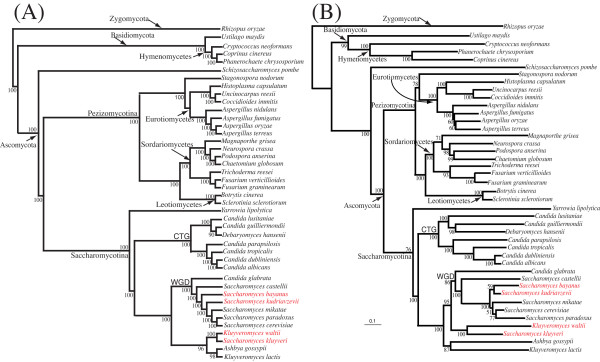
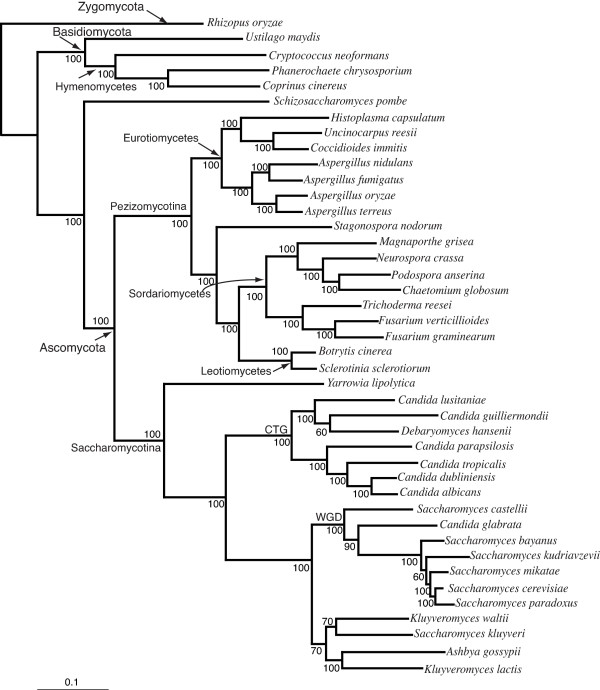
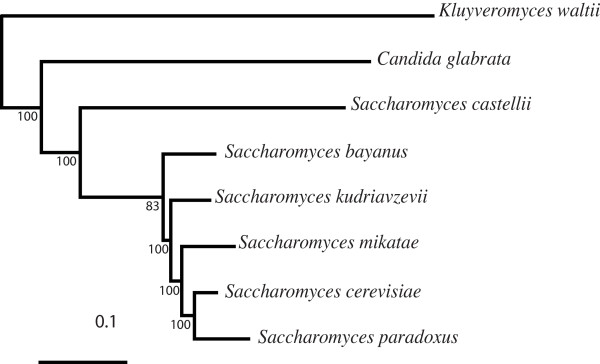
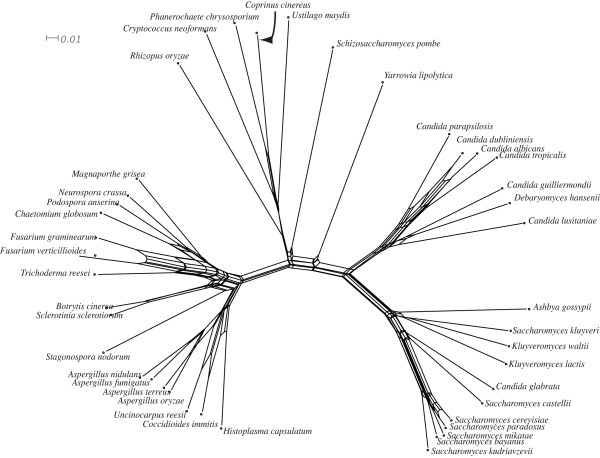
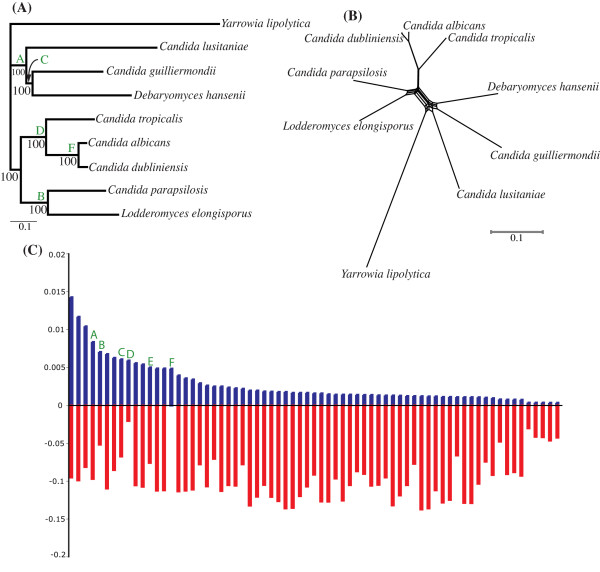
BACKGROUND: To date, most fungal phylogenies have been derived from single gene comparisons, or from concatenated alignments of a small number of genes. The increase in fungal genome sequencing presents an opportunity to reconstruct evolutionary events using entire genomes. As a tool for future comparative, phylogenomic and phylogenetic studies, we used both supertrees and concatenated alignments to infer relationships between 42 species of fungi for which complete genome sequences are available. RESULTS: A dataset of 345,829 genes was extracted from 42 publicly available fungal genomes. Supertree methods were employed to derive phylogenies from 4,805 single gene families. We found that the average consensus supertree method may suffer from long-branch attraction artifacts, while matrix representation with parsimony (MRP) appears to be immune from these. A genome phylogeny was also reconstructed from a concatenated alignment of 153 universally distributed orthologs. Our MRP supertree and concatenated phylogeny are highly congruent. Within the Ascomycota, the sub-phyla Pezizomycotina and Saccharomycotina were resolved. Both phylogenies infer that the Leotiomycetes are the closest sister group to the Sordariomycetes. There is some ambiguity regarding the placement of Stagonospora nodurum, the sole member of the class Dothideomycetes present in the dataset. Within the Saccharomycotina, a monophyletic clade containing organisms that translate CTG as serine instead of leucine is evident. There is also strong support for two groups within the CTG clade, one containing the fully sexual species Candida lusitaniae, Candida guilliermondii and Debaryomyces hansenii, and the second group containing Candida albicans, Candida dubliniensis, Candida tropicalis, Candida parapsilosis and Lodderomyces elongisporus. The second major clade within the Saccharomycotina contains species whose genomes have undergone a whole genome duplication (WGD), and their close relatives. We could not confidently resolve whether Candida glabrata or Saccharomyces castellii lies at the base of the WGD clade. CONCLUSION: We have constructed robust phylogenies for fungi based on whole genome analysis. Overall, our phylogenies provide strong support for the classification of phyla, sub-phyla, classes and orders. We have resolved the relationship of the classes Leotiomyctes and Sordariomycetes, and have identified two classes within the CTG clade of the Saccharomycotina that may correlate with sexual status.
Overview
The claims and statistics of this paper haven’t been checked yet.
Free: it reads the open-access text and checks the first 5 claims that cite a source we can check. Create a free account to check every claim.
Integrity signals
Registry
Cites
Statistics
Figures
Verification
Claims the paper makes
The claims and statistics of this paper haven’t been checked yet.
Free: it reads the open-access text and checks the first 5 claims that cite a source we can check. Create a free account to check every claim.
Claims other papers make about this one
Each is checked against this paper’s own text: does it say what the citing paper says it does?
The source backs part of the claim, not all of it — or backs it for a different population, condition or comparison.
In the citing paper
“N. glabrata is much more closely related to fermentable Saccharomyces cerevisiae than to C. albicans, especially in aspects of its energy metabolism (25).”
From Divergent mitochondrial responses and metabolic signal pathways secure the azole resistance in Crabtree-positive and negative Candida species (2024) · cites this paper as [25]
Experimental — accuracy not yet measuredThe source backs part of the claim, not all of it — or backs it for a different population, condition or comparison.
In the citing paper
“The CTG clade comprises the majority of Candida species and forms a monophyletic group of yeasts that exhibit a genetic code transition, causing the codon CTG to be translated as serine instead of leucine [60–62]”
From Competition assays and physiological experiments of soil and phyllosphere yeasts identify Candida subhashii as a novel antagonist of filamentous fungi (2017) · cites this paper as [60]
Experimental — accuracy not yet measured
Self-check
Percentages, sums and reported differences re-computed from the paper’s own numbers.
The self-check needs the paper’s full text.
Citations
Cites
Gapped BLAST and PSI-BLAST: a new generation of protein database search programs
Altschul, S. (1997) · Nucleic Acids Research · doi:10.1093/nar/25.17.3389 · Cited by 73,302
Thompson, J. D., Higgins, D. G., & Gibson, T. J. (1994) · Nucleic Acids Research · doi:10.1093/nar/22.22.4673 · Cited by 64,617
The neighbor-joining method: a new method for reconstructing phylogenetic trees.
(1987) · Molecular Biology and Evolution · doi:10.1093/oxfordjournals.molbev.a040454 · Cited by 59,715
Improved tools for biological sequence comparison.
Pearson, W. R., & Lipman, D. J. (1988) · Proceedings of the National Academy of Sciences · doi:10.1073/pnas.85.8.2444 · Cited by 11,227 · cited 2×
“Multigene analysis All proteins from the genome sequences were compared with FASTP [79] to find orthologous genes via a best bidirectional strategy.”
MethodSelection of Conserved Blocks from Multiple Alignments for Their Use in Phylogenetic Analysis
Castresana, J. (2000) · Molecular Biology and Evolution · doi:10.1093/oxfordjournals.molbev.a026334 · Cited by 10,508
Genome sequencing in microfabricated high-density picolitre reactors
Margulies, M., Egholm, M., Altman, W. E., Attiya, S., Bader, J. S., Bemben, L. A., Berka, J., Braverman, M. S., Chen, Y.-J., Chen, Z., et al. (2005) · Nature · doi:10.1038/nature03959 · Cited by 7,693
Goffeau, A., Barrell, B. G., Bussey, H., Davis, R. W., Dujon, B., Feldmann, H., Galibert, F., Hoheisel, J. D., Jacq, C., Johnston, M., et al. (1996) · Science · doi:10.1126/science.274.5287.546 · Cited by 4,263
Phylogenetic relationships among ascomycetes: evidence from an RNA polymerse II subunit
Liu, Y. J., Whelen, S., & Hall, B. D. (1999) · Molecular Biology and Evolution · doi:10.1093/oxfordjournals.molbev.a026092 · Cited by 3,751
Korf, I. (2004) · BMC Bioinformatics · doi:10.1186/1471-2105-5-59 · Cited by 3,192
Automated generation of heuristics for biological sequence comparison
Slater, G. S. C., & Birney, E. (2005) · BMC Bioinformatics · doi:10.1186/1471-2105-6-31 · Cited by 2,933
Cited by
Items 201–300 of 567
van Driel, K. G. A., Humbel, B. M., Verkleij, A. J., Stalpers, J. A., Müller, W. H., & Boekhout, T. (2009) · Mycological Research · doi:10.1016/j.mycres.2008.12.007 · Cited by 43
RNA recognition by the DNA end-binding Ku heterodimer
Dalby, A. B., Goodrich, K. J., Pfingsten, J. S., & Cech, T. R. (2013) · RNA · doi:10.1261/rna.038703.113 · Cited by 43
Horizontal Gene Transfer Between Microbial Eukaryotes
Andersson, J. O. (2009) · Methods in molecular biology · doi:10.1007/978-1-60327-853-9_27 · Cited by 43
Clark, N. L., Alani, E., & Aquadro, C. F. (2013) · Genetics · doi:10.1534/genetics.112.145979 · Cited by 42
Co‐evolution‐driven switch of J‐protein specificity towards an Hsp70 partner
Pukszta, S., Schilke, B., Dutkiewicz, R., Kominek, J., Moczulska, K., Stepien, B., Reitenga, K. G., Bujnicki, J. M., Williams, B., Craig, E. A., et al. (2010) · EMBO reports · doi:10.1038/embor.2010.29 · Cited by 42
In silico prediction of antimalarial drug target candidates
Ludin, P., Woodcroft, B. J., Ralph, S. A., & Mäser, P. (2012) · International Journal for Parasitology Drugs and Drug Resistance · doi:10.1016/j.ijpddr.2012.07.002 · Cited by 42
The Use and Validity of Composite Taxa in Phylogenetic Analysis
Campbell, V., & Lapointe, F. (2009) · Systematic Biology · doi:10.1093/sysbio/syp056 · Cited by 43
Mühlhausen, S., & Kollmar, M. (2014) · Genome Biology and Evolution · doi:10.1093/gbe/evu152 · Cited by 41
Characterization of New Polyol/H+ Symporters in Debaryomyces hansenii
Pereira, I., Madeira, A., Prista, C., Loureiro-Dias, M. C., & Leandro, M. J. (2014) · PLoS ONE · doi:10.1371/journal.pone.0088180 · Cited by 41
Candida famata (Candida flareri)
Dmytruk, K. V., & Sibirny, A. А. (2012) · Yeast · doi:10.1002/yea.2929 · Cited by 41
An Introduction to the Medically Important Candida Species
Moran, G., Coleman, D., & Sullivan, D. (2014) · Candida and Candidiasis · doi:10.1128/9781555817176.ch2 · Cited by 40
Identification of food and beverage spoilage yeasts from DNA sequence analyses
Kurtzman, C. P. (2015) · International Journal of Food Microbiology · doi:10.1016/j.ijfoodmicro.2015.05.023 · Cited by 40
Papon, N., Courdavault, V., Clastre, M., Simkin, A. J., Crèche, J., & Giglioli‐Guivarc’h, N. (2012) · Microbiology · doi:10.1099/mic.0.055244-0 · Cited by 39
New kids on the block: emerging oleaginous yeast of biotechnological importance
Yaguchi, A., Rives, D., & Blenner, M. (2017) · AIMS Microbiology · doi:10.3934/microbiol.2017.2.227 · Cited by 39
Trail of decryption of molecular research on Botryosphaeriaceae in woody plants
Chethana, K. W. T., Li, X., Zhang, W., Hyde, K. D., & Yan, J. (2016) · DOAJ (DOAJ: Directory of Open Access Journals) · doi:10.14601/phytopathol_mediterr-16230 · Cited by 39
Leal, J. A., Prieto, A., Bernabé, M., & Hawksworth, D. L. (2010) · FEMS Microbiology Reviews · doi:10.1111/j.1574-6976.2010.00225.x · Cited by 39
Recognition and delineation of yeast genera based on genomic data: Lessons from Trichosporonales
Takashima, M., Manabe, R., Nishimura, Y., Endoh, R., Ohkuma, M., Sriswasdi, S., Sugita, T., & Iwasaki, W. (2019) · Fungal Genetics and Biology · doi:10.1016/j.fgb.2019.04.013 · Cited by 38
Genome and Transcriptome Analysis of the Food-Yeast Candida utilis
Tomita, Y., Ikeo, K., Tamakawa, H., Gojobori, T., & Ikushima, S. (2012) · PLoS ONE · doi:10.1371/journal.pone.0037226 · Cited by 39
Relaxation of yeast mitochondrial functions after whole-genome duplication
Jiang, H., Guan, W., Pinney, D., Wang, W., & Gu, Z. (2008) · Genome Research · doi:10.1101/gr.074674.107 · Cited by 37
Network Evolution: Rewiring and Signatures of Conservation in Signaling
Sun, M., Sikora, M., Costanzo, M., Boone, C. M., & Kim, P. M. (2012) · PLoS Computational Biology · doi:10.1371/journal.pcbi.1002411 · Cited by 37
Magain, N., Miądlikowska, J., Mueller, O., Gajdeczka, M. T., Truong, C., Salamov, A. A., Dubchak, I. L., Grigoriev, I. V., Goffinet, B., Sérusiaux, E., et al. (2017) · Molecular Phylogenetics and Evolution · doi:10.1016/j.ympev.2017.08.013 · Cited by 37
Atsatt, P. R., & Whiteside, M. D. (2014) · PLoS ONE · doi:10.1371/journal.pone.0095266 · Cited by 37
Non-LTR retrotransposons in fungi
Novikova, O., Fet, V., & Blinov, A. G. (2008) · Functional & Integrative Genomics · doi:10.1007/s10142-008-0093-8 · Cited by 37
Yeasty clocks: Dating genomic changes in yeasts
Rolland, T., & Dujon, B. (2011) · Comptes Rendus Biologies · doi:10.1016/j.crvi.2011.05.010 · Cited by 38
The evolution of 5S ribosomal RNA genes linked to the rDNA units of fungal species
Bergeron, J., & Drouin, G. (2008) · Current Genetics · doi:10.1007/s00294-008-0201-2 · Cited by 36
Boisnard, S., Ruprich‐Robert, G., Florent, M., Silva, B. D., Chapeland‐Leclerc, F., & Papon, N. (2008) · Yeast · doi:10.1002/yea.1636 · Cited by 36
Universal Scaling in the Branching of the Tree of Life
Herrada, E. A., Tessone, C. J., Klemm, K., Eguíluz, V. M., Hernández-García, E., & Duarte, C. M. (2008) · PLoS ONE · doi:10.1371/journal.pone.0002757 · Cited by 36
The multidrug transporter Pdr5: a molecular diode?
Gupta, R. P., Kueppers, P., Schmitt, L., & Ernst, R. (2011) · Biological Chemistry · doi:10.1515/bc.2011.011 · Cited by 36
Cloning and characterization of a sialidase from the filamentous fungus, Aspergillus fumigatus
Warwas, M. L., Yeung, J. H. F., Indurugalla, D., Mooers, A. Ø., Bennet, A. J., & Moore, M. M. (2010) · Glycoconjugate Journal · doi:10.1007/s10719-010-9299-9 · Cited by 37
CandidaDB: a multi-genome database for Candida species and related Saccharomycotina
Rossignol, T., Lechat, P., Cuomo, C. A., Zeng, Q., Moszer, I., & d’Enfert, C. (2007) · Nucleic Acids Research · doi:10.1093/nar/gkm1010 · Cited by 36
Advances in Understanding Human Genetic Variations That Influence Innate Immunity to Fungi
Merkhofer, R. M., & Klein, B. S. (2020) · Frontiers in Cellular and Infection Microbiology · doi:10.3389/fcimb.2020.00069 · Cited by 36
Llanes, A., Restrepo, C. M., & Rajeev, S. (2016) · PLoS ONE · doi:10.1371/journal.pone.0159387 · Cited by 34
Molecular Phylogenetic Reconstruction
Weiß, M., & Göker, M. (2011) · Elsevier eBooks · doi:10.1016/b978-0-444-52149-1.00012-4 · Cited by 34
An expanded family of fungalysin extracellular metallopeptidases of Coprinopsis cinerea
Lilly, W. W., Stajich, J., Pukkila, P. J., Wilke, S. K., Inoguchi, N., & Gathman, A. C. (2008) · Mycological Research · doi:10.1016/j.mycres.2007.11.013 · Cited by 34
Self-citationTinkering Evolution of Post-Transcriptional RNA Regulons: Puf3p in Fungi as an Example
Jiang, H., Guan, W., & Gu, Z. (2010) · PLoS Genetics · doi:10.1371/journal.pgen.1001030 · Cited by 34
Kolondra, A., Labedzka-Dmoch, K., Wenda, J. M., Drzewicka, K., & Golik, P. (2015) · BMC Genomics · doi:10.1186/s12864-015-2078-z · Cited by 33
“This monophyletic clade, distant from the well-known Saccharomyces group, consists of species that translate CUG as serine instead of leucine in their nuclear genetic code [41, 48–50] and contains many pathogenic species, including Candida albicans.”
Fungal biology in the post-genomic era
Scazzocchio, C. (2014) · Fungal Biology and Biotechnology · doi:10.1186/s40694-014-0007-6 · Cited by 33
Fox, A. K., Tuch, B. B., & Chuang, J. H. (2008) · BMC Evolutionary Biology · doi:10.1186/1471-2148-8-186 · Cited by 33
Analyzing the human gut mycobiome – A short guide for beginners
Thielemann, N., Herz, M., Kurzai, O., & Martin, R. (2022) · Computational and Structural Biotechnology Journal · doi:10.1016/j.csbj.2022.01.008 · Cited by 33
Interspecies variation reveals a conserved repressor of α-specific genes in Saccharomyces yeasts
Zill, O. A., & Rine, J. (2008) · Genes & Development · doi:10.1101/gad.1640008 · Cited by 33
Molecular evolution of cyclin proteins in animals and fungi
Владимирович, Г. К., Suslov, V. V., Turnaev, I. I., Afonnikov, D. A., & Kolchanov, N. A. (2011) · BMC Evolutionary Biology · doi:10.1186/1471-2148-11-224 · Cited by 33
Advances in Fungal Phylogenomics and Their Impact on Fungal Systematics
Zhang, N., Luo, J., & Bhattacharya, D. (2017) · Advances in genetics · doi:10.1016/bs.adgen.2017.09.004 · Cited by 33
Naqvi, S. A. H., Abbas, A., Hasnain, A., Bilal, Z., Hakim, F., Shabbir, M., Amin, A., & Iqbal, M. U. (2025) · Archives of Microbiology · doi:10.1007/s00203-025-04392-2 · Cited by 32
Biology and Genetics of Vegetative Incompatibility in Fungi
Aanen, D. K., Debets, A. J. M., Glass, N. L., & Saupe, S. J. (2014) · ASM Press eBooks · doi:10.1128/9781555816636.ch20 · Cited by 32
The Alcohol Dehydrogenase System in the Xylose-Fermenting Yeast Candida maltosa
Lin, Y., He, P., Wang, Q., Lu, D., Li, Z., Wu, C., & Jiang, N. (2010) · PLoS ONE · doi:10.1371/journal.pone.0011752 · Cited by 33
Kuramae, E. E., Robert, V., Echávarri‐Erasun, C., & Boekhout, T. (2007) · BMC Evolutionary Biology · doi:10.1186/1471-2148-7-134 · Cited by 33
Chilton, I. J., Delaney, C. E., Barham-Morris, J. B., Fincham, D. A., Hooley, P., & Whitehead, M. P. (2008) · Mycological Research · doi:10.1016/j.mycres.2008.06.028 · Cited by 31
1 Saccharomycotina and Taphrinomycotina: The Yeasts and Yeastlike Fungi of the Ascomycota
Kurtzman, C. P., & Sugiyama, J. (2015) · Springer eBooks · doi:10.1007/978-3-662-46011-5_1 · Cited by 34
Jacobsen, M. D., Boekhout, T., & Odds, F. C. (2008) · FEMS Yeast Research · doi:10.1111/j.1567-1364.2008.00392.x · Cited by 31
Chapeland‐Leclerc, F., Paccallet, P., Ruprich‐Robert, G., Reboutier, D., Chastin, C., & Papon, N. (2007) · Eukaryotic Cell · doi:10.1128/ec.00155-07 · Cited by 30
Exploring contradictory phylogenetic relationships in yeasts
Wu, Q., James, S. A., Roberts, I. N., Moulton, V., & Huber, K. T. (2008) · FEMS Yeast Research · doi:10.1111/j.1567-1364.2008.00362.x · Cited by 30
Balachander, S., Gombolay, A. L., Yang, T., Xu, P., Newnam, G., Keskin, H., El-Sayed, W. M. M., Bryksin, A. V., Tao, S., Bowen, N. E., et al. (2020) · Nature Communications · doi:10.1038/s41467-020-16152-5 · Cited by 29
Genome-scale data resolve ancestral rock-inhabiting lifestyle in Dothideomycetes (Ascomycota)
Ametrano, C. G., Grewe, F., Crous, P. W., Goodwin, S. B., Liang, C. B., Selbmann, L., Lumbsch, H. T., Leavitt, S. D., & Muggia, L. (2019) · IMA Fungus · doi:10.1186/s43008-019-0018-2 · Cited by 30
Song, N., Geng, Y., & Li, X. (2020) · Frontiers in Microbiology · doi:10.3389/fmicb.2020.00863 · Cited by 29
Genomic Data Quality Impacts Automated Detection of Lateral Gene Transfer in Fungi
Dupont, P., & Cox, M. P. (2017) · G3 Genes Genomes Genetics · doi:10.1534/g3.116.038448 · Cited by 28
Satała, D., Juszczak, M., Wronowska, E., Surowiec, M., Kulig, K., Kozik, A., Rąpała‐Kozik, M., & Karkowska‐Kuleta, J. (2022) · Cellular Microbiology · doi:10.1155/2022/2599136 · Cited by 28
Nagy, L. G., & Szöllősi, G. J. (2017) · Advances in genetics · doi:10.1016/bs.adgen.2017.09.008 · Cited by 28
Functional comparison of plasma-membrane Na+/H+ antiporters from two pathogenic Candida species
Krauke, Y., & Sychrová, H. (2008) · BMC Microbiology · doi:10.1186/1471-2180-8-80 · Cited by 28
Systematics of the Genus Cryptococcus and Its Type Species C. neoformans
Kwon-Chung, K. J., Boekhout, T., Wickes, B. L., & Fell, J. W. (2014) · ASM Press eBooks · doi:10.1128/9781555816858.ch1 · Cited by 28
Sánchez, N. S., Calahorra, M., González, J., Defosse, T. A., Papon, N., Peña, A., & Coria, R. (2020) · Current Genetics · doi:10.1007/s00294-020-01099-3 · Cited by 27
Multigene Phylogenetic Analyses to Delimit New Species in Fungal Plant Pathogens
Rintoul, T. L., Eggertson, Q., & Lévesque, C. A. (2011) · Methods in molecular biology · doi:10.1007/978-1-61779-501-5_34 · Cited by 28
Foureau, E., Courdavault, V., Rojas, L. F., Dutilleul, C., Simkin, A. J., Crèche, J., Atehortúa, L., Giglioli‐Guivarc’h, N., Clastre, M., & Papon, N. (2013) · Biotechnology Letters · doi:10.1007/s10529-013-1169-7 · Cited by 27
Polymorphic centromere locations in the pathogenic yeast Candida parapsilosis
Ola, M., O’Brien, C. E., Coughlan, A. Y., Ma, Q., Donovan, P. D., Wolfe, K. H., & Butler, G. (2020) · Genome Research · doi:10.1101/gr.257816.119 · Cited by 28
Self-citationThe CCR4-NOT Complex Is Implicated in the Viability of Aneuploid Yeasts
Tange, Y., Kurabayashi, A., Goto, B., Hoe, K.-L., Kim, D.-U., Park, H.-O., Hayles, J., Chikashige, Y., Tsutumi, C., Hiraoka, Y., et al. (2012) · PLoS Genetics · doi:10.1371/journal.pgen.1002776 · Cited by 26
Evolution of Mating in the Saccharomycotina
Wolfe, K. H., & Butler, G. (2017) · Annual Review of Microbiology · doi:10.1146/annurev-micro-090816-093403 · Cited by 26
Self-citationMultiple Approaches to Phylogenomic Reconstruction of the Fungal Kingdom
McCarthy, C. G. P., & Fitzpatrick, D. A. (2017) · Advances in genetics · doi:10.1016/bs.adgen.2017.09.006 · Cited by 26
Self-citationMolecular Typing of Candida glabrata
Gabaldón, T., Gómez-Molero, E., & Bader, O. (2019) · Mycopathologia · doi:10.1007/s11046-019-00388-x · Cited by 26
Xenobiotic Efflux in Bacteria and Fungi: A Genomics Update
Barabote, R. D., Thekkiniath, J., Strauss, R. E., Vediyappan, G., Fralick, J. A., & Francisco, M. J. S. (2011) · Advances in enzymology and related areas of molecular biology/Advances in enzymology and related subjects · doi:10.1002/9780470920541.ch6 · Cited by 26
Jung, P. P., Friedrich, A., Souciet, J., Leh-Louis, V., Potier, S., de Montigny, J., & Schacherer, J. (2010) · Current Genetics · doi:10.1007/s00294-010-0318-y · Cited by 26
Silva, N. C. E., Gonçalves, I., Lemaire, M., Lesuisse, E., Camadro, J., & Blaiseau, P. L. (2009) · Genetics · doi:10.1534/genetics.109.104364 · Cited by 25
SNUGB: a versatile genome browser supporting comparative and functional fungal genomics
Jung, K., Park, J., Choi, J., Park, B., Kim, S., Ahn, K., Choi, J., Choi, D., Kang, S., & Lee, Y. (2008) · BMC Genomics · doi:10.1186/1471-2164-9-586 · Cited by 25
Comparative Genomics of Pathogenic and Nonpathogenic Beetle-Vectored Fungi in the Genus Geosmithia
Schuelke, T., Wu, G., Westbrook, A., Woeste, K., Plachetzki, D. C., Broders, K. D., & MacManes, M. D. (2017) · Genome Biology and Evolution · doi:10.1093/gbe/evx242 · Cited by 25
Bergin, S. A., Doorley, L. A., Rybak, J. M., Wolfe, K. H., Butler, G., Cuomo, C. A., & Rogers, P. D. (2024) · Antimicrobial Agents and Chemotherapy · doi:10.1128/aac.01619-23 · Cited by 24
Self-citationO’Brien, C. E., McCarthy, C. G. P., Walshe, A. E., Shaw, D. R., Sumski, D., Krassowski, T., Fitzpatrick, D. A., & Butler, G. (2018) · PLoS ONE · doi:10.1371/journal.pone.0198957 · Cited by 24
Self-citationAddressing Inter-Gene Heterogeneity in Maximum Likelihood Phylogenomic Analysis: Yeasts Revisited
Hess, J., & Goldman, N. (2011) · PLoS ONE · doi:10.1371/journal.pone.0022783 · Cited by 25
Krauke, Y., & Sychrová, H. (2010) · FEMS Yeast Research · doi:10.1111/j.1567-1364.2010.00686.x · Cited by 24
Evolutionary loss of 8-oxo-G repair components among eukaryotes
Jansson, K., Blomberg, A., Sunnerhagen, P., & Rosenblad, M. A. (2010) · Genome Integrity · doi:10.1186/2041-9414-1-12 · Cited by 23
Antifungal Properties of Cationic Phenylene Ethynylenes and Their Impact on β-Glucan Exposure
Pappas, H. C., Sylejmani, R., Graus, M. S., Donabedian, P. L., Whitten, D. G., & Neumann, A. K. (2016) · Antimicrobial Agents and Chemotherapy · doi:10.1128/aac.00317-16 · Cited by 23
Müller, S., Fleck, C. B., Wilson, D., Hummert, C., Hube, B., & Brock, M. (2011) · Environmental Microbiology · doi:10.1111/j.1462-2920.2011.02458.x · Cited by 23
Villa, N., Moussatche, P., Chamberlin, S. G., Kumar, A., & Lyons, T. J. (2011) · Journal of Molecular Evolution · doi:10.1007/s00239-011-9462-3 · Cited by 23
BAUER, B. E., Schwienbacher, M., Broniszewska, M., Israel, L., Heesemann, J., & Ebel, F. (2009) · Mycoses · doi:10.1111/j.1439-0507.2009.01718.x · Cited by 23
Fungal Genomes and Insights into the Evolution of the Kingdom
Stajich, J. E. (2017) · The Fungal Kingdom · doi:10.1128/9781555819583.ch29 · Cited by 22
Self-citationDean, R. A. (2007) · Nature Biotechnology · doi:10.1038/nbt0107-67 · Cited by 22
Sibirny, A. А. (2022) · BBA Advances · doi:10.1016/j.bbadva.2022.100071 · Cited by 22
Molecular phylogenetic analysis of Candida tropicalis isolates by multi-locus sequence typing
Jacobsen, M. D., Davidson, A. D., Li, S., Shaw, D. J., Gow, N. A. R., & Odds, F. C. (2008) · Fungal Genetics and Biology · doi:10.1016/j.fgb.2008.03.011 · Cited by 22
Rac1 Dynamics in the Human Opportunistic Fungal Pathogen Candida albicans
Vauchelles, R., Stalder, D., Botton, T., Arkowitz, R. A., & Bassilana, M. (2010) · PLoS ONE · doi:10.1371/journal.pone.0015400 · Cited by 22
Wang, H., Li, W., Liu, Y., Yang, F., & Wang, X. (2016) · Molecular Phylogenetics and Evolution · doi:10.1016/j.ympev.2016.11.018 · Cited by 22
Guan, W., Jiang, H., Guo, X., Mancera, E., Xu, L., Li, Y., Steinmetz, L. M., Li, Y., & Gu, Z. (2010) · PLoS ONE · doi:10.1371/journal.pone.0011309 · Cited by 22
Evolution and phylogenetic relationships of APSES proteins from Hemiascomycetes
Ramírez-Zavala, B., & Domínguez, Á. (2008) · FEMS Yeast Research · doi:10.1111/j.1567-1364.2008.00370.x · Cited by 23
Hurdles in fungal taxonomy: Effectiveness of recent methods in discriminating taxa
Chethana, K. W. T., Jayawardena, R. S., & Hyde, K. D. (2020) · Megataxa · doi:10.11646/megataxa.1.2.2 · Cited by 22
Genomes, free radicals and plant cell invasion: recent developments in plant pathogenic fungi
Egan, M. J., & Talbot, N. J. (2008) · Current Opinion in Plant Biology · doi:10.1016/j.pbi.2008.05.008 · Cited by 21
Novel features of ARS selection in budding yeast Lachancea kluyveri
Liachko, I., Tanaka, E., Cox, K. E. L., Chung, S. C. C., Yang, L., Seher, A., Hallas, L., Cha, E., Kang, G., Pace, H. M., et al. (2011) · BMC Genomics · doi:10.1186/1471-2164-12-633 · Cited by 21
L.U.St: a tool for approximated maximum likelihood supertree reconstruction
Akanni, W. A., Creevey, C. J., Wilkinson, M., & Pisani, D. (2014) · BMC Bioinformatics · doi:10.1186/1471-2105-15-183 · Cited by 21
Yeasts as Distinct Life Forms of Fungi
Kurtzman, C. P., & Boekhout, T. (2017) · Springer eBooks · doi:10.1007/978-3-319-61575-2_1 · Cited by 21
Nitrogen Metabolism in Filamentous Fungi
Davis, M. A., & Wong, K. H. (2014) · ASM Press eBooks · doi:10.1128/9781555816636.ch23 · Cited by 21
Next-generation fungal identification using target enrichment and Nanopore sequencing
Yu, P., Fulton, J. C., Hudson, O., Huguet‐Tapia, J. C., & Brawner, J. T. (2023) · BMC Genomics · doi:10.1186/s12864-023-09691-w · Cited by 20
Global consortium for the classification of fungi and fungus-like taxa
Hyde, K., Abdel-Wahab, M., Abdollahzadeh, J., Abeywickrama, P. D., Absalan, S., Afshari, N., Ainsworth, A. M., АКУЛОВ, О. Ю., Aleoshin, V. V., Al-Sadi, A. M., et al. (2023) · Mycosphere · doi:10.5943/mycosphere/14/1/23 · Cited by 20
Assembling a Hippo: the evolutionary emergence of an animal developmental signaling pathway
Phillips, J. E., Zheng, Y., & Pan, D. (2024) · Trends in Biochemical Sciences · doi:10.1016/j.tibs.2024.04.005 · Cited by 20
Complex evolution of the DAL5 transporter family
Hellborg, L., Woolfit, M., Arthursson-Hellborg, M., & Piškur, J. (2008) · BMC Genomics · doi:10.1186/1471-2164-9-164 · Cited by 20
Split-based computation of majority-rule supertrees
Kupczok, A. (2011) · BMC Evolutionary Biology · doi:10.1186/1471-2148-11-205 · Cited by 20
Metadata
- Authors
- Fitzpatrick, D. A., Logue, M. E., Stajich, J., & Butler, G.
- Affiliations
- University College Dublin (IE)
- Duke University (US)
- Corresponding author
- David A. Fitzpatrick
- Venue
- BMC Evolutionary Biology
- Published
- 2006
- Volume
- 6
- Issue
- 1
- Pages
- 99
- ISSN
- 1471-2148 (ISSN-L)
- PMC
- PMC1679813
- OpenAlex
- W2095815023
- Semantic Scholar
- 08a67c69d23a2b8b0ba352bc4ae74013b31dffc1
- Cited by
- 475
- References
- 92
- Citations by year
- 2026: 3 · 2025: 2 · 2024: 5 · 2023: 9 · 2022: 6 · 2021: 13 · 2020: 17 · 2019: 16 · 2018: 14 · 2017: 26 · 2016: 14 · 2015: 19 · 2014: 39 · 2013: 31 · 2012: 44
- FWCI
- 15.38
- Type
- journal article
- Language
- en
- Open access
- gold
- doi.org
- Licence
- cc-by
- Locations
- BMC Evolutionary Biology (publishedVersion, cc-by)
- PubMed (publishedVersion)
- Maynooth University ePrints and eTheses Archive (Maynooth University) (acceptedVersion)
- eScholarship (California Digital Library) (submittedVersion, cc-by-nc-sa)
- DOAJ (DOAJ: Directory of Open Access Journals) (submittedVersion)
- Funders
- National Science Foundation
- Wellcome Trust
- Broad Institute
- Irish Research Council for Science, Engineering and Technology
- Science Foundation Ireland
- Irish Research Council
- Irish Centre for High-End Computing
- Topics
- Life Sciences › Biochemistry, Genetics and Molecular Biology › Molecular Biology › Fungal and yeast genetics research
- Life Sciences › Biochemistry, Genetics and Molecular Biology › Molecular Biology › Genomics and Phylogenetic Studies
- Life Sciences › Immunology and Microbiology › Microbiology › Yeasts and Rust Fungi Studies
- Keywords
- fungal phylogeny, supertree, matrix representation with parsimony, concatenated alignment, orthologs, Ascomycota, Pezizomycotina, Saccharomycotina, Leotiomycetes, Sordariomycetes, Dothideomycetes, Candida, whole-genome duplication, long-branch attraction
- MeSH terms
- Ascomycota, Basidiomycota, Fungi, Genes, Fungal, Phylogeny, Sequence Alignment, Genome, Fungal, Databases, Genetic
About these checks
Registry, retraction, Cites and statistics results are computed, not judged, with one exception: a printed reference that no index lists is read once by a model before it counts as a citation error. Claims are extracted by a model and kept only when their quote appears verbatim in the text; each cited source is then checked, with a model’s help, for whether it says what the claim relies on. Those verdicts can be wrong — read the claim’s quote and the cited source before relying on one.
Statistics and arithmetic are recomputed, not judged.
Confidence bands are shown only for fields calibrated on our annotated test set. None is calibrated yet, so no band is shown.
What counts as a claim ›How we measure confidence ›How we check this ›
Are you an author, or do you see a problem with this page? Request a review
Data sources
Bibliographic data: Semantic Scholar, OpenAlex, Crossref.
Contains information from the Semantic Scholar Academic Graph Datasets, made available under the ODC Attribution License (ODC-BY 1.0).
Semantic Scholar’s data is described in: Kinney, R., et al. (2023). The Semantic Scholar Open Data Platform. arXiv:2301.10140.
