

A fungal phylogeny based on 42 complete genomes derived from supertree and combined gene analysis.
Open accessThe DOI matches its Crossref record, with a small difference in title or year; 95 of the 95 references it cites were found in a registry or an index.
Abstract
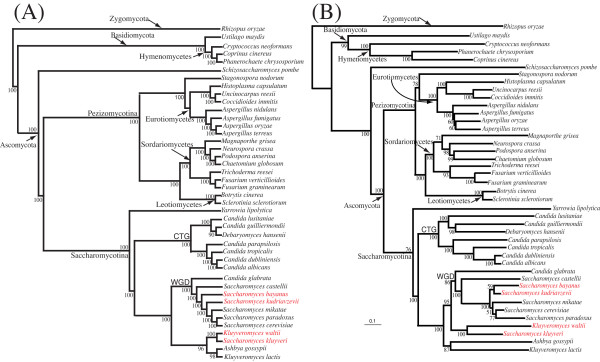
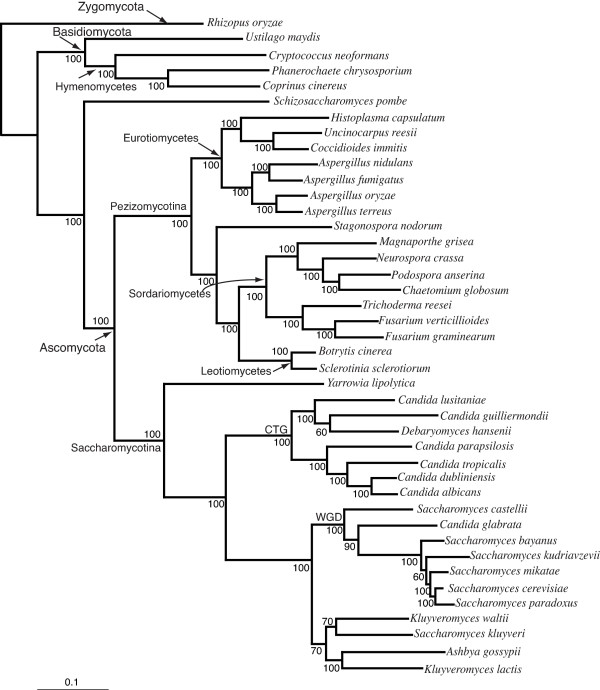
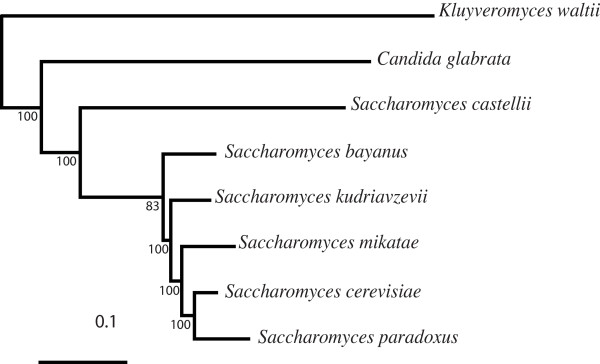
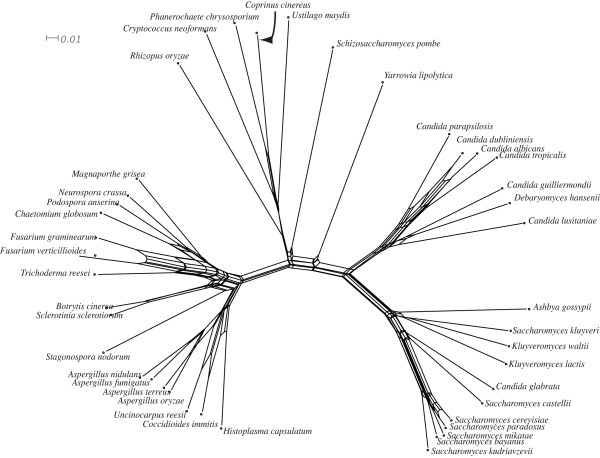
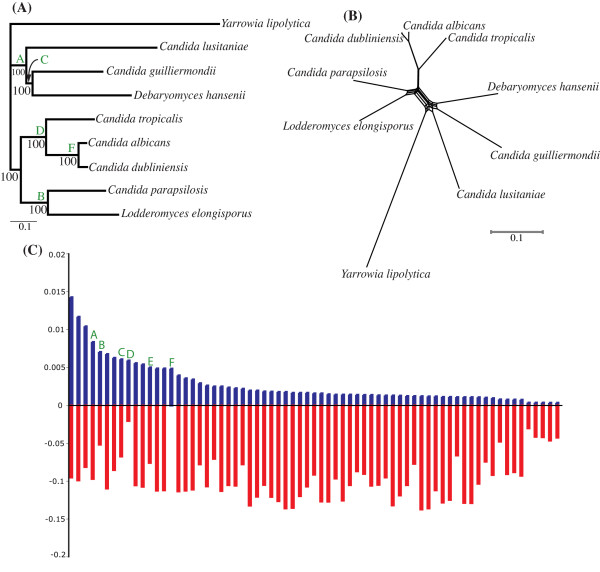
BACKGROUND: To date, most fungal phylogenies have been derived from single gene comparisons, or from concatenated alignments of a small number of genes. The increase in fungal genome sequencing presents an opportunity to reconstruct evolutionary events using entire genomes. As a tool for future comparative, phylogenomic and phylogenetic studies, we used both supertrees and concatenated alignments to infer relationships between 42 species of fungi for which complete genome sequences are available. RESULTS: A dataset of 345,829 genes was extracted from 42 publicly available fungal genomes. Supertree methods were employed to derive phylogenies from 4,805 single gene families. We found that the average consensus supertree method may suffer from long-branch attraction artifacts, while matrix representation with parsimony (MRP) appears to be immune from these. A genome phylogeny was also reconstructed from a concatenated alignment of 153 universally distributed orthologs. Our MRP supertree and concatenated phylogeny are highly congruent. Within the Ascomycota, the sub-phyla Pezizomycotina and Saccharomycotina were resolved. Both phylogenies infer that the Leotiomycetes are the closest sister group to the Sordariomycetes. There is some ambiguity regarding the placement of Stagonospora nodurum, the sole member of the class Dothideomycetes present in the dataset. Within the Saccharomycotina, a monophyletic clade containing organisms that translate CTG as serine instead of leucine is evident. There is also strong support for two groups within the CTG clade, one containing the fully sexual species Candida lusitaniae, Candida guilliermondii and Debaryomyces hansenii, and the second group containing Candida albicans, Candida dubliniensis, Candida tropicalis, Candida parapsilosis and Lodderomyces elongisporus. The second major clade within the Saccharomycotina contains species whose genomes have undergone a whole genome duplication (WGD), and their close relatives. We could not confidently resolve whether Candida glabrata or Saccharomyces castellii lies at the base of the WGD clade. CONCLUSION: We have constructed robust phylogenies for fungi based on whole genome analysis. Overall, our phylogenies provide strong support for the classification of phyla, sub-phyla, classes and orders. We have resolved the relationship of the classes Leotiomyctes and Sordariomycetes, and have identified two classes within the CTG clade of the Saccharomycotina that may correlate with sexual status.
Overview
The claims and statistics of this paper haven’t been checked yet.
Free: it reads the open-access text and checks the first 5 claims that cite a source we can check. Create a free account to check every claim.
Integrity signals
Registry
Cites
Statistics
Figures
Verification
Claims the paper makes
The claims and statistics of this paper haven’t been checked yet.
Free: it reads the open-access text and checks the first 5 claims that cite a source we can check. Create a free account to check every claim.
Claims other papers make about this one
Each is checked against this paper’s own text: does it say what the citing paper says it does?
The source backs part of the claim, not all of it — or backs it for a different population, condition or comparison.
In the citing paper
“N. glabrata is much more closely related to fermentable Saccharomyces cerevisiae than to C. albicans, especially in aspects of its energy metabolism (25).”
From Divergent mitochondrial responses and metabolic signal pathways secure the azole resistance in Crabtree-positive and negative Candida species (2024) · cites this paper as [25]
Experimental — accuracy not yet measuredThe source backs part of the claim, not all of it — or backs it for a different population, condition or comparison.
In the citing paper
“The CTG clade comprises the majority of Candida species and forms a monophyletic group of yeasts that exhibit a genetic code transition, causing the codon CTG to be translated as serine instead of leucine [60–62]”
From Competition assays and physiological experiments of soil and phyllosphere yeasts identify Candida subhashii as a novel antagonist of filamentous fungi (2017) · cites this paper as [60]
Experimental — accuracy not yet measured
Self-check
Percentages, sums and reported differences re-computed from the paper’s own numbers.
The self-check needs the paper’s full text.
Citations
Cites
Gapped BLAST and PSI-BLAST: a new generation of protein database search programs
Altschul, S. (1997) · Nucleic Acids Research · doi:10.1093/nar/25.17.3389 · Cited by 73,302
Thompson, J. D., Higgins, D. G., & Gibson, T. J. (1994) · Nucleic Acids Research · doi:10.1093/nar/22.22.4673 · Cited by 64,617
The neighbor-joining method: a new method for reconstructing phylogenetic trees.
(1987) · Molecular Biology and Evolution · doi:10.1093/oxfordjournals.molbev.a040454 · Cited by 59,715
Improved tools for biological sequence comparison.
Pearson, W. R., & Lipman, D. J. (1988) · Proceedings of the National Academy of Sciences · doi:10.1073/pnas.85.8.2444 · Cited by 11,227 · cited 2×
“Multigene analysis All proteins from the genome sequences were compared with FASTP [79] to find orthologous genes via a best bidirectional strategy.”
MethodSelection of Conserved Blocks from Multiple Alignments for Their Use in Phylogenetic Analysis
Castresana, J. (2000) · Molecular Biology and Evolution · doi:10.1093/oxfordjournals.molbev.a026334 · Cited by 10,508
Genome sequencing in microfabricated high-density picolitre reactors
Margulies, M., Egholm, M., Altman, W. E., Attiya, S., Bader, J. S., Bemben, L. A., Berka, J., Braverman, M. S., Chen, Y.-J., Chen, Z., et al. (2005) · Nature · doi:10.1038/nature03959 · Cited by 7,693
Goffeau, A., Barrell, B. G., Bussey, H., Davis, R. W., Dujon, B., Feldmann, H., Galibert, F., Hoheisel, J. D., Jacq, C., Johnston, M., et al. (1996) · Science · doi:10.1126/science.274.5287.546 · Cited by 4,263
Phylogenetic relationships among ascomycetes: evidence from an RNA polymerse II subunit
Liu, Y. J., Whelen, S., & Hall, B. D. (1999) · Molecular Biology and Evolution · doi:10.1093/oxfordjournals.molbev.a026092 · Cited by 3,751
Korf, I. (2004) · BMC Bioinformatics · doi:10.1186/1471-2105-5-59 · Cited by 3,192
Automated generation of heuristics for biological sequence comparison
Slater, G. S. C., & Birney, E. (2005) · BMC Bioinformatics · doi:10.1186/1471-2105-6-31 · Cited by 2,933
Cited by
The Colletotrichum gloeosporioides species complex
Weir, B. S., Johnston, P. R., & Damm, U. (2012) · Studies in Mycology · doi:10.3114/sim0011 · Cited by 1,646
“Protein-coding genes and their introns often have more variation than ITS, and the need for secondary barcodes based on these kinds of genes has been discussed in relation to some groups of fungi (Fitzpatrick et al. 2006, Aguileta et al. 2008, Weir & Johnston 2011).”
BackgroundSMURF: Genomic mapping of fungal secondary metabolite clusters
Khaldi, N., Seifuddin, F. T., Turner, G., Haft, D., Nierman, W. C., Wolfe, K. H., & Fedorova, N. D. (2010) · Fungal Genetics and Biology · doi:10.1016/j.fgb.2010.06.003 · Cited by 771
Schoch, C. L., Sung, G.-H., López-Giráldez, F., Townsend, J. P., Miadlikowska, J., Hofstetter, V., Robbertse, B., Matheny, P. B., Kauff, F., Wang, Z., et al. (2009) · Systematic Biology · doi:10.1093/sysbio/syp020 · Cited by 674
Inferring ancient divergences requires genes with strong phylogenetic signals
Salichos, L., & Rokas, A. (2013) · Nature · doi:10.1038/nature12130 · Cited by 616
A class-wide phylogenetic assessment of Dothideomycetes
Schoch, C. L., Crous, P. W., Groenewald, J. Z., Boehm, E. W. A., Burgess, T. I., de Gruyter, J., de Hoog, G. S., Dixon, L. J., Grube, M., Gueidan, C., et al. (2009) · Studies in Mycology · doi:10.3114/sim.2009.64.01 · Cited by 610
Efflux-Mediated Antifungal Drug Resistance
Cannon, R. D., Lamping, E., Holmes, A. R., Niimi, K., Baret, P. V., Keniya, M. V., Tanabe, K., Niimi, M., Goffeau, A., & Monk, B. C. (2009) · Clinical Microbiology Reviews · doi:10.1128/cmr.00051-08 · Cited by 608
Genome sequence of the recombinant protein production host Pichia pastoris
De Schutter, K., Lin, Y.-C., Tiels, P., Van Hecke, A., Glinka, S., Weber-Lehmann, J., Rouzé, P., Van de Peer, Y., & Callewaert, N. (2009) · Nature Biotechnology · doi:10.1038/nbt.1544 · Cited by 537
Drinnenberg, I. A., Weinberg, D. E., Xie, K. T., Mower, J. P., Wolfe, K. H., Fink, G. R., & Bartel, D. P. (2009) · Science · doi:10.1126/science.1176945 · Cited by 524
Yarrowia lipolytica: Safety assessment of an oleaginous yeast with a great industrial potential
Groenewald, M., Boekhout, T., Neuvéglise, C., Gaillardin, C., van Dijck, P. W. M., & Wyss, M. (2014) · Critical Reviews in Microbiology · doi:10.3109/1040841x.2013.770386 · Cited by 498
The Candida Pathogenic Species Complex
Turner, S. A., & Butler, G. (2014) · Cold Spring Harbor Perspectives in Medicine · doi:10.1101/cshperspect.a019778 · Cited by 336
Self-citationHorizontal gene transfer in fungi
Fitzpatrick, D. A. (2012) · FEMS Microbiology Letters · doi:10.1111/j.1574-6968.2011.02465.x · Cited by 323
Self-citationDujon, B. (2010) · Nature Reviews Genetics · doi:10.1038/nrg2811 · Cited by 319
Emerging and Emerged Pathogenic Candida Species: Beyond the Candida albicans Paradigm
Papon, N., Courdavault, V., Clastre, M., & Bennett, R. J. (2013) · PLoS Pathogens · doi:10.1371/journal.ppat.1003550 · Cited by 314
Novel Information Theory-Based Measures for Quantifying Incongruence among Phylogenetic Trees
Salichos, L., Stamatakis, A., & Rokas, A. (2014) · Molecular Biology and Evolution · doi:10.1093/molbev/msu061 · Cited by 300
HaMStR: Profile hidden markov model based search for orthologs in ESTs
Ebersberger, I., Strauss, S., & von Haeseler, A. (2009) · BMC Evolutionary Biology · doi:10.1186/1471-2148-9-157 · Cited by 288
Yang, J., Wang, L., Ji, X., Feng, Y., Li, X., Zou, C., Xu, J., Ren, Y., Mi, Q., Wu, J., et al. (2011) · PLoS Pathogens · doi:10.1371/journal.ppat.1002179 · Cited by 286
Kurtzman, C. P., & Suzuki, M. (2010) · Mycoscience · doi:10.1007/s10267-009-0011-5 · Cited by 268
Horizontal gene transfer facilitated the evolution of plant parasitic mechanisms in the oomycetes
Richards, T. A., Soanes, D. M., Jones, M. D. M., Vasieva, O., Leonard, G., Paszkiewicz, K., Foster, P. G., Hall, N., & Talbot, N. J. (2011) · Proceedings of the National Academy of Sciences · doi:10.1073/pnas.1105100108 · Cited by 252
Fueling the future with fungal genomics
Grigoriev, I. V., Cullen, D., Goodwin, S. B., Hibbett, D., Jeffries, T. W., Kubicek, C. P., Kuske, C., Magnuson, J. K., Martin, F., Spatafora, J. W., et al. (2011) · Mycology · doi:10.1080/21501203.2011.584577 · Cited by 250
“…the sampling strategy of fungal genomics, and access to genomic sequence data has proven to be a watershed event in genome-scale phylogenetic analyses of fungi (Fitzpatrick et al. 2006; Robbertse et al. 2006; Stajich et al. 2009), the majority of the early diverging lineages lack any genome data.”
BackgroundA Catalog of Neutral and Deleterious Polymorphism in Yeast
Doniger, S. W., Kim, H. S., Swain, D., Corcuera, D., Williams, M., Yang, S.-P., & Fay, J. C. (2008) · PLoS Genetics · doi:10.1371/journal.pgen.1000183 · Cited by 241
“A dS of 18 substitutions per site was obtained from the median synonymous substitution rate of 2046 genes using a set phylogeny [106].”
MethodCompatibility with Killer Explains the Rise of RNAi-Deficient Fungi
Drinnenberg, I. A., Fink, G. R., & Bartel, D. P. (2011) · Science · doi:10.1126/science.1209575 · Cited by 232
What are fungal species and how to delineate them?
Chethana, K. W. T., Manawasinghe, I. S., Hurdeal, V. G., Bhunjun, C. S., Appadoo, M. A., Gentekaki, E., Raspé, O., Promputtha, I., & Hyde, K. D. (2021) · Fungal Diversity · doi:10.1007/s13225-021-00483-9 · Cited by 229
Short Synthetic Terminators for Improved Heterologous Gene Expression in Yeast
Curran, K. A., Morse, N. J., Markham, K. A., Wagman, A. M., Gupta, A., & Alper, H. S. (2015) · ACS Synthetic Biology · doi:10.1021/sb5003357 · Cited by 227
Evidence for horizontal transfer of a secondary metabolite gene cluster between fungi
Khaldi, N., Collemare, J., Lebrun, M.-H., & Wolfe, K. H. (2008) · Genome Biology · doi:10.1186/gb-2008-9-1-r18 · Cited by 225
“Our inference of HGT is valid only if the Sordariomycete and Eurotiomycete clades are monophyletic as shown in Figure 1, but their monophyly is supported by several molecular and systematic analyses [27,43-47].”
BackgroundMethodInfluentialPhylogenomics supports microsporidia as the earliest diverging clade of sequenced fungi
Capella-Gutiérrez, S., Marcet-Houben, M., & Gabaldón, T. (2012) · BMC Biology · doi:10.1186/1741-7007-10-47 · Cited by 216
“The concatenation of multiple loci has been proposed to increase the level of phylogenetic signal and resolve difficult species relationships [32], and has been used extensively to reconstruct fungal phylogenies [30,33,34].”
BackgroundDruzhinina, I. S., Chenthamara, K., Zhang, J., Atanasova, L., Yang, D., Miao, Y., Rahimi, M. J., Grujic, M., Cai, F., Pourmehdi, S., et al. (2018) · PLOS Genetics · doi:10.1371/journal.pgen.1007322 · Cited by 216
“When the topologies of the resulting 45 trees (Supporting Information S2 [39] for Ascomycota), only 29 (24”
Bushley, K. E., & Turgeon, B. G. (2010) · BMC Evolutionary Biology · doi:10.1186/1471-2148-10-26 · Cited by 212
Comparative genomics of protoploid Saccharomycetaceae
The Génolevures Consortium, Souciet, J.-L., Dujon, B., Gaillardin, C., Johnston, M., Baret, P. V., Cliften, P., Sherman, D. J., Weissenbach, J., Westhof, E., et al. (2009) · Genome Research · doi:10.1101/gr.091546.109 · Cited by 210
Reconstructing the Backbone of the Saccharomycotina Yeast Phylogeny Using Genome-Scale Data
Shen, X.-X., Zhou, X., Kominek, J., Kurtzman, C. P., Hittinger, C. T., & Rokas, A. (2016) · G3 Genes|Genomes|Genetics · doi:10.1534/g3.116.034744 · Cited by 209
“…yeast species are currently available (Hittinger et al. 2015), published phylogenomic studies contain at most 25 yeast genomes (Rokas et al. 2003; Fitzpatrick et al. 2006; Liu et al. 2009; Medina et al. 2011; Salichos and Rokas 2013; Marcet-Houben and Gabaldón 2015; Shen et al. 2016; Riley et…”
Phylogenetic diversity of stress signalling pathways in fungi
Nikolaou, E., Agrafioti, I., Stumpf, M., Quinn, J., Stansfield, I., & Brown, A. J. (2009) · BMC Evolutionary Biology · doi:10.1186/1471-2148-9-44 · Cited by 206
“This was entirely consistent with the recent work of Fitzpatrick and co-workers (2006) [51] who described similar phylogenies when they created a supertree based on 4,805 gene families from 42 complete fungal genomes.”
ResultNew developments in pathogenicity and virulence of necrotrophs
Oliver, R. P., & Solomon, P. S. (2010) · Current Opinion in Plant Biology · doi:10.1016/j.pbi.2010.05.003 · Cited by 206
Global Analysis of the Evolution and Mechanism of Echinocandin Resistance in Candida glabrata
Singh-Babak, S. D., Babak, T., Diezmann, S., Hill, J. A., Xie, J. L., Chen, Y.-L., Poutanen, S. M., Rennie, R. P., Heitman, J., & Cowen, L. E. (2012) · PLoS Pathogens · doi:10.1371/journal.ppat.1002718 · Cited by 205
A fungal phylogeny based on 82 complete genomes using the composition vector method
Wang, H., Xu, Z., Gao, L., & Hao, B. (2009) · BMC Evolutionary Biology · doi:10.1186/1471-2148-9-195 · Cited by 196
“Our current dataset includes 23 organisms from Saccharomycetales, as compared to 19 in Fitzpatrick et al (2006) [4] and 12 in James et al (2006) [3].”
InfluentialFungal Secretome Database: Integrated platform for annotation of fungal secretomes
Choi, J., Park, J., Kim, D., Jung, K., Kang, S., & Lee, Y.-H. (2010) · BMC Genomics · doi:10.1186/1471-2164-11-105 · Cited by 195
“recent phylogenomic studies [37-39], contain 22.”
Hoffmann, K., Pawłowska, J., Walther, G., Wrzosek, M., de Hoog, G. S., Benny, G. L., Kirk, P. M., & Voigt, K. (2013) · Persoonia - Molecular Phylogeny and Evolution of Fungi · doi:10.3767/003158513x666259 · Cited by 194
“In addition, with the ability to sequence whole genomes at relatively moderately cost combined with appropriate annotation software, computing capability and open access, genome-wide phylogeny comes within reach (Fitzpatrick et al. 2006, Kuramae et al. 2006, Huerta-Cepas et al. 2008 ).”
The search for the fungal tree of life
McLaughlin, D. J., Hibbett, D. S., Lutzoni, F. M., Spatafora, J. W., & Vilgalys, R. J. (2009) · Trends in Microbiology · doi:10.1016/j.tim.2009.08.001 · Cited by 191
Supertrees Disentangle the Chimerical Origin of Eukaryotic Genomes
Pisani, D., Cotton, J. A., & McInerney, J. O. (2007) · Molecular Biology and Evolution · doi:10.1093/molbev/msm095 · Cited by 187
“For all three data sets, all-versus-all BLAST searches were carried out implementing the same strategy used by Creevey et al. (2004) and Fitzpatrick et al. (2006) to identify clusters of homologous sequences (see Supplementary Material online).”
BackgroundMethodSoanes, D. M., Alam, I., Cornell, M., Wong, H. M., Hedeler, C., Paton, N. W., Rattray, M., Hubbard, S. J., Oliver, S. G., & Talbot, N. J. (2008) · PLoS ONE · doi:10.1371/journal.pone.0002300 · Cited by 185
“a separate clade from the pathogenic species (Figure 1), [3] and we assumed that differences in gene inventory should therefore reflect lifestyle rather than evolutionary distance.”
BackgroundRichards, T. A., Soanes, D. M., Foster, P. G., Leonard, G., Thornton, C. R., & Talbot, N. J. (2009) · The Plant Cell · doi:10.1105/tpc.109.065805 · Cited by 178
“Figure 4C demonstrates an additional gene family only present in plants and two closely related leotiomycete (ascomycete) genomes Botrytis cinerea and Sclerotinia sclerotiorum (Fitzpatrick et al., 2006; James et al., 2006).”
BackgroundResultInfluentialAssessing the Performance of Single-Copy Genes for Recovering Robust Phylogenies
Aguileta, G., Marthey, S., Chiapello, H., Lebrun, M.-H., Rodolphe, F., Fournier, E., Gendrault-Jacquemard, A., & Giraud, T. (2008) · Systematic Biology · doi:10.1080/10635150802306527 · Cited by 177
“…single-copy clusters of orthologs shared among 25 eukaryotic genomes (Kuramae et al., 2006); 70 single-copy clusters of orthologs shared among 33 fungal genomes (Kuramae et al., 2007); 153 shared among 42 fungi (Fitzpatrick et al., 2006); and 854 shared among 17 Ascomycota (Robbertse et al., 2006).”
BackgroundMethodResultInfluentialWong, K. H., Hynes, M. J., Todd, R. B., & Davis, M. A. (2007) · Molecular Microbiology · doi:10.1111/j.1365-2958.2007.05940.x · Cited by 176
“This separation is consistent with the phylogenetic clustering of these fungi; the Eurotiomycetes clade, which includes A. nidulans, in one class and Sordariomycetes, which includes N. crassa and Leotiomycetes, in another class (Fitzpatrick et al., 2006).”
BackgroundGenome Sequences Reveal Cryptic Speciation in the Human Pathogen Histoplasma capsulatum
Sepúlveda, V. E., Márquez, R., Turissini, D. A., Goldman, W. E., & Matute, D. R. (2017) · mBio · doi:10.1128/mbio.01339-17 · Cited by 175
Fungal cytochrome P450 database
Park, J., Lee, S., Choi, J., Ahn, K., Park, B., Park, J., Kang, S., & Lee, Y.-H. (2008) · BMC Genomics · doi:10.1186/1471-2164-9-402 · Cited by 175
Phylogenomic analysis of 11 complete African swine fever virus genome sequences
de Villiers, E. P., Gallardo, C., Arias, M., da Silva, M., Upton, C., Martin, R., & Bishop, R. P. (2010) · Virology · doi:10.1016/j.virol.2010.01.019 · Cited by 175
“Such phylogenies based on a method that combine multiple gene analysis have advantages relative to single gene analyses and may be more robust (Fitzpatrick et al. 2006; Rokas et al. 2003).”
MethodMany, but not all, lineage-specific genes can be explained by homology detection failure
Weisman, C. M., Murray, A. W., & Eddy, S. R. (2020) · PLOS Biology · doi:10.1371/journal.pbio.3000862 · Cited by 174
Wong, K. H., Hynes, M. J., & Davis, M. A. (2008) · Eukaryotic Cell · doi:10.1128/ec.00076-08 · Cited by 168
“This minireview highlights our latest understanding of how the model ascomycetes S. cerevisiae, A. nidulans, and N. crassa deal with the available nitrogen in the environment at the level of transcription and addresses the evolution of nitrogen regulation in the Ascomycota.”
BackgroundInfluentialNeumann, N., Lundin, D., & Poole, A. M. (2010) · PLoS ONE · doi:10.1371/journal.pone.0013241 · Cited by 169
Functional Repurposing Revealed by Comparing S. pombe and S. cerevisiae Genetic Interactions
Frost, A., Elgort, M. G., Brandman, O., Ives, C., Collins, S. R., Miller-Vedam, L., Weibezahn, J., Hein, M. Y., Poser, I., Mann, M., et al. (2012) · Cell · doi:10.1016/j.cell.2012.04.028 · Cited by 165
A molecular phylogeny of thermophilic fungi
Morgenstern, I., Powlowski, J. B., Ishmael, N., Darmond, C., Marqueteau, S., Moisan, M.-C., Quenneville, G., & Tsang, A. (2012) · Fungal Biology · doi:10.1016/j.funbio.2012.01.010 · Cited by 167
Horizontal Gene Transfer in Eukaryotic Plant Pathogens
Soanes, D., & Richards, T. A. (2014) · Annual Review of Phytopathology · doi:10.1146/annurev-phyto-102313-050127 · Cited by 162
“The tree topologies are based on published multigene phylogenies (51).”
BackgroundPhylogeny of Bacterial and Archaeal Genomes Using Conserved Genes: Supertrees and Supermatrices
Lang, J., Darling, A. E., & Eisen, J. A. (2013) · PLoS ONE · doi:10.1371/journal.pone.0062510 · Cited by 160
Kurtzman, C. P., & Robnett, C. J. (2012) · FEMS Yeast Research · doi:10.1111/1567-1364.12006 · Cited by 153
Fungal Genomes and Insights into the Evolution of the Kingdom
Stajich, J. (2017) · Microbiology Spectrum · doi:10.1128/microbiolspec.funk-0055-2016 · Cited by 155
Self-citationGaléote, V., Novo, M., Salema‐Oom, M., Brion, C., Valério, E., Gonçalves, P. M., & Dequin, S. (2010) · Microbiology · doi:10.1099/mic.0.041673-0 · Cited by 149
Phylogeny of the ascomycetous yeasts and the renaming of Pichia anomala to Wickerhamomyces anomalus
Kurtzman, C. P. (2010) · Antonie van Leeuwenhoek · doi:10.1007/s10482-010-9505-6 · Cited by 149
Evolutionary rate covariation reveals shared functionality and coexpression of genes
Clark, N. L., Alani, E., & Aquadro, C. F. (2012) · Genome Research · doi:10.1101/gr.132647.111 · Cited by 148
Multiple GAL pathway gene clusters evolved independently and by different mechanisms in fungi
Slot, J. C., & Rokas, A. (2010) · Proceedings of the National Academy of Sciences · doi:10.1073/pnas.0914418107 · Cited by 144
A Consistent Phylogenetic Backbone for the Fungi
Ebersberger, I., de Matos Simoes, R., Kupczok, A., Gube, M., Kothe, E., Voigt, K., & von Haeseler, A. (2012) · Molecular Biology and Evolution · doi:10.1093/molbev/msr285 · Cited by 143
Soanes, D. M., Richards, T. A., & Talbot, N. J. (2007) · The Plant Cell · doi:10.1105/tpc.107.056663 · Cited by 142
Scaling up discovery of hidden diversity in fungi: impacts of barcoding approaches
Yahr, R., Schoch, C. L., & Dentinger, B. T. M. (2016) · Philosophical Transactions of the Royal Society B Biological Sciences · doi:10.1098/rstb.2015.0336 · Cited by 141
Richards, T. A., Leonard, G., Soanes, D. M., & Talbot, N. J. (2011) · Fungal Biology Reviews · doi:10.1016/j.fbr.2011.04.003 · Cited by 140
Molecular epidemiology, phylogeny and evolution of Candida albicans
McManus, B. A., & Coleman, D. C. (2014) · Infection, Genetics and Evolution · doi:10.1016/j.meegid.2013.11.008 · Cited by 138
Multilocus Sequence Typing of Pathogenic Candida Species
Odds, F. C., & Jacobsen, M. D. (2008) · Eukaryotic Cell · doi:10.1128/ec.00062-08 · Cited by 138
Yeast genome evolution—the origin of the species
Scannell, D. R., Butler, G., & Wolfe, K. H. (2007) · Yeast · doi:10.1002/yea.1515 · Cited by 134
Self-citationChromosomal diversity in Lactococcus lactis and the origin of dairy starter cultures
Kelly, W. J., Ward, L. J. H., & Leahy, S. C. (2010) · Genome Biology and Evolution · doi:10.1093/gbe/evq056 · Cited by 131
Comparative genomic analysis of fungal genomes reveals intron-rich ancestors
Stajich, J. E., Dietrich, F. S., & Roy, S. W. (2007) · Genome Biology · doi:10.1186/gb-2007-8-10-r223 · Cited by 131
Self-citationHolland, L. M., Schröder, M. S., Turner, S. A., Taff, H., Andes, D., Grózer, Z., Gácser, A., Ames, L., Haynes, K., Higgins, D. G., et al. (2014) · PLoS Pathogens · doi:10.1371/journal.ppat.1004365 · Cited by 131
Self-citationRoetzer, A., Gregori, C., Jennings, A. M., Quintin, J., Ferrandon, D., Butler, G., Kuchler, K., Ammerer, G., & Schüller, C. (2008) · Molecular Microbiology · doi:10.1111/j.1365-2958.2008.06301.x · Cited by 124
Self-citationLiu, Y., Leigh, J., Brinkmann, H., Cushion, M. T., Rodríguez‐Ezpeleta, N., Philippe, H., & Lang, B. F. (2008) · Molecular Biology and Evolution · doi:10.1093/molbev/msn221 · Cited by 124
Thriving within the host: Candida spp. interactions with phagocytic cells
Miramón, P., Kasper, L., & Hube, B. (2013) · Medical Microbiology and Immunology · doi:10.1007/s00430-013-0288-z · Cited by 126
Candida tropicalis in human disease
Ann Chai, L. Y., Denning, D. W., & Warn, P. (2010) · Critical Reviews in Microbiology · doi:10.3109/1040841x.2010.489506 · Cited by 122
Phylogenomic Reconstruction of the Oomycete Phylogeny Derived from 37 Genomes
McCarthy, C. G. P., & Fitzpatrick, D. A. (2017) · mSphere · doi:10.1128/msphere.00095-17 · Cited by 121
Self-citationFeschotte, C., Keswani, U., Ranganathan, N., Guibotsy, M. L., & Levine, D. (2009) · Genome Biology and Evolution · doi:10.1093/gbe/evp023 · Cited by 120
Comparative Genome Analysis and Gene Finding in Candida Species Using CGOB
Maguire, S. L., ÓhÉigeartaigh, S. S., Byrne, K. P., Schröder, M. S., O’Gaora, P., Wolfe, K. H., & Butler, G. (2013) · Molecular Biology and Evolution · doi:10.1093/molbev/mst042 · Cited by 120
Self-citationDentinger, B. T. M., Gaya, E., O’Brien, H., Suz, L. M., Lachlan, R. F., Díaz‐Valderrama, J. R., Koch, R. A., & Aime, M. C. (2015) · Biological Journal of the Linnean Society · doi:10.1111/bij.12553 · Cited by 120
White-nose syndrome: is this emerging disease a threat to European bats?
Puechmaille, S. J., Frick, W. F., Kunz, T., Racey, P. A., Voigt, C. C., Wibbelt, G., & Teeling, E. C. (2011) · Trends in Ecology & Evolution · doi:10.1016/j.tree.2011.06.013 · Cited by 118
Parrent, J. L., James, T. Y., Vasaitis, R., & Taylor, A. (2009) · BMC Evolutionary Biology · doi:10.1186/1471-2148-9-148 · Cited by 114
Stergiopoulos, I., Kourmpetis, Y. A. I., Slot, J. C., Bakker, F. T., WIT, P. J. G. M. D., & Rokas, A. (2012) · Molecular Biology and Evolution · doi:10.1093/molbev/mss143 · Cited by 114
The performance of the Congruence Among Distance Matrices (CADM) test in phylogenetic analysis
Campbell, V., Legendre, P., & Lapointe, F. (2011) · BMC Evolutionary Biology · doi:10.1186/1471-2148-11-64 · Cited by 113
Collins, C., Keane, T., Turner, D., O’Keeffe, G., Fitzpatrick, D. A., & Doyle, S. (2013) · Journal of Proteome Research · doi:10.1021/pr301131t · Cited by 113
Self-citationBushley, K. E., Ripoll, D. R., & Turgeon, B. G. (2008) · BMC Evolutionary Biology · doi:10.1186/1471-2148-8-328 · Cited by 111
The genetic code of the fungal CTG clade
Santos, M. A. S., Gomes, A. C., Santos, M. C., Carreto, L. C., & Moura, G. R. (2011) · Comptes Rendus. Biologies · doi:10.1016/j.crvi.2011.05.008 · Cited by 110
Genomic Analysis of the Hydrocarbon-Producing, Cellulolytic, Endophytic Fungus Ascocoryne sarcoides
Gianoulis, T. A., Griffin, M. A., Spakowicz, D. J., Dunican, B. F., Alpha, C. J., Sboner, A., Sismour, A. M., Kodira, C. D., Egholm, M., Church, G. M., et al. (2012) · PLoS Genetics · doi:10.1371/journal.pgen.1002558 · Cited by 111
Cornell, M. J., Alam, I. S., Soanes, D. M., Wong, H. M., Hedeler, C., Paton, N. W., Rattray, M., Hubbard, S. J., Talbot, N. J., & Oliver, S. G. (2007) · Genome Research · doi:10.1101/gr.6531807 · Cited by 110
Timmermans, B., De Las Peñas, A., Castaño, I., & Van Dijck, P. (2018) · Journal of Fungi · doi:10.3390/jof4020060 · Cited by 109
Hilber-Bodmer, M., Schmid, M., Ahrens, C. H., & Freimoser, F. M. (2017) · BMC Microbiology · doi:10.1186/s12866-016-0908-z · Cited by 106
Fraser, J. A., Stajich, J., Tarcha, E. J., Cole, G. T., Inglis, D. O., Sil, A., & Heitman, J. (2007) · Eukaryotic Cell · doi:10.1128/ec.00018-07 · Cited by 103
Self-citationPhylogenetic and Phylogenomic Definition of Rhizopus Species
Gryganskyi, A. P., Golan, J. J., Dolatabadi, S., Mondo, S. J., Robb, S. M. C., Idnurm, A., Muszewska, A., Steczkiewicz, K., Masonjones, S., Liao, H., et al. (2018) · G3 Genes Genomes Genetics · doi:10.1534/g3.118.200235 · Cited by 103
Self-citationSystem-level impact of mitochondria on fungal virulence: to metabolism and beyond
Calderone, R., Li, D., & Traven, A. (2015) · FEMS Yeast Research · doi:10.1093/femsyr/fov027 · Cited by 101
“glabrata (Fitzpatrick et al. 2006).”
Genome-scale phylogenetic analysis finds extensive gene transfer among fungi
Szöllősi, G. J., Davín, A. A., Tannier, E., Daubin, V., & Boussau, B. (2015) · Philosophical Transactions of the Royal Society B: Biological Sciences · doi:10.1098/rstb.2014.0335 · Cited by 101
Vaux, S., Criscuolo, A., Desnos‐Ollivier, M., Diancourt, L., Tarnaud, C., Vandenbogaert, M., Brisse, S., Coignard, B., Dromer, F., The Geotrichum Investigation Group, et al. (2014) · mBio · doi:10.1128/mbio.02309-14 · Cited by 98
Fungal Skn7 Stress Responses and Their Relationship to Virulence
Fassler, J. S., & West, A. H. (2010) · Eukaryotic Cell · doi:10.1128/ec.00245-10 · Cited by 97
Ancient diversification of eukaryotic MCM DNA replication proteins
Liu, Y., Richards, T. A., & Aves, S. J. (2009) · BMC Evolutionary Biology · doi:10.1186/1471-2148-9-60 · Cited by 99
Bambach, A., Fernandes, M. P., Ghosh, A., Kruppa, M., Alex, D., Li, D., Fonzi, W. A., Chauhan, N., Sun, N., Agrellos, O. A., et al. (2009) · Eukaryotic Cell · doi:10.1128/ec.00066-09 · Cited by 95
“The presence of orthologs was confined to species within the CTG subclade of the Saccharomycotina, so named because the CTG codon of most of the species within this subclade has been reassigned from leucine to serine (17, 22).”
BackgroundThe gene evolution model and computing its associated probabilities
Arvestad, L., Lagergren, J., & Sennblad, B. (2009) · Journal of the ACM · doi:10.1145/1502793.1502796 · Cited by 95
Causes and Consequences of Genome Expansion in Fungi
Kelkar, Y., & Ochman, H. (2011) · Genome Biology and Evolution · doi:10.1093/gbe/evr124 · Cited by 94
Conserved and Divergent Roles of Bcr1 and CFEM Proteins in Candida parapsilosis and Candida albicans
Ding, C., Vidanes, G. M., Maguire, S. L., Guida, A., Synnott, J. M., Andes, D. R., & Butler, G. (2011) · PLoS ONE · doi:10.1371/journal.pone.0028151 · Cited by 93
Self-citationAnalysis of gene evolution and metabolic pathways using the Candida Gene Order Browser
Fitzpatrick, D. A., O'Gaora, P., Byrne, K. P., & Butler, G. (2010) · BMC Genomics · doi:10.1186/1471-2164-11-290 · Cited by 93
Self-citationCFGP: a web-based, comparative fungal genomics platform
Park, J., Park, J., Jung, K., Jang, S., Yu, K., Choi, J., Kong, S., Park, J., Kim, S., Kim, H.-Y., et al. (2007) · Nucleic Acids Research · doi:10.1093/nar/gkm758 · Cited by 93
Papon, N., Savini, V., Lanoue, A., Simkin, A. J., Crèche, J., Giglioli-Guivarc’h, N., Clastre, M., Courdavault, V., & Sibirny, A. A. (2013) · Current Genetics · doi:10.1007/s00294-013-0391-0 · Cited by 92
“guilliermondii (Fitzpatrick et al. 2006; Butler et al. 2009; Nosek et al. 2009).”
Metadata
- Authors
- Fitzpatrick, D. A., Logue, M. E., Stajich, J., & Butler, G.
- Affiliations
- University College Dublin (IE)
- Duke University (US)
- Corresponding author
- David A. Fitzpatrick
- Venue
- BMC Evolutionary Biology
- Published
- 2006
- Volume
- 6
- Issue
- 1
- Pages
- 99
- ISSN
- 1471-2148 (ISSN-L)
- PMC
- PMC1679813
- OpenAlex
- W2095815023
- Semantic Scholar
- 08a67c69d23a2b8b0ba352bc4ae74013b31dffc1
- Cited by
- 475
- References
- 92
- Citations by year
- 2026: 3 · 2025: 2 · 2024: 5 · 2023: 9 · 2022: 6 · 2021: 13 · 2020: 17 · 2019: 16 · 2018: 14 · 2017: 26 · 2016: 14 · 2015: 19 · 2014: 39 · 2013: 31 · 2012: 44
- FWCI
- 15.38
- Type
- journal article
- Language
- en
- Open access
- gold
- doi.org
- Licence
- cc-by
- Locations
- BMC Evolutionary Biology (publishedVersion, cc-by)
- PubMed (publishedVersion)
- Maynooth University ePrints and eTheses Archive (Maynooth University) (acceptedVersion)
- eScholarship (California Digital Library) (submittedVersion, cc-by-nc-sa)
- DOAJ (DOAJ: Directory of Open Access Journals) (submittedVersion)
- Funders
- National Science Foundation
- Wellcome Trust
- Broad Institute
- Irish Research Council for Science, Engineering and Technology
- Science Foundation Ireland
- Irish Research Council
- Irish Centre for High-End Computing
- Topics
- Life Sciences › Biochemistry, Genetics and Molecular Biology › Molecular Biology › Fungal and yeast genetics research
- Life Sciences › Biochemistry, Genetics and Molecular Biology › Molecular Biology › Genomics and Phylogenetic Studies
- Life Sciences › Immunology and Microbiology › Microbiology › Yeasts and Rust Fungi Studies
- Keywords
- fungal phylogeny, supertree, matrix representation with parsimony, concatenated alignment, orthologs, Ascomycota, Pezizomycotina, Saccharomycotina, Leotiomycetes, Sordariomycetes, Dothideomycetes, Candida, whole-genome duplication, long-branch attraction
- MeSH terms
- Ascomycota, Basidiomycota, Fungi, Genes, Fungal, Phylogeny, Sequence Alignment, Genome, Fungal, Databases, Genetic
About these checks
Registry, retraction, Cites and statistics results are computed, not judged, with one exception: a printed reference that no index lists is read once by a model before it counts as a citation error. Claims are extracted by a model and kept only when their quote appears verbatim in the text; each cited source is then checked, with a model’s help, for whether it says what the claim relies on. Those verdicts can be wrong — read the claim’s quote and the cited source before relying on one.
Statistics and arithmetic are recomputed, not judged.
Confidence bands are shown only for fields calibrated on our annotated test set. None is calibrated yet, so no band is shown.
What counts as a claim ›How we measure confidence ›How we check this ›
Are you an author, or do you see a problem with this page? Request a review
Data sources
Bibliographic data: Semantic Scholar, OpenAlex, Crossref.
Contains information from the Semantic Scholar Academic Graph Datasets, made available under the ODC Attribution License (ODC-BY 1.0).
Semantic Scholar’s data is described in: Kinney, R., et al. (2023). The Semantic Scholar Open Data Platform. arXiv:2301.10140.
