

A fungal phylogeny based on 42 complete genomes derived from supertree and combined gene analysis.
Open accessThe DOI matches its Crossref record, with a small difference in title or year; 92 of the 94 references it cites were found in a registry or an index, and 2 are not checked yet.
Abstract
BACKGROUND: To date, most fungal phylogenies have been derived from single gene comparisons, or from concatenated alignments of a small number of genes. The increase in fungal genome sequencing presents an opportunity to reconstruct evolutionary events using entire genomes. As a tool for future comparative, phylogenomic and phylogenetic studies, we used both supertrees and concatenated alignments to infer relationships between 42 species of fungi for which complete genome sequences are available. RESULTS: A dataset of 345,829 genes was extracted from 42 publicly available fungal genomes. Supertree methods were employed to derive phylogenies from 4,805 single gene families. We found that the average consensus supertree method may suffer from long-branch attraction artifacts, while matrix representation with parsimony (MRP) appears to be immune from these. A genome phylogeny was also reconstructed from a concatenated alignment of 153 universally distributed orthologs. Our MRP supertree and concatenated phylogeny are highly congruent. Within the Ascomycota, the sub-phyla Pezizomycotina and Saccharomycotina were resolved. Both phylogenies infer that the Leotiomycetes are the closest sister group to the Sordariomycetes. There is some ambiguity regarding the placement of Stagonospora nodurum, the sole member of the class Dothideomycetes present in the dataset. Within the Saccharomycotina, a monophyletic clade containing organisms that translate CTG as serine instead of leucine is evident. There is also strong support for two groups within the CTG clade, one containing the fully sexual species Candida lusitaniae, Candida guilliermondii and Debaryomyces hansenii, and the second group containing Candida albicans, Candida dubliniensis, Candida tropicalis, Candida parapsilosis and Lodderomyces elongisporus. The second major clade within the Saccharomycotina contains species whose genomes have undergone a whole genome duplication (WGD), and their close relatives. We could not confidently resolve whether Candida glabrata or Saccharomyces castellii lies at the base of the WGD clade. CONCLUSION: We have constructed robust phylogenies for fungi based on whole genome analysis. Overall, our phylogenies provide strong support for the classification of phyla, sub-phyla, classes and orders. We have resolved the relationship of the classes Leotiomyctes and Sordariomycetes, and have identified two classes within the CTG clade of the Saccharomycotina that may correlate with sexual status.
Overview
The claims and statistics of this paper haven’t been checked yet.
Free: it reads the open-access text and checks the first 5 claims that cite a source we can check. Create a free account to check every claim.
Integrity signals
Registry
Cites
Statistics
Figures
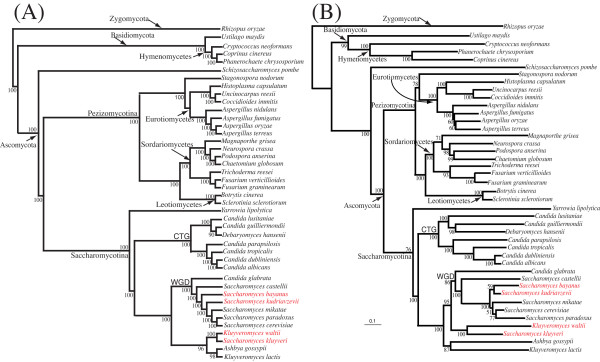
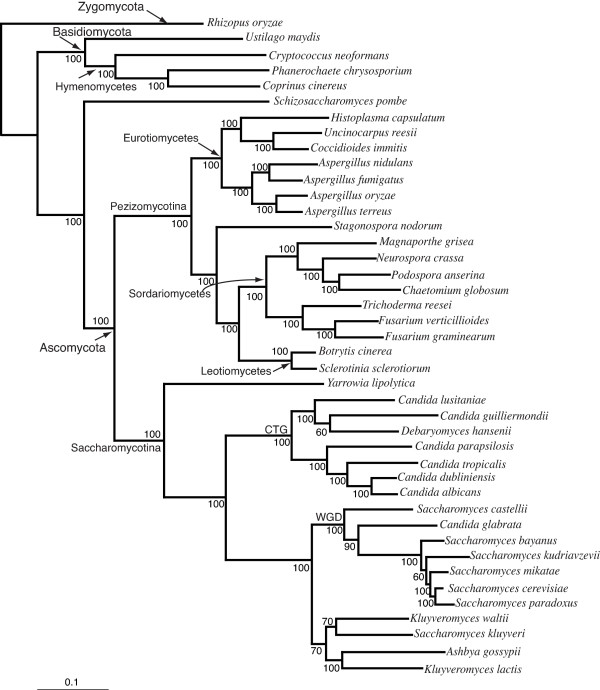
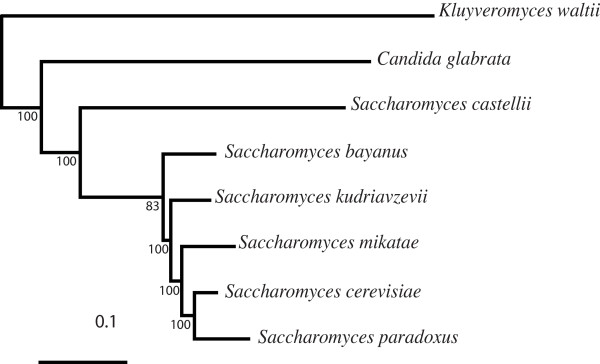
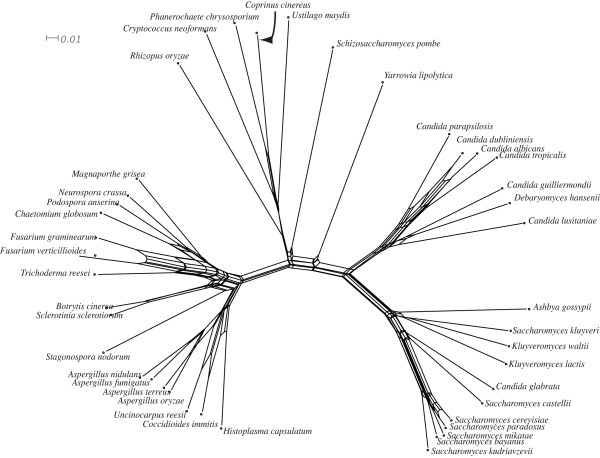
Verification
Claims the paper makes
The claims and statistics of this paper haven’t been checked yet.
Free: it reads the open-access text and checks the first 5 claims that cite a source we can check. Create a free account to check every claim.
Claims other papers make about this one
Each is checked against this paper’s own text: does it say what the citing paper says it does?
The source backs part of the claim, not all of it — or backs it for a different population, condition or comparison.
In the citing paper
“N. glabrata is much more closely related to fermentable Saccharomyces cerevisiae than to C. albicans, especially in aspects of its energy metabolism (25).”
From Divergent mitochondrial responses and metabolic signal pathways secure the azole resistance in Crabtree-positive and negative Candida species (2024) · cites this paper as [25]
Experimental — accuracy not yet measuredThe source backs part of the claim, not all of it — or backs it for a different population, condition or comparison.
In the citing paper
“The CTG clade comprises the majority of Candida species and forms a monophyletic group of yeasts that exhibit a genetic code transition, causing the codon CTG to be translated as serine instead of leucine [60–62]”
From Competition assays and physiological experiments of soil and phyllosphere yeasts identify Candida subhashii as a novel antagonist of filamentous fungi (2017) · cites this paper as [60]
Experimental — accuracy not yet measured
Self-check
Percentages, sums and reported differences re-computed from the paper’s own numbers.
The self-check needs the paper’s full text.
Citations
Cites
Gapped BLAST and PSI-BLAST: a new generation of protein database search programs
Altschul, S. (1997) · Nucleic Acids Research · doi:10.1093/nar/25.17.3389 · Cited by 73,302
Thompson, J. D., Higgins, D. G., & Gibson, T. J. (1994) · Nucleic Acids Research · doi:10.1093/nar/22.22.4673 · Cited by 64,617
The neighbor-joining method: a new method for reconstructing phylogenetic trees.
(1987) · Molecular Biology and Evolution · doi:10.1093/oxfordjournals.molbev.a040454 · Cited by 59,715
Improved tools for biological sequence comparison.
Pearson, W. R., & Lipman, D. J. (1988) · Proceedings of the National Academy of Sciences · doi:10.1073/pnas.85.8.2444 · Cited by 11,227
Selection of Conserved Blocks from Multiple Alignments for Their Use in Phylogenetic Analysis
Castresana, J. (2000) · Molecular Biology and Evolution · doi:10.1093/oxfordjournals.molbev.a026334 · Cited by 10,508
Genome sequencing in microfabricated high-density picolitre reactors
Margulies, M., Egholm, M., Altman, W. E., Attiya, S., Bader, J. S., Bemben, L. A., Berka, J., Braverman, M. S., Chen, Y.-J., Chen, Z., et al. (2005) · Nature · doi:10.1038/nature03959 · Cited by 7,693
Goffeau, A., Barrell, B. G., Bussey, H., Davis, R. W., Dujon, B., Feldmann, H., Galibert, F., Hoheisel, J. D., Jacq, C., Johnston, M., et al. (1996) · Science · doi:10.1126/science.274.5287.546 · Cited by 4,263
Phylogenetic relationships among ascomycetes: evidence from an RNA polymerse II subunit
Liu, Y. J., Whelen, S., & Hall, B. D. (1999) · Molecular Biology and Evolution · doi:10.1093/oxfordjournals.molbev.a026092 · Cited by 3,751
Korf, I. (2004) · BMC Bioinformatics · doi:10.1186/1471-2105-5-59 · Cited by 3,192
Automated generation of heuristics for biological sequence comparison
Slater, G. S. C., & Birney, E. (2005) · BMC Bioinformatics · doi:10.1186/1471-2105-6-31 · Cited by 2,933
Birney, E., Clamp, M., & Durbin, R. (2004) · Genome Research · doi:10.1101/gr.1865504 · Cited by 2,542
Neighbor-Net: An Agglomerative Method for the Construction of Phylogenetic Networks
Bryant, D. (2003) · Molecular Biology and Evolution · doi:10.1093/molbev/msh018 · Cited by 2,190
TigrScan and GlimmerHMM: two open source ab initio eukaryotic gene-finders
Majoros, W. H., Pertea, M., & Salzberg, S. L. (2004) · Bioinformatics · doi:10.1093/bioinformatics/bth315 · Cited by 1,934
Reconstructing the early evolution of Fungi using a six-gene phylogeny
James, T. Y., Kauff, F., Schoch, C. L., Matheny, P. B., Hofstetter, V., Cox, C. J., Celio, G., Gueidan, C., Fraker, E., Miadlikowska, J., et al. (2006) · Nature · doi:10.1038/nature05110 · Cited by 1,815
Self-citationSequencing and comparison of yeast species to identify genes and regulatory elements
Kellis, M., Patterson, N., Endrizzi, M., Birren, B., & Lander, E. S. (2003) · Nature · doi:10.1038/nature01644 · Cited by 1,753
The genome sequence of the filamentous fungus Neurospora crassa
Galagan, J. E., Calvo, S. E., Borkovich, K. A., Selker, E. U., Read, N. D., Jaffe, D., FitzHugh, W., Ma, L.-J., Smirnov, S., Purcell, S., et al. (2003) · Nature · doi:10.1038/nature01554 · Cited by 1,670
Toward Automatic Reconstruction of a Highly Resolved Tree of Life
Ciccarelli, F. D., Doerks, T., von Mering, C., Creevey, C. J., Snel, B., & Bork, P. (2006) · Science · doi:10.1126/science.1123061 · Cited by 1,663
The genome sequence of the rice blast fungus Magnaporthe grisea
Dean, R. A., Talbot, N. J., Ebbole, D. J., Farman, M. L., Mitchell, T. K., Orbach, M. J., Thon, M., Kulkarni, R., Xu, J.-R., Pan, H., et al. (2005) · Nature · doi:10.1038/nature03449 · Cited by 1,660
The genome sequence of Schizosaccharomyces pombe
Wood, V., Gwilliam, R., Rajandream, M.-A., Lyne, M., Lyne, R., Stewart, A., Sgouros, J., Peat, N., Hayles, J., Baker, S., et al. (2002) · Nature · doi:10.1038/nature724 · Cited by 1,657
SplitsTree: analyzing and visualizing evolutionary data.
Huson, D. H. (1998) · Bioinformatics · doi:10.1093/bioinformatics/14.1.68 · Cited by 1,642
Dujon, B., Sherman, D., Fischer, G., Durrens, P., Casaregola, S., Lafontaine, I., de Montigny, J., Marck, C., Neuvéglise, C., Talla, E., et al. (2004) · Nature · doi:10.1038/nature02579 · Cited by 1,623 · cited 4×
“Kluyveromyces lactis Ascomycota 5,331 [49]”
BackgroundInfluentialThe magnitude of fungal diversity: the 1.5 million species estimate revisited
Hawksworth, D. L. (2001) · Mycological Research · doi:10.1017/s0953756201004725 · Cited by 1,579
Proof and evolutionary analysis of ancient genome duplication in the yeast Saccharomyces cerevisiae
Kellis, M., Birren, B. W., & Lander, E. S. (2004) · Nature · doi:10.1038/nature02424 · Cited by 1,522
Genome-scale approaches to resolving incongruence in molecular phylogenies.
Rokas, A., Williams, B. L., King, N., & Carroll, S. B. (2003) · Nature · doi:10.1038/nature02053 · Cited by 1,512
The fungal dimension of biodiversity: magnitude, significance, and conservation
Hawksworth, D. L. (1991) · Mycological Research · doi:10.1016/s0953-7562(09)80810-1 · Cited by 1,475
Kluge, A. G. (1989) · Systematic Biology · doi:10.1093/sysbio/38.1.7 · Cited by 1,290
Phylogenomics and the reconstruction of the tree of life
Delsuc, F., Brinkmann, H., & Philippe, H. (2005) · Nature Reviews Genetics · doi:10.1038/nrg1603 · Cited by 1,236
A Kingdom-Level Phylogeny of Eukaryotes Based on Combined Protein Data
Baldauf, S. L., Roger, A. J., Wenk-Siefert, I., & Doolittle, W. F. (2000) · Science · doi:10.1126/science.290.5493.972 · Cited by 1,174
Keane, T. M., Creevey, C. J., Pentony, M. M., Naughton, T. J., & Mclnerney, J. O. (2006) · BMC Evolutionary Biology · doi:10.1186/1471-2148-6-29 · Cited by 1,071
Kluge, A. G. (1989) · Systematic Zoology · doi:10.2307/2992432 · Cited by 984
Recovering evolutionary trees under a more realistic model of sequence evolution.
(1994) · Molecular Biology and Evolution · doi:10.1093/oxfordjournals.molbev.a040136 · Cited by 960
Genome sequence of the lignocellulose degrading fungus Phanerochaete chrysosporium strain RP78
Martinez, D., Larrondo, L. F., Putnam, N., Gelpke, M. D. S., Huang, K., Chapman, J., Helfenbein, K. G., Ramaiya, P., Detter, J. C., Larimer, F., et al. (2004) · Nature Biotechnology · doi:10.1038/nbt967 · Cited by 939
Partitioning and Combining Data in Phylogenetic Analysis
Bull, J. J., Huelsenbeck, J. P., Cunningham, C. W., Swofford, D. L., & Waddell, P. J. (1993) · Systematic Biology · doi:10.1093/sysbio/42.3.384 · Cited by 902
Assembling the fungal tree of life: progress, classification, and evolution of subcellular traits
Lutzoni, F., Kauff, F., Cox, C. J., McLaughlin, D., Celio, G., Dentinger, B., Padamsee, M., Hibbett, D., James, T. Y., Baloch, E., et al. (2004) · American Journal of Botany · doi:10.3732/ajb.91.10.1446 · Cited by 816
Finding Functional Features in Saccharomyces Genomes by Phylogenetic Footprinting
Cliften, P., Sudarsanam, P., Desikan, A., Fulton, L., Fulton, B., Majors, J., Waterston, R., Cohen, B. A., & Johnston, M. (2003) · Science · doi:10.1126/science.1084337 · Cited by 815
The diploid genome sequence of Candida albicans
Jones, T., Federspiel, N. A., Chibana, H., Dungan, J., Kalman, S., Magee, B. B., Newport, G., Thorstenson, Y. R., Agabian, N., Magee, P. T., et al. (2004) · Proceedings of the National Academy of Sciences · doi:10.1073/pnas.0401648101 · Cited by 768
Sullivan, D. J., Haynes, K. A., Bennett, D. E., Coleman, D. C., & Westerneng, T. J. (1995) · Microbiology · doi:10.1099/13500872-141-7-1507 · Cited by 763
Byrne, K. P., & Wolfe, K. H. (2005) · Genome Research · doi:10.1101/gr.3672305 · Cited by 720
Phylogenomics: The beginning of incongruence?
JEFFROY, O., BRINKMANN, H., DELSUC, F., & PHILIPPE, H. (2006) · Trends in Genetics · doi:10.1016/j.tig.2006.02.003 · Cited by 698 · cited 5×
“There is also an interesting difference regarding the relative position of Candida glabrata and Saccharomyces castellii, the supertrees and the multigene phylogeny constructed by Jeffroy et al [38] place C.”
BackgroundResultInfluentialThe Genome of the Basidiomycetous Yeast and Human Pathogen Cryptococcus neoformans
Loftus, B. J., Fung, E., Roncaglia, P., Rowley, D., Amedeo, P., Bruno, D., Vamathevan, J., Miranda, M., Anderson, I. J., Fraser, J. A., et al. (2005) · Science · doi:10.1126/science.1103773 · Cited by 694
Phylogenomics: Improving Functional Predictions for Uncharacterized Genes by Evolutionary Analysis
Eisen, J. A. (1998) · Genome Research · doi:10.1101/gr.8.3.163 · Cited by 640
The Ashbya gossypii Genome as a Tool for Mapping the Ancient Saccharomyces cerevisiae Genome
Dietrich, F. S., Voegeli, S., Brachat, S., Lerch, A., Gates, K., Steiner, S., Mohr, C., Pöhlmann, R., Luedi, P., Choi, S., et al. (2004) · Science · doi:10.1126/science.1095781 · Cited by 633
Baum, B. R. (1992) · TAXON · doi:10.2307/1222480 · Cited by 535
Physiological and Molecular Plant Pathology
Sdol, E. (2009) · Cited by 512
Faith, D. P., & Cranston, P. S. (1991) · Cladistics · doi:10.1111/j.1096-0031.1991.tb00020.x · Cited by 491
Gadagkar, S. R., Rosenberg, M. S., & Kumar, S. (2005) · Journal of Experimental Zoology Part B: Molecular and Developmental Evolution · doi:10.1002/jez.b.21026 · Cited by 480
Evidence for Mating of the "Asexual" Yeast Candida albicans in a Mammalian Host
Hull, C. M., Raisner, R. M., & Johnson, A. D. (2000) · Science · doi:10.1126/science.289.5477.307 · Cited by 460
Genome-scale phylogeny and the detection of systematic biases.
Phillips, M. J., Delsuc, F., & Penny, D. (2004) · Molecular Biology and Evolution · doi:10.1093/molbev/msh137 · Cited by 450
Induction of Mating in Candida albicans by Construction of MTL a and MTL α Strains
Magee, B. B., & Magee, P. T. (2000) · Science · doi:10.1126/science.289.5477.310 · Cited by 440
Multiple rounds of speciation associated with reciprocal gene loss in polyploid yeasts
Scannell, D. R., Byrne, K. P., Gordon, J. L., Wong, S., & Wolfe, K. H. (2006) · Nature · doi:10.1038/nature04562 · Cited by 433
Lateral Gene Transfer and the Origins of Prokaryotic Groups
Boucher, Y., Douady, C. J., Papke, R. T., Walsh, D. A., Boudreau, M. E. R., Nesbø, C. L., Case, R. J., & Doolittle, W. F. (2003) · Annual Review of Genetics · doi:10.1146/annurev.genet.37.050503.084247 · Cited by 414
Universal trees based on large combined protein sequence data sets
Brown, J. R., Douady, C. J., Italia, M. J., Marshall, W. E., & Stanhope, M. J. (2001) · Nature Genetics · doi:10.1038/90129 · Cited by 384
A phylogenetic supertree of the bats (Mammalia: Chiroptera)
JONES, K. E., PURVIS, A., MacLARNON, A., BININDA‐EMONDS, O. R. P., & SIMMONS, N. B. (2002) · Biological Reviews · doi:10.1017/s1464793101005899 · Cited by 371
A Randomization Test for Phylogenetic Information in Systematic Data
Archie, J. W. (1989) · Systematic Zoology · doi:10.2307/2992285 · Cited by 367
Identification of a Mating Type-Like Locus in the Asexual Pathogenic Yeast Candida albicans
Hull, C. M., & Johnson, A. D. (1999) · Science · doi:10.1126/science.285.5431.1271 · Cited by 361
A Phylogenomic Approach to Bacterial Phylogeny: Evidence of a Core of Genes Sharing a Common History
Daubin, V., Gouy, M., & Perrière, G. (2002) · Genome Research · doi:10.1101/gr.187002 · Cited by 313
The CUG codon is decoded in vivo as serine and not leucine in Candida albicans
Santos, M. A. S., & Tuite, M. F. (1995) · Nucleic Acids Research · doi:10.1093/nar/23.9.1481 · Cited by 278
Barrett, M., Donoghue, M. J., & Sober, E. (1991) · Systematic Zoology · doi:10.2307/2992242 · Cited by 230
The codon CUG is read as serine in an asporogenic yeast Candida cylindracea
Kawaguchi, Y., Honda, H., Taniguchi-Morimura, J., & Iwasaki, S. (1989) · Nature · doi:10.1038/341164a0 · Cited by 223
Genomic evidence for a complete sexual cycle in Candida albicans
Tzung, K.-W., Williams, R. M., Scherer, S., Federspiel, N., Jones, T., Hansen, N., Bivolarevic, V., Huizar, L., Komp, C., Surzycki, R., et al. (2001) · Proceedings of the National Academy of Sciences · doi:10.1073/pnas.061628798 · Cited by 197
The phylogeny of plant and animal pathogens in the Ascomycota
Berbee, M. L. (2001) · Physiological and Molecular Plant Pathology · doi:10.1006/pmpp.2001.0355 · Cited by 196
Clann: investigating phylogenetic information through supertree analyses
Creevey, C. J., & McInerney, J. O. (2005) · Bioinformatics · doi:10.1093/bioinformatics/bti020 · Cited by 192
Non-universal decoding of the leucine codon CUG in several Candida species
Ohama, T., Suzuki, T., Mori, M., Osawa, S., Ueda, T., Watanabe, K., & Nakase, T. (1993) · Nucleic Acids Research · doi:10.1093/nar/21.17.4039 · Cited by 183
Fitzpatrick, D. A., Creevey, C. J., & McInerney, J. O. (2006) · Molecular Biology and Evolution · doi:10.1093/molbev/msj009 · Cited by 143
Self-citationComparative Genomics in Hemiascomycete Yeasts: Evolution of Sex, Silencing, and Subtelomeres
Fabre, E., Muller, H., Therizols, P., Lafontaine, I., Dujon, B., & Fairhead, C. (2005) · Molecular Biology and Evolution · doi:10.1093/molbev/msi070 · Cited by 142
Phylogeny and Evolution of Medical Species of Candida and Related Taxa: a Multigenic Analysis
Diezmann, S., Cox, C. J., Schönian, G., Vilgalys, R. J., & Mitchell, T. G. (2004) · Journal of Clinical Microbiology · doi:10.1128/jcm.42.12.5624-5635.2004 · Cited by 135
Partitioning and Combining Data in Phylogenetic Analysis
Bull, J. J., Huelsenbeck, J. P., Cunningham, C., et al. (1993) · Systematic Biology · doi:10.2307/2992473 · Cited by 132
Does a tree–like phylogeny only exist at the tips in the prokaryotes?
Creevey, C. J., Fitzpatrick, D. A., Philip, G. K., Kinsella, R. J., O'Connell, M. J., Pentony, M. M., Travers, S. A., Wilkinson, M., & McInerney, J. O. (2004) · Proceedings of the Royal Society of London. Series B: Biological Sciences · doi:10.1098/rspb.2004.2864 · Cited by 126 · cited 5×
“These 4,805 trees were used as input data for our supertree analysis, constructed using three different methods: matrix representation with parsimony (MRP) [25,26], the average consensus method (AV) [27], and the most similar supertree analysis (MSSA) method [21].”
BackgroundMethodInfluentialSelf-citationA phylogenomic analysis of the Ascomycota
Robbertse, B., Reeves, J. B., Schoch, C. L., & Spatafora, J. W. (2006) · Fungal Genetics and Biology · doi:10.1016/j.fgb.2006.05.001 · Cited by 126
Lapointe, F., & Cucumel, G. (1997) · Systematic Biology · doi:10.1093/sysbio/46.2.306 · Cited by 122
The Closely Related Species Candida albicans and Candida dubliniensis Can Mate
Pujol, C., Daniels, K. J., Lockhart, S. R., Srikantha, T., Radke, J. B., Geiger, J., & Soll, D. R. (2004) · Eukaryotic Cell · doi:10.1128/ec.3.4.1015-1027.2004 · Cited by 120
Massey, S. E., Moura, G., Beltrão, P., Almeida, R., Garey, J. R., Tuite, M. F., & Santos, M. A. S. (2003) · Genome Research · doi:10.1101/gr.811003 · Cited by 119
Lumbsch, H. T., Schmitt, I., Lindemuth, R., Miller, A. N., Mangold, A., Fernández, F. A., & Huhndorf, S. M. (2005) · Molecular Phylogenetics and Evolution · doi:10.1016/j.ympev.2004.11.007 · Cited by 107
Matrix representation in reconstructing phylogenetic relationships among the eukaryotes
Ragan, M. A. (1992) · Biosystems · doi:10.1016/0303-2647(92)90007-l · Cited by 100
The Shape of Supertrees to Come: Tree Shape Related Properties of Fourteen Supertree Methods
Wilkinson, M., Cotton, J. A., Creevey, C. J., Eulenstein, O., Harris, S. R., Lapointe, F., Levasseur, C., McInerney, J. O., Pisani, D., & Thorley, J. (2005) · Systematic Biology · doi:10.1080/10635150590949832 · Cited by 98
Ophüls, W. (1905) · The Journal of Experimental Medicine · doi:10.1084/jem.6.4-6.443 · Cited by 94
Wickerham, L. J., & Burton, K. A. (1954) · Journal of Bacteriology · doi:10.1128/jb.68.5.594-597.1954 · Cited by 89
A genus-level supertree of the Dinosauria
Pisani, D., Yates, A. M., Langer, M. C., & Benton, M. J. (2002) · Proceedings of the Royal Society of London. Series B: Biological Sciences · doi:10.1098/rspb.2001.1942 · Cited by 88
Pan, S., Sigler, L., & Cole, G. T. (1994) · Microbiology · doi:10.1099/00221287-140-6-1481 · Cited by 79
Human Pathogeneic Fungi and Their Close Nonpathogenic Relatives
Bowman, B. H., White, T. J., & Taylor, J. W. (1996) · Molecular Phylogenetics and Evolution · doi:10.1006/mpev.1996.0061 · Cited by 73
A supertree of early tetrapods
Ruta, M., Jeffery, J. E., & Coates, M. I. (2003) · Proceedings of the Royal Society B Biological Sciences · doi:10.1098/rspb.2003.2524 · Cited by 72
Daniel, H.-M., Sorrell, T. C., & Meyer, W. (2001) · INTERNATIONAL JOURNAL OF SYSTEMATIC AND EVOLUTIONARY MICROBIOLOGY · doi:10.1099/00207713-51-4-1593 · Cited by 71
Logue, M. E., Wong, S., Wolfe, K. H., & Butler, G. (2005) · Eukaryotic Cell · doi:10.1128/ec.4.6.1009-1017.2005 · Cited by 69
Self-citationVisualizing syntenic relationships among the hemiascomycetes with the Yeast Gene Order Browser
Byrne, K. P. (2006) · Nucleic Acids Research · doi:10.1093/nar/gkj041 · Cited by 64
Clavispora, a new yeast genus of the Saccharomycetales
de Miranda, L. R. (1979) · Antonie van Leeuwenhoek · doi:10.1007/bf00443285 · Cited by 58
Lodderomyces, a new genus of the Saccharomycetaceae
van der Walt, J. P. (1966) · Antonie van Leeuwenhoek · doi:10.1007/bf02097439 · Cited by 55
A STE12 Homolog Is Required for Mating but Dispensable for Filamentation in Candida lusitaniae
Young, L. Y., Lorenz, M. C., & Heitman, J. (2000) · Genetics · doi:10.1093/genetics/155.1.17 · Cited by 49
War and Peace in Phylogenetics: A Rejoinder on Total Evidence and Consensus
Levasseur, C., & Lapointe, F. (2001) · Systematic Biology · doi:10.1080/106351501753462858 · Cited by 45
James, S. A., Collins, M. D., & Roberts, I. N. (1994) · Letters in Applied Microbiology · doi:10.1111/j.1472-765x.1994.tb00462.x · Cited by 44
Spectrum: spectral analysis of phylogenetic data.
Charleston, M. (1998) · Bioinformatics · doi:10.1093/bioinformatics/14.1.98 · Cited by 42
Dujon, B. (2015) · Wiley eBooks · doi:10.1002/9780470015902.a0023986 · Cited by 33
A comparative taxonomic study on two forms of Candida parapsilosis (Ashford) Langeron et Talice.
Nakase, T., Komagata, K., & Fukazawa, Y. (1979) · The Journal of General and Applied Microbiology · doi:10.2323/jgam.25.375 · Cited by 22
Hamajima, K., Nishikawa, A., Shinoda, T., & Fukazawa, Y. (1987) · The Journal of General and Applied Microbiology · doi:10.2323/jgam.33.299 · Cited by 18
Nonuniversal usage of the leucine CUG codon in yeasts. Investigation of basidiomycetous yeast.
Sugita, T., & Nakase, T. (1999) · The Journal of General and Applied Microbiology · doi:10.2323/jgam.45.193 · Cited by 8
Cited by
The Colletotrichum gloeosporioides species complex
Weir, B. S., Johnston, P. R., & Damm, U. (2012) · Studies in Mycology · doi:10.3114/sim0011 · Cited by 1,646
SMURF: Genomic mapping of fungal secondary metabolite clusters
Khaldi, N., Seifuddin, F. T., Turner, G., Haft, D., Nierman, W. C., Wolfe, K. H., & Fedorova, N. D. (2010) · Fungal Genetics and Biology · doi:10.1016/j.fgb.2010.06.003 · Cited by 771
Schoch, C. L., Sung, G.-H., López-Giráldez, F., Townsend, J. P., Miadlikowska, J., Hofstetter, V., Robbertse, B., Matheny, P. B., Kauff, F., Wang, Z., et al. (2009) · Systematic Biology · doi:10.1093/sysbio/syp020 · Cited by 674
Inferring ancient divergences requires genes with strong phylogenetic signals
Salichos, L., & Rokas, A. (2013) · Nature · doi:10.1038/nature12130 · Cited by 616
A class-wide phylogenetic assessment of Dothideomycetes
Schoch, C. L., Crous, P. W., Groenewald, J. Z., Boehm, E. W. A., Burgess, T. I., de Gruyter, J., de Hoog, G. S., Dixon, L. J., Grube, M., Gueidan, C., et al. (2009) · Studies in Mycology · doi:10.3114/sim.2009.64.01 · Cited by 610
Metadata
- Authors
- Fitzpatrick, D. A., Logue, M. E., Stajich, J., & Butler, G.
- Affiliations
- University College Dublin (IE)
- Duke University (US)
- Corresponding author
- David A. Fitzpatrick
- Venue
- BMC Evolutionary Biology
- Published
- 2006
- Volume
- 6
- Issue
- 1
- Pages
- 99
- ISSN
- 1471-2148 (ISSN-L)
- PMC
- PMC1679813
- OpenAlex
- W2095815023
- Cited by
- 475
- References
- 92
- Citations by year
- 2026: 3 · 2025: 2 · 2024: 5 · 2023: 9 · 2022: 6 · 2021: 13 · 2020: 17 · 2019: 16 · 2018: 14 · 2017: 26 · 2016: 14 · 2015: 19 · 2014: 39 · 2013: 31 · 2012: 44
- FWCI
- 15.38
- Type
- journal article
- Language
- en
- Open access
- gold
- doi.org
- Licence
- cc-by
- Locations
- BMC Evolutionary Biology (publishedVersion, cc-by)
- PubMed (publishedVersion)
- Maynooth University ePrints and eTheses Archive (Maynooth University) (acceptedVersion)
- eScholarship (California Digital Library) (submittedVersion, cc-by-nc-sa)
- DOAJ (DOAJ: Directory of Open Access Journals) (submittedVersion)
- Funders
- National Science Foundation
- Wellcome Trust
- Broad Institute
- Irish Research Council for Science, Engineering and Technology
- Science Foundation Ireland
- Irish Research Council
- Irish Centre for High-End Computing
- Topics
- Life Sciences › Biochemistry, Genetics and Molecular Biology › Molecular Biology › Fungal and yeast genetics research
- Life Sciences › Biochemistry, Genetics and Molecular Biology › Molecular Biology › Genomics and Phylogenetic Studies
- Life Sciences › Immunology and Microbiology › Microbiology › Yeasts and Rust Fungi Studies
- Keywords
- fungal phylogeny, supertree, matrix representation with parsimony, concatenated alignment, orthologs, Ascomycota, Pezizomycotina, Saccharomycotina, Leotiomycetes, Sordariomycetes, Dothideomycetes, Candida, whole-genome duplication, long-branch attraction
- MeSH terms
- Ascomycota, Basidiomycota, Fungi, Genes, Fungal, Phylogeny, Sequence Alignment, Genome, Fungal, Databases, Genetic
About these checks
Registry, retraction, Cites and statistics results are computed, not judged, with one exception: a printed reference that no index lists is read once by a model before it counts as a citation error. Claims are extracted by a model and kept only when their quote appears verbatim in the text; each cited source is then checked, with a model’s help, for whether it says what the claim relies on. Those verdicts can be wrong — read the claim’s quote and the cited source before relying on one.
Statistics and arithmetic are recomputed, not judged.
Confidence bands are shown only for fields calibrated on our annotated test set. None is calibrated yet, so no band is shown.
What counts as a claim ›How we measure confidence ›How we check this ›
Are you an author, or do you see a problem with this page? Request a review
Data sources
Bibliographic data: Semantic Scholar, OpenAlex, Crossref.
Contains information from the Semantic Scholar Academic Graph Datasets, made available under the ODC Attribution License (ODC-BY 1.0).
Semantic Scholar’s data is described in: Kinney, R., et al. (2023). The Semantic Scholar Open Data Platform. arXiv:2301.10140.
