

Suppression of long-branch attraction artefacts in the animal phylogeny using a site-heterogeneous model
Open accessThe DOI matches its Crossref record; 57 of the 63 references it cites were found in a registry or an index.
Abstract
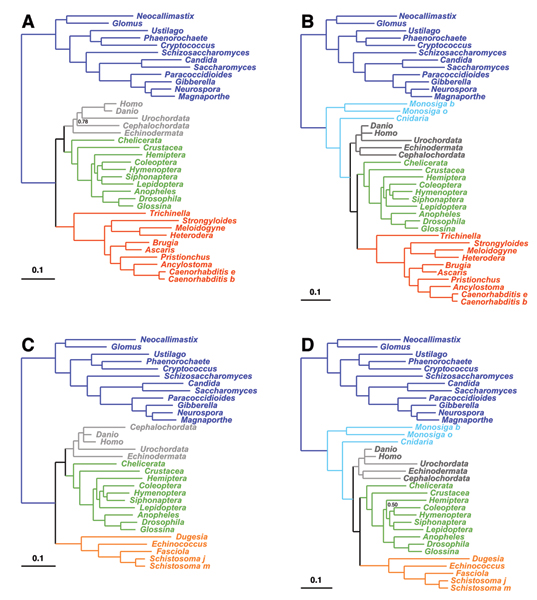
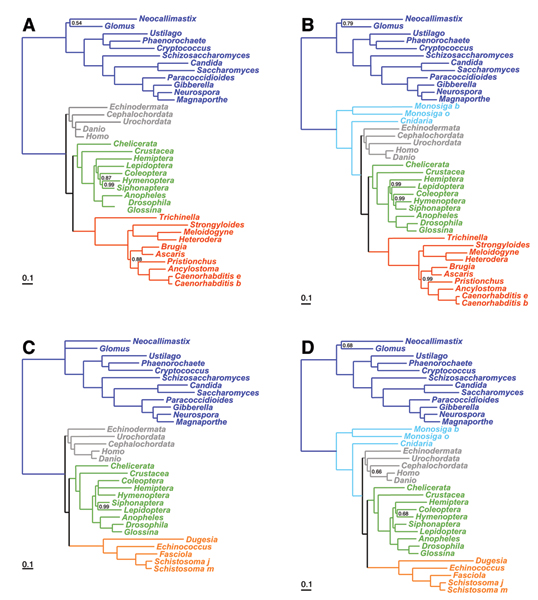
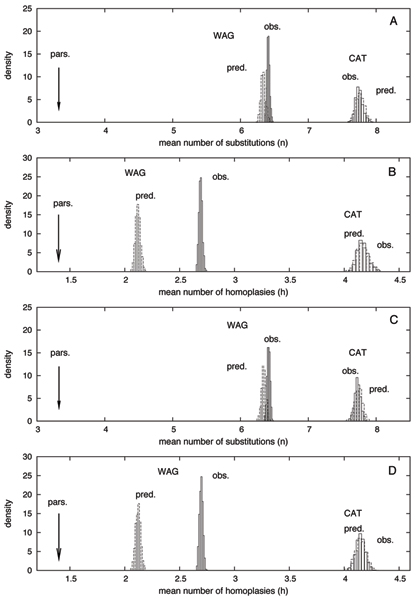
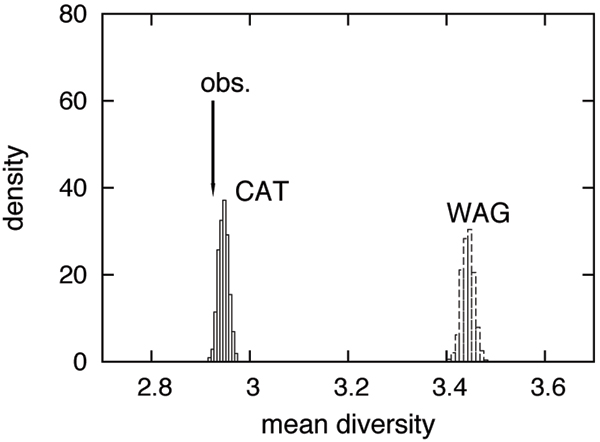
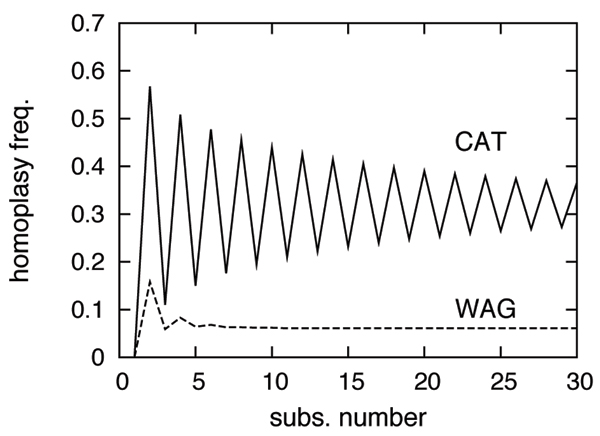
BACKGROUND: Thanks to the large amount of signal contained in genome-wide sequence alignments, phylogenomic analyses are converging towards highly supported trees. However, high statistical support does not imply that the tree is accurate. Systematic errors, such as the Long Branch Attraction (LBA) artefact, can be misleading, in particular when the taxon sampling is poor, or the outgroup is distant. In an otherwise consistent probabilistic framework, systematic errors in genome-wide analyses can be traced back to model mis-specification problems, which suggests that better models of sequence evolution should be devised, that would be more robust to tree reconstruction artefacts, even under the most challenging conditions. METHODS: We focus on a well characterized LBA artefact analyzed in a previous phylogenomic study of the metazoan tree, in which two fast-evolving animal phyla, nematodes and platyhelminths, emerge either at the base of all other Bilateria, or within protostomes, depending on the outgroup. We use this artefactual result as a case study for comparing the robustness of two alternative models: a standard, site-homogeneous model, based on an empirical matrix of amino-acid replacement (WAG), and a site-heterogeneous mixture model (CAT). In parallel, we propose a posterior predictive test, allowing one to measure how well a model acknowledges sequence saturation. RESULTS: Adopting a Bayesian framework, we show that the LBA artefact observed under WAG disappears when the site-heterogeneous model CAT is used. Using cross-validation, we further demonstrate that CAT has a better statistical fit than WAG on this data set. Finally, using our statistical goodness-of-fit test, we show that CAT, but not WAG, correctly accounts for the overall level of saturation, and that this is due to a better estimation of site-specific amino-acid preferences. CONCLUSION: The CAT model appears to be more robust than WAG against LBA artefacts, essentially because it correctly anticipates the high probability of convergences and reversions implied by the small effective size of the amino-acid alphabet at each site of the alignment. More generally, our results provide strong evidence that site-specificities in the substitution process need be accounted for in order to obtain more reliable phylogenetic trees.
Overview
The claims and statistics of this paper haven’t been checked yet.
Free: it reads the open-access text and checks the first 5 claims that cite a source we can check. Create a free account to check every claim.
Integrity signals
Registry
Cites
Statistics
Figures
Verification
Claims the paper makes
The claims and statistics of this paper haven’t been checked yet.
Free: it reads the open-access text and checks the first 5 claims that cite a source we can check. Create a free account to check every claim.
Claims other papers make about this one
Each is checked against this paper’s own text: does it say what the citing paper says it does?
The source backs part of the claim, not all of it — or backs it for a different population, condition or comparison.
In the citing paper
“CAT/CATGTR offers improved resilience to long-branch attraction artefacts (LBA)22 and is almost always better fitting than standard site-homogeneous amino acid substitution models (e.g. WAG)8–10,23–29.”
From Evidence for sponges as sister to all other animals from partitioned phylogenomics with mixture models and recoding (2021) · cites this paper as [22]
Experimental — accuracy not yet measuredThe source backs part of the claim, not all of it — or backs it for a different population, condition or comparison.
In the citing paper
“This is because, by accommodating site-specific biochemical constraints, CAT/CATGTR can better detect saturation (i.e. multiple hidden substitutions)8,20,22, and therefore better identify cases of convergent evolution of identical amino acids in distantly related, fast-evolving species.”
From Evidence for sponges as sister to all other animals from partitioned phylogenomics with mixture models and recoding (2021) · cites this paper as [22]
Experimental — accuracy not yet measuredThe source backs part of the claim, not all of it — or backs it for a different population, condition or comparison.
In the citing paper
“Additional sources of systematic error include poor taxon or character sampling (10,14,15), large amounts of missing data (16), and model misspecification (16,17).”
From Error, signal, and the placement of Ctenophora sister to all other animals (2015) · cites this paper as [17]
Experimental — accuracy not yet measuredThe cited source says what the claim attributes to it.
In the citing paper
“However, protein evolution is not homogeneous.”
From Improved Modeling of Compositional Heterogeneity Supports Sponges as Sister to All Other Animals (2017) · cites this paper as [26]
The cited source says what the claim attributes to it.
In the citing paper
“Previous studies analysing the test datasets used here, but without partitioning, have found support for the accepted topology under a variety of site-heterogeneous models22,56,60.”
From Evidence for sponges as sister to all other animals from partitioned phylogenomics with mixture models and recoding (2021) · cites this paper as [22]
4 more claims about this paper
Create a free account to see every claim other papers make about this one.
Self-check
Percentages, sums and reported differences re-computed from the paper’s own numbers.
The self-check needs the paper’s full text.
Citations
Cites
MRBAYES: Bayesian inference of phylogenetic trees.
Huelsenbeck, J. P., & Ronquist, F. (2001) · Bioinformatics · doi:10.1093/bioinformatics/17.8.754 · Cited by 21,937 · cited 1×
“In the case of WAG, we performed one run with our program, and another one using MrBayes [48].”
Evolutionary trees from DNA sequences: A maximum likelihood approach.
Felsenstein, J. (1981) · Journal of Molecular Evolution · doi:10.1007/bf01734359 · Cited by 14,571 · cited 3×
“The evolutionary process defined by this category is then similar to that proposed by Felsenstein [45], i.e. a Poisson process distributing events across time, so that at each event, a new state (possibly equal to the current one) is drawn at random from the probability profile.”
InfluentialEvolution of Protein Molecules
JUKES, T. H., & CANTOR, C. R. (1969) · Mammalian Protein Metabolism · doi:10.1016/b978-1-4832-3211-9.50009-7 · Cited by 11,032 · cited 1×
“At one extreme, we used the equivalent of the Jukes and Cantor model [ 44 ] for amino-acids, assuming all 20 amino-acid to be equally likely at each site.”
The rapid generation of mutation data matrices from protein sequences
Jones, D. T., Taylor, W. R., & Thornton, J. M. (1992) · Bioinformatics · doi:10.1093/bioinformatics/8.3.275 · Cited by 6,947
(1964) · Mammalian Protein Metabolism · doi:10.1016/b978-1-4832-3210-2.50006-6 · Cited by 3,059
Yang, Z. (1994) · Journal of Molecular Evolution · doi:10.1007/bf00160154 · Cited by 2,960 · cited 3×
“Apart from their specific amino-acid replacement processes, the two models under investigation, CAT and WAG, share the same features, including gamma-distributed rates across sites [25] (see methods).”
Cases in which Parsimony or Compatibility Methods will be Positively Misleading
Felsenstein, J. (1978) · Systematic Biology · doi:10.1093/sysbio/27.4.401 · Cited by 2,896
Whelan, S., & Goldman, N. (2001) · Molecular Biology and Evolution · doi:10.1093/oxfordjournals.molbev.a003851 · Cited by 2,849 · cited 3×
“By Bayes factor evaluation, we have shown previously that CAT generally has a better fit than homogeneous models based on one single empirical substitution matrix, such as WAG [39], JTT [40], or even the most general site-homogeneous and time-reversible model (GTR) [31,41].”
Cellular Scaling Rules for the Brains of Marsupials: Not as “Primitive” as Expected
Dos Santos, S. E., Porfirio, J., da Cunha, F. B., Manger, P. R., Tavares, W., Pessoa, L., Raghanti, M. A., Sherwood, C. C., & Herculano-Houzel, S. (2017) · Brain, Behavior and Evolution · doi:10.1159/000452856 · Cited by 2,642
Markov Chain Sampling Methods for Dirichlet Process Mixture Models
Neal, R. M. (2000) · Journal of Computational and Graphical Statistics · doi:10.1080/10618600.2000.10474879 · Cited by 2,288
Cited by
Items 301–400 of 712
Li, X., Hou, Z., Xu, C., Shi, X., Yang, L., Lewis, L. A., & Zhong, B. (2021) · Genome Biology and Evolution · doi:10.1093/gbe/evab101 · Cited by 38
Ovchinnikov, S., & Masta, S. E. (2012) · BMC Evolutionary Biology · doi:10.1186/1471-2148-12-31 · Cited by 41
Insufficient power of mitogenomic data in resolving the auchenorrhynchan monophyly
Song, N., Cai, W., & Li, H. (2017) · Zoological Journal of the Linnean Society · doi:10.1093/zoolinnean/zlx096 · Cited by 34
Uribe, J. E., Zardoya, R., & Puillandre, N. (2018) · Molecular Phylogenetics and Evolution · doi:10.1016/j.ympev.2018.06.037 · Cited by 36
Winkler, I. S., Rung, A., & Scheffer, S. J. (2009) · Molecular Phylogenetics and Evolution · doi:10.1016/j.ympev.2009.12.016 · Cited by 38
Tihelka, E., Thayer, M. K., Newton, A. F., & Cai, C. (2020) · Insects · doi:10.3390/insects11030164 · Cited by 34
Kômoto, N., Yukuhiro, K., & Tomita, S. (2012) · Genome · doi:10.1139/g2012-007 · Cited by 37
Bodin, S. S., Kim, J. S., & Kim, J. (2013) · Plant Molecular Biology Reporter · doi:10.1007/s11105-013-0616-x · Cited by 31
Banguera‐Hinestroza, E., Bjørge, A., Reid, R. J., Jepson, P. D., & Hoelzel, A. R. (2010) · Conservation Genetics · doi:10.1007/s10592-010-0075-y · Cited by 32
Phylogenomics places orphan protistan lineages in a novel eukaryotic super-groupPreprint
Brown, M. W., Heiss, A. A., Kamikawa, R., Inagaki, Y., Yabuki, A., Tice, A. K., Shiratori, T., Ishida, K., Hashimoto, T., Simpson, A. G. B., et al. (2017) · bioRxiv (Cold Spring Harbor Laboratory) · doi:10.1101/227884 · Cited by 32
DNA Sequences Are as Useful as Protein Sequences for Inferring Deep Phylogenies
Kapli, P., Kotari, I., Telford, M. J., Goldman, N., & Yang, Z. (2023) · Systematic Biology · doi:10.1093/sysbio/syad036 · Cited by 34
Physicochemical Amino Acid Properties Better Describe Substitution Rates in Large Populations
Weber, C. C., & Whelan, S. (2019) · Molecular Biology and Evolution · doi:10.1093/molbev/msz003 · Cited by 37
Straube, N., Li, C., Mertzen, M., Yuan, H., & Moritz, T. (2018) · BMC Evolutionary Biology · doi:10.1186/s12862-018-1267-1 · Cited by 37
Li, W.-N., & Xue, X. (2019) · Zoological Journal of the Linnean Society · doi:10.1093/zoolinnean/zlz044 · Cited by 31
Comparative Phylogenomics, a Stepping Stone for Bird Biodiversity Studies
Stiller, J., & Zhang, G. (2019) · Diversity · doi:10.3390/d11070115 · Cited by 35
Inferring the Deep Past from Molecular Data
Williams, T. A., Schrempf, D., Szöllősi, G. J., Cox, C. J., Foster, P. G., & Embley, T. M. (2021) · Genome Biology and Evolution · doi:10.1093/gbe/evab067 · Cited by 31
Gruenheit, N., Lockhart, P. J., Steel, M., & Martin, W. F. (2008) · Molecular Biology and Evolution · doi:10.1093/molbev/msn098 · Cited by 31
Phylogeny and evolution of Rab7 and Rab9 proteins
Mackiewicz, P., & Wyroba, E. (2009) · BMC Evolutionary Biology · doi:10.1186/1471-2148-9-101 · Cited by 33
Williams, T. A., Davín, A., Szánthó, L. L., Stamatakis, A., Wahl, N. A., Woodcroft, B. J., Soo, R. M., Eme, L., Sheridan, P. O., Gubry‐Rangin, C., et al. (2024) · The ISME Journal · doi:10.1093/ismejo/wrae129 · Cited by 38
Tekle, Y. I., Anderson, O. R., Katz, L. A., Maurer‐Alcalá, X. X., Cerón-Romero, M. A., & Molestina, R. E. (2016) · Molecular Phylogenetics and Evolution · doi:10.1016/j.ympev.2016.03.029 · Cited by 31
He, D., Sierra, R., Pawlowski, J. W., & Baldauf, S. L. (2016) · Molecular Phylogenetics and Evolution · doi:10.1016/j.ympev.2016.04.033 · Cited by 32
Pandey, A., & Braun, E. L. (2020) · Biology · doi:10.3390/biology9040064 · Cited by 32
Very few sites can reshape the inferred phylogenetic tree
Francis, W. R., & Canfield, D. E. (2020) · PeerJ · doi:10.7717/peerj.8865 · Cited by 31
Reconstruction of the sialylation pathway in the ancestor of eukaryotes
Petit, D. P., Teppa, E., Cenci, U., Ball, S. G., & Harduin‐Lepers, A. (2018) · Scientific Reports · doi:10.1038/s41598-018-20920-1 · Cited by 33
Lang, B. F., & Nedelcu, A. M. (2012) · Advances in photosynthesis and respiration · doi:10.1007/978-94-007-2920-9_3 · Cited by 36
Jedličková, L., Dvořáková, H., Dvořák, J., Kašný, M., Ulrychová, L., Vorel, J., Žárský, V., & Mikeš, L. (2018) · Parasites & Vectors · doi:10.1186/s13071-018-2666-2 · Cited by 29
How Well Does Your Phylogenetic Model Fit Your Data?
Shepherd, D. A., & Klaere, S. (2018) · Systematic Biology · doi:10.1093/sysbio/syy066 · Cited by 38
Song, N., Geng, Y., & Li, X. (2020) · Frontiers in Microbiology · doi:10.3389/fmicb.2020.00863 · Cited by 29
Evolutionary history of the TBP-domain superfamily
Brindefalk, B., Dessailly, B. H., Yeats, C., Orengo, C. A., Werner, F., & Poole, A. M. (2013) · Nucleic Acids Research · doi:10.1093/nar/gkt045 · Cited by 31
Bayesian Comparisons of Codon Substitution Models
Rodrigue, N., Lartillot, N., & Philippe, H. (2008) · Genetics · doi:10.1534/genetics.108.092254 · Cited by 38
Self-citationAccelerated Estimation of Frequency Classes in Site-Heterogeneous Profile Mixture Models
Susko, E., Lincker, L., & Roger, A. J. (2018) · Molecular Biology and Evolution · doi:10.1093/molbev/msy026 · Cited by 29
Ceriotti, L. F., Roulet, M. E., & Sanchez-Puerta, M. V. (2021) · Molecular Phylogenetics and Evolution · doi:10.1016/j.ympev.2021.107208 · Cited by 29
Convergent evolution of a labile nutritional symbiosis in ants
Jackson, R., Monnin, D., Patapiou, P. A., Golding, G., Helanterä, H., Oettler, J., Heınze, J., Wurm, Y., Economou, C. K., Chapuisat, M., et al. (2022) · The ISME Journal · doi:10.1038/s41396-022-01256-1 · Cited by 40
Mulhair, P. O., McCarthy, C. G. P., Siu-Ting, K., Creevey, C. J., & O’Connell, M. J. (2022) · Current Biology · doi:10.1016/j.cub.2022.10.036 · Cited by 31
Mitochondrial genome comparison reveals the evolution of cnidarians
Feng, H., Lv, S., Li, R., Shi, J., Wang, J., & Cao, P. (2023) · Ecology and Evolution · doi:10.1002/ece3.10157 · Cited by 29
Is Over-parameterization a Problem for Profile Mixture Models?
Baños, H., Susko, E., & Roger, A. J. (2023) · Systematic Biology · doi:10.1093/sysbio/syad063 · Cited by 35
Intraphylum Diversity and Complex Evolution of Cyanobacterial Aminoacyl-tRNA Synthetases
Luque, I., Riera-Alberola, M. L., Andújar, A., & de Alda, J. A. G. O. (2008) · Molecular Biology and Evolution · doi:10.1093/molbev/msn197 · Cited by 35
The Essentials of Computational Molecular Evolution
Aris‐Brosou, S., & Rodrigue, N. (2012) · Methods in molecular biology · doi:10.1007/978-1-61779-582-4_4 · Cited by 26
Rapid Genetic Code Evolution in Green Algal Mitochondrial Genomes
Noutahi, E., Calderon, V., Blanchette, M., El-Mabrouk, N., & Lang, B. F. (2019) · Molecular Biology and Evolution · doi:10.1093/molbev/msz016 · Cited by 34
Xu, X.-D., Jia, Y.-Y., Cao, S.-S., Zhang, Z.-Y., Storey, K. B., Yu, D., & Zhang, J. (2020) · PeerJ · doi:10.7717/peerj.9740 · Cited by 27
Fleming, J. F., Pisani, D., & Arakawa, K. (2023) · Genome Biology and Evolution · doi:10.1093/gbe/evad217 · Cited by 30
Phylomitogenomics bolsters the high-level classification of Demospongiae (phylum Porifera)
Lavrov, D. V., Díaz, M. C., Maldonado, M., Morrow, C. C., Pérez, T., Pomponi, S. A., & THACKER, R. W. (2023) · PLoS ONE · doi:10.1371/journal.pone.0287281 · Cited by 30
Investigating Sources of Conflict in Deep Phylogenomics of Vetigastropod Snails
Cunha, T. J., Reimer, J. D., & Giribet, G. (2021) · Systematic Biology · doi:10.1093/sysbio/syab071 · Cited by 30
D’Angiolella, A. B., Gamble, T., Ávila‐Pires, T. C. S., Colli, G. R., Noonan, B. P., & Vitt, L. J. (2011) · Bulletin of the Museum of Comparative Zoology · doi:10.3099/0027-4100-160.2.35 · Cited by 34
Heme pathway evolution in kinetoplastid protists
Cenci, U., Moog, D., Curtis, B. A., Tanifuji, G., Eme, L., Lukeš, J., & Archibald, J. M. (2016) · BMC Evolutionary Biology · doi:10.1186/s12862-016-0664-6 · Cited by 29
Redmond, A. K., Macqueen, D. J., & Dooley, H. (2018) · BMC Evolutionary Biology · doi:10.1186/s12862-018-1290-2 · Cited by 26
Giulio, M. D. (2014) · Journal of Molecular Evolution · doi:10.1007/s00239-014-9626-z · Cited by 23
Cross-validation to select Bayesian hierarchical models in phylogenetics
Duchêne, S., Duchêne, D. A., Giallonardo, F. D., Eden, J., Geoghegan, J. L., Holt, K. E., Ho, S. Y. W., & Holmes, E. C. (2016) · BMC Evolutionary Biology · doi:10.1186/s12862-016-0688-y · Cited by 29
Regulation of early endosomes across eukaryotes: Evolution and functional homology of Vps9 proteins
Herman, E. K., Ali, M., Field, M. C., & Dacks, J. B. (2018) · Traffic · doi:10.1111/tra.12570 · Cited by 25
Citrullination Was Introduced into Animals by Horizontal Gene Transfer from Cyanobacteria
Cummings, T., Gori, K. C., Sánchez‐Pulido, L., Gavriilidis, G., Moi, D., Wilson, A., Murchison, E. P., Dessimoz, C., Ponting, C. P., & Christophorou, M. A. (2021) · Molecular Biology and Evolution · doi:10.1093/molbev/msab317 · Cited by 26
Patané, J. S. L., Martins, J., & Setúbal, J. C. (2017) · Methods in molecular biology · doi:10.1007/978-1-4939-7463-4_5 · Cited by 33
Supergroup F Wolbachia with extremely reduced genome: transition to obligate insect symbionts
Mahmood, S., Nováková, E., Martinů, J., Sychra, O., & Hypša, V. (2023) · Microbiome · doi:10.1186/s40168-023-01462-9 · Cited by 30
Liu, Z.-Q., Liu, Y., Kuermanali, N., Wang, D.-F., Chen, S.-J., Guo, H., Zhao, L., Wang, J., Han, T., Wang, Y., et al. (2018) · PLoS ONE · doi:10.1371/journal.pone.0197524 · Cited by 29
Yazaki, E., Kume, K., Shiratori, T., Eglit, Y., Tanifuji, G., Harada, R., Simpson, A. G. B., Ishida, K., Hashimoto, T., & Inagaki, Y. (2020) · Proceedings of the Royal Society B Biological Sciences · doi:10.1098/rspb.2020.1538 · Cited by 25
Genomic, phylogenetic, and cell biological insights into metazoan origins
Nichols, S. A., Dayel, M. J., & King, N. (2009) · Animal Evolution · doi:10.1093/acprof:oso/9780199549429.003.0003 · Cited by 24
Organization and Evolution of the cotG and cotH Genes of Bacillus subtilis
Giglio, R., Fani, R., Isticato, R., Felice, M. D., Ricca, E., & Baccigalupi, L. (2011) · Journal of Bacteriology · doi:10.1128/jb.06121-11 · Cited by 24
Irwin, A. R., Strong, E. E., Kano, Y., Harper, E. M., & Williams, S. T. (2021) · Molecular Phylogenetics and Evolution · doi:10.1016/j.ympev.2021.107081 · Cited by 28
Gao, J., Yuan, X., Wu, H., Xiang, C., Xie, M., Song, R., Chen, Z., Wu, Y., & Ou, D.-S. (2022) · Parasites & Vectors · doi:10.1186/s13071-022-05488-0 · Cited by 25
Ant backbone phylogeny resolved by modelling compositional heterogeneity among sites in genomic data
Cai, C. (2024) · Communications Biology · doi:10.1038/s42003-024-05793-7 · Cited by 30
The phylogenomics of protein structures: The backstory
Kurland, C. G., & Harish, A. (2015) · Biochimie · doi:10.1016/j.biochi.2015.07.027 · Cited by 24
Sources of Error and Incongruence in Phylogenomic Analyses
Bleidorn, C. (2017) · Springer eBooks · doi:10.1007/978-3-319-54064-1_9 · Cited by 26
Recoding Amino Acids to a Reduced Alphabet may Increase or Decrease Phylogenetic Accuracy
Foster, P. G., Schrempf, D., Szöllősi, G. J., Williams, T. A., Cox, C. J., & Embley, T. M. (2022) · Systematic Biology · doi:10.1093/sysbio/syac042 · Cited by 25
Drábková, M., Kocot, K. M., Halanych, K. M., Oakley, T. H., Moroz, L. L., Cannon, J. T., Kuris, A. M., Garcia‐Vedrenne, A. E., Pankey, M. S., Ellis, E. A., et al. (2022) · Proceedings of the Royal Society B Biological Sciences · doi:10.1098/rspb.2022.0683 · Cited by 30
Cladogenesis and Genomic Streamlining in Extracellular Endosymbionts of Tropical Stink Bugs
Otero-Bravo, A., Goffredi, S. K., & Sabree, Z. L. (2018) · Genome Biology and Evolution · doi:10.1093/gbe/evy033 · Cited by 22
Scoble, J. M., & Cavalier‐Smith, T. (2014) · European Journal of Protistology · doi:10.1016/j.ejop.2013.12.005 · Cited by 23
Ma, C., YeYing, W., Wu, C., Kang, L., & Liu, C.-X. (2014) · BMC Genomics · doi:10.1186/1471-2164-15-1156 · Cited by 22
Sánchez, D., Terrazas, T., Grego-Valencia, D., & Arias, S. (2017) · Systematics and Biodiversity · doi:10.1080/14772000.2017.1343260 · Cited by 24
Rueckert, S., & Horák, A. (2017) · PLoS ONE · doi:10.1371/journal.pone.0187430 · Cited by 25
Bernot, J. P., Avdeyev, P., Zamyatin, A., Dreyer, N., Alexeev, N., Pérez‐Losada, M., & Crandall, K. A. (2022) · GigaScience · doi:10.1093/gigascience/giac021 · Cited by 24
Fleming, J. F., & Struck, T. H. (2023) · BMC Bioinformatics · doi:10.1186/s12859-023-05270-8 · Cited by 23
Jousselin, E., d’Acier, A. C., Clamens, A., Galan, M., Cruaud, C., Barbe, V., & Manzano-Marín, A. (2024) · Zoological Journal of the Linnean Society · doi:10.1093/zoolinnean/zlae098 · Cited by 23
A Mitogenomic Re-Evaluation of the Bdelloid Phylogeny and Relationships among the Syndermata
Lasek‐Nesselquist, E. (2012) · PLoS ONE · doi:10.1371/journal.pone.0043554 · Cited by 26
Crasson, O., Courtade, G., Léonard, R. R., Aachmann, F. L., Legrand, F., Parente, R., Baurain, D., Galleni, M., Sørlie, M., & Vandevenne, M. S. (2017) · Scientific Reports · doi:10.1038/s41598-017-02382-z · Cited by 24
Multiple Approaches to Phylogenomic Reconstruction of the Fungal Kingdom
McCarthy, C. G. P., & Fitzpatrick, D. A. (2017) · Advances in genetics · doi:10.1016/bs.adgen.2017.09.006 · Cited by 26
GTRpmix: A Linked General Time-Reversible Model for Profile Mixture Models
Baños, H., Wong, T. K. F., Daneau, J., Susko, E., Minh, B. Q., Lanfear, R., Brown, M. W., Eme, L., & Roger, A. J. (2024) · Molecular Biology and Evolution · doi:10.1093/molbev/msae174 · Cited by 26
Comprehensive Transcriptome Sequencing of Tanaidacea with Proteomic Evidences for Their Silk
Kakui, K., Fleming, J. F., Mori, M., Fujiwara, Y., & Arakawa, K. (2021) · Genome Biology and Evolution · doi:10.1093/gbe/evab281 · Cited by 26
Guy, L., Spang, A., Saw, J. H. W., & Ettema, T. J. G. (2014) · The ISME Journal · doi:10.1038/ismej.2014.6 · Cited by 25
The Mitochondrial Genomes of Neuropteridan Insects and Implications for the Phylogeny of Neuroptera
Song, N., Li, X., Zhai, Q., Bozdoğan, H., & Yin, X. (2019) · Genes · doi:10.3390/genes10020108 · Cited by 23
Mitochondrial genomes of stick insects (Phasmatodea) and phylogenetic considerations
Song, N., Li, X., & Na, R. (2020) · PLoS ONE · doi:10.1371/journal.pone.0240186 · Cited by 20
Lower Statistical Support with Larger Data Sets: Insights from the Ochrophyta Radiation
Franco, A. D., Baurain, D., Glöckner, G., Melkonian, M., & Philippe, H. (2021) · Molecular Biology and Evolution · doi:10.1093/molbev/msab300 · Cited by 21
Self-citationWang, H.-C., Susko, E., & Roger, A. J. (2009) · BMC Evolutionary Biology · doi:10.1186/1471-2148-9-225 · Cited by 19
Key transitions in animal evolution
DeSalle, R., & Schierwater, B. (2007) · Integrative and Comparative Biology · doi:10.1093/icb/icm042 · Cited by 21
Horizontal gene transfer drives the evolution of Rh50 permeases in prokaryotes
Matassi, G. (2017) · BMC Evolutionary Biology · doi:10.1186/s12862-016-0850-6 · Cited by 20
Giacomelli, M., Vecchi, M., Guidetti, R., Rebecchi, L., Donoghue, P. C. J., Lozano-Fernández, J., & Pisani, D. (2024) · Genome Biology and Evolution · doi:10.1093/gbe/evae273 · Cited by 31
Differences in Performance among Test Statistics for Assessing Phylogenomic Model Adequacy
Duchêne, D. A., Duchêne, S., & Ho, S. Y. W. (2018) · Genome Biology and Evolution · doi:10.1093/gbe/evy094 · Cited by 23
Mitochondrial genomes of twelve species of hyperdiverse Trigonopterus weevils
Narakusumo, R. P., Riedel, A., & Pons, J. (2020) · PeerJ · doi:10.7717/peerj.10017 · Cited by 17
Zhao, T., Yang, R., Lü, L., Ru, S.-S., Wayland, M. T., Chen, H.-X., Li, Y., & Li, L. (2023) · Animals · doi:10.3390/ani13071256 · Cited by 19
Yu, H. Y., Chu, K. H., Tsang, L. M., & Ma, K. Y. (2024) · Frontiers in Ecology and Evolution · doi:10.3389/fevo.2024.1243221 · Cited by 25
Li, Z., Li, X., Song, N., Tang, H., & Yin, X. (2020) · Genes · doi:10.3390/genes11020181 · Cited by 19
Fleming, J. F., & Arakawa, K. (2021) · Zoologica Scripta · doi:10.1111/zsc.12476 · Cited by 22
Xu, K., Chen, Q.-P., Ayivi, S. P. G., Guan, J.-Y., Storey, K. B., Yu, D., & Zhang, J. (2021) · Insects · doi:10.3390/insects12090779 · Cited by 19
Sakaguchi, M., Inagaki, Y., & Hashimoto, T. (2007) · Gene · doi:10.1016/j.gene.2007.09.003 · Cited by 18
Liu, J., Lindström, A. J., & Gong, X. (2022) · BMC Plant Biology · doi:10.1186/s12870-022-03491-2 · Cited by 19
Matsuo, E., Morita, K., Nakayama, T., Yazaki, E., Sarai, C., Takahashi, K., Iwataki, M., & Inagaki, Y. (2022) · Frontiers in Plant Science · doi:10.3389/fpls.2022.918543 · Cited by 17
Záhonová, K., Low, R. S., Warren, C. J., Cantoni, D. M., Herman, E. K., Yiangou, L., Ribeiro, C. A., Phanprasert, Y., Brown, I. R., Rueckert, S., et al. (2023) · Current Biology · doi:10.1016/j.cub.2023.05.025 · Cited by 23
Říhová, J. M., Gupta, S., Darby, A. C., Nováková, E., & Hypša, V. (2023) · mSystems · doi:10.1128/msystems.00706-23 · Cited by 20
Fabre, P., Jønsson, K. A., & Douzery, E. (2013) · Gene · doi:10.1016/j.gene.2013.07.059 · Cited by 20
Exploring Fast Computational Strategies for Probabilistic Phylogenetic Analysis
Rodrigue, N., Philippe, H., & Lartillot, N. (2007) · Systematic Biology · doi:10.1080/10635150701611258 · Cited by 20
Self-citationPhoronid genome supports a monophyletic Lophophorata
Lewin, T. D., Sakagami, T., Kao, L.-J., Liao, I. J.-Y., Chiu, Y., Piñón-González, V. M., Li, J.-Y., Tin, K.-X., Lu, M. J., Endo, K., et al. (2025) · Current Biology · doi:10.1016/j.cub.2025.10.020 · Cited by 22
Sun, S., Li, Q., Kong, L., & Yu, H. (2020) · Molecular Phylogenetics and Evolution · doi:10.1016/j.ympev.2020.106879 · Cited by 16
Metadata
- Authors
- Lartillot, N., Brinkmann, H., & Philippe, H.
- Affiliations
- Centre National de la Recherche Scientifique (FR)
- Canadian Institute for Advanced Research (CA)
- Corresponding author
- Lartillot, Nicolas
- Venue
- BMC Evolutionary Biology
- Published
- 2007
- Volume
- 7
- Issue
- Suppl 1
- Pages
- S4
- ISSN
- 1471-2148 (ISSN-L)
- PMC
- PMC1796613
- OpenAlex
- W2131527832
- Semantic Scholar
- 2c8718808e5a337cdae9a2e2c5f0c093e7a3d2ec
- Cited by
- 705
- References
- 59
- Citations by year
- 2026: 22 · 2025: 33 · 2024: 48 · 2023: 35 · 2022: 45 · 2021: 46 · 2020: 48 · 2019: 37 · 2018: 38 · 2017: 35 · 2016: 25 · 2015: 29 · 2014: 52 · 2013: 22 · 2012: 24
- Type
- conference abstract
- Language
- en
- Open access
- gold
- doi.org
- Licence
- cc-by
- Locations
- BMC Evolutionary Biology (publishedVersion, cc-by)
- Europe PMC (PubMed Central) (publishedVersion, cc-by)
- PubMed Central (publishedVersion, cc-by)
- PubMed (publishedVersion)
- HAL (submittedVersion, cc-by)
- Papyrus : Institutional Repository (Université de Montréal) (submittedVersion, cc-by)
- Funders
- Centre National de la Recherche Scientifique
- Université de Montréal
- Topics
- Life Sciences › Biochemistry, Genetics and Molecular Biology › Molecular Biology › Genomics and Phylogenetic Studies
- Life Sciences › Biochemistry, Genetics and Molecular Biology › Molecular Biology › RNA and protein synthesis mechanisms
- Physical Sciences › Earth and Planetary Sciences › Paleontology › Evolution and Paleontology Studies
- Keywords
- long-branch attraction, cat model, amino acid substitution models, metazoan phylogeny, nematodes, Platyhelminthes
- MeSH terms
- Animals, Models, Genetic, Phylogeny, Polymorphism, Genetic, Evolution, Molecular, Sequence Analysis, Protein
About these checks
Registry, retraction, Cites and statistics results are computed, not judged, with one exception: a printed reference that no index lists is read once by a model before it counts as a citation error. Claims are extracted by a model and kept only when their quote appears verbatim in the text; each cited source is then checked, with a model’s help, for whether it says what the claim relies on. Those verdicts can be wrong — read the claim’s quote and the cited source before relying on one.
Statistics and arithmetic are recomputed, not judged.
Confidence bands are shown only for fields calibrated on our annotated test set. None is calibrated yet, so no band is shown.
What counts as a claim ›How we measure confidence ›How we check this ›
Are you an author, or do you see a problem with this page? Request a review
Data sources
Bibliographic data: Semantic Scholar, OpenAlex, Crossref.
Contains information from the Semantic Scholar Academic Graph Datasets, made available under the ODC Attribution License (ODC-BY 1.0).
Semantic Scholar’s data is described in: Kinney, R., et al. (2023). The Semantic Scholar Open Data Platform. arXiv:2301.10140.
