

Suppression of long-branch attraction artefacts in the animal phylogeny using a site-heterogeneous model
Open accessThe DOI matches its Crossref record; 57 of the 63 references it cites were found in a registry or an index.
Abstract
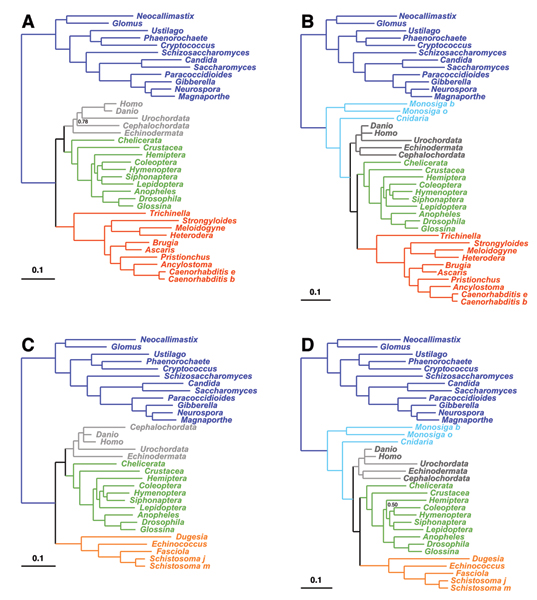
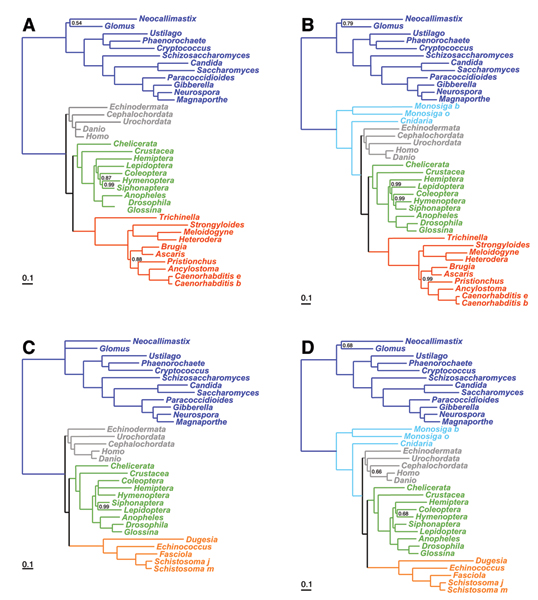
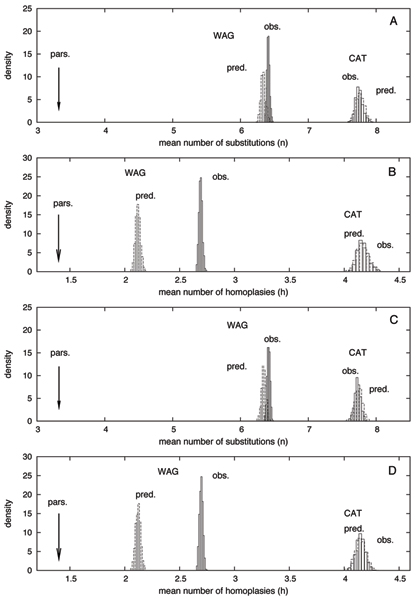
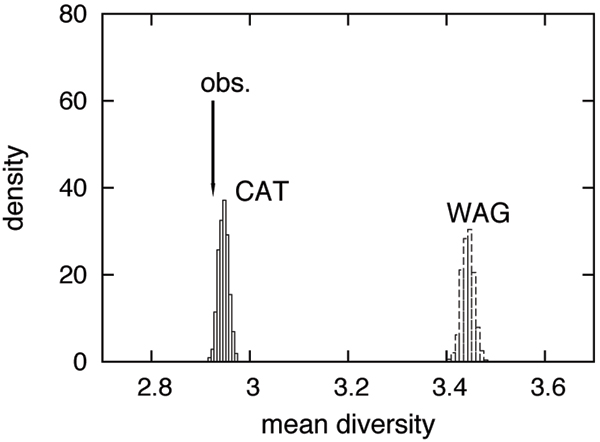
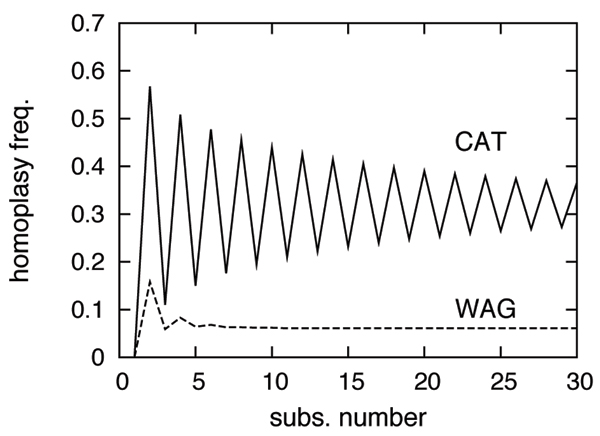
BACKGROUND: Thanks to the large amount of signal contained in genome-wide sequence alignments, phylogenomic analyses are converging towards highly supported trees. However, high statistical support does not imply that the tree is accurate. Systematic errors, such as the Long Branch Attraction (LBA) artefact, can be misleading, in particular when the taxon sampling is poor, or the outgroup is distant. In an otherwise consistent probabilistic framework, systematic errors in genome-wide analyses can be traced back to model mis-specification problems, which suggests that better models of sequence evolution should be devised, that would be more robust to tree reconstruction artefacts, even under the most challenging conditions. METHODS: We focus on a well characterized LBA artefact analyzed in a previous phylogenomic study of the metazoan tree, in which two fast-evolving animal phyla, nematodes and platyhelminths, emerge either at the base of all other Bilateria, or within protostomes, depending on the outgroup. We use this artefactual result as a case study for comparing the robustness of two alternative models: a standard, site-homogeneous model, based on an empirical matrix of amino-acid replacement (WAG), and a site-heterogeneous mixture model (CAT). In parallel, we propose a posterior predictive test, allowing one to measure how well a model acknowledges sequence saturation. RESULTS: Adopting a Bayesian framework, we show that the LBA artefact observed under WAG disappears when the site-heterogeneous model CAT is used. Using cross-validation, we further demonstrate that CAT has a better statistical fit than WAG on this data set. Finally, using our statistical goodness-of-fit test, we show that CAT, but not WAG, correctly accounts for the overall level of saturation, and that this is due to a better estimation of site-specific amino-acid preferences. CONCLUSION: The CAT model appears to be more robust than WAG against LBA artefacts, essentially because it correctly anticipates the high probability of convergences and reversions implied by the small effective size of the amino-acid alphabet at each site of the alignment. More generally, our results provide strong evidence that site-specificities in the substitution process need be accounted for in order to obtain more reliable phylogenetic trees.
Overview
The claims and statistics of this paper haven’t been checked yet.
Free: it reads the open-access text and checks the first 5 claims that cite a source we can check. Create a free account to check every claim.
Integrity signals
Registry
Cites
Statistics
Figures
Verification
Claims the paper makes
The claims and statistics of this paper haven’t been checked yet.
Free: it reads the open-access text and checks the first 5 claims that cite a source we can check. Create a free account to check every claim.
Claims other papers make about this one
Each is checked against this paper’s own text: does it say what the citing paper says it does?
The source backs part of the claim, not all of it — or backs it for a different population, condition or comparison.
In the citing paper
“CAT/CATGTR offers improved resilience to long-branch attraction artefacts (LBA)22 and is almost always better fitting than standard site-homogeneous amino acid substitution models (e.g. WAG)8–10,23–29.”
From Evidence for sponges as sister to all other animals from partitioned phylogenomics with mixture models and recoding (2021) · cites this paper as [22]
Experimental — accuracy not yet measuredThe source backs part of the claim, not all of it — or backs it for a different population, condition or comparison.
In the citing paper
“This is because, by accommodating site-specific biochemical constraints, CAT/CATGTR can better detect saturation (i.e. multiple hidden substitutions)8,20,22, and therefore better identify cases of convergent evolution of identical amino acids in distantly related, fast-evolving species.”
From Evidence for sponges as sister to all other animals from partitioned phylogenomics with mixture models and recoding (2021) · cites this paper as [22]
Experimental — accuracy not yet measuredThe source backs part of the claim, not all of it — or backs it for a different population, condition or comparison.
In the citing paper
“Additional sources of systematic error include poor taxon or character sampling (10,14,15), large amounts of missing data (16), and model misspecification (16,17).”
From Error, signal, and the placement of Ctenophora sister to all other animals (2015) · cites this paper as [17]
Experimental — accuracy not yet measuredThe cited source says what the claim attributes to it.
In the citing paper
“However, protein evolution is not homogeneous.”
From Improved Modeling of Compositional Heterogeneity Supports Sponges as Sister to All Other Animals (2017) · cites this paper as [26]
The cited source says what the claim attributes to it.
In the citing paper
“Previous studies analysing the test datasets used here, but without partitioning, have found support for the accepted topology under a variety of site-heterogeneous models22,56,60.”
From Evidence for sponges as sister to all other animals from partitioned phylogenomics with mixture models and recoding (2021) · cites this paper as [22]
4 more claims about this paper
Create a free account to see every claim other papers make about this one.
Self-check
Percentages, sums and reported differences re-computed from the paper’s own numbers.
The self-check needs the paper’s full text.
Citations
Cites
MRBAYES: Bayesian inference of phylogenetic trees.
Huelsenbeck, J. P., & Ronquist, F. (2001) · Bioinformatics · doi:10.1093/bioinformatics/17.8.754 · Cited by 21,937 · cited 1×
“In the case of WAG, we performed one run with our program, and another one using MrBayes [48].”
Evolutionary trees from DNA sequences: A maximum likelihood approach.
Felsenstein, J. (1981) · Journal of Molecular Evolution · doi:10.1007/bf01734359 · Cited by 14,571 · cited 3×
“The evolutionary process defined by this category is then similar to that proposed by Felsenstein [45], i.e. a Poisson process distributing events across time, so that at each event, a new state (possibly equal to the current one) is drawn at random from the probability profile.”
InfluentialEvolution of Protein Molecules
JUKES, T. H., & CANTOR, C. R. (1969) · Mammalian Protein Metabolism · doi:10.1016/b978-1-4832-3211-9.50009-7 · Cited by 11,032 · cited 1×
“At one extreme, we used the equivalent of the Jukes and Cantor model [ 44 ] for amino-acids, assuming all 20 amino-acid to be equally likely at each site.”
The rapid generation of mutation data matrices from protein sequences
Jones, D. T., Taylor, W. R., & Thornton, J. M. (1992) · Bioinformatics · doi:10.1093/bioinformatics/8.3.275 · Cited by 6,947
(1964) · Mammalian Protein Metabolism · doi:10.1016/b978-1-4832-3210-2.50006-6 · Cited by 3,059
Yang, Z. (1994) · Journal of Molecular Evolution · doi:10.1007/bf00160154 · Cited by 2,960 · cited 3×
“Apart from their specific amino-acid replacement processes, the two models under investigation, CAT and WAG, share the same features, including gamma-distributed rates across sites [25] (see methods).”
Cases in which Parsimony or Compatibility Methods will be Positively Misleading
Felsenstein, J. (1978) · Systematic Biology · doi:10.1093/sysbio/27.4.401 · Cited by 2,896
Whelan, S., & Goldman, N. (2001) · Molecular Biology and Evolution · doi:10.1093/oxfordjournals.molbev.a003851 · Cited by 2,849 · cited 3×
“By Bayes factor evaluation, we have shown previously that CAT generally has a better fit than homogeneous models based on one single empirical substitution matrix, such as WAG [39], JTT [40], or even the most general site-homogeneous and time-reversible model (GTR) [31,41].”
Cellular Scaling Rules for the Brains of Marsupials: Not as “Primitive” as Expected
Dos Santos, S. E., Porfirio, J., da Cunha, F. B., Manger, P. R., Tavares, W., Pessoa, L., Raghanti, M. A., Sherwood, C. C., & Herculano-Houzel, S. (2017) · Brain, Behavior and Evolution · doi:10.1159/000452856 · Cited by 2,642
Markov Chain Sampling Methods for Dirichlet Process Mixture Models
Neal, R. M. (2000) · Journal of Computational and Graphical Statistics · doi:10.1080/10618600.2000.10474879 · Cited by 2,288
Cited by
Items 401–500 of 712
Plastid phylogenomics and molecular evolution of Thismiaceae (Dioscoreales)
Garrett, L. N., Viruel, J., Klimpert, N. J., Gomez, M. S., Lam, V. K. Y., Merckx, V. S. F. T., & Graham, S. W. (2023) · American Journal of Botany · doi:10.1002/ajb2.16141 · Cited by 17
The origins of graptolites and other pterobranchs: a journey from ‘Polyzoa’
Sato, A., Rickards, B., & Holland, P. W. H. (2008) · Lethaia · doi:10.1111/j.1502-3931.2008.00123.x · Cited by 19
Hilton, S. K., & Bloom, J. D. (2018) · Virus Evolution · doi:10.1093/ve/vey033 · Cited by 24
Improving Orthologous Signal and Model Fit in Datasets Addressing the Root of the Animal Phylogeny
McCarthy, C. G. P., Mulhair, P. O., Siu-Ting, K., Creevey, C. J., & O’Connell, M. J. (2023) · Molecular Biology and Evolution · doi:10.1093/molbev/msac276 · Cited by 20
The Prevalence of Multifurcations in Tree-space and Their Implications for Tree-search
Whelan, S., & Money, D. (2010) · Molecular Biology and Evolution · doi:10.1093/molbev/msq163 · Cited by 16
Inferring Ancient Relationships with Genomic Data: A Commentary on Current Practices
Laumer, C. E. (2018) · Integrative and Comparative Biology · doi:10.1093/icb/icy075 · Cited by 15
Zou, H., Lei, H., Chen, R., Chen, F.-L., Li, W. X., Li, M., Zhang, D., Jakovlić, I., & Wang, G. (2022) · Water Biology and Security · doi:10.1016/j.watbs.2022.100033 · Cited by 16
Winn, J. C., Maduna, S. N., & der Merwe, A. E. B. (2023) · Genomics · doi:10.1016/j.ygeno.2023.110771 · Cited by 19
Modeling Substitution Rate Evolution across Lineages and Relaxing the Molecular Clock
Mello, B., & Schrago, C. G. (2024) · Genome Biology and Evolution · doi:10.1093/gbe/evae199 · Cited by 17
Tan, M. H., Gan, H. M., Dally, G., Horner, S., Moreno, P. A. R., Rahman, S., & Austin, C. M. (2018) · Invertebrate Systematics · doi:10.1071/is17050 · Cited by 15
Performance of A Priori and A Posteriori Calibration Strategies in Divergence Time Estimation
Beavan, A. J. S., Donoghue, P. C. J., Beaumont, M., & Pisani, D. (2020) · Genome Biology and Evolution · doi:10.1093/gbe/evaa105 · Cited by 12
Improvement of molecular phylogenetic inference and the phylogeny of Bilateria
Lartillot, N., & Philippe, H. (2009) · Oxford University Press eBooks · doi:10.1093/acprof:oso/9780199549429.003.0012 · Cited by 15
Self-citationResources for phylogenomic analyses of Australian terrestrial vertebrates
Bragg, J. G., Potter, S., Bi, K., Catullo, R. A., Donnellan, S. C., Eldridge, M. D. B., Joseph, L., Keogh, J. S., Oliver, P. M., Rowe, K. C., et al. (2016) · Molecular Ecology Resources · doi:10.1111/1755-0998.12633 · Cited by 17
Vöcking, O., Leclère, L., & Hausen, H. (2021) · BMC Ecology and Evolution · doi:10.1186/s12862-021-01939-x · Cited by 19
Structural biology and genome evolution: An introduction
Kurland, C. G., & Harish, A. (2015) · Biochimie · doi:10.1016/j.biochi.2015.10.023 · Cited by 14
The Molecular Clock as a Tool for Understanding Host-Parasite Evolution
Warnock, R. C. M., & Engelstädter, J. (2021) · Topics in geobiology · doi:10.1007/978-3-030-52233-9_13 · Cited by 16
Gao, J., Yuan, X., Jakovlić, I., Wu, H., Xiang, C., Xie, M., Song, R., Xie, Z.-G., Wu, Y., & Ou, D.-S. (2023) · BMC Genomics · doi:10.1186/s12864-023-09177-9 · Cited by 16
Evolution of myxozoan mitochondrial genomes: insights from myxobolids
Sandberg, T. O. M., Yahalomi, D., Bracha, N., Haddas‐Sasson, M., Pupko, T., Atkinson, S. D., Bartholomew, J. L., Zhang, J. Y., & Huchon, D. (2024) · BMC Genomics · doi:10.1186/s12864-024-10254-w · Cited by 15
Phylogenomic analyses of ochrophytes (stramenopiles) with an emphasis on neglected lineages
Cho, A., Lax, G., & Keeling, P. J. (2024) · Molecular Phylogenetics and Evolution · doi:10.1016/j.ympev.2024.108120 · Cited by 15
Redmond, A. K. (2024) · Proceedings of the Royal Society B Biological Sciences · doi:10.1098/rspb.2024.0329 · Cited by 15
Is the deuterostome clade an artifact?
Silva, A. S., Natsidis, P., Piovani, L., Kapli, P., & Telford, M. J. (2025) · Current Biology · doi:10.1016/j.cub.2025.06.045 · Cited by 21
Membrane Trafficking Modulation during Entamoeba Encystation
Herman, E. K., Siegesmund, M. A., Bottery, M. J., van Aerle, R., Shather, M. M., Caler, E. V., Dacks, J. B., & van der Giezen, M. (2017) · Scientific Reports · doi:10.1038/s41598-017-12875-6 · Cited by 17
Gaïa, M., Cunha, V. D., & Forterre, P. (2018) · Grand challenges in biology and biotechnology · doi:10.1007/978-3-319-69078-0_3 · Cited by 16
Rivera-Rivera, C. J., & Montoya‐Burgos, J. I. (2016) · Molecular Biology and Evolution · doi:10.1093/molbev/msw043 · Cited by 15
A timetree of Fungi dated with fossils and horizontal gene transfers
Szánthó, L. L., Merényi, Z., Donoghue, P. C. J., Gabaldón, T., Nagy, L. G., Szöllősi, G. J., & Ocaña‐Pallarès, E. (2025) · Nature Ecology & Evolution · doi:10.1038/s41559-025-02851-z · Cited by 21
Whole-genome analyses converge to support the Hemirotifera hypothesis within Syndermata (Gnathifera)
Vasilikopoulos, A., Herlyn, H., Fontaneto, D., Wilson, C. G., Nowell, R. W., Flot, J., Barraclough, T. G., & Doninck, K. V. (2024) · Hydrobiologia · doi:10.1007/s10750-023-05451-9 · Cited by 15
Höhna, S., Lower, S. E., Duchen, P., & Catalán, A. (2024) · Systematic Biology · doi:10.1093/sysbio/syae065 · Cited by 14
Assembling animals: trees, genomes, cells, and contrast to plants
Paps, J., Rossi, M. E., Bowles, A. M. C., & Álvarez‐Presas, M. (2023) · Frontiers in Ecology and Evolution · doi:10.3389/fevo.2023.1185566 · Cited by 13
Losses, Expansions, and Novel Subunit Discovery of Adaptor Protein Complexes in Haptophyte Algae
Lee, L. J. Y., Klute, M. J., Herman, E. K., Read, B. A., & Dacks, J. B. (2015) · Protist · doi:10.1016/j.protis.2015.07.004 · Cited by 12
Wang, Y., Zhou, X., Wang, L., Liu, X., Yang, D., & Rokas, A. (2019) · International Journal of Molecular Sciences · doi:10.3390/ijms20051072 · Cited by 15
Samacá-Sáenz, E., Meza-Lázaro, R. N., Branstetter, M. G., & Zaldívar‐Riverón, A. (2019) · Systematics and Biodiversity · doi:10.1080/14772000.2019.1685608 · Cited by 13
Ye, L., Yao, T., Lu, J., Jiang, J., & Bai, C.-M. C. (2021) · Scientific Reports · doi:10.1038/s41598-021-92994-3 · Cited by 12
Careful with understudied phyla: The case of chaetognath
Marlétaz, F., & Parco, Y. L. (2008) · BMC Evolutionary Biology · doi:10.1186/1471-2148-8-251 · Cited by 13
Molecular phylogeny and divergence time estimates of Penaeid Shrimp Lineages (Decapoda: Penaeidae)
Voloch, C. M., Freire, P. R., & Russo, C. (2009) · Zootaxa · doi:10.11646/zootaxa.2107.1.2 · Cited by 13
Overview of the First Phylogenomics Conference
Philippe, H., & Blanchette, M. (2007) · BMC Evolutionary Biology · doi:10.1186/1471-2148-7-s1-s1 · Cited by 13
Self-citationBattistuzzi, F. U., Filipski, A. J., & Kumar, S. (2011) · Wiley eBooks · doi:10.1002/9780470015902.a0001803.pub2 · Cited by 13
Long-Lived Species of Bivalves Exhibit Low MT-DNA Substitution Rates
Mortz, M., Levivier, A., Lartillot, N., Dufresne, F., & Blier, P. U. (2021) · Frontiers in Molecular Biosciences · doi:10.3389/fmolb.2021.626042 · Cited by 12
Self-citationRevisiting mitogenome evolution in Medusozoa with eight new mitochondrial genomes
Ling, M. K., Yap, N. W. L., Iesa, I., Yip, Z. T., Huang, D., & Quek, Z. B. R. (2023) · iScience · doi:10.1016/j.isci.2023.108252 · Cited by 13
RETRACTED: Integrative phylogenomics positions sponges at the root of the animal tree
Steenwyk, J. L., & King, N. (2025) · Science · doi:10.1126/science.adw9456 · Cited by 20
RetractedYang, Y., Matsuzaki, M., Takahashi, F., Qu, L., & Nozaki, H. (2014) · PLoS ONE · doi:10.1371/journal.pone.0101158 · Cited by 15
Adrián‐Serrano, S., Lozano-Fernández, J., Pons, J., Rozas, J., & Arnedo, M. A. (2020) · Journal of Zoological Systematics & Evolutionary Research · doi:10.1111/jzs.12415 · Cited by 13
Was the Last Bacterial Common Ancestor a Monoderm after All?
Léonard, R. R., Sauvage, E., Lupo, V., Perrin, A., Sirjacobs, D., Charlier, P., Kerff, F., & Baurain, D. (2022) · Genes · doi:10.3390/genes13020376 · Cited by 14
Gan, H. M., Dailey, L. K., Halliday, N., Williams, P. M., Hudson, A. O., & Savka, M. A. (2016) · PeerJ · doi:10.7717/peerj.2332 · Cited by 12
Sun, S., Jiang, L., Kong, L., & Li, Q. (2020) · Comparative Biochemistry and Physiology Part D Genomics and Proteomics · doi:10.1016/j.cbd.2020.100739 · Cited by 15
Deciphering deuterostome phylogeny: molecular, morphological, and palaeontological perspectives
Smith, A. B., & Swalla, B. J. (2009) · Oxford University Press eBooks · doi:10.1093/acprof:oso/9780199549429.003.0009 · Cited by 14
The evolution of nervous system centralization
Arendt, D., Denes, A. S., Jékely, G., & Tessmar‐Raible, K. (2009) · Oxford University Press eBooks · doi:10.1093/acprof:oso/9780199549429.003.0007 · Cited by 12
Barua, A., Afrin, T., Akhand, A. A., & Ahmed, M. S. (2021) · Conservation Genetics Resources · doi:10.1007/s12686-021-01212-9 · Cited by 16
Fleming, J. F., Pisani, D., & Arakawa, K. (2021) · Genome Biology and Evolution · doi:10.1093/gbe/evab164 · Cited by 17
Drivers of interlineage variability in mitogenomic evolutionary rates in Platyhelminthes
Jakovlić, I., Ye, T., Zou, H., Zhu, F., Shi, Y., Ma, Y., Wang, G., Li, W. X., & Zhang, D. (2024) · Heredity · doi:10.1038/s41437-024-00712-2 · Cited by 11
Probabilistic models of eukaryotic evolution: time for integration
Lartillot, N. (2015) · Philosophical Transactions of the Royal Society B Biological Sciences · doi:10.1098/rstb.2014.0338 · Cited by 15
Self-citationElucidating Animal Phylogeny: Advances in Knowledge and Forthcoming Challenges
Kocot, K. M., Cannon, J. T., & Halanych, K. M. (2010) · Science Publishers eBooks · doi:10.1201/b10425-4 · Cited by 12
Bujaki, T., & Rodrigue, N. (2022) · Journal of Molecular Evolution · doi:10.1007/s00239-022-10076-y · Cited by 14
Insufficient resolving power of mitogenome data in deciphering deep phylogeny of Holometabola
Song, N., An, S., Yin, X., Zhao, T., & Wang, X. (2016) · Journal of Systematics and Evolution · doi:10.1111/jse.12214 · Cited by 11
Peterson, K. J., Cotton, J. A., Gehlîng, J. G., & Pisani, D. (2009) · Oxford University Press eBooks · doi:10.1093/acprof:oso/9780199549429.003.0002 · Cited by 13
Kück, P., & Wägele, J. W. (2015) · Cladistics · doi:10.1111/cla.12132 · Cited by 15
Molecular paleobiology — Progress and perspectives
Wörheide, G., Dohrmann, M., & Yang, Q. (2016) · Palaeoworld · doi:10.1016/j.palwor.2015.01.005 · Cited by 10
Li, Y., Zhang, Y., Szawaryn, K., Huang, D., & Cai, C. (2022) · Arthropod Systematics & Phylogeny · doi:10.3897/asp.80.e81736 · Cited by 11
Molecular Phylogeny of Sesiidae (Lepidoptera) Inferred From Mitochondrial DNA Sequences
McKern, J. A., Szalanski, A. L., Johnson, D. T., & Dowling, A. P. G. (2008) · Journal of Agricultural and Urban Entomology · doi:10.3954/1523-5475-25.3.165 · Cited by 10
Sun, S., Wu, Y., Ge, X., Jakovlić, I., Jian, Z., Mahboob, S., Al‐Ghanim, K. A., Al-Misned, F. A., & Fu, H. (2020) · Royal Society Open Science · doi:10.1098/rsos.190669 · Cited by 10
Sun, S., Sha, Z., & Wang, Y. (2021) · Journal of Oceanology and Limnology · doi:10.1007/s00343-020-0266-4 · Cited by 11
Ancient Origin of Chaperonin Gene Paralogs Involved in Ciliopathies
Mukherjee, K., & Brocchieri, L. (2013) · Journal of Phylogenetics & Evolutionary Biology · doi:10.4172/2329-9002.1000107 · Cited by 10
Zhang, C., Su, S., Li, X., Li, B., Yang, B., Zhu, J. X., & Wang, W. (2018) · PLoS ONE · doi:10.1371/journal.pone.0206615 · Cited by 12
Barthélémy, R. M., Chenuil, A., Blanquart, S., Casanova, J.-P., & Faure, É. (2007) · BMC Evolutionary Biology · doi:10.1186/1471-2148-7-146 · Cited by 10
Muñiz-Trejo, R., Park, Y., & Thornton, J. W. (2025) · Molecular Biology and Evolution · doi:10.1093/molbev/msaf084 · Cited by 10
Zhang, R., Wang, L., Tian, S., Liu, Y., Jiang, Y., Zhou, X., Yang, D., Liu, X., & Wang, Y. (2025) · Systematic Entomology · doi:10.1111/syen.12684 · Cited by 11
Liu, Q.-P., Liu, Y., Liu, Q., Tian, L., Li, H., Song, F., & Cai, W. (2023) · International Journal of Molecular Sciences · doi:10.3390/ijms241310570 · Cited by 9
Tamre, E., & Fournier, G. P. (2022) · Geobiology · doi:10.1111/gbi.12514 · Cited by 12
A novel structural maintenance of chromosomes (SMC)-related protein family specific to Archaea
Yoshinaga, M., Nakayama, T., & Inagaki, Y. (2022) · Frontiers in Microbiology · doi:10.3389/fmicb.2022.913088 · Cited by 9
Novel symmetry-preserving neural network model for phylogenetic inference
Tang, X., Zepeda-Núñez, L., Yang, S., Zhao, Z., & Solís‐Lemus, C. (2024) · Bioinformatics Advances · doi:10.1093/bioadv/vbae022 · Cited by 15
Archaea, the tree of life, and cellular evolution in eukaryotes
Xiao, J., Fan, L., Wu, D., Xu, Y., Lai, D., Martin, W. F., Zhu, R., & Zhang, C. (2019) · Science China Earth Sciences · doi:10.1007/s11430-018-9326-1 · Cited by 10
Knutson, V. L., Brenzinger, B., Schrödl, M., Wilson, N. G., & Giribet, G. (2020) · Molecular Phylogenetics and Evolution · doi:10.1016/j.ympev.2020.106943 · Cited by 9
Kück, P., Wilkinson, M., Groß, C., Foster, P. G., & Wägele, J. W. (2017) · PLoS ONE · doi:10.1371/journal.pone.0183393 · Cited by 10
Letsch, H. O., & Beran, F. (2023) · Insect Systematics and Diversity · doi:10.1093/isd/ixad019 · Cited by 10
Salzburger, W., Steinke, D., Braasch, I., & Meyer, A. (2009) · Journal of Molecular Evolution · doi:10.1007/s00239-009-9251-4 · Cited by 7
Song, N., Zhai, Q., & Zhang, Y. (2021) · Mitochondrial DNA Part A · doi:10.1080/24701394.2021.1882444 · Cited by 10
Bezerra, B. S., Belato, F. A., Mello, B., Brown, F. D., Coates, C. J., Leme, J. D. M., Trindade, R. I. F., & Costa-Paiva, E. M. (2021) · Scientific Reports · doi:10.1038/s41598-021-95094-4 · Cited by 8
Mitogenomics and phylogenetics of twelve species of African Saturniidae (Lepidoptera)
Nethavhani, Z., Straeuli, R., Hiscock, K., Veldtman, R., Morton, A., Oberprieler, R. G., & ASCH, B. V. (2022) · PeerJ · doi:10.7717/peerj.13275 · Cited by 8
Zou, H., Chen, F.-L., Li, W., Li, M., Lei, H., Zhang, D., Jakovlić, I., & Wang, G. (2022) · BMC Genomics · doi:10.1186/s12864-022-08607-4 · Cited by 8
Invertebrate Problematica: kinds, causes, and solutions
Jenner, R. A., Timothy, D. J., & Littlewood, D. T. J. (2009) · Oxford University Press eBooks · doi:10.1093/acprof:oso/9780199549429.003.0011 · Cited by 8
Blanc‐Mathieu, R., Dahle, H., Hofgaard, A., Brandt, D., Ban, H., Kalinowski, J., Ogata, H., & Sandaa, R. (2021) · Publikationen an der Universität Bielefeld (Universität Bielefeld) · Cited by 8
Whelan, S., & Morrison, D. A. (2016) · Methods in molecular biology · doi:10.1007/978-1-4939-6622-6_14 · Cited by 15
Tihelka, E., Engel, M. S., Lozano-Fernández, J., Giacomelli, M., Yin, Z., Rota‐Stabelli, O., Huang, D., Pisani, D., Donoghue, P. C. J., & Cai, C. (2021) · bioRxiv (Cold Spring Harbor Laboratory) · doi:10.1101/2021.09.23.461539 · Cited by 12
Phylogenetic relationships and divergence times of Odonata inferred from mitochondrial genome
Huang, W., Zhao, T., Fan, M., Duan, Y., Tian, L., Li, H., Cai, W., & Song, F. (2025) · iScience · doi:10.1016/j.isci.2025.111806 · Cited by 14
Vivaxin genes encode highly immunogenic, non-variant antigens on the Trypanosoma vivax cell-surface
Romero-Ramirez, A., Casas-Sánchez, A., Autheman, D., Duffy, C. W., Brandt, C., Clare, S., Harcourt, K., André, M. R., Neto, K. J. G. D. A. C., Teixeira, M. M. G., et al. (2022) · PLoS neglected tropical diseases · doi:10.1371/journal.pntd.0010791 · Cited by 8
Wang, W., Dong, Z., Du, Z., & Wu, P. (2023) · Molecular Phylogenetics and Evolution · doi:10.1016/j.ympev.2023.107924 · Cited by 7
Hernández, L., Vicens, A., Eguiarte, L. E., Souza, V., Anda, V. D., & González, J. M. (2020) · PeerJ · doi:10.7717/peerj.9861 · Cited by 8
Klirs, Y., Novosolov, M., Gissi, C., Garić, R., Pupko, T., Stach, T., & Huchon, D. (2024) · Genome Biology and Evolution · doi:10.1093/gbe/evae181 · Cited by 7
Pennarubia, F., Pinault, É., Jaam, B. A., Brun, C. E., Maftah, A. A., Germot, A., & Legardinier, S. (2020) · Biomolecules · doi:10.3390/biom10091250 · Cited by 8
Genome-Based Analyses of Six Hexacorallian Species Reject the “Naked Coral” Hypothesis
Wang, X., Drillon, G., Ryu, T., Voolstra, C. R., & Aranda, M. (2017) · Genome Biology and Evolution · doi:10.1093/gbe/evx196 · Cited by 9
Phylogenetic Analyses: A Toolbox Expanding towards Bayesian Methods
Aris‐Brosou, S., & Xia, X. (2008) · International Journal of Plant Genomics · doi:10.1155/2008/683509 · Cited by 7
Douglas, D. A., & Árnason, Ú. (2009) · Molecular Phylogenetics and Evolution · doi:10.1016/j.ympev.2009.05.020 · Cited by 7
Klirs, Y., Novosolov, M., Gissi, C., Garic, R., Pupko, T., Stach, T., & Huchon, D. (2024) · doi:10.1101/2024.05.09.593300 · Cited by 7
Weber, C. C., Paulini, M., & Blaxter, M. (2025) · G3 Genes Genomes Genetics · doi:10.1093/g3journal/jkaf061 · Cited by 8
Li, X., Li, R., Hu, F., Zheng, S., Rao, F., An, R., Li, Y., & Liu, D. (2024) · Journal of Systematics and Evolution · doi:10.1111/jse.13079 · Cited by 6
Song, N., Wang, M., Tang, H., & Dang, Z. (2024) · Journal of Systematics and Evolution · doi:10.1111/jse.13141 · Cited by 9
The evolution of the plastid genomes in the holoparasitic Balanophoraceae
Ceriotti, L. F., Soria, L. M. G., Guzman, S., Sato, H. A., Luque, E., Gonzalez, M. A., & Sanchez-Puerta, M. V. (2025) · Proceedings of the Royal Society B Biological Sciences · doi:10.1098/rspb.2024.2011 · Cited by 10
The Kernel of Maximum Agreement Subtrees
Swenson, K. M., Chen, E., Pattengale, N. D., & Sankoff, D. (2011) · Lecture notes in computer science · doi:10.1007/978-3-642-21260-4_15 · Cited by 6
Qiao, K., Bai, M., Wang, Q., Hou, X., Chen, J., Xiao, S., Liu, G., Bert, W., & Qing, X. (2018) · Nematology · doi:10.1163/15685411-00003195 · Cited by 6
Tihelka, E., Jäch, M. A., Kundrata, R., Li, Y., Engel, M. S., Lozano-Fernández, J., Huang, D., & Cai, C. (2022) · Insect Systematics and Diversity · doi:10.1093/isd/ixac011 · Cited by 7
Zhao, F., & Akanuma, S. (2022) · Journal of Molecular Evolution · doi:10.1007/s00239-022-10078-w · Cited by 7
Metadata
- Authors
- Lartillot, N., Brinkmann, H., & Philippe, H.
- Affiliations
- Centre National de la Recherche Scientifique (FR)
- Canadian Institute for Advanced Research (CA)
- Corresponding author
- Lartillot, Nicolas
- Venue
- BMC Evolutionary Biology
- Published
- 2007
- Volume
- 7
- Issue
- Suppl 1
- Pages
- S4
- ISSN
- 1471-2148 (ISSN-L)
- PMC
- PMC1796613
- OpenAlex
- W2131527832
- Semantic Scholar
- 2c8718808e5a337cdae9a2e2c5f0c093e7a3d2ec
- Cited by
- 705
- References
- 59
- Citations by year
- 2026: 22 · 2025: 33 · 2024: 48 · 2023: 35 · 2022: 45 · 2021: 46 · 2020: 48 · 2019: 37 · 2018: 38 · 2017: 35 · 2016: 25 · 2015: 29 · 2014: 52 · 2013: 22 · 2012: 24
- Type
- conference abstract
- Language
- en
- Open access
- gold
- doi.org
- Licence
- cc-by
- Locations
- BMC Evolutionary Biology (publishedVersion, cc-by)
- Europe PMC (PubMed Central) (publishedVersion, cc-by)
- PubMed Central (publishedVersion, cc-by)
- PubMed (publishedVersion)
- HAL (submittedVersion, cc-by)
- Papyrus : Institutional Repository (Université de Montréal) (submittedVersion, cc-by)
- Funders
- Centre National de la Recherche Scientifique
- Université de Montréal
- Topics
- Life Sciences › Biochemistry, Genetics and Molecular Biology › Molecular Biology › Genomics and Phylogenetic Studies
- Life Sciences › Biochemistry, Genetics and Molecular Biology › Molecular Biology › RNA and protein synthesis mechanisms
- Physical Sciences › Earth and Planetary Sciences › Paleontology › Evolution and Paleontology Studies
- Keywords
- long-branch attraction, cat model, amino acid substitution models, metazoan phylogeny, nematodes, Platyhelminthes
- MeSH terms
- Animals, Models, Genetic, Phylogeny, Polymorphism, Genetic, Evolution, Molecular, Sequence Analysis, Protein
About these checks
Registry, retraction, Cites and statistics results are computed, not judged, with one exception: a printed reference that no index lists is read once by a model before it counts as a citation error. Claims are extracted by a model and kept only when their quote appears verbatim in the text; each cited source is then checked, with a model’s help, for whether it says what the claim relies on. Those verdicts can be wrong — read the claim’s quote and the cited source before relying on one.
Statistics and arithmetic are recomputed, not judged.
Confidence bands are shown only for fields calibrated on our annotated test set. None is calibrated yet, so no band is shown.
What counts as a claim ›How we measure confidence ›How we check this ›
Are you an author, or do you see a problem with this page? Request a review
Data sources
Bibliographic data: Semantic Scholar, OpenAlex, Crossref.
Contains information from the Semantic Scholar Academic Graph Datasets, made available under the ODC Attribution License (ODC-BY 1.0).
Semantic Scholar’s data is described in: Kinney, R., et al. (2023). The Semantic Scholar Open Data Platform. arXiv:2301.10140.
