

Evidence for divergent selection between the molecular forms of Anopheles gambiae: role of predation
Open accessThe DOI matches its Crossref record; 51 of the 51 references it cites were found in a registry or an index.
Abstract
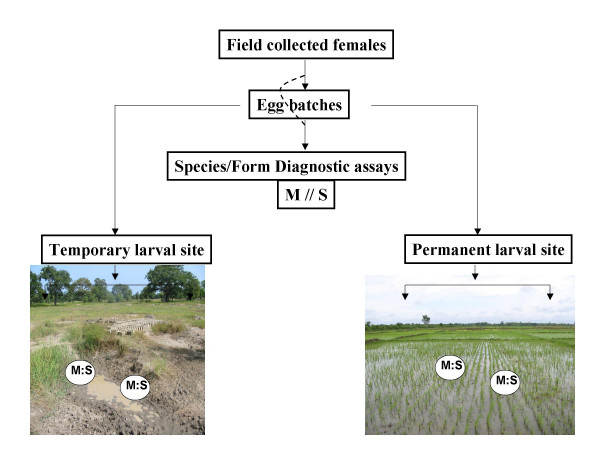
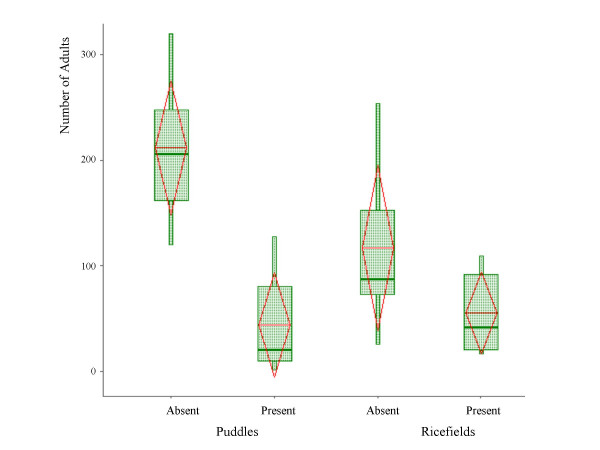
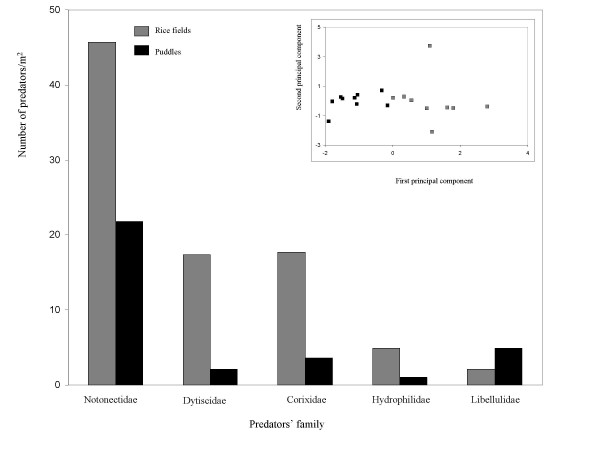
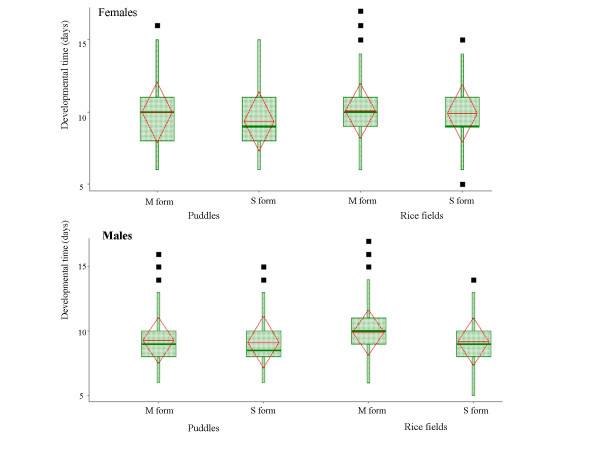
BACKGROUND: The molecular forms of Anopheles gambiae are undergoing speciation. They are characterized by a strong assortative mating and they display partial habitat segregation. The M form is mostly found in flooded/irrigated areas whereas the S form dominates in the surrounding areas, but the ecological factors that shape this habitat segregation are not known. Resource competition has been demonstrated between species undergoing divergent selection, but resource competition is not the only factor that can lead to divergence. RESULTS: In a field experiment using transplantation of first instar larvae, we evaluated the role of larval predators in mediating habitat segregation between the forms. We found a significant difference in the ability of the molecular forms to exploit the different larval sites conditioned on the presence of predators. In absence of predation, the molecular forms outcompeted each other in their respective natural habitats however, the developmental success of the M form was significantly higher than that of the S form in both habitats under predator pressure. CONCLUSION: Our results provide the first empirical evidence for specific adaptive differences between the molecular forms and stress the role of larval predation as one of the mechanisms contributing to their divergence.
Overview
The claims and statistics of this paper haven’t been checked yet.
Free: it reads the open-access text and checks the first 5 claims that cite a source we can check. Create a free account to check every claim.
Integrity signals
Registry
Cites
Statistics
Figures
Verification
Claims the paper makes
The claims and statistics of this paper haven’t been checked yet.
Free: it reads the open-access text and checks the first 5 claims that cite a source we can check. Create a free account to check every claim.
Claims other papers make about this one
Each is checked against this paper’s own text: does it say what the citing paper says it does?
The source backs part of the claim, not all of it — or backs it for a different population, condition or comparison.
In the citing paper
“This could be a response to the lower overall productivity of more permanent sites (Diabate et al., 2008; Diabate et al., 2005; Diuk-Wasser et al., 2005).”
From The molecular forms of Anopheles gambiae: a phenotypic perspective (2008) · cites this paper as Diabate et al., 2008
Experimental — accuracy not yet measuredThe source backs part of the claim, not all of it — or backs it for a different population, condition or comparison.
In the citing paper
“Consistent with that hypothesis, recent results suggest that the length of the hydroperiod of larval habitats is the principal ecological factor producing divergence between the molecular forms through selection mediated by predation and competition (Diabate et al., 2008).”
From The molecular forms of Anopheles gambiae: a phenotypic perspective (2008) · cites this paper as Diabate et al., 2008
Experimental — accuracy not yet measuredThe source backs part of the claim, not all of it — or backs it for a different population, condition or comparison.
In the citing paper
“Field experiments demonstrated that the S form outperforms the M form in the absence of predators whereas the reverse is true if predator pressure increases.”
From The molecular forms of Anopheles gambiae: a phenotypic perspective (2008) · cites this paper as Diabate et al., 2008
Experimental — accuracy not yet measuredThe source backs part of the claim, not all of it — or backs it for a different population, condition or comparison.
In the citing paper
“This may be explained by the adaptation of An. coluzzii larvae to predator pressure in the wild and the vector's ability to outcompete sibling species in natural environments [39].”
From Sibling species of the major malaria vector Anopheles gambiae display divergent preferences for aquatic breeding sites in southern Nigeria (2024) · cites this paper as [39]
Experimental — accuracy not yet measuredThe cited source says what the claim attributes to it.
In the citing paper
“Larval adaptations to exploit temporary vs. ‘permanent’ freshwater habitats account for discontinuities in distribution of the molecular forms (Diabate et al. 2008) and provide evidence for ecological speciation (e.g., (Schluter, 2001).”
From The molecular forms of Anopheles gambiae: a phenotypic perspective (2008) · cites this paper as Diabate et al. 2008
2 more claims about this paper
Create a free account to see every claim other papers make about this one.
Self-check
Percentages, sums and reported differences re-computed from the paper’s own numbers.
The self-check needs the paper’s full text.
Citations
Cites
Systematics and the Origin of Species: On Ernst Mayr's 100th Anniversary
(2005) · National Academies Press eBooks · doi:10.17226/11310 · Cited by 3,454
The scent of death: Chemosensory assessment of predation risk by prey animals
Kats, L. B., & Dill, L. M. (1998) · Écoscience · doi:10.1080/11956860.1998.11682468 · Cited by 1,441
Genomic islands of speciation in Anopheles gambiae
Turner, T. L., Hahn, M. W., & Nuzhdin, S. V. (2005) · PLoS Biology · doi:10.1371/journal.pbio.0030285 · Cited by 734
Fanello, C., Santolamazza, F., & Della Torre, A. (2002) · Medical and Veterinary Entomology · doi:10.1046/j.1365-2915.2002.00393.x · Cited by 517
Ecological Causes of Adaptive Radiation
Schluter, D. (1996) · The American Naturalist · doi:10.1086/285901 · Cited by 465
A Polytene Chromosome Analysis of the Anopheles gambiae Species Complex
Coluzzi, M., Sabatini, A., della Torre, A., Di Deco, M. A., & Petrarca, V. (2002) · Science · doi:10.1126/science.1077769 · Cited by 447 · cited 1×
“Coluzzi and others have hypothesized that human-made modifications of the African environment have created new ecological niches in marginal habitats and, thus, new opportunities for specialisation for this mosquito species [7,9,10].”
BackgroundOlfactory assessment of predation risk in the aquatic environment
Wisenden, B. D. (2000) · Philosophical Transactions of the Royal Society of London. Series B: Biological Sciences · doi:10.1098/rstb.2000.0668 · Cited by 410
Molecular evidence of incipient speciation within Anopheles gambiae s.s. in West Africa
Torre, A. D., Fanello, C., Akogbeto, M., Dossou‐yovo, J., Favia, G., Petrarca, V., & Coluzzi, M. (2001) · Insect Molecular Biology · doi:10.1046/j.1365-2583.2001.00235.x · Cited by 316
Chromosomal inversion intergradation and incipient speciation in Anopheles gambiae
Coluzzi, M., Petrarca, V., & di Deco, M. A. (1985) · Bolletino di zoologia · doi:10.1080/11250008509440343 · Cited by 312
(1998) · PubMed · Cited by 296
Research works printed but not linked: 1
- Mayr E Systematic and the origin of species 1942 Columbia University Press
Cited by
Tedersoo, L., May, T. W., & Smith, M. E. (2010) · Mycorrhiza · doi:10.1007/s00572-009-0274-x · Cited by 1,016
Sinka, M. E., Bangs, M. J., Manguin, S., Coetzee, M., Mbogo, C. M., Hemingway, J., Patil, A. P., Temperley, W. H., Gething, P. W., Kabaria, C. W., et al. (2010) · Parasites & Vectors · doi:10.1186/1756-3305-3-117 · Cited by 761
“These different forms exhibit ecological adaptations which further indicate possible speciation, for example the Mopti and M forms are associated with semi-permanent, often manmade, larval habitats such as rice fields or flooded areas, whereas the Savanna/Bamako and S forms are seen more commonly in temporary, rain-de…”
BackgroundSpecies Interactions Among Larval Mosquitoes: Context Dependence Across Habitat Gradients
Juliano, S. A. (2009) · Annual Review of Entomology · doi:10.1146/annurev.ento.54.110807.090611 · Cited by 328
“These field experiments (42, 43, 56, 109) with chromosomal forms of An.”
Simard, F., Ayala, D., Kamdem, G., Pombi, M., Etouna, J., Ose, K., Fotsing, J.-M., Fontenille, D., Besansky, N. J., & Costantini, C. (2009) · BMC Ecology · doi:10.1186/1472-6785-9-17 · Cited by 267
“Differential susceptibility to larval predation in alternative habitats was proposed to explain the micro-geographic distribution of M and S in the West African savannas [19], but comparable evidence from the forest domain is lacking.”
BackgroundClimate Change and Highland Malaria: Fresh Air for a Hot Debate
Chaves, L. F., & Koenraadt, C. J. M. (2010) · The Quarterly Review of Biology · doi:10.1086/650284 · Cited by 227
“…by presence of conspecifics (Munga et al. 2006) ● Indirect effects of predator presence in larval habitat selection by molecular forms of An. gambiae (Diabate et al. 2008) ● Predation perception and resource abundance can modify phenotypic and life cycle traits of non-malaria mosquitoes…”
BackgroundCostantini, C., Ayala, D., Guelbeogo, W. M., Pombi, M., Some, C. Y., Bassole, I. H., Ose, K., Fotsing, J.-M., Sagnon, N., Fontenille, D., et al. (2009) · BMC Ecology · doi:10.1186/1472-6785-9-16 · Cited by 223
“Habitat-dependent fitness traits have been attributed to larval predation and inter-form competition [39,40].”
BackgroundKamdem, C., Tene Fossog, B., Simard, F., Etouna, J., Ndo, C., Kengne, P., Boussès, P., Etoa, F.-X., Awono-Ambene, P., Fontenille, D., et al. (2012) · PLoS ONE · doi:10.1371/journal.pone.0039453 · Cited by 182
“These physiognomic differences among larval habitats are associated to differences in the composition and abundance of mosquito predators [27], which are believed to drive the divergent selection response of natural populations of M and S responsible of their ecological segregation [27,28].”
BackgroundThe molecular forms of Anopheles gambiae: a phenotypic perspective
Lehmann, T., & Diabate, A. (2008) · Infection, Genetics and Evolution · doi:10.1016/j.meegid.2008.06.003 · Cited by 177
“This could be a response to the lower overall producti of more permanent sites (Diabate et al., 2008, 2005; Diuk-Wa et al., 2005).”
InfluentialSelf-citationPREDATION'S ROLE IN REPEATED PHENOTYPIC AND GENETIC DIVERGENCE OF ARMOR IN THREESPINE STICKLEBACK
Marchinko, K. B. (2009) · Evolution · doi:10.1111/j.1558-5646.2008.00529.x · Cited by 176
“The majority of evidence comes from studies on bacteria and invertebrates (McPeek 1997; Mikolajewski et al. 2006; Nosil and Crespi 2006; Meyer and Kassen 2007; Diabate et al. 2008), with few vertebrate examples (Vamosi 2005; Langerhans 2006).”
BackgroundAquatic insect predators and mosquito control.
Shaalan, E., & Canyon, D. V. (2009) · PubMed · Cited by 213
GIMONNEAU, G., POMBI, M., CHOISY, M., MORAND, S., DABIRÉ, R. K., & SIMARD, F. (2012) · Medical and Veterinary Entomology · doi:10.1111/j.1365-2915.2011.00957.x · Cited by 143
“Predation pressure is more important in permanent than in temporary habitats (Sunahara et al., 2002; Diabaté et al., 2008) and was clearly identified as a biotic process that contributes to the ecological niche segregation between forms (Gimonneau et al., 2010).”
BackgroundResultInfluentialSelf-citationTene Fossog, B., Antonio-Nkondjio, C., Kengne, P., Njiokou, F., Besansky, N. J., & Costantini, C. (2013) · BMC Ecology · doi:10.1186/1472-6785-13-1 · Cited by 140
“heavy metals, detergents, oils, or other kinds of nutrients), or biological factors like micro-organisms [80], competitors [81-83], predators [35,84], and their interactions (e.”
BackgroundHabitat suitability and ecological niche profile of major malaria vectors in Cameroon
Ayala, D., Costantini, C., Ose, K., Kamdem, G. C., Antonio-Nkondjio, C., Agbor, J.-P., Awono-Ambene, P., Fontenille, D., & Simard, F. (2009) · Malaria Journal · doi:10.1186/1475-2875-8-307 · Cited by 120
“Previous studies have revealed how biological interactions, particularly at the larval stage of development, can affect the population dynamics and distribution of anophelines [75,76].”
BackgroundDiabaté, A., Dao, A., Yaro, A. S., Adamou, A., Gonzalez, R., Manoukis, N. C., Traoré, S. F., Gwadz, R. W., & Lehmann, T. (2009) · Proceedings of the Royal Society B: Biological Sciences · doi:10.1098/rspb.2009.1167 · Cited by 113
“permanent habitats), whereas S larvae outperform M larvae in the absence of predators (i.e. in temporary habitats; Diabaté et al. 2008).”
InfluentialSelf-citationCaputo, B., Nwakanma, D., Jawara, M., Adiamoh, M., Dia, I., Konate, L., Petrarca, V., Conway, D. J., & della Torre, A. (2008) · Malaria Journal · doi:10.1186/1475-2875-7-182 · Cited by 111
“From the ecological point of view the S-form seems to be mostly associated with small rain-dependent breeding sites, while the Mform seems more associated with semi-permanent breeding sites, frequently created by human activities, such as rice cultivations [9-13].”
BackgroundHabitat segregation and ecological character displacement in cryptic African malaria mosquitoes
Tene Fossog, B., Ayala, D., Acevedo, P., Kengne, P., Ngomo Abeso Mebuy, I., Makanga, B., Magnus, J., Awono‐Ambene, P., Njiokou, F., Pombi, M., et al. (2015) · Evolutionary Applications · doi:10.1111/eva.12242 · Cited by 107
Evolution of Anopheles gambiae in Relation to Humans and Malaria
White, B. J., Collins, F. H., & Besansky, N. J. (2011) · Annual Review of Ecology, Evolution, and Systematics · doi:10.1146/annurev-ecolsys-102710-145028 · Cited by 105
White, B. J., Lawniczak, M. K. N., Cheng, C., Coulibaly, M. B., Wilson, M. D., Sagnon, N., Costantini, C., Simard, F., Christophides, G. K., & Besansky, N. J. (2011) · Proceedings of the National Academy of Sciences · doi:10.1073/pnas.1013648108 · Cited by 103
“Moreover, recent field studies have suggested fitness tradeoffs apparently related to the stability of their respective breeding sites (12, 13).”
BackgroundA behavioral mechanism underlying ecological divergence in the malaria mosquito Anopheles gambiae
Gimonneau, G., Bouyer, J., Morand, S., Besansky, N. J., Diabate, A., & Simard, F. (2010) · Behavioral Ecology · doi:10.1093/beheco/arq114 · Cited by 100
“The goal of this study was to evaluate divergent antipredator responses as a mechanism that may have promoted larval habitat segregation and ecological divergence between incipient species of the African malaria mosquito, An. gambiae (Diabate et al. 2008; Lehmann and Diabate 2008).”
InfluentialSelf-citationAkorli, J., Gendrin, M., Pels, N. A., Yeboah‐Manu, D., Christophides, G. K., & Wilson, M. D. (2016) · PLoS ONE · doi:10.1371/journal.pone.0157529 · Cited by 98
“gambiae [10]), no significant variation is observed as indicated in our samples.”
BackgroundSeasonal malaria vector and transmission dynamics in western Burkina Faso
Epopa, P. S., Collins, C. M., North, A., Millogo, A. A., Benedict, M. Q., Tripet, F., & Diabate, A. (2019) · Malaria Journal · doi:10.1186/s12936-019-2747-5 · Cited by 92
Self-citationCollins, C. M., Bonds, J. A. S., Quinlan, M. M., & Mumford, J. D. (2018) · Medical and Veterinary Entomology · doi:10.1111/mve.12327 · Cited by 97
“coluzzii in the field has also been reported in Burkina Faso (Diabaté et al., 2008).”
BackgroundEvidence for carry-over effects of predator exposure on pathogen transmission potential
Roux, O., Vantaux, A., Roche, B., Yaméogo, K. B., Dabiré, R. K., Diabaté, A., Simard, F., & Léfèvre, T. (2015) · Proceedings of the Royal Society B Biological Sciences · doi:10.1098/rspb.2015.2430 · Cited by 71
Self-citationReidenbach, K. R., Neafsey, D. E., Costantini, C., Sagnon, N., Simard, F., Ragland, G. J., Egan, S. P., Feder, J. L., Muskavitch, M. A. T., & Besansky, N. J. (2012) · Genome Biology and Evolution · doi:10.1093/gbe/evs095 · Cited by 68
“However, extrinsic, environment-based postmating barriers are presumed to be strong and to act against maladapted hybrids in the alternate M versus S larval habitats (Lehmann and Diabate 2008; Turner and Hahn 2010).”
BackgroundGimonneau, G., Pombi, M., Dabiré, R. K., Diabaté, A., Morand, S., & Simard, F. (2012) · Parasites & Vectors · doi:10.1186/1756-3305-5-65 · Cited by 67
“gambiae, although at generally much lower densities than in more permanent water collections [25].”
BackgroundInfluentialSelf-citationCryptic Species and Their Evolutionary Significance
Struck, T. H., & Cerca, J. (2019) · Wiley eBooks · doi:10.1002/9780470015902.a0028292 · Cited by 71
Variation in metabolic rate of Anopheles gambiae and A. arabiensis in a Sahelian village
Huestis, D. L., Yaro, A. S., Traoré, A. I., Adamou, A., Kassogué, Y., Diallo, M., Timbiné, S., Dao, A., & Lehmann, T. (2011) · Journal of Experimental Biology · doi:10.1242/jeb.054668 · Cited by 62
“…according to season, local rainfall, latitude and larval site characteristics (Gimnig et al., 2001; Edillo et al., 2002; Koenraadt et al., 2004; Diabaté et al., 2005; Edillo et al., 2006; Diabaté et al., 2008; Costantini et al., 2009), and thus local differentiation may occur between these taxa.”
BackgroundInfluentialSelf-citationRiehle, M. M., Bukhari, T., Gnémé, A., Guelbeogo, M. W., Coulibaly, B., Fofana, A., Pain, A., Bischoff, E., Renaud, F., Béavogui, A. H., et al. (2017) · eLife · doi:10.7554/elife.25813 · Cited by 66
“This argument is unconvincing for several reasons, including (i) the above data that 2L+/2L+ mosquitoes do not display lower survival, and are not immunologically weaker than 2La/2La, (ii) evidence that females preferentially choose oviposition sites that maximize survival of larval progeny (Diabaté et al., 2008; Mung…”
BackgroundResultInsect Speciation Rules: Unifying Concepts in Speciation Research
Mullen, S. P., & Shaw, K. L. (2011) · Annual Review of Entomology · doi:10.1146/annurev-ento-120710-100621 · Cited by 67
Rejmánková, E., Grieco, J. P., Achee, N. L., & Roberts, D. R. (2013) · InTech eBooks · doi:10.5772/55229 · Cited by 77
Culler, L. E., & Lamp, W. O. (2009) · Freshwater Biology · doi:10.1111/j.1365-2427.2009.02230.x · Cited by 57
“Predation may be one of the most important ecological forces controlling pest populations (Diabaté et al., 2008), so studies of the ecological interactions between native wetland predators, such as Agabus, and mosquito larvae in constructed wetlands may lead to a better understanding of how to regulate and suppress mo…”
BackgroundSelf-citationSoma, D. D., Zogo, B. M., Somé, A., Tchiekoi, B. N., Hien, D. F. D. S., Pooda, H. S., Coulibaly, S., Gnambani, J. E., Ouari, A., Mouline, K., et al. (2020) · PLOS ONE · doi:10.1371/journal.pone.0236920 · Cited by 54
“This is consistent with the preference of both these species to breed in temporary rain-dependent pools and puddles [40, 43, 46].”
BackgroundResultSelf-citationGlobal Distribution of the Dominant Vector Species of Malaria
Sinka, M. E. (2013) · InTech eBooks · doi:10.5772/54163 · Cited by 81
“temporary pools or puddles that only occur after rain) whereas larvae from the M form are found in more permanent sites such as rice fields or flooded areas [52-57].”
BackgroundBreakdown in the Process of Incipient Speciation in Anopheles gambiae
Nwakanma, D. C., Neafsey, D. E., Jawara, M., Adiamoh, M., Lund, E., Rodrigues, A., Loua, K. M., Konate, L., Sy, N., Dia, I., et al. (2013) · Genetics · doi:10.1534/genetics.112.148718 · Cited by 48
“2008), but evidence is accumulating that the larval stages are differentially adapted to particular features of breeding sites, with the M forms being generally more common in large areas of irrigation for crop cultivation (Diabate et al. 2008; Gimonneau et al. 2011).”
BackgroundDifferential gene expression in incipient species of Anopheles gambiae
Cassone, B. J., Mouline, K., Hahn, M. W., White, B. J., Pombi, M., Simard, F., Costantini, C., & Besansky, N. J. (2008) · Molecular Ecology · doi:10.1111/j.1365-294x.2008.03774.x · Cited by 55
Connolly, J. B., Mumford, J. D., Fuchs, S., Turner, G., Beech, C., North, A. R., & Burt, A. (2021) · Malaria Journal · doi:10.1186/s12936-021-03674-6 · Cited by 59
Aboagye‐Antwi, F., Alhafez, N., Weedall, G. D., Brothwood, J. L., Kandola, S., Paton, D. G., Fofana, A., Olohan, L. A., Betancourth, M. P., Ekechukwu, N. E., et al. (2015) · PLoS Genetics · doi:10.1371/journal.pgen.1005141 · Cited by 51
“However, others could also affect genes contributing to the ecological speciation of the sibling species, such as those responsible for form-specific larval habitat use [26,42] and larval predator avoidance behaviour [25,43].”
BackgroundSelf-citationCassone, B. J., Kamdem, C., Cheng, C., Tan, J. C., Hahn, M. W., Costantini, C., & Besansky, N. J. (2014) · Molecular Ecology · doi:10.1111/mec.12733 · Cited by 46
“An. coluzzii is found in more stable sites such as rice fields and reservoirs and is behaviourally more adept at avoiding the predators that abound in such habitats (Diabate et al. 2008; Gimonneau et al. 2010, 2012b).”
BackgroundInfluentialMachault, V., Vignolles, C., Pagès, F., Gadiaga, L., Tourre, Y. M., Gaye, A., Sokhna, C., Trape, J., Lacaux, J., & Rogier, C. (2012) · PLoS ONE · doi:10.1371/journal.pone.0050674 · Cited by 55
“for breeding in temporary pools [75,76] as they are usually under sunnier conditions and may contain fewer predators [77].”
BackgroundJ, P., A, E., JL, V., B, G., F, S., M, M., JD, C., F, S., N, E., D, W., et al. (2013) · Evolutionary Applications · doi:10.1111/eva.12075 · Cited by 42
Massive introgression drives species radiation at the range limit of Anopheles gambiae
Vicente, J. L., Clarkson, C. S., Caputo, B., Gomes, B., Pombi, M., Sousa, C. A., Antão, T., Dinis, J., Bottà, G., Mancini, E., et al. (2017) · Scientific Reports · doi:10.1038/srep46451 · Cited by 45
Hidalgo, K., Dujardin, J., Mouline, K., Dabiré, R. K., Renault, D., & Simard, F. (2015) · Acta Tropica · doi:10.1016/j.actatropica.2014.12.014 · Cited by 46
“It is therefore expected that mosquito populations adapted to breed in rain-dependant collections will speed-up their development in response to increased desiccation threat in dry season conditions (Diabaté et al., 2008).”
BackgroundSelf-citationYovogan, B., Sovi, A., Padonou, G. G., Adoha, C. J., Akinro, B., Chitou, S., Accrombessi, M., Dangbénon, E., Akpovi, H., Messenger, L. A., et al. (2021) · PLoS ONE · doi:10.1371/journal.pone.0251742 · Cited by 42
“[28], permanent and semi-permanent breeding sites are conducive to the development of An.”
BackgroundNo evidence for biased co-transmission of speciation islands in Anopheles gambiae
Hahn, M. W., White, B. J., Muir, C. D., & Besansky, N. J. (2012) · Philosophical Transactions of the Royal Society B: Biological Sciences · doi:10.1098/rstb.2011.0188 · Cited by 39
“In the absence of predators the S-form larvae will out-compete M-form larvae [27], but in the presence of predators M-form larvae win (predators are more common in permanent bodies of water [28]).”
BackgroundRoux, O., & Robert, V. (2019) · Parasites & Vectors · doi:10.1186/s13071-019-3479-7 · Cited by 42
Anopheles gambiae pathogen susceptibility: the intersection of genetics, immunity and ecology
Mitri, C., & Vernick, K. D. (2012) · Current Opinion in Microbiology · doi:10.1016/j.mib.2012.04.001 · Cited by 41
Seasonal genetic partitioning in the neotropical malaria vector, Anopheles darlingi
Angêlla, A. F., Salgueiro, P., Gil, L. H. S., Vicente, J. L., Pinto, J., & Ribolla, P. E. M. (2014) · Malaria Journal · doi:10.1186/1475-2875-13-203 · Cited by 34
“This species is considered to be more adapted to permanent breeding sites due to superior predator avoidance [46].”
BackgroundSimões, P. M. V., Gibson, G., & Russell, I. J. (2017) · Journal of Experimental Biology · doi:10.1242/jeb.149757 · Cited by 34
“The causes of this habitat segregation are complex and involve phenotypic differences across all life stages (reviewed in Lehmann and Diabaté, 2008), but appear to be primarily associated with differential larval adaptations to exploit temporary or permanent freshwater habitats (Diabaté et al., 2008; Lehmann and Diaba…”
BackgroundCaputo, B., Nwakanma, D., Caputo, F. P., Jawara, M., Oriero, E. C., Hamid‐Adiamoh, M., Dia, I., Konate, L., Petrarca, V., Pinto, J., et al. (2014) · Molecular Ecology · doi:10.1111/mec.12866 · Cited by 32
Divergence in threat sensitivity among aquatic larvae of cryptic mosquito species
Roux, O., Diabaté, A., & Simard, F. (2013) · Journal of Animal Ecology · doi:10.1111/1365-2656.12163 · Cited by 31
Self-citationSantolamazza, F., Caputo, B., Calzetta, M., Vicente, J. L., Mancini, E., Petrarca, V., Pinto, J., & della Torre, A. (2011) · Malaria Journal · doi:10.1186/1475-2875-10-215 · Cited by 31
“Additional file 2: Papers on Anopheles gambiae M and S molecular forms published since 2006 [2-4,9,13,15-17,19,20,24,25,32-70].”
BackgroundGordicho, V., Vicente, J. L., Sousa, C. A., Caputo, B., Pombi, M., Dinis, J., Seixas, G., Palsson, K., Weetman, D., Rodrigues, A., et al. (2014) · Malaria Journal · doi:10.1186/1475-2875-13-423 · Cited by 29
“gambiae, which predominates in temporary larval habitats [11-13].”
BackgroundMoiroux, N., Djènontin, A., Bio-Bangana, A. S., Chandre, F., Corbel, V., & Guis, H. (2014) · Parasites & Vectors · doi:10.1186/1756-3305-7-103 · Cited by 29
“Indeed, this vector seems well adapted to such temporary breeding sites thanks to faster larval development rates [28,29].”
BackgroundNiang, A., Epopa, P. S., Sawadogo, S. P., Maïga, H., Konaté, L., Faye, O., Dabiré, R. K., Tripet, F., & Diabaté, A. (2015) · Parasites & Vectors · doi:10.1186/s13071-015-1190-x · Cited by 26
“Albeit there is evidence of divergent ecological adaptations in larval habitat preferences [11, 49, 50], predation avoidance [25, 51], and adult aestivation strategy [28], decreased hybrid fitness has currently only been inferred indirectly from population genomic data [5, 19, 24, 32].”
Self-citationMouline, K., Mamaï, W., Agnew, P., TCHONFIENET, M., Brengues, C., Dabiré, R. K., Robert, V., & Simard, F. (2012) · Medical and Veterinary Entomology · doi:10.1111/j.1365-2915.2012.01018.x · Cited by 30
“Pupae were reared on site, in transplantation cages (see Diabaté et al., 2005, 2008 for a description of the cages) so that they remained within the same abiotic and climatic conditions.”
Self-citationTaconet, P., Porciani, A., Soma, D. D., Mouline, K., Simard, F., Koffi, A. A., Pennetier, C., Dabiré, R. K., Mangeas, M., & Moiroux, N. (2021) · Parasites & Vectors · doi:10.1186/s13071-021-04851-x · Cited by 33
Self-citationAguilar, R., Simard, F., Kamdem, C., Shields, T., Glass, G. E., Garver, L. S., & Dimopoulos, G. (2010) · Insect Molecular Biology · doi:10.1111/j.1365-2583.2010.01031.x · Cited by 31
“Although interbreeding between the M and S forms yields fertile progeny (Diabaté et al., 2008), MS hybrids are rarely observed in nature; when these forms overlap in time and space, the rate of heterogamous insemination is only ~1% (Tripet et al.”
Sanford, M. R., Ramsay, S., Cornel, A. J., Marsden, C. D., Norris, L. C., Patchoké, S., Fondjo, É., Lanzaro, G. C., & Lee, Y. (2013) · Malaria Journal · doi:10.1186/1475-2875-12-225 · Cited by 25
“Diabate and his colleagues suggested the effect of mosquito larval predators in divergence between M and S forms [47].”
BackgroundMosquito microevolution drives Plasmodium falciparum dynamics
Gildenhard, M., Rono, E. K., Diarra, A., Boissière, A., Bascuñán, P., Carrillo-Bustamante, P., Camara, D., Krüger, H., Mariko, M., Mariko, R., et al. (2019) · Nature Microbiology · doi:10.1038/s41564-019-0414-9 · Cited by 25
Self-citationMoiroux, N., Bio-Bangana, A. S., Djènontin, A., Chandre, F., Corbel, V., & Guis, H. (2013) · Parasites & Vectors · doi:10.1186/1756-3305-6-71 · Cited by 30
“Regarding their ecological preferences, the S form was more frequently observed in the driest areas, in open fields that accommodate for temporary and rainfall-dependent breeding sites with low predation [13,14,17] whereas the M form showed a longer larval development [18,19] and a low sensibility to predation [20,21]…”
BackgroundSalako, A. S., Osse, R. A., Padonou, G. G., Dagnon, F., Aïkpon, R. Y., Kpanou, C. D., Sagbohan, H. W., Sovi, A., Sèzonlin, M., & Akogbeto, M. C. (2019) · Vector-Borne and Zoonotic Diseases · doi:10.1089/vbz.2018.2409 · Cited by 24
“The abundance of An. gambiae during the rainy season is due to the creation of numerous temporary larval breeding sites during raining season (Diabate et al. 2008, Lehmann and Diabate 2008).”
BackgroundANOSPEX: A Stochastic, Spatially Explicit Model for Studying Anopheles Metapopulation Dynamics
Oluwagbemi, O. O., Fornadel, C. M., Adebiyi, E. F., Norris, D. E., & Rasgon, J. L. (2013) · PLoS ONE · doi:10.1371/journal.pone.0068040 · Cited by 25
“Other factors within an African locality context, such as land cover types and topography [49], habitat types [49–53], predators [53–57], food availability [58], competition [59–60] and desiccation [61–65] also affect the development, survival and distribution of Anopheles larvae within their habitats.”
BackgroundLarvae of cryptic species of Anopheles gambiae respond differently to cues of predation risk
Roux, O., Diabaté, A., & Simard, F. (2013) · Freshwater Biology · doi:10.1111/fwb.12117 · Cited by 21
Self-citationKrol, L., Gorsich, E. E., Hunting, E. R., Govender, D., van Bodegom, P. M., & Schrama, M. J. J. (2019) · Parasites & Vectors · doi:10.1186/s13071-019-3431-x · Cited by 28
Yaro, A. S., Linton, Y., Dao, A., Diallo, M., Sanogo, Z. L., Samaké, D., Ousman, Y., Kouam, C., Krajacich, B. J., Faiman, R., et al. (2022) · Frontiers in Epidemiology · doi:10.3389/fepid.2022.1001782 · Cited by 25
“…and pathogen pressures are low and water remains available until larvae complete their development (Service, 1973; Gimnig et al., 2001, 2002; Diabate et al., 2005, 2008; Munga et al., 2006; Mutuku et al., 2006); these are also key drivers of migration in other insects with similar…”
BackgroundSelf-citationEvidence for Population-Specific Positive Selection on Immune Genes ofAnopheles gambiae
Crawford, J. E., Bischoff, E., Garnier, T., Gnémé, A., Eiglmeier, K., Holm, I., Riehle, M. M., Guelbeogo, M. W., Sagnon, N., Lazzaro, B. P., et al. (2012) · G3 Genes Genomes Genetics · doi:10.1534/g3.112.004473 · Cited by 24
“For example, the more permanent, disturbed, human-derived larval habitats preferred by the M-form population harbor more abundant and complex insect communities (Diabaté et al. 2008; Gimonneau et al. 2010, 2012), and could also include a greater diversity of pathogens.”
BackgroundSelf-citationRoux, O., Renault, D., Mouline, K., Diabaté, A., & Simard, F. (2021) · Journal of Insect Physiology · doi:10.1016/j.jinsphys.2021.104234 · Cited by 19
Self-citationAkpodiete, N. O., & Tripet, F. (2021) · Parasites & Vectors · doi:10.1186/s13071-020-04483-7 · Cited by 17
“coluzzii and thus new opportunities for their specialisation and expansion into novel habitats as evidenced by the high density of the species in regions with intensive farming [8, 27, 43, 45, 46, 48].”
BackgroundKiszewski, A. E., Tefera, Z., Wondafrash, M., Ravesi, M. J., & Pollack, R. J. (2014) · Journal of Vector Ecology · doi:10.1111/jvec.12117 · Cited by 16
Ebhodaghe, F. I., Sanchez-Vargas, I., Isaac, C., Foy, B. D., & Hemming-Schroeder, E. (2024) · Malaria Journal · doi:10.1186/s12936-024-04871-9 · Cited by 15
“This may be explained by the adaptation of An. coluzzii larvae to predator pressure in the wild and the vector’s ability to outcompete sibling species in natu-ral environments [39].”
BackgroundGomes, B., Wilding, C. S., Weetman, D., Sousa, C. A., Novo, M. T., Savage, H. M., Almeida, A. P. G., Pinto, J., & Donnelly, M. J. (2015) · BMC Evolutionary Biology · doi:10.1186/s12862-015-0477-z · Cited by 14
“[40, 41].”
Rapid ecological isolation and intermediate genetic divergence in lacustrine cyclic parthenogens
Costanzo, K. S., & Taylor, D. J. (2010) · BMC Evolutionary Biology · doi:10.1186/1471-2148-10-166 · Cited by 13
“, the niche dimensionality hypothesis) now have empirical support [5-10].”
BackgroundGimonneau, G., Brossette, L., Mamaï, W., Dabiré, R. K., & Simard, F. (2013) · Acta Tropica · doi:10.1016/j.actatropica.2013.11.007 · Cited by 15
“coluzzii was also reported from a field study conducted in Burkina Faso (Diabaté et al., 2008).”
InfluentialSelf-citationHardwick, K. M., Harmon, L. J., Hardwick, S. D., & Rosenblum, E. B. (2015) · PLoS ONE · doi:10.1371/journal.pone.0118560 · Cited by 12
“, [3, 40–44]).”
Mahenge, H. H., Muyaga, L. L., Nkya, J. D., Kifungo, K., Kahamba, N. F., Ngowo, H. S., & Kaindoa, E. W. (2023) · PLoS ONE · doi:10.1371/journal.pone.0287655 · Cited by 11
Spatial modelling for population replacement of mosquito vectors at continental scale
Beeton, N. J., Wilkins, A., Ickowicz, A., Hayes, K. R., & Hosack, G. R. (2022) · PLoS Computational Biology · doi:10.1371/journal.pcbi.1009526 · Cited by 13
Onen, H., Kaddumukasa, M. A., Kayondo, J., Akol, A. M., & Tripet, F. (2024) · Parasites & Vectors · doi:10.1186/s13071-024-06332-3 · Cited by 15
“Differences in larval avoidance responses to kairomones produced by larval predation are also thought to be the cause of habitat divergence between An. gambiae s.s. and An. coluzzii [40, 41].”
BackgroundChallenges to malaria control and success stories in Africa
Kweka, E. J., Mazigo, H. D., Munga, S., Magesa, S., & Mboera, L. E. G. (2013) · Global health perspectives · doi:10.5645/ghp2013.01.014 · Cited by 12
“has been found to undergo speciation into Mopti and savannah forms as an effect of predator avoidance pressure in their natural habitats (Diabate et al., 2008; Lehmann & Diabate, 2008).”
BackgroundGueye, O. K., Niang, A., Faye, M. B., Dia, A. K., Ahmed, A. A., Sy, O., Tripet, F., Konaté, L., Dia, I., Wondji, C. S., et al. (2023) · Journal of Medical Entomology · doi:10.1093/jme/tjad120 · Cited by 10
“…and is more associated with temporary rain-dependent larval breeding sites while An. coluzzii predominates more in most arid areas colonizing preferentially semi-temporary and temporary breeding sites such as rice fields (della Torre et al. 2005; Lehmann and Diabate 2008, Diabat é et al. 2008).”
BackgroundSelf-citationYovogan, B., Sovi, A., Djènontin, A., Adoha, C. J., Akinro, B., Accrombessi, M., Dangbénon, E., Koukpo, C. Z., Affolabi, Z.-K., Agboho, P. A., et al. (2024) · Parasites & Vectors · doi:10.1186/s13071-023-06104-5 · Cited by 8
“Indeed, according to Diabate et al. [25], permanent/semi-permanent and temporary breeding sites were conducive to the emergence of An. coluzzii and An. gambiae s.s., respectively.”
BackgroundApetogbo, Y., Ahadji‐Dabla, K. M., Soma, D. D., Amoudji, A. D., Koffi, E., Akagankou, K. I., Bamogo, R., Ngaffo, K. L., Maiga, S., Atcha-Oubou, R. T., et al. (2022) · Malaria Journal · doi:10.1186/s12936-022-04377-2 · Cited by 8
Self-citationAlou, L. P. A., Koffi, A. A., Dangbénon, E., Camara, S., Biggs, J. R., Zoh, M. G., Assi, S.-B., Sih, C., Talbot, B., Kulkarni, M. A., et al. (2025) · Parasites & Vectors · doi:10.1186/s13071-025-06921-w · Cited by 6
“…between An. coluzzii and An. gambiae s.s. and ecological factors has been shown, indicating that An. coluzzii prefers to breed in permanent and semi-permanent man-made aquatic habitats, while temporary breeding aquatic habitats created by rain are favourable for An. gambiae s.s. [ 33, 34].”
Padonou, G. G., Zoungbédji, D. M., Sovi, A., Salako, A. S., Konkon, A. K., Yovogan, B., Adoha, C. J., Odjo, E. M., Osse, R. A., Sina, H., et al. (2023) · Journal of Medical Entomology · doi:10.1093/jme/tjad017 · Cited by 6
“Indeed, Diabaté et al. (2008) and, Lehmann and Diabate (2008) showed that these larval breeding sites are much more favorable to the development of larvae of An. coluzzii.”
BackgroundEvidence for X‐linked introgression between molecular forms of Anopheles gambiae from Angola
Choi, K., & Townson, H. (2011) · Medical and Veterinary Entomology · doi:10.1111/j.1365-2915.2011.00977.x · Cited by 7
“A series of papers have highlighted the potentially important roles of larval habitat and larval predation in contributing to the divergence of the molecular forms, particularly their divergent choices between permanent and temporary habitats (Diabaté et al., 2005, 2008; Lehmann & Diabaté 2008).”
BackgroundNiang, A., Sawadogo, S. P., Dabiré, R. K., Tripet, F., & Diabaté, A. (2020) · PLoS ONE · doi:10.1371/journal.pone.0240625 · Cited by 6
“It has been used in several studies for estimating the predation effect on mosquito larvae [26, 28, 29, 34].”
BackgroundMethodInfluentialSelf-citationAdoha, C. J., Sovi, A., Padonou, G. G., Yovogan, B., Akinro, B., Accrombessi, M., Dangbénon, E., Sidick, A., Osse, R. A., Tokponon, T. F., et al. (2024) · Scientific Reports · doi:10.1038/s41598-024-67919-5 · Cited by 7
Foley, D. H., Wilkerson, R. C., Kim, H. C., Klein, T. A., Kim, M., Li, C., Levin, D. M., & Rueda, L. M. (2020) · Journal of Vector Ecology · doi:10.1111/jvec.12406 · Cited by 4
“…An. gambiae s.s. in habitats such as rice fields that are larger, more permanent, and rich in aquatic predators (e.g., backswimmers, water boatman, dragonfly, and beetles), while the reverse is true in temporary water bodies (Diabaté et al. 2008, Minakawa et al. 2004, 2005, Sunahara et al. 2002).”
BackgroundOuedraogo, J. C., Sawadogo, S. P., Niang, A., Soulama, A., Yerbanga, S., Ouédraogo, T., Séré, B. V., Guissou, C., Dabiré, R. K., Müller, R., et al. (2025) · Parasites & Vectors · doi:10.1186/s13071-025-06794-z · Cited by 4
“Previous studies have shown that Anopheles larvae cohabit with macroinverte-brate predators and other coexisting macroinvertabrates in larval habitats [17, 18, 30, 39].”
Self-citationTapsoba, M., Guelbeogo, M. W., Sanou, A., Zongo, S., Gogue, C., Débé, S., Arnett, K., Davis, K. M., Shannon, J., Digre, P., et al. (2025) · Malaria Journal · doi:10.1186/s12936-025-05732-9 · Cited by 5
“These patterns align with the distinct ecological niches of the two species, An. coluzzii typically breeds in more permanent or semi-per-manent water bodies, while An. gambiae s.s. is associated with transient, rain-dependent habitats [33–35].”
Larval habitat selection by females of two malaria vectors in response to predation risk
Sougue, E., Dabiré, R. K., & Roux, O. (2021) · Acta Tropica · doi:10.1016/j.actatropica.2021.106016 · Cited by 4
Self-citationNamountougou, M., Soma, D. D., Sangaré, I., Djouaka, R., Hien, A. S., Kientega, M., Kaboré, A. P. D., Sawadogo, S. P., Millogo, A. A., Balboné, M., et al. (2022) · International Journal of Pest Management · doi:10.1080/09670874.2022.2051642 · Cited by 3
“Finally, in the humid savannas regions of South-West Burkina Faso, a complex context of multiple resistance is established in An. gambiae s.l. populations (Dabiré et al. 2008) with the concomitant presence of kdr L1014F and ace -1 R mutation genes.”
Self-citationSovi, A., Ahouandjinou, M. J., Aïkpon, R. Y., Totongnon, G., Yovogan, B., Syme, T., Dembélé, A. A., Koukpo, C. Z., Sagbohan, H. W., Osse, R. A., et al. (2026) · BMC Microbiology · doi:10.1186/s12866-026-04810-5 · Cited by 2
“Moreover, the numerous permanent and semi-per-manent larval habitats derived from the Oueme and Zou rivers in the study area could have been favorable to the emergence of An. coluzzii , as previously demonstrated by Diabate et al. [28] in a study conducted in Burkina Faso.”
Miller, S., Samuk, K., & Rennison, D. J. (2016) · Biological Journal of the Linnean Society · doi:10.1111/bij.12790 · Cited by 2
“…that differential predation can lead to the evolution of divergent morphological traits (e.g. Jiggins et al. 2001; Vamosi & Schluter, 2002; Rundle, Vamosi & Schluter, 2003; Nosil & Crespi, 2006; Langerhans, Gifford & Joseph, 2007; Diabat e et al., 2008; Marchinko, 2009; Svanb€ack & Ekl€ov, 2011).”
BackgroundMamaï, W., Mouline, K., Renault, D., Hidalgo, K., Dabiré, R. K., & Simard, F. (2026) · Parasite · doi:10.1051/parasite/2026010 · Cited by 2
“…natural larval development under identical biotic and climatic conditions until adult emergence, larvae and pupae from both study sites were transferred the same day and transplanted to a large natural breeding site located in Bama using transplant cages as described by Diabaté et al. [22, 23].”
Self-citation., A. (2022) · Journal of Entomology and Zoology Studies · doi:10.22271/j.ento.2022.v10.i2c.8985 · Cited by 1
Gueye, O. K., Faye, M. B., Ahmed, A. A., Dia, A. K., Sy, O., Tripet, F., Konaté, L., Dia, I., Wondji, C. S., Gaye, O., et al. (2020) · doi:10.21203/rs.3.rs-26086/v1 · Cited by 1
“…larval ecology difference) of the two incipient species across their distribution range suggests that potential pre and post-mating processes may have played a role in the recent divergence between An. gambiae and An. coluzzii (Diabaté et al., 2008; Gimonneau et al., 2012; Thailayil et al., 2018).”
BackgroundSelf-citationInsect Speciation Rules: Unifying Concepts in
Mullen, S. P., & Shaw, K. L. (2014)
Munhenga, G. (2011) · University of the Witwatersrand, Johannesburg Institutional Repository on DSpace (University of the Witwatersrand, Johannesburg) · Cited by 3
Metadata
- Authors
- Diabaté, A., Dabiré, R. K., Heidenberger, K., Crawford, J., Lamp, W. O., Culler, L. E., & Lehmann, T.
- Affiliations
- National Institutes of Health (US)
- Centre Muraz (BF)
- University of Maryland, College Park (US)
- Corresponding author
- Diabaté, Abdoulaye
- Venue
- BMC Evolutionary Biology
- Published
- 2008
- Volume
- 8
- Issue
- 1
- Pages
- 5
- ISSN
- 1471-2148 (ISSN-L)
- PMC
- PMC2217532
- OpenAlex
- W1980259576
- Cited by
- 136
- References
- 48
- Citations by year
- 2026: 5 · 2025: 5 · 2024: 13 · 2023: 4 · 2022: 11 · 2021: 16 · 2020: 4 · 2019: 7 · 2018: 1 · 2017: 3 · 2016: 3 · 2015: 7 · 2014: 8 · 2013: 14 · 2012: 8
- FWCI
- 8.90
- Type
- journal article
- Language
- en
- Open access
- gold
- doi.org
- Licence
- cc-by
- Locations
- BMC Evolutionary Biology (publishedVersion, cc-by)
- PubMed Central (publishedVersion, cc-by)
- PubMed (publishedVersion)
- DOAJ (DOAJ: Directory of Open Access Journals) (submittedVersion, cc-by-sa)
- University Libraries (University of Maryland) (submittedVersion)
- Digital Repository at the University of Maryland (University of Maryland College Park)
- Funders
- National Institutes of Health
- Centers for Disease Control and Prevention
- Topics
- Health Sciences › Medicine › Public Health, Environmental and Occupational Health › Malaria Research and Control
- Life Sciences › Agricultural and Biological Sciences › Ecology, Evolution, Behavior and Systematics › Diptera species taxonomy and behavior
- Life Sciences › Agricultural and Biological Sciences › Ecology, Evolution, Behavior and Systematics › Animal Behavior and Reproduction
- Keywords
- Anopheles gambiae, M and S molecular forms, divergent selection, larval predation, habitat partitioning, speciation, larval competition, larval development
- MeSH terms
- Animals, Anopheles, Larva, Predatory Behavior, Selection, Genetic, Ecosystem
About these checks
Registry, retraction, Cites and statistics results are computed, not judged, with one exception: a printed reference that no index lists is read once by a model before it counts as a citation error. Claims are extracted by a model and kept only when their quote appears verbatim in the text; each cited source is then checked, with a model’s help, for whether it says what the claim relies on. Those verdicts can be wrong — read the claim’s quote and the cited source before relying on one.
Statistics and arithmetic are recomputed, not judged.
Confidence bands are shown only for fields calibrated on our annotated test set. None is calibrated yet, so no band is shown.
What counts as a claim ›How we measure confidence ›How we check this ›
Are you an author, or do you see a problem with this page? Request a review
Data sources
Bibliographic data: Semantic Scholar, OpenAlex, Crossref.
Contains information from the Semantic Scholar Academic Graph Datasets, made available under the ODC Attribution License (ODC-BY 1.0).
Semantic Scholar’s data is described in: Kinney, R., et al. (2023). The Semantic Scholar Open Data Platform. arXiv:2301.10140.
