

The DOI matches its Crossref record; 158 of the 159 references it cites were found in a registry or an index.
Phylogenetic diversity of stress signalling pathways in fungi
Open accessAbstract
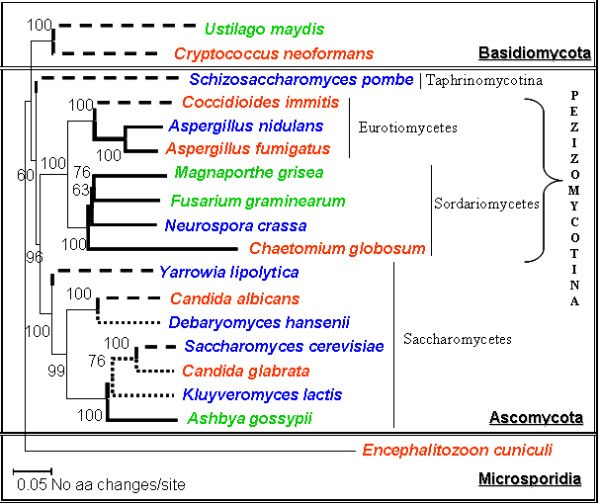
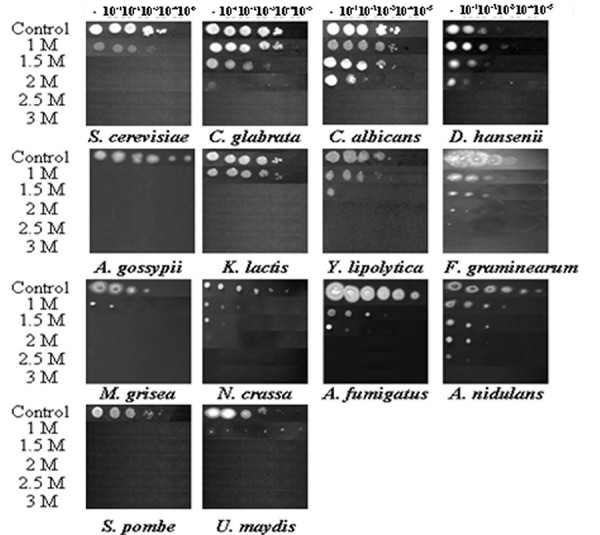
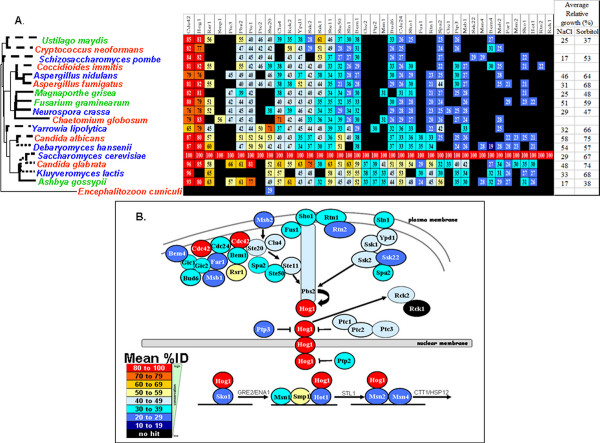
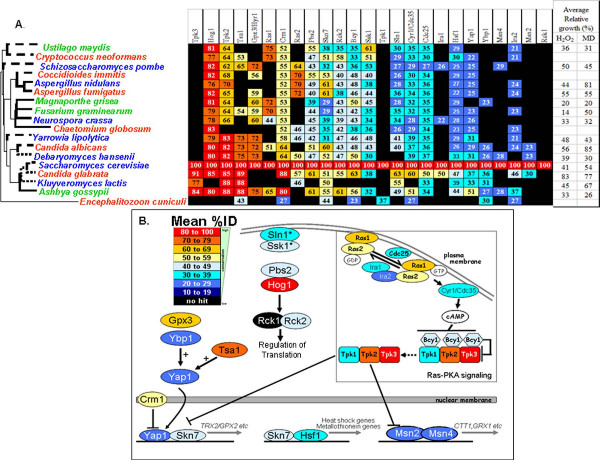
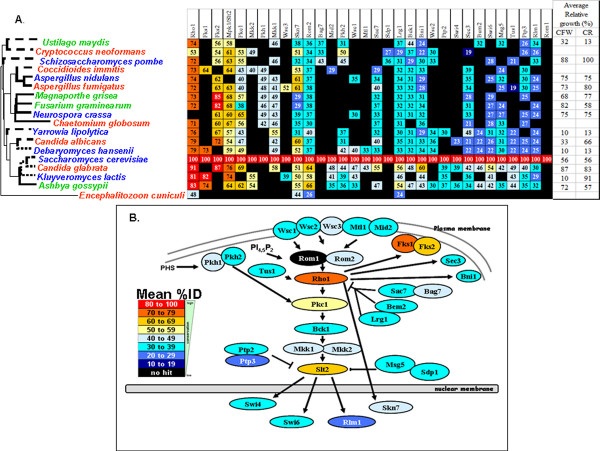
BACKGROUND: Microbes must sense environmental stresses, transduce these signals and mount protective responses to survive in hostile environments. In this study we have tested the hypothesis that fungal stress signalling pathways have evolved rapidly in a niche-specific fashion that is independent of phylogeny. To test this hypothesis we have compared the conservation of stress signalling molecules in diverse fungal species with their stress resistance. These fungi, which include ascomycetes, basidiomycetes and microsporidia, occupy highly divergent niches from saline environments to plant or mammalian hosts. RESULTS: The fungi displayed significant variation in their resistance to osmotic (NaCl and sorbitol), oxidative (H2O2 and menadione) and cell wall stresses (Calcofluor White and Congo Red). There was no strict correlation between fungal phylogeny and stress resistance. Rather, the human pathogens tended to be more resistant to all three types of stress, an exception being the sensitivity of Candida albicans to the cell wall stress, Calcofluor White. In contrast, the plant pathogens were relatively sensitive to oxidative stress. The degree of conservation of osmotic, oxidative and cell wall stress signalling pathways amongst the eighteen fungal species was examined. Putative orthologues of functionally defined signalling components in Saccharomyces cerevisiae were identified by performing reciprocal BLASTP searches, and the percent amino acid identities of these orthologues recorded. This revealed that in general, central components of the osmotic, oxidative and cell wall stress signalling pathways are relatively well conserved, whereas the sensors lying upstream and transcriptional regulators lying downstream of these modules have diverged significantly. There was no obvious correlation between the degree of conservation of stress signalling pathways and the resistance of a particular fungus to the corresponding stress. CONCLUSION: Our data are consistent with the hypothesis that fungal stress signalling components have undergone rapid recent evolution to tune the stress responses in a niche-specific fashion.
Overview
The claims and statistics of this paper haven’t been checked yet.
Run the check — free, no account needed. It reads the open-access text and checks the sources it cites.
Integrity signals
Registry
Cites
Statistics
Figures
Verification
Claims the paper makes
The claims and statistics of this paper haven’t been checked yet.
Run the check — free, no account needed. It reads the open-access text and checks the sources it cites.
Claims other papers make about this one
Each is checked against this paper’s own text: does it say what the citing paper says it does?
In the citing paper
“C. glabrata is highly tolerant to oxidative, cell wall, osmotic and endoplasmic reticulum (ER) stress [79].”
From Candida glabrata: A Lot More Than Meets the Eye (2019) · cites this paper as [79]
In the citing paper
“For example, an experimental E. coli culture could evolve the ability to aerobically utilize citrate [37], or the ability to use the non-natural carbon source 1,2-propanediol [71]; also, a strain deficient in glutathione biosynthesis was able to develop compensatory mutations to restore this function [147].”
From Adaptive laboratory evolution—Principles and applications for biotechnology (2013) · cites this paper as [147]
Self-check
Percentages, sums and reported differences re-computed from the paper’s own numbers.
The self-check needs the paper’s full text.
Citations
Cites
Gapped BLAST and PSI-BLAST: a new generation of protein database search programs
Altschul, S. (1997) · Nucleic Acids Research · doi:10.1093/nar/25.17.3389 · Cited by 73,302
Thompson, J. D., Higgins, D. G., & Gibson, T. J. (1994) · Nucleic Acids Research · doi:10.1093/nar/22.22.4673 · Cited by 64,617
The neighbor-joining method: a new method for reconstructing phylogenetic trees.
Saitou, N., & Nei, M. (1987) · Molecular Biology and Evolution · doi:10.1093/oxfordjournals.molbev.a040454 · Cited by 59,959
MEGA3: Integrated software for Molecular Evolutionary Genetics Analysis and sequence alignment
Kumar, S. (2004) · Briefings in Bioinformatics · doi:10.1093/bib/5.2.150 · Cited by 11,674
Database resources of the National Center for Biotechnology Information: update
Wheeler, D. L. (2003) · Nucleic Acids Research · doi:10.1093/nar/gkh073 · Cited by 10,695
Tree View: An application to display phylogenetic trees on personal computers
Page, R. (1996) · Computer applications in the biosciences · doi:10.1093/bioinformatics/12.4.357 · Cited by 10,223
Sherman, F., Fink, G. R., & Hicks, J. B. (1979) · Cold Spring Harbor Laboratory eBooks · Cited by 7,430
Jacob, H. (1988) · Bioelectrochemistry and Bioenergetics · doi:10.1016/0302-4598(88)80052-7 · Cited by 4,911
Genomic Expression Programs in the Response of Yeast Cells to Environmental Changes
Gasch, A. P., Spellman, P. T., Kao, C. M., Carmel-Harel, O., Eisen, M. B., Storz, G., Botstein, D., & Brown, P. O. (2000) · Molecular Biology of the Cell · doi:10.1091/mbc.11.12.4241 · Cited by 4,815
The COG database: a tool for genome-scale analysis of protein functions and evolution
Tatusov, R. L. (2000) · Nucleic Acids Research · doi:10.1093/nar/28.1.33 · Cited by 4,480
Goffeau, A., Barrell, B. G., Bussey, H., Davis, R. W., Dujon, B., Feldmann, H., Galibert, F., Hoheisel, J. D., Jacq, C., Johnston, M., et al. (1996) · Science · doi:10.1126/science.274.5287.546 · Cited by 4,423
Sherman, F. (1991) · Methods in enzymology on CD-ROM/Methods in enzymology · doi:10.1016/0076-6879(91)94004-v · Cited by 4,078
A genomic perspective on protein families.
Tatusov, R., Koonin, E., & Lipman, D. (1997) · Science · doi:10.1126/science.278.5338.631 · Cited by 3,777
Ainsworth and Bisbys Dictionary of the Fungi
Kirk, P. M., Cannon, P. F., Minter, D. W., & Stalpers, J. A. (2008) · CABI eBooks · doi:10.1079/9780851998268.0000 · Cited by 2,203
Molecular evidence for an ancient duplication of the entire yeast genome
Wolfe, K. H., & Shields, D. C. (1997) · Nature · doi:10.1038/42711 · Cited by 1,785
Osmotic Stress Signaling and Osmoadaptation in Yeasts
Hohmann, S. (2002) · Microbiology and Molecular Biology Reviews · doi:10.1128/mmbr.66.2.300-372.2002 · Cited by 1,773
Comparative Genomics of the Eukaryotes
Rubin, G. M., Yandell, M. D., Wortman, J. R., Gabor, G. L., Miklos, Nelson, C. R., Hariharan, I. K., Fortini, M. E., Li, P. W., Apweiler, R., et al. (2000) · Science · doi:10.1126/science.287.5461.2204 · Cited by 1,698
The genome sequence of the filamentous fungus Neurospora crassa
Galagan, J. E., Calvo, S. E., Borkovich, K. A., Selker, E. U., Read, N. D., Jaffe, D. B., FitzHugh, W., Ma, L., Smirnov, S., Purcell, S., et al. (2003) · Nature · doi:10.1038/nature01554 · Cited by 1,691
The genome sequence of Schizosaccharomyces pombe
Wood, V., Gwilliam, R., Rajandream, M.-A., Lyne, M. H., Lyne, R., Stewart, A., SGOUROS, J. G., Peat, N., Hayles, J., Baker, S. G., et al. (2002) · Nature · doi:10.1038/nature724 · Cited by 1,671
Detecting Protein Function and Protein-Protein Interactions from Genome Sequences
Marcotte, E. M., Pellegrini, M., Ng, H.-L., Rice, D. W., Yeates, T. O., & Eisenberg, D. (1999) · Science · doi:10.1126/science.285.5428.751 · Cited by 1,670
The genome sequence of the rice blast fungus Magnaporthe grisea
Dean, R. A., Talbot, N. J., Ebbole, D. J., FARMAN, M. L., Mitchell, T. K., Orbach, M. J., Thon, M. R., Kulkarni, R. D., Xu, J., Pan, H. H., et al. (2005) · Nature · doi:10.1038/nature03449 · Cited by 1,652
Dujon, B., Sherman, D., Fischer, G., Durrens, P., Casaregola, S., Lafontaine, I., de Montigny, J., Marck, C., Neuvéglise, C., Talla, E., et al. (2004) · Nature · doi:10.1038/nature02579 · Cited by 1,623
Hydrogen peroxide sensing and signaling
Veal, E. A., Day, A. M., & Morgan, B. A. (2007) · Molecular Cell · doi:10.1016/j.molcel.2007.03.016 · Cited by 1,604
Cell Wall Chemistry, Morphogenesis, and Taxonomy of Fungi
Bartnicki-García, S. (1968) · Annual Review of Microbiology · doi:10.1146/annurev.mi.22.100168.000511 · Cited by 1,569
Assigning protein functions by comparative genome analysis: Protein phylogenetic profiles
Pellegrini, M. A., Marcotte, E. M., Thompson, M. J., Eisenberg, D. S., & Yeates, T. O. (1999) · Proceedings of the National Academy of Sciences · doi:10.1073/pnas.96.8.4285 · Cited by 1,568
Genomic sequence of the pathogenic and allergenic filamentous fungus Aspergillus fumigatus
Nierman, W. C., Pain, A., Anderson, M. J., Wortman, J. R., Kim, H. S., Arroyo, J., Berriman, M., Abe, K., Archer, D. B., Bermejo, C., et al. (2005) · Nature · doi:10.1038/nature04332 · Cited by 1,391
Sequencing of Aspergillus nidulans and comparative analysis with A. fumigatus and A. oryzae
Galagan, J. E., Calvo, S. E., Cuomo, C. A., Ma, L., Wortman, J. R., Batzoglou, S., Lee, S., Baştürkmen, M., Spevak, C. C., Clutterbuck, J., et al. (2005) · Nature · doi:10.1038/nature04341 · Cited by 1,359
Automatic clustering of orthologs and in-paralogs from pairwise species comparisons
Remm, M., Storm, C. E. V., & Sonnhammer, E. L. L. (2001) · Journal of Molecular Biology · doi:10.1006/jmbi.2000.5197 · Cited by 1,175
Cell Wall Integrity Signaling in Saccharomyces cerevisiae
Levin, D. E. (2005) · Microbiology and Molecular Biology Reviews · doi:10.1128/mmbr.69.2.262-291.2005 · Cited by 1,136
Dey, J. P., Alexopoulos, C. J., Mims, C. W., & Blackwell, M. (1996) · The Bryologist · doi:10.2307/3244124 · Cited by 1,116
A two-component system that regulates an osmosensing MAP kinase cascade in yeast
Maeda, T., Wurgler‐Murphy, S. M., & Saito, H. (1994) · Nature · doi:10.1038/369242a0 · Cited by 1,072
Genome sequence and gene compaction of the eukaryote parasite Encephalitozoon cuniculi
Katinka, M., Duprat, S., Cornillot, E., Méténier, G., Thomarat, F., Prensier, G., Barbe, V., Peyretaillade, E., Brottier, P., Wincker, P., et al. (2001) · Nature · doi:10.1038/35106579 · Cited by 1,051
Dynamics of cell wall structure in Saccharomyces cerevisiae
Klis, F. M., Mol, P. C., Hellingwerf, K. J., & Brul, S. (2002) · FEMS Microbiology Reviews · doi:10.1111/j.1574-6976.2002.tb00613.x · Cited by 1,007
MAP Kinase Pathways in the Yeast Saccharomyces cerevisiae
Gustin, M. C., Albertyn, J., Alexander, M. R., & Davenport, K. (1998) · Microbiology and Molecular Biology Reviews · doi:10.1128/mmbr.62.4.1264-1300.1998 · Cited by 966
Talbot, N. J., Ebbole, D. J., & Hamer, J. E. (1993) · The Plant Cell · doi:10.1105/tpc.5.11.1575 · Cited by 903
Posas, F., Wurgler‐Murphy, S. M., Maeda, T., Witten, E. A., Thai, T. C., & Saito, H. (1996) · Cell · doi:10.1016/s0092-8674(00)80162-2 · Cited by 881
The diploid genome sequence of Candida albicans
Jones, T., Federspiel, N. A., Chibana, H., Dungan, J. M., Kalman, S., Magee, B. B., Newport, G., Thorstenson, Y. R., Agabian, N. M., Magee, P. T., et al. (2004) · Proceedings of the National Academy of Sciences · doi:10.1073/pnas.0401648101 · Cited by 784
Meiotic and Mitotic Recombination in Aspergillus and Its Chromosomal Aberrations
Käfer, E. (1977) · Advances in genetics · doi:10.1016/s0065-2660(08)60245-x · Cited by 740
Inparanoid: a comprehensive database of eukaryotic orthologs
O'Brien, K. P. (2004) · Nucleic Acids Research · doi:10.1093/nar/gki107 · Cited by 731
Transcriptional Response of Candida albicans upon Internalization by Macrophages
Lorenz, M. C., Bender, J. A., & Fink, G. R. (2004) · Eukaryotic Cell · doi:10.1128/ec.3.5.1076-1087.2004 · Cited by 712
The Genome of the Basidiomycetous Yeast and Human Pathogen Cryptococcus neoformans
Loftus, B., Fung, E., Roncaglia, P., Rowley, D., Amedeo, P., Bruno, D., Vamathevan, J. J., Miranda, M., Anderson, I., Fraser, J. A., et al. (2005) · Science · doi:10.1126/science.1103773 · Cited by 694
Thevelein, J. M., & WINDE, J. H. D. (1999) · Molecular Microbiology · doi:10.1046/j.1365-2958.1999.01538.x · Cited by 682
The Ashbya gossypii Genome as a Tool for Mapping the Ancient Saccharomyces cerevisiae Genome
Dietrich, F. S., Voegeli, S., Brachat, S., Lerch, A., Gates, K., Steiner, S., Mohr, C., Pöhlmann, R., Luedi, P. P., Choi, S., et al. (2004) · Science · doi:10.1126/science.1095781 · Cited by 633
“Sleeping Beauty”: Quiescence in Saccharomyces cerevisiae
Gray, J. V., Petsko, G. A., Johnston, G. C., Ringe, D., Singer, R. A., & Werner‐Washburne, M. (2004) · Microbiology and Molecular Biology Reviews · doi:10.1128/mmbr.68.2.187-206.2004 · Cited by 573
Isolation and sequence of the gene for actin in Saccharomyces cerevisiae.
Ng, R., & Abelson, J. N. (1980) · Proceedings of the National Academy of Sciences · doi:10.1073/pnas.77.7.3912 · Cited by 568
Osmotic Activation of the HOG MAPK Pathway via Ste11p MAPKKK: Scaffold Role of Pbs2p MAPKK
Posas, F., & Saito, H. (1997) · Science · doi:10.1126/science.276.5319.1702 · Cited by 565
Essential Genes Are More Evolutionarily Conserved Than Are Nonessential Genes in BacteriaPreprint
Jordan, I. K., Rogozin, I. B., Wolf, Y. I., & Koonin, E. V. (2002) · Genome Research · doi:10.1101/gr.87702 · Cited by 546
Ainsworth and Bisby's Dictionary of the Fungi
Halling, R. E., Hawksworth, D. L., Kirk, P. M., Sutton, B. C., & Pegler, D. N. (1997) · Mycologia · doi:10.2307/3761142 · Cited by 537
A fungal phylogeny based on 42 complete genomes derived from supertree and combined gene analysis.
(2006) · BMC Evolutionary Biology · doi:10.1186/1471-2148-6-99 · Cited by 475
Nirenberg, H. I. (1976) · Federal Research Centre for Cultivated Plants (Julius Kühn-Institut) · doi:10.5073/20210624-085725 · Cited by 461
Fradin, C., De Groot, P., MacCallum, D., Schaller, M., Klis, F., Odds, F. C., & Hube, B. (2005) · Molecular Microbiology · doi:10.1111/j.1365-2958.2005.04557.x · Cited by 455
Thorpe, G. W., Fong, C. S., Alic, N., Higgins, V. J., & Dawes, I. W. (2004) · Proceedings of the National Academy of Sciences · doi:10.1073/pnas.0305888101 · Cited by 450
DNA sequence and characterization of the S. cerevisiae gene encoding adenylate cyclase
Kataoka, T., Broek, D., & Wigler, M. H. (1985) · Cell · doi:10.1016/0092-8674(85)90179-5 · Cited by 425
Protein dispensability and rate of evolution
Hirsh, A. E., & Fraser, H. B. (2001) · Nature · doi:10.1038/35082561 · Cited by 413
Database resources of the National Center for Biotechnology Information
Wheeler, D. L. (2004) · Nucleic Acids Research · doi:10.1093/nar/gki062 · Cited by 409
Fungal Cell Wall: Structure, Synthesis, and Assembly
Ruiz-Herrera, J. (1991) · Cited by 387
The structure of a β-(1→3)-d-glucan from yeast cell walls
Manners, D. J., Masson, A. J., & Patterson, J. C. (1973) · Biochemical Journal · doi:10.1042/bj1350019 · Cited by 384
Enjalbert, B., Smith, D. A., Cornell, M. J., Alam, I., Nicholls, S., Brown, A. J. P., & Quinn, J. (2006) · Molecular Biology of the Cell · doi:10.1091/mbc.e05-06-0501 · Cited by 381
Self-citationRoncero, C., & Durán, A. (1985) · Journal of Bacteriology · doi:10.1128/jb.163.3.1180-1185.1985 · Cited by 379
A Yeast Mitogen-Activated Protein Kinase Homolog (Mpk1p) Mediates Signalling by Protein Kinase C
Lee, K. S., Irie, K., Gotoh, Y., Watanabe, Y., Araki, H., Nishida, E., Matsumoto, K., & Levin, D. E. (1993) · Molecular and Cellular Biology · doi:10.1128/mcb.13.5.3067 · Cited by 377
Neurospora: Contributions of a Model Organism
Davis, R. H. (2000) · Cited by 357
Salt Tolerance in Plants and Microorganisms: Toxicity Targets and Defense Responses
Serrano, R. (1996) · International review of cytology · doi:10.1016/s0074-7696(08)62219-6 · Cited by 353
Yeast YAP1 encodes a novel form of the jun family of transcriptional activator proteins.Preprint
Moye-Rowley, S., Harshman, K., & Parker, C. S. (1989) · Genes & Development · doi:10.1101/gad.3.3.283 · Cited by 333
Irie, K., Takase, M., Lee, K. S., Levin, D. E., Araki, H., Matsumoto, K., & Oshima, Y. (1993) · Molecular and Cellular Biology · doi:10.1128/mcb.13.5.3076-3083.1993 · Cited by 316
Alonso-Monge, R., Navarro-García, F., Román, E., Negredo, A. I., Eisman, B., Nombela, C., & Pla, J. (2003) · Eukaryotic Cell · doi:10.1128/ec.2.2.351-361.2003 · Cited by 308
Ram, A. F. J., Wolters, A., ten Hoopen, R., & Klis, F. M. (1994) · Yeast · doi:10.1002/yea.320100804 · Cited by 300
Hwang, C., Rhie, G., Oh, J., Huh, W., Yim, H., & Kang, S.-O. (2002) · Microbiology · doi:10.1099/00221287-148-11-3705 · Cited by 293
Martchenko, M., Alarco, A.-M., Harcus, D., & Whiteway, M. (2004) · Molecular Biology of the Cell · doi:10.1091/mbc.e03-03-0179 · Cited by 290
Wall, D. P., Fraser, H. B., & Hirsh, A. E. (2003) · Bioinformatics · doi:10.1093/bioinformatics/btg213 · Cited by 289
The Impact of Comparative Genomics on Our Understanding of Evolution
Koonin, E. V., Aravind, L., & Kondrashov, A. S. (2000) · Cell · doi:10.1016/s0092-8674(00)80867-3 · Cited by 282
Positive regulation in the general amino acid control of Saccharomyces cerevisiae.
Hinnebusch, A. G., & Fink, G. R. (1983) · Proceedings of the National Academy of Sciences · doi:10.1073/pnas.80.17.5374 · Cited by 279
A yeast by any other name: Candida glabrata and its interaction with the host
Kaur, R., Domergue, R., Zupancic, M. L., & Cormack, B. P. (2005) · Current Opinion in Microbiology · doi:10.1016/j.mib.2005.06.012 · Cited by 271
de Nobel, H., Ruiz, C., Martı́n, H., Morris, W. L., Brul, S., Molina, M., & Klis, F. M. (2000) · Microbiology · doi:10.1099/00221287-146-9-2121 · Cited by 269
Yeast signaling pathways in the oxidative stress response
Ikner, A., & Shiozaki, K. (2004) · Mutation research. Fundamental and molecular mechanisms of mutagenesis · doi:10.1016/j.mrfmmm.2004.09.006 · Cited by 267
CELL POLARITY AND MORPHOGENESIS IN BUDDING YEAST
Madden, K. T., & Snyder, M. P. (1998) · Annual Review of Microbiology · doi:10.1146/annurev.micro.52.1.687 · Cited by 266
Functional genomic analysis of the rates of protein evolution
Wall, D. P., Hirsh, A. E., Fraser, H. B., Kumm, J., Giaever, G. N., Eisen, M. B., & Feldman, M. W. (2005) · Proceedings of the National Academy of Sciences · doi:10.1073/pnas.0501761102 · Cited by 265
Smith, D. A., Nicholls, S., Morgan, B. A., Brown, A. J. P., & Quinn, J. (2004) · Molecular Biology of the Cell · doi:10.1091/mbc.e04-03-0181 · Cited by 263
Self-citationThe S. cerevisiae structural gene for chitin synthase is not required for chitin synthesis in vivo
Bulawa, C., Slater, M. L., Cabib, E., Au-Young, J. K., Sburlati, A. R., Adair, W. L., & Robbins, P. W. (1986) · Cell · doi:10.1016/0092-8674(86)90738-5 · Cited by 261
Do essential genes evolve slowly?
Hurst, L. D., & Smith, N. G. C. (1999) · Current Biology · doi:10.1016/s0960-9822(99)80334-0 · Cited by 259
Alarco, A., & Raymond, M. (1999) · Journal of Bacteriology · doi:10.1128/jb.181.3.700-708.1999 · Cited by 244
Yamochi, W., Tanaka, K., Nonaka, H., Maeda, A., Musha, T., & Takai, Y. (1994) · The Journal of Cell Biology · doi:10.1083/jcb.125.5.1077 · Cited by 242
Oxidative stress and living cells
Gille, G., & Sigler, K. (1995) · Folia Microbiologica · doi:10.1007/bf02815413 · Cited by 241
Saccharomyces cerevisiae has distinct adaptive responses to both hydrogen peroxide and menadione
Jamieson, D. J. (1992) · Journal of Bacteriology · doi:10.1128/jb.174.20.6678-6681.1992 · Cited by 235
Yeast osmosensor Sln1 and plant cytokinin receptor Cre1 respond to changes in turgor pressure
Reiser, V., Raitt, D. C., & Saito, H. (2003) · The Journal of Cell Biology · doi:10.1083/jcb.200301099 · Cited by 234
Elorza, M. V., Rico, H., & Sentandreu, R. (1983) · Microbiology · doi:10.1099/00221287-129-5-1577 · Cited by 225
Rubin-Bejerano, I., Fraser, I., Grisafi, P., & Fink, G. R. (2003) · Proceedings of the National Academy of Sciences · doi:10.1073/pnas.1834481100 · Cited by 223
Comparative genomics of the environmental stress response in ascomycete fungi
Gasch, A. P. (2007) · Yeast · doi:10.1002/yea.1512 · Cited by 210
Ozaki, K., Tanaka, K., Imamura, H., Hihara, T., Kameyama, T., Nonaka, H., Hirano, H., Matsuura, Y., & Takai, Y. (1996) · The EMBO Journal · doi:10.1002/j.1460-2075.1996.tb00573.x · Cited by 209
Quinn, J., Findlay, V. J., Dawson, K., Millar, J. B. A., Jones, N., Morgan, B. A., & Toone, W. M. (2002) · Molecular Biology of the Cell · doi:10.1091/mbc.01-06-0288 · Cited by 209
Self-citationMultiple Pathways Differentially Regulate Global Oxidative Stress Responses in Fission Yeast
Chen, D., Wilkinson, C. R. M., Watt, S. B., Penkett, C. J., Toone, W. M., Jones, N., & Bähler, J. (2007) · Molecular Biology of the Cell · doi:10.1091/mbc.e07-08-0735 · Cited by 209
Characterization and Gene Cloning of 1,3-beta-D-Glucan Synthase from Saccharomyces Cerevisiae
Inoue, S., Takewakt, N., Takasuka, T., Mio, T., Adachi, M., Fujii, Y., Miyamoto, C., Arisawa, M., Furuichi, Y., & Watanabe, T. (1995) · European Journal of Biochemistry · doi:10.1111/j.1432-1033.1995.0845d.x · Cited by 201
Cloning and Sequencing of a Candida albicans Catalase Gene and Effects of Disruption of This Gene
Wysong, D. R., Christin, L., Sugar, A. M., Robbins, P. W., & Diamond, R. D. (1998) · Infection and Immunity · doi:10.1128/iai.66.5.1953-1961.1998 · Cited by 201
Saccharomyces cerevisiae Expresses Three Phospholipid Hydroperoxide Glutathione Peroxidases
Avery, A. M., & Avery, S. V. (2001) · Journal of Biological Chemistry · doi:10.1074/jbc.m105672200 · Cited by 197
Mid2 Is a Putative Sensor for Cell Integrity Signaling in Saccharomyces cerevisiae
Rajavel, M., Philip, B., Buehrer, B. M., Errede, B., & Levin, D. E. (1999) · Molecular and Cellular Biology · doi:10.1128/mcb.19.6.3969 · Cited by 194
Cuéllar-Cruz, M., Briones-Martin-del-Campo, M., Cañas-Villamar, I., Montalvo-Arredondo, J., Riego-Ruiz, L., Castaño, I., & De Las Peñas, A. (2008) · Eukaryotic Cell · doi:10.1128/ec.00011-08 · Cited by 190
Lutfiyya, L. L., Iyer, V. R., DeRisi, J. L., DeVit, M. J., Brown, P. O., & Johnston, M. (1998) · Genetics · doi:10.1093/genetics/150.4.1377 · Cited by 181
A simple dependence between protein evolution rate and the number of protein-protein interactions
Fraser, H. B., Wall, D. P., & Hirsh, A. E. (2003) · BMC Evolutionary Biology · doi:10.1186/1471-2148-3-11 · Cited by 171
Moye-Rowley, S. (2003) · Eukaryotic Cell · doi:10.1128/ec.2.3.381-389.2003 · Cited by 164
Studies on marine occurring yeasts: Growth related to pH, NaCl concentration and temperature
Norkrans, B. (1966) · Archives of Microbiology · doi:10.1007/bf00406719 · Cited by 162
Kopecká, M., & Gabriel, M. (1992) · Archives of Microbiology · doi:10.1007/bf00245214 · Cited by 159
Chauhan, N., Inglis, D., Roman, E., Pla, J., Li, D., Calera, J. A., & Calderone, R. (2003) · Eukaryotic Cell · doi:10.1128/ec.2.5.1018-1024.2003 · Cited by 159
ThechsDandchsEGenes ofAspergillus nidulansand Their Roles in Chitin Synthesis
Specht, C. A., Liu, Y., Robbins, P. W., Bulawa, C., Iarchouk, N., Winter, K. R., Riggle, P. J., Rhodes, J. C., Dodge, C. L., Culp, D. W., et al. (1996) · Fungal Genetics and Biology · doi:10.1006/fgbi.1996.0030 · Cited by 155
Liu, X., & Thiele, D. J. (1996) · Genes & Development · doi:10.1101/gad.10.5.592 · Cited by 154
Isolation and characterization of Saccharomyces cerevisiae mutants resistant to Calcofluor white
Roncero, C., Valdivieso, M. ‐., Ribas, J. C., & Durán, A. (1988) · Journal of Bacteriology · doi:10.1128/jb.170.4.1950-1954.1988 · Cited by 153
Schirmaier, F., & Philippsen, P. (1984) · The EMBO Journal · doi:10.1002/j.1460-2075.1984.tb02295.x · Cited by 150
A role for the Pkc1p/Mpk1p kinase cascade in the morphogenesis checkpoint
Harrison, J. C., Bardes, E. S. G., Ohya, Y., & Lew, D. J. (2001) · Nature Cell Biology · doi:10.1038/35070104 · Cited by 145
Kang, M. S., Elango, N., Mattia, E. D., Au-Young, J. K., Robbins, P. W., & Cabib, E. (1984) · Journal of Biological Chemistry · doi:10.1016/s0021-9258(17)42698-6 · Cited by 143
Ōnishi, H. (1963) · Advances in food research · doi:10.1016/s0065-2628(08)60006-3 · Cited by 142
Nicholls, S., Straffon, M. J., Enjalbert, B., Nantel, A., Macaskill, S., Whiteway, M. S., & Brown, A. J. P. (2004) · Eukaryotic Cell · doi:10.1128/ec.3.5.1111-1123.2004 · Cited by 140
Self-citationAP-1 transcription factors in yeast
Toone, W. M., & Jones, N. (1999) · Current Opinion in Genetics & Development · doi:10.1016/s0959-437x(99)80008-2 · Cited by 135
Lodder, A., Lee, T. K., & Ballester, R. (1999) · Genetics · doi:10.1093/genetics/152.4.1487 · Cited by 135
The Wall Structure of Schizosaccharomyces pombe
Bush, D. A., Horisberger, M., Horman, I., & Würsch, P. (2000) · Microbiology · doi:10.1099/00221287-81-1-199 · Cited by 134
Niche-Specific Activation of the Oxidative Stress Response by the Pathogenic Fungus Candida albicans
Enjalbert, B., MacCallum, D. M., Odds, F. C., & Brown, A. J. P. (2007) · Infection and Immunity · doi:10.1128/iai.01680-06 · Cited by 134
Self-citationCharacterization and Gene Cloning of 1,3-beta-D-Glucan Synthase from Saccharomyces Cerevisiae
Inoue, S., Takewakt, N., Takasuka, T., et al. (1995) · European Journal of Biochemistry · doi:10.1111/j.1432-1033.1995.tb20770.x · Cited by 134
Interactions of fungi with phagocytes
Mansour, M. K., & Levitz, S. M. (2002) · Current Opinion in Microbiology · doi:10.1016/s1369-5274(02)00342-9 · Cited by 132
Ram, A. F. J., Brekelmans, S. S. C., Oehlen, L. J. W. M., & Klis, F. M. (1995) · FEBS Letters · doi:10.1016/0014-5793(94)01418-z · Cited by 132
A Yeast Mitogen-Activated Protein Kinase Homolog (Mpk1p) Mediates Signalling by Protein Kinase C
Lee, K. S., Irie, K., Gotoh, Y., et al. (1993) · Molecular and Cellular Biology · doi:10.1128/mcb.13.5.3067-3075.1993 · Cited by 127
Urban, M., Daniels, S., Mott, E., & Hammond-Kosack, K. E. (2002) · The Plant Journal · doi:10.1046/j.1365-313x.2002.01480.x · Cited by 126
Analysis of the adaptive oxidative stress response ofCandida albicans
Jamieson, D. J., Stephen, D. W. S., & ̈re, E. C. T. (1996) · FEMS Microbiology Letters · doi:10.1111/j.1574-6968.1996.tb08139.x · Cited by 125
Norkrans, B., & Kylin, A. (1969) · Journal of Bacteriology · doi:10.1128/jb.100.2.836-845.1969 · Cited by 121
A Single MAPKKK Regulates the Hog1 MAPK Pathway in the Pathogenic Fungus Candida albicans
Cheetham, J., Smith, D. A., Dantas, A. D. S., Doris, K. S., Patterson, M. J., Bruce, C. R., & Quinn, J. (2007) · Molecular Biology of the Cell · doi:10.1091/mbc.e07-06-0581 · Cited by 120
Self-citationNovel insights into the osmotic stress response of yeast
Mager, W. H., & Siderius, M. H. (2002) · FEMS Yeast Research · doi:10.1016/s1567-1356(02)00116-2 · Cited by 118
Isolation of the gene encoding adenylate cyclase in Saccharomyces cerevisiae.
Casperson, G. F., Walker, N., & Bourne, H. R. (1985) · Proceedings of the National Academy of Sciences · doi:10.1073/pnas.82.15.5060 · Cited by 108
Moradas‐Ferreira, P., & Costa, V. (2000) · Redox Report · doi:10.1179/135100000101535816 · Cited by 105
Candida: Comparative and Functional Genomics
D'Enfert, C., & Hube, B. (2007) · Estudis Romànics (Institut d'Estudis Catalans) · Cited by 102
7 Cell Cycle Control in Saccharomyces cerevisiaePreprint
Lew, D. J., Weinert, T. A., & Pringle, J. R. (1997) · Cold Spring Harbor Monograph Archive · doi:10.1101/087969364.21c.607 · Cited by 100
Párraga, P. G., Hernández, J. A., & Argüelles, J. C. (2003) · Yeast · doi:10.1002/yea.1029 · Cited by 99
On the mechanism of salt tolerance
Gustafsson, L., & Norkrans, B. (1976) · Archives of Microbiology · doi:10.1007/bf00690226 · Cited by 98
Zhao, W., Panepinto, J. C., Fortwendel, J. R., Fox, L., Oliver, B. G. G., Askew, D. S., & Rhodes, J. C. (2006) · Infection and Immunity · doi:10.1128/iai.00565-06 · Cited by 97
The dependence of the conformation of a (1→3)-β-D-glucan on chain-length in alkaline solution
Ogawa, K., Tsurugi, J., & Watanabe, T. (1973) · Carbohydrate Research · doi:10.1016/s0008-6215(00)83025-6 · Cited by 91
A Comparative Genomics Approach to the Evolution of Eukaryotes and their Mitochondria1
Lang, B. F., Seif, E., Gray, M. W., O’Kelly, C. J., & Burger, G. (1999) · Journal of Eukaryotic Microbiology · doi:10.1111/j.1550-7408.1999.tb04611.x · Cited by 86
Characterization of Aspergillus nidulans mutants deficient in cell wall chitin or glucan
Borgia, P. T., & Dodge, C. L. (1992) · Journal of Bacteriology · doi:10.1128/jb.174.2.377-383.1992 · Cited by 86
Vicentefranqueira, R., Moreno, M. A., Leal, F., & Calera, J. A. (2005) · Eukaryotic Cell · doi:10.1128/ec.4.5.837-848.2005 · Cited by 80
Comparative genomics of the HOG-signalling system in fungi
Krantz, M., Becit, E., & Hohmann, S. (2006) · Current Genetics · doi:10.1007/s00294-005-0038-x · Cited by 78
Altmann-Jöhl, R., & Philippsen, P. (1996) · Molecular and General Genetics MGG · doi:10.1007/bf02191826 · Cited by 76
Ashby, S. F., & Nowell, W. (1926) · Annals of Botany · doi:10.1093/oxfordjournals.aob.a090018 · Cited by 76
Aspergillus nidulans is frequently resistant to amphotericin B
Kontoyiannis, D. P., Lewis, R. E., May, G. S., Osherov, N., & Rinaldi, M. G. (2002) · Mycoses · doi:10.1046/j.1439-0507.2002.00797.x · Cited by 75
Assessment of phylogenomic and orthology approaches for phylogenetic inference
Dutilh, B. E., van Noort, V., van der Heijden, R. T. J. M., Boekhout, T., Snel, ., & Huynen, M. A. (2007) · Bioinformatics · doi:10.1093/bioinformatics/btm015 · Cited by 74
The occurrence of glucosaminoglycan in the wall of Schizosaccharomyces pombe
Sietsma, J. H., & Wessels, J. G. H. (1990) · Journal of General Microbiology · doi:10.1099/00221287-136-11-2261 · Cited by 71
Circular dichroism of the complex of a (1→3)-β-d-glucan with Congo Red
Ogawa, K., & Hatano, M. (1978) · Carbohydrate Research · doi:10.1016/s0008-6215(00)84144-0 · Cited by 69
Virag, A., & Harris, S. D. (2006) · Eukaryotic Cell · doi:10.1128/ec.00036-06 · Cited by 67
Hitzeman, R. A., Clarke, L., & Carbon, J. A. (1980) · Journal of Biological Chemistry · doi:10.1016/s0021-9258(19)70246-4 · Cited by 62
Sewell, A. K., Yokoya, F., Yu, W., Miyagawa, T., Murayama, T., & Winge, D. R. (1995) · Journal of Biological Chemistry · doi:10.1074/jbc.270.42.25079 · Cited by 61
Imai, K., Noda, Y., Adachi, H., & Yoda, K. (2004) · Journal of Biological Chemistry · doi:10.1074/jbc.m409428200 · Cited by 56
Gams, B. W., & Nirenberg, H. I. (1977) · Mycologia · doi:10.2307/3758963 · Cited by 49
Localization of ?-galactomannan and of wheat germ agglutinin receptors inSchizosaccharomyces pombe
Horisberger, M., Vonlanthen, M., & Rosset, J. (1978) · Archives of Microbiology · doi:10.1007/bf00964260 · Cited by 48
Valdes‐Hevia, M. D., de la Guerra, R., & Gancedo, C. (1989) · FEBS Letters · doi:10.1016/0014-5793(89)81682-5 · Cited by 47
Park, E. Y., Zhang, J. H., Tajima, S., & Dwiarti, L. (2007) · Journal of Applied Microbiology · doi:10.1111/j.1365-2672.2006.03264.x · Cited by 42
Control of MAP kinase signaling specificity or how not to go HOG wild: Figure 1.Preprint
Sprague, G. F. (1998) · Genes & Development · doi:10.1101/gad.12.18.2817 · Cited by 42
The accumulation of polyols by the yeast Debaryomyces hansenii in response to water stress
Nobre, M. F., & da Costa, M. S. (1985) · Canadian Journal of Microbiology · doi:10.1139/m85-200 · Cited by 40
Hirasawa, T., Ashitani, K., Yoshikawa, K., Nagahisa, K., Furusawa, C., Katakura, Y., Shimizu, H., & Shioya, S. (2006) · Journal of Bioscience and Bioengineering · doi:10.1263/jbb.102.568 · Cited by 39
Kunz, J., Loeschman, A., Deuter‐Reinhard, M., & Hall, M. N. (2000) · Molecular Microbiology · doi:10.1046/j.1365-2958.2000.02105.x · Cited by 21
Mutoh, N., Kawabata, M., & Kitajima, S. (2005) · The Journal of Biochemistry · doi:10.1093/jb/mvi179 · Cited by 21
Walther, A., & Wendland, J. (2005) · Current Genetics · doi:10.1007/s00294-005-0017-2 · Cited by 12
Gene homology resources on the World Wide Web
Turchin, A., & Kohane, I. S. (2002) · Physiological Genomics · doi:10.1152/physiolgenomics.00112.2002 · Cited by 11
Lipofectin increases the efficiency of DNA-mediated transformation of Neurospora crassa
Selitrennikoff, C. P., & Sachs, M. S. (1991) · Fungal Genetics Reports · doi:10.4148/1941-4765.1464 · Cited by 9
Stress responses in Candida albicans.
Quinn, J., Brown, A. J. P., d’Enfert, C., & Hube, B. (2007) · Cited by 5
Self-citationBiochemistry, cell biology and molecular biology of lipids ofSaccharomyces cerevisiae
Daum, G., Lees, N. D., Bard, M., & Dickson, R. (1998) · Yeast · doi:10.1002/(sici)1097-0061(199812)14:16
Research works printed but not linked: 5
- Selitrennikoff CP: Calcofluor white inhibits Neurospora chitin synthetase activity [bleaching agent for fabrics]. Plant Physiol Bioch. 1984, 8 (3): 269-272.
- Fleet GH: Cell walls. The Yeasts. Edited by: Rose AH, Harrison JS. 1991, New York: Academic Press, 199-277.
- Vogel HJ: Vogel, A convenient medium for Neurospora (medium N). Microb Genet Bull. 1956, 13: 42-43.
- Selitrennikoff C, Sachs MS: Lipofectin increases transformation of Neurospora crassa. Fungal Genet Newsl. 1991, 38: 90-91.
- Perkins DD: How to convert wild-type spreading growth to colonial. 2006, [http://www.fgsc.net/Neurospora/NeurosporaProtocolGuide.htm]
Cited by
Sorted by citations
Adaptive laboratory evolution—Principles and applications for biotechnology
Dragosits, M., & Mattanovich, D. (2013) · Microbial Cell Factories · doi:10.1186/1475-2859-12-64 · Cited by 827
Reactive Oxygen Species in Phytopathogenic Fungi: Signaling, Development, and Disease
Heller, J., & Tudzynski, P. (2011) · Annual Review of Phytopathology · doi:10.1146/annurev-phyto-072910-095355 · Cited by 558
d’Enfert, C., Kaune, A.-K., Alaban, L. R., Chakraborty, S., Cole, N. L., Delavy, M., Kosmala, D., Marsaux, B., Fróis-Martins, R., Morelli, M., et al. (2020) · FEMS Microbiology Reviews · doi:10.1093/femsre/fuaa060 · Cited by 377
Self-citationMechanisms of ethanol tolerance in Saccharomyces cerevisiae
Ma, M., & Liu, Z. L. (2010) · Applied Microbiology and Biotechnology · doi:10.1007/s00253-010-2594-3 · Cited by 309
Stress adaptation in a pathogenic fungus
Brown, A. J. P., Budge, S., Kaloriti, D., Tillmann, A., Jacobsen, M. D., Yin, Z., Ene, I. V., Bohovych, I., Sandai, D., Kastora, S., et al. (2014) · Journal of Experimental Biology · doi:10.1242/jeb.088930 · Cited by 299
Self-citation
Metadata
- Authors
- Nikolaou, E., Agrafioti, I., Stumpf, M., Quinn, J., Stansfield, I., & Brown, A. J.
- Affiliations
- University of Aberdeen (GB)
- Imperial College London (GB)
- Newcastle University (GB)
- Corresponding author
- Brown, Alistair JP
- Venue
- BMC Evolutionary Biology
- Published
- 2009-02-21
- Volume
- 9
- Issue
- 1
- Pages
- 44-44
- ISSN
- 1471-2148 (ISSN-L)
- PMC
- PMC2666651
- OpenAlex
- W1985831723
- Cited by
- 206
- References
- 159
- Citations by year
- 2026: 12 · 2025: 13 · 2024: 7 · 2023: 9 · 2022: 9 · 2021: 7 · 2020: 14 · 2019: 13 · 2018: 8 · 2017: 13 · 2016: 15 · 2015: 17 · 2014: 18 · 2013: 16 · 2012: 13
- FWCI
- 4.69
- Type
- journal article
- Language
- en
- Open access
- gold
- doi.org
- Licence
- cc-by
- Locations
- BMC Evolutionary Biology (publishedVersion, cc-by)
- PubMed Central (publishedVersion, cc-by)
- PubMed (publishedVersion)
- Aberdeen University Research Archive (Aberdeen University) (submittedVersion)
- Minerva Access (University of Melbourne) (submittedVersion, cc-by)
- DOAJ (DOAJ: Directory of Open Access Journals) (submittedVersion, cc-by-sa)
- Newcastle University ePrints (Newcastle Univesity)
- Funders
- Wellcome Trust (080088)
- University of Exeter
- Imperial College London
- University of Aberdeen
- Biotechnology and Biological Sciences Research Council (BB/D009308/1, BB/C510391/1, BB/F00513X/1, BB/F013566/1)
- Topics
- Life Sciences › Biochemistry, Genetics and Molecular Biology › Molecular Biology › Fungal and yeast genetics research
- Life Sciences › Biochemistry, Genetics and Molecular Biology › Genetics › Bacterial Genetics and Biotechnology
- Health Sciences › Medicine › Infectious Diseases › Antifungal resistance and susceptibility
- Keywords
- stress tolerance, osmotic stress, oxidative stress, cell wall stress, phylogenetic conservation, orthologs, human fungal pathogens, plant pathogenic fungi, Candida albicans, Ascomycota, Basidiomycota, microsporidia, signal transduction
- MeSH terms
- Benzenesulfonates, Candida albicans, Cell Wall, Congo Red, DNA, Fungal, Fungal Proteins, Hydrogen Peroxide, Osmotic Pressure, Phylogeny, Saccharomyces cerevisiae, Sodium Chloride, Sorbitol, Signal Transduction, Gene Expression Regulation, Fungal, Genome, Fungal, Oxidative Stress, Evolution, Molecular, Vitamin K 3
About these checks
Registry, retraction, Cites and statistics results are computed, not judged, with one exception: a printed reference that no index lists is read once by a model before it counts as a citation error. Claims are extracted by a model and kept only when their quote appears verbatim in the text; each cited source is then checked, with a model’s help, for whether it says what the claim relies on. Those verdicts can be wrong — read the claim’s quote and the cited source before relying on one.
Statistics and arithmetic are recomputed, not judged.
Confidence bands are shown only for fields calibrated on our annotated test set. None is calibrated yet, so no band is shown.
What counts as a claim ›How we measure confidence ›How we check this ›
Are you an author, or do you see a problem with this page? Request a review
