

MirSNP, a database of polymorphisms altering miRNA target sites, identifies miRNA-related SNPs in GWAS SNPs and eQTLs
Open accessThe DOI matches its Crossref record; 42 of the 43 references it cites were found in a registry or an index.
Abstract
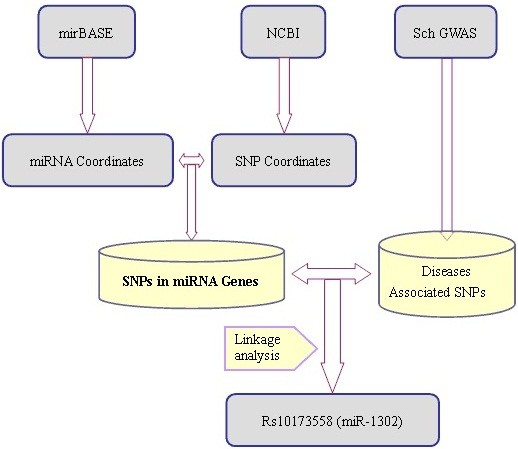
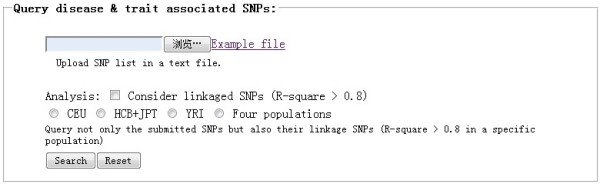
Background: Numerous single nucleotide polymorphisms (SNPs) associated with complex diseases have been identified by genome-wide association studies (GWAS) and expression quantitative trait loci (eQTLs) studies. However, few of these SNPs have explicit biological functions. Recent studies indicated that the SNPs within the 3’UTR regions of susceptibility genes could affect complex traits/diseases by affecting the function of miRNAs. These 3’UTR SNPs are functional candidates and therefore of interest to GWAS and eQTL researchers. Description: We developed a publicly available online database, MirSNP (http://cmbi.bjmu.edu.cn/mirsnp), which is a collection of human SNPs in predicted miRNA-mRNA binding sites. We identified 414,510 SNPs that might affect miRNA-mRNA binding. Annotations were added to these SNPs to predict whether a SNP within the target site would decrease/break or enhance/create an miRNA-mRNA binding site. By applying MirSNP database to three brain eQTL data sets, we identified four unreported SNPs (rs3087822, rs13042, rs1058381, and rs1058398), which might affect miRNA binding and thus affect the expression of their host genes in the brain. We also applied the MirSNP database to our GWAS for schizophrenia: seven predicted miRNA-related SNPs (p < 0.0001) were found in the schizophrenia GWAS. Our findings identified the possible functions of these SNP loci, and provide the basis for subsequent functional research. Conclusion: MirSNP could identify the putative miRNA-related SNPs from GWAS and eQTLs researches and provide the direction for subsequent functional researches.
Overview
The claims and statistics of this paper haven’t been checked yet.
Free: it reads the open-access text and checks the first 5 claims that cite a source we can check. Create a free account to check every claim.
Integrity signals
Registry
Cites
Statistics
Figures
Verification
Claims the paper makes
The claims and statistics of this paper haven’t been checked yet.
Free: it reads the open-access text and checks the first 5 claims that cite a source we can check. Create a free account to check every claim.
Claims other papers make about this one
Each is checked against this paper’s own text: does it say what the citing paper says it does?
In the citing paper
“For example, genetic variation can directly impact the specific sites at which DNA methylation can occur, 31 and may also impact the efficacy of sequence-dependent actions of ncRNAs.32”
From The role of epigenetics in psychological resilience (2021) · cites this paper as [32]
Self-check
Percentages, sums and reported differences re-computed from the paper’s own numbers.
The self-check needs the paper’s full text.
Citations
Cites
Bartel (2004) · doi:10.1016/s0092-8674(04)00045-5 · Cited by 34,714
PLINK: a tool set for whole-genome association and population-based linkage analyses.
Purcell, S., Neale, B., Todd-Brown, K., Thomas, L., Ferreira, M. A. R., Bender, D., Maller, J., Sklar, P., de Bakker, P. I. W., Daly, M. J., et al. (2007) · The American Journal of Human Genetics · doi:10.1086/519795 · Cited by 34,089
MicroRNAs: Target Recognition and Regulatory Functions
Bartel, D. P. (2009) · Cell · doi:10.1016/j.cell.2009.01.002 · Cited by 20,068 · cited 1×
“It was estimated that more than 50% of the protein-coding genes are regulated by miRNAs, and each miRNA may regulate hundreds of potential targets [10,11].”
Lewis, B. P., Burge, C. B., & Bartel, D. P. (2005) · Cell · doi:10.1016/j.cell.2004.12.035 · Cited by 11,855
dbSNP: the NCBI database of genetic variation
Sherry, S. T. (2001) · Nucleic Acids Research · doi:10.1093/nar/29.1.308 · Cited by 7,502
MicroRNAs: small RNAs with a big role in gene regulation
He, L., & Hannon, G. J. (2004) · Nature Reviews Genetics · doi:10.1038/nrg1379 · Cited by 7,118
The widespread regulation of microRNA biogenesis, function and decay
Krol, J., Loedige, I., & Filipowicz, W. (2010) · Nature Reviews Genetics · doi:10.1038/nrg2843 · Cited by 4,672 · cited 2×
“Evidence indicates that miRNAs are also involved in the pathogenesis of complex diseases, such as cancer and mental disorders [4,5].”
BackgroundA second generation human haplotype map of over 3.1 million SNPs
The International HapMap Consortium (2007) · Nature · doi:10.1038/nature06258 · Cited by 4,438 · cited 1×
“LD information was obtained for each SNP from the HapMap project [20].”
MethodEvolutionarily conserved elements in vertebrate, insect, worm, and yeast genomes
Siepel, A., Bejerano, G., Pedersen, J. S., Hinrichs, A. S., Hou, M., Rosenbloom, K., Clawson, H., Spieth, J., Hillier, L. W., Richards, S., et al. (2005) · Genome Research · doi:10.1101/gr.3715005 · Cited by 3,971 · cited 7×
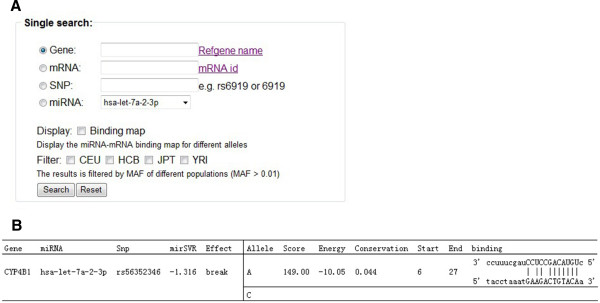
“To display the records in the MirSNP database, we designed a user-friendly MirSNP web site (see URLs) to allowing searching for SNPs in putative miRNA target sites.”
MethodInfluentialMammalian microRNAs predominantly act to decrease target mRNA levels
Guo, H., Ingolia, N. T., Weissman, J. S., & Bartel, D. P. (2010) · Nature · doi:10.1038/nature09267 · Cited by 3,886 · cited 1×
“However, it has been estimated that over 80 percent of miRNAs acted to lower mRNA levels, which shows that mRNA destabilization is the primary action mode of miRNAs on target mRNAs [35].”
Background
Cited by
Trends in the development of miRNA bioinformatics tools
Chen, L., Heikkinen, L., Wang, C., Yang, Y., Sun, H., & Wong, G. (2019) · Briefings in Bioinformatics · doi:10.1093/bib/bby054 · Cited by 603
mirDIP 4.1—integrative database of human microRNA target predictions
Tokar, T., Pastrello, C., Rossos, A. E. M., Abovsky, M., Hauschild, A.-C., Tsay, M., Lu, R., & Jurisica, I. (2018) · Nucleic Acids Research · doi:10.1093/nar/gkx1144 · Cited by 572
“miRror 2010 yes (58) MirSNP 2012 yes yes (59)”
Genotype × environment interaction QTL mapping in plants: lessons from Arabidopsis
El-Soda, M., Malosetti, M., Zwaan, B. J., Koornneef, M., & Aarts, M. G. M. (2014) · Trends in Plant Science · doi:10.1016/j.tplants.2014.01.001 · Cited by 296
Meta-analysis of shared genetic architecture across ten pediatric autoimmune diseases
Li, Y. R., Li, J., Zhao, S. D., Bradfield, J. P., Mentch, F. D., Maggadottir, S. M., Hou, C., Abrams, D. J., Chang, D., Gao, F., et al. (2015) · Nature Medicine · doi:10.1038/nm.3933 · Cited by 265
Hrdlickova, B., de Almeida, R. C., Borek, Z., & Withoff, S. (2014) · Biochimica et Biophysica Acta (BBA) - Molecular Basis of Disease · doi:10.1016/j.bbadis.2014.03.011 · Cited by 236
lncRNASNP: a database of SNPs in lncRNAs and their potential functions in human and mouse
Gong, J., Liu, W., Zhang, J., Miao, X., & Guo, A.-Y. (2015) · Nucleic Acids Research · doi:10.1093/nar/gku1000 · Cited by 216
Bioinformatic tools for microRNA dissection
Akhtar, M. M., Micolucci, L., Islam, M. S., Olivieri, F., & Procopio, A. D. (2016) · Nucleic Acids Research · doi:10.1093/nar/gkv1221 · Cited by 215
“The online database MirSNP (175) collects human SNPs at predicted miRNA–mRNA binding sites, which can be combined with researchers’ own GWAS or eQTL data sets to identify the putative miRNArelated SNPs associated with diseases, thus directing subsequent functional studies.”
Classical and noncanonical functions of miRNAs in cancers
Dragomir, M. P., Knutsen, E., & Calin, G. A. (2022) · Trends in Genetics · doi:10.1016/j.tig.2021.10.002 · Cited by 191
Principles of miRNA–mRNA interactions: beyond sequence complementarity
Afonso-Grunz, F., & Müller, S. (2015) · Cellular and Molecular Life Sciences · doi:10.1007/s00018-015-1922-2 · Cited by 192
“Most of these rely on simple modifications of known algorithms like TargetScan or miRanda to detect the effects of a given SNP on miRNA binding stability [124].”
MethodSNPs in microRNA target sites and their potential role in human disease
Moszyńska, A., Gebert, M., Collawn, J. F., & Bartoszewski, R. (2017) · Open Biology · doi:10.1098/rsob.170019 · Cited by 192
Tensor decomposition for multiple-tissue gene expression experiments
Hore, V., Viñuela, A., Buil, A., Knight, J., McCarthy, M. I., Small, K., & Marchini, J. (2016) · Nature Genetics · doi:10.1038/ng.3624 · Cited by 185
Candidate gene association studies: a comprehensive guide to useful in silicotools
Patnala, R., Clements, J. A., & Batra, J. (2013) · BMC Genetics · doi:10.1186/1471-2156-14-39 · Cited by 211
“SNP Effects and functional analysis [28,62,65-71,75,76,78-80,83,84,88-94,97-99,105-110,117,120-122,126-139].”
BackgroundZhao, Y., Yin, J., Guo, H., Zhang, Y., Xiao, W., Sun, C., Wu, J., Qu, X., Yu, J., Wang, X., et al. (2015) · Frontiers in Plant Science · doi:10.3389/fpls.2014.00696 · Cited by 152
“After mapping the high-quality reads of all four strains in DMY chloroplast genome respectively and filtering minor alleles with an MAF value of <0.01 (Kolz et al., 2009; Liu et al., 2012), a total of 312 polymorphism sites were detected (Figure 4).”
BackgroundInfluentialThabet, K., Asimakopoulos, A., Shojaei, M., Romero-Gomez, M., Mangia, A., Irving, W. L., Berg, T., Dore, G. J., Grønbæk, H., Sheridan, D., et al. (2016) · Nature Communications · doi:10.1038/ncomms12757 · Cited by 130
Gong, J., Liu, C., Liu, W., Wu, Y., Ma, Z., Chen, H., & Guo, A.-Y. (2015) · Database · doi:10.1093/database/bav029 · Cited by 127
Self-citationMaffioletti, E., Tardito, D., Gennarelli, M., & Bocchio-Chiavetto, L. (2014) · Frontiers in Cellular Neuroscience · doi:10.3389/fncel.2014.00075 · Cited by 121
“Basic studies indicated that Drosophila miR-34 has a role in age-associated events, aging, and neurodegeneration (Liu et al., 2012a).”
BackgroundInfluentialThe role of epigenetics in psychological resilience
Smeeth, D., Beck, S., Karam, E. G., & Pluess, M. (2021) · The Lancet Psychiatry · doi:10.1016/s2215-0366(20)30515-0 · Cited by 108
miRNAs as Biomarkers and Therapeutic Targets in Non-Small Cell Lung Cancer: Current Perspectives
Florczuk, M., Szpechciński, A., & Chorostowska‐Wynimko, J. (2017) · Targeted Oncology · doi:10.1007/s11523-017-0478-5 · Cited by 110
“However, regions encoding pre-miRNA sequences have been shown to contain approximately 2000 single nucleotide polymorphisms (SNPs) which may affect miRNA–mRNA interactions [40].”
BackgroundGenetic Study of Complex Diseases in the Post-GWAS Era
Huang, Q. (2015) · Journal of genetics and genomics/Journal of Genetics and Genomics · doi:10.1016/j.jgg.2015.02.001 · Cited by 110
Micrornas as Pharmacogenomic Biomarkers for Drug Efficacy and Drug Safety Assessment
Koturbash, I., Tolleson, W. H., Guo, L., Yu, D., Chen, S., Hong, H., Mattes, W. B., & Ning, B. (2015) · Biomarkers in Medicine · doi:10.2217/bmm.15.89 · Cited by 91
Computational Methods for the Pharmacogenetic Interpretation of Next Generation Sequencing Data
Zhou, Y., Fujikura, K., Mkrtchian, S., & Lauschke, V. M. (2018) · Frontiers in Pharmacology · doi:10.3389/fphar.2018.01437 · Cited by 84
“Thus, to evaluate the potential relevance of genetic polymorphisms in UTRs various databases, such as the polymiRTS Database 3.0 (Bhattacharya et al., 2014) or MirSNP (Liu et al., 2012), provide useful resources that contains a collection of experimentally confirmed SNPs and indels not only in miRNA target sites but al…”
BackgroundInfluentialDysregulation of mi RNA and its potential therapeutic application in schizophrenia
Cao, T., & Zhen, X. (2018) · CNS Neuroscience & Therapeutics · doi:10.1111/cns.12840 · Cited by 77
Alural, B., Genc, S., & Haggarty, S. J. (2017) · Progress in Neuro-Psychopharmacology and Biological Psychiatry · doi:10.1016/j.pnpbp.2016.03.010 · Cited by 72
“Other SNP findings associated with SCZ are located in predicted binding site of miR-625 and miR-1302 in purinergic receptor P2X (P2RX7) gene, in the miR-124 binding site of regulator of G protein signaling 4 (RGS4) gene (rs10759); and 3 other SNPs (rs17110432, rs11178988 and rs11178989) in the 3′-UTR of TBC1 domain fa…”
BackgroundEpigenetic mechanisms underlying nervous system diseases
Qureshi, I., & Mehler, M. F. (2018) · Handbook of clinical neurology · doi:10.1016/b978-0-444-63233-3.00005-1 · Cited by 78
“, Alzheimer disease, Parkinson disease, multiple sclerosis, schizophrenia, and depression) (Bruno et al., 2012; Liu et al., 2012; Boudreau et al., 2014).”
BackgroundLi, M., Luo, X.-J., Rietschel, M., Lewis, C. M., Mattheisen, M., Müller-Myhsok, B., Jamain, S., Leboyer, M., Landén, M., Thompson, P. M., et al. (2013) · Molecular Psychiatry · doi:10.1038/mp.2013.37 · Cited by 68
Chang, J., Tian, J., Yang, Y., Zhong, R., Li, J., Zhai, K., Ke, J., Lou, J., Chen, W., Zhu, B., et al. (2018) · Cancer Research · doi:10.1158/0008-5472.can-18-0910 · Cited by 64
“Through an in silico analysis using MirSNP (28) and miRNASNP (29), we found that rs11169571 SNP lies within a binding site for the seed region of hsa-miR-524-5p, hsa-miR520d-5p and hsa-miR-1283.”
MethodLarge-scale association analysis in Asians identifies new susceptibility loci for prostate cancer
Wang, M., Takahashi, A., Liu, F., Ye, D., Ding, Q., Qin, C., Yin, C., Zhang, Z., Matsuda, K., Kubo, M., et al. (2015) · Nature Communications · doi:10.1038/ncomms9469 · Cited by 62
CardioGxE, a catalog of gene-environment interactions for cardiometabolic traits
Parnell, L. D., Blokker, B., Dashti, H. S., Nesbeth, P.-D. C., Cooper, B. E., Ma, Y., Lee, Y., Hou, R., Lai, C., Richardson, K., et al. (2014) · BioData Mining · doi:10.1186/1756-0381-7-21 · Cited by 61
“MirSNP [40] miRcode [41] and other literature resources, including predicted and experimentally validated sites.”
BackgroundSingle Nucleotide Polymorphisms Associated with MicroRNA Regulation
Yu, J. H., & Lee, C. G. L. (2013) · Biomolecules · doi:10.3390/biom3020287 · Cited by 62
Jia, M., Yang, B., Li, Z., Shen, H., Song, X., & Gu, W. (2014) · PLoS ONE · doi:10.1371/journal.pone.0104311 · Cited by 67
“Meanwhile, we also list the UTR SNPs that were predicted to have functional significance by MirSNP, polymiRTS and miRNASNP.”
MethodInfluentialManikandan, M., & Munirajan, A. K. (2014) · OMICS A Journal of Integrative Biology · doi:10.1089/omi.2013.0098 · Cited by 58
“151/hmdd/mirsnp/search/), a collection of human SNPs in predicted miRNA target sites (Liu et al., 2012).”
InfluentialMutations in microRNA Binding Sites of CEP Genes Involved in Cancer
Gopalakrishnan, C., Kamaraj, B., & Purohit, R. (2014) · Cell Biochemistry and Biophysics · doi:10.1007/s12013-014-0153-8 · Cited by 55
Crocco, P., Montesanto, A., Passarino, G., & Rose, G. (2015) · The Journals of Gerontology Series A · doi:10.1093/gerona/glv058 · Cited by 52
“cn/mirsnp) (27), miRdSNP (http://mirdsnp.”
Marques, F. Z., Eikelis, N., Bayles, R., Lambert, É., Straznicky, N. E., Hering, D., Esler, M., Head, G. A., Barton, D. A., Schlaich, M. P., et al. (2016) · Molecular Psychiatry · doi:10.1038/mp.2016.40 · Cited by 56
Chatterjee, P., Roy, D., Bhattacharyya, M., & Bandyopadhyay, S. (2017) · BMC Genomics · doi:10.1186/s12864-017-4098-3 · Cited by 61
“Using MirSNP database [47] (miRNAs usually bind at the 3’UTR of the target gene and controls the expression of that gene).”
MethodmrSNP: Software to detect SNP effects on microRNA binding
Deveci, M., Çatalyürek, Ü. V., & Toland, A. E. (2014) · BMC Bioinformatics · doi:10.1186/1471-2105-15-73 · Cited by 51
“In the first set of validation experiments, we ran experimentally validated disease associated SNPs used in the experiments of [20] in order to compare mrSNP with different databases.”
BackgroundMethodResultInfluentialRegulation of miRNA Processing and miRNA Mediated Gene Repression in Cancer
Bajan, S., & Hutvágner, G. (2014) · MicroRNA · doi:10.2174/2211536602666140110234046 · Cited by 56
“miRNA-related SNPs have been found to correlate to human diseases [105], leading to the formation of databases to catalogue point mutations within miRNAs and their target sites [91, 102, 106], such as miRdSNP [107] and mirSNP [108].”
BackgroundHu, Y., Ehli, E. A., & Boomsma, D. I. (2017) · Autism Research · doi:10.1002/aur.1789 · Cited by 50
“MirSNP is a database that annotates human SNPs in predicted miRNA target sites [Liu et al., 2012; URL: http://bioinfo. bjmu.edu.cn/mirsnp].”
BackgroundGalka-Marciniak, P., Urbanek-Trzeciak, M. O., Nawrocka, P. M., Dutkiewicz, A., Giefing, M., Lewandowska, M. A., & Kozłowski, P. (2019) · Cancers · doi:10.3390/cancers11060793 · Cited by 53
Yue, M., Zhou, D., Zhi, H., Wang, P., Zhang, Y., Gao, Y., Guo, M., Li, X., Wang, Y., Zhang, Y., et al. (2018) · Nucleic Acids Research · doi:10.1093/nar/gkx1035 · Cited by 48
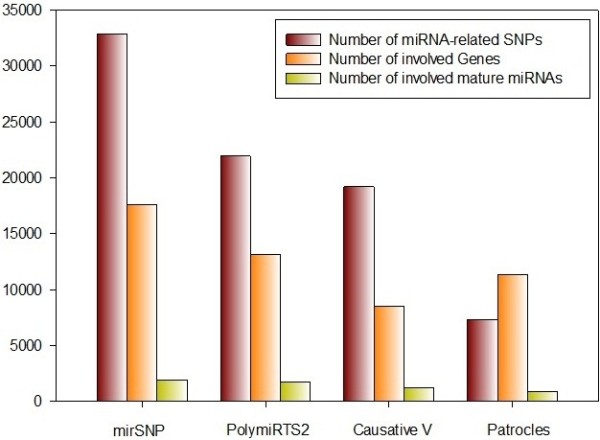
“Due to the important roles and functions of miRSNPs in regulating many aspects of cellular processes relating to disease development, several databases and web tools such as miRNASNP (9), MirSNP (10), PolymiRTS (11), Patrocles (12), SubmiRine (13), MicroSNiPer (14), miRNA–SNiPer (15), Mirsnpscore (16) and mrSNP (17) h…”
BackgroundSwart, M., & Dandara, C. (2014) · Frontiers in Genetics · doi:10.3389/fgene.2014.00167 · Cited by 47
Significant impact of miRNA–target gene networks on genetics of human complex traits
Okada, Y., Muramatsu, T., Suita, N., Kanai, M., Kawakami, E., Iotchkova, V., Soranzo, N., Inazawa, J., & Tanaka, T. (2016) · Scientific Reports · doi:10.1038/srep22223 · Cited by 52
Naccarati, A., Rosa, F., Vymetalkova, V. P., Barone, E., Jirásková, K., Gaetano, C. D., Novotný, J., Levý, M., Vodičková, Ľ., Gemignani, F., et al. (2015) · Oncotarget · doi:10.18632/oncotarget.6804 · Cited by 44
“151/hmdd/mirsnp/search/ [54]), Mirnsnpscore (http://www.”
Genetic networks in Parkinson’s and Alzheimer’s disease
Kelly, J., Moyeed, R. A., Carroll, C., Luo, S., & Li, X. (2020) · Aging · doi:10.18632/aging.102943 · Cited by 47
“SNPs we found to be associated with genes from the PD related modules were used to search the MirSNP [26] database in order to find which SNPs were associated with the 83 experimentally confirmed PD related miRNAs in the HMDD v3.”
Rare genetic variant burden in DPYD predicts severe fluoropyrimidine-related toxicity risk
Mattia, E. D., Silvestri, M., Polesel, J., Ecca, F., Mezzalira, S., Scarabel, L., Zhou, Y., Roncato, R., Lauschke, V. M., Calza, S., et al. (2022) · Biomedicine & Pharmacotherapy · doi:10.1016/j.biopha.2022.113644 · Cited by 41
Computational Resources for Prediction and Analysis of Functional miRNA and Their Targetome
Monga, I., & Kumar, M. (2019) · Methods in molecular biology · doi:10.1007/978-1-4939-8982-9_9 · Cited by 40
Mining the 3′UTR of Autism-Implicated Genes for SNPs Perturbing MicroRNA Regulation
Vaishnavi, V., Manikandan, M., & Munirajan, A. K. (2014) · Genomics Proteomics & Bioinformatics · doi:10.1016/j.gpb.2014.01.003 · Cited by 49
“The official gene symbols of the autism-implicated genes were uploaded in text format to MirSNP database [31] to retrieve the list of MRE-SNPs.”
BackgroundMethodResultInfluentialUnderstanding Neurodevelopmental Disorders: The Promise of Regulatory Variation in the 3′UTRome
Wanke, K. A., Devanna, P., & Vernes, S. C. (2017) · Biological Psychiatry · doi:10.1016/j.biopsych.2017.11.006 · Cited by 44
Kryvokhyzha, D., Holm, K., Chen, J., Cornille, A., Glémin, S., Wright, S., Lagercrantz, U., & Lascoux, M. (2016) · Molecular Ecology · doi:10.1111/mec.13537 · Cited by 33
A compilation of Web-based research tools for miRNA analysis
Shukla, V., Varghese, V. K., Kabekkodu, S. P., Mallya, S. P., & Satyamoorthy, K. (2017) · Briefings in Functional Genomics · doi:10.1093/bfgp/elw042 · Cited by 37
MiRNAs and miRNA Polymorphisms Modify Drug Response
Li, M.-P., Hu, Y., Hu, X., Zhang, Y., Yang, Y., Jiang, C. L., Tang, J., & Chen, X.-P. (2016) · International Journal of Environmental Research and Public Health · doi:10.3390/ijerph13111096 · Cited by 42
Zhang, X., Shi, H., Wang, J., Tang, H., & Cui, S. (2015) · Europe PMC (PubMed Central) · Cited by 36
Kim, Y., Kang, C., Min, B., & Yi, G. (2015) · BMC Medical Genomics · doi:10.1186/1755-8794-8-s2-s7 · Cited by 35
“The result shows that SNPs near the gene, such as NearGene-3, MirSNP, NearGene5 and UTR-3 were higher disease-associated proportion than SNPs in intron because they might affect protein functions by indirect way like regulating protein expressions.”
MethodInfluentialGoda, N., Murase, H., Kasezawa, N., Goda, T., & Yamakawa‐Kobayashi, K. (2015) · BMC Medical Genetics · doi:10.1186/s12881-015-0219-5 · Cited by 37
“Next, we searched SNPs in the miRNA-binding sites in the 3′UTR of these 20 T2DM risk genes using three online databases: MirSNP [20, 21], PolymiRTS database 3.”
InfluentialComparing miRNA structure of mirtrons and non-mirtrons
Titov, I. I., & Vorozheykin, P. S. (2018) · BMC Genomics · doi:10.1186/s12864-018-4473-8 · Cited by 42
“Yellow bars were calculated by [74] using miRBase 18.”
MethodComprehensive review and annotation of susceptibility SNPs associated with obesity‐related traits
Dong, S., Zhang, Y., Chen, Y. ‐., Yao, S., Hao, R., Rong, Y., Niu, H., Chen, J. ‐., Guo, Y., & Yang, T. (2018) · Obesity Reviews · doi:10.1111/obr.12677 · Cited by 36
“For SNPs in 5’-UTR and 3’-UTR, we predicted the microRNAs potentially binding to the UTR sequences including SNPs by using MirSNP (19).”
MethodCipolla, G. A., Park, J. K., de Oliveira, L. A., Lobo‐Alves, S. C., de Almeida, R. C., Farias, T. D. J., Lemos, D. D. S., Malheiros, D., Lavker, R. M., & Petzl‐Erler, M. L. (2016) · Biochimica et Biophysica Acta (BBA) - Gene Regulatory Mechanisms · doi:10.1016/j.bbagrm.2016.07.006 · Cited by 38
MicroRNA-related sequence variations in human cancers
Wójcicka, A., de la Chapelle, A., & Jażdżewski, K. (2013) · Human Genetics · doi:10.1007/s00439-013-1397-x · Cited by 34
“Moreover, 414,510 other human SNPs might potentially influence miR:mRNa interactions, causing either loss or creation of a miRNabinding site (Liu et al. 2012).”
BackgroundRupérez, A. I., Olza, J., Gil‐Campos, M., Leis, R., Mesa, M. D., Tojo, R., Cañete, R., Gil, Á., & Aguilera, C. M. (2014) · Lifestyle Genomics · doi:10.1159/000368833 · Cited by 41
Liu, G., Liu, S., Lin, M., Li, X., Chen, W., Zuo, Y., Liu, J., Niu, Y., Zhao, S., Long, B., et al. (2018) · Journal of Cellular and Molecular Medicine · doi:10.1111/jcmm.13486 · Cited by 32
“cn/mirSNP) [31], showed that there are three microRNAs, hsa-miR-1343, hsa-miR-198 and hsamiR-30b-3p that can bind to this mRNA.”
BackgroundComprehensive functional annotation of susceptibility SNPs prioritized 10 genes for schizophrenia
Niu, H., Yang, P., Chen, H., Hao, R.-H., Dong, S., Yao, S., Chen, X., Yan, H., Zhang, Y., Chen, Y., et al. (2019) · Translational Psychiatry · doi:10.1038/s41398-019-0398-5 · Cited by 37
Guo, Y., Yan, K., Qu, Q., Qu, J., Chen, Z., Song, T., Luo, X., Sun, Z., Bi, C., & Liu, J. (2015) · PLoS ONE · doi:10.1371/journal.pone.0124896 · Cited by 29
“Rs1053074 is localized to the 30untranslated region of KCNJ10, we predicted its effect on altering miRNA target sites using MirSNP database[29].”
MethodHeat Shock 70 Protein Genes and Genetic Susceptibility to Apical Periodontitis
Maheshwari, K., Silva, R. M., Guajardo-Morales, L., Garlet, G. P., Vieira, A. R., & Letra, A. (2016) · Journal of Endodontics · doi:10.1016/j.joen.2016.07.010 · Cited by 34
“In silico analysis of SNP function was performed by using Polymorphism Phenotyping V2 and MirSNP software.”
MethodGenetic polymorphisms offer insight into the causal role of microRNA in coronary artery disease
Borghini, A., & Andreassi, M. G. (2017) · Atherosclerosis · doi:10.1016/j.atherosclerosis.2017.12.022 · Cited by 30
Mortazavi, S. S., Bahmanpour, Z., Daneshmandpour, Y., Roudbari, F., Sheervalilou, R., Kazeminasab, S., & Emamalizadeh, B. (2021) · Computers in Biology and Medicine · doi:10.1016/j.compbiomed.2021.104544 · Cited by 30
Functional genomics of human brain development and implications for autism spectrum disorders
Ziats, M. N., Grosvenor, L. P., & Rennert, O. M. (2015) · Translational Psychiatry · doi:10.1038/tp.2015.153 · Cited by 32
In Silico Analysis of miRNA-Mediated Gene Regulation in OCA and OA Genes
Kamaraj, B., Gopalakrishnan, C., & Purohit, R. (2014) · Cell Biochemistry and Biophysics · doi:10.1007/s12013-014-0152-9 · Cited by 30
“151/hmdd/mirsnp/search/), a collection of human SNPs in predicted miRNA target sites [22].”
BackgroundRNAseq analysis of bronchial epithelial cells to identify COPD-associated genes and SNPs
Yeo, J., Morales, D. A., Chen, T., Crawford, E. L., Zhang, X., Blomquist, T. M., Levin, A. M., Massion, P. P., Arenberg, D. A., Midthun, D. E., et al. (2018) · BMC Pulmonary Medicine · doi:10.1186/s12890-018-0603-y · Cited by 32
“Further, rs873601 which is linked to rs17655 is predicted to alter miRNA binding sites and likely plays a key functional cis-regulatory role [103].”
BackgroundHartling, H. J., Thørner, L. W., Erikstrup, C., Harritshøj, L. H., Kronborg, G., Pedersen, C., Larsen, C. S., Helleberg, M., Gerstoft, J., Obel, N., et al. (2014) · AIDS · doi:10.1097/qad.0000000000000354 · Cited by 28
“None of the SNP loci overlap with miRNA target sites according to MirSNP database [24].”
BackgroundSingle Nucleotide Polymorphisms in MicroRNA Binding Sites: Implications in Colorectal Cancer
Bhaumik, P., Gopalakrishnan, C., Kamaraj, B., & Purohit, R. (2014) · The Scientific World JOURNAL · doi:10.1155/2014/547154 · Cited by 26
Genomic alterations as mediators of miRNA dysregulation in ovarian cancer
Kan, C. W. S., Howell, V. M., Hahn, M. A., & Marsh, D. J. (2014) · Genes Chromosomes and Cancer · doi:10.1002/gcc.22221 · Cited by 28
“…online databases such as miRNASNP (http://www.bioguo.org/miRNASNP/) (Gong et al., 2012), rSNPBase (http:// rsnp.psych.ac.cn/) (Guo et al., 2014), MiRSNP (http://202.38.126.151/hmdd/mirsnp/search/) (Liu et al., 2012), and PolymiRTS (http://compbio. uthsc.edu/miRSNP/) (Bhattacharya et al., 2014).”
BackgroundInfluentialOptimal consistency in microRNA expression analysis using reference-gene-based normalization
Wang, X., Gardiner, E. J., & Cairns, M. J. (2015) · Molecular BioSystems · doi:10.1039/c4mb00711e · Cited by 28
Altered Gene Expression Associated with microRNA Binding Site Polymorphisms
Võsa, U., Esko, T., Kasela, S., & Annilo, T. (2015) · PLoS ONE · doi:10.1371/journal.pone.0141351 · Cited by 33
“Some of the results of these studies are summarized in online databases [18,31,33,53,54], however the sensitivity and specificity of in silico target prediction algorithms are not perfect [55], and additional support is needed to validate an miRNA target site such that it is useful for identifying functionally relevan…”
BackgroundMethodMukherjee, S., Mukherjee, A., Jasrotia, R. S., Jaiswal, S., Iquebal, M. A., Longkumer, I., Mech, M., Vüpru, K., Khate, K., Rajkhowa, C., et al. (2019) · Genomics · doi:10.1016/j.ygeno.2019.02.004 · Cited by 26
Recent Development of Bioinformatics Tools for microRNA Target Prediction
Khatun, M. S., Alam, M. A., Shoombuatong, W., Mollah, M. N. H., Kurata, H., & Hasan, M. M. (2021) · Current Medicinal Chemistry · doi:10.2174/0929867328666210804090224 · Cited by 28
Meucci, S., Schulte, L., Zimmermann, H., Stoof‐Leichsenring, K. R., Epp, L. S., Eidesen, P. B., & Herzschuh, U. (2021) · Ecology and Evolution · doi:10.1002/ece3.7183 · Cited by 26
Olza, J., Rupérez, A. I., Gil‐Campos, M., Leis, R., Cañete, R., Tojo, R., Gil, Á., & Aguilera, C. M. (2017) · International Journal of Molecular Sciences · doi:10.3390/ijms18081690 · Cited by 28
“To investigate the potential functional role of these variants, different web-based tools designed for in silico prediction of SNP function were queried using the SNP IDs, including the FuncPRED tool of the National Institutes of Health [33], RegulomeDB [34], MirSNP [35], and RegSNP [36].”
MethodSchneiderová, M., Naccarati, A., Pardini, B., Rosa, F., Gaetano, C. D., Jirásková, K., Opattová, A., Levý, M., Veskrna, K., Veškrňová, V., et al. (2017) · Mutagenesis · doi:10.1093/mutage/gex026 · Cited by 29
Yang, S., Gao, Y., Liu, G., Li, J., Shi, K., Du, B., Si, D., & Yang, P. C. (2015) · FEBS Letters · doi:10.1016/j.febslet.2015.06.029 · Cited by 23
“cn/mirsnp) [20], which is a collection of human SNPs in predicted miRNA– mRNA binding sites, makes it easier to identify the putative miRNA-related SNPs and provide the basis for subsequent functional research.”
BackgroundMinimal Standards for Reporting microRNA:Target Interactions
Piletič, K., & Kunej, T. (2017) · Omics · doi:10.1089/omi.2017.0023 · Cited by 21
“For example, the MirSNP tool enables an analysis of SNPs that are located within predicted miRNA target sites in humans (Liu et al., 2012).”
Epigenetic Mechanisms Underlying the Pathogenesis of Neurogenetic Diseases
Qureshi, I., & Mehler, M. F. (2014) · Neurotherapeutics · doi:10.1007/s13311-014-0302-1 · Cited by 23
“, AD, Parkinson disease (PD), multiple sclerosis (MS), schizophrenia, and depression] [27–29].”
BackgroundA review of databases predicting the effects of SNPs in miRNA genes or miRNA-binding sites
Fehlmann, T., Sahay, S., Keller, A., & Backes, C. (2017) · Briefings in Bioinformatics · doi:10.1093/bib/bbx155 · Cited by 24
Prabhu, B. N. B., Kanchamreddy, S. H., Sharma, A., Bhat, S. K., Bhat, P. V., Kabekkodu, S. P., Satyamoorthy, K., & Rai, P. S. (2021) · Journal of Endocrinological Investigation · doi:10.1007/s40618-021-01498-4 · Cited by 27
RPmirDIP: Reciprocal Perspective improves miRNA targeting prediction
Kyrollos, D. G., Reid, B., Dick, K., & Green, J. R. (2020) · Scientific Reports · doi:10.1038/s41598-020-68251-4 · Cited by 24
Niu, T., Liu, N., Zhao, M., Xie, G., Zhang, L., Li, J., Pei, Y., Shen, H., Fu, X., He, H., et al. (2015) · Human Molecular Genetics · doi:10.1093/hmg/ddv144 · Cited by 24
Oak, N., Ghosh, R., Huang, K., Wheeler, D. A., Ding, L., & Plon, S. E. (2018) · Human Mutation · doi:10.1002/humu.23668 · Cited by 25
Genetic variability of micro RNA regulome in human
Obšteter, J., Dovč, P., & Kunej, T. (2014) · Molecular Genetics & Genomic Medicine · doi:10.1002/mgg3.110 · Cited by 24
“…bioinformatics tools for all four categories (Hariharan et al. 2009; Barenboim et al. 2010; Hiard et al. 2010; Bhartiya et al. 2011; Schmeier et al. 2011; Thomas et al. 2011; Bruno et al. 2012; Gong et al. 2012; Liu et al. 2012; Zorc et al. 2012; Bhattacharya et al. 2013a,b; Deveci et al. 2014).”
MethodAssociation of Genetic Variants Affecting microRNAs and Pancreatic Cancer Risk
Lu, Y., Corradi, C., Gentiluomo, M., de Maturana, E. L., Theodoropoulos, G. E., Roth, S., Maiello, E., Morelli, L., Archibugi, L., Izbicki, J. R., et al. (2021) · Frontiers in Genetics · doi:10.3389/fgene.2021.693933 · Cited by 25
Association study of MiRSNPs with schizophrenia, tardive dyskinesia and cognition
John, J., Bhatia, T., Kukshal, P., Chandna, P., Nimgaonkar, V. L., Deshpande, S. N., & Thelma, B. K. (2016) · Schizophrenia Research · doi:10.1016/j.schres.2016.03.031 · Cited by 22
“On the other hand, MiRSNPs have also been identified among SNPs reported in Chinese SZ GWAS and brain eQTLs (Liu et al., 2012).”
BackgroundWilkins, O. M., Titus, A., Gui, J., Eliot, M., Butler, R. A., Sturgis, E. M., Li, G., Kelsey, K. T., & Christensen, B. C. (2017) · Carcinogenesis · doi:10.1093/carcin/bgx056 · Cited by 20
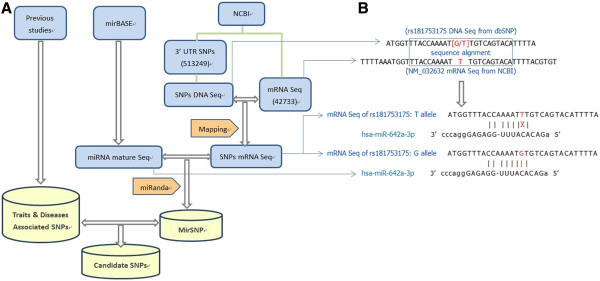
“MirSNP (http://bioinfo.bjmu.edu.cn/mirsnp/search/) utilizes the miRanda algorithm for miRNA target site prediction to determine the likely consequences of a given SNP (decrease/break or enhance/create miRNA target sites) (35).”
BackgroundMethodInfluentialShang, Z., Sun, W., Zhang, M., Xu, L., Jia, X., Zhang, R., & Fu, S. (2020) · PeerJ · doi:10.7717/peerj.8357 · Cited by 23
Meyer, G. P., da Silva, B. S., Bandeira, C. E., Tavares, M. E. A., Cupertino, R. B., Oliveira, E. P., Müller, D., Kappel, D. B., Teche, S. P., Vitola, E. S., et al. (2022) · European Archives of Psychiatry and Clinical Neuroscience · doi:10.1007/s00406-022-01388-7 · Cited by 27
“MirSNP [63], a collection of human SNPs in predicted miRNA-mRNA binding sites that promote post-transcriptional effects.”
BackgroundMicroRNA-Related Genetic Variants Associated with Survival of Head and Neck Squamous Cell Carcinoma
Wilkins, O. M., Titus, A., Salas, L. A., Gui, J., Eliot, M., Butler, R. A., Sturgis, E. M., Li, G., Kelsey, K. T., & Christensen, B. C. (2019) · Cancer Epidemiology Biomarkers & Prevention · doi:10.1158/1055-9965.epi-18-0002 · Cited by 21
“MirSNP (http://bioinfo.bjmu.edu.cn/mirsnp/search/) determines predicted miRNA target sites for sequences containing each allele of a given genetic variant using the miRanda algorithm and assigns a predicted impact of genetic variation (enhance, decrease, create, or break) at this locus based on the results.”
InfluentialDifferential gene expression levels might explain association of LAIR2 polymorphisms with pemphigus
Camargo, C. M., Augusto, D. G., & Petzl‐Erler, M. L. (2015) · Human Genetics · doi:10.1007/s00439-015-1626-6 · Cited by 22
“2015), mirSNP (Liu et al. 2012), PolymiRTS (Bhattacharya et al.”
MethodMosallaei, M., Simonian, M., Esmaeilzadeh, E., Bagheri, H., Miraghajani, M. S., Salehi, A. R., Mehrzad, V., & Salehi, R. (2019) · Cancer Genetics · doi:10.1016/j.cancergen.2019.09.003 · Cited by 21
Lubna, Asaf, S., Khan, A. L., Jan, R., Khan, A., Khan, A., Kim, K., & Lee, I. (2021) · The Plant Genome · doi:10.1002/tpg2.20130 · Cited by 19
Ahangari, F., Salehi, R., Salehi, M., & Khanahmad, H. (2014) · Medical Oncology · doi:10.1007/s12032-014-0173-7 · Cited by 19
Association of WNT Pathway Genes With Nonsyndromic Cleft Lip With or Without Cleft Palate
Vijayan, V., Ummer, R., Weber, R. J., Silva, R. M., & Letra, A. (2017) · The Cleft Palate-Craniofacial Journal · doi:10.1177/1055665617732782 · Cited by 20
Matin, F., Jeet, V., Srinivasan, S., Cristino, A. S., Panchadsaram, J., Clements, J. A., & Batra, J. (2019) · Clinical Chemistry · doi:10.1373/clinchem.2018.295824 · Cited by 22
Yang, L., Dai, J., Ma, M., Mao, L., Si, L., Cui, C., Sheng, X., Chi, Z., Yu, S., Xu, T., et al. (2019) · European Journal of Cancer · doi:10.1016/j.ejca.2019.06.006 · Cited by 20
Metadata
- Authors
- Liu, C., Zhang, F., Li, T., Lu, M., Wang, L., Yue, W., & Zhang, D.
- Affiliations
- Peking University (CN)
- Corresponding author
- Yue, Weihua
- Zhang, Dai
- Venue
- BMC Genomics
- Published
- 2012-11-23
- Volume
- 13
- Issue
- 1
- Pages
- 661-661
- ISSN
- 1471-2164 (ISSN-L)
- PMC
- PMC3582533
- OpenAlex
- W2080834212
- Cited by
- 264
- References
- 43
- Citations by year
- 2026: 1 · 2025: 3 · 2024: 15 · 2023: 16 · 2022: 19 · 2021: 24 · 2020: 23 · 2019: 23 · 2018: 22 · 2017: 33 · 2016: 20 · 2015: 27 · 2014: 30 · 2013: 8
- FWCI
- 6.88
- Type
- journal article
- Language
- en
- Open access
- gold
- doi.org
- Licence
- cc-by
- Locations
- BMC Genomics (publishedVersion, cc-by)
- Europe PMC (PubMed Central) (publishedVersion, cc-by)
- PubMed Central (publishedVersion, cc-by)
- PubMed (publishedVersion)
- DOAJ (DOAJ: Directory of Open Access Journals) (submittedVersion)
- Funders
- National Natural Science Foundation of China (81071087, 81071088)
- Topics
- Life Sciences › Biochemistry, Genetics and Molecular Biology › Cancer Research › MicroRNA in disease regulation
- Life Sciences › Biochemistry, Genetics and Molecular Biology › Genetics › Genetic Associations and Epidemiology
- Life Sciences › Biochemistry, Genetics and Molecular Biology › Molecular Biology › RNA Research and Splicing
- Keywords
- miRSNPs, single nucleotide polymorphisms, microRNA binding sites, 3'UTR variant, expression quantitative trait loci, brain gene expression, schizophrenia, genome-wide association study
- MeSH terms
- Binding Sites, Humans, RNA, Messenger, Schizophrenia, Genome, Human, Internet, 3' Untranslated Regions, Polymorphism, Single Nucleotide, Databases, Genetic, MicroRNAs, Quantitative Trait Loci, Genome-Wide Association Study
About these checks
Registry, retraction, Cites and statistics results are computed, not judged, with one exception: a printed reference that no index lists is read once by a model before it counts as a citation error. Claims are extracted by a model and kept only when their quote appears verbatim in the text; each cited source is then checked, with a model’s help, for whether it says what the claim relies on. Those verdicts can be wrong — read the claim’s quote and the cited source before relying on one.
Statistics and arithmetic are recomputed, not judged.
Confidence bands are shown only for fields calibrated on our annotated test set. None is calibrated yet, so no band is shown.
What counts as a claim ›How we measure confidence ›How we check this ›
Are you an author, or do you see a problem with this page? Request a review
Data sources
Bibliographic data: Semantic Scholar, OpenAlex, Crossref.
Contains information from the Semantic Scholar Academic Graph Datasets, made available under the ODC Attribution License (ODC-BY 1.0).
Semantic Scholar’s data is described in: Kinney, R., et al. (2023). The Semantic Scholar Open Data Platform. arXiv:2301.10140.
