

MirSNP, a database of polymorphisms altering miRNA target sites, identifies miRNA-related SNPs in GWAS SNPs and eQTLs
Open accessThe DOI matches its Crossref record; 42 of the 43 references it cites were found in a registry or an index.
Abstract
Background: Numerous single nucleotide polymorphisms (SNPs) associated with complex diseases have been identified by genome-wide association studies (GWAS) and expression quantitative trait loci (eQTLs) studies. However, few of these SNPs have explicit biological functions. Recent studies indicated that the SNPs within the 3’UTR regions of susceptibility genes could affect complex traits/diseases by affecting the function of miRNAs. These 3’UTR SNPs are functional candidates and therefore of interest to GWAS and eQTL researchers. Description: We developed a publicly available online database, MirSNP (http://cmbi.bjmu.edu.cn/mirsnp), which is a collection of human SNPs in predicted miRNA-mRNA binding sites. We identified 414,510 SNPs that might affect miRNA-mRNA binding. Annotations were added to these SNPs to predict whether a SNP within the target site would decrease/break or enhance/create an miRNA-mRNA binding site. By applying MirSNP database to three brain eQTL data sets, we identified four unreported SNPs (rs3087822, rs13042, rs1058381, and rs1058398), which might affect miRNA binding and thus affect the expression of their host genes in the brain. We also applied the MirSNP database to our GWAS for schizophrenia: seven predicted miRNA-related SNPs (p < 0.0001) were found in the schizophrenia GWAS. Our findings identified the possible functions of these SNP loci, and provide the basis for subsequent functional research. Conclusion: MirSNP could identify the putative miRNA-related SNPs from GWAS and eQTLs researches and provide the direction for subsequent functional researches.
Overview
The claims and statistics of this paper haven’t been checked yet.
Free: it reads the open-access text and checks the first 5 claims that cite a source we can check. Create a free account to check every claim.
Integrity signals
Registry
Cites
Statistics
Figures
Verification
Claims the paper makes
The claims and statistics of this paper haven’t been checked yet.
Free: it reads the open-access text and checks the first 5 claims that cite a source we can check. Create a free account to check every claim.
Claims other papers make about this one
Each is checked against this paper’s own text: does it say what the citing paper says it does?
In the citing paper
“For example, genetic variation can directly impact the specific sites at which DNA methylation can occur, 31 and may also impact the efficacy of sequence-dependent actions of ncRNAs.32”
From The role of epigenetics in psychological resilience (2021) · cites this paper as [32]
Self-check
Percentages, sums and reported differences re-computed from the paper’s own numbers.
The self-check needs the paper’s full text.
Citations
Cites
Bartel (2004) · doi:10.1016/s0092-8674(04)00045-5 · Cited by 34,714
PLINK: a tool set for whole-genome association and population-based linkage analyses.
Purcell, S., Neale, B., Todd-Brown, K., Thomas, L., Ferreira, M. A. R., Bender, D., Maller, J., Sklar, P., de Bakker, P. I. W., Daly, M. J., et al. (2007) · The American Journal of Human Genetics · doi:10.1086/519795 · Cited by 34,089
MicroRNAs: Target Recognition and Regulatory Functions
Bartel, D. P. (2009) · Cell · doi:10.1016/j.cell.2009.01.002 · Cited by 20,068 · cited 1×
“It was estimated that more than 50% of the protein-coding genes are regulated by miRNAs, and each miRNA may regulate hundreds of potential targets [10,11].”
Lewis, B. P., Burge, C. B., & Bartel, D. P. (2005) · Cell · doi:10.1016/j.cell.2004.12.035 · Cited by 11,855
dbSNP: the NCBI database of genetic variation
Sherry, S. T. (2001) · Nucleic Acids Research · doi:10.1093/nar/29.1.308 · Cited by 7,502
MicroRNAs: small RNAs with a big role in gene regulation
He, L., & Hannon, G. J. (2004) · Nature Reviews Genetics · doi:10.1038/nrg1379 · Cited by 7,118
The widespread regulation of microRNA biogenesis, function and decay
Krol, J., Loedige, I., & Filipowicz, W. (2010) · Nature Reviews Genetics · doi:10.1038/nrg2843 · Cited by 4,672 · cited 2×
“Evidence indicates that miRNAs are also involved in the pathogenesis of complex diseases, such as cancer and mental disorders [4,5].”
BackgroundA second generation human haplotype map of over 3.1 million SNPs
The International HapMap Consortium (2007) · Nature · doi:10.1038/nature06258 · Cited by 4,438 · cited 1×
“LD information was obtained for each SNP from the HapMap project [20].”
MethodEvolutionarily conserved elements in vertebrate, insect, worm, and yeast genomes
Siepel, A., Bejerano, G., Pedersen, J. S., Hinrichs, A. S., Hou, M., Rosenbloom, K., Clawson, H., Spieth, J., Hillier, L. W., Richards, S., et al. (2005) · Genome Research · doi:10.1101/gr.3715005 · Cited by 3,971 · cited 7×
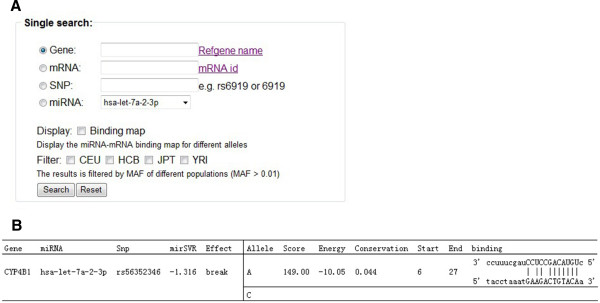
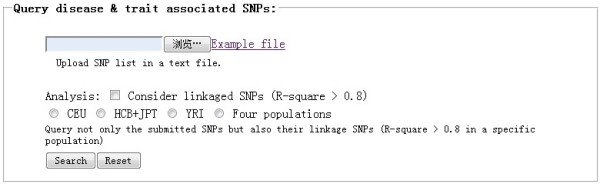
“To display the records in the MirSNP database, we designed a user-friendly MirSNP web site (see URLs) to allowing searching for SNPs in putative miRNA target sites.”
MethodInfluentialMammalian microRNAs predominantly act to decrease target mRNA levels
Guo, H., Ingolia, N. T., Weissman, J. S., & Bartel, D. P. (2010) · Nature · doi:10.1038/nature09267 · Cited by 3,886 · cited 1×
“However, it has been estimated that over 80 percent of miRNAs acted to lower mRNA levels, which shows that mRNA destabilization is the primary action mode of miRNAs on target mRNAs [35].”
Background
Cited by
Items 201–264 of 264
Chen, X., Yao, T., Cai, J., Zhang, Q., Li, S., Li, H., Fu, X., & Wu, J. (2022) · The World Journal of Biological Psychiatry · doi:10.1080/15622975.2021.2014248 · Cited by 6
“cn/mirsnp/search/) (Liu et al. 2012) and PolymiRTS Database 3.”
BackgroundInfluentialpiRSNP: A Database of piRNA- related SNPs and their Effects on Cancerrelated piRNA Functions
Liu, Y., Li, A., Zhu, Y., Pang, X., Hei, X., Xie, G., & Wu, F. (2023) · Current Bioinformatics · doi:10.2174/1574893618666230320144630 · Cited by 5
Advances in Genetic Polymorphisms
Abdelmoula, N. B., & Abdelmoula, B. (2023) · IntechOpen eBooks · doi:10.5772/intechopen.1001553 · Cited by 7
Prioritizing Rs7294 as a mirSNP Contributing to Warfarin Dosing Variability
Koshy, L., Harikrishnan, S., & Sudhakaran, P. (2020) · Pharmacogenomics · doi:10.2217/pgs-2019-0137 · Cited by 5
Bayat, R., Salehi, Z., Dalili, S., & Mashayekhi, F. (2025) · Health Science Reports · doi:10.1002/hsr2.70480 · Cited by 4
Chakraborty, C., Bhattacharya, M., & Sharma, A. R. (2023) · Current Bioinformatics · doi:10.2174/1574893618666230411104945 · Cited by 7
Syed, S., & Gragnoli, C. (2024) · Journal of Ovarian Research · doi:10.1186/s13048-023-01329-5 · Cited by 5
“We conducted in-silico analysis for detected risk variants predicted roles in transcription-factor binding (SNP2T-FBS [19]), splicing (SNP-function prediction [20]), miRNA binding (mirSNP [21]), and interaction with chromatin state (RegulomeDB [22]).”
MethodBhatia, A., Upadhyay, A. K., & Sharma, S. (2024) · Pharmacogenomics · doi:10.1080/14622416.2024.2355864 · Cited by 5
Wu, R., & Gragnoli, C. (2024) · Journal of Ovarian Research · doi:10.1186/s13048-024-01567-1 · Cited by 4
Venkatesh, T., & Suresh, P. S. (2013) · Gene · doi:10.1016/j.gene.2013.07.010 · Cited by 4
Ziebarth, J. D., Bhattacharya, A., & Cui, Y. (2019) · Methods in molecular biology · doi:10.1007/978-1-4939-9207-2_8 · Cited by 4
Zheng, X., Huai, C., Xu, Q., Xu, L., Zhang, M., Zhong, M., & Qiu, X. (2020) · European Journal of Pharmaceutical Sciences · doi:10.1016/j.ejps.2020.105694 · Cited by 4
Modern aspects of medical genetics
Demina, O. M., Karpova, E. I., & Borzykh, O. B. (2021) · Russian Journal of Clinical Dermatology and Venereology · doi:10.17116/klinderma202120011124 · Cited by 4
Zhang, D., Li, H., Ding, K., Zhang, Z., Luo, S., & Li, G. (2021) · Computational and Mathematical Methods in Medicine · doi:10.1155/2021/1959172 · Cited by 4
“Some genomewide association studies (GWASs) have suggested that several SNPs within miRNAs are associated with SCZ susceptibility [14].”
BackgroundSelf-citationRetractedGuo, F., Li, H., Wang, L., Song, X., Wang, J., Feng, Q., & Zong, J. (2022) · World Journal of Surgical Oncology · doi:10.1186/s12957-022-02724-w · Cited by 4
“cn/ mirsnp), a database of polymorphisms predicting miRNA–mRNA binding sites, identifies miRNA-related SNPs in GWAS SNPs and eQTLs [19].”
BackgroundSelf-citationPrabhu, N. B., Vinay, C. M., Satyamoorthy, K., & Padmalatha, S. (2022) · 3 Biotech · doi:10.1007/s13205-022-03363-4 · Cited by 4
“2014), and miRNA-related SNPs (MirSNP) database (Liu et al. 2012).”
Amin, M., Wu, R., & Gragnoli, C. (2023) · International Journal of Molecular Sciences · doi:10.3390/ijms24076282 · Cited by 5
“We performed in silico functional predictions for the suggestively significant single nucleotide polymorphisms (SNPs) in our study (pathogenicity [SIFT] [17], splicing [SpliceAI] [18], transcription-factor binding [SNPnexus] [19] and SNP2TFBS [20], regulatory potential [RegulomeDB] [21], and miRNA binding [mirSNP] [22…”
MethodAn Approach to Identify Individual Functional Single Nucleotide Polymorphisms and Isoform MicroRNAs
Wang, Y., Ru, J., Jin, T., Sun, M., Jia, L., & Sun, G. (2019) · BioMed Research International · doi:10.1155/2019/6193673 · Cited by 5
Mendoza-Fandiño, G., Junior, P. C. M. L., Nepomuceno, T. C., Harro, C. M., Woods, N. T., Li, X., Rangel, L. B. A., Carvalho, M. A., Couch, F. J., & Monteiro, Á. N. A. (2021) · European Journal of Human Genetics · doi:10.1038/s41431-021-01005-6 · Cited by 4
“SNPs rs11680458 and rs1131880 were predicted by MirSNP database [37] to occur within miRNA “seed regions” (Fig.”
BackgroundGiurgiu, M., Kaltenbach, R. F. I., Ahrend, F., Weeks, S., Clifton, H., Bouldo, M. G., Voloshin, V., Zhong, J., Harden, S., & Kofman, A. V. (2023) · IntechOpen eBooks · doi:10.5772/intechopen.1002250 · Cited by 5
Association Between hsa-miR-30e Polymorphisms and Sporadic Primary Hyperparathyroidism Risk
Mizamtsidi, M., Nastos, C., Palazzo, F. F., Constantinides, V. A., Dina, R. E., Farenden, M., Mastorakos, G. P., Vassiliou, I., & Gazouli, M. (2019) · In Vivo · doi:10.21873/invivo.11598 · Cited by 4
Xia, W., Wu, L., & Lei, S. (2024) · Clinical and Molecular Epidemiology · doi:10.53964/cme.2024007 · Cited by 2
Annotation of susceptibility SNPs associated with atrial fibrillation
Xu, C., Zhang, R., Xia, Y., Xiong, L., Yang, W., & Wang, P. (2020) · Aging · doi:10.18632/aging.103615 · Cited by 3
“cn/mirsnp/search/) [86] and miRNASNP v2.”
CONQUER: an interactive toolbox to understand functional consequences of GWAS hits
Bouland, G. A., Beulens, J. W. J., Nap, J., van der Slik, A. R., Zaldumbide, A., Hart, L. M. ‘., & Slieker, R. C. (2020) · NAR Genomics and Bioinformatics · doi:10.1093/nargab/lqaa085 · Cited by 4
El‐Huneidi, W., Eladl, M. A., & Muhammad, J. S. (2021) · Biochemistry and Biophysics Reports · doi:10.1016/j.bbrep.2021.101083 · Cited by 3
Mukherjee, M., Ghosh, S., & Goswami, S. (2022) · Gene · doi:10.1016/j.gene.2022.146259 · Cited by 4
Mapping of Nervous System Diseases via MicroRNAs
(2016) · CRC Press eBooks · doi:10.1201/b19229 · Cited by 3
PLK2 Single Nucleotide Variant in Gastric Cancer Patients Affects miR-23b-5p Binding
Dominkuš, P. P., Mešić, A., & Hudler, P. (2022) · Journal of the Korean Gastric Cancer Association · doi:10.5230/jgc.2022.22.e31 · Cited by 3
“We built the search using the following parameters: human species, all motifs, and all factors; b) MirSNP database for the prediction of miR-binding sites affected by SNVs [27].”
MethodMo, Z., Yuan, Z., Peng, Y., Zhou, W.-L., Dai, W., Wang, G., Tang, J., Zhang, W., & Chen, B. (2023) · European journal of medical research · doi:10.1186/s40001-023-01068-9 · Cited by 2
“It has been found that some miRNAs may facilitate the diagnosis of ACS [18] and that polymorphisms of miRNAs may affect the function of the target genes [19, 20].”
BackgroundLin, F., Li, J., Wang, Z., Zhang, T., Lu, T., Jiang, M., Yang, K., Jia, M., Zhang, D., & Wang, L. (2023) · Heliyon · doi:10.1016/j.heliyon.2023.e23677 · Cited by 2
Self-citationChhichholiya, Y., Kumar, V., Hlawndo, L., Sangave, K., Singh, S., & Munshi, A. (2024) · Computers in Biology and Medicine · doi:10.1016/j.compbiomed.2024.109639 · Cited by 3
Kınalı, K. Ç., Oktay, E. Ö., & Karahan, M. (2025) · Egyptian Journal of Medical Human Genetics · doi:10.1186/s43042-025-00644-4 · Cited by 3
“SNPs in miRNA target regions and their predictive effects were determined using miRSNP and PolymiRTS databases. miRSNP presents SNPs at predicted human miRNA target sites [51, 52].”
Sharma, P., & Sharma, S. (2022) · Arab Journal of Gastroenterology · doi:10.1016/j.ajg.2022.03.003 · Cited by 3
Non-Coding RNAs and Psychiatric Disorders
Peedicayil, J., & Beveridge, N. J. (2014) · Elsevier eBooks · doi:10.1016/b978-0-12-417114-5.00012-7 · Cited by 3
Not all good things come in big packages
Guire, V. D., Fabbri, M., & Tsongalis, G. J. (2017) · Clinical Chemistry and Laboratory Medicine (CCLM) · doi:10.1515/cclm-2017-0176 · Cited by 2
“SNPs not only elicit an impact on protein functions but are also conducive to impaired interactions between miRNAs and their targets [25].”
BackgroundRank miRNA: a web tool for identifying polymorphisms altering miRNA target sites
Beretta, S., Maj, C., & Ivan Merelli, A. (2017) · Procedia Computer Science · doi:10.1016/j.procs.2017.05.189 · Cited by 2
Koshy, L., Vijayalekshmi, S. V., Harikrishnan, S., Raman, K. V., Jissa, V. T., Nair, A. J., Gangaprasad, A. N., Nair, G. M., & Sudhakaran, P. R. (2017) · Clinical and Experimental Hypertension · doi:10.1080/10641963.2017.1403624 · Cited by 2
Non-coding RNAs and psychiatric disorders
Peedicayil, J. (2021) · Elsevier eBooks · doi:10.1016/b978-0-12-823577-5.00003-9 · Cited by 3
Jadidi, ., Alesaeidi, ., Arab, ., Pakzad, B., Siasi, E., & Esmaeilzadeh, E. (2022) · Clinical Rheumatology · doi:10.1007/s10067-022-06298-6 · Cited by 3
Prioritization of rs187728237 and rs80320514 as miRNA-related Variants of Human AEG-1 Gene
Kheiri, S., Aliarab, A., Haghighatfard, H., & Sadeghi, H. (2018) · Medical Laboratory Journal · doi:10.29252/mlj.12.3.6 · Cited by 2
Martínez‐Magaña, J. J., Mendoza, A. D. G., González-Covarrubias, V., Juárez‐Rojop, I. E., Tovilla‐Zárate, C. A., Soberón, X., Lanzagorta, N., & Nicolini, H. (2021) · Brazilian Journal of Psychiatry · doi:10.1590/1516-4446-2020-1546 · Cited by 3
Liu, S., Qiu, M., Qiu, J., Liu, Y., Zhou, X., Liu, H., Yu, X., Yu, H., & Jiang, Y. (2023) · Research Square · doi:10.21203/rs.3.rs-3165266/v1 · Cited by 2
Papagregoriou, G. (2015) · Springer eBooks · doi:10.1007/978-1-4939-3070-8_2 · Cited by 1
Demirci, N., Oktay, E. Ö., & Karahan, M. (2023) · Bilecik Şeyh Edebali Üniversitesi Fen Bilimleri Dergisi · doi:10.35193/bseufbd.1205700 · Cited by 1
Wu, R., & Gragnoli, C. (2024) · Aspects of Molecular Medicine · doi:10.1016/j.amolm.2024.100037 · Cited by 1
miRNA Dysregulation in Schizophrenia
Kaleem, M., Fule, R. A., Alhosin, M., Danao, K. R., Mendhi, S. M., Mahajan, U., Ahmad, W., Dumore, N. G., Abdul, W. M., & Godbole, M. D. (2024) · Springer eBooks · doi:10.1007/978-981-99-9404-5_6 · Cited by 1
Salehi, S., Emadi‐Baygi, M., Nikpour, P., & Kelishadi, R. (2019) · Journal of Shahrekord University of Medical Sciences · doi:10.34172/jsums.2019.31 · Cited by 1
“MiRNAs targeting variations within apolipoprotein A5 (APOA5) target gene, which lead to the gain or loss of the binding site for these miRNAs, were identified by using miRNA-related SNP (20), PolymiRTS (21), and MirSNP databases (22).”
Zafarpiran, M., Sharifi, R., & Shirvani-Farsani, Z. (2020) · Current pharmacogenomics and personalized medicine (Online)/Current pharmacogenomics and personalized medicine · doi:10.2174/1875692118666200316130727 · Cited by 1
Sharma, A. R., Patagi, S., Abdul Razak, U. K., Shetty, R. K., Umakanth, S., Satyamoorthy, K., & Padmalatha, S. (2020) · Pharmacogenomics · doi:10.2217/pgs-2020-0110 · Cited by 2
MicroRNAs Regulating Autophagy in Neurodegeneration
Lai, Q., Kovzel, N., Konovalov, R., & Vinnikov, I. A. (2021) · Advances in experimental medicine and biology · doi:10.1007/978-981-16-2830-6_11 · Cited by 1
Computational Methods and Approaches in Pharmacogenomic Research
Zhou, Y., & Lauschke, V. M. (2021) · Elsevier eBooks · doi:10.1016/b978-0-12-820472-6.00166-3 · Cited by 1
Bouland, G., Beulens, J., Nap, J., van der Slik, A. R., Zaldumbide, A., Hart, L. M., & Slieker, R. (2020) · bioRxiv · doi:10.1101/2020.03.27.011627 · Cited by 2
“Data of pQTLs [44-47] , meQTLs[48], miQTLs [49-52] were acquired from their corresponding references.”
BackgroundHruška, P., Zlámal, F., Vašků, V., & Vašků, J. B. (2016) · Global Dermatology · doi:10.15761/god.1000175
“The databases (MirSNP, miRNASNP2) we used for this analysis mostly predicted a loss of the binding site in the case of the major allele T.”
BackgroundSURVEY AND SUMMARY Bioinformatic tools for microRNA dissection
Akhtar, M. M., Micolucci, L., Islam, M. S., Olivieri, F., & Procopio, A. D. (2014)
Genetic Alteration of MicroRNA Affecting Cancer Pathways
Scoyni, F., Bonnici, V., Pulvirenti, A., & Giugno, R. (2017) · Elsevier eBooks · doi:10.1016/b978-0-12-811022-5.00015-2
Fang, L., Xiao, S., Han, Z., & Wang, Z. (2018) · Journal of Oceanology and Limnology · doi:10.1007/s00343-018-7053-5
Oliveira, P. P. (2019) · Digital Library of Theses and Dissertations (Universidade de São Paulo) · doi:10.11606/t.95.2019.tde-13012019-200435 · Cited by 1
“MirSNP (Liu et al., 2012) é um banco de dados de SNPs tanto em sítios alvos preditos de miRNAs como também em genes de pré-miRNA.”
BackgroundInfluentialOnline Genomic Resources and Bioinformatics Tools Available for Epigenetics and Non-coding RNA
Han, S., Zhang, H., Du, W., Zhang, Q., Feng, S., Zhao, J., Wei, L., Ding, D., & Li, Y. (2019) · Elsevier eBooks · doi:10.1016/b978-0-08-100596-5.22726-1
Moriano, J., Martínez‐Gil, N., Andirkó, A., Balcells, S., Grinberg, D., & Boeckx, C. A. (2021) · bioRxiv (Cold Spring Harbor Laboratory) · doi:10.1101/2021.04.21.440797 · Cited by 2
Variation of miRNA target sites in the Human Genome
Bellomo, B. V., Piontkivska, H., & Bansal, A. K. (2022) · EPiC series in computing · doi:10.29007/fcl4
Pereira, Á. L. E. (2022) · Digital Library of Theses and Dissertations (Universidade de São Paulo) · doi:10.11606/t.17.2022.tde-08082022-101746 · Cited by 2
Mo, Z.-Z., Yuan, Z., Peng, Y.-Y., Zhou, W.-L., Dai, W., Wang, G., Tang, J., Zhang, W., & Chen, B.-L. (2024) · Figshare · doi:10.6084/m9.figshare.26571070
Association of TLR3 and TLR5 Gene Polymorphism with Schizophrenia
Genç, Ö., Çelik, S., Şenormancı, G., Akça, A. S. D., & Şenormancı, Ö. (2026) · Konuralp Tıp Dergisi · doi:10.18521/ktd.1849655
Metadata
- Authors
- Liu, C., Zhang, F., Li, T., Lu, M., Wang, L., Yue, W., & Zhang, D.
- Affiliations
- Peking University (CN)
- Corresponding author
- Yue, Weihua
- Zhang, Dai
- Venue
- BMC Genomics
- Published
- 2012-11-23
- Volume
- 13
- Issue
- 1
- Pages
- 661-661
- ISSN
- 1471-2164 (ISSN-L)
- PMC
- PMC3582533
- OpenAlex
- W2080834212
- Semantic Scholar
- a54ea8a95687950e6a8e4db807b6e8f2dc387c64
- Cited by
- 264
- References
- 43
- Citations by year
- 2026: 1 · 2025: 3 · 2024: 15 · 2023: 16 · 2022: 19 · 2021: 24 · 2020: 23 · 2019: 23 · 2018: 22 · 2017: 33 · 2016: 20 · 2015: 27 · 2014: 30 · 2013: 8
- FWCI
- 6.88
- Type
- journal article
- Language
- en
- Open access
- gold
- doi.org
- Licence
- cc-by
- Locations
- BMC Genomics (publishedVersion, cc-by)
- Europe PMC (PubMed Central) (publishedVersion, cc-by)
- PubMed Central (publishedVersion, cc-by)
- PubMed (publishedVersion)
- DOAJ (DOAJ: Directory of Open Access Journals) (submittedVersion)
- Funders
- National Natural Science Foundation of China (81071087, 81071088)
- Topics
- Life Sciences › Biochemistry, Genetics and Molecular Biology › Cancer Research › MicroRNA in disease regulation
- Life Sciences › Biochemistry, Genetics and Molecular Biology › Genetics › Genetic Associations and Epidemiology
- Life Sciences › Biochemistry, Genetics and Molecular Biology › Molecular Biology › RNA Research and Splicing
- Keywords
- miRSNPs, single nucleotide polymorphisms, microRNA binding sites, 3'UTR variant, expression quantitative trait loci, brain gene expression, schizophrenia, genome-wide association study
- MeSH terms
- Binding Sites, Humans, RNA, Messenger, Schizophrenia, Genome, Human, Internet, 3' Untranslated Regions, Polymorphism, Single Nucleotide, Databases, Genetic, MicroRNAs, Quantitative Trait Loci, Genome-Wide Association Study
About these checks
Registry, retraction, Cites and statistics results are computed, not judged, with one exception: a printed reference that no index lists is read once by a model before it counts as a citation error. Claims are extracted by a model and kept only when their quote appears verbatim in the text; each cited source is then checked, with a model’s help, for whether it says what the claim relies on. Those verdicts can be wrong — read the claim’s quote and the cited source before relying on one.
Statistics and arithmetic are recomputed, not judged.
Confidence bands are shown only for fields calibrated on our annotated test set. None is calibrated yet, so no band is shown.
What counts as a claim ›How we measure confidence ›How we check this ›
Are you an author, or do you see a problem with this page? Request a review
Data sources
Bibliographic data: Semantic Scholar, OpenAlex, Crossref.
Contains information from the Semantic Scholar Academic Graph Datasets, made available under the ODC Attribution License (ODC-BY 1.0).
Semantic Scholar’s data is described in: Kinney, R., et al. (2023). The Semantic Scholar Open Data Platform. arXiv:2301.10140.
