

MirSNP, a database of polymorphisms altering miRNA target sites, identifies miRNA-related SNPs in GWAS SNPs and eQTLs
Open accessThe DOI matches its Crossref record; 42 of the 43 references it cites were found in a registry or an index.
Abstract
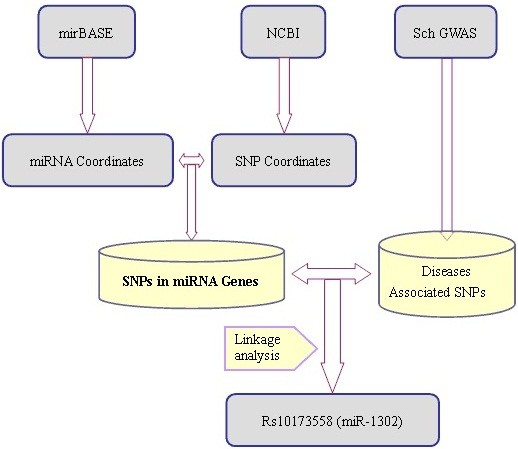
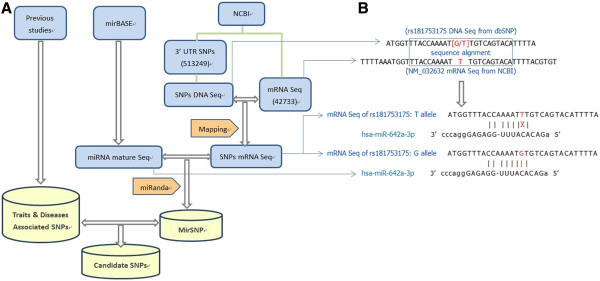
Background: Numerous single nucleotide polymorphisms (SNPs) associated with complex diseases have been identified by genome-wide association studies (GWAS) and expression quantitative trait loci (eQTLs) studies. However, few of these SNPs have explicit biological functions. Recent studies indicated that the SNPs within the 3’UTR regions of susceptibility genes could affect complex traits/diseases by affecting the function of miRNAs. These 3’UTR SNPs are functional candidates and therefore of interest to GWAS and eQTL researchers. Description: We developed a publicly available online database, MirSNP (http://cmbi.bjmu.edu.cn/mirsnp), which is a collection of human SNPs in predicted miRNA-mRNA binding sites. We identified 414,510 SNPs that might affect miRNA-mRNA binding. Annotations were added to these SNPs to predict whether a SNP within the target site would decrease/break or enhance/create an miRNA-mRNA binding site. By applying MirSNP database to three brain eQTL data sets, we identified four unreported SNPs (rs3087822, rs13042, rs1058381, and rs1058398), which might affect miRNA binding and thus affect the expression of their host genes in the brain. We also applied the MirSNP database to our GWAS for schizophrenia: seven predicted miRNA-related SNPs (p < 0.0001) were found in the schizophrenia GWAS. Our findings identified the possible functions of these SNP loci, and provide the basis for subsequent functional research. Conclusion: MirSNP could identify the putative miRNA-related SNPs from GWAS and eQTLs researches and provide the direction for subsequent functional researches.
Overview
The claims and statistics of this paper haven’t been checked yet.
Free: it reads the open-access text and checks the first 5 claims that cite a source we can check. Create a free account to check every claim.
Integrity signals
Registry
Cites
Statistics
Figures
Verification
Claims the paper makes
The claims and statistics of this paper haven’t been checked yet.
Free: it reads the open-access text and checks the first 5 claims that cite a source we can check. Create a free account to check every claim.
Claims other papers make about this one
Each is checked against this paper’s own text: does it say what the citing paper says it does?
In the citing paper
“For example, genetic variation can directly impact the specific sites at which DNA methylation can occur, 31 and may also impact the efficacy of sequence-dependent actions of ncRNAs.32”
From The role of epigenetics in psychological resilience (2021) · cites this paper as [32]
Self-check
Percentages, sums and reported differences re-computed from the paper’s own numbers.
The self-check needs the paper’s full text.
Citations
Cites
Bartel (2004) · doi:10.1016/s0092-8674(04)00045-5 · Cited by 34,714
PLINK: a tool set for whole-genome association and population-based linkage analyses.
Purcell, S., Neale, B., Todd-Brown, K., Thomas, L., Ferreira, M. A. R., Bender, D., Maller, J., Sklar, P., de Bakker, P. I. W., Daly, M. J., et al. (2007) · The American Journal of Human Genetics · doi:10.1086/519795 · Cited by 34,089
MicroRNAs: Target Recognition and Regulatory Functions
Bartel, D. P. (2009) · Cell · doi:10.1016/j.cell.2009.01.002 · Cited by 20,068 · cited 1×
“It was estimated that more than 50% of the protein-coding genes are regulated by miRNAs, and each miRNA may regulate hundreds of potential targets [10,11].”
Lewis, B. P., Burge, C. B., & Bartel, D. P. (2005) · Cell · doi:10.1016/j.cell.2004.12.035 · Cited by 11,855
dbSNP: the NCBI database of genetic variation
Sherry, S. T. (2001) · Nucleic Acids Research · doi:10.1093/nar/29.1.308 · Cited by 7,502
MicroRNAs: small RNAs with a big role in gene regulation
He, L., & Hannon, G. J. (2004) · Nature Reviews Genetics · doi:10.1038/nrg1379 · Cited by 7,118
The widespread regulation of microRNA biogenesis, function and decay
Krol, J., Loedige, I., & Filipowicz, W. (2010) · Nature Reviews Genetics · doi:10.1038/nrg2843 · Cited by 4,672 · cited 2×
“Evidence indicates that miRNAs are also involved in the pathogenesis of complex diseases, such as cancer and mental disorders [4,5].”
BackgroundA second generation human haplotype map of over 3.1 million SNPs
The International HapMap Consortium (2007) · Nature · doi:10.1038/nature06258 · Cited by 4,438 · cited 1×
“LD information was obtained for each SNP from the HapMap project [20].”
MethodEvolutionarily conserved elements in vertebrate, insect, worm, and yeast genomes
Siepel, A., Bejerano, G., Pedersen, J. S., Hinrichs, A. S., Hou, M., Rosenbloom, K., Clawson, H., Spieth, J., Hillier, L. W., Richards, S., et al. (2005) · Genome Research · doi:10.1101/gr.3715005 · Cited by 3,971 · cited 7×
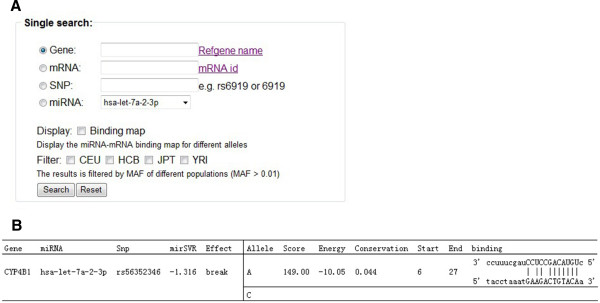
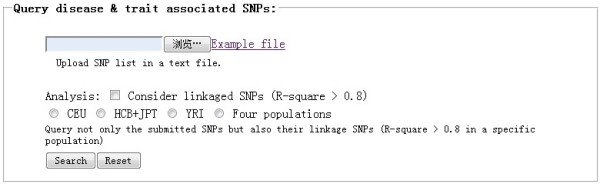
“To display the records in the MirSNP database, we designed a user-friendly MirSNP web site (see URLs) to allowing searching for SNPs in putative miRNA target sites.”
MethodInfluentialMammalian microRNAs predominantly act to decrease target mRNA levels
Guo, H., Ingolia, N. T., Weissman, J. S., & Bartel, D. P. (2010) · Nature · doi:10.1038/nature09267 · Cited by 3,886 · cited 1×
“However, it has been estimated that over 80 percent of miRNAs acted to lower mRNA levels, which shows that mRNA destabilization is the primary action mode of miRNAs on target mRNAs [35].”
Background
Cited by
Items 101–200 of 264
Sargazi, S., Nia, M. H., Sargazi, F. M., Sheervalilou, R., Saravani, R., & Mirinejad, S. (2020) · Journal of Diabetes & Metabolic Disorders · doi:10.1007/s40200-020-00590-5 · Cited by 19
“The MirSNP database was employed to determine if rs2466293 T/C and rs2466294 C/G variants create or destroy the miRNA target sites [29].”
MethodLi, C., Mou, C., Swartz, M. D., Yu, B., Bai, Y., Tu, Y.-C., & Liu, X. (2020) · Human Mutation · doi:10.1002/humu.24020 · Cited by 18
Ananthamohan, K., Sonawane, P. J., Khan, A. A., Subramanian, L., Ehret, G., Mullasari, A. S., & Mahapatra, N. R. (2015) · Journal of Molecular Biology · doi:10.1016/j.jmb.2015.07.003 · Cited by 22
“MirSNP [52], PolymiRTS [53,54], MicroSNiPer [55], RNAhybrid and PITA programs were used for predicting the miRNA binding site in the rs10749571(C/T) SNP position.”
MethodSubmiRine: assessing variants in microRNA targets using clinical genomic data sets
Maxwell, E. K., Campbell, J. D., Spira, A. E., & Baxevanis, A. D. (2015) · Nucleic Acids Research · doi:10.1093/nar/gkv256 · Cited by 19
Wang, M., Liu, H., Liu, Z., Yi, X., Bickeböller, H., Hung, R. J., Brennan, P., Landi, M. T., Caporaso, N. E., Christiani, D. C., et al. (2016) · Carcinogenesis · doi:10.1093/carcin/bgw070 · Cited by 18
“MirSNP prediction revealed that rs2035990 located in the 3′-UTR of XRCC4, a microRNA-567 binding region, might result in gene dysregulation (58).”
BackgroundParé, L., Glubb, D. M., Evans, P. D., Berenguer, A., Etheridge, A. S., Skol, A. D., Rienzo, A. D., Duan, S., Gamazon, E. R., & Innocenti, F. (2013) · Human Mutation · doi:10.1002/humu.22475 · Cited by 23
de Almeida, R. C., Chagas, V. S., Castro, M. A. A., & Petzl‐Erler, M. L. (2018) · Frontiers in Genetics · doi:10.3389/fgene.2018.00139 · Cited by 20
Epigenetics and MicroRNAs in Pharmacogenetics
Zanger, U. M., Klein, K., Kugler, N., Petrikat, T., & Ryu, C. S. (2018) · Advances in pharmacology · doi:10.1016/bs.apha.2018.02.003 · Cited by 20
Exosomal miR ‐155‐5p promote the occurrence of carotid atherosclerosis
Yang, W., Li, Q., Wang, F., Zhang, X., Zhang, X., Wang, M., Dong, X., Zhao, Y., & Tang, L. (2024) · Journal of Cellular and Molecular Medicine · doi:10.1111/jcmm.70187 · Cited by 23
Song, C.-Q., Zhang, J.-H., Shi, J.-C., Cao, X.-Q., Song, C., Hassan, A., Wang, P., Dai, L.-P., Zhang, J.-Y., & Wang, K.-J. (2014) · Asian Pacific Journal of Cancer Prevention · doi:10.7314/apjcp.2014.15.2.937 · Cited by 17
“SNPs within the target sites could analogously modulate the miRNA-mRNA interaction and decrease, break, enhance and create a miRNA-mRNA binding site (Liu et al., 2012).”
BackgroundInfluentialMagruder, S., Carter, E., Williams, M. A., English, J. D., Akyalçın, S., & Letra, A. (2018) · Orthodontics and Craniofacial Research · doi:10.1111/ocr.12248 · Cited by 17
Wang, W., Yuan, P., Yu, D., Du, F., Zhu, A., Li, Q., Zhang, P., Lin, D., & Xu, B. (2016) · Oncotarget · doi:10.18632/oncotarget.7920 · Cited by 20
“cn/mirsnp) publicly available online database was used for the final screening [40].”
Ning, S., & Li, X. (2018) · Advances in experimental medicine and biology · doi:10.1007/978-981-13-0719-5_1 · Cited by 17
Zhu, D., Guo, Y., Zhang, Y., Dong, S., Xu, W., Hao, R.-H., Chen, X., Yan, H., Yang, S., & Yang, T. (2017) · Human Mutation · doi:10.1002/humu.23216 · Cited by 18
“…(http://pictar.bio.nyu.edu) (Krek et al., 2005), TargetScan (http://www .targetscan.org/) (Friedman, Farh,Burge,&Bartel, 2009;Grimsonet al., 2007; Lewis, Burge, & Bartel, 2005), miRanda (http://www.microrna. org/) (John et al., 2004), andmirSNP (http://cmbi.bjmu.edu.cn/mirSNP) (Liu et al., 2012).”
Polymorphisms in miRNA binding sites involved in metabolic diseases in mice and humans
Gottmann, P., Ouni, M., Zellner, L., Jähnert, M., Rittig, K., Walther, D., & Schürmann, A. (2020) · Scientific Reports · doi:10.1038/s41598-020-64326-4 · Cited by 16
Shahin, M. H., Sá, A. C. C., Webb, A., Gong, Y., Langaee, T. Y., McDonough, C. W., Riva, A., Beitleshees, A. L., Chapman, A. B., Gums, J. G., et al. (2017) · Circulation Cardiovascular Genetics · doi:10.1161/circgenetics.116.001404 · Cited by 15
Bioinformatics Analysis Revealed Novel 3′UTR Variants Associated with Intellectual Disability
Yang, J., Liu, A., He, I., & Bai, Y. (2020) · Genes · doi:10.3390/genes11090998 · Cited by 16
“Previous studies suggest that numerous single nucleotide polymorphisms (SNPs) within the 3′UTR regions of susceptibility genes can affect complex traits/diseases by influencing the binding affinity of miRNAs [23].”
BackgroundComorbidity of Novel CRHR2 Gene Variants in Type 2 Diabetes and Depression
Amin, M., Ott, J., Gordon, D., Wu, R., Postolache, T. T., Vergare, M. J., & Gragnoli, C. (2022) · International Journal of Molecular Sciences · doi:10.3390/ijms23179819 · Cited by 18
“The non-coding variants were analysed using tools that predict splicing (SpliceAI) [29], transcription-factor (TF) binding (SNPnexus) [30], SNP Function Prediction [31], regulatory potential (RegulomeDB) [32], and miRNA binding [33].”
MethodYang, L., Wang, J., Sun, X., Cao, Y., Ning, S., Zhang, H., Chen, L., Li, R., Tian, Q., Wang, L., et al. (2014) · PLoS ONE · doi:10.1371/journal.pone.0104827 · Cited by 14
Self-citationComputational Approaches and Related Tools to Identify MicroRNAs in a Species: A Bird’s Eye View
Rajendiran, A., Chatterjee, A., & Pan, A. (2017) · Interdisciplinary Sciences Computational Life Sciences · doi:10.1007/s12539-017-0223-x · Cited by 15
“MirSNP [146] is a repository of human SNPs predicted at the miRNA–mRNA-binding sites.”
BackgroundFamilial Linkage and Association of the NR3C1 Gene with Type 2 Diabetes and Depression Comorbidity
Amin, M., Syed, S., Wu, R., Postolache, T. T., & Gragnoli, C. (2022) · International Journal of Molecular Sciences · doi:10.3390/ijms231911951 · Cited by 18
“In fact, our in silico analysis (splicing [SpliceAI] [35], transcription-factor binding [SNPnexus] [36], SNP function prediction [37], regulatory potential [RegulomeDB] [38], and miRNA binding [mirSNP] [39]) predicted no functional impact on the GR protein.”
BackgroundA Population-Based Study of Four Genes Associated with Heroin Addiction in Han Chinese
Li, Y., Qiao, X., Yin, F., Guo, H., Huang, X. S., Lai, J., & Wei, S. (2016) · PLoS ONE · doi:10.1371/journal.pone.0163668 · Cited by 16
Roca‐Ayats, N., Martínez‐Gil, N., Cozar, M., Gerousi, M., García‐Giralt, N., Ovejero, D., Mellibovsky, L., Nogués, X., Díez‐Pérez, A., Grinberg, D., et al. (2019) · Bone · doi:10.1016/j.bone.2019.03.014 · Cited by 14
Shen, Y., Shao, Y., Ruan, X., Zhu, L., Zang, Z., Wei, T., Nakyeyune, R., Wei, W., & Liu, F. (2022) · BMC Cancer · doi:10.1186/s12885-022-10360-6 · Cited by 13
“The MirSNP database provides human SNPs that located at miRNA-mRNA binding sites, which were mainly predicted by miRanda algorithm [27].”
MethodmiRNASNP-v4: a comprehensive database for miRNA-related SNPs across 17 species
Cao, W., He, J., Feng, J., Wu, X., Wu, T., Wang, D., Min, C., Niu, X., Gao, Z., Guo, A., et al. (2024) · Nucleic Acids Research · doi:10.1093/nar/gkae888 · Cited by 20
“To identify and analyze the functions of miRNA-related SNPs, a variety of resources have been developed, such as Mi-croSNiPer ( 9 ), miRdSNP ( 10 ), MirSNP ( 11 ), PolymiRTS ( 12 ), MSDD ( 13 ) and miRNASNP ( 14–16 ).”
Common variants of ATP1A3 but not ATP1A2 are associated with Chinese genetic generalized epilepsies
Qu, J., Yang, Z., Zhang, Y., Mao, C., Wang, Z., Mao, X., Zhou, B., Yin, J., He, H., Long, H., et al. (2015) · Journal of the Neurological Sciences · doi:10.1016/j.jns.2015.04.045 · Cited by 14
“After we use MirSNP database to predict, the results showed that it is not altering anymiRNA target sites [43].”
MethodWitasp, A., Ekström, T. J., Schalling, M., Lindholm, B., Stenvinkel, P., & Nordfors, L. (2014) · Nephrology Dialysis Transplantation · doi:10.1093/ndt/gfu021 · Cited by 15
“MirSNP database [9] and Human Epigenome Project and the epigenomics initiative of the National Institutes of Health (http: //commonfund.”
BackgroundMethodHuang, X., Zhang, Q., Chen, X., Gu, X., Wang, M., & Wu, J. (2019) · Genes Brain & Behavior · doi:10.1111/gbb.12574 · Cited by 16
Chen, X., Xu, Y., Cao, X., Chen, Y., Jiang, J., & Wang, K. (2015) · Medicine · doi:10.1097/md.0000000000001982 · Cited by 13
Zhang, X., Crawford, E. L., Blomquist, T. M., Khuder, S., Yeo, J., Levin, A. M., & Willey, J. C. (2016) · Physiological Genomics · doi:10.1152/physiolgenomics.00021.2016 · Cited by 17
Zhao, J., Bai, Y., Jin, L., Weng, Y., Wang, Y., Wu, H., Li, X., Huang, Y., & Wang, S. (2017) · PLoS ONE · doi:10.1371/journal.pone.0172709 · Cited by 13
“Therefore, we searched for miRNAs with bindings that could be affected by the +936 C > T or +1451 C > T base substitution using MirSNP database [23].”
Meng, H., Li, X., Jin, W., Yan, C., Dong, X., Xu, Q., Peng, Y., Li, Z., Li, Y., Luo, Z., et al. (2020) · European Journal of Clinical Pharmacology · doi:10.1007/s00228-019-02803-0 · Cited by 13
Miao, L., Wang, B., Zhang, J., Yin, L., & Pu, Y. (2021) · Environmental Science and Pollution Research · doi:10.1007/s11356-021-13649-4 · Cited by 14
Vodička, P., Pardini, B., Vymetalkova, V. P., & Naccarati, A. (2016) · Advances in experimental medicine and biology · doi:10.1007/978-3-319-42059-2_7 · Cited by 13
Amin, M., & Gragnoli, C. (2023) · Journal of Ovarian Research · doi:10.1186/s13048-023-01280-5 · Cited by 14
“We performed functional bioinformatics analysis for the 2 PCOS-risk variants testing for disruption of transcription-factor binding (SNP2TFBS [20]), splicing (SNP-function prediction [21]) miRNA binding (mirSNP [22]), and/or regulation potential (RegulomDB [23]).”
MethodMohammadpour‐Gharehbagh, A., Salimi, S., Keshavarzi, F., Saeidian, F., Torshizi, M. M., Teimoori, B., Esmaeilpour, M., & Mokhtari, M. (2017) · Journal of Cellular Biochemistry · doi:10.1002/jcb.26240 · Cited by 12
Abdi, A., Zafarpiran, M., & Shirvani-Farsani, Z. (2019) · Central Nervous System Agents in Medicinal Chemistry · doi:10.2174/1871524919666191014104843 · Cited by 15
HumiR: Web Services, Tools and Databases for Exploring Human microRNA Data
Solomon, J., Kern, F., Fehlmann, T., Meese, E. U., & Keller, A. (2020) · Biomolecules · doi:10.3390/biom10111576 · Cited by 12
“, miRSNP [40] or PolymiRTS [41] miRPathDB [42–44]: The miRNA target pathway dictionary that has led to the development of miRpathDB is a resource for storing target pathways of miRNAs.”
BackgroundGenetics of Eosinophilic Esophagitis
Sherrill, J. D., & Blanchard, C. (2014) · Digestive Diseases · doi:10.1159/000357005 · Cited by 13
Bellampalli, R., Phani, N. M., Bhat, K. G., Prasad, K., Bhaskaranand, N., Guruprasad, K. P., Rai, P. S., & Satyamoorthy, K. (2014) · Leukemia & lymphoma/Leukemia and lymphoma · doi:10.3109/10428194.2014.953154 · Cited by 12
Zhou, W.-L., Mo, Z., Xiao, F., Dai, W., Wang, G., Zhou, G., Zhang, W., & Chen, B. (2019) · Platelets · doi:10.1080/09537104.2019.1696455 · Cited by 12
mi RNA contributions to pediatric‐onset multiple sclerosis inferred from GWAS
Rhead, B., Shao, X., Graves, J., Chitnis, T., Waldman, A. T., Lotze, T. E., Schreiner, T., Belman, A. L., Krupp, L., Greenberg, B. M., et al. (2019) · Annals of Clinical and Translational Neurology · doi:10.1002/acn3.786 · Cited by 13
Yousef, G. M. (2015) · Cancer Discovery · doi:10.1158/2159-8290.cd-15-0230 · Cited by 11
CEBPG Exhibits Allele-Specific Expression in Human Bronchial Epithelial Cells
Blomquist, T. M., Brown, R. D., Crawford, E. L., de la Serna, I. L., Williams, K. J., Yoon, Y., Hernandez, D.-A. R., & Willey, J. C. (2013) · Gene Regulation and Systems Biology · doi:10.4137/grsb.s11879 · Cited by 12
Ke, J., Tian, J., Li, J., Gong, Y., Yang, Y., Zhu, Y., Zhang, Y., Zhong, R., Chang, J., & Gong, J. (2017) · Molecular Carcinogenesis · doi:10.1002/mc.22649 · Cited by 12
Jaiswal, S., Iquebal, M. A., Arora, V., Sheoran, S., Sharma, P. K., Angadi, U. B., Dahiya, V., Singh, R., Tiwari, R., Singh, G. P., et al. (2019) · Scientific Reports · doi:10.1038/s41598-019-40333-y · Cited by 11
Ahsan, T., Shoily, S. S., Ahmed, T., & Sajib, A. A. (2023) · PLoS ONE · doi:10.1371/journal.pone.0289158 · Cited by 10
“According to mirSNP database [76], this SNP can break the binding of hsa-miR-3673 and hsa-miR-4694-3p whereas it enhances the binding of hsa-miR-5680 (data not shown).”
BackgroundHernando, B., Peña-Chilet, M., Ibarrola‐Villava, M., Martín‐González, M., Gómez‐Fernández, C., Ribas, G., & Martínez‐Cadenas, C. (2017) · Experimental Dermatology · doi:10.1111/exd.13333 · Cited by 12
Kuniholm, M. H., Liang, H., Anastos, K., Gustafson, D., Kassaye, S., Nowicki, M. J., Sha, B. E., Pawlowski, E., Gange, S. J., Aouizerat, B. E., et al. (2017) · AIDS · doi:10.1097/qad.0000000000001648 · Cited by 11
“We used two bioinformatics programs (mrSNP [26] and MirSNP [27]) to calculate microRNA binding energies.”
MethodInfluentialIpe, J., Collins, K. S., Hao, Y., Gao, H., Bhatia, P., Gaedigk, A., Liu, Y., & Skaar, T. C. (2018) · Frontiers in Genetics · doi:10.3389/fgene.2018.00219 · Cited by 13
SNP rs10800708 within the KIF14 miRNA binding site is linked with breast cancer
Shasttiri, A., Delavar, M. R., Baghi, M., Ashkezari, M. D., & Ghaedi, K. (2018) · British Journal of Biomedical Science · doi:10.1080/09674845.2018.1509551 · Cited by 11
“Online tools (MirSNP [12] andmiRNA SNP [13]) were used to investigate whether rs10800708 SNP within the 3ʹ-UTR of KIF14 affects its regulation by miRNAs.”
MethodJacobsen, D. P., Eriksen, M. B., Rajalingam, D., Nymoen, I., Nielsen, M. B., Einarsen, S. V., & Gjerstad, J. (2019) · Stress · doi:10.1080/10253890.2019.1642320 · Cited by 17
Retinal biomarkers and pharmacological targets for Hermansky-Pudlak syndrome 7
Romano, G. L., Platania, C. B. M., Leggio, G. M., Torrisi, S. A., Giunta, S., Salomone, S., Purrello, M., Ragusa, M., Barbagallo, C., Giblin, F. J., et al. (2020) · Scientific Reports · doi:10.1038/s41598-020-60931-5 · Cited by 10
Jurj, M.-A., Buse, M., Zimța, A., Paradiso, A., Korban, S. S., Pop, L., & Berindan‐Neagoe, I. (2020) · International Journal of Molecular Sciences · doi:10.3390/ijms21165835 · Cited by 14
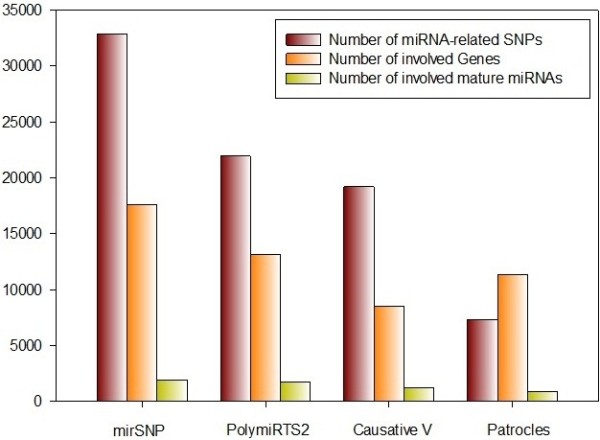
“Subsequently, several resources covering the effects of SNPs on miRNA regulation of different genes have been developed, such as Patrocles [95], dbSMR [96], MirSNP [89], and PolymiRTS [97].”
Powell, N. R., Zhao, H., Ipe, J., Liu, Y., & Skaar, T. C. (2021) · Clinical Pharmacology & Therapeutics · doi:10.1002/cpt.2379 · Cited by 12
“Many of the variants we found to be functional may never achieve statistical significance in population studies, even large genomewide association studies.(39) This is especially true for the rare and/or small effect size variants, making this in vitro cellbased platform an important tool for the discovery of function…”
BackgroundZhang, N., Huang, D., Jiang, G., Chen, S., Ruan, X., Chen, H., Huang, J., Liu, A., Zhang, W., Lin, X., et al. (2022) · Advanced Science · doi:10.1002/advs.202201420 · Cited by 11
Amin, M., Horst, N., & Gragnoli, C. (2023) · Journal of Ovarian Research · doi:10.1186/s13048-023-01205-2 · Cited by 13
“In-silico analysis We analyzed the DRD2-risk variants by different bioinformatics tools that predict their functional role in transcription factor (TF) binding (SNP Function Prediction) [37], miRNA binding (mirSNP) [38], splicing (SpliceAI) [39], and regulatory potential (RegulomeDB) [40].”
MethodWu, D., Yang, G., Zhang, L., Xue, J., Wen, Z., & Li, M. (2014) · BMC Genomics · doi:10.1186/1471-2164-15-669 · Cited by 17
“[14] developed an online database to annotate predicted MRESS SNPs.”
CREAM: a database for chemotherapy resistance-associated miRSNP
Dai, E., Lv, Y., Meng, F., Yu, X., Zhang, Y., Wang, S., Liu, X., Liu, D., Wang, J., Li, X., et al. (2014) · Cell Death and Disease · doi:10.1038/cddis.2014.236 · Cited by 10
Bakhit, Y., Ibrahim, M. O., Amin, M., Mirghani, Y. A., & Hassan, M. A. S. (2016) · Advances in Bioinformatics · doi:10.1155/2016/9313746 · Cited by 12
“For SNPs within the 3UTR region we usedMIRSNPs [15] online software, which contains human SNPs in predicted miRNA-mRNA binding sites based on information from dbSNP135 and mirBASE18.”
MethodAggarwal, S., Nayek, A., Pradhan, D., Verma, R., Yadav, M., Ponnusamy, K., & Jain, A. K. (2017) · Genomics · doi:10.1016/j.ygeno.2017.10.003 · Cited by 10
Bendová, P., Pardini, B., Šůsová, S., Rosendorf, J., Levý, M., Škrobánek, P., Büchler, T., Král, J., Liška, V., Vodičková, Ľ., et al. (2020) · Carcinogenesis · doi:10.1093/carcin/bgaa136 · Cited by 10
Mahfuz, A. M. U. B., Khan, M. A., Deb, P., Ansary, S. J., & Jahan, R. (2021) · Biochemistry and Biophysics Reports · doi:10.1016/j.bbrep.2021.101179 · Cited by 13
Amin, M., Horst, N., Wu, R., & Gragnoli, C. (2023) · Journal of Ovarian Research · doi:10.1186/s13048-023-01159-5 · Cited by 12
“We analyzed the significant variants with various in silico tools that predict their role in transcription factor (TF) binding (SNP Function Prediction) [38], splicing (SpliceAI) [39], miRNA binding (mirSNP) [40] and regulatory potential (RegulomeDB) [28].”
MethodUncovering association networks through an eQTL analysis involving human miRNAs and lincRNAs
Branco, P. R., de Araújo, G. S., Barrera, J., Suarez‐Kurtz, G., & SOUZA, S. J. D. (2018) · Scientific Reports · doi:10.1038/s41598-018-33420-z · Cited by 11
Zhu, Y., Zhang, M., Wang, F., Lu, J., Chen, R., Xie, Q., Sun, J., Xue, J., Hao, C., & Lin, S. (2018) · International Immunopharmacology · doi:10.1016/j.intimp.2018.10.038 · Cited by 9
Ahirwar, S. S., Rizwan, R., Sethi, S., Shahid, Z., Malviya, S., Khandia, R., Agarwal, A. K., & Kotnis, A. L. (2023) · MicroRNA · doi:10.2174/0122115366261005231018070640 · Cited by 8
Kishan, A. U., McGreevy, K. M., Valle, L., Steinberg, M. L., Neilsen, B. K., Casado, M., Cao, M., Telesca, D., & Weidhaas, J. B. (2025) · Clinical Cancer Research · doi:10.1158/1078-0432.ccr-24-3951 · Cited by 9
“Interestingly, the most important GWAS SNP, which is also part of the PROSTOX biomarker panel, disrupts a noncoding RNA (41), further highlighting the importance and relevance of evolving genetic arrays to capture functional noncoding elements (42–44).”
de Freitas, R. C. C., Bortolin, R. H., Borges, J. B., de Oliveira, V. F., Dagli-Hernandez, C., Marçal, E. D. S. R., Bastos, G. M., Gonçalves, R. M., Faludi, A. Á., Silbiger, V. N., et al. (2023) · Molecular Biology Reports · doi:10.1007/s11033-023-08784-9 · Cited by 8
“These public databases predict the effects of a variant on interactions between the miRNAs and the targeted mRNA. miRSNP provides information on whether a 3´UTR vari - ant would enhance/create or decrease/disrupt a miRNA binding site [27 ].”
BackgroundBhuvaneshwar, K., & Gusev, Y. (2024) · Briefings in Bioinformatics · doi:10.1093/bib/bbae098 · Cited by 12
Fang, X., Li, X., Yin, Z., Xia, L., Quan, X., Zhao, Y., & Zhou, B. (2017) · Oncotarget · doi:10.18632/oncotarget.21687 · Cited by 8
First Glimpse of Epigenetic Effects on Pemphigus Foliaceus
Spadoni, M. B., Bumiller‐Bini, V., Petzl‐Erler, M. L., Augusto, D. G., & Boldt, A. B. W. (2019) · Journal of Investigative Dermatology · doi:10.1016/j.jid.2019.07.691 · Cited by 8
Wang, Z., Li, J., Zhang, T., Lu, T., Wang, H., Jia, M., Liu, J., Xiong, J., Zhang, D., & Wang, L. (2020) · Progress in Neuro-Psychopharmacology and Biological Psychiatry · doi:10.1016/j.pnpbp.2020.109985 · Cited by 10
Self-citationDehghanzad, R., Panahi-Moghadam, S., & Shirvani-Farsani, Z. (2021) · Advanced Biomedical Research · doi:10.4103/abr.abr_143_20 · Cited by 8
Melo, A. R. V., Raposo, M., Ventura, M., Martins, S., Pavão, S., Alonso, I. D. C. M. P., Bettencourt, C., & Lima, M. C. F. (2022) · The Cerebellum · doi:10.1007/s12311-021-01358-0 · Cited by 8
Zeinalzadeh, S., Kheradmand, N., Rasouli, G., Esmaeilzadeh, E., Pakzad, B., Behroozi, J., Chamanara, M., Zoshk, M. Y., Ehtesham, N., & Sabet, M. N. (2022) · Clinical Rheumatology · doi:10.1007/s10067-022-06131-0 · Cited by 8
“Then, we found potential miRNA-binding sites of the selected SNPs by probing to some databases such as miRdSNP [25], miRSNP [24], and Polymirts [29].”
BackgroundMokhtari, M. A., Sargazi, S., Saravani, R., Nia, M. H., Mirinejad, S., Hadzsiev, K., Bene, J., & Shakiba, M. (2022) · Disease Markers · doi:10.1155/2022/1886658 · Cited by 10
“For this purpose, the mirSNP database, as a collection of human SNPs in predicted miRNA target sites, was used to detect the effect of SNPs on the miRNA binding sites [55].”
MethodWang, F., Mi, W., Ma, W., Ma, C., Yang, Y., Zhang, H., Du, B., Li, K., Liu, C., Wang, L., et al. (2015) · Pharmacogenomics · doi:10.2217/pgs.15.133 · Cited by 9
Self-citationFittipaldi, S., Visconti, V. V., Tarantino, U., Novelli, G., & Botta, A. (2020) · Epigenomics · doi:10.2217/epi-2020-0233 · Cited by 10
He, F., Zheng, L., Luo, W., Yang, R., Xu, X., & Cai, L. (2014) · Asian Pacific Journal of Cancer Prevention · doi:10.7314/apjcp.2014.15.8.3601 · Cited by 8
“…common databases that provide displays of gene interactions for human cellular processes (http://cgap.nci.nih.gov/Pathways) and literatures (Shen et al., 2011; Yu et al., 2011; McMillan et al., 2011 ;Lee et al., 2012) commonly acknowledged as important inflammatory genes associated with smoking.”
BackgroundRamachandran, S. S., Coffin, S. L., Tang, T., Jobaliya, C., Spengler, R. M., & Davidson, B. L. (2016) · Human Molecular Genetics · doi:10.1093/hmg/ddw317 · Cited by 9
“Currently available computational tools include MirSNP (33), a computational approach to identifying SNPs in MREs by combining TargetScan (17) predictions, miRNA seed information, and dbSNP data to compute and predict the occurrences of ‘seed-altering’ SNPs.”
MethodScurrah, K. J., Lamantia, A., Ellis, J. A., & Harrap, S. B. (2017) · Circulation Cardiovascular Genetics · doi:10.1161/circgenetics.116.001595 · Cited by 8
κ Opioid Receptor 1 Single Nucleotide Polymorphisms were Associated with the Methadone Dosage
Zhang, Q. Y., Shi, M., Tang, H., Zhong, H., & Lu, X. (2020) · Genetic Testing and Molecular Biomarkers · doi:10.1089/gtmb.2019.0159 · Cited by 8
He, X., Song, B., Du, W., Cao, Y., Zhang, Y., Ruan, J., Tian, H., Zhou, F., Zuo, X.-B., Wu, H., et al. (2014) · Biology of Reproduction · doi:10.1095/biolreprod.114.120527 · Cited by 7
Khan, K. A., khan, A., Rahman, Z. U., Khan, F., Latief, N., & Fazal, N. (2024) · Pathology - Research and Practice · doi:10.1016/j.prp.2024.155675 · Cited by 8
A genetic variant within SLC30A6 has a protective role in the severity of rheumatoid arthritis
Adelino, J., Cavalcanti, C. A. J., Pontillo, A., Fragoso, T. S., Duarte, Â., Crovella, S., Silva, J. D. A., & Sandrin‐Garcia, P. (2016) · Scandinavian Journal of Rheumatology · doi:10.1080/03009742.2016.1209551 · Cited by 7
“To investigate the possible functional impact of this SNP, we also conducted an in-silico analysis of the 3ʹ UTR of SLC30A6 using the MirSNP database (9).”
MethodBug, D. S., Тишков, А., Moiseev, I., & Petukhova, N. V. (2021) · Current Issues in Molecular Biology · doi:10.3390/cimb43020044 · Cited by 6
“Some methods specialize on prediction of the SNP impact on putative miRNA targets [27,47,48].”
MethodZandi, M., Moghaddam, V. A., Salehi, Z., Mashayekhi, F., & Dalili, S. (2022) · Immunological Investigations · doi:10.1080/08820139.2022.2079419 · Cited by 6
“For a computational investigation of the effect of rs1053005 on the interaction network of miRNAs with the 3′-UTR of STAT3 mRNA, results from several predicting databases including MirSNP (Liu et al. 2012), TargetScanHuman v. 7.2 (Agarwal et al. 2015), miRNASNP (Liu et al. 2021) and miRSNPdb (Fehlmann et al. 2017) wer…”
MethodInfluentialBellampalli, R., Vohra, M., Sharma, K., Bhaskaranand, N., Bhat, K. G., Prasad, K., Sharma, A. R., Satyamoorthy, K., & Rai, P. S. (2017) · Cancer Biomarkers · doi:10.3233/cbm-160186 · Cited by 6
“…loss) by using microRNA-related single nucleotide polymorphism V2 (miRNASNP V2) [33]: data updated based on miR-Base 19 and dbSNP V137), database of polymorphisms altering miRNA target sites (mirSNP data-base) [34] and Polymorphisms in microRNAs and their target sites (PolymiRTS database 3.0) [35].”
InfluentialPredictive modeling of miRNA-mediated predisposition to alcohol-related phenotypes in mouse
Rudra, P., Shi, W. J., Russell, P. H., Vestal, B. E., Tabakoff, B., Hoffman, P. L., Kechris, K. J., & Saba, L. M. (2018) · BMC Genomics · doi:10.1186/s12864-018-5004-3 · Cited by 7
Cheng, S., Sun, C., Lao, W., & Kang, H. (2019) · Genetic Testing and Molecular Biomarkers · doi:10.1089/gtmb.2018.0265 · Cited by 6
“As mentioned above, the variant rs1010 lies in a 3 ¢ UTR portion on the VAMP8 mRNA transcript, a portion also containing suggested binding sites targeted by multiple miRNAs (miR-15, miR-96, miR-370, and miR-3945) (Lewis et al. , 2005; Liu et al. , 2012; Stegeman et al. , 2015).”
Synteny analysis and functional characterization of miR165a from Brassica species
Sirohi, G., Kusumanjali, K., Kumar, R., Jain, A., Srivastava, P. S., & Das, S. (2017) · Acta Physiologiae Plantarum · doi:10.1007/s11738-017-2592-5 · Cited by 6
“It has been shown that such polymorphisms are associated with altered PTGS response (Liu et al. 2012).”
BackgroundGoparaju, P., & Gragnoli, C. (2024) · Journal of Ovarian Research · doi:10.1186/s13048-024-01515-z · Cited by 5
“We conducted in-silico analysis to predict the risk vari-ants-related disruption of transcription-factor binding (SNP2TFBS [35]), splicing (SNP-function prediction [36]), 3D protein structure (Chimera [37]) and miRNA binding (mirSNP [38]).”
MethodThe melatonin receptor genes are linked and associated with the risk of polycystic ovary syndrome
Postolache, T. T., tinawi, Q. A., & Gragnoli, C. (2024) · Journal of Ovarian Research · doi:10.1186/s13048-024-01343-1 · Cited by 5
“We used different bioinformatics tools to predict the risk variants’ roles in transcription factor (TF) binding (SNP Function Prediction) [32], miRNA binding (mirSNP) [33], splicing (SpliceAI) [34], and regulatory potential (RegulomeDB) [35].”
MethodLouer, E., Lorés‐Motta, L., Ion, A. M., den Hollander, A. I., & Deen, P. M. T. (2019) · RNA Biology · doi:10.1080/15476286.2019.1643100 · Cited by 5
“Analysis of the SNPs found in the 3ʹ-UTR with the online available mirSNP tool [25] revealed four SNPs that are predicted to affect binding of miRNAs (Table 2).”
MethodInfluentialPrabahar, A., & Raja, K. (2022) · Diagnostics · doi:10.3390/diagnostics12081914 · Cited by 6
“Singlenucleotide polymorphisms (SNPs) in mRNA sites complementary to miRNA are referred to as miRSNPs [32].”
BackgroundAmin, M., Syed, S., Wu, R., Postolache, T. T., & Gragnoli, C. (2023) · Aspects of Molecular Medicine · doi:10.1016/j.amolm.2023.100003 · Cited by 6
Wang, X., Jiang, H., Wu, W., Zhang, R., Wu, L., Chen, H., Li, P., Nie, Y., Shao, J., Yan, L., et al. (2017) · International Journal of Genomics · doi:10.1155/2017/1674827 · Cited by 6
“Unlike other tools (PolymiRTS [10, 20], MicroSNiPer [12], MirSNP [21], and miRNASNP [22]), we considered that both SNPs reside and near the target site can affect the interaction of miRNA to the target site (tarSNPs).”
MethodMüller, S., Wallner, S., Schmitz, G., Loew, T. H., Stempfl, T., Moehle, C., Strack, C., Sag, S. J. M., Baessler, A., & Fischer, M. (2020) · Gene · doi:10.1016/j.gene.2020.144787 · Cited by 7
XPG is Modulated by miR-4715-3p and rs873601 Genotypes in Lung Cancer
Yu, W., Yao, J., Lyu, P., Zhou, J., Chen, X., Liu, X., & Xiao, S. (2021) · Cancer Management and Research · doi:10.2147/cmar.s294365 · Cited by 5
Metadata
- Authors
- Liu, C., Zhang, F., Li, T., Lu, M., Wang, L., Yue, W., & Zhang, D.
- Affiliations
- Peking University (CN)
- Corresponding author
- Yue, Weihua
- Zhang, Dai
- Venue
- BMC Genomics
- Published
- 2012-11-23
- Volume
- 13
- Issue
- 1
- Pages
- 661-661
- ISSN
- 1471-2164 (ISSN-L)
- PMC
- PMC3582533
- OpenAlex
- W2080834212
- Semantic Scholar
- a54ea8a95687950e6a8e4db807b6e8f2dc387c64
- Cited by
- 264
- References
- 43
- Citations by year
- 2026: 1 · 2025: 3 · 2024: 15 · 2023: 16 · 2022: 19 · 2021: 24 · 2020: 23 · 2019: 23 · 2018: 22 · 2017: 33 · 2016: 20 · 2015: 27 · 2014: 30 · 2013: 8
- FWCI
- 6.88
- Type
- journal article
- Language
- en
- Open access
- gold
- doi.org
- Licence
- cc-by
- Locations
- BMC Genomics (publishedVersion, cc-by)
- Europe PMC (PubMed Central) (publishedVersion, cc-by)
- PubMed Central (publishedVersion, cc-by)
- PubMed (publishedVersion)
- DOAJ (DOAJ: Directory of Open Access Journals) (submittedVersion)
- Funders
- National Natural Science Foundation of China (81071087, 81071088)
- Topics
- Life Sciences › Biochemistry, Genetics and Molecular Biology › Cancer Research › MicroRNA in disease regulation
- Life Sciences › Biochemistry, Genetics and Molecular Biology › Genetics › Genetic Associations and Epidemiology
- Life Sciences › Biochemistry, Genetics and Molecular Biology › Molecular Biology › RNA Research and Splicing
- Keywords
- miRSNPs, single nucleotide polymorphisms, microRNA binding sites, 3'UTR variant, expression quantitative trait loci, brain gene expression, schizophrenia, genome-wide association study
- MeSH terms
- Binding Sites, Humans, RNA, Messenger, Schizophrenia, Genome, Human, Internet, 3' Untranslated Regions, Polymorphism, Single Nucleotide, Databases, Genetic, MicroRNAs, Quantitative Trait Loci, Genome-Wide Association Study
About these checks
Registry, retraction, Cites and statistics results are computed, not judged, with one exception: a printed reference that no index lists is read once by a model before it counts as a citation error. Claims are extracted by a model and kept only when their quote appears verbatim in the text; each cited source is then checked, with a model’s help, for whether it says what the claim relies on. Those verdicts can be wrong — read the claim’s quote and the cited source before relying on one.
Statistics and arithmetic are recomputed, not judged.
Confidence bands are shown only for fields calibrated on our annotated test set. None is calibrated yet, so no band is shown.
What counts as a claim ›How we measure confidence ›How we check this ›
Are you an author, or do you see a problem with this page? Request a review
Data sources
Bibliographic data: Semantic Scholar, OpenAlex, Crossref.
Contains information from the Semantic Scholar Academic Graph Datasets, made available under the ODC Attribution License (ODC-BY 1.0).
Semantic Scholar’s data is described in: Kinney, R., et al. (2023). The Semantic Scholar Open Data Platform. arXiv:2301.10140.
