

MirSNP, a database of polymorphisms altering miRNA target sites, identifies miRNA-related SNPs in GWAS SNPs and eQTLs
Open accessThe DOI matches its Crossref record; 42 of the 43 references it cites were found in a registry or an index.
Abstract
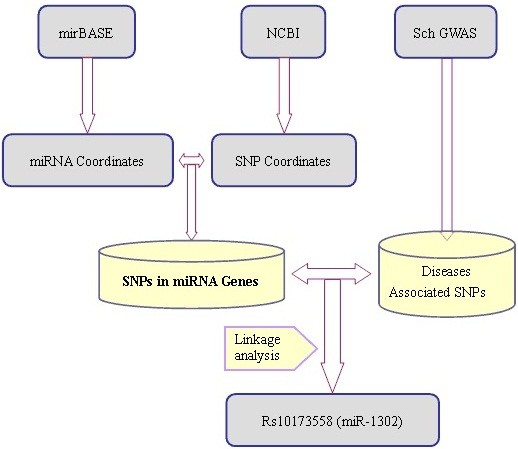
Background: Numerous single nucleotide polymorphisms (SNPs) associated with complex diseases have been identified by genome-wide association studies (GWAS) and expression quantitative trait loci (eQTLs) studies. However, few of these SNPs have explicit biological functions. Recent studies indicated that the SNPs within the 3’UTR regions of susceptibility genes could affect complex traits/diseases by affecting the function of miRNAs. These 3’UTR SNPs are functional candidates and therefore of interest to GWAS and eQTL researchers. Description: We developed a publicly available online database, MirSNP (http://cmbi.bjmu.edu.cn/mirsnp), which is a collection of human SNPs in predicted miRNA-mRNA binding sites. We identified 414,510 SNPs that might affect miRNA-mRNA binding. Annotations were added to these SNPs to predict whether a SNP within the target site would decrease/break or enhance/create an miRNA-mRNA binding site. By applying MirSNP database to three brain eQTL data sets, we identified four unreported SNPs (rs3087822, rs13042, rs1058381, and rs1058398), which might affect miRNA binding and thus affect the expression of their host genes in the brain. We also applied the MirSNP database to our GWAS for schizophrenia: seven predicted miRNA-related SNPs (p < 0.0001) were found in the schizophrenia GWAS. Our findings identified the possible functions of these SNP loci, and provide the basis for subsequent functional research. Conclusion: MirSNP could identify the putative miRNA-related SNPs from GWAS and eQTLs researches and provide the direction for subsequent functional researches.
Overview
The claims and statistics of this paper haven’t been checked yet.
Free: it reads the open-access text and checks the first 5 claims that cite a source we can check. Create a free account to check every claim.
Integrity signals
Registry
Cites
Statistics
Figures
Verification
Claims the paper makes
The claims and statistics of this paper haven’t been checked yet.
Free: it reads the open-access text and checks the first 5 claims that cite a source we can check. Create a free account to check every claim.
Claims other papers make about this one
Each is checked against this paper’s own text: does it say what the citing paper says it does?
In the citing paper
“For example, genetic variation can directly impact the specific sites at which DNA methylation can occur, 31 and may also impact the efficacy of sequence-dependent actions of ncRNAs.32”
From The role of epigenetics in psychological resilience (2021) · cites this paper as [32]
Self-check
Percentages, sums and reported differences re-computed from the paper’s own numbers.
The self-check needs the paper’s full text.
Citations
Cites
Bartel (2004) · doi:10.1016/s0092-8674(04)00045-5 · Cited by 34,714
PLINK: a tool set for whole-genome association and population-based linkage analyses.
Purcell, S., Neale, B., Todd-Brown, K., Thomas, L., Ferreira, M. A. R., Bender, D., Maller, J., Sklar, P., de Bakker, P. I. W., Daly, M. J., et al. (2007) · The American Journal of Human Genetics · doi:10.1086/519795 · Cited by 34,089
MicroRNAs: Target Recognition and Regulatory Functions
Bartel, D. P. (2009) · Cell · doi:10.1016/j.cell.2009.01.002 · Cited by 20,068 · cited 1×
“It was estimated that more than 50% of the protein-coding genes are regulated by miRNAs, and each miRNA may regulate hundreds of potential targets [10,11].”
Lewis, B. P., Burge, C. B., & Bartel, D. P. (2005) · Cell · doi:10.1016/j.cell.2004.12.035 · Cited by 11,855
dbSNP: the NCBI database of genetic variation
Sherry, S. T. (2001) · Nucleic Acids Research · doi:10.1093/nar/29.1.308 · Cited by 7,502
MicroRNAs: small RNAs with a big role in gene regulation
He, L., & Hannon, G. J. (2004) · Nature Reviews Genetics · doi:10.1038/nrg1379 · Cited by 7,118
The widespread regulation of microRNA biogenesis, function and decay
Krol, J., Loedige, I., & Filipowicz, W. (2010) · Nature Reviews Genetics · doi:10.1038/nrg2843 · Cited by 4,672 · cited 2×
“Evidence indicates that miRNAs are also involved in the pathogenesis of complex diseases, such as cancer and mental disorders [4,5].”
BackgroundA second generation human haplotype map of over 3.1 million SNPs
The International HapMap Consortium (2007) · Nature · doi:10.1038/nature06258 · Cited by 4,438 · cited 1×
“LD information was obtained for each SNP from the HapMap project [20].”
MethodEvolutionarily conserved elements in vertebrate, insect, worm, and yeast genomes
Siepel, A., Bejerano, G., Pedersen, J. S., Hinrichs, A. S., Hou, M., Rosenbloom, K., Clawson, H., Spieth, J., Hillier, L. W., Richards, S., et al. (2005) · Genome Research · doi:10.1101/gr.3715005 · Cited by 3,971 · cited 7×
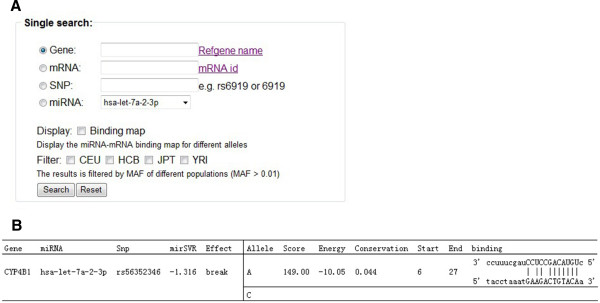
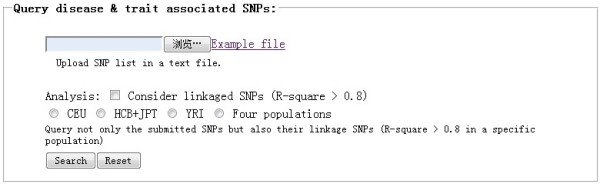
“To display the records in the MirSNP database, we designed a user-friendly MirSNP web site (see URLs) to allowing searching for SNPs in putative miRNA target sites.”
MethodInfluentialMammalian microRNAs predominantly act to decrease target mRNA levels
Guo, H., Ingolia, N. T., Weissman, J. S., & Bartel, D. P. (2010) · Nature · doi:10.1038/nature09267 · Cited by 3,886 · cited 1×
“However, it has been estimated that over 80 percent of miRNAs acted to lower mRNA levels, which shows that mRNA destabilization is the primary action mode of miRNAs on target mRNAs [35].”
BackgroundmiRBase: integrating microRNA annotation and deep-sequencing data
Kozomara, A., & Griffiths-Jones, S. (2011) · Nucleic Acids Research · doi:10.1093/nar/gkq1027 · Cited by 3,634
The microRNA.org resource: targets and expression
Betel, D., Wilson, M., Gabow, A., Marks, D. S., & Sander, C. (2007) · Nucleic Acids Research · doi:10.1093/nar/gkm995 · Cited by 2,503
Principles of MicroRNA–Target Recognition
Brennecke, J., Stark, A., Russell, R. B., & Cohen, S. M. (2005) · PLoS Biology · doi:10.1371/journal.pbio.0030085 · Cited by 2,378
Origin, Biogenesis, and Activity of Plant MicroRNAs
Voinnet, O. (2009) · Cell · doi:10.1016/j.cell.2009.01.046 · Cited by 2,212
Genome-wide association study identifies five new schizophrenia loci
The Schizophrenia Psychiatric Genome-Wide Association Study (GWAS) Consortium (2011) · Nature Genetics · doi:10.1038/ng.940 · Cited by 1,919
Comprehensive modeling of microRNA targets predicts functional non-conserved and non-canonical sites
Betel, D., Koppal, A., Agius, P., Sander, C., & Leslie, C. (2010) · Genome Biology · doi:10.1186/gb-2010-11-8-r90 · Cited by 1,592
Lai, E. C. (2002) · Nature Genetics · doi:10.1038/ng865 · Cited by 1,473
Genetic variation in microRNA networks: the implications for cancer research
Ryan, B. M., Robles, A. I., & Harris, C. C. (2010) · Nature Reviews Cancer · doi:10.1038/nrc2867 · Cited by 1,257
Abundant quantitative trait loci exist for DNA methylation and gene expression in human brain
Gibbs, J. R., van der Brug, M. P., Hernandez, D. G., Traynor, B. J., Nalls, M. A., Lai, S.-L., Arepalli, S., Dillman, A., Rafferty, I. P., Troncoso, J., et al. (2010) · PLoS Genetics · doi:10.1371/journal.pgen.1000952 · Cited by 769 · cited 2×
“We used the MirSNP database for three human brain eQTL data sets, including human cortical samples from 193 individuals [22], cortex samples from 269 individuals [23] and samples obtained from 150 subjects [24].”
BackgroundMethodEvolution of microRNA diversity and regulation in animals
Berezikov, E. (2011) · Nature Reviews Genetics · doi:10.1038/nrg3079 · Cited by 712 · cited 1×
“A requirement for perfect 7-nt seed site pairing improves the reliability of miRNA target prediction, particularly when seed motif is conserved in the UTR regions of whole-genome alignments [16,17].”
BackgroundTemporal dynamics and genetic control of transcription in the human prefrontal cortex
Colantuoni, C., Lipska, B. K., Ye, T., Hyde, T. M., Tao, R., Leek, J. T., Colantuoni, E. A., Elkahloun, A. G., Herman, M. M., Weinberger, D. R., et al. (2011) · Nature · doi:10.1038/nature10524 · Cited by 685
Vitale, A. V., Tan, H., & Jin, P. (2011) · Journal of Nucleic Acids Investigation · doi:10.4081/jnai.2011.2236 · Cited by 623
A survey of genetic human cortical gene expression
Myers, A. J., Gibbs, J. R., Webster, J. A., Rohrer, K., Zhao, A., Marlowe, L., Kaleem, M., Leung, D., Bryden, L., Nath, P., et al. (2007) · Nature Genetics · doi:10.1038/ng.2007.16 · Cited by 479 · cited 2×
“We used the MirSNP database for three human brain eQTL data sets, including human cortical samples from 193 individuals [22], cortex samples from 269 individuals [23] and samples obtained from 150 subjects [24].”
BackgroundMethodMicroRNAs: Critical Regulators of Development, Cellular Physiology and Malignancy
Mendell, J. T. (2005) · Cell Cycle · doi:10.4161/cc.4.9.2032 · Cited by 434
Gong, J., Tong, Y., Zhang, H.-M., Wang, K., Hu, T., Shan, G., Sun, J., & Guo, A.-Y. (2012) · Human Mutation · doi:10.1002/humu.21641 · Cited by 372
MicroRNA target site polymorphisms and human disease
Sethupathy, P., & Collins, F. S. (2008) · Trends in Genetics · doi:10.1016/j.tig.2008.07.004 · Cited by 333
Lost in translation: an assessment and perspective for computational microRNA target identification
Alexiou, P., Maragkakis, M., Papadopoulos, G. L., Reczko, M., & Hatzigeorgiou, A. G. (2009) · Bioinformatics · doi:10.1093/bioinformatics/btp565 · Cited by 321
Yue, W.-H., Wang, H.-F., Sun, L.-D., Tang, F.-L., Liu, Z.-H., Zhang, H.-X., Li, W.-Q., Zhang, Y.-L., Zhang, Y., Ma, C.-C., et al. (2011) · Nature Genetics · doi:10.1038/ng.979 · Cited by 289 · cited 1×
“Our previous GWAS data [25], involving 746 SCZ cases and 1,599 healthy controls, identified a set of 7,705 SNPs having a statistical significance of p < 0.”
Self-citationWynendaele, J., Böhnke, A., Leucci, E., Nielsen, S. J., Lambertz, I., Hammer, S., Sbrzesny, N., Kubitza, D., Wolf, A., Gradhand, E., et al. (2010) · Cancer Research · doi:10.1158/0008-5472.can-10-0527 · Cited by 170
miRdSNP: a database of disease-associated SNPs and microRNA target sites on 3'UTRs of human genes
Bruno, A. E., Li, L., Kalabus, J. L., Pan, Y., Yu, A., & Hu, Z. (2012) · BMC Genomics · doi:10.1186/1471-2164-13-44 · Cited by 167
Sun, Q., Gu, H., Zeng, Y., Xia, Y., Wang, Y., Jing, Y., Yang, L., & Wang, B. (2010) · Cancer Science · doi:10.1111/j.1349-7006.2010.01667.x · Cited by 166
MicroSNiPer: a web tool for prediction of SNP effects on putative microRNA targets
Barenboim, M., Zoltick, B. J., Guo, Y., & Weinberger, D. R. (2010) · Human Mutation · doi:10.1002/humu.21349 · Cited by 149
Ziebarth, J. D., Bhattacharya, A., Chen, A., & Cui, Y. (2011) · Nucleic Acids Research · doi:10.1093/nar/gkr1026 · Cited by 140
Patrocles: a database of polymorphic miRNA-mediated gene regulation in vertebrates
Hiard, S., Charlier, C., Coppieters, W. R., Georges, M., & Baurain, D. (2009) · Nucleic Acids Research · doi:10.1093/nar/gkp926 · Cited by 140
A Risk Variant in an miR-125b Binding Site in BMPR1B Is Associated with Breast Cancer Pathogenesis
Sætrom, P., Biesinger, J., Li, S. M., Smith, D., Thomas, L. F., Majzoub, K., Rivas, G. E., Alluin, J., Rossi, J. J., Krontiris, T. G., et al. (2009) · Cancer Research · doi:10.1158/0008-5472.can-09-1201 · Cited by 138 · cited 1×
“studies have shown that SNPs in seed-sites region can significantly change the expression of the target mRNA and protein [36-40].”
BackgroundPosttranscriptional control of neuronal development by microRNA networks
Gao, F. (2007) · Trends in Neurosciences · doi:10.1016/j.tins.2007.10.004 · Cited by 131
A genome-wide survey for SNPs altering microRNA seed sites identifies functional candidates in GWAS
Richardson, K., Lai, C.-Q., Parnell, L. D., Lee, Y.-C., & Ordovas, J. M. (2011) · BMC Genomics · doi:10.1186/1471-2164-12-504 · Cited by 87
Yang, L., Li, Y., Cheng, M., Huang, D., Zheng, J., Liu, B., Ling, X., Li, Q., Zhang, X., Ji, W., et al. (2011) · Carcinogenesis · doi:10.1093/carcin/bgr272 · Cited by 87
Liu, Z., Wei, S., Ma, H., Zhao, M., Myers, J. N., Weber, R. S., Sturgis, E. M., & Wei, Q. (2011) · Carcinogenesis · doi:10.1093/carcin/bgr209 · Cited by 83
Inferring causative variants in microRNA target sites
Thomas, L. F., Saito, T., & Sætrom, P. (2011) · Nucleic Acids Research · doi:10.1093/nar/gkr414 · Cited by 70
miRGator v2.0 : an integrated system for functional investigation of microRNAs
Cho, S., Jun, Y., Lee, S., Choi, H., Jung, S., Jang, Y., Park, C., Kim, S., Lee, S., & Kim, W. (2010) · Nucleic Acids Research · doi:10.1093/nar/gkq1094 · Cited by 60
Origin and evolution of a placental-specific microRNA family in the human genome
Yuan, Z., Sun, X., Jiang, D., Ding, Y., Lu, Z., Gong, L., Liu, H., & Xie, J. (2010) · BMC Evolutionary Biology · doi:10.1186/1471-2148-10-346 · Cited by 59
Cited by
Trends in the development of miRNA bioinformatics tools
Chen, L., Heikkinen, L., Wang, C., Yang, Y., Sun, H., & Wong, G. (2019) · Briefings in Bioinformatics · doi:10.1093/bib/bby054 · Cited by 603
mirDIP 4.1—integrative database of human microRNA target predictions
Tokar, T., Pastrello, C., Rossos, A. E. M., Abovsky, M., Hauschild, A.-C., Tsay, M., Lu, R., & Jurisica, I. (2018) · Nucleic Acids Research · doi:10.1093/nar/gkx1144 · Cited by 572
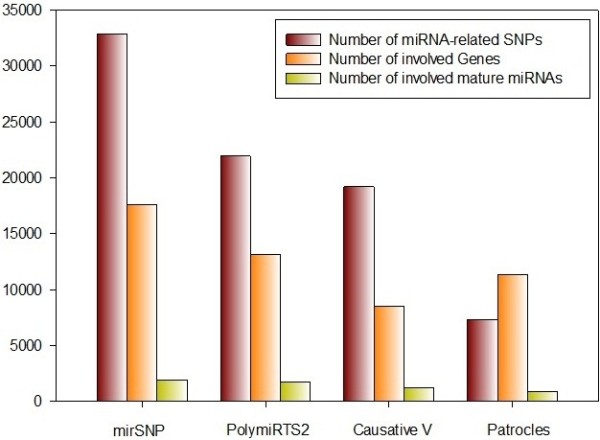
“miRror 2010 yes (58) MirSNP 2012 yes yes (59)”
Genotype × environment interaction QTL mapping in plants: lessons from Arabidopsis
El-Soda, M., Malosetti, M., Zwaan, B. J., Koornneef, M., & Aarts, M. G. M. (2014) · Trends in Plant Science · doi:10.1016/j.tplants.2014.01.001 · Cited by 296
Meta-analysis of shared genetic architecture across ten pediatric autoimmune diseases
Li, Y. R., Li, J., Zhao, S. D., Bradfield, J. P., Mentch, F. D., Maggadottir, S. M., Hou, C., Abrams, D. J., Chang, D., Gao, F., et al. (2015) · Nature Medicine · doi:10.1038/nm.3933 · Cited by 265
Hrdlickova, B., de Almeida, R. C., Borek, Z., & Withoff, S. (2014) · Biochimica et Biophysica Acta (BBA) - Molecular Basis of Disease · doi:10.1016/j.bbadis.2014.03.011 · Cited by 236
Metadata
- Authors
- Liu, C., Zhang, F., Li, T., Lu, M., Wang, L., Yue, W., & Zhang, D.
- Affiliations
- Peking University (CN)
- Corresponding author
- Yue, Weihua
- Zhang, Dai
- Venue
- BMC Genomics
- Published
- 2012-11-23
- Volume
- 13
- Issue
- 1
- Pages
- 661-661
- ISSN
- 1471-2164 (ISSN-L)
- PMC
- PMC3582533
- OpenAlex
- W2080834212
- Cited by
- 264
- References
- 43
- Citations by year
- 2026: 1 · 2025: 3 · 2024: 15 · 2023: 16 · 2022: 19 · 2021: 24 · 2020: 23 · 2019: 23 · 2018: 22 · 2017: 33 · 2016: 20 · 2015: 27 · 2014: 30 · 2013: 8
- FWCI
- 6.88
- Type
- journal article
- Language
- en
- Open access
- gold
- doi.org
- Licence
- cc-by
- Locations
- BMC Genomics (publishedVersion, cc-by)
- Europe PMC (PubMed Central) (publishedVersion, cc-by)
- PubMed Central (publishedVersion, cc-by)
- PubMed (publishedVersion)
- DOAJ (DOAJ: Directory of Open Access Journals) (submittedVersion)
- Funders
- National Natural Science Foundation of China (81071087, 81071088)
- Topics
- Life Sciences › Biochemistry, Genetics and Molecular Biology › Cancer Research › MicroRNA in disease regulation
- Life Sciences › Biochemistry, Genetics and Molecular Biology › Genetics › Genetic Associations and Epidemiology
- Life Sciences › Biochemistry, Genetics and Molecular Biology › Molecular Biology › RNA Research and Splicing
- Keywords
- miRSNPs, single nucleotide polymorphisms, microRNA binding sites, 3'UTR variant, expression quantitative trait loci, brain gene expression, schizophrenia, genome-wide association study
- MeSH terms
- Binding Sites, Humans, RNA, Messenger, Schizophrenia, Genome, Human, Internet, 3' Untranslated Regions, Polymorphism, Single Nucleotide, Databases, Genetic, MicroRNAs, Quantitative Trait Loci, Genome-Wide Association Study
About these checks
Registry, retraction, Cites and statistics results are computed, not judged, with one exception: a printed reference that no index lists is read once by a model before it counts as a citation error. Claims are extracted by a model and kept only when their quote appears verbatim in the text; each cited source is then checked, with a model’s help, for whether it says what the claim relies on. Those verdicts can be wrong — read the claim’s quote and the cited source before relying on one.
Statistics and arithmetic are recomputed, not judged.
Confidence bands are shown only for fields calibrated on our annotated test set. None is calibrated yet, so no band is shown.
What counts as a claim ›How we measure confidence ›How we check this ›
Are you an author, or do you see a problem with this page? Request a review
Data sources
Bibliographic data: Semantic Scholar, OpenAlex, Crossref.
Contains information from the Semantic Scholar Academic Graph Datasets, made available under the ODC Attribution License (ODC-BY 1.0).
Semantic Scholar’s data is described in: Kinney, R., et al. (2023). The Semantic Scholar Open Data Platform. arXiv:2301.10140.
