

Reconstruction of the lipid metabolism for the microalga Monoraphidium neglectum from its genome sequence reveals characteristics suitable for biofuel production
Open accessThe DOI matches its Crossref record; 77 of the 79 references it cites were found in a registry or an index.
Abstract
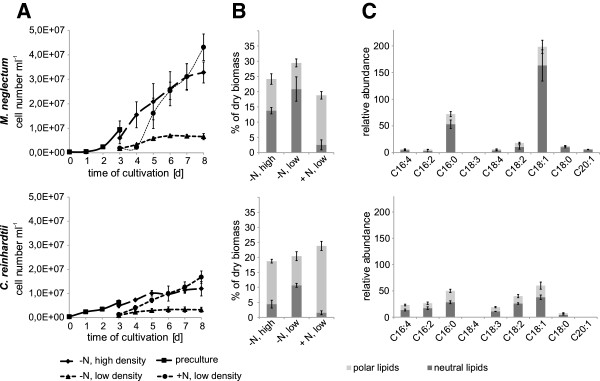
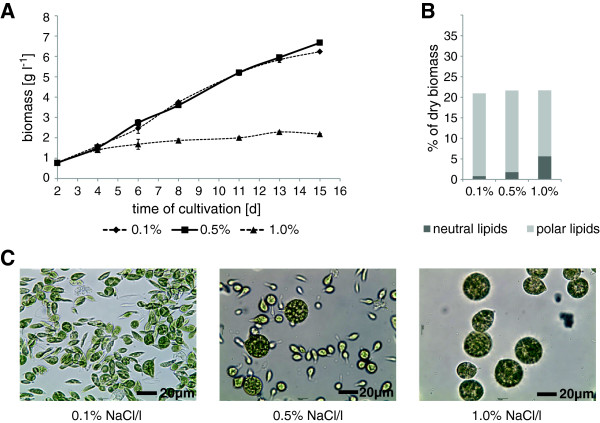
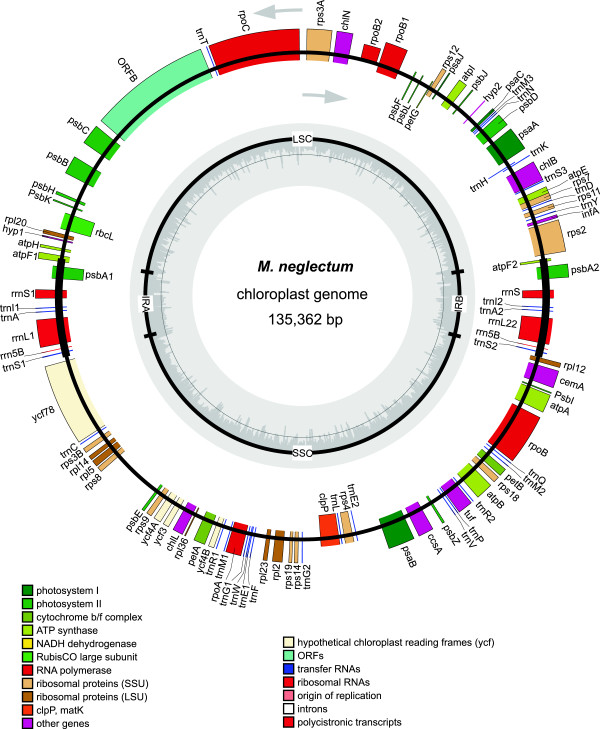
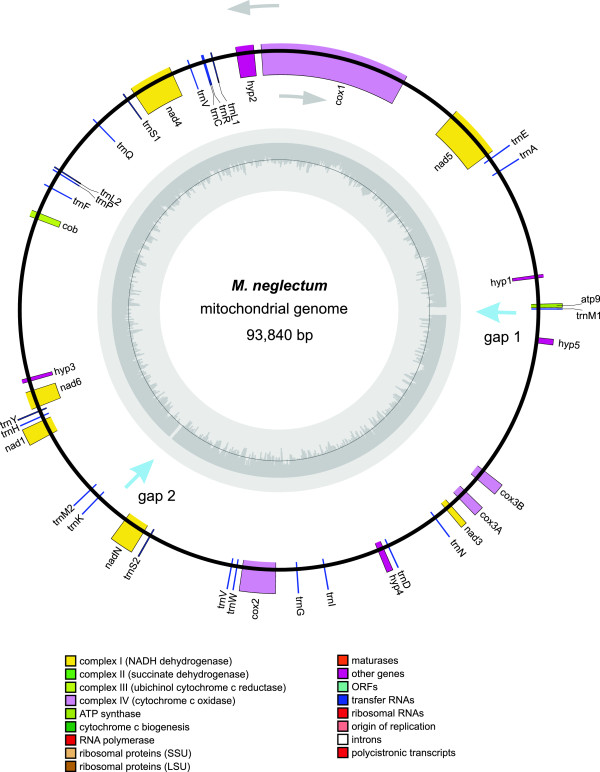
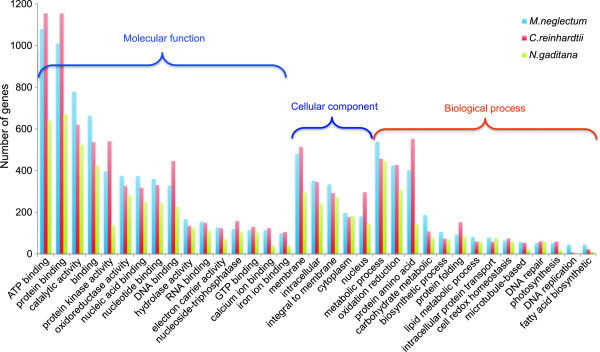
Background: Microalgae are gaining importance as sustainable production hosts in the fields of biotechnology and bioenergy. A robust biomass accumulating strain of the genus Monoraphidium (SAG 48.87) was investigated in this work as a potential feedstock for biofuel production. The genome was sequenced, annotated, and key enzymes for triacylglycerol formation were elucidated. Results: Monoraphidium neglectum was identified as an oleaginous species with favourable growth characteristics as well as a high potential for crude oil production, based on neutral lipid contents of approximately 21% (dry weight) under nitrogen starvation, composed of predominantly C18:1 and C16:0 fatty acids. Further characterization revealed growth in a relatively wide pH range and salt concentrations of up to 1.0% NaCl, in which the cells exhibited larger structures. This first full genome sequencing of a member of the Selenastraceae revealed a diploid, approximately 68 Mbp genome with a G + C content of 64.7%. The circular chloroplast genome was assembled to a 135,362 bp single contig, containing 67 protein-coding genes. The assembly of the mitochondrial genome resulted in two contigs with an approximate total size of 94 kb, the largest known mitochondrial genome within algae. 16,761 protein-coding genes were assigned to the nuclear genome. Comparison of gene sets with respect to functional categories revealed a higher gene number assigned to the category “carbohydrate metabolic process” and in “fatty acid biosynthetic process” in M. neglectum when compared to Chlamydomonas reinhardtii and Nannochloropsis gaditana, indicating a higher metabolic diversity for applications in carbohydrate conversions of biotechnological relevance. Conclusions: The genome of M. neglectum, as well as the metabolic reconstruction of crucial lipid pathways, provides new insights into the diversity of the lipid metabolism in microalgae. The results of this work provide a platform to encourage the development of this strain for biotechnological applications and production concepts.
Overview
The claims and statistics of this paper haven’t been checked yet.
Free: it reads the open-access text and checks the first 5 claims that cite a source we can check. Create a free account to check every claim.
Integrity signals
Registry
Cites
Statistics
Figures
Verification
Claims the paper makes
The claims and statistics of this paper haven’t been checked yet.
Free: it reads the open-access text and checks the first 5 claims that cite a source we can check. Create a free account to check every claim.
Claims other papers make about this one
Each is checked against this paper’s own text: does it say what the citing paper says it does?
The cited source says what the claim attributes to it.
In the citing paper
“It should be noted that the lipid data corresponds well with values presented in a previous study where in contrast to this work, lipid profiles were obtained after five days of nitrogen starvation27.”
From Label-free in vivo analysis of intracellular lipid droplets in the oleaginous microalga Monoraphidium neglectum by coherent Raman scattering microscopy (2016) · cites this paper as [27]
Self-check
Percentages, sums and reported differences re-computed from the paper’s own numbers.
The self-check needs the paper’s full text.
Citations
Cites
A SIMPLE METHOD FOR THE ISOLATION AND PURIFICATION OF TOTAL LIPIDES FROM ANIMAL TISSUES
Folch, J., Lees, M., & Stanley, G. H. S. (1957) · Journal of Biological Chemistry · doi:10.1016/s0021-9258(18)64849-5 · Cited by 65,189 · cited 1×
“After homogenization (3 × 30 s at 6,500 rpm using a Precellys 24, Peqlab, Erlangen, Germany), the total lipids were extracted according to a modified Folch protocol [65] using a total of 4 ml methanol and 8 ml chloroform.”
MethodTamura, K., Peterson, D., Peterson, N., Stecher, G., Nei, M., & Kumar, S. (2011) · Molecular Biology and Evolution · doi:10.1093/molbev/msr121 · Cited by 39,969 · cited 2×
“Tamura K, Peterson D, Peterson N, Stecher G, Nei M, Kumar S: MEGA5: Molecular evolutionary genetics analysis using maximum likelihood, evolutionary distance, and maximum parsimony methods.”
Rapid isolation of high molecular weight plant DNA
Murray, M. G., & Thompson, W. F. (1980) · Nucleic Acids Research · doi:10.1093/nar/8.19.4321 · Cited by 12,098 · cited 1×
“DNA was extracted using the cetyltrimethylammonium bromide method as reported previously [67].”
Method(1993) · Molecular Biology and Evolution · doi:10.1093/oxfordjournals.molbev.a040023 · Cited by 11,229 · cited 1×
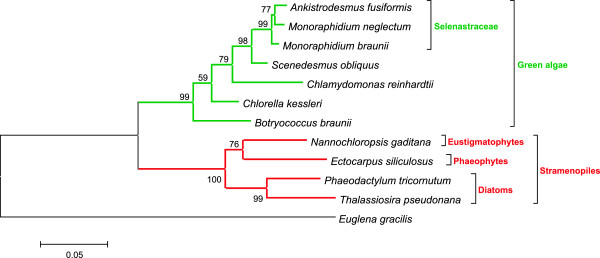
“The evolutionary history was inferred by using the Maximum Likelihood method based on the Tamura-Nei model [72], with the tree of the highest log likelihood (-6385.”
MethodtRNAscan-SE: A Program for Improved Detection of Transfer RNA Genes in Genomic Sequence
Lowe, T. M., & Eddy, S. R. (1997) · Nucleic Acids Research · doi:10.1093/nar/25.5.955 · Cited by 10,905 · cited 1×
“21 [70,71].”
Chisti, Y. (2007) · Biotechnology Advances · doi:10.1016/j.biotechadv.2007.02.001 · Cited by 9,524 · cited 2×
“Many microalgae are reported to produce considerable amounts of oils [2,3], where the compound of interest for biofuels is mainly triacylglycerol (TAG) [2].”
BackgroundRNAmmer: consistent and rapid annotation of ribosomal RNA genes
Lagesen, K., Hallin, P., Rødland, E. A., Stærfeldt, H.-H., Rognes, T., & Ussery, D. W. (2007) · Nucleic Acids Research · doi:10.1093/nar/gkm160 · Cited by 6,112 · cited 1×
“2 server [69] and tRNAs were determined by tRNAscan-SE version 1.”
MethodMicroalgae for biodiesel production and other applications: A review
Mata, T. M., Martins, A. A., & Caetano, N. S. (2010) · Renewable and Sustainable Energy Reviews · doi:10.1016/j.rser.2009.07.020 · Cited by 5,685 · cited 1×
“Background Phototrophic microalgae are increasingly investigated for their use in biotechnological applications as these unicellular organisms offer the opportunity of introducing sustainable production pathways by converting sunlight energy and CO2 into valuable products [1-5].”
BackgroundCommercial Applications of Microalgae
Spolaore, P., Joannis-Cassan, C., Duran, E., & Isambert, A. (2006) · Journal of Bioscience and Bioengineering · doi:10.1263/jbb.101.87 · Cited by 4,285 · cited 1×
“Background Phototrophic microalgae are increasingly investigated for their use in biotechnological applications as these unicellular organisms offer the opportunity of introducing sustainable production pathways by converting sunlight energy and CO2 into valuable products [1-5].”
BackgroundHaas, B. J., Salzberg, S. L., Zhu, W., Pertea, M., Allen, J. E., Orvis, J., White, O., Buell, C. R., & Wortman, J. R. (2008) · Genome Biology · doi:10.1186/gb-2008-9-1-r7 · Cited by 4,079 · cited 6×
“Both predictions were analysed by EVidenceModeler [33], integrating BLASTp protein alignment data with C. reinhardtii.”
MethodInfluential
Cited by
Baier, T., Wichmann, J., Kruse, O., & Lauersen, K. J. (2018) · Nucleic Acids Research · doi:10.1093/nar/gky532 · Cited by 176
Self-citationMicroalgae with Artificial Intelligence: A Digitalized Perspective on Genetics, Systems and Products
Teng, S. Y., Yew, G. Y., Sukačová, K., Show, P. L., Máša, V., & Chang, J.-S. (2020) · Biotechnology Advances · doi:10.1016/j.biotechadv.2020.107631 · Cited by 145
Omics approaches for microalgal applications: Prospects and challenges
Mishra, A., Medhi, K., Malaviya, P., & Thakur, I. S. (2019) · Bioresource Technology · doi:10.1016/j.biortech.2019.121890 · Cited by 141
Improving Microalgae for Biotechnology—From Genetics to Synthetic Biology
Hlavova, M., Turoczy, Z., & Bisova, K. (2015) · Biotechnology Advances · doi:10.1016/j.biotechadv.2015.01.009 · Cited by 134
Alboresi, A., Perin, G., Vitulo, N., Diretto, G., Block, M., Jouhet, J., Meneghesso, A., Valle, G., Giuliano, G., Maréchal, E., et al. (2016) · Plant Physiology · doi:10.1104/pp.16.00599 · Cited by 131
Comparative and Functional Algal Genomics
Blaby-Haas, C. E., & Merchant, S. S. (2019) · Annual Review of Plant Biology · doi:10.1146/annurev-arplant-050718-095841 · Cited by 131
Advances and challenges in genetic engineering of microalgae
Fajardo, C., De Donato, M., Carrasco, R., Martínez‐Rodríguez, G., Mancera, J. M., & Fernández‐Acero, F. J. (2020) · Reviews in Aquaculture · doi:10.1111/raq.12322 · Cited by 102
Leveraging algal omics to reveal potential targets for augmenting TAG accumulation
Arora, N., Pienkos, P. T., Pruthi, V., Poluri, K. M., & Guarnieri, M. T. (2018) · Biotechnology Advances · doi:10.1016/j.biotechadv.2018.04.005 · Cited by 99
Eukaryotic microalgae as hosts for light-driven heterologous isoprenoid production
Lauersen, K. J. (2018) · Planta · doi:10.1007/s00425-018-3048-x · Cited by 104
Self-citationThe origin and early evolution of plants
Bowles, A. M. C., Williamson, C. J., Williams, T. A., Lenton, T. M., & Donoghue, P. C. J. (2022) · Trends in Plant Science · doi:10.1016/j.tplants.2022.09.009 · Cited by 106
Mathieu‐Rivet, E., Kiefer‐Meyer, M., Vanier, G., Ovide, C., Burel, C., Lerouge, P., & Bardor, M. (2014) · Frontiers in Plant Science · doi:10.3389/fpls.2014.00359 · Cited by 114
“Citation: Mathieu-Rivet E, Kiefer-Meyer M-C, Vanier G, Ovide C, Burel C, Lerouge P and Bardor M (2014) Protein N-glycosylation in eukaryotic microalgae and its impact on the production of nuclear expressed biopharmaceuticals.”
BackgroundInfluentialHighly efficient methane generation from untreated microalgae biomass
Klassen, V., Blifernez-Klassen, O., Wibberg, D., Winkler, A., Kalinowski, J., Posten, C., & Kruse, O. (2017) · Biotechnology for Biofuels · doi:10.1186/s13068-017-0871-4 · Cited by 89
“reinhardtii CC-1690 under nitrogen deprivation [34, 35].”
Self-citationAdvances in metabolic modeling of oleaginous microalgae
Tibocha-Bonilla, J. D., Zuñiga, C., Godoy-Silva, R. D., & Zengler, K. (2018) · Biotechnology for Biofuels · doi:10.1186/s13068-018-1244-3 · Cited by 84
The long goodbye: the rise and fall of flavodoxin during plant evolution
Karlusich, J. J. P., Lodeyro, A. F., & Carrillo, N. J. (2014) · Journal of Experimental Botany · doi:10.1093/jxb/eru273 · Cited by 89
Che, R., Huang, L., Xu, J., Zhao, P., Li, T., Ma, H., & Yu, X. (2016) · Bioresource Technology · doi:10.1016/j.biortech.2016.12.017 · Cited by 82
“Furthermore, 54 the whole genome sequence of Monoraphidium neglectum has been obtained, and a 55 well-developed gene toolbox has been available (Bogen et al., 2013), and these 56 techniques have facilitated studies on lipid biosynthesis at molecular levels.”
BackgroundSuzuki, S., Yamaguchi, H., Nakajima, N., & Kawachi, M. (2018) · Scientific Reports · doi:10.1038/s41598-018-26331-6 · Cited by 78
Adaptation to Extreme Antarctic Environments Revealed by the Genome of a Sea Ice Green Alga
Zhang, Z., Qu, C., Zhang, K., He, Y., Zhao, X., Yang, L., Zheng, Z., Ma, X., Wang, X., Wang, W., et al. (2020) · Current Biology · doi:10.1016/j.cub.2020.06.029 · Cited by 88
Jaeger, D., Winkler, A., Mussgnug, J. H., Kalinowski, J., Goesmann, A., & Kruse, O. (2017) · Biotechnology for Biofuels · doi:10.1186/s13068-017-0882-1 · Cited by 64
“Furthermore, the genome has recently been sequenced [27], and it was shown that genetic transformation and stable recombinant protein expression are possible [29].”
BackgroundMethodInfluentialSelf-citationŘezanka, T., Nedbalová, L., Lukavský, J., Střížek, A., & Sigler, K. (2017) · Algal Research · doi:10.1016/j.algal.2016.12.017 · Cited by 66
Calhoun, S., Bell, T. A. S., Dahlin, L. R., Kunde, Y., LaButti, K., Louie, K. B., Kuftin, A., Treen, D., Dilworth, D., Mihaltcheva, S., et al. (2021) · Communications Biology · doi:10.1038/s42003-021-01859-y · Cited by 60
Green genes: bioinformatics and systems-biology innovations drive algal biotechnology
Reijnders, M. J. M. F., van Heck, R. G. A., Lam, C. M. C., Scaife, M. A., dos Santos, V. A. P. M., Smith, A. G., & Schaap, P. J. (2014) · Trends in biotechnology · doi:10.1016/j.tibtech.2014.10.003 · Cited by 66
Banerjee, C., Singh, P. K., & Shukla, P. (2016) · Biotechnology Journal · doi:10.1002/biot.201500284 · Cited by 58
“The sequence can also concretize the information on metabolomics which further enlightens metabolic flux analysis and construction of metabolic networks [28, 29].”
BackgroundMacaisne, N., Liu, F., Scornet, D., Peters, A. F., Lipinska, A. P., Perrineau, M., Henry, A., Strittmatter, M., Coelho, S. M., & Cock, J. M. (2017) · Development · doi:10.1242/dev.141523 · Cited by 67
Ye, J., Liu, M., He, M., Ye, Y., & Huang, J. (2019) · Marine Drugs · doi:10.3390/md17010045 · Cited by 65
“NC64A [26], Chromochloris zofingiensis [27], Coccomyxa subellipsoidea C-169 [28], Monoraphidium neglectum [29]) and the model plant Arabidopsis thaliana [30] (Table S1).”
BackgroundMolecular design of microalgae as sustainable cell factories
Einhaus, A., Baier, T., & Kruse, O. (2023) · Trends in biotechnology · doi:10.1016/j.tibtech.2023.11.010 · Cited by 61
“However, few algae (such as Monoraphidium neglectum ) show partly continued growth during nitrogen depletion, wherefore they display particularly interesting targets for neutral lipid production [73].”
Self-citationAlgae Biotechnology – Green Cell-Factories on the Rise
Hallmann, A. (2015) · Current Biotechnology · doi:10.2174/2211550105666151107001338 · Cited by 63
Agathokleous, E., Zhou, B., Xu, J., Ioannou, A., Feng, Z., Saitanis, C. J., Frei, M., Calabrese, E. J., & Fotopoulos, V. (2021) · Environmental Research · doi:10.1016/j.envres.2021.111746 · Cited by 57
Patidar, S. K., Mitra, M., George, B., Soundarya, R., & Mishra, S. (2014) · Bioresource Technology · doi:10.1016/j.biortech.2014.08.070 · Cited by 53
“is among the oleaginous Chlorophycean species having favorable growth rates and diverse metabolic lipid pathways (Bogen et al., 2013).”
BackgroundImproving the sunlight-to-biomass conversion efficiency in microalgal biofactories
Wobbe, L., & Remacle, C. (2014) · Journal of Biotechnology · doi:10.1016/j.jbiotec.2014.08.021 · Cited by 61
Jaeger, D., Pilger, C., Hachmeister, H., Oberländer, E., Wördenweber, R., Wichmann, J., Mussgnug, J. H., Huser, T., & Kruse, O. (2016) · Scientific Reports · doi:10.1038/srep35340 · Cited by 47
Self-citationSharma, T., Gour, R. S., Kant, A., & Chauhan, R. S. (2015) · Algal Research · doi:10.1016/j.algal.2015.09.006 · Cited by 50
Lipid Metabolism in Microalgae
Khozin‐Goldberg, I. (2016) · Springer eBooks · doi:10.1007/978-3-319-24945-2_18 · Cited by 64
Genomic adaptations of the green alga Dunaliella salina to life under high salinity
Polle, J. E. W., Calhoun, S., McKie-Krisberg, Z. M., Prochnik, S. E., Neofotis, P. G., Yim, W. C., Hathwaik, L. T., Jenkins, J. W., Molina, H., Bunkenborg, J., et al. (2020) · Algal Research · doi:10.1016/j.algal.2020.101990 · Cited by 54
“For comparison the closely related green algae Chlamydomonas reinhardtii [52], Volvox carteri [53], Gonium pectorale [54], Chromochloris zofingiensis [55], and Monoraphidium neglectum [56] were used.”
BackgroundProteomic approaches in microalgae: perspectives and applications
Anand, V., Singh, P. K., Banerjee, C., & Shukla, P. (2017) · 3 Biotech · doi:10.1007/s13205-017-0831-5 · Cited by 45
“…et al. 2007); (b) a novel mechanism for gene regulation in algae using riboswitches (Shao and Bock 2008); (c) inducible nuclear promoters and luciferase reporter genes (Surzycki et al. 2007; Bogen et al. 2013), and (d) inducible chloroplast gene expression (Anarat-Cappillino and Sattely 2014).”
BackgroundA streamlined and predominantly diploid genome in the tiny marine green alga Chloropicon primus
Lemieux, C., Turmel, M., Otis, C., & Pombert, J. (2019) · Nature Communications · doi:10.1038/s41467-019-12014-x · Cited by 43
Green algal hydrocarbon metabolism is an exceptional source of sustainable chemicals
Wichmann, J., Lauersen, K. J., & Kruse, O. (2019) · Current Opinion in Biotechnology · doi:10.1016/j.copbio.2019.09.019 · Cited by 42
Self-citationDasgupta, C. N., Nayaka, S., Toppo, K., Singh, A. K., Deshpande, U., & Mohapatra, A. (2018) · Biotechnology for Biofuels · doi:10.1186/s13068-018-1308-4 · Cited by 39
“neglectum showed the high abundance of oleic acid (C18:1) and low abundance of saturated acids [22].”
BackgroundMethodInfluentialJaeger, D., Hübner, W., Huser, T., Mussgnug, J. H., & Kruse, O. (2017) · Journal of Biotechnology · doi:10.1016/j.jbiotec.2017.03.011 · Cited by 31
Self-citationKarpagam, R., Jawaharraj, K., Ashokkumar, B., Sridhar, J., & Varalakshmi, P. (2017) · Algal Research · doi:10.1016/j.algal.2017.11.031 · Cited by 29
Eliáš, M., Klimeš, V., Derelle, R., Vargová, R., & Tachezy, J. (2016) · Biology Direct · doi:10.1186/s13062-016-0107-8 · Cited by 27
“Absence of a RABL2 ortholog from the draft genome assembly of the chlorophyte green alga Monoraphidium neglectum [90] is also notable.”
BackgroundKumar, A., Baldia, A., Rajput, D., Kateriya, S., Babu, V., & Dubey, K. K. (2022) · Bioresource Technology · doi:10.1016/j.biortech.2022.128457 · Cited by 32
The Ulva prolifera genome reveals the mechanism of green tides
He, Y., Shen, S., Yu, D., Wang, Y., Yin, J., Wang, Z., & Ye, Y. (2021) · Journal of Oceanology and Limnology · doi:10.1007/s00343-020-0212-5 · Cited by 31
Green Production and Biotechnological Applications of Cell Wall Lytic Enzymes
Benedetti, M., Locci, F., Gramegna, G., Sestili, F., & Savatin, D. V. (2019) · Applied Sciences · doi:10.3390/app9235012 · Cited by 26
“, nitrogen starvation), these microalgae may accumulate lipids up to 60% of their dry weight [136,139].”
BackgroundGroussman, R. D., Blaskowski, S., Coesel, S., & Armbrust, E. V. (2023) · Scientific Data · doi:10.1038/s41597-023-02842-4 · Cited by 33
Early Evolution of the Mitogen-Activated Protein Kinase Family in the Plant Kingdom
Kalapos, B., Hlavová, M., Nádai, T. V., Galiba, G., Bišová, K., & Dóczi, R. (2019) · Scientific Reports · doi:10.1038/s41598-019-40751-y · Cited by 29
Genetic Engineering for Microalgae Strain Improvement in Relation to Biocrude Production Systems
Stephens, E., Wolf, J., Oey, M., Zhang, E., Hankamer, B. D., & Ross, I. L. (2015) · Biofuel and biorefinery technologies · doi:10.1007/978-3-319-16640-7_11 · Cited by 26
Kurotani, A., Yamada, Y., & Sakurai, T. (2017) · Plant and Cell Physiology · doi:10.1093/pcp/pcw212 · Cited by 25
Kugler, A., Zorin, B., Didi‐Cohen, S., Sibiryak, M., Gorelova, O. A., Ismagulova, T. T., Kokabi, K., Kumari, P., Lukyanov, A., Boussiba, S., et al. (2019) · Plant and Cell Physiology · doi:10.1093/pcp/pcz013 · Cited by 22
Wang, Q., Song, H., Liu, X., Zhu, H., Hu, Z., & Liu, G. (2018) · European Journal of Phycology · doi:10.1080/09670262.2018.1503334 · Cited by 22
“…families, including Scenedesmaceae, Neochloridaceae, Mychonastaceae, Selenastraceae, Chromochloridaceae, Characiaceae, Pseudomuriellaceae, Bracteacoccaceae and Hydrodictyaceae (de Cambiaire et al., 2006; Bogen et al., 2013; Lemieux et al., 2015; Fučíková et al., 2016a, b; McManus et al., 2017).”
BackgroundLiu, C., Shi, X., Wu, F., Ren, M., Gao, G., & Wu, Q. L. (2020) · BMC Genomics · doi:10.1186/s12864-020-06891-6 · Cited by 22
“a hot research topic because some of these species show enormous potential for biofuel production [10, 11, 16],”
BackgroundInfluentialChlorine redox chemistry is widespread in microbiology
Barnum, T. P., & Coates, J. D. (2022) · The ISME Journal · doi:10.1038/s41396-022-01317-5 · Cited by 26
“The eukaryote with Cld was the unicellular green alga Monoraphidium neglectum [38].”
Advances in engineering algae for biofuel production
Ruffing, A. M., Davis, R., & Lane, T. W. (2022) · Current Opinion in Biotechnology · doi:10.1016/j.copbio.2022.102830 · Cited by 22
Draft Genome Sequence of the Biofuel-Relevant Microalga Desmodesmus armatus
Knoshaug, E. P., Nag, A., Astling, D. P., Douchi, D., & Laurens, L. M. L. (2020) · Microbiology Resource Announcements · doi:10.1128/mra.00896-19 · Cited by 16
“genomes for Chlorella vulgaris C-27 (31) and Monoraphidium neglectum (32).”
BackgroundCalhoun, S., Kamel, B., Bell, T. A. S., Kruse, C. P. S., Riley, R. W., Singan, V. R., Kunde, Y. A., Gleasner, C. D., Chovatia, M., Sandor, L., et al. (2022) · Algal Research · doi:10.1016/j.algal.2022.102794 · Cited by 16
Molecular Tools for Bioengineering Eukaryotic Microalgae
Kumar, A., Perrine, Z., Stroff, C., Postier, B. L., Coury, D. A., Sayre, R. T., & Allnutt, F. C. T. (2016) · Current Biotechnology · doi:10.2174/2211550105666160127002147 · Cited by 15
He, Y., Ao, Y., Yin, Y., Yuan, A., Che, T., Li, L., & Shen, S. (2019) · Algal Research · doi:10.1016/j.algal.2019.101712 · Cited by 15
Ochiai, K. K., Hanawa, D., Ogawa, H. A., Tanaka, H., Uesaka, K., Edzuka, T., Shirae‐Kurabayashi, M., Toyoda, A., Itoh, T., & Goshima, G. (2024) · The Plant Journal · doi:10.1111/tpj.16764 · Cited by 13
Mandal, M. K., & Chaurasia, N. (2021) · Renewable Energy · doi:10.1016/j.renene.2021.07.141 · Cited by 12
Microalgal bioengineering for futuristic applications in synthetic and space biology
Shelake, R. M., Khalid, M. A., & Kim, J. (2025) · Biotechnology Advances · doi:10.1016/j.biotechadv.2025.108665 · Cited by 14
Li, Y., Ye, Q., He, D., Bai, H., & Wen, J. (2019) · Acta Botanica Yunnanica · doi:10.1016/j.pld.2019.09.002 · Cited by 11
Boosting algal lipids: Diurnal shifts in temperature exceed the effects of nitrogen limitation
Mattsson, L., Lindehoff, E., Olofsson, M., & Legrand, C. (2019) · Engineering Reports · doi:10.1002/eng2.12067 · Cited by 11
Phycoremediation of Municipal Wastewater by the Cold‐Adapted Microalga Monoraphidium sp. Dek19
Hage, A., Luckett, N., & Holbrook, G. P. (2018) · Water Environment Research · doi:10.2175/106143017x15131012188060 · Cited by 9
“Monoraphidium neglectum is resistant to high salinity environments, fluctuations in pH, and is capable of accumulating a 21% neutral lipid content by dry weight under nitrogen starvation (Bogen et al., 2013).”
BackgroundIDENTIFIKASI MIKROALGA LAUT DARI TAMBRAUW, PAPUA BARAT
Purbani, D. C., Ambarwati, W., Kusuma, A. B., & Herliany, N. E. (2019) · Jurnal Ilmu dan Teknologi Kelautan Tropis · doi:10.29244/jitkt.v11i3.25862 · Cited by 12
High-Efficiency Ukrainian Strains of Microalgae for Biodiesel Fuel Production (Overview)
Царенко, П. М., Borysova, O. V., Korkhovyi, V. I., & Blume, Y. B. (2020) · The Open Agriculture Journal · doi:10.2174/1874331502014010209 · Cited by 11
Integrated Microalgae Analysis Photobioreactor for Rapid Strain Selection
Hong, S., Song, M., Kim, S., Bang, D., Kang, T., Choi, I., & Lee, L. P. (2016) · ACS Nano · doi:10.1021/acsnano.6b00803 · Cited by 9
“Also, the confined movement at the cavity center allows a quick naked-eye examination on population size, similarly to agar-plate culture.(24-26) Fig.”
BackgroundAfifudeen, C. L. W., Ahmad, A., Wong, L. L., Takahashi, K., Toda, T., Wahid, M. E. A., & San, T. (2021) · Phytochemistry · doi:10.1016/j.phytochem.2021.112936 · Cited by 9
Nutrient and salinity stress induced biodiesel production from a green alga, Monoraphidium neglectum
Sinha, T. S. P., Borah, D., Ravi, S., Mudliar, S. N., Chauhan, V. S., Sen, R., & Rout, J. (2024) · Biocatalysis and Agricultural Biotechnology · doi:10.1016/j.bcab.2024.103090 · Cited by 8
He, Z., Li, C., Gao, K., Zheng, X., Wang, X., Wang, H., Chen, Q., Tang, Z., Zhang, M., Yang, D., et al. (2024) · BMC Genomics · doi:10.1186/s12864-024-11100-9 · Cited by 7
Reshma, R., Kumari, S., & Arumugam, M. (2020) · Biotechnology and Applied Biochemistry · doi:10.1002/bab.1974 · Cited by 7
Kirchner, N. J., Hage, A., Gómez, J., Grayburn, W. S., & Holbrook, G. P. (2022) · Algal Research · doi:10.1016/j.algal.2021.102624 · Cited by 9
Bácsi, I., Tóthfalusi, F., Márton, K., B‐Béres, V., & Gonda, S. (2022) · Applied Sciences · doi:10.3390/app12042196 · Cited by 8
Hong, S.-J., & Lee, C. (2015) · Elsevier eBooks · doi:10.1016/b978-0-12-800776-1.00023-6 · Cited by 9
Mancipe, N. C., McLaughlin, E. M., & Barney, B. M. (2022) · Journal of Applied Microbiology · doi:10.1111/jam.15311 · Cited by 6
“1; Bogen et al., 2013), which was the closest algae in taxonomic terms found with its plastid, mitochondrial and nuclear genomes annotated.”
BackgroundGenome‐wide analysis of carbohydrate‐active enzymes in Pyramimonas parkeae (Prasinophyceae)
Satjarak, A., & Graham, L. E. (2017) · Journal of Phycology · doi:10.1111/jpy.12566 · Cited by 7
Advances in Genetic Engineering of Microalgae
Hallmann, A. (2019) · Grand challenges in biology and biotechnology · doi:10.1007/978-3-030-25233-5_5 · Cited by 11
Sánchez-Roque, Y., Pérez-Luna, Y. D. C., Acosta, J. M., Vázquez, N. F., Berrones-Hernández, R., Saldaña-Trinidad, S., & Pathiyamattom, J. (2018) · Biodiversity Data Journal · doi:10.3897/bdj.6.e28496 · Cited by 6
“Thus the new isolations also allow the observation of the taxonomic evolution of microalgae classes, demonstrating the conservation, loss and/or appearance of biomolecules (Bogen et al. 2013a, Serive et al. 2017, Bogen et al. 2013b).”
BackgroundThe pivotal role of omics technologies in the production of third and fourth generation biodiesel
Ijoma, G. N., Mannie, T., Lokwe, G. N., Ogola, H. J. O., Kalu, C. M., & Tekere, M. (2025) · Biofuels · doi:10.1080/17597269.2025.2564504 · Cited by 8
Dvoretsky, D. S., Сергеевич, Т. М., Markin, I. V., Ustinskaya, Y. V., & Eskova, M. (2022) · Theoretical Foundations of Chemical Engineering · doi:10.1134/s0040579522040224 · Cited by 5
“Metabolic models of various degrees of completeness have been developed for such genera of microalgae as Chlamydomonas [81], Chlorella [79], Nannochloropsis [82], Synechocystis [83], Tetraselmis [84], Monoraphidium [85], Ostreococcus [86], Tisochrysis [87] and Phaeodactylum [88].”
BackgroundGenetic manipulation of microalgae for enhanced biotechnological applications
Pandey, A., Kant, G., Afzal, S., Singh, M. P., Singh, N. K., Kumar, S., & Srivastava, S. (2021) · Elsevier eBooks · doi:10.1016/b978-0-12-823764-9.00019-4 · Cited by 5
Unveiling the antibiotics removal ability of Monoraphidium contortum
Costa-Ramos, L. T. A., Senra, M. V. X., Nogueira, G. E., Ramalho, R. R., de Andrade, S. J., Santo, É. D. E., Gohara-Beirigo, A. K., Santos, J. G., Ferreira‐Camargo, L. S., de Carvalho, J. C. M., et al. (2025) · Biochemical Engineering Journal · doi:10.1016/j.bej.2025.109686 · Cited by 4
Derilus, D., Rahman, M. Z., Piñero, F., & Massey, S. E. (2020) · Scientific Reports · doi:10.1038/s41598-020-65476-1 · Cited by 4
Review: Biotechnology Applications of Microalgae in the Context of EU “Blue Growth” Initiatives
Fernández‐Acero, F. J. (2018) · Journal of Microbiology and Genetics · doi:10.29011/2574-7371.000018 · Cited by 11
Dupont-Thibert, C. M., Roy, S., Carneiro, S., Pereira, B., Carreira, R., Vilaça, P., Collin, S., Maréchal, É., Billey, É., Curien, G., et al. (2025) · Bioresource Technology · doi:10.1016/j.biortech.2025.133619 · Cited by 8
Functional analysis of the carnosine synthase-like gene conserved in Monoraphidium braunii
Fakhri, M., Yoneda, K., Maeda, Y., & Suzuki, I. (2024) · Algal Research · doi:10.1016/j.algal.2023.103387 · Cited by 5
Melatonin: A versatile tool for sustaining agricultural productivity and improving food securityPreprint
Agathokleous, E., Zhou, B., Xu, J., Ioannou, A., Feng, Z., Saitanis, C. J., Frei, M., Calabrese, E. J., & Fotopoulos, V. (2024) · Authorea · doi:10.22541/au.170664777.73495098/v1 · Cited by 3
Turmel, M., Pombert, J., Kosanovic, C., Julian, A. T., Otis, C., & Lemieux, C. (2025) · Genome Biology and Evolution · doi:10.1093/gbe/evaf140 · Cited by 2
Plant Glycobiology – a sweet world of lectins, glycoproteins, glycolipids and glycans
Lannoo, N., Damme, E. J. M. V., Albenne, C., & Jamet, É. (2015) · Frontiers research topics · doi:10.3389/978-2-88919-421-6 · Cited by 2
Chlorine redox chemistry is not rare in biologyPreprint
Barnum, T. P., & Coates, J. D. (2021) · bioRxiv (Cold Spring Harbor Laboratory) · doi:10.1101/2021.12.08.471835 · Cited by 2
Afifudeen, C. L. W., Ahmad, A., Toda, T., Takahashi, K., Effendy, A. W. M., & Cha, T. S. (2024) · Journal of Applied Phycology · doi:10.1007/s10811-024-03389-6 · Cited by 1
“M . neglectum is a green alga in the same family as M. gracile , Selenastraceae (Bogen et al. 2013).”
Kepesidis, G., Schambach, J., Yang, D., Wilbourn, E. K., Sheffield, T. Y., Eckles, T., Watt, O., Hirakawa, M. P., Lane, T. W., & Krishnakumar, R. (2026) · Biotechnology for Biofuels and Bioproducts · doi:10.1186/s13068-025-02730-6 · Cited by 3
Spectral down-shifting colloidal quantum dot solids for enhanced photosynthetic biofuel production
Lee, J. Y., Yang, M., Shin, D., Kim, D., Baek, S., & Sim, S. J. (2026) · Chemical Engineering Journal · doi:10.1016/j.cej.2026.176993 · Cited by 2
Renganathan, P. (2026) · Phycology · doi:10.3390/phycology6030097 · Cited by 1
Physicochemical and Biological Processing of Municipal Landfill Leachates
Hassen, W., Hassen, B., Ouaer, M. E., Kouki, S., & Hassen, A. (2024) · Springer water · doi:10.1007/978-3-031-63157-3_4 · Cited by 2
Metabolic engineering of astaxanthin pathway and heterologous production in novel organisms
Narayanan, A., Simon, D. P., Shanmugam, K., Ravi, S., Rao, A. R., & Ravishankar, G. A. (2021) · Elsevier eBooks · doi:10.1016/b978-0-12-823304-7.00024-6 · Cited by 1
Zhang, Q., Liu, P., Li, Y., & Jiang, H. (2021) · Biotechnology Letters · doi:10.1007/s10529-021-03160-8 · Cited by 1
Clark, A. D., Howell, B. K., Wilson, A. E., & Schwartz, T. S. (2021) · G3 Genes Genomes Genetics · doi:10.1093/g3journal/jkab266 · Cited by 1
Tsarenko, P. M., Borysova, O. V., Kharkhota, M. А., Zelena, L. B., Konischuk, M. O., Burova, O. V., & Blume, Y. B. (2022) · Algologia · doi:10.15407/alg32.01.088 · Cited by 1
Metabolic modeling to understand and redesign microbial systems
van Heck, R. G. A. (2017) · doi:10.18174/416473
Improved functional annotations are key to realize the potential of algal biotechnology
Reijnders, M. J. M. F. (2018) · doi:10.18174/462782
Moi, I. M. (2018) · Universiti Putra Malaysia Institutional Repository (Universiti Putra Malaysia)
Metadata
- Authors
- Bogen, C., Al-Dilaimi, A., Albersmeier, A., Wichmann, J., Grundmann, M., Rupp, O., Lauersen, K. J., Blifernez-Klassen, O., Kalinowski, J., Goesmann, A., Mussgnug, J. H., & Kruse, O.
- Affiliations
- Bielefeld University (DE)
- Corresponding author
- Kruse, Olaf
- ORCID
- Venue
- BMC Genomics
- Published
- 2013-12
- Volume
- 14
- Issue
- 1
- Pages
- 926-926
- ISSN
- 1471-2164 (ISSN-L)
- PMC
- PMC3890519
- OpenAlex
- W2000905176
- Cited by
- 108
- References
- 79
- Citations by year
- 2026: 5 · 2025: 7 · 2024: 7 · 2023: 4 · 2022: 10 · 2021: 11 · 2020: 8 · 2019: 15 · 2018: 12 · 2017: 9 · 2016: 9 · 2015: 6 · 2014: 5
- FWCI
- 2.42
- Type
- journal article
- Language
- en
- Open access
- gold
- doi.org
- Licence
- cc-by
- Locations
- BMC Genomics (publishedVersion, cc-by)
- Europe PMC (PubMed Central) (publishedVersion, cc-by)
- PubMed Central (publishedVersion, cc-by)
- PubMed (publishedVersion)
- PUB – Publications at Bielefeld University (Bielefeld University) (submittedVersion, other-oa)
- Publikationen an der Universität Bielefeld (Universität Bielefeld) (submittedVersion, other-oa)
- Topics
- Physical Sciences › Energy › Renewable Energy, Sustainability and the Environment › Algal biology and biofuel production
- Life Sciences › Biochemistry, Genetics and Molecular Biology › Molecular Biology › Microbial Metabolic Engineering and Bioproduction
- Life Sciences › Biochemistry, Genetics and Molecular Biology › Biochemistry › Lipid metabolism and biosynthesis
- Keywords
- lipid metabolism, triglyceride synthesis, oleaginous microalgae, biofuel feedstock, genome annotation, chloroplast genome, mitochondrial genome, fatty acid synthesis, nitrogen starvation
- MeSH terms
- Chlorophyta, Fatty Acids, Triglycerides, Biomass, Genome, Plant, Lipid Metabolism, Phototrophic Processes, Metabolic Networks and Pathways, Genome, Chloroplast, Genome, Mitochondrial, Biofuels, Microalgae
About these checks
Registry, retraction, Cites and statistics results are computed, not judged, with one exception: a printed reference that no index lists is read once by a model before it counts as a citation error. Claims are extracted by a model and kept only when their quote appears verbatim in the text; each cited source is then checked, with a model’s help, for whether it says what the claim relies on. Those verdicts can be wrong — read the claim’s quote and the cited source before relying on one.
Statistics and arithmetic are recomputed, not judged.
Confidence bands are shown only for fields calibrated on our annotated test set. None is calibrated yet, so no band is shown.
What counts as a claim ›How we measure confidence ›How we check this ›
Are you an author, or do you see a problem with this page? Request a review
Data sources
Bibliographic data: Semantic Scholar, OpenAlex, Crossref.
Contains information from the Semantic Scholar Academic Graph Datasets, made available under the ODC Attribution License (ODC-BY 1.0).
Semantic Scholar’s data is described in: Kinney, R., et al. (2023). The Semantic Scholar Open Data Platform. arXiv:2301.10140.
