

Reconstruction of the lipid metabolism for the microalga Monoraphidium neglectum from its genome sequence reveals characteristics suitable for biofuel production
Open accessThe DOI matches its Crossref record; 77 of the 79 references it cites were found in a registry or an index.
Abstract
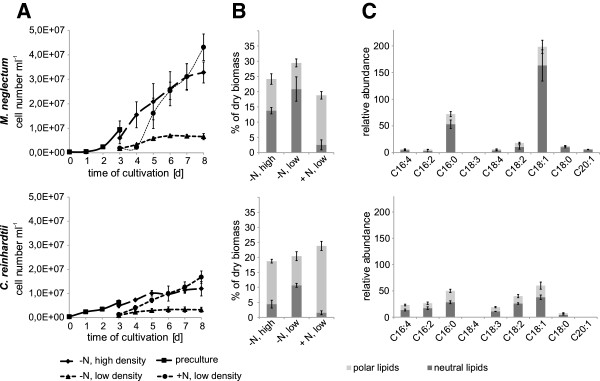
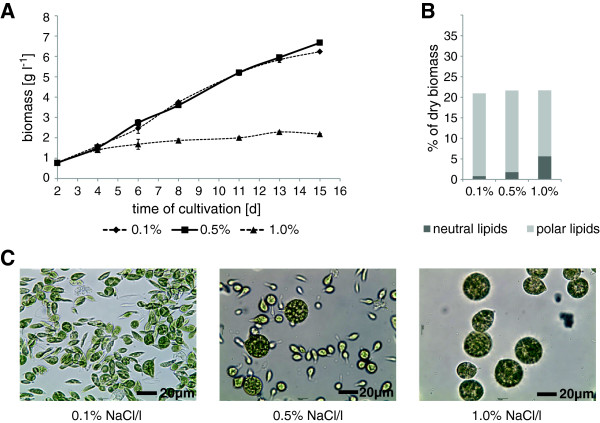
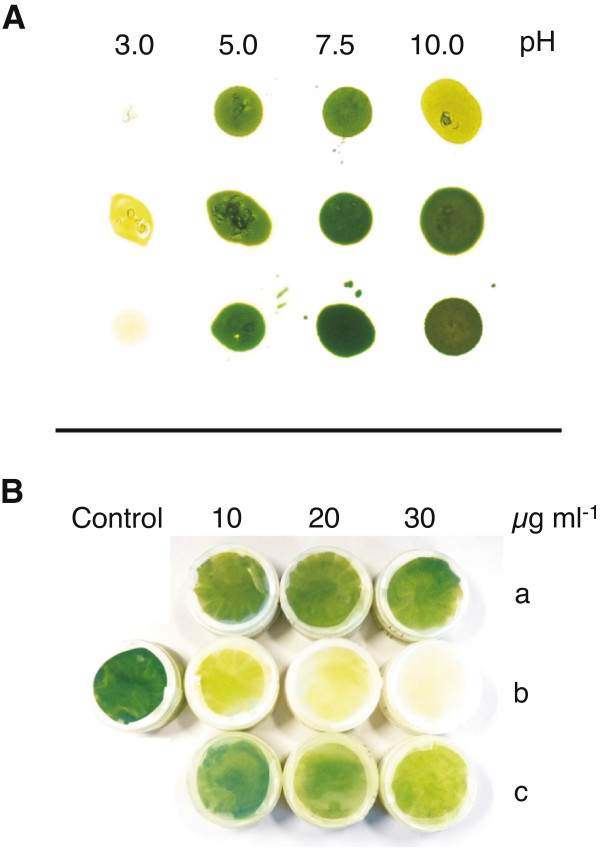
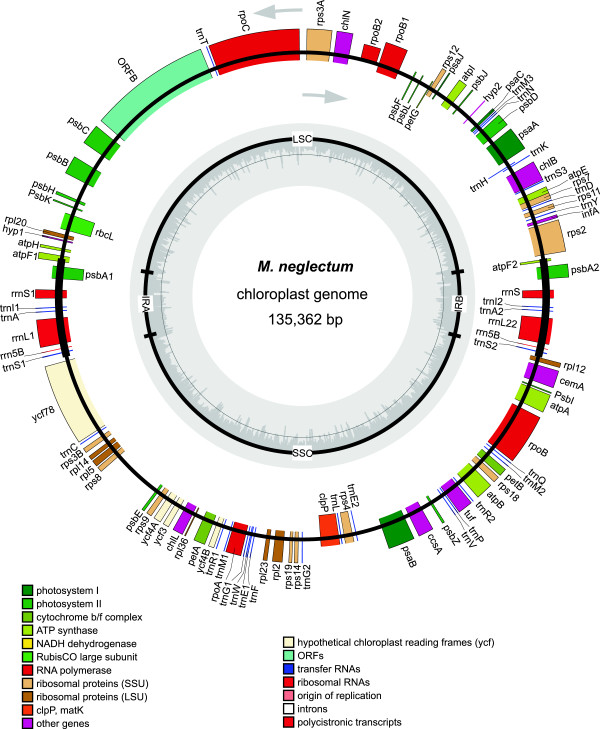
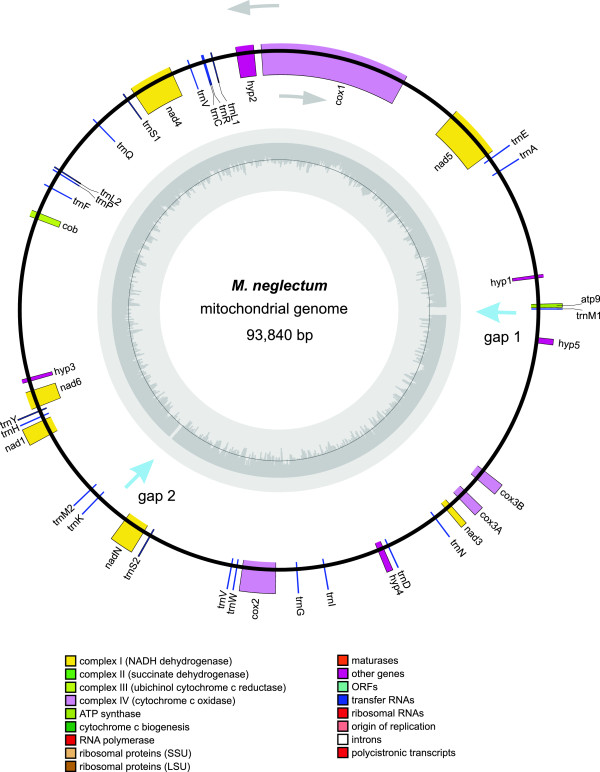
Background: Microalgae are gaining importance as sustainable production hosts in the fields of biotechnology and bioenergy. A robust biomass accumulating strain of the genus Monoraphidium (SAG 48.87) was investigated in this work as a potential feedstock for biofuel production. The genome was sequenced, annotated, and key enzymes for triacylglycerol formation were elucidated. Results: Monoraphidium neglectum was identified as an oleaginous species with favourable growth characteristics as well as a high potential for crude oil production, based on neutral lipid contents of approximately 21% (dry weight) under nitrogen starvation, composed of predominantly C18:1 and C16:0 fatty acids. Further characterization revealed growth in a relatively wide pH range and salt concentrations of up to 1.0% NaCl, in which the cells exhibited larger structures. This first full genome sequencing of a member of the Selenastraceae revealed a diploid, approximately 68 Mbp genome with a G + C content of 64.7%. The circular chloroplast genome was assembled to a 135,362 bp single contig, containing 67 protein-coding genes. The assembly of the mitochondrial genome resulted in two contigs with an approximate total size of 94 kb, the largest known mitochondrial genome within algae. 16,761 protein-coding genes were assigned to the nuclear genome. Comparison of gene sets with respect to functional categories revealed a higher gene number assigned to the category “carbohydrate metabolic process” and in “fatty acid biosynthetic process” in M. neglectum when compared to Chlamydomonas reinhardtii and Nannochloropsis gaditana, indicating a higher metabolic diversity for applications in carbohydrate conversions of biotechnological relevance. Conclusions: The genome of M. neglectum, as well as the metabolic reconstruction of crucial lipid pathways, provides new insights into the diversity of the lipid metabolism in microalgae. The results of this work provide a platform to encourage the development of this strain for biotechnological applications and production concepts.
Overview
The claims and statistics of this paper haven’t been checked yet.
Free: it reads the open-access text and checks the first 5 claims that cite a source we can check. Create a free account to check every claim.
Integrity signals
Registry
Cites
Statistics
Figures
Verification
Claims the paper makes
The claims and statistics of this paper haven’t been checked yet.
Free: it reads the open-access text and checks the first 5 claims that cite a source we can check. Create a free account to check every claim.
Claims other papers make about this one
Each is checked against this paper’s own text: does it say what the citing paper says it does?
The cited source says what the claim attributes to it.
In the citing paper
“It should be noted that the lipid data corresponds well with values presented in a previous study where in contrast to this work, lipid profiles were obtained after five days of nitrogen starvation27.”
From Label-free in vivo analysis of intracellular lipid droplets in the oleaginous microalga Monoraphidium neglectum by coherent Raman scattering microscopy (2016) · cites this paper as [27]
Self-check
Percentages, sums and reported differences re-computed from the paper’s own numbers.
The self-check needs the paper’s full text.
Citations
Cites
A SIMPLE METHOD FOR THE ISOLATION AND PURIFICATION OF TOTAL LIPIDES FROM ANIMAL TISSUES
Folch, J., Lees, M., & Stanley, G. H. S. (1957) · Journal of Biological Chemistry · doi:10.1016/s0021-9258(18)64849-5 · Cited by 65,189 · cited 1×
“After homogenization (3 × 30 s at 6,500 rpm using a Precellys 24, Peqlab, Erlangen, Germany), the total lipids were extracted according to a modified Folch protocol [65] using a total of 4 ml methanol and 8 ml chloroform.”
MethodTamura, K., Peterson, D., Peterson, N., Stecher, G., Nei, M., & Kumar, S. (2011) · Molecular Biology and Evolution · doi:10.1093/molbev/msr121 · Cited by 39,969 · cited 2×
“Tamura K, Peterson D, Peterson N, Stecher G, Nei M, Kumar S: MEGA5: Molecular evolutionary genetics analysis using maximum likelihood, evolutionary distance, and maximum parsimony methods.”
Rapid isolation of high molecular weight plant DNA
Murray, M. G., & Thompson, W. F. (1980) · Nucleic Acids Research · doi:10.1093/nar/8.19.4321 · Cited by 12,098 · cited 1×
“DNA was extracted using the cetyltrimethylammonium bromide method as reported previously [67].”
Method(1993) · Molecular Biology and Evolution · doi:10.1093/oxfordjournals.molbev.a040023 · Cited by 11,229 · cited 1×
“The evolutionary history was inferred by using the Maximum Likelihood method based on the Tamura-Nei model [72], with the tree of the highest log likelihood (-6385.”
MethodtRNAscan-SE: A Program for Improved Detection of Transfer RNA Genes in Genomic Sequence
Lowe, T. M., & Eddy, S. R. (1997) · Nucleic Acids Research · doi:10.1093/nar/25.5.955 · Cited by 10,905 · cited 1×
“21 [70,71].”
Chisti, Y. (2007) · Biotechnology Advances · doi:10.1016/j.biotechadv.2007.02.001 · Cited by 9,524 · cited 2×
“Many microalgae are reported to produce considerable amounts of oils [2,3], where the compound of interest for biofuels is mainly triacylglycerol (TAG) [2].”
BackgroundRNAmmer: consistent and rapid annotation of ribosomal RNA genes
Lagesen, K., Hallin, P., Rødland, E. A., Stærfeldt, H.-H., Rognes, T., & Ussery, D. W. (2007) · Nucleic Acids Research · doi:10.1093/nar/gkm160 · Cited by 6,112 · cited 1×
“2 server [69] and tRNAs were determined by tRNAscan-SE version 1.”
MethodMicroalgae for biodiesel production and other applications: A review
Mata, T. M., Martins, A. A., & Caetano, N. S. (2010) · Renewable and Sustainable Energy Reviews · doi:10.1016/j.rser.2009.07.020 · Cited by 5,685 · cited 1×
“Background Phototrophic microalgae are increasingly investigated for their use in biotechnological applications as these unicellular organisms offer the opportunity of introducing sustainable production pathways by converting sunlight energy and CO2 into valuable products [1-5].”
BackgroundCommercial Applications of Microalgae
Spolaore, P., Joannis-Cassan, C., Duran, E., & Isambert, A. (2006) · Journal of Bioscience and Bioengineering · doi:10.1263/jbb.101.87 · Cited by 4,285 · cited 1×
“Background Phototrophic microalgae are increasingly investigated for their use in biotechnological applications as these unicellular organisms offer the opportunity of introducing sustainable production pathways by converting sunlight energy and CO2 into valuable products [1-5].”
BackgroundHaas, B. J., Salzberg, S. L., Zhu, W., Pertea, M., Allen, J. E., Orvis, J., White, O., Buell, C. R., & Wortman, J. R. (2008) · Genome Biology · doi:10.1186/gb-2008-9-1-r7 · Cited by 4,079 · cited 6×
“Both predictions were analysed by EVidenceModeler [33], integrating BLASTp protein alignment data with C. reinhardtii.”
MethodInfluentialMicroalgal triacylglycerols as feedstocks for biofuel production: perspectives and advances
Hu, Q., Sommerfeld, M., Jarvis, E., Ghirardi, M., Posewitz, M., Seibert, M., & Darzins, A. (2008) · The Plant Journal · doi:10.1111/j.1365-313x.2008.03492.x · Cited by 3,745 · cited 7×
“In the light of the fact that the biodiversity of microalgae is tremendous, much of the potential for strain identification and characterisation to contribute to liquid biofuel purposes remains to be explored [2].”
BackgroundResultInfluentialRodolfi, L., Chini Zittelli, G., Bassi, N., Padovani, G., Biondi, N., Bonini, G., & Tredici, M. R. (2009) · Biotechnology and Bioengineering · doi:10.1002/bit.22033 · Cited by 2,879 · cited 2×
“[15] and Nannochloropsis gaditana [21].”
BackgroundThe Chlamydomonas Genome Reveals the Evolution of Key Animal and Plant Functions
Merchant, S. S., Prochnik, S. E., Vallon, O., Harris, E. H., Karpowicz, S. J., Witman, G. B., Terry, A., Salamov, A., Fritz-Laylin, L. K., Maréchal-Drouard, L., et al. (2007) · Science · doi:10.1126/science.1143609 · Cited by 2,691 · cited 6×
“reinhardtii (15,143 gene predictions before RNA sequencing [8]).”
BackgroundInfluentialSecond Generation Biofuels: High-Efficiency Microalgae for Biodiesel Production
Schenk, P. M., Thomas-Hall, S. R., Stephens, E., Marx, U. C., Mussgnug, J. H., Posten, C., Kruse, O., & Hankamer, B. (2008) · BioEnergy Research · doi:10.1007/s12155-008-9008-8 · Cited by 2,333 · cited 3×
“This composition, however, would most likely require further blending with oil from other sources to meet the requirements for liquid biofuels such as biodiesel [1].”
BackgroundSelf-citationThe tRNAscan-SE, snoscan and snoGPS web servers for the detection of tRNAs and snoRNAs
Schattner, P., Brooks, A. N., & Lowe, T. M. (2005) · Nucleic Acids Research · doi:10.1093/nar/gki366 · Cited by 2,295
The Genome of the Diatom Thalassiosira Pseudonana : Ecology, Evolution, and Metabolism
Armbrust, E. V., Berges, J. A., Bowler, C., Green, B. R., Martinez, D., Putnam, N. H., Zhou, S., Allen, A. E., Apt, K. E., Bechner, M., et al. (2004) · Science · doi:10.1126/science.1101156 · Cited by 2,010 · cited 1×
“Consequently the genomes of a number of strains of interest have recently been sequenced and essential genetic tools have been successfully introduced [6-8].”
Chen, C.-Y., Yeh, K.-L., Aisyah, R., Lee, D.-J., & Chang, J.-S. (2011) · Bioresource Technology · doi:10.1016/j.biortech.2010.06.159 · Cited by 1,860 · cited 2×
“It is well established that microalgal biomass and lipid production are strongly dependent on the cultivation conditions [27].”
BackgroundResultGene prediction with a hidden Markov model and a new intron submodel
Stanke, M., & Waack, S. (2003) · Bioinformatics · doi:10.1093/bioinformatics/btg1080 · Cited by 1,439 · cited 6×
“All potential genes were predicted by two ab initio gene prediction tools: Augustus [31] with the Chlamydomonas reinhardtii genome as training set and in parallel with GeneMark-ES (version 2) [32], which combines GeneMark.hmm for prediction of eukaryotic genomes with a self-training procedure.”
MethodInfluentialLipid productivity as a key characteristic for choosing algal species for biodiesel production
Griffiths, M. J., & Harrison, S. T. L. (2009) · Journal of Applied Phycology · doi:10.1007/s10811-008-9392-7 · Cited by 1,421 · cited 1×
“Another strain of this species was reported as an oleaginous organism before [26], highlighting the need for more detailed comparisons and investigations among the members of the Selenastraceae by metabolomic studies and whole genome sequencing.”
BackgroundLohse, M., Drechsel, O., & Bock, R. (2007) · Current Genetics · doi:10.1007/s00294-007-0161-y · Cited by 1,254 · cited 2×
“Lohse M, Drechsel O, Bock R: OrganellarGenomeDRAW (OGDRAW): a tool for the easy generation of high-quality custom graphical maps of plastid and mitochondrial genomes.”
MethodCurrent Protocols in Bioinformatics
(2002) · John Wiley & Sons, Inc. eBooks · doi:10.1002/0471250953 · Cited by 1,207
InterPro in 2011: new developments in the family and domain prediction database
Hunter, S., Jones, P., Mitchell, A., Apweiler, R., Attwood, T. K., Bateman, A., Bernard, T., Binns, D., Bork, P., Burge, S., et al. (2012) · Nucleic Acids Research · doi:10.1093/nar/gkr948 · Cited by 1,035 · cited 4×
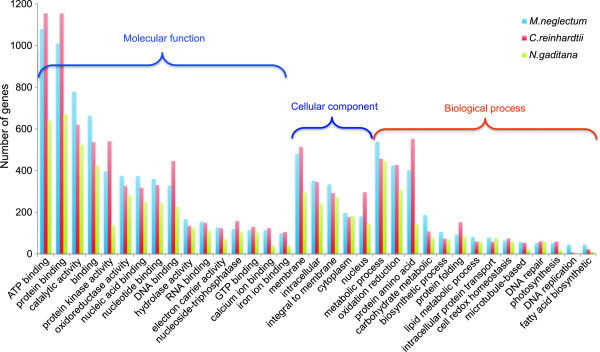
“Comparative analyses of the predicted gene functions revealed higher gene numbers assigned to carbohydrate metabolism and fatty acid biosynthesis For a deeper investigation of gene functions of M. neglectum in comparison to C. reinhardtii and N. gaditana, we calculated the gene ontology terms for the complete gene-set…”
MethodInfluentialGenDB--an open source genome annotation system for prokaryote genomes
Meyer, F. (2003) · Nucleic Acids Research · doi:10.1093/nar/gkg312 · Cited by 680 · cited 6×
“Meyer F, Goesmann A, McHardy AC, Bartels D, Bekel T, Clausen J, Kalinowski J, Linke B, Rupp O, Giegerich R: GenDB—an open source genome annotation system for prokaryote genomes.”
MethodInfluentialA review of the harvesting of micro-algae for biofuel production
Milledge, J. J., & Heaven, S. (2013) · Reviews in Environmental Science and Bio/Technology · doi:10.1007/s11157-012-9301-z · Cited by 678 · cited 1×
“conditions (Figure 2C) which could potentially reduce energy costs of harvesting during downstream processing [57].”
BackgroundTakagi, M., Karseno, & Yoshida, T. (2006) · Journal of Bioscience and Bioengineering · doi:10.1263/jbb.101.223 · Cited by 628 · cited 2×
“Several studies have been performed on salt and pH tolerance of various microalgal strains [53-55].”
BackgroundBreuer, G., Lamers, P. P., Martens, D. E., Draaisma, R. B., & Wijffels, R. H. (2012) · Bioresource Technology · doi:10.1016/j.biortech.2012.08.003 · Cited by 626 · cited 6×
“Parachlorella kessleri and Scenedesmus obliquus were selected for comparative analyses because they represent prominent microalgal species with superior lipid productivities [17,28].”
BackgroundMethodResultInfluentialMicroalga Scenedesmus obliquus as a potential source for biodiesel production
Mandal, S., & Mallick, N. (2009) · Applied Microbiology and Biotechnology · doi:10.1007/s00253-009-1935-6 · Cited by 571 · cited 1×
“Scenedesmus obliquus, which was used as an oleaginous control species in this work and had been recommended for liquid biofuel applications before [17,40].”
MethodDraft genome sequence and genetic transformation of the oleaginous alga Nannochloropsis gaditana
Radakovits, R., Jinkerson, R. E., Fuerstenberg, S. I., Tae, H., Settlage, R. E., Boore, J. L., & Posewitz, M. C. (2012) · Nature Communications · doi:10.1038/ncomms1688 · Cited by 516 · cited 6×
“With an estimated genome size of 68 Mbp (Table 2), the M. neglectum genome is considerably larger than the genome of the Heterokontophyte Nannochloropsis gaditana (ca. 30 Mb, [21]), but smaller than the 121 Mb genome of the green alga C. reinhardtii [8].”
BackgroundInfluentialBlanc, G., Duncan, G., Agarkova, I., Borodovsky, M., Gurnon, J., Kuo, A., Lindquist, E., Lucas, S., Pangilinan, J., Polle, J., et al. (2010) · The Plant Cell · doi:10.1105/tpc.110.076406 · Cited by 502 · cited 1×
“reinhardtii and Chlorella variabilis [8,58], but considerably higher than that of N.”
BackgroundLang, I., Hodac, L., Friedl, T., & Feussner, I. (2011) · BMC Plant Biology · doi:10.1186/1471-2229-11-124 · Cited by 498 · cited 1×
“Variable lipid metabolism within the microalgae is also suggested by the high diversity of lipids of different classes and unusual fatty acids found in individual algae strains, even among the same division [12,13].”
BackgroundVieler, A., Wu, G., Tsai, C.-H., Bullard, B., Cornish, A. J., Harvey, C., Reca, I.-B., Thornburg, C., Achawanantakun, R., Buehl, C. J., et al. (2012) · PLoS Genetics · doi:10.1371/journal.pgen.1003064 · Cited by 458 · cited 2×
“reinhardtii has been sequenced [8], as well as the genome of the TAG-accumulating Eustigmatophytes Nannochloropsis gaditana [20,21], Nannochloropsis oceanica [6], and several other microalgae [22].”
BackgroundInhibition of starch synthesis results in overproduction of lipids in Chlamydomonas reinhardtii
Li, Y., Han, D., Hu, G., Sommerfeld, M., & Hu, Q. (2010) · Biotechnology and Bioengineering · doi:10.1002/bit.22807 · Cited by 429 · cited 1×
“The accumulation of TAG in microalgae usually occurs under environmental stress conditions such as high-light or nitrogen starvation [2,9] but, however, can be also increased artificially, for example, by inhibition of starch synthesis [10].”
BackgroundBoyle, N. R., Page, M. D., Liu, B., Blaby, I. K., Casero, D., Kropat, J., Cokus, S. J., Hong-Hermesdorf, A., Shaw, J., Karpowicz, S. J., et al. (2012) · Journal of Biological Chemistry · doi:10.1074/jbc.m111.334052 · Cited by 419 · cited 3×
“reinhardtii, membrane recycling and conversion of polar lipids to triacylglycerols plays a more prominent role [45] when compared to M.”
BackgroundEDGAR: A software framework for the comparative analysis of prokaryotic genomes
Blom, J., Albaum, S. P., Doppmeier, D., Pühler, A., Vorhölter, F.-J., Zakrzewski, M., & Goesmann, A. (2009) · BMC Bioinformatics · doi:10.1186/1471-2105-10-154 · Cited by 411 · cited 1×
“The comparative approach, conducted using EDGAR software [39], taking into account only genes shared between M.”
MethodSelf-citationLi, Y., Han, D., Hu, G., Dauvillee, D., Sommerfeld, M., Ball, S., & Hu, Q. (2010) · Metabolic Engineering · doi:10.1016/j.ymben.2010.02.002 · Cited by 383 · cited 1×
“From the dried total lipid extract, column chromatographies were performed to separate the neutral from the polar lipid fraction as described elsewhere [66].”
MethodYoon, K., Han, D., Li, Y., Sommerfeld, M., & Hu, Q. (2012) · The Plant Cell · doi:10.1105/tpc.112.100701 · Cited by 377 · cited 4×
“Abbreviations ACP: Acyl carrier protein; BLAST: Basic local alignment search tool; CoA: Coenzyme A; DAG: Diacylglycerol; DNA: Deoxyribonucleic acid; EVM: EVidence modeler; FA: Fatty acid; NaCl: Sodium chloride; TAG: Triacylglycerol; TRIS: Tris(hydroxymethyl)aminomethane.”
BackgroundInfluentialEnzyme-specific profiles for genome annotation: PRIAM
Claudel-Renard, C. (2003) · Nucleic Acids Research · doi:10.1093/nar/gkg847 · Cited by 375
Hockin, N. L., Mock, T., Mulholland, F., Kopriva, S., & Malin, G. (2012) · PLANT PHYSIOLOGY · doi:10.1104/pp.111.184333 · Cited by 372 · cited 1×
“It has to be noted that the central carbon metabolism of diatoms shows some pronounced differences compared to green algae [63], therefore, the data from this work open up the opportunity for further comparative studies between Chlorophyta and diatoms to investigate the metabolic fluxes and their regulation towards fa…”
ResultThe versatility of algae and their lipid metabolism
Harwood, J. L., & Guschina, I. A. (2009) · Biochimie · doi:10.1016/j.biochi.2008.11.004 · Cited by 348 · cited 1×
“Variable lipid metabolism within the microalgae is also suggested by the high diversity of lipids of different classes and unusual fatty acids found in individual algae strains, even among the same division [12,13].”
BackgroundA chloroplast pathway for the de novo biosynthesis of triacylglycerol in Chlamydomonas reinhardtii
Fan, J., Andre, C., & Xu, C. (2011) · FEBS Letters · doi:10.1016/j.febslet.2011.05.018 · Cited by 347 · cited 1×
“neglectum under nitrogen starvation, this finding furthermore points towards the important role of the chloroplast pathway for the synthesis of neutral lipid precursors [64].”
BackgroundGriffiths, M. J., van Hille, R. P., & Harrison, S. T. L. (2012) · Journal of Applied Phycology · doi:10.1007/s10811-011-9723-y · Cited by 341 · cited 1×
“Based on this knowledge, numerous systematic screens aiming to identify microalgal species with high lipid content have been performed during recent years [14-19].”
BackgroundLipid metabolism in microalgae distinguishes itself
Liu, B., & Benning, C. (2013) · Current Opinion in Biotechnology · doi:10.1016/j.copbio.2012.08.008 · Cited by 292 · cited 12×
“Comparison of gene sets with respect to functional categories revealed a higher gene number assigned to the category “carbohydrate metabolic process” and in “fatty acid biosynthetic process” in M. neglectum when compared to Chlamydomonas reinhardtii and Nannochloropsis gaditana, indicating a higher metabolic diversity…”
BackgroundResultInfluentialAndrianov, V., Borisjuk, N., Pogrebnyak, N., Brinker, A., Dixon, J., Spitsin, S., Flynn, J., Matyszczuk, P., Andryszak, K., Laurelli, M., et al. (2010) · Plant Biotechnology Journal · doi:10.1111/j.1467-7652.2009.00458.x · Cited by 262
Lipids in Photosynthesis: Essential and Regulatory Functions
Wada, H., & Murata, N. (2009) · Advances in photosynthesis and respiration · doi:10.1007/978-90-481-2863-1 · Cited by 251
Physiological role of neutral lipid accumulation in eukaryotic microalgae under stresses
Solovchenko, A. E. (2012) · Russian Journal of Plant Physiology · doi:10.1134/s1021443712020161 · Cited by 236 · cited 1×
“many microalgal strains [2,49].”
Salama, E.-S., Kim, H.-C., Abou-Shanab, R. A. I., Ji, M.-K., Oh, Y.-K., Kim, S.-H., & Jeon, B.-H. (2013) · Bioprocess and Biosystems Engineering · doi:10.1007/s00449-013-0919-1 · Cited by 233 · cited 2×
“5% sodium chloride in the medium (Figure 2) which is comparatively high when compared to other freshwater strains [54].”
BackgroundViewing and Editing Assembled Sequences Using Consed
Gordon, D. (2003) · Current Protocols in Bioinformatics · doi:10.1002/0471250953.bi1102s02 · Cited by 227
Eukaryotic Gene Prediction Using GeneMark.hmm‐E and GeneMark‐ES
Borodovsky, M., & Lomsadze, A. (2011) · Current Protocols in Bioinformatics · doi:10.1002/0471250953.bi0406s35 · Cited by 221 · cited 5×
“All potential genes were predicted by two ab initio gene prediction tools: Augustus [31] with the Chlamydomonas reinhardtii genome as training set and in parallel with GeneMark-ES (version 2) [32], which combines GeneMark.hmm for prediction of eukaryotic genomes with a self-training procedure.”
BackgroundMethodInfluentialBiodiesel production with microalgae as feedstock: from strains to biodiesel
Gong, Y., & Jiang, M. (2011) · Biotechnology Letters · doi:10.1007/s10529-011-0574-z · Cited by 216 · cited 1×
“The accumulation of TAG in microalgae usually occurs under environmental stress conditions such as high-light or nitrogen starvation [2,9] but, however, can be also increased artificially, for example, by inhibition of starch synthesis [10].”
BackgroundRismani-Yazdi, H., Haznedaroglu, B. Z., Hsin, C., & Peccia, J. (2012) · Biotechnology for Biofuels · doi:10.1186/1754-6834-5-74 · Cited by 211 · cited 3×
“While PDAT homologues could be found in the transcriptome of the marine strain Dunaliella tertiolecta, they appear to be absent in Neochloris oleoabundans [43].”
BackgroundPřibyl, P., Cepák, V., & Zachleder, V. (2012) · Applied Microbiology and Biotechnology · doi:10.1007/s00253-012-3915-5 · Cited by 185 · cited 2×
“neglectum are likely to be attainable through further optimization studies emphasizing optimised biomass densities and light penetration [17,28,51].”
BackgroundResultLa Russa, M., Bogen, C., Uhmeyer, A., Doebbe, A., Filippone, E., Kruse, O., & Mussgnug, J. H. (2012) · Journal of Biotechnology · doi:10.1016/j.jbiotec.2012.04.006 · Cited by 184 · cited 1×
“reinhardtii [44,45] or the oleaginous Heterokontophyte N.”
Self-citationIsolation and Evaluation of Oil-Producing Microalgae from Subtropical Coastal and Brackish Waters
Lim, D. K. Y., Garg, S., Timmins, M., Zhang, E. S. B., Thomas-Hall, S. R., Schuhmann, H., Li, Y., & Schenk, P. M. (2012) · PLoS ONE · doi:10.1371/journal.pone.0040751 · Cited by 176 · cited 1×
“Based on this knowledge, numerous systematic screens aiming to identify microalgal species with high lipid content have been performed during recent years [14-19].”
BackgroundMicroalgae in the postgenomic era: a blooming reservoir for new natural products
Sasso, S., Pohnert, G., Lohr, M., Mittag, M., & Hertweck, C. (2012) · FEMS Microbiology Reviews · doi:10.1111/j.1574-6976.2011.00304.x · Cited by 170 · cited 1×
“reinhardtii has been sequenced [8], as well as the genome of the TAG-accumulating Eustigmatophytes Nannochloropsis gaditana [20,21], Nannochloropsis oceanica [6], and several other microalgae [22].”
BackgroundYu, X., Zhao, P., Ci-an, H., Li, J., Tang, X., Zhou, J., & Huang, Z. (2012) · Bioresource Technology · doi:10.1016/j.biortech.2012.07.002 · Cited by 156 · cited 3×
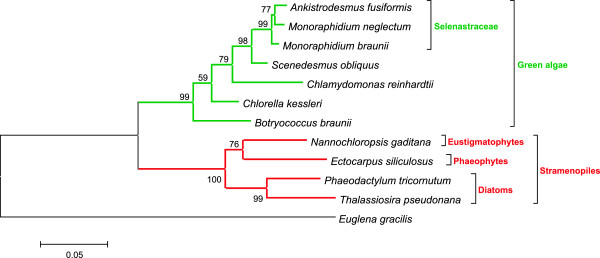
“contortum [24], on the same branch as Podohedriella falcata [25], also known as Ankistrodesmus falcatus.”
BackgroundMacDougall, K. M., McNichol, J., McGinn, P. J., O’Leary, S. J. B., & Melanson, J. E. (2011) · Analytical and Bioanalytical Chemistry · doi:10.1007/s00216-011-5376-6 · Cited by 143 · cited 1×
“Based on this knowledge, numerous systematic screens aiming to identify microalgal species with high lipid content have been performed during recent years [14-19].”
BackgroundDinoflagellate mitochondrial genomes: stretching the rules of molecular biology
Waller, R. F., & Jackson, C. J. (2009) · BioEssays · doi:10.1002/bies.200800164 · Cited by 140 · cited 1×
“It is well known that the expression of mitochondrial genes is mainly dependent on the nucleus-encoded transcriptional and translational machinery [38].”
BackgroundGrowth of oil accumulating microalga Neochloris oleoabundans under alkaline–saline conditions
Santos, A. M., Janssen, M., Lamers, P. P., Evers, W. A. C., & Wijffels, R. H. (2011) · Bioresource Technology · doi:10.1016/j.biortech.2011.10.084 · Cited by 138 · cited 1×
“Several studies have been performed on salt and pH tolerance of various microalgal strains [53-55].”
BackgroundContinuous microalgae cultivation in a photobioreactor
Tang, H., Chen, M., Simon Ng, K. Y., & Salley, S. O. (2012) · Biotechnology and Bioengineering · doi:10.1002/bit.24516 · Cited by 138 · cited 1×
“However, other investigations with Chlorella minutissima and Dunaliella tertiolecta revealed no significant increase of lipids in various culture dilutions [50], suggesting species-specific differences in their glycerolipid metabolism.”
ResultThe microalga Parachlorella kessleri––A novel highly efficient lipid producer
Li, X., Přibyl, P., Bišová, K., Kawano, S., Cepák, V., Zachleder, V., Čížková, M., Brányiková, I., & Vítová, M. (2013) · Biotechnology and Bioengineering · doi:10.1002/bit.24595 · Cited by 128 · cited 2×
“Parachlorella kessleri and Scenedesmus obliquus were selected for comparative analyses because they represent prominent microalgal species with superior lipid productivities [17,28].”
BackgroundHildebrand, M., Abbriano, R. M., Polle, J. E. W., Traller, J. C., Trentacoste, E. M., Smith, S. R., & Davis, A. K. (2013) · Current Opinion in Chemical Biology · doi:10.1016/j.cbpa.2013.02.027 · Cited by 111 · cited 1×
“reinhardtii [44-47].”
Secq, M.-P. O., & Green, B. R. (2011) · Gene · doi:10.1016/j.gene.2011.02.001 · Cited by 109
Wibberg, D., Jelonek, L., Rupp, O., Hennig, M., Eikmeyer, F., Goesmann, A., Hartmann, A., Borriss, R., Grosch, R., Pühler, A., et al. (2012) · Journal of Biotechnology · doi:10.1016/j.jbiotec.2012.12.010 · Cited by 105 · cited 1×
“read-count (Additional file 3: Figure S3) as performed according to [29] revealed a diploid character of the sequenced genome showing homozygous and heterozygous contigs.”
MethodSelf-citationMatsumoto, M., Sugiyama, H., Maeda, Y., Sato, R., Tanaka, T., & Matsunaga, T. (2009) · Applied Biochemistry and Biotechnology · doi:10.1007/s12010-009-8766-x · Cited by 99 · cited 1×
“are known to require at least salt concentrations similar to sea water to retain their highest biomass productivity [56].”
BackgroundIdentification of Monoraphidium contortum as a promising species for liquid biofuel production
Bogen, C., Klassen, V., Wichmann, J., Russa, M. L., Doebbe, A., Grundmann, M., Uronen, P., Kruse, O., & Mussgnug, J. H. (2013) · Bioresource Technology · doi:10.1016/j.biortech.2013.01.164 · Cited by 97 · cited 8×
“Cultivations were performed in Provasoli based minimal media (ProF) as described previously [19].”
BackgroundMethodInfluentialSelf-citationGenomic insights from the oleaginous model alga Nannochloropsis gaditana
Jinkerson, R. E., Radakovits, R., & Posewitz, M. C. (2013) · Bioengineered · doi:10.4161/bioe.21880 · Cited by 97 · cited 1×
“reinhardtii has been sequenced [8], as well as the genome of the TAG-accumulating Eustigmatophytes Nannochloropsis gaditana [20,21], Nannochloropsis oceanica [6], and several other microalgae [22].”
BackgroundMethodologies for transferring DNA into eukaryotic microalgae: a review
Coll, J. M. (2006) · Spanish Journal of Agricultural Research · doi:10.5424/sjar/2006044-209 · Cited by 91
Krienitz, L., Ustinova, I., Friedl, T., & Huss, V. A. R. (2001) · Journal of Phycology · doi:10.1046/j.1529-8817.2001.01004.x · Cited by 83 · cited 2×
“Based on 18S rRNA analysis, it was shown that species of this genus tightly cluster with species of Ankistrodesmus, Kirchneriella, and other genera, thus not forming a monophyletic group [25].”
BackgroundSimpson, C., & Stern, D. B. (2002) · PLANT PHYSIOLOGY · doi:10.1104/pp.010908 · Cited by 82
Characterization of a novel thioesterase (PtTE) from Phaeodactylum tricornutum
Gong, Y., Guo, X., Wan, X., Liang, Z., & Jiang, M. (2011) · Journal of Basic Microbiology · doi:10.1002/jobm.201000520 · Cited by 78 · cited 1×
“Since thioesterases were reported to potentially reduce feedback inhibition in fatty acid biosynthesis in diatoms [62], the abundance of these enzymes could be considered as a potential bottleneck for efficient fatty acid production and consequently could be putative targets for improving the fatty acid production in…”
BackgroundDinoflagellates: a mitochondrial genome all at sea
Nash, E. A., Nisbet, R. E. R., Barbrook, A. C., & Howe, C. J. (2008) · Trends in Genetics · doi:10.1016/j.tig.2008.04.001 · Cited by 77 · cited 2×
“This observation is in accordance with the understanding that algal mitochondrial genomes generally show a high degree of diversity [37].”
BackgroundResultPlastid Origin and Evolution: New Models Provide Insights into Old Problems
Chan, C. X., Gross, J., Yoon, H. S., & Bhattacharya, D. (2011) · PLANT PHYSIOLOGY · doi:10.1104/pp.111.173500 · Cited by 73 · cited 1×
“The size of the chloroplast was determined to be 135,362 bp, therefore, within the typical range of chloroplast genome sizes of algae and plants [59].”
BackgroundMolecular Genetics of Lipid Metabolism in the Model Green Alga Chlamydomonas reinhardtii
Moellering, E. R., Miller, R., & Benning, C. (2009) · Advances in photosynthesis and respiration · doi:10.1007/978-90-481-2863-1_7 · Cited by 62 · cited 1×
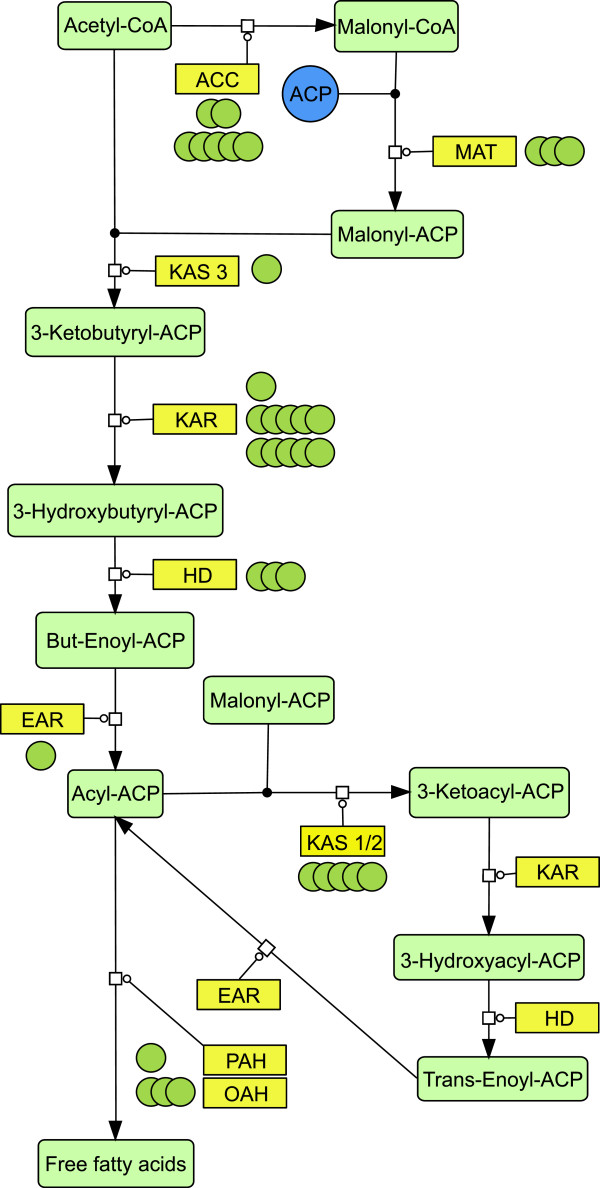
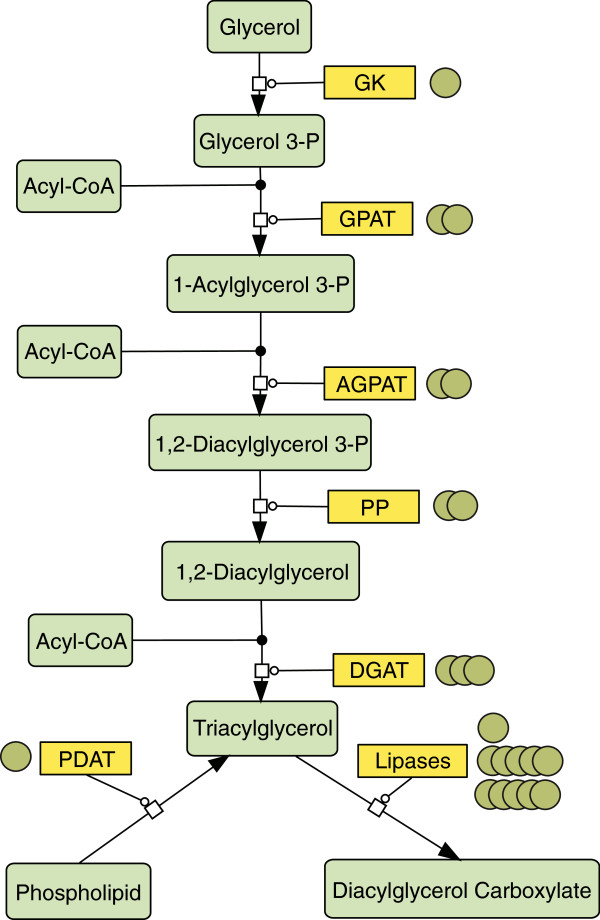
“In addition to the fatty acid metabolism, genes coding for enzymes of the glycerolipid metabolism [42,43] were investigated in more detail.”
BackgroundCulture of microalgal strains isolated from natural habitats in Thailand in various enriched media
Chaichalerm, S., Pokethitiyook, P., Yuan, W. W., Meetam, M., Sritong, K., Pugkaew, W., Kungvansaichol, K., Kruatrachue, M., & Damrongphol, P. (2011) · Applied Energy · doi:10.1016/j.apenergy.2011.07.028 · Cited by 58 · cited 2×
“contortum, isolated from a natural habitat in Thailand, was grown in different autotrophic media, it showed comparatively high lipid productivities among the strains under the investigated conditions [23].”
BackgroundEukaryotic Gene Prediction Using GeneMark.hmm
Borodovsky, M. Y., Lomsadze, A., Ivanov, N. V., & Mills, R. E. (2003) · Current Protocols in Bioinformatics · doi:10.1002/0471250953.bi0406s01 · Cited by 43
Lipids of Ankistrodesmus braunii
Williams, V. R., & McMillan, R. (1961) · Science · doi:10.1126/science.133.3451.459 · Cited by 17 · cited 1×
“obliquus [17,52].”
Genomics and Evolution of Cellular Organelles
Odintsova, M. S., & Yurina, N. P. (2005) · Russian Journal of Genetics · doi:10.1007/s11177-005-0187-5 · Cited by 15 · cited 1×
“This finding is supported by the large variance in the chloroplast genome size encountered among sequenced algal genomes [35,36].”
Result
Cited by
Baier, T., Wichmann, J., Kruse, O., & Lauersen, K. J. (2018) · Nucleic Acids Research · doi:10.1093/nar/gky532 · Cited by 176
Self-citationMicroalgae with Artificial Intelligence: A Digitalized Perspective on Genetics, Systems and Products
Teng, S. Y., Yew, G. Y., Sukačová, K., Show, P. L., Máša, V., & Chang, J.-S. (2020) · Biotechnology Advances · doi:10.1016/j.biotechadv.2020.107631 · Cited by 145
Omics approaches for microalgal applications: Prospects and challenges
Mishra, A., Medhi, K., Malaviya, P., & Thakur, I. S. (2019) · Bioresource Technology · doi:10.1016/j.biortech.2019.121890 · Cited by 141
Improving Microalgae for Biotechnology—From Genetics to Synthetic Biology
Hlavova, M., Turoczy, Z., & Bisova, K. (2015) · Biotechnology Advances · doi:10.1016/j.biotechadv.2015.01.009 · Cited by 134
Alboresi, A., Perin, G., Vitulo, N., Diretto, G., Block, M., Jouhet, J., Meneghesso, A., Valle, G., Giuliano, G., Maréchal, E., et al. (2016) · Plant Physiology · doi:10.1104/pp.16.00599 · Cited by 131
Metadata
- Authors
- Bogen, C., Al-Dilaimi, A., Albersmeier, A., Wichmann, J., Grundmann, M., Rupp, O., Lauersen, K. J., Blifernez-Klassen, O., Kalinowski, J., Goesmann, A., Mussgnug, J. H., & Kruse, O.
- Affiliations
- Bielefeld University (DE)
- Corresponding author
- Kruse, Olaf
- ORCID
- Venue
- BMC Genomics
- Published
- 2013-12
- Volume
- 14
- Issue
- 1
- Pages
- 926-926
- ISSN
- 1471-2164 (ISSN-L)
- PMC
- PMC3890519
- OpenAlex
- W2000905176
- Cited by
- 108
- References
- 79
- Citations by year
- 2026: 5 · 2025: 7 · 2024: 7 · 2023: 4 · 2022: 10 · 2021: 11 · 2020: 8 · 2019: 15 · 2018: 12 · 2017: 9 · 2016: 9 · 2015: 6 · 2014: 5
- FWCI
- 2.42
- Type
- journal article
- Language
- en
- Open access
- gold
- doi.org
- Licence
- cc-by
- Locations
- BMC Genomics (publishedVersion, cc-by)
- Europe PMC (PubMed Central) (publishedVersion, cc-by)
- PubMed Central (publishedVersion, cc-by)
- PubMed (publishedVersion)
- PUB – Publications at Bielefeld University (Bielefeld University) (submittedVersion, other-oa)
- Publikationen an der Universität Bielefeld (Universität Bielefeld) (submittedVersion, other-oa)
- Topics
- Physical Sciences › Energy › Renewable Energy, Sustainability and the Environment › Algal biology and biofuel production
- Life Sciences › Biochemistry, Genetics and Molecular Biology › Molecular Biology › Microbial Metabolic Engineering and Bioproduction
- Life Sciences › Biochemistry, Genetics and Molecular Biology › Biochemistry › Lipid metabolism and biosynthesis
- Keywords
- lipid metabolism, triglyceride synthesis, oleaginous microalgae, biofuel feedstock, genome annotation, chloroplast genome, mitochondrial genome, fatty acid synthesis, nitrogen starvation
- MeSH terms
- Chlorophyta, Fatty Acids, Triglycerides, Biomass, Genome, Plant, Lipid Metabolism, Phototrophic Processes, Metabolic Networks and Pathways, Genome, Chloroplast, Genome, Mitochondrial, Biofuels, Microalgae
About these checks
Registry, retraction, Cites and statistics results are computed, not judged, with one exception: a printed reference that no index lists is read once by a model before it counts as a citation error. Claims are extracted by a model and kept only when their quote appears verbatim in the text; each cited source is then checked, with a model’s help, for whether it says what the claim relies on. Those verdicts can be wrong — read the claim’s quote and the cited source before relying on one.
Statistics and arithmetic are recomputed, not judged.
Confidence bands are shown only for fields calibrated on our annotated test set. None is calibrated yet, so no band is shown.
What counts as a claim ›How we measure confidence ›How we check this ›
Are you an author, or do you see a problem with this page? Request a review
Data sources
Bibliographic data: Semantic Scholar, OpenAlex, Crossref.
Contains information from the Semantic Scholar Academic Graph Datasets, made available under the ODC Attribution License (ODC-BY 1.0).
Semantic Scholar’s data is described in: Kinney, R., et al. (2023). The Semantic Scholar Open Data Platform. arXiv:2301.10140.
