

Cell-to-cell spread and massive vacuole formation after Cryptococcus neoformans infection of murine macrophages
Open accessThe DOI matches its Crossref record; 18 of the 18 references it cites were found in a registry or an index.
Abstract
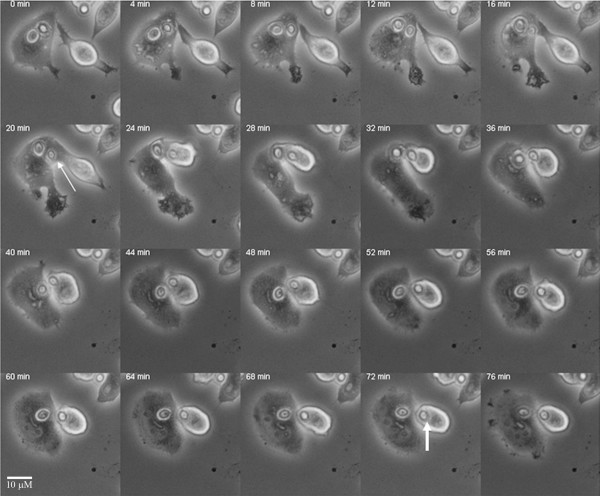
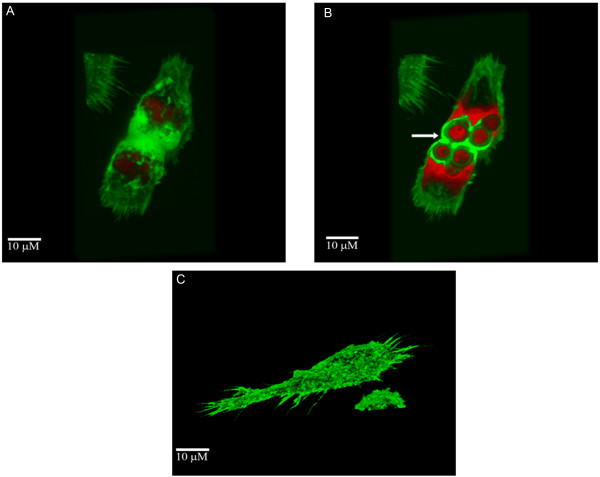
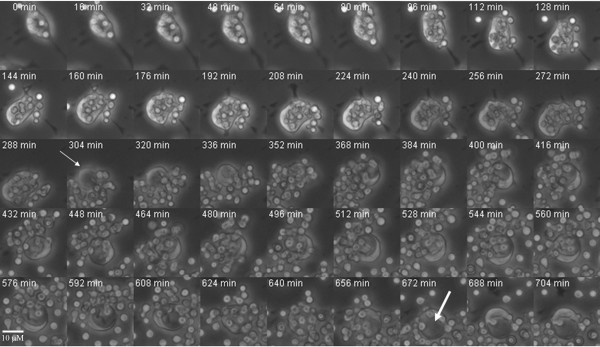
BACKGROUND: The interaction between macrophages and Cryptococcus neoformans (Cn) is critical for containing dissemination of this pathogenic yeast. However, Cn can either lyse macrophages or escape from within them through a process known as phagosomal extrusion. Both events result in live extracellular yeasts capable of reproducing and disseminating in the extracellular milieu. Another method of exiting the intracellular confines of cells is through host cell-to-cell transfer of the pathogen, and this commonly occurs with the human immuno-deficiency virus (HIV) and CD4+ T cells and macrophages. In this report we have used time-lapse imaging to determine if this occurs with Cn. RESULTS: Live imaging of Cryptococcus neoformans interactions with murine macrophages revealed cell-to-cell spread of yeast cells from infected donor cells to uninfected cells. Although this phenomenon was relatively rare its occurrence documents a new capacity for this pathogen to infect adjacent cells without exiting the intracellular space. Cell-to-cell spread appeared to be an actin-dependent process. In addition, we noted that cryptococcal phagosomal extrusion was followed by the formation of massive vacuoles suggesting that intracellular residence is accompanied by long lasting damage to host cells. CONCLUSION: C. neoformans can escape the intracellular confines of macrophages in an actin dependent manner by cell-to-cell transfer of the yeast leading to infection of adjacent cells. In addition, complete extrusion of internalized Cn cells can lead to the formation of a massive vacuole which may be a sign of damage to the host macrophage. These observations document new outcomes for the interaction of C. neoformans with host cells that provide precedents for cell biological effects that may contribute to the pathogenesis of cryptococcal infections.
Overview
The claims and statistics of this paper haven’t been checked yet.
Free: it reads the open-access text and checks the first 5 claims that cite a source we can check. Create a free account to check every claim.
Integrity signals
Registry
Cites
Statistics
Figures
Verification
Claims the paper makes
The claims and statistics of this paper haven’t been checked yet.
Free: it reads the open-access text and checks the first 5 claims that cite a source we can check. Create a free account to check every claim.
Claims other papers make about this one
Each is checked against this paper’s own text: does it say what the citing paper says it does?
In the citing paper
“This cell-to-cell spread, known as lateral transfer or dragotcytosis, is an actin-dependent process that requires donor and acceptor cells be in physical contact [124–126].”
From Mechanisms of fungal dissemination (2021) · cites this paper as [125]
Self-check
Percentages, sums and reported differences re-computed from the paper’s own numbers.
The self-check needs the paper’s full text.
Citations
Cites
HIV-1 Cell to Cell Transfer across an Env-induced, Actin-dependent Synapse
Jolly, C., Kashefi, K., Hollinshead, M., & Sattentau, Q. J. (2004) · The Journal of Experimental Medicine · doi:10.1084/jem.20030648 · Cited by 623
Actin-based motility of vaccinia virus
Cudmore, S., Cossart, P., Griffiths, G., & Way, M. (1995) · Nature · doi:10.1038/378636a0 · Cited by 425
Cryptococcus neoformans Is a Facultative Intracellular Pathogen in Murine Pulmonary Infection
Feldmesser, M., Kress, Y., Novikoff, P., & Casadevall, A. (2000) · Infection and Immunity · doi:10.1128/iai.68.7.4225-4237.2000 · Cited by 423
Self-citationReticulum Cell Sarcoma: An Effector Cell in Antibody-Dependent Cell-Mediated Immunity
Ralph, P., Prichard, J., & Cohn, M. (1975) · The Journal of Immunology · doi:10.4049/jimmunol.114.2_part_2.898 · Cited by 420
Phagosome Extrusion and Host-Cell Survival after Cryptococcus neoformans Phagocytosis by Macrophages
Alvarez, M., & Casadevall, A. (2006) · Current Biology · doi:10.1016/j.cub.2006.09.061 · Cited by 414 · cited 3×
“Phagocytosis assays were done as previously described [5,7].”
BackgroundMethodSelf-citationEffects of cytochalasin, phalloidin and pH on the elongation of actin filaments
Sampath, P., & Pollard, T. D. (1991) · Biochemistry · doi:10.1021/bi00221a034 · Cited by 329
Expulsion of Live Pathogenic Yeast by Macrophages
Ma, H., Croudace, J. E., Lammas, D. A., & May, R. C. (2006) · Current Biology · doi:10.1016/j.cub.2006.09.032 · Cited by 310
Tucker, S. C., & Casadevall, A. (2002) · Proceedings of the National Academy of Sciences · doi:10.1073/pnas.052702799 · Cited by 306 · cited 2×
“Phagocytosis assays were done as previously described [5,7].”
BackgroundMethodSelf-citationDirected Egress of Animal Viruses Promotes Cell-to-Cell Spread
Johnson, D. C., & Huber, M. T. (2002) · Journal of Virology · doi:10.1128/jvi.76.1.1-8.2002 · Cited by 257
Osteoclasts and giant cells: macrophage–macrophage fusion mechanism
Vignery, A. (2000) · International Journal of Experimental Pathology · doi:10.1111/j.1365-2613.2000.00164.x · Cited by 254
Cited by
Cryptococcus: from environmental saprophyte to global pathogen
May, R. C., Stone, N. R. H., Wiesner, D. L., Bicanic, T., & Nielsen, K. (2016) · Nature Reviews Microbiology · doi:10.1038/nrmicro.2015.6 · Cited by 541
Chapter 4 The Capsule of the Fungal Pathogen Cryptococcus neoformans
Zaragoza, O., Rodrigues, M. L., De Jesus, M., Frases, S., Dadachova, E., & Casadevall, A. (2009) · Advances in Applied Microbiology · doi:10.1016/s0065-2164(09)01204-0 · Cited by 457
Self-citationExpanding fungal pathogenesis: Cryptococcus breaks out of the opportunistic box
Kronstad, J. W., Attarian, R., Cadieux, B., Choi, J., D'Souza, C. A., Griffiths, E. J., Geddes, J. M. H., Hu, G., Jung, W. H., Kretschmer, M., et al. (2011) · Nature Reviews Microbiology · doi:10.1038/nrmicro2522 · Cited by 340
Fungal cell gigantism during mammalian infection
Zaragoza, O., García-Rodas, R., Nosanchuk, J. D., Cuenca-Estrella, M., Rodríguez-Tudela, J. L., & Casadevall, A. (2010) · PLoS Pathogens · doi:10.1371/journal.ppat.1000945 · Cited by 311
“neoformans cells, as described previously [39,40,41,42,43] and shown in supporting”
BackgroundSelf-citationExtracellular Vesicles from Cryptococcus neoformans Modulate Macrophage Functions
Oliveira, D. L., Freire-de-Lima, C. G., Nosanchuk, J. D., Casadevall, A., Rodrigues, M. L., & Nimrichter, L. (2010) · Infection and Immunity · doi:10.1128/iai.01171-09 · Cited by 257
Self-citationZaragoza, O., Chrisman, C. J., Castelli, M. V., Frases, S., Cuenca-Estrella, M., Rodríguez-Tudela, J. L., & Casadevall, A. (2008) · Cellular Microbiology · doi:10.1111/j.1462-5822.2008.01186.x · Cited by 250
Self-citationBasic principles of the virulence of Cryptococcus
Zaragoza, O. (2019) · Virulence · doi:10.1080/21505594.2019.1614383 · Cited by 249
“Similarly, the cryptococcal cells can be transferred between macrophages [127,128].”
BackgroundTrojan Horse Transit Contributes to Blood-Brain Barrier Crossing of a Eukaryotic Pathogen
Santiago-Tirado, F. H., Onken, M. D., Cooper, J. A., Klein, R. S., & Doering, T. L. (2017) · mBio · doi:10.1128/mbio.02183-16 · Cited by 238
“which has been reported to occur between macrophages (49, 50).”
BackgroundCryptococcal Interactions with the Host Immune System
Voelz, K., & May, R. C. (2010) · Eukaryotic Cell · doi:10.1128/ec.00039-10 · Cited by 202
“In addition to having the ability to extrude from host cells, Cryptococcus can be laterally transferred from one macrophage to another (5, 118), an event which, like expulsion, does not occur with heat-killed cryptococci or latex beads (5) and is independent of the route”
BackgroundCryptococcus neoformans: historical curiosity to modern pathogen
Srikanta, D., Santiago-Tirado, F. H., & Doering, T. L. (2014) · Yeast · doi:10.1002/yea.2997 · Cited by 200
Interaction of pathogenic yeasts with phagocytes: survival, persistence and escape.
Seider, K., Heyken, A., Lüttich, A., Miramón, P., & Hube, B. (2010) · Current Opinion in Microbiology · doi:10.1016/j.mib.2010.05.001 · Cited by 167
Chapter 5 Virulence in Cryptococcus Species
Ma, H., & May, R. C. (2009) · Advances in applied microbiology · doi:10.1016/s0065-2164(08)01005-8 · Cited by 170
Cryptococcus neoformans: Morphogenesis, infection, and evolution
Lin, X. (2009) · Infection, Genetics and Evolution · doi:10.1016/j.meegid.2009.01.013 · Cited by 165
Voelz, K., Lammas, D. A., & May, R. C. (2009) · Infection and Immunity · doi:10.1128/iai.00297-09 · Cited by 155
Titan Cell Production Enhances the Virulence of Cryptococcus neoformans
Crabtree, J. N., Okagaki, L. H., Wiesner, D. L., Strain, A. K., Nielsen, J. N., & Nielsen, K. (2012) · Infection and Immunity · doi:10.1128/iai.00507-12 · Cited by 147
Johnston, S. A., & May, R. C. (2013) · Cellular Microbiology · doi:10.1111/cmi.12067 · Cited by 145
Molecular mechanisms of cryptococcal meningitis
Liu, T.-B., Perlin, D. S., & Xue, C. (2012) · Virulence · doi:10.4161/viru.18685 · Cited by 131
Mechanisms of fungal dissemination
Strickland, A. B., & Shi, M. (2021) · Cellular and Molecular Life Sciences · doi:10.1007/s00018-020-03736-z · Cited by 127
Competitive Science: Is Competition Ruining Science?
Fang, F. C., & Casadevall, A. (2015) · Infection and Immunity · doi:10.1128/iai.02939-14 · Cited by 126
Self-citationImmunity to Cryptococcus neoformans and C. gattii during cryptococcosis
Gibson, J. F., & Johnston, S. A. (2014) · Fungal Genetics and Biology · doi:10.1016/j.fgb.2014.11.006 · Cited by 128
Cryptococcal pathogenic mechanisms: a dangerous trip from the environment to the brain
Esher, S. K., Zaragoza, Ó., & Alspaugh, J. A. (2018) · Memórias do Instituto Oswaldo Cruz · doi:10.1590/0074-02760180057 · Cited by 126
Chen, Y., Shi, Z. W., Strickland, A. B., & Shi, M. (2022) · Journal of Fungi · doi:10.3390/jof8101069 · Cited by 123
Immunology of Cryptococcal Infections: Developing a Rational Approach to Patient Therapy
Elsegeiny, W. A. W., Marr, K. A., & Williamson, P. R. (2018) · Frontiers in Immunology · doi:10.3389/fimmu.2018.00651 · Cited by 117
Li, S. S., & Mody, C. H. (2010) · Proceedings of the American Thoracic Society · doi:10.1513/pats.200907-063al · Cited by 116
Kronstad, J., Saikia, S., Nielson, E. D., Kretschmer, M., Jung, W., Hu, G., Geddes, J. M. H., Griffiths, E. J., Choi, J., Cadieux, B., et al. (2012) · Eukaryotic Cell · doi:10.1128/ec.05273-11 · Cited by 115
The ‘Amoeboid Predator-Fungal Animal Virulence’ Hypothesis
Casadevall, A., Fu, M. S., Guimaraes, A. J., & Albuquerque, P. (2019) · Journal of Fungi · doi:10.3390/jof5010010 · Cited by 109
Self-citationPrison Break: Pathogens' Strategies To Egress from Host Cells
Friedrich, N., Hagedorn, M., Soldati‐Favre, D., & Soldati, T. (2012) · Microbiology and Molecular Biology Reviews · doi:10.1128/mmbr.00024-12 · Cited by 106
Djordjevic, J. T. (2010) · Frontiers in Microbiology · doi:10.3389/fmicb.2010.00125 · Cited by 101
Chayakulkeeree, M., Johnston, S. A., Oei, J. B., Lev, S., Williamson, P. R., Wilson, C. F., Zuo, X., Leal, A. L., Vainstein, M. H., Meyer, W., et al. (2011) · Molecular Microbiology · doi:10.1111/j.1365-2958.2011.07632.x · Cited by 100
Immune Recognition of Fungal Polysaccharides
Snarr, B., Qureshi, S., & Sheppard, D. (2017) · Journal of Fungi · doi:10.3390/jof3030047 · Cited by 98
Direct cell-to-cell spread of a pathogenic yeast
Ma, H., Croudace, J. E., Lammas, D. A., & May, R. C. (2007) · BMC Immunology · doi:10.1186/1471-2172-8-15 · Cited by 96
“BMC Immunology 2007, 8(1):16.”
BackgroundCatch me if you can: phagocytosis and killing avoidance by Cryptococcus neoformans
García-Rodas, R., & Zaragoza, O. (2012) · FEMS Immunology & Medical Microbiology · doi:10.1111/j.1574-695x.2011.00871.x · Cited by 94
Anti-Immune Strategies of Pathogenic Fungi
Marcos, C. M., de Oliveira, H. C., de Melo, W. D. C. M. A., da Silva, J. D. F., Assato, P. A., Scorzoni, L., Rossi, S. A., de Paula e Silva, A. C. A., Mendes-Giannini, M. J. S., & Fusco-Almeida, A. M. (2016) · Frontiers in Cellular and Infection Microbiology · doi:10.3389/fcimb.2016.00142 · Cited by 91
Mechanisms of Cryptococcus neoformans-Mediated Host Damage
Casadevall, A., Coelho, C., & Alanio, A. (2018) · Frontiers in Immunology · doi:10.3389/fimmu.2018.00855 · Cited by 90
Self-citationToll-like receptor stimulation increases phagocytosis of Cryptococcus neoformans by microglial cells
Redlich, S., Ribes, S., Schütze, S., Eiffert, H., & Nau, R. (2013) · Journal of Neuroinflammation · doi:10.1186/1742-2094-10-71 · Cited by 84
Correction: Fungal Cell Gigantism during Mammalian Infection
Zaragoza, O., García-Rodas, R., Nosanchuk, J. D., Cuenca-Estrella, M., Rodríguez-Tudela, J. L., & Casadevall, A. (2010) · PLoS Pathogens · doi:10.1371/annotation/0675044c-d80f-456f-bb63-4f85fb1d0c33 · Cited by 83
Self-citationTang, Y., Wu, S., Lin, J., Cheng, L., Zhou, J., Xie, J., Huang, K., Wang, X., Yu, Y., Chen, Z., et al. (2018) · Nano Letters · doi:10.1021/acs.nanolett.8b02229 · Cited by 83
Mechanisms of Infection by the Human Fungal Pathogen Cryptococcus Neoformans
Sabiiti, W., & May, R. C. (2012) · Future Microbiology · doi:10.2217/fmb.12.102 · Cited by 83
Intracellular pathogenic bacteria and fungi — a case of convergent evolution?
Bliska, J. B., & Casadevall, A. (2008) · Nature Reviews Microbiology · doi:10.1038/nrmicro2049 · Cited by 73
Self-citationKmetzsch, L., Staats, C. C., Simon, E., Fonseca, F. L., Oliveira, D. L., Joffe, L. S., Rodrigues, J., Leal, A. L., Nimrichter, L., Rodrigues, M. L., et al. (2010) · Eukaryotic Cell · doi:10.1128/ec.00114-10 · Cited by 73
Dormancy in Cryptococcus neoformans: 60 years of accumulating evidence
Alanio, A. (2020) · Journal of Clinical Investigation · doi:10.1172/jci136223 · Cited by 73
Cryptococcosis in solid organ transplant recipients
Henao‐Martínez, A. F., & Beckham, J. D. (2015) · Current Opinion in Infectious Diseases · doi:10.1097/qco.0000000000000171 · Cited by 73
Upadhya, R., Campbell, L. T., Donlin, M. J., Aurora, R., & Lodge, J. K. (2013) · PLoS ONE · doi:10.1371/journal.pone.0055110 · Cited by 69
Automated Analysis of Cryptococcal Macrophage Parasitism Using GFP-Tagged Cryptococci
Voelz, K., Johnston, S. A., Rutherford, J. C., & May, R. C. (2010) · PLoS ONE · doi:10.1371/journal.pone.0015968 · Cited by 69
Immunotherapy of Cryptococcus infections
Antachopoulos, C., & Walsh, T. J. (2011) · Clinical Microbiology and Infection · doi:10.1111/j.1469-0691.2011.03741.x · Cited by 68
Real, F., Florentino, P. T. V., Reis, L. C., Ramos‐Sanchez, E. M., Veras, P. S. T., Goto, H., & Mortara, R. A. (2014) · Cellular Microbiology · doi:10.1111/cmi.12311 · Cited by 64
“The fungus can be transferred from cell to cell without exposure to the extracellular milieu; however, the process is still poorly understood and the underlying mechanisms unknown (Alvarez and Casadevall, 2007).”
BackgroundShourian, M., & Qureshi, S. T. (2019) · Frontiers in Immunology · doi:10.3389/fimmu.2019.00066 · Cited by 64
Candida metapsilosisas the least virulent member of the‘C. parapsilosis’complex
Orsi, C. F., Colombari, B., & Blasi, E. (2010) · Medical Mycology · doi:10.3109/13693786.2010.489233 · Cited by 66
García-Rodas, R., González-Camacho, F., Rodríguez-Tudela, J. L., Cuenca-Estrella, M., & Zaragoza, O. (2011) · Infection and Immunity · doi:10.1128/iai.00044-11 · Cited by 56
Hybrids and hybridization in the Cryptococcus neoformans and Cryptococcus gattii species complexes
Samarasinghe, H., & Xu, J. (2018) · Infection Genetics and Evolution · doi:10.1016/j.meegid.2018.10.011 · Cited by 55
Cryptococcus neoformans: Tripping on Acid in the Phagolysosome
DeLeon‐Rodriguez, C. M., & Casadevall, A. (2016) · Frontiers in Microbiology · doi:10.3389/fmicb.2016.00164 · Cited by 54
Self-citationPulmonary Macrophage and Dendritic Cell Responses to Cryptococcus neoformans
Nelson, B. N., Hawkins, A. N., & Wozniak, K. L. (2020) · Frontiers in Cellular and Infection Microbiology · doi:10.3389/fcimb.2020.00037 · Cited by 53
Macrophage Mediated Immunomodulation During Cryptococcus Pulmonary Infection
Wang, Y., Pawar, S., Dutta, O., Wang, K., Rivera, A., & Xue, C. (2022) · Frontiers in Cellular and Infection Microbiology · doi:10.3389/fcimb.2022.859049 · Cited by 52
The outcome of Cryptococcus neoformansintracellular pathogenesis in human monocytes
Alvarez, M., Burn, T., Luo, Y., Pirofski, L., & Casadevall, A. (2009) · BMC Microbiology · doi:10.1186/1471-2180-9-51 · Cited by 52
Self-citationAlvarez, M., Saylor, C., & Casadevall, A. (2008) · Cellular Microbiology · doi:10.1111/j.1462-5822.2008.01152.x · Cited by 49
Self-citationMacrophage Mitochondrial and Stress Response to Ingestion of Cryptococcus neoformans
Coelho, C., Souza, A. C. O., Derengowski, L. D. S., de Leon-Rodriguez, C., Wang, B., Leon-Rivera, R., Bocca, A. L., Gonçalves, T., & Casadevall, A. (2015) · The Journal of Immunology · doi:10.4049/jimmunol.1402350 · Cited by 48
Self-citationCryptococcosis (Cryptococcus neoformans and Cryptococcus gattii)
Perfect, J. R. (2015) · Elsevier eBooks · doi:10.1016/b978-1-4557-4801-3.00264-2 · Cited by 46
Guerrero, A., Jain, N., Wang, X., & Fries, B. C. (2010) · Infection and Immunity · doi:10.1128/iai.01049-09 · Cited by 41
Experimental Models of Cryptococcosis
Sabiiti, W., May, R. C., & Pursall, E. R. (2011) · International Journal of Microbiology · doi:10.1155/2012/626745 · Cited by 41
Dragotakes, Q., Fu, M. S., & Casadevall, A. (2019) · The Journal of Immunology · doi:10.4049/jimmunol.1801118 · Cited by 39
“36 neoformans is capable of being transferred from an infected to a non-infected macrophage(7, 8).”
Self-citationOrsi, C. F., Colombari, B., Ardizzoni, A., Peppoloni, S., Neglia, R., Posteraro, B., Morace, G., Fadda, G., & Blasi, E. (2009) · FEMS Yeast Research · doi:10.1111/j.1567-1364.2008.00470.x · Cited by 39
Vomocytosis: What we know so far
Seoane, P. I., & May, R. C. (2019) · Cellular Microbiology · doi:10.1111/cmi.13145 · Cited by 39
Macrophages use a bet-hedging strategy for antimicrobial activity in phagolysosomal acidification
Dragotakes, Q., Stouffer, K. M., Fu, M. S., Sella, Y., Youn, C., Yoon, O. I., Leon-Rodriguez, C. M. D., Freij, J. B., Bergman, A., & Casadevall, A. (2020) · Journal of Clinical Investigation · doi:10.1172/jci133938 · Cited by 39
Self-citation“Under Pressure” – How fungi evade, exploit, and modulate cells of the innate immune system
Lange, T., Kasper, L., Gresnigt, M. S., Brunke, S., & Hube, B. (2023) · Seminars in Immunology · doi:10.1016/j.smim.2023.101738 · Cited by 36
Sun, D., Zhang, M., Sun, P., Liu, G., Strickland, A. B., Chen, Y., Fu, Y., Yosri, M., & Shi, M. (2020) · PLOS Pathogens · doi:10.1371/journal.ppat.1008361 · Cited by 34
“neoformans can survive in monocytes [28, 29], and monocytes containing C.”
BackgroundDangerous Liaisons: Interactions of Cryptococcus neoformans with Host Phagocytes
Gaylord, E. A., Choy, H. L., & Doering, T. L. (2020) · Pathogens · doi:10.3390/pathogens9110891 · Cited by 33
Lu, S., Hu, Y., Lu, C., Zhang, J., Li, X., & Xi, L. (2013) · Mycopathologia · doi:10.1007/s11046-013-9650-3 · Cited by 33
Cheng, L., Niu, M., Tong, Y., Ma, Z., Huang, K., Yang, L., Zhong, X., & Li, C. (2021) · Acta Pharmaceutica Sinica B · doi:10.1016/j.apsb.2021.04.020 · Cited by 33
Viral infection triggers interferon-induced expulsion of live Cryptococcus neoformans by macrophages
Seoane, P. I., Taylor-Smith, L. M., Stirling, D. R., Bell, L. C. K., Noursadeghi, M., Bailey, D., & May, R. C. (2020) · PLoS Pathogens · doi:10.1371/journal.ppat.1008240 · Cited by 33
Srikanta, D., Yang, M., Williams, M., & Doering, T. L. (2011) · PLoS ONE · doi:10.1371/journal.pone.0022773 · Cited by 32
Bryan, A. M., You, J. K., Li, G., Kim, J., Singh, A., Morstein, J., Trauner, D. H., de Sá, N. P., Normile, T. G., Farnoud, A. M., et al. (2021) · Journal of Biological Chemistry · doi:10.1016/j.jbc.2021.101411 · Cited by 32
Lopes, L. C. L., Rollin‐Pinheiro, R., Guimaraes, A. J., Bittencourt, V. C. B., Martinez, L. R., Koba, W. R., Farias, S. E., Nosanchuk, J. D., & Barreto‐Bergter, E. (2010) · PLoS neglected tropical diseases · doi:10.1371/journal.pntd.0000853 · Cited by 32
Yang, C., Wang, J., & Zou, L. (2017) · Experimental and Therapeutic Medicine · doi:10.3892/etm.2017.5220 · Cited by 31
Perfect, J. R. (2010) · Elsevier eBooks · doi:10.1016/b978-0-443-06839-3.00263-0 · Cited by 29
Oliveira, D. L., Fonseca, F. L., Zamith‐Miranda, D., Nimrichter, L., Rodrigues, J., Pereira, M. D., Reuwsaat, J. C. V., Schrank, A., Staats, C. C., Kmetzsch, L., et al. (2016) · Future Microbiology · doi:10.2217/fmb-2016-0090 · Cited by 28
Phagocytes as central players in the defence against invasive fungal infection
Hünniger, K., & Kurzai, O. (2018) · Seminars in Cell and Developmental Biology · doi:10.1016/j.semcdb.2018.03.021 · Cited by 28
Brown, S. M., Upadhya, R., Shoemaker, J. D., & Lodge, J. K. (2010) · Eukaryotic Cell · doi:10.1128/ec.00271-09 · Cited by 26
Capsular Material of Cryptococcus neoformans: Virulence and Much More
Vecchiarelli, A., & Monari, C. (2012) · Mycopathologia · doi:10.1007/s11046-011-9513-8 · Cited by 27
Grechi, J., Marinho-Carvalho, M. M., Zancan, P., Cinelli, L. P., Gomes, A. M. O., Rodrigues, M. L., Nimrichter, L., & Sola‐Penna, M. (2011) · Journal of Biological Chemistry · doi:10.1074/jbc.m110.177030 · Cited by 25
Induction of Protective Immunity Against Cryptococcosis
Wozniak, K. L., Hardison, S. E., Olszewski, M. A., & Wormley, F. L. (2011) · Mycopathologia · doi:10.1007/s11046-011-9505-8 · Cited by 24
Aimless mutants of Cryptococcus neoformans: Failure to disseminate
Griffiths, E., Kretschmer, M., & Kronstad, J. W. (2012) · Fungal Biology Reviews · doi:10.1016/j.fbr.2012.02.004 · Cited by 23
Samarasinghe, H., Aceituno-Caicedo, D., Cogliati, M., Kwon-Chung, K. J., Rickerts, V., Velegraki, A., Akçağlar, S., & Xu, J. (2018) · Scientific Reports · doi:10.1038/s41598-018-27813-3 · Cited by 23
Temporal Kinetics and Quantitative Analysis of Cryptococcus neoformans Nonlytic Exocytosis
Stukes, S. A., Cohen, H. W., & Casadevall, A. (2014) · Infection and Immunity · doi:10.1128/iai.01503-14 · Cited by 22
Self-citationFungal mechanisms of intracellular survival: what can we learn from bacterial pathogens?
Stuckey, P. V., & Santiago-Tirado, F. H. (2023) · Infection and Immunity · doi:10.1128/iai.00434-22 · Cited by 22
Cellular Exit Strategies of Intracellular Bacteria
Hybiske, K., & Stephens, R. S. (2015) · Microbiology Spectrum · doi:10.1128/microbiolspec.vmbf-0002-2014 · Cited by 21
Pathogenicity and virulence of Cryptococcus neoformans from an environmental perspective
Casadevall, A. (2025) · Virulence · doi:10.1080/21505594.2025.2547090 · Cited by 19
Self-citationCryptococcus neoformans : Latency and Disease
Dromer, F., Casadevall, A., Perfect, J. R., & Sorrell, T. C. (2014) · ASM Press eBooks · doi:10.1128/9781555816858.ch31 · Cited by 19
Self-citationIron acquisition in the human fungal pathogen Cryptococcus neoformans
Jung, W. H., & Do, E. (2013) · Current Opinion in Microbiology · doi:10.1016/j.mib.2013.07.008 · Cited by 18
The Outcome of Phagocytic Cell Division with Infectious Cargo Depends on Single Phagosome Formation
Luo, Y., Alvarez, M., Xia, L., & Casadevall, A. (2008) · PLoS ONE · doi:10.1371/journal.pone.0003219 · Cited by 18
Self-citationMetamorphosis of Galleria mellonella research
Eisenman, H. C. (2015) · Virulence · doi:10.1080/21505594.2014.998541 · Cited by 18
“We've got to get out”—Strategies of human pathogenic fungi to escape from phagocytes
Sonnberger, J., Kasper, L., Lange, T., Brunke, S., & Hube, B. (2023) · Molecular Microbiology · doi:10.1111/mmi.15149 · Cited by 17
Radioimmunotherapy of Cryptococcus Neoformans Spares Bystander Mammalian Cells
Bryan, R. A., Jiang, Z., Morgenstern, A., Bruchertseifer, F., Casadevall, A., & Dadachova, E. (2013) · Future Microbiology · doi:10.2217/fmb.13.79 · Cited by 16
Self-citationDragotakes, Q., Jacobs, E., Ramirez, L. S., Yoon, O. I., Perez-Stable, C. T., Eden, H. E., Pagnotta, J., Vij, R., Bergman, A., D’Alessio, F. R., et al. (2022) · PLoS Pathogens · doi:10.1371/journal.ppat.1010697 · Cited by 15
Self-citationClinical characteristics and prognostic factors of pulmonary and extrapulmonary cryptococcosis
Tao, Z., Pu, Q., Shen, Y., Zhang, S., Wang, C., Hu, Z., Jin, Y., Zhu, X., & Weng, Y. (2024) · BMC Infectious Diseases · doi:10.1186/s12879-024-09895-9 · Cited by 15
Difficulty diagnosing chronic cryptococcal meningitis in idiopathic CD4+ lymphocytopenia
Sancesario, G., Palmieri, G., Viola, G., Fontana, C., Perfetti, A., Anemona, L., Floris, R., Marziali, S., Bernardi, G., & Spagnoli, L. G. (2011) · Neurological Sciences · doi:10.1007/s10072-011-0496-5 · Cited by 14
Loss of the scavenger receptor MARCO results in uncontrolled vomocytosis of fungi from macrophages
Onyishi, C. U., Jeon, Y., Fejér, G., Mukhopadhyay, S., Gordon, S., & May, R. C. (2024) · European Journal of Immunology · doi:10.1002/eji.202350771 · Cited by 11
Innate Pulmonary Phagocytes and Their Interactions with Pathogenic Cryptococcus Species
Conn, B. N., & Wozniak, K. L. (2023) · Journal of Fungi · doi:10.3390/jof9060617 · Cited by 9
Stukes, S. A., & Casadevall, A. (2014) · Journal of Visualized Experiments · doi:10.3791/52084 · Cited by 8
Self-citationBerry, S. B., Haack, A. J., Theberge, A. B., Brighenti, S., & Svensson, M. (2020) · Frontiers in Medicine · doi:10.3389/fmed.2020.00537 · Cited by 8
Survival in macrophages induces enhanced virulence in Cryptococcus
Nielson, J. A., Jezewski, A. J., Wellington, M. A., & Davis, J. M. (2023) · mSphere · doi:10.1128/msphere.00504-23 · Cited by 7
Metadata
- Authors
- Alvarez, M., & Casadevall, A.
- Affiliations
- Albert Einstein College of Medicine (US)
- Corresponding author
- Casadevall, Arturo
- ORCID
- Casadevall, Arturo
- Venue
- BMC Immunology
- Published
- 2007
- Volume
- 8
- Issue
- 1
- Pages
- 16
- ISSN
- 1471-2172 (ISSN-L)
- PMC
- PMC1988836
- OpenAlex
- W2158576875
- Cited by
- 131
- References
- 18
- Citations by year
- 2026: 2 · 2025: 3 · 2024: 4 · 2023: 7 · 2022: 5 · 2021: 4 · 2020: 8 · 2019: 7 · 2018: 10 · 2017: 4 · 2016: 5 · 2015: 8 · 2014: 8 · 2013: 7 · 2012: 10
- FWCI
- 6.42
- Type
- journal article
- Language
- en
- Open access
- gold
- doi.org
- Licence
- cc-by
- Locations
- BMC Immunology (publishedVersion, cc-by)
- PubMed Central (publishedVersion, cc-by)
- PubMed (publishedVersion)
- DOAJ (DOAJ: Directory of Open Access Journals) (submittedVersion, cc-by-sa)
- Funders
- National Institutes of Health (5r01hl059842-23, AI033142, HL059842-08, HL059842, 5r37ai033142-24)
- National Heart, Lung, and Blood Institute (R01-HL059842, HL059842-08)
- National Institute of Allergy and Infectious Diseases (R01AI033142, AI033774-11, R37-AI033142, R01AI033774, AI033142-11)
- Topics
- Health Sciences › Medicine › Infectious Diseases › Fungal Infections and Studies
- Life Sciences › Immunology and Microbiology › Microbiology › Bacterial Infections and Vaccines
- Life Sciences › Biochemistry, Genetics and Molecular Biology › Endocrinology › Legionella and Acanthamoeba research
- Keywords
- Cryptococcus neoformans, macrophages, cell-to-cell transmission, vacuole formation, host cell damage, fungal pathogenesis
- MeSH terms
- Animals, Cryptococcus neoformans, Female, Macrophages, Phagocytosis, Vacuoles, Macrophages, Peritoneal, Microscopy, Confocal, Cell Line, Tumor, Mice
About these checks
Registry, retraction, Cites and statistics results are computed, not judged, with one exception: a printed reference that no index lists is read once by a model before it counts as a citation error. Claims are extracted by a model and kept only when their quote appears verbatim in the text; each cited source is then checked, with a model’s help, for whether it says what the claim relies on. Those verdicts can be wrong — read the claim’s quote and the cited source before relying on one.
Statistics and arithmetic are recomputed, not judged.
Confidence bands are shown only for fields calibrated on our annotated test set. None is calibrated yet, so no band is shown.
What counts as a claim ›How we measure confidence ›How we check this ›
Are you an author, or do you see a problem with this page? Request a review
Data sources
Bibliographic data: Semantic Scholar, OpenAlex, Crossref.
Contains information from the Semantic Scholar Academic Graph Datasets, made available under the ODC Attribution License (ODC-BY 1.0).
Semantic Scholar’s data is described in: Kinney, R., et al. (2023). The Semantic Scholar Open Data Platform. arXiv:2301.10140.
