

An information integration theory of consciousness
Open accessThe DOI matches its Crossref record; 73 of the 74 references it cites were found in a registry or an index, and 1 are not checked yet; 7 of the 60 sources its claims cite were checked for support.
Abstract
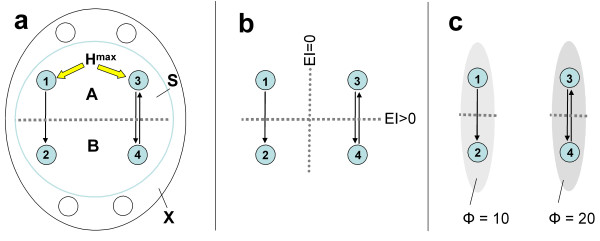
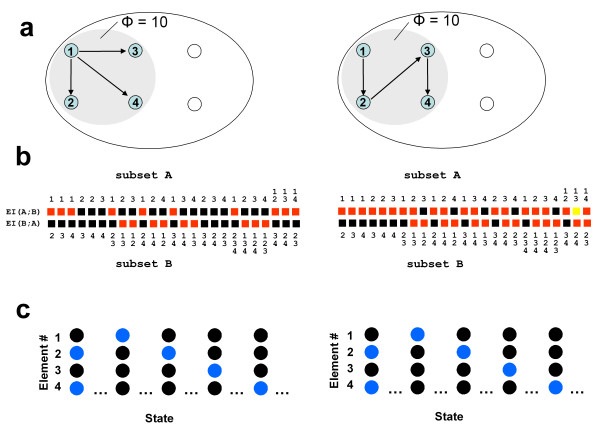
BACKGROUND: Consciousness poses two main problems. The first is understanding the conditions that determine to what extent a system has conscious experience. For instance, why is our consciousness generated by certain parts of our brain, such as the thalamocortical system, and not by other parts, such as the cerebellum? And why are we conscious during wakefulness and much less so during dreamless sleep? The second problem is understanding the conditions that determine what kind of consciousness a system has. For example, why do specific parts of the brain contribute specific qualities to our conscious experience, such as vision and audition? PRESENTATION OF THE HYPOTHESIS: This paper presents a theory about what consciousness is and how it can be measured. According to the theory, consciousness corresponds to the capacity of a system to integrate information. This claim is motivated by two key phenomenological properties of consciousness: differentiation - the availability of a very large number of conscious experiences; and integration - the unity of each such experience. The theory states that the quantity of consciousness available to a system can be measured as the Phi value of a complex of elements. Phi is the amount of causally effective information that can be integrated across the informational weakest link of a subset of elements. A complex is a subset of elements with Phi>0 that is not part of a subset of higher Phi. The theory also claims that the quality of consciousness is determined by the informational relationships among the elements of a complex, which are specified by the values of effective information among them. Finally, each particular conscious experience is specified by the value, at any given time, of the variables mediating informational interactions among the elements of a complex. TESTING THE HYPOTHESIS: The information integration theory accounts, in a principled manner, for several neurobiological observations concerning consciousness. As shown here, these include the association of consciousness with certain neural systems rather than with others; the fact that neural processes underlying consciousness can influence or be influenced by neural processes that remain unconscious; the reduction of consciousness during dreamless sleep and generalized seizures; and the time requirements on neural interactions that support consciousness. IMPLICATIONS OF THE HYPOTHESIS: The theory entails that consciousness is a fundamental quantity, that it is graded, that it is present in infants and animals, and that it should be possible to build conscious artifacts.
Verified 2026-11-22 · 1 reference not checked yet
Overview
CoChat Summary
TL;DR
Tononi proposes that consciousness corresponds to a system’s capacity to integrate information, measured as the Φ value of a complex. The theory links the quantity of consciousness to integrated information and its quality to the effective information matrix among a complex’s elements.
Key findings
- Consciousness is identified with information integration: quantity is given by Φ, the effective information across a complex’s minimum information bipartition; a complex is a subset with Φ>0 not included in a larger subset of higher Φ.
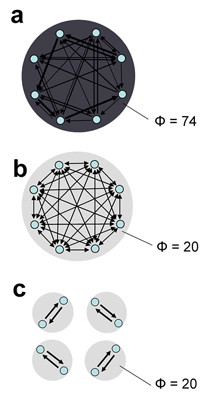
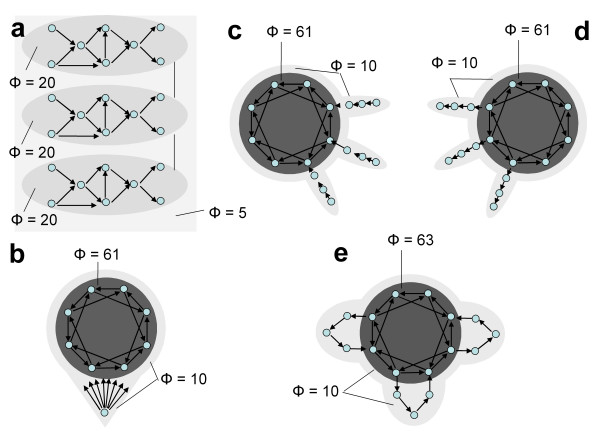
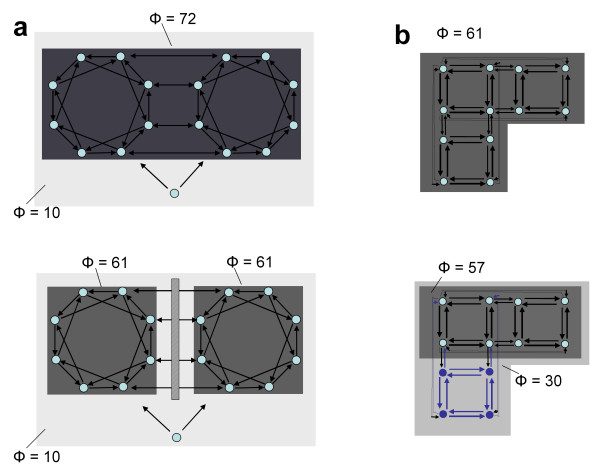
- Simulations illustrate the theory: optimized connection matrices with functional specialization and integration yield Φ = 74 bits; a strongly modular network yields Φ = 20 bits for each of three modules; joining supramodal, visual, and auditory subsets yields a main complex with Φ = 61 bits, which changes to 57 bits when the auditory subset is functionally disconnected.
- The theory accounts for why thalamocortical systems contribute to consciousness while cerebellum, reticular formation, sensory afferents, motor efferents, and cortico-subcortical loops may influence it without directly contributing; split-brain sectioning replaces one main complex with two smaller complexes.
- Time requirements: fully formed sensory experience takes up to 100–200 ms, a single conscious moment does not extend beyond 2–3 seconds, direct cortical stimulation may need up to 500 ms for conscious sensation, and modeled visual areas require at least 80 ms for constructive interactions.
Methods
- Theoretical hypothesis paper using phenomenological thought experiments (photodiode, camera, split-brain) and formal information-theoretic definitions: entropy, mutual information, effective information, Φ, complexes, and qualia space.
- No new human or animal empirical sample is reported; the paper draws on existing neurobiological observations and simplified computer models/simulations to illustrate predictions.
- Main analysis is conceptual derivation plus illustrative simulation results; no statistical inference or direct experimental measurement of Φ in brains is presented.
Limitations
- Stated: the framework’s validity rests on its ability to account coherently for phenomenological and brain facts; stringent tests require concurrent broad-region stimulation/recording and realistic large-scale anatomical models; better cortical neuroanatomy is needed; it is hard to say which cortical circuits are informationally insulated; measuring Φ accurately in infants, animals, coma/vegetative states, etc. will not be easy.
- Evident: no direct empirical measurement of Φ in human brains is presented; the simulations are simplified and illustrative; several predictions remain untested.
Model-written summary. Check it against the paper before relying on it.
Integrity signals
Registry
Cites
Statistics
Figures
Verification
Claims the paper makes
7 Valid · 4 Not valid · 35 Not checked · 140 Own results and interpretations
The sources with a verdict support this claim; the rest weren’t checked yet, have no full text we could read, or their verdicts aren’t rated yet.
In the paper
“Electrophysiological and imaging studies also indicate that neural activity that correlates with conscious experience is widely distributed over the cortex (e.g [20,26-29]).”
§ An information integration theory of consciousness > Testing the hypothesis > Consciousness, information integration, and the brain
What the sources say
- Not checked — no full text of the sourcecites [20] Rees G Kreiman G Koch C Neural correlates of consciousness in humans Nat Rev Neurosci 2002 3 261 270 11967556 10.1038/nrn783 source
- Supportedcites [26] Srinivasan R Russell DP Edelman GM Tononi G Increased synchronization of neuromagnetic responses during conscious perception J Neurosci 1999 19 5435 5448 10377353 PMC6782339 source
The Conclusion reports that changes associated with conscious perception are distributed across the brain, extending beyond visual areas to anterior regions, including frontal areas. The Discussion likewise describes changes involving distant occipital, parietal, temporal, and frontal sensor sites. This supports the citing sentence’s broad claim. (LLM, conf=0.90)
- Not checked — no full text of the sourcecites [27] McIntosh AR Rajah MN Lobaugh NJ Interactions of prefrontal cortex in relation to awareness in sensory learning Science 1999 284 1531 1533 10348741 10.1126/science.284.5419.1531 source
- Not checked — no full text of the sourcecites [28] Vuilleumier P Sagiv N Hazeltine E Poldrack RA Swick D Rafal RD Gabrieli JD Neural fate of seen and unseen faces in visuospatial neglect: a combined event-related functional MRI and event-related potential study Proc Natl Acad Sci U S A 2001 98 3495 3500 11248106 10.1073/pnas.051436898 PMC30681 source
- Not checked — no full text of the sourcecites [29] Cosmelli D David O Lachaux JP Martinerie J Garnero L Renault B Varela F Waves of consciousness: ongoing cortical patterns during binocular rivalry Neuroimage 2004 23 128 140 15325359 10.1016/j.neuroimage.2004.05.008 source
hedgedstates an association- Asserted: passes — The authors put it forward as true.
- Checkable: passes — It can be checked against evidence.
- Load-bearing: passes — The paper’s conclusions depend on it.
- Based: passes — The paper gives a reason why it holds.
The cited sources support only part of this claim — read each source’s verdict below.
In the paper
“the organization of the connections is such that individual patches of cerebellar cortex tend to be activated independently of one another, with little interaction possible between distant patches [41,42].”
§ An information integration theory of consciousness > Testing the hypothesis > Consciousness, information integration, and the brain
What the sources say
- Partly supportedcites [41] Cohen D Yarom Y Patches of synchronized activity in the cerebellar cortex evoked by mossy-fiber stimulation: questioning the role of parallel fibers Proc Natl Acad Sci U S A 1998 95 15032 15036 9844010 10.1073/pnas.95.25.15032 PMC24570 sourceExperimental — accuracy not yet measured
The Results report a localized patch of synchronized activity after white-matter stimulation, and the Discussion says this activity occurs simultaneously across the patch rather than propagating along parallel fibers. That supports localized activation, but the paper does not establish that separate patches activate independently or that little interaction is possible between distant patches. The indexed passages provide no page number. (LLM, conf=0.84)
- Not checked — no full text of the sourcecites [42] Bower JM The organization of cerebellar cortical circuitry revisited: implications for function Ann N Y Acad Sci 2002 978 135 155 12582048 source
plain- Asserted: passes — The authors put it forward as true.
- Checkable: passes — It can be checked against evidence.
- Load-bearing: passes — The paper’s conclusions depend on it.
- Based: passes — The paper gives a reason why it holds.
- Partly supported
Every source the paper cites for this claim was checked and supports it.
In the paper
“Further simulations show that it is possible to construct a large complex of high Φ by joining smaller complexes through reciprocal connections [8].”
§ An information integration theory of consciousness > Testing the hypothesis > Consciousness, information integration, and the brain
What the sources say
- Supportedcites [8] Tononi G Sporns O Measuring information integration BMC Neurosci 2003 4 31 14641936 10.1186/1471-2202-4-31 PMC331407 source
The Results section (‘Scaling and joining complexes’) reports that two smaller optimized networks joined by reciprocal connections formed a larger complex with substantially increased Φ. The Discussion (‘Information integration and basic neuroanatomy’) explicitly says high Φ can be achieved by joining smaller complexes through reciprocal connections. The demonstrated construction used two eight-element components; the paper does not establish that the method works at arbitrary scale. (LLM, conf=0.95)
hedgedstates a cause- Asserted: passes — The authors put it forward as true.
- Checkable: passes — It can be checked against evidence.
- Load-bearing: passes — The paper’s conclusions depend on it.
- Based: passes — The paper gives a reason why it holds.
- Rests on an assumption not shown here.
- Supported
The cited sources support only part of this claim — read each source’s verdict below.
In the paper
“For example, the ability of a system to integrate information grows as that system incorporates statistical regularities from its environment and learns [14].”
§ An information integration theory of consciousness > Implications of the hypothesis
What the sources say
- Partly supportedcites [14] Tononi G Sporns O Edelman GM A complexity measure for selective matching of signals by the brain Proceedings of the National Academy of Sciences of the United States of America 1996 93 3422 3427 8622951 10.1073/pnas.93.8.3422 PMC39624 sourceExperimental — accuracy not yet measured
The introduction (p. 1) says that neural connectivity tends to match environmental signals more closely through development and experience, and the Discussion (p. 5) links increased mutual information to greater functional integration. But the Results (p. 3) note that matching complexity and neural complexity can sometimes change independently, so the paper does not establish that integration necessarily grows whenever a system learns environmental regularities. (LLM, conf=0.82)
plainstates a cause- Asserted: passes — The authors put it forward as true.
- Checkable: passes — It can be checked against evidence.
- Load-bearing: unclear — It is unclear whether the paper’s conclusions depend on it.
- Based: passes — The paper gives a reason why it holds.
- Partly supported
Every source the paper cites for this claim was checked and supports it.
In the paper
“Phenomena such as the attentional blink, where a fixed sensory input may at times make it to consciousness and at times not, may also be due to changes in functional connectivity: access to the main thalamocortical complex may be enabled or not based on dynamics intrinsic to the complex [52].”
§ An information integration theory of consciousness > Testing the hypothesis > Consciousness, information integration, and the brain
What the sources say
- Supportedcites [52] Dehaene S Sergent C Changeux JP A neuronal network model linking subjective reports and objective physiological data during conscious perception Proc Natl Acad Sci U S A 2003 100 8520 8525 12829797 10.1073/pnas.1332574100 PMC166261 source
The Results report that, under the same simulated attentional-blink conditions, spontaneous fluctuations can determine whether activity reaches self-amplifying global access or remains transient and bottom-up. They also report reduced long-distance crosscorrelations when T2 is blinked. This supports the citing sentence’s hedged account of dynamically enabled access, with ‘functional connectivity’ referring to changing coordination rather than a change in the model’s fixed connections. (LLM, conf=0.88)
hedgedstates a possible cause- Asserted: passes — The authors put it forward as true.
- Checkable: passes — It can be checked against evidence.
- Load-bearing: unclear — It is unclear whether the paper’s conclusions depend on it.
- Based: passes — The paper gives a reason why it holds.
- Supported
121 more claims
Create a free account to see all 186 claims and every source verdict.
- It may state two separate claims as one. 41
- Probably not a substantial claim. 27
- The quote only partly states this claim. 1
Claims other papers make about this one
Each is checked against this paper’s own text: does it say what the citing paper says it does?
The source backs part of the claim, not all of it — or backs it for a different population, condition or comparison.
In the citing paper
“IIT takes an axiomatic approach, grounding itself in five essential properties of consciousness: existence, composition, information, integration, and exclusion (Tononi, 2004; Oizumi et al., 2014).”
From Can "consciousness" be observed from large language model (LLM) internal states? Dissecting LLM representations obtained from Theory of Mind test with Integrated Information Theory and Span Representation analysis (2025) · cites this paper as Tononi, 2004
Experimental — accuracy not yet measuredThe source backs part of the claim, not all of it — or backs it for a different population, condition or comparison.
In the citing paper
“Thus, the results confirm the prediction of IIT regarding the causal decomposability of LLMs [12] and ground it empirically via behaviorally interpretable metrics (e.g., perplexity [15]).”
From Why large language models cannot possess consciousness: an integrated information theory perspective (2025) · cites this paper as [12]
Experimental — accuracy not yet measuredThe source backs part of the claim, not all of it — or backs it for a different population, condition or comparison.
In the citing paper
“The principal theoretical justification for IIT is the conjecture that, in perception, what is absent may be more significant to consciousness than what is present [2,3].”
From The Problem with Phi: A Critique of Integrated Information Theory (2015) · cites this paper as [2]
Experimental — accuracy not yet measuredThe source backs part of the claim, not all of it — or backs it for a different population, condition or comparison.
In the citing paper
“It was the first (and arguably may still be the lone) theory that makes precise quantitative predictions about both the contents and level of consciousness (Tononi 2004).”
From Falsification and consciousness (2021) · cites this paper as Tononi 2004
Experimental — accuracy not yet measuredThe cited source says what the claim attributes to it.
In the citing paper
“from which it is derived that consciousness corresponds to integrated information.”
From Hard criteria for empirical theories of consciousness (2021) · cites this paper as Tononi, 2004
13 more claims about this paper
Create a free account to see every claim other papers make about this one.
Self-check
Percentages, sums and reported differences re-computed from the paper’s own numbers.
Each contradiction between two passages listed here was confirmed by an independent check.
Rated minor: it would not touch a result — a value no result rests on, a p-value that stays on the same side of the significance level, or a conflict that is clerical, resolved elsewhere in the paper, or outside its own findings.
In the paper
§ An information integration theory of consciousness > Presentation of the hypothesis > The first problem: What determines to what extent a system has conscious experience?
“In summary, to measure EI(B→A), one needs to apply maximum entropy to the outputs from B, and determine the entropy of the responses of B that are induced by inputs from A.”
§ An information integration theory of consciousness > Presentation of the hypothesis > The first problem: What determines to what extent a system has conscious experience?
“One way is to divide S into two complementary parts A and B, and evaluate the responses of B that can be caused by all possible inputs originating from A.”
Citations
Cites
A Mathematical Theory of Communication
Shannon, C. E. (1948) · Bell System Technical Journal · doi:10.1002/j.1538-7305.1948.tb01338.x · Cited by 88,486
The Mathematical Theory of Communication
Shannon, C. E., Weaver, W., & Wiener, N. (1950) · Physics Today · doi:10.1063/1.3067010 · Cited by 9,801
The feeling of what happens: body and emotion in the making of consciousness
(2000) · Choice Reviews Online · doi:10.5860/choice.37-6553 · Cited by 5,998
Brain stem reticular formation and activation of the EEG
Moruzzi, G., & Magoun, H. W. (1949) · Electroencephalography and Clinical Neurophysiology · doi:10.1016/0013-4694(49)90219-9 · Cited by 4,307 · cited 1×
“Conversely, stimulating the reticular formation can arouse a comatose animal and activate the thalamocortical system, making it ready to respond to stimuli [43].”
Background(1988) · Cited by 3,656
Dynamic predictions: Oscillations and synchrony in top–down processing
Engel, A. K., Fries, P., & Singer, W. (2001) · Nature Reviews Neuroscience · doi:10.1038/35094565 · Cited by 3,454 · cited 1×
“On the integration side, the specialized elements of the thalamocortical system are linked by an extended network of intra- and inter-areal connections that permit rapid and effective interactions within and between areas [31-35].”
BackgroundAlexander, G. E., Crutcher, M. D., & DeLong, M. R. (1990) · PubMed · Cited by 2,731
Towards a cognitive neuroscience of consciousness: basic evidence and a workspace framework
Dehaene, S. (2001) · Cognition · doi:10.1016/s0010-0277(00)00123-2 · Cited by 2,498 · cited 1×
“Opinions differ, however, about the contribution of certain cortical areas [1,16-21].”
BackgroundMathematical Theory of Communication
(2009) · Encyclopedia of Communication Theory · doi:10.4135/9781412959384.n229 · Cited by 2,492
The distinct modes of vision offered by feedforward and recurrent processing
Lamme, V. A. F., & Roelfsema, P. R. (2000) · Trends in Neurosciences · doi:10.1016/s0166-2236(00)01657-x · Cited by 2,338 · cited 1×
“Thus, the firing of the same cortical neurons may correlate with consciousness at certain times, but not at other times [57].”
Background
Research works printed but not linked: 2
- Zeki S A vision of the brain 1993 Oxford; Boston: Blackwell Scientific Publications
- Tononi G Galileo e il fotodiodo 2003 Bari: Laterza
Cited by
Items 901–1,000 of 1,727
The spread mind: is consciousness situated?
Manzotti, R. (2011) · Teorema: Revista internacional de filosofía · Cited by 14
The unity of consciousness: subjects and objectivity
Schechter, E. (2012) · Philosophical Studies · doi:10.1007/s11098-012-9970-z · Cited by 9
A Way of Integration: The Relationship between Conscious and Unconscious Processes
Tu, S., & Zhao, G. W. (2014) · Cited by 5
Emergence in dual-aspect monism
Ram, L. P., & Vimal (2013) · Cambridge University Press eBooks · doi:10.1017/cbo9781139207065.006 · Cited by 7
The Largest Cognitive Systems Will be Optoelectronic
Shainline, J. M. (2018) · IEEE International Conference on Rebooting Computing (ICRC) · doi:10.1109/icrc.2018.8638599 · Cited by 9
“ing of neuronal assemblies [7], [8] with information integration [9], [10], [11], [12], [13], [14], [15] across space [16], [17] and time [1], [2], [3], [4], [7].”
BackgroundCan Biological Quantum Networks Solve NP‐Hard Problems?
Wendin, G. P. (2019) · Advanced Quantum Technologies · doi:10.1002/qute.201800081 · Cited by 5
“It is extremely interesting to see how the topic of consciousness and cognition in neuroscience and philosophy, with or without quantum effects, has evolved during the last three decades through the opinions expressed in the work of professionals in neuroscience, psychiatry, psychology, physics and philosophy that for…”
BackgroundFujii, K., Kanazawa, H., & Kuniyoshi, Y. (2019) · IEEE International Conference on Development and Learning (ICDL) · doi:10.1109/devlrn.2019.8850724 · Cited by 6
“Integrated information φ was proposed in the integrated information theory of consciousness as a quantitative measurement of consciousness [4], [5].”
BackgroundDheer, P., Pati, S. B. B., Chowdhury, K. K., & Majumdar, K. (2020) · Heliyon · doi:10.1016/j.heliyon.2020.e05769 · Cited by 5
“…(Schindler et al., 2007) and yet other times it is nonlinear correlation (Lambert et al., 2012; Arthuis et al., 2009; Wendling et al., 2001), mutual information (MI) (Tononi, 2004; Mars et al., 1985), mean phase coherence (Mormann et al., 2000) or phase locking value (Aydore et al., 2013).”
BackgroundThe effects of implementing phenomenology in a deep neural network
Bensemann, J., & Witbrock, M. (2021) · Heliyon · doi:10.1016/j.heliyon.2021.e07246 · Cited by 6
“It is also challenging to determine whether the Hebbian learner's output can also be considered consistent with qualia under Information Integration Theory (IIT; Tononi, 2004).”
BackgroundHow Morphological Computation Shapes Integrated Information in Embodied Agents
Langer, C., & Ay, N. (2021) · Frontiers in Psychology · doi:10.3389/fpsyg.2021.716433 · Cited by 10
Li, S., Chen, Y., Ren, P., Li, Z., Zhang, J., & Liang, X. (2022) · Human Brain Mapping · doi:10.1002/hbm.26103 · Cited by 7
“Despite various distinctions among these influential theories of consciousness, they seem to partially agree on an account that the neural correlates of consciousness require to support globally integrated brain activity across a network of functionally specialized modules (Brown et al., 2019; Dehaene et al., 2011; De…”
BackgroundGammel, T., Alkadaa, L. N., Saadon, J. R., Saluja, S., Servider, J., Cleri, N. A., Egnor, M. R., Davis, R. P., Huang, C., Saalmann, Y. B., et al. (2023) · Neurosurgery Open · doi:10.1227/neuprac.0000000000000031 · Cited by 5
“In 2004, Tononi introduced IIT, 62 which proposes a set of 5 phenomenological axioms, that is, consciousness exists and is structured, informative, integrated (irreducible), and exclusive (1 experience at a given time).”
InfluentialTowards an Affective Computational Model for Machine Consciousness
Chandra, R. (2017) · Lecture notes in computer science · doi:10.1007/978-3-319-70139-4_91 · Cited by 5
Using Tononi Phi to Measure Consciousness of a Cognitive System While Reading and Conversing.
Iklé, M., Goertzel, B., Bayetta, M., Sellman, G., Cover, C., Allgeier, J., Smith, R. W., Sowards, M., Schuldberg, D., Leung, M. H., et al. (2019) · National Conference on Artificial Intelligence · Cited by 8
Lidström, S., & Allen, R. E. (2019) · Journal of Physics Conference Series · doi:10.1088/1742-6596/1275/1/012021 · Cited by 5
Illusionist Integrated Information Theory
McQueen, K. J. (2019) · Chapman University Digital Commons (Chapman University) · Cited by 19
Conscious Machines: A Possibility? If So, How?
Manzotti, R., & Chella, A. (2020) · Journal of Artificial Intelligence and Consciousness · doi:10.1142/s2705078520710022 · Cited by 7
STRATEGIES FOR MEASURING MACHINE CONSCIOUSNESS
Arrabales, R., Ledezma, A., & Sanchis, A. (2009) · International Journal of Machine Consciousness · doi:10.1142/s1793843009000177 · Cited by 9
Anesthesia Prevents Auditory Perceptual Learning
Aberg, K. C., Albrecht, É., Tartaglia, E. M., Farron, A., Soom, P., & Herzog, M. H. (2009) · Anesthesiology · doi:10.1097/01.anes.0000363310.19041.90 · Cited by 6
Ram, A. (2017) · Springer eBooks · doi:10.1007/978-3-319-47609-4_4 · Cited by 7
Quantifying Synergistic Information
Griffith, V. (2014) · CaltechTHESIS (California Institute of Technology) · doi:10.7907/zs2t-xq55 · Cited by 10
Learning Rapidly about the Relevance of Visual Cues Requires Conscious AwarenessPreprint
Travers, E., Frith, C., & Shea, N. J. (2017) · doi:10.31234/osf.io/7becr · Cited by 5
Towards Quantum Integrated Information TheoryPreprint
Zanardi, P., Tomka, M., & Venuti, L. C. (2018) · arXiv (Cornell University) · doi:10.48550/arxiv.1806.01421 · Cited by 32
More than just front or back: Parietal-striatal-thalamic circuits predict consciousness levelPreprint
Afrasiabi, M., Redinbaugh, M. J., Phillips, J. M., Kambi, N. A., Mohanta, S., Raz, A., Haun, A., & Saalmann, Y. B. (2020) · bioRxiv (Cold Spring Harbor Laboratory) · doi:10.1101/2020.04.07.030429 · Cited by 4
A Synergistic Workspace for Human Consciousness Revealed by Integrated Information DecompositionPreprint
Luppi, A. I., Mediano, P. A. M., Rosas, F. E., Allanson, J., Pickard, J. D., Carhart-Harris, R. L., Williams, G. B., Craig, M. M., Finoia, P., Owen, A. M., et al. (2024) · eLife · doi:10.7554/elife.88173.3 · Cited by 6
Kraikivski, P. (2021) · Entropy · doi:10.3390/e23050583 · Cited by 4
“The entropy metric is also an essential part of information integration theory of consciousness [19,31].”
BackgroundNeurobiological emergentism: sentience as an emergent process and the experiential gap
Feinberg, T. E. (2025) · Frontiers in Psychology · doi:10.3389/fpsyg.2025.1528982 · Cited by 9
“Integrated information theory (IIT) is a theory of consciousness originally proposed by Tononi (2004).”
The exploration of consciousness in insects
Chıttka, L., Skeels, S., Dyakova, O., & Janbon, M. (2025) · Philosophical Transactions of the Royal Society B Biological Sciences · doi:10.1098/rstb.2024.0302 · Cited by 11
Specific and Complete Local Integration of Patterns in Bayesian Networks
Biehl, M., Ikegami, T., & Polani, D. (2017) · Entropy · doi:10.3390/e19050230 · Cited by 5
“The generalisation from bipartitions to arbitrary partitions is applied to expectation values similar to the multi-information above in Tononi [38].”
MethodGund, J., Mishra, Y., Mallick, B. N., & Singh, R. K. (2025) · Applied Network Science · doi:10.1007/s41109-024-00688-2 · Cited by 3
“Sleep on the other hand is a functional disconnection from the surroundings leading to a state of reduced consciousness with reduced sensory and motor output (Gustavo et al. 2011; Tononi 2004).”
The Possibility Space Concept in Neuroscience: Possibilities, Constraints, and Explanations
Ross, L. N., Jirsa, V., & McIntosh, A. R. (2025) · European Journal of Neuroscience · doi:10.1111/ejn.70038 · Cited by 6
“Here, we can use the analogy Tononi (2004) developed about a photodiode and a human in a dark room.”
From reaction to reflection: A recursive framework for the evolution and structure of intelligence
Trukovich, J. J. (2025) · Biosystems · doi:10.1016/j.biosystems.2025.105549 · Cited by 4
From evolution to revolution: understanding mutability in large and disruptive human groups
Whitaker, R. M., Felmlee, D., Verma, D. C., Preece, A. D., & Williams, G.-R. (2017) · Proceedings of SPIE, the International Society for Optical Engineering/Proceedings of SPIE · doi:10.1117/12.2267996 · Cited by 4
A mean field approach to model levels of consciousness from EEG recordings
Javarone, M. A., Gosseries, O., Marinazzo, D., Noirhomme, Q., Bonhomme, V. L., Laureys, S., & Chennu, S. (2020) · Journal of Statistical Mechanics Theory and Experiment · doi:10.1088/1742-5468/ababfb · Cited by 4
“Journal of Mathematical Physics 50 053303 (2009) [18] Tononi, G.”
BackgroundMethodAge-sensitive well-being support
Waterworth, J. A., Chignell, M., & Moller, H. J. (2020) · Elsevier eBooks · doi:10.1016/b978-0-12-816958-2.00004-6 · Cited by 5
Metten, R. (2020) · Springer eBooks · doi:10.1007/978-3-662-59827-6_4 · Cited by 4
Bachmann, T. (2021) · Neuroscience of Consciousness · doi:10.1093/nc/niab045 · Cited by 4
“…of large neural populations in bringing about the consciousness state or content (Bogen 1995a,b; Crick and Koch 2003; Sergent and Dehaene 2004; Tononi 2004; Massimini et al. 2005; Lamme 2006; Singer 2006; Alkire et al. 2008; Dehaene and Changeux 2011; Dehaene et al. 2011; Casali et al. 2013;…”
BackgroundAristov, V. V., & Stepanyan, I. V. (2022) · Symmetry · doi:10.3390/sym14030505 · Cited by 5
When do parts form wholes? Integrated information as the restriction on mereological composition
McQueen, K. J., & Tsuchiya, N. (2023) · Neuroscience of Consciousness · doi:10.1093/nc/niad013 · Cited by 7
“If Φ(ABCD) > Φ(AB) and Φ(CD), then ABCD exists as a composite and depending on the connections, AB and CD may just be proper parts of ABCD (see Tononi (2004, figure 5.)). about its past or its future.”
BackgroundVeyrié, A., Noreña, A. J., Sarrazin, J.-C., & Pézard, L. (2023) · Biology · doi:10.3390/biology12070967 · Cited by 4
A New Low: Reassessing (and Revising) the Local Recurrency Theory of Consciousness
Kozuch, B. (2023) · The British Journal for the Philosophy of Science · doi:10.1086/727890 · Cited by 5
Experimental Philosophy of Consciousness
Reuter, K. (2024) · Oxford University Press eBooks · doi:10.1093/9780198918905.003.0017 · Cited by 8
Deroy, O. D., Bacciu, D., Bahrami, B., Santina, C. D., & Hauert, S. (2024) · Advanced Intelligent Systems · doi:10.1002/aisy.202300740 · Cited by 8
Meso-scale reorganization of local–global brain networks under mild sedation of propofol anesthesia
Dong, K., Zhang, L., Zhong, Y., Xu, T., Zhao, Y., Chen, S., Mahmoud, S. S., & Fang, Q. (2024) · NeuroImage · doi:10.1016/j.neuroimage.2024.120744 · Cited by 7
Dynamic neurocognitive adaptation in aging: Development and validation of a new scale
Cieri, F., Francesco, G. D., Cross, C. L., Bender, A. R., & Caldwell, J. (2025) · Alzheimer s & Dementia Translational Research & Clinical Interventions · doi:10.1002/trc2.70049 · Cited by 6
“44 Thiscriticalityofaneuralnetworkisameasureofthevariance in the network’s intrinsic synchrony over time.”
Changes in cortical delta power during chronic invasive epilepsy monitoring
Dappen, E. R., Krause, B. M., Mueller, R. N., Banks, M. I., & Nourski, K. V. (2025) · Epilepsia · doi:10.1111/epi.18419 · Cited by 4
“38,39 With that in mind, significantly steeper delta power decrease in frontal and parietal lobes compared to occipital and temporal lobes may have implications for disordered consciousness following surgery.”
A harder problem of consciousness: reflections on a 50-year quest for the alchemy of qualia
Gomez, J. D. (2025) · Frontiers in Psychology · doi:10.3389/fpsyg.2025.1592628 · Cited by 6
“Discussion and conclusion on the future of the qualia adventure Integrated Information Theory ( IIT ) is the only leading framework that explicitly incorporates space into its model of consciousness (Tononi, 2004).”
Variability and stability in sleeping brain networks during apnea
Sergeev, K., Zhuravlev, M. О., Orlova, A. A., Simonyan, M. A., Kiselev, A. R., & Евгеньевна, Р. А. (2025) · The European Physical Journal Special Topics · doi:10.1140/epjs/s11734-025-01793-8 · Cited by 5
“Tononi [22, 23] suggested that the level of structural “complexity”, measured in brain activity, may correlate with the level of consciousness.”
A Functional Approach to Emotion in Autonomous Systems
Sanz, R., Hernández, C., Gómez, J., & Hernando, A. (2009) · Advances in experimental medicine and biology · doi:10.1007/978-0-387-79100-5_14 · Cited by 6
“We can distinguish as maximally relevant for our work, due to their abstract, general nature, the global workspace model of Baars [4] and the information integration model of Tononi [28].”
MethodMashour, G. A. (2015) · Elsevier eBooks · doi:10.1016/b978-0-12-800948-2.00009-1 · Cited by 7
Direct behavioral and neural evidence for an offset-triggered conscious perception
Noguchi, Y., Kimijima, S., & Kakigi, R. (2015) · Cortex · doi:10.1016/j.cortex.2015.01.017 · Cited by 4
“…of distributed brain regions are shared by other frameworks of perceptual consciousness, as reflected in their key terms such as “coalition of 1-1 Rokkodai-cho, Nada, Kobe, 657-8501, Japan. neurons” (Crick & Koch, 2003), “integrated information” (Tononi, 2004), and “global workspace” (Baars, 2005).”
Lajaunie, C., & Mazzéga, P. (2016) · Advances in computer science : an international journal · Cited by 8
On the various neural correlates of consciousness: Are they distinguishable?
de Graaf, T. A., & Sack, A. T. (2015) · Advances in consciousness research · doi:10.1075/aicr.92.07gra · Cited by 8
A New Theoretical Framework for Testing Consciousness in a Machine
Nazri, A., Ghani, A., Ninggal, I. H., & Ng, K. Y. (2018) · Advances in intelligent systems and computing · doi:10.1007/978-3-319-72550-5_32 · Cited by 6
Jerath, R., Beveridge, C., & Jensen, M. A. (2019) · World Journal of Neuroscience · doi:10.4236/wjns.2019.91001 · Cited by 6
“How do the qualia of experience arise from the strictly physical, electrical, and chemical physiology of life? How does the simple experience of colors or shapes come about from atoms jostling around in the large ordered clump we call a human body? Many hypotheses have been formed in academic areas in an attempt to sc…”
BackgroundComputation, consciousness, and “computation and consciousness”
Klein, C. (2018) · Routledge eBooks · doi:10.4324/9781315643670-23 · Cited by 9
“(Tononi, 2004, 9).”
BackgroundKreitler, S. (2019) · Springer eBooks · doi:10.1007/978-3-030-06126-5_13 · Cited by 3
Minati, G. (2020) · Future Internet · doi:10.3390/fi12120213 · Cited by 7
“For instance, authors considered general issues such as moral machines [40], machine consciousness for robotics [41–46], models for artificial consciousness [47–50], and related approaches [51,52].”
BackgroundRobots and Machine Consciousness
Chella, A. (2022) · The MIT Press eBooks · doi:10.7551/mitpress/13780.003.0029 · Cited by 5
Nazhestkin, I. A., & Svarnik, О. E. (2022) · Journal of Integrative Neuroscience · doi:10.31083/j.jin2105128 · Cited by 4
Li, C., Wang, Y., Li, W., Yang, Y., & Xia, X. (2023) · Frontiers in Neuroscience · doi:10.3389/fnins.2022.1071594 · Cited by 4
“…r = 0.319, p= 0.308 r = 0.309, p= 0.218 r = 0.164, p= 0.542 Small-world r = 0.319, p= 0.308 r = 0.309, p= 0.218 r = 0.164, p= 0.542 considered that the frontal region is a crucial hub participating in the consciousness-related networks (Tononi, 2004, 2008; Alkire et al., 2008; Schiff, 2010).”
BackgroundInfluentialHebishima, H., Arakaki, M., Dozono, C., Frolova, H., & Inage, S. (2023) · Biosystems · doi:10.1016/j.biosystems.2023.104840 · Cited by 4
Network analysis of the human structural connectome including the brainstem
Salhi, S., Kora, Y., Ham, G., Zadeh‐Haghighi, H., & Simon, C. (2023) · PLoS ONE · doi:10.1371/journal.pone.0272688 · Cited by 7
“This, in combination with the volume observation, certainly detracts from the importance of the cerebellum within the structural network, which is at least consistent with the accepted idea that the cerebellum does not take any part in conscious processing [42].”
Trends in Philosophy of Mind and in Philosophy of Neuroscience
Sanguineti, J. J. (2015) · Springer eBooks · doi:10.1007/978-3-319-17103-6_3 · Cited by 7
Deciding the Mind–Body Problem Experimentally
Uzan, P. (2016) · Axiomathes · doi:10.1007/s10516-016-9320-4 · Cited by 6
EEG Assessment of Consciousness Rebooting from Coma
Șerban, C., Barborică, A., Roceanu, A. M., Mîndruță, I., Ciurea, J., Zăgrean, A., Zăgrean, L., & Moldovan, M. (2017) · Springer series in cognitive and neural systems · doi:10.1007/978-3-319-29674-6_16 · Cited by 4
Ibáñez-Molina, A. J., & Iglesias‐Parro, S. (2018) · Complexity · doi:10.1155/2018/6101586 · Cited by 4
“On the one hand, the theoretically well foundedΦ has been proposed as a way to quantify the total amount of information that a conscious system can integrate [28].”
Vital phenomena: life, information, and consciousness
Lau, L. L., & Lau, W. (2020) · All Life · doi:10.1080/26895293.2020.1734670 · Cited by 7
Not All Structure and Dynamics Are Equal
Mindt, G. (2021) · Entropy · doi:10.3390/e23091226 · Cited by 8
Iconic Training and Effective Information: Evaluating Meaning in Discrete Neural Networks.
Aleksander, I., & Gamez, D. (2009) · Biologically Inspired Cognitive Architectures · Cited by 5
The difficult legacy of Turing’s wager
Thwaites, A., Soltan, A. A. S., Wieser, E., & Nimmo‐Smith, I. (2017) · Journal of Computational Neuroscience · doi:10.1007/s10827-017-0651-y · Cited by 5
“, for instance, Tononi and colleagues, who provide what they believe to be plausible mathematical characterizations of consciousness (Tononi 2004; Oizumi et al. 2014), and their critics, who believe these characterizations to be untestable, and therefore unscientific (see Cerullo (2015) for overview).”
BackgroundEl problema de la conciencia para la filosofía de la mente y de la psiquiatría
Brigard, F. D. (2017) · Ideas y Valores · doi:10.15446/ideasyvalores.v66n3supl.65652 · Cited by 10
Fecchio, M., Rosanova, M., Casarotto, S., Sarasso, S., Casali, A. G., Pigorini, A., Comanducci, A., Seregni, F., Devalle, G., Citerio, G., et al. (2019) · Brain stimulation · doi:10.1016/j.brs.2018.12.401 · Cited by 3
Emergent complexity: what uphill analysis or downhill invention can not doPreprint
Chialvo, D. R. (2008) · arXiv (Cornell University) · doi:10.48550/arxiv.0804.0008 · Cited by 4
“collective, some notoriously conflictive de mands. On one side it needs to be “integrated” while at the same time being able to r emain “segregated”, as discussed extensively by Tononi and colleagues [19,20,21]. This is a non trivial constraint, nevertheless mastered by the brain as it is illustrated with plenty of neu…”
BackgroundAbstracts presented at the 8th International Symposium on Memory and Awareness in Anesthesia (MAA8)
Alkire, M. T. (2012) · British Journal of Anaesthesia · doi:10.1093/bja/aer442 · Cited by 4
Superconducting Optoelectronic Neurons V: Networks and ScalingPreprint
Shainline, J. M., Chiles, J., Buckley, S. M., McCaughan, A. N., Mirin, R. P., & Nam, S. W. (2018) · arXiv (Cornell University) · doi:10.48550/arxiv.1805.01942 · Cited by 13
“Such an architecture balances differentiated, local information processing with efficient integration of information across the system [7].”
BackgroundDecreased integration of EEG source-space networks in disorders of consciousnessPreprint
Rizkallah, J., Annen, J., Modolo, J., Gosseries, O., Benquet, P., Mortaheb, S., Amoud, H., Cassol, H., Mheich, A., Thibaut, A., et al. (2018) · bioRxiv (Cold Spring Harbor Laboratory) · doi:10.1101/493395 · Cited by 4
Redinbaugh, M. J., Afrasiabi, M., Phillips, J. M., Kambi, N. A., Mohanta, S., & Saalmann, Y. B. (2021) · bioRxiv (Cold Spring Harbor Laboratory) · doi:10.1101/2021.07.27.453855 · Cited by 4
“While the role of the basal ganglia in consciousness is debated (Tononi, 2004; Schiff, 2010; Boly et al., 2017), the striatum contributes to integrated information (Afrasiabi et al., 2021), a measure of neural complexity associated with consciousness (Oizumi et al., 2014), and contributes strongly…”
BackgroundHancock, F., Cabral, J., Luppi, A. I., et al. (2022) · bioRxiv (Cold Spring Harbor Laboratory) · doi:10.1101/2022.01.17.476583 · Cited by 4
Luppi, A. I., Mediano, P. A. M., Rosas, F. E., Harrison, D. J., Carhart-Harris, R. L., Bor, D., & Stamatakis, E. A. (2021) · PsyArXiv (OSF Preprints) · doi:10.31234/osf.io/g9p3r · Cited by 5
Growing Confidence and Remaining Uncertainty About Animal ConsciousnessPreprint
Irwin, L. N. (2024) · Qeios · doi:10.32388/kovd1z.3 · Cited by 3
Самопроизвольные флуктуации поля тета-энтропии перед значимыми событиямиPreprint
Ященко, Д. (2026) · doi:10.24108/preprints-3116366 · Cited by 4
What does it mean for consciousness to be multidimensional? A narrative review
Páleník, J. (2024) · Frontiers in Psychology · doi:10.3389/fpsyg.2024.1430262 · Cited by 4
“Any interested readers are therefore referred to the pivotal texts establishing the theory (Tononi, 2004; Oizumi et al., 2014; Albantakis et al., 2023).”
BackgroundVerma, R. K. (2025) · Human Arenas · doi:10.1007/s42087-025-00488-9 · Cited by 4
“This non-dual perspective contrasts sharply with the predominantly materialist view in modern psychology, where consciousness is often treated as an emergent property of neural processes (Tononi, 2004).”
Does neural computation feel like something?
Gidon, A., Aru, J., & Larkum, M. E. (2025) · Frontiers in Neuroscience · doi:10.3389/fnins.2025.1511972 · Cited by 8
“Similarly to our previous work (Gidon et al., 2022), we took the approach whereby it is sufficient to identify the target of the investigation rather than defining it precisely (Searle, 1998; see also Tononi, 2004; Tononi and Edelman, 1998).”
Li, B. (2025) · Social Sciences & Humanities Open · doi:10.1016/j.ssaho.2025.101876 · Cited by 5
Deep Brain Stimulation for Disorders of Consciousness: An Individual Patient Data Meta-Analysis
Lee, M. J. R., Rao, P. S., Wei, W., Ngai, C. H., Zhang, J. J. Y., Lim, M. J. R., Lo, Y. T., & Chua, K. S. G. (2026) · Neuromodulation Technology at the Neural Interface · doi:10.1016/j.neurom.2025.11.003 · Cited by 3
Fast and Slow Signal Propagation in Abiotic Polypeptide Assemblies
Mougkogiannis, P., & Adamatzky, A. (2026) · ChemBioChem · doi:10.1002/cbic.202500943 · Cited by 4
Mapping the structure of neural states associated with conscious experience
Smith, F. G. (2026) · Frontiers in Human Neuroscience · doi:10.3389/fnhum.2026.1784365 · Cited by 5
“…this review does not propose a new theory of consciousness, nor does it seek to adjudicate among existing theoretical frameworks such as global workspace, integrated information, higher-order, or predictive processing accounts (Baars, 1988; Dehaene and Changeux, 2011; Tononi, 2004; Friston, 2010).”
Splitting in Schizophrenia: Controversies and Links Between Neuroscience and Psychodynamic Theory
Bob, P., & Pěč, O. (2017) · Activitas Nervosa Superior · doi:10.1007/s41470-017-0012-1 · Cited by 4
Is ‘Information’ Fundamental for a Scientific Theory of Consciousness?
Nagaraj, N., & Virmani, M. (2017) · Springer eBooks · doi:10.1007/978-981-10-5777-9_21 · Cited by 3
A graph complexity measure based on the spectral analysis of the Laplace operator
Mateos, D. M., Morana, F., & Aimar, H. (2022) · Chaos Solitons & Fractals · doi:10.1016/j.chaos.2022.111817 · Cited by 4
“These results it are in agreements with the Information Integration Theory Hypothesis, which claims that in awake state, the integration and segregation of information in the brain tends to be maximal [12].”
ResultConsciousness generates agent action
Delafield‐Butt, J. T., & Trevarthen, C. (2022) · Behavioral and Brain Sciences · doi:10.1017/s0140525x2100203x · Cited by 2
Gaillard, M. (2024) · Neuroethics · doi:10.1007/s12152-024-09544-7 · Cited by 3
Unsolved Mysteries of the Mind and the Brain: Fractal Brain Hypothesis
Dutta, T., & Bandyopadhyay, A. (2024) · Studies in Rhythm Engineering · doi:10.1007/978-981-99-9334-5_1 · Cited by 4
Consciousness transitions during epilepsy seizures through the lens of integrated information theory
Baglivo, F. H., Cámpora, N., Mininni, C. J., Kochen, S. S., & Lew, S. M. (2024) · Scientific Reports · doi:10.1038/s41598-024-56045-x · Cited by 4
“Numerous research groups have recently tested key theories of consciousness, including Integrated Information Theory (IIT) 17 .”
MethodInfluentialTait, I. (2026) · Frontiers in Artificial Intelligence · doi:10.3389/frai.2026.1801686 · Cited by 4
Human rights for robots? The moral foundations and epistemic challenges
Mosakas, K. (2025) · AI & Society · doi:10.1007/s00146-025-02184-2 · Cited by 4
“The level of consciousness within a system is determined by the amount of “Φ,” a numerical measure representing the “causally effective information that can be integrated across the informational weakest link of a subset of elements” (Tononi 2004, p. 1).”
Leung, A., Mahmoud, A., Jeans, R., Fulcher, B., van Swinderen, B., & Tsuchiya, N. (2025) · PLoS Biology · doi:10.1371/journal.pbio.3003217 · Cited by 4
“Integrated information theory [68–71] attempts to start from first principles, identifying universal aspects of consciousness and then deriving a multivariate measure, integrated information, which reflects the extent to which a system supports these aspects.”
Artificial consciousness: Theoretical and practical issues
Buttazzo, G., & Manzotti, R. (2008) · Artificial Intelligence in Medicine · doi:10.1016/j.artmed.2008.08.001 · Cited by 5
Metadata
- Authors
- Tononi, G.
- Affiliations
- University of Wisconsin–Madison (US)
- Corresponding author
- Tononi, Giulio
- ORCID
- Tononi, Giulio
- Venue
- BMC Neuroscience
- Published
- 2004-11-02
- Volume
- 5
- Issue
- 1
- Pages
- 42-42
- ISSN
- 1471-2202 (ISSN-L)
- PMC
- PMC543470
- OpenAlex
- W2114900706
- Cited by
- 1,958
- References
- 74
- Citations by year
- 2026: 242 · 2025: 230 · 2024: 131 · 2023: 114 · 2022: 95 · 2021: 99 · 2020: 110 · 2019: 97 · 2018: 94 · 2017: 119 · 2016: 83 · 2015: 80 · 2014: 87 · 2013: 85 · 2012: 64
- FWCI
- 91.12
- Type
- journal article
- Language
- en
- Open access
- gold
- doi.org
- Licence
- cc-by
- creativecommons.org/licenses/by/2.0/ (tdm)
- creativecommons.org/licenses/by/2.0/ (vor)
- Locations
- BMC Neuroscience (publishedVersion, cc-by)
- PubMed Central (publishedVersion)
- PubMed (publishedVersion)
- DOAJ (DOAJ: Directory of Open Access Journals) (submittedVersion, cc-by-sa)
- Topics
- Social Sciences › Arts and Humanities › Philosophy › Philosophy and Theoretical Science
- Life Sciences › Neuroscience › Cognitive Neuroscience › Neural dynamics and brain function
- Life Sciences › Neuroscience › Cognitive Neuroscience › Functional Brain Connectivity Studies
- Keywords
- information integration theory, consciousness, integrated information, phi, subjective experience, unity of consciousness, effective information, thalamocortical system, dreamless sleep, generalized seizures, neural correlates of consciousness
- MeSH terms
- Afferent Pathways, Brain, Consciousness, Humans, Information Theory, Motor Activity, Neurons, Thalamus, Systems Integration
About these checks
Registry, retraction, Cites and statistics results are computed, not judged, with one exception: a printed reference that no index lists is read once by a model before it counts as a citation error. Claims are extracted by a model and kept only when their quote appears verbatim in the text; each cited source is then checked, with a model’s help, for whether it says what the claim relies on. Those verdicts can be wrong — read the claim’s quote and the cited source before relying on one.
The claim verdicts this report counts are experimental: their accuracy is not yet measured.
A language model drew the claims from the paper on 2026-10-10, under version 3 of the claim definition (model deepseek-v4.1-flash, prompt extract-v3).
A second model labelled each claim on 2026-10-10 (model jev-1.13-20260917, definition revision gold-guideline-v0.2).
Cited sources are checked with a language model’s help (gpt-6-sol).
Statistics and arithmetic are recomputed, not judged.
Confidence bands are shown only for fields calibrated on our annotated test set. None is calibrated yet, so no band is shown.
What counts as a claim ›How we measure confidence ›How we check this ›
Are you an author, or do you see a problem with this page? Request a review
Data sources
Bibliographic data: Semantic Scholar, OpenAlex, Crossref.
Contains information from the Semantic Scholar Academic Graph Datasets, made available under the ODC Attribution License (ODC-BY 1.0).
Semantic Scholar’s data is described in: Kinney, R., et al. (2023). The Semantic Scholar Open Data Platform. arXiv:2301.10140.
