

An information integration theory of consciousness
Open accessThe DOI matches its Crossref record; 73 of the 74 references it cites were found in a registry or an index, and 1 are not checked yet; 7 of the 60 sources its claims cite were checked for support.
Abstract
BACKGROUND: Consciousness poses two main problems. The first is understanding the conditions that determine to what extent a system has conscious experience. For instance, why is our consciousness generated by certain parts of our brain, such as the thalamocortical system, and not by other parts, such as the cerebellum? And why are we conscious during wakefulness and much less so during dreamless sleep? The second problem is understanding the conditions that determine what kind of consciousness a system has. For example, why do specific parts of the brain contribute specific qualities to our conscious experience, such as vision and audition? PRESENTATION OF THE HYPOTHESIS: This paper presents a theory about what consciousness is and how it can be measured. According to the theory, consciousness corresponds to the capacity of a system to integrate information. This claim is motivated by two key phenomenological properties of consciousness: differentiation - the availability of a very large number of conscious experiences; and integration - the unity of each such experience. The theory states that the quantity of consciousness available to a system can be measured as the Phi value of a complex of elements. Phi is the amount of causally effective information that can be integrated across the informational weakest link of a subset of elements. A complex is a subset of elements with Phi>0 that is not part of a subset of higher Phi. The theory also claims that the quality of consciousness is determined by the informational relationships among the elements of a complex, which are specified by the values of effective information among them. Finally, each particular conscious experience is specified by the value, at any given time, of the variables mediating informational interactions among the elements of a complex. TESTING THE HYPOTHESIS: The information integration theory accounts, in a principled manner, for several neurobiological observations concerning consciousness. As shown here, these include the association of consciousness with certain neural systems rather than with others; the fact that neural processes underlying consciousness can influence or be influenced by neural processes that remain unconscious; the reduction of consciousness during dreamless sleep and generalized seizures; and the time requirements on neural interactions that support consciousness. IMPLICATIONS OF THE HYPOTHESIS: The theory entails that consciousness is a fundamental quantity, that it is graded, that it is present in infants and animals, and that it should be possible to build conscious artifacts.
Verified 2026-11-22 · 1 reference not checked yet
Overview
CoChat Summary
TL;DR
Tononi proposes that consciousness corresponds to a system’s capacity to integrate information, measured as the Φ value of a complex. The theory links the quantity of consciousness to integrated information and its quality to the effective information matrix among a complex’s elements.
Key findings
- Consciousness is identified with information integration: quantity is given by Φ, the effective information across a complex’s minimum information bipartition; a complex is a subset with Φ>0 not included in a larger subset of higher Φ.
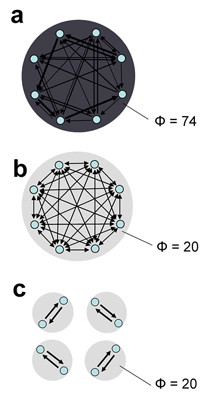
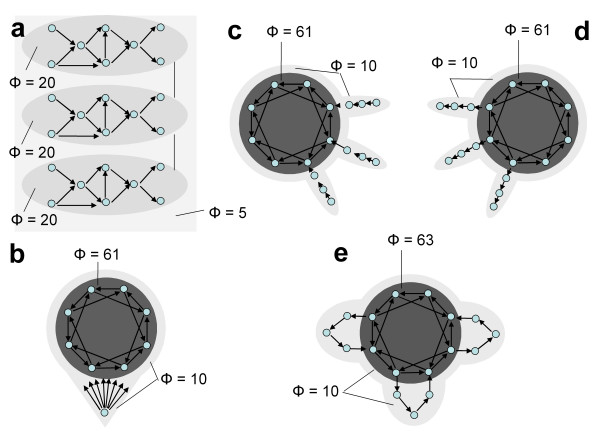
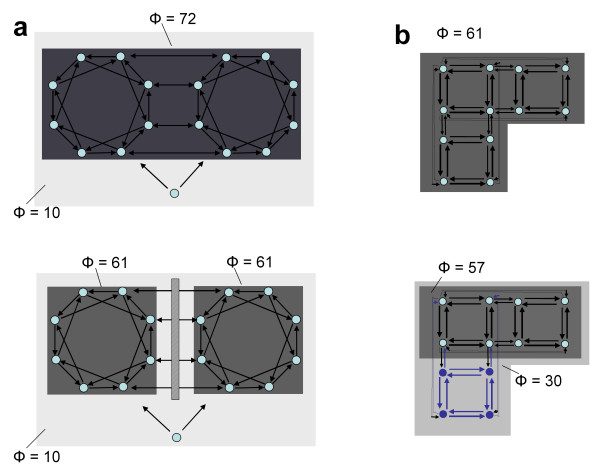
- Simulations illustrate the theory: optimized connection matrices with functional specialization and integration yield Φ = 74 bits; a strongly modular network yields Φ = 20 bits for each of three modules; joining supramodal, visual, and auditory subsets yields a main complex with Φ = 61 bits, which changes to 57 bits when the auditory subset is functionally disconnected.
- The theory accounts for why thalamocortical systems contribute to consciousness while cerebellum, reticular formation, sensory afferents, motor efferents, and cortico-subcortical loops may influence it without directly contributing; split-brain sectioning replaces one main complex with two smaller complexes.
- Time requirements: fully formed sensory experience takes up to 100–200 ms, a single conscious moment does not extend beyond 2–3 seconds, direct cortical stimulation may need up to 500 ms for conscious sensation, and modeled visual areas require at least 80 ms for constructive interactions.
Methods
- Theoretical hypothesis paper using phenomenological thought experiments (photodiode, camera, split-brain) and formal information-theoretic definitions: entropy, mutual information, effective information, Φ, complexes, and qualia space.
- No new human or animal empirical sample is reported; the paper draws on existing neurobiological observations and simplified computer models/simulations to illustrate predictions.
- Main analysis is conceptual derivation plus illustrative simulation results; no statistical inference or direct experimental measurement of Φ in brains is presented.
Limitations
- Stated: the framework’s validity rests on its ability to account coherently for phenomenological and brain facts; stringent tests require concurrent broad-region stimulation/recording and realistic large-scale anatomical models; better cortical neuroanatomy is needed; it is hard to say which cortical circuits are informationally insulated; measuring Φ accurately in infants, animals, coma/vegetative states, etc. will not be easy.
- Evident: no direct empirical measurement of Φ in human brains is presented; the simulations are simplified and illustrative; several predictions remain untested.
Model-written summary. Check it against the paper before relying on it.
Integrity signals
Registry
Cites
Statistics
Figures
Verification
Claims the paper makes
7 Valid · 4 Not valid · 35 Not checked · 140 Own results and interpretations
The sources with a verdict support this claim; the rest weren’t checked yet, have no full text we could read, or their verdicts aren’t rated yet.
In the paper
“Electrophysiological and imaging studies also indicate that neural activity that correlates with conscious experience is widely distributed over the cortex (e.g [20,26-29]).”
§ An information integration theory of consciousness > Testing the hypothesis > Consciousness, information integration, and the brain
What the sources say
- Not checked — no full text of the sourcecites [20] Rees G Kreiman G Koch C Neural correlates of consciousness in humans Nat Rev Neurosci 2002 3 261 270 11967556 10.1038/nrn783 source
- Supportedcites [26] Srinivasan R Russell DP Edelman GM Tononi G Increased synchronization of neuromagnetic responses during conscious perception J Neurosci 1999 19 5435 5448 10377353 PMC6782339 source
The Conclusion reports that changes associated with conscious perception are distributed across the brain, extending beyond visual areas to anterior regions, including frontal areas. The Discussion likewise describes changes involving distant occipital, parietal, temporal, and frontal sensor sites. This supports the citing sentence’s broad claim. (LLM, conf=0.90)
- Not checked — no full text of the sourcecites [27] McIntosh AR Rajah MN Lobaugh NJ Interactions of prefrontal cortex in relation to awareness in sensory learning Science 1999 284 1531 1533 10348741 10.1126/science.284.5419.1531 source
- Not checked — no full text of the sourcecites [28] Vuilleumier P Sagiv N Hazeltine E Poldrack RA Swick D Rafal RD Gabrieli JD Neural fate of seen and unseen faces in visuospatial neglect: a combined event-related functional MRI and event-related potential study Proc Natl Acad Sci U S A 2001 98 3495 3500 11248106 10.1073/pnas.051436898 PMC30681 source
- Not checked — no full text of the sourcecites [29] Cosmelli D David O Lachaux JP Martinerie J Garnero L Renault B Varela F Waves of consciousness: ongoing cortical patterns during binocular rivalry Neuroimage 2004 23 128 140 15325359 10.1016/j.neuroimage.2004.05.008 source
hedgedstates an association- Asserted: passes — The authors put it forward as true.
- Checkable: passes — It can be checked against evidence.
- Load-bearing: passes — The paper’s conclusions depend on it.
- Based: passes — The paper gives a reason why it holds.
The cited sources support only part of this claim — read each source’s verdict below.
In the paper
“the organization of the connections is such that individual patches of cerebellar cortex tend to be activated independently of one another, with little interaction possible between distant patches [41,42].”
§ An information integration theory of consciousness > Testing the hypothesis > Consciousness, information integration, and the brain
What the sources say
- Partly supportedcites [41] Cohen D Yarom Y Patches of synchronized activity in the cerebellar cortex evoked by mossy-fiber stimulation: questioning the role of parallel fibers Proc Natl Acad Sci U S A 1998 95 15032 15036 9844010 10.1073/pnas.95.25.15032 PMC24570 sourceExperimental — accuracy not yet measured
The Results report a localized patch of synchronized activity after white-matter stimulation, and the Discussion says this activity occurs simultaneously across the patch rather than propagating along parallel fibers. That supports localized activation, but the paper does not establish that separate patches activate independently or that little interaction is possible between distant patches. The indexed passages provide no page number. (LLM, conf=0.84)
- Not checked — no full text of the sourcecites [42] Bower JM The organization of cerebellar cortical circuitry revisited: implications for function Ann N Y Acad Sci 2002 978 135 155 12582048 source
plain- Asserted: passes — The authors put it forward as true.
- Checkable: passes — It can be checked against evidence.
- Load-bearing: passes — The paper’s conclusions depend on it.
- Based: passes — The paper gives a reason why it holds.
- Partly supported
Every source the paper cites for this claim was checked and supports it.
In the paper
“Further simulations show that it is possible to construct a large complex of high Φ by joining smaller complexes through reciprocal connections [8].”
§ An information integration theory of consciousness > Testing the hypothesis > Consciousness, information integration, and the brain
What the sources say
- Supportedcites [8] Tononi G Sporns O Measuring information integration BMC Neurosci 2003 4 31 14641936 10.1186/1471-2202-4-31 PMC331407 source
The Results section (‘Scaling and joining complexes’) reports that two smaller optimized networks joined by reciprocal connections formed a larger complex with substantially increased Φ. The Discussion (‘Information integration and basic neuroanatomy’) explicitly says high Φ can be achieved by joining smaller complexes through reciprocal connections. The demonstrated construction used two eight-element components; the paper does not establish that the method works at arbitrary scale. (LLM, conf=0.95)
hedgedstates a cause- Asserted: passes — The authors put it forward as true.
- Checkable: passes — It can be checked against evidence.
- Load-bearing: passes — The paper’s conclusions depend on it.
- Based: passes — The paper gives a reason why it holds.
- Rests on an assumption not shown here.
- Supported
The cited sources support only part of this claim — read each source’s verdict below.
In the paper
“For example, the ability of a system to integrate information grows as that system incorporates statistical regularities from its environment and learns [14].”
§ An information integration theory of consciousness > Implications of the hypothesis
What the sources say
- Partly supportedcites [14] Tononi G Sporns O Edelman GM A complexity measure for selective matching of signals by the brain Proceedings of the National Academy of Sciences of the United States of America 1996 93 3422 3427 8622951 10.1073/pnas.93.8.3422 PMC39624 sourceExperimental — accuracy not yet measured
The introduction (p. 1) says that neural connectivity tends to match environmental signals more closely through development and experience, and the Discussion (p. 5) links increased mutual information to greater functional integration. But the Results (p. 3) note that matching complexity and neural complexity can sometimes change independently, so the paper does not establish that integration necessarily grows whenever a system learns environmental regularities. (LLM, conf=0.82)
plainstates a cause- Asserted: passes — The authors put it forward as true.
- Checkable: passes — It can be checked against evidence.
- Load-bearing: unclear — It is unclear whether the paper’s conclusions depend on it.
- Based: passes — The paper gives a reason why it holds.
- Partly supported
Every source the paper cites for this claim was checked and supports it.
In the paper
“Phenomena such as the attentional blink, where a fixed sensory input may at times make it to consciousness and at times not, may also be due to changes in functional connectivity: access to the main thalamocortical complex may be enabled or not based on dynamics intrinsic to the complex [52].”
§ An information integration theory of consciousness > Testing the hypothesis > Consciousness, information integration, and the brain
What the sources say
- Supportedcites [52] Dehaene S Sergent C Changeux JP A neuronal network model linking subjective reports and objective physiological data during conscious perception Proc Natl Acad Sci U S A 2003 100 8520 8525 12829797 10.1073/pnas.1332574100 PMC166261 source
The Results report that, under the same simulated attentional-blink conditions, spontaneous fluctuations can determine whether activity reaches self-amplifying global access or remains transient and bottom-up. They also report reduced long-distance crosscorrelations when T2 is blinked. This supports the citing sentence’s hedged account of dynamically enabled access, with ‘functional connectivity’ referring to changing coordination rather than a change in the model’s fixed connections. (LLM, conf=0.88)
hedgedstates a possible cause- Asserted: passes — The authors put it forward as true.
- Checkable: passes — It can be checked against evidence.
- Load-bearing: unclear — It is unclear whether the paper’s conclusions depend on it.
- Based: passes — The paper gives a reason why it holds.
- Supported
121 more claims
Create a free account to see all 186 claims and every source verdict.
- It may state two separate claims as one. 41
- Probably not a substantial claim. 27
- The quote only partly states this claim. 1
Claims other papers make about this one
Each is checked against this paper’s own text: does it say what the citing paper says it does?
The source backs part of the claim, not all of it — or backs it for a different population, condition or comparison.
In the citing paper
“IIT takes an axiomatic approach, grounding itself in five essential properties of consciousness: existence, composition, information, integration, and exclusion (Tononi, 2004; Oizumi et al., 2014).”
From Can "consciousness" be observed from large language model (LLM) internal states? Dissecting LLM representations obtained from Theory of Mind test with Integrated Information Theory and Span Representation analysis (2025) · cites this paper as Tononi, 2004
Experimental — accuracy not yet measuredThe source backs part of the claim, not all of it — or backs it for a different population, condition or comparison.
In the citing paper
“Thus, the results confirm the prediction of IIT regarding the causal decomposability of LLMs [12] and ground it empirically via behaviorally interpretable metrics (e.g., perplexity [15]).”
From Why large language models cannot possess consciousness: an integrated information theory perspective (2025) · cites this paper as [12]
Experimental — accuracy not yet measuredThe source backs part of the claim, not all of it — or backs it for a different population, condition or comparison.
In the citing paper
“The principal theoretical justification for IIT is the conjecture that, in perception, what is absent may be more significant to consciousness than what is present [2,3].”
From The Problem with Phi: A Critique of Integrated Information Theory (2015) · cites this paper as [2]
Experimental — accuracy not yet measuredThe source backs part of the claim, not all of it — or backs it for a different population, condition or comparison.
In the citing paper
“It was the first (and arguably may still be the lone) theory that makes precise quantitative predictions about both the contents and level of consciousness (Tononi 2004).”
From Falsification and consciousness (2021) · cites this paper as Tononi 2004
Experimental — accuracy not yet measuredThe cited source says what the claim attributes to it.
In the citing paper
“from which it is derived that consciousness corresponds to integrated information.”
From Hard criteria for empirical theories of consciousness (2021) · cites this paper as Tononi, 2004
13 more claims about this paper
Create a free account to see every claim other papers make about this one.
Self-check
Percentages, sums and reported differences re-computed from the paper’s own numbers.
Each contradiction between two passages listed here was confirmed by an independent check.
Rated minor: it would not touch a result — a value no result rests on, a p-value that stays on the same side of the significance level, or a conflict that is clerical, resolved elsewhere in the paper, or outside its own findings.
In the paper
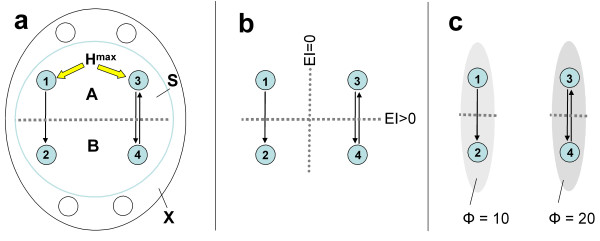
§ An information integration theory of consciousness > Presentation of the hypothesis > The first problem: What determines to what extent a system has conscious experience?
“In summary, to measure EI(B→A), one needs to apply maximum entropy to the outputs from B, and determine the entropy of the responses of B that are induced by inputs from A.”
§ An information integration theory of consciousness > Presentation of the hypothesis > The first problem: What determines to what extent a system has conscious experience?
“One way is to divide S into two complementary parts A and B, and evaluate the responses of B that can be caused by all possible inputs originating from A.”
Citations
Cites
A Mathematical Theory of Communication
Shannon, C. E. (1948) · Bell System Technical Journal · doi:10.1002/j.1538-7305.1948.tb01338.x · Cited by 88,486
The Mathematical Theory of Communication
Shannon, C. E., Weaver, W., & Wiener, N. (1950) · Physics Today · doi:10.1063/1.3067010 · Cited by 9,801
The feeling of what happens: body and emotion in the making of consciousness
(2000) · Choice Reviews Online · doi:10.5860/choice.37-6553 · Cited by 5,998
Brain stem reticular formation and activation of the EEG
Moruzzi, G., & Magoun, H. W. (1949) · Electroencephalography and Clinical Neurophysiology · doi:10.1016/0013-4694(49)90219-9 · Cited by 4,307 · cited 1×
“Conversely, stimulating the reticular formation can arouse a comatose animal and activate the thalamocortical system, making it ready to respond to stimuli [43].”
Background(1988) · Cited by 3,656
Dynamic predictions: Oscillations and synchrony in top–down processing
Engel, A. K., Fries, P., & Singer, W. (2001) · Nature Reviews Neuroscience · doi:10.1038/35094565 · Cited by 3,454 · cited 1×
“On the integration side, the specialized elements of the thalamocortical system are linked by an extended network of intra- and inter-areal connections that permit rapid and effective interactions within and between areas [31-35].”
BackgroundAlexander, G. E., Crutcher, M. D., & DeLong, M. R. (1990) · PubMed · Cited by 2,731
Towards a cognitive neuroscience of consciousness: basic evidence and a workspace framework
Dehaene, S. (2001) · Cognition · doi:10.1016/s0010-0277(00)00123-2 · Cited by 2,498 · cited 1×
“Opinions differ, however, about the contribution of certain cortical areas [1,16-21].”
BackgroundMathematical Theory of Communication
(2009) · Encyclopedia of Communication Theory · doi:10.4135/9781412959384.n229 · Cited by 2,492
The distinct modes of vision offered by feedforward and recurrent processing
Lamme, V. A. F., & Roelfsema, P. R. (2000) · Trends in Neurosciences · doi:10.1016/s0166-2236(00)01657-x · Cited by 2,338 · cited 1×
“Thus, the firing of the same cortical neurons may correlate with consciousness at certain times, but not at other times [57].”
Background
Research works printed but not linked: 2
- Zeki S A vision of the brain 1993 Oxford; Boston: Blackwell Scientific Publications
- Tononi G Galileo e il fotodiodo 2003 Bari: Laterza
Cited by
Items 501–600 of 1,727
Schoen, W., Chang, J. S., Lee, U., Bob, P., & Mashour, G. A. (2010) · Consciousness and Cognition · doi:10.1016/j.concog.2010.05.009 · Cited by 25
“The ability to process information in functionally specialized regions and then integrate this modular processing is an important feature of brain activity (Friston, 2002) that has been hypothesized to be central to consciousness (Tononi, 2004).”
BackgroundNo-Report and Report-Based Paradigms Jointly Unravel the NCC: Response to Overgaard and Fazekas
Tsuchiya, N., Frässle, S., Wilke, M., & Lamme, V. A. F. (2016) · Trends in Cognitive Sciences · doi:10.1016/j.tics.2016.01.006 · Cited by 27
“An alternative promising avenue for elucidating the presence or absence of perceptual states in the cases of full inattention and inability to report [7] are theoretical approaches, such as integrated information theory [8], that should in principle be able to predict the contents of consciousness without relying on r…”
BackgroundEEG Signal Diversity Varies With Sleep Stage and Aspects of Dream Experience
Aamodt, A., Nilsen, A. S., Thürer, B., Moghadam, F. H., Kauppi, N., Juel, B. E., & Storm, J. F. (2021) · Frontiers in Psychology · doi:10.3389/fpsyg.2021.655884 · Cited by 23
“However, (Nieminen et al., 2016) suggests that TMS-evoked activity may still index within-state differences in experience, which would also seem to be consistent with IIT’s emphasis on possible transitions of the system, over actual activity. of complexity and entropy to spontaneous multichannel brain signals, suggest…”
BackgroundInfluentialKeppler, J. (2021) · Frontiers in Human Neuroscience · doi:10.3389/fnhum.2021.723415 · Cited by 32
“As for the comparison of the ZPF-based approach with the integrated information theory (Tononi, 2004, 2008; Oizumi et al., 2014), the reader is referred to Keppler (2016), while a detailed discussion of the positioning of the approach in the field of panpsychism can be found in Shani and Keppler…”
MethodLeón-Domínguez, U., Vela‐Bueno, A., Froufe, M., & León‐Carrión, J. (2013) · Neuropsychologia · doi:10.1016/j.neuropsychologia.2013.03.012 · Cited by 33
“generate qualia (subjective conscious awareness) (Llinás & Ribary, 2001; Llinás, Ribary, Contreras, & Pedroarena, 1998; Plum, 1991; Tononi, 2004; Tononi & Edelman, 1998; Tononi & Laureys, 2008).”
Müller, M., Rummel, C., Goodfellow, M., & Schindler, K. A. (2014) · Brain Connectivity · doi:10.1089/brain.2013.0192 · Cited by 23
“On the other hand, information processing requires the coordinated interplay of dynamical segregation and global integration of local network activity (Nunez, 1995; Tononi, 2004; Tononi and Edelman, 1998).”
Reviewing Tests for Machine Consciousness
Elamrani, A., & Yampolskly, R. V. (2019) · Journal of Consciousness Studies · Cited by 60
Awareness and integrated information theory identify plant meristems as sites of conscious activity
TREWAVAS, A. J. (2021) · PROTOPLASMA · doi:10.1007/s00709-021-01633-1 · Cited by 30
“The IIT was first proposed by Tononi (2004, 2008, 2012).”
MethodAltered States of Consciousness after Brain Injury
Stender, J., Laureys, S., & Gosseries, O. (2017) · Wiley eBooks · doi:10.1002/9781119132363.ch47 · Cited by 23
Proposed EEG measures of consciousness: a systematic, comparative review.Preprint
Nilsen, A. S., Juel, B. E., Thürer, B., & Storm, J. F. (2020) · PsyArXiv (OSF Preprints) · doi:10.31234/osf.io/sjm4a · Cited by 27
(2011) · Journal of Consciousness Studies · Cited by 22
Sattin, D., Leonardi, M., & Picozzi, M. (2019) · Brain and Behavior · doi:10.1002/brb3.1474 · Cited by 22
“…2018; Baars & Franklin, 2007; Newman, Baars, & Cho, 1997), as well as the information integration theory (IIT; Oizumi, Albantakis, & Tononi, 2014; Tononi, 2004, 2008), try to explain the emergence of consciousness as the result of different progressive changes of information among cortical areas…”
BackgroundReduced Electroencephalogram Complexity in Postoperative Delirium
Tanabe, S., Parker, M., Lennertz, R. C., Pearce, R. A., Banks, M. I., & Sanders, R. D. (2021) · The Journals of Gerontology Series A · doi:10.1093/gerona/glab352 · Cited by 24
Dong, K., Zhang, D., Wei, Q., Wang, G., Huang, F., Chen, X., Muhammad, K. G., Sun, Y., & Liu, J. (2022) · Computers in Biology and Medicine · doi:10.1016/j.compbiomed.2022.105687 · Cited by 23
Insects as mini-livestock: Considering insect welfare in feed production
Voulgari‐Kokota, A., van Loon, M. S., & Bovenkerk, B. (2023) · NJAS Impact in Agricultural and Life Sciences · doi:10.1080/27685241.2023.2191797 · Cited by 32
“Barron and Klein (2016) concur, albeit on different theoretical considerations; based on the information-integration theory of consciousness (Tononi, 2004, 2008).”
BackgroundA measure centrality index for systematic empirical comparison of consciousness theories
Chis-Ciure, R., Melloni, L., & Northoff, G. (2024) · Neuroscience & Biobehavioral Reviews · doi:10.1016/j.neubiorev.2024.105670 · Cited by 22
“(Tononi, 2004; Tononi and Sporns, 2003), but they replaced it after 2.0 (Balduzzi and Tononi, 2008).”
BackgroundMethodInfluentialModes and models in disorders of consciousness science.
(2012) · PubMed · doi:10.4449/aib.v150i2.1372 · Cited by 22
Understanding Consciousness as Data Compression
Maguire, P., Maguire, R., & Moser, P. (2016) · Journal of Cognitive Science · doi:10.17791/jcs.2016.17.1.63 · Cited by 23
“Tononi’s (2008) first thought experiment highlights the idea that the quality of an experience must be expressed relative to a range of alternative possibilities.”
BackgroundMethodInfluentialBronkhorst, J. (2016) · Method & Theory in the Study of Religion · doi:10.1163/15700682-12341375 · Cited by 29
System, Subsystem, Hive: Boundary Problems in Computational Theories of Consciousness
Fekete, T., van Leeuwen, C., & Edelman, S. (2016) · Frontiers in Psychology · doi:10.3389/fpsyg.2016.01041 · Cited by 29
“We will revisit this issue in the next section, where we discuss Tononi’s Integrated Information Theory (IIT) while considering its take on contracted dynamics.”
BackgroundInfluentialWhat are the computational correlates of consciousness?
Reggia, J. A., Katz, G. E., & Huang, D.-W. (2016) · Biologically Inspired Cognitive Architectures · doi:10.1016/j.bica.2016.07.009 · Cited by 27
Qianchen, L., Gallagher, R. M., & Tsuchiya, N. (2022) · Royal Society Open Science · doi:10.1098/rsos.210394 · Cited by 21
“Different from this, we defined the information of conscious experience as the discriminability of how well the actual experience can be differentiated from other possible experiences [57,58].”
BackgroundYaron, I., Melloni, L., Pitts, M., & Mudrik, L. (2021) · doi:10.1101/2021.06.10.447863 · Cited by 21
How a Materialist Can Deny That the United States is Probably Conscious – Response to Schwitzgebel
Kammerer, F. (2015) · Philosophia · doi:10.1007/s11406-015-9653-z · Cited by 23
“4 For the main theories discussed by Schwitzgebel, see (Chalmers 1996; Dennett 1991; Dretske 1988, 1995; Humphrey 1992, 2011; Tononi 2004). instantiating S.5 6 Given any such theory, one can add to this theory an anti-nesting principle, which supplements the theory by determining a set of cases…”
BackgroundCan we Prove that there are Computational Correlates of Consciousness in the Brain?
Gamez, D. (2014) · Journal of Cognitive Science · doi:10.17791/jcs.2014.15.2.149 · Cited by 24
“Tononi (2004; 2008) has suggested that the integration and differentiation of the brain’s information states, known as ‘information integration’, is identical with consciousness.”
BackgroundGeneral Anaesthesia and Consciousness
Alkire, M. T. (2009) · Elsevier eBooks · doi:10.1016/b978-0-12-374168-4.00010-1 · Cited by 23
Adaptive and Evolutive Algorithms: A Natural Logic for Artificial Mind
Maldonato, M. N., & Dell’Orco, S. (2016) · Intelligent systems reference library · doi:10.1007/978-3-319-31053-4_3 · Cited by 22
Reconciling Current Theories of Consciousness
Maillé, S., & Lynn, M. B. (2020) · Journal of Neuroscience · doi:10.1523/jneurosci.2740-19.2020 · Cited by 24
“The IIT, first proposed by Tononi (2004), focuses on defining what a conscious system should look like with respect to information processing and architecture without considering particular brain areas or temporal profiles.”
BackgroundElectrophysiological Chronometry of Graded Consciousness during the Attentional Blink
Eiserbeck, A., Enge, A., Rabovsky, M., & Rahman, R. A. (2021) · Cerebral Cortex · doi:10.1093/cercor/bhab289 · Cited by 31
From non-conscious processing to conscious events: a minimalist approach
Sklar, A. Y., Kardosh, R., & Hassin, R. R. (2021) · Neuroscience of Consciousness · doi:10.1093/nc/niab026 · Cited by 28
If waking and dreaming consciousness became de-differentiated, would schizophrenia result?
Llewellyn, S. (2011) · Consciousness and Cognition · doi:10.1016/j.concog.2011.03.022 · Cited by 23
Automation of anaesthesia: a review on multivariable control
Chang, J., Syafiie, S., Kamil, R., & Lim, T. A. (2014) · Journal of Clinical Monitoring and Computing · doi:10.1007/s10877-014-9590-6 · Cited by 23
A Framework for Investigating Animal Consciousness
Droege, P., & Braithwaite, V. A. (2014) · Current topics in behavioral neurosciences · doi:10.1007/7854_2014_278 · Cited by 24
“…and thoughts into a representation of presence is consistent with the integration function proposed by global workspace theorists and other neuroscientific theories of consciousness (Edelman and Tononi 2000; Gulick 2004; Tononi 2004, 2008; Tononi and Koch 2008; Dehaene and Changeux 2011).”
BackgroundSounds can boost the awareness of visual events through attention without cross-modal integration
Pápai, M. S., & Soto‐Faraco, S. (2017) · Scientific Reports · doi:10.1038/srep41684 · Cited by 27
Liu, X., Lauer, K. K., Ward, B. D., Roberts, C. J., Liu, S., Gollapudy, S., Rohloff, R., Gross, W. L., Xu, Z., Chen, S., et al. (2018) · Brain Imaging and Behavior · doi:10.1007/s11682-018-9886-0 · Cited by 20
“The richness of conscious experience is thought to depend on the brain’s information capacity and the amount of integrated information (Tononi 2004; Tononi 2008; Oizumi et al. 2014).”
InfluentialEvaluating Approximations and Heuristic Measures of Integrated Information
Nilsen, A. S., Juel, B. E., Marshall, W., & Storm, J. F. (2019) · Entropy · doi:10.3390/e21050525 · Cited by 24
Efficient search for informational cores in complex systems: Application to brain networks
Kitazono, J., Kanai, R., & Oizumi, M. (2020) · Neural Networks · doi:10.1016/j.neunet.2020.08.020 · Cited by 19
Frasch, M. G., Walter, B. L., Friedrich, H., Hoyer, D., Eiselt, M., & Bauer, R. (2007) · Clinical Neurophysiology · doi:10.1016/j.clinph.2007.05.071 · Cited by 21
Tomasi, D. L. (2020) · Springer eBooks · doi:10.1007/978-3-030-35354-4_6 · Cited by 21
Drawing the experience dynamics of meditationPreprint
Jachs, B., Garcia, M. C., Canales‐Johnson, A., & Bekinschtein, T. A. (2022) · bioRxiv (Cold Spring Harbor Laboratory) · doi:10.1101/2022.03.04.482237 · Cited by 32
Negro, N. (2024) · Neuroscience of Consciousness · doi:10.1093/nc/niae012 · Cited by 21
“…Albantakis et al. (2023) is outside of the core: the specific formalism to determine Φ has changed throughout the various iterations of the theory (Tononi 2004, 2012, Oizumi et al. 2014, Barbosa et al. 2021), while the general idea that consciousness is integrated information has remained…”
BackgroundMarshall, W., Grasso, M., Mayner, W. G. P., Zaeemzadeh, A., Barbosa, L. S., Chastain, E., Findlay, G., Sasai, S., Albantakis, L., & Tononi, G. (2023) · Entropy · doi:10.3390/e25020334 · Cited by 20
“The mathematical formulation of IIT has been refined and developed over time, with the goal of fully and accurately capturing the postulates [4,7,8].”
MethodSelf-citationTHE COMPUTATIONAL STANCE IS UNFIT FOR CONSCIOUSNESS
Manzotti, R. (2012) · International Journal of Machine Consciousness · doi:10.1142/s1793843012400239 · Cited by 22
“An example is o®ered by Giulio Tononi's theory of information integration that suggests that consciousness is the expression of a property of information [Tononi, 2004].”
BackgroundMethodA novel perturbation based compression complexity measure for networks
Virmani, M., & Nagaraj, N. (2019) · Heliyon · doi:10.1016/j.heliyon.2019.e01181 · Cited by 21
“The idea that consciousness is the result of a balance between functional integration and differentiation in thalamocortical networks, or brain complexity, has gained popularity [6, 7, 8, 9, 10].”
BackgroundInfluentialCoronel‐Oliveros, C., Castro, S., Cofré, R., & Orio, P. (2021) · Frontiers in Computational Neuroscience · doi:10.3389/fncom.2021.687075 · Cited by 20
“The human brain generates a rich repertoire of spatiotemporal dynamics characterized by the integrated and segregated functional states (Tononi, 2004).”
BackgroundDoes brain activity cause consciousness? A thought experiment
Gidon, A., Aru, J., & Larkum, M. E. (2022) · PLoS Biology · doi:10.1371/journal.pbio.3001651 · Cited by 32
“Here, we took the approach that it is sufficient to identify the target of the investigation rather than strictly define it [27]: Consciousness is the experience of ourselves and the surroundings that fades when we enter deep sleep or under anesthesia (cf [28,29]).”
BackgroundSleep in Disorders of Consciousness: A Brief Overview on a Still under Investigated Issue
Raciti, L., Raciti, G., Militi, D., Tonin, P., Quartarone, A., & Calabrò, R. S. (2023) · Brain Sciences · doi:10.3390/brainsci13020275 · Cited by 23
A theory of visibility measures in the dissociation paradigm
Schmidt, T., & Biafora, M. (2023) · Psychonomic Bulletin & Review · doi:10.3758/s13423-023-02332-z · Cited by 31
“…2013, Dehaene & Naccache, 2001), and Integrated Information Theory postulates that consciousness is a consequence of the amount of "integrated information", Φ (Tononi & Edel-man, 1998, Tononi, 2004, but see Oizumi et al., 2014, for a formulation of the theory that seems to allow for multiple Φ i ).”
BackgroundA construct-first approach to consciousness science
Fazekas, P., Cleeremans, A., & Overgaard, M. S. (2023) · Neuroscience & Biobehavioral Reviews · doi:10.1016/j.neubiorev.2023.105480 · Cited by 31
“The central construct of the information integration theory (IIT) is a cause – effect structure that specifies the maximum of integrated information ( Tononi, 2004; Tononi et al., 2016; Albantakis et al., 2022; Oizumi et al., 2014).”
BackgroundIntegrated information for large complex networks
Arsiwalla, X. D., & Verschure, P. F. M. J. (2013) · International Joint Conference on Neural Networks (IJCNN) · doi:10.1109/ijcnn.2013.6706794 · Cited by 23
“Central among these, has been a measure of information integration Φ, introduced in its original form in [2], [3].”
BackgroundMind-Body Practices in Integrative Medicine
Walach, H., Ferrari, M.-L. G., Sauer, S., & Kohls, N. (2012) · Religions · doi:10.3390/rel3010050 · Cited by 29
“We also know that long projection fibers ranging from the brain stem via the thalamus to the cortex seem to form circular structures that are necessary for the sustenance of conscious experience [14].”
BackgroundTripp, L. D., Warm, J. S., Matthews, G., Chiu, P. Y., & Bracken, R. B. (2009) · Human Factors The Journal of the Human Factors and Ergonomics Society · doi:10.1177/0018720809359631 · Cited by 21
“…to indicate that when consciousness fades, the cortical synchronization of neural networks breaks down, resulting in a reduced capacity of the nervous system to integrate information (Massimini et al., 2005; Melloni et al., 2007; Srinivasan, Russell, Edelman, & Tononi, 1999; Tononi, 2004).”
BackgroundQualia Could Arise from Information Processing in Local Cortical Networks
Orpwood, R. D. (2013) · Frontiers in Psychology · doi:10.3389/fpsyg.2013.00121 · Cited by 22
“Tononi proposed that conscious states are characterized by the fact that they involve information that is highly integrated and highly differentiated, and went on to propose measures to quantify the informational relationships generated by networks (Tononi, 2004; Balduzzi and Tononi, 2009).”
BackgroundDemertzi, A., Sitt, J. D., Sarasso, S., & Pinxten, W. (2017) · Neuroscience of Consciousness · doi:10.1093/nc/nix010 · Cited by 25
“Here we consider the Perturbational Complexity Index (PCI), a theoretically inspired (Tononi 2004; Tononi et al. 2016) measure that gauges the ability of thalamocortical circuits to integrate information irrespectively of the integrity of sensory processing, motor behavior, and subject’s…”
MethodPrefrontal neural dynamics in consciousness
León-Domínguez, U., & León‐Carrión, J. (2019) · Neuropsychologia · doi:10.1016/j.neuropsychologia.2019.05.018 · Cited by 27
Arousal increases the representational capacity of cortical tissue
Fekete, T., Pitowsky, I., Grinvald, A., & Omer, D. B. (2009) · Journal of Computational Neuroscience · doi:10.1007/s10827-009-0138-6 · Cited by 19
“Equipped with the SIF level sets serving as models of state dependent activity spaces we could turn to assess their topological complexity (for a different notion of the complexity of activity spaces see (Sporns et al. 2000; Tononi 2004)).”
BackgroundMethodInfluentialPhenomenal consciousness, attention and accessibility
Schlicht, T. (2012) · Phenomenology and the Cognitive Sciences · doi:10.1007/s11097-012-9256-0 · Cited by 28
“If Tononi (2004) is right that consciousness corresponds to the brain’s ability to integrate information, and if information can be defined as the reduction of uncertainty, then a notion of maximally integrated content could be developed, which is content that is fully determined, in contrast to…”
BackgroundSeth, A. K., & Edelman, G. M. (2009) · Springer eBooks · doi:10.1007/978-0-387-30440-3_94 · Cited by 26
“The most prominent alternative to CN is ‘information integration’ (Φ) [63, 24].”
InfluentialThe neurobiology of consciousness
Koch, C., & Mormann, F. (2010) · Cambridge University Press eBooks · doi:10.1017/cbo9780511676291.003 · Cited by 22
Renewed Perspectives on the Deep Roots and Broad Distribution of Animal Consciousness
Irwin, L. N. (2020) · Frontiers in Systems Neuroscience · doi:10.3389/fnsys.2020.00057 · Cited by 42
“…awareness, coupled with increasing integration of perception with memory as brains became larger and more complex during phylogeny, is logically more persuasive (Rose, 1976; Bullock, 1984; Griffin, 1984; Tononi, 2004; Tononi and Koch, 2015; Mercado, 2008; Koch, 2012; Kiverstein and Rietveld, 2018).”
BackgroundIntegrated information theory does not make plant consciousness more convincing
Mallatt, J. M., Taiz, L., Draguhn, A., Blatt, M. R., & Robinson, D. G. (2021) · Biochemical and Biophysical Research Communications · doi:10.1016/j.bbrc.2021.01.022 · Cited by 27
Gallucci, A., Varoli, E., Mauro, L. D., Hassan, G., Rovida, M., Comanducci, A., Casarotto, S., Re, V. L., & Lauro, L. J. R. (2023) · European Journal of Neuroscience · doi:10.1111/ejn.16149 · Cited by 24
Evers, K., Farisco, M., & Pennartz, C. M. A. (2024) · Consciousness and Cognition · doi:10.1016/j.concog.2024.103668 · Cited by 22
“Four empirical, brain-based theories will here be considered: (i) Global neuronal workspace theory (GNWT), (ii) Integrated Information Theory (IIT), (iii) Neu-rorepresentationalism (NREP), (iv) the Active Inference framework as applied to consciousness (Active Inference Theory, AIT; see Table 2 for…”
BackgroundMethodInfluentialThe Limits to Machine Consciousness
Kak, S. C. (2021) · Journal of Artificial Intelligence and Consciousness · doi:10.1142/s2705078521500193 · Cited by 23
“Postulating a physical substrate of consciousness to be at the basis of complex patterns of activity has been called the integrated information theory (IIT) [18],[19].”
BackgroundThe Moon illusion explained by the projective consciousness model
Rudrauf, D., Bennequin, D., & Williford, K. (2020) · Journal of Theoretical Biology · doi:10.1016/j.jtbi.2020.110455 · Cited by 26
A novel qEEG measure of teamwork for human error analysis: An EEG hyperscanning study
Cha, K.-M., & Lee, H. (2018) · Nuclear Engineering and Technology · doi:10.1016/j.net.2018.11.009 · Cited by 25
A neuro-inspired computational model for adaptive fault diagnosis
Moghaddam, M., Chen, Q., & Deshmukh, A. V. (2019) · Expert Systems with Applications · doi:10.1016/j.eswa.2019.112879 · Cited by 20
Fu, Y., Yan, W., Shen, M., & Chen, H. (2021) · Science China Life Sciences · doi:10.1007/s11427-020-1831-8 · Cited by 21
“…demonstrating the critical role of the visual cortex in yielding consciousness (Boehler et al., 2008; Pascual-Leone and Walsh, 2001; Silvanto et al., 2005) (Note that this view is also suggested in another theory of NCCs—integrated information theory (e.g., Tononi, 2004; Tononi et al., 2016)).”
BackgroundPermutation auto-mutual information of electroencephalogram in anesthesia
Liang, Z., Wang, Y., Ouyang, G., Voss, L. J., SLEIGH, J. W., & Li, X. (2013) · Journal of Neural Engineering · doi:10.1088/1741-2560/10/2/026004 · Cited by 23
“1741-2560/13/026004+09$33.00 1 © 2013 IOP Publishing Ltd Printed in the UK & the USA Recently, neural information integration has been applied to understand the mechanism of consciousness and general anesthesia (Tononi 2004).”
BackgroundInfluentialThe Effect of Desflurane on Neuronal Communication at a Central Synapse
Mapelli, J., Gandolfi, D., Giuliani, E., Prencipe, F. P., Pellati, F., Barbieri, A., D'Angelo, E. U., & Bigiani, A. (2015) · PLoS ONE · doi:10.1371/journal.pone.0123534 · Cited by 24
Sanders, R. D., Raz, A., Banks, M. I., Boly, M., & Tononi, G. (2016) · British Journal of Anaesthesia · doi:10.1093/bja/aev354 · Cited by 18
“having thoughts) whether or not these conscious contents relate to the environment.(4) Thus, one is vividly conscious”
BackgroundSelf-citationRestricted truncal sagittal movements of rapid eye movement behaviour disorder
Wasserman, D., Gullone, S., Duncan, I., Veronese, M., Gnoni, V., Higgins, S., Birdseye, A., Gelegen, E. C., Goadsby, P. J., Ashkan, K., et al. (2022) · npj Parkinson's Disease · doi:10.1038/s41531-022-00292-0 · Cited by 18
Self-citationIllusionism, Moore, and Chalmers
Loginov, E. (2024) · Frontiers in Psychology · doi:10.3389/fpsyg.2024.1449314 · Cited by 20
“However, many empirical approaches to consciousness do address qualia (see: Lamme, 2003; Tononi, 2004; Prinz, 2012; Anokhin, 2021; Seth, 2021; Block, 2023).”
A dynamic bifurcation mechanism explains cortex-wide neural correlates of conscious access
Klatzmann, U., Froudist‐Walsh, S., Bliss, D. P., Theodoni, P., Mejías, J. F., Niu, M., Rapan, L., Palomero‐Gallagher, N., Sergent, C., Dehaene, S., et al. (2025) · Cell Reports · doi:10.1016/j.celrep.2025.115372 · Cited by 23
“4 However the location of the cortical areas, predominantly in the frontal and parietal cortices, seems to fit more precisely with GNW theory than IIT, which attributes conscious perception primarily to a posterior cortical ‘‘hot zone.’’”
Tripathi, T., Uversky, V. N., & Giuliani, A. (2025) · Cellular and Molecular Life Sciences · doi:10.1007/s00018-025-05770-1 · Cited by 24
Arena, A., Juel, B. E., Comolatti, R., Thon, S. H., & Storm, J. F. (2022) · Neuroscience of Consciousness · doi:10.1093/nc/niac004 · Cited by 17
“PCI is inspired by the general idea that the joint presence of integration and differentiation is required for a system to be conscious, which is a central part of the Integrated Information Theory (IIT; Tononi 2004; Massimini et al. 2009).”
BackgroundThe Constrained Disorder Principle May Account for Consciousness
Sigawi, T., Hamtzany, O., Shakargy, J. D., & Ilan, Y. (2024) · Brain Sciences · doi:10.3390/brainsci14030209 · Cited by 23
Concept of Information as a Bridge between Mind and Brain
Schroeder, M. J. (2011) · Information · doi:10.3390/info2030478 · Cited by 20
Keppler, J. (2016) · Open Journal of Philosophy · doi:10.4236/ojpp.2016.64034 · Cited by 18
“…the ZPF, which causes a system to function as a whole, can be interpreted as integrated information, meaning that at this point the presented approach shares commonalities with the integrated information theory (IIT) of consciousness (Tononi, 2004, 2008, 2012; Oizumi, Albantakis, & Tononi, 2014).”
ResultThe global dynamical complexity of the human brain network
Arsiwalla, X. D., & Verschure, P. F. M. J. (2016) · Applied Network Science · doi:10.1007/s41109-016-0018-8 · Cited by 21
“The earliest proposals defining integrated information were made in the pioneering work of [33], [32] and [30].”
BackgroundInfluentialChanges in brain activation during sedation induced by dexmedetomidine
Kim, W. H., Cho, D., Lee, B., Song, J., & Shin, T. J. (2017) · Journal of International Medical Research · doi:10.1177/0300060517705477 · Cited by 19
“From the perspective of information integration, the synchronized brain network may impair the efficiency of information processing.(25) In clinical practice, impaired responses to external stimuli, such as verbal, auditory, and visual stimuli are commonly observed under sedation.”
BackgroundStandage, D., Areshenkoff, C. N., Nashed, J. Y., Hutchison, R. M., Hutchison, M., Heinke, D. G., Menon, R. S., Everling, S., & Gallivan, J. P. (2020) · Cerebral Cortex · doi:10.1093/cercor/bhaa085 · Cited by 18
“According to integrated information theory (Tononi 2004), consciousness is linked to the ability to integrate information both locally and between widely distributed brain areas.”
BackgroundThe QBIT Theory of Consciousness
Beshkar, M. (2020) · Integrative Psychological and Behavioral Science · doi:10.1007/s12124-020-09528-1 · Cited by 19
Cognitive Theories of Consciousness
de Gardelle, V., & Kouider, S. (2009) · Elsevier eBooks · doi:10.1016/b978-0-443-29258-3.00059-8 · Cited by 25
General and specific consciousness: a first-order representationalist approach
Mehta, N., & Mashour, G. A. (2013) · Frontiers in Psychology · doi:10.3389/fpsyg.2013.00407 · Cited by 21
“…theory holds that consciousness requires two elements: information, understood as the ability to discriminate among a large number of alternatives, and integration, understood as whether or not a system functions as a unified whole, rather than as separate components (Tononi, 2004, 2008).”
BackgroundSitt, J. D., King, J.-R., Naccache, L., & Dehaene, S. (2013) · Trends in Cognitive Sciences · doi:10.1016/j.tics.2013.09.003 · Cited by 24
Conscious brain, metacognition and schizophrenia
Bob, P., Pěč, O., Mishara, A. L., Touskova, T. P., & Lysaker, P. H. (2016) · International Journal of Psychophysiology · doi:10.1016/j.ijpsycho.2016.05.003 · Cited by 21
“…insight, emergence of new perspectives and creative solutions (Dietrich and Kanso, 2010; Jung-Beeman et al., 2004; Sandkuhler and Bhattacharya, 2008) and conscious awareness related to attentional focus in general (Baars, 2002; Tononi, 2004; Tononi and Edelman, 1998; Uhlhaas and Singer, 2010).”
BackgroundHigh-energy brain dynamics during anesthesia-induced unconsciousness
Riehl, J. R., Palanca, B. J. A., & Ching, S. (2017) · Network Neuroscience · doi:10.1162/netn_a_00023 · Cited by 18
“…that sevoflurane anesthesia induces more randomness and thus more complexity of brain dynamics, which stands in contrast to previous findings and hypotheses that associate unconsciousness (including states of general anesthesia) with a decrease in complexity (Tononi, 2004; Tononi & Edelman, 1998).”
ResultGlattfelder, J. B. (2019) · The frontiers collection · doi:10.1007/978-3-030-03633-1_14 · Cited by 26
“In the publication with the title An Information Integration Theory of Consciousness, Tononi first outlined the thesis (Tononi 2004):”
BackgroundThe Morphospace of ConsciousnessPreprint
Arsiwalla, X. D., Moulin-Frier, C., Herreros, I., Sánchez-Fibla, M., & Verschure, P. F. M. J. (2017) · PsyArXiv (OSF Preprints) · doi:10.31234/osf.io/emhnp · Cited by 18
“Following initial proposals [91], [93], [94], several approaches have been developed to compute integrated information [3], [11], [14], [15], [12], [13], [18], [20],”
MethodWhat Does ‘Information’ Mean in Integrated Information Theory?
Lombardi, O., & López, C. (2018) · Entropy · doi:10.3390/e20120894 · Cited by 17
Breakdown of effective information flow in disorders of consciousness: Insights from TMS-EEG
Bai, Y., Li, Y., Meng, X., Huang, Y., Wang, Q., Gong, A., Feng, Z., & Ziemann, U. (2024) · Brain stimulation · doi:10.1016/j.brs.2024.04.011 · Cited by 24
“These hypotheses form a commonly held view that information flow between widely separated regions of the cerebral cortex is a necessary component in the generation of human consciousness [4,5].”
The Cognitome: Seeking the Fundamental Neuroscience of a Theory of Consciousness
Анохин, К. В. (2021) · Neuroscience and Behavioral Physiology · doi:10.1007/s11055-021-01149-4 · Cited by 23
“…with increasoms: assertions relating to the apparatus of the physical mechanisms determining a phenomenological property and overall being necessary and suffi cient for mediating any subjective state [Tononi, 2004, 2008, 2012, 2017; Oizumi et al., 2014; Tononi and Koch, 2015; Tononi et al., 2016].”
BackgroundDong, K., Zhang, D., Wei, Q., Wang, G., Chen, X., Zhang, L., & Liu, J. (2022) · Computers in Biology and Medicine · doi:10.1016/j.compbiomed.2022.106480 · Cited by 20
Critical Changes in Cortical Neuronal Interactions in Anesthetized and Awake Rats
Hudetz, A. G., Vizuete, J. A., Pillay, S., & ROPELLA, K. M. (2015) · Anesthesiology · doi:10.1097/aln.0000000000000690 · Cited by 14
Dynamical complexity in the C.elegans neural network
Antonopoulos, C. G., FOKAS, A. S., & Bountis, T. (2016) · The European Physical Journal Special Topics · doi:10.1140/epjst/e2016-02670-3 · Cited by 15
“[23] the authors present some practical methods for measuring integrated information [4] from time-series data.”
MethodConsciousness, complexity, and evolution
Veit, W. (2022) · Behavioral and Brain Sciences · doi:10.1017/s0140525x21001825 · Cited by 22
Depth of Anesthesia and Postoperative Delirium
Luk, T. T. H., Jia, B., Pang, E., Lau, V. N. M., Lam, C. K. M., Chu, M. H. M., Han, R., & Chan, M. T. V. (2015) · Current anesthesiology reports · doi:10.1007/s40140-014-0088-z · Cited by 20
Toward formal models of biologically inspired, highly parallel machine cognition
Wallace, R. (2008) · International Journal of Parallel Emergent and Distributed Systems · doi:10.1080/17445760801932357 · Cited by 22
“Currently popular agent-based and artificial neural network treatments of cognition, consciousness and other higher order mental functions [34,81], to take Krebs’ [51] view, are little more than sufficiency arguments, in the same sense that a Fourier series expansion can be empirically fitted to…”
BackgroundHow consciousness will change our view on neuroscience
Overgaard, M. S. (2010) · Cognitive Neuroscience · doi:10.1080/17588928.2010.497585 · Cited by 18
Metadata
- Authors
- Tononi, G.
- Affiliations
- University of Wisconsin–Madison (US)
- Corresponding author
- Tononi, Giulio
- ORCID
- Tononi, Giulio
- Venue
- BMC Neuroscience
- Published
- 2004-11-02
- Volume
- 5
- Issue
- 1
- Pages
- 42-42
- ISSN
- 1471-2202 (ISSN-L)
- PMC
- PMC543470
- OpenAlex
- W2114900706
- Cited by
- 1,958
- References
- 74
- Citations by year
- 2026: 242 · 2025: 230 · 2024: 131 · 2023: 114 · 2022: 95 · 2021: 99 · 2020: 110 · 2019: 97 · 2018: 94 · 2017: 119 · 2016: 83 · 2015: 80 · 2014: 87 · 2013: 85 · 2012: 64
- FWCI
- 91.12
- Type
- journal article
- Language
- en
- Open access
- gold
- doi.org
- Licence
- cc-by
- creativecommons.org/licenses/by/2.0/ (tdm)
- creativecommons.org/licenses/by/2.0/ (vor)
- Locations
- BMC Neuroscience (publishedVersion, cc-by)
- PubMed Central (publishedVersion)
- PubMed (publishedVersion)
- DOAJ (DOAJ: Directory of Open Access Journals) (submittedVersion, cc-by-sa)
- Topics
- Social Sciences › Arts and Humanities › Philosophy › Philosophy and Theoretical Science
- Life Sciences › Neuroscience › Cognitive Neuroscience › Neural dynamics and brain function
- Life Sciences › Neuroscience › Cognitive Neuroscience › Functional Brain Connectivity Studies
- Keywords
- information integration theory, consciousness, integrated information, phi, subjective experience, unity of consciousness, effective information, thalamocortical system, dreamless sleep, generalized seizures, neural correlates of consciousness
- MeSH terms
- Afferent Pathways, Brain, Consciousness, Humans, Information Theory, Motor Activity, Neurons, Thalamus, Systems Integration
About these checks
Registry, retraction, Cites and statistics results are computed, not judged, with one exception: a printed reference that no index lists is read once by a model before it counts as a citation error. Claims are extracted by a model and kept only when their quote appears verbatim in the text; each cited source is then checked, with a model’s help, for whether it says what the claim relies on. Those verdicts can be wrong — read the claim’s quote and the cited source before relying on one.
The claim verdicts this report counts are experimental: their accuracy is not yet measured.
A language model drew the claims from the paper on 2026-10-10, under version 3 of the claim definition (model deepseek-v4.1-flash, prompt extract-v3).
A second model labelled each claim on 2026-10-10 (model jev-1.13-20260917, definition revision gold-guideline-v0.2).
Cited sources are checked with a language model’s help (gpt-6-sol).
Statistics and arithmetic are recomputed, not judged.
Confidence bands are shown only for fields calibrated on our annotated test set. None is calibrated yet, so no band is shown.
What counts as a claim ›How we measure confidence ›How we check this ›
Are you an author, or do you see a problem with this page? Request a review
Data sources
Bibliographic data: Semantic Scholar, OpenAlex, Crossref.
Contains information from the Semantic Scholar Academic Graph Datasets, made available under the ODC Attribution License (ODC-BY 1.0).
Semantic Scholar’s data is described in: Kinney, R., et al. (2023). The Semantic Scholar Open Data Platform. arXiv:2301.10140.
