

An information integration theory of consciousness
Open accessThe DOI matches its Crossref record; 73 of the 74 references it cites were found in a registry or an index, and 1 are not checked yet; 7 of the 60 sources its claims cite were checked for support.
Abstract
BACKGROUND: Consciousness poses two main problems. The first is understanding the conditions that determine to what extent a system has conscious experience. For instance, why is our consciousness generated by certain parts of our brain, such as the thalamocortical system, and not by other parts, such as the cerebellum? And why are we conscious during wakefulness and much less so during dreamless sleep? The second problem is understanding the conditions that determine what kind of consciousness a system has. For example, why do specific parts of the brain contribute specific qualities to our conscious experience, such as vision and audition? PRESENTATION OF THE HYPOTHESIS: This paper presents a theory about what consciousness is and how it can be measured. According to the theory, consciousness corresponds to the capacity of a system to integrate information. This claim is motivated by two key phenomenological properties of consciousness: differentiation - the availability of a very large number of conscious experiences; and integration - the unity of each such experience. The theory states that the quantity of consciousness available to a system can be measured as the Phi value of a complex of elements. Phi is the amount of causally effective information that can be integrated across the informational weakest link of a subset of elements. A complex is a subset of elements with Phi>0 that is not part of a subset of higher Phi. The theory also claims that the quality of consciousness is determined by the informational relationships among the elements of a complex, which are specified by the values of effective information among them. Finally, each particular conscious experience is specified by the value, at any given time, of the variables mediating informational interactions among the elements of a complex. TESTING THE HYPOTHESIS: The information integration theory accounts, in a principled manner, for several neurobiological observations concerning consciousness. As shown here, these include the association of consciousness with certain neural systems rather than with others; the fact that neural processes underlying consciousness can influence or be influenced by neural processes that remain unconscious; the reduction of consciousness during dreamless sleep and generalized seizures; and the time requirements on neural interactions that support consciousness. IMPLICATIONS OF THE HYPOTHESIS: The theory entails that consciousness is a fundamental quantity, that it is graded, that it is present in infants and animals, and that it should be possible to build conscious artifacts.
Verified 2026-11-22 · 1 reference not checked yet
Overview
CoChat Summary
TL;DR
Tononi proposes that consciousness corresponds to a system’s capacity to integrate information, measured as the Φ value of a complex. The theory links the quantity of consciousness to integrated information and its quality to the effective information matrix among a complex’s elements.
Key findings
- Consciousness is identified with information integration: quantity is given by Φ, the effective information across a complex’s minimum information bipartition; a complex is a subset with Φ>0 not included in a larger subset of higher Φ.
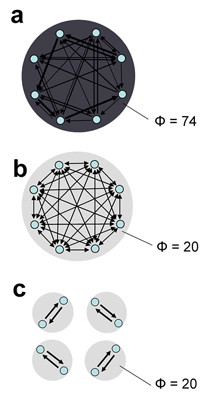
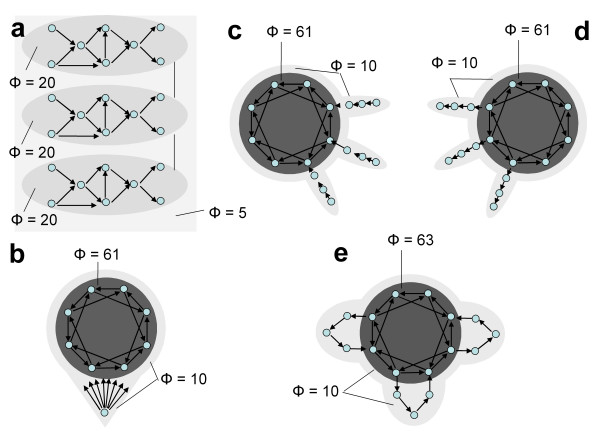
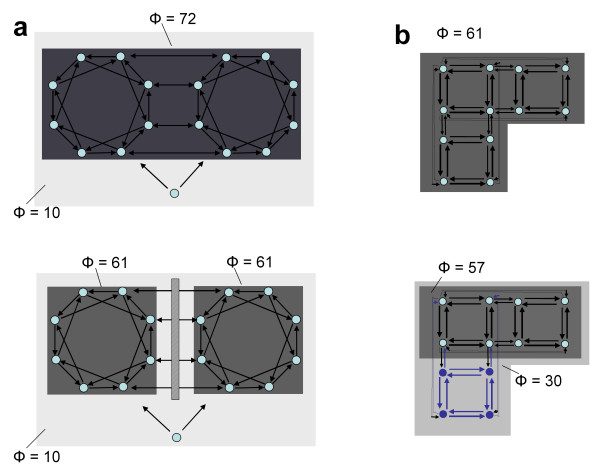
- Simulations illustrate the theory: optimized connection matrices with functional specialization and integration yield Φ = 74 bits; a strongly modular network yields Φ = 20 bits for each of three modules; joining supramodal, visual, and auditory subsets yields a main complex with Φ = 61 bits, which changes to 57 bits when the auditory subset is functionally disconnected.
- The theory accounts for why thalamocortical systems contribute to consciousness while cerebellum, reticular formation, sensory afferents, motor efferents, and cortico-subcortical loops may influence it without directly contributing; split-brain sectioning replaces one main complex with two smaller complexes.
- Time requirements: fully formed sensory experience takes up to 100–200 ms, a single conscious moment does not extend beyond 2–3 seconds, direct cortical stimulation may need up to 500 ms for conscious sensation, and modeled visual areas require at least 80 ms for constructive interactions.
Methods
- Theoretical hypothesis paper using phenomenological thought experiments (photodiode, camera, split-brain) and formal information-theoretic definitions: entropy, mutual information, effective information, Φ, complexes, and qualia space.
- No new human or animal empirical sample is reported; the paper draws on existing neurobiological observations and simplified computer models/simulations to illustrate predictions.
- Main analysis is conceptual derivation plus illustrative simulation results; no statistical inference or direct experimental measurement of Φ in brains is presented.
Limitations
- Stated: the framework’s validity rests on its ability to account coherently for phenomenological and brain facts; stringent tests require concurrent broad-region stimulation/recording and realistic large-scale anatomical models; better cortical neuroanatomy is needed; it is hard to say which cortical circuits are informationally insulated; measuring Φ accurately in infants, animals, coma/vegetative states, etc. will not be easy.
- Evident: no direct empirical measurement of Φ in human brains is presented; the simulations are simplified and illustrative; several predictions remain untested.
Model-written summary. Check it against the paper before relying on it.
Integrity signals
Registry
Cites
Statistics
Figures
Verification
Claims the paper makes
7 Valid · 4 Not valid · 35 Not checked · 140 Own results and interpretations
The sources with a verdict support this claim; the rest weren’t checked yet, have no full text we could read, or their verdicts aren’t rated yet.
In the paper
“Electrophysiological and imaging studies also indicate that neural activity that correlates with conscious experience is widely distributed over the cortex (e.g [20,26-29]).”
§ An information integration theory of consciousness > Testing the hypothesis > Consciousness, information integration, and the brain
What the sources say
- Not checked — no full text of the sourcecites [20] Rees G Kreiman G Koch C Neural correlates of consciousness in humans Nat Rev Neurosci 2002 3 261 270 11967556 10.1038/nrn783 source
- Supportedcites [26] Srinivasan R Russell DP Edelman GM Tononi G Increased synchronization of neuromagnetic responses during conscious perception J Neurosci 1999 19 5435 5448 10377353 PMC6782339 source
The Conclusion reports that changes associated with conscious perception are distributed across the brain, extending beyond visual areas to anterior regions, including frontal areas. The Discussion likewise describes changes involving distant occipital, parietal, temporal, and frontal sensor sites. This supports the citing sentence’s broad claim. (LLM, conf=0.90)
- Not checked — no full text of the sourcecites [27] McIntosh AR Rajah MN Lobaugh NJ Interactions of prefrontal cortex in relation to awareness in sensory learning Science 1999 284 1531 1533 10348741 10.1126/science.284.5419.1531 source
- Not checked — no full text of the sourcecites [28] Vuilleumier P Sagiv N Hazeltine E Poldrack RA Swick D Rafal RD Gabrieli JD Neural fate of seen and unseen faces in visuospatial neglect: a combined event-related functional MRI and event-related potential study Proc Natl Acad Sci U S A 2001 98 3495 3500 11248106 10.1073/pnas.051436898 PMC30681 source
- Not checked — no full text of the sourcecites [29] Cosmelli D David O Lachaux JP Martinerie J Garnero L Renault B Varela F Waves of consciousness: ongoing cortical patterns during binocular rivalry Neuroimage 2004 23 128 140 15325359 10.1016/j.neuroimage.2004.05.008 source
hedgedstates an association- Asserted: passes — The authors put it forward as true.
- Checkable: passes — It can be checked against evidence.
- Load-bearing: passes — The paper’s conclusions depend on it.
- Based: passes — The paper gives a reason why it holds.
The cited sources support only part of this claim — read each source’s verdict below.
In the paper
“the organization of the connections is such that individual patches of cerebellar cortex tend to be activated independently of one another, with little interaction possible between distant patches [41,42].”
§ An information integration theory of consciousness > Testing the hypothesis > Consciousness, information integration, and the brain
What the sources say
- Partly supportedcites [41] Cohen D Yarom Y Patches of synchronized activity in the cerebellar cortex evoked by mossy-fiber stimulation: questioning the role of parallel fibers Proc Natl Acad Sci U S A 1998 95 15032 15036 9844010 10.1073/pnas.95.25.15032 PMC24570 sourceExperimental — accuracy not yet measured
The Results report a localized patch of synchronized activity after white-matter stimulation, and the Discussion says this activity occurs simultaneously across the patch rather than propagating along parallel fibers. That supports localized activation, but the paper does not establish that separate patches activate independently or that little interaction is possible between distant patches. The indexed passages provide no page number. (LLM, conf=0.84)
- Not checked — no full text of the sourcecites [42] Bower JM The organization of cerebellar cortical circuitry revisited: implications for function Ann N Y Acad Sci 2002 978 135 155 12582048 source
plain- Asserted: passes — The authors put it forward as true.
- Checkable: passes — It can be checked against evidence.
- Load-bearing: passes — The paper’s conclusions depend on it.
- Based: passes — The paper gives a reason why it holds.
- Partly supported
Every source the paper cites for this claim was checked and supports it.
In the paper
“Further simulations show that it is possible to construct a large complex of high Φ by joining smaller complexes through reciprocal connections [8].”
§ An information integration theory of consciousness > Testing the hypothesis > Consciousness, information integration, and the brain
What the sources say
- Supportedcites [8] Tononi G Sporns O Measuring information integration BMC Neurosci 2003 4 31 14641936 10.1186/1471-2202-4-31 PMC331407 source
The Results section (‘Scaling and joining complexes’) reports that two smaller optimized networks joined by reciprocal connections formed a larger complex with substantially increased Φ. The Discussion (‘Information integration and basic neuroanatomy’) explicitly says high Φ can be achieved by joining smaller complexes through reciprocal connections. The demonstrated construction used two eight-element components; the paper does not establish that the method works at arbitrary scale. (LLM, conf=0.95)
hedgedstates a cause- Asserted: passes — The authors put it forward as true.
- Checkable: passes — It can be checked against evidence.
- Load-bearing: passes — The paper’s conclusions depend on it.
- Based: passes — The paper gives a reason why it holds.
- Rests on an assumption not shown here.
- Supported
The cited sources support only part of this claim — read each source’s verdict below.
In the paper
“For example, the ability of a system to integrate information grows as that system incorporates statistical regularities from its environment and learns [14].”
§ An information integration theory of consciousness > Implications of the hypothesis
What the sources say
- Partly supportedcites [14] Tononi G Sporns O Edelman GM A complexity measure for selective matching of signals by the brain Proceedings of the National Academy of Sciences of the United States of America 1996 93 3422 3427 8622951 10.1073/pnas.93.8.3422 PMC39624 sourceExperimental — accuracy not yet measured
The introduction (p. 1) says that neural connectivity tends to match environmental signals more closely through development and experience, and the Discussion (p. 5) links increased mutual information to greater functional integration. But the Results (p. 3) note that matching complexity and neural complexity can sometimes change independently, so the paper does not establish that integration necessarily grows whenever a system learns environmental regularities. (LLM, conf=0.82)
plainstates a cause- Asserted: passes — The authors put it forward as true.
- Checkable: passes — It can be checked against evidence.
- Load-bearing: unclear — It is unclear whether the paper’s conclusions depend on it.
- Based: passes — The paper gives a reason why it holds.
- Partly supported
Every source the paper cites for this claim was checked and supports it.
In the paper
“Phenomena such as the attentional blink, where a fixed sensory input may at times make it to consciousness and at times not, may also be due to changes in functional connectivity: access to the main thalamocortical complex may be enabled or not based on dynamics intrinsic to the complex [52].”
§ An information integration theory of consciousness > Testing the hypothesis > Consciousness, information integration, and the brain
What the sources say
- Supportedcites [52] Dehaene S Sergent C Changeux JP A neuronal network model linking subjective reports and objective physiological data during conscious perception Proc Natl Acad Sci U S A 2003 100 8520 8525 12829797 10.1073/pnas.1332574100 PMC166261 source
The Results report that, under the same simulated attentional-blink conditions, spontaneous fluctuations can determine whether activity reaches self-amplifying global access or remains transient and bottom-up. They also report reduced long-distance crosscorrelations when T2 is blinked. This supports the citing sentence’s hedged account of dynamically enabled access, with ‘functional connectivity’ referring to changing coordination rather than a change in the model’s fixed connections. (LLM, conf=0.88)
hedgedstates a possible cause- Asserted: passes — The authors put it forward as true.
- Checkable: passes — It can be checked against evidence.
- Load-bearing: unclear — It is unclear whether the paper’s conclusions depend on it.
- Based: passes — The paper gives a reason why it holds.
- Supported
121 more claims
Create a free account to see all 186 claims and every source verdict.
- It may state two separate claims as one. 41
- Probably not a substantial claim. 27
- The quote only partly states this claim. 1
Claims other papers make about this one
Each is checked against this paper’s own text: does it say what the citing paper says it does?
The source backs part of the claim, not all of it — or backs it for a different population, condition or comparison.
In the citing paper
“IIT takes an axiomatic approach, grounding itself in five essential properties of consciousness: existence, composition, information, integration, and exclusion (Tononi, 2004; Oizumi et al., 2014).”
From Can "consciousness" be observed from large language model (LLM) internal states? Dissecting LLM representations obtained from Theory of Mind test with Integrated Information Theory and Span Representation analysis (2025) · cites this paper as Tononi, 2004
Experimental — accuracy not yet measuredThe source backs part of the claim, not all of it — or backs it for a different population, condition or comparison.
In the citing paper
“Thus, the results confirm the prediction of IIT regarding the causal decomposability of LLMs [12] and ground it empirically via behaviorally interpretable metrics (e.g., perplexity [15]).”
From Why large language models cannot possess consciousness: an integrated information theory perspective (2025) · cites this paper as [12]
Experimental — accuracy not yet measuredThe source backs part of the claim, not all of it — or backs it for a different population, condition or comparison.
In the citing paper
“The principal theoretical justification for IIT is the conjecture that, in perception, what is absent may be more significant to consciousness than what is present [2,3].”
From The Problem with Phi: A Critique of Integrated Information Theory (2015) · cites this paper as [2]
Experimental — accuracy not yet measuredThe source backs part of the claim, not all of it — or backs it for a different population, condition or comparison.
In the citing paper
“It was the first (and arguably may still be the lone) theory that makes precise quantitative predictions about both the contents and level of consciousness (Tononi 2004).”
From Falsification and consciousness (2021) · cites this paper as Tononi 2004
Experimental — accuracy not yet measuredThe cited source says what the claim attributes to it.
In the citing paper
“from which it is derived that consciousness corresponds to integrated information.”
From Hard criteria for empirical theories of consciousness (2021) · cites this paper as Tononi, 2004
13 more claims about this paper
Create a free account to see every claim other papers make about this one.
Self-check
Percentages, sums and reported differences re-computed from the paper’s own numbers.
Each contradiction between two passages listed here was confirmed by an independent check.
Rated minor: it would not touch a result — a value no result rests on, a p-value that stays on the same side of the significance level, or a conflict that is clerical, resolved elsewhere in the paper, or outside its own findings.
In the paper
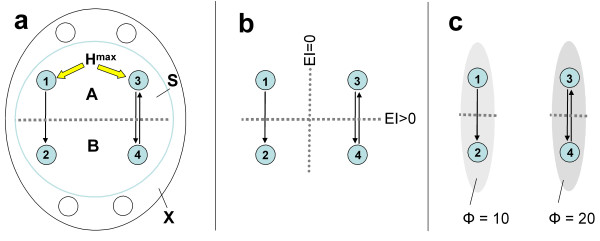
§ An information integration theory of consciousness > Presentation of the hypothesis > The first problem: What determines to what extent a system has conscious experience?
“In summary, to measure EI(B→A), one needs to apply maximum entropy to the outputs from B, and determine the entropy of the responses of B that are induced by inputs from A.”
§ An information integration theory of consciousness > Presentation of the hypothesis > The first problem: What determines to what extent a system has conscious experience?
“One way is to divide S into two complementary parts A and B, and evaluate the responses of B that can be caused by all possible inputs originating from A.”
Citations
Cites
A Mathematical Theory of Communication
Shannon, C. E. (1948) · Bell System Technical Journal · doi:10.1002/j.1538-7305.1948.tb01338.x · Cited by 88,486
The Mathematical Theory of Communication
Shannon, C. E., Weaver, W., & Wiener, N. (1950) · Physics Today · doi:10.1063/1.3067010 · Cited by 9,801
The feeling of what happens: body and emotion in the making of consciousness
(2000) · Choice Reviews Online · doi:10.5860/choice.37-6553 · Cited by 5,998
Brain stem reticular formation and activation of the EEG
Moruzzi, G., & Magoun, H. W. (1949) · Electroencephalography and Clinical Neurophysiology · doi:10.1016/0013-4694(49)90219-9 · Cited by 4,307 · cited 1×
“Conversely, stimulating the reticular formation can arouse a comatose animal and activate the thalamocortical system, making it ready to respond to stimuli [43].”
Background(1988) · Cited by 3,656
Dynamic predictions: Oscillations and synchrony in top–down processing
Engel, A. K., Fries, P., & Singer, W. (2001) · Nature Reviews Neuroscience · doi:10.1038/35094565 · Cited by 3,454 · cited 1×
“On the integration side, the specialized elements of the thalamocortical system are linked by an extended network of intra- and inter-areal connections that permit rapid and effective interactions within and between areas [31-35].”
BackgroundAlexander, G. E., Crutcher, M. D., & DeLong, M. R. (1990) · PubMed · Cited by 2,731
Towards a cognitive neuroscience of consciousness: basic evidence and a workspace framework
Dehaene, S. (2001) · Cognition · doi:10.1016/s0010-0277(00)00123-2 · Cited by 2,498 · cited 1×
“Opinions differ, however, about the contribution of certain cortical areas [1,16-21].”
BackgroundMathematical Theory of Communication
(2009) · Encyclopedia of Communication Theory · doi:10.4135/9781412959384.n229 · Cited by 2,492
The distinct modes of vision offered by feedforward and recurrent processing
Lamme, V. A. F., & Roelfsema, P. R. (2000) · Trends in Neurosciences · doi:10.1016/s0166-2236(00)01657-x · Cited by 2,338 · cited 1×
“Thus, the firing of the same cortical neurons may correlate with consciousness at certain times, but not at other times [57].”
Background
Research works printed but not linked: 2
- Zeki S A vision of the brain 1993 Oxford; Boston: Blackwell Scientific Publications
- Tononi G Galileo e il fotodiodo 2003 Bari: Laterza
Cited by
Alpha-band oscillations, attention, and controlled access to stored information
Klimesch, W. (2012) · Trends in Cognitive Sciences · doi:10.1016/j.tics.2012.10.007 · Cited by 3,310
Nichols, D. E. (2016) · Pharmacological Reviews · doi:10.1124/pr.115.011478 · Cited by 1,762
“This view is consistent with the information integration theory of consciousness (Tononi, 2004), which proposes that the thalamus and thalamocortical system play a key role in integrating information and ensuing consciousness.”
ResultIntegrated information theory: from consciousness to its physical substrate
Tononi, G., Boly, M., Massimini, M., & Koch, C. (2016) · Nature Reviews Neuroscience · doi:10.1038/nrn.2016.44 · Cited by 1,727
Self-citationConsciousness as integrated information: a provisional manifesto
Tononi, G. (2008) · The Biological Bulletin · doi:10.2307/25470707 · Cited by 1,529
“This state of affairs is not unlike the one faced by biologists when, knowing a great deal about similarities and differences between species, fossil remains, and breeding practices, they still lacked a theory of how evolution might occur.”
BackgroundMethodResultInfluentialSelf-citationA theoretically based index of consciousness independent of sensory processing and behavior
Casali, A. G., Gosseries, O., Rosanova, M., Boly, M., Sarasso, S., Casali, K. R., Casarotto, S., Bruno, M.-A., Laureys, S., Tononi, G., et al. (2013) · Science Translational Medicine · doi:10.1126/scitranslmed.3006294 · Cited by 1,246
“This complexity should be high when consciousness is present and low whenever consciousness is lost in sleep, anesthesia, or coma (10, 12, 13).”
BackgroundMethodSelf-citationAlkire, M. T., Hudetz, A. G., & Tononi, G. (2008) · Science · doi:10.1126/science.1149213 · Cited by 1,245
Self-citationConscious Processing and the Global Neuronal Workspace Hypothesis
Mashour, G. A., Roelfsema, P., Changeux, J.-P., & Dehaene, S. (2020) · Neuron · doi:10.1016/j.neuron.2020.01.026 · Cited by 1,164
“The theory further attempted to address two key properties of consciousness: integration (the unity of a conscious experience) and differentiation (the large number of states available) (Oizumi et al., 2014; Tononi, 2004; Tononi et al., 2016).”
BackgroundTowards a true neural stance on consciousness
Lamme, V. A. F. (2006) · Trends in Cognitive Sciences · doi:10.1016/j.tics.2006.09.001 · Cited by 1,149
From the phenomenology to the mechanisms of consciousness: integrated information theory 3.0
Oizumi, M., Albantakis, L., & Tononi, G. (2014) · PLoS Computational Biology · doi:10.1371/journal.pcbi.1003588 · Cited by 1,128
“By contrast, a prominent feature of the cerebral cortex, which instead can generate consciousness, is that it is comprised of elements that are functionally specialized and at the same time can interact rapidly and effectively [4,37,38].”
BackgroundInfluentialSelf-citationHameroff, S., & Penrose, R. (2014) · Physics of Life Reviews · doi:10.1016/j.plrev.2013.08.002 · Cited by 983
Consciousness without a cerebral cortex: A challenge for neuroscience and medicine
Merker, B. (2007) · Behavioral and Brain Sciences · doi:10.1017/s0140525x07000891 · Cited by 868
“Furthermore, evidence from functional studies suggests other possible modulating roles: for instance, Trageser et al. (2006) reported ZI’s involvement in gating ascending sensory inputs according to the animal’s current state of arousal.”
BackgroundInfluentialA materialist theory of the mind
(2017) · Advances in Consciousness Research · doi:10.1075/aicr.95.c1 · Cited by 820
Consciousness: here, there and everywhere?
Tononi, G., & Koch, C. (2015) · Philosophical Transactions of the Royal Society B: Biological Sciences · doi:10.1098/rstb.2014.0167 · Cited by 811
Self-citationClinical pharmacokinetics and pharmacodynamics of propofol
Sahinovic, M. M., Struys, M. M. R. F., & Absalom, A. R. (2018) · Clinical Pharmacokinetics · doi:10.1007/s40262-018-0672-3 · Cited by 809
Criticality in Large-Scale Brain fMRI Dynamics Unveiled by a Novel Point Process Analysis
Tagliazucchi, E., Balenzuela, P., Fraiman, D., & Chialvo, D. R. (2012) · Frontiers in Physiology · doi:10.3389/fphys.2012.00015 · Cited by 735
“If our hypothesis is true, we can predict, together with integration/segregation theories of consciousness (Tononi et al., 1994; Tononi, 2004), that a displacement of the optimal point should be observed for brain states of diminished conscious content such as deep sleep, anesthesia, or coma (Lee et al.”
BackgroundBrain Dynamics Underlying the Nonlinear Threshold for Access to Consciousness
Del Cul, A., Baillet, S., & Dehaene, S. (2007) · PLoS Biology · doi:10.1371/journal.pbio.0050260 · Cited by 753
“areas [15–28,66].”
Ziemann, U., Reis, J., Schwenkreis, P., Rosanova, M., Strafella, A., Badawy, R., & Müller-Dahlhaus, F. (2015) · Clinical Neurophysiology · doi:10.1016/j.clinph.2014.08.028 · Cited by 681
“Theoretical neuroscience suggests that consciousness requires the coexistence of integration and information in thalamo-cortical networks, otherwise defined as brain complexity (Seth et al., 2006; Sporns, 2011; Tononi, 2004; Tononi and Edelman, 1998).”
BackgroundConsumer and Object Experience in the Internet of Things: An Assemblage Theory Approach
Hoffman, D. L., & Novak, T. P. (2018) · Journal of Consumer Research · doi:10.1093/jcr/ucx105 · Cited by 668
“Conscious experience itself can be graded (Tononi and Koch 2015) and emerges from the capacity of the interacting components of a system to integrate information with the consciousness of a system, living or nonliving (Tononi 2004, 2008).”
BackgroundInfluentialTagliazucchi, E., & Laufs, H. (2014) · Neuron · doi:10.1016/j.neuron.2014.03.020 · Cited by 644
The Neural Correlates of Consciousness: An Update
Tononi, G., & Koch, C. (2008) · Annals of the New York Academy of Sciences · doi:10.1196/annals.1440.004 · Cited by 627
“Fax: +1-626-796-8876. koch@klab.caltech.edu consciousness is, how it can be generated by a physical system, and how it can be measured and then to test the predictions of the theory against data from neuroscience (Tononi 2004b).”
BackgroundResultInfluentialSelf-citationBreakdown in cortical effective connectivity during midazolam-induced loss of consciousness
Ferrarelli, F., Massimini, M., Sarasso, S., Casali, A., Riedner, B. A., Angelini, G., Tononi, G., & Pearce, R. A. (2010) · Proceedings of the National Academy of Sciences · doi:10.1073/pnas.0913008107 · Cited by 554
“Based on thefinding that EF∼100V/m corresponded to theRMT, as reported by another recent study (1), an intensity of 120 V/m was chosen to compare the TMS-evoked brain responses during wakefulness and anesthesia.”
BackgroundMethodResultInfluentialSelf-citationNo-Report Paradigms: Extracting the True Neural Correlates of Consciousness
Tsuchiya, N., Wilke, M., Frässle, S., & Lamme, V. A. F. (2015) · Trends in Cognitive Sciences · doi:10.1016/j.tics.2015.10.002 · Cited by 551
Stratification of unresponsive patients by an independently validated index of brain complexity
Casarotto, S., Comanducci, A., Rosanova, M., Sarasso, S., Fecchio, M., Napolitani, M., Pigorini, A., G. Casali, A., Trimarchi, P. D., Boly, M., et al. (2016) · Annals of Neurology · doi:10.1002/ana.24779 · Cited by 487
Self-citationResting-state brain networks: literature review and clinical applications
Rosazza, C., & Minati, L. (2011) · Neurological Sciences · doi:10.1007/s10072-011-0636-y · Cited by 514
“tivity in the vegetative state patient suggests that the integrity of a thalamo-cortical network might be essential for the emergence of consciousness [85, 104].”
BackgroundTriggering sleep slow waves by transcranial magnetic stimulation
Massimini, M., Ferrarelli, F., Esser, S. K., Riedner, B. A., Huber, R., Murphy, M., Peterson, M. J., & Tononi, G. (2007) · Proceedings of the National Academy of Sciences · doi:10.1073/pnas.0702495104 · Cited by 489
Self-citationHow neuroscience will change our view on consciousness
Lamme, V. A. F. (2010) · Cognitive Neuroscience · doi:10.1080/17588921003731586 · Cited by 487
“…the neural correlate of consciousness—and finding out which are the essential qualities of these correlates that matter for phenomenality, which is almost as difficult as finding the neural correlate of consciousness but is a much more theoretical exercise (Seth et al., 2006; Tononi, 2004, 2008).”
InfluentialUnresponsiveness ≠ unconsciousness
Sanders, R. D., Tononi, G., Laureys, S., Sleigh, J. W., & Warner, D. S. (2012) · Anesthesiology · doi:10.1097/aln.0b013e318249d0a7 · Cited by 474
“From these premises, the theory says that the level of consciousness of a physical system is related to the repertoire of different states (information) that can be distinguished by the system as a whole (integration).(2,49) Thus, the corticothalamic system generates conFig.”
Self-citationMeasuring consciousness: relating behavioural and neurophysiological approaches
Seth, A. K., Dienes, Z., Cleeremans, A., Overgaard, M., & Pessoa, L. (2008) · Trends in Cognitive Sciences · doi:10.1016/j.tics.2008.04.008 · Cited by 458
“Complexity, information integration and causal density Several recent measures build on the observation that conscious scenes are distinguished by being simultaneously integrated (each conscious scene is experienced ‘all of a piece’) and differentiated (each conscious scene is composed of many distinguishable componen…”
InfluentialRecovery of cortical effective connectivity and recovery of consciousness in vegetative patients
Rosanova, M., Gosseries, O., Casarotto, S., Boly, M., Casali, A. G., Bruno, M.-A., Mariotti, M., Boveroux, P., Tononi, G., Laureys, S., et al. (2012) · Brain · doi:10.1093/brain/awr340 · Cited by 457
“Theoretical consider- ations (Tononi, 2004; Laureys, 2005; Dehaene et al., 2006; Tononi and Koch, 2008; Seth et al., 2008) as well as experimental data (Del Cul et al., 2007; Alkire et al., 2008) suggest that a basic requirement for consciousness is that multiple, specialized areas of the…”
InfluentialSelf-citationWhat insects can tell us about the origins of consciousness.
Barron, A. B., & Klein, C. (2016) · Proceedings of the National Academy of Sciences · doi:10.1073/pnas.1520084113 · Cited by 446
Converging Intracranial Markers of Conscious Access
Gaillard, R., Dehaene, S., Adam, C., Clémenceau, S., Hasboun, D., Baulac, M., Cohen, L., & Naccache, L. (2009) · PLoS Biology · doi:10.1371/journal.pbio.1000061 · Cited by 440
“specific localization of the underlying cerebral network [21]?”
BackgroundA Cortical Core for Dynamic Integration of Functional Networks in the Resting Human Brain
de Pasquale, F., Della Penna, S., Snyder, A. Z., Marzetti, L., Pizzella, V., Romani, G. L., & Corbetta, M. (2012) · Neuron · doi:10.1016/j.neuron.2012.03.031 · Cited by 420
“However, effective behavior depends on the dynamic integration of sensory, motor, and cognitive functions at multiple spatial and temporal scales (Tononi, 2004).”
Integrated information in discrete dynamical systems: motivation and theoretical framework
Balduzzi, D., & Tononi, G. (2008) · PLoS Computational Biology · doi:10.1371/journal.pcbi.1000091 · Cited by 419
“We determine the a posteriori repertoire by forcibly intervening in the system and imposing each state in the a priori repertoire, thus we implement a perturbational approach (Pearl 2000; Tononi 2001; Tononi and Sporns 2003; Tononi 2004); see also (Ay and Krakauer 2007; Ay and Polani 2008) which apply perturbations to…”
MethodSelf-citationToward a computational theory of conscious processing
Dehaene, S., Charles, L., King, J.-R., & Marti, S. (2014) · Current Opinion in Neurobiology · doi:10.1016/j.conb.2013.12.005 · Cited by 404
“According to Information Integration Theory (IIT) [53,54], global synchrony and re-entry may be needed, not just to globally share or broadcast a conscious stimulus, but, more essentially, to create an integrated representation of its various features.”
InfluentialBoly, M., Phillips, C., Tshibanda, L., Vanhaudenhuyse, A., Schabus, M., Dang‐Vu, T. T., Moonen, G., Hustinx, R., Maquet, P., & Laureys, S. (2008) · Annals of the New York Academy of Sciences · doi:10.1196/annals.1417.015 · Cited by 390
Early detection of consciousness in patients with acute severe traumatic brain injury
Edlow, B. L., Chatelle, C., Spencer, C. A., Chu, C. J., Bodien, Y. G., O’Connor, K. L., Hirschberg, R. E., Hochberg, L. R., Giacino, J. T., Rosenthal, E. S., et al. (2017) · Brain · doi:10.1093/brain/awx176 · Cited by 376
“, 2006) and the information integration theory (Tononi, 2004), propose that consciousness requires the integrated activity of association cortices.”
BackgroundIntegrated information theory of consciousness: an updated account.
(2012) · PubMed · doi:10.4449/aib.v149i5.1388 · Cited by 370
Self-citationGrandjean, J., Schroeter, A., Batata, I., & Rudin, M. (2014) · NeuroImage · doi:10.1016/j.neuroimage.2014.08.043 · Cited by 339
“…in humans have suggested severalmechanisms potentially leading to the loss of consciousness such as the loss of information content within the signal either in the form of temporal information, reflected in the entropy measures, or of the spatial integration (Schrouff et al., 2011; Tononi, 2004).”
BackgroundZamora-López (2010) · Frontiers in Neuroinformatics · doi:10.3389/neuro.11.001.2010 · Cited by 330
Boly, M., Tshibanda, L., Vanhaudenhuyse, A., Noirhomme, Q., Schnakers, C., Ledoux, D., Boveroux, P., Garweg, C., Lambermont, B., Phillips, C., et al. (2009) · Human Brain Mapping · doi:10.1002/hbm.20672 · Cited by 323
“Finally, the observed absence of cortico-thalamic functional connectivity in our VS patient stresses the importance of corticothalamo-cortical interaction in the emergence of consciousness (Dehaene and Changeux, 2005; Laureys et al., 2000b; Tononi, 2004; White and Alkire, 2003).”
BackgroundSchartner, M., Seth, A., Noirhomme, Q., Boly, M., Bruno, M.-A., Laureys, S., & Barrett, A. (2015) · PLOS ONE · doi:10.1371/journal.pone.0133532 · Cited by 287
Theories and measures of consciousness: An extended framework
Seth, A. K., Izhikevich, E., Reeke, G. N., & Edelman, G. M. (2006) · Proceedings of the National Academy of Sciences · doi:10.1073/pnas.0604347103 · Cited by 321
The amplitude of the resting-state fMRI global signal is related to EEG vigilance measures
Wong, C. W., Olafsson, V., Tal, O., & Liu, T. T. (2013) · NeuroImage · doi:10.1016/j.neuroimage.2013.07.057 · Cited by 318
“A possible explanation for the global decreases in connectivity with increases in vigilance is based on the information integration theory of consciousness (Stamatakis et al., 2010; Tononi, 2004).”
BackgroundAlbantakis, L., Barbosa, L., Findlay, G., Grasso, M., Haun, A. M., Marshall, W., Mayner, W. G. P., Zaeemzadeh, A., Boly, M., Juel, B. E., et al. (2023) · PLoS Computational Biology · doi:10.1371/journal.pcbi.1011465 · Cited by 292
Self-citationThe Information Integration Theory of Consciousness
Tononi, G. (2007) · The Blackwell Companion to Consciousness · doi:10.1002/9780470751466.ch23 · Cited by 283
Self-citationDynamic BOLD functional connectivity in humans and its electrophysiological correlates
Tagliazucchi, E., von Wegner, F., Morzelewski, A., Brodbeck, V., & Laufs, H. (2012) · Frontiers in Human Neuroscience · doi:10.3389/fnhum.2012.00339 · Cited by 284
“Slower frequencies, such as delta (<4 Hz), arise during sleep and are hypothesized to reflect diminished temporal complexity underlying loss of conscious awareness (Tononi et al., 1994; Tononi, 2004, 2008).”
BackgroundPhenomenology, Structure, and Dynamic of Psychedelic States
Preller, K. H., & Vollenweider, F. X. (2016) · Current Topics in Behavioral Neurosciences · doi:10.1007/7854_2016_459 · Cited by 282
“A lot of studies developed concepts of the biological underpinnings of ASC in order to explain the symptoms experienced after the intake of hallucinogens and the nature of human consciousness in general (Fischer 1971; Geyer and Vollenweider 2008; Tononi 2004; Vollenweider and Geyer 2001).”
BackgroundResultRoseman, L., Leech, R., Feilding, A., Nutt, D. J., & Carhart-Harris, R. L. (2014) · Frontiers in Human Neuroscience · doi:10.3389/fnhum.2014.00204 · Cited by 272
“Indeed, consciousness has been defined as that which is lost during dreamless sleep (Tononi, 2004) but consciousness can also be studied in terms of changes in the mode or style of waking consciousness, such as is seen in the psychedelic state.”
BackgroundInfluentialGeneral Anesthesia and Human Brain Connectivity
Hudetz, A. G. (2012) · Brain Connectivity · doi:10.1089/brain.2012.0107 · Cited by 271
“When both agents were titrated to similar sedative-hypnotic end-points, propofol (1.2 and 2.7 l g/mL) decreased rCBF in the anterior brain regions, whereas thiopental (4.8 and 10.6 l g/ mL) decreased rCBF primarily in the cerebellar and posterior brain regions (Veselis et al., 1997, 2004).”
InfluentialDevelopment of a large-scale functional brain network during human non-rapid eye movement sleep
Spoormaker, V. I., Schröter, M. S., Gleiser, P. M., Andrade, K. C., Dresler, M., Wehrle, R., Sämann, P. G., & Czisch, M. (2010) · The Journal of Neuroscience · doi:10.1523/jneurosci.2015-10.2010 · Cited by 273
“According to an information integration account of consciousness (Tononi, 2004), not the connectivity of the system per se but its capacity to integrate information across modules is critical in understanding why consciousness fades in early sleep (Tononi and Massimini, 2008).”
BackgroundResultQualia: The Geometry of Integrated Information
Balduzzi, D., & Tononi, G. (2009) · PLoS Computational Biology · doi:10.1371/journal.pcbi.1000462 · Cited by 269
“A measure of integrated information, called phi (W), can be used to quantify the information generated when a system is in a particular state of its repertoire, above and beyond the information generated independently by its parts [1].”
BackgroundInfluentialSelf-citationThe “correlates” in neural correlates of consciousness
de Graaf, T. A., Hsieh, P.-J., & Sack, A. T. (2012) · Neuroscience & Biobehavioral Reviews · doi:10.1016/j.neubiorev.2011.05.012 · Cited by 268
Large-Scale Gamma-Band Phase Synchronization and Selective Attention
Doesburg, S. M., Roggeveen, A. B., Kitajo, K., & Ward, L. M. (2008) · Cerebral Cortex · doi:10.1093/cercor/bhm073 · Cited by 261
“The selection and integration of information into a large-scale complex that extends across brain areas has been posited to be consciousness (Tononi 2004).”
BackgroundTuning pathological brain oscillations with neurofeedback: a systems neuroscience framework
Ros, T., J. Baars, B., Lanius, R. A., & Vuilleumier, P. (2014) · Frontiers in Human Neuroscience · doi:10.3389/fnhum.2014.01008 · Cited by 258
“receiver-operating characteristic), mutual information (a measure of neural transmission volume), Tononi’s phi (Tononi, 2004), and the like.”
Consciousness-specific dynamic interactions of brain integration and functional diversity
Luppi, A. I., Craig, M. M., Pappas, I., Finoia, P., Williams, G. B., Allanson, J., Pickard, J. D., Owen, A. M., Naci, L., Menon, D. K., et al. (2019) · Nature Communications · doi:10.1038/s41467-019-12658-9 · Cited by 251
Anosognosia, autobiographical memory and self knowledge in Alzheimer's disease
Morris, R. G., & Mograbi, D. C. (2013) · Cortex · doi:10.1016/j.cortex.2012.09.006 · Cited by 249
The neural subjective frame: from bodily signals to perceptual consciousness
Park, H.-D., & Tallon-Baudry, C. (2014) · Philosophical Transactions of the Royal Society B: Biological Sciences · doi:10.1098/rstb.2013.0208 · Cited by 246
“This advice was indeed followed: theories of perceptual consciousness concentrate on the cascade of events triggered by stimulus processing, be it availability in a global frontoparietal workspace [3,22], integration/segregation [23] or recurrent processing [24].”
BackgroundSpectral Signatures of Reorganised Brain Networks in Disorders of Consciousness
Chennu, S., Finoia, P., Kamau, E., Allanson, J., Williams, G. B., Monti, M. M., Noreika, V., Arnatkeviciute, A., Canales-Johnson, A., Olivares, F., et al. (2014) · PLoS Computational Biology · doi:10.1371/journal.pcbi.1003887 · Cited by 243
“processing in the brain [1–4].”
Insects have the capacity for subjective experience
Klein, C., & Barron, A. B. (2016) · Animal Sentience · doi:10.51291/2377-7478.1113 · Cited by 243
“For example, authors have postulated subjective experience in plants (Pelizzon & Gagliano, 2015), in any reasonably complex system (see Tononi, 2004), or even that it is a fundamental feature of the universe akin to spin and electric charge (Strawson, 2006).”
BackgroundConsciousness and Attention: On Sufficiency and Necessity
van Boxtel, J. J. A., Tsuchiya, N., & Koch, C. (2010) · Frontiers in Psychology · doi:10.3389/fpsyg.2010.00217 · Cited by 236
“This integrative aspect is emphasized by the Integrated Information Theory of consciousness (Tononi, 2004, 2008).”
BackgroundThe contribution of TMS–EEG coregistration in the exploration of the human cortical connectome
Bortoletto, M., Veniero, D., Thut, G., & Miniussi, C. (2015) · Neuroscience & Biobehavioral Reviews · doi:10.1016/j.neubiorev.2014.12.014 · Cited by 227
Responses of pulvinar neurons reflect a subject's confidence in visual categorization
Komura, Y., Nikkuni, A., Hirashima, N., Uetake, T., & Miyamoto, A. (2013) · Nature Neuroscience · doi:10.1038/nn.3393 · Cited by 226
Practical Measures of Integrated Information for Time-Series Data
Barrett, A. B., & Seth, A. K. (2011) · PLoS Computational Biology · doi:10.1371/journal.pcbi.1001052 · Cited by 225
“In this paper, we critically evaluate ‘integrated information’ (W) [10,11], a candidate measure that has received significant recent attention, especially in the domain of consciousness science [12,13,14,15].”
BackgroundConsumer and Object Experience in the Internet of Things: An Assemblage Theory Approach
Hoffman, D. L., & Novak, T. P. (2016) · SSRN Electronic Journal · doi:10.2139/ssrn.2840975 · Cited by 221
Casarotto, S., Romero Lauro, L. J., Bellina, V., Casali, A. G., Rosanova, M., Pigorini, A., Defendi, S., Mariotti, M., & Massimini, M. (2010) · PLoS ONE · doi:10.1371/journal.pone.0010281 · Cited by 222
“Meanwhile, it would be interesting to test whether the DI resulting from two different perturbations decreases in physiological (sleep, anesthesia) and pathological (coma, epilepsy) conditions, where the capacity for integration and differentiation in thalamocortical circuits is thought to be altered [35,37,44,45].”
BackgroundThe algorithmic origins of lifePreprint
Walker, S. I., & Davies, P. C. W. (2013) · Cited by 209
Returning from oblivion: imaging the neural core of consciousness
Långsjö, J. W., Alkire, M. T., Kaskinoro, K., Hayama, H., Maksimow, A., Kaisti, K. K., Aalto, S., Aantaa, R., Jääskeläinen, S. K., Revonsuo, A., et al. (2012) · The Journal of Neuroscience · doi:10.1523/jneurosci.4962-11.2012 · Cited by 205
“…(Schiff and Plum, 2000; Lydic and Baghdoyan, 2005) and the contents of consciousness (Baars et al., 2003) likely arises from the interactions between cortical and subcortical mechanisms working through specific network connectivity within the brain (Baars, 1995; Tononi, 2004; Xie et al., 2011).”
BackgroundComanducci, A., Boly, M., Claassen, J., De Lucia, M., Gibson, R. M., Juan, E., Laureys, S., Naccache, L., Owen, A. M., Rosanova, M., et al. (2020) · Clinical Neurophysiology · doi:10.1016/j.clinph.2020.07.015 · Cited by 208
“According to this proposal, a signature of consciousness is when the brain responds to TMS with complex, rapidly changing activity patterns (functional differentiation) that affect a distributed set of cortical areas (functional integration) (Tononi and Edelman, 1998; Tononi, 2004).”
Cortical reactivity and effective connectivity during REM sleep in humans
Massimini, M., Ferrarelli, F., Murphy, M. J., Huber, R., Riedner, B. A., Casarotto, S., & Tononi, G. (2010) · Cognitive Neuroscience · doi:10.1080/17588921003731578 · Cited by 202
“According to a recent proposal (Tononi, 2004 , 2008 ), consciousness depends critically not so much on firing rates, synchronization at specific frequency bands, or sensory input per se , but rather on the brain's ability to integrate information, which is contingent on the effective connectivity among functionally sp…”
BackgroundSelf-citationHard criteria for empirical theories of consciousness
Doerig, A., Schurger, A., & Herzog, M. H. (2021) · Cognitive Neuroscience · doi:10.1080/17588928.2020.1772214 · Cited by 194
“IIT was first proposed by Tononi (2004).”
BackgroundInfluentialThe rise of machine consciousness: Studying consciousness with computational models
Reggia, J. A. (2013) · Neural Networks · doi:10.1016/j.neunet.2013.03.011 · Cited by 199
“…of the extent to which a system has conscious experience, and it accounts for some important properties of consciousness: the availability of a very large number of conscious experiences, the unity of each experience, and several neurobiological observations concerning consciousness (Tononi, 2004).”
BackgroundMethodInfluentialMeasuring Integrated Information from the Decoding Perspective
Oizumi, M., Amari, S.-I., Yanagawa, T., Fujii, N., & Tsuchiya, N. (2016) · PLOS Computational Biology · doi:10.1371/journal.pcbi.1004654 · Cited by 184
“Although its neurobiological basis remains unclear, consciousness may be related to certain aspects of information processing [1, 2].”
BackgroundThe algorithmic origins of life
Walker, S. I., & Davies, P. C. W. (2013) · Journal of The Royal Society Interface · doi:10.1098/rsif.2012.0869 · Cited by 196
“A possible refinement is provided by Tononi’s measure of so-called integrated information φ, based on network topology [79].”
MethodA perturbational approach for evaluating the brain’s capacity for consciousness
Massimini, M., Boly, M., Casali, A., Rosanova, M., & Tononi, G. (2009) · Progress in Brain Research · doi:10.1016/s0079-6123(09)17714-2 · Cited by 184
“when a system discriminates one particular state of its repertoire, above and beyond the informa tion generated independently by its parts (Balduzzi and Tononi, 2008; Tononi, 2004).”
BackgroundSelf-citationLamme, V. A. F. (2018) · Philosophical Transactions of the Royal Society B: Biological Sciences · doi:10.1098/rstb.2017.0344 · Cited by 194
Changes in Resting Neural Connectivity during Propofol Sedation
Stamatakis, E. A., Adapa, R. M., Absalom, A. R., & Menon, D. K. (2010) · PLoS ONE · doi:10.1371/journal.pone.0014224 · Cited by 188
“Given this concordance between propofol levels and fMRI findings, what might be the relationship between consciousness and the connectivity changes that we observe? Interpreted in the context of the information integration theory, which stipulates that consciousness increases in proportion to a system’s repertoire of…”
BackgroundUnifying Theories of Psychedelic Drug Effects
Swanson, L. R. (2018) · Frontiers in Pharmacology · doi:10.3389/fphar.2018.00172 · Cited by 181
“Integrated Information Theory Integrated Information Theory (IIT) is a general theoretical framework which describes the relationship between consciousness and its physical substrates (Oizumi et al., 2014; Tononi, 2004, 2008).”
BackgroundSentience and the Origins of Consciousness: From Cartesian Duality to Markovian Monism
Friston, K. J., Wiese, W., & Hobson, J. A. (2020) · Entropy · doi:10.3390/e22050516 · Cited by 186
Doesburg, S. M., Green, J. J., McDonald, J. J., & Ward, L. M. (2009) · PLoS ONE · doi:10.1371/journal.pone.0006142 · Cited by 182
“We interpret this as reflecting the selective integration of information represented in relevant cortical regions into a largescale assembly that constitutes a global workspace for consciousness [1,3].”
BackgroundLee, U., Kim, S., Noh, G.-J., Choi, B.-M., Hwang, E., & Mashour, G. A. (2009) · Consciousness and Cognition · doi:10.1016/j.concog.2009.04.004 · Cited by 183
Minimally conscious state or cortically mediated state?
Naccache, L. (2018) · Brain · doi:10.1093/brain/awx324 · Cited by 181
“, 2013) inspired by the Integrated Information theory (Tononi, 2004).”
BackgroundA higher order Bayesian decision theory of consciousness
Lau, H. C. (2007) · Progress in Brain Research · doi:10.1016/s0079-6123(07)68004-2 · Cited by 172
Thagard, P., & Aubie, B. (2008) · Consciousness and Cognition · doi:10.1016/j.concog.2007.05.014 · Cited by 179
LSD alters dynamic integration and segregation in the human brain
Luppi, A. I., Carhart-Harris, R. L., Roseman, L., Pappas, I., Menon, D. K., & Stamatakis, E. A. (2021) · NeuroImage · doi:10.1016/j.neuroimage.2020.117653 · Cited by 171
Yourganov, G., Fridriksson, J., Rorden, C., Gleichgerrcht, E., & Bonilha, L. (2016) · The Journal of Neuroscience · doi:10.1523/jneurosci.4396-15.2016 · Cited by 174
“This hierarchical organization allows for integration of information across specialized brain regions, providing the neuronal basis for supporting a wide repertoire of flexible and complex cognitive behaviors (Tononi, 2004; Bressler and Menon, 2010; Park and Friston, 2013).”
BackgroundConsciousness, information integration, and the brain
Tononi, G. (2005) · Progress in Brain Research · doi:10.1016/s0079-6123(05)50009-8 · Cited by 173
“The first problem is best considered by examining some well-established facts about the relationship between consciousness and the brain (the second problem is discussed in Tononi, 2004b).”
BackgroundMethodInfluentialSelf-citationWu, X., Zou, Q., Hu, J., Tang, W., Mao, Y., Gao, L., Zhu, J., Jin, Y., Wu, X., Lu, L., et al. (2015) · The Journal of Neuroscience · doi:10.1523/jneurosci.0415-15.2015 · Cited by 170
“A theoretical framework based on information theory suggests that consciousness corresponds to the ability of the brain to integrate information (Tononi, 2004; Tononi and Koch, 2008).”
BackgroundTasserie, J., Uhrig, L., Sitt, J. D., Manasova, D., Dupont, M., Dehaene, S., & Jarraya, B. (2022) · Science Advances · doi:10.1126/sciadv.abl5547 · Cited by 171
Consciousness and complexity: a consilience of evidence
Sarasso, S., Casali, A. G., Casarotto, S., Rosanova, M., Sinigaglia, C., & Massimini, M. (2021) · Neuroscience of Consciousness · doi:10.1093/nc/niab023 · Cited by 171
“For example, besides the Integrated Information Theory (Tononi 2004), which represents the direct evolution of the DCH, other frameworks, such as the Global Neuronal Workspace, the Kolmogorov Complexity Theory of Con-sciousness, and the Free Energy Principle, have more recently embraced, albeit…”
InfluentialVakorin, V. A., Lippé, S., & McIntosh, A. R. (2011) · The Journal of Neuroscience · doi:10.1523/jneurosci.3153-10.2011 · Cited by 171
“Our findings regarding the transformation of local entropy into connectivity in the alpha range seem to be in good accordance with a theory claiming that consciousness is integrated information (Tononi, 2004, 2008).”
BackgroundResultEntropy and the Brain: An Overview
Keshmiri, S. (2020) · Entropy · doi:10.3390/e22090917 · Cited by 165
“In the same vein, the future research can further advance the study of (altered) states of consciousness and its relation with the brain complexity through utilization of such entropic frameworks as integrated information theory (IIT) [62,81,93,200].”
BackgroundThe Neurology of Consciousness
Tononi, G., Boly, M., Gosseries, O., & Laureys, S. (2016) · The Neurology of Conciousness · doi:10.1016/b978-0-12-800948-2.00025-x · Cited by 168
Self-citationERP and MEG correlates of visual consciousness: The second decade
Förster, J., Koivisto, M., & Revonsuo, A. (2020) · Consciousness and Cognition · doi:10.1016/j.concog.2020.102917 · Cited by 156
Coupling the State and Contents of Consciousness
Aru, J., Suzuki, M., Rutiku, R., Larkum, M. E., & Bachmann, T. (2019) · Frontiers in Systems Neuroscience · doi:10.3389/fnsys.2019.00043 · Cited by 164
“PCI is inspired by integrated information theory of consciousness (IIT; Tononi, 2004; Tononi et al., 2016) and aims to capture both segregation and integration of neural processing in one measure.”
BackgroundMethodConsciousness and its function
Rosenthal, D. M. (2008) · Neuropsychologia · doi:10.1016/j.neuropsychologia.2007.11.012 · Cited by 160
Unified framework for information integration based on information geometry
Oizumi, M., Tsuchiya, N., & Amari, S.-I. (2016) · Proceedings of the National Academy of Sciences · doi:10.1073/pnas.1603583113 · Cited by 156
Metastability, criticality and phase transitions in brain and its models
Werner, G. (2006) · Biosystems · doi:10.1016/j.biosystems.2006.12.001 · Cited by 176
“More recently, Tononi and Sporns (2003) and Tononi (2004) proposed a measure of a system’s capacity to integrate information, and Seth (2005) defined the measure of Causal Density for the fraction of causally significant interactions among a system’s elements.”
BackgroundChennu, S., O’Connor, S., Adapa, R., Menon, D. K., & Bekinschtein, T. A. (2016) · PLOS Computational Biology · doi:10.1371/journal.pcbi.1004669 · Cited by 150
Liu, X., Lauer, K. K., Ward, B. D., Li, S.-J., & Hudetz, A. G. (2013) · Anesthesiology · doi:10.1097/aln.0b013e318277a801 · Cited by 149
The ConTraSt database for analysing and comparing empirical studies of consciousness theories
Yaron, I., Melloni, L., Pitts, M., & Mudrik, L. (2022) · Nature Human Behaviour · doi:10.1038/s41562-021-01284-5 · Cited by 147
Metadata
- Authors
- Tononi, G.
- Affiliations
- University of Wisconsin–Madison (US)
- Corresponding author
- Tononi, Giulio
- ORCID
- Tononi, Giulio
- Venue
- BMC Neuroscience
- Published
- 2004-11-02
- Volume
- 5
- Issue
- 1
- Pages
- 42-42
- ISSN
- 1471-2202 (ISSN-L)
- PMC
- PMC543470
- OpenAlex
- W2114900706
- Cited by
- 1,958
- References
- 74
- Citations by year
- 2026: 242 · 2025: 230 · 2024: 131 · 2023: 114 · 2022: 95 · 2021: 99 · 2020: 110 · 2019: 97 · 2018: 94 · 2017: 119 · 2016: 83 · 2015: 80 · 2014: 87 · 2013: 85 · 2012: 64
- FWCI
- 91.12
- Type
- journal article
- Language
- en
- Open access
- gold
- doi.org
- Licence
- cc-by
- creativecommons.org/licenses/by/2.0/ (tdm)
- creativecommons.org/licenses/by/2.0/ (vor)
- Locations
- BMC Neuroscience (publishedVersion, cc-by)
- PubMed Central (publishedVersion)
- PubMed (publishedVersion)
- DOAJ (DOAJ: Directory of Open Access Journals) (submittedVersion, cc-by-sa)
- Topics
- Social Sciences › Arts and Humanities › Philosophy › Philosophy and Theoretical Science
- Life Sciences › Neuroscience › Cognitive Neuroscience › Neural dynamics and brain function
- Life Sciences › Neuroscience › Cognitive Neuroscience › Functional Brain Connectivity Studies
- Keywords
- information integration theory, consciousness, integrated information, phi, subjective experience, unity of consciousness, effective information, thalamocortical system, dreamless sleep, generalized seizures, neural correlates of consciousness
- MeSH terms
- Afferent Pathways, Brain, Consciousness, Humans, Information Theory, Motor Activity, Neurons, Thalamus, Systems Integration
About these checks
Registry, retraction, Cites and statistics results are computed, not judged, with one exception: a printed reference that no index lists is read once by a model before it counts as a citation error. Claims are extracted by a model and kept only when their quote appears verbatim in the text; each cited source is then checked, with a model’s help, for whether it says what the claim relies on. Those verdicts can be wrong — read the claim’s quote and the cited source before relying on one.
The claim verdicts this report counts are experimental: their accuracy is not yet measured.
A language model drew the claims from the paper on 2026-10-10, under version 3 of the claim definition (model deepseek-v4.1-flash, prompt extract-v3).
A second model labelled each claim on 2026-10-10 (model jev-1.13-20260917, definition revision gold-guideline-v0.2).
Cited sources are checked with a language model’s help (gpt-6-sol).
Statistics and arithmetic are recomputed, not judged.
Confidence bands are shown only for fields calibrated on our annotated test set. None is calibrated yet, so no band is shown.
What counts as a claim ›How we measure confidence ›How we check this ›
Are you an author, or do you see a problem with this page? Request a review
Data sources
Bibliographic data: Semantic Scholar, OpenAlex, Crossref.
Contains information from the Semantic Scholar Academic Graph Datasets, made available under the ODC Attribution License (ODC-BY 1.0).
Semantic Scholar’s data is described in: Kinney, R., et al. (2023). The Semantic Scholar Open Data Platform. arXiv:2301.10140.
