

An audit of sample sizes for pilot and feasibility trials being undertaken in the United Kingdom registered in the United Kingdom Clinical Research Network database
Open accessThe DOI matches its Crossref record; 14 of the 14 references it cites were found in a registry or an index.
Abstract
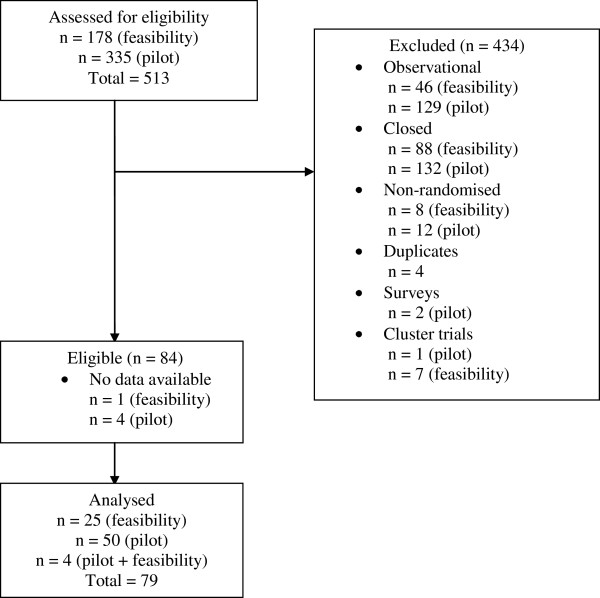
Background: There is little published guidance as to the sample size required for a pilot or feasibility trial despite the fact that a sample size justification is a key element in the design of a trial. A sample size justification should give the minimum number of participants needed in order to meet the objectives of the trial. This paper seeks to describe the target sample sizes set for pilot and feasibility randomised controlled trials, currently running within the United Kingdom. Methods: Data were gathered from the United Kingdom Clinical Research Network (UKCRN) database using the search terms ‘pilot’ and ‘feasibility’. From this search 513 studies were assessed for eligibility of which 79 met the inclusion criteria. Where the data summary on the UKCRN Database was incomplete, data were also gathered from: the International Standardised Randomised Controlled Trial Number (ISRCTN) register; the clinicaltrials.gov website and the website of the funders. For 62 of the trials, it was necessary to contact members of the research team by email to ensure completeness. Results: Of the 79 trials analysed, 50 (63.3%) were labelled as pilot trials, 25 (31.6%) feasibility and 14 were described as both pilot and feasibility trials. The majority had two arms (n = 68, 86.1%) and the two most common endpoints were continuous (n = 45, 57.0%) and dichotomous (n = 31, 39.2%). Pilot trials were found to have a smaller sample size per arm (median = 30, range = 8 to 114 participants) than feasibility trials (median = 36, range = 10 to 300 participants). By type of endpoint, across feasibility and pilot trials, the median sample size per arm was 36 (range = 10 to 300 participants) for trials with a dichotomous endpoint and 30 (range = 8 to 114 participants) for trials with a continuous endpoint. Publicly funded pilot trials appear to be larger than industry funded pilot trials: median sample sizes of 33 (range = 15 to 114 participants) and 25 (range = 8 to 100 participants) respectively. Conclusion: All studies should have a sample size justification. Not all studies however need to have a sample size calculation. For pilot and feasibility trials, while a sample size justification is important, a formal sample size calculation may not be appropriate. The results in this paper describe the observed sample sizes in feasibility and pilot randomised controlled trials on the UKCRN Database.
Overview
The claims and statistics of this paper haven’t been checked yet.
Free: it reads the open-access text and checks the first 5 claims that cite a source we can check. Create a free account to check every claim.
Integrity signals
Registry
Cites
Statistics
Figures
Verification
Claims the paper makes
The claims and statistics of this paper haven’t been checked yet.
Free: it reads the open-access text and checks the first 5 claims that cite a source we can check. Create a free account to check every claim.
Claims other papers make about this one
Each is checked against this paper’s own text: does it say what the citing paper says it does?
The source backs part of the claim, not all of it — or backs it for a different population, condition or comparison.
In the citing paper
“More recently, research has begun to explore the differences between internal and external pilot studies and their contribution to main trials, and the appropriateness of pilot and feasibility studies for estimating the sample size.”
From Role of feasibility and pilot studies in randomised controlled trials: a cross-sectional study (2018) · cites this paper as [12]
Experimental — accuracy not yet measuredThe source backs part of the claim, not all of it — or backs it for a different population, condition or comparison.
In the citing paper
“Current recommendations for sample sizes of pilot/feasibility studies vary, have a single rather than a multi-criterion basis, and do not necessarily link directly to formal progression criteria.”
From Determining sample size for progression criteria for pragmatic pilot RCTs: the hypothesis test strikes back! (2021) · cites this paper as [16]
Experimental — accuracy not yet measuredThe source backs part of the claim, not all of it — or backs it for a different population, condition or comparison.
In the citing paper
“When looking at hybrid human delivered pilot studies, a sample size of 40 is on par with comparable research [105, 106].”
From Personalized machine learning guided intervention for optimizing lifestyle behaviors in depression: a pilot study (2026) · cites this paper as [106]
Experimental — accuracy not yet measuredThe source backs part of the claim, not all of it — or backs it for a different population, condition or comparison.
In the citing paper
“Feasibility studies are not designed to evaluate effects, and there is no definitive approach to estimating their correct sample size [49].”
From Changes in pain, daily occupations, lifestyle, and health following an occupational therapy lifestyle intervention: a secondary analysis from a feasibility study in patients with chronic high-impact pain (2024) · cites this paper as [49]
Experimental — accuracy not yet measuredThe source backs part of the claim, not all of it — or backs it for a different population, condition or comparison.
In the citing paper
“There is no consensus but recommendations vary from 10 to 12 per group through to 60–75 per group depending on the main objective of the study.”
From Determining sample size for progression criteria for pragmatic pilot RCTs: the hypothesis test strikes back! (2021) · cites this paper as [16]
Experimental — accuracy not yet measured
9 more claims about this paper
Create a free account to see every claim other papers make about this one.
Self-check
Percentages, sums and reported differences re-computed from the paper’s own numbers.
The self-check needs the paper’s full text.
Citations
Cites
A tutorial on pilot studies: the what, why and how
Thabane, L., Ma, J., Chu, R., Cheng, J., Ismaila, A., Rios, L. P., Robson, R., Thabane, M., Giangregorio, L., & Goldsmith, C. H. (2010) · BMC Medical Research Methodology · doi:10.1186/1471-2288-10-1 · Cited by 3,384
Sample size of 12 per group rule of thumb for a pilot study
Julious, S. A. (2005) · Pharmaceutical Statistics · doi:10.1002/pst.185 · Cited by 3,068 · cited 6×
“Julious [9] recommends a minimum sample size of 12 per group as a rule of thumb and justifies this based on rationale about feasibility and precision about the mean and variance;”
BackgroundInfluentialSelf-citationDesign and analysis of pilot studies: recommendations for good practice
Lancaster, G. A., Dodd, S., & Williamson, P. R. (2004) · Journal of Evaluation in Clinical Practice · doi:10.1111/j..2002.384.doc.x · Cited by 2,572 · cited 3×
“There is the additional issue that setting the sample size too high may lead to a preventable failure to reach the recruitment target [12].”
BackgroundResultConsiderations in determining sample size for pilot studies
Hertzog, M. A. (2008) · Research in Nursing & Health · doi:10.1002/nur.20247 · Cited by 2,337 · cited 2×
“Hertzog [6] recommends the Julious and Patterson [7] method of using confidence intervals for a given precision constructed around the anticipated value to set the sample size;”
BackgroundMethodWhat is a pilot or feasibility study? A review of current practice and editorial policy
Arain, M., Campbell, M. J., Cooper, C. L., & Lancaster, G. A. (2010) · BMC Medical Research Methodology · doi:10.1186/1471-2288-10-67 · Cited by 1,483 · cited 9×
“[2] concluded that pilot trials are poorly reported and that the authors are often not explicit as to the purpose of their pilot trial.”
BackgroundResultInfluentialSim, J., & Lewis, M. (2012) · Journal of Clinical Epidemiology · doi:10.1016/j.jclinepi.2011.07.011 · Cited by 1,036 · cited 6×
“Continuous 6 43 (15, 60) [10, 60] However, Arain et al.”
BackgroundInfluentialOn the use of a pilot sample for sample size determination
Browne, R. H. (1995) · Statistics in Medicine · doi:10.1002/sim.4780141709 · Cited by 1,007 · cited 2×
“Trial description Pilot 50 30 (20, 45) [8, 114]”
BackgroundRecommendations for Planning Pilot Studies in Clinical and Translational Research
Moore, C. G., Carter, R. E., Nietert, P. J., & Stewart, P. W. (2011) · Clinical and Translational Science · doi:10.1111/j.1752-8062.2011.00347.x · Cited by 661 · cited 2×
“[16] highlighted that it is not unusual for study proposal reviewers to come across a statement such as “No sample size justification is needed because of the pilot nature of the proposed study”, but they state that pilot trials are not exempt from needing a clear rationale for the number of patients to be included.”
BackgroundStatistics and ethics in medical research: III How large a sample?
Altman, D. G. (1980) · BMJ · doi:10.1136/bmj.281.6251.1336 · Cited by 580 · cited 1×
“If a study is too large it may be judged to be unethical as participants may be unnecessarily exposed to risks and burdens [11].”
BackgroundCampbell, M. J., Julious, S. A., & Altman, D. G. (1995) · BMJ · doi:10.1136/bmj.311.7013.1145 · Cited by 476
Self-citation
Research works printed but not linked: 1
- 14. SPSS Inc: Released 2009. PASW statistics for windows, version 18.0. Chicago: SPSS Inc; 2009.
Cited by
Items 301–400 of 964
Oldershaw, A., Lavender, T., Basra, R. S., & Startup, H. M. (2022) · BMJ Open · doi:10.1136/bmjopen-2021-050350 · Cited by 12
Geagea, D., Griffin, B. R., Kimble, R. M., Polito, V., Terhune, D. B., & Tyack, Z. F. (2022) · Pilot and Feasibility Studies · doi:10.1186/s40814-022-01017-z · Cited by 13
“attitude towards hypnosis, therapy expectations, and perceived self-efficacy) will be assessed alongside hypnotic suggestibility and addressed to promote positive outcomes [32].”
BackgroundWatanabe, R., Kojima, M., Yasuoka, M., Kimura, C., Kamiji, K., Otani, T., Tsujimura, S., Fujita, H., Nogimura, A., Ozeki, S., et al. (2022) · International Journal of Environmental Research and Public Health · doi:10.3390/ijerph19116609 · Cited by 9
“The number of participants is within the range of a previous feasibility study [37].”
BackgroundAthanasiou, A., Mitsopoulos, K., Praftsiotis, A., Astaras, A., Antoniou, P. E., Pandria, N., Petronikolou, V., Kasimis, K., Lyssas, G., Terzopoulos, N., et al. (2022) · JMIR Research Protocols · doi:10.2196/41152 · Cited by 13
“While the sample size in pilot trials is suggested to not fall within the requirements for power analysis [22], the enrollment for the NeuroSuitUp pilot study was estimated by having in mind the research experience of the research group with patients with SCI and their particularities from previous…”
MethodAlbrecht, L., Scott, S. D., & Hartling, L. (2018) · Pilot and Feasibility Studies · doi:10.1186/s40814-018-0318-0 · Cited by 9
Riel, H., Plinsinga, M. L., Mellor, R., Boudreau, S. A., Vuvan, V., & Vicenzino, B. (2019) · Scandinavian Journal of Pain · doi:10.1515/sjpain-2019-0109 · Cited by 9
“As this was a pilot study, no formal sample size calculation was performed [31, 32].”
BackgroundOlotu, C., Lebherz, L., Härter, M. C., Mende, A., Plümer, L., Goetz, A. E., Zöllner, C., Kriston, L., & Kiefmann, R. (2019) · BMJ Open · doi:10.1136/bmjopen-2019-031837 · Cited by 11
Skovbjerg, S., Birk, D., Bruggisser, S., Wolf, A. L. A., & Fjorback, L. (2021) · Pilot and Feasibility Studies · doi:10.1186/s40814-021-00860-w · Cited by 8
“This sample size is justified based on the design and objectives of the study [38].”
MethodGraham, C. D., Ellison, R., Hall, L. H., Clark, J., McNaught, E., Green, S. M. C., Wilkes, H., Robson, G., Lorentz, I., Holmes, L., et al. (2024) · Psycho-Oncology · doi:10.1002/pon.6349 · Cited by 8
Parker, K., Eddy, S., Nunns, M., Xiao, Z., Ford, T. J., Eldridge, S. M., & Ukoumunne, O. C. (2022) · Pilot and Feasibility Studies · doi:10.1186/s40814-022-01098-w · Cited by 15
“The characteristics of feasibility studies generally [10, 16, 17] and cluster randomised feasibility studies specifically [18, 19] have been summarised, but, to date, no systematic review has focussed on the characteristics of schoolbased feasibility CRTs for improving pupil health outcomes.”
BackgroundZlámal, J., Gjevjon, E. R., Fossum, M., Steindal, S. A., & Nes, A. A. G. (2023) · JMIR Formative Research · doi:10.2196/43300 · Cited by 8
“Following Billingham et al [24], we estimated the necessary total sample size for all participants to be 12 to 50.”
MethodChitapanarux, I., Onchan, W., Chakrabandhu, S., Muangwong, P., Autsavapromporn, N., Ariyanon, T., Akagi, J., & Mizoo, A. (2024) · OncoTargets and Therapy · doi:10.2147/ott.s478613 · Cited by 8
Dwenger, K., Roy, N., Jennings, S. G., Smith, M. E., Mathy, P., Simonyan, K., & Barkmeier‐Kraemer, J. M. (2025) · Journal of Speech Language and Hearing Research · doi:10.1044/2024_jslhr-24-00476 · Cited by 8
“Thus, on the basis of guidance from the literature on proof-of-concept pilot feasibility studies (Billingham et al., 2013; Leon et al., 2011; Moore et al., 2011), we aimed for a minimum of five participants in each group to inform future larger scale studies and population size estimates.”
Ngo, T. T. A., An, G. K., Dao, D. K., Nguyen, N. A., Phong, B. H., Nguyen, N. Y. V., & Nguyen, T. B. N. (2025) · Acta Psychologica · doi:10.1016/j.actpsy.2025.105768 · Cited by 38
Extra upper limb practice after stroke: a feasibility study
Schneider, E. J., Ada, L., & Lannin, N. A. (2019) · Pilot and Feasibility Studies · doi:10.1186/s40814-019-0531-5 · Cited by 9
Sharp, P., Stolp, S., Bottorff, J. L., Oliffe, J. L., Hunt, K., & Caperchione, C. M. (2020) · Health Promotion International · doi:10.1093/heapro/daaa120 · Cited by 11
Duker, L. I. S., Schmidt, A. R., Pham, P. K., Ringold, S. M., & Nager, A. L. (2021) · Frontiers in Pediatrics · doi:10.3389/fped.2020.556805 · Cited by 8
“the feasibility and preliminary effectiveness of our intervention, we surmised a priori that a convenience sample of at least 100 participants would generate enough data to achieve our primary aim (15, 16).”
BackgroundJakobsen, T. L., Thorborg, K., Fisker, J., Kallemose, T., & Bandholm, T. (2022) · Journal of Experimental Orthopaedics · doi:10.1186/s40634-022-00533-4 · Cited by 10
“Justifications for the sample size in feasibility studies vary greatly [4].”
Soltero, E. G., Lopez, C., Musaad, S. M. A., O’Connor, T. M., & Thompson, D. I. (2023) · Contemporary Clinical Trials · doi:10.1016/j.cct.2023.107117 · Cited by 7
Tran, T., Finlayson, M. L., Nalder, E. J., Trothen, T. J., & Donnelly, C. A. (2023) · Journal of Alzheimer s Disease Reports · doi:10.3233/adr-230006 · Cited by 13
“Our goal was to recruit approximately 30-40 participants accounting for a 20% attrition rate based on other feasibility studies [58, 59].”
BackgroundLee, W., Sheehan, C., Chye, R., Chang, S., Bayes, A. J., Loo, C. K. A., Draper, B., Agar, M. R., & Currow, D. C. (2023) · PLoS ONE · doi:10.1371/journal.pone.0290876 · Cited by 11
Illescas, O., Ferrero, G., Belfiore, A., Pardini, B., Tarallo, S., Ciniselli, C. M., Noci, S., Daveri, E., Signoroni, S., Cattaneo, L., et al. (2024) · Clinical Nutrition · doi:10.1016/j.clnu.2024.02.023 · Cited by 10
Yuan, S., Humphris, G. M., Ross, A. J., Macpherson, L. M. D., Zhou, Y., & Freeman, R. (2018) · Pilot and Feasibility Studies · doi:10.1186/s40814-018-0331-3 · Cited by 8
Cliffe, B., Croker, A., Denne, M., & Stallard, P. N. (2018) · JMIR Research Protocols · doi:10.2196/11324 · Cited by 8
“Recruiting 50 young people should provide sufficient information to determine whether Sleepio is perceived as acceptable and results in improved sleep and mental health in young people [35].”
Passmore, S. R., Johnson, M. G., Aloraini, S. M., Cooper, S., Aziz, M., & Glazebrook, C. M. (2019) · Journal of Manipulative and Physiological Therapeutics · doi:10.1016/j.jmpt.2018.10.002 · Cited by 11
Vaag, J. R., Lara‐Cabrera, M. L., Hjemdal, O., Gjervan, B., & Torgersen, T. (2019) · Pilot and Feasibility Studies · doi:10.1186/s40814-019-0401-1 · Cited by 11
Coole, C., Konstantinidis, S. T., Ablewhite, J., Radford, K., Thomson, L., Khan, S., & Drummond, A. E. (2020) · British Journal of Occupational Therapy · doi:10.1177/0308022619893563 · Cited by 9
Foley, J. D., Firkey, M. K., Sheinfil, A. Z., Ramos, J. M., Woolf‐King, S. E., & Vanable, P. A. (2021) · Archives of Sexual Behavior · doi:10.1007/s10508-021-02045-1 · Cited by 9
Venkatesh, K. K., Brodney, S., Barry, M. J., Jackson, J. B., Lyons, K. M., Talati, A. N., Ivester, T., Munoz, M. C., Thorp, J. M., & Nicholson, W. K. (2021) · BMC Pregnancy and Childbirth · doi:10.1186/s12884-021-04119-3 · Cited by 13
“This was a feasibility study in which enrollment was a priori set at 100 women [33].”
BackgroundResultKumaravel, B., Stewart, C. R., & Ilić, D. (2021) · BMJ Evidence-Based Medicine · doi:10.1136/bmjebm-2021-111776 · Cited by 8
Deegan, O., Fullen, B. M., Casey, M., Segurado, R., Hearty, C., & Doody, C. (2022) · BMJ Open · doi:10.1136/bmjopen-2021-058265 · Cited by 8
Paixão, C., Almeida, S., Ferreira, P. G., Mendes, M. A., Brooks, D., & Marques, A. S. P. D. D. (2023) · Heart & Lung · doi:10.1016/j.hrtlng.2023.02.018 · Cited by 10
Müller, M., Bartoszek, G., Beutner, K., Klingshirn, H., Saal, S., Stephan, A., Strobl, R., Grill, E., & Meyer, G. (2015) · German medical science · doi:10.3205/000217 · Cited by 8
“[42] we will include a total sample size of about 120 residents, 60 in the intervention and 60 in the control group.”
BackgroundDo radiological research articles apply the term “pilot study” correctly? Systematic review
Kenis, S. F., Abeyakoon, O., Plumb, A., & Halligan, S. (2019) · Clinical Radiology · doi:10.1016/j.crad.2019.11.010 · Cited by 9
Sharma, M., Kanekar, A. S., Batra, K., Hayes, T., & Lakhan, R. (2022) · Healthcare · doi:10.3390/healthcare10040614 · Cited by 9
“85, which was deemed appropriate given the previous literature [35].”
BackgroundAl‐Jabr, H., Windle, K., Thompson, D. R., Jenkins, Z., Castle, D. J., & Ski, C. F. (2022) · JMIR Research Protocols · doi:10.2196/36673 · Cited by 9
“The sample size has been determined according to the recommendations that at least 30-35 patients be included per group for pilot and feasibility studies [63-66].”
MethodFRailty and Arterial stiffness – the role of oXidative stress and Inflammation (FRAXI study)
Mensah, E., Ali, K., BANYA, W. A. S., Kirkham, F. A., Mengozzi, M., Ghezzi, P., & Rajkumar, C. (2022) · Biomarker Insights · doi:10.1177/11772719221130719 · Cited by 7
Nielsen, S. S., Skou, S. T., Larsen, A. E., Polianskis, R., Arendt-Nielsen, L., Østergaard, A. S., Kjær-Staal Petersen, K., Vægter, H. B., Søndergaard, J., & Christensen, J. R. (2024) · Scandinavian Journal of Pain · doi:10.1515/sjpain-2023-0043 · Cited by 7
Toward exercise as medicine for adolescents with bipolar disorder (TEAM-BD): A feasibility study
Khoubaeva, D., Popel, N., Kcomt, A., MacIntosh, B. J., McCrindle, B. W., Omrin, D. S., Michalak, E. E., Faulkner, G., Roane, J. L., Fıksenbaum, L., et al. (2022) · Mental health and physical activity · doi:10.1016/j.mhpa.2022.100441 · Cited by 8
Essers, B., Veerbeek, J. M., Luft, A. R., & Verheyden, G. (2024) · Disability and Rehabilitation · doi:10.1080/09638288.2024.2313121 · Cited by 7
“[35] However, guidelines suggest a sample size of 12-30 participants for feasibility studies.”
Dunleavy, C., Elsworthy, R. J., Wood, S. J., Allott, K., Spencer, F. S. E., Upthegrove, R., & Aldred, S. (2024) · Brain Behavior and Immunity · doi:10.1016/j.bbi.2024.06.017 · Cited by 11
“This sample size was selected in accordance with an audit of United Kingdom Clinical Research Network (UKCRN) pilot and feasibility studies that indicated pilot sample sizes of 30 – 36 as feasible (Billingham et al., 2013).”
MethodHughes, B., Martin‐Misener, R., Latimer, M. A., Smit, M., McGrath, P. J., & Campbell-Yeo, M. L. (2024) · Scandinavian Journal of Caring Sciences · doi:10.1111/scs.13297 · Cited by 8
Allan, L., Silvera‐Tawil, D., Cameron, J., Li, J., Varnfield, M., Smallbon, V., Bomke, J., Olaiya, M. T., Lannin, N. A., & Cadilhac, D. A.-M. (2024) · Sensors · doi:10.3390/s24227253 · Cited by 7
“Instead, we sought to recruit 30–40 people living with stroke or TIA, consistent with other similar feasibility studies for this type of early phase research [36–39].”
Malloy, J. A., Partridge, S. R., Kemper, J. A., Braakhuis, A. J., & Roy, R. (2024) · Nutrients · doi:10.3390/nu16244364 · Cited by 6
Wu, V. S., Smith, A. B., Russell, H., Bamgboje‐Ayodele, A., Beatty, L., Pearce, A. M., Dhillon, H. M., Shaw, J., Antony, J., Fardell, J. E., et al. (2025) · BMC Cancer · doi:10.1186/s12885-025-13639-6 · Cited by 9
Valero-Ramón, Z., Ibáñez-Sánchez, G., Martínez-Millana, A., & Fernández-Llatas, C. (2025) · Sensors · doi:10.3390/s25072097 · Cited by 7
“While the sample size meets current recommendations for feasibility studies [48,50], a larger cohort could strengthen the findings.”
Xie, L., Cao, J., Yang, Y. B., Jiang, S., Tan, J.-L., Zhang, J., Ruan, Z.-F., Chen, L., Xu, D., Chen, Z., et al. (2025) · Microbiology Spectrum · doi:10.1128/spectrum.02316-24 · Cited by 7
“This prospective pilot clinical feasibility study’s sample size can be flexible, ranging from 10 to 300 participants, according to established criteria (35).”
Hypoxic conditioning in Parkinson’s disease: randomized controlled multiple N-of-1 trials
Daalen, J. M. J., Meinders, M. J., Giardina, F., Mathur, S., Ainslie, P. N., Thijssen, D. H. J., & Bloem, B. R. (2025) · Nature Communications · doi:10.1038/s41467-025-63324-2 · Cited by 8
“Could the authors provide a flowchart of patient inclusion, screening failures as well as dropouts and the corresponding reasons?”
Crivelli, L., Suemoto, C. K., Sosa, A. L., Lopera, F. J., Aguillón, D., Allegri, R., Nitríni, R., Calandri, I. L., Velilla-Jiménez, L. M., Yassuda, M. S., et al. (2026) · The Lancet · doi:10.1016/s0140-6736(26)01278-x · Cited by 23
SmartMoms Canada: An evaluation of a mobile app intervention to support a healthy pregnancy
Adamo, K. B., Semeniuk, K., da Silva, D. F., Souza, S. C. S., Baillargeon, J., Redman, L. M., Piccinini‐Vallis, H., Shen, G. X., & Nerenberg, K. A. (2022) · Contemporary Clinical Trials · doi:10.1016/j.cct.2022.107066 · Cited by 11
Role of Platelet Rich Plasma in Osteoarthritis of the Knee Joint
Redah, S. M. (2022) · Medical Journal of Babylon · doi:10.4103/mjbl.mjbl_9_22 · Cited by 7
Melia, R., Francis, K., Duggan, J., Bogue, J., O’Sullivan, M., Young, K. L., Chambers, D., McInerney, S. J., O'Dea, E., & Bernert, R. A. (2023) · JMIR Research Protocols · doi:10.2196/44205 · Cited by 10
“In a systematic assessment of sample sizes in pilot and feasibility trials, Billingham et al [43] reported a median sample size of 36 participants, ranging from 10 to 300 participants.”
BackgroundJoyce, K. M., Rioux, C., MacKinnon, A., Katz, L. Y., Reynolds, K., Kelly, L. E., Klassen, T. P., Afifi, T. O., Mushquash, A. R., Clement, F. M., et al. (2023) · Pilot and Feasibility Studies · doi:10.1186/s40814-023-01260-y · Cited by 14
“However, our target sample size of 30 participants per group is consistent with prior recommendations and will provide data to sufficiently establish BEAM feasibility [62, 63].”
ResultSevere COVID anxiety among adults in the United Kingdom: cohort study and nested feasibility trial
Crawford, M., King, J. D., McQuaid, A., Bassett, P., Leeson, V. C., Tella, O., Simplicio, M. C. D., Tyrer, P. J., Tyrer, H., Watt, R. G., et al. (2024) · BMC Psychiatry · doi:10.1186/s12888-023-05446-9 · Cited by 8
“We aimed to recruit sufficient numbers of participants to the cohort study to randomise 40 participants to the feasibility trial; a typical size for such a trial [37].”
BackgroundHome-based Circuit Training and Community Walking for Intermittent Claudication
Waddell, A., Denton, F., Powell, R., Broom, D. R., Birkett, S. T., McGregor, G., & Harwood, A. E. (2024) · Annals of Vascular Surgery · doi:10.1016/j.avsg.2024.01.016 · Cited by 10
Gosselin, É., Gélinas, C., Bourgault, P., & Lavoie, S. (2018) · Science of Nursing and Health Practices · doi:10.31770/2561-7516.1019 · Cited by 10
“Based on pilot study guidelines, a sample of 10 to 15 participants was expected to be recruited through convenience sampling (Billingham, Whitehead, & Julious, 2013; Hertzog, 2008).”
Frenette, A. J., Williamson, D. R., Williams, V., Lagacé, A.-M., Charbonney, E., & Serri, K. (2019) · Progress in Transplantation · doi:10.1177/1526924819855083 · Cited by 7
Livingston, M. H., Elliott, T., Williams, C., Jones, S., Rosenbaum, P., & Walton, J. M. (2020) · Journal of Neonatal-Perinatal Medicine · doi:10.3233/npm-190310 · Cited by 7
“Other studies suggest that 30 may be more appropriate, especially if the data will be used to perform a sample size calculation [28–30].”
Ardianuari, S., Goldberg, M. R., Pearlman, J. L., & Schmeler, M. R. (2020) · Disability and Rehabilitation Assistive Technology · doi:10.1080/17483107.2020.1799250 · Cited by 7
“tion: relevance, conciseness, clarity, and language [33].”
Haladay, D. E., Ditwiler, R. E., Klein, A. B., Miro, R. M., Lazinski, M., Swisher, L. L., Beckstead, J. W., Wolfson, J., & Hardwick, D. (2022) · JMIR Research Protocols · doi:10.2196/32457 · Cited by 7
“A sample of 30 participants is considered appropriate for pilot studies of feasibility, and sufficient to estimate effect sizes for confirmatory trials [35,36].”
BackgroundPavlova, M., Lund, T., Sun, J., Katz, J. D., Brindle, M. E., & Noel, M. E. (2022) · Canadian Journal of Pain · doi:10.1080/24740527.2022.2058919 · Cited by 8
“participants are typical for pilot studies examining intervention feasibility and acceptability.(42) However, we acknowledge that the sample size of 17 parent–child dyads was not initially planned and is the result of the”
BackgroundWilliams, L. K., Ftanou, M., & Pearson, E. J. M. (2022) · Pilot and Feasibility Studies · doi:10.1186/s40814-022-01062-8 · Cited by 8
“Whilst this sample size is in line with pilot and feasibility trials reported elsewhere [32], there is yet to be a clear consensus as to appropriate sample size for feasibility studies [33].”
ResultKimber, M., Vanstone, M. G., Dimitropoulos, G., Collin‐Vézina, D., & Stewart, D. E. (2022) · Pilot and Feasibility Studies · doi:10.1186/s40814-022-01096-y · Cited by 10
Joseph, K. L. H., Dagfinrud, H. S., Hagen, K. B., Nordén, K. R., Fongen, C., Wold, O.-M., Hinman, R. S., Nelligan, R. K., Bennell, K. L., & Tveter, A. T. (2022) · Pilot and Feasibility Studies · doi:10.1186/s40814-022-01110-3 · Cited by 9
“In previous studies, sample size in feasibility and pilot studies has been reported to be between 30 and 36 patients [24], while Sim and Lewis [25] have suggested a sample size of at least 50 patients.”
Bernardo, D. F. S., Bobadilla-Agouborde, C., Festas, C., Carvalho, C., Abdalla, P. P., Amezcua‐Prieto, C., Naia, Z., Mesquita, C., Mota, J. A. P. S., & Santos, P. C. (2024) · Clinical and Experimental Obstetrics & Gynecology · doi:10.31083/j.ceog5103070 · Cited by 10
“In feasibility studies [37] and pilot studies [38], a minimum of 12 and a maximum of 30 participants for each group were considered appropriate.”
BackgroundMcPherson, A. C., Biddiss, E., Chen, L., Church, P. T., de Groot, J. F., Keenan, S., King, G., Lui, T., Maltais, D. B., Mérette, C., et al. (2019) · BMJ Open · doi:10.1136/bmjopen-2018-025119 · Cited by 7
O’Dowd, H., Beasant, L., Ingram, J. C., Montgomery, A. A., Hollingworth, W., Gaunt, D., Collin, S. M., Horne, S., Jones, B. E., & Crawley, E. M. (2020) · Pilot and Feasibility Studies · doi:10.1186/s40814-020-00595-0 · Cited by 8
Oyedeji, C. I., Hall, K. S. M., Luciano, A., Morey, M. C., & Strouse, J. J. (2020) · Pilot and Feasibility Studies · doi:10.1186/s40814-020-00673-3 · Cited by 10
Casey, D., Gallagher, N., Devane, D., Woods, B. T., Murphy, K., Smyth, S., Newell, J., Murphy, A. W., Clarke, C. L., Foley, T., et al. (2020) · Pilot and Feasibility Studies · doi:10.1186/s40814-020-00701-2 · Cited by 8
Development of the support needs after ICU ( SNAC ) questionnaire
O'Neill, B. M., Linden, M., Ramsay, P., Medniuk, A. D., Outtrim, J. G., KING, J. A. C., & Blackwood, B. (2021) · Nursing in Critical Care · doi:10.1111/nicc.12695 · Cited by 6
“Range (32-160) (12-60) (9-45) (6-30) (4-20) (1-5)”
Crawford, M., Leeson, V. C., McQuaid, A., Samuel, O., King, J. D., Simplicio, M. C. D., Tyrer, P. J., Tyrer, H., Watt, R. G., & Barnicot, K. (2022) · BMJ Open · doi:10.1136/bmjopen-2021-059321 · Cited by 8
Hikaka, J., Hughes, C. M., Jones, R., Connolly, M. J., & Martini, N. D. (2019) · Research in Social and Administrative Pharmacy · doi:10.1016/j.sapharm.2019.12.004 · Cited by 9
Tran, M. J., Jefford, M., Smith, A. B., Lynch, F., Dhillon, H. M., Shaw, J., McDowell, L. J., White, A., Halloran, C., Wiesenfeld, D., et al. (2022) · Pilot and Feasibility Studies · doi:10.1186/s40814-022-01123-y · Cited by 9
“This sample size is also in line with previous pilot and feasibility trials [34].”
ResultAshworth, E., McCarthy, M., Wynne, S., Robinson, J., McKay, S., Lane, S., Richardson, G., Boardman, N., Henderson, K., Crosbie, V., et al. (2024) · PLoS ONE · doi:10.1371/journal.pone.0302873 · Cited by 6
Purcell, A., Buckley, T., King, J., Moyle, W., & Marshall, A. P. (2018) · Pilot and Feasibility Studies · doi:10.1186/s40814-018-0312-6 · Cited by 6
“Although reported sample sizes for pilot studies vary, the median sample size per arm is often 30 [16].”
BackgroundZhang, Y., Xu, X. Y., Pi, H.-C., Yang, Z., Johnson, D. W., & Dong, J. (2023) · Peritoneal Dialysis International · doi:10.1177/08968608231182885 · Cited by 6
Shelley, J., Rice, K., Cosh, S., Schutte, N. S., & Rock, A. J. (2024) · Australian Psychologist · doi:10.1080/00050067.2024.2330960 · Cited by 6
“In a review of feasibility studies, sample sizes of N = 11 were deemed appropriate dependent on study context (Billingham et al., 2013), and other related studies have utilised similar sample sizes to determine feasibility (e.g., Clay et al., 2021).”
MethodTadros, M., Li, S., Corkish, B., Upton, E. L., Newby, J. M., & Werner‐Seidler, A. (2024) · Behavioral Sleep Medicine · doi:10.1080/15402002.2024.2374258 · Cited by 10
“A sample of size of 50 was established as a goal of recruitment, this is typical in pilot studies focused on feasibility and acceptability (Billingham et al., 2013), and has been recommended as an appropriate figure for pilot studies (Sim & Lewis, 2012).”
Arabyat, R. M., Borrego, M. E., Hamidovic, A., Sleath, B. L., & Raisch, D. W. (2018) · Health Education Research · doi:10.1093/her/cyy047 · Cited by 7
“A systematic literature review about sample sizes for pilot randomized controlled trials in the United Kingdom found a sample size range per arm from 8 to 114 participants.(178) However, most of the available studies about sample size calculation for pilot studies were based on clinical randomized controlled trials.”
BackgroundAung, E. T., Fairley, C. K., Ong, J. J., Phillips, T. R., Tran, J., Chen, M. Y., Maddaford, K., & Chow, E. P. F. (2022) · Frontiers in Medicine · doi:10.3389/fmed.2022.941041 · Cited by 6
“With 360 weeks of observation, we estimated the 95% CI will be ± 5% of the mean proportion (13).”
Hartling, L., Elliott, S. A., Munan, M., & Scott, S. D. (2023) · JMIR Formative Research · doi:10.2196/45276 · Cited by 7
“However, guided by previous research [27,28], we planned to recruit 100 parents (50 per group) to provide reasonable effect estimates to inform sample size calculations for future large-scale trials.”
MethodMcCurdy, L. Y., Kong, G., Krishnan‐Sarin, S., Kiluk, B. D., & Potenza, M. N. (2023) · PLoS ONE · doi:10.1371/journal.pone.0292293 · Cited by 6
Prudenzi, A., Gill, K., MacArthur, M., Hastings, O., Moukhtarian, T. R., Jadhakhan, F., Patel, K., Kershaw, C., Norton-Brown, E., Johnston, N., et al. (2024) · Journal of Contextual Behavioral Science · doi:10.1016/j.jcbs.2023.100720 · Cited by 16
“Forty pairs were randomised, which is consistent with the median sample size found in pilot RCTs (Billingham, Whitehead & Julious, 2013).”
Turner, K. L., Kim, D. W., Gonzalez, B. D., Gore, L. R., Gurd, E. N., Milano, J., Riccardi, D., Byrne, M. M., Al‐Jumayli, M., Castria, T. B. D., et al. (2024) · Contemporary Clinical Trials Communications · doi:10.1016/j.conctc.2024.101271 · Cited by 8
“This will leave a proposed final sample of 64, which is adequate for estimating feasibility and acceptability for a future efficacy trial [71,72].”
BackgroundMelamed, O. C., Mehra, K., Panda, R., Minian, N., Veldhuizen, S., Zawertailo, L. A., Buckley, L., Maslej, M. M., Greaves, L., Brabete, A. C., et al. (2024) · JMIR Research Protocols · doi:10.2196/60677 · Cited by 7
“The literature suggests a sample size of 30 participants for feasibility and usability studies [28].”
Sansalone, E., Zucca, A. C., Duncan, M. J., Morris, O. J., Smith, S. R., Robinson, S., Chenery, R., Moore, H. J., da Silva, P. V., Riley, L., et al. (2025) · BMJ Open · doi:10.1136/bmjopen-2024-093869 · Cited by 7
“31 Based on patient volume at the hospital, it is anticipated that recruitment will take 18 months.”
Wilczyński, B., Biały, M., & Zorena, K. (2025) · Applied Sciences · doi:10.3390/app15126436 · Cited by 7
Oluwoye, O. A., Dyck, D. G., McPherson, S., Lewis‐Fernández, R., Compton, M. T., McDonell, M. G., & Cabassa, L. J. (2020) · BMJ Open · doi:10.1136/bmjopen-2020-036907 · Cited by 11
Kiyoshi‐Teo, H., Yoder, C. M., Ochoa, O., Lemon, E., Stoyles, S. A., Tadesse, R. T., McGuire, J., & Lee, D. S. H. (2021) · Gerontology & Geriatrics Education · doi:10.1080/02701960.2021.1969387 · Cited by 9
“For this feasibility study, our goal was to recruit at least 30–35 individuals based on the median sample size of feasibility and pilot studies (Billingham et al., 2013).”
MethodPatel, D. I., Gonzalez, A., Moon, C., Serra, M. C., Bridges, P. B., Hughes, D. C., Clarke, G. D., Kilpela, L. S., Jiwani, R. B., & Musi, N. (2022) · JMIR Research Protocols · doi:10.2196/26827 · Cited by 6
“Based on a preponderance of published feasibility and pilot studies, a minimum sample size of 15 participants per group was chosen to complete the study and estimate parameters for future studies [46,47].”
BackgroundSripada, R. K., Rodriguez, J. L., Wright, T. P., Hyland, J., Walters, H., Ganoczy, D. A., Haft, S. M., Smith, E. R., Porter, K. E., Driesenga, S. A., et al. (2022) · Behavior Therapy · doi:10.1016/j.beth.2022.02.004 · Cited by 7
Vogt, K. S., Grange, A., Johnson, J., Marran, J., Budworth, L., Coleman, R., & Simms‐Ellis, R. (2022) · Pilot and Feasibility Studies · doi:10.1186/s40814-022-01014-2 · Cited by 7
“In any case, a sample size of 80 is higher than most feasibility projects, which will make our feasibility study more robust and conclusive [53].”
BackgroundAsad, A., Thomas, A., Dungey, M. R., Hull, K. L., March, D. S., & Burton, J. O. (2022) · BMC Nephrology · doi:10.1186/s12882-022-02759-x · Cited by 7
“In line with previous data for feasibility trials [17], approximately 40”
ResultChatzimavridou-Grigoriadou, V., Barraclough, L., Baričević-Jones, I., Bristow, R. G., Eden, M., Haslett, K., Johnson, K., Kochhar, R., Merchant, Z., Moore, J., et al. (2022) · BMJ Open · doi:10.1136/bmjopen-2021-056600 · Cited by 6
Rash, I., Helgason, M., Jansons, D., Mitchell, L., & Sakakibara, B. M. (2022) · Pilot and Feasibility Studies · doi:10.1186/s40814-022-01189-8 · Cited by 7
“Feasibility indicators Data on process, resources, management, and scientific parameters will be collected throughout the study [54].”
BackgroundCox, A. C., & Rhodes, R. E. (2023) · Journal of Aging and Physical Activity · doi:10.1123/japa.2022-0285 · Cited by 7
An aromatherapy massage intervention on sleep in the ICU : A randomized controlled feasibility study
Pattison, N. A., O’Gara, G., Thomas, K., Wigmore, T., & Dyer, J. (2023) · Nursing in Critical Care · doi:10.1111/nicc.12957 · Cited by 7
“The suggested sample sizes for feasibility studies range from 24 to 50 19 – 21 in order to provide adequate power information for a future trial.”
Feasibility of OptiMaL, a Self-Management Programme for Oesophageal Cancer Survivors
King, E., Algeo, N., & Connolly, D. (2023) · Cancer Control · doi:10.1177/10732748231185002 · Cited by 8
Radhiyah, H., Aziz, A. F. A., Ali, M. F., Monoto, E. M. M., Arvinder-Singh, H. S., Alabed, A. A. A., Zaidi, W. A. W., Ibrahim, N. M., & FRCPE (2023) · BMC Family Practice · doi:10.1186/s12875-023-02138-x · Cited by 8
“As this study was a pilot study with numerical outcomes, based on Billingham et al.’s [17] recommendation, a minimum of 30 participants were required for each group.”
MethodPfledderer, C. D., von Klinggraeff, L., Burkart, S. A., Bandeira, A. D. S., Armstrong, B., Weaver, R. G., Adams, E. L., & Beets, M. W. (2023) · Pilot and Feasibility Studies · doi:10.1186/s40814-023-01389-w · Cited by 9
“Billingham [34] Sample size/power 32 2.”
Metadata
- Authors
- Billingham, S. A., Whitehead, A. L., & Julious, S. A.
- Affiliations
- University of Sheffield (GB)
- Corresponding author
- Julious, Steven A
- Venue
- BMC Medical Research Methodology
- Published
- 2013-08-20
- Volume
- 13
- Issue
- 1
- Pages
- 104-104
- ISSN
- 1471-2288 (ISSN-L)
- PMC
- PMC3765378
- OpenAlex
- W2027748528
- Semantic Scholar
- 725b8e2a2b7f8a509bf11fd9dc8782de9cb9966f
- Cited by
- 962
- References
- 14
- Citations by year
- 2026: 117 · 2025: 124 · 2024: 132 · 2023: 102 · 2022: 148 · 2021: 98 · 2020: 86 · 2019: 46 · 2018: 44 · 2017: 21 · 2016: 22 · 2015: 14 · 2014: 8
- FWCI
- 11.92
- Type
- journal article
- Language
- en
- Open access
- gold
- doi.org
- Licence
- Locations
- BMC Medical Research Methodology (publishedVersion, cc-by)
- Europe PMC (PubMed Central) (publishedVersion, cc-by)
- PubMed Central (publishedVersion, cc-by)
- PubMed (publishedVersion)
- White Rose Research Online (University of Leeds, The University of Sheffield, University of York) (acceptedVersion)
- ePrints Soton (University of Southampton) (acceptedVersion)
- Topics
- Physical Sciences › Mathematics › Statistics and Probability › Statistical Methods in Clinical Trials
- Social Sciences › Decision Sciences › Statistics, Probability and Uncertainty › Meta-analysis and systematic reviews
- Physical Sciences › Mathematics › Statistics and Probability › Statistical Methods in Epidemiology
- Keywords
- pilot trial, feasibility trial, sample size justification, sample size determination, randomized controlled trials, trial design, funding sources, ClinicalTrials.gov
- MeSH terms
- Feasibility Studies, United Kingdom, Humans, Pilot Projects, Randomized Controlled Trials as Topic, Databases, Factual, Sample Size, Biomedical Research
About these checks
Registry, retraction, Cites and statistics results are computed, not judged, with one exception: a printed reference that no index lists is read once by a model before it counts as a citation error. Claims are extracted by a model and kept only when their quote appears verbatim in the text; each cited source is then checked, with a model’s help, for whether it says what the claim relies on. Those verdicts can be wrong — read the claim’s quote and the cited source before relying on one.
Statistics and arithmetic are recomputed, not judged.
Confidence bands are shown only for fields calibrated on our annotated test set. None is calibrated yet, so no band is shown.
What counts as a claim ›How we measure confidence ›How we check this ›
Are you an author, or do you see a problem with this page? Request a review
Data sources
Bibliographic data: Semantic Scholar, OpenAlex, Crossref.
Contains information from the Semantic Scholar Academic Graph Datasets, made available under the ODC Attribution License (ODC-BY 1.0).
Semantic Scholar’s data is described in: Kinney, R., et al. (2023). The Semantic Scholar Open Data Platform. arXiv:2301.10140.
